


Abstract
Temu has become a prominent cross-border e-commerce platform combining low-price positioning, personalized recommendations, and mobile-based shopping, but its platform features may create both perceived value and digital risk concerns. This study examines how perceived price advantage, personalized recommendation quality, and platform usability are associated with Korean Generation Z consumers’ purchase intentions toward Temu through perceived value, trust, platform attitude, perceived manipulation concern, privacy concern, and perceived risk. Survey data were collected from 676 Korean Generation Z consumers between December 2025 and February 2026 and were analyzed using structural equation modeling (SEM) and fuzzy-set qualitative comparative analysis (fsQCA). The SEM results show that perceived price advantage, personalized recommendation quality, and platform usability were positively associated with perceived value. Perceived value was positively associated with trust and platform attitude, and platform attitude was positively associated with purchase intention, whereas perceived risk was negatively associated with purchase intention. However, trust was not directly associated with purchase intention, perceived manipulation concern was not significantly associated with perceived risk, and perceived risk was not significantly associated with platform attitude. The fsQCA identified four configurations for high purchase intention, with overall solution consistency of 0.892 and coverage of 0.642. These configurations particularly involved perceived value, favorable platform attitude, low perceived risk, and recommendation quality. The findings indicate that perceived risk was directly associated with lower purchase intention, whereas manipulation and privacy concerns did not operate through uniformly expected risk mechanisms.
1. Introduction
Cross-border e-commerce has become an important form of digital consumption, allowing consumers to access overseas products through online platforms with lower search and transaction barriers [1,2]. In South Korea, young consumers are highly familiar with mobile shopping, social media-based product discovery, and app-based promotional campaigns [3,4]. However, they also operate in a mature domestic e-commerce environment where local platforms often emphasize fast delivery, local service reliability, and established payment systems [5,6,7]. Temu differs from these local platforms by combining cross-border sourcing, low-price positioning, intensive promotions, personalized product exposure, and mobile-based shopping [8,9]. This makes Temu a useful context for examining how young Korean consumers evaluate a platform that offers strong price appeal while also involving uncertainties related to product quality [8,10], delivery, returns, payment security, privacy, and platform accountability [2,4,8].
Temu is not simply a low-price shopping channel; it is also an algorithm-enabled consumption environment [8,11]. Consumers encounter price-related promotions, personalized recommendations, promotional framing, and interface-based convenience when using the platform [11,12,13,14,15]. These platform features may be associated with stronger perceived value by helping consumers find lower-priced products, discover relevant items, and complete purchases with less effort [3,12,15]. At the same time, they may also be associated with digital risk concerns when consumers perceive that product exposure, recommendations, or promotional cues are designed to influence their choices [5,6,16]. Korean Generation Z consumers represent a particularly relevant group for examining this tension [8,13,17]. In this study, Generation Z refers to consumers born between 1997 and 2007, corresponding approximately to adult young consumers aged 18–29 during the survey period, depending on birth month. This cohort is particularly relevant because Generation Z consumers are generally familiar with mobile commerce, personalized digital content, social media-based shopping information, cross-border consumption, and algorithm-supported platform environments. At the same time, their digital familiarity may also make them more aware of data use, platform influence, privacy issues, and online transaction uncertainty [16,17,18]. As a result, their purchase intention toward Temu may be shaped by both value-oriented and risk-oriented evaluations [3,6,8,17].
Despite the growing popularity of Temu and similar cross-border e-commerce platforms, several research gaps remain [2,4,8]. First, existing research has not sufficiently distinguished perceived platform value from algorithm-related concerns and generalized transaction risk in the Temu context. Price advantage, recommendation quality, usability, trust, privacy concerns, manipulation concerns, and perceived risk are often discussed separately, but their different roles in shaping purchase intention remain underdeveloped [5,8,15]. Second, research on cross-border e-commerce often emphasizes average linear relationships among variables, while less attention has been given to whether different combinations of value-related and risk-related conditions may be associated with the same behavioral intention [3,6,11,16]. Third, Korean Generation Z consumers provide a theoretically meaningful context because they are both highly familiar with digital platforms and sensitive to platform influence, privacy issues, and online transaction uncertainty [19,20,21]. As a result, the mechanisms through which Korean Generation Z consumers evaluate and adopt algorithm-driven cross-border platforms remain insufficiently understood [4,8,15]. Addressing these gaps requires an integrated framework that simultaneously considers platform value mechanisms, digital risk perceptions, and multiple pathways associated with purchase intention [11,19,20,21].
To address these gaps, this study examines Korean Generation Z consumers’ purchase intention toward Temu through a value–risk framework grounded in the Stimulus–Organism–Response perspective [2,8]. The SEM component tests the associations among perceived price advantage, personalized recommendation quality, platform usability, perceived value, trust, platform attitude, manipulation concern, privacy concern, perceived risk, and purchase intention [4,5,6,16]. The fsQCA component addresses the following research question: What configurations of platform value, trust, platform attitude, and digital risk conditions are associated with high purchase intention among Korean Generation Z consumers [2,5,8,16]?
To address these objectives, this study develops an integrated model that combines the value-related pathway and the digital risk-related pathway [4,5,6,16]. Using survey data from Korean Generation Z consumers, the study applies structural equation modeling to test the direct and indirect relationships among platform features, perceived value, trust, risk perceptions, attitude, and purchase intention [6,22]. It further uses fsQCA to identify alternative configurations leading to high purchase intention [19,20,21]. More importantly, it shows that platform value mechanisms and digital risk perceptions are not associated with purchase intention in the same way among Korean Generation Z consumers. This study makes three contributions. First, it distinguishes perceived platform value from algorithm-related concerns and generalized transaction risk in the Temu context [2,8]. Second, it examines how these value- and risk-related mechanisms are associated with purchase intentions among Korean Generation Z consumers [4,5,6,16]. Third, it complements the net-effect analysis with a configurational examination of alternative pathways associated with high purchase intention [19,20,21,22]. By doing so, the study provides a more cautious and differentiated explanation of Temu purchase intention in algorithm-enabled cross-border e-commerce.
2. Literature Review
2.1. Cross-Border E-Commerce and the Rise of Temu
Cross-border e-commerce has reshaped online consumption by enabling consumers to purchase products from overseas sellers with relatively low search and transaction costs [1,2]. However, this form of shopping also involves a higher degree of uncertainty. Issues such as product quality, delivery reliability, payment security, return procedures, and platform accountability may affect consumers’ confidence and willingness to purchase [5,6]. For this reason, cross-border e-commerce is often evaluated through a trade-off between expected value and perceived risk [3,6,16]. Temu has become a particularly visible example of this new platform model [8,10]. Unlike conventional online retailers, Temu combines low-price positioning, personalized product exposure, mobile-based interfaces, and intensive promotional strategies [8,10,11,12]. These features allow the platform to attract consumers quickly, especially those who are sensitive to price and accustomed to app-based shopping [11,12,18]. At the same time, Temu’s platform logic also makes it different from a simple discount marketplace. Prices, recommendations, and product visibility are continuously shaped by data-driven mechanisms, which means that consumers encounter Temu as both a cross-border shopping channel and an algorithmic consumption environment [10,11,12].
Korean Generation Z consumers offer a useful context for studying this phenomenon [8,17,18]. They are familiar with mobile commerce, personalized content, social media marketing, and overseas shopping platforms [17,18]. Yet this familiarity does not mean that they automatically trust algorithm-driven platforms. Many young consumers may enjoy Temu’s low prices and product variety while still being aware of privacy issues, algorithmic influence, and transaction uncertainty [10,12,17]. Examining Temu in this context therefore helps explain how young consumers balance value attraction and digital risk when forming purchase intentions toward cross-border e-commerce platforms [4,6,8,17].
2.2. Platform Features in Algorithm-Enabled E-Commerce
The operation of e-commerce platforms has increasingly moved beyond simple online product display. In many contemporary platforms, algorithms are embedded in pricing, product ranking, recommendations, promotions, and interface design [11,23,24,25]. These mechanisms shape not only what consumers see, but also how they compare alternatives and make purchase decisions [12,24,25,26]. In this sense, platform features are no longer neutral background conditions; they actively structure the shopping experience [12,25,26].
Price-related promotions are especially visible in platforms that compete through frequent discounts and dynamic promotional cues [11,23]. Consumers may not fully know how prices are calculated, but they can still form a perception that a platform offers price advantages when discounts appear attractive and repeated [3,23]. This perception is important in cross-border e-commerce, where low prices often reduce consumers’ hesitation toward unfamiliar products or sellers [2,4]. Personalized recommendation systems work in a different way. Rather than lowering monetary cost directly, they reduce search effort by presenting products that appear relevant to consumers’ interests or previous behavior [12,24,25,26]. For users facing a large number of products, good recommendations can make the platform feel more efficient and responsive [12,25,26].
Platform usability provides the practical foundation for these algorithmic features to work. If the search process is confusing, product information is unclear, or payment is inconvenient, price advantages and recommendations may not be enough to create a positive shopping experience [15]. A smooth interface, clear navigation, and convenient transaction process help consumers transform platform features into perceived benefits [27,28,29]. Therefore, this study focuses on perceived price advantage, personalized recommendation quality, and platform usability as three core features of the Temu shopping experience [2,11,15].
2.3. Perceived Value, Trust, Attitude, and Purchase Intention
The relationships among perceived value, trust, attitude, and purchase intention are also consistent with major technology acceptance and e-commerce adoption models. The Technology Acceptance Model (TAM) argues that users’ acceptance of information systems is shaped by perceived usefulness and perceived ease of use, which influence attitude and behavioral intention [15]. TAM2 further extends this logic by emphasizing that users’ acceptance is affected not only by instrumental evaluations but also by social influence and cognitive processes [30]. Similarly, the Unified Theory of Acceptance and Use of Technology (UTAUT) explains technology use through performance expectancy, effort expectancy, social influence, and facilitating conditions [27]. Although the present study does not directly test the full TAM, TAM2, or UTAUT models, these perspectives support the view that consumers’ purchase intention toward Temu is shaped by perceived platform benefits, usability, trust, and overall attitude.
Perceived value is widely used to explain online purchase behavior because consumers usually evaluate a platform by comparing what they gain with what they sacrifice [3,31]. In e-commerce, this evaluation is not limited to monetary savings. Consumers may also consider whether the platform saves time, reduces search effort, provides relevant products, or makes the overall shopping process easier [4,15,31]. In cross-border e-commerce, perceived value becomes even more important because consumers often need to weigh attractive prices against uncertainties related to delivery, product quality, and after-sales service [2,4].
Trust is closely connected to this evaluation process [6,7]. Online consumers cannot directly inspect products before purchase, and cross-border transactions further increase the distance between consumers, sellers, and platforms [2,6]. As a result, consumers need to believe that the platform can provide reliable information, protect transactions, and handle possible problems [5,6,7]. Trust may not always lead directly to purchase, but it can make the platform feel more dependable and reduce psychological hesitation [6,7].
Attitude captures consumers’ overall evaluation of purchasing from the platform [32]. A favorable attitude is likely to emerge when consumers perceive strong value and feel that the platform is sufficiently reliable and acceptable [4,6]. Purchase intention then represents the behavioral tendency to use the platform for future shopping. For Korean Generation Z consumers, the decision to purchase from Temu is therefore likely to depend not only on price appeal, but also on whether the platform feels valuable, reliable, convenient, and suitable for their shopping habits [17,18].
2.4. Digital Risk, Privacy Concern, and Algorithmic Manipulation
Algorithm-driven e-commerce also creates new forms of digital risk [16,33,34]. Consumers may benefit from personalized services and promotional pricing, but these same mechanisms depend on data collection, behavioral tracking, and automated decision-making [16,35]. In cross-border e-commerce, this risk perception can become stronger because consumers may have limited knowledge of sellers, logistics processes, refund procedures, data practices, and platform accountability [2,6]. Risk is therefore not only a technical issue; it is also part of how consumers interpret the fairness and reliability of the platform [16,34].
Perceived manipulation concern reflects this tension. When prices, rankings, dis-counts, and recommendations appear to be strongly shaped by algorithms, consumers may feel that the platform is not simply helping them make choices, but also guiding their attention and encouraging certain purchases [33,34,36]. This does not necessarily mean that consumers reject the platform. Many digitally experienced users accept algorithmic influence as a normal part of online shopping [16,33]. However, they may still become more aware of how platform design can steer their decisions.
Privacy concern is another important issue because personalization depends on the collection and use of consumer data. Highly accurate recommendations may be convenient, but they can also remind consumers that their browsing behavior, preferences, and purchase records are being monitored [16,35,37]. For Generation Z consumers, privacy concern may operate in a more complex way [17,18]. For Generation Z consumers, privacy concern may operate in a more complex way. It may reflect awareness of data collection and platform monitoring, but the present study does not directly measure privacy literacy, privacy-protective behavior, or active information-control practices [18,37]. Therefore, privacy concern is treated as a risk-related perception rather than as direct evidence of self-protection behavior. Therefore, digital risk in the Temu context should be understood as a selective mechanism that may shape purchase intention differently across consumers [2,16,17].
3. Model Development and Hypotheses
3.1. Theoretical Foundation of the Research Model
This study develops its research model based on the Stimulus–Organism–Response (S–O–R) framework. The S–O–R framework explains how external environmental stimuli shape individuals’ internal cognitive and affective states, which subsequently relate to behavioral responses. This logic is suitable for the present study because Temu provides consumers with several platform-level stimuli, including perceived price advantage, personalized recommendation quality, and platform usability. These stimuli may be associated with consumers’ internal evaluations of the platform, including perceived value, trust, perceived manipulation concern, privacy concern, perceived risk, and platform attitude. These internal evaluations are then associated with the behavioral intention to purchase via Temu. Recent applications of the S–O–R framework in digital consumer and marketing contexts further support its suitability for this study. For example, prior research has used S–O–R theory to explain how online platform stimuli, social media marketing efforts, and digital interface cues influence consumers’ internal cognitive or affective states and subsequent behavioral responses. These studies show that digital environments can be meaningfully organized into stimulus conditions, organismic evaluations, and behavioral outcomes. Accordingly, the S–O–R framework is appropriate for structuring the present model, in which Temu’s platform-level features are treated as stimuli, value- and risk-related perceptions are treated as internal evaluations, and behavioral intention to purchase via Temu is treated as the response [38,39,40].
In this model, perceived price advantage, personalized recommendation quality, and platform usability are conceptualized as stimulus conditions. Perceived price advantage reflects consumers’ evaluation of Temu’s low-price positioning, discounts, promotional benefits, and cost-saving opportunities. Personalized recommendation quality reflects the perceived relevance and usefulness of product suggestions provided by the platform. Platform usability captures the ease, convenience, and efficiency of using Temu. Although recommendation quality is closely related to algorithm-enabled personalization, perceived price advantage and platform usability are treated more broadly as platform-level features rather than as purely algorithmic features.
The organism component includes both value-related and risk-related internal evaluations. Perceived value, trust, and platform attitude represent favorable evaluations of Temu, whereas perceived manipulation concern, privacy concern, and perceived risk capture consumers’ concerns about platform influence, data use, and transaction uncertainty. Technology acceptance research provides additional support for this logic [3,4,5,6,15]. TAM highlights perceived usefulness and ease of use as central antecedents of attitude and behavioral intention, whereas TAM2 and UTAUT broaden the explanation by incorporating social, cognitive, and facilitating conditions [27,30]. In the present study, platform usability reflects the ease-related aspect of technology acceptance, perceived value captures consumers’ benefit evaluation, and trust and perceived risk reflect uncertainty-reduction mechanisms that are especially important in cross-border e-commerce.
Privacy calculus and persuasion knowledge are used as complementary explanations for the risk-related mechanisms [4,5,6]. Privacy calculus suggests that consumers may evaluate digital platforms by weighing perceived benefits against privacy-related concerns [8,11,16]. Persuasion knowledge explains why consumers may become aware of persuasive platform tactics, such as promotional framing and personalized recommendations, and interpret them as attempts to influence their choices [3,8]. These perspectives help explain why Temu’s platform features may be associated not only with perceived value but also with manipulation concerns [16], privacy concerns, and perceived risks [6,8].
The response component is behavioral intention to purchase via Temu. Because this study uses cross-sectional survey data, the model does not claim causal effects or actual purchase behavior. Instead, it examines how platform-level stimuli are associated with consumers’ internal evaluations and how these evaluations are associated with purchase intention. This S–O–R-based structure provides a coherent theoretical foundation for integrating perceived price advantage, recommendation quality, platform usability, perceived value, trust, digital risk concerns, platform attitude, and purchase intention in the context of Korean Generation Z consumers.
3.2. Platform Features and Perceived Value
In this study, perceived price advantage refers to consumers’ perception that Temu offers attractive prices, discounts, promotional benefits, and cost-saving opportunities compared with alternative shopping platforms [41,42]. In cross-border e-commerce, price competitiveness is often a key reason why consumers try unfamiliar platforms. For Korean Generation Z consumers, who are highly familiar with online comparison shopping, perceived price advantage may strengthen the feeling that Temu offers better economic value than alternative platforms. When consumers perceive that prices are favorable and promotions are worthwhile, they are more likely to evaluate the platform as valuable [23,41]. Therefore, the following hypothesis is proposed:
H1.
Perceived price advantage is positively associated with perceived value.
Personalized recommendation quality captures the extent to which Temu provides product suggestions that match consumers’ interests, preferences, and shopping needs [43,44]. In algorithm-driven platforms, personalized recommendations can reduce information overload and help consumers discover relevant products more efficiently [43,45]. This is especially important in cross-border e-commerce, where product variety is large, and search effort can be high. For Generation Z consumers, relevant recommendations may make the shopping process feel easier, smarter, and more enjoyable. When recommendations are perceived as useful and accurate, consumers are more likely to recognize the platform’s value [44,45]. Thus, the following hypothesis is proposed:
H2.
Personalized recommendation quality is positively associated with perceived value.
Platform usability refers to the perceived ease, convenience, and efficiency of using Temu [46,47]. A usable platform allows consumers to search for products, compare options, read information, make payments, and complete transactions without unnecessary difficulty. In mobile-oriented shopping environments, Generation Z consumers often expect platforms to be intuitive, fast, and visually clear. If the platform is easy to navigate and reduces transaction effort, consumers may perceive the shopping experience as more worthwhile [47]. Therefore, platform usability can strengthen perceived value by combining functional convenience with a smoother user experience [46]. Based on this reasoning, the following hypothesis is proposed:
H3.
Platform usability is positively associated with perceived value.
3.3. Platform Features and Digital Risk Concerns
Perceived price advantage may also be associated with perceived manipulation concern [41,42]. Although consumers may appreciate low prices and discounts, they may also suspect that prices and promotions are strategically adjusted to influence their decisions [16,42]. In the Temu context, frequent discounts, limited-time offers, and promotional price cues may make consumers feel that the platform is guiding their choices rather than simply offering neutral price information [16,33]. For Korean Generation Z consumers, who are familiar with digital marketing tactics, attractive pricing may therefore create both value and concern [17,33]. Thus, the following hypothesis is proposed:
H4.
Perceived price advantage is associated with perceived manipulation concern.
Personalized recommendation quality can improve shopping efficiency, but it may also increase perceived manipulation concern [36,45]. When recommendations are highly ac-curate or repeatedly aligned with consumers’ interests, users may feel that the platform is not only helping them but also steering their attention toward certain products [45]. In cross-border e-commerce, where consumers face many unfamiliar sellers and product options, personalized recommendations may become a strong decision cue. However, if consumers perceive these recommendations as overly persuasive or commercially biased, they may feel manipulated by the platform’s algorithmic system [33,36]. Therefore, the following hypothesis is proposed:
H5.
Personalized recommendation quality is associated with perceived manipulation concern.
Personalized recommendation quality may also increase privacy concern because recommendation accuracy often depends on the collection and analysis of user data [35,37]. When consumers receive highly targeted product suggestions, they may become more aware that their browsing behavior, purchase history, preferences, and interaction patterns are being tracked [35]. For Generation Z consumers, personalization is familiar, but this does not mean privacy concern disappears [17,35]. In the Temu context, cross-border data use may further increase sensitivity to how personal information is collected and processed [37]. Based on this reasoning, the following hypothesis is proposed:
H6.
Personalized recommendation quality is associated with privacy concerns.
3.4. Value, Trust, Attitude, and Purchase Intention
Perceived value reflects consumers’ overall evaluation of the benefits they receive from using Temu compared with the costs, effort, and possible uncertainty involved [31,48]. When consumers believe that Temu provides attractive prices, useful recommendations, and convenient shopping functions, they are more likely to view the platform as worthwhile [48,49]. Such value perception can strengthen trust because consumers may interpret the platform as capable of delivering expected benefits [7,49]. In cross-border e-commerce, where consumers may face uncertainty about sellers, delivery, and after-sales service, perceived value can help build confidence in the platform [2,4]. Therefore, the following hypothesis is proposed:
H7.
Perceived value is positively associated with trust.
Perceived value is also expected to enhance consumers’ attitudes toward Temu [32,48]. A favorable attitude is more likely to develop when consumers feel that the platform offers meaningful benefits, such as cost savings, shopping convenience, and product relevance [48,49]. For Korean Generation Z consumers, value is not only about low prices but also about whether the platform makes the shopping experience efficient and enjoyable [17]. When consumers perceive Temu as providing strong overall value, they are more likely to form a positive evaluation of using the platform [17,32]. Thus, the following hypothesis is proposed:
H8.
Perceived value is positively associated with platform attitude.
Trust refers to consumers’ belief that Temu is reliable, capable, and able to provide a satisfactory shopping experience [7,50]. In cross-border e-commerce, trust is especially important because consumers may not directly know sellers or product sources [2,4]. When consumers trust the platform, they are more likely to feel comfortable using it and to evaluate it positively. Trust can reduce uncertainty and make the platform appear more dependable. For Generation Z consumers, who are used to digital platforms but still sensitive to reliability, trust may strengthen their favorable attitude toward Temu [17,51]. Therefore, the following hypothesis is proposed:
H9.
Trust is positively associated with platform attitude.
Trust may also directly influence purchase intention [7,50,51]. When consumers believe that Temu is reliable and can deliver products, protect transactions, and handle shopping problems properly, they may be more willing to purchase from the platform [4,7,50]. Trust can reduce hesitation and make consumers feel that the potential benefits of buying from Temu are achievable [7]. This is particularly relevant in cross-border e-commerce, where delivery time, product quality, and after-sales service may create uncertainty [2,4]. If consumers trust the platform, they are more likely to move from positive evaluation to actual purchase intention [50,51]. Thus, the following hypothesis is proposed:
H10.
Trust is positively associated with behavioral intention to purchase via Temu.
3.5. Digital Risk, Attitude, and Purchase Intention
Perceived manipulation concern refers to consumers’ perception that the platform may strategically influence their decisions through promotional pricing cues, promotional framing, or personalized recommendations [16,33,36]. In cross-border e-commerce, such concern may increase uncertainty because consumers cannot always clearly understand how prices, rankings, and recommendations are generated [2,33]. When consumers feel that Temu is guiding their choices too strongly, they may become more cautious about product information, platform fairness, and transaction reliability [16,36]. Therefore, perceived manipulation concern is expected to increase perceived risk.
H11.
Perceived manipulation concern is positively associated with perceived risk.
Privacy concern reflects consumers’ concern about how their personal data, browsing behavior, and purchase preferences may be collected and used by the platform [35,37]. In many e-commerce studies, privacy concern is expected to be positively associated with perceived risk because consumers who worry about data collection may also perceive greater uncertainty in online transactions. However, in algorithm-enabled platform contexts, this relationship may be more complex. Privacy concern should not be treated as equivalent to privacy literacy or privacy-protective behavior, because the present study does not directly measure consumers’ digital literacy, information-control practices, or protective actions [35,52]. Therefore, rather than proposing a predetermined negative relationship, this study examines the association between privacy concern and perceived risk in a non-directional way [52].
H12.
Privacy concern is associated with perceived risk.
Perceived risk refers to consumers’ uncertainty about possible negative outcomes when purchasing from Temu, such as product quality problems, delivery uncertainty, payment security, or after-sales service concerns [6,53]. When consumers perceive higher risk, they may evaluate the platform less favorably, even if it offers attractive prices or convenient functions [5,6]. In cross-border e-commerce, risk perception can weaken consumers’ emotional and cognitive evaluation of the platform because purchase outcomes are less predictable [2,53]. Therefore, perceived risk is expected to reduce consumers’ attitude toward Temu.
H13.
Perceived risk is negatively associated with platform attitude.
Perceived risk may also directly reduce purchase intention [5,6,53]. Even when consumers are interested in Temu’s low prices and personalized recommendations, they may hesitate to purchase if they feel uncertain about product authenticity, delivery reliability, refund procedures, or personal data protection [2,6,53]. Purchase intention requires not only perceived value but also a sense that the transaction is manageable and safe [5,6]. If perceived risk is high, consumers may delay purchasing, reduce purchase frequency, or choose alternative platforms [5,53]. Thus, perceived risk is expected to be negatively associated with behavioral intention to purchase via Temu.
H14.
Perceived risk is negatively associated with behavioral intention to purchase via Temu.
Attitude represents consumers’ overall favorable or unfavorable evaluation of purchasing from Temu [32,54]. When consumers hold a positive attitude toward the platform, they are more likely to perceive shopping on Temu as worthwhile, enjoyable, and acceptable [32]. For Korean Generation Z consumers, attitude may be shaped by value perception, trust, convenience, and risk evaluation [17]. A favorable attitude can reduce hesitation and strengthen consumers’ willingness to act [54]. Therefore, consumers with a more positive attitude toward Temu are expected to show stronger purchase intention.
H15.
Platform attitude is positively associated with behavioral intention to purchase via Temu.
4. Research Methodology
4.1. Research Model
Figure 1 presents the hypothesized research model. Consistent with the S–O–R framework, perceived price advantage, personalized recommendation quality, and platform usability are specified as platform-level stimulus conditions [4,8]. Perceived value, trust, perceived manipulation concern, privacy concern, perceived risk, and platform attitude are specified as organismic evaluations, while behavioral intention to purchase via Temu is specified as the response [4,12,32,35].
Figure 1.
Proposed S–O–R-based research model of Korean Generation Z consumers’ behavioral intention to purchase via Temu. Note: The figure displays the hypothesized structural paths. In the CB-SEM estimation, covariances among exogenous variables were freely estimated, and measurement errors were included for observed indicators.
The model includes two related mechanisms [11,12]. The first is the value-related mechanism [8,11], in which perceived price advantage, personalized recommendation quality, and platform usability are associated with perceived value [12]. Perceived value is then associated with trust and platform attitude, while trust is associated with platform attitude and behavioral intention to purchase via Temu [4,12]. Platform attitude is also associated with behavioral intention to purchase via Temu [4,32].
The second mechanism is the digital risk-related mechanism. Perceived price advantage and personalized recommendation quality are examined in relation to perceived manipulation concern, and personalized recommendation quality is examined in relation to privacy concern [11,35]. Perceived manipulation concern is associated with perceived risk [11,12]. Privacy concern is examined as a non-directional association with perceived risk because the present study does not directly measure privacy literacy or privacy-protective behavior. Finally, perceived risk is associated with both platform attitude and behavioral intention to purchase via Temu [35].
In the CB-SEM estimation, covariances among the exogenous variables were freely estimated. Error terms were included for the observed indicators, while Figure 1 displays the hypothesized structural paths for clarity [4,32]. Because the data are cross-sectional, the model is interpreted in terms of associations rather than causal effects [4,8].
4.2. Measurement Items
The measurement items were developed by adapting validated scales from previous studies and modifying them to fit the context of Temu and cross-border e-commerce in South Korea. The questionnaire included ten latent constructs: perceived price advantage, personalized recommendation quality, platform usability, perceived value, trust, perceived manipulation concern, privacy concern, perceived risk, attitude, and purchase intention. Each construct was measured using three observed items, resulting in 30 measurement items in total.
All items were assessed using a five-point Likert scale ranging from 1 = strongly disagree to 5 = strongly agree. The wording of the items was adjusted to reflect consumers’ actual experiences with Temu, especially its low-price strategy, personalized recommendations, platform interface, privacy-related concerns, and cross-border shopping risks. Before the formal survey, the questionnaire was reviewed to ensure clarity, contextual relevance, and consistency with the research model. Table 1 presents the constructs, item codes, measurement items, and supporting literature. Because consumers generally cannot directly observe Temu’s proprietary pricing algorithms, this study does not claim to measure algorithmic pricing perceptions directly. Perceived price advantage was operationalized as consumers’ perceived pricing benefits associated with Temu’s low-price positioning, discounts, promotional prices, and cost-saving opportunities.
Table 1.
Measurement items and sources.
4.3. Survey Design and Data Collection
This study used a structured online questionnaire to collect empirical data from Korean Generation Z consumers. Since the research focuses on consumer responses to Temu in cross-border e-commerce, the target respondents were Korean residents who belonged to Generation Z and had prior usage experience with Temu. In this study, Generation Z was defined as respondents born between 1997 and 2007, corresponding approximately to adult Generation Z consumers aged 18–29 during the survey period, depending on birth month. Respondents were screened to ensure that they were Korean residents, belonged to the defined Generation Z range, and had used Temu before. Respondents who had only heard of Temu but had no usage experience were not included, because they could not reliably evaluate the platform’s recommendation quality, usability, transaction-related trust, perceived risk, or purchase intention.
The questionnaire consisted of three main parts. The first part included eligibility screening and demographic questions. Age or birth-year information was used to confirm whether respondents belonged to the defined Generation Z range, while gender, education, occupation, online shopping frequency, Temu usage frequency, and cross-border e-commerce experience were used to describe the final sample. The second part measured the core constructs in the proposed model, including perceived price advantage, personalized recommendation quality, platform usability, perceived value, trust, perceived manipulation concern, privacy concern, perceived risk, platform attitude, and behavioral intention to purchase via Temu. The third part asked respondents to evaluate all measurement items using a five-point Likert scale ranging from 1 = strongly disagree to 5 = strongly agree.
Before the formal data collection, the questionnaire was reviewed to ensure clarity, contextual relevance, and consistency with the Temu context. Particular attention was paid to whether respondents could understand terms related to perceived price advantage, personalized recommendations, privacy concerns, perceived manipulation, and cross-border shopping risk. The questionnaire was administered in Korean through Google Forms. The Korean wording was checked to ensure that the items were understandable and contextually appropriate for Korean Generation Z respondents. Minor wording adjustments were made to improve clarity and reduce possible misunderstanding.
Data were collected through Google Forms between December 2025 and February 2026 using an online panel sampling approach. Participation was voluntary, and no monetary or material incentives were provided. A total of 800 responses were initially collected. Several screening and quality-control procedures were applied before the final analysis. First, respondents were required to meet the Korean residence, Generation Z age-range, and prior Temu usage criteria. Second, responses with a completion time of less than five minutes were excluded because they suggested insufficient attention to the questionnaire. Third, responses showing abnormal or inconsistent response patterns were removed. After these screening and data-quality checks, 124 responses were excluded, and 676 valid questionnaires were retained for analysis. Because some exclusion criteria overlapped, the excluded responses are reported as an aggregated number rather than mutually exclusive categories. The exclusion criteria were applied sequentially during data screening. However, some excluded responses met more than one exclusion criterion, such as failing the eligibility screen and also showing abnormal response patterns. Therefore, the final excluded cases are reported as an aggregated number to avoid double counting across overlapping categories. Temu usage experience refers to prior use of the Temu platform or application, rather than verified completed purchases. The survey screened respondents based on prior Temu usage experience because respondents needed to have sufficient familiarity with the platform to evaluate its recommendation quality, usability, trust, risk, and purchase intention. Actual completed purchase frequency was not collected as a separate variable; therefore, Temu usage frequency should be interpreted as platform usage frequency rather than purchase frequency.
The final dataset was used for descriptive statistics, common method bias testing, reliability and sampling adequacy tests, confirmatory factor analysis, structural equation modeling, mediation analysis, and fsQCA. Overall, the data collection procedure provided an appropriate empirical basis for examining how platform value mechanisms and digital risk perceptions are associated with Korean Generation Z consumers’ behavioral intention to purchase via Temu.
4.4. Profile of Respondents
Table 2 presents the profile of the 676 valid respondents, all of whom met the Korean Generation Z and prior Temu usage screening criteria. The gender distribution was relatively balanced, with 319 male respondents (47.2%) and 357 female respondents (52.8%). In terms of education, most respondents had a bachelor’s degree (47.0%), followed by junior college education (30.2%), high school or below (12.6%), and master’s degree or above (10.2%). Respondents aged 21–23 formed the largest group, accounting for 31.8% of the sample, followed by those aged 24–26 (27.4%), 18–20 (26.2%), and 27–29 (14.6%). Because age was retained in grouped categories in the final dataset, exact mean age and standard deviation could not be calculated. The eligible age range was 18–29 during the survey period, and the grouped age distribution is reported in Table 2.
Table 2.
Sample characteristics (n = 676).
Regarding occupation, students formed the largest group, accounting for 50.1% of the sample, followed by office workers (19.4%), professionals (12.9%), others (8.9%), self-employed respondents (5.8%), and unemployed respondents (3.0%). The behavioral profile also shows that the sample was suitable for this study. Most respondents reported regular online shopping activity, with 50.0% shopping online 6–9 times per month and 29.1% shopping online more than 9 times per month. Temu usage was also evident, as 50.6% used Temu 6–9 times per month. In addition, most respondents had at least three years of cross-border e-commerce experience. Overall, the sample provides an appropriate empirical basis for examining Korean Generation Z consumers’ purchase intention toward Temu.
4.5. Data Analysis Method
This study employed a combined SEM–fsQCA analytical strategy to examine both net-effect relationships and configurational pathways associated with purchase intention. The statistical analyses were conducted using SPSS and AMOS. SPSS was used for descriptive statistics, common method bias assessment, reliability analysis, KMO and Bartlett’s test, multicollinearity assessment, and preliminary data screening. AMOS was used for confirmatory factor analysis (CFA), structural equation modeling (SEM), and mediation analysis [19,22,68]. The analyses were conducted using IBM SPSS Statistics 27 and IBM SPSS AMOS 26. Maximum likelihood estimation was used for both CFA and SEM in AMOS.
The analysis began with data screening and descriptive statistics. Missing data were not imputed because incomplete questionnaires were removed during the screening process before the final analysis. The five-point Likert-scale items were treated as continuous observed indicators, which is commonly applied in covariance-based SEM when Likert scales include multiple items per construct and the sample size is sufficiently large. Before SEM estimation, the data were checked for abnormal response patterns, extremely short completion times, and inconsistent responses. Univariate distributional characteristics were inspected before SEM estimation. In addition, potential influential observations were screened through completion-time checks and abnormal response-pattern checks. Because the final dataset was obtained after these data-quality procedures, no additional cases were removed during the SEM estimation stage. Multivariate outlier screening based on Mahalanobis distance was not separately retained as a formal exclusion record, and this is acknowledged as a limitation of the data-screening procedure. Responses with a completion time of less than five minutes or abnormal response patterns were excluded from the final dataset [69].
Common method bias was assessed using Harman’s single-factor test because all measurement items were collected through the same questionnaire. Reliability and sampling adequacy were assessed using Cronbach’s alpha, the Kaiser–Meyer–Olkin (KMO) measure, and Bartlett’s test of sphericity. The adequacy of the measurement model was then evaluated through CFA [69]. Model fit was assessed using χ2/df, RMR, GFI, AGFI, NFI, IFI, TLI, CFI, RMSEA, PCLOSE, PNFI, and PCFI. Reliability and convergent validity were examined using standardized factor loadings, composite reliability (CR), and average variance extracted (AVE). Discriminant validity was evaluated using the Fornell–Larcker criterion, while multicollinearity was assessed using tolerance and variance inflation factor (VIF) values [70].
Structural equation modeling was then used to test the hypothesized associations among perceived price advantage, personalized recommendation quality, platform usability, perceived value, trust, perceived manipulation concern, privacy concern, perceived risk, platform attitude, and behavioral intention to purchase via Temu. Because the study used cross-sectional survey data, the SEM results were interpreted as associations rather than causal effects [22]. To examine the indirect mechanisms proposed in the model, mediation effects were tested using the bootstrapping method with 2000 resamples and bias-corrected confidence intervals. The mediation results were interpreted cautiously, particularly when confidence intervals approached zero [71].
To complement the SEM results, fuzzy-set qualitative comparative analysis (fsQCA) was conducted to identify alternative configurations associated with high purchase intention. Construct scores were calibrated into fuzzy-set membership scores using the direct calibration method, with the 95th percentile, 50th percentile, and 5th percentile serving as the thresholds for full membership, crossover point, and full non-membership. Truth table analysis and Boolean minimization were applied to identify sufficient configurations, and robustness was checked by comparing the intermediate solution with the conservative solution. This analytical design allowed the study to capture both average net associations and multiple configurational pathways [19,68].
5. Results
5.1. Preliminary Data Analysis
5.1.1. Construct Descriptive Statistics
Table 3 reports the descriptive statistics of the constructs used in this study. All constructs were measured using a five-point Likert scale, and the mean values ranged from 2.17 to 4.04. Overall, the results suggest that Korean Generation Z consumers showed relatively positive evaluations of Temu’s value proposition, while their perceived risk remained comparatively low. Among the constructs, perceived value recorded one of the highest mean values (M = 4.04, SD = 0.92), indicating that respondents generally perceived Temu as offering attractive value in terms of price, convenience, and shopping benefits. Perceived manipulation concern also showed a high mean value (M = 4.04, SD = 0.96), suggesting that respondents were not only attracted by Temu’s platform features but also aware of the possible influence of algorithmic mechanisms. Privacy concern was similarly high (M = 3.96, SD = 0.95), reflecting respondents’ sensitivity to data collection and privacy-related issues in cross-border e-commerce. Purchase intention (M = 3.84, SD = 1.03), attitude (M = 3.73, SD = 1.05), and trust (M = 3.62, SD = 1.05) were all above the midpoint, showing a generally favorable but still cautious response toward Temu. By contrast, perceived risk had the lowest mean value (M = 2.17, SD = 0.99), indicating that respondents did not strongly perceive purchasing from Temu as risky. These descriptive results provide an initial basis for further examining the value and risk pathways in the structural model.
Table 3.
Descriptive statistics.
5.1.2. Common Method Bias Test
Common method bias was examined using Harman’s single-factor test. The exploratory factor analysis results showed that the first unrotated factor explained 22.414% of the total variance, which is below the commonly used threshold of 50%. In addition, multiple factors with eigenvalues greater than 1 were extracted, and the cumulative explained variance reached 83.755%. These results suggest that no single factor dominated the variance structure of the data. These results provide preliminary evidence that common method bias was not dominated by a single factor. Nevertheless, because all constructs were measured using self-reported responses from the same questionnaire, common method bias cannot be completely ruled out and is acknowledged as a methodological limitation.
5.1.3. Reliability and Sampling Adequacy Tests
Before conducting confirmatory factor analysis, additional reliability and sampling adequacy tests were performed. Cronbach’s alpha was used to assess the internal consistency of each construct. The Cronbach’s alpha values were examined before CFA, and the full reliability and convergent validity results are reported in Table 4. All Cronbach’s alpha values ranged from 0.821 to 0.945, exceeding the recommended threshold of 0.700 and indicating satisfactory internal reliability. In addition, the Kaiser–Meyer–Olkin (KMO) measure and Bartlett’s test of sphericity were conducted to examine whether the data were suitable for factor analysis. The KMO value was 0.816, exceeding the commonly recommended threshold of 0.600, and Bartlett’s test of sphericity was significant, χ2 = 14,742.899, df = 435, p < 0.001. These results indicate that the correlation matrix was appropriate for factor analysis and provide additional support for the subsequent measurement model assessment.
Table 4.
Reliability and convergent validity results.
5.2. Measurement Model Analysis
5.2.1. Confirmatory Factor Analysis
Confirmatory factor analysis (CFA) was conducted to evaluate the measurement model before testing the structural relationships. As shown in Table 5, the measurement model demonstrated a good fit to the data. The value of χ2/df was 2.284, which was below the recommended threshold of 3.000. The incremental fit indices were also satisfactory, with NFI = 0.945, IFI = 0.968, TLI = 0.962, and CFI = 0.968, all exceeding the commonly accepted 0.900 criterion. In addition, GFI = 0.927 and AGFI = 0.906 indicated acceptable absolute fit. The RMSEA value was 0.044, and the PCLOSE value was 0.996, suggesting a close model fit. The RMR value was also low at 0.038. Overall, these results indicate that the measurement model adequately represented the observed data and was suitable for further reliability, validity, and structural model assessment.
Table 5.
Model fit indices of the measurement model.
5.2.2. Reliability and Convergent Validity
Reliability and convergent validity were assessed using standardized factor loadings, composite reliability (CR), and average variance extracted (AVE). As shown in Table 4, all standardized factor loadings exceeded 0.680, indicating acceptable item reliability. The CR values ranged from 0.821 to 0.946, all above the recommended threshold of 0.700. In addition, AVE values ranged from 0.606 to 0.853, exceeding the 0.500 criterion. These results indicate that all constructs achieved satisfactory reliability and convergent validity.
5.2.3. Discriminant Validity
Discriminant validity was examined using the Fornell–Larcker criterion. According to this criterion, the square root of AVE for each construct should be greater than its correlations with other constructs. As shown in Table 6, the diagonal values represent the square roots of AVE, while the off-diagonal values represent inter-construct correlations. The results show that all diagonal values were higher than the corresponding correlations in the same row and column. For example, the square root of AVE for PPA was 0.778, which was higher than its highest correlation with PMC (r = 0.584). Similarly, the square roots of AVE for PRQ, PUSE, PV, TR, PMC, PC, PR, AT, and PI were all greater than their correlations with other latent variables. These findings indicate that each construct was empirically distinct from the others. Therefore, the measurement model demonstrated satisfactory discriminant validity.
Table 6.
Discriminant validity (Fornell–Larcker criterion).
5.2.4. HTMT Assessment of Discriminant Validity
To further assess discriminant validity, the heterotrait–monotrait ratio of correlations (HTMT) was calculated for all construct pairs. HTMT provides a stricter assessment of discriminant validity than the Fornell–Larcker criterion because it compares the average correlations across constructs with the average correlations within constructs. As shown in Appendix A, Table A1, all HTMT values were below the recommended threshold of 0.850. The highest HTMT value was 0.578 for the relationship between perceived price advantage and perceived manipulation concern, which was still well below the threshold. Therefore, the HTMT results provide additional evidence that the constructs in the measurement model were empirically distinct.
5.2.5. Multicollinearity Assessment
Multicollinearity was assessed using tolerance and variance inflation factor (VIF) values for the predictor variables in each endogenous construct equation. As shown in Table 7, all tolerance values ranged from 0.844 to 0.996, which were above the recommended minimum threshold of 0.100. In addition, the VIF values ranged from 1.004 to 1.185, far below the commonly accepted threshold of 5.000. These results indicate that the predictor variables did not show serious multicollinearity problems. Therefore, the structural relationships among the constructs could be further examined without concern that the regression estimates were distorted by high intercorrelations among predictors.
Table 7.
Multicollinearity assessment results.
5.3. Structural Model Results
The structural model was estimated using maximum likelihood estimation in AMOS. The model showed acceptable fit to the data: χ2 = 1134.389, df = 387, p < 0.001, χ2/df = 2.931, RMR = 0.119, GFI = 0.901, AGFI = 0.881, NFI = 0.924, IFI = 0.949, TLI = 0.942, CFI = 0.949, RMSEA = 0.053, 90% CI for RMSEA = [0.050, 0.057], and PCLOSE = 0.055. Although RMR was relatively high, the incremental fit indices and RMSEA suggested that the structural model provided an acceptable representation of the data.
A sample adequacy check was also conducted using a medium anticipated effect size (f2 = 0.15), α = 0.05, desired statistical power = 0.80, and three predictors, which was the maximum number of predictors for any endogenous construct in the structural model. The required minimum sample size was substantially lower than the final sample size of 676. Therefore, the sample size was considered adequate for detecting medium-sized structural associations in the SEM.
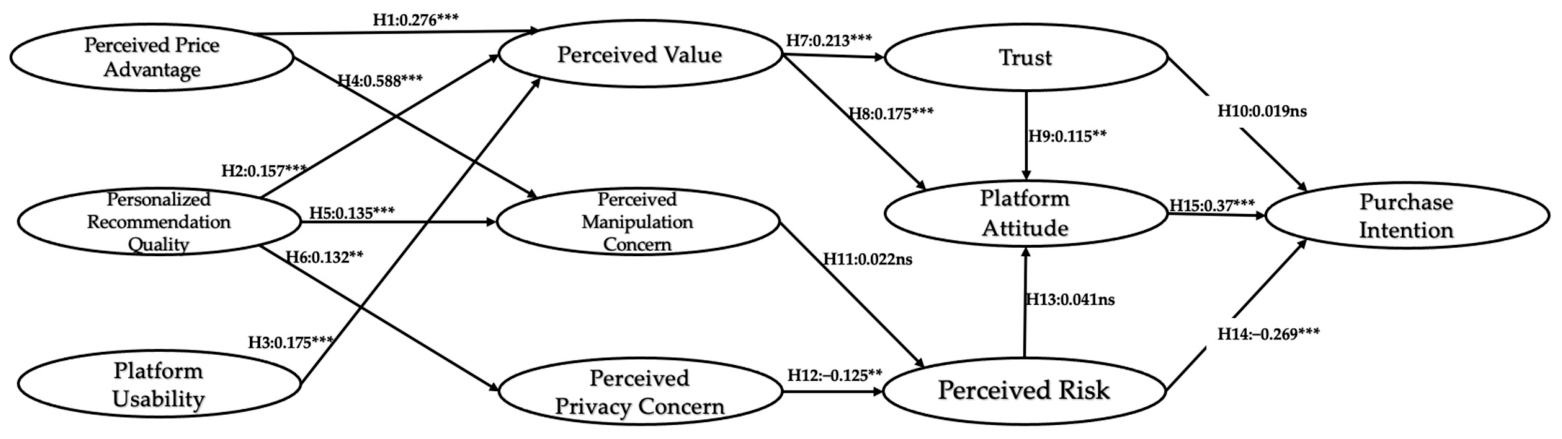
Table 8 presents the structural path results. The value-related pathway received consistent empirical support. Perceived price advantage was positively associated with perceived value (β = 0.276, p < 0.001), supporting H1. Personalized recommendation quality was also positively associated with perceived value (β = 0.157, p < 0.001), supporting H2. Platform usability was positively associated with perceived value as well (β = 0.175, p < 0.001), supporting H3. These results suggest that Korean Generation Z consumers’ perceived value of Temu was associated with price advantage, recommendation relevance, and ease of platform use.
The digital risk-related pathway was partially supported. Perceived price advantage was significantly associated with perceived manipulation concern, and the observed association was positive (β = 0.588, p < 0.001), supporting H4. Personalized recommendation quality was also significantly associated with perceived manipulation concern (β = 0.135, p < 0.001) and privacy concern (β = 0.132, p = 0.002), supporting H5 and H6. However, perceived manipulation concern was not significantly associated with perceived risk (β = 0.022, p = 0.609), so H11 was not supported. Privacy concern was significantly associated with perceived risk, and the observed association was negative (β = −0.125, p = 0.004), supporting H12 in terms of statistical significance. Because H12 was formulated as a non-directional hypothesis, this negative association should be interpreted as an empirical finding rather than as a predetermined directional effect.
Regarding the value–trust–attitude mechanism, perceived value was positively associated with trust (β = 0.213, p < 0.001) and platform attitude (β = 0.175, p < 0.001), supporting H7 and H8. Trust was also positively associated with platform attitude (β = 0.115, p = 0.005), supporting H9. However, trust was not directly associated with behavioral intention to purchase via Temu (β = 0.019, p = 0.610), so H10 was not supported. This suggests that trust may be more closely related to purchase intention through platform attitude than through a direct association.
Finally, platform attitude was positively associated with behavioral intention to purchase via Temu (β = 0.370, p < 0.001), supporting H15. Perceived risk was negatively associated with behavioral intention to purchase via Temu (β = −0.269, p < 0.001), supporting H14. However, perceived risk was not significantly associated with platform attitude (β = 0.041, p = 0.315), so H13 was not supported. Overall, 12 of the 15 hypothesized associations were statistically significant. These results indicate that Temu purchase intention among Korean Generation Z consumers was more consistently associated with perceived value and platform attitude, while perceived risk was directly and negatively associated with behavioral intention to purchase via Temu.
The explained variance values were also examined. The model explained 19.8% of the variance in perceived value, 38.8% of the variance in perceived manipulation concern, 1.7% of the variance in privacy concern, 1.6% of the variance in perceived risk, 4.5% of the variance in trust, 5.4% of the variance in platform attitude, and 20.4% of the variance in behavioral intention to purchase via Temu. These results indicate that the model had stronger explanatory power for perceived manipulation concern, perceived value, and behavioral intention than for privacy concern, perceived risk, trust, and platform attitude.
Standardized total effects were further examined to assess the overall contribution of each predictor to behavioral intention to purchase via Temu. Platform attitude showed the strongest positive total effect on behavioral intention (β = 0.370), followed by perceived value (β = 0.078) and trust (β = 0.062). Perceived risk showed the strongest negative total effect on behavioral intention (β = −0.254). The total effects of perceived price advantage, personalized recommendation quality, platform usability, privacy concern, and perceived manipulation concern on behavioral intention were comparatively small. The full standardized total effects for behavioral intention are reported in Appendix A, Table A7.
Table 8.
Structural path results and hypothesis testing.
Figure 2.
SEM analysis results. **, p < 0.01; ***, p < 0.001, ns = not significant.
5.4. Mediation Effect Analysis
Mediation effects were examined using the bootstrapping method with 2000 resamples and bias-corrected 95% confidence intervals. An indirect association was considered statistically significant when the confidence interval did not include zero. Table 9 and Appendix A: Table A9 reports selected standardized indirect association results separately according to their outcome variables. Table 9 reports indirect associations ending in behavioral intention to purchase via Temu, while Table A9 reports upstream indirect associations ending in perceived risk. Some rows represent aggregated or combined indirect associations rather than fully separated specific indirect paths; therefore, the mediation results are interpreted as supplementary evidence.
Table 9.
Indirect associations ending in behavioral intention to purchase via Temu.
The value-related indirect associations provided additional support for the role of perceived value, trust, and platform attitude in the model. Personalized recommendation quality showed a significant positive indirect association with behavioral intention to purchase via Temu through the value-related mechanism (standardized indirect association = 0.016, 95% BC CI [0.007, 0.030], p < 0.001). Platform usability also showed a significant positive indirect association with behavioral intention to purchase via Temu through the same mechanism (standardized indirect association = 0.014, 95% BC CI [0.005, 0.029], p = 0.001). By contrast, the indirect association between perceived price advantage and behavioral intention to purchase via Temu through the value-related mechanism was not treated as statistically robust because the lower bound of the confidence interval touched zero (standardized indirect association = 0.018, 95% BC CI [0.000, 0.044], p = 0.050). Therefore, this result is reported but not interpreted as strong evidence of mediation.
Perceived value showed a significant positive indirect association with behavioral intention to purchase via Temu through trust and platform attitude (standardized indirect association = 0.078, 95% BC CI [0.039, 0.128], p = 0.001). Trust also showed a significant positive indirect association with behavioral intention to purchase via Temu through platform attitude (standardized indirect association = 0.042, 95% BC CI [0.014, 0.076], p = 0.006). These findings are consistent with the structural results, in which platform attitude was more directly associated with purchase intention than trust.
The risk-related indirect associations were more limited. Privacy concern showed a significant positive indirect association with behavioral intention to purchase via Temu through perceived risk (standardized indirect association = 0.032, 95% BC CI [0.007, 0.069], p = 0.008). This positive sign should be interpreted mechanically as the product of two negative associations: privacy concern was negatively associated with perceived risk, and perceived risk was negatively associated with behavioral intention to purchase via Temu. However, this result should not be interpreted as direct evidence of privacy-protective behavior, privacy literacy, or active risk management, because these mechanisms were not measured in the present study. Perceived manipulation concern did not show a significant indirect association with behavioral intention through perceived risk, and perceived risk did not show a significant indirect association with behavioral intention through platform attitude. Overall, the mediation results suggest that the value-related mechanism received more consistent empirical support than the proposed risk-related mechanism. However, because some indirect associations were combined rather than fully decomposed into all possible specific indirect paths, these findings should be interpreted as supplementary evidence rather than as a complete test of all specific mediation chains.
5.5. fsQCA Results
5.5.1. Calibration and Necessary Condition Analysis
The fsQCA conditions were selected according to the S–O–R-based theoretical structure of the research model and the need to maintain configurational parsimony. Perceived price advantage, personalized recommendation quality, and platform usability were included as platform-level stimulus conditions. Perceived value, trust, perceived risk, and platform attitude were included as organismic evaluation conditions because they represent the main value-related, trust-related, risk-related, and evaluative states linking platform stimuli to behavioral intention to purchase via Temu. Behavioral intention to purchase via Temu was used as the outcome condition.
Perceived manipulation concern and privacy concern were not included in the main fsQCA model for theoretical and methodological reasons. Theoretically, these two constructs represent more specific antecedent risk-concern constructs, whereas perceived risk represents the broader risk-related organismic evaluation in the S–O–R model. Methodologically, including all constructs in the configurational model would substantially increase truth-table complexity and limited diversity relative to the sample size. Therefore, the main fsQCA model focused on a parsimonious set of theoretically selected conditions: platform stimuli, organismic value/risk evaluations, platform attitude, and purchase intention.
Before conducting fsQCA, the original construct scores were calibrated into fuzzy-set membership scores using the direct calibration method. Because all constructs were measured using five-point Likert-type scales and no external theoretical cut-off values were available, percentile-based direct calibration was used. The 95th percentile, 50th percentile, and 5th percentile were used as anchors for full membership, crossover point, and full non-membership, respectively. These anchors distinguish respondents with relatively high, moderate, and low membership in each condition. Table 10 reports the raw calibration anchors. Values equal to 0.50 were slightly adjusted to 0.501 before truth-table analysis to avoid ambiguity around the crossover point.
Table 10.
Raw calibration anchors for fsQCA.
A necessary condition analysis was first conducted for high behavioral intention to purchase via Temu. A condition is generally considered necessary when its consistency exceeds 0.90. The results showed that no single condition or its absence reached this threshold. Therefore, no individual condition can be regarded as necessary for high purchase intention. This result supports the use of configurational analysis because high purchase intention appears to depend on combinations of conditions rather than on one isolated factor. A necessary condition analysis was also conducted for low behavioral intention to purchase via Temu to examine causal asymmetry. Again, none of the individual conditions or their absence reached the commonly recommended consistency threshold of 0.90. Therefore, no single condition can be regarded as necessary for low purchase intention either. These findings indicate that both high and low purchase intention are better understood through configurational combinations rather than through individual conditions alone.
5.5.2. Sufficiency Analysis for High Purchase Intention
After the necessary condition analysis, a sufficiency analysis was conducted to identify configurations associated with a high behavioral intention to purchase via Temu. The truth table was constructed using a frequency threshold of 5, a consistency threshold of 0.90, and a PRI threshold of 0.70. These criteria were selected to retain configurations with sufficient empirical relevance and consistency.
To distinguish core and peripheral conditions, the parsimonious solution was compared with the intermediate solution. The parsimonious solution was fsPV * ~fsPR * fsAT. This solution had consistency of 0.924 and raw coverage of 0.490. Therefore, perceived value, the absence of perceived risk, and platform attitude were interpreted as solution-level core conditions. Conditions that appeared only in the intermediate solution, including perceived price advantage, personalized recommendation quality, platform usability, and trust, were interpreted as peripheral conditions. The configurations associated with high behavioral intention to purchase via Temu are reported in Table 11.
Table 11.
Configurations associated with high behavioral intention to purchase via Temu.
The intermediate solution identified four configurations associated with high behavioral intention to purchase via Temu. The overall solution consistency was 0.892, and the overall solution coverage was 0.642. These results indicate that the identified configurations explain a meaningful proportion of high purchase intention cases with a high level of consistency.
Configuration H1 represents a low-risk attitude configuration. The combination of low perceived risk and favorable platform attitude was associated with high purchase intention. This configuration had the highest raw coverage, indicating that it captured a relatively large proportion of high purchase intention cases. Configuration H2 represents a recommendation–usability–value–trust configuration under low perceived risk. In this configuration, high personalized recommendation quality, high platform usability, high perceived value, high trust, and low perceived risk were jointly associated with high purchase intention, even when perceived price advantage was absent. Configuration H3 represents a price–recommendation–value–attitude configuration. In this configuration, perceived price advantage, personalized recommendation quality, perceived value, and platform attitude were present, while platform usability and trust were absent. This suggests that favorable platform attitude and perceived value may still be associated with high purchase intention when recommendation quality and perceived price advantage are present. Configuration H4 represents a price–recommendation–usability–value configuration under low perceived risk. In this configuration, perceived price advantage, personalized recommendation quality, platform usability, perceived value, and low perceived risk were jointly associated with high purchase intention despite the absence of trust. Overall, the high-PI sufficiency results indicate equifinality. High behavioral intention to purchase via Temu was associated with different combinations of low perceived risk, favorable platform attitude, perceived value, recommendation quality, perceived price advantage, platform usability, and trust rather than with one single condition.
5.5.3. Low-Purchase-Intention Sufficiency Analysis
To examine causal asymmetry, a sufficiency analysis was also conducted for low behavioral intention to purchase via Temu. The outcome was defined as the absence of high purchase intention (~fsPI), while the same seven conditions were retained: perceived price advantage, personalized recommendation quality, platform usability, perceived value, trust, perceived risk, and platform attitude. The same truth-table thresholds used in the high-PI analysis were applied: frequency threshold = 5, consistency threshold = 0.90, and PRI threshold = 0.70.
Under these criteria, no sufficient configuration for low purchase intention met all three thresholds. This result indicates that low purchase intention was not simply the mirror image of high purchase intention. In other words, the absence of favorable value-related conditions or the presence of perceived risk did not form a stable sufficient configuration under the same strict analytical criteria. Therefore, the findings support the asymmetric logic of fsQCA by showing that configurations associated with high purchase intention should not be automatically reversed to explain low purchase intention.
As an exploratory check, the PRI threshold was relaxed to 0.60. Under this less restrictive criterion, one configuration emerged: ~PPA * ~PRQ * ~PUSE * ~PV * ~TR * PR * ~AT. This exploratory configuration had consistency of 0.931, raw coverage of 0.229, and PRI of 0.615. However, because its PRI value was below the main analysis threshold of 0.70, this configuration was not interpreted as a robust main result. It is reported only as supplementary evidence. The strict and exploratory sufficiency results for low purchase intention are summarized in Table 12.
Table 12.
Sufficiency analysis for low purchase intention.
5.5.4. Robustness Check
To further evaluate the stability of the fsQCA findings, several robustness checks were conducted by varying calibration anchors, truth-table thresholds, and the condition set. First, the main model was re-estimated using alternative calibration anchors based on the 90th, 50th, and 10th percentiles instead of the original 95th, 50th, and 5th percentiles. The alternative calibration produced a substantively similar pattern, with solution consistency of 0.884 and solution coverage of 0.631. Although the solution consistency was slightly lower than that of the main model, the main configurational interpretation remained stable, especially the importance of perceived value, low perceived risk, platform attitude, and recommendation-related conditions.
Second, a supplementary fsQCA model was estimated by excluding platform attitude from the condition set. This analysis was conducted because platform attitude is conceptually close to behavioral intention to purchase via Temu. The supplementary model included perceived price advantage, personalized recommendation quality, platform usability, perceived value, trust, and perceived risk as conditions, with high behavioral intention to purchase via Temu as the outcome. The results identified two configurations associated with high purchase intention. The first configuration was ~PPA * PRQ * PUSE * PV * ~PR, with consistency of 0.934 and raw coverage of 0.300. The second configuration was ~PRQ * PUSE * PV * ~TR * ~PR, with consistency of 0.939 and raw coverage of 0.284. The overall solution consistency was 0.923, and the overall solution coverage was 0.401. These results indicate that meaningful configurations associated with high purchase intention remained identifiable even after platform attitude was removed from the model. In particular, platform usability, perceived value, and low perceived risk appeared across both configurations, suggesting that the fsQCA findings were not solely driven by the conceptual proximity between platform attitude and purchase intention.
Third, the conservative solution was reported in full to improve transparency. Unlike the intermediate solution, the conservative solution does not use logical remainders and therefore provides a stricter assessment of observed configurations. The conservative solution identified three configurations associated with high behavioral intention to purchase via Temu. The overall solution consistency was 0.927, and the overall solution coverage was 0.444. Across all three conservative configurations, perceived value, low perceived risk, and favorable platform attitude appeared consistently, which is consistent with the parsimonious solution. The full conservative solution is reported in Appendix A.
Fourth, additional threshold checks were conducted by varying the frequency threshold, consistency threshold, and PRI threshold. Specifically, the robustness checks considered alternative frequency thresholds of 4, 5, and 6, alternative consistency thresholds of 0.85, 0.90, and 0.92, and alternative PRI thresholds around the main threshold of 0.70. These checks were used to examine whether the substantive interpretation depended on a single truth-table specification. The number of retained configurations varied across specifications, which is expected in fsQCA, but the main interpretation remained stable because perceived value, low perceived risk, recommendation quality, platform usability, and platform attitude repeatedly appeared in the robust solution patterns. Across these alternative settings, the main configurational interpretation remained broadly stable. The exact number of configurations and coverage values varied across specifications, which is expected in fsQCA. However, the repeated appearance of perceived value, low perceived risk, recommendation quality, platform usability, and platform attitude supports the robustness of the main interpretation.
Additional threshold checks were also conducted by varying the analytical parameters. Specifically, the robustness checks considered alternative frequency thresholds of 4, 5, and 6, alternative consistency thresholds of 0.85, 0.90, and 0.92, and alternative PRI thresholds around the main threshold of 0.70. These checks were used to examine whether the substantive interpretation depended on a single truth-table specification. As summarized in Table 13, the exact number of retained configurations varied across specifications, which is expected in fsQCA, but the main interpretation remained broadly stable.
Table 13.
fsQCA robustness summary.
5.6. Additional Measurement Validation and Common Method Bias Checks
To further strengthen measurement validation and address the concern that the ten constructs may not be sufficiently distinguishable, additional CFA-based model comparisons were conducted. The proposed ten-factor measurement model was compared with three theoretically plausible alternative models: a single-factor model, a model combining the risk-related constructs, and a model combining platform attitude and behavioral intention to purchase via Temu.
As shown in Table 14, the proposed ten-factor model showed good fit to the data: χ2 = 822.073, df = 360, χ2/df = 2.284, RMR = 0.038, GFI = 0.927, AGFI = 0.906, CFI = 0.968, TLI = 0.962, RMSEA = 0.044, and 90% CI for RMSEA = [0.040, 0.048]. By contrast, the single-factor model showed very poor fit: χ2 = 11,545.698, df = 405, χ2/df = 28.508, RMR = 0.189, GFI = 0.467, AGFI = 0.388, CFI = 0.234, TLI = 0.178, RMSEA = 0.202, and 90% CI for RMSEA = [0.199, 0.205]. This result indicates that the covariance structure of the measurement items could not be adequately explained by one general factor.
Table 14.
Alternative measurement model comparison.
Two additional combined-construct models were also tested. The model combining perceived manipulation concern, privacy concern, and perceived risk into one risk-related factor showed poorer fit than the proposed ten-factor model: χ2 = 2895.694, df = 377, χ2/df = 7.681, RMR = 0.107, GFI = 0.778, AGFI = 0.727, CFI = 0.827, TLI = 0.800, RMSEA = 0.099, and 90% CI for RMSEA = [0.096, 0.103]. The model combining platform attitude and behavioral intention to purchase via Temu into one factor also showed poorer fit: χ2 = 2138.171, df = 369, χ2/df = 5.795, RMR = 0.085, GFI = 0.829, AGFI = 0.784, CFI = 0.878, TLI = 0.857, RMSEA = 0.084, and 90% CI for RMSEA = [0.081, 0.088]. These results indicate that the proposed ten-factor model provided a substantially better representation of the data than the alternative models. Therefore, perceived manipulation concern, privacy concern, perceived risk, platform attitude, and behavioral intention to purchase via Temu were retained as empirically distinguishable constructs.
The single-factor CFA model also provides an additional diagnostic for common method bias. Although this test cannot completely rule out common method bias in a single-source survey design, the very poor fit of the single-factor model suggests that a single common factor did not adequately account for the covariance structure among the measurement items. Therefore, the results provide supplementary evidence that common method bias was unlikely to fully explain the observed measurement structure.
As an additional item-level sensitivity analysis, PC3 was excluded from privacy concern and PI2 was excluded from behavioral intention to purchase via Temu. Because privacy concern became a two-item construct after excluding PC3, the error variances of PC1 and PC2 were constrained to equality to obtain a proper measurement solution. The revised SEM showed acceptable overall fit: χ2 = 945.345, df = 333, χ2/df = 2.839, GFI = 0.911, AGFI = 0.892, CFI = 0.954, TLI = 0.947, RMSEA = 0.052, and 90% CI for RMSEA = [0.048, 0.056]. As reported in Appendix A, Table A5, the main structural paths remained substantively stable in direction and significance. Therefore, the main SEM conclusions were not driven by PC3 or PI2.
In addition to the HTMT point estimates, bootstrapped HTMT confidence intervals were examined using 5000 bootstrap samples. As reported in Appendix A, Table A6, the results showed that no 95% HTMT confidence interval included 1.00. The highest HTMT value was observed between perceived price advantage and perceived manipulation concern (HTMT = 0.578, 95% CI = [0.497, 0.650]), which remained clearly below the recommended threshold. These results provide additional evidence of discriminant validity among the constructs.
6. Discussion and Conclusions
6.1. Discussion of Key Findings
6.1.1. Stronger Empirical Support for the Value-Related Pathway
The findings first show that the value-related pathway received more consistent empirical support than the proposed risk-related pathway in explaining Korean Generation Z consumers’ behavioral intention to purchase via Temu. In the structural model, perceived price advantage, personalized recommendation quality, and platform usability were all positively associated with perceived value. This indicates that respondents did not evaluate Temu only as a low-price shopping channel [8,11,12]. Rather, their value perception was associated with a broader platform experience in which attractive prices, relevant recommendations, and ease of use jointly mattered.
Among these platform features, perceived price advantage showed the strongest association with perceived value. This finding is understandable in the Temu context because the platform is widely associated with low prices, discounts, and promotional offers. However, the present study does not interpret this construct as a direct measure of algorithmic pricing [8,11]. Instead, perceived price advantage reflects consumers’ perceived pricing benefits, discounts, and cost-saving opportunities [4,12]. Personalized recommendation quality and platform usability were also positively associated with perceived value, suggesting that respondents valued not only price benefits but also relevant product discovery and convenient platform interaction.
The downstream relationships further clarify the role of perceived value. Perceived value was positively associated with both trust and platform attitude, while platform attitude was positively associated with behavioral intention to purchase via Temu. Trust was positively associated with platform attitude, but it was not directly associated with purchase intention [4,49]. This pattern suggests that trust may be more closely linked to consumers’ overall evaluation of the platform than to purchase intention by itself. In other words, respondents who perceived Temu as valuable and trustworthy tended to evaluate the platform more favorably, and this favorable platform attitude was more directly associated with purchase intention.
The mediation results provide supplementary support for this interpretation. Personalized recommendation quality and platform usability showed significant positive indirect associations with behavioral intention to purchase via Temu through the value-related mechanism [4,12,49]. However, the indirect association between perceived price advantage and purchase intention was not interpreted as statistically robust because the lower bound of the confidence interval touched zero. Therefore, the value-related pathway should not be described as uniformly dominant. A more cautious interpretation is that value-related mechanisms, especially perceived value and platform attitude, received more consistent empirical support than the proposed risk-related mechanism [4,8,49].
6.1.2. The Selective Role of Digital Risk
The second important finding concerns the selective role of digital risk. The results show that risk-related concerns were present in respondents’ evaluations, but they did not operate through a simple or fully linear chain. Perceived price advantage and personalized recommendation quality were significantly associated with perceived manipulation concern, and personalized recommendation quality was also significantly associated with privacy concern. These results suggest that Korean Generation Z consumers may recognize both the benefits and the persuasive nature of platform features. They may appreciate low prices and personalized recommendations while also being aware that promotional cues and product exposure can influence their choices [16,33,36].
However, the downstream associations of these concerns were more limited. Perceived manipulation concern was not significantly associated with perceived risk. This suggests that respondents’ awareness of persuasive platform tactics did not automatically translate into generalized transaction risk. One possible explanation is that digitally experienced consumers may perceive persuasive platform design as a normal part of online shopping [10]. However, this explanation should be treated cautiously because the present study did not directly measure consumers’ persuasion knowledge, digital literacy, or coping strategies [10,33].
Privacy concern was significantly and negatively associated with perceived risk. Because H12 was formulated as a non-directional hypothesis, this result should be interpreted as an observed empirical association rather than as support for a predetermined negative effect. One possible explanation, which could not be tested in the present model, is that privacy concern may coexist with greater digital awareness, more cautious information evaluation, or protective behaviors [6,35]. However, the study did not directly measure privacy literacy, privacy settings management, secure payment behavior, or other privacy-protective actions. Therefore, the negative association between privacy concern and perceived risk should not be interpreted as direct evidence of active risk management [35,52].
Perceived risk was negatively associated with behavioral intention to purchase via Temu, but it was not significantly associated with platform attitude. This means that perceived risk was more directly connected to purchase intention than to respondents’ overall platform attitude [6,8]. A possible interpretation is that young consumers may still hold a favorable attitude toward Temu because of low prices, product variety, or platform convenience, while perceived risk may directly reduce their willingness to purchase. Overall, the results suggest that digital risk operates selectively and non-uniformly: manipulation concern and privacy concern do not automatically become generalized perceived risk, but perceived risk itself remains important for purchase intention [8,10].
6.1.3. Configurational Understanding of High Purchase Intention
The fsQCA results complement the SEM findings by showing that a high behavioral intention to purchase via Temu was associated with multiple configurations rather than a single pathway [19,20,68]. The intermediate solution identified four configurations for high purchase intention, with an overall solution consistency of 0.892 and solution coverage of 0.642. These configurations commonly involved perceived value, favorable platform attitude, low perceived risk, and personalized recommendation quality [20,21].
The configurational results are useful because they show equifinality. Some respondents may show high purchase intention when a favorable platform attitude and low perceived risk are both present [20,21]. Others may show high purchase intention when recommendation quality, platform usability, perceived value, and trust are combined with low perceived risk. Still others may show high purchase intention when perceived price advantage, recommendation quality, perceived value, and platform attitude are jointly present. These findings suggest that Korean Generation Z consumers’ purchase intention toward Temu cannot be explained only by one isolated factor [21,68].
At the same time, the fsQCA results should be interpreted as configurational associations rather than causal recipes. The study does not claim that these configurations prove actual adoption behavior or actual purchasing behavior [21,72]. Instead, the SEM and fsQCA results together suggest that behavioral intention to purchase via Temu is associated with both average net associations and multiple combinations of value-related and risk-related conditions [20,68,72].
6.2. Theoretical Implications
This study offers three theoretical implications for research on cross-border e-commerce, algorithm-enabled platforms, and Generation Z consumer behavior. First, the study provides a conceptual contribution by distinguishing perceived manipulation concern, privacy concern, and generalized perceived risk [8,11]. Previous research often treats digital risk-related constructs as closely connected or interchangeable. The present findings suggest that these constructs should be separated. Perceived manipulation concern and privacy concern capture specific concerns about platform influence and data use, whereas perceived risk captures broader uncertainty about shopping outcomes, transaction safety, delivery, payment, and possible losses [11,12]. The non-significant association between perceived manipulation concern and perceived risk, together with the negative association between privacy concern and perceived risk, indicates that specific digital concerns do not necessarily translate into generalized transaction risk in a uniform way [4,12].
Second, the study contributes to mechanism-level understanding by showing that value-related and risk-related mechanisms were associated with purchase intention in different ways. Perceived value was associated with purchase intention mainly through platform attitude, while perceived risk was directly and negatively associated with purchase intention [16,35]. Trust was associated with platform attitude, but not directly with purchase intention. This pattern suggests that favorable evaluations and risk perceptions may not operate symmetrically [35]. For Korean Generation Z consumers in the Temu context, value perception appears to be more closely connected to attitude formation, whereas perceived risk is more directly associated with behavioral intention to purchase.
Third, the study identifies an important contextual boundary. The findings are based on Korean Generation Z consumers who had prior Temu usage experience and were relatively familiar with online shopping and cross-border e-commerce. Therefore, the observed value–risk dynamics may be specific to digitally experienced young consumers in a Korean market context [7]. This boundary is theoretically important because Generation Z consumers may be simultaneously attracted to platform value and aware of privacy, personalization, and platform influence issues. Future research should examine whether the same relationships appear among older consumers, less digitally experienced consumers, consumers in other countries, or users of other cross-border platforms [4,7].
The combination of SEM and fsQCA also offers a theoretical insight beyond the use of two methods alone [68]. SEM shows the average net associations among constructs, while fsQCA shows that high purchase intention can be associated with different configurations of conditions. This combined evidence suggests that purchase intention toward algorithm-enabled cross-border platforms should be understood not only as a linear evaluation process but also as an equifinal and path-dependent outcome [19,68].
6.3. Practical Implications
The findings also provide several practical implications for Temu and similar cross-border e-commerce platforms. First, platforms should recognize that perceived price advantage is important, but not sufficient by itself. Respondents’ perceived value was associated not only with price advantage, but also with recommendation quality and platform usability. Therefore, platform managers should avoid relying only on aggressive low-price appeals [8,12,29]. A more sustainable approach is to combine attractive prices with relevant product recommendations, clear product information, convenient search functions, and smooth transaction processes [8,29].
Second, personalized recommendations require careful management. Personalized recommendation quality was positively associated with perceived value, but it was also associated with perceived manipulation concern and privacy concern. Although transparency and user-control mechanisms were not directly measured in this study, the simultaneous positive associations of recommendation quality with perceived value, manipulation concern, and privacy concern suggest that these mechanisms warrant managerial attention [12,16]. Platforms may consider making recommendation processes more understandable, allowing users to adjust recommendation preferences, and avoiding recommendation designs that appear overly intrusive or overly persuasive [16,35].
Third, perceived risk should be treated as an important barrier to purchase intention. Perceived risk was directly and negatively associated with behavioral intention to purchase via Temu, and low perceived risk appeared repeatedly in the fsQCA configurations associated with high purchase intention. This suggests that cross-border platforms should make risk-reduction mechanisms visible to consumers [6]. Clear refund policies, reliable delivery tracking, secure payment systems, transparent seller information, and accessible customer service may help reduce uncertainty in cross-border shopping. However, these managerial actions should be understood as practical implications derived from the perceived risk finding, not as mechanisms directly tested in the present model [8].
Fourth, platform attitude remains central to purchase intention. Platform attitude showed the strongest direct positive association with behavioral intention to purchase via Temu. For Korean Generation Z consumers, a favorable platform attitude may be shaped by perceived value, trust, convenience, product relevance, and manageable risk [8,29]. Therefore, platforms should focus not only on transaction-level incentives but also on the overall platform experience. The practical message is that purchase intention is more likely to be associated with a balanced platform experience in which consumers perceive value, convenience, relevance, and manageable risk at the same time [6,16].
6.4. Limitations and Future Research
This study has several limitations that provide opportunities for future research. First, the study used online panel sampling through Google Forms and focused on Korean Generation Z consumers with prior Temu usage experience [17]. Although this sampling approach was appropriate for the research context, it was not a probability sampling design. Therefore, the findings may be affected by self-selection bias and may not be fully generalizable to all Korean consumers, older consumers, consumers in other national markets, or less digitally experienced consumers [8].
Second, the sample included many active online shoppers and frequent Temu users. This is useful for examining respondents who could meaningfully evaluate Temu’s price advantage, recommendation quality, usability, trust, perceived risk, and purchase intention [73]. However, it also means that the sample may overrepresent heavy digital platform users and relatively active Temu users. Future research should compare light users, heavy users, former users, and non-users with sufficient platform awareness to better understand differences in purchase intention [11].
Third, the study measured behavioral intention to purchase via Temu rather than verified actual purchase behavior. Although respondents reported Temu usage frequency and cross-border e-commerce experience, the study did not verify actual shopping histories, purchase records, product categories, spending levels, or return experiences. Future studies could combine survey data with behavioral data, transaction records, platform log data, or experimental designs to examine whether the same mechanisms explain actual purchasing behavior [8].
Fourth, the study used cross-sectional and single-source self-reported survey data. Therefore, the SEM results should be interpreted as associations rather than causal effects. Harman’s single-factor test provides only a limited diagnostic and cannot establish the absence of common method bias. Although additional reliability, validity, HTMT, and sensitivity checks were conducted, future research should apply stronger approaches, such as marker variables, common latent factor analysis, time-lagged data collection, multi-source data, or experimental manipulation, to further reduce common method concerns.
Fifth, although this study reconceptualized algorithmic pricing advantage as perceived price advantage, the measurement does not directly capture consumers’ perceptions of algorithmic pricing, dynamic pricing, or personalized pricing. The PPA items measured perceived pricing benefits, discounts, promotional prices, and cost-saving opportunities. Future research could develop more direct measures of algorithmic pricing awareness, perceived dynamic pricing, promotional pressure, or personalized pricing perception.
Sixth, privacy concern was measured as concern about data collection and data use, but the study did not measure privacy literacy, privacy-protective behavior, secure payment behavior, privacy setting management, or information-control practices. Therefore, the negative association between privacy concern and perceived risk should not be interpreted as evidence that privacy-concerned consumers actively reduce risk through protective behavior. Future studies could include privacy literacy and protective behavior as separate constructs to examine whether they explain this relationship.
Seventh, the SEM model did not include all possible control variables, and potential endogeneity cannot be fully ruled out. Although demographic and behavioral characteristics were reported, the structural model did not systematically estimate alternative models with controls such as online shopping frequency, Temu usage frequency, cross-border e-commerce experience, gender, education, or occupation. Future studies could include these variables as controls, compare controlled and uncontrolled models, and apply longitudinal or experimental designs to strengthen causal interpretation.
Eighth, the fsQCA model focused on a parsimonious set of theoretically selected conditions. Although this helped reduce truth-table complexity, it also meant that perceived manipulation concern and privacy concern were not included in the main sufficiency model [17,74]. In addition, the main fsQCA interpretation focused primarily on configurations associated with high purchase intention. Future studies could test alternative fsQCA models including perceived manipulation concern and privacy concern, examine low purchase intention configurations more fully, compare models excluding platform attitude, and assess robustness under different calibration anchors, PRI thresholds, and frequency thresholds [19].
Ninth, the study was conducted in the Korean context using a Korean-language questionnaire. Although the wording was reviewed for clarity and contextual appropriateness, cross-cultural scale equivalence was not formally tested. Future research could conduct translation–back-translation procedures, measurement invariance tests, and cross-cultural comparisons to examine whether the same constructs operate similarly across countries. Finally, this study focused on platform-level trust rather than device-specific trust. Respondents may experience Temu through mobile phones, tablets, laptops, or desktop computers, and these access channels may differ in perceived control, convenience, payment confidence, and information visibility. Future research could distinguish trust in the platform from trust in the device or access channel used for online shopping.
6.5. Conclusions
This study examined factors associated with Korean Generation Z consumers’ purchase intention toward Temu in the context of algorithm-enabled cross-border e-commerce [4,8]. Based on 676 valid survey responses, the study used SEM and fsQCA to examine how perceived price advantage, personalized recommendation quality, platform usability, perceived value, trust, platform attitude, perceived manipulation concern, privacy concern, and perceived risk were associated with behavioral intention to purchase via Temu [19].
The SEM results showed that perceived price advantage, personalized recommendation quality, and platform usability were positively associated with perceived value. Perceived value was positively associated with trust and platform attitude, and platform attitude was positively associated with behavioral intention to purchase via Temu. By contrast, trust was not directly associated with purchase intention. The risk-related results were more selective [4,11,12]. Perceived manipulation concern was not significantly associated with perceived risk, privacy concern showed a significant negative association with perceived risk, and perceived risk was directly and negatively associated with purchase intention but was not significantly associated with platform attitude [16].
The fsQCA results further showed that high purchase intention was associated with multiple configurations rather than one single pathway. These configurations commonly involved perceived value, favorable platform attitude, low perceived risk, and personalized recommendation quality. Taken together, the findings suggest that Korean Generation Z consumers’ purchase intention toward Temu is more consistently associated with value-related evaluations and platform attitude, while digital risk operates in a selective and non-uniform way [19].
Overall, this study contributes to cross-border e-commerce research by distinguishing platform value, specific digital concerns, generalized perceived risk, platform attitude, and purchase intention within a single S–O–R-based framework. It also shows that purchase intention toward Temu should not be interpreted as actual platform use or actual purchasing behavior. Instead, it reflects consumers’ stated behavioral intention to purchase via Temu. Future research can build on these findings by using longitudinal, experimental, cross-cultural, and behavioral data to examine how value and risk evaluations develop into actual purchasing behavior over time.
Author Contributions
Conceptualization, X.Z., M.C. and L.T.; methodology, X.Z., M.C. and L.T.; software, X.Z.; validation, X.Z., M.C. and L.T.; formal analysis, X.Z.; investigation, X.Z.; resources, X.Z.; data curation, X.Z. and M.C.; writing—original draft preparation, X.Z.; writing—review and editing, M.C.; visualization, X.Z., M.C. and L.T.; supervision, M.C. All authors have read and agreed to the published version of the manuscript.
Funding
This research received no external funding.
Institutional Review Board Statement
This study was carried out in accordance with the Declaration of Helsinki. The Department of Global Convergence at Kangwon National University exempted this study from a formal ethics review. The department concluded that the research was scientifically appropriate, ethically acceptable, and posed no harm to participants, as it did not involve invasive procedures.
Informed Consent Statement
Informed consent was obtained from all participants.
Data Availability Statement
The raw data supporting the conclusions of this article will be made available by the authors on request.
Acknowledgments
The authors would like to express their sincere gratitude to Guan Wang for his valuable guidance, constructive comments, and insightful suggestions during the initial development of this study. His intellectual input and academic support contributed to the improvement of the manuscript. The authors greatly appreciate his generous assistance throughout the research process.
Conflicts of Interest
The authors declare no conflicts of interest.
Appendix A
Table A1.
HTMT results.
Table A2.
Necessary condition analysis for low purchase intention.
Table A3.
Conservative fsQCA solution for high purchase intention.
Table A4.
Supplementary fsQCA model excluding platform attitude.
Table A5.
Sensitivity analysis after excluding PC3 and PI2.
Table A6.
HTMT bootstrap confidence intervals.
Table A7.
Standardized total effects on behavioral intention to purchase via Temu.
Table A8.
Standard-error-based 95% confidence intervals for structural coefficients.
Table A9.
Upstream indirect associations ending in perceived risk.
References
- Gomez-Herrera, E.; Martens, B.; Turlea, G. The Drivers and Impediments for Cross-Border e-Commerce in the EU. Inf. Econ. Policy 2014, 28, 83–96. [Google Scholar] [CrossRef] [Scilit]
- Zhu, W.; Mou, J.; Benyoucef, M. Exploring Purchase Intention in Cross-Border E-Commerce: A Three Stage Model. J. Retail. Consum. Serv. 2019, 51, 320–330. [Google Scholar] [CrossRef] [Scilit]
- Zeithaml, V.A. Consumer Perceptions of Price, Quality, and Value: A Means-End Model and Synthesis of Evidence. J. Mark. 1988, 52, 2–22. [Google Scholar] [CrossRef] [Scilit] [PubMed]
- Wang, C.; Liu, T.; Zhu, Y.; Wang, H.; Wang, X.; Zhao, S. The Influence of Consumer Perception on Purchase Intention: Evidence from Cross-Border E-Commerce Platforms. Heliyon 2023, 9, e21617. [Google Scholar] [CrossRef] [Scilit] [PubMed]
- Pavlou, P.A. Consumer Acceptance of Electronic Commerce: Integrating Trust and Risk with the Technology Acceptance Model. Int. J. Electron. Commer. 2003, 7, 101–134. [Google Scholar] [CrossRef] [Scilit]
- Kim, D.J.; Ferrin, D.L.; Rao, H.R. A Trust-Based Consumer Decision-Making Model in Electronic Commerce: The Role of Trust, Perceived Risk, and Their Antecedents. Decis. Support Syst. 2008, 44, 544–564. [Google Scholar] [CrossRef] [Scilit]
- Gefen, D.; Karahanna, E.; Straub, D.W. Trust and TAM in Online Shopping: An Integrated Model1. MIS Q. 2003, 27, 51–90. [Google Scholar] [CrossRef] [Scilit]
- Roh, M.; Jang, H. Evolution of Adoption Determinants in Cross-Border e-Commerce: Comparing AliExpress and Temu. Asia Pac. J. Mark. Logist. 2026, 38, 1217–1238. [Google Scholar] [CrossRef] [Scilit]
- Moayery Fard, H.; Kashmiri, M.; Jikidze, E. The Impact of Social Media Advertising Features on Consumer Purchase Intentions: Evidence from Georgian Consumers Using Temu. Innov. Mark. 2025, 21, 232–245. [Google Scholar] [CrossRef] [Scilit]
- Liu, S.; Gómez-Cruz, E. “Temu Is Evil, but I Still Use It”: Platform Cynicism in Platform Capitalism. New Media Soc. 2026, 28, 4391–4410. [Google Scholar] [CrossRef] [Scilit]
- Vomberg, A.; Homburg, C.; Sarantopoulos, P. Algorithmic Pricing: Effects on Consumer Trust and Price Search. Int. J. Res. Mark. 2025, 42, 1166–1186. [Google Scholar] [CrossRef] [Scilit]
- Zhao, L.; Fu, B.; Bai, S. Understanding the Influence of Personalized Recommendation on Purchase Intentions from a Self-Determination Perspective: Contingent upon Product Categories. J. Theor. Appl. Electron. Commer. Res. 2025, 20, 32. [Google Scholar] [CrossRef] [Scilit]
- Hu, S.; Liu, J.; Li, H.; Yin, J.; Liu, X. Exploring the Mechanism of AI-Powered Personalized Product Recommendation on Generation Z Users’ Spontaneous Buying Intention on Short-Form Video Platforms: A Perceived Evaluation Perspective. J. Theor. Appl. Electron. Commer. Res. 2025, 20, 290. [Google Scholar] [CrossRef] [Scilit]
- Zeng, H.; Hao, L. Cross-Cultural Examination of the Effects of Promotional Framing on Consumers’ Responses: A Comparison of China and Pakistan. Int. Bus. Rev. 2016, 25, 1020–1029. [Google Scholar] [CrossRef] [Scilit]
- Davis, F.D. Perceived Usefulness, Perceived Ease of Use, and User Acceptance of Information Technology. MIS Q. 1989, 13, 319. [Google Scholar] [CrossRef] [Scilit] [PubMed]
- Boerman, S.C.; Kruikemeier, S.; Bol, N. When Is Personalized Advertising Crossing Personal Boundaries? How Type of Information, Data Sharing, and Personalized Pricing Influence Consumer Perceptions of Personalized Advertising. Comput. Hum. Behav. Rep. 2021, 4, 100144. [Google Scholar] [CrossRef] [Scilit]
- Singh, P. What Drives or Decelerates Generation Z? An Empirical Study Navigating Consumer Buying Intentions in Online Shopping. Sage Open 2024, 14, 21582440241263173. [Google Scholar] [CrossRef] [Scilit]
- Puiu, S.; Demyen, S.; Tănase, A.-C.; Vărzaru, A.A.; Bocean, C.G. Assessing the Adoption of Mobile Technology for Commerce by Generation Z. Electronics 2022, 11, 866. [Google Scholar] [CrossRef] [Scilit]
- Pappas, I.O.; Woodside, A.G. Fuzzy-Set Qualitative Comparative Analysis (fsQCA): Guidelines for Research Practice in Information Systems and Marketing. Int. J. Inf. Manag. 2021, 58, 102310. [Google Scholar] [CrossRef] [Scilit]
- Woodside, A.G. Embrace•perform•model: Complexity Theory, Contrarian Case Analysis, and Multiple Realities. J. Bus. Res. 2014, 67, 2495–2503. [Google Scholar] [CrossRef] [Scilit]
- Yu, J.; Xie, C.; Huang, S.; Guo, C. Configuring the Value-versus-Attachment Combinations in Determining Consumer Purchase Intention in Tourism e-Commerce Live Streaming: A fsQCA Approach. Curr. Issues Tour. 2023, 26, 3023–3039. [Google Scholar] [CrossRef] [Scilit]
- Anderson, J.C.; Gerbing, D.W. Structural Equation Modeling in Practice: A Review and Recommended Two-Step Approach. Psychol. Bull. 1988, 103, 411–423. [Google Scholar] [CrossRef]
- DelVecchio, D.; Krishnan, H.S.; Smith, D.C. Cents or Percent? The Effects of Promotion Framing on Price Expectations and Choice. J. Mark. 2007, 71, 158–170. [Google Scholar] [CrossRef] [Scilit]
- Schafer, J.B.; Konstan, J.A.; Riedl, J. E-Commerce Recommendation Applications. Data Min. Knowl. Discov. 2001, 5, 115–153. [Google Scholar] [CrossRef] [Scilit]
- Adomavicius, G.; Tuzhilin, A. Toward the next Generation of Recommender Systems: A Survey of the State-of-the-Art and Possible Extensions. IEEE Trans. Knowl. Data Eng. 2005, 17, 734–749. [Google Scholar] [CrossRef] [Scilit]
- Xiao, B.; Benbasat, I. E-Commerce Product Recommendation Agents: Use, Characteristics, and Impact1. MIS Q. 2007, 31, 137–209. [Google Scholar] [CrossRef] [Scilit]
- Venkatesh, V.; Morris, M.G.; Davis, G.B.; Davis, F.D. User Acceptance of Information Technology: Toward a Unified View. MIS Q. 2003, 27, 425–478. [Google Scholar] [CrossRef] [Scilit]
- Pee, L.G.; Jiang, J.; Klein, G. Signaling Effect of Website Usability on Repurchase Intention. Int. J. Inf. Manag. 2018, 39, 228–241. [Google Scholar] [CrossRef] [Scilit]
- Guo, J.; Zhang, W.; Xia, T. Impact of Shopping Website Design on Customer Satisfaction and Loyalty: The Mediating Role of Usability and the Moderating Role of Trust. Sustainability 2023, 15, 6347. [Google Scholar] [CrossRef] [Scilit]
- Venkatesh, V.; Davis, F.D. A Theoretical Extension of the Technology Acceptance Model: Four Longitudinal Field Studies. Manag. Sci. 2000, 46, 186–204. [Google Scholar] [CrossRef] [Scilit]
- Sweeney, J.C.; Soutar, G.N. Consumer Perceived Value: The Development of a Multiple Item Scale. J. Retail. 2001, 77, 203–220. [Google Scholar] [CrossRef] [Scilit]
- Ajzen, I. The Theory of Planned Behavior. Organ. Behav. Hum. Decis. Process. 1991, 50, 179–211. [Google Scholar] [CrossRef] [Scilit]
- Voorveld, H.A.M.; Meppelink, C.S.; Boerman, S.C. Consumers’ Persuasion Knowledge of Algorithms in Social Media Advertising: Identifying Consumer Groups Based on Awareness, Appropriateness, and Coping Ability. Int. J. Advert. 2024, 43, 960–986. [Google Scholar] [CrossRef] [Scilit]
- Voigt, C.; Schlögl, S.; Groth, A. Dark Patterns in Online Shopping: Of Sneaky Tricks, Perceived Annoyance and Respective Brand Trust. In Proceedings of the HCI in Business, Government and Organizations: 8th International Conference, HCIBGO 2021, Held as Part of the 23rd HCI International Conference, HCII 2021, Virtual Event, 24–29 July 2021, Proceedings; Springer: Berlin/Heidelberg, Germany, 2021; pp. 143–155. [Google Scholar]
- Dinev, T.; Hart, P. An Extended Privacy Calculus Model for E-Commerce Transactions. Inf. Syst. Res. 2006, 17, 61–80. [Google Scholar] [CrossRef] [Scilit]
- Mathur, A.; Acar, G.; Friedman, M.J.; Lucherini, E.; Mayer, J.; Chetty, M.; Narayanan, A. Dark Patterns at Scale: Findings from a Crawl of 11K Shopping Websites. Proc. ACM Hum.-Comput. Interact. 2019, 3, 81. [Google Scholar] [CrossRef] [Scilit]
- Malhotra, N.K.; Kim, S.S.; Agarwal, J. Internet Users’ Information Privacy Concerns (IUIPC): The Construct, the Scale, and a Causal Model. Inf. Syst. Res. 2004, 15, 336–355. [Google Scholar] [CrossRef] [Scilit]
- Abbott, R.; Sin, R.; Pedersen, C.; Harris, T.; Beck, T.; Nilsson, S.; Dong, T.; Wang, Y.; Li, Y. The Role of Dark Pattern Stimuli and Personality in Online Impulse Shopping: An Application of S-O-R Theory. J. Consum. Behav. 2023, 22, 1311–1329. [Google Scholar] [CrossRef] [Scilit]
- Aljuhmani, H.Y.; Elrehail, H.; Bayram, P.; Samarah, T. Linking Social Media Marketing Efforts with Customer Brand Engagement in Driving Brand Loyalty. Asia Pac. J. Mark. Logist. 2023, 35, 1719–1738. [Google Scholar] [CrossRef] [Scilit]
- Bülbül, N.; Çayırağası, F.; Efendioglu, I.H. SORCIS Model: Social Media Marketing Dimensions, Consumer Decision-Making Styles, and Purchase Intention. Merc. Y Neg. 2026, 27, 107–142. [Google Scholar] [CrossRef] [Scilit]
- Haws, K.L.; Bearden, W.O. Dynamic Pricing and Consumer Fairness Perceptions. J. Consum. Res. 2006, 33, 304–311. [Google Scholar] [CrossRef] [Scilit]
- Priester, A.; Robbert, T.; Roth, S. A Special Price Just for You: Effects of Personalized Dynamic Pricing on Consumer Fairness Perceptions. J. Revenue Pricing Manag. 2020, 19, 99–112. [Google Scholar] [CrossRef] [Scilit]
- Häubl, G.; Trifts, V. Consumer Decision Making in Online Shopping Environments: The Effects of Interactive Decision Aids. Mark. Sci. 2000, 19, 4–21. [Google Scholar] [CrossRef] [Scilit]
- Senecal, S.; Nantel, J. The Influence of Online Product Recommendations on Consumers’ Online Choices. J. Retail. 2004, 80, 159–169. [Google Scholar] [CrossRef] [Scilit]
- Tam, K.Y.; Ho, S.Y. Understanding the Impact of Web Personalization on User Information Processing and Decision Outcomes. MIS Q. Manag. Inf. Syst. 2006, 30, 865–890. [Google Scholar] [CrossRef] [Scilit]
- Habib, S.; Alkhuraydili, A.; Haider, A.; Khan, M.A. Identifying Factors of Online Shopping and Influence on Purchase Intention of Product among Saudi Consumers: The Mediating Role of Consumer Trust. J. Infrastruct. Policy Dev. 2024, 8, 6437. [Google Scholar] [CrossRef] [Scilit]
- Belanche, D.; Casaló, L.V.; Guinalíu, M. Website Usability, Consumer Satisfaction and the Intention to Use a Website: The Moderating Effect of Perceived Risk. J. Retail. Consum. Serv. 2012, 19, 124–132. [Google Scholar] [CrossRef] [Scilit]
- Gan, C.; Wang, W. The Influence of Perceived Value on Purchase Intention in Social Commerce Context. Internet Res. 2017, 27, 772–785. [Google Scholar] [CrossRef] [Scilit]
- Wu, Y.; Huang, H. Influence of Perceived Value on Consumers’ Continuous Purchase Intention in Live-Streaming E-Commerce—Mediated by Consumer Trust. Sustainability 2023, 15, 4432. [Google Scholar] [CrossRef] [Scilit]
- Sullivan, Y.W.; Kim, D.J. Assessing the Effects of Consumers’ Product Evaluations and Trust on Repurchase Intention in e-Commerce Environments. Int. J. Inf. Manag. 2018, 39, 199–219. [Google Scholar] [CrossRef] [Scilit]
- Moriuchi, E.; Takahashi, I. The Role of Perceived Value, Trust and Engagement in the C2C Online Secondary Marketplace. J. Bus. Res. 2022, 148, 76–88. [Google Scholar] [CrossRef] [Scilit]
- Youn, S. Determinants of Online Privacy Concern and Its Influence on Privacy Protection Behaviors Among Young Adolescents. J. Consum. Aff. 2009, 43, 389–418. [Google Scholar] [CrossRef] [Scilit]
- Forsythe, S.M.; Shi, B. Consumer Patronage and Risk Perceptions in Internet Shopping. J. Bus. Res. 2003, 56, 867–875. [Google Scholar] [CrossRef] [Scilit]
- Lim, Y.J.; Osman, A.; Salahuddin, S.N.; Romle, A.R.; Abdullah, S. Factors Influencing Online Shopping Behavior: The Mediating Role of Purchase Intention. Procedia Econ. Financ. 2016, 35, 401–410. [Google Scholar] [CrossRef] [Scilit]
- Kim, H.-W.; Xu, Y.; Gupta, S. Which Is More Important in Internet Shopping, Perceived Price or Trust? Electron. Commer. Res. Appl. 2012, 11, 241–252. [Google Scholar] [CrossRef] [Scilit]
- Nilashi, M.; Jannach, D.; bin Ibrahim, O.; Esfahani, M.D.; Ahmadi, H. Recommendation Quality, Transparency, and Website Quality for Trust-Building in Recommendation Agents. Electron. Commer. Res. Appl. 2016, 19, 70–84. [Google Scholar] [CrossRef] [Scilit]
- Chandra, S.; Verma, S.; Lim, W.M.; Kumar, S.; Donthu, N. Personalization in Personalized Marketing: Trends and Ways Forward. Psychol. Mark. 2022, 39, 1529–1562. [Google Scholar] [CrossRef] [Scilit]
- Chiu, C.; Wang, E.T.G.; Fang, Y.; Huang, H. Understanding Customers’ Repeat Purchase Intentions in B2C E-commerce: The Roles of Utilitarian Value, Hedonic Value and Perceived Risk. Inf. Syst. J. 2014, 24, 85–114. [Google Scholar] [CrossRef] [Scilit]
- Wu, Z.; Yang, Y.; Zhao, J.; Wu, Y. The Impact of Algorithmic Price Discrimination on Consumers’ Perceived Betrayal. Front. Psychol. 2022, 13, 825420. [Google Scholar] [CrossRef] [Scilit] [PubMed]
- Hufnagel, G.; Schwaiger, M.; Weritz, L. Seeking the Perfect Price: Consumer Responses to Personalized Price Discrimination in e-Commerce. J. Bus. Res. 2022, 143, 346–365. [Google Scholar] [CrossRef] [Scilit]
- Karwatzki, S.; Dytynko, O.; Trenz, M.; Veit, D. Beyond the Personalization–Privacy Paradox: Privacy Valuation, Transparency Features, and Service Personalization. J. Manag. Inf. Syst. 2017, 34, 369–400. [Google Scholar] [CrossRef] [Scilit]
- Awad, N.F.; Krishnan, M.S. The Personalization Privacy Paradox: An Empirical Evaluation of Information Transparency and the Willingness to Be Profiled Online for Personalization1. MIS Q. 2006, 30, 13–28. [Google Scholar] [CrossRef] [Scilit]
- Lee, C.H.; Cranage, D.A. Personalisation–Privacy Paradox: The Effects of Personalisation and Privacy Assurance on Customer Responses to Travel Web Sites. Tour. Manag. 2011, 32, 987–994. [Google Scholar] [CrossRef] [Scilit]
- Sutanto, J.; Palme, E.; Tan, C.-H.; Phang, C.W. Addressing the Personalization-Privacy Paradox. MIS Q. 2013, 37, 1141–1164. [Google Scholar] [CrossRef] [Scilit]
- Verhagen, T.; Meents, S.; Tan, Y.-H. Perceived Risk and Trust Associated with Purchasing at Electronic Marketplaces. Eur. J. Inf. Syst. 2006, 15, 542–555. [Google Scholar] [CrossRef] [Scilit]
- Perea y Monsuwé, T.; Dellaert, B.G.C.; de Ruyter, K. What Drives Consumers to Shop Online? A Literature Review. Int. J. Serv. Ind. Manag. 2004, 15, 102–121. [Google Scholar] [CrossRef] [Scilit]
- Lu, B.; Fan, W.; Zhou, M.J. Social Presence, Trust, and Social Commerce Purchase Intention: An Empirical Research. Comput. Hum. Behav. 2016, 56, 225–237. [Google Scholar] [CrossRef] [Scilit]
- Fiss, P.C. Building Better Causal Theories: A Fuzzy Set Approach to Typologies in Organization Research. Acad. Manag. J. 2011, 54, 393–420. [Google Scholar] [CrossRef] [Scilit]
- Podsakoff, P.M.; MacKenzie, S.B.; Lee, J.-Y.; Podsakoff, N.P. Common Method Biases in Behavioral Research: A Critical Review of the Literature and Recommended Remedies. J. Appl. Psychol. 2003, 88, 879–903. [Google Scholar] [CrossRef] [Scilit] [PubMed]
- Fornell, C.; Larcker, D.F. Evaluating Structural Equation Models with Unobservable Variables and Measurement Error. J. Mark. Res. 1981, 18, 39–50. [Google Scholar] [CrossRef] [Scilit]
- Preacher, K.J.; Hayes, A.F. Asymptotic and Resampling Strategies for Assessing and Comparing Indirect Effects in Multiple Mediator Models. Behav. Res. Methods 2008, 40, 879–891. [Google Scholar] [CrossRef] [Scilit] [PubMed]
- Chen, S.; Ye, J. Understanding Consumers’ Intentions to Purchase Smart Clothing Using PLS-SEM and fsQCA. PLoS ONE 2023, 18, e0291870. [Google Scholar] [CrossRef] [Scilit] [PubMed]
- Spector, P.E. Do Not Cross Me: Optimizing the Use of Cross-Sectional Designs. J. Bus. Psychol. 2019, 34, 125–137. [Google Scholar] [CrossRef] [Scilit]
- Pappas, I.O.; Pateli, A.G.; Giannakos, M.N.; Chrissikopoulos, V. Moderating Effects of Online Shopping Experience on Customer Satisfaction and Repurchase Intentions. Int. J. Retail Distrib. Manag. 2014, 42, 187–204. [Google Scholar] [CrossRef] [Scilit]
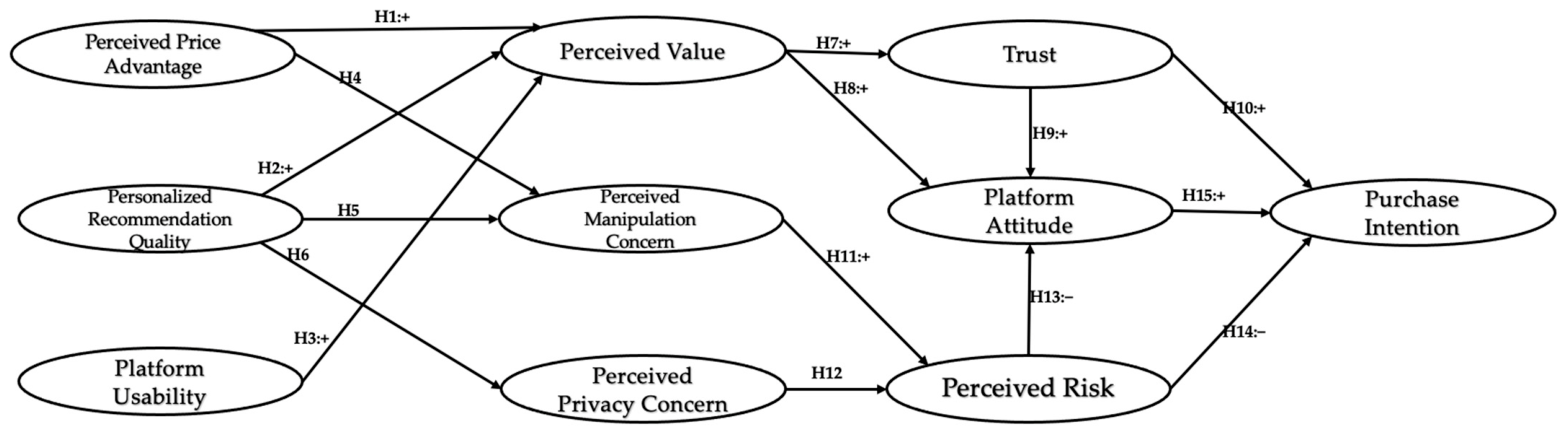

Disclaimer/Publisher’s Note: The statements, opinions and data contained in all publications are solely those of the individual author(s) and contributor(s) and not of MDPI and/or the editor(s). MDPI and/or the editor(s) disclaim responsibility for any injury to people or property resulting from any ideas, methods, instructions or products referred to in the content. |
© 2026 by the authors. Licensee MDPI, Basel, Switzerland. This article is an open access article distributed under the terms and conditions of the Creative Commons Attribution (CC BY) license.