Article

How Does Visual Modification of Destination Photos on Social Media Influence Revisit Intention? A Double-Edged Mechanism of Trust Gain and Value Co-Destruction


1
School of Design, Jiangnan University, Wuxi 214000, China
2
School of Design, Nanjing University of the Arts, Nanjing 210013, China
*
Author to whom correspondence should be addressed.
J. Theor. Appl. Electron. Commer. Res. 2026, 21(9), 302; https://doi.org/10.3390/jtaer21090302 (registering DOI)
Submission received: 8 August 2026 / Revised: 25 August 2026 / Accepted: 26 August 2026 / Published: 3 September 2026
(This article belongs to the Special Issue Innovation in Digital Marketing to Enhance Consumer Experience)

Abstract

Digital visual marketing increasingly relies on aesthetically modified social media content to attract consumers, yet such practices may also create authenticity risks when online representations are compared with actual experiences. This study examines how four visual modification cues in destination photos—light–shadow atmosphere, tone enhancement, framing angle, and focus prominence—shape post-visit destination trust, value co-destruction, and revisit intention, and whether persuasion knowledge moderates these effects. Survey data from 572 tourists who viewed Chongqing-related social media photos before visiting the city were analyzed using structural equation modeling, bootstrap mediation analysis, and hierarchical regression. Tone enhancement, framing angle, and focus prominence increased destination trust, whereas light–shadow atmosphere did not. Light–shadow atmosphere, tone enhancement, and framing angle increased value co-destruction, whereas focus prominence did not. Destination trust positively affected revisit intention, while value co-destruction had a negative effect. The two mediators operated as largely independent evaluative paths, with the trust pathway exerting the stronger effect. Persuasion knowledge weakened trust gains and amplified value co-destruction. These findings show that digital visual marketing produces asymmetric post-experience outcomes and highlight the need to balance aesthetic optimization with authentic representation when designing social media marketing content.

1. Introduction

Photographs are an important means of destination image construction and marketing [1]. In the social media era, urban landscapes and tourism experiences are increasingly compressed into visual content that can be browsed, liked, and shared. Online tourism images can influence potential tourists’ attitudes toward destinations, mental imagery, and visit intention [2,3]. Taking, modifying, and sharing photographs have therefore become typical tourism practices. Tourists and visual content creators often enhance the attractiveness of photographs through filters, color grading, cropping, and other techniques, causing images to move increasingly away from faithful documentation and toward carefully orchestrated visual texts [4]. The rise of social-media-popular cities such as Harbin, Zibo, and Tianshui is a concentrated manifestation of this visually driven logic of communication [5]. Therefore, how to balance aesthetic appeal and authenticity has become a key issue in the use of destination photos on social media.
When tourists develop travel aspirations because of destination photos but later discover a clear gap between the on-site experience and the visual representation after actually visiting the destination, feelings of disappointment, or even of being misled by marketing, may emerge. In this case, the marketing benefits generated by photo beautification may be reversed into negative consequences [6]. Thus, visual modification may serve as a source of attraction and trust, but it may also induce expectation gaps and value co-destruction. However, existing research still provides an insufficient explanation of this mechanism.
First, the independent variable has often been conceptualized too broadly. Existing studies have mostly treated digital modification or photo beautification as a holistic stimulus and examined its effects on destination image, authenticity judgments, and travel intention [4,7] while paying insufficient attention to the specific visual cues through which visually optimized representations are produced and perceived. In this study, visual modification is used in a broad representational sense rather than as a synonym for post-production editing alone. It encompasses selective and aesthetic transformation across the image-production process, including capture-stage choices, compositional organization, attentional emphasis, and post-production rendering. Accordingly, light–shadow atmosphere and tone enhancement primarily represent aesthetic rendering; framing angle represents selective spatial composition; and focus prominence represents attentional emphasis that may arise during image capture or post-processing. This broader conceptualization makes it possible to examine how heterogeneous visual strategies jointly shape tourists’ perceptions of destination photographs. Because the present study uses a retrospective survey rather than experimentally manipulated images, these dimensions are empirically treated as perceived visual modification cues rather than objectively quantified modification levels.
Second, the existing literature has largely focused on destination attitudes, mental imagery, and visit intention formed before travel on the basis of online images [3,8] while giving limited attention to how tourists re-evaluate the relationship between social media photos and on-site experiences after an actual visit. This study argues that destination trust and value co-destruction are not merely pre-visit judgments; rather, they are post hoc evaluations formed after tourists have completed an actual visit, based on the consistency or discrepancy between “photo representation” and “on-site experience”. Meanwhile, research on value co-destruction in tourism and hospitality still suffers from uneven contextual coverage, an overreliance on qualitative approaches, and insufficient quantitative testing [9]. “Image–reality incongruence” represents a typical context of value co-destruction. Introducing value co-destruction into research on visual modification can therefore extend its explanatory power in destination visual marketing.
Third, the marketing consequences of visual modification depend not only on the photos themselves, but also on whether tourists can recognize the persuasive intent embedded in them. For tourists with lower persuasion knowledge, filters, color grading, framing, and subject prominence may be interpreted as professional aesthetic presentation. For tourists with higher persuasion knowledge, however, the same visual treatments may be recognized as marketing packaging or deliberate beautification, thereby weakening trust gain and amplifying the risk of value co-destruction. Therefore, persuasion knowledge may constitute an important boundary condition for explaining differences in the effects of visual modification.
Based on this, the present study takes Chongqing as the research context. It operationalizes visual modification through four perceived visual modification cues and examines how these cues influence destination trust and value co-destruction formed after tourists’ actual visits, and how they further affect revisit intention. Specifically, this study seeks to answer three research questions: (1) What specific perceived cues can visual modification of social media destination photos be decomposed into, and how do different cues respectively affect post-visit destination trust and value co-destruction? (2) Are the strengths of the effects transmitted by destination trust and value co-destruction symmetrical? (3) How does tourists’ persuasion knowledge alter the strength of the effects of visual modification on destination trust and value co-destruction? Methodologically, based on survey data from 572 tourists who had visited Chongqing, this study employs structural equation modeling to test the net effects, mediating mechanisms, and moderating mechanisms of each perceived visual modification cue.
The contributions of this study are threefold. First, it refines photo modification from a holistic stimulus into four identifiable perceived visual modification cues: light–shadow atmosphere, tone enhancement, framing angle, and focus prominence. In doing so, it conceptualizes visual modification beyond post-production editing to include selective composition, capture-related presentation, aesthetic rendering, and attentional emphasis, thereby revealing the differentiated consequences of different visual strategies in generating trust-gain and value co-destruction effects. Second, it advances the outcome variable from visit intention to revisit intention and conceptualizes destination trust and value co-destruction as post-visit judgments formed through “image–reality comparison”, thereby capturing the delayed marketing consequences of photo modification after offline experiences have been completed. Third, by integrating theories of destination trust, value co-destruction, and persuasion knowledge, this study constructs and tests a double-edged mechanism of “trust gain–value co-destruction” through which visual modification influences revisit intention, explaining how persuasion knowledge weakens trust gain while amplifying the risk of co-destruction.

2. Literature Review

2.1. Visual Modification of Destination Photos

Social media destination photos are important visual media for shaping destination imagination, stimulating travel motivation, and influencing tourist evaluations. The proliferation of digital devices and platforms has amplified the role of travel photography in shaping destinations [10]. Existing research has mainly developed along two lines: one focuses on how photographs present landscapes, culture, and spatial characteristics and participate in the formation of destination image [1,11,12]; the other examines how photo source, professionalism, aesthetic appeal, and subject matter influence tourist attitudes and travel decision-making [8,13,14]. With the widespread use of filters and image-editing tools, the editing and idealization of travel photos have become common practices in the social media era [15]. However, existing studies have mostly treated modification as a holistic stimulus while paying limited attention to the specific visual cues through which such modification is achieved.
Conceptually, visual modification in this study refers to the selective transformation and optimization of destination reality into a visually organized social media representation. It is therefore broader than post-production manipulation alone. The process may occur when a photograph is captured (e.g., viewpoint and framing), when visual attention is organized (e.g., prominence of focal elements), or when aesthetic qualities are rendered or enhanced (e.g., light–shadow and tone). These operations share a common representational function: they selectively reorganize, emphasize, or aesthetically optimize visual information relative to ordinary on-site perception. Accordingly, the four dimensions examined below are treated as heterogeneous manifestations of a broader visual modification process rather than as four identical forms of digital post-processing.
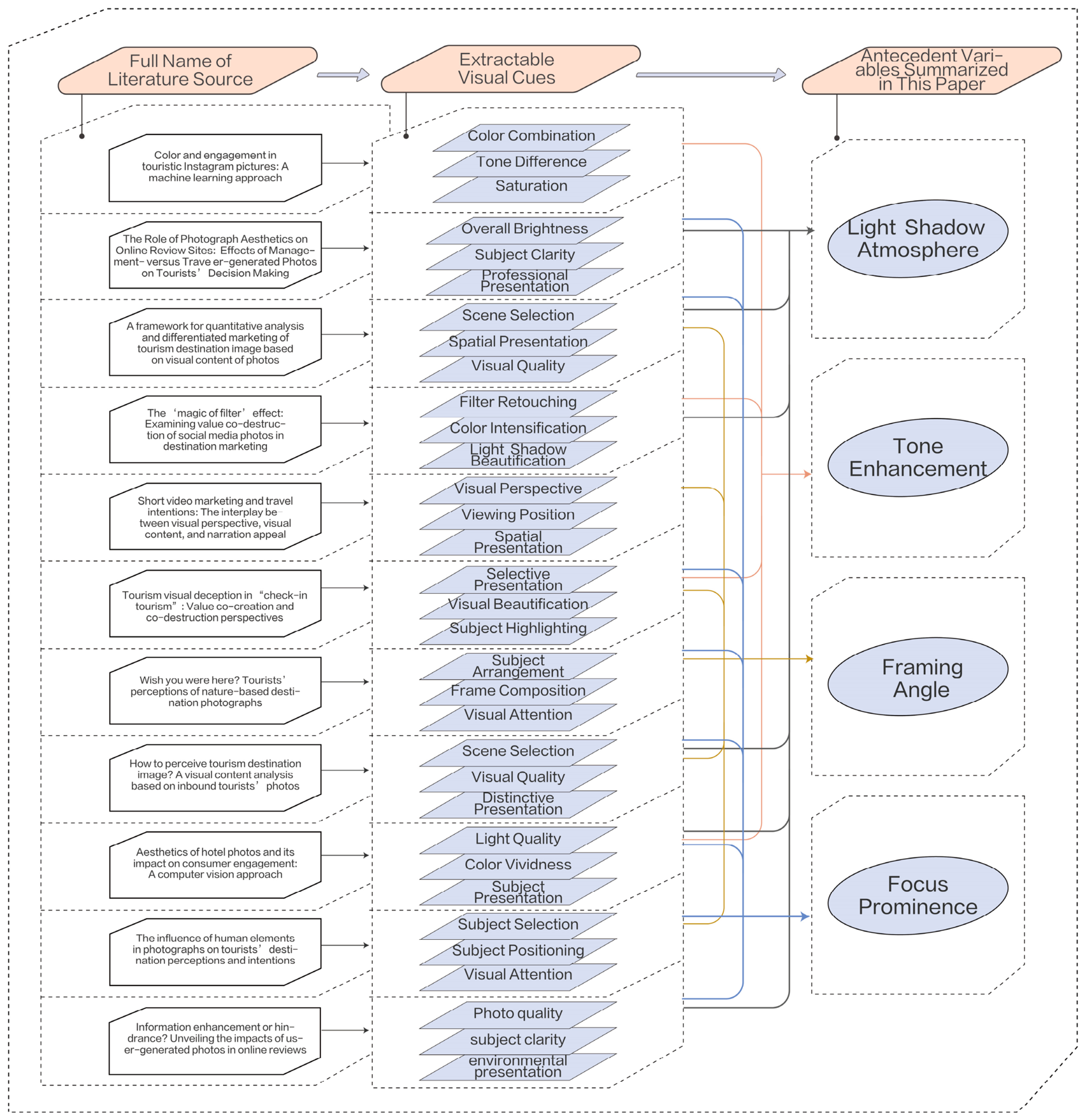
The refinement of visual modification cues in this study follows the deductive logic of “literature review–element extraction–contextual induction”. Specifically, this study systematically reviewed literature on photo modification, photographic aesthetics, and destination visual marketing, and then integrated the visual elements identified in previous studies (see Figure 1), resulting in four groups of manipulable elements. First, elements such as brightness, subject clarity, light–shadow beautification, and professional presentation point to the orchestration of light, which is often regarded as an important aesthetic signal for distinguishing professional from non-professional photographs [16,17]. Second, color combination, color contrast, saturation, and filter style reflect the processing of color [6,18]. Third, scene selection, shooting perspective, and spatial presentation reflect the organization of composition [1,19,20]. Fourth, subject presentation and visual attention reflect the control of image focus [14,21]. Accordingly, this study conceptualizes the visual modification of social media destination photos as four types of modification cues: light–shadow atmosphere, tone enhancement, framing angle, and focus prominence. These cues serve as visual bases through which tourists identify the degree of modification, assess credibility, and form value judgments.
Light–shadow atmosphere refers to the treatment of brightness, light–dark layering, and lighting direction in a photograph. Appropriate lighting can highlight the subject, enhance depth-of-field layers, and improve the professional quality of the image. Previous studies have shown that lighting quality, brightness, and professional presentation in photographs influence viewers’ judgments of visual appeal, photo quality, and consumer engagement [16].
Tone enhancement refers to the treatment of saturation, warm–cool tonal tendency, and filter style. Color not only affects tourists’ evaluations of image aesthetics but also shapes their perceptions of a destination’s character, seasonal imagery, and spatial mood. Research on color psychology has shown that differences in saturation can evoke different emotions and alter viewers’ aesthetic responses [22]. In tourism contexts, low saturation can enhance tourists’ perceived naturalness of a destination and promote purchase intention [23]. Different color combinations may also generate differentiated interaction effects across tourism scenarios. For example, blue tones help increase engagement with photos of natural scenery, high-end restaurants, and religious architecture, whereas red/orange warm tones strengthen the attractiveness of photos featuring local food and atmospheric scenes [18].
Framing angle refers to the way in which a photograph reconstructs the viewing relationship between the viewer and the destination object through shooting perspective, distance, and spatial cropping. Camera angle can influence viewers’ judgments of the perceived power and importance of objects in an image [19,24,25]. Low-angle shots tend to enhance the perceived power and agency of the photographed object; eye-level shots are more likely to establish an equal relationship between the viewer and the object; and high-angle shots may weaken the perceived power of the photographed object, making it appear relatively vulnerable or passive. Therefore, angle is not merely a compositional technique, but also a rhetorical means of orchestrating spatial experience.
Focus prominence refers to the control of subject presentation, visual center, and the recognizability of core information. A sharp focus can guide the allocation of visual attention, making landmarks, transport nodes, street scenes, or human activities the center of the image. Through focus prominence, photographs can direct tourists’ attention and improve the efficiency with which they identify core information [26].
To help respondents understand the visual characteristics associated with each construct, illustrative destination images were provided in the questionnaire as visual references. Respondents were instructed to evaluate the visual modification cues based on their overall experience of viewing Chongqing-related social media photos before their visit, rather than to rate the reference images themselves.
Accordingly, the four constructs in this study represent tourists’ perceptions of visual modification cues in destination-related social media imagery.

2.2. Destination Trust

Trust is a psychological judgment formed under conditions of incomplete information and uncertain outcomes. It refers to a psychological state in which one party is willing to accept corresponding risks based on positive expectations regarding another party’s competence and reliability [27]. Tourism products are characterized by spatial distance, intangibility, and post-experience evaluation. Before travelling, tourists can only form initial expectations based on indirect information such as official promotion, tourist reviews, and social media content [28]. Existing studies have shown that positive destination image presentation can significantly enhance tourists’ destination trust and brand trust [29,30]. However, prior research has mainly focused on how pre-visit images establish trust while paying limited attention to how tourists verify such trust after an actual visit. In this study, destination trust does not refer to anticipatory trust formed by tourists before travel based on images; rather, it refers to a post hoc judgment formed after tourists have completed an actual visit, based on the consistency or discrepancy between social media photos and on-site experience.

2.3. Value Co-Destruction

In contrast to value co-creation, value co-destruction refers to a process in which failed resource integration or resource misuse in service interactions leads to a decline in the well-being of at least one participating actor. Plé and Chumpitaz Cáceres define it as the destruction of value within service–system interactions, which typically occurs when actors intentionally or unintentionally misuse their own or others’ resources in an inappropriate or unexpected manner, thereby reducing well-being [31]. Since then, the concept of value co-destruction has been introduced into fields such as the sharing economy, smart services, brand management, and electronic word-of-mouth, gradually developing into an important theoretical lens for examining the negative consequences of service interactions [32,33,34].
In tourism and social media contexts, tourists’ opinions expressed on social media constitute an interactive construction of value, the outcomes of which may evolve either toward value co-creation or toward value co-destruction [35]. Meanwhile, value co-destruction may occur when actors involved in a service encounter fail to share consistent cognitive scripts—that is, when misalignments arise in their understandings of service processes, role responsibilities, behavioral expectations, and anticipated outcomes [36]. Unlike previous studies that have primarily focused on interactional failures within immediate service encounters, value co-destruction triggered by social media destination photos is characterized by a more evident temporal dislocation. As a form of prior resource use, visual modification takes place before tourists actually visit the destination; however, the decline in well-being is usually confirmed only after tourists perceive “image–reality incongruence” during or after the visit. Therefore, in the context of photo modification, this study conceptualizes value co-destruction as a delayed co-destruction mechanism of “prior visual promise–post-visit experiential gap”.

2.4. Persuasion Knowledge

Persuasion knowledge refers to consumers’ cognitive ability to recognize and cope with marketing intentions and persuasion strategies; that is, their ability to detect the commercial purposes and persuasive intent underlying communication content and adjust their information processing and judgment accordingly [37]. When persuasion knowledge is activated, individuals reinterpret communication content from neutral information into a persuasive attempt with marketing intent, and therefore evaluate information sources, content authenticity, and credibility in a more cautious manner [38].
In marketing contexts, sponsorship disclosure, commercial cues, and influencer marketing content can trigger consumer resistance, skepticism, or expectancy violation, thereby weakening source credibility, interaction intention, purchase intention, or recommendation effectiveness [39,40,41]. Therefore, persuasion knowledge represents an important boundary variable for explaining the heterogeneous effects of marketing content.

2.5. Revisit Intention

Revisit intention refers to tourists’ behavioral tendency to visit the same destination again after completing an actual visit; it is a subsequent behavioral intention formed on the basis of prior experience [42,43]. Existing studies on tourism photos have mostly adopted visit intention, booking intention, or destination choice as outcome variables [2,8,17] while paying limited attention to the delayed consequences of photo modification after tourists have completed their offline experiences. This study selects revisit intention as the outcome variable for two main reasons.
First, revisit intention is an important manifestation of destination loyalty and a key indicator for maintaining a stable tourist base and long-term competitiveness. Recent studies have shown that repeat visitation is closely associated with tourists’ familiarity, sense of belonging, and well-being experiences. Destination visual and textual information can also influence potential repeat tourists’ positive recall emotions and revisit intention [44,45]. Second, revisit intention lies at the intersection of online image-based expectations and offline actual experiences. It not only carries forward the initial expectations established by photos but also incorporates the confirmation or disconfirmation of these expectations through on-site experience. Therefore, it can more accurately reflect how visual modification influences destination trust, value co-destruction, and subsequent behavioral intention after tourists have visited the destination.

3. Theoretical Model and Research Hypotheses

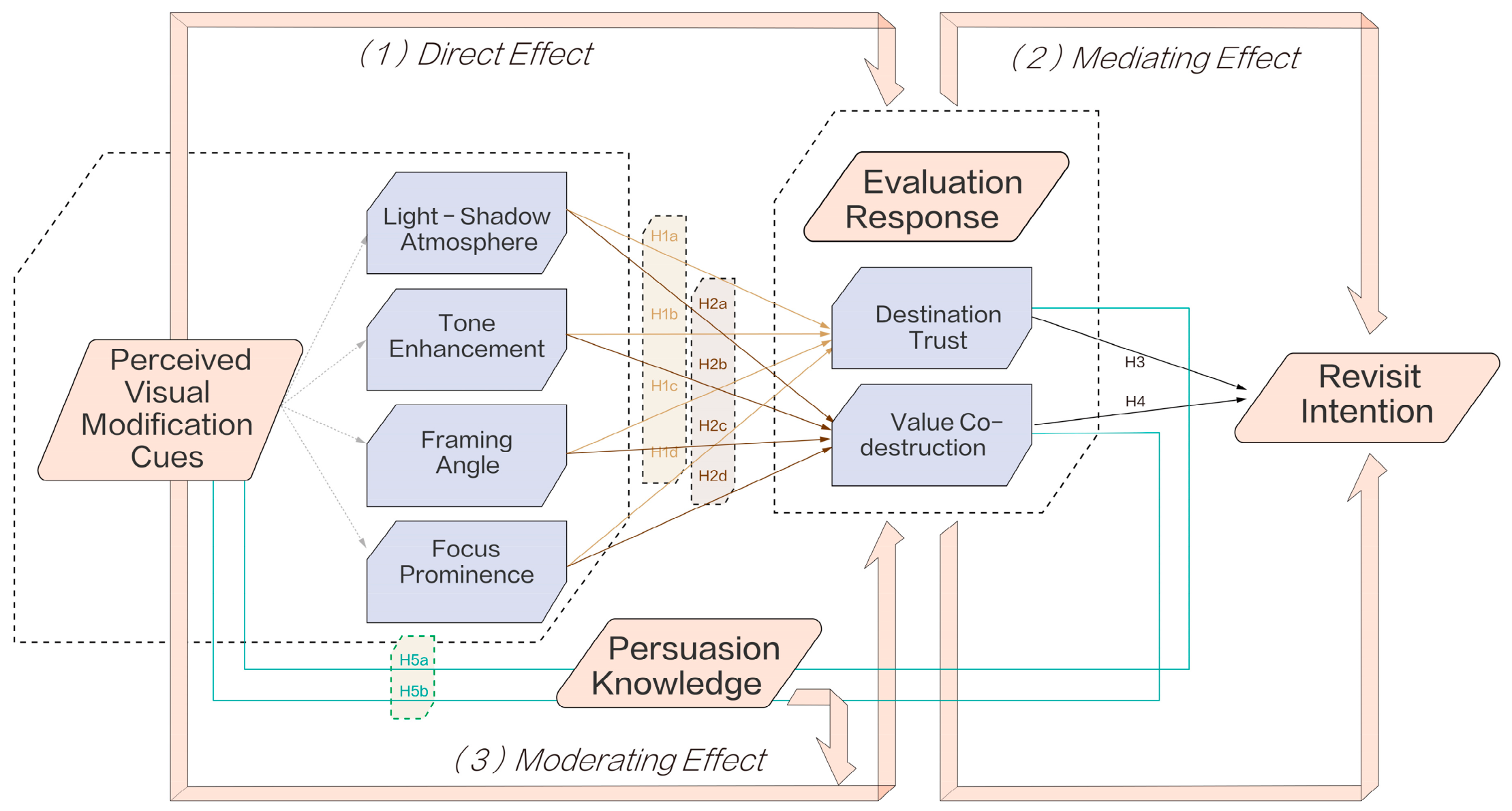
Based on the above theoretical review and research propositions, this study constructs a theoretical model of how the visual modification of social media destination photos influences revisit intention (see Figure 2). Light–shadow atmosphere, tone enhancement, framing angle, and focus prominence are the four types of visual modification cues perceived by tourists before visiting the destination. Destination trust and value co-destruction, in contrast, are two evaluative judgments formed after tourists have actually visited the destination and conducted an “image–reality comparison”. They respectively constitute the “trust-gain” path and the “value co-destruction” path through which revisit intention is influenced. As a moderating variable, persuasion knowledge changes the strength of the effects of visual modification cues on destination trust and value co-destruction.

3.1. Visual Modification Cues and Destination Trust

Visual modification cues provide tourists with extrinsic cues regarding destination landscape quality, spatial order, and informational completeness before their visit. Extrinsic cues can help individuals form preliminary judgments under conditions of incomplete information [46,47]. After the experience is completed, individuals confirm or revise their prior expectations based on their actual perceptions [48,49]. Therefore, when the visual presentation in social media photos is generally consistent with tourists’ on-site experiences after visiting the destination, visual modification is more likely to be understood as a professional and reasonable presentation of the destination, thereby enhancing tourists’ judgments of the authenticity of destination information and the reliability of the destination image [50]. Based on this expectation–confirmation logic, light–shadow atmosphere, tone enhancement, framing angle, and focus prominence may all positively influence tourists’ post-visit destination trust. Accordingly, the following hypotheses are proposed:
H1a. 
Light–shadow atmosphere positively affects post-visit destination trust.
H1b. 
Tone enhancement positively affects post-visit destination trust.
H1c. 
Framing angle positively affects post-visit destination trust.
H1d. 
Focus prominence positively affects post-visit destination trust.

3.2. Visual Modification Cues and Value Co-Destruction

While visual modification cues enhance the attractiveness of photos, they may also raise tourists’ expectations regarding destination landscapes, atmosphere, and experiential quality. Misleading photos can trigger negative emotions such as regret, distrust, and anger among consumers, and may further induce negative word-of-mouth behavior [51]. The perceived authenticity and consistency of destination visual content also influence tourist trust and subsequent behavioral intentions, indicating that whether visual representations are authentic and credible constitutes an important basis for tourists’ evaluation of destination experiences [52]. In addition, photo-editing practices can significantly affect tourists’ judgments of destination experience products, and excessive editing may elevate tourists’ expectations, thereby creating a gap between actual experience and prior expectations [53]. Therefore, this study argues that when tourists discover a clear discrepancy between on-site experience and photographic representation after actually visiting the destination, visual modification that was originally used to attract attention and shape expectations may be reinterpreted as selective presentation or excessive beautification. This may further generate feelings of being misled, disappointment, and perceived damage to experiential value. Accordingly, the following hypotheses are proposed:
H2a. 
Light–shadow atmosphere positively affects post-visit value co-destruction.
H2b. 
Tone enhancement positively affects post-visit value co-destruction.
H2c. 
Framing angle positively affects post-visit value co-destruction.
H2d. 
Focus prominence positively affects post-visit value co-destruction.

3.3. Destination Trust, Value Co-Destruction, and Revisit Intention

Post-visit destination trust is an important psychological foundation for tourists’ formation of revisit intention. Trust indicates that tourists perceive their on-site experience as having generally confirmed the expectations established by social media photos, thereby reducing their uncertainty and perceived risk regarding a future visit and fostering a more positive destination attitude and revisit tendency. In contrast, value co-destruction implies that tourists experience impaired information judgment, expectation gaps, and marketing aversion during the process of “image–reality comparison”, which may weaken their positive attitudes toward the destination and inhibit revisit intention. It should be noted that although both constructs are post-visit judgments, they correspond to two relatively independent evaluative processes: the “confirmation” and “disconfirmation” of expectations through experience. Therefore, they do not necessarily constitute two ends of the same continuum. Accordingly, the following hypotheses are proposed:
H3. 
Post-visit destination trust positively affects revisit intention.
H4. 
Post-visit value co-destruction negatively affects revisit intention.

3.4. The Moderating Role of Persuasion Knowledge

Persuasion knowledge influences how tourists interpret visual modification in social media destination photos. According to the persuasion knowledge model, when individuals recognize the persuasive intent embedded in communication content, they reinterpret it as a persuasive attempt with marketing purposes and adjust their information processing and judgment accordingly [37,39,41]. For tourists with lower persuasion knowledge, modification cues such as light and shadow, color, framing, and focus are more likely to be regarded as professional and credible visual presentations, thereby maintaining their positive effect on destination trust. In contrast, higher persuasion knowledge makes tourists more sensitive to selective presentation, excessive beautification, and marketing manipulation. When the on-site experience after an actual visit fails to confirm the photographic representation, tourists with higher persuasion knowledge are more likely to interpret the “image–reality gap” as evidence of being misled or strategically packaged, thereby strengthening the effect of visual modification on value co-destruction. Accordingly, the following hypotheses are proposed:
H5a. 
The higher tourists’ persuasion knowledge, the weaker the positive effect of visual modification on post-visit destination trust.
H5b. 
The higher tourists’ persuasion knowledge, the stronger the positive effect of visual modification on post-visit value co-destruction.

4. Research Design

4.1. Research Context and Methodological Design

This study takes Chongqing as the research context. Chongqing exhibits typical characteristics of visual communication on social media. Its city labels, such as “mountain city”, “bridge capital”, “8D magical city”, and “cyberpunk nightscape”, are highly dependent on visual presentation. Scenes such as Hongya Cave, the Liziba light rail passing through a building, the Yangtze River Cableway, Jiefangbei–Raffles City, Shibati, the Mountain City Trail, Qiansimen Bridge, and the night views of the two rivers provide rich contexts for visual modification cues such as light–shadow atmosphere, tone enhancement, framing angle, and focus prominence. Restricting the research context to Chongqing helps control for differences in visual styles across cities while retaining diverse variations in visual scenes within the city.
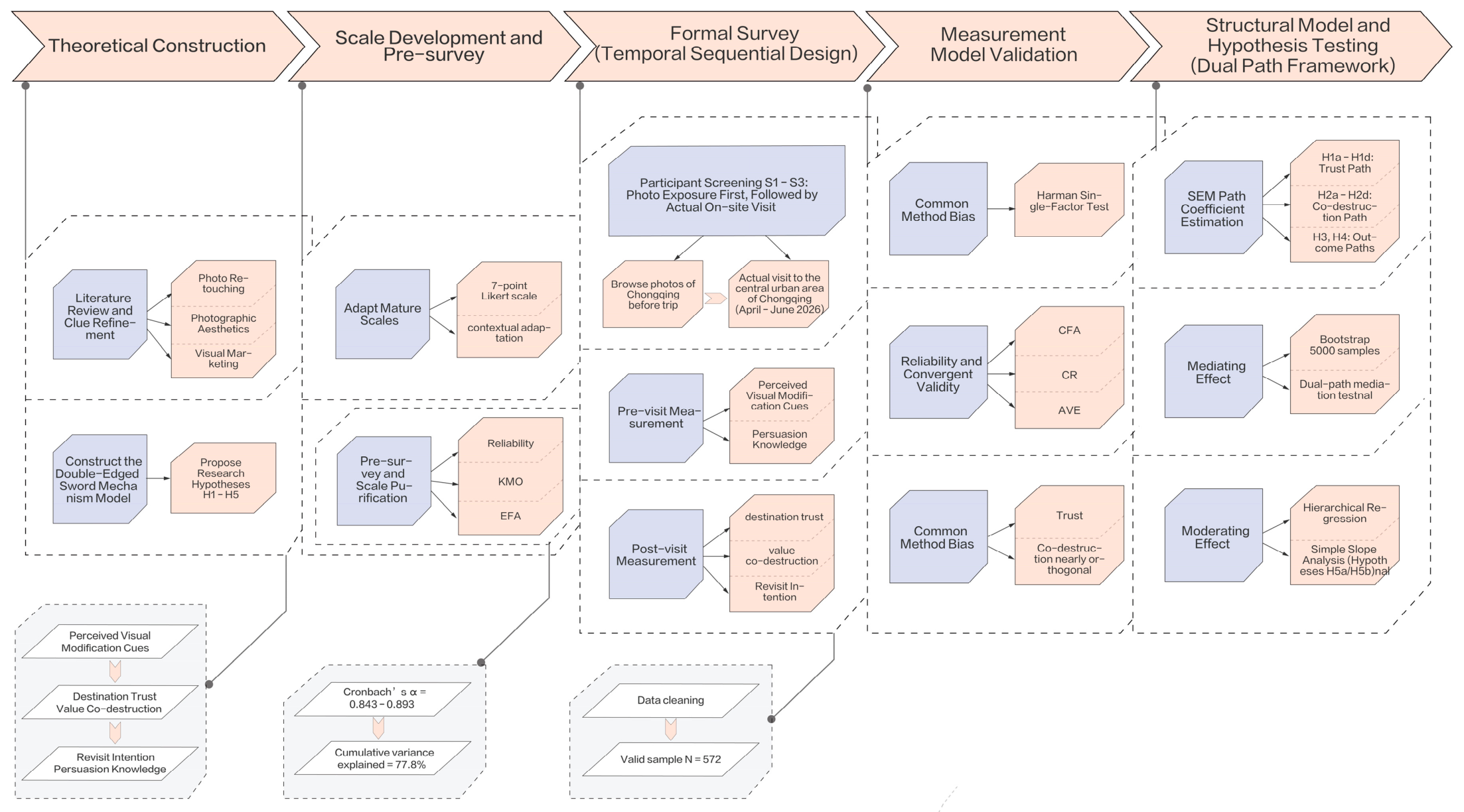
To ensure a clear alignment among the research questions, variable measurement, and model testing, this study adopts a staged research procedure consisting of “theoretical construction–scale development and pilot study–formal survey–measurement model validation–structural model and hypothesis testing” (see Figure 3). First, based on relevant literature, this study extracts four types of visual modification cues in social media destination photos and constructs a double-edged mechanism model of “trust gain–value co-destruction”. Second, mature scales are semantically adapted to the context of Chongqing destination photos, and a pilot study is conducted to examine the reliability and structural rationality of the scales. Third, in the formal survey, screening questions are used to ensure that respondents conform to the basic temporal sequence of “browsing social media photos before the visit–actually visiting Chongqing–conducting image–reality comparison after the visit”. Finally, structural equation modeling, bootstrap mediation testing, and moderation analysis are employed to examine the dual-path mechanism through which visual modification influences revisit intention.

4.2. Sample and Data Collection

The target population consisted of non-local tourists who had developed an interest in Chongqing through destination photos encountered on social media and subsequently completed an actual visit to the city between April and June 2026. Participants were recruited online through a Wenjuanxing questionnaire link using a purposive non-probability sampling approach with eligibility screening.
To ensure that respondents matched the temporal sequence of “viewing destination photos before visiting the destination”, three screening questions were included at the beginning of the questionnaire. Specifically, S1 asked whether respondents had actually visited Chongqing within the previous two months; S2 examined whether respondents had viewed Chongqing-related tourism photos on social media platforms, including Xiaohongshu, Douyin, Weibo, or Instagram, before their visit; and S3 assessed whether these social media photos had stimulated their interest in Chongqing or influenced their travel decisions. Only respondents who answered “yes” to all three screening questions were permitted to proceed to the formal questionnaire.
The recruitment process targeted tourists who had visited Chongqing rather than local residents. Residential province or region was not collected as a separate demographic variable because geographic origin was not the focus of this study. To minimize duplicate participation, Wenjuanxing was configured to allow only one submission per account.
A total of 586 questionnaires were initially collected. After data-quality screening, 14 responses were excluded due to abnormally short completion times or low-quality response patterns characterized by insufficient response variation. The final sample consisted of 572 valid responses, resulting in a valid response rate of 97.61%.
Among the final respondents, 38 participants were aged between 16 and 17 years. These participants voluntarily agreed to participate after receiving detailed information about the study, and written informed consent was additionally obtained from their parents or legal guardians.

4.3. Measurement and Questionnaire Procedure

All constructs were adapted from established scales and semantically adjusted to fit the context of Chongqing destination photos on social media. A seven-point Likert scale was used for measurement. To remain consistent with the temporal logic of the theoretical model, the questionnaire instructions explicitly distinguished two judgment points. The four visual modification cues and persuasion knowledge were evaluated based on the Chongqing social media photos that respondents had browsed “before the visit”. In contrast, destination trust, value co-destruction, and revisit intention were measured based on the respondents’ overall experience after their actual visit; that is, respondents were required to make judgments after completing the “image–reality comparison”. Sample items and sources for each construct are presented in Table 1. Because the study adopts a retrospective survey design rather than an experimental manipulation design, the four visual modification dimensions measure the respondents’ perceived visual modification cues in previously viewed destination photos rather than objectively quantified image manipulations.

4.4. Pilot Study

Statistical analyses were conducted using IBM SPSS Statistics 26.0 and AMOS 24.0. SPSS 26.0 was used for data screening, descriptive statistics, reliability analysis, exploratory factor analysis, correlation analysis, and hierarchical regression, whereas AMOS 24.0 was used for confirmatory factor analysis, structural equation modeling, and the estimation of standardized path coefficients.
A pilot study was conducted before the formal survey to examine the reliability and structural validity of the scales and was used solely for scale refinement. In terms of reliability, the Cronbach’s α coefficients of all scales ranged from 0.843 to 0.893. The corrected item-total correlation (CITC) of all items was greater than 0.6, and deleting any item did not substantially increase the Cronbach’s α coefficient of its corresponding scale, indicating good internal consistency (see Table 2). In terms of validity, the KMO value was 0.832, exceeding the minimum level commonly considered acceptable for factorability [56], and Bartlett’s test of sphericity was significant (approximate χ2 = 2566.623, df = 351, p < 0.001), indicating that the data were suitable for factor analysis (see Table 3). Principal component analysis with varimax rotation extracted eight factors with eigenvalues greater than 1, corresponding one-to-one with the theoretical constructs. The cumulative variance explained was 77.768%, and all items loaded above 0.7 on their respective factors without obvious cross-loadings [57] (see Table 4). The pilot results are reported only to document scale refinement; all substantive reliability, validity, and hypothesis-testing conclusions in this study are based on the final sample of 572 respondents, with the final-study measurement properties reported in Section 5.3 and Tables 6–8.

5. Empirical Results

5.1. Sample Characteristics

A total of 572 valid responses were retained for the final study. The sample exhibited diversity across demographic characteristics, including gender, age, educational background, occupation, and income categories, covering tourists with varied personal backgrounds. The most frequently used social media platforms among respondents were Douyin (89.34%), Xiaohongshu (75.87%), and Weibo (61.01%), which correspond to the major channels through which Chongqing destination photos are disseminated and encountered (see Table 5).

5.2. Common Method Bias Test

Because all variables were measured through self-reported data from the same respondents, this study assessed common method bias using Harman’s single-factor test in addition to procedural controls [58]. The results of the unrotated exploratory factor analysis showed that the first factor explained 28.336% of the total variance. Because no single factor accounted for the majority of the covariance, the result did not indicate a dominant common-method factor; nevertheless, Harman’s test was interpreted as diagnostic rather than definitive evidence that all common method variance had been eliminated [58].

5.3. Reliability and Validity Tests

The results of the confirmatory factor analysis (CFA) based on the final sample (n = 572) indicated that the eight-factor measurement model demonstrated a good fit to the data: χ2 = 364.464, df = 296, χ2/df = 1.231, SRMR = 0.032, GFI = 0.955, AGFI = 0.942, CFI = 0.992, and RMSEA = 0.020. Model fit was evaluated based on multiple indices, following the recommended criteria proposed by Hu and Bentler [59]. Specifically, CFI values above 0.90 and RMSEA and SRMR values below 0.08 indicate acceptable model fit, while values below 0.05 represent a more stringent standard (see Table 6).
Regarding convergent validity, the standardized factor loadings of all measurement items ranged from 0.746 to 0.875, exceeding the recommended threshold of 0.70 and reaching statistical significance. The composite reliability (CR) values of all constructs ranged from 0.833 to 0.908, exceeding the recommended criterion of 0.70. The average variance extracted (AVE) values ranged from 0.624 to 0.712, all above the minimum acceptable level of 0.50. These results demonstrate satisfactory construct reliability and convergent validity [57,60]. In addition, Cronbach’s α coefficients for all constructs ranged from 0.832 to 0.908, exceeding the recommended threshold of 0.70 and further confirming the good internal consistency of the measurement scales (see Table 7).
Regarding discriminant validity, the square root of the AVE for each construct was greater than its correlations with other constructs (see Table 8), satisfying the Fornell–Larcker criterion [60] and indicating adequate discriminant validity among the constructs. Notably, the correlation coefficient between destination trust and value co-destruction was only −0.014 and was not statistically significant. This finding suggests that these two constructs are not opposite ends of a single evaluative continuum, but rather represent two relatively independent post-visit evaluations formed by tourists. This result provides preliminary support for the proposed dual-path model.

5.4. Preliminary Analysis of Variable Relationships

The means, standard deviations, and correlation coefficients of all variables are shown in Table 9. The mean values of the four visual modification cues ranged from 4.73 to 5.32, indicating that respondents generally perceived noticeable modification in Chongqing social media photos. The correlation analysis showed that visual modification and its four dimensions were significantly and positively correlated with post-visit destination trust (r = 0.353–0.547, p < 0.01), and also significantly and positively correlated with post-visit value co-destruction (r = 0.378–0.536, p < 0.01), preliminarily indicating a double-edged pattern. Destination trust was significantly and positively correlated with revisit intention (r = 0.476, p < 0.01), whereas value co-destruction was significantly and negatively correlated with revisit intention (r = −0.274, p < 0.01). The correlation between destination trust and value co-destruction was not significant (r = −0.013), further confirming that the two constructs represent mutually independent post-visit judgments.

5.5. Hypothesis Testing

5.5.1. Structural Model and Direct Effect Testing

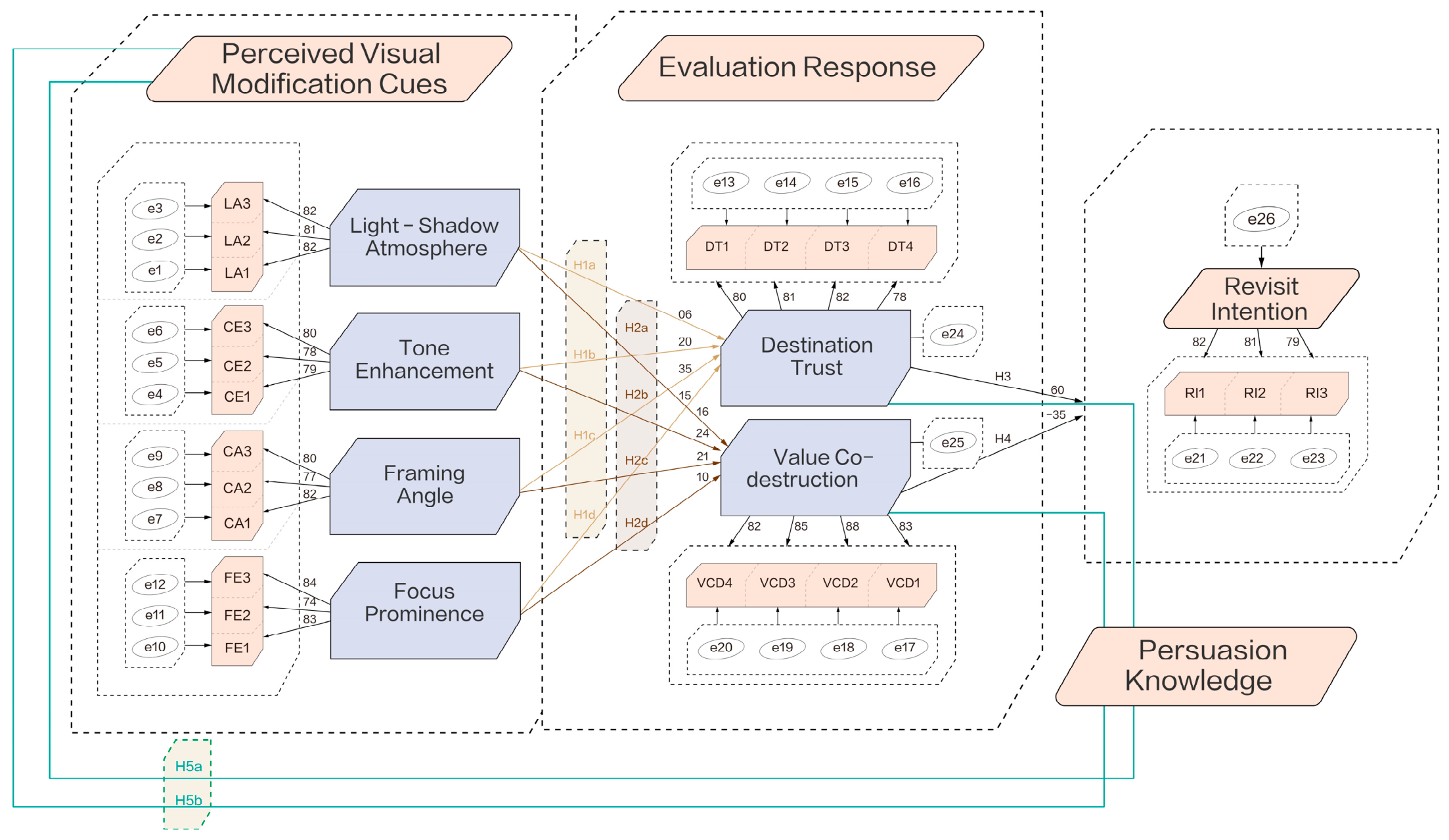
The structural model was estimated in AMOS 24.0. The overall fit results were as follows: χ2 = 438.918, df = 214, χ2/df = 2.051, SRMR = 0.074, GFI = 0.940, AGFI = 0.923, CFI = 0.970, and RMSEA = 0.043. Considered jointly, these indices indicated an acceptable-to-good fit, consistent with established SEM fit-index recommendations, particularly for CFI, RMSEA, and SRMR [59] (see Table 10). To visually present the effect paths among the latent variables and the standardized path coefficients estimated in AMOS 24.0, this study further plotted the structural model results (see Figure 4).
The path coefficient test results are shown in Table 11. For the trust path, tone enhancement (β = 0.200, p < 0.001), framing angle (β = 0.354, p < 0.001), and focus prominence (β = 0.150, p < 0.01) all had significant positive effects on post-visit destination trust; thus, H1b, H1c, and H1d were supported. The effect of light–shadow atmosphere on destination trust was not significant (β = 0.064, p = 0.238), and H1a was not supported.
For the co-destruction path, light–shadow atmosphere (β = 0.163, p < 0.01), tone enhancement (β = 0.239, p < 0.001), and framing angle (β = 0.212, p < 0.001) all had significant positive effects on post-visit value co-destruction; thus, H2a, H2b, and H2c were supported. The effect of focus prominence on value co-destruction was not significant (β = 0.097, p = 0.079), and H2d was not supported.
For the outcome paths, post-visit destination trust significantly and positively affected revisit intention (β = 0.596, p < 0.001), whereas post-visit value co-destruction significantly and negatively affected revisit intention (β = −0.347, p < 0.001). Therefore, both H3 and H4 were supported.

5.5.2. Mediation Effect Testing

The mediation effects of destination trust and value co-destruction were tested using the bootstrap method with 5000 repeated samples and bias-corrected 95% confidence intervals (Table 12). For the trust path, tone enhancement (indirect effect = 0.119), framing angle (indirect effect = 0.211), and focus prominence (indirect effect = 0.089) all had significant positive indirect effects on revisit intention through post-visit destination trust, as their confidence intervals did not include zero. The indirect effect of light–shadow atmosphere through destination trust was not significant.
For the co-destruction path, light–shadow atmosphere (indirect effect = −0.057), tone enhancement (indirect effect = −0.083), and framing angle (indirect effect = −0.074) all had significant negative indirect effects on revisit intention through post-visit value co-destruction. The indirect effect of focus prominence through value co-destruction was not significant.
Overall, tone enhancement and framing angle generated opposite indirect effects through the two paths, constituting a typical double-edged transmission mechanism. Light–shadow atmosphere produced negative consequences only through the co-destruction path, whereas focus prominence produced positive consequences only through the trust path.

5.5.3. Moderating Effect Test of Persuasion Knowledge

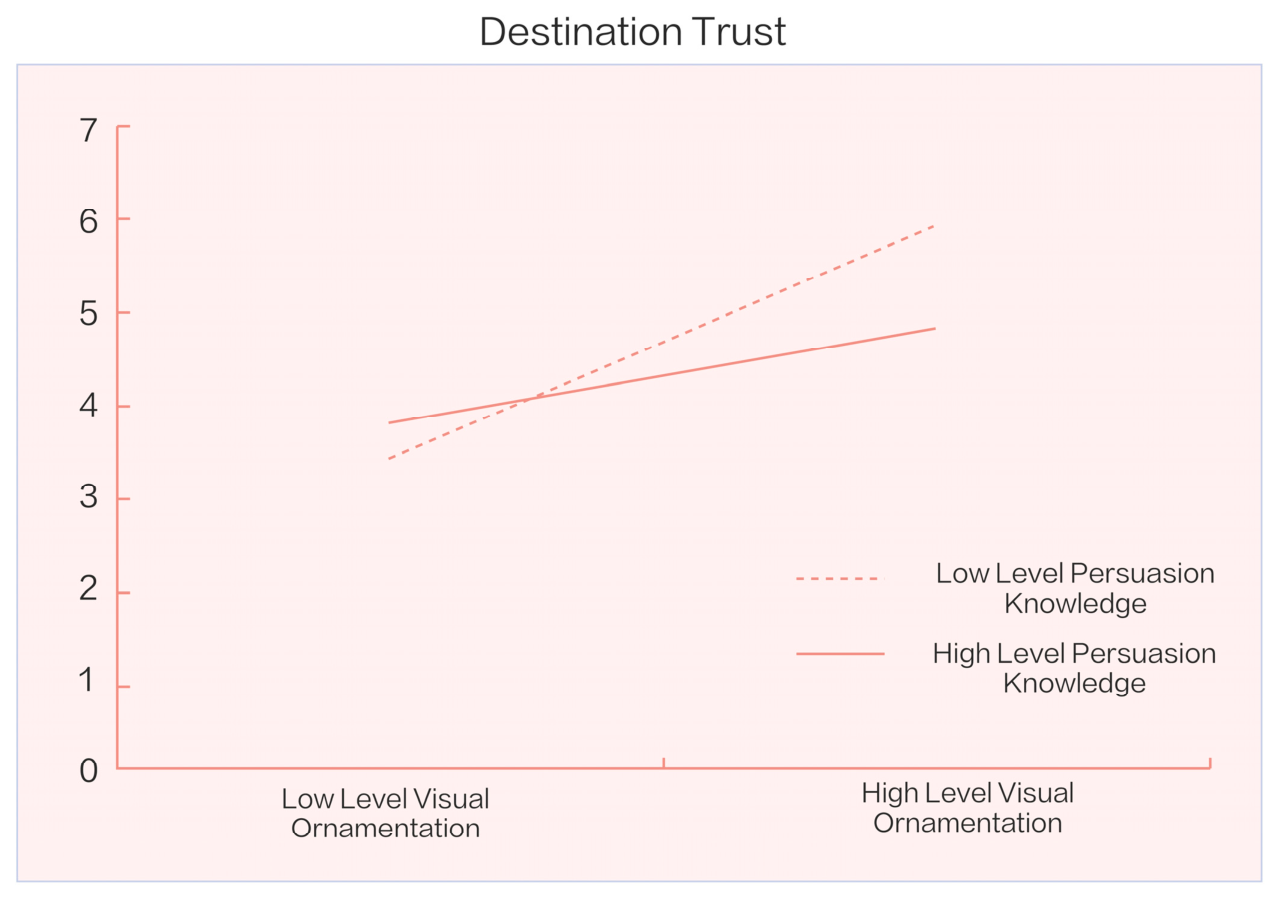
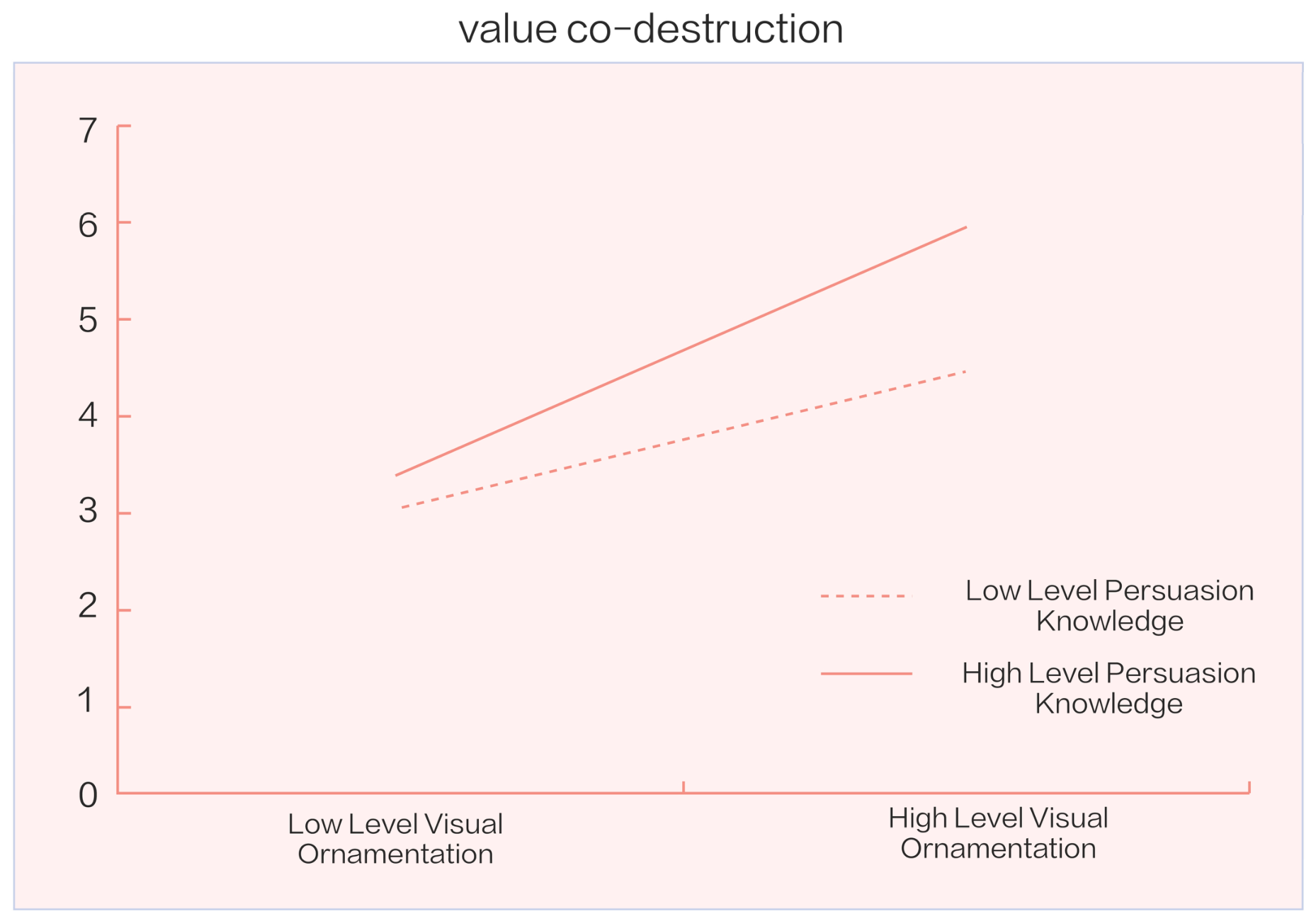
Hierarchical regression was used to test the moderating role of persuasion knowledge. Gender, age, highest education level, occupation, and monthly income were included as control variables. Visual modification and persuasion knowledge were mean-centered before constructing the interaction term (see Table 13 and Table 14). For the trust path, the interaction term between visual modification and persuasion knowledge had a significant negative effect on post-visit destination trust (β = −0.257, p < 0.001, ΔR2 = 0.063), indicating that the higher the level of persuasion knowledge, the weaker the positive effect of visual modification on destination trust. Thus, H5a was supported. For the co-destruction path, the interaction term had a significant positive effect on post-visit value co-destruction (β = 0.181, p < 0.001, ΔR2 = 0.031), indicating that the higher the level of persuasion knowledge, the stronger the positive effect of visual modification on value co-destruction. Thus, H5b was supported.
In addition, persuasion knowledge had a significant negative main effect on destination trust (β = −0.109, p < 0.01) and a significant positive main effect on value co-destruction (β = 0.268, p < 0.001), further suggesting that persuasion knowledge itself constitutes a “skeptical” judgment tendency. Overall, persuasion knowledge asymmetrically reshapes the dual-path effects of visual modification: it weakens trust gain while amplifying the risk of co-destruction. The results of the simple slope analysis further confirmed the above moderating directions (see Figure 5 and Figure 6).

6. Conclusions and Discussion

6.1. Research Conclusions

First, this study identifies and verifies a “parallel dual-judgment” structure in tourists’ post-visit evaluations: destination trust and value co-destruction are not positive and negative ends of the same evaluative continuum, but two types of psychological judgments independently formed after tourists experience an “image–reality comparison”. The data show that destination trust significantly enhances revisit intention (β = 0.596), whereas value co-destruction significantly inhibits revisit intention (β = −0.347). However, the correlation between the two was close to zero (r = −0.013). This indicates that the “confirmation” and “disconfirmation” of photo-based expectations through on-site experience represent two parallel and mutually non-offsetting evaluative processes. Tourists may simultaneously develop a high level of destination trust and a strong perception of value co-destruction; the two do not constitute a mutually exclusive relationship. In other words, the value co-destruction caused by the “image–reality gap” does not necessarily erode destination trust, while the persistence of trust cannot offset the negative consequences of co-destruction. The double-edged effect is therefore not merely rhetorical, but a decomposable dual-path structure that can be separately identified and intervened in. Accordingly, the evaluation criteria for destination visual marketing should not be limited to whether trust can be gained, but should be expanded to a comprehensive assessment of the joint distribution of “trust gain” and “co-destruction risk”.
Second, the four types of visual modification cues exhibit asymmetric and differentiated effects across the trust and co-destruction paths. They can be classified into three categories: information-oriented cues, double-edged cues, and rendering-oriented cues. Focus prominence generates positive consequences only through the trust path (β = 0.150) without inducing value co-destruction. It can therefore be regarded as a relatively safe information-oriented cue. Its function lies in clarifying the subject and reducing ambiguity, without substantially distorting the actual scene. In contrast, light–shadow atmosphere produces negative consequences only through the co-destruction path (β = 0.163), without a significant trust-gain effect. It is therefore a high-risk rendering-oriented cue. Dramatic lighting effects such as golden-hour illumination and brilliant nightscapes often depend on specific timing and post-processing. Under ordinary visiting conditions, tourists can hardly reproduce the same visual effect, making this cue most likely to generate an image–reality gap.
Tone enhancement and framing angle are significant in both paths and thus constitute typical double-edged cues. Their internal differentiation also follows the above logic. The trust-gain effect of framing angle (β = 0.354) is greater than its co-destruction effect (β = 0.212) because the three-dimensional spatial structure of Chongqing as a mountain city presented through camera position actually exists and can be directly verified by tourists when they stand at the same location. In contrast, the co-destruction effect of tone enhancement (β = 0.239) exceeds its trust effect (β = 0.200) because filter-based color alteration modifies precisely those aspects that cannot be directly verified on site and constitutes a major source of photos appearing more attractive than the actual scene. If the four cues are ranked according to the extent to which their effects can be verified on site, the order is focus prominence, framing angle, tone enhancement, and light–shadow atmosphere. Correspondingly, the ratio of trust benefits to co-destruction risks decreases along the same order.
Third, persuasion knowledge reshapes the dual-path effects of visual modification. The higher the level of persuasion knowledge, the weaker the trust-gain effect of visual modification (interaction term β = −0.257), and the stronger the co-destruction risk it induces (interaction term β = 0.181). For tourists with lower persuasion knowledge, visual modification represents a high-return, low-risk mode of presentation. For tourists with higher persuasion knowledge, however, the same modification techniques tend to become low-return and high-risk. The same photo may generate opposite consequences because of differences in viewers’ interpretive ability, indicating that the marketing effect of visual modification is not determined by the photo alone. Once tourists recognize persuasive intent, “professional beauty” is reinterpreted as “packaged beauty”. As social media use continues to deepen, users’ ability to recognize routines involving filters, camera positions, and color grading is generally increasing, which means that authenticity will inevitably carry greater strategic weight in destination visual communication.

6.2. Theoretical Contributions

First, this study refines photo modification from a holistic stimulus into four identifiable perceived visual modification cues and confirms that the direction and strength of their effects differ systematically. Importantly, visual modification is conceptualized here beyond post-production editing: it includes tourists’ perceived cues of selective composition, capture-related presentation, aesthetic rendering, and attentional emphasis. This broader but explicitly bounded conceptualization provides a more fine-grained analytical unit for research on visual persuasion in destination marketing while avoiding the assumption that all visual modification is equivalent to digital post-processing.
Second, this study shifts the judgment point from the pre-visit stage to the post-visit stage. It clarifies that both destination trust and value co-destruction are judgments made after tourists have completed an actual visit and experienced an “image–reality comparison”. By using revisit intention as the outcome variable, this study captures the delayed marketing consequences of photo modification after tourists have completed their offline experiences. This addresses the limitation of existing literature that often takes imagined visit intention as the endpoint and therefore cannot adequately capture the stage of authenticity verification.
Third, this study introduces value co-destruction theory into destination visual marketing research and deepens this theory in two ways. On the one hand, it relaxes the assumption in co-destruction research that “misuse and damage occur simultaneously”. Existing studies have mostly situated co-destruction within on-site service encounters, where resource misuse and well-being decline occur within the same interactional episode. This study shows that photo modification constitutes an “unexpected and inappropriate use” of visual resources, while the resulting well-being decline is realized later during the post-visit “image–reality comparison”. In this process, misuse and damage are temporally separated, and the acting and affected parties do not need to engage in direct contact. Co-destruction is thus extended from a synchronous interactional failure to an intertemporal process of “online cause formation and offline consequence realization”. This study also provides relatively scarce quantitative evidence for this field based on on-site survey data.
On the other hand, this study offers direct support for the construct independence of value co-destruction. Destination trust and value co-destruction were nearly orthogonal (r = −0.013), indicating that negative value consequences are not simply the opposite of trust, but an independent evaluative dimension that cannot be captured by trust alone. This finding extends the boundary conditions of value co-creation and value co-destruction research.

6.3. Managerial Implications

First, destination marketers can classify and manage visual modification according to three types of cues: “information-oriented”, “rendering-oriented”, and “double-edged”. Information-oriented cues are relatively safe and effective. Focus prominence can therefore be prioritized to enhance the recognizability of core landscapes. Rendering-oriented cues involve risks that outweigh their benefits. Techniques related to light–shadow atmosphere should be used cautiously, and extreme lighting effects should be avoided if they create expectations that cannot be reproduced during ordinary visits. For double-edged cues, verifiability should serve as the key criterion for use. Camera positions may be distinctive, but the spatial structures presented through framing angle should genuinely exist. Color may be optimized, but tone enhancement should not deviate markedly from the tones visible on site.
Second, while retaining beautified materials to stimulate tourist interest, destinations can simultaneously publish normal-condition images taken across multiple time periods, weather conditions, and camera positions. They can also promote the labeling of shooting conditions and the degree of post-processing, and publicly provide information on the best shooting spots, waiting times, and actual visiting conditions at popular check-in sites. This can help proactively calibrate tourists’ expectations. In particular, when the projected image of a destination is inconsistent with the image received by tourists after their visit, tourists are more likely to form negative experience evaluations [50]. Therefore, destination visual communication should not focus solely on pre-visit attractiveness. Instead, it should reduce the “image–reality gap” through information transparency and expectation calibration, thereby enhancing destination trust, suppressing value co-destruction, and stabilizing revisit intention as a low-cost, high-return loyalty asset.
Third, tourists’ persuasion knowledge should be incorporated as a strategic variable in visual communication. The moderating effects indicate that there is no universally optimal level of modification for all audiences. For communities of highly discerning and deeply engaged users, modification should be restrained and authenticity should be used to build trust. For mass-traffic contexts, moderate beautification can be retained, but it should be accompanied by measures to manage expectation gaps. In the long run, as groups with high persuasion knowledge continue to expand, the strategic space for excessive beautification will systematically narrow. Destinations that take the lead in shifting toward authenticity-oriented communication are likely to gain a first-mover advantage [61,62].

6.4. Limitations and Future Research

This study has several limitations that provide directions for future research. First, the cross-sectional survey design limits the ability to capture the dynamic evolution of tourists’ perceptions before and after destination visits. Although the respondents were required to evaluate visual modification cues based on the photos they viewed before visiting Chongqing and assess destination trust, value co-destruction, and revisit intention after their actual visits, retrospective reporting may still be subject to memory bias and cannot fully eliminate concerns regarding causal inference. Future research could adopt longitudinal designs that track tourists across pre-visit and post-visit stages or employ experimental approaches to further validate the proposed causal mechanisms.
Second, this study examined social media destination photos as an overall visual communication environment without distinguishing content sources. Different sources, including marketer-generated content, influencer-generated content, professional creator-generated content, and user-generated content, may activate different levels of persuasion knowledge because tourists may perceive variations in commercial intent, authenticity, and persuasive motivation across sources. Future research could incorporate content source type as a boundary condition to further explain when visual modification generates trust gains or value co-destruction. In addition, future studies could employ geographically stratified or benchmarked samples to examine whether the proposed mechanism varies across different tourist-origin markets.
Third, the empirical context of this study was limited to Chongqing, which may constrain the generalizability of the findings. Future research could extend the investigation to diverse destination types, such as natural landscape destinations, historical-cultural destinations, or rural tourism destinations, to examine whether the identified dual-path mechanism remains applicable across different tourism contexts.
Finally, this study focused on the independent net effects of individual visual modification cues and did not examine how multiple visual cues interact or combine to influence tourist evaluations. Future studies could adopt configurational approaches, such as fuzzy-set qualitative comparative analysis (fsQCA), to identify alternative combinations of visual conditions that lead to high revisit intention and provide complementary evidence to the SEM findings.

Author Contributions

Conceptualization, H.S. and J.W.; methodology, H.S., G.X. and J.W.; software, H.S. and G.X.; validation, G.X., Y.T. and J.W.; formal analysis, H.S. and G.X.; investigation, H.S., G.X. and Y.T.; resources, Y.T. and J.W.; data curation, H.S. and Y.T.; writing—original draft preparation, H.S.; writing—review and editing, H.S., G.X., Y.T. and J.W.; visualization, H.S. and Y.T.; supervision, J.W.; project administration, H.S. and J.W. All authors have read and agreed to the published version of the manuscript.

Funding

This research was funded by the Major-scale Art Research Project of the National Social Science Fund of China: Research on the Design of Chinese Urban Images (Grant No. 22ZD18), and the Proposed Project of Jiangsu Provincial Postgraduate Research and Practice Innovation Program (Grant No. 26CXJH4511).

Institutional Review Board Statement

The study was conducted in accordance with the Declaration of Helsinki and was reviewed and approved by the Medical Ethics Committee of Jiangnan University, China (protocol code JNU202509RB043; approved on 26 December 2025). The approved research project was valid from November 2025 to June 2027. All participants were informed of the purpose of the study before participation. Participation was voluntary, participants’ privacy was protected, and all data were anonymized and used solely for academic research purposes.

Informed Consent Statement

Informed consent was obtained from all subjects involved in the study. For participants aged 16–17 years, the participants themselves agreed to take part after receiving the study information, and written informed consent was additionally obtained from a parent or legal guardian.

Data Availability Statement

The datasets used and/or analyzed during the current study are available from the corresponding author upon reasonable request.

Acknowledgments

The authors would like to express their gratitude to all participants who took the time to complete the questionnaire. During the preparation of this manuscript, the authors used ChatGPT (GPT-5.6 Sol, OpenAI) solely to assist with Chinese-to-English translation. All AI-assisted translated content was carefully reviewed, verified, and revised by the authors, who take full responsibility for the final manuscript.

Conflicts of Interest

The authors declare no conflicts of interest. The funders had no role in the design of the study; in the collection, analyses, or interpretation of data; in the writing of the manuscript; or in the decision to publish the results.

References

  1. Xiao, X.; Fang, C.; Lin, H.; Chen, J. A framework for quantitative analysis and differentiated marketing of tourism destination image based on visual content of photos. Tour. Manag. 2022, 93, 104585. [Google Scholar] [CrossRef] [Scilit]
  2. Li, F.S.; Ma, J.; Jin, X. Featuring locals or tourists in travel photography? Understanding the interactive effects of human element and landscape types on visit intentions. Tour. Manag. 2025, 110, 105199. [Google Scholar] [CrossRef] [Scilit]
  3. Xu, J.; Wang, Y.; Jiang, Y. How do social media tourist images influence destination attitudes? Effects of social comparison and envy. J. Travel Tour. Mark. 2023, 40, 310–325. [Google Scholar] [CrossRef] [Scilit]
  4. Li, N.; Meng, F.; Martin, D. The distorted gaze? Travel photo editing in the social media era. J. Travel Res. 2025, 64, 1804–1819. [Google Scholar] [CrossRef] [Scilit]
  5. Jin, H.; Zhang, P.; Yang, L.; Santiago-Iglesias, E. Understanding the internet-famous tourist city: Interaction within digital technology in an accelerated society. Cities 2025, 167, 106294. [Google Scholar] [CrossRef] [Scilit]
  6. Xie, C.; Yu, J.; Huang, S.S.; Zhang, K.; Yang, D.O. The ‘magic of filter’ effect: Examining value co-destruction of social media photos in destination marketing. Tour. Manag. 2023, 98, 104749. [Google Scholar] [CrossRef] [Scilit]
  7. Li, N.; Meng, F.; Martin, D. The influence of travel photo editing on tourists’ experiences. Tour. Manag. 2023, 98, 104762. [Google Scholar] [CrossRef] [Scilit]
  8. Li, F.S.; Ma, J. The effect of implied motion in travel photographs on visit intention: The mediating role of mental imagery. Tour. Manag. 2024, 104, 104919. [Google Scholar] [CrossRef] [Scilit]
  9. Sthapit, E.; Garrod, B.; Stone, M.J.; Björk, P.; Song, H. Value co-destruction in tourism and hospitality: A systematic literature review and future research agenda. J. Travel Tour. Mark. 2023, 40, 363–382. [Google Scholar] [CrossRef] [Scilit]
  10. Taecharungroj, V.; Mathayomchan, B. Traveller-generated destination image: Analysing flickr photos of 193 countries worldwide. Int. J. Tour. Res. 2021, 23, 417–441. [Google Scholar] [CrossRef] [Scilit]
  11. Stepchenkova, S.; Zhan, F. Visual destination images of Peru: Comparative content analysis of DMO and user-generated photography. Tour. Manag. 2013, 36, 590–601. [Google Scholar] [CrossRef] [Scilit]
  12. Wang, X.; Mou, N.; Zhu, S.; Yang, T.; Zhang, X.; Zhang, Y. How to perceive tourism destination image? A visual content analysis based on inbound tourists’ photos. J. Destin. Mark. Manag. 2024, 33, 100923. [Google Scholar] [CrossRef] [Scilit]
  13. Alimohammadirokni, M.; Velikova, N.; Jones, R.P.; Jai, T.; Yuan, J. Seeing through different lenses: Comparing firm-generated and user-generated photos aesthetics in wine tourism. Consum. Behav. Tour. Hosp. 2025, 20, 565–582. [Google Scholar] [CrossRef] [Scilit]
  14. Zhang, K.; Zhang, J.; Yang, J. The influence of human elements in photographs on tourists’ destination perceptions and intentions. Tour. Manag. 2023, 95, 104684. [Google Scholar] [CrossRef] [Scilit]
  15. Huang, Y.; Qian, L.; Tu, H. When social media exposure backfires on travel: The role of social media–induced travel anxiety. Tour. Manag. 2025, 110, 105163. [Google Scholar] [CrossRef] [Scilit]
  16. Hou, L.; Pan, X. Aesthetics of hotel photos and its impact on consumer engagement: A computer vision approach. Tour. Manag. 2023, 94, 104653. [Google Scholar] [CrossRef] [Scilit]
  17. Marder, B.; Erz, A.; Angell, R.; Plangger, K. The role of photograph aesthetics on online review sites: Effects of management- versus traveler-generated photos on tourists’ decision making. J. Travel Res. 2021, 60, 31–46. [Google Scholar] [CrossRef] [Scilit]
  18. Yu, J.; Egger, R. Color and engagement in touristic instagram pictures: A machine learning approach. Ann. Tour. Res. 2021, 89, 103204. [Google Scholar] [CrossRef] [Scilit]
  19. Gan, J.; Shi, S.; Filieri, R.; Leung, W.K. Short video marketing and travel intentions: The interplay between visual perspective, visual content, and narration appeal. Tour. Manag. 2023, 99, 104795. [Google Scholar] [CrossRef] [Scilit]
  20. Ortanderl, F.; Bausch, T. Wish you were here? Tourists’ perceptions of nature-based destination photographs. J. Destin. Mark. Manag. 2023, 29, 100799. [Google Scholar] [CrossRef] [Scilit]
  21. Li, H.; Zhang, L.; Guo, R.; Ji, H.; Yu, B.X. Information enhancement or hindrance? Unveiling the impacts of user-generated photos in online reviews. Int. J. Contemp. Hosp. Manag. 2023, 35, 2322–2351. [Google Scholar] [CrossRef] [Scilit]
  22. Manav, B. Color-emotion associations and color preferences: A case study for residences. Color Res. Appl. 2007, 32, 144–150. [Google Scholar] [CrossRef] [Scilit]
  23. Zhang, K.; Hou, Y.; Li, G. Color and naturalness: How color saturation shapes tourists’ perception and purchase intention. Int. J. Tour. Res. 2024, 26, e2717. [Google Scholar] [CrossRef] [Scilit]
  24. Baranowski, A.M.; Hecht, H. Effect of camera angle on perception of trust and attractiveness. Empir. Stud. Arts 2018, 36, 90–100. [Google Scholar] [CrossRef] [Scilit]
  25. Kraft, R.N. The influence of camera angle on comprehension and retention of pictorial events. Mem. Cogn. 1987, 15, 291–307. [Google Scholar] [CrossRef] [Scilit] [PubMed]
  26. Li, Y.W.; Wan, L.C. Inspiring tourists’ imagination: How and when human presence in photographs enhances travel mental simulation and destination attractiveness. Tour. Manag. 2025, 106, 104969. [Google Scholar] [CrossRef] [Scilit]
  27. Mayer, R.C.; Davis, J.H.; Schoorman, F.D. An integrative model of organizational trust. Acad. Manag. Rev. 1995, 20, 709. [Google Scholar] [CrossRef] [Scilit]
  28. Li, H.; Liu, H.; Shin, H.H.; Ji, H. Impacts of user-generated images in online reviews on customer engagement: A panel data analysis. Tour. Manag. 2024, 101, 104855. [Google Scholar] [CrossRef] [Scilit]
  29. Ekinci, Y.; Japutra, A.; Molinillo, S.; Uysal, M. Extension and validation of a novel destination brand equity model. J. Travel Res. 2023, 62, 1257–1276. [Google Scholar] [CrossRef] [Scilit]
  30. Jebbouri, A.; Zhang, H.; Imran, Z.; Iqbal, J.; Bouchiba, N. Impact of destination image formation on tourist trust: Mediating role of tourist satisfaction. Front. Psychol. 2022, 13, 845538. [Google Scholar] [CrossRef] [Scilit] [PubMed]
  31. Plé, L.; Chumpitaz Cáceres, R. Not always co-creation: Introducing interactional co-destruction of value in service-dominant logic. J. Serv. Mark. 2010, 24, 430–437. [Google Scholar] [CrossRef] [Scilit]
  32. Hardcastle, K.; Edirisingha, P.; Cook, P.; Sutherland, M. The co-existence of brand value co-creation and co-destruction across the customer journey in a complex higher education brand. J. Bus. Res. 2025, 186, 114979. [Google Scholar] [CrossRef] [Scilit]
  33. Kong, Y.; Kim, W.G.; Zhou, X.; Yang, Y. Customer value co-destruction behaviors in smart service encounters: Scale development and cross-cultural validation. Int. J. Hosp. Manag. 2024, 122, 103854. [Google Scholar] [CrossRef] [Scilit]
  34. Nam, K.; Baker, J.; Ahmad, N.; Goo, J. Dissatisfaction, disconfirmation, and distrust: An empirical examination of value Co-destruction through negative electronic word-of-mouth (eWOM). Inf. Syst. Front. 2020, 22, 113–130. [Google Scholar] [CrossRef] [Scilit]
  35. Fang, X.; Xiang, K. Tourism visual deception in “check-in tourism”: Value co-creation and co-destruction perspectives. J. Hosp. Tour. Manag. 2023, 57, 190–199. [Google Scholar] [CrossRef] [Scilit]
  36. Järvi, H.; Keränen, J.; Ritala, P.; Vilko, J. Value co-destruction in hotel services: Exploring the misalignment of cognitive scripts among customers and providers. Tour. Manag. 2020, 77, 104030. [Google Scholar] [CrossRef] [Scilit]
  37. Friestad, M.; Wright, P. The persuasion knowledge model: How people cope with persuasion attempts. J. Consum. Res. 1994, 21, 1–31. [Google Scholar] [CrossRef] [Scilit] [PubMed]
  38. Boerman, S.C.; Willemsen, L.M.; Van Der Aa, E.P. “This post is sponsored” effects of sponsorship disclosure on persuasion knowledge and electronic word of mouth in the context of Facebook. J. Interact. Mark. 2017, 38, 82–92. [Google Scholar] [CrossRef] [Scilit]
  39. Jhawar, A. Examining the consequences of sponsorship disclosures on travel influencer-social media user relationships: A journey of expectancy violation. J. Vacat. Mark. 2025, 13567667251382467. [Google Scholar] [CrossRef] [Scilit]
  40. Pan, M.; Blut, M.; Ghiassaleh, A.; Lee, Z.W.Y. Influencer marketing effectiveness: A meta-analytic review. J. Acad. Mark. Sci. 2025, 53, 52–78. [Google Scholar] [CrossRef] [Scilit]
  41. Shuqair, S.; Viglia, G.; Costa Pinto, D.; Mattila, A.S. Reducing resistance to sponsorship disclosure: The role of experiential versus material posts. J. Travel Res. 2024, 63, 959–973. [Google Scholar] [CrossRef] [Scilit]
  42. Seetanah, B.; Teeroovengadum, V.; Nunkoo, R. Destination satisfaction and revisit intention of tourists: Does the quality of airport services matter? J. Hosp. Tour. Res. 2020, 44, 134–148. [Google Scholar] [CrossRef] [Scilit]
  43. Tosun, C.; Dedeoğlu, B.B.; Fyall, A. Destination service quality, affective image and revisit intention: The moderating role of past experience. J. Destin. Mark. Manag. 2015, 4, 222–234. [Google Scholar] [CrossRef] [Scilit]
  44. Vada, S.; Filep, S.; Moyle, B.; Gardiner, S.; Tuguinay, J. Welcome back: Repeat visitation and tourist wellbeing. Tour. Manag. 2023, 98, 104747. [Google Scholar] [CrossRef] [Scilit]
  45. Wu, X.; Lai, I.K.W. How visual and textual information influences repeat tourists: Insights from self-report data and an eye-tracking experiment. Tour. Manag. Perspect. 2025, 58, 101396. [Google Scholar] [CrossRef] [Scilit]
  46. Wei, X.; Yu, S.; Li, X. Price it high if it is varied: Perceived heterogeneity and the effectiveness of discount framing strategies for travel packages. J. Travel Res. 2025, 64, 613–631. [Google Scholar] [CrossRef] [Scilit]
  47. Zou, R.; Lu, L.; Cai, J.; Ran, Y. Does a cute pet make a difference in home-sharing booking intentions? A moderated serial mediation analysis. Int. J. Hosp. Manag. 2024, 118, 103666. [Google Scholar] [CrossRef] [Scilit]
  48. Huang, A.; Ozturk, A.B.; Zhang, T.; de la Mora Velasco, E.; Haney, A. Unpacking AI for hospitality and tourism services: Exploring the role of perceived enjoyment on future use intentions. Int. J. Hosp. Manag. 2024, 119, 103693. [Google Scholar] [CrossRef] [Scilit]
  49. Qin, Y.; Luo, C.; Ngai, E.W. Deconstructing customer satisfaction recipes: A dynamic configurational framework leveraging the power of online reviews in tourism contexts. Tour. Manag. 2025, 110, 105181. [Google Scholar] [CrossRef] [Scilit]
  50. Li, Y.; He, Z.; Li, Y.; Huang, T.; Liu, Z. Keep it real: Assessing destination image congruence and its impact on tourist experience evaluations. Tour. Manag. 2023, 97, 104736. [Google Scholar] [CrossRef] [Scilit]
  51. Khan, K.A.; Ali, F.; Khan, U.; Sun, D.; Alotaibi, S. Seeing isn’t always believing: Exploring the influence of misleading photos on consumer responses in hotel industry. Int. J. Hosp. Manag. 2024, 123, 103934. [Google Scholar] [CrossRef] [Scilit]
  52. Bui, H.T.; Filimonau, V.; Sezerel, H. AI-thenticity: Exploring the effect of perceived authenticity of AI-generated visual content on tourist patronage intentions. J. Destin. Mark. Manag. 2024, 34, 100956. [Google Scholar] [CrossRef] [Scilit]
  53. Wang, Y.; Guo, R. Travel photography is important to me! The impact of merchants’ photo editing behavior on destination clothes rental intention. J. Retail. Consum. Serv. 2024, 81, 104004. [Google Scholar] [CrossRef] [Scilit]
  54. Hauser, D.; Leopold, A.; Egger, R.; Ganewita, H.; Herrgessell, L. Aesthetic perception analysis of destination pictures using #beautifuldestinations on Instagram. J. Destin. Mark. Manag. 2022, 24, 100702. [Google Scholar] [CrossRef] [Scilit]
  55. Liu, J.; Wang, C.; Fang, S.; Zhang, T. Scale development for tourist trust toward a tourism destination. Tour. Manag. Perspect. 2019, 31, 383–397. [Google Scholar] [CrossRef] [Scilit]
  56. Kaiser, H.F.; Rice, J. Little Jiffy, Mark IV. Educ. Psychol. Meas. 1974, 34, 111–117. [Google Scholar] [CrossRef] [Scilit]
  57. Hair, J.F.; Black, W.C.; Babin, B.J.; Anderson, R.E. Multivariate Data Analysis, 7th ed.; Pearson: Upper Saddle River, NJ, USA, 2010. [Google Scholar]
  58. Podsakoff, P.M.; MacKenzie, S.B.; Lee, J.-Y.; Podsakoff, N.P. Common method biases in behavioral research: A critical review of the literature and recommended remedies. J. Appl. Psychol. 2003, 88, 879–903. [Google Scholar] [CrossRef] [Scilit] [PubMed]
  59. Hu, L.-T.; Bentler, P.M. Cutoff criteria for fit indexes in covariance structure analysis: Conventional criteria versus new alternatives. Struct. Equ. Model. 1999, 6, 1–55. [Google Scholar] [CrossRef] [Scilit]
  60. Fornell, C.; Larcker, D.F. Evaluating structural equation models with unobservable variables and measurement error. J. Mark. Res. 1981, 18, 39–50. [Google Scholar] [CrossRef] [Scilit]
  61. Haq, M.D.; Tseng, T.-H.; Cheng, H.-L.; Chiu, C.-M.; Kuo, Y.-H. This country is Loveable: A model of destination brand love considering consumption authenticity and social experience. J. Destin. Mark. Manag. 2024, 32, 100878. [Google Scholar] [CrossRef] [Scilit]
  62. Liu, X.; Zheng, X. The persuasive power of social media influencers in brand credibility and purchase intention. Humanit. Soc. Sci. Commun. 2024, 11, 15. [Google Scholar] [CrossRef] [Scilit]
Figure 1. Dimensional refinement path of visual modification cues.
Jtaer 21 00302 g001
Figure 2. Conceptual model.
Jtaer 21 00302 g002
Figure 3. Research procedure and methodological design.
Jtaer 21 00302 g003
Figure 4. Standardized path coefficients of the structural model.
Jtaer 21 00302 g004
Figure 5. Moderating effect of persuasion knowledge on the relationship between visual modification and destination trust.
Jtaer 21 00302 g005
Figure 6. Moderating effect of persuasion knowledge on the relationship between visual modification and value co-destruction.
Jtaer 21 00302 g006
Table 1. Questionnaire design.
VariablesItemsSource
Light–Shadow AtmosphereThese photos create a distinctive atmospheric quality through the manipulation of light intensity and direction.[54]
These photos use light and shadow to differentiate foreground and background layers, naturally guiding my attention to the core landscape.
The lighting arrangement and light–shadow effects in these photos appear to have been professionally shot or enhanced through post-processing.
Tone EnhancementThese photos have been noticeably processed in terms of color saturation, warm–cool tones, or filter style.[18]
The color combinations in these photos enhance the aesthetic appeal and attractiveness of the images.
These photos use color to shape Chongqing’s distinctive atmosphere, seasonal impression, or emotional tone.
Framing AngleThese photos present Chongqing through specific shooting positions, elevation angles, or shooting distances.[19]
The shooting angles of these photos change my perception and imagination of Chongqing’s spatial character.
These photos use low-angle or high-angle shots to create a sense of three-dimensionality or visual grandeur associated with Chongqing as a mountain city.
Focus ProminenceThese photos control the visual center of the image through a clear subject and depth-of-field blur.[54]
The focus treatment in these photos makes landmarks or core landscapes the center of my attention.
The clear focus allows me to quickly and accurately identify Chongqing’s key landscapes in the photos.
Persuasion KnowledgeI can recognize the possible marketing intentions embedded in social media tourism photos.[41]
I am aware that destination photos may be strategically packaged and beautified.
When I see highly edited tourism photos, I realize that they are intended to attract me to visit the destination.
I can judge the extent to which a tourism photo has been produced for marketing purposes.
Destination TrustAfter actually visiting Chongqing, I still believe that the information conveyed by Chongqing’s social media photos is generally credible.[55]
I believe that Chongqing is a trustworthy tourism destination.
My actual experience in Chongqing is generally consistent with its social media image.
Overall, I trust the destination image presented by Chongqing.
Value Co-destructionAfter actually visiting Chongqing, I think that some social media photos of Chongqing created overly high expectations.[6]
These photos misled my judgment of Chongqing to some extent.
The gap between my actual experience and the photos made me feel disappointed.
I feel that some photos of Chongqing are over-packaged and do not live up to what they present.
Revisit IntentionI am willing to revisit Chongqing in the future.[42]
I am willing to recommend others to experience Chongqing again.
I will include Chongqing in my future travel plans.
Table 2. Reliability analysis results of the pilot study.
ScaleItem CodeCITCCronbach’s α If Item DeletedCronbach’s α
Light–Shadow AtmosphereLA10.6630.8230.843
LA20.7040.784
LA30.760.729
Tone EnhancementTE10.7670.7910.866
TE20.7430.813
TE30.7240.83
Framing AngleFA10.7180.8120.855
FA20.7340.794
FA30.7420.782
Focus ProminenceFP10.7460.7990.862
FP20.6840.855
FP30.7860.76
Persuasion KnowledgePK10.7850.8540.893
PK20.7670.861
PK30.7250.876
PK40.7770.857
Destination TrustDT10.6390.8710.873
DT20.770.82
DT30.8510.784
DT40.6670.861
Value Co-destructionVCD10.7420.8440.879
VCD20.820.811
VCD30.6620.875
VCD40.7410.845
Revisit IntentionRI10.7740.830.882
RI20.7640.841
RI30.7770.827
Table 3. KMO and Bartlett’s test of sphericity.
KMO Value0.832
Bartlett’s test of sphericityApproximate chi-square2566.623
Degrees of freedom351
Significance0.000
Table 4. Exploratory factor analysis results of the pilot study (scale-refinement stage only).
Measurement ItemFactor Loading
PKVCDDTRIFATEFPLA
LA1−0.1690.0010.1380.2280.0590.1610.0770.764
LA2−0.068−0.0010.0870.080.1080.1420.2220.812
LA3−0.1370.0640.1550.0680.1210.220.0580.847
TE1−0.1250.0570.0510.1810.070.8470.1870.11
TE2−0.0760.0760.1180.0480.0340.8410.1790.172
TE3−0.1710.1220.1450.0290.0060.8030.0920.242
FA1−0.1220.0140.1740.1110.8230.010.0710.087
FA2−0.0790.0170.1370.0740.8460.0560.1640.08
FA3−0.1330.0370.1270.0430.860.0370.1160.094
FP1−0.036−0.0720.2240.1660.0560.1740.8350.056
FP2−0.2550.0310.0920.0970.2340.1190.7630.165
FP3−0.0520.0230.120.1320.1430.1930.8440.164
PK10.8160.168−0.206−0.122−0.104−0.065−0.052−0.167
PK20.8420.12−0.036−0.049−0.02−0.18−0.068−0.15
PK30.7940.12−0.103−0.078−0.198−0.026−0.108−0.08
PK40.8460.163−0.1470.011−0.076−0.117−0.079−0.005
DT1−0.166−0.1140.7000.1080.2570.0360.1450.007
DT2−0.093−0.1290.7820.2430.1740.160.0930.102
DT3−0.144−0.1710.8460.2240.1070.150.0950.115
DT4−0.114−0.0980.7650.1250.0480.0370.140.216
VCD10.1310.818−0.221−0.1−0.0060.010.0140.124
VCD20.1120.89−0.1460.030.0530.081−0.0310.024
VCD30.0980.795−0.081−0.047−0.0620.080.091−0.035
VCD40.1840.8380.004−0.0930.0850.059−0.11−0.041
RI1−0.016−0.110.1730.8320.0980.0980.170.125
RI2−0.099−0.0270.220.8560.060.0150.0620.145
RI3−0.088−0.0710.190.8490.090.1390.1410.081
Eigenvalue after rotation3.0913.0042.8952.5022.4482.3992.332.329
Percentage of variance
after rotation (%)
11.4511.12410.7219.2669.0688.8848.6288.627
Cumulative percentage of
variance after rotation (%)
11.4522.57433.29542.56151.62960.51369.14177.768
Note: Bold values indicate the primary factor loading of each measurement item on its corresponding factor.
Table 5. Basic information of respondents.
VariableCategoryFrequencyPercentage (%)
GenderMale27247.55
Female30052.45
AgeUnder 18386.64
18–259416.43
26–3516228.32
35–4514325
46–5511019.23
56 and above254.37
Highest education levelJunior high school or below579.97
High school/technical secondary school10117.66
Junior college16528.85
Bachelor’s degree19233.57
Master’s degree or above579.97
OccupationStudent10919.06
Government agencies and public institutions7613.29
Enterprise employees20135.14
Self-employed/freelancers396.82
Professional, technical, and service personnel7713.46
Retired172.97
Others539.27
Monthly incomeBelow 300013223.08
3000–599912822.38
6000–899915426.92
9000–11,99910217.83
12,000 and above569.79
Frequently used social media platformsXiaohongshu43475.87
Douyin51189.34
Weibo34961.01
Instagram21637.76
WeChat Channels18532.34
Others24242.31
Total572100
Table 6. Goodness-of-fit indices for the confirmatory factor model.
Goodness-of-Fit Index χ 2 df χ 2 /dfSRMRGFIAGFICFIRMSEA
Recommended criterion--<3<0.08>0.9>0.9>0.9<0.05
Actual value364.4642961.2310.0320.9550.9420.9920.02
Table 7. Convergent validity.
Latent VariableMeasurement ItemFactor LoadingCRAVECronbach’s α
Light–Shadow AtmosphereLA10.8260.8590.6700.858
LA20.808
LA30.822
Tone EnhancementTE10.7930.8330.6240.832
TE20.777
TE30.799
Framing AngleFA10.8240.8390.6350.838
FA20.771
FA30.795
Focus ProminenceFP10.8330.8490.6520.843
FP20.746
FP30.840
Persuasion KnowledgePK10.8030.8720.6300.872
PK20.796
PK30.772
PK40.804
Destination TrustDT10.7990.8790.6460.879
DT20.813
DT30.825
DT40.777
Value Co-destructionVCD10.8360.9080.7120.908
VCD20.875
VCD30.843
VCD40.820
Revisit IntentionRI10.8310.8620.6750.861
RI20.825
RI30.808
Table 8. Discriminant validity.
Variable12345678
1. Light–Shadow Atmosphere0.819
2. Tone Enhancement0.5710.790
3. Framing Angle0.4230.4570.797
4. Focus Prominence0.4770.5460.4620.808
5. Persuasion Knowledge−0.224−0.189−0.180−0.1720.794
6. Destination Trust0.4050.4950.5600.450−0.2560.804
7. Value Co-destruction0.4430.5050.4670.4200.157−0.0140.844
8. Revisit Intention0.1500.1960.1690.238−0.2570.548−0.3080.821
Note: The diagonal values represent the square roots of AVE.
Table 9. Descriptive statistics and correlation analysis.
VariableMSD11.11.21.31.42345
1. Visual Modification5.011.121
1.1.Light–Shadow Atmosphere5.321.550.761 **1
1.2. Tone Enhancement4.731.510.782 **0.483 **1
1.3. Framing Angle5.141.380.701 **0.359 **0.384 **1
1.4. Focus Prominence4.861.480.766 **0.420 **0.474 **0.414 **1
2. Persuasion Knowledge4.441.56−0.221 **−0.192 **−0.161 **−0.152 **−0.160 **1
3. Destination Trust4.551.580.547 **0.353 **0.422 **0.480 **0.402 **−0.226 **1
4. Value Co-destruction4.081.770.536 **0.390 **0.439 **0.409 **0.378 **0.139 **−0.0131
5. Revisit Intention4.761.640.213 **0.128 **0.166 **0.140 **0.207 **−0.223 **0.476 **−0.274 **1
Note: ** indicates statistical significance at p < 0.01.
Table 10. Goodness-of-fit test results of the structural equation model.
Goodness-of-Fit Index χ 2 df χ 2 SRMRGFIAGFICFIRMSEA
Recommended criterion--<3<0.08>0.9>0.9>0.9<0.05
Actual value438.9182142.0510.0740.9400.9230.9700.043
Table 11. Path coefficient test results of the structural model.
HypothesisPathβS.E.C.R.pTest Result
H1aLight–Shadow Atmosphere → Destination Trust0.0640.0581.1810.238Not significant
H1bTone Enhancement → Destination Trust0.2 ***0.0653.3260.000Significant
H1cFraming Angle → Destination Trust0.354 ***0.0626.7360.000Significant
H1dFocus Prominence → Destination Trust0.15 **0.0592.7510.006Significant
H2aLight–Shadow Atmosphere → Value Co-destruction0.163 **0.0662.940.003Significant
H2bTone Enhancement → Value Co-destruction0.239 ***0.0733.910.000Significant
H2cFraming Angle → Value Co-destruction0.212 ***0.0684.1140.000Significant
H2dFocus Prominence → Value Co-destruction0.0970.0661.7570.079Not significant
H3Destination Trust → Revisit Intention0.596 ***0.05211.4620.000Significant
H4Value Co-destruction → Revisit Intention−0.347 ***0.043−7.4060.000Significant
Note: ** indicates p < 0.01, and *** indicates p < 0.001.
Table 12. Mediation effect test results.
Mediating PathEffect ValueSE95% Confidence Intervalp
Lower BoundUpper Bound
Light–Shadow Atmosphere → Destination Trust → Revisit Intention0.0380.042−0.040.1250.312
Tone Enhancement → Destination Trust → Revisit Intention0.1190.0450.0340.2120.006
Framing Angle → Destination Trust → Revisit Intention0.2110.0370.1390.2870.000
Focus Prominence → Destination Trust → Revisit Intention0.0890.040.0130.170.019
Light–Shadow Atmosphere → Value Co-destruction → Revisit Intention−0.0570.025−0.108−0.0130.016
Tone Enhancement → Value Co-destruction → Revisit Intention−0.0830.028−0.141−0.0330.002
Framing Angle → Value Co-destruction → Revisit Intention−0.0740.022−0.122−0.0350.000
Focus Prominence → Value Co-destruction → Revisit Intention−0.0340.024−0.0820.0140.149
Table 13. Moderating effect test of persuasion knowledge on the relationship between visual modification and destination trust.
VariableModel 1Model 2Model 3
βSEtβSEtβSEt
Gender0.0310.1110.8850.0360.111.0350.0210.1050.62
Age−0.0140.057−0.311−0.0150.057−0.333−0.0250.054−0.578
Highest education level0.020.0510.540.0150.050.420.0110.0480.306
Occupation−0.0650.039−1.505−0.0580.038−1.337−0.0420.037−1.014
Monthly income0.08 *0.0472.090.076 *0.0472.0130.0430.0451.191
Visual modification0.544 ***0.0515.5080.521 ***0.05114.5830.564 ***0.04916.327
Persuasion knowledge −0.106 **0.036−2.951−0.109 **0.035−3.192
Visual modification × Persuasion knowledge −0.257 ***0.029−7.557
R20.310.320.383
Adjusted R20.3030.3120.374
F42.307 ***38.002 ***43.699 ***
Note: * indicates p < 0.05, ** indicates p < 0.01, and *** indicates p < 0.001.
Table 14. Moderating effect test of persuasion knowledge on the relationship between visual modification and value co-destruction.
VariableModel 1Model 2Model 3
βSEtβSEtβSEt
Gender0.0010.1240.016−0.0120.119−0.361−0.0010.116−0.038
Age−0.0250.064−0.533−0.0220.061−0.51−0.0150.059−0.358
Highest education level−0.0540.057−1.475−0.0430.054−1.226−0.0390.053−1.16
Occupation0.0690.0431.5790.050.0411.1970.0390.040.949
Monthly income−0.086 *0.053−2.25−0.078 *0.051−2.127−0.0540.05−1.517
Visual modification0.543 ***0.05615.3760.601 ***0.05417.4470.571 ***0.05416.744
Persuasion knowledge 0.266 ***0.0397.6980.268 ***0.0387.959
Visual modification × Persuasion knowledge 0.181 ***0.0325.409
R20.3010.3670.398
Adjusted R20.2930.3590.39
F40.478 ***46.74 ***46.604 ***
Note: * indicates p < 0.05, *** indicates p < 0.001.
Disclaimer/Publisher’s Note: The statements, opinions and data contained in all publications are solely those of the individual author(s) and contributor(s) and not of MDPI and/or the editor(s). MDPI and/or the editor(s) disclaim responsibility for any injury to people or property resulting from any ideas, methods, instructions or products referred to in the content.