


Abstract
Digital transformation has become a central strategic priority as organizations increasingly rely on digital technologies to redesign business processes, governance structures, and value creation mechanisms in digitally evolving environments. However, existing approaches to digital transformation readiness often rely on additive maturity models or capability inventories that assume transformation capacity increases through cumulative capability development. Such approaches overlook how strategic emphasis must be distributed across transformation domains under governance and resource constraints. This study addresses this limitation by conceptualizing digital transformation readiness as a problem of strategic prioritization rather than cumulative capability accumulation. To operationalize this perspective, the study develops the Strategic Focus Index (SFI), a governance-aligned diagnostic instrument that evaluates how organizations distribute strategic attention across interdependent transformation domains. The index is constructed through a two-round Delphi study involving 53 experts from industry, academia, and the public sector, followed by statistical validation and an illustrative diagnostic application. The findings demonstrate how domain-level prioritization patterns can be systematically interpreted to identify potential imbalances in transformation efforts. By reframing readiness assessment as a prioritization-based diagnostic rather than a linear maturity measure, this study contributes a structured approach for evaluating digital transformation in digital business and platform-based environments.
1. Introduction
Digital transformation has evolved into a structural reconfiguration of digital business models, organizational architectures, and value creation logics [1,2,3]. In digital business environments, firms increasingly operate within interconnected ecosystems characterized by platform intermediation, data-driven coordination, and cross-boundary value orchestration [4,5]. Under such conditions, transformation extends beyond technology adoption and requires the realignment of strategic priorities, organizational structures, and governance mechanisms.
Digital business transformation therefore entails organizational transformation. Firms must redesign processes, reallocate decision rights, and coordinate multiple domains—including customer experience, innovation capacity, regulatory alignment, and ecosystem engagement—to support digitally mediated value creation [6,7]. Transformation capacity does not emerge from isolated capability investments but from how these domains are jointly developed and managed, reflecting their structural interdependence [1,8]. Accordingly, digital transformation readiness cannot be reduced to a linear accumulation of capabilities but depends on how strategic attention is distributed across domains.
At the same time, digital transformation unfolds within increasingly formalized governance structures. Platform governance and ecosystem coordination mechanisms shape how firms manage interdependencies and distribute value across actors [5,9]. Digital governance has been conceptualized as an integrated system of control, coordination, incentives, and trust in digitally mediated environments [10]. Strategic perspectives further highlight the interdependence between governance structures and transformation trajectories [11]. These conditions indicate that readiness depends not only on capability development but also on how strategic priorities are managed under governance constraints.
Despite extensive research on digital transformation readiness, existing approaches remain limited in their ability to diagnose how strategic attention is distributed across transformation domains. Maturity models assume staged capability accumulation [12,13]. Composite readiness indices aggregate heterogeneous dimensions without explicitly addressing prioritization under constraint [14,15]. More recent multidimensional frameworks identify broader sets of readiness dimensions [16], but they still treat these domains primarily as components to be collectively assessed rather than as interdependent areas competing for strategic attention [12,15,17]. As a result, most approaches rely on additive or compensatory logic, assuming that strength in one domain can offset weakness in another.
Importantly, this limitation reflects a deeper conceptual issue in how readiness is operationalized. Most existing approaches conceptualize readiness as the cumulative presence of capabilities, focusing on “how much” capability exists within each domain. However, in interdependent environments, transformation outcomes depend on how strategic emphasis is distributed across domains under constraint rather than on absolute capability levels alone [17,18]. In such contexts, underemphasis in one critical domain can constrain the effectiveness of investments in others [6]. Under conditions of limited managerial attention and resource constraints [18,19], transformation failure is often associated with uneven allocation of strategic focus rather than the absence of capabilities.
To address this limitation, this study develops the Strategic Focus Index (SFI) as a governance-aligned diagnostic prioritization index for digital transformation. Rather than collapsing heterogeneous domains into a single aggregate readiness score, the SFI makes the distribution of strategic attention across domains analytically explicit. Accordingly, the SFI is designed not to produce a single summary measure of transformation readiness but to reveal domain-level imbalances that inform prioritization under constraint. In doing so, it reconceptualizes readiness not as the cumulative presence of capabilities but as the structural pattern through which strategic emphasis is allocated across interdependent domains under constraint. This formulation highlights how domain importance and potential underemphasis can be jointly interpreted within the distribution of strategic attention. Accordingly, organizations can identify underemphasized domains, prioritize corrective actions under resource constraints, and assess how prioritization patterns vary across contexts.
The SFI is developed through a two-round Delphi process involving 53 experts from academia, industry, and the public sector, providing a transparent and methodologically grounded basis for prioritization [19,20]. Rather than relying on panel size alone, expert selection emphasized direct involvement in digital transformation–related decision-making and implementation. The resulting index reflects a consensus-based assessment of the relative importance of transformation imperatives while preserving domain-level differentiation for diagnostic interpretation.
To enhance practical interpretability, this study illustrates how the SFI can be used to identify cross-domain prioritization patterns and potential imbalances in organizational transformation efforts. In particular, the illustrative analysis demonstrates how domain-level profiles can be interpreted to inform prioritization decisions by identifying areas where strategic emphasis is over- or under-allocated relative to their importance. The SFI thus provides a diagnostic perspective on how strategic attention is distributed across domains under constraint. By reframing digital transformation readiness as a problem of prioritization and attention allocation—rather than solely as capability accumulation—this study contributes a configuration-sensitive framework for analyzing how strategic emphasis is structured across domains in digital business environments.
2. Theoretical Background
2.1. Digital Transformation as Multi-Domain Organizational Change Under Constraint
Digital transformation has commonly been defined as the redesign of business processes, organizational structures, and value creation mechanisms enabled by digital technologies [1,2]. Prior research emphasizes strategic renewal through digital innovation and technological integration [3,21]. While these perspectives advance understanding of digital-enabled change, they primarily frame transformation as internal capability development [22,23].
In practice, digital transformation spans multiple organizational domains. Firms must simultaneously address technological infrastructure, organizational processes, customer engagement, and regulatory requirements to support digitally enabled value creation [7,24]. These domains are analytically distinct and jointly shape transformation outcomes.
Organizations operate under constraint. Managerial attention is limited, and resources cannot be uniformly allocated across all domains. External conditions—such as platform rules, coordination requirements, and ecosystem governance structures—further shape how transformation can be implemented [25,26,27]. As a result, firms must allocate attention and resources selectively across domains instead of developing all domains simultaneously [17,28].
Digital transformation, therefore, is not a process of uniform capability accumulation. It depends on how organizations prioritize and sequence their efforts across domains [1,4]. Accordingly, readiness is reflected not in accumulated capabilities but in how strategic priorities are structured under constraint. Misaligned prioritization can undermine transformation outcomes even when individual domain capabilities are well developed [29,30,31]. The distribution of strategic attention is therefore central to transformation effectiveness. However, existing approaches provide limited means to systematically capture and interpret such distributional patterns across interdependent domains, indicating the need for a structured diagnostic instrument.
2.2. Interdependence and Complementarity in Digital Transformation
Digital transformation involves coordinated change across multiple organizational domains [1,2]. Prior research shows that technological infrastructures, organizational processes, customer engagement mechanisms, and governance arrangements jointly shape transformation outcomes, rather than operating independently [3,32]. These domains are analytically distinguishable but functionally interdependent, such that changes in one domain alter the effectiveness of others [8,29].
Complementarity theory provides a formal explanation for this interdependence. When activities are complementary, the effect of improving one domain depends on the level of development in others [29,33]. As a result, the marginal return of investments in a given domain varies depending on how related domains are configured. Isolated improvements generate limited impact when supporting domains are underdeveloped, whereas coordinated adjustments across domains produce disproportionately greater effects [8,33].
This interaction logic implies that domain-level changes cannot be evaluated independently, as their effects emerge from how they are combined with other domains. Misalignment across domains can therefore diminish transformation effectiveness even when individual domains are well developed, as complementarities remain unrealized [30,34]. Accordingly, transformation outcomes depend not only on domain-level capabilities but also on how emphasis is distributed across domains [5,33]. Consequently, prioritization across domains becomes a central analytical concern, as the effectiveness of any given domain depends on its alignment with others. However, existing approaches provide limited means to systematically capture such interdependencies in assessing transformation readiness, highlighting the need for a diagnostic instrument capable of capturing cross-domain prioritization structures.
2.3. Measurement Limitations in Capturing Cross-Domain Interdependence
Existing studies on digital transformation predominantly operationalize organizational conditions through maturity stages, capability inventories, or composite indices that aggregate domain-level indicators into unified scores [1,2,35,36]. Some studies explicitly model digital transformation as a function of digital orientation and capability development, emphasizing the accumulation of organizational capabilities as a key driver of transformation outcomes [37]. While such approaches enhance comparability, they implicitly assume that higher cumulative capability corresponds to stronger transformation capacity [18,19,38]. For instance, recent studies conceptualize organizational digital transformation readiness through multidimensional assessment frameworks that capture diverse readiness conditions [16].
This aggregation logic, including recent extensions that incorporate ecosystem dynamics and broader transformation dimensions [7,39], tends to underrepresent cross-domain interaction. It also overlooks how uneven development across domains can create systemic imbalance even when individual capabilities improve [8,30,34]. In particular, most measurement frameworks adopt additive structures in which domains are treated as separable contributors to an overall readiness score, consistent with conventional composite indicator construction logic [18,19]. Other recent studies emphasize specific technological or resource-based drivers, such as computing power investment, as key enablers of digital transformation outcomes [40].
Such approaches rely on implicit assumptions of compensability across dimensions, whereby deficiencies in one domain can be offset by strengths in others [18,39]. However, in interdependent systems, domain-level effects are not independent but mutually conditioning. Under such conditions, underdevelopment in one domain can constrain the effectiveness of others, leading to non-linear and asymmetric transformation outcomes [19].
Consequently, additive measurement approaches provide limited visibility into structural imbalance across domains [34,36]. By reducing transformation to a single aggregated score, they obscure how uneven domain development shapes outcomes and limit the identification of domain-level bottlenecks that may constrain overall transformation performance [39].
This limitation highlights the need for measurement approaches that move beyond aggregate scoring and capture how emphasis is distributed across domains. Such approaches enable the identification of imbalance patterns and reveal how strategic emphasis is structured across domains under constraint, while supporting prioritization by highlighting potential underemphasis in relation to domain importance.
2.4. Conceptual Foundations of the Strategic Focus Index
Building on the preceding discussion, the Strategic Focus Index (SFI) is conceptualized as a diagnostic prioritization index that captures how strategic attention is distributed across interdependent domains in digital transformation [41,42]. It defines transformation readiness as the distribution of domain-level strategic emphasis under constraint, rather than as aggregated capability levels.
The core premise of the SFI is that transformation outcomes are not determined by the absolute level of capabilities within individual domains, but by how strategic emphasis is structured across interdependent domains. When domains are interdependent, the effectiveness of any given domain depends on its alignment with others. As a result, transformation effectiveness cannot be inferred from isolated capability assessments and must be understood in terms of cross-domain alignment [43,44].
To operationalize this perspective, the SFI evaluates the relative distribution of strategic emphasis across domains rather than aggregating heterogeneous indicators into a single composite score [18,19]. It generates a domain-level prioritization profile that reflects how attention is allocated across transformation areas. This approach adopts a non-compensatory logic, where under-emphasis in one domain cannot be offset by strength in others [1,36]. Because domains are structurally interdependent, imbalance across domains can constrain overall transformation effectiveness even when individual capabilities are well developed [1,39].
Accordingly, the SFI enables the systematic identification of underemphasized and overemphasized domains—patterns that remain obscured in aggregate scoring approaches [36,39]. This diagnostic perspective provides a structured basis for prioritizing transformation efforts under constraint [1,42], by highlighting potential underemphasis in relation to domain importance, informing the allocation of managerial attention and resources.
The SFI complements existing measurement approaches by providing a diagnostic lens on how transformation efforts are distributed across domains and where structural imbalances may arise [1,7]. In this way, the SFI supports the diagnosis of structural imbalance and guides prioritization decisions. By making the distribution of strategic attention analytically visible, the SFI establishes a distinct conceptual foundation for understanding and guiding digital transformation.
2.5. Distinguishing the SFI from Existing Measurement Approaches
Existing approaches to digital transformation readiness, including maturity models, composite indices, and multidimensional frameworks, provide useful insights but remain limited in capturing how strategic emphasis is distributed across interdependent domains under constraint.
Maturity models conceptualize transformation as a staged progression of capability development [12,13,15]. They assume a linear and cumulative path and therefore cannot capture how uneven strategic emphasis shapes transformation outcomes. For example, recent maturity models continue to conceptualize digital transformation as staged capability development across organizational contexts [45].
Composite indices aggregate multiple dimensions into a single score using additive and often compensatory logic [18,46]. This structure assumes that deficiencies in one domain can be offset by strengths in others. In interdependent systems, this assumption does not hold, as underdevelopment in one domain can constrain the effectiveness of others [1,36]. Composite indices therefore obscure the distribution of transformation efforts and fail to reveal cross-domain imbalance.
Beyond differences in modeling approaches, a fundamental distinction lies in the underlying aggregation logic. Most existing frameworks rely on additive structures, where domain-level contributions are summed to produce an overall readiness score. This logic assumes independence and compensability across domains. In contrast, the SFI adopts a configurational perspective in which transformation outcomes depend on how strategic emphasis is structured across interdependent domains. Rather than treating domains as separable contributors, the SFI models transformation readiness as a pattern of prioritization under constraint, where imbalance in one domain can constrain the effectiveness of others.
Multidimensional frameworks expand the range of transformation dimensions but typically present domains as descriptive categories rather than components of a diagnostic system [1,2,7,39]. They capture breadth but do not capture how strategic emphasis is allocated or how prioritization patterns emerge.
To clarify these differences, Table 1 provides a structured comparison of the underlying assumptions and analytical focus of existing approaches and the SFI.
Table 1.
Comparison of Measurement Approaches in Digital Transformation Readiness.
These approaches fall short not because they omit relevant domains, but because they do not capture how strategic attention is distributed across interdependent domains under constraint. Even well-developed capabilities can produce suboptimal outcomes when strategic emphasis is unevenly distributed, particularly when underemphasis in critical domains constrains the effectiveness of others [43].
The Strategic Focus Index (SFI) addresses this limitation by modeling the distribution of strategic attention across domains as a configuration rather than as an aggregate. It does not assume compensability and does not reduce transformation to a single composite score. Instead, it produces a domain-level prioritization profile that reveals underemphasized and overemphasized areas, enabling the prioritization of corrective actions through the reallocation of strategic attention and resources.
By shifting the unit of analysis from capability levels to the configuration of strategic attention, the SFI provides a diagnostic perspective designed for interdependent and resource-constrained contexts. This repositioning offers a distinct analytical basis for understanding how transformation outcomes are shaped by patterns of prioritization and cross-domain alignment.
3. Methodology
3.1. Research Design
This study adopts a structured research design to develop and validate the Strategic Focus Index (SFI), a governance-aligned diagnostic instrument that captures how strategic attention is distributed across interdependent domains in digital transformation. Consistent with established instrument development principles in information systems research [47], the objective is not to construct a reflective latent scale but to capture the distribution of strategic emphasis across domains [48]. In line with formative and composite construct reasoning [49], the SFI preserves domain separability rather than reducing transformation to a single-dimensional construct. The domain structure and associated strategic imperatives adopted in this study build on prior research that systematically identified and validated digital transformation domains through structured literature synthesis and expert-based validation. Rather than redefining these elements, the study uses the established domain–imperative structure as a conceptual foundation and operationalizes it into a diagnostic prioritization index.
Digital transformation domains were derived from a structured synthesis of prior digital transformation and digital business literature and subsequently refined through expert review to ensure conceptual separability while preserving functional interdependence. Expert selection prioritized individuals with direct involvement in digital transformation–related decision-making and implementation, ensuring the relevance and validity of prioritization judgments. To stabilize prioritization judgments across heterogeneous organizational contexts, a two-round Delphi procedure was employed. Delphi methods are particularly appropriate when structured expert judgment is required to evaluate multidimensional and interdependent phenomena [20,48]. Because the SFI models relative strategic prioritization, expert consensus provides a suitable basis for deriving stable domain-level emphasis.
Stabilized evaluations were translated into a composite index using rank-based weighting combined with normalized importance scores. In accordance with established composite indicator construction principles [18,19], the aggregation structure preserves the interaction between prioritization order and evaluative intensity, avoiding the assumption of additive independence. This construction allows the index to reflect both the relative ordering of strategic priorities and their perceived importance, thereby capturing the structure of emphasis.
The approach does not assume full compensability and instead reflects how prioritization differences shape the overall configuration of transformation efforts. To ensure the validity of this structure, subsequent analyses assess the stability and robustness of the prioritization patterns under alternative weighting assumptions.
3.2. Domain and Imperative Structure of the Strategic Focus Index
The Strategic Focus Index (SFI) builds on a theoretically grounded domain structure developed through a structured synthesis of prior research and refined through expert evaluation. This study operationalizes the domain structure and details the process through which its conceptual boundaries and associated imperatives were refined for prioritization analysis.
The identification of the seven domains—Competition, Customer, Data, Innovation, Regulation, Technology, and Value—builds on prior research that consistently conceptualizes digital transformation as a multi-dimensional phenomenon spanning strategic, technological, organizational, and ecosystem-related dimensions [1,2,35,50,51,52,53]. Table 2 defines the conceptual focus and analytical boundaries of each domain, establishing non-overlapping criteria that support systematic and reproducible evaluation of strategic emphasis across domains.
Table 2.
Domains of the Strategic Focus Index (SFI) and their conceptual boundaries.
The underlying domain structure was originally derived through a structured multi-stage process to ensure conceptual rigor and traceability. In the first stage, an initial domain pool was constructed through a systematic synthesis of prior digital transformation research, where recurring transformation dimensions were identified and consolidated [54,55]. In the second stage, candidate domains were iteratively refined to ensure conceptual distinctiveness and analytical separability. Domains exhibiting substantial conceptual overlap were merged, while those lacking independent strategic significance were removed, following established construct development principles [47]. This process resulted in a parsimonious set of domains that collectively capture the core dimensions of digital transformation [56]. The domain structure was further validated through expert interviews involving practitioners with substantial experience in digital transformation contexts, confirming its relevance and applicability across organizational settings.
Building on this structure, strategic imperatives were derived through a structured and traceable process combining literature-based coding and expert refinement. First-order concepts were extracted from the literature and iteratively grouped into higher-order themes, forming an initial pool of candidate imperatives [57,58]. These were subsequently refined through expert evaluation to eliminate redundancy, clarify conceptual ambiguity, and ensure practical relevance [59,60]. This process ensured that the resulting set of 41 strategic imperatives reflects both theoretical grounding and expert validation.
The resulting set of 41 strategic imperatives serves as the conceptual foundation for the SFI construction. The derivation of these imperatives is grounded in prior literature synthesis, ensuring that the measurement structure reflects established theoretical constructs rather than purely inductive interpretation. Unlike prior studies that treat strategic imperatives as an analytical framework in themselves, in this study they are operationalized as measurement inputs that enable the construction of a configurational prioritization structure. The full set of strategic imperatives is provided in Appendix A.
In the context of the SFI, these strategic imperatives are not treated as independent analytical outcomes but as inputs for measurement. They function as formative components that collectively represent the distribution of strategic emphasis across domains. This approach is consistent with formative construct reasoning, where components define the construct rather than reflect it [49,61]. Accordingly, the validity of the imperatives lies in their collective ability to represent the structure of strategic prioritization rather than in their internal consistency.
Each imperative was assigned to a single domain based on its primary locus of strategic relevance, using explicit domain definitions and boundary criteria presented in Table 2. Domain definitions guided the assignment and were iteratively validated to maintain conceptual coherence and analytical distinctiveness. This rule-based assignment procedure ensures transparency and reproducibility, as classification decisions follow predefined conceptual criteria rather than ad hoc judgment. As a result, independent evaluators applying the same domain definitions would arrive at comparable classification outcomes, supporting the consistency of the domain–imperative mapping. This structure allows domain-level aggregation to reflect theoretically grounded relationships between strategic elements rather than arbitrary grouping.
3.3. Delphi Design and Panel Selection
A two-round Delphi study was designed to derive a stable and context-sensitive prioritization structure across transformation domains. Delphi techniques are appropriate for evaluating complex, multi-dimensional phenomena where objective benchmarks are not readily available [20,48], particularly when capturing the distribution of strategic emphasis rather than observable behavior.
The expert panel consisted of 53 participants drawn from academia, industry, and public institutions, ensuring cross-sectoral representation across manufacturing, services, ICT, and policy domains. While panel size contributes to the stability of Delphi-based judgment, panel appropriateness is determined primarily by the relevance of participants’ roles and their direct exposure to digital transformation–related decision-making and implementation contexts. Participants were recruited from a pool of professionals with formal training in business and management and direct exposure to organizational decision-making contexts, ensuring baseline managerial literacy while capturing practice-informed judgments.
Digital transformation decisions are distributed across multiple organizational levels, including both strategic and operational roles [62]. Accordingly, expertise in this study is defined by direct engagement with transformation processes and exposure to decision-relevant contexts, rather than by hierarchical seniority alone, consistent with established Delphi research emphasizing relevance over formal position [20,63].
To ensure rigor in participant selection, a two-stage screening procedure was applied. First, role-based filtering identified individuals working in functions directly related to digital transformation, such as strategy, IT infrastructure, operations, or organizational change. Second, experience-based filtering excluded respondents without direct involvement in transformation-related projects or decision-making. Inclusion required direct involvement in digital transformation activities, supported by either a minimum of three years of relevant professional experience or advanced academic training (e.g., master’s or doctoral-level training), ensuring sufficient domain familiarity and informed judgment.
A total of 87 potential participants were invited, of whom 65 expressed willingness to participate. After applying the screening criteria, 53 experts were retained for the final Delphi panel.
Several procedural safeguards were implemented to reduce potential bias. The panel included participants from diverse industries and organizational contexts to limit sector-specific bias. In addition, all responses were collected anonymously to minimize social desirability bias and hierarchical influence, supporting independent judgment.
While heterogeneity is essential to capture diverse perspectives, differences in domain-specific experience are also relevant for interpreting prioritization judgments [20,48]. Accordingly, experience is incorporated as a weighting factor during aggregation, reflecting variation in experiential depth without affecting participant inclusion.
Following panel construction, the Delphi procedure was implemented to elicit and stabilize domain-level prioritization judgments.
In Round 1, experts evaluated each transformation domain and its associated strategic imperatives in terms of both importance and priority. Importance was measured using a five-point Likert scale, while priority was elicited through ranking tasks to capture relative strategic emphasis. This dual design distinguishes intrinsic relevance from comparative prioritization, enabling transformation to be modeled as a problem of strategic attention allocation under resource constraints [18,19]. Qualitative feedback was also collected to identify ambiguities, redundancies, and potential gaps, supporting content validity and construct refinement [47].
Consensus stabilization was assessed using Kendall’s coefficient of concordance (W) and interquartile range (IQR) thresholds. The observed level of agreement (W ≈ 0.51) indicates moderate convergence, which is acceptable in Delphi studies addressing complex and multidimensional phenomena where full consensus is neither expected nor desirable [48,63]. Accordingly, the objective of the Delphi process was to derive a stable and interpretable prioritization structure. Once convergence was observed after the second round, additional iterations were not pursued, consistent with established Delphi stopping criteria.
3.4. Strategic Focus Index Construction
The Strategic Focus Index (SFI) aggregates stabilized expert evaluations into a domain-level prioritization score that captures how strategic emphasis is distributed across interdependent domains under constraint.
For each respondent, ordinal domain ranks were transformed into linear reverse-rank scores:
This transformation preserves ordinal priority while enabling comparability across respondents. Importance ratings were normalized to the [0, 1] interval, and experts’ digital transformation experience was Min–Max scaled to reflect variation in experiential grounding.
The SFI score for each domain d is defined as:
where denotes the rank assigned to domain by respondent (lower rank = higher priority), represents the normalized importance rating, denotes normalized digital transformation experience used as a bounded scaling factor reflecting variation in domain-relevant exposure while preserving the prioritization structure. is the number of domains (here, D = 7), and is the number of experts.
The multiplicative aggregation structure is adopted to reflect the interdependent nature of transformation domains, where prioritization order and perceived importance jointly condition domain-level emphasis. Unlike additive formulations, which assume compensability, multiplicative aggregation limits the extent to which high values in one component offset low values in another, aligning with non-compensatory aggregation principles in composite indicator research [18,19]. This formulation captures the joint effect of prioritization and importance, consistent with configurational perspectives emphasizing interaction among interdependent elements [43,64].
Alternative formulations were considered, including additive aggregation and rank-only or importance-only scoring schemes. Additive formulations imply independence and compensability across domains, while single-component approaches neglect either relative prioritization or evaluative intensity. These alternatives were not adopted because they do not capture the interaction between prioritization order and evaluative intensity that defines domain-level emphasis in interdependent systems [18,43,64].
The inclusion of experience-based weighting does not function as a selection criterion but as a bounded adjustment factor reflecting variation in respondents’ exposure to digital transformation contexts. The weighting variable is normalized and applied symmetrically across respondents, and robustness analyses confirm that the prioritization structure remains stable under alternative specifications, including unweighted scenarios. This is consistent with the role of experiential knowledge in shaping strategic judgment in complex organizational settings [20,65].
The SFI is interpreted as a domain-level prioritization profile rather than a single aggregated readiness score. This interpretation aligns with the conceptualization of digital transformation readiness in this study, where readiness reflects the distribution of strategic emphasis across interdependent domains under constraint. Accordingly, diagnostic interpretation focuses on the relative distribution of domain scores rather than their absolute magnitude.
In this context, domains exhibiting relatively lower scores indicate potential areas of underemphasis that may constrain transformation outcomes, particularly when considered alongside their structural importance. Conversely, domains with relatively higher scores reflect areas of concentrated strategic attention. This interpretation supports the identification of imbalance patterns across domains and informs prioritization of corrective actions, rather than serving as a definitive measure of transformation performance.
3.5. Validation and Robustness
Validation assesses the stability, robustness, and interpretability of domain-level prioritization patterns, consistent with the non-reflective and configurational nature of the SFI. Unlike reflective measurement approaches that assume an underlying latent construct, the SFI conceptualizes digital transformation readiness as a structured distribution of strategic attention across interdependent domains. Accordingly, validation focuses on the structural consistency and meaningfulness of prioritization patterns rather than latent dimensional convergence [66].
Four complementary mechanisms are employed: structural stability, robustness to aggregation assumptions, convergent alignment with underlying imperative structures, and contextual differentiation across organizational settings. These mechanisms reflect key validation requirements for non-reflective and configurational measures, where validity is established through structural consistency, robustness, and contextual sensitivity rather than latent construct coherence.
Structural stability is assessed using Kendall’s coefficient of concordance (W) in conjunction with interquartile range (IQR) thresholds to evaluate convergence in expert judgments across Delphi rounds. This approach captures both aggregate agreement and item-level dispersion, ensuring that the resulting prioritization structure reflects stabilized collective judgment rather than individual variability [20].
Robustness to aggregation assumptions is examined through alternative weighting specifications, including equal weighting, entropy-based weights, and controlled perturbations of baseline weights. Rank-order correlations across these scenarios assess whether the prioritization structure remains stable under different aggregation logics. This step is critical given the sensitivity of composite indices to weighting choices and ensures that observed prioritization patterns are not artifacts of specific parameter settings [18].
Convergent alignment is evaluated by examining the directional consistency between domain-level prioritization scores and aggregated imperative-level evaluations using rank-order correlations. This analysis assesses whether domain-level scores reflect underlying patterns in imperative-level distributions, supporting the interpretation that the SFI captures meaningful domain structures rather than arbitrary rankings.
Contextual differentiation is assessed by computing group-specific SFI profiles and examining variations in domain-level prioritization across organizational contexts. Rather than testing isolated differences, this approach evaluates whether the overall configuration of strategic emphasis shifts systematically across contexts. This perspective is consistent with configurational theories, which emphasize that organizational phenomena are better understood as patterned combinations of interdependent elements rather than additive effects of independent variables [43,64].
Collectively, these results provide consistent evidence that the SFI captures stable, non-arbitrary, and context-sensitive prioritization patterns, supporting its validity as a configurational diagnostic instrument.
4. Results
4.1. Expert Panel Characteristics
A total of 53 experts participated in the two-round Delphi process. The panel comprised representatives from public (38%) and private (62%) organizations and covered multiple sectors, including Technology and IT (35.8%), Manufacturing and Consumer Products (22.6%), Academic and Research Institutions (26.4%), Government and Public Institutions (11.3%), and Financial and Insurance sectors (3.8%).
Regarding professional roles, 23% of participants held executive or senior-level positions, 45% were middle-level managers, and 32% were operational or junior-level practitioners. Participants reported an average of 13.1 years of total work experience and 7.7 years of direct involvement in digital transformation initiatives, indicating diverse cumulative and transformation-specific experience across the panel.
This distribution reflects that participants were selected based on direct involvement in transformation-related roles, ensuring relevance of expertise across both strategic and execution contexts.
All 53 participants completed both Delphi rounds, resulting in no attrition and ensuring consistency in panel composition across iterations. This stability, together with the diversity of professional backgrounds and experience levels, supports the suitability of the panel for evaluating cross-domain prioritization in digital transformation contexts.
The panel composition reflects a heterogeneous and practice-relevant group of experts spanning both strategic and operational roles, enabling the capture of prioritization perspectives across different levels of transformation activity. Table 3 summarizes the demographic and professional characteristics of the expert panel.
Table 3.
Demographic and Professional Characteristics of the Delphi Expert Panel (n = 53).
4.2. Delphi-Based Prioritization and Stability
Domain-level evaluations were elicited with explicit reference to the associated strategic imperatives, informing expert judgments of importance and prioritization. A stable pattern of domain-level prioritization emerged across the two-round Delphi process. In Round 2, Kendall’s coefficient of concordance reached 0.51, indicating moderate agreement and convergence in domain-level prioritization despite heterogeneity in expert backgrounds. At the item level, 34 of 41 strategic imperatives (83%) met the convergence criterion (IQR ≤ 1), confirming stabilization of expert evaluations.
Table 4 reports the Round 2 domain-level results, including mean importance, mean rank, and dispersion. Customer and Value exhibit the highest importance and lowest ranks, while Regulation and Competition show lower importance and greater dispersion.
Table 4.
Round 2 Delphi Prioritization Results by Domain.
These results indicate a differentiated but stable prioritization structure across domains. Domains associated with customer engagement and value creation receive consistently higher emphasis, while domains related to external constraints and competitive positioning are assigned relatively lower priority. This pattern suggests that transformation efforts are selectively concentrated rather than uniformly distributed across domains.
Comparisons between Round 1 and Round 2 revealed minimal changes in both importance and ranking (see Appendix B Table A4). The average variation in mean ranks was approximately 0.05, with a maximum deviation of 0.10, and no changes in domain ordering, indicating stabilization after the second round. At the item level, strategic imperatives exhibit similarly limited variation between rounds, further supporting the stability and internal consistency of domain-level prioritization.
4.3. SFI Weight Results
The stabilized domain-level evaluations were translated into SFI weights using the aggregation procedure described in Section 3.4 (Table 5).
Table 5.
Final SFI Configuration Weights (Normalized).
Customer (26.99%) and Value (22.43%) together account for nearly half of the total weight, followed by Data (13.98%) and Innovation (13.91%), with Technology (11.08%) forming a secondary layer. Regulation (6.42%) and Competition (5.20%) receive comparatively lower weights.
This distribution reflects a structured prioritization pattern in which domains directly related to customer engagement and value creation receive consistently higher emphasis, while domains associated with external constraints and competitive positioning receive relatively lower priority.
Lower weights for Regulation and Competition do not indicate dispensability. These domains define boundary conditions and competitive constraints that shape the effectiveness of other domains. Their role is therefore indirect but structurally essential, as underdevelopment in these domains can constrain the overall coherence of transformation efforts.
Because the SFI is constructed using normalized inputs, absolute differences between domain weights are not intended to represent large numerical gaps. Diagnostic interpretation focuses on the relative configuration of weights, where even modest differences indicate meaningful variation in strategic emphasis. Interpretation should therefore consider both the relative positioning of domains and their structural importance.
To examine the role of experience, an alternative specification excluding the experience factor was computed using the same aggregation procedure (Appendix B Table A5). These results indicate that experience does not alter the overall prioritization structure but introduces modest refinements, suggesting that sustained exposure to digital transformation enhances sensitivity to cross-domain trade-offs. The results therefore position the SFI as a diagnostic prioritization instrument that captures the relative distribution of strategic emphasis across interdependent domains, rather than a single composite readiness score.
4.4. Empirical Application: Domain-Level Prioritization Profiles
This section illustrates the empirical application of the Strategic Focus Index (SFI) through domain-level prioritization profiles derived from the expert Delphi dataset. Consistent with its diagnostic purpose, the focus is on interpreting how strategic attention is structured and allocated across domains rather than on predictive generalizability.
The SFI represents transformation readiness as a prioritization structure, capturing how strategic attention is distributed across interdependent domains under constraint. Rather than assessing readiness through aggregated capability levels, the SFI makes the relative ordering and intensity of domain-level emphasis analytically visible.
Building on the SFI results, the expert sample was partitioned into Technology & IT and Manufacturing & Consumer groups to examine how prioritization structures vary across contexts. Figure 1 presents the comparative domain-level SFI profiles for the two groups. Although the profiles are derived from grouped expert data rather than firm-specific inputs, they illustrate how the SFI can be used to diagnose relative prioritization structures and identify potential imbalances across domains.
Figure 1.
Comparative SFI across Technology & IT and Manufacturing & Consumer contexts (blue: Technology & IT; orange: Manufacturing & Consumer).
The profiles exhibit selective variation in prioritization structure, rather than uniform divergence. More pronounced differences are observed in technology-, data-, and regulation-related domains, whereas other domains remain relatively stable across contexts. Technology & IT profiles assign relatively greater priority to technology- and innovation-related domains, reflecting a stronger emphasis on digital infrastructure and capability integration. In contrast, Manufacturing & Consumer contexts assign relatively greater priority to customer-, value-, and regulation-related domains, indicating a stronger orientation toward execution, market alignment, and institutional considerations. These patterns illustrate the diagnostic capability of the SFI by enabling the interpretation of domain-level prioritization structures and the identification of potential imbalances in the allocation of strategic attention.
Because strategic attention is inherently limited, prioritization involves trade-offs across domains. The SFI makes these trade-offs analytically visible by capturing how increased emphasis in some domains corresponds to relatively lower emphasis in others. This perspective allows identification of misaligned prioritization structures that may constrain effective transformation in interdependent systems.
Interpretation of SFI profiles requires considering both the relative position of each domain and its structural importance. Domains that exhibit comparatively lower emphasis relative to their structural role may indicate areas requiring corrective prioritization, whereas domains with disproportionately high emphasis may suggest over-allocation of strategic attention under constrained resources.
Importantly, prioritization decisions should not be based solely on the magnitude of observed gaps. Effective decision-making requires jointly considering both the size of the gap and the structural importance of each domain. In practice, domains with moderate gaps but high systemic importance may warrant higher priority than domains with larger gaps but lower overall influence, as the former are more likely to shape overall transformation outcomes.
Although certain domains such as Competition and Regulation may exhibit lower relative emphasis, they are retained to preserve the structural completeness of the transformation configuration, as their exclusion would omit potentially constraining or enabling conditions within interdependent domain systems.
Because each domain is operationalized through specific strategic imperatives, observed imbalances can be directly traced to actionable areas. In this way, the SFI provides a structured basis for diagnosing the allocation of strategic attention and supporting corrective reprioritization in digital transformation efforts.
The SFI enables actionable prioritization by jointly considering domain-level gaps and structural importance. In practice, domains exhibiting both relatively low emphasis and high structural importance should be prioritized for corrective action, as underinvestment in these domains is more likely to constrain overall transformation effectiveness. Conversely, domains with high emphasis but lower structural importance may indicate areas of over-allocation, where resources could be rebalanced without undermining core transformation objectives. This decision logic allows organizations to translate diagnostic insights into targeted prioritization strategies, aligning resource allocation with the structural dependencies of digital transformation.
4.5. Configurational Validation and Robustness
Configurational validation was conducted through complementary diagnostic checks assessing consensus stability, contextual differentiation, and robustness of the prioritization structure. Consistent with the configurational nature of the SFI, these procedures focus on the stability and interpretability of domain-level prioritization patterns.
Consensus stability was established through the Delphi process. As reported in Section 4.2, 34 of 41 strategic imperatives met the IQR ≤ 1 criterion, and Kendall’s coefficient of concordance reached 0.51, indicating stable convergence of expert judgment.
Contextual differentiation was assessed by computing group-specific SFI profiles using the same aggregation procedure. The expert sample was partitioned into Technology & IT and Manufacturing & Consumer groups, and the resulting profiles were compared. The comparison reveals systematic variation in domain-level prioritization across contexts, indicating that the SFI captures how strategic attention is distributed under different conditions.
Robustness of the prioritization structure was further assessed through alternative weighting specifications. Excluding the experience factor did not alter the overall domain ordering, with only minor adjustments observed in lower-priority domains, indicating stability across alternative aggregation assumptions. The results of these validation checks are summarized in Table 6.
Table 6.
Configurational Validation Summary of the SFI.
Group-specific SFI profiles are presented in Table 7. The comparison shows clear differences in domain-level emphasis across contexts, with the largest deviations observed in Technology (+6.99 percentage points), Regulation (−4.47), and Data (−3.25). These differences highlight context-specific shifts in prioritization patterns rather than uniform divergence across domains.
Table 7.
Group-Specific SFI Profiles Across Contexts.
Additional diagnostic checks are reported in Appendix B, providing further evidence that the observed prioritization structures are stable and internally consistent. Overall, the results indicate that the SFI produces stable, differentiated, and robust prioritization structures, consistent with its configurational design.
5. Discussion
5.1. The SFI as a Diagnostic Prioritization Instrument
Digital transformation has been widely conceptualized as a multi-domain and interdependent process involving coordinated changes across technological, organizational, and value-creation dimensions rather than a linear accumulation of capabilities [2,67]. However, many existing readiness and maturity frameworks continue to operationalize transformation as an additive progression across domains, implicitly assuming that strengths in one area can compensate for weaknesses in others [12,15]. Such additive assumptions overlook the structural interdependencies that characterize digital transformation and the constraints under which strategic attention must be allocated [1].
The empirical results indicate that domain-level emphasis is not uniformly distributed but follows a stable and differentiated prioritization structure across domains. As shown in the Delphi results and SFI weight configurations, certain domains (e.g., Customer and Value) systematically receive greater emphasis, whereas others (e.g., Regulation and Competition) are comparatively deprioritized yet remain structurally necessary. The observed prioritization pattern suggests that transformation outcomes are shaped not only by the level of capability development but by how strategic attention is selectively allocated across interdependent domains [17].
The SFI differs from conventional readiness and maturity frameworks in that it captures transformation readiness as a configuration of prioritization under constraint rather than as an additive composite score [6,7]. By modeling readiness as a structured distribution of strategic emphasis, the SFI makes visible structural imbalances that remain obscured in aggregate assessments and cannot be identified through compensatory measurement approaches.
In this context, the SFI is best understood as a diagnostic prioritization instrument rather than a composite readiness score. Instead of aggregating domain-level conditions into a single measure, the SFI represents readiness as a structured distribution of strategic attention. Preserving domain-level differentiation enables the identification of misaligned prioritization patterns that may constrain transformation effectiveness.
Viewing readiness as a prioritization structure clarifies how transformation assessment can inform decision-making. The SFI provides a basis for identifying domains where strategic attention may be misaligned with their structural importance. This enables organizations to identify potential areas of reprioritization, where underemphasized but structurally critical domains can be addressed and overemphasized domains reconsidered. In this way, the SFI provides a basis for interpreting prioritization under resource constraints
Accordingly, the focus of transformation assessment shifts from capability magnitude to prioritization structure. Rather than assessing how digitally advanced an organization is, the SFI enables an examination of whether strategic attention is distributed in a balanced or potentially misaligned manner. Transformation is therefore interpreted as a configuration of interdependent priorities rather than a unidimensional state.
This reframing extends current approaches by introducing a distributional and configuration-based view of readiness. By treating readiness as a property of how strategic attention is structured under constraint, the study highlights the importance of prioritization and cross-domain alignment [6,7]. This perspective aligns with emerging views on digital strategic agility, where the ability to dynamically reconfigure priorities is critical in complex and evolving environments.
5.2. Theoretical Contributions
Existing research on digital transformation has predominantly conceptualized readiness as an aggregate function of capabilities distributed across multiple domains [1,2,35]. This perspective assumes that transformation capacity increases as organizations accumulate capabilities and that deficiencies in one domain can be compensated for by strengths in others [39]. However, this assumption limits the ability to capture how transformation unfolds under conditions of interdependence and constraint.
The findings of this study indicate that digital transformation readiness cannot be adequately explained through aggregate capability levels alone. Domain-level prioritization follows a stable and differentiated structure, suggesting that transformation outcomes depend on how strategic attention is distributed across interdependent domains [8]. This provides empirical evidence that transformation is shaped by prioritization mechanisms rather than cumulative capability accumulation.
The primary theoretical contribution of this study lies in reconceptualizing digital transformation readiness as a distributional property of strategic emphasis under constraint. This perspective shifts the analytical focus from static capability levels to the allocation of strategic attention, introducing a mechanism-based understanding of how transformation unfolds across domains. In contrast to existing readiness models, which treat domains as separable and compensatory, this approach highlights how interdependencies constrain and shape prioritization outcomes.
Building on this perspective, the study introduces a diagnostic lens for understanding digital transformation. By preserving domain separability while capturing the relative distribution of strategic emphasis, the Strategic Focus Index (SFI) enables the identification of imbalance and misalignment across domains [18,19]. This extends prior measurement approaches by showing that structurally important imbalances cannot be detected through aggregate or compensatory models, thereby clarifying the limitations of existing readiness frameworks.
Furthermore, the study identifies governance structures as boundary conditions that shape prioritization under constraint. In digital business environments characterized by platform governance, regulatory constraints, and ecosystem interdependence, organizations allocate strategic attention within externally conditioned boundaries rather than freely [9]. This highlights the context-specific nature of transformation, where prioritization patterns emerge from the interaction between internal strategic choices and external constraints.
The study contributes to digital transformation research in three ways. First, it demonstrates that readiness is structured as a differentiated pattern of domain-level prioritization, challenging additive and compensatory assumptions. Second, it introduces a mechanism-based perspective in which transformation outcomes are shaped by the allocation of strategic attention under constraint. Third, it establishes a configuration-based diagnostic approach that enables the identification of structurally significant imbalances across interdependent domains, providing a distinct analytical framework for studying transformation in complex and context-dependent environments.
5.3. Managerial Implications
The findings suggest that effective digital transformation management requires a shift from capability accumulation toward prioritization alignment. In interdependent transformation contexts, uneven allocation of strategic attention may influence overall transformation effectiveness, even when aggregate capability levels appear sufficient. This challenge has also been observed in practice, where organizations often appear digitally advanced in aggregate yet struggle to achieve coherent transformation outcomes due to uneven alignment across domains [68,69]. The SFI addresses this gap by making the distribution of strategic attention across domains analytically visible, providing a structured basis for managerial decision-making.
Prioritization decisions should consider both the magnitude of domain-level gaps and their structural importance. Domains with higher structural weights and substantial gaps may require earlier intervention, while lower-weight domains may warrant targeted adjustment depending on their interaction effects with other domains. This implies that prioritization is shaped not only by gap size but by how gaps are embedded within the broader configuration of interdependent domains.
From a managerial perspective, SFI profiles should be interpreted as diagnostic signals rather than performance scores. Domains receiving relatively low emphasis may indicate areas where insufficient attention could constrain the effectiveness of investments in other domains, while disproportionately emphasized domains may reflect potential over-allocation relative to their strategic role. Transformation challenges may therefore arise not only from insufficient capability levels but from misaligned prioritization structures.
This is particularly relevant in interdependent domains, where lower emphasis in one domain may affect the contribution of others. For example, strong technological capabilities may not fully translate into transformation outcomes if customer engagement, value configuration, or regulatory alignment receive comparatively less attention. By representing transformation as a distribution of strategic emphasis, the SFI makes such structural dependencies visible.
Because strategic attention is inherently limited, prioritization involves trade-offs across domains. Increasing emphasis in one domain necessarily implies relatively reduced emphasis elsewhere [70]. The SFI provides a basis for evaluating whether these trade-offs reflect intentional strategic alignment or unintended misalignment.
In practical terms, the SFI supports managerial decision-making through three complementary steps. First, managers can identify under-prioritized domains by examining relative emphasis across domains. Second, they can assess how these gaps may affect interdependent domains, particularly where structural importance is high. Third, they can adjust resource allocation by linking domain-level imbalances to specific strategic imperatives, enabling more informed consideration of corrective actions.
These prioritization decisions can be operationalized through concrete managerial interventions. In practice, this may involve reallocating investment portfolios toward underemphasized domains, redesigning cross-functional coordination mechanisms to better align interdependent activities, and adjusting governance structures to ensure that structurally critical domains are sufficiently integrated into transformation initiatives. In this way, the SFI translates diagnostic insight into actionable organizational change.
This structured approach shifts the objective of transformation management from maximizing capability levels across all domains to aligning the distribution of strategic emphasis with the organization’s specific contextual constraints. This perspective is consistent with observations that digital transformation increasingly requires the integration of interconnected products, services, and systems rather than isolated capability development [71].
5.4. Limitations and Future Research
The Strategic Focus Index (SFI) is derived from a structured expert-based prioritization process that captures stabilized evaluations of strategic emphasis across domains. While such an approach is appropriate for examining complex and multidimensional phenomena, it reflects assessed prioritization rather than observed organizational behavior [72]. Accordingly, the findings are based on cross-sectional, expert-elicited evaluations, which may not fully reflect how prioritization is enacted in real organizational settings. The SFI therefore captures how strategic emphasis is evaluated, not how it is implemented in practice, which may introduce a gap between assessed prioritization and observed transformation outcomes [68].
In addition, the study relies on a single methodological approach based on expert-driven assessment and index construction. While this design is suitable for capturing structured prioritization patterns, it limits the ability to draw causal inferences regarding the relationship between domain-level prioritization and transformation outcomes. The findings should therefore be interpreted as indicative of structural patterns rather than causal effects.
The SFI represents digital transformation as a pattern of domain-level prioritization at a given point in time. While this enables structured diagnosis, it does not capture how prioritization evolves in response to changing external conditions. Digital transformation unfolds in environments shaped by evolving platform rules, regulatory requirements, and technological trajectories [1,2,5,35,69]. Future research can adopt longitudinal designs to examine how prioritization patterns evolve over time and how such dynamics influence transformation outcomes.
Furthermore, future studies can employ experimental or quasi-experimental designs to examine causal relationships between domain-level prioritization and transformation performance. Such approaches allow researchers to isolate the effects of prioritization structures and assess their impact under controlled or comparable conditions, thereby strengthening the causal validity of the SFI framework.
The strategic imperatives in this study are not intended to function as independently validated measurement items, but rather as structured inputs informing domain-level evaluation. This reflects a deliberate design choice aligned with the configurational nature of the SFI. While this ensures analytical coherence, it may not fully capture all context-specific nuances of digital transformation, and alternative specifications or refinements can be explored in future research.
Finally, the domain structure adopted in this study is intentionally parsimonious to preserve conceptual clarity and analytical separability. At the same time, digital transformation manifests differently across industries, organizational forms, and institutional environments [3,36,42]. Future research can refine or extend the domain architecture to examine boundary conditions under which specific prioritization patterns are most effective, while preserving the diagnostic logic of the SFI.
6. Conclusions
This study introduces the Strategic Focus Index (SFI) as a diagnostic instrument for digital transformation in digital business environments. Moving beyond additive maturity models, the SFI conceptualizes transformation as the distribution of strategic emphasis across interdependent domains under governance constraints. Unlike prior approaches that treat readiness as a cumulative function of capabilities, the findings show that such assumptions can obscure structurally meaningful imbalances across domains. By combining expert-based Delphi stabilization with structured index construction, the study provides a transparent and reproducible approach for examining cross-domain prioritization.
The findings indicate that digital transformation cannot be fully explained by cumulative capability accumulation alone. Instead, transformation outcomes are associated with how strategic emphasis is distributed across domains. The stability of domain-level prioritization across alternative specifications suggests that these patterns reflect consistent prioritization structures rather than modeling artifacts. The illustrative application further demonstrates how different configurations of strategic emphasis emerge across organizational contexts.
This study contributes to digital transformation research in three ways. First, it reframes readiness as a domain-level prioritization problem under constraint rather than as a function of accumulated capabilities. Second, it introduces a distributional perspective that captures how strategic attention is allocated across interdependent domains while preserving domain separability. Third, it provides a diagnostic approach that enables the identification of prioritization imbalances and supports more structured resource allocation decisions. These contributions shift the analytical focus of transformation assessment from aggregate measurement to configuration.
The SFI reflects stabilized expert-based prioritization rather than directly observed organizational behavior. Future research can extend this approach through longitudinal applications, context-specific adaptation, and empirical examination of how prioritization patterns relate to transformation outcomes under evolving governance conditions.
From a practical standpoint, the SFI offers a decision-oriented framework that supports prioritization under constraint by guiding attention and resources toward domains that are both underemphasized and structurally consequential. Digital transformation is therefore not solely a matter of capability advancement, but of how strategic attention is allocated across interdependent domains under constraint.
Author Contributions
Conceptualization, H.U.P.; methodology, H.U.P. and S.K.K.; software, H.U.P.; validation, H.U.P. and S.K.K.; formal analysis, H.U.P.; investigation, H.U.P.; resources, H.U.P.; data curation, H.U.P.; writing—original draft preparation, H.U.P.; writing—review and editing, S.K.K., D.H.L. and J.J.R.; visualization, H.U.P.; supervision, J.J.R.; project administration, H.U.P. All authors have read and agreed to the published version of the manuscript.
Funding
This research received no external funding.
Institutional Review Board Statement
The present study employed a two-round Delphi survey involving domain experts to evaluate strategic priorities in digital transformation. The study collected expert evaluations regarding organizational transformation domains. All responses were collected anonymously and did not include any personal, sensitive, or identifiable information. Participation in the study was voluntary, and the collected responses were analyzed only in aggregated form. Under the Bioethics and Safety Act and its enforcement regulations in Korea, research involving human subjects generally requires IRB review; however, studies that do not involve interventions, do not pose risk to participants, and do not use identifiable personal data may be considered minimal-risk research and are often treated as exempt from formal review, subject to institutional determination. According to Article 23, “sensitive information” includes data such as health, political opinions, religious beliefs, and other information that may significantly infringe upon privacy. The present study did not collect or record any sensitive personal information as defined under this provision, and no personally identifiable information was used in the analysis or disclosed in the reported results. According to institutional and national research ethics guidelines, studies that involve anonymous expert evaluations without the collection of personal data and without interventions involving human participants are considered minimal-risk research and are exempt from formal ethical review or Institutional Review Board (IRB) approval. Therefore, formal IRB approval was not required for this study.
Informed Consent Statement
Informed consent was obtained from all subjects involved in the study.
Data Availability Statement
The data supporting the findings of this study are available from the corresponding author upon reasonable request.
Acknowledgments
The authors would like to thank the expert panel participants who contributed to the Delphi study.
Conflicts of Interest
The authors declare no conflicts of interest.
Abbreviations
The following abbreviations are used in this manuscript:
| SFI | Strategic Focus Index |
| ICT | Information and Communication Technology |
| IQR | Interquartile Range |
| KMO | Kaiser–Meyer–Olkin Measure of Sampling Adequacy |
| DWLS | Diagonally Weighted Least Squares |
| CFI | Comparative Fit Index |
| TLI | Tucker–Lewis Index |
| RMSEA | Root Mean Square Error of Approximation |
| CFA | Confirmatory Factor Analysis |
| EFA | Exploratory Factor Analysis |
Appendix A. Strategic Imperatives
Table A1.
Theoretical Basis and Keyword Mapping for SFI Domains.
Table A2.
Summary of SSLR-Based Evidence for Domain–Imperative Mapping.
Table A3.
Strategic Imperatives across Seven Domains.
Appendix B. Structural Diagnostics and Robustness
Table A4.
Changes Between Round 1 and Round 2 (Domain-Level Stability).
Table A5.
Comparison of SFI Weights With and Without Experience.
Table A6.
Convergent Alignment.
Table A7.
Configuration Robustness.
References
- Verhoef, P.C.; Broekhuizen, T.; Bart, Y.; Bhattacharya, A.; Qi Dong, J.; Fabian, N.; Haenlein, M. Digital transformation: A multidisciplinary reflection and research agenda. J. Bus. Res. 2021, 122, 889–901. [Google Scholar] [CrossRef] [Scilit]
- Vial, G. Understanding digital transformation: A review and a research agenda. J. Strateg. Inf. Syst. 2019, 28, 118–144. [Google Scholar] [CrossRef] [Scilit]
- Yoo, Y.; Henfridsson, O.; Lyytinen, K. Research Commentary—The New Organizing Logic of Digital Innovation: An Agenda for Information Systems Research. Inf. Syst. Res. 2010, 21, 724–735. [Google Scholar] [CrossRef] [Scilit]
- Bharadwaj, A.; El Sawy, O.A.; Pavlou, P.A.; Venkatraman, N. Digital business strategy: Toward a next generation of insights. MIS Q. 2013, 37, 471–482. [Google Scholar] [CrossRef] [Scilit]
- Jacobides, M.G.; Cennamo, C.; Gawer, A. Towards a theory of ecosystems. Strat. Manag. J. 2018, 39, 2255–2276. [Google Scholar] [CrossRef] [Scilit]
- Pavlou, P.A.; El Sawy, O.A. Understanding the Elusive Black Box of Dynamic Capabilities. Decis. Sci. 2011, 42, 239–273. [Google Scholar] [CrossRef] [Scilit]
- Warner, K.S.R.; Wäger, M. Building dynamic capabilities for digital transformation: An ongoing process of strategic renewal. Long Range Plan. 2019, 52, 326–349. [Google Scholar] [CrossRef] [Scilit]
- Ennen, E.; Richter, A. The Whole Is More Than the Sum of Its Parts—Or Is It? A Review of the Empirical Literature on Complementarities in Organizations. J. Manag. 2010, 36, 207–233. [Google Scholar] [CrossRef] [Scilit]
- Tiwana, A. Platform Ecosystems; Elsevier: Amsterdam, The Netherlands, 2014. [Google Scholar] [CrossRef] [Scilit]
- Hanisch, M.; Goldsby, C.M.; Fabian, N.E.; Oehmichen, J. Digital governance: A conceptual framework and research agenda. J. Bus. Res. 2023, 162, 113777. [Google Scholar] [CrossRef] [Scilit]
- Hilary, G.; Serret, V. Governance and Digital Transformation. SSRN Electron. J. 2024. [Google Scholar] [CrossRef] [Scilit]
- Berghaus, S.; Back, A. Stages in Digital Business Transformation: Results of an Empirical Maturity Study. MCIS 2016 Proceedings. 2016. Available online: https://aisel.aisnet.org/mcis2016/22 (accessed on 23 April 2026).
- Schumacher, A.; Erol, S.; Sihn, W. A Maturity Model for Assessing Industry 4.0 Readiness and Maturity of Manufacturing Enterprises. Procedia CIRP 2016, 52, 161–166. [Google Scholar] [CrossRef] [Scilit]
- Mettler, T. Maturity assessment models: A design science research approach. Int. J. Soc. Syst. Sci. 2011, 3, 81. [Google Scholar] [CrossRef] [Scilit]
- Pöppelbuß, J.; Röglinger, M. What Makes a Useful Maturity Model? A Framework of General Design Principles for Maturity Models and Its Demonstration in Business Process Management. ECIS 2011 Proceedings. 2021. Available online: https://aisel.aisnet.org/ecis2011/28 (accessed on 23 April 2026).
- Michelotto, F.; Joia, L.A. Organizational Digital Transformation Readiness: An Exploratory Investigation. J. Theor. Appl. Electron. Commer. Res. 2024, 19, 3283–3304. [Google Scholar] [CrossRef] [Scilit]
- Ocasio, W. Towards an Attention-Based View of the Firm. Strat. Manag. J. 1997, 18, 187–206. [Google Scholar] [CrossRef] [Scilit]
- Greco, S.; Ishizaka, A.; Tasiou, M.; Torrisi, G. On the Methodological Framework of Composite Indices: A Review of the Issues of Weighting, Aggregation, and Robustness. Soc. Indic. Res. 2019, 141, 61–94. [Google Scholar] [CrossRef] [Scilit]
- Nardo, M.; Saisana, M.; Saltelli, A.; Tarantola, S.; Hoffman, A.; Giovannini, E. Handbook on Constructing Composite Indicators; OECD Publishing: Paris, France, 2005. [Google Scholar] [CrossRef]
- Okoli, C.; Pawlowski, S.D. The Delphi method as a research tool: An example, design considerations and applications. Inf. Manag. 2004, 42, 15–29. [Google Scholar] [CrossRef] [Scilit]
- Nambisan, S.; Lyytinen, K.; Majchrzak, A.; Song, M. Digital innovation management: Reinventing innovation management research in a digital world. MIS Q. 2017, 41, 223–238. [Google Scholar] [CrossRef] [Scilit]
- Helfat, C.E.; Martin, J.A. Dynamic Managerial Capabilities. J. Manag. 2015, 41, 1281–1312. [Google Scholar] [CrossRef] [Scilit]
- Teece, D.J. The Foundations of Enterprise Performance: Dynamic and Ordinary Capabilities in an (Economic) Theory of Firms. Acad. Manag. Perspect. 2014, 28, 328–352. [Google Scholar] [CrossRef] [Scilit]
- Svahn, F.; Mathiassen, L.; Lindgren, R. Embracing digital innovation in incumbent firms: How Volvo Cars managed competing concerns. MIS Q. 2017, 41, 239–253. [Google Scholar] [CrossRef] [Scilit]
- Tiwana, A.; Konsynski, B.; Bush, A.A. Research Commentary—Platform Evolution: Coevolution of Platform Architecture, Governance, and Environmental Dynamics. Inf. Syst. Res. 2010, 21, 675–687. [Google Scholar] [CrossRef] [Scilit]
- Hein, A.; Schreieck, M.; Riasanow, T.; Setzke, D.S.; Wiesche, M.; Böhm, M.; Krcmar, H. Digital platform ecosystems. Electron. Mark. 2020, 30, 87–98. [Google Scholar] [CrossRef] [Scilit]
- Wareham, J.D.; Fox, P.B.; Cano Giner, J.L. Technology Ecosystem Governance. SSRN Electron. J. 2013. [Google Scholar] [CrossRef] [Scilit]
- Eggers, J.P.; Park, K.F. Incumbent Adaptation to Technological Change: The Past, Present, and Future of Research on Heterogeneous Incumbent Response. Acad. Manag. Ann. 2018, 12, 357–389. [Google Scholar] [CrossRef] [Scilit]
- Milgrom, P.; Roberts, J. Complementarities and fit strategy, structure, and organizational change in manufacturing. J. Account. Econ. 1995, 19, 179–208. [Google Scholar] [CrossRef] [Scilit]
- Felin, T.; Foss, N.J.; Heimeriks, K.H.; Madsen, T.L. Microfoundations of Routines and Capabilities: Individuals, Processes, and Structure. J. Manag. Stud. 2012, 49, 1351–1374. [Google Scholar] [CrossRef] [Scilit]
- Nadkarni, S.; Barr, P.S. Environmental context, managerial cognition, and strategic action: An integrated view. Strat. Manag. J. 2008, 29, 1395–1427. [Google Scholar] [CrossRef] [Scilit]
- Parker, G.G.; Van Alstyne, M.W.; Choudary, S.P. Platform Revolution: How Networked Markets Are Transforming the Economy-How to Make Them Work for You; W.W. Norton & Company: New York, NY, USA, 2017; p. 336. [Google Scholar]
- Adner, R. Ecosystem as Structure. J. Manag. 2017, 43, 39–58. [Google Scholar] [CrossRef] [Scilit]
- Kapoor, R.; Lee, J.M. Coordinating and competing in ecosystems: How organizational forms shape new technology investments. Strat. Manag. J. 2013, 34, 274–296. [Google Scholar] [CrossRef] [Scilit]
- Hanelt, A.; Bohnsack, R.; Marz, D.; Antunes Marante, C. A Systematic Review of the Literature on Digital Transformation: Insights and Implications for Strategy and Organizational Change. J. Manag. Stud. 2021, 58, 1159–1197. [Google Scholar] [CrossRef] [Scilit]
- Kraus, S.; Schiavone, F.; Pluzhnikova, A.; Invernizzi, A.C. Digital transformation in healthcare: Analyzing the current state-of-research. J. Bus. Res. 2021, 123, 557–567. [Google Scholar] [CrossRef] [Scilit]
- Rupeika-Apoga, R.; Petrovska, K.; Bule, L. The Effect of Digital Orientation and Digital Capability on Digital Transformation of SMEs during the COVID-19 Pandemic. J. Theor. Appl. Electron. Commer. Res. 2022, 17, 669–685. [Google Scholar] [CrossRef] [Scilit]
- Saisana, M.; Saltelli, A.; Tarantola, S. Uncertainty and Sensitivity Analysis Techniques as Tools for the Quality Assessment of Composite Indicators. J. R. Stat. Soc. Ser. A Stat. Soc. 2005, 168, 307–323. [Google Scholar] [CrossRef] [Scilit]
- Reis, J.; Melão, N. Digital transformation: A meta-review and guidelines for future research. Heliyon 2023, 9, e12834. [Google Scholar] [CrossRef] [Scilit]
- Hu, Y.; Zou, K.; Chen, X. The Alchemy of Digital Transformation: How Computing Power Investment Fuels New Quality Productivity. J. Theor. Appl. Electron. Commer. Res. 2025, 20, 354. [Google Scholar] [CrossRef] [Scilit]
- Weritz, P.; Braojos, J.; Matute, J.; Benitez, J. Impact of strategic capabilities on digital transformation success and firm performance: Theory and empirical evidence. Eur. J. Inf. Syst. 2024, 34, 415–435. [Google Scholar] [CrossRef] [Scilit]
- Wessel, L.; Baiyere, A.; Ologeanu-Taddei, R.; Cha, J.; Blegind Jensen, T. Unpacking the Difference Between Digital Transformation and IT-Enabled Organizational Transformation. J. Assoc. Inf. Syst. 2021, 22, 102–129. [Google Scholar] [CrossRef] [Scilit]
- Furnari, S.; Crilly, D.; Misangyi, V.F.; Greckhamer, T.; Fiss, P.C.; Aguilera, R.V. Capturing Causal Complexity: Heuristics for Configurational Theorizing. Acad. Manag. Rev. 2021, 46, 778–799. [Google Scholar] [CrossRef] [Scilit]
- Misangyi, V.F.; Greckhamer, T.; Furnari, S.; Fiss, P.C.; Crilly, D.; Aguilera, R. Embracing Causal Complexity. J. Manag. 2017, 43, 255–282. [Google Scholar] [CrossRef] [Scilit]
- Ka, X.; Ying, T.; Tang, J. A Conceptual Model for Developing Digital Maturity in Hospitality Micro and Small Enterprises. J. Theor. Appl. Electron. Commer. Res. 2023, 18, 1511–1528. [Google Scholar] [CrossRef] [Scilit]
- Gkika, E.C.; Kargas, A.; Salmon, I.; Drosos, D. Unveiling Digital Maturity: Key Drivers of Digital Transformation in the Greek Business Ecosystem. Adm. Sci. 2025, 15, 96. [Google Scholar] [CrossRef] [Scilit]
- MacKenzie, S.B.; Podsakoff, P.M.; Podsakoff, N.P. Construct Measurement and Validation Procedures in MIS and Behavioral Research: Integrating New and Existing Techniques. MIS Q. 2011, 35, 293. [Google Scholar] [CrossRef] [Scilit]
- Rowe, G.; Wright, G. Expert Opinions in Forecasting: The Role of the Delphi Technique. In Principles of Forecasting; International Series in Operations Research & Management Science; Armstrong, J.S., Ed.; Springer: Boston, MA, USA, 2001; pp. 125–144. [Google Scholar] [CrossRef] [Scilit]
- Diamantopoulos, A.; Winklhofer, H.M. Index Construction with Formative Indicators: An Alternative to Scale Development. J. Mark. Res. 2001, 38, 269–277. [Google Scholar] [CrossRef] [Scilit]
- Correani, A.; De Massis, A.; Frattini, F.; Petruzzelli, A.M.; Natalicchio, A. Implementing a Digital Strategy: Learning from the Experience of Three Digital Transformation Projects. Calif. Manag. Rev. 2020, 62, 37–56. [Google Scholar] [CrossRef] [Scilit]
- Gong, C.; Ribiere, V. Developing a unified definition of digital transformation. Technovation 2021, 102, 102217. [Google Scholar] [CrossRef] [Scilit]
- Gupta, G.; Bose, I. Digital transformation in entrepreneurial firms through information exchange with operating environment. Inf. Manag. 2022, 59, 103243. [Google Scholar] [CrossRef] [Scilit]
- Kraus, S.; Durst, S.; Ferreira, J.J.; Veiga, P.; Kailer, N.; Weinmann, A. Digital transformation in business and management research: An overview of the current status quo. Int. J. Inf. Manag. 2022, 63, 102466. [Google Scholar] [CrossRef] [Scilit]
- Tranfield, D.; Denyer, D.; Smart, P. Towards a Methodology for Developing Evidence-Informed Management Knowledge by Means of Systematic Review. Br. J. Manag. 2003, 14, 207–222. [Google Scholar] [CrossRef] [Scilit]
- Webster, J.; Watson, R.T. Analyzing the Past to Prepare for the Future: Writing a Literature Review. MIS Q. 2002, 26, xiii–xxiii. [Google Scholar] [CrossRef] [Scilit]
- Hair, J.F.; Hult, G.T.M.; Ringle, C.M.; Sarstedt, M.; Danks, N.P.; Ray, S. An Introduction to Structural Equation Modeling. In Partial Least Squares Structural Equation Modeling (PLS-SEM) Using R; Classroom Companion: Business; Springer: Cham, Switzerland, 2021; pp. 1–29. [Google Scholar] [CrossRef] [Scilit]
- Braun, V.; Clarke, V. Using thematic analysis in psychology. Qual. Res. Psychol. 2006, 3, 77–101. [Google Scholar] [CrossRef] [Scilit]
- Gioia, D.A.; Corley, K.G.; Hamilton, A.L. Seeking Qualitative Rigor in Inductive Research: Notes on the Gioia Methodology. Organ. Res. Methods 2013, 16, 15–31. [Google Scholar] [CrossRef] [Scilit]
- Eisenhardt, K.M.; Graebner, M.E. Theory Building From Cases: Opportunities And Challenges. Acad. Manag. J. 2007, 50, 25–32. [Google Scholar] [CrossRef] [Scilit]
- Patton, M.Q. Qualitative Research & Evaluation Methods Integrating Theory and Practice, 4th ed.; SAGE Publications, Inc.: Atlanta, GA, USA, 2015. [Google Scholar]
- Jarvis, C.B.; MacKenzie, S.B.; Podsakoff, P.M. A Critical Review of Construct Indicators and Measurement Model Misspecification in Marketing and Consumer Research. J. Consum. Res. 2003, 30, 199–218. [Google Scholar] [CrossRef] [Scilit] [PubMed]
- Wooldridge, B.; Schmid, T.; Floyd, S.W. The Middle Management Perspective on Strategy Process: Contributions, Synthesis, and Future Research. J. Manag. 2008, 34, 1190–1221. [Google Scholar] [CrossRef] [Scilit]
- Hsu, C.C.; Sandford, B.A. The Delphi Technique: Making Sense of Consensus. Pract. Assess. Res. Eval. 2007, 12, 10. [Google Scholar] [CrossRef]
- Fiss, P.C. A set-theoretic approach to organizational configurations. Acad. Manag. Rev. 2007, 32, 1180–1198. [Google Scholar] [CrossRef] [Scilit]
- Nonaka, I. A Dynamic Theory of Organizational Knowledge Creation. Organ. Sci. 1994, 5, 14–37. [Google Scholar] [CrossRef] [Scilit]
- Bollen, K.A.; Bauldry, S. Three Cs in measurement models: Causal indicators, composite indicators, and covariates. Psychol. Methods 2011, 16, 265–284. [Google Scholar] [CrossRef] [Scilit]
- Hinings, B.; Gegenhuber, T.; Greenwood, R. Digital innovation and transformation: An institutional perspective. Inf. Organ. 2018, 28, 52–61. [Google Scholar] [CrossRef] [Scilit]
- Kane, G.C.; Palmer, D.; Philips Nguyen, A.; Kiron, D.; Buckley, N. Strategy, Not Technology, Drives Digital Transformation; MIT Sloan Management Review & Deloitte: Cambridge, MA, USA, 2015. [Google Scholar]
- Westerman, G.; Bonnet, D.; McAfee, A. Leading Digital: Turning Technology Into Business Transformation; Harvard Business Press Books: Brighton, MA, USA, 2014. [Google Scholar]
- Eggers, J.P.; Kaplan, S. Cognition and Capabilities: A Multi-Level Perspective. Acad. Manag. Ann. 2013, 7, 295–340. [Google Scholar] [CrossRef]
- Porter, M.E.; Heppelmann, J. How smart, connected products are transforming competition. Harv. Bus. Rev. 2014, 92, 64–88. [Google Scholar]
- Niederberger, M.; Spranger, J. Delphi Technique in Health Sciences: A Map. Front. Public Health 2020, 8, 457. [Google Scholar] [CrossRef] [Scilit] [PubMed]
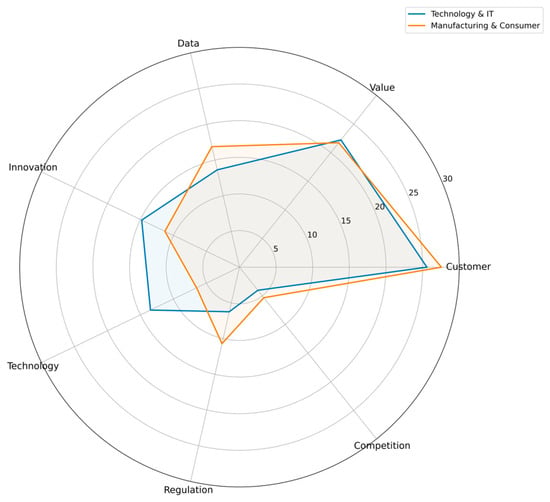
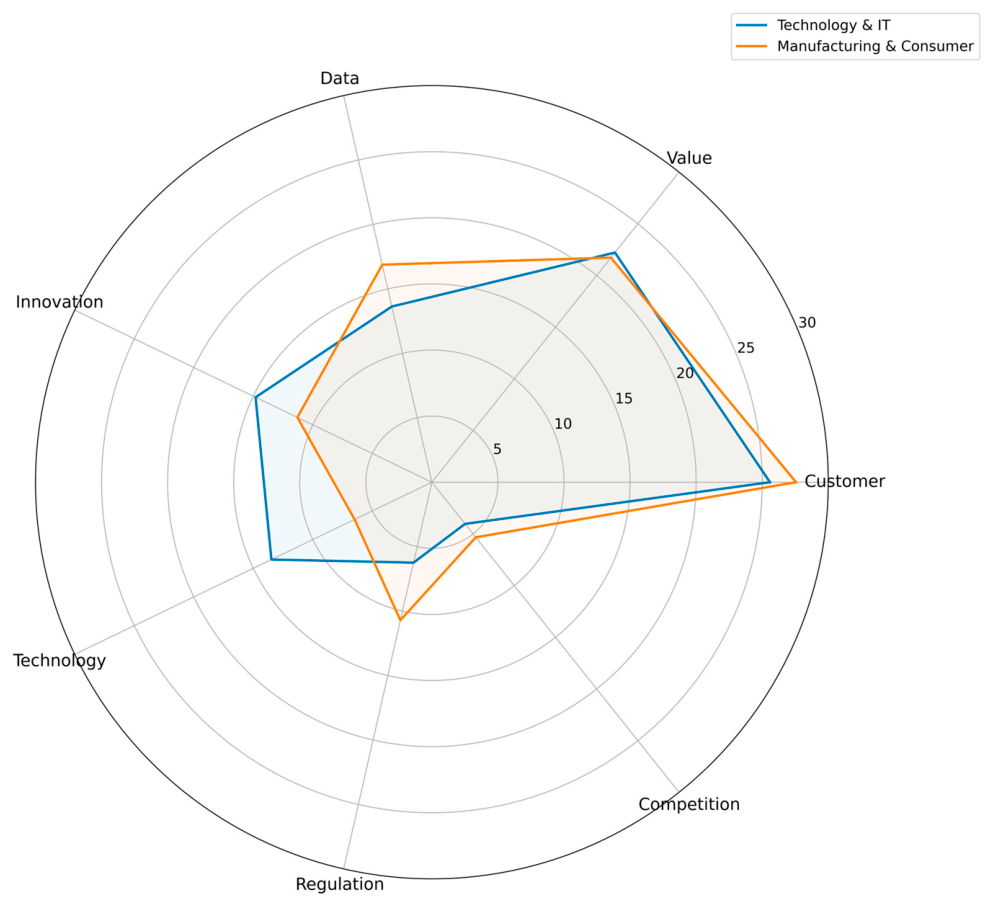

Disclaimer/Publisher’s Note: The statements, opinions and data contained in all publications are solely those of the individual author(s) and contributor(s) and not of MDPI and/or the editor(s). MDPI and/or the editor(s) disclaim responsibility for any injury to people or property resulting from any ideas, methods, instructions or products referred to in the content. |
© 2026 by the authors. Licensee MDPI, Basel, Switzerland. This article is an open access article distributed under the terms and conditions of the Creative Commons Attribution (CC BY) license.