


Abstract
As Gen-AI shopping chatbots become increasingly prevalent in e-commerce, limited research has examined how consumers’ appraisals of interactive cues shape trust and continued use in privacy-sensitive retail settings. Drawing on Cognitive Appraisal Theory (CAT) and the AIDUA framework, this study investigates how novelty value, anthropomorphic attribute, and social presence influence performance anticipation, effort anticipation, and perceived privacy risk and how these appraisals subsequently shape perceived trust and continued use. Data from 549 experienced users in mainland China were analyzed using partial least squares structural equation modeling (PLS-SEM). The results show that while novelty value enhances performance and effort anticipation, it does not significantly elevate perceived privacy risk. Anthropomorphic attribute positively affects performance anticipation and negatively affects perceived privacy risk, while social presence enhances performance anticipation and effort anticipation and reduces perceived privacy risk. Performance anticipation and effort anticipation positively predict perceived trust, whereas perceived privacy risk negatively predicts perceived trust; perceived trust, in turn, strongly predicts continued use. Mediation analyses further show that cognitive appraisal variables mediate the effects of primary appraisal factors on perceived trust, while perceived trust mediates the effects of cognitive appraisal variables on continued use. Serial mediation results additionally indicate that primary appraisal factors influence continued use through cognitive appraisal and trust formation. These findings deepen understanding of the cognitive and trust-building mechanisms underlying consumer interactions with Gen-AI shopping chatbots and offer practical implications for e-commerce platforms.
1. Introduction
Artificial intelligence (AI) devices have seen widespread adoption in the retail, hotel, and educational sectors in recent years [1,2,3,4]. In consumer settings, chatbots are now routinely used to provide product details and assistance [5]. A chatbot can be conceptualized as a natural-language-based software program that engages users in human-like dialogue and cultivates a conversational experience in which users feel they are communicating with another person [6,7,8]. Generative AI (Gen-AI) shopping chatbots within online retail environments assist customers with product browsing, price research, and transaction completion [9]. These chatbots enhance decision-making efficiency and reduce labor costs, increasingly supplementing or replacing human frontline employees [10,11]. Despite their growing role, whether consumers will continue using these chatbots for future tasks remains a critical issue that reflects their commercial value and service effectiveness.
The Unified Theory of Acceptance and Use of Technology (UTAUT) and the Technology Acceptance Model (TAM) have been the mainstays of earlier research on AI chatbots [12,13,14]. However, these models may not sufficiently account for AI’s intelligent capabilities and interactive features, which can constrain their explanatory power and predictive validity [15]. To better explain consumers’ acceptance intentions, the AI Device Use Acceptance (AIDUA) model was introduced by Gursoy et al. [10]. The model delineates three stages of customer acceptance: primary appraisal, secondary appraisal, and the outcome stage. Numerous contexts have seen the application of the AIDUA paradigm, including hospitality services [16], education [1,17,18], marketing [19], and healthcare services [20].
Although the AIDUA model has been increasingly applied to AI acceptance research, its theoretical explanatory scope remains limited in the context of Gen-AI shopping chatbots in e-commerce. Compared with traditional AI devices or earlier rule-based chatbots, Gen-AI shopping chatbots involve more open-ended, conversational, and transaction-sensitive interactions in which users must simultaneously evaluate functional, relational, and risk-related cues. Recent studies suggest that trust plays a pivotal role in these complex contexts. For example, Ding and Najaf [21] found that the interactivity and perceived humanness of AI chatbots significantly influenced the formation of trust, which in turn affected users’ intention to adopt AI chatbots for e-commerce. Similarly, the research by Shahzad et al. [22] based on the dual factor theory indicated that trust and distrust beliefs driven by Gen-AI chatbots’ characteristics such as anthropomorphism, efficiency, transparency, and privacy concerns jointly shaped the continued use intention of Gen-AI chatbots in online shopping. Overall, these research results indicate that the formation of trust is not a simple response to the isolated technical attributes. It emerges after users integrate diverse cues concerning both benefits and potential threats. Yet, this integrative appraisal process is precisely where the original AIDUA model remains under-specified. While AIDUA established a phased framework that included primary appraisal, secondary appraisal, and outcome, it does not fully explain how heterogeneous interaction cues are cognitively consolidated into perceived trust [23,24]. This limitation is particularly salient in Gen-AI shopping contexts, where generative and human-like capabilities simultaneously create functional value and evoke uncertainty, privacy concerns, and reliance-related risk [19]. Thus, the specific theoretical gap is not merely whether AIDUA can be applied to Gen-AI chatbots, but whether it adequately explains the appraisal-to-trust mechanism underlying continued use in privacy-sensitive and socially interactive shopping settings.
To address this gap, the present study integrates Cognitive Appraisal Theory (CAT) to provide a micro-level mechanism of appraisal. By combining the AIDUA model and CAT, this study investigates the cognitive and affective mechanisms underlying consumers’ continued use of Gen-AI shopping chatbots in e-commerce. Specifically, AIDUA is used to provide the macro-level staged structure of technology acceptance, whereas CAT helps uncover the micro-level psychological mechanisms underlying users’ benefit–cost/risk appraisals and trust formation. Following this integrated logic, the current research begins by investigating key interactive cues in the primary appraisal stage. It then explores how novelty value, anthropomorphic attribute, and social presence shape cognitive appraisals in the secondary appraisal stage, including performance anticipation, effort anticipation, and perceived privacy risk. The model further posits that these cognitive appraisals influence perceived trust, which acts as a central psychological mediator and ultimately drives continued use intentions. Through this integrated framework, the study moves beyond a descriptive application of AIDUA and instead uses CAT to sharpen the underdeveloped appraisal-to-trust link within the AIDUA framework for the Gen-AI shopping chatbots context.
Within this integrated framework, the investigation is specifically situated in the Chinese e-commerce landscape, which is theoretically meaningful rather than merely serving as a convenient sampling setting. First, China provides a highly digitalized and platform-intensive e-commerce environment in which Gen-AI shopping chatbots are increasingly embedded in everyday retail interactions. This makes continued use a substantively meaningful outcome rather than a purely hypothetical behavioral intention. Second, because trust formation in collectivist contexts tends to rely more strongly on social cues and relational safety, the Chinese setting offers a useful context for examining whether anthropomorphic attribute and social presence play especially salient roles in the appraisal-to-trust process. Third, the Chinese digital marketplace is characterized by a context-specific privacy–utility trade-off, in which efficiency and instrumental value may be prioritized alongside privacy considerations. These features make China a theoretically appropriate setting for examining how benefit–cost/risk appraisals are translated into trust and continued use in Gen-AI shopping contexts.
The present research makes several significant additions to the corpus of previous material. First, it applies the AIDUA model to Gen-AI shopping contexts. This extension addresses the model’s limited use in emerging consumption settings and tests its applicability to complex shopping interactions. In particular, compared with traditional AI devices or early rule-based chatbots, these systems involve continuous dialogue, personalized recommendations, and transaction-sensitive interactions involving monetary decisions, personal preference information, and privacy uncertainty. This makes the shopping context a theoretically distinctive setting for refining how the AIDUA model explains trust formation and user evaluation in Gen-AI interactions. Second, the present research introduces additional refinements to the original AIDUA framework. Specifically, it extends the AIDUA model by adding social presence to primary appraisal. It also models secondary appraisal as a benefit–cost/risk calculus that integrates perceived privacy risk with performance anticipation and effort anticipation. Finally, it confirms the central mediating role of perceived trust. This finding clarifies the psychological pathway from functional benefits and perceived privacy risk appraisals to continued use behavior. Through this theoretical integration and contextual extension, the study offers fresh empirical evidence that strengthens and extends the AIDUA model while yielding practical insights for e-commerce firms aiming to develop believable and long-lasting Gen-AI shopping chatbots.
2. Development of the Conceptual Framework and Hypotheses
2.1. Conceptual Framework
This study draws on Cognitive Appraisal Theory (CAT) and the AI Device Use Acceptance (AIDUA) model to explain how users form trust and develop continued use intentions toward Gen-AI shopping chatbots. Although the AIDUA model provides a valuable stage-based framework for understanding AI acceptance, it does not by itself sufficiently explain how users’ appraisals are psychologically translated into trust in the context of Gen-AI shopping chatbots. This limitation is especially salient in e-commerce settings, where users evaluate not only functional utility but also novelty, anthropomorphic cues, social presence, and privacy-related threats during interactions with AI systems. To address this theoretical gap, the present study integrates CAT with AIDUA. CAT offers a useful basis for understanding how individuals evaluate salient stimuli and translate these evaluations into affective and behavioral responses [25,26,27]. In technology adoption contexts, CAT further helps clarify how evaluative judgments shape coping-oriented attitudes and behavioral tendencies [18,28]. In the present study, CAT is introduced not as a substitute for AIDUA but as a complementary lens that explains how users cognitively evaluate benefit- and threat-related cues and how these evaluations are consolidated into a trust-related judgment.
Consistent with this logic, the AIDUA framework conceptualizes AI adoption as a staged process involving primary appraisal, secondary appraisal, and the outcome stage [2,24,29]. In the primary appraisal stage, users assess the relevance and significance of interacting with an AI system. In the secondary appraisal stage, they engage in a more elaborated evaluation of anticipated benefits, required effort, and potential costs or threats. The outcome stage reflects final acceptance-related consequences, such as intention and continued engagement, as shaped by prior appraisals [10].
Building on AIDUA’s staged logic, this study adapts the framework to the interaction characteristics and risk profile of Gen-AI shopping chatbots. In the primary appraisal stage, the model focuses on three experiential cues salient in human–AI dialogue: novelty value [1,17], anthropomorphic attribute [6,9,30], and social presence [31,32]. These cues shape users’ initial evaluations of the chatbot by influencing how novel, human-like, and socially present the system is perceived to be. Notably, although anthropomorphic attribute and social presence are closely related in conversational AI contexts, they capture different aspects of users’ primary appraisal. Notably, although anthropomorphic attribute and social presence are closely related in conversational AI contexts, they capture different aspects of users’ primary appraisal. Anthropomorphic attribute is an object-centered structural evaluation, referring to the human-like traits (e.g., feelings, mind, features) embedded within the agent itself [10]. It addresses how human the entity appears. By contrast, social presence is an interaction-centered psychological experience, capturing the relational depth, warmth, and sense of being there together during the interaction. It addresses how real the interaction feels. Because social presence can be fostered not only by anthropomorphic design cues but also by deeply empathetic and responsive dialogue [33,34], users may evaluate the agent’s structural humanness and the interaction’s relational atmosphere as distinct cognitive dimensions. Consequently, to accurately capture users’ primary appraisals of Gen-AI shopping chatbots, this study models anthropomorphic attribute and social presence as distinct, parallel antecedents based on the divergence between object-centered cues and interaction-centered experiences.
In the secondary appraisal stage, the model highlights three evaluative dimensions that reflect users’ benefit–cost/threat trade-offs in shopping decisions: performance anticipation and effort anticipation, which capture expected utility and required effort [13,35], and perceived privacy risk, which reflects concerns about data disclosure and misuse in AI-mediated transactions [14,36,37]. Specifically, performance anticipation and effort anticipation represent the expected benefits of using Gen-AI shopping chatbots, whereas perceived privacy risk represents a potential cost or threat. From a CAT perspective, perceived privacy risk captures the perceived challenge associated with possible data misuse, which users must weigh alongside anticipated benefits. For analytical clarity, this study incorporates perceived privacy risk into the cost/threat dimension of the broader benefit–cost/risk calculus. Extending the AIDUA model to the shopping chatbot context, perceived trust is positioned as the central evaluative mechanism through which these appraisals are consolidated into a willingness to rely on chatbot recommendations [1,12]. Trust therefore serves as the proximal driver of continued use, consistent with the reliance-based nature of AI-assisted shopping [38,39].
In sum, AIDUA serves as the overarching stage-based framework in this study, whereas CAT provides the psychological logic explaining how appraisals are formed within and across these stages. AIDUA clarifies the sequential structure linking primary appraisal, secondary appraisal, and outcome, while CAT explains how salient interaction cues are interpreted as anticipated benefits or threats and subsequently transformed into perceived trust.
2.2. Hypotheses Development
2.2.1. Primary Appraisal: Novelty Value, Anthropomorphic Attribute, Social Presence
As a recent extension to the AIDUA model, novelty value has attracted growing scholarly attention [17,24]. Introduced as an antecedent in the initial evaluation phase, novelty value refers to how much a product distinguishes itself from alternatives through its freshness and originality [40]. Prior studies suggest that novelty value is a critical driver of innovative technology acceptance [41]. Specifically, performance anticipation and effort anticipation, two measures of a technology’s usefulness and usability, have been demonstrated to be positively impacted by novelty value [1,19]. When a technology is perceived by users as novel and original, stronger utilitarian and hedonic value perceptions tend to emerge, fostering greater satisfaction with the technology [42].
Nevertheless, the novelty inherent in new technologies can prove to be a double-edged sword. Within the domain of intelligent retail systems, Adapa et al. [43] highlight that the introduction of novel technologies often induces uncertainty, which may trigger users’ concerns about privacy, security, and other risks. Consistent with this view, Arce-Urriza et al. [44] find that privacy concerns increased after integrating generative AI into retail chatbots. This evidence suggests that GenAI-enabled novelty may heighten perceived privacy risk in retail interactions. For AI-driven technologies that rely heavily on data and involve opaque decision-making, users’ perception of control over the collection, use, and protection of their personal information may be diminished by novelty, which may also increase users’ uncertainty. This heightened uncertainty can amplify perceptions of privacy risks. Consequently, the hypotheses are put forth in this research:
H1a.
Novelty value is positively associated with effort anticipation in Gen-AI shopping chatbots.
H1b.
Novelty value is positively associated with performance anticipation in Gen-AI shopping chatbots.
H1c.
Novelty value is positively associated with perceived privacy risk in Gen-AI shopping chatbots.
Anthropomorphic attribute refers to users’ tendency to attribute humanlike intentions, emotions, and mental capacities to nonhuman agents [45]. In human–AI interactions, anthropomorphic attribute has been widely examined because it shapes users’ interpretations of AI cues and subsequent evaluations [2,6]. Within the AIDUA model, anthropomorphic attribute is positioned as a primary appraisal variable that influences both performance and effort anticipation [9,16,20]. In marketing and service contexts, earlier research has demonstrated that anthropomorphism exerts positive effects. Specifically, anthropomorphic features can enhance perceived trust, increase enjoyment during online shopping, and boost purchase intentions [46,47,48]. Furthermore, anthropomorphic attribute has been shown to improve chatbot use efficiency by enabling more immersive and engaging services. It thus strengthens users’ intentions to continue using the technology [49].
However, while anthropomorphic attribute can improve user engagement, it may also introduce challenges, particularly regarding perceived privacy risk. The human-like communication style often requires users to share personal data and provide real-time feedback, which may heighten privacy risks [50,51]. Consistent with this, Sharma and Sharma [14] found that anthropomorphized voice assistants were leading to heightened concerns about privacy risks by encouraging greater disclosure through increased engagement. Prior research further indicates that the effects of anthropomorphism on privacy risk are complex and context-dependent. For example, Kim et al. [52] have highlighted the “uncanny valley of mind” effect in AI-agent interactions, where users may attribute autonomous intentions to highly anthropomorphized chatbots, leading to fears of misuse or mishandling of their personal data. Importantly, algorithm disclosure can moderate this effect, as increased disclosure of system operations reduces perceived data misuse and mitigates potential negative consequences of excessive anthropomorphism. Additional evidence suggests that anthropomorphized website or platform designs can elevate perceived privacy risk and reduce purchase intentions [53]. Specifically, for users with a low need for interaction or prior experiences of social exclusion, anthropomorphic elements may further heighten awareness of privacy risks and reduce behavioral intentions. Accordingly, the hypotheses below are derived from the foregoing discussion:
H2a.
Anthropomorphic attribute is positively associated with effort anticipation in Gen-AI shopping chatbots.
H2b.
Anthropomorphic attribute is positively associated with performance anticipation in Gen-AI shopping chatbots.
H2c.
Anthropomorphic attribute is positively associated with perceived privacy risk in Gen-AI shopping chatbots.
As a recently added variable, social presence refers to how individuals perceive the presence of a social entity when interacting with technology [54]. Gen-AI shopping chatbots use natural language to facilitate human-like interactions. They can emulate everyday conversational tones and styles to address users’ specific queries. Their anthropomorphic features may lead users to treat these chatbots as “social actors.” Users may therefore apply interpersonal interaction rules by default [34]. Moreover, social presence can be elicited when chatbots provide empathetic replies and emotional support [33].
The impact of social presence on perceived technology performance has been previously studied [55,56]. Iqbal et al. [57] found that the banking chatbots’ social presence of interaction conceptualized as users’ perception of chatbots’ friendly understanding and responsiveness positively influences perceived usefulness and ease of use, showing that social presence directly shapes users’ cognitive evaluations of performance and effort. Moreover, in e-commerce, social presence is regarded as a critical factor that shapes users’ positive perceptions of online platforms. As an example, Cyr et al. [58] documented that in e-services, the perceived presence of a human-like social entity indirectly increases users’ purchase intentions through perceived usefulness. Additionally, research indicates that social presence triggered by anthropomorphic features and empathy can strengthen users’ perceived trust and enjoyment during interactions with technology [31,32,59]. This enjoyable and smooth interaction can reduce cognitive load and mental effort. It can make the process feel easier and require less effort.
However, strong social presence may also lead users to underestimate the risks associated with privacy disclosure. Lim and Shim [60] provide evidence that social presence negatively predicts privacy concerns. Thus, a higher degree of social presence during interactions with AI correlates with reduced privacy concerns. Individuals tend to show fewer concerns regarding privacy when sharing personal information with AI agents, especially when they develop stronger social connections with them. Based on these results, the present research puts forth the following hypotheses:
H3a.
Social presence is positively associated with effort anticipation in Gen-AI shopping chatbots.
H3b.
Social presence is positively associated with performance anticipation in Gen-AI shopping chatbots.
H3c.
Social presence is negatively associated with perceived privacy risk in Gen-AI shopping chatbots.
2.2.2. Secondary Appraisal: Cognitive Appraisal and Perceived Trust
Individuals assess their interactions with Gen-AI shopping chatbots from cognitive and affective perspectives during the secondary appraisal phase [10]. According to Lazarus’ Cognitive Appraisal Theory, individuals evaluate external stimuli as beneficial or harmful, depending on their objectives, capabilities, and anticipated outcomes. These assessments generate emotional reactions, which subsequently shape future behavioral responses [26].
Effort anticipation and performance anticipation are key factors in evaluating the anticipated gains associated with AI device use, which subsequently shape users’ emotional attitudes toward their use [10]. Effort anticipation relates to how easily technology is perceived to be used, while performance anticipation reflects the expected benefits of using the technology for specific tasks [61]. Both constructs serve as key utilitarian determinants of intentions to continue using AI devices and to engage in mobile shopping [12,35,37]. Specifically, higher performance anticipation significantly enhances users’ positive emotions and attitudes toward AI chatbots [16,62]. For example, Menon and Shilpa [13] suggest that quick responses and personalized interactions tailored to users’ needs positively influence satisfaction. Similarly, effort anticipation associated with AI devices is linked to positive emotions, such as perceived trust [39]. A smooth user experience is produced by a well-designed interface, unambiguous instructions, and simple interaction flows, which promote comfort and confidence [63].
In contrast to the original AIDUA model, perceived privacy risk is newly introduced in the secondary appraisal stage, alongside established utilitarian benefits. The potential loss brought on by the disclosure of personal data within a user group is known as perceived privacy risk [37]. Given concerns about personal data, trust, and technological reliability, perceived privacy risk has been widely incorporated into studies of continued AI-device use, including chatbots and smart voice assistants [14,19,35]. Otoo et al. [64] carried out a longitudinal investigation into smart voice-based assistants and privacy disclosure. The authors note that although these devices can perform complex tasks such as scheduling appointments or placing orders, they often require access to personal information and extensive software permissions. According to an earlier study [65], trust and perceived privacy risk are generally inversely connected. For example, consumers’ concerns about privacy risks, particularly the secondary use of their data, can undermine perceived trust in a website [66]. Trust tends to foster positive behaviors, such as purchase intentions and continued use, while privacy risk tends to provoke protective responses [31]. Accordingly, the work posits the subsequent hypotheses:
H4.
Effort anticipation is positively associated with perceived trust in Gen-AI shopping chatbots.
H5.
Performance anticipation is positively associated with perceived trust in Gen-AI shopping chatbots.
H6.
Perceived privacy risk is negatively associated with perceived trust in Gen-AI shopping chatbots.
2.2.3. Outcome Stage: Continued Use
In the outcome stage of the AIDUA model, Gursoy et al. [10] contend that consumers’ readiness to embrace and interact with AI devices during service delivery is influenced by their affective attitudes toward these devices. Accordingly, the current study incorporates perceived trust as an affective-attitude variable into the theoretical framework. Perceived trust is understood as the belief users have to adopt emerging technologies [1,67]. When it comes to AI, trust is characterized as a readiness to embrace the technology and rely on its judgments and recommendations while also being prepared to delegate tasks, provide relevant inputs, and endorse the technology’s use [68]. Trust is generally considered crucial for the creation of AI systems that are both usable and reliably secure when uncertainty and risk accompany the adoption of new technology [69]. Prior studies show that trust is a key predictor of users’ willingness to accept and adopt technological devices [12,31,39]. Vimalkumar et al. [37] highlighted the critical importance of trust for the uptake of voice-based intelligent assistants. Greater trust in this technology is associated with stronger adoption behavior. Moreover, in a two-wave survey of a representative sample, Ng [38] discovered that consumers’ continued use behavior is positively influenced by the trust they place in conversational AI systems. Therefore, the subsequent hypothesis is formulated:
H7.
Perceived trust is positively associated with continued use in Gen-AI shopping chatbots.
According to the staged logic of the AIDUA model, users’ responses to AI devices develop progressively from primary appraisal to secondary appraisal and finally to outcome-related responses [10]. Grounded in the above theoretical perspective, the present study specifies a set of indirect and serial mediation pathways, with the aim of examining the mechanisms underlying the relationships among variables. Specifically, the effects of primary appraisal factors on perceived trust are transmitted through three distinct secondary appraisal variables, each representing a theoretically grounded appraisal route. First, performance anticipation reflects the instrumental-benefit route, capturing users’ expectations regarding the functional utility of Gen-AI shopping chatbots for completing specific tasks. Second, effort anticipation reflects the usability/coping-ease route, capturing users’ anticipated cognitive and operational effort required to interact with the chatbots. Third, perceived privacy risk reflects the cost/threat route, capturing users’ assessment of potential privacy or security risks associated with chatbot use. Accordingly, H8a, H8b, and H8c specify these three indirect effects of primary appraisal factors on perceived trust through performance anticipation, effort anticipation, and perceived privacy risk, respectively.
Moreover, perceived trust serves as the proximal evaluative mechanism driving continued use. Therefore, the effects of secondary appraisal variables on continued use are expected to be transmitted through trust, as articulated in H9. Taken together, the model further suggests sequential indirect effects derived from the AIDUA–CAT framework in which primary appraisal factors influence continued use through secondary appraisal and subsequent trust formation. Accordingly, H10a, H10b, and H10c represent the three serial mediation pathways through performance anticipation and perceived trust, effort anticipation and perceived trust, and perceived privacy risk and perceived trust, respectively. Notably, while the study examines all specified indirect and serial paths, the core theoretical contribution focuses on the appraisal-to-trust mechanism, with comparisons across parallel pathways interpreted in a more exploratory manner to assess how this mechanism operates across different appraisal dimensions. Based on this reasoning, the following hypotheses are proposed:
H8a.
Performance anticipation mediates the relationships between primary appraisal factors (i.e., novelty value, anthropomorphic attribute, and social presence) and perceived trust in Gen-AI shopping chatbots.
H8b.
Effort anticipation mediates the relationships between primary appraisal factors (i.e., novelty value, anthropomorphic attribute, and social presence) and perceived trust in Gen-AI shopping chatbots.
H8c.
Perceived privacy risk mediates the relationships between primary appraisal factors (i.e., novelty value, anthropomorphic attribute, and social presence) and perceived trust in Gen-AI shopping chatbots.
H9.
Perceived trust mediates the relationships between performance anticipation, effort anticipation, and perceived privacy risk and continued use of Gen-AI shopping chatbots.
H10a.
Performance anticipation and perceived trust sequentially mediate the relationships between primary appraisal factors (i.e., novelty value, anthropomorphic attribute, and social presence) and continued use of Gen-AI shopping chatbots.
H10b.
Effort anticipation and perceived trust sequentially mediate the relationships between primary appraisal factors (i.e., novelty value, anthropomorphic attribute, and social presence) and continued use of Gen-AI shopping chatbots.
H10c.
Perceived privacy risk and perceived trust sequentially mediate the relationships between primary appraisal factors (i.e., novelty value, anthropomorphic attribute, and social presence) and continued use of Gen-AI shopping chatbots.
Grounded in the AIDUA model and the proposed hypotheses, Figure 1 illustrates the theoretical framework of this study. The model proposes that novelty value, anthropomorphic attribute, and social presence influence continued use through a staged process involving cognitive appraisal variables (i.e., performance anticipation, effort anticipation, and perceived privacy risk) and perceived trust.
Figure 1.
The theoretical model.
3. Research Design and Methods
3.1. Data Collection and Sample Characteristics
To empirically test the proposed conceptual framework, a cross-sectional online survey was administered. In late November 2025, this study conducted a pilot test and collected 100 responses. The pilot data were analyzed using reliability and validity assessments and correlation analyses. Poorly performing items were removed. The formal survey was administered via Sojump (https://www.wjx.cn), a leading professional web-based survey platform in mainland China known for its reliable data-collection capabilities. Data were collected from 5 December to 15 December 2025. Ethical protocols were followed throughout the research process. The Academic Committee of the corresponding author’s connected institution formally approved the study protocol. An informed consent form outlining the research objectives was given to each responder before their involvement. The confidentiality of all responses and their exclusive use for scholarly study were explained to the participants.
This study used purposive sampling to ensure sample appropriateness. Prior to the formal questionnaire, respondents were provided with a standardized description of the Gen-AI shopping chatbots on the survey cover page. Specifically, “Gen-AI shopping chatbots” were defined as generative conversational intelligent customer-service or marketing agents used in shopping contexts, including both text-based and voice-based dialogue systems. To further reduce ambiguity and distinguish these tools from conventional customer-service systems, the survey cover page also provided concrete examples of platform-based AI shopping assistants, such as Taobao Wenwen, JD Jingyan, and Douyin Doubao. Only individuals who reported prior experience using such Gen-AI shopping chatbots were eligible to proceed to the formal survey. In addition, several quality-control procedures were implemented to safeguard the authenticity and reliability of the self-reported data. (1) In order to detect and exclude respondents who gave careless responses, two trap questions (attention check items) were incorporated. (2) Following established methodological recommendations, completion times were screened to remove responses indicative of insufficient engagement or substantial interruption. In total, 600 responses were collected. After applying these exclusion criteria and the elimination of replies that were either inconsistent or incomplete, 549 valid responses were kept for the analysis. This sample size is statistically adequate for robust hypothesis testing using structural equation modeling (SEM).
The demographic details of the present research’s final sample (N = 549) are displayed in Table 1. The sample showed a relatively even gender composition, although females accounted for a slightly higher proportion (55.9%) than males (44.1%). Regarding age, most respondents were 30–39 years old (57.2%), followed by 18–29 years old (27.9%). Thus, the sample mainly comprised young and middle-aged adults, who are often early adopters of Gen-AI Chatbot technology. Regarding educational attainment, the sample was highly educated. Most participants held a college degree (74.9%), and an additional 8.4% reported undergraduate or higher qualifications. This educational profile suggests that respondents had the capacity to interact with and evaluate AI-driven services. In terms of earnings, the largest segment reported an average monthly income of more than 8000 RMB (40.3%), followed by 6001–8000 RMB (29.1%). This distribution indicates substantial purchasing power. Usage-frequency data indicate that participants are active users of Gen-AI shopping chatbots. Specifically, 37.0% reported using these tools regularly (1–2 times a week), whereas 32.6% used them frequently (3–5 times a week). Notably, 12.9% of the sample engaged with chatbots daily. Collectively, these demographic and behavioral characteristics suggest that the sample is well suited for investigating the theoretical constructs of this study. However, because purposive sampling was used to recruit respondents with prior experience using Gen-AI shopping chatbots, the sample should not be considered statistically representative of the broader population of online consumers. In addition, the online survey format and the concentration of respondents in mainland China may overrepresent relatively young, educated, digitally active, and AI-familiar consumers. Therefore, the findings should be interpreted primarily as theory-testing evidence derived from experienced users in the Chinese e-commerce context, rather than as population-level estimates generalizable to all consumer groups or national settings.
Table 1.
Sample profile (N = 549).
3.2. Measurement
Content validity was ensured by operationalizing all constructs using measures derived from existing literature and tailored for the Gen-AI shopping chatbots context (see Table 2). Each item was assessed using a seven-point Likert scale, anchored at 1 (“strongly disagree”) and 7 (“strongly agree”). Items modified from Cheng and Jiang [70] and Mun and Hwang [71] were used to measure continued use (CU). The scale from Jiang et al. [72] was used to measure perceived trust (PT), reflecting the perceived reliability and trustworthiness of the chatbot’s recommendations. Performance anticipation (PA) and effort anticipation (EA) were derived from Venkatesh et al. [61]. Perceived privacy risk (PPR) was based on Vimalkumar et al. [37]. Novelty value (NV) and social presence (SP) were adapted from Ma and Huo [24] and Juquelier et al. [33], respectively. Anthropomorphic attribute (AA) was operationalized using scales from Yin et al. [30]. Linguistic equivalence for Chinese participants was established through a rigorous translation and back-translation procedure. The original English materials were converted into Chinese by the research team and subsequently back-translated into English by independent translators who had no prior knowledge of the original texts. The two versions were compared systematically, and wording was refined where needed to ensure conceptual consistency and minimize ambiguity.
Table 2.
Measurement scales.
4. Data Analysis Strategy
Data preparation began with screening and cleaning in Microsoft Excel to remove responses that did not meet predetermined inclusion criteria. Next, preliminary analyses were carried out using SPSS 26.0, encompassing descriptive statistics as well as assessments for common method variance (CMV). Partial least squares structural equation modeling (PLS-SEM) in SmartPLS (version 4.1.1.4) was subsequently used to assess the hypothesized model. PLS-SEM was chosen given its strong fit with analyzing multivariate relationships in a prediction-oriented framework and for estimating complex models with several latent constructs [73]. Following a rigorous two-step procedure, the measurement model was evaluated to confirm reliability and construct validity. Subsequently, the structural model was assessed to test the research hypotheses and the proposed paths.
5. Results
5.1. Measurement Model
As shown in Table 3, internal consistency was demonstrated by Cronbach’s α values for all constructs being over the 0.70 threshold. In addition, composite reliability (CR) values were higher than the conventional 0.70 benchmark for all latent variables, supporting instrument reliability [74]. In terms of convergent validity, all AVE values exceeded the recommended 0.50 level, and indicator loadings were above 0.70, indicating adequate item convergence [75]. Discriminant validity was assessed by applying both the heterotrait-monotrait (HTMT) ratio and the Fornell–Larcker criterion. As demonstrated in Table 4, for each construct, the square root of the AVE exceeded the largest inter-construct correlation observed [76]. Discriminant validity was further confirmed by all HTMT ratios (see Table 5) being below the 0.90 cutoff [75].
Table 3.
Summary of confirmatory factor analysis.
Table 4.
Correlation matrix.
Table 5.
Heterotrait-monotrait ratio of correlations values.
5.2. Common Method Variance Testing
Harman’s single-factor test was applied to assess the potential common method variance (CMV) in self-reported data. CMV refers to method-related bias attributable to procedural or contextual features rather than the focal constructs [77]. All measurement items were subjected to an exploratory factor analysis (EFA) with varimax rotation in accordance with the methodology recommended by Luo et al. [78]. As indicated by the EFA results, less than half of the variance was explained by the first factor, suggesting that CMV is unlikely to be a significant issue. However, given the limited sensitivity of Harman’s test, a more rigorous full collinearity assessment approach was applied in the PLS-SEM framework. According to this criterion, CMV is not a pervasive issue if all inner Variance Inflation Factor (VIF) values are below the conservative threshold of 3.3. As shown in the structural model evaluation (see Table 6), all inner VIF values ranged from 1.000 to 2.310, well below the 3.3 cutoff. These combined results provide robust evidence that CMV is unlikely to be a significant concern in the present study.
Table 6.
Assessment of structural model with bootstrapping procedure.
5.3. Structural Model
A bootstrapping method with 5000 resamples was employed to examine the structural model to ascertain whether the suggested paths were statistically significant. Figure 2 and Table 6 provide an illustration and summary of the path analysis’s findings, respectively. Overall, 44.7% of the variance in continued use and 51.7% of perceived trust were explained by the model. Additionally, all Q2 values (0.090–0.516) were greater than zero, and every VIF value between 1.000 and 2.310 fell below the 3.0 cutoff [79], supporting predictive relevance and indicating no multicollinearity concerns.
Figure 2.
Results of structural path analysis. Note: *** p < 0.001, ** p < 0.01, * p < 0.05.
The majority of the proposed pathways were statistically significant, as Table 6 illustrates. Novelty value positively predicted both effort anticipation (β = 0.226, p < 0.01) and performance anticipation (β = 0.392, p < 0.001), supporting H1a and H1b. However, it did not support H1c because it had no discernible impact on perceived privacy risk (β = 0.008, p = 0.874). Anthropomorphic attribute positively predicted performance anticipation (β = 0.259, p < 0.001), supporting H2b. However, it negatively predicted perceived privacy risk (β = −0.194, p < 0.001) and had no significant effect on effort anticipation (β = 0.102, p = 0.066), failing to support H2a and H2c. Social presence positively predicted effort anticipation (β = 0.218, p < 0.01) and performance anticipation (β = 0.179, p < 0.01). It also negatively predicted perceived privacy risk (β = −0.155, p < 0.05), supporting H3a, H3b, and H3c. Notably, in contrast to anthropomorphic attribute and social presence, which significantly and negatively predicted perceived privacy risk, novelty value showed no significant relationship with privacy risk. These non-supported or directionally inconsistent findings suggest that the effects of novelty value and anthropomorphic attribute are more context-dependent than originally hypothesized, warranting further theoretical interpretation. In subsequent stages, perceived trust was most strongly predicted by performance anticipation (β = 0.529, p < 0.001), followed by effort anticipation (β = 0.217, p < 0.001), with perceived privacy risk having a negative effect on perceived trust (β = −0.132, p < 0.001), supporting H4, H5, and H6. Finally, perceived trust was strongly and positively associated with continued use (β = 0.669, p < 0.001), supporting H7.
5.4. Mediation and Serial Mediation Effects
To further examine the underlying psychological mechanisms, the study tested both indirect effects and serial mediation effects implied by H8a–H8c, H9, and H10a–H10c. Specifically, Table 7 reports the indirect effects associated with H8a–H8c and H9, whereas Table 8 reports the serial mediation effects associated with H10a–H10c.
Table 7.
Results of indirect effects analysis.
Table 8.
Results of serial mediation analysis.
As shown in Table 7, performance anticipation significantly mediated the relationships between anthropomorphic attribute and perceived trust (β = 0.137, p < 0.001), between novelty value and perceived trust (β = 0.207, p < 0.001), and between social presence and perceived trust (β = 0.094, p < 0.01). Effort anticipation also significantly mediated the relationships between novelty value and perceived trust (β = 0.049, p < 0.01) and between social presence and perceived trust (β = 0.047, p < 0.05), whereas its mediating role in the relationship between anthropomorphic attribute and perceived trust was not significant (β = 0.022, p = 0.098). This non-significant indirect effect is logically consistent with the non-significant direct path from anthropomorphic attribute to effort anticipation. In addition, perceived privacy risk significantly mediated the relationships between anthropomorphic attribute and perceived trust (β = 0.026, p < 0.05) and between social presence and perceived trust (β = 0.020, p < 0.05), but not the relationship between novelty value and perceived trust (β = −0.001, p = 0.877). Perceived trust, in turn, significantly mediated the effects of performance anticipation (β = 0.353, p < 0.001), effort anticipation (β = 0.145, p < 0.001), and perceived privacy risk (β = −0.088, p < 0.001) on continued use. These findings indicate that H8b and H8c were partially supported, whereas H8a and H9 were supported.
Table 8 reports the serial mediation results and provides additional evidence regarding H10. Anthropomorphic attribute showed significant serial indirect effects on continued use through performance anticipation and perceived trust (β = 0.092, p < 0.001) and through perceived privacy risk and perceived trust (β = 0.017, p < 0.05), whereas the path through effort anticipation and perceived trust was not significant (β = 0.015, p = 0.096). Novelty value exerted significant serial indirect effects on continued use through performance anticipation and perceived trust (β = 0.138, p < 0.001) and through effort anticipation and perceived trust (β = 0.033, p < 0.01) but not through perceived privacy risk and perceived trust (β = −0.001, p = 0.877). Likewise, social presence had significant serial indirect effects on continued use through performance anticipation and perceived trust (β = 0.063, p < 0.01), through effort anticipation and perceived trust (β = 0.032, p < 0.05), and through perceived privacy risk and perceived trust (β = 0.014, p < 0.05). Thus, H10a was supported, whereas H10b and H10c were partially supported.
5.5. Robustness Check for Endogeneity
To further assess potential endogeneity concerns associated with cross-sectional survey data, an additional robustness check was conducted using the Gaussian copula approach in PLS-SEM [80]. Gaussian copula terms were specified for the focal predictors in the structural model. The results showed that some Gaussian copula terms were statistically significant, suggesting that potential endogeneity may exist in certain relationships. However, after including the copula terms, all substantive structural paths remained statistically significant and directionally unchanged. Overall, these findings suggest that potential endogeneity does not materially alter the main conclusions of this study, thereby supporting the robustness of the proposed model.
6. Discussion
The present study integrates the three-stage AIDUA model with Cognitive Appraisal Theory (CAT) to investigate the mechanisms underlying users’ continued use of Gen-AI shopping chatbots. Specifically, AIDUA provides a macro-level framework to structure primary and secondary appraisal stages, while CAT offers a micro-level perspective on how users cognitively and affectively evaluate interactive cues. The findings reveal a differentiated appraisal-to-trust mechanism: novelty value, anthropomorphic attribute, and social presence activate distinct evaluative logics in the primary appraisal stage, which are then translated into performance anticipation, effort anticipation, and perceived privacy risk. These cognitive appraisals are subsequently consolidated through perceived trust, which functions as the central evaluative mechanism linking appraisal to continued use. Importantly, this mechanism appears context-dependent, particularly in how relational cues and privacy concerns are interpreted within the Chinese e-commerce environment.
6.1. Primary Appraisal and Cognitive Appraisal
Building on the preceding analyses, the findings suggest that the three primary appraisal cues are not interchangeable antecedents but activate different evaluative logics in Gen-AI shopping chatbot use. First, according to this study, consumers are likely to anticipate more shopping efficiency if they believe Gen-AI shopping chatbots to be more novel and innovative. They are also more inclined to perceive lower learning costs and minimal operational effort. More importantly, the findings indicate that out of all the antecedents, novelty value is the most reliable indicator of performance anticipation. Alzyoud et al. [1] argue that innovations and progress associated with AI are viewed as key drivers of performance and efficiency. The novelty of Gen-AI shopping chatbots sets them apart from traditional service modes, effectively capturing and maintaining users’ attention [24]. Therefore, the impact of novelty value extends beyond the initial “wow” factor. It enables users to transform technological novelty into perceived utilitarian and creative functionalities of Gen-AI shopping chatbots [17].
However, the study did not discover a meaningful connection between perceived privacy risk and novelty value. This result aligns with existing theoretical perspectives that conceptualize novelty primarily as an affective cue emphasizing the potential rewards of adopting an innovation, such as enhanced performance and exploratory motivation, rather than as a trigger for privacy concerns [41,81]. In this risk–reward framework, novelty influences how individuals balance expected benefits and costs but does not function as a salient risk cue that heightens privacy concerns. This influence appears to be context-dependent and moderated by individual differences. For the current sample of consumers already familiar with Gen-AI technology, novelty likely acted primarily as a reward cue rather than a threat to privacy. Nevertheless, the unfamiliarity inherent in novelty might still evoke privacy anxiety among more conservative or risk-averse user groups, a nuance that warrants further cross-segment validation.
Second, anthropomorphic attribute positively predicts performance anticipation, whereas its effect on effort anticipation is not significant. This pattern contrasts with prior findings [9,16], suggesting that in shopping contexts, users associate anthropomorphic cues more with utilitarian outcomes than with operational convenience. Human-like emotions and a friendly linguistic style enhance dialogue quality and interaction enjoyment, fostering rapport [82]. When a chatbot adopts a virtual persona to interpret ambiguous needs and offer personalized suggestions, users may perceive greater support, time savings, and higher shopping efficiency, reinforcing beliefs in its decision-support utility [83]. However, anthropomorphic style does not necessarily reduce perceived difficulty. Emotional exchanges seem to have less of an impact on effort anticipation than functional aspects like response speed and accurate instruction comprehension. This suggests that anthropomorphic features enhance perceived value through affective interaction but cannot substitute for core functionality in reducing usage barriers.
Contrary to prior studies [14,53], anthropomorphic attribute is negatively associated with perceived privacy risk and is the strongest predictor among all antecedents. This counterintuitive finding suggests that the relationship between anthropomorphism and privacy concern is not uniformly positive but depends on the psychological mechanism activated in a given context. Prior research grounded in the uncanny valley and vigilance-based perspectives suggests that highly human-like AI agents may evoke discomfort, perceived autonomy, and suspicion, thereby heightening privacy-related concern. By contrast, relational and social-response perspectives suggest that anthropomorphic cues can foster familiarity, warmth, predictability, and a sense of cooperative interaction, which reduce psychological distance and make the technology feel more socially reassuring. The present findings suggest that the latter mechanism may be more salient in the context of Gen-AI shopping chatbots. In this setting, anthropomorphism is expressed primarily through conversational style, responsiveness, and perceived intimacy rather than highly realistic embodied appearance. Moreover, shopping interactions are largely instrumental and recommendation-oriented rather than deeply personal or emotionally disclosive. As a result, users may interpret anthropomorphic cues less as signs of intrusive agency and more as signals of helpfulness, relational safety, and collaborative support. A friendly tone, empathic responses, and personalization may encourage users to view chatbots as collaborative partners [4], while the resulting trust and emotional bonding may further alleviate privacy concerns during information disclosure [36]. Taken together, this finding suggests that the privacy implications of anthropomorphism are context-dependent and may vary according to the form of anthropomorphism, the task type, and the broader cultural context in which relational cues are interpreted.
Third, social presence, a key social antecedent influencing users’ primary appraisal, significantly predicts both perceived benefits and perceived risks. This supports the inclusion of social presence as a social-attribute dimension in our framework and offers a valuable extension to the AIDUA model [9,17,24]. First, social presence negatively predicts perceived privacy risk. This finding aligns with prior research [60], which shows that high social presence during interactions with Gen-AI shopping chatbots reduces users’ sensitivity to privacy concerns. Additionally, this study reveals that social presence more strongly predicts effort anticipation than performance anticipation. This extends previous work that focused on the connection between perceived utility and social presence [58,84]. One possible explanation is a shift in users’ appraisal mode. As a subjective psychological state, social presence entails warmth, trust, and enjoyment, fostering a psychological connection between users and Gen-AI shopping chatbots [85]. This emotional connection may give rise to parasocial relationships (PSRs), encouraging users to view the chatbot as a social entity and apply human social norms [31]. Consequently, the apparent psychological barrier between users and Gen-AI shopping chatbots is decreased by heightened social presence. It shifts the appraisal context from evaluating the utility of a tool to engaging with a “social actor.” This shift fosters positive affect and facilitates more natural “human-to-human” communication, reducing perceived difficulty and cognitive load, thus making the interaction more intuitive and easier to process.
Taken together, these results demonstrate how each primary appraisal cue differentially shapes secondary appraisal. Specifically, novelty value primarily signals innovation value and exploratory benefit, anthropomorphic attribute signals relational reassurance and perceived support, and social presence signals interactional immediacy and communicative ease. This pattern deepens the theoretical interpretation of the integrated AIDUA–CAT framework by showing that primary appraisal cues shape secondary appraisal not only differently in magnitude but also through distinct psychological mechanisms.
6.2. Cognitive Appraisal and Perceived Trust as the Mediating Factor of Continued Use
Extending the insights from primary and secondary appraisals, the findings suggest that perceived trust should not be understood merely as another endogenous construct in the model but as the focal evaluative mechanism through which performance-, effort-, and risk-related appraisals are resolved into continued use. In the context of Gen-AI shopping chatbots, users do not appear to continue use simply because one technological attribute is favorable. Instead, they form continued-use intentions after weighing expected utility, perceived ease, and privacy-related threats and then consolidating these appraisals into perceived trust.
Specifically, both performance anticipation and effort anticipation positively predict users’ perceived trust in Gen-AI shopping chatbots, with performance anticipation serving as the strongest predictor. This evidence converges with earlier research [1,9], which proposed that perceived AI performance is a key emotional predictor and motivational driver. Importantly, the dominant role of performance anticipation can be further understood in the context of Gen-AI shopping chatbots’ unique capabilities. Unlike traditional rule-based systems, Gen-AI shopping chatbots can interpret ambiguous consumer needs, generate personalized recommendations, and sustain multi-turn interactive dialogues. These generative AI features enhance users’ performance expectations, forming a solid foundation for trust. Lim and Shim [60] contend that individuals primarily engage AI agents for entertainment and task efficiency and to pass time. In shopping scenarios, this translates to prioritizing effective and personalized assistance over social or hedonic functions. Therefore, consistent with the utilitarian orientation of shopping contexts, instrumental value possessed by Gen-AI shopping chatbots, such as accurate need understanding, satisfactory product recommendations, and automated price comparison, becomes the core driver of trust and continued use.
In addition, the results show that perceived privacy risk significantly and negatively predicts perceived trust. Thus, higher perceived privacy risk is linked to lower trust in Gen-AI shopping chatbots. This outcome supports previous studies on the connection between trust and privacy risk [31,39,66]. Moreover, it extends the original AIDUA model, whereas prior research in the secondary appraisal stage has predominantly concentrated on the unidirectional impact of utilitarian factors on emotions and behavioral intentions [9,24,86]. The empirical results support the view that users’ appraisals follow a dual process, where they simultaneously weigh utilitarian benefits against privacy-related costs/threats. In practical shopping contexts, users are required to disclose sensitive information, such as personal preferences, purchase history, and contact details, to access the convenient services offered by Gen-AI shopping chatbots. When users fear that this data may be misused, disclosed to unauthorized parties, or exploited for commercial purposes, their anxiety can directly undermine trust in the chatbot [85].
Finally, building on AIDUA research that suggests emotion is a primary determinant shaping users’ propensity to embrace AI-enabled devices [10], this study recognizes perceived trust as a crucial precondition for the ongoing adoption of Gen-AI shopping chatbots. This finding echoes existing literature [37,38], which underscores the crucial role that trust plays in determining how users accept and use technology. Specifically, the study demonstrates that higher perceived trust fosters users’ continued use of Gen-AI shopping chatbots. Perceived trust is influenced by both utilitarian benefits and privacy-related costs/threats. The benefits include performance anticipation and effort anticipation, while the costs are reflected in perceived privacy risk.
In summary, trust formation in Gen-AI shopping chatbot use appears to be utility-dominant but risk-qualified. Users rely primarily on whether the chatbot helps them shop effectively and efficiently, while privacy concerns operate as a constraining rather than overriding condition. This interpretation helps explain why performance anticipation emerged as the strongest predictor of perceived trust and clarifies the evaluative mechanism through which benefit–cost/risk appraisals are translated into continued use.
In addition to the direct effects of performance anticipation, effort anticipation, and perceived privacy risk on perceived trust, the results also reveal both significant mediation effects and serial mediation effects, further reinforcing the comprehensive model proposed in this study. The indirect paths indicate that users’ expectations of performance and effort, together with their privacy concerns, not only shape trust in Gen-AI shopping chatbots but also influence continued use through trust formation. More importantly, the serial mediation results suggest that the effects of novelty value, anthropomorphic attribute, and social presence on continued use unfold through a staged process in which users first form cognitive appraisals of the chatbot, then develop trust, and ultimately decide whether to continue using it. Within this sequential mechanism, the pathway through performance anticipation and perceived trust exhibits the strongest indirect effect, underscoring the central importance of instrumental value in sustaining user engagement. In shopping contexts, continued reliance on Gen-AI shopping chatbots depends largely on whether they can efficiently and accurately address users’ needs, such as providing timely product information, generating relevant recommendations, and reducing decision-making effort. At the same time, the significant indirect effects involving perceived privacy risk highlight that sustained use is also contingent on users’ confidence that privacy-related costs/threats remain manageable. Taken together, these findings provide stronger support for the staged logic of the AIDUA model and demonstrate that continued use is shaped not by a single evaluative reaction but by a sequential process linking cognitive appraisal, trust formation, and behavioral intention.
Building on the general findings regarding cognitive appraisal and trust formation, further consideration involves how collectivist culture shapes the trust-building mechanism observed in the model. The Chinese context should therefore be understood not merely as the empirical setting of the study but as a boundary condition that shapes how social-relational cues and privacy concerns are weighted in trust formation. In collectivist societies such as China, trust formation often relies heavily on social cues and relational safety [23]. This cultural context may partly explain why social presence and anthropomorphic attributes emerged as strong predictors of perceived trust in the current study. Consistent with the Computers Are Social Actors (CASA) paradigm, users in such environments tend to apply human social norms to AI agents, perceiving them as “social actors” rather than mere tools [34]. Moreover, Chinese consumers generally exhibit a high degree of openness toward AI-enabled service innovations, a trend partly driven by a collective emphasis on efficiency and strong institutional support for digitalization [20]. Closely linked to this efficiency-driven mindset is the cultural and institutional nuance of the privacy–utility trade-off [87]. In the Chinese context, the collective emphasis on digital transformation may lead consumers to prioritize perceived utility over privacy concerns, a tendency reinforced by a unique regulatory and cultural landscape that differs from the individual-centric privacy frameworks and heightened risk sensitivity typically observed in Western markets. This cultural propensity may further explain the dominant role of performance anticipation in shaping users’ continued use of Gen-AI shopping chatbots.
More broadly, these findings suggest that the appraisal-to-trust mechanism proposed in this study may be culturally contingent rather than universally uniform. Theoretically, this implies that the integrated AIDUA-CAT framework may require contextual interpretation when applied across different socio-cultural environments, particularly with respect to how social-relational cues and privacy-related threats are weighted in technology acceptance.
7. Implications
7.1. Theoretical Implications
The theoretical contribution of this study lies not only in extending the AIDUA model to the context of Gen-AI shopping chatbots but also in showing that trust formation in this setting is best understood as a differentiated appraisal-to-trust mechanism. By integrating AIDUA with CAT, the study clarifies that continued use is shaped through a staged process in which primary appraisal cues trigger distinct evaluative logics, secondary appraisals translate these logics into performance-, effort-, and risk-related judgments, and perceived trust consolidates these appraisals into continued use.
First, this study refines the analytical framework of the AIDUA model by incorporating a social aspect into the primary appraisal stage. Although prior studies have highlighted the importance of attributes like novelty value and anthropomorphic traits in users’ cognitive appraisal [18,20,24], far fewer studies have systematically examined how users perceive Gen-AI shopping chatbots as “social agents” during the appraisal process. According to the current study, consumers’ initial opinions are influenced by the degree to which the chatbot promotes socially engaging interaction experiences in addition to technological innovation and design elements. Furthermore, the results indicate that social presence is more closely related to reducing cognitive effort, while anthropomorphic features mainly enhance the expectation of performance and reduce the perception of privacy risks. This nuanced distinction underscores the differential cognitive functions of social and anthropomorphic cues in shaping trust and continued use in Gen-AI shopping contexts. By positioning social presence as a central social factor in the primary appraisal stage, this research offers a deeper understanding of how Gen-AI shopping chatbots are assessed through socially embedded interaction experiences. Without this extension, the literature would remain less able to explain how socially embedded interaction cues, beyond novelty and anthropomorphic design, shape users’ primary appraisals of Gen-AI shopping chatbots.
Second, this study elaborates the secondary appraisal stage of the AIDUA model by conceptualizing it as a benefit–cost/risk evaluation process. By introducing perceived privacy risk as a key dimension of secondary appraisal, the findings suggest that users’ evaluations of Gen-AI shopping chatbots integrate both functional benefits and data privacy concerns. This benefit–cost/risk calculus further clarifies how secondary appraisals converge to shape trust formation in privacy-sensitive service encounters. This refinement strengthens the theoretical applicability of the AIDUA model to service settings involving sensitive personal information exchanges. It highlights the need to incorporate perceived privacy risk in research on AI devices [19,44] and provides a more thorough comprehension of the mental processes that underlie users’ interactions with Gen-AI shopping chatbots. Without this refinement, users’ evaluations of Gen-AI shopping chatbots in privacy-sensitive retail settings would continue to be interpreted in a predominantly benefit-oriented manner, leaving the risk side of the appraisal process insufficiently theorized and obscuring the possibility that anthropomorphic cues may mitigate, rather than amplify, perceived privacy risk in this context.
Finally, this study makes a substantial contextual modification to the AIDUA model by positioning perceived trust as the primary determinant of users’ continued use of Gen-AI shopping chatbots. This modification highlights how crucial perceived trust is in converting consumers’ cognitive appraisal into sustained behavioral engagement in shopping contexts. Consistent with Cognitive Appraisal Theory (CAT), individuals’ evaluations of stimuli can lead to distinct affective responses that subsequently guide behavior [26]. In transactional shopping contexts driven by utilitarian motives, such evaluations are likely to crystallize into trust-based judgments regarding the system’s reliability and dependability. By operationalizing the focal evaluative response in the original AIDUA model as perceived trust in the current setting [9,16], this study clarifies how cognitive appraisal centered on functional benefits and privacy risks ultimately translates into users’ willingness to continue using Gen-AI shopping chatbots. This refinement defines a more context-sensitive pathway through which the AIDUA model can be applied to e-commerce settings. Without this contextual modification, the literature would remain less precise in explaining how cognitive appraisal is translated into continued use in transactional AI settings, where perceived trust provides a more context-appropriate mechanism than a broad affective response.
7.2. Practical Implications
Several significant practical ramifications for designing and implementing Gen-AI shopping chatbots in e-commerce settings are brought to light by the study’s findings.
First, the findings underscore the pivotal importance of performance and effort anticipation in fostering users’ trust and continued use intentions. E-commerce platforms should prioritize optimizing the functional capabilities of Gen-AI shopping chatbots, including providing accurate product recommendations, ensuring fast response times, and offering intuitive navigation. These improvements will build trust and encourage long-term system use by improving users’ perceptions of the system’s utility and use. Second, the study reveals that perceived privacy risk negatively impacts trust and consumers’ willingness to keep utilizing Gen-AI shopping chatbots. To address this, businesses must implement comprehensive data privacy measures and ensure that these efforts are clearly conveyed to users. Transparent privacy policies, robust data protection protocols, and regular security updates will help alleviate privacy concerns, strengthening user trust and encouraging long-term adoption.
Finally, while the findings emphasize that social presence and anthropomorphic traits exert a substantial influence on user trust, a balanced and ethical approach to human-like design is required. More specifically, because social presence significantly reduced perceived privacy risk and more strongly improved effort anticipation (i.e., perceived ease of use), e-commerce platforms may operationalize social presence through empathy statements, dialogue openings that foster a shared perspective or sense of belonging, continuity across prior interactions to reinforce relational support, and user-controlled disclosure options for sensitive topics. These features may help build rapport, reduce psychological distance, and strengthen users’ trust. In contrast, anthropomorphic attribute is more advantageous in enhancing users’ performance anticipation than in improving effort anticipation. Therefore, practitioners should align their design priorities with specific goals. For example, if the design goal is to lower usage barriers, practitioners could focus more on ease of use and socially supportive interaction design, such as clearer guidance, simplified flows, and empathetic communication, rather than relying primarily on anthropomorphic cues alone. Conversely, when the goal is to enhance performance anticipation, platforms may benefit from combining anthropomorphic features with strong functional competence, including more accurate intent recognition, faster responses, more personalized problem-solving, and stronger shopping task-completion support.
However, practitioners should exercise ethical caution to ensure that anthropomorphic design does not obscure underlying data practices or create a false sense of security. To avoid concerns about emotional manipulation, businesses should combine engaging social cues with clear disclosures and transparent data practices. For example, informing users that the chatbot is AI-based and explaining how personal data are collected and used may foster a more honest and resilient user–AI relationship. Such practices can also help protect platform reputation, particularly in the event of privacy incidents or data breaches.
8. Limitations and Future Research
Several methodological and theoretical limitations of the present study should be acknowledged and addressed in future research. First, a primary limitation of this study lies in its cross-sectional design, which limits the ability to draw strong causal inferences or capture temporal dynamics. Although the proposed model is grounded in the staged logic of the AIDUA framework, the present data provide correlational rather than causal evidence and capture users’ perceptions at a single point in time. Accordingly, the findings should be interpreted with caution. Moreover, this study relies on self-reported survey data, which may introduce potential bias, including common method variance (CMV), social desirability, and inattentive responding. Although rigorous procedural and statistical remedies were implemented, including attention-check items, respondent anonymity, a full collinearity assessment using inner VIF to examine common method variance, and a Gaussian copula analysis to address potential endogeneity, these measures cannot entirely eliminate all possible sources of bias, nor can they establish causality or substitute for longitudinal or experimental evidence. Future research is encouraged to employ longitudinal, experimental, or multi-source data to further validate the proposed relationships and better understand the evolving psychological mechanisms underlying Gen-AI chatbot adoption.
Second, although the model explains 44.7% of the variance in continued use, sustained engagement may also be influenced by additional factors, such as price competitiveness, platform loyalty, user interface design, and service quality. Future research could extend the model to include these variables and explore their interactions with cognitive appraisals and trust to improve explanatory power and provide a more comprehensive understanding of user behavior. Beyond this issue of model scope, the present study’s discussion of a potential shift in users’ evaluative orientation from viewing a chatbot as a tool to interacting with it as a social actor should be understood as a theoretically grounded interpretation rather than a directly observed process. Future research could explicitly operationalize and test this evaluative orientation, for example, by examining how interaction goals (instrumental vs. social), relational expectations, or task types moderate the effect of social presence on cognitive appraisal.
Third, while this study operationalizes perceived trust as the central construct of the focal evaluative response, other significant factors may also operate in real-world contexts (e.g., frustration, boredom, or technological anxiety). Future research could incorporate additional cognitive appraisals or affective components into the proposed framework to further refine the conceptual model and enhance its predictive power.
Fourth, the sample was drawn exclusively from mainland China, which introduces a potential cultural bias and constitutes an important constraint on the external validity of the findings. Users’ perceptions of anthropomorphic attributes, social presence, privacy risk, and trust formation may be influenced by the collectivist context, and therefore, the generalizability of the findings to other cultural or national settings may be limited. In addition, the demographic composition of the sample was relatively concentrated, with respondents predominantly being young and middle-aged, well-educated, and higher-income. Future research could extend this work by examining whether the proposed appraisal-to-trust mechanisms operate similarly across diverse cultural contexts (e.g., individualistic societies) and demographic groups through cross-cultural replications and multi-group comparisons based on age, education, and income.
Finally, the non-significant relationship between novelty value and perceived privacy risk suggests that novelty’s risk-evoking aspect may be less salient than its reward-seeking aspect in the current context. Future research could further investigate how individual differences, such as personal innovativeness, familiarity with technology, and risk aversion, moderate this relationship, especially among more conservative users and those with lower levels of technological familiarity, thereby offering a more nuanced understanding of how novelty shapes privacy perceptions in AI-enabled shopping environments.
Author Contributions
Conceptualization, J.L. and H.P.; methodology, J.L., J.W. and H.P.; writing—draft preparation, J.L. and J.W.; analysis and interpretation of data, J.L., J.W., H.P. and Y.X.; writing—revision and editing, J.L., J.W., H.P. and Y.X.; funding acquisition, J.L. and H.P. All authors have read and agreed to the published version of the manuscript.
Funding
This work was supported by the National Social Science Fund of China (Grant No. 24FXWB042).
Institutional Review Board Statement
The study was conducted in accordance with the Declaration of Helsinki and approved by the Ethics Committee of Tianjin University (19CXW035).
Informed Consent Statement
Informed consent was obtained from all subjects involved in the study.
Data Availability Statement
The original contributions presented in this study are included in the article. Further inquiries can be directed to the corresponding authors.
Conflicts of Interest
The authors declare no conflicts of interest.
References
- Alzyoud, M.; Al-Shanableh, N.; Alomar, S.; As’ adAlnaser, A.A.M.; Mustafa, A.; Al-Momani, A.; Al-Hawary, S.I.S. Artificial intelligence in Jordanian education: Assessing acceptance via perceived cybersecurity, novelty value, and perceived trust. Int. J. Data Netw. Sci. 2024, 8, 823–834. [Google Scholar] [CrossRef] [Scilit]
- Lu, L.; Cai, R.; Gursoy, D. Developing and validating a service robot integration willingness scale. Int. J. Hosp. Manag. 2019, 80, 36–51. [Google Scholar] [CrossRef] [Scilit]
- Rather, R.A. Does consumers’ reveal engagement behaviours in artificial intelligence (AI)-based technologies? The dynamics of perceived value and self-congruence. Int. J. Hosp. Manag. 2025, 126, 103989. [Google Scholar] [CrossRef] [Scilit]
- Singh, R. “Hey Alexa—Order groceries for me”—The effect of consumer—VAI emotional attachment on satisfaction and repurchase intention. Eur. J. Mark. 2022, 56, 1684–1720. [Google Scholar] [CrossRef] [Scilit]
- Pelau, C.; Dabija, D.C.; Ene, I. What makes an AI device human-like? The role of interaction quality, empathy and perceived psychological anthropomorphic characteristics in the acceptance of artificial intelligence in the service industry. Comput. Hum. Behav. 2021, 122, 106855. [Google Scholar] [CrossRef] [Scilit]
- Chi, O.H.; Denton, G.; Gursoy, D. Artificially intelligent device use in service delivery: A systematic review, synthesis, and research agenda. J. Hosp. Mark. Manag. 2020, 29, 757–786. [Google Scholar] [CrossRef] [Scilit]
- Ciechanowski, L.; Przegalinska, A.; Magnuski, M.; Gloor, P. In the shades of the uncanny valley: An experimental study of human–chatbot interaction. Future Gener. Comput. Syst. 2019, 92, 539–548. [Google Scholar] [CrossRef] [Scilit]
- Marjerison, R.K.; Zhang, Y.; Zheng, H. AI in E-Commerce: Application of the Use and Gratification Model to the Acceptance of Chatbots. Sustainability 2022, 14, 14270. [Google Scholar] [CrossRef] [Scilit]
- Jan, I.U.; Ji, S.; Kim, C. What (de) motivates customers to use AI-powered conversational agents for shopping? The extended behavioral reasoning perspective. J. Retail. Consum. Serv. 2023, 75, 103440. [Google Scholar] [CrossRef] [Scilit]
- Gursoy, D.; Chi, O.H.; Lu, L.; Nunkoo, R. Consumers acceptance of artificially intelligent (AI) device use in service delivery. Int. J. Inf. Manag. 2019, 49, 157–169. [Google Scholar] [CrossRef] [Scilit]
- Ruan, Y.; Mezei, J. When do AI chatbots lead to higher customer satisfaction than human frontline employees in online shopping assistance? Considering product attribute type. J. Retail. Consum. Serv. 2022, 68, 103059. [Google Scholar] [CrossRef] [Scilit]
- Kasilingam, D.L. Understanding the attitude and intention to use smartphone chatbots for shopping. Technol. Soc. 2020, 62, 101280. [Google Scholar] [CrossRef] [Scilit]
- Menon, D.; Shilpa, K. “Chatting with ChatGPT”: Analyzing the factors influencing users’ intention to use the Open AI’s ChatGPT using the UTAUT model. Heliyon 2023, 9, e20962. [Google Scholar] [CrossRef] [Scilit] [PubMed]
- Sharma, H.; Sharma, D. Does humanizing help? Exploring the role of anthropomorphism and privacy concerns in shoppers adoption of voice-commerce. Mark. Intell. Plan. 2025, 43, 1220–1250. [Google Scholar] [CrossRef] [Scilit]
- Kelly, S.; Kaye, S.A.; Oviedo-Trespalacios, O. What factors contribute to the acceptance of artificial intelligence? A systematic review. Telemat. Inform. 2023, 77, 101925. [Google Scholar] [CrossRef] [Scilit]
- Lin, H.; Chi, O.H.; Gursoy, D. Antecedents of customers’ acceptance of artificially intelligent robotic device use in hospitality services. J. Hosp. Mark. Manag. 2020, 29, 530–549. [Google Scholar] [CrossRef] [Scilit]
- Song, Q.; Gao, X.; Guo, W. Sustainable adoption of AIEd in higher education: Determinants of students’ willingness in China. Sustainability 2025, 17, 9598. [Google Scholar] [CrossRef] [Scilit]
- Wang, C.; Yin, H. How do Chinese undergraduates harness the potential of appraisal and emotions in generative AI-Powered learning? A multigroup analysis based on appraisal theory. Comput. Educ. 2025, 228, 105250. [Google Scholar] [CrossRef] [Scilit]
- Hasselwander, M.; Sunio, V.; Lah, O.; Mogaji, E. Toward agentic AI: User acceptance of a deeply personalized AI super assistant (AISA). J. Retail. Consum. Serv. 2026, 89, 104620. [Google Scholar] [CrossRef] [Scilit]
- Li, W.; Ding, H.; Gui, J.; Tang, Q. Patient acceptance of medical service robots in the medical intelligence era: An empirical study based on an extended AI device use acceptance model. Humanit. Soc. Sci. Commun. 2024, 11, 1495. [Google Scholar] [CrossRef] [Scilit]
- Ding, Y.; Najaf, M. Interactivity, humanness, and trust: A psychological approach to AI chatbot adoption in e-commerce. BMC Psychol. 2024, 12, 595. [Google Scholar] [CrossRef] [Scilit]
- Shahzad, K.; Khan, A.N.; Ahmad, B.; Hayat, K.; Chang, S. Balancing trust and distrust in generative AI chatbot adoption: A case study from China. Serv. Ind. J. 2026, 46, 308–331. [Google Scholar] [CrossRef] [Scilit]
- Chi, O.H.; Chi, C.G.; Gursoy, D.; Nunkoo, R. Customers’ acceptance of artificially intelligent service robots: The influence of trust and culture. Int. J. Inf. Manag. 2023, 70, 102623. [Google Scholar] [CrossRef] [Scilit]
- Ma, X.; Huo, Y. Are users willing to embrace ChatGPT? Exploring the factors on the acceptance of chatbots from the perspective of AIDUA framework. Technol. Soc. 2023, 75, 102362. [Google Scholar] [CrossRef] [Scilit]
- Gong, T.; Huang, Y.S.S. When robots fail: Dual pathways of employee appraisals in hospitality. J. Retail. Consum. Serv. 2026, 90, 104706. [Google Scholar] [CrossRef] [Scilit]
- Lazarus, R.S. Progress on a cognitive-motivational-relational theory of emotion. Am. Psychol. 1991, 46, 819–834. [Google Scholar] [CrossRef] [PubMed]
- Nguyen, L.T.; Dang, T.Q.; Duc, D.T.V. The dark sides of AI advertising: The integration of cognitive appraisal theory and information quality theory. Soc. Sci. Comput. Rev. 2025, 43, 397–424. [Google Scholar] [CrossRef] [Scilit]
- Chiu, Y.T.; Zhu, Y.Q.; Corbett, J. In the hearts and minds of employees: A model of pre-adoptive appraisal toward artificial intelligence in organizations. Int. J. Inf. Manag. 2021, 60, 102379. [Google Scholar] [CrossRef] [Scilit]
- Bai, X.; Yang, L. Research on the influencing factors of generative artificial intelligence usage intent in post-secondary education: An empirical analysis based on the AIDUA extended model. Front. Psychol. 2025, 16, 1644209. [Google Scholar] [CrossRef] [Scilit]
- Yin, D.; Li, M.; Qiu, H. Do customers exhibit engagement behaviors in AI environments? The role of psychological benefits and technology readiness. Tour. Manag. 2023, 97, 104745. [Google Scholar] [CrossRef] [Scilit]
- Pitardi, V.; Marriott, H.R. Alexa, she’s not human but… Unveiling the driversof consumers’ trust in voice-based artificial intelligence. Psychol. Mark. 2021, 38, 626–642. [Google Scholar] [CrossRef] [Scilit]
- Ren, G.; Wang, G.; Huang, T. What influences potential users’ intentions to use hotel robots? Sustainability 2025, 17, 5271. [Google Scholar] [CrossRef] [Scilit]
- Juquelier, A.; Poncin, I.; Hazée, S. Empathic chatbots: A double-edged sword in customer experiences. J. Bus. Res. 2025, 188, 115074. [Google Scholar] [CrossRef] [Scilit]
- Nass, C.; Moon, Y. Machines and mindlessness: Social responses to computers. J. Soc. Issues 2000, 56, 81–103. [Google Scholar] [CrossRef] [Scilit]
- Molinillo, S.; Rejón-Guardia, F.; Anaya-Sánchez, R.; Liébana-Cabanillas, F. Impact of perceived value on intention to use voice assistants: The moderating effects of personal innovativeness and experience. Psychol. Mark. 2023, 40, 2272–2290. [Google Scholar] [CrossRef] [Scilit]
- Markus, A.; Baumann, M.; Pfister, J.; Carolus, A.; Hotho, A.; Wienrich, C. The impact of persuasion literacy training on anthropomorphization, privacy, and self-determined interactions with intelligent voice assistants. Cyberpsychol. J. Psychosoc. Res. Cyberspace 2025, 19, 9. [Google Scholar] [CrossRef] [Scilit]
- Vimalkumar, M.; Sharma, S.K.; Singh, J.B.; Dwivedi, Y.K. ‘Okay google, what about my privacy?’: User’s privacy perceptions and acceptance of voice based digital assistants. Comput. Hum. Behav. 2021, 120, 106763. [Google Scholar] [CrossRef] [Scilit]
- Ng, Y.L. A longitudinal model of continued acceptance of conversational artificial intelligence. Inf. Technol. People 2025, 38, 1871–1889. [Google Scholar] [CrossRef] [Scilit]
- Silalahi, A.D.K. Can generative artificial intelligence drive sustainable behavior? A consumer-adoption model for AI-driven sustainability recommendations. Technol. Soc. 2025, 83, 102995. [Google Scholar] [CrossRef] [Scilit]
- Im, S.; Bhat, S.; Lee, Y. Consumer perceptions of product creativity, coolness, value and attitude. J. Bus. Res. 2015, 68, 166–172. [Google Scholar] [CrossRef] [Scilit]
- Wells, J.D.; Campbell, D.E.; Valacich, J.S.; Featherman, M. The effect of perceived novelty on the adoption of information technology innovations: A risk/reward perspective. Decis. Sci. 2010, 41, 813–843. [Google Scholar] [CrossRef] [Scilit]
- Karjaluoto, H.; Shaikh, A.A.; Saarijärvi, H.; Saraniemi, S. How perceived value drives the use of mobile financial services apps. Int. J. Inf. Manag. 2019, 47, 252–261. [Google Scholar] [CrossRef] [Scilit]
- Adapa, S.; Fazal-e-Hasan, S.M.; Makam, S.B.; Azeem, M.M.; Mortimer, G. Examining the antecedents and consequences of perceived shopping value through smart retail technology. J. Retail. Consum. Serv. 2020, 52, 101901. [Google Scholar] [CrossRef] [Scilit]
- Arce-Urriza, M.; Chocarro, R.; Cortinas, M.; Marcos-Matas, G. From familiarity to acceptance: The impact of Generative Artificial Intelligence on consumer adoption of retail chatbots. J. Retail. Consum. Serv. 2025, 84, 104234. [Google Scholar] [CrossRef] [Scilit]
- Epley, N.; Waytz, A.; Cacioppo, J.T. On seeing human: A three-factor theory of anthropomorphism. Psychol. Rev. 2007, 114, 864–886. [Google Scholar] [CrossRef] [Scilit]
- Cheng, X.; Zhang, X.; Cohen, J.; Mou, J. Human vs. AI: Understanding the impact of anthropomorphism on consumer response to chatbots from the perspective of trust and relationship norms. Inf. Process. Manag. 2022, 59, 102940. [Google Scholar] [CrossRef] [Scilit]
- Han, M.C. The impact of anthropomorphism on consumers’ purchase decision in chatbot commerce. J. Internet Commer. 2021, 20, 46–65. [Google Scholar] [CrossRef] [Scilit]
- Yen, C.; Chiang, M.C. Trust me, if you can: A study on the factors that influence consumers’ purchase intention triggered by chatbots based on brain image evidence and self-reported assessments. Behav. Inf. Technol. 2021, 40, 1177–1194. [Google Scholar] [CrossRef] [Scilit]
- Pathak, K.; Prakash, G.; Samadhiya, A.; Kumar, A.; Luthra, S. Impact of Gen-AI chatbots on consumer services experiences and behaviors: Focusing on the sensation of awe and usage intentions through a cybernetic lens. J. Retail. Consum. Serv. 2025, 82, 104120. [Google Scholar] [CrossRef] [Scilit]
- Kronemann, B.; Kizgin, H.; Rana, N.; Dwivedi, Y.K. How AI encourages consumers to share their secrets? The role of anthropomorphism, personalisation, and privacy concerns and avenues for future research. Span. J. Mark.-ESIC 2023, 27, 3–19. [Google Scholar] [CrossRef] [Scilit]
- Sun, Z.; Zang, G.; Wang, Z.; Zhao, H.; Liu, W. VCAs as partners or servants? The effects of information sensitivity and anthropomorphism roles on privacy concerns. Technol. Forecast. Soc. Change 2023, 192, 122560. [Google Scholar] [CrossRef] [Scilit]
- Kim, W.; Ryoo, Y.; Choi, Y.K. That uncanny valley of mind: When anthropomorphic AI agents disrupt personalized advertising. Int. J. Advert. 2025, 44, 1684–1713. [Google Scholar] [CrossRef] [Scilit]
- Xie, Y.; Chen, K.; Guo, X. Online anthropomorphism and consumers’ privacy concern: Moderating roles of need for interaction and social exclusion. J. Retail. Consum. Serv. 2020, 55, 102119. [Google Scholar] [CrossRef] [Scilit]
- Van Doorn, J.; Mende, M.; Noble, S.M.; Hulland, J.; Ostrom, A.L.; Grewal, D.; Petersen, J.A. Domo arigato Mr. Roboto: Emergence of automated social presence in organizational frontlines and customers’ service experiences. J. Serv. Res. 2016, 20, 43–58. [Google Scholar] [CrossRef] [Scilit]
- Karahanna, E.; Straub, D.W. The psychological origins of perceived usefulness and ease-of-use. Inf. Manag. 1999, 35, 237–250. [Google Scholar] [CrossRef] [Scilit]
- Walter, N.; Ortbach, K.; Niehaves, B. Designing electronic feedback—Analyzing the effects of social presence on perceived feedback usefulness. Int. J. Hum.-Comput. Stud. 2015, 76, 1–11. [Google Scholar] [CrossRef] [Scilit]
- Iqbal, U.P.; Jose, S.M.; Abbas, S.; Tahir, M.; Daniel, T.M. Is Social Presence in Banking Chatbots Relevant? A Multidimensional Multi-analytic Approach. Glob. Bus. Rev. 2026. [Google Scholar] [CrossRef] [Scilit]
- Cyr, D.; Hassanein, K.; Head, M.; Ivanov, A. The role of social presence in establishing loyalty in e-service environments. Interact. Comput. 2007, 19, 43–56. [Google Scholar] [CrossRef] [Scilit]
- Lu, B.; Fan, W.; Zhou, M. Social presence, trust, and social commerce purchase intention: An empirical research. Comput. Hum. Behav. 2016, 56, 225–237. [Google Scholar] [CrossRef] [Scilit]
- Lim, S.; Shim, H. No secrets between the two of us: Privacy concerns over using AI agents. Cyberpsychol. J. Psychosoc. Res. Cyberspace 2022, 16, 3. [Google Scholar] [CrossRef] [Scilit]
- Venkatesh, V.; Thong, J.Y.L.; Xu, X. Consumer acceptance and use of information technology: Extending the unified theory of acceptance and use of technology. MIS Q. 2012, 36, 157–178. [Google Scholar] [CrossRef] [Scilit]
- Balakrishnan, J.; Abed, S.S.; Jones, P. The role of meta-UTAUT factors, perceived anthropomorphism, perceived intelligence, and social self-efficacy in chatbot-based services? Technol. Forecast. Soc. Change 2022, 180, 121692. [Google Scholar] [CrossRef] [Scilit]
- Shahzad, M.F.; Xu, S.; Javed, I. ChatGPT awareness, acceptance, and adoption in higher education: The role of trust as a cornerstone. Int. J. Educ. Technol. High. Educ. 2024, 21, 46. [Google Scholar] [CrossRef] [Scilit]
- Otoo, B.A.A.; Osei-Frimpong, K.; Islam, N. Do perceived privacy risks of AI matter? A longitudinal study on the drivers of continued use of intelligent voice assistants. IEEE Trans. Eng. Manag. 2025, 72, 2521–2534. [Google Scholar] [CrossRef] [Scilit]
- Wirtz, J.; Lwin, M.O. Regulatory focus theory, trust, and privacy concern. J. Serv. Res. 2009, 12, 190–207. [Google Scholar] [CrossRef] [Scilit]
- Martin, K. The penalty for privacy violations: How privacy violations impact trust online. J. Bus. Res. 2018, 82, 103–116. [Google Scholar] [CrossRef] [Scilit]
- Khazaei, H. Integrating cognitive antecedents to UTAUT model to explain adoption of blockchain technology among Malaysian SMEs. JOIV Int. J. Inform. Vis. 2020, 4, 85–90. [Google Scholar] [CrossRef] [Scilit]
- Afroogh, S.; Akbari, A.; Malone, E.; Kargar, M.; Alambeigi, H. Trust in AI: Progress, challenges, and future directions. Humanit. Soc. Sci. Commun. 2024, 11, 1568. [Google Scholar] [CrossRef] [Scilit]
- Benk, M.; Kerstan, S.; von Wangenheim, F.; Ferrario, A. Twenty-four years of empirical research on trust in AI: A bibliometric review of trends, overlooked issues, and future directions. AI Soc. 2025, 40, 2083–2106. [Google Scholar] [CrossRef] [Scilit]
- Cheng, Y.; Jiang, H. How do AI-driven chatbots impact user experience? Examining gratifications, perceived privacy risk, satisfaction, loyalty, and continued use. J. Broadcast. Electron. Media 2020, 64, 592–614. [Google Scholar] [CrossRef] [Scilit]
- Mun, I.B.; Hwang, K.H. Understanding ChatGPT continuous usage intention: The role of information quality, information usefulness, and source trust. Inf. Dev. 2025, 41, 675–691. [Google Scholar] [CrossRef] [Scilit]
- Jiang, Y.; Yang, X.; Zheng, T. Make chatbots more adaptive: Dual pathways linking human-like cues and tailored response to trust in interactions with chatbots. Comput. Hum. Behav. 2023, 138, 107485. [Google Scholar] [CrossRef] [Scilit]
- Hair, J.F., Jr.; Sarstedt, M.; Hopkins, L.; Kuppelwieser, V.G. Partial least squares structural equation modeling (PLS-SEM): An emerging tool in business research. Eur. Bus. Rev. 2014, 26, 106–121. [Google Scholar] [CrossRef] [Scilit]
- Hair, J.F., Jr.; Matthews, L.M.; Matthews, R.L.; Sarstedt, M. PLS-SEM or CB-SEM: Updated guidelines on which method to use. Int. J. Multivar. Data Anal. 2017, 1, 107–123. [Google Scholar] [CrossRef] [Scilit]
- Hair, J.F., Jr.; Howard, M.C.; Nitzl, C. Assessing measurement model quality in PLS-SEM using confirmatory composite analysis. J. Bus. Res. 2020, 109, 101–110. [Google Scholar] [CrossRef] [Scilit]
- Fornell, C.; Larcker, D.F. Evaluating structural equation models with unobservable variables and measurement error. J. Mark. Res. 1981, 18, 39–50. [Google Scholar] [CrossRef] [Scilit]
- Podsakoff, P.M.; MacKenzie, S.B.; Lee, J.-Y.; Podsakoff, N.P. Common method biases in behavioral research: A critical review of the literature and recommended remedies. J. Appl. Psychol. 2003, 88, 879–903. [Google Scholar] [CrossRef] [Scilit]
- Luo, L.; Arizmendi, C.; Gates, K.M. Exploratory Factor Analysis (EFA) Programs in R. Struct. Equ. Model. A Multidiscip. J. 2019, 26, 819–826. [Google Scholar] [CrossRef] [Scilit]
- Hair, J.F., Jr.; Risher, J.J.; Sarstedt, M.; Ringle, C.M. When to use and how to report the results of PLS-SEM. Eur. Bus. Rev. 2019, 31, 2–24. [Google Scholar] [CrossRef] [Scilit]
- Hult, G.T.M.; Hair, J.F., Jr.; Proksch, D.; Sarstedt, M.; Pinkwart, A.; Ringle, C.M. Addressing endogeneity in international marketing applications of partial least squares structural equation modeling. J. Int. Mark. 2018, 26, 1–21. [Google Scholar] [CrossRef] [Scilit]
- Koester, N.; Cichy, P.; Antons, D.; Salge, T.O. Perceived privacy risk in the Internet of Things: Determinants, consequences, and contingencies in the case of connected cars. Electron. Mark. 2022, 32, 2333–2355. [Google Scholar] [CrossRef] [Scilit]
- Fatima, J.K.; Khan, M.I.; Bahmannia, S.; Chatrath, S.K.; Dale, N.F.; Johns, R. Rapport with a chatbot? The underlying role of anthropomorphism in socio-cognitive perceptions of rapport and e-word of mouth. J. Retail. Consum. Serv. 2024, 77, 103666. [Google Scholar] [CrossRef] [Scilit]
- Schweitzer, F.; Belk, R.; Jordan, W.; Ortner, M. Servant, friend or master? The relationships users build with voice-controlled smart devices. J. Mark. Manag. 2019, 35, 693–715. [Google Scholar] [CrossRef] [Scilit]
- Hassanein, K.; Head, M. Manipulating perceived social presence through the web interface and its impact on attitude towards online shopping. Int. J. Hum.-Comput. Stud. 2007, 65, 689–708. [Google Scholar] [CrossRef] [Scilit]
- Pang, H.; Hu, Z.; Wang, L. How perceived motivations influence user stickiness and sustainable engagement with AI-powered chatbots—Unveiling the pivotal function of user attitude. J. Theor. Appl. Electron. Commer. Res. 2025, 20, 228. [Google Scholar] [CrossRef] [Scilit]
- Vitezić, V.; Perić, M. Artificial intelligence acceptance in services: Connecting with Generation Z. Serv. Ind. J. 2021, 41, 926–946. [Google Scholar] [CrossRef] [Scilit]
- Zhu, H.; Ou, C.X.; van den Heuvel, W.J.A.; Liu, H. Privacy calculus and its utility for personalization services in e-commerce: An analysis of consumer decision-making. Inf. Manag. 2017, 54, 427–437. [Google Scholar] [CrossRef] [Scilit]
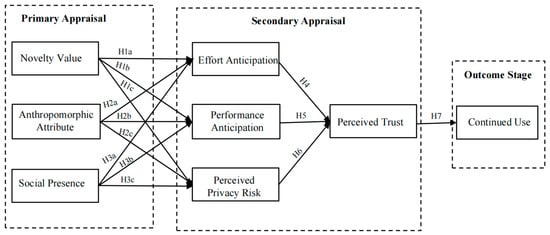
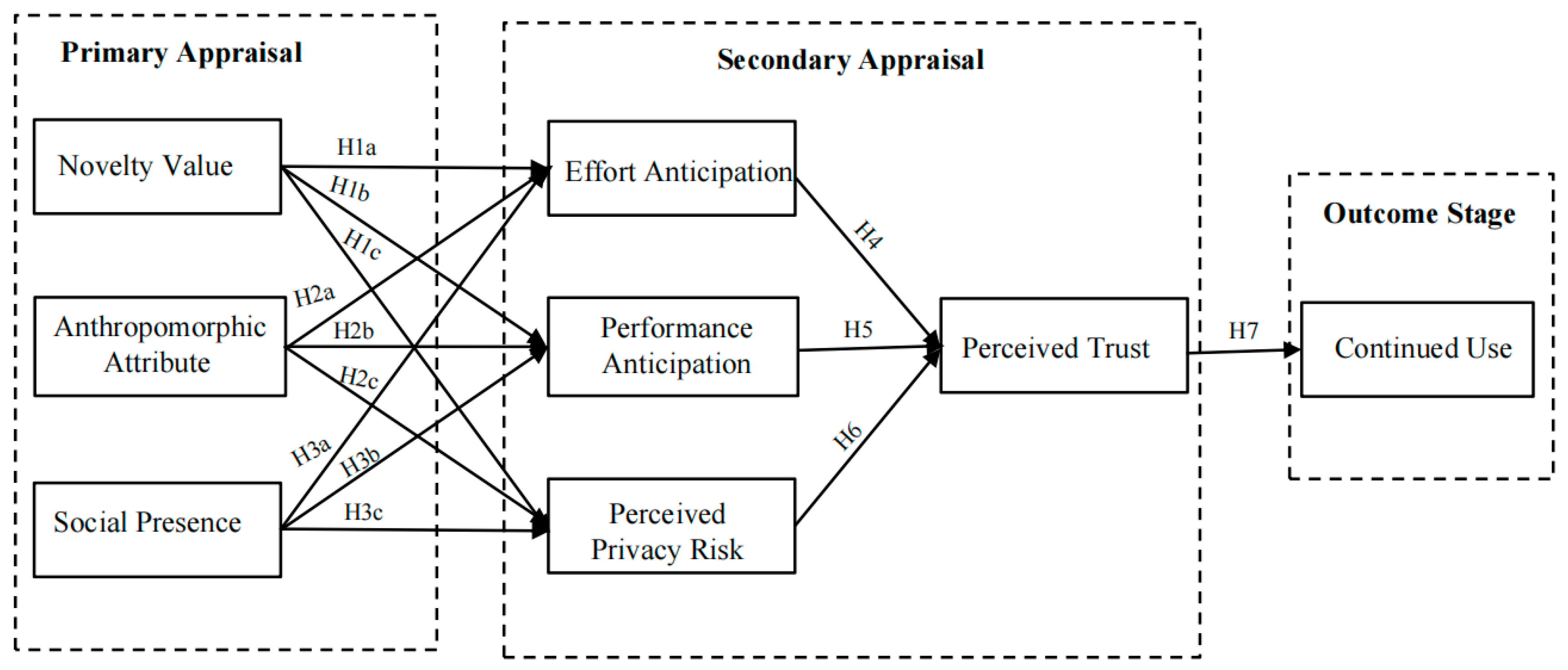
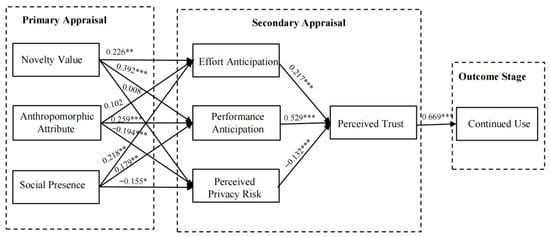
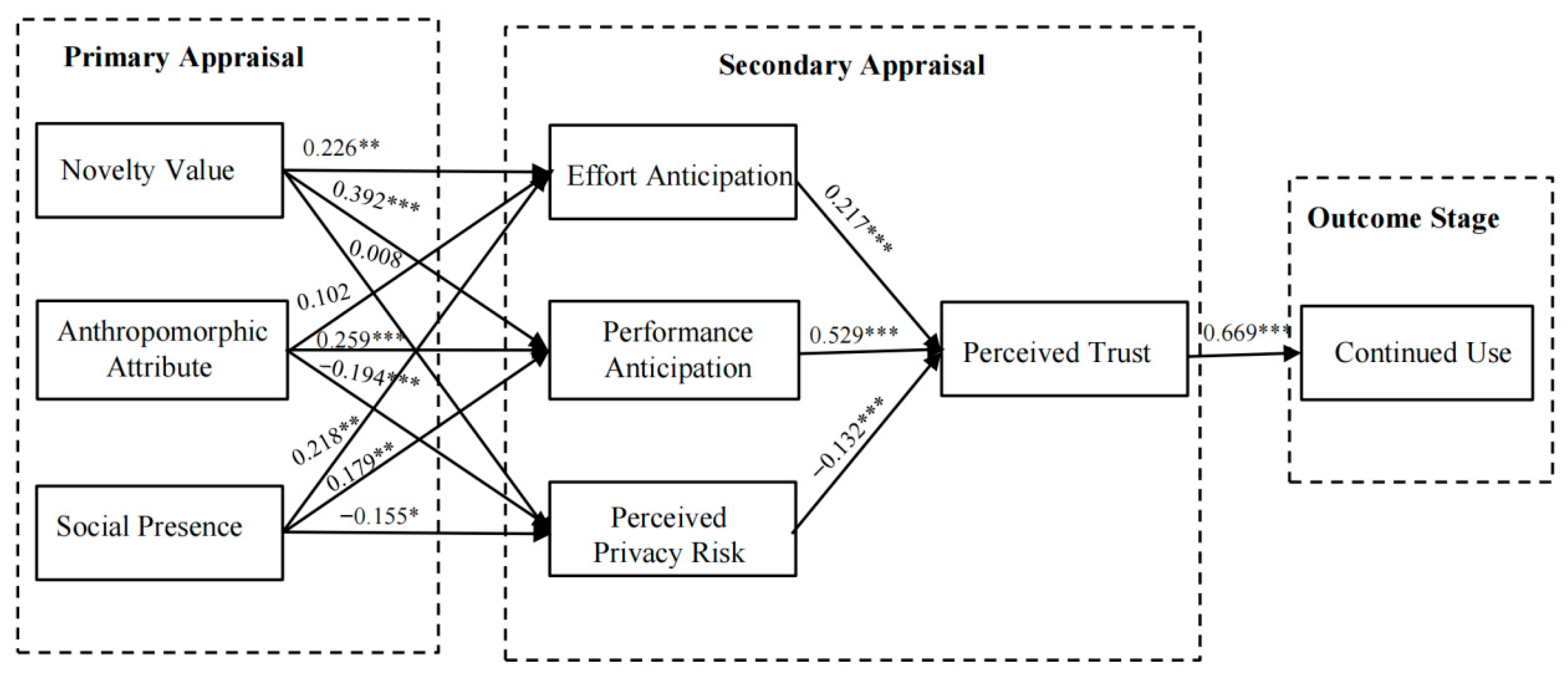

Disclaimer/Publisher’s Note: The statements, opinions and data contained in all publications are solely those of the individual author(s) and contributor(s) and not of MDPI and/or the editor(s). MDPI and/or the editor(s) disclaim responsibility for any injury to people or property resulting from any ideas, methods, instructions or products referred to in the content. |
© 2026 by the authors. Licensee MDPI, Basel, Switzerland. This article is an open access article distributed under the terms and conditions of the Creative Commons Attribution (CC BY) license.