

Special Issue "Water Management: New Paradigms for Water Treatment and Reuse"

A special issue of Water (ISSN 2073-4441). This special issue belongs to the section "Wastewater Treatment and Reuse".

Deadline for manuscript submissions: 30 September 2021.

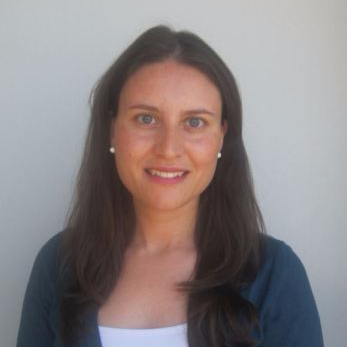
Special Issue Editor

Dr. Cristina Sousa Coutinho Calheiros
E-Mail Website
Guest Editor
Interdisciplinary Centre of Marine and Environmental Research (CIIMAR/CIMAR), University of Porto, Novo Edifício do Terminal de Cruzeiros do Porto de Leixões, Avenida General Norton de Matos, S/N, 4450-208 Matosinhos, Portugal
Interests: water and wastewater treatment; environmental biotechnology; environmental engineering; phytomanagement; bioremediation; phytoremediation; nature-based solutions; freshwater ecosystem conservation and restoration; education for sustainability
Special Issues and Collections in MDPI journals

Special Issue Information

Dear Colleagues,

New paradigms for water treatment and reuse are needed towards a sustainable water management. This applies to contaminated water bodies or wastewater scenarios. The natural and urban water cycles are interconnected needing of a holistic approach to deal with the concerns related to water availability, water quality and water-related risks.

The current main drivers for development of water treatment schemes are based on water reuse, resource recovery and energy efficiency. Different approaches for water treatment and reuse can be envisioned based on physicochemical or biological processes that must meet the demand of industrialization, demographic constrains and climate change effects. A water wise management lays the foundation for the resilience of circular and resourceful cities to future challenges.

Under this perspective, this Special Issue of Water welcomes research and new insights on technologies for an efficient water treatment and management, through high tech solutions and nature-based approaches at the level of the buildings, urban sites or centralized treatment plants. Submissions are welcome in the format of original research papers, case studies, as well as systematic reviews.

Dr. Cristina Sousa Coutinho Calheiros
Guest Editor

Manuscript Submission Information

Manuscripts should be submitted online at www.mdpi.com by registering and logging in to this website. Once you are registered, click here to go to the submission form. Manuscripts can be submitted until the deadline. All papers will be peer-reviewed. Accepted papers will be published continuously in the journal (as soon as accepted) and will be listed together on the special issue website. Research articles, review articles as well as short communications are invited. For planned papers, a title and short abstract (about 100 words) can be sent to the Editorial Office for announcement on this website.

Submitted manuscripts should not have been published previously, nor be under consideration for publication elsewhere (except conference proceedings papers). All manuscripts are thoroughly refereed through a single-blind peer-review process. A guide for authors and other relevant information for submission of manuscripts is available on the Instructions for Authors page. Water is an international peer-reviewed open access semimonthly journal published by MDPI.

Please visit the Instructions for Authors page before submitting a manuscript. The Article Processing Charge (APC) for publication in this open access journal is 2000 CHF (Swiss Francs). Submitted papers should be well formatted and use good English. Authors may use MDPI's English editing service prior to publication or during author revisions.

Keywords

  • water quality
  • water cycle
  • water pollution
  • water resources
  • physicochemical treatment
  • biological treatment
  • nature-based solutions
  • circular cities
  • ecotechnologies
  • biotechnology

Published Papers (5 papers)

Order results
Result details
Select all
Export citation of selected articles as:

Research

Jump to: Review

Article
Diclofenac Toxicity Abatement in Wastewater with Solar Disinfection: A Study in the Rural Area of Brazil’s Central−West Region
Water 2021, 13(8), 1043; https://doi.org/10.3390/w13081043 - 10 Apr 2021
Viewed by 663
Abstract
Domestic wastewater has been targeted for the presence of emerging contaminants such as antibiotics, of which diclofenac is one of the most frequently detected. Many studies have focused on the removal of these emerging pollutants. However, the legislation has focused on toxicity monitoring. [...] Read more.
Domestic wastewater has been targeted for the presence of emerging contaminants such as antibiotics, of which diclofenac is one of the most frequently detected. Many studies have focused on the removal of these emerging pollutants. However, the legislation has focused on toxicity monitoring. In search of simplified solutions for rural areas, and to guarantee the safe reuse of effluent in agriculture, this study evaluated the efficiency of a decentralized solar disinfection (SODIS) system regarding the reduction of ecotoxicity, phytotoxicity, and pathogens in domestic wastewater after adding diclofenac potassium. For this purpose, the bioindicators Artemia sp., Allium cepa L. and Lactuca sativa were used, after 1, 2, and 3 h of exposure to solar radiation. After 3 h of exposure to solar radiation, toxicity was reduced and root growth inhibition was noted, which indicates low effluent toxicity after treatment by the SODIS system. It was achieved a reduction of 3 and 2 log units in the concentration of total coliforms and Escherichia coli, respectively. Full article
(This article belongs to the Special Issue Water Management: New Paradigms for Water Treatment and Reuse)
Show Figures

Graphical abstract

Article
Floating Wetland Islands Implementation and Biodiversity Assessment in a Port Marina
Water 2020, 12(11), 3273; https://doi.org/10.3390/w12113273 - 21 Nov 2020
Cited by 1 | Viewed by 1741
Abstract
Floating wetland islands (FWI) are considered nature-based solutions with great potential to promote several ecosystem services, such as biodiversity and water quality enhancement through phytoremediation processes. To our knowledge, the present work is the first to scientifically document the in-situ establishment of an [...] Read more.
Floating wetland islands (FWI) are considered nature-based solutions with great potential to promote several ecosystem services, such as biodiversity and water quality enhancement through phytoremediation processes. To our knowledge, the present work is the first to scientifically document the in-situ establishment of an FWI in a seawater port marina. The establishment and performance of a cork floating platform with a polyculture (Sarcocornia perennis, Juncus maritimus, Phragmites australis, Halimione portulacoides, Spartina maritima, Limonium vulgare) was evaluated. The diversity of organisms present in the FWI was undertaken based on the macrofauna assessment, taking into consideration marine water characterization, with a focus on hydrocarbons. Microbial communities were assessed based on metabarcoding approach to study 16S rRNA gene from environmental DNA retrieved from biofilm (from the planting media), marine biofouling (from the submerged platform) and surface marina water. S. perennis was the species with the highest survival rate and growth. The structure of the microbial community showed clear differences between those established in the FWI and those in the surrounding water, showing the presence of some bacterial groups that can be relevant for bioremediation processes (e.g., Saprospiraceae family). Concerning the macrofauna analysis, Mytilus sp. was the predominant taxa. To be of relevance, total petroleum hydrocarbons were detected at the marina up to ca. 6 mg/L. This study gives new insights into broadening FWI application to the saline environments of port marinas and to supporting a management strategy to promote several ecosystem services such biodiversity, species habitat, water quality enhancement and added aesthetic value to the marina landscape. Full article
(This article belongs to the Special Issue Water Management: New Paradigms for Water Treatment and Reuse)
Show Figures

Graphical abstract

Article
The Impacts of Climate Change on Wastewater Treatment Costs: Evidence from the Wastewater Sector in China
Water 2020, 12(11), 3272; https://doi.org/10.3390/w12113272 - 21 Nov 2020
Viewed by 884
Abstract
Treatment of wastewater is expected to become a major development issue in the years to come. We investigate the relationship between climate and costs of wastewater treatment with the objective of examining if changes in climate might have an impact on the costs [...] Read more.
Treatment of wastewater is expected to become a major development issue in the years to come. We investigate the relationship between climate and costs of wastewater treatment with the objective of examining if changes in climate might have an impact on the costs of wastewater treatment. For that purpose, we use a cross-section sample of 163 treatment plants from China to estimate the industry’s cost function. The methodology used comprises an econometric estimation procedure of treatment costs of the wastewater sector, and a simulation of changes in these costs predicted with future climate conditions, policy implementation scenarios, population growth and development trends. Our results find evidence of climate change impact on treatment costs. We also simulate potential impact of future policy and climate scenarios on costs of treatment, and we measure the cost impact of all other cost determinants but climate—as these are indirectly affected by accounting for climate in the estimation procedure. This indirect impact predicts total cost changes of different magnitudes across the range of future scenarios investigated. Full article
(This article belongs to the Special Issue Water Management: New Paradigms for Water Treatment and Reuse)
Show Figures

Figure 1

Article
Determination of Pollution Loads in Spillways of the Combined Sewage Network of the City of Cuenca, Ecuador
Water 2020, 12(9), 2540; https://doi.org/10.3390/w12092540 - 11 Sep 2020
Cited by 2 | Viewed by 832
Abstract
Combined sewer overflow (CSO) is one of the main causes of contamination in receiving bodies during the rainy period. The objective of this research was to evaluate the behavior of three combined sewage discharges into the Tomebamba River in the city of Cuenca, [...] Read more.
Combined sewer overflow (CSO) is one of the main causes of contamination in receiving bodies during the rainy period. The objective of this research was to evaluate the behavior of three combined sewage discharges into the Tomebamba River in the city of Cuenca, Ecuador. For this, the registration of 18 CSO events was carried out. The following water quality parameters were analyzed from the field survey (March 2017 to May 2018): conductivity, turbidity, BOD5, COD, fecal and total coliforms, nitrates, nitrites, ammoniacal nitrogen, dissolved orthophosphate and total phosphorus. The results show that CSOs contribute to the deterioration of the water quality of the Tomebamba River during the rainy season. The analysis of the dynamics of the pollutants determined that the maximum conductivity values occur at the beginning of the discharge, and the maximum turbidity is located near the peak discharge flow. The relationship between rain and the characteristics of the CSO was also analyzed through a canonical correlation analysis and partial least squares regression, obtaining a prediction model of pollutants based on the precipitation parameters. These results can be used for the implementation of integrated ecological models that enable a complete analysis of the city’s sanitation systems, their impact on the receiving bodies and their restoration. Full article
(This article belongs to the Special Issue Water Management: New Paradigms for Water Treatment and Reuse)
Show Figures

Figure 1

Review

Jump to: Research

Review
Removal of Pathogens in Onsite Wastewater Treatment Systems: A Review of Design Considerations and Influencing Factors
Water 2021, 13(9), 1190; https://doi.org/10.3390/w13091190 - 25 Apr 2021
Viewed by 570
Abstract
Conventional onsite wastewater treatment systems (OWTSs) could potentially contribute to the transmission of infectious diseases caused by waterborne pathogenic microorganisms and become an important human health concern, especially in the areas where OWTSs are used as the major wastewater treatment units. Although previous [...] Read more.
Conventional onsite wastewater treatment systems (OWTSs) could potentially contribute to the transmission of infectious diseases caused by waterborne pathogenic microorganisms and become an important human health concern, especially in the areas where OWTSs are used as the major wastewater treatment units. Although previous studies suggested the OWTSs could reduce chemical pollutants as well as effectively reducing microbial contaminants from onsite wastewater, the microbiological quality of effluents and the factors potentially affecting the removal are still understudied. Therefore, the design and optimization of pathogen removal performance necessitate a better mechanistic understanding of the hydrological, geochemical, and biological processes controlling the water quality in OWTSs. To fill the knowledge gaps, the sources of pathogens and common pathogenic indicators, along with their major removal mechanisms in OWTSs were discussed. This review evaluated the effectiveness of pathogen removal in state-of-art OWTSs and investigated the contributing factors for efficient pathogen removal (e.g., system configurations, filter materials, environmental and operational conditions), with the aim to guide the future design for optimized treatment performance. Full article
(This article belongs to the Special Issue Water Management: New Paradigms for Water Treatment and Reuse)
Show Figures

Figure 1

Back to TopTop