



Ribosome-Inactivating Proteins
A topical collection in Toxins (ISSN 2072-6651). This collection belongs to the section "Plant Toxins".
Viewed by 346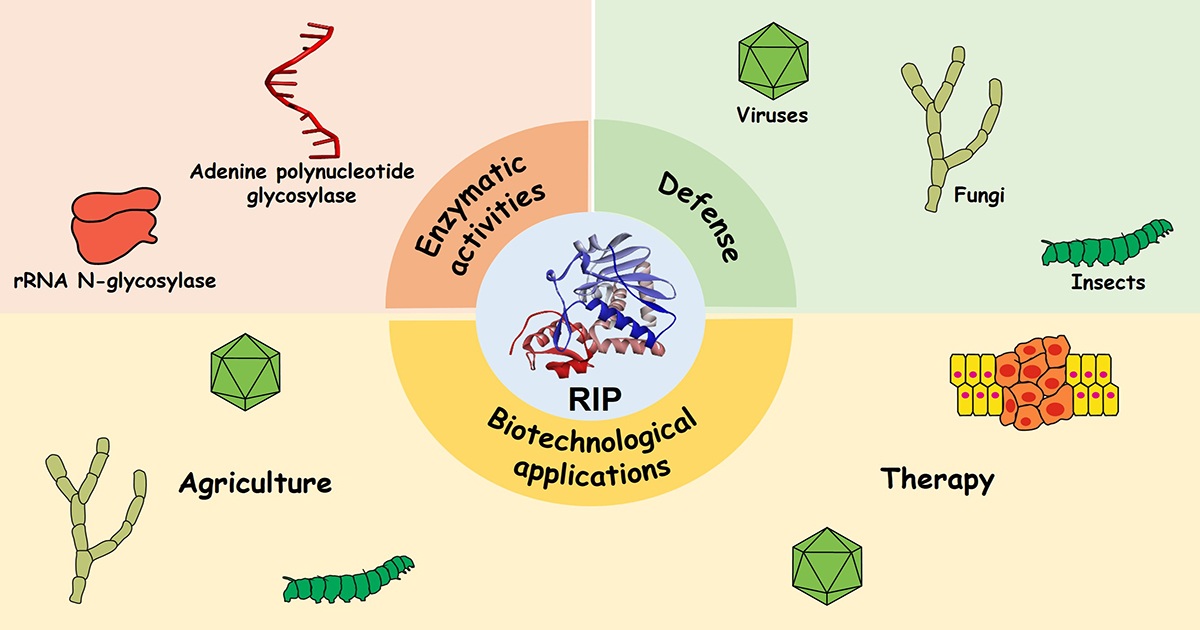
Editors

Interests: ribosome-inactivating proteins (RIPs); immunotoxins; protein synthesis inhibition; ribotoxins; structure–activity relationship
Special Issues, Collections and Topics in MDPI journals

Interests: ribosome-inactivating proteins (RIPs); immunotoxins; protein synthesis inhibition; ribotoxins; protein translocation; intracellular transport; apoptosis
Special Issues, Collections and Topics in MDPI journals

Interests: plant toxins; ribosome-inactivating proteins (RIPs); ribotoxins; immunotoxins; plant fungal pathogenesis; antifungal proteins
Special Issues, Collections and Topics in MDPI journals
Topical Collection Information
Dear Colleagues,
Ribosome-inactivating proteins (RIPs) are ribosomal RNA N-glycosylases (EC 3.2.2.22), isolated mainly from angiosperms and also from some bacteria and fungi, which catalyse the hydrolysis of the N-glycosidic bond of the second adenosine of the GAGA tetraloop in the sarcin ricin loop (SRL) of the large subunit ribosomal RNA. The SRL is part of the GTPase-associated centre (GAC), which is the landing platform for the translational GTPases (trGTPases), such as the prokaryotic elongation factors EF-Tu and EF-G, and their eukaryotic homologues eEF1A and eEF2. Depurination of the SRL causes irreversible inactivation of ribosomes, leading to cell death, mainly by apoptosis. Although RIPs were initially studied as inhibitors of mammalian ribosomes, they can also inactivate ribosomes from other animals and fungi and, in some cases, ribosomes from bacteria and plants.
In addition, RIPs can exhibit other enzymatic activities, the most relevant being their adenine polynucleotide glycosylase activity in all types of nucleic acids (including viral RNA or DNA).
It has been proposed that these proteins could play an important role in plant defence against viruses, fungi and insects.
RIPs have been classified into two types according to the presence (type 2) or absence (type 1) of a lectin chain (B chain). The presence of the B chain can convert type 2 RIPs into potent toxins, such as ricin or abrin. However, despite the absence of the B chain, type 1 RIPs (such as saporin or trichosantin), in higher concentrations, are also capable of entering cells and exhibiting toxicity to cells and animals.
Due to their diverse activities, RIPs are good candidates for the development of selective antiviral and anticancer agents such as conjugates, immunotoxins, engineered proteins, and nanocapsules. In agriculture, RIPs have been shown to increase resistance to viruses, fungi, and insects in transgenic plants.
This Topical Collection accepts submissions related to the topics described above.
Prof. Dr. José Miguel Ferreras
Prof. Dr. Lucía Citores
Prof. Dr. Rosario Iglesias
Topical Editors
Manuscript Submission Information
Manuscripts should be submitted online at www.mdpi.com by registering and logging in to this website. Once you are registered, click here to go to the submission form. All submissions that pass pre-check are peer-reviewed. Accepted papers will be published continuously in the journal (as soon as accepted) and will be listed together on the collection website. Research articles, review articles as well as short communications are invited. For planned papers, a title and short abstract (about 250 words) can be sent to the Editorial Office for assessment.
Submitted manuscripts should not have been published previously, nor be under consideration for publication elsewhere (except conference proceedings papers). All manuscripts are thoroughly refereed through a double-blind peer-review process. A guide for authors and other relevant information for submission of manuscripts is available on the Instructions for Authors page. Toxins is an international peer-reviewed open access monthly journal published by MDPI.
Please visit the Instructions for Authors page before submitting a manuscript. The Article Processing Charge (APC) for publication in this open access journal is 2700 CHF (Swiss Francs). Submitted papers should be well formatted and use good English. Authors may use MDPI's English editing service prior to publication or during author revisions.
Keywords
- abrin
- immunotoxin
- protein synthesis inhibition
- ribosomal RNA N-glycosylase
- ribosome-inactivating protein
- ricin
- saporin
- Shiga toxin
- tricosanthin
