




Next Issue
Volume 18, January
Previous Issue
Volume 17, November


Toxins, Volume 17, Issue 12 (December 2025) – 42 articles
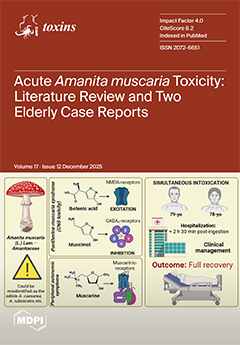
Cover Story (view full-size image): Amanita muscaria (fly agaric) remains an uncommon but clinically significant cause of acute mushroom poisoning, with highly variable toxic effects. This article presents a literature review of this mushroom’s biochemical makeup, toxicodynamics, and clinical manifestations—focusing on the principal toxins ibotenic acid and muscimol—and illustrates these findings through two severe intoxication cases in elderly spouses following home preparation. The cases underscore rapid-onset gastrointestinal symptoms, profound central nervous system depression, and autonomic disturbances, highlighting diagnostic and management challenges. This work emphasizes the need for heightened clinical awareness and improved toxicological preparedness. View this paper
  • Issues are regarded as officially published after their release is announced to the table of contents alert mailing list.
  • You may sign up for e-mail alerts to receive table of contents of newly released issues.
  • PDF is the official format for papers published in both, html and pdf forms. To view the papers in pdf format, click on the "PDF Full-text" link, and use the free Adobe Reader to open them.
Order results
Result details
Section
Select all
Export citation of selected articles as:
20 pages, 618 KB  
Review
Occurrence of Staphylococcus aureus TSST-1 in Foods: A Review
by Maria Govari and Andreana Pexara
Toxins 2025, 17(12), 606; https://doi.org/10.3390/toxins17120606 - 18 Dec 2025
Viewed by 484
Abstract
Toxic Shock Syndrome Toxin-1 (TSST-1) is produced by Staphylococcus aureus strains encoded by the tst gene. Toxic shock syndrome (TSS) is a severe disease caused by TSST-1 toxin and associated with staphylococcal food poisoning (SFP). The aim of the present review was to [...] Read more.
Toxic Shock Syndrome Toxin-1 (TSST-1) is produced by Staphylococcus aureus strains encoded by the tst gene. Toxic shock syndrome (TSS) is a severe disease caused by TSST-1 toxin and associated with staphylococcal food poisoning (SFP). The aim of the present review was to present data on the occurrence of S. aureus TSST-1 in foods published in various countries. PCR-based assays are most frequently used for the detection of S. aureus TSST-1 in foods. S. aureus TSST-1 is predominantly detected in foods of animal origin. The highest occurrence has been observed in mastitic ruminants’ milk, indicating that mastitis is a risk of milk contamination with the pathogen. High occurrence rates of S. aureus TSST-1 have also been identified in raw milk and artisanal cheeses. Various occurrence levels have also been reported in beef, pork, lamb, and chicken meat. Low occurrence levels have also been reported for fish or other seafood products. The tst gene was also found in combination with other toxigenic genes in S. aureus TSST-1 isolates (e.g., MRSA or Panton-Valentine Leukocidin, PVL). Monitoring S. aureus TSST-1 in food is important for public health because food can be a vehicle for transmitting the antibiotic-resistant pathogen to humans. Full article
Show Figures

Figure 1

7 pages, 224 KB  
Case Report
Venom-Induced Recurrent Thrombocytopenia: A Model of Intervention-Driven Platelet Modulation
by Mojca Dobaja Borak, Katarina Reberšek, Tihana Kurtović, Adrijana Leonardi, Igor Križaj and Miran Brvar
Toxins 2025, 17(12), 605; https://doi.org/10.3390/toxins17120605 - 17 Dec 2025
Viewed by 261
Abstract
We present the case of a Vipera ammodytes ammodytes (Vaa, nose-horned viper)-bitten patient with recurrent thrombocytopenia. A 53-year-old patient envenomated by Vaa experienced three episodes of venom-dependent thrombocytopenia (4, 57 and 11 × 109/L), all of which we managed [...] Read more.
We present the case of a Vipera ammodytes ammodytes (Vaa, nose-horned viper)-bitten patient with recurrent thrombocytopenia. A 53-year-old patient envenomated by Vaa experienced three episodes of venom-dependent thrombocytopenia (4, 57 and 11 × 109/L), all of which we managed with antivenom Fab fragments. Despite these three severe episodes of thrombocytopenia within 24 h, platelet function remained intact, as demonstrated by normal thromboelastometry and aggregometry (96, 126, and 150 U) results after antivenom was administered and the platelet count normalized. Furthermore, flow cytometry showed only 0.3–1.7% expression of P-selectin on platelets, indicating that platelets did not activate but remained functional during and after thrombocytopenia. We assessed platelet function using rotational thromboelastometry, which evaluates the overall kinetics of hemostasis, including clot formation and stability. We performed aggregometry, which also reflects platelet function, only when the platelet count was within the normal range. Flow cytometry quantified P-selectin expression as a key marker of platelet activation. This case demonstrates that a component of Vaa venom can repeatedly induce venom-dependent thrombocytopenia, which is reversible by intervention, while platelet function remains intact. Full article
(This article belongs to the Section Animal Venoms)
25 pages, 591 KB  
Review
Microorganism-Based Strategies for the Control of Cyanobacterial Blooms: A Review of Recent Progress
by Wangle Zhang, Shiyuan Meng, Xiaoxu Wu, Hong Shen, Dongqin Wang, Tong Qiu, Weijie Li, Jiping Chen, Ling Li, Bingbing Liang, Mengdi Zhao, Xuwei Deng and Chi Zhou
Toxins 2025, 17(12), 604; https://doi.org/10.3390/toxins17120604 - 17 Dec 2025
Viewed by 336
Abstract
Cyanobacterial blooms, which are increasingly exacerbated by eutrophication and climate change, pose threats to ecosystems and public health. This paper systematically reviews recent advances in microbial intervention strategies for controlling cyanobacterial blooms. Current approaches primarily comprise direct lysis methods, indirect suppression methods, and [...] Read more.
Cyanobacterial blooms, which are increasingly exacerbated by eutrophication and climate change, pose threats to ecosystems and public health. This paper systematically reviews recent advances in microbial intervention strategies for controlling cyanobacterial blooms. Current approaches primarily comprise direct lysis methods, indirect suppression methods, and integrated strategies. Direct algicide methods rapidly lyse cyanobacterial cells and degrade toxins, although their application is constrained by environmental sensitivity and host specificity. Indirect approaches offer sustainable preventive strategies by inhibiting cyanobacterial growth, yet require careful environmental management. Integrated methods combine microbial strategies with other technologies, enhancing both the efficiency and ecological safety of managing cyanobacterial blooms. While microbial strategies demonstrate significant potential, practical implementation faces challenges, including environmental adaptability, ecological safety, and regulatory frameworks. Future research should focus on integrating synthetic biology, intelligent delivery systems, and multi-omics technologies to achieve more effective and environmentally friendly management of cyanobacterial blooms. Full article
Show Figures

Figure 1

13 pages, 3812 KB  
Article
Why, When, and How to Treat Dynamic Forehead Lines with Botulinum Toxin Type A
by Carla de Sanctis Pecora, Martina Kerscher, Mariana Muniz and Ada Trindade de Almeida
Toxins 2025, 17(12), 603; https://doi.org/10.3390/toxins17120603 - 17 Dec 2025
Viewed by 869
Abstract
Recent advances in the understanding of facial anatomy have contributed significantly to the refinement of injection techniques for the treatment of dynamic forehead lines. A comprehensive assessment of eyebrow shape, position, and the aging process is essential, as the latter are closely linked [...] Read more.
Recent advances in the understanding of facial anatomy have contributed significantly to the refinement of injection techniques for the treatment of dynamic forehead lines. A comprehensive assessment of eyebrow shape, position, and the aging process is essential, as the latter are closely linked to the functional balance between the frontalis muscle and the upper facial depressors. Optimal outcomes also depend on the accurate determination of dosage per injection point, injection depth, and strategic distribution of injection sites within the frontalis, which should be carefully considered and tailored to the individual’s anatomical characteristics and therapeutic goals—whether the aim is neuromodulation for muscle activity reduction or intradermal application for skin quality enhancement. A round table discussion session among three experienced international dermatology experts in aesthetic botulinum toxin type A was performed during a MERZ LATAM-sponsored medical education session. Recent insights in facial anatomy, including the precise location and distribution of motor endplates, as well as the direction of muscular force vectors during contraction; aging processes; and interindividual variability in facial musculature and mimicry patterns are discussed, and the results are described herein. These factors play a critical role in customizing personalized injection strategies and improving aesthetic outcomes in the treatment of forehead lines. Full article
(This article belongs to the Section Bacterial Toxins)
Show Figures

Figure 1

19 pages, 7841 KB  
Review
Functional Coupling and Evolutionary Relationships Between Toxin–Antitoxin Systems and CRISPR-Cas Systems
by Yibo Meng, Jiyun Chen and Liang Liu
Toxins 2025, 17(12), 602; https://doi.org/10.3390/toxins17120602 - 16 Dec 2025
Viewed by 387
Abstract
Bacteria encode a broad range of survival and defence systems, including CRISPR (Clustered Regularly Interspaced Short Palindromic Repeats)-Cas systems, restriction-modification systems, and toxin–antitoxin (TA) systems, which are involved in bacterial regulation and immunity. The traditional view holds that CRISPR-Cas systems and TA systems [...] Read more.
Bacteria encode a broad range of survival and defence systems, including CRISPR (Clustered Regularly Interspaced Short Palindromic Repeats)-Cas systems, restriction-modification systems, and toxin–antitoxin (TA) systems, which are involved in bacterial regulation and immunity. The traditional view holds that CRISPR-Cas systems and TA systems are two independent defense lines in prokaryotes. However, groundbreaking studies in recent years have revealed multi-level functional coupling between them. This review systematically elaborates on this mechanism, focusing on three types of TA systems that mediate the core correlation of CRISPR-Cas systems: CreTA maintains the evolutionary stability of CRISPR-Cas systems through an addiction mechanism; CreR enables self-regulation of CRISPR-Cas expression; and CrePA provides herd immunity by triggering abortive infection after the CRISPR-Cas system has been destroyed by Anti-CRISPRS protein. Additionally, we discuss the evolutionary homology between the type III toxin AbiF and the type VI CRISPR effector Cas13, offering a new perspective for understanding the origin of CRISPR-Cas systems. These findings not only reveal the functional coupling of prokaryotic defense systems but also provide a powerful theoretical framework and practical solutions for addressing stability challenges in CRISPR technology applications. Full article
(This article belongs to the Section Bacterial Toxins)
Show Figures

Figure 1

13 pages, 1482 KB  
Article
Characterization of Alpha-Bungarotoxin Antibodies Prepared by Different Strategies
by Huijuan Lu, Guowen Zhang, Lin Zhao, Ying Yuan, Bing Gong, Bin Han and Wen-Hui Lee
Toxins 2025, 17(12), 601; https://doi.org/10.3390/toxins17120601 - 16 Dec 2025
Viewed by 304
Abstract
The preparation of an antibody to treat snake envenomation requires a large amount of snake venom. In China, only four types of anti-snake venom sera are clinically available, and the production and immunization strategies for clinically approved anti-snake venom sera still mainly rely [...] Read more.
The preparation of an antibody to treat snake envenomation requires a large amount of snake venom. In China, only four types of anti-snake venom sera are clinically available, and the production and immunization strategies for clinically approved anti-snake venom sera still mainly rely on detoxified antigens, which is a mature technical route commonly adopted by domestic pharmaceutical enterprises. At present, researchers immunize animals with low doses of certain snake venom toxic components or prokaryotically expressed toxic components to reduce the amount of venom needed, and use prepared antisera for their specific investigation purposes. However, it is unclear if low-dose immunized antibody titers and toxin-neutralizing activities are consistent with those of high-dose detoxified crude venom immunized antibodies. In this study, we developed a method for the preparation of highly effective rabbit polyclonal antisera while saving a large amount of toxin. Rabbit polyclonal antisera prepared by low-dose natural α-bungarotoxin (α-BGT) had strong neutralizing effects on the toxin itself and achieved the same antibody titers as antisera prepared with high doses of detoxified α-BGT. Antigen of A maltose binding protein (MBP) fused with α-BGT (MBP-α-BGT) expressed in prokaryotes had low antibody titer and low neutralizing activity. This study provides an effective dosage selection guide and methods for the preparation of polyclonal antibodies and antiserum for investigation purposes. Full article
Show Figures

Figure 1

15 pages, 3343 KB  
Article
Ai-Assisted Discovery of a Direct Physical Interaction Between a Venom Serpin from the Parasitoid Wasp Liragathis javana and a Host Serine Carboxypeptidase
by Jiale Wang, Xunyuan Jiang, Zemiao Xiao, Xuemei Tang and Kai Wan
Toxins 2025, 17(12), 600; https://doi.org/10.3390/toxins17120600 - 16 Dec 2025
Viewed by 345
Abstract
Parasitoid wasp venoms represent highly specialized biochemical arsenals that evolved to manipulate host physiology and ensure successful development of the parasitoid offspring. However, the molecular targets and mechanisms underlying this complex host modulation remain poorly understood. To address this, we employed an AI-driven [...] Read more.
Parasitoid wasp venoms represent highly specialized biochemical arsenals that evolved to manipulate host physiology and ensure successful development of the parasitoid offspring. However, the molecular targets and mechanisms underlying this complex host modulation remain poorly understood. To address this, we employed an AI-driven discovery pipeline, integrating the sequence-based predictor D-SCRIPT with the structural modeler AlphaFold3, to characterize LjSPI-1, a venom serpin from Liragathis javana. This computational workflow highlighted a previously unreported candidate partner—a host serine carboxypeptidase (Chr09G02510). Crucially, we detected a direct physical interaction between these two proteins through both in vitro pull-down and in vivo yeast two-hybrid assays, supporting this AI-prioritized interaction under experimental conditions. Our study identifies a high-priority molecular pairing and demonstrates the utility of an AI-guided strategy for uncovering candidate targets of venom proteins. In addition, guided by the predicted biochemical role of Chr09G02510, we propose several plausible physiological hypotheses linking this interaction to host peptide metabolism and immune modulation. These hypotheses serve as a conceptual basis for future mechanistic and toxicological investigations. Full article
(This article belongs to the Special Issue Toxins from Animal Venoms Modulating Cellular Activities)
Show Figures

Graphical abstract

21 pages, 1902 KB  
Review
Targeting the Gut–Kidney Axis: Modulation of Gut Microbiota by Traditional Chinese Medicine for Chronic Kidney Disease Management
by Yijing Xin and Libin Pan
Toxins 2025, 17(12), 599; https://doi.org/10.3390/toxins17120599 - 15 Dec 2025
Viewed by 588
Abstract
The interaction between gut microbiota dysbiosis and CKD progression via the “gut–kidney axis” is increasingly recognized. Gut-derived uremic toxins (e.g., indoxyl sulfate and p-cresyl sulfate) accumulate systemically, while beneficial metabolites like short-chain fatty acids (SCFAs) decrease, contributing to inflammation, oxidative stress, and kidney [...] Read more.
The interaction between gut microbiota dysbiosis and CKD progression via the “gut–kidney axis” is increasingly recognized. Gut-derived uremic toxins (e.g., indoxyl sulfate and p-cresyl sulfate) accumulate systemically, while beneficial metabolites like short-chain fatty acids (SCFAs) decrease, contributing to inflammation, oxidative stress, and kidney fibrosis. Traditional Chinese Medicine (TCM), including complex formulae, single herbs, and active ingredients, has long been used to manage CKD. Emerging evidence—primarily from animal studies—highlights its potential to alleviate the disease by modulating the gut microbiota. This review summarizes how TCM interventions re-establish gut microbial symbiosis by regulating microbial composition, reducing toxin load, and reinforcing intestinal barrier integrity, thereby ameliorating systemic inflammation and protecting kidney function. Targeting the gut microbiota represents a promising therapeutic frontier for CKD, and TCM offers a rich resource for developing novel microbiota-modulating strategies. However, future research must focus on validating molecular mechanisms, standardizing TCM preparations, and conducting rigorous clinical trials to facilitate clinical translation. Full article
Show Figures

Figure 1

16 pages, 1157 KB  
Review
Immunological Considerations of Polysorbate as an Excipient in Botulinum Neurotoxin Type A Formulations: A Narrative Review
by Michael Uwe Martin, Jürgen Frevert, Je-Young Park, Haiyan Cui, Andy Curry and Wei Qi Loh
Toxins 2025, 17(12), 598; https://doi.org/10.3390/toxins17120598 - 15 Dec 2025
Viewed by 453
Abstract
Recent botulinum neurotoxin type A (BoNT/A) formulations have shifted towards the use of polysorbate 20 (PS20) and polysorbate 80 (PS80) as a non-human-derived excipient to enhance product stability. Polysorbates are a distinct class of synthetic non-ionic surfactants with high heterogeneity in chemical structure [...] Read more.
Recent botulinum neurotoxin type A (BoNT/A) formulations have shifted towards the use of polysorbate 20 (PS20) and polysorbate 80 (PS80) as a non-human-derived excipient to enhance product stability. Polysorbates are a distinct class of synthetic non-ionic surfactants with high heterogeneity in chemical structure and properties. Accumulating mechanistic and clinical evidence suggests that they may trigger immunological reactions, including hypersensitivity and immunogenicity. Such risks are largely associated with their susceptibility to degradation via hydrolysis and oxidation, forming reactive byproducts that can interact with proteins and immune pathways. Despite these mechanistic insights, data on the association between polysorbate excipients and observed immune outcomes in practice is relatively sparse and excipient-related immunogenicity and hypersensitivity is often underrecognized in practice. This review provides a summary of polysorbate excipients in BoNT/A formulations, focusing on their chemical properties and degradation pathways, characterizing downstream immune effects and appraising available clinical data of polysorbate-containing BoNT/A formulations. Finally, we discuss potential risk mitigation strategies including process modifications that could prevent degradation, and consideration of alternative excipients, such as human serum albumin, that has been shown to be immunologically inert and has an established safety profile. By integrating chemical, mechanistic, and clinical perspectives, this review seeks to clarify the implications of polysorbate use in BoNT/A formulations and inform both clinical practice and future formulation strategies. Full article
Show Figures

Graphical abstract

12 pages, 1411 KB  
Article
Artificial Intelligence Analysis of Symmetry and Emotions in Facial Palsy Patients After Botulinum Toxin A Injections
by Seraina L. C. Müller, Chantal Zeier, Pablo Pfister, Nadia Menzi, Bita Tafrishi, Dirk J. Schaefer, Jan A. Plock, Tarek Ismail and Holger J. Klein
Toxins 2025, 17(12), 597; https://doi.org/10.3390/toxins17120597 - 15 Dec 2025
Viewed by 427
Abstract
Facial palsy affects millions worldwide. Botulinum toxin Type A (BoNT-A) is an established treatment for non-flaccid facial palsy, yet objective evidence remains limited. This study evaluates the effects of BoNT-A using AI-based tools and patient-reported outcome measures (PROMs). In this prospective observational study, [...] Read more.
Facial palsy affects millions worldwide. Botulinum toxin Type A (BoNT-A) is an established treatment for non-flaccid facial palsy, yet objective evidence remains limited. This study evaluates the effects of BoNT-A using AI-based tools and patient-reported outcome measures (PROMs). In this prospective observational study, patients with non-flaccid facial palsy received individualized BoNT-A injections. Exclusion criteria included age < 18, hypersensitivity to BoNT-A, or lack of follow-up. Assessments were conducted before and 3 weeks after treatment, including facial symmetry (Emotrics®), emotion expression (FaceReader™), and PROMs (FaCE and FDI). Eleven patients (mean age 50.1 ± 18 years) were included. BoNT-A significantly improved dynamic facial symmetry: eyebrow raising (p = 0.032), smile angle (p = 0.005), and lower lip height (p = 0.042). Emotion analysis showed no significant changes. PROMs revealed improvements in social well-being (FDI, p = 0.004) and aesthetic satisfaction (FaCE, p = 0.035), while functional FDI scores remained unchanged (p = 0.406). BoNT-A improves objective symmetry and patient satisfaction in non-flaccid facial palsy. The lack of change in emotional expression may reflect improved symmetry at the cost of dynamic muscle activation. Full article
(This article belongs to the Special Issue Application of Botulinum Toxin in Facial Diseases)
Show Figures

Figure 1

15 pages, 307 KB  
Review
Fifty Years and Counting: Searching for the “Silver Bullet” or the “Silver Shotgun” to Mitigate Preharvest Aflatoxin Contamination
by Baozhu Guo, Idrice Carther Kue Foka, Dongliang Wu, Josh P. Clevenger, Rong Di and Jake C. Fountain
Toxins 2025, 17(12), 596; https://doi.org/10.3390/toxins17120596 - 15 Dec 2025
Viewed by 378
Abstract
The year 2025 marks two significant milestones for aflatoxin research: 65 years since aflatoxin was first identified in 1960, and 50 years of focused research on preharvest aflatoxin contamination since it was first recognized in 1975. Studies in the 1970s revealed that A. [...] Read more.
The year 2025 marks two significant milestones for aflatoxin research: 65 years since aflatoxin was first identified in 1960, and 50 years of focused research on preharvest aflatoxin contamination since it was first recognized in 1975. Studies in the 1970s revealed that A. flavus could infect crops like maize and produce aflatoxin in the field before harvest and made it possible to investigate the potential genetic resistance in crops to mitigate the issues. Tremendous efforts have been made to learn about the process and regulation of aflatoxin production along with interactions between A. flavus and host plants as influenced by environmental factors. This has allowed for the breeding of more resistant crops and investigations into the underlying genetic and genomic components of resistance mechanisms in crops like maize and peanut. However, despite decades of studies, many questions remain. One established “dogma” is that drought stress, especially when combined with high temperatures, is the single greatest contributing factor to preharvest aflatoxin contamination and is a perennial risk faced throughout the major agricultural production regions of the world. Although there are many reviews summarizing the decades’ long wealth of information about A. flavus, aflatoxin biosynthesis, management and host plant resistance, there are few reports that put the spotlight on why aflatoxin contamination is exacerbated by drought stress, which places plants under severe physiological stress and weakens immune systems. Therefore, here we will focus on three major areas of research in maize: the “living embryo” theory and host resistance mechanisms, the “Key Largo hypothesis” and the causes of drought-exacerbated aflatoxin contamination, and recent advancements in CRISPR-based genome editing for enhancing drought tolerance and increasing plant immune responses. This will highlight key breakthroughs and future prospects for the continuing development of superior crop germplasm and cultivars and for mitigating aflatoxin contamination in food and feed supply chains. Full article
19 pages, 2956 KB  
Article
Ultrasound Evaluation of Upper Facial Muscles to Guide Botulinum Toxin Application
by Dominika Jaguś, Anna Pawłowska and Robert Krzysztof Mlosek
Toxins 2025, 17(12), 595; https://doi.org/10.3390/toxins17120595 - 14 Dec 2025
Viewed by 437
Abstract
Background: Botulinum toxin injection is one of the most common esthetic procedures, yet complications may occur due to anatomical variability or suboptimal injection technique. This study aimed to evaluate the upper facial muscles using ultrasound, focusing on inter- and intraindividual variability. Methods: The [...] Read more.
Background: Botulinum toxin injection is one of the most common esthetic procedures, yet complications may occur due to anatomical variability or suboptimal injection technique. This study aimed to evaluate the upper facial muscles using ultrasound, focusing on inter- and intraindividual variability. Methods: The study involved volunteers aged 21–40 years, excluding those with prior facial treatments, trauma, or muscle disorders. The muscles examined included the occipitofrontalis (frontal belly), procerus, corrugator supercilii, and orbicularis oculi. Muscle thickness and distance from the epidermis were measured using high-frequency ultrasound. Statistical analyses included descriptive statistics, correlation with age and BMI, sex comparisons, and symmetry assessment. Results: A total of 127 participants (103 women and 24 men) were enrolled, with a mean age of 28.8 ± 4.4 years. Age showed no significant correlation with muscle thickness or depth, supporting the internal consistency of the studied age group. BMI showed moderate correlations with the depth of the selected forehead muscles. Males showed greater thickness in the frontal and procerus muscles. Relative side-to-side asymmetry coefficients reached 40% for both thickness and depth, indicating notable individual laterality. Conclusions: The study provides normative ultrasound parameters for the upper facial muscle in healthy adults. The results demonstrate significant anatomical variability depending on sex, BMI, and facial laterality, supporting individualized ultrasound-guided approaches for botulinum toxin injection. Full article
Show Figures

Figure 1

15 pages, 3409 KB  
Article
Pilot Retrospective Evaluation of a Balancing and Optimizing Injection Pattern for the Frontalis Muscle Using LetibotulinumtoxinA
by Konstantin Frank, Lukas Prantl, Vanessa Brebant and Syed Haq
Toxins 2025, 17(12), 594; https://doi.org/10.3390/toxins17120594 - 11 Dec 2025
Viewed by 423
Abstract
Signs of aging in the upper face arise from multimodal changes in facial anatomy, contributing to concerns such as eyebrow ptosis and forehead lines. While neurotoxin injections are widely used to address these lines, the anatomical variability of the frontalis muscle presents procedural [...] Read more.
Signs of aging in the upper face arise from multimodal changes in facial anatomy, contributing to concerns such as eyebrow ptosis and forehead lines. While neurotoxin injections are widely used to address these lines, the anatomical variability of the frontalis muscle presents procedural challenges. This retrospective analysis aimed to introduce and preliminarily evaluate a structured injection pattern for forehead treatment, developed with attention to the biomechanics of upper facial musculature. A total of 24 patients (mean age 42.5 ± 9.1 years) treated with a standardized injection scheme using letibotulinumtoxinA were included. All subjects also received concomitant glabellar treatment. The protocol incorporated identification of the line of convergence and targeted injections at defined points to balance elevation, optimize muscular activity, and minimize the risk of eyebrow descent. Forehead line severity was assessed at rest and during animation, and three-dimensional surface imaging was used to quantify vertical skin displacement. At baseline, 79.2% of patients presented with severe dynamic forehead lines, and 29.1% exhibited severe static lines. After two weeks, 62.5% showed no dynamic lines and 41.7% showed no static lines. All subjects demonstrated a ≥1-point improvement in dynamic line severity, with 87.5% achieving a ≥2-point improvement. For static lines, 95.8% achieved a ≥1-point improvement and 20.8% showed a ≥2-point improvement after two weeks. The mean dosage was 17.8 ± 0.7 U. Two patients (8.3%) required a touch-up, and no adverse events were observed. These findings suggest that this structured injection approach may offer a consistent method for addressing forehead lines; however, the results should be interpreted within the limitations of a small, uncontrolled retrospective series. Prospective controlled studies with larger populations are needed to further validate the technique. Full article
(This article belongs to the Special Issue Study on Botulinum Toxin in Facial Diseases and Aesthetics)
Show Figures

Figure 1

16 pages, 1860 KB  
Article
Staphylococcal Enterotoxins Modulate Platelet Response During Storage of Platelet Concentrates and Impair Silkworm Survival
by Sylvia Ighem Chi, Chelsea McGregor, Nicolas Pineault and Sandra Ramirez-Arcos
Toxins 2025, 17(12), 593; https://doi.org/10.3390/toxins17120593 - 11 Dec 2025
Viewed by 364
Abstract
Platelet concentrates (PCs) are used to treat patients with platelet deficiencies. PCs are stored at 20–24 °C under agitation for up to 7 days to maintain platelet functionality, but these conditions are amenable for proliferation of contaminants such as Staphylococcus aureus, posing [...] Read more.
Platelet concentrates (PCs) are used to treat patients with platelet deficiencies. PCs are stored at 20–24 °C under agitation for up to 7 days to maintain platelet functionality, but these conditions are amenable for proliferation of contaminants such as Staphylococcus aureus, posing a risk for transfusion-transmitted infections. We investigated the contribution of staphylococcal enterotoxins (SEs) type G (SEG) and type H (SEH) to platelet activation, cytokine release, microRNA (miRNA) modulation, and in vivo virulence. PCs were inoculated with wildtype S. aureus CBS2016-05 or SE-deficient mutants (Δseg, Δseh, ΔΔsegh) and monitored during storage. Flow cytometry revealed progressive elevation of platelet activation markers CD62P and Annexin V in contaminated PCs, with significantly higher expression in wildtype compared to SE-mutant strains. Cytokine profiling demonstrated that SEs modulate pro- and anti-inflammatory mediators, notably CCL2, TGF-β1, IFN-γ, and TNF-α, implicating SEG in their regulation. Next-generation sequencing and RT-qPCR validation identified transient induction of immune-related microRNAs miR-98-5p, miR-146a-5p, miR-221-3p, miR-320a-3p, with SE-dependent expression patterns. In a silkworm infection model, wildtype S. aureus-contaminated PCs exhibited significantly higher lethality than SE-deficient strains, confirming toxin-mediated virulence. Collectively, these findings reveal that SEs exacerbate platelet activation and immune dysregulation during storage, enhancing bacterial pathogenicity. This study identifies platelet-derived cytokine and miRNA signatures as potential biomarkers of bacterial contamination and underscores the need to mitigate SE-driven platelet dysfunction to improve transfusion safety. Full article
Show Figures

Figure 1

14 pages, 873 KB  
Article
Correlations Between Trimethylamine-N-Oxide, Megalin, Lysine and Markers of Tubular Damage in Chronic Kidney Disease
by Stefania Kapetanaki, Samira Salihovic, Ashok Kumar Kumawat, Ziad A. Massy, Katarina Persson, Peter Barany, Peter Stenvinkel, Marie Evans and Isak Demirel
Toxins 2025, 17(12), 592; https://doi.org/10.3390/toxins17120592 - 11 Dec 2025
Viewed by 414
Abstract
Trimethylamine-N-oxide (TMAO), a gut microbiota-derived dietary metabolite, is linked to progression of chronic kidney disease (CKD). Megalin, a renal proximal tubule receptor crucial for albumin reabsorption, also plays a role in CKD. However, the relationship between them is not well explored. The aim [...] Read more.
Trimethylamine-N-oxide (TMAO), a gut microbiota-derived dietary metabolite, is linked to progression of chronic kidney disease (CKD). Megalin, a renal proximal tubule receptor crucial for albumin reabsorption, also plays a role in CKD. However, the relationship between them is not well explored. The aim of this study was to investigate if there are any correlations between the levels of TMAO, megalin, lysine and markers of tubular damage in CKD. Urinary metabolites (TMAO, choline, L-carnitine, betaine, lysine) and tubular markers (megalin, albumin, EGF, MCP-1) were quantified by LC-MS/MS and ELISA. Associations were evaluated using analysis of covariance (ANCOVA) adjusted for age and diabetes, with false discovery rate correction. Compared with controls, CKD patients showed higher urinary choline (FDR < 0.001), betaine (FDR = 0.007), lysine (FDR = 0.005), and soluble megalin (FDR < 0.001) but lower EGF and EGF/MCP-1 ratio (both FDR < 0.001). Correlation analyses revealed that serum TMAO was positively associated with soluble megalin and negatively with EGF/MCP-1 ratio. Choline, L-carnitine, and betaine were positively correlated with megalin. This cross-sectional study identifies associations between urinary metabolites, megalin, and tubular injury markers in advanced CKD. Although causality cannot be inferred, the results point to a potential metabolic–tubular link that should be explored in future longitudinal and mechanistic studies. Full article
Show Figures

Figure 1

15 pages, 950 KB  
Article
Natural Occurrence of Conventional and Emerging Fusarium Mycotoxins in Freshly Harvested Wheat Samples in Xinjiang, China
by Weihua Zheng, Jinyi Zhang, Yi Shi, Can He, Xiaolong Zhou, Junxi Jiang, Gang Wang, Jingbo Zhang, Jianhong Xu, Jianrong Shi, Fei Dong and Tao Sun
Toxins 2025, 17(12), 591; https://doi.org/10.3390/toxins17120591 - 10 Dec 2025
Viewed by 398
Abstract
Wheat is a major staple crop in Xinjiang, China; however, comprehensive data on Fusarium mycotoxin contamination in wheat from this region remain limited. Despite recent observations of Fusarium head blight (FHB), few studies have characterized the mycotoxin profiles in wheat from Xinjiang, especially [...] Read more.
Wheat is a major staple crop in Xinjiang, China; however, comprehensive data on Fusarium mycotoxin contamination in wheat from this region remain limited. Despite recent observations of Fusarium head blight (FHB), few studies have characterized the mycotoxin profiles in wheat from Xinjiang, especially regarding emerging mycotoxins. This study aimed to systematically investigate the occurrence of both conventional and emerging mycotoxins in freshly harvested wheat from Xinjiang, to evaluate the effects of sampling year and geographical region on mycotoxin contamination levels, and to identify the Fusarium species responsible for mycotoxin production. A total of 151 freshly harvested wheat samples were collected from Southern and Northern Xinjiang in 2023 and 2024. Mycotoxins were quantified using high-performance liquid chromatography–tandem mass spectrometry (HPLC-MS/MS). Fusarium isolates were obtained and identified through the translation elongation factor 1-alpha (TEF-1α) gene sequencing. Genotyping was assessed by genotype-specific multiplex PCR, and mycotoxigenic potential was detected by rice culture assays. A high incidence (72.9%) of co-contamination with multiple mycotoxins was observed. Conventional mycotoxins such as deoxynivalenol (DON) and zearalenone (ZEN) were detected in 31.1% and 41.1% of samples. Notably, emerging mycotoxins, including enniatins (ENNs) and beauvericin (BEA), were present at significantly higher concentrations than those reported in some regions of China. Significant spatiotemporal variation was observed, with markedly higher contamination levels of emerging mycotoxins in 2024, particularly in Northern Xinjiang, where the symptoms of FHB epidemic occurred due to the humid climate and maize–wheat rotation system. Fusarium graminearum was identified as the primary producer of conventional mycotoxins, while F. acuminatum and F. avenaceum were mainly associated with emerging mycotoxins except BEA. This study provides the first comprehensive dataset on the co-occurrence of conventional and emerging Fusarium mycotoxins in wheat from Xinjiang and highlights significant spatiotemporal variations influenced by environmental factors. These findings underscore the necessity for continuous, region-specific monitoring and effective risk management strategies to address the evolving mycotoxin threat in Xinjiang’s wheat. Future research should focus on characterizing the populations of Fusarium toxin-producing fungi and the long-term impacts of mycotoxin exposure on food safety. Full article
Show Figures

Figure 1

19 pages, 1108 KB  
Article
Concurrent Quantification of Deoxynivalenol, Its Derivatives, and Nivalenol in Pet Food Using QuEChERS Combined with LC-MS/MS
by Chae-Eun Yeo, Subin Gwon, Eun Hee Chang, Hyo Young Kim, Sung-Youn Kim, Kangmin Seo, Ji Hye Lee and Hyunjeong Cho
Toxins 2025, 17(12), 590; https://doi.org/10.3390/toxins17120590 - 10 Dec 2025
Viewed by 362
Abstract
In the current research, we optimized a simultaneous method for quantifying deoxynivalenol (DON) and its derivative forms, deoxynivalenol-3-glucoside (D3G), 3-acetyl-deoxynivalenol (3-AcDON), 15-acetyl-deoxynivalenol (15-AcDON), and nivalenol (NIV), in pet food using QuEChERS combined with liquid chromatography quadrupole mass spectrometry. The developed method’s linearity, sensitivity, [...] Read more.
In the current research, we optimized a simultaneous method for quantifying deoxynivalenol (DON) and its derivative forms, deoxynivalenol-3-glucoside (D3G), 3-acetyl-deoxynivalenol (3-AcDON), 15-acetyl-deoxynivalenol (15-AcDON), and nivalenol (NIV), in pet food using QuEChERS combined with liquid chromatography quadrupole mass spectrometry. The developed method’s linearity, sensitivity, selectivity, accuracy, and precision were also validated. The limits of detection and quantification for this analysis method were 6.7–9.4 ng g−1 and 20.1–28.1 ng g−1, respectively. The average recovery (60.1–107.2%, RSD ≤ 9.3%) met the recovery (60–110%) and precision (RSDr ≤ 20%) criteria for DON specified in Commission Regulation (EC) No. 401/2006. A total of 246 pet food samples (68 cat and 178 dog food samples) collected in South Korea were analyzed. DON was detected in 11.8% of cat food and 8.4% of dog food samples, with concentrations ranging from 122.9 to 799.4 ng g−1 and 79.7 to 698.0 ng g−1, respectively. The co-occurrence rate of DON and its metabolites was 7.3% in dog food and 10.3% in cat food. NIV was not detected in cat food samples but was detected in two (1.1%) dog food samples at 23.4 and 32.0 ng g−1 contamination levels. All detected levels were below the regulatory guidance limit. Investigations of the effect of DON contamination levels according to the grain content of pet food revealed that the DON detection rate tended to increase with grain content. This study can be effectively utilized in quality control laboratories for high-throughput routine analysis of mycotoxins. Full article
(This article belongs to the Section Mycotoxins)
Show Figures

Figure 1

17 pages, 629 KB  
Review
Marine Biotoxins in Crustaceans and Fish—A Review
by Anna Madejska and Jacek Osek
Toxins 2025, 17(12), 589; https://doi.org/10.3390/toxins17120589 - 9 Dec 2025
Viewed by 500
Abstract
In recent years, there has been an increase in the consumption of seafood such as shellfish and crustaceans due to their pleasant taste and nutritional value. Fish are also a crucial part of a healthy, balanced diet. However, the consumption of these products [...] Read more.
In recent years, there has been an increase in the consumption of seafood such as shellfish and crustaceans due to their pleasant taste and nutritional value. Fish are also a crucial part of a healthy, balanced diet. However, the consumption of these products may cause food poisoning through marine biotoxins. In recent years, several legal acts have been published by the European Commission to regulate toxin limits and describe their reference analysis methods. Commission Regulation (EC) No. 853/2004 established the maximum contents of marine biotoxins only in bivalve mollusks. Although other groups of marine organisms such as crustaceans (crabs, shrimps, and lobsters) and fish are not included in the EU rules for toxin monitoring, they may still be vectors of marine biotoxins for humans. Due to this, there is an urgent need for studies regarding the occurrence of marine biotoxins in non-bivalve seafood organisms and their potential influence on public health. In this review, the most important cases of accumulation of marine biotoxins in crustaceans and fish in recent years are described. Full article
(This article belongs to the Section Marine and Freshwater Toxins)
Show Figures

Figure 1

22 pages, 2465 KB  
Article
Heterologous Expression, Enzymatic Characterization, and Ameliorative Effects of a Deoxynivalenol (DON)-Degrading Enzyme in a DON-Induced Mouse Model
by Haorui Zhou, Bingtao Xu, Yuqing Peng, Jiahao Mao, Xuelei Zhang, Yongpeng Guo and Yong Zhang
Toxins 2025, 17(12), 588; https://doi.org/10.3390/toxins17120588 - 9 Dec 2025
Viewed by 410
Abstract
Deoxynivalenol (DON), a mycotoxin produced by Fusarium species, severely contaminates grains and feed, posing a continuous threat to human and livestock health. In this study, the DON-degrading enzyme (DDE) gene from Devosia sp. JA3 was heterologously expressed in Escherichia coli. Enzyme kinetics [...] Read more.
Deoxynivalenol (DON), a mycotoxin produced by Fusarium species, severely contaminates grains and feed, posing a continuous threat to human and livestock health. In this study, the DON-degrading enzyme (DDE) gene from Devosia sp. JA3 was heterologously expressed in Escherichia coli. Enzyme kinetics revealed that DDE exhibited optimal activity at 37 °C and pH 7.0, with a Km of 0.32 mM and a Vmax of 563.3 nmol/(min·mg). Under optimized conditions, DDE efficiently oxidized DON to 3-keto-DON, achieving a degradation rate of 82.51% within 12 h. Further investigation in C57BL/6J mice showed that oral administration of 2 mg/kg DON significantly reduced antioxidant capacity, caused liver damage, impaired intestinal barrier function, induced intestinal inflammation and apoptosis, and disrupted the gut microbiota. DDE treatment effectively alleviated these DON-induced effects by restoring antioxidant capacity, ameliorating liver injury, downregulating pro-inflammatory and apoptotic genes, upregulating barrier-related genes, and restoring the gut microbiota balance, thereby protecting intestinal health. These findings demonstrate DDE’s excellent DON-degrading capacity and biosafety, providing new technical evidence for DON detoxification applications. Full article
Show Figures

Figure 1

15 pages, 2233 KB  
Article
Impact of Regulated and Non-Regulated Food-Associated Mycotoxins on the Viability and Proliferation of Enteric Glial Cells
by Michał Dąbrowski, Hamza Olleik, Attilio Di Maio, Amine Kadri, Valérie Camps, Josette Perrier, El Hassan Ajandouz, Philippe Pinton, Regiane R. Santos, Isabelle P. Oswald, Łukasz Zielonka and Marc Maresca
Toxins 2025, 17(12), 587; https://doi.org/10.3390/toxins17120587 - 8 Dec 2025
Viewed by 342
Abstract
(1) Background: Humans and animals are exposed daily to numerous food-associated noxious molecules, including fungal toxins or mycotoxins. Effects of mycotoxins on the intestinal epithelial cells (IECs) are well characterized. However, their impact on the enteric nervous system (ENS), particularly on enteric glial [...] Read more.
(1) Background: Humans and animals are exposed daily to numerous food-associated noxious molecules, including fungal toxins or mycotoxins. Effects of mycotoxins on the intestinal epithelial cells (IECs) are well characterized. However, their impact on the enteric nervous system (ENS), particularly on enteric glial cells (EGCs), has not been evaluated. (2) Methods: In the present work, the impact of major mycotoxins (eighteen mycotoxins in total, both regulated and non-regulated (including emerging ones) mycotoxins) on EGCs was evaluated in vitro in terms of antiproliferative and cytotoxic effects using rat EGCs as a model. Inhibitory concentrations on cell division and cell viability were determined using the resazurin assay, and biochemical analysis was performed to identify the mechanism(s) of action involved. (3) Results: Of the eighteen mycotoxins tested, twelve were found to be toxic; apicidin, deoxynivalenol, and cyclohexadepsipeptide mycotoxins (enniatins and beauvericin) were the most toxic, with active concentrations as low as 0.19 ± 0.07 µM for deoxynivalenol. Mechanistic studies revealed that toxicity occurs through the induction of oxidative stress, alteration of the membrane integrity, and/or induction of apoptosis. (4) Conclusions: As far as we know, the data presented here show for the first time that EGCs are targets of foodborne mycotoxins, even at low concentrations potentially achieved in cases of ingesting contaminated food. Full article
Show Figures

Figure 1

22 pages, 1698 KB  
Article
Cytotoxic Activity of the Baltic Cyanobacterium Pseudanabaena galeata CCNP1313
by Marta Cegłowska, Robert Konkel and Hanna Mazur-Marzec
Toxins 2025, 17(12), 586; https://doi.org/10.3390/toxins17120586 - 6 Dec 2025
Viewed by 388
Abstract
While tropical regions have traditionally been the focus of studies on natural bioactive products, works published within the last decade demonstrate that cyanobacteria from the Baltic Sea also possess significant biotechnological and pharmaceutical potential. The Baltic Pseudanabaena galeata CCNP1313 previously demonstrated activity against [...] Read more.
While tropical regions have traditionally been the focus of studies on natural bioactive products, works published within the last decade demonstrate that cyanobacteria from the Baltic Sea also possess significant biotechnological and pharmaceutical potential. The Baltic Pseudanabaena galeata CCNP1313 previously demonstrated activity against breast cancer cell lines (MCF7 and T47D) and several viruses. In the present study, the cytotoxicity of cellular extract and flash chromatography fractions from the strain were evaluated against a wider panel of cancer cells (A549, C-33A, CaSki, DoTC2, HeLa, PC3, SiHa, and T47D). To gain better insight into the compounds potentially responsible for the observed effects, high-resolution mass spectrometry was combined with bioactivity-based molecular networking. Both the extract and hydrophobic fractions showed strong cytotoxicity, particularly against breast cancer cells and selected cervical cancer cells. While HRMS analyses confirmed the production of previously characterised peptides by CCNP1313 (Pseudanabaena galeata peptides and galeapeptins), neither of them was found to be responsible for the activity. Instead, the molecular networking approach linked the cytotoxicity to specific lipid classes, including diacylglycerols (DAGs) and monogalactosyldiacylglycerols (MGDGs). This study highlights the necessity of integrating traditional methods with advanced bioinformatics for the successful discovery of bioactive natural products, especially when complex samples, such as extract or chromatographically separated fractions, are analysed. Full article
Show Figures

Figure 1

16 pages, 1847 KB  
Article
Study on the Dynamic Changes in Fungal Communities During the Storage of Polygalae Radix and the Antifungal Effects of Peppermint Essential Oil
by Hui Zhang, Yuying Su, Xinnan Wang, Ying Ren, Jinfeng Li and Jianping Han
Toxins 2025, 17(12), 585; https://doi.org/10.3390/toxins17120585 - 6 Dec 2025
Viewed by 434
Abstract
Polygalae Radix, a traditional Chinese medicine for insomnia and memory disorders, is highly susceptible to fungal contamination and mycotoxin production (especially by Aspergillus flavus) during storage, compromising its safety and efficacy. Therefore, in this study, high-throughput sequencing was employed to evaluate the [...] Read more.
Polygalae Radix, a traditional Chinese medicine for insomnia and memory disorders, is highly susceptible to fungal contamination and mycotoxin production (especially by Aspergillus flavus) during storage, compromising its safety and efficacy. Therefore, in this study, high-throughput sequencing was employed to evaluate the dynamic changes in fungal communities during the storage of Polygalae Radix and to analyze common mycotoxin-producing genera. Furthermore, the inhibitory effects of peppermint essential oil (PEO) on A. flavus were assessed through fumigation treatments, combined with colony counting and quantification of aflatoxins. Results showed the following: (1) Storage for 1–3 months significantly altered the fungal structure, promoting saprophytic and pathogenic fungi (e.g., Wallemia, Paraphoma, Didymella, Cladosporium…) and increasing the relative abundance of mycotoxin producers like Penicillium, Aspergillus, and Fusarium (notably, Penicillium increased from 0.28–2.33% to 5.39–80.43%). Additionally, A. flavus, capable of producing aflatoxins, was detected in samples stored for two months (RM2). (2) Antifungal tests demonstrated that PEO significantly inhibited the common fungi in Polygalae Radix. At 10 μL/g, it suppressed fungal growth and significantly reduced aflatoxin B1 (AFB1) and total aflatoxins (AFT, including AFB1, AFB2, AFG1, and AFG2) levels (p < 0.05). At 10 μL/g, AFB1 and AFT were reduced to undetectable levels. PEO can serve as a green and effective protective strategy to inhibit A. flavus during the storage of Polygalae Radix and control aflatoxin contamination. Full article
(This article belongs to the Section Mycotoxins)
Show Figures

Figure 1

14 pages, 2188 KB  
Article
Beta Toxins Isolated from the Scorpion Centruroides hirsutipalpus (Scorpiones; Buthidae) Affect the Function of Sodium Channels of Mammals
by Laura L. Valdez-Velazquez, Timoteo Olamendi-Portugal, Rita Restano-Cassulini, Lidia Riaño-Umbarila, Juana María Jiménez-Vargas, Fernando Zamudio, Hermenegildo Salazar-Monge, Baltazar Becerril and Lourival D. Possani
Toxins 2025, 17(12), 584; https://doi.org/10.3390/toxins17120584 - 6 Dec 2025
Viewed by 691
Abstract
Scorpion venom toxins are important peptides being studied for their clinical significance. These peptides act by binding to ion channels in the membrane of nerve cells, causing the symptoms associated with scorpion stings (scorpionism). They principally affect the function of voltage-gated sodium channels [...] Read more.
Scorpion venom toxins are important peptides being studied for their clinical significance. These peptides act by binding to ion channels in the membrane of nerve cells, causing the symptoms associated with scorpion stings (scorpionism). They principally affect the function of voltage-gated sodium channels (Nav) and are valuable for studying ion channels. Scorpions from the Buthidae family contain toxins that affect sodium channels and have a high affinity for mammalian channels. In this study, two sodium toxins isolated from the venom of the scorpion Centruroides hirsutipalpus, a member of the Buthidae family, were identified as belonging to the beta-type subfamily. These toxins were purified from whole venom using molecular exclusion, cationic-exchange, and reverse-phase chromatography techniques. Their molecular masses were determined using mass spectrometry, while their amino acid sequences were obtained by Edman degradation. A comparative analysis revealed that the sequences are identical to ChiNaBet60 and ChiNaBet50 toxins (now named Chirp7 and Chirp9, respectively) previously identified in the venom gland transcriptomics from C. hirsutipalpus. Furthermore, toxicity studies showed that these toxins were lethal to mammals. Electrophysiological analysis revealed that these peptides act as sodium channel–modulating toxins. In addition, interaction assays with antibodies were performed to analyze the structural determinants governing the binding mechanism. Full article
Show Figures

Graphical abstract

17 pages, 1831 KB  
Review
Snake Venom PLA2 as Anticoagulant Agents: Role of Crotoxin, from Crotalus durissus Rattlesnake, in Hemostasis
by Lisele Maria Brasileiro-Martins, Greene Dias Marques, Jéssica Burlamaque Maciel, Márcia Neiva, Thaís Pinto Nascimento, David Jose Estrada Reyes, Alessandro Júnio Campelo Feitosa, Sofia Angiole-Cavalcante, Priscila Ferreira de Aquino, Jacqueline de Almeida Gonçalves Sachett, Wuelton Marcelo Monteiro and Marco Aurélio Sartim
Toxins 2025, 17(12), 583; https://doi.org/10.3390/toxins17120583 - 5 Dec 2025
Viewed by 439
Abstract
Snake venoms are rich sources of bioactive molecules that modulate hemostasis and, among these, anticoagulant snake venom phospholipases A2 (sPLA2) are found in a range of snake venoms. Crotoxin (CTX), from the Crotalus durissus rattlesnake, is a heterodimeric PLA2 [...] Read more.
Snake venoms are rich sources of bioactive molecules that modulate hemostasis and, among these, anticoagulant snake venom phospholipases A2 (sPLA2) are found in a range of snake venoms. Crotoxin (CTX), from the Crotalus durissus rattlesnake, is a heterodimeric PLA2 complex, and literature has reported its mechanisms in anticoagulant activity. The present review revisits the biological roles of anticoagulant sPLA2 and critically examines evidence on CTX in hemostatic regulation, aiming to clarify its mechanisms and therapeutic promise. CTX exerts anticoagulant activity via enzymatic hydrolysis of procoagulant phospholipids and direct interaction with coagulation factors, disrupting key complex assembly. It also counteracts inflammation-induced coagulation by modulating leukocyte- and endothelial-derived mediators, restoring balance among anticoagulant, procoagulant, and fibrinolytic pathways. Effects on platelet function appear comparatively modest, ranging from less potent pro-aggregatory activity to negligible aggregation. The dual anticoagulant and anti-inflammatory properties of CTX highlight its potential as a model for novel antithrombotic agents in hypercoagulable and inflammation-driven disorders, despite toxicological concerns that necessitate cautious pharmacological exploration. Full article
(This article belongs to the Special Issue Venoms and Drugs)
Show Figures

Figure 1

2 pages, 166 KB  
Correction
Correction: Muñoz-Zavala et al. Aflatoxins in Mexican Maize Systems: From Genetic Resources to Agroecological Resilience and Co-Occurrence with Fumonisins. Toxins 2025, 17, 531
by Carlos Muñoz-Zavala, Obed Solís-Martínez, Jessica Berenice Valencia-Luna, Kai Sonder, Ana María Hernández-Anguiano and Natalia Palacios-Rojas
Toxins 2025, 17(12), 582; https://doi.org/10.3390/toxins17120582 - 4 Dec 2025
Viewed by 265
Abstract
In the original publication [...] Full article
26 pages, 1235 KB  
Review
Molecular Mechanisms of Venom Diversity
by Marcela Akemi Ishihara, Adriana Rios Lopes and Milton Yutaka Nishiyama-Jr
Toxins 2025, 17(12), 581; https://doi.org/10.3390/toxins17120581 - 3 Dec 2025
Viewed by 742
Abstract
Animal venoms are valuable resources for drug discovery. They offer a wide variety of bioactive molecules with significant biotechnological potential. Venom composition shows extensive diversity not only between and within species, but also across the lifetime of an individual. This natural variation further [...] Read more.
Animal venoms are valuable resources for drug discovery. They offer a wide variety of bioactive molecules with significant biotechnological potential. Venom composition shows extensive diversity not only between and within species, but also across the lifetime of an individual. This natural variation further enhances the biotechnological potential of venoms, supporting the development and optimization of venom-derived drugs. Despite numerous studies highlighting the variability of venom, many lack a coherent framework to explain the underlying causes of this diversity. In this review, we explore the molecular and evolutionary mechanisms driving variations in venom composition and the evolution of venom systems, including gene regulation, point mutations, gene duplication events, modulation by miRNAs, alternative splicing and post-translational modifications as driving forces of venom component diversity. We also discuss the critical role of omics technologies and comparative studies in advancing our understanding of the diversity of venom and their contribution to the identification, development, and refinement of venom-based product candidates. The aspects reviewed here are relevant for future omics study designs to advance venom research and biodiscovery. Full article
(This article belongs to the Section Animal Venoms)
Show Figures

Figure 1

17 pages, 2239 KB  
Article
Overcoming Analytical Challenges for the Detection of 27 Cyanopeptides Using a UHPLC-QqQ-MS Method in Fish Tissues
by Audrey Roy-Lachapelle, François-Xavier Teysseire and Christian Gagnon
Toxins 2025, 17(12), 580; https://doi.org/10.3390/toxins17120580 - 2 Dec 2025
Viewed by 355
Abstract
The increasing occurrence of harmful cyanobacterial blooms in freshwater ecosystems poses important risks to aquatic organisms and human health due to the production of bioactive secondary metabolites such as cyanopeptides. While analytical methods for microcystins are well developed, there is a notable lack [...] Read more.
The increasing occurrence of harmful cyanobacterial blooms in freshwater ecosystems poses important risks to aquatic organisms and human health due to the production of bioactive secondary metabolites such as cyanopeptides. While analytical methods for microcystins are well developed, there is a notable lack of validated protocols for the broader spectrum of cyanopeptides in biota. This study presents the development and validation of a robust UHPLC-QqQ-MS method for the simultaneous extraction, cleanup, and quantification of 27 cyanopeptides, including microcystins, anabaenopeptins, microginins, aeruginosins, aeruginoguanidine, and nodularin, in fish muscle, liver, and whole fish tissues. Comprehensive optimization was conducted to minimize matrix effects and analyte losses during every step of sample preparation. The method demonstrated generally high recoveries (28–98%), good precision (RSD < 20%), and sensitivity, with MQLs below 0.5 ng g−1 for most analytes. Microginins posed analytical challenges due to their amphiphilic structure, which contributed to significant losses during filtration and extraction; the reasoning is discussed. Application to wild fish collected after a mass mortality event revealed no detectable cyanopeptide contamination but confirmed the method’s suitability for comprehensive detection. This represents an important advancement in cyanopeptide analysis, offering a valuable tool for environmental risk assessment and food safety evaluation related to harmful cyanobacteria. Full article
Show Figures

Figure 1

33 pages, 1939 KB  
Review
Ion Channel-Targeting Toxins: Structural Mechanisms of Activation, Inhibition, and Therapeutic Potential
by Narumi Aoki-Shioi, Shuhei Nomura, Yasuyoshi Tanaka and Shinichi Hirose
Toxins 2025, 17(12), 579; https://doi.org/10.3390/toxins17120579 - 2 Dec 2025
Viewed by 980
Abstract
Toxins as channel probes, small guanidinium alkaloids, such as tetrodotoxin and saxitoxin, canonical pore occlusion in voltage-gated Na+ channels. Cystine-rich peptides from spiders, scorpions, cone snails, and sea anemones, which act as pore blockers or gating modifiers targeting voltage-sensing domains. Recent structural [...] Read more.
Toxins as channel probes, small guanidinium alkaloids, such as tetrodotoxin and saxitoxin, canonical pore occlusion in voltage-gated Na+ channels. Cystine-rich peptides from spiders, scorpions, cone snails, and sea anemones, which act as pore blockers or gating modifiers targeting voltage-sensing domains. Recent structural and electrophysiological studies have identified specific binding sites on ion channels, including the S5–S6 pore loops, outer vestibule and turret regions, and S3–S4 “paddle” motifs in NaV, Kv, and CaV channels. These discrete binding epitopes are recognized by different peptide toxins, enabling isoform- and state-specific modulation; for example, μ-conotoxins bind the NaV pore, whereas charybdotoxin and agitoxin target the Kv outer vestibule. Beyond mechanistic insights, peptide toxins inspire translational strategies, including emerging therapies for retinal degenerative diseases. Photopharmacology using chemical photoswitches allows reversible, light-controlled modulation of ion channels in retinal ganglion cells without genetic manipulation or cell transplantation. Although BENAQ was discovered by small-molecule screening rather than toxin-guided design, its ion channel control demonstrates the potential of toxin-based molecular determinants for engineering synthetic compounds. This review thus integrates structural, functional, and translational perspectives, emphasizing the versatility of animal-derived peptide toxins as molecular probes and as blueprints for precision ion channel modulation in health and disease. Full article
Show Figures

Figure 1

20 pages, 1952 KB  
Review
Toxins and the Kidneys: A Two-Way Street
by Louis L. Huang, Anthony Longano and Lawrence P. McMahon
Toxins 2025, 17(12), 578; https://doi.org/10.3390/toxins17120578 - 1 Dec 2025
Viewed by 704
Abstract
Nephrotoxin-mediated kidney injury is an important clinical problem, as it can lead to acute kidney injury and chronic kidney disease. Both entities are associated with significant morbidity, increased hospitalisation, healthcare utilisation, and cardiovascular mortality. With the loss of kidney function, there is an [...] Read more.
Nephrotoxin-mediated kidney injury is an important clinical problem, as it can lead to acute kidney injury and chronic kidney disease. Both entities are associated with significant morbidity, increased hospitalisation, healthcare utilisation, and cardiovascular mortality. With the loss of kidney function, there is an accumulation of uraemic toxins, of which the protein-bound toxins—indoxyl sulphate and p-cresyl sulphate—can further inflict damage to the kidneys and the cardiovascular system, culminating in a vicious cycle. Therefore, it is imperative that clinicians have a firm understanding of the common causes and mechanisms of toxin-mediated kidney injury, as well as their clinical presentations and histopathologic features, in order to reduce the prevalence of this pernicious condition. Full article
Show Figures

Figure 1

23 pages, 590 KB  
Article
Assessing Kidney Injury Biomarkers and OTA Exposure in Urine of Lebanese Adolescents Amid Economic Crisis and Evolving Dietary Patterns
by Rouaa Daou, Maha Hoteit, Jad Chémali, Nikolaos Tzenios, Nassim Fares and André El Khoury
Toxins 2025, 17(12), 577; https://doi.org/10.3390/toxins17120577 - 30 Nov 2025
Viewed by 399
Abstract
Although ochratoxin A (OTA) contamination has been previously reported in Lebanon, this study is the first worldwide to assess its potential impact on renal health among adolescents aged 10 to 18 years. In this cross-sectional study, the aim was to evaluate the levels [...] Read more.
Although ochratoxin A (OTA) contamination has been previously reported in Lebanon, this study is the first worldwide to assess its potential impact on renal health among adolescents aged 10 to 18 years. In this cross-sectional study, the aim was to evaluate the levels of OTA, OTα, and kidney injury biomarkers, as well as creatinuria and total proteinuria, while correlating these findings with dietary patterns. Urinary concentrations of OTA, its main metabolite ochratoxin α (OTa), the three renal injury biomarkers (N-acetyl-β-D-glucosaminidase [NAG], Kidney Injury Molecule-1 [KIM-1], and human lipocalin-2 [NGAL]), and two renal function indicators (creatinine and total protein) were quantified. Associations between biomarker levels and dietary intake patterns were also evaluated. OTA and OTα were detected in 14.2% and 59.5% of urine samples, respectively. NGAL and NAG were found in all participants at low concentrations, with the NAG-to-creatinine ratio exceeding the clinical threshold in 1.5% of samples, while KIM-1 was detected in 86% of participants. A weak positive correlation between urinary OTα and NAG suggests subtle renal alterations possibly linked to OTA exposure. Correlations between biomarker levels and food consumption were generally weak and positive. Estimated dietary intake (EDI) of OTA generated from consumption patterns was shown to be less than the probable dietary intake (PDI) calculated from urinary OTA. However, this presented a limitation, as EDI was calculated from previous contamination data in Lebanon. Overall, these findings indicate that while renal injury biomarkers were present at low levels, they may reflect early kidney stress not yet manifesting as overt pathology and highlight the need for strengthened regulatory measures to limit OTA contamination in foods available on the Lebanese market and for longitudinal studies to confirm these preliminary findings. Full article
(This article belongs to the Special Issue Mycotoxins—Biomonitoring and Exposure)
Show Figures

Graphical abstract

Previous Issue
Next Issue
Back to TopTop
