Skip to Content

Sustainability

Sustainability is an international, peer-reviewed, open-access journal on environmental, cultural, economic, and social sustainability of human beings, published semimonthly online by MDPI.
The Canadian Urban Transit Research & Innovation Consortium (CUTRIC), International Council for Research and Innovation in Building and Construction (CIB) and Urban Land Institute (ULI) are affiliated with Sustainability and their members receive discounts on the article processing charges.
Quartile Ranking JCR - Q2 (Environmental Studies | Environmental Sciences)

Get Alerted

Add your email address to receive forthcoming issues of this journal.

All Articles (107,358)

Correctly assessing the ecological efficiency of soil carbon losses (ESCS) and the reduction potentiality for soil carbon losses (RPCS) is of great significance for implementing soil carbon sequestration and source reduction. The purpose of this study is to use soil sampling data from the 1980s to the 2010s and the soil organic carbon stocks (SOCs) and soil inorganic carbon stocks (SICs) dynamics generated by the random forest algorithm to empirically measure China’s provincial-scale ESCS, apply the super-efficiency Slacks-Based Measure (SBM) model to derive the RPCS under equity–efficiency scenarios, and construct differentiated soil carbon sequestration and emission reduction strategies for different DMU types. This study found that China is a huge net soil carbon sink with SOC increases of 12.47 Gt and SIC decreases of 0.86 Gt. However, the net soil carbon increase is not consistent at the provincial scale, with 12 provincial regions remaining with net carbon losses. The Qinghai–Tibet Plateau is the largest soil carbon sink in China, and the soil carbon in Tibet and Qinghai increased by 6.40 and 6.45 Gt, respectively. Yunnan is the largest soil carbon source with a decrease of 3.22 Gt. Although the overall ESCS of China reaches 0.86, approaching the efficiency frontier, the majority of provincial regions still exhibit an imbalanced structure between inputs and outputs. The national RPCS is 0.21 for no preference given to equity or efficiency, 0.18 for prior to efficiency, and 0.24 for prior to equity. The preferences of decision-makers are unlikely to exert a substantial influence on the cluster outcomes due to severe imbalance between eco-efficiency and potentiality. Taking China’s overall ESCS and RPCS as the boundary for regional division, the above provincial-level regions are divided into low-efficiency and high-potential areas. Such areas need to focus on promoting the implementation of projects combining natural recovery and moderate intervention. Our findings highlight the need to value soil carbon losses for China’s Carbon Neutrality and to address regional eco-efficiency/potentiality heterogeneity in decision-making processes.

2 August 2026
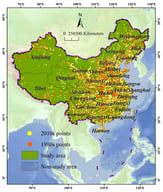
The study area.

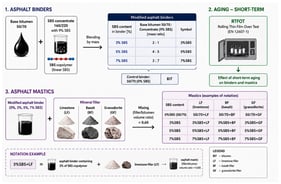
This study investigates the low-temperature relaxation behavior of asphalt binders and asphalt mastics using a ductilometer-based uniaxial tensile relaxation test under a constant displacement rate. Although the low-temperature performance of SBS-modified asphalt binders has been widely studied, the relaxation mechanisms of asphalt mastics containing SBS-modified binders, particularly considering the effects of the SBS content and short-term aging, remain insufficiently understood. Polymer-modified binders were prepared from 50/70 penetration-grade bitumen blended with an industrially produced SBS copolymer concentrate containing 9% SBS. Three binders with SBS contents of 3%, 5%, and 7% were manufactured and used to prepare asphalt mastics with mineral filler. Tensile relaxation tests were performed at −12 °C on unaged and RTFOT-aged specimens. The relaxation behavior was evaluated using a modified generalized Maxwell model to describe the viscoelastic response of the materials. The novelty of this study lies in the systematic comparison of SBS-modified binders and corresponding asphalt mastics using a unified experimental and modeling approach. Unlike previous studies focused mainly on polymer-modified binders, this research extends the analysis to binder–filler systems and provides new insight into the influence of the SBS content and aging on stress relaxation mechanisms. The results demonstrate that increasing the SBS content improves the relaxation capacity of both the binders and mastics, enhancing their ability to dissipate thermally induced stresses. Moreover, a higher SBS content reduces the sensitivity of materials to short-term aging, indicating improved resistance to low-temperature cracking.

2 August 2026

Methods for preparation of asphalt binder and mastics tested in the research program.

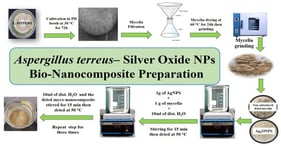
The discharge of azo-dye-containing wastewater from textile and related industries represents a major environmental challenge because of the persistence, toxicity, and poor bio-degradability of synthetic dyes. Congo red dye (CR), one of the most widely used azo dyes, poses serious ecological and public health risks when released into aquatic ecosystems. Although numerous biological adsorbents have been investigated for dye removal, the development of sustainable fungal-based nanocomposites with high adsorption efficiency, optimized operational conditions, and verified environmental safety remains limited. Therefore, the present work describes the development and evaluation of a novel Aspergillus terreus–silver oxide nanoparticle (Ag2O NPs) myco-nanocomposite as a promising eco-friendly biosorbent for CR dye removal from aqueous solutions and real wastewater. Aspergillus terreus (GenBank accession PX920301) isolated from dye-contaminated wastewater, the adsorption efficiencies of dried mycelia, and the myco-nanocomposite were compared. Myco-nanocomposite was characterized using ultraviolet visible spectroscopic analysis (UV/Vis), Fourier transform infrared spectroscopy (FTIR), and X-ray diffraction (XRD). A. terreus–Ag2O NPs myco-nanocomposite exhibited the highest ad-sorption efficiency 92.73%, adsorption capacity (qe) 118.7 mg/g and lowest CR dye residual by 3.81 mg/L, while A. terreus non-autoclaved dried mycelia recorded 78.28% CR removal, adsorption capacity (qe) 100.2 mg/g and CR dye residual by 11.39 mg/L. Adsorption parameters were optimized using a four-factor Box–Behnken experimental design, producing a highly significant quadratic model (R2 = 0.986). The highest optimized conditions were obtained at run 17 in which 100 mg L−1 CR dye, pH 8, 0.05 g adsorbent dosage, and 48 h contact time, with removal efficiency of 96.88%, followed by run 14 using 50 mg L−1 CR dye, pH 6, 0.05 g adsorbent dosage, and 48 h contact time, with removal efficiency of 95.79%. Phytotoxicity and microbial toxicity assays demonstrated that the treated wastewater was environmentally safer than untreated CR dye, exhibiting no inhibitory effects on representative bacteria, yeast, and filamentous fungi while improving wheat seedling growth. Furthermore, application of the myco-nanocomposite to real industrial wastewater achieved 94.92% decolorization. This study provides a sustainable myco-nanocomposite of A. terreus–Ag2O NPs which represents a promising green technology for the remediation of dye-contaminated industrial effluents and supports the development of environmentally sustainable wastewater management strategies and applicability of reusing treated wastewater.

2 August 2026

Mycelia-based myco-nanocomposite of A. terreus (PX920301) and silver oxide nanoparticles preparation process.

News & Conferences

Volumes

Latest Issues

Open for Submission

Editor's Choice

Reprints of Collections

Energy Consumption Analysis and Characterization of Complex Systems
Reprint

Energy Consumption Analysis and Characterization of Complex Systems

Editors: Md Rasheduzzaman, Yongming Han
Nature-Based Solutions-2nd Edition
Reprint

Nature-Based Solutions-2nd Edition

Editors: Panayiotis G. Dimitrakopoulos, Miklas Scholz, Mario A. Pagnotta, Arshiya Noorani
XFacebookLinkedIn
Sustainability - ISSN 2071-1050