

You are currently viewing a new version of our website. To view the old version click .

Social Sciences

Social Sciences is an international, open access journal with rapid peer-review, which publishes works from a wide range of fields, including anthropology, criminology, economics, education, geography, history, law, linguistics, political science, psychology, social policy, social work, sociology and more, and is published monthly online by MDPI.

Quartile Ranking JCR - Q2 (Social Sciences, Interdisciplinary)

All Articles (4,396)

The coronavirus (COVID-19) pandemic was a traumatic experience that brought disruption to people’s lives and required intense changes to be made in a short period of time. The adversity and trauma that COVID-19 brought may have had a negative long-term impact on the lives of widows who lost their spouses during the pandemic, particularly in Africa. However, little attention has been paid to the psychosocial experiences that African widows have encountered post-COVID-19. The objective of this paper is therefore to report the findings of a scoping review that examined the psychosocial challenges that African widows experienced during COVID-19 in low-resourced communities. Eligible sources such as databases were systematically searched for articles published between 2019 and 2023 using keywords related to the challenges experienced by African widows in low-resourced communities. Initially, the database search produced 4021 records. After the screening process, exclusions were made, and the final number of articles eligible for inclusion in the study was four (n = 4). Sources were subject to quality appraisal and data were extracted in line with the review question. The findings suggest that COVID-19 disrupted the widows’ support systems, usually provided by their families, friends and fellow church congregants, which exacerbated the psychosocial challenges experienced by widows such as feelings of neglect, helplessness and stigmatization and restricted the customs and traditions that help with the healing process. This paper concludes by recommending that further research be carried out to improve interventions that enhance the healing processes associated with widowhood to address the psychosocial challenges of the COVID-19 pandemic in low-resourced communities.

4 December 2025
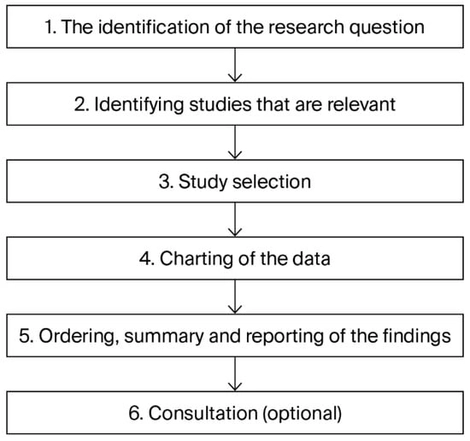
Stages of the scoping review (Arksey and O’Malley 2005).

Clinical Social Work’s Place in Migrant Justice: A Call to Act on Our Ethical Commitments

  • Cherra M. Mathis,
  • Mary Lehman Held and
  • Karen E. Latus
  • + 1 author

Migrating people fleeing violence and persecution face narrowing options to seek safety through the U.S. immigration courts. Social work’s historical and ongoing commitment to immigrant health and immigrant justice supports an enlarged presence within asylum and other immigration processes. In the role of experts, social work clinicians can evaluate displaced people to collect evidence of harm, draft reports and affidavits for the lawyer, and may even testify to educate the court on the physical and mental sequelae of violence and trauma. They play an essential part in communicating the complexity of migrating people’s stories to adjudicators. Social work clinicians seeking to join this work will attune to cultural humility, relationship building, and an opportunity to support displaced peoples’ human right to safety, in line with the skills and values of the profession. This paper serves as a brief introduction to how clinical social workers can use their mental health expertise to contribute to immigrant legal proceedings, as well as a call to action to invite both new and established social workers to use their clinical skills to meet our profession’s ethical obligations to the human rights of migrating people.

5 December 2025

  • Correction
  • Open Access

Missing Citation [...]

5 December 2025

This study challenges the traditional perception of cultural values as uniform at the national level, particularly in light of globalization and demographic changes that reveal substantial intra-nation diversity. Utilizing a person-centered approach through Latent Profile Analysis (LPA), the research synthesizes Schwartz’s value orientations and Hofstede’s cultural dimensions to analyze data from 595 respondents in the United States, exemplifying a multicultural diverse society. The findings indicate that cultural value profiles primarily cluster around hierarchy and power distance, reflecting sociocultural attitudes toward authority and relational dynamics relevant to current social and political contexts. Notably, individual-level analysis reveals significant variations in how cultural values are internalized and enacted, suggesting that these values influence personal behavior rather than merely serving as collective descriptors. The study emphasizes the coexistence of conflicting cultural and value orientations within an individual and highlights the need to consider individual differences in cultural analysis. While the research contributes valuable insights into cultural psychology, the research is limited by its cross-sectional design and focus on a single nation, suggesting the need for future studies to adopt longitudinal and cross-national approaches. This research advances a more nuanced understanding of cultural values, with implications for management, policymaking, and education in multicultural societies.

3 December 2025

News & Conferences

Issues

Open for Submission

Editor's Choice

Reprints of Collections

Critical Suicide Studies
Reprint

Critical Suicide Studies

Decolonial and Participatory Creative Approaches
Editors: Caroline Lenette
Racial Injustice, Violence and Resistance
Reprint

Racial Injustice, Violence and Resistance

New Approaches under Multidimensional Perspectives
Editors: Marcelo Paixão, Norma Fuentes-Mayorga, Thomas McNulty

Get Alerted

Add your email address to receive forthcoming issues of this journal.

XFacebookLinkedIn
Soc. Sci. - ISSN 2076-0760