1. Introduction
The novel coronavirus (COVID-19) pandemic is the world’s greatest pandemic, disrupting people’s lives and the healthcare system. COVID-19 phenomena have disrupted different sectors, and there have been numerous studies conducted to better understand the virus and its impact on people’s livelihoods. Worldwide, the outbreak has claimed millions of lives, and millions of families have lost loved ones due to COVID-19 health complications. This paper explores the psychosocial challenges experienced by African widows during the COVID-19 pandemic in low-resourced communities.
Research has shown that the life expectancy of men is in general lower than that of women (
Jin et al. 2020), meaning that there are generally more widows than widowers (
Mateos et al. 2022). In line with these statistics, more men than women were believed to have died during the COVID-19 pandemic. For instance, during the outbreak, the mortality rate of men in China who were confirmed to be COVID-19 positive was 2.4% higher than that of women (
Jin et al. 2020). This suggests that more women than men were widowed due to COVID-19-related illnesses. Additionally, the National Bureau of Statistics of China (
National Bureau of Statistics 2020) reported 41.58 million older people were declared widowed, of which 73.12% were women. Belgium has 45,182 people who have lost their partner and have been granted the status of widow or widower, made up 69.4% women and 30.6% men (
STATBEL 2020).
African countries did not experience as high a rate of COVID-19 deaths as had been anticipated, despite healthcare systems here being low-resourced. In Nigeria, where 10% of the population is aged 45 years or above, there is an estimated 8 million widowed women, many of whom live in extreme poverty (
Ilo and Isiakpona 2013). Poverty continues to be a challenge for widows in African communities, especially in low-resourced communities. In South Africa, widows make up 10.2% of the population, compared to widowers, who make up 2.7% (
Statista 2022).
Widowhood is a process that involves many radical changes, some of which may have a detrimental impact on the surviving spouse. During the COVID-19 pandemic, this was exacerbated by the suddenness of the deaths that took place, which left the surviving spouse shocked and feeling hopeless and helpless (
Seiler et al. 2020). The majority of deaths associated with COVID-19-related illness and COVID-19 symptoms were also ‘bad deaths’ (
Carr et al. 2020), i.e., deaths consisting of “physical discomfort, difficulty breathing, social isolation, psychological distress, lack of preparation, being treated with disrespect or dignity, and receiving unwanted medical interventions” (
Carr et al. 2020). These characteristics, together with the suddenness of the deaths, had a negative effect on the mental health of the surviving spouse, and often led to physical health deterioration (
Carr et al. 2020). Therefore, losing a spouse during the pandemic was traumatic to experience.
Despite having low-resourced healthcare systems, African countries did not experience the expected high numbers of COVID-19 deaths. However, poverty continues to be a challenge for widows in African communities, especially low-resourced communities, and the negative consequences of COVID-19 for African widows in low-income settings need to be recognized. As a rule, African widows are prone to great poverty during the grieving process (
The Loomba Foundation 2015). Widowhood in most African countries exposes women to dehumanizing and oppressive circumstances due to their cultural beliefs, and involves various psychosocial factors and traumatic widowhood rites. When the World Health Organization (
WHO 2023) instigated preventative measures to mitigate the transmission of coronavirus worldwide, some of the restrictions negatively affected widows during these mourning processes, which caused cultural disruptions.
There have been numerous studies on the psychosocial experiences of widows in African counties. However, there is a lack of studies that focus on the psychosocial effects of death during the COVID-19 pandemic, despite the pandemic bringing about unprecedented experiences among African widows. The occurrence of COVID-19 deprived widows of the opportunity to honor their significant others’ deaths and caused traumatic experiences (
Mataruse 2021).
This article examines the existing literature on how the COVID-19 pandemic affected the psychosocial experience of widows in African low-resourced communities, and how COVID-19 influenced cultural aspects affecting widows. Hence, the research question posed was “what are the psychosocial challenges experienced by African widows in low-resourced African communities during the COVID-19 pandemic?” The objectives were to review the literature to provide an in-depth understanding of what is known about this topic, to broaden the body of knowledge on this topic globally and to identify areas that need more investigation.
This paper’s findings suggest that widows receive minimal support from their in-laws, and this continued to be the case even during the pandemic, and the pandemic hindered the church from offering support to their fellow congregants. Furthermore, stigma and discrimination continue to be challenges for widows due to African cultural customs, and this also continued to be the case even during the pandemic. The sudden changes that took place during the pandemic regarding traditional customs had a detrimental effect on widows and disrupted the healing processes, which led to emotional challenges. Based on these findings, this paper posits that COVID-19 disrupted the support that widows usually receive from their families, friends and fellow congregants, which led them to feel neglected and helpless. Furthermore, widows were stigmatized during this period, and the restrictions of their cultural customs made their grieving and healing processes complex and compelled them to use technology to their advantage.
2. Materials and Methods
This article follows a systematic scoping review carried out to identify and synthesize the existing or emerging literature on the studied topic (
Mak and Thomas 2022). Scoping reviews are frequently used to summarize the body of research on a certain subject and identify any gaps in the knowledge (
Mak and Thomas 2022). They provide researchers with valuable information about the nature of a topic and describe how the literature has been examined (
Mak and Thomas 2022). In this study, the CASP checklist tool (
Critical Appraisal Skills Programme 2022) was utilized to select suitable studies, and the methodological framework created by
Arksey and O’Malley (
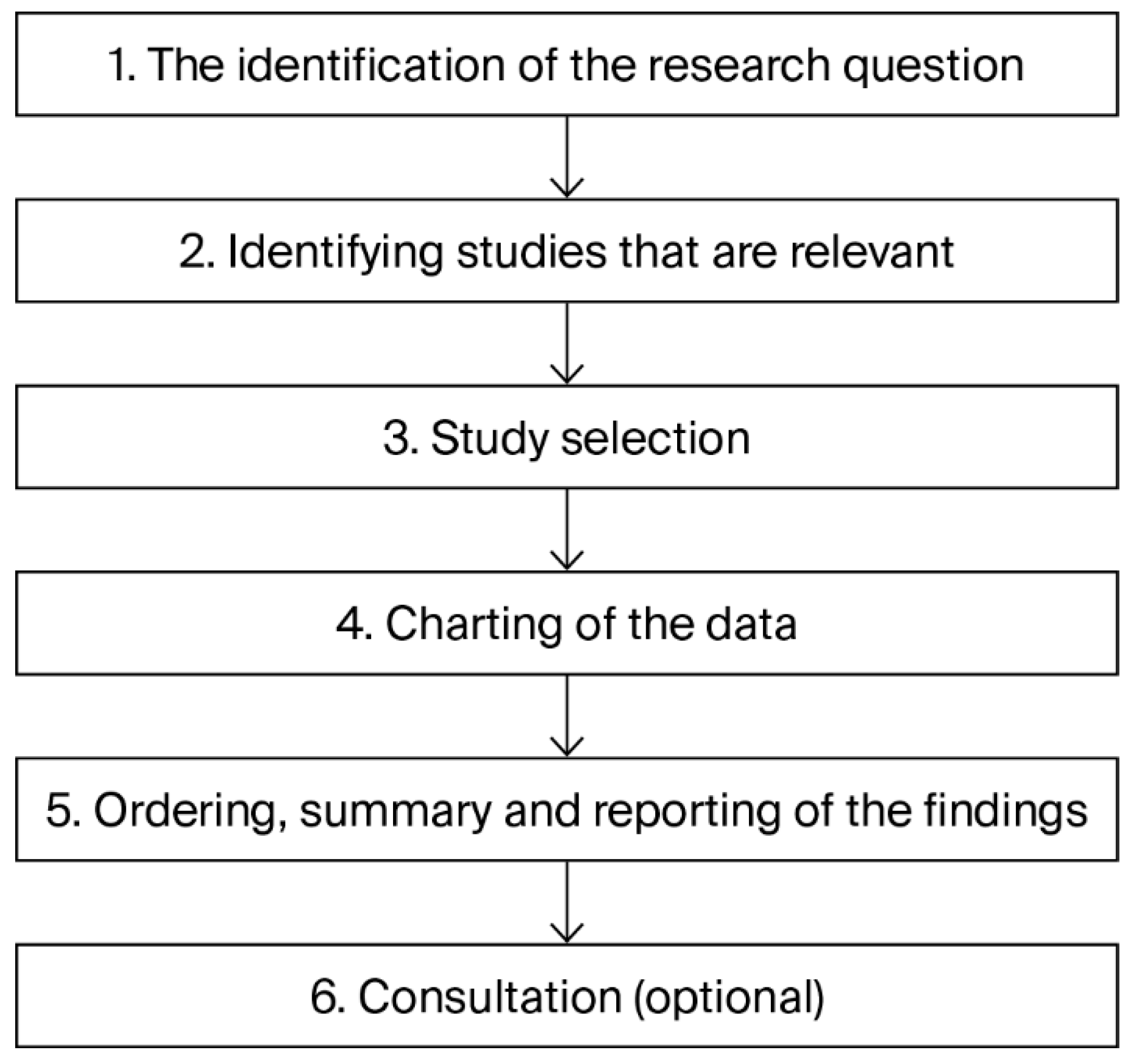
2005) was used as a guideline for the scoping review. The methodological framework consisted of 6 stages and is illustrated in
Figure 1 below.
This study only took into consideration English-language journals because there was no available literature that addressed the research topic in a different language. This could have resulted in possible language bias (
Morrison et al. 2012), and valuable information published in a language other than English might have been missed, skewing the findings on the psychosocial challenges experienced by African widows during the COVID-19 pandemic in low-resourced African communities towards Anglophone countries. Following the revised rules of the Cochrane Public Health Group for scoping reviews, the researcher restricted the language of the publications included in the study based on the resources available for the scoping process. Therefore, the study was conducted primarily in English.
The primary objectives of this scoping review were to map the available literature and identify gaps in the knowledge on the topic (
Mak and Thomas 2022). A scoping review is a relevant methodology for adding knowledge that addresses the research question to the field of social work due to the scarcity of literature in the field. As scoping review protocols do not need to be registered, this protocol was not registered.
2.1. Information Sources and Search Strategy
A thorough literature search was carried out using Journal Storage (JSTOR), Science Direct, EBSCOhost, AJOL, PubMed and Google Scholar. Based on the records that were available, we rebuilt the search method, even though the precise Boolean strings and search results were not entirely preserved. The study preserved only the total number of records and sources that were retrieved, and those that were not retrieved are shown in the PRISMA diagram.
A database search was used to map out the existing literature that addressed the topic of interest (
Arksey and O’Malley 2005). Electronic databases from the North-West University online library and reference lists were used to search the available literature (
Horsley et al. 2011), and studies that reported the psychosocial challenges of African widows in low-resourced communities during the COVID-19 pandemic and which met the inclusion criteria were retrieved.
The following keywords were used as inclusion criteria in the search for studies for this scoping review: “Challenges; Widows, Low-resourced communities, COVID-19”. Publications included were those published between 2019 and 2023, because COVID-19 was first announced (in China) in 2019, and caused a pandemic from 2019 to 2024. The first case of COVID-19 was confirmed in South Africa in February 2020. The researcher consulted with the study leader, who provided his expertise to ensure that the relevant literature was identified for this paper. Studies that examined women who became widows prior to the COVID-19 pandemic or that did not consider the African context were excluded, as were articles published in a language other than English.
2.2. Search Strategy
The researcher used electronic databases such as Journal Storage (JSTOR), Science Direct, EBSCOhost, AJOL PubMed and Google Scholar. Keywords and synonyms were used to narrow the search, and search terms, as well as Boolean operators, were identified by combining search terms in an advanced search to create concepts that were tailored to the existing literature. A date range filter was also used to ensure that the articles searched were published between 2019 and 2023, to facilitate an easy article search. The researcher also utilized the reference list in the search for appropriate studies that addressed the research question. The purpose of this strategic search was to maximize the retrieval of relevant articles.
2.3. Study Selection
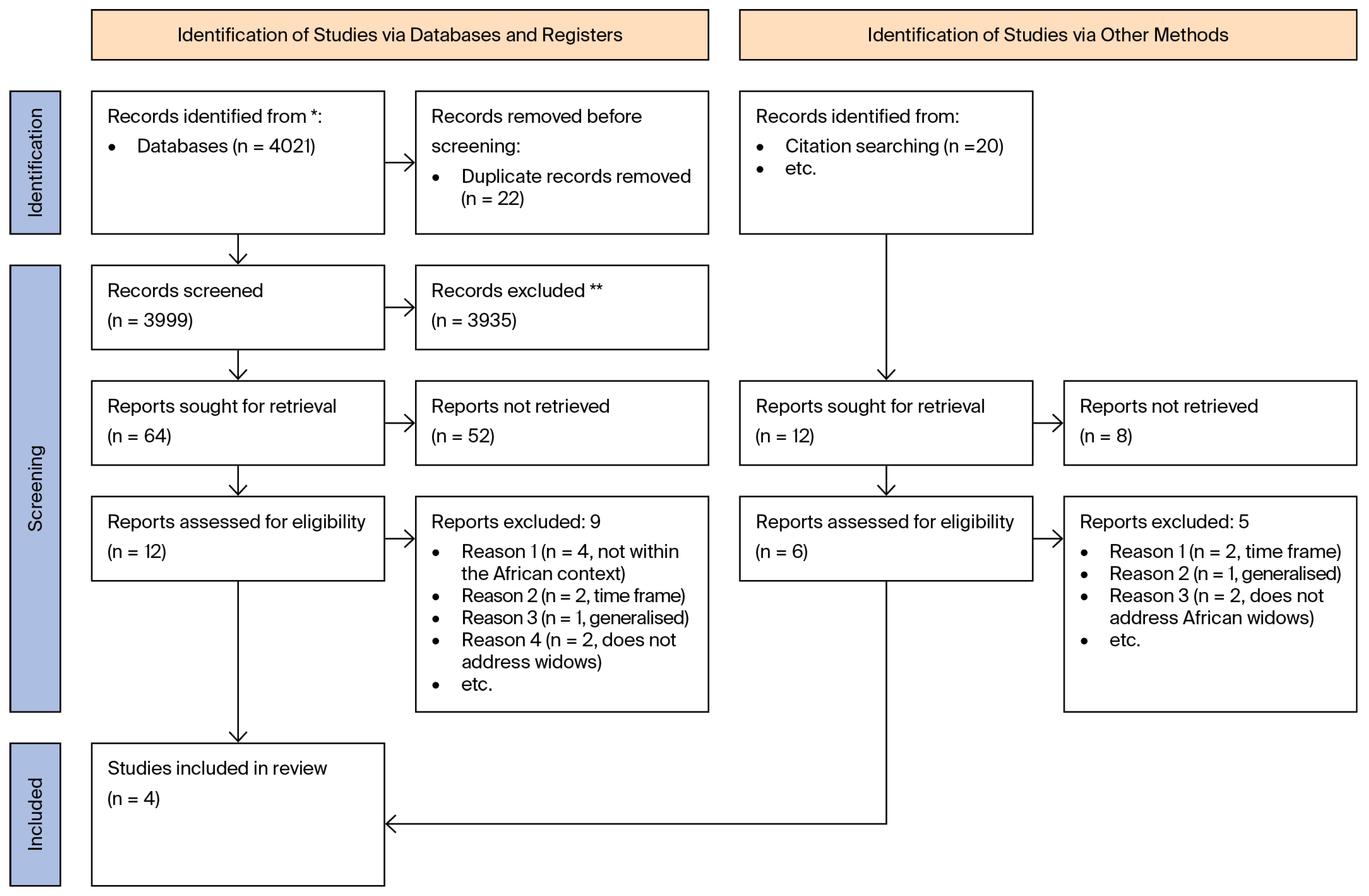
In the initial analysis, a total of 4021 articles from the selected databases were found using the search terms. The keywords used were (*psychosocial effects OR *psychosocial impacts OR *psychosocial challenges OR *poverty) AND (*grief OR *mourning OR *depression) AND (*coronavirus OR *COVID-19) AND (*widows OR *elderly widows OR *young widows) AND (*low-resourced communities OR *disadvantaged communities OR *rural communities). After checking for duplicate articles, 22 articles were excluded and 3999 were retained to be screened for possible inclusion. Thereafter, 3935 articles were excluded by the screening process, and 64 articles were retained for retrieval. In addition to these, 20 articles were identified from the reference list of publications identified during the screening process. Of these, 12 were retrieved and 8 were excluded (n = 20 identified studies − 8 excluded studies = 12 studies). Of the remaining 12 studies, 6 were excluded as they did not meet the eligibility criteria and 6 studies were retained (12 studies − 6 studies = 6 studies met assessment criteria). Only 12 articles from the databases and 6 from the citation list were eligible for full-text review.
The CASP checklist was then utilized to further assess the 18 eligible articles (12 articles from the database search and 6 from the citation search). After working together with the supervisor and co-supervisor during the selection process, using the CASP quality appraisal tool, 4 articles were deemed suitable, and 14 articles were excluded during the data extraction process (9 articles from the database search and 5 from the citations). Therefore, only 4 studies were included in the review. The PRISMA-ScR flow diagram in
Figure 2 below shows how the studies were selected for inclusion.
2.4. Data Extraction, Charting and Analysis
Data were retrieved from the selected articles that qualified using the inclusion requirements (
Arksey and O’Malley 2005). The process involved gathering information associated with the psychosocial challenges experienced by African widows in low-resourced communities during the COVID-19 pandemic. An evidence summary table (
Table 1) was employed to specify the following information for the selected articles: Author, Publication Year, Title, Country, Research Approach, Research Design, Population, Sampling Participants, Key Findings, Strengths and Weaknesses/Limitations (
Arksey and O’Malley 2005). The characteristics of this paper were elaborated by analyzing the data collected from the data charting table (
Arksey and O’Malley 2005).
In this study, the researcher worked together with the study leader during the data charting process to come to an agreement as to the articles that could be included due to the inclusion criteria. An inductive approach was then applied, and a thematic analysis was conducted on the selected studies to generate categories and themes (
Belur et al. 2018). The selected articles were analyzed following
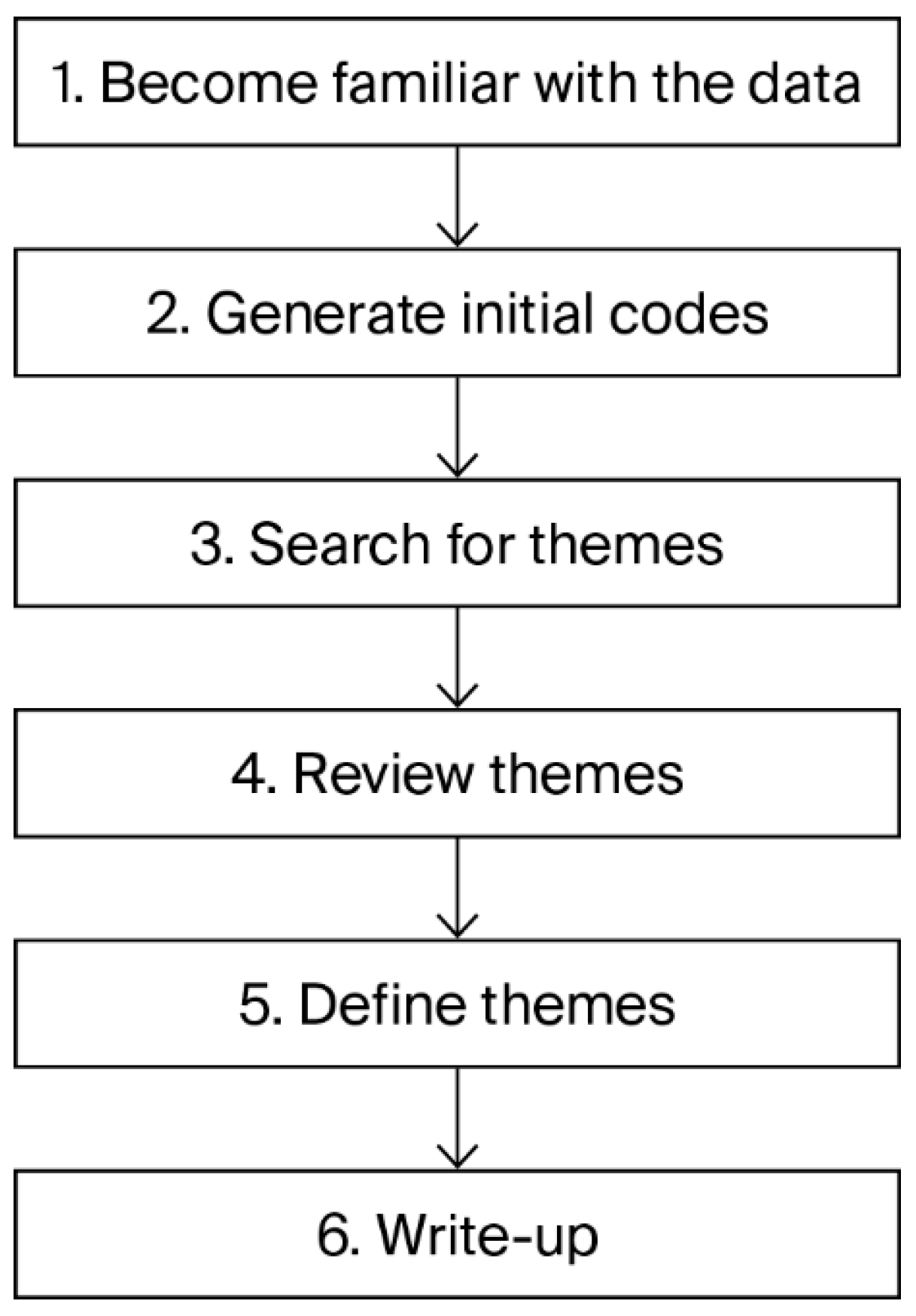
Clarke and Braun’s (
2013) six stages of thematic analysis, which are illustrated in
Figure 3.
The thematic analysis steps were applied in the following manner: Firstly, the researcher familiarized herself with the data to gain a comprehensive understanding. Preliminary codes were identified, and then the identified themes were re-examined. Initially, nine themes were identified, but, after a discussion with the supervisor, some overlapping themes were merged and four themes were retained. The initial themes were then re-examined and refined further. An ongoing analysis was carried out to enhance the themes, and, finally, the analysis was transferred into a report.
Table 1 below shows how the data charting was performed.
2.5. Trustworthiness
To establish reliability, specific guidelines were adhered to in the scoping review regarding the inclusion and exclusion criteria, data analysis and study selection approach. The research was conducted in an orderly manner, and the data gathered were reliable (
Anney 2014). Throughout the process, discussions with the supervisor and co-supervisor were carried out to finalize the themes. The services of an independent coder (an experienced qualitative researcher) were also used to help verify and validate the data analysis process.
3. Findings
This scoping review included four studies, all (n = 4) qualitative in nature and published between 2020 and 2023, focusing on the psychosocial challenges experienced by African widows in low-resourced communities during the COVID-19 pandemic. Two of the studies were from South Africa (n = 2) and two from Zimbabwe (n = 2). Four themes emerged from the included studies: (1) support systems; (2) stigmatization; (3) emotional challenges; (4) post-burial customs. The findings suggest that widows received minimal support from their in-laws during the pandemic, and the pandemic hindered the church from offering support to their fellow congregants. Furthermore, stigma and discrimination continued to be challenges for widows during the pandemic, and African cultural customs influenced this. The sudden changes that took place regarding traditional customs had a detrimental effect on widows and disrupted the healing processes, which exacerbated emotional challenges.
3.1. Theme 1: Support Systems
In the reviewed literature, there were contradictory findings regarding the support system that widows received during the COVID-19 pandemic. Studies showed that widows received support from their families, neighbors and other bereaved women but that not enough support was received from their in-laws. This could be because, in most African families, the behavior of in-laws is influenced by the perception that the wife may be responsible for her husband’s death. According to
Moloi (
2022), the majority of widows receive emotional and social support from their own families rather than non-relatives. Interestingly, research has also revealed that it is common practice for the surviving spouse to disregard seeking support from close family and friends (
Mataruse 2021). According to Maddrell (cited by
Mataruse 2021), the mourning person must seek support from significant others. Rabow et al. (cited by
Mataruse 2021) stated that, during the period when mourners needed to be together, they were compelled to grieve separately. Emotional support gives the widow assurance, which makes her feel loved.
COVID-19 required action to combat the spread of the virus and minimize the number of deaths, and the government had to make drastic changes, including closing churches. However, the closing down of churches had negative consequences on widows who were mourning their husbands during the COVID-19 period (
Buthelezi and Ngema 2021). The bereaved were left neglected, helpless and traumatized because of people’s fear of contracting COVID-19 from congregants who were in mourning (
Buthelezi and Ngema 2021). As a result, fellow congregants were unable to provide emotional support to widows due to COVID-19 restrictions. This gave the widows the impression that they were rejected and received inadequate care and support from the church. Moreover,
Moloi (
2022) argues that it was especially bad for widows who were not actively involved in churches, as they were unable to receive any kind of assistance from a congregation. Therefore, this paper posits that there was also some degree of segregation in churches regarding who could receive the minimal support that was still accessible from the church.
3.2. Theme 2: Stigmatization
The rapid spread of COVID-19 and how it was transmitted brought fear to people globally, and the frequent reporting of COVID-19 deaths and infections by several governments worldwide created uncertainty and anxiety. There was much misinformation in society about COVID-19, how it spread and the cause of death, which created stigma towards mourning families because community members were suspicious of COVID-19 involvement. People in the community treated every death as a COVID-19-related death, creating stigma and discrimination for widows when their husbands died during the COVID-19 outbreak, because people in the community, including those in church, feared the virus. Religious institution such as churches in low-resourced African communities stigmatized and discriminated against their widowed congregants due to fear of contracting COVID-19 (
Buthelezi and Ngema 2021). The literature revealed that widows were not only exposed to dehumanizing traditional practices, but were mistreated in churches, being called names and gossiped about by congregants (
Buthelezi and Ngema 2021). Although such stigmatization of widows was already common, the COVID-19 outbreak worsened the problem, and widows continued to face stigma because they were perceived as “carriers” of disease (
United Nations 2022).
3.3. Theme 3: Emotional Challenges
Death inflicts trauma, which triggers strong emotions (
De Leo et al. 2015). Widows faced intense emotional challenges that made them believe that their mental health could have been compromised, raising doubts about their mental stability (
Moloi 2022). According to
Moloi (
2022), this resulted from loss, which has a detrimental influence on cognition, causing inattention and forgetfulness. The literature revealed that the psychological reaction of social withdrawal from family and friends by widows is frequently triggered by the intense anguish of losing a loved one, as bereavement can be an isolating experience (
Buthelezi and Ngema 2021). The emotions associated with loss have detrimental effects on surviving widows in general, let alone in the case of COVID-19, where support was minimal and stigma rampant.
Losing a loved one is terrible, but COVID-19 made matters worse (
Carr et al. 2020). No one could have adequately prepared widows for the loneliness they experienced as a result of the COVID-19 restrictions that prevented them from receiving support from friends and family (
Buthelezi and Ngema 2021). In a study conducted by
Buthelezi and Ngema (
2021), widows revealed that they felt isolated, which significantly affected their children. Some widows had to be isolated because their husbands died due to COVID-19-related health complications, which created fear and loneliness. As a result of COVID-19 isolation or quarantine regulations, widows were unable to attend their husbands’ funerals due to having been close contacts of the deceased (
Mataruse 2021). As a result, widows were unable to find the closure necessary to deal with losing a husband, which created emotional challenges.
3.4. Theme 4: Burial Customs
Burial rites are highly respected and play a very important role within African cultures, as it is believed that they bring dignity to the deceased. However, the outbreak of COVID-19 required drastic changes to be made to burial rites, which affected all cultures globally, to combat the spread of the virus and minimize the death toll of the virus. In normal circumstances, during African funerals, the community comes together to support the mourning family and to pay their last respects to the deceased. However, social distancing, intercity travel restrictions and limits to the number of people allowed in crowd settings were implemented, and technology had to be implemented so that people could attend live-streamed funerals virtually from a distance (
Sebata and Matiza 2022). The digitalization of funerals becomes the new practice of mourning during the pandemic.
Rituals that are performed by widows were also neglected due to the intercity travel ban that was implemented by the World Health Organization (WHO) in order to minimize COVID-19 transmission (
Sebata and Matiza 2022). For example, there is a ritual called “hontsha motho mokwatleng”, i.e., letting go of the spouse, which is performed the night after the burial at the homestead or in urban homes by a herbalist to help the bereaved to accept and heal from the loss. For spouses who were not staying at their homestead or urban homes, this ritual, which is performed by members in their home villages, was affected and could not be performed due to the intercity travel ban (
Sebata and Matiza 2022). The “hontsha motho mokwatleng” ritual is deemed important for dealing with the shock of losing a loved one and is necessary for mental health during grieving (
Sebata and Matiza 2022).
A cleansing ceremony is another of the crucial rituals that widows have to undergo, as it is believed to ‘free’ the widow and allows them to be re-integrated into the community (
Sebata and Matiza 2022). In addition, the cleansing is performed as a practice to show that the widow has completed the mourning period (
Moloi 2022).
The custom known as “ho temelloa ke mollo”, which translates to “the fire has been put out”, requires a widow to go to her maiden house one month after her husband’s death in order to formally notify his family about his passing (
Sebata and Matiza 2022). The paternal aunts accompany the widow, and address the members in attendance (
Sebata and Matiza 2022). However, due to migration, the Basotho people of Zimbabwe are spread throughout the country (
Sebata and Matiza 2022) and, as a result of the COVID-19 travel ban, widows were unable to carry out this ritual. The widow is expected to go through a cleansing process at the home of her maiden family, because it is believed that her well-being will be affected if she does not (
Sebata and Matiza 2022).
The funeral ritual is a fundamental evolution of the life cycle that recognizes the value and importance of the loved one (
Mataruse 2021). However, the pandemic regulations caused a complete shift in the normal burial procedure, which complicated the grieving and mourning process (
Mataruse 2021).
4. Discussion
This study identified that there is a dearth of literature, especially that published in English, regarding the psychosocial challenges experienced by African widows in low-resourced communities during the COVID-19 pandemic. This research identified only four studies that addressed this topic; therefore, the researcher identified a research gap that needed to be closed in order for us to have an in-depth understanding of the psychosocial challenges experienced by African widows within low-resourced communities, and also a need to explore these difficulties in the context of the COVID-19 pandemic. A scoping review was necessary to explore and include all the studies conducted in African low-resourced communities, to determine and record the available literature and to determine the need for intensive research. It was found that research is needed that considers publications written in languages other than English, especially from those African countries that do not use English as their official language, to comprehensively record the literature available.
This study was necessitated by the following review question: “What were the psychosocial challenges experienced by African widows in low-resourced African communities during the COVID-19 pandemic?” The objectives to be fulfilled were (1) to identify the available literature that describes the various psychosocial challenges encountered by widows during the COVID-19 pandemic and (2) to highlight the available literature on the influence of COVID-19 on the cultural aspects affecting widows in low-resourced African communities.
The following interconnected themes, encompassing the psychosocial challenges that African widows experienced during the COVID-19 pandemic, emerged in this paper: support systems, stigmatization, emotional challenges and post-burial customs. Social support, which facilitates the building of new relationships as a crucial element in grieving (
Hamilton 2016) and healing after experiencing bereavement, was lost, and bereaved widows were exposed to an extreme lack of social support, which compromised the healing process. It is argued in this paper that the mandatory COVID-19 restrictions observed in low-resourced communities further reduced the meagre social resources available, which complicated mourning and grieving for widows (
Fatimah and Ayinla 2020), a factor which Kübler-Ross’s stages of grief theory asserts may increase the likelihood of depression (
Hamilton 2016).
Stigmatization has been revealed to have had a significant role during the COVID-19 pandemic and could be seen as the reason why widows lacked social support. In many instances, the widow was blamed by her in-laws for having infected her deceased husband with the COVID-19 virus, despite having no symptoms of the virus herself. Furthermore, stigma and the fear of contracting COVID-19 were found to have scared church members away from providing social support to widows (
Buthelezi and Ngema 2021). Whilst
Buthelezi and Ngema (
2021) argued that congregants feared contracting COVID-19,
Sebata and Matiza (
2022) contend that churches were merely following the WHO preventative guidelines for preventing the superspreading of the virus. In the context of these findings, this paper argues that stigmatization, together with overt isolation, left widows helpless and hopeless, complicating the healing process after the loss of their husbands.
Immense emotions are associated with the loss of loved ones. Losing a partner during the COVID-19 pandemic triggered more challenging emotions for the widows, especially when coupled with a lack of the proper closure associated with African burial customs, including viewing the body. All death-associated closure activities were minimized, which minimized accelerated closure and acceptance of the death of the husband. This reduced what Stroebe and Schut call ‘restoration orientation’, which facilitates coping related to the problem (
Hamilton 2016). Widows were even not allowed to bury their husbands due to COVID-19 WHO restrictions. The literature reviewed posits that such immense emotions, without closure and proper social support, could result in psychological problems and complicated grief (
Burrell and Selman 2020;
Stroebe and Schut 2021).
Post-burial customs and traditions are common practices in African culture and in many African communities, including low-resource communities. For example, in Swazi culture, the widow is covered with a blanket, in Xhosa culture, the widow jumps over a fire and, in Tsonga culture, the widow goes to the river to break an egg placed between her thighs, as a sign that she did not have a hand in the death of her husband (
Matlabe-Danke 2024). These practices clear suspicions about whether the widow was responsible for the death of her husband and facilitate closure and healing from her loss. These practices were restricted during COVID-19 pandemic, which is interconnected with the exacerbation of stigma, the isolation of widows and complications in grief among widows.
African communities hold the belief that death comes with dark energy and requires cleansing, especially for widows. Cleansing ceremonies give widows a sense of freedom, as they know that they have mourned their husbands as expected by the cultural standards that are upheld in African communities. This cultural practice was hindered by COVID-19, and, as revealed by the literature, cleansing ceremonies that are performed using herbs were also halted. During the COVID-19 pandemic, widows were not cleansed, and the belief is that they remain dirty without cleansing and that they have the spirit of their dead husband. This affected the psychological health of widows in low-resourced communities.
5. Limitations
The review was restricted by the inclusion criterion that stated that the articles had to be in English. This may have resulted in the researcher missing important information. Additionally, the researcher considered only African widows, and this limited the literature search. As a result, the research may have excluded very important journals and may have skewed the results towards the Anglophone region, weakening the strength of the conclusions.
Another limitation is that the studies that were sought were context-specific and time-bound. COVID-19 in African low-resourced communities is not well-researched and, as such, this study adds to a body of literature that is currently limited in these contexts and the time period concerned. The researchers’ research search engines resulted in the identification of fewer journal articles that met the inclusion criteria. This limited the transferability and generalizability of the findings in this study. Nevertheless, the findings remain contextually significant and relevant, as transferability and generalizability of qualitative studies remain the responsibility of the concerned researcher (
Trochim 2025).
The researchers’ exact Boolean strings were not preserved and only the total number of records was retained in the PRISMA diagram. This is a methodological limitation which future studies may improve upon.
6. Recommendations
The researcher recommends that cross-country research studies be conducted in order to provide a deeper understanding of the psychosocial experience of widows during the COVID-19 pandemic in African low-resourced communities and to create a contextual analysis across different countries. Further research may provide potential information to enhance social work interventions that facilitate healing processes for widows during pandemics such as COVID-19.
Although the COVID-19 pandemic took place four years ago, the psychological impact it may have had on widows might have been severe and needs to be considered when widows are seeking therapeutic interventions from social workers. Therefore, it is crucial that social workers in low-resourced African communities are culturally sensitive when providing psychosocial support services to widows during their intervention.
It is essential to increase awareness about the challenges faced by African widows in low-resourced African communities in order to reduce the stigma attached to widows. Additionally, African widows in low-resourced communities need legal literacy in order for them to be empowered by a greater understanding of the law and knowledge of how to protect their rights.
7. Conclusions
The pandemic brought drastic changes to the lives of widows, including changes to the burial and post-burial procedures that facilitate proper mourning and healing for the bereaved. From the findings of the scoping review, this paper concludes that there was profound stigma against widows, and the support available to them was drastically reduced. Although this stigma against widows has existed throughout time immemorial, widowhood during the COVID-19 pandemic was worsened by the fear of congregants, family and friends about contracting the COVID-19 illness with which the widows were associated.
Whilst the WHO guidelines on how to prevent the spread of the virus could have helped prevent the spread of COVID-19, they also exacerbated the isolation of widows and their stigmatization. While the governments of African countries with low resources may have announced great strides in combating the spread of COVID-19, this paper concludes that, for widows, there is little to celebrate, as the COVID-19 restrictions compounded the psychosocial problems that are potential precursors for psychological ill health.
An important insight on the availability on literature led to the conclusion that, due to the limited number of articles found in the scoping review, it is also important that more cross-country research studies be conducted to gain a deeper understanding of the psychosocial experiences within African low-resourced contexts during the COVID-19 pandemic.
Author Contributions
Conceptualization N.J.J. and M.D.; methodology, N.J.J. and M.D.; formal analysis, N.J.J., M.D. and O.T.-M.; investigation, N.J.J.; resources, N.J.J. and M.D.; data curation, N.J.J., M.D. and O.T.-M.; writing—original draft preparation, N.J.J.; writing—review and editing, M.D. and O.T.-M.; visualization, M.D.; supervision, M.D. and O.T.-M.; project administration, N.J.J., M.D. and O.T.-M. All authors have read and agreed to the published version of the manuscript.
Funding
This research received no external funding.
Institutional Review Board Statement
The study was conducted in accordance with the Declaration of Helsinki and approved by the Higher Degrees Committee of Faculty of Health Sciences at North-West University. Ethics number: NWU-00154-23-A1. Approval date: 29 November 2023.
Informed Consent Statement
This is a scoping review study, and it did not engage human participants to seek their informed consent.
Data Availability Statement
No new data were created or analyzed in this study.
Conflicts of Interest
The authors declare no conflict of interest.
References
- Anney, Vicent Naamo. 2014. Ensuring the quality of the findings of qualitative research: Looking at trustworthiness criteria. Journal of Emerging Trends in Educational Research and Policy Studies 5: 272–81. [Google Scholar]
- Arksey, Hilary, and Lisa O’Malley. 2005. Scoping Studies: Towards a Methodological Framework. International Journal of Social Research Methodology 8: 19–32. [Google Scholar] [CrossRef]
- Belur, Jyoti, Lisa Tompson, Amy Thornton, and Miranda Simon. 2018. Interrater Reliability in Systematic Review Methodology: Exploring Variation in Coder Decision-Making. Sociological Methods & Research 50: 837–65. [Google Scholar] [CrossRef]
- BMJ. 2021. Research Methods & Reporting: The PRISMA 2020 statement: An updated guideline for reporting systematic reviews. BMJ 372: n71. [Google Scholar] [CrossRef]
- Burrell, Alaxander, and Lucy Ellen Selman. 2020. How do funeral practices impact bereaved relatives’ mental health, grief and bereavement? A mixed methods review with implications for COVID-19. OMEGA-Journal of Death and Dying 85: 345–83. [Google Scholar] [CrossRef] [PubMed]
- Buthelezi, Zanele Gladness, and Thandiwe Nonkuleko Ngema. 2021. A figurational analysis of the role of the church in handling issues of widowhood amid COVID-19 in Northern KwaZulu-Natal, South Africa. Pharos Journal of Theology 102. [Google Scholar] [CrossRef]
- Carr, Deborah, Kathrin Boerner, and Sarah Moorman. 2020. Bereavement in the time of corona-virus: Unprecedented challenges demand novel interventions. Journal of Aging & Social Policy 32: 425–31. [Google Scholar] [CrossRef]
- Clarke, Vectoria, and Virginia Braun. 2013. Teaching thematic analysis: Overcoming challenges and developing strategies for effective learning. The Psychologist 26: 120–23. [Google Scholar]
- Critical Appraisal Skills Programme. 2022. CASP Qualitative Studies Checklist. Available online: https://casp-uk.net/casp-tools-checklists/qualitative-studies-checklist/ (accessed on 4 September 2023).
- De Leo, Diego, Cristina Anile, and Anna Ziliotto. 2015. Violent deaths and traumatic bereavement: The importance of appropriate death notification. Humanities 4: 702–13. [Google Scholar] [CrossRef]
- Fatimah, Abdul Rasaq, and Lukman Ayinla. 2020. Impact of COVID-19 Legal Measures on Widows in Nigeria [Blog Post]. African Women in Law, June 29. Available online: https://www.africanwomeninlaw.com/post/impact-of-covid-19-legal-measures-on-widows-in-nigeria (accessed on 12 January 2025).
- Hamilton, Ian. 2016. Understanding grief and bereavement. The British Journal of General Practice: The Journal of the Royal College of General Practitioners 66: 523. [Google Scholar] [CrossRef] [PubMed]
- Horsley, Tanya, Orvie Dingwall Dindwall, and Margaret Sampson. 2011. Checking reference lists to find additional studies for systematic reviews. Cochrane Database of Systematic Reviews 2011: MR000026. [Google Scholar] [CrossRef]
- Ilo, Promise Ifeoma, and Chidi Isiakpona. 2013. Curtailing Harmful Widowhood Practices in Nigeria: The Librarian’s Information Tool as a Veritable Strategy. practices. African Library Sentinel 2: 112–23. [Google Scholar]
- Jin, Jian-Min, Peng Bai, Wei He, Fei Wu, Xiao-Fang Liu, De-Min Han, Shi Liu, and Jin-Kui Yang. 2020. Gender Differences in Patients with COVID-19: Focus on Severity and Mortality. Frontiers Public Health 8: 545030. [Google Scholar] [CrossRef] [PubMed]
- Mak, Susanne, and Aliki Thomas. 2022. Steps for conducting a scoping review. Journal of Graduate Medical Education 14: 565–67. [Google Scholar] [CrossRef] [PubMed]
- Mataruse, Innocent. 2021. Experience of people who lost spouses due to COVID-19 complications: Insight from Masvingo Urban. Humanities Southern Africa 1: 120–30. [Google Scholar]
- Mateos, José Tomás, José Fernández-Sáez, Jorge Marcos-Marcos, Carlos Álvarez-Dardet, Clare Bambra, Jennie Popay, Kedar Baral, Connie Musolino, and Fran Baum. 2022. Gender equality and the global gender gap in life expectancy: An exploratory analysis of 152 countries. International Journal of Health Policy and Management 11: 740. [Google Scholar] [CrossRef] [PubMed]
- Matlabe-Danke, Sizakele. 2024. Cultural Practices and Constitutional Rights in Widowhood: Lived Experiences of Black Widowed Women in Makapanstad Village in South Africa. Social Sciences 13: 610. [Google Scholar] [CrossRef]
- Moloi, Nthabiseng Innocentia. 2022. Experiences of Widowhood Among Basotho Women in Johannesburg. Master dissertation, University of Johannesburg, Johannesburg, South Africa. Available online: https://hdl.handle.net/10210/503704 (accessed on 19 April 2024).
- Morrison, Andra, Julie Polisena, Don Husereau, Kristen Moulton, Moulton Clark, Michelle Fiader, Monik Mierzwinski-Urban, Tammy Clifford, Brian Hutton, and Danielle Rabb. 2012. The effect of English-language restriction on systematic review-based meta-analyses: A systematic review of empirical studies. International Journal of Technology Assessment in Health Care 28: 138–44. [Google Scholar] [CrossRef] [PubMed]
- National Bureau of Statistics (China). 2020. Tabulation on the 2020 Population Census of the People’s Republic of China. China Population Census Yearbook 2020; Beijing: China Statistics Press. Available online: http://www.stats.gov.cn/sj/pcsj/rkpc/7rp/indexch.htm (accessed on 24 August 2024).
- Sebata, Nokuthula, and Vimba Moreblessing Matiza. 2022. COVID-19 and Post-Burial Rituals of the Sotho People in Gwanda South Province in Zimbabwe. Commonwealth Youth & Development 20. [Google Scholar] [CrossRef]
- Seiler, Annina, Roland Von Känel, and Michael Slavich George. 2020. The psychobiology of bereavement and health: A conceptual review from the perspective of social signal transduction theory of depression. Frontiers in Psychiatry 11: 565239. [Google Scholar] [CrossRef] [PubMed]
- STATBEL. 2020. STATBEL Belgium in Figures 2020: Difference in the Number of Widowhoods 2020 Versus 2019. Available online: https://statbel.fgov.be/en/news/45182-belgians-became-widowed-2020 (accessed on 2 August 2024).
- Statista (South Africa). 2022. Gender Distribution of the South African Population in 2022, by Marital Status. Available online: https://www.statista.com/statistics/1114298/distribution-of-population-in-south-africa-by-marital-status/ (accessed on 24 August 2024).
- Stroebe, Margaret, and Henk Schut. 2021. Bereavement in times of COVID-19: A review and theoretical framework. OMEGA-Journal of Death and Dying 82: 500–22. [Google Scholar] [CrossRef] [PubMed]
- The Loomba Foundation. 2015. World Widows’ Report: A Humanitarian Emergency. London: The Loomba Foundation. Available online: https://www.theloombafoundation.org/world-widow-report/#:~:text=The%20World%20Widows%20Report%20was,to%20develop%20sound%2C%20evidence%2Dbased (accessed on 13 April 2023).
- Trochim, William Michale Kirk. 2025. Qualitative Validity. Available online: https://conjointly.com/kb/qualitative-validity/ (accessed on 20 October 2025).
- United Nations. 2022. United International Widow’s Day [Blog post]. United Nations, June 23. Available online: https://www.un.org/en/observances/widows-day (accessed on 28 November 2024).
- World Health Organisation (WHO). 2023. Weekly Epidemiological Update on COVID-19—6 April 2023. Available online: https://www.who.int/publications/m/item/weekly-epidemiological-update-on-covid-19---1-september-2023 (accessed on 20 April 2023).
| Disclaimer/Publisher’s Note: The statements, opinions and data contained in all publications are solely those of the individual author(s) and contributor(s) and not of MDPI and/or the editor(s). MDPI and/or the editor(s) disclaim responsibility for any injury to people or property resulting from any ideas, methods, instructions or products referred to in the content. |
© 2025 by the authors. Licensee MDPI, Basel, Switzerland. This article is an open access article distributed under the terms and conditions of the Creative Commons Attribution (CC BY) license (https://creativecommons.org/licenses/by/4.0/).