You are currently viewing a new version of our website. To view the old version click .

Machines

Machines is an international, peer-reviewed, open access journal on machinery and engineering, published monthly online by MDPI.
The International Federation for the Promotion of Mechanism and Machine Science (IFToMM) is affiliated with Machines and its members receive a discount on the article processing charges.
Quartile Ranking JCR - Q2 (Engineering, Mechanical | Engineering, Electrical and Electronic)
All Articles (5,103)

The development of control strategies for autonomous vehicles requires a reliable and cost-effective validation approach. In this context, testbeds enabling repeatable experiments under controlled conditions are gaining relevance. Scaled vehicles have proven to be a valuable alternative to full-scale or simulation-based testing, enabling experimental validation while reducing costs and risks. This work presents a 1:5 scale modular vehicle platform, derived from a commercial Radio-Controlled (RC) vehicle and adapted as experimental testbed for control strategy validation and vehicle dynamics studies. The vehicle features an electric powertrain, operated through a Speedgoat Baseline Real-Time Target Machine (SBRTM). The hardware architecture includes a high-performance Inertial Measurement Unit (IMU) with embedded Global Navigation Satellite System (GNSS). An Extended Kalman Filter (EKF) is implemented to enhance positioning accuracy by fusing inertial and GNSS data, providing reliable estimates of the vehicle position, velocity, and orientation. Two path-following algorithms, i.e., Stanley Controller (SC) and the Linear Quadratic Regulator (LQR), are designed and integrated. Outdoor experimental tests enable the evaluation of tracking accuracy and robustness. The results demonstrate that the proposed scaled testbed constitutes a reliable and flexible platform for benchmarking autonomous vehicle controllers and enabling experimental testing.

3 December 2025

Details of the main hardware on the 1:5 scale vehicle: isometric view (a) and top view (b).

Production scheduling that involves distributed factories, machine maintenance, and resource constraints plays a crucial role in manufacturing. However, these realistic constraints have rarely been considered simultaneously in the hybrid flow shop (HFS). To address this issue, a distributed resource-constrained hybrid flow shop scheduling problem with machine breakdowns (DRCHFSP-MB) is studied. There are two optimization objectives, i.e., makespan and total energy consumption (TEC). To solve the strongly NP-hard problem, a mathematical model is established and a block–neighborhood-based multi-objective evolutionary algorithm (BNMOEA) is developed. In the proposed algorithm, an efficient hybrid initialization method is adopted to obtain high-quality individuals to participate in the evolutionary process of the population. Next, to enhance the search capability of the BNMOEA, three well-designed crossover operators are used in the global search. Then, the convergence of the proposed algorithm is improved by utilizing eight critical factory-based local search operators combined with block–neighborhood. Finally, the BNMOEA is compared with several of the most advanced multi-objective algorithms; the results indicate that the BNMOEA has an outstanding performance in solving DRCHFSP-MB.

3 December 2025

An example of DRCHFS-MB (rectangle with different colors represent different jobs).

This study explores the effects of low temperatures on the performance of various lithium-ion batteries (LIBs), comparing different sizes and chemical compositions. Experiments were conducted in a sub-zero temperature environment, examining discharge behavior, internal resistance, and capacity retention. The findings reveal that smaller-sized batteries (18650, 21700) have a marked resilience to cold, outperforming larger 26650 cells, with smaller average capacity declines noted in both LiCoO2 and LiMn2O2 chemistries. The study also introduces a new adaptive filtering technique for better battery behaviour analysis at low temperatures, which avoids distortion of important electrochemical signals.

2 December 2025

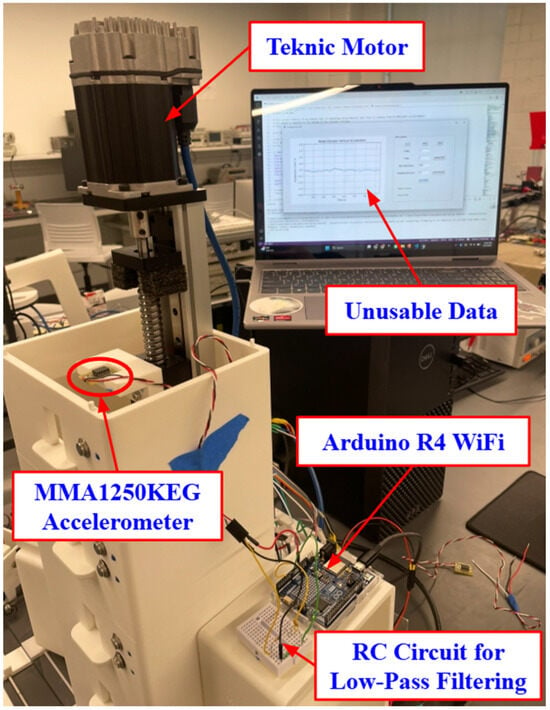
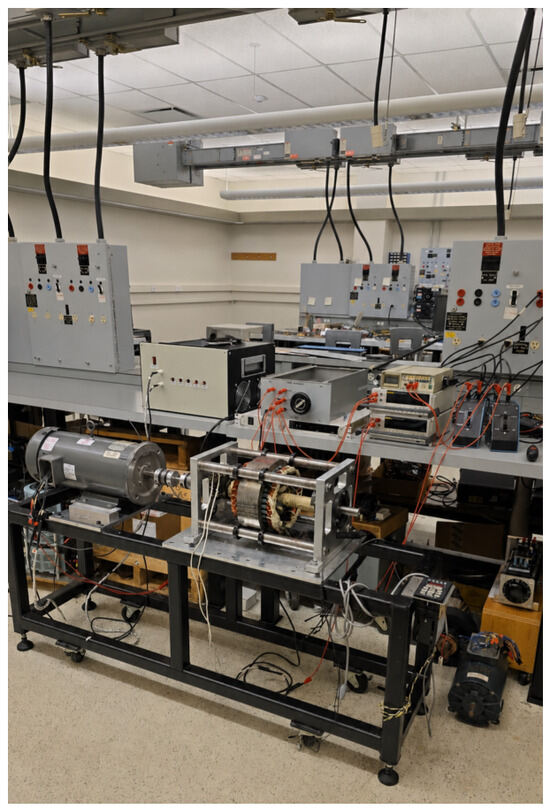
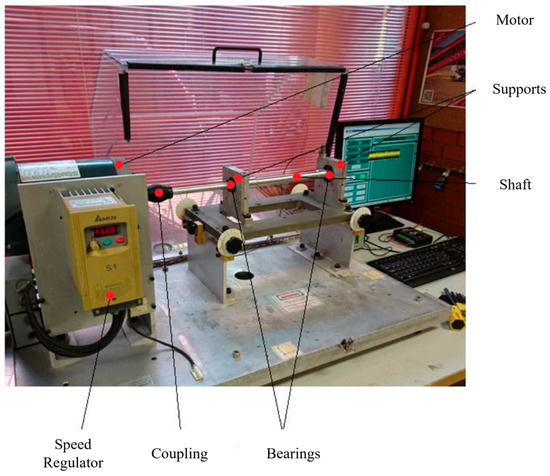
Experimental Setup.

Failure Mode and Effects Analysis (FMEA) is a systematic risk assessment tool that effectively evaluates the safety and reliability of products prior to their deployment. However, traditional FMEA fails to consider and leverage inherent system-specific information during risk assessment, while also neglecting the weights of risk factors (RFs) when processing data related to the Risk Priority Number (RPN). This leads to significant subjectivity in the final risk ranking of failure modes. To overcome these drawbacks, this study proposes an improved FMEA risk assessment method based on load sharing, aiming to develop an improved FMEA method that addresses the critical limitations of traditional approaches by integrating load sharing principles and systematic weight determination, thereby enhancing risk assessment objectivity and accuracy in complex multi-component systems. First, probabilistic linguistic terms are adopted to quantify experts’ risk assessment information, and the geometric mean method is then used to aggregate assessments from multiple experts. Second, the Fuzzy Best–Worst Method (FBWM) is employed to determine the relative weights of the three RPN factors (Occurrence, Severity, and Detection). Additionally, partial system structural data are obtained through load sharing, and these data—combined with the calculated factor weights—are integrated into the Technique for Order Preference by Similarity to Ideal Solution (TOPSIS) to generate the final risk ranking of failure modes. Finally, a case study of a magnetic crane is conducted to verify the feasibility and effectiveness of the proposed method, supplemented by comparative experiments to demonstrate its superiority.

2 December 2025

Four-component system.

News & Conferences

Issues

Open for Submission

Editor's Choice

Reprints of Collections

Advanced Electrical Machines and Drives Technologies, 2nd Edition
Reprint

Advanced Electrical Machines and Drives Technologies, 2nd Edition

Editors: Loránd Szabó, Marcin Wardach
Nonlinear Phenomena, Chaos, Control and Applications to Engineering and Science and Experimental Aspects of Complex Systems
Reprint

Nonlinear Phenomena, Chaos, Control and Applications to Engineering and Science and Experimental Aspects of Complex Systems

Editors: José Manoel Balthazar, Angelo Marcelo Tusset, Átila Madureira Bueno, Diego Colón, Marcus Varanis

Get Alerted

Add your email address to receive forthcoming issues of this journal.

XFacebookLinkedIn
Machines - ISSN 2075-1702