Skip to Content

Journal of Genome Biotechnology and Genetics

Journal of Genome Biotechnology and Genetics is an international, peer-reviewed, open access journal on applied genome sciences, genome biotechnology and genetics published quarterly online by MDPI.
  • Open Access— free for readers, with article processing charges (APC) paid by authors or their institutions.
  • Rapid Publication: first decisions in 18 days; acceptance to publication in 7 days (median values for MDPI journals in the first half of 2026).
  • Recognition of Reviewers: Reviewers whose reports are timely and of high quality receive an APC discount voucher for a future publication in an MDPI journal. Become a reviewer.

Get Alerted

Add your email address to receive forthcoming issues of this journal.

All Articles (16)

  • Perspective
  • Open Access

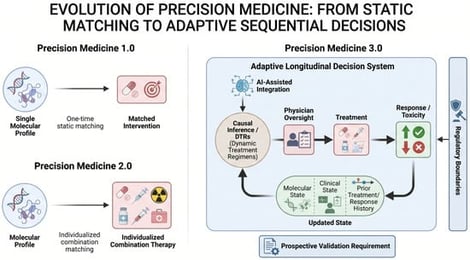
Complex diseases require therapeutic decisions that adapt as the disease evolves over time and in response to treatment. Current precision medicine remains largely centered on selecting an individual drug or predefined regimen from molecular characteristics measured at a particular time. The next evolution of precision medicine is toward adaptive therapeutic trajectories in which treatment decisions change over the course of treatment. Germline genomic information remains constant and contributes baseline susceptibility and pharmacogenomic information. By contrast, somatic alterations, multi-omic profiles, clinical state, and treatment response may change during disease progression and therapy and can inform subsequent treatment decisions. The volume and complexity of longitudinal molecular and clinical data exceed what can be integrated reliably by unaided human cognition. Artificial intelligence (AI) may help integrate these high-dimensional longitudinal data. The scientific challenge is whether AI-derived treatment recommendations are reliable and improve patient outcomes. This model raises a regulatory problem beyond conventional drug approval: how to evaluate a bounded therapeutic system in which patient-specific treatment recommendations change as the patient’s condition evolves.

Evolution from static molecular matching to adaptive precision medicine. Precision Medicine 1.0 selects an individual intervention from molecular characteristics measured at a decision point. Precision Medicine 2.0 extends this approach to individualized combination therapy. Precision Medicine 3.0 links longitudinal molecular and clinical states with prior treatment history and response to guide sequential clinical decisions over time. AI-assisted integration, causal inference, physician oversight, prospective validation, and defined regulatory boundaries support implementation of the adaptive decision system. The arrows indicate the sequential decision process. Created in BioRender. Qu, H. (2026). https://BioRender.com/gd0kyut, accessed on 8 August 2026.
  • Communication
  • Open Access

Phenotypic Heterogeneity in Resistance and Biofilm Formation Among Clinical Acinetobacter baumannii Isolates in Northwestern Mexico

  • Alma Karen Orozco-Ochoa,
  • Jean Pierre González-Gómez and
  • Cristóbal Chaidez-Quiroz
  • + 2 authors

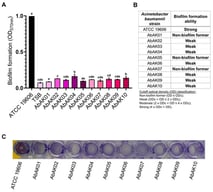
Acinetobacter baumannii is a major nosocomial pathogen characterized by multidrug resistance and persistence in hospital environments. This study evaluated antimicrobial susceptibility and biofilm-forming capacity in ten clinical A. baumannii isolates obtained from a tertiary care hospital in Northwestern Mexico to explore phenotypic traits associated with persistence. Minimum inhibitory and bactericidal concentrations were determined using broth microdilution according to Clinical and Laboratory Standards Institute guidelines. All isolates were resistant to ciprofloxacin, whereas variable resistance was observed for tobramycin (60%) and ceftazidime (20%); all strains remained susceptible to colistin. Bactericidal assays revealed heterogeneous responses across antibiotics. Biofilm formation, assessed by crystal violet staining, showed that most isolates produced weak to moderate biofilms, while three strains were non-producers. Significant variability in biofilm biomass was observed (p < 0.001). Notably, no direct association was found between antimicrobial resistance profiles and biofilm-forming capacity, indicating phenotypic heterogeneity among isolates. These findings suggest that persistence-related traits in A. baumannii may not be solely predicted by resistance patterns, highlighting the complexity of adaptive responses under antimicrobial stress.

Biofilm production by ten clinical A. baumannii strains. (A) Quantitative assessment of biofilm formation. Data represent the mean of three independent experiments (n = 3) ± standard deviation (SD); error bars represent the SD. Different letters indicate statistically significant differences (p &lt; 0.001). Biofilm formation is expressed as a biofilm index relative to the reference strain A. baumannii ATCC 19606 (positive control). (B) Summary of biofilm-forming capacity among the clinical strains. (C) Representative crystal violet staining of biofilm formed in 96-well polystyrene microtiter plates.
  • Review
  • Open Access

Human Pigmentation: A Review of Molecular Mechanisms, Genetic Architecture, Evolution, Forensic DNA Phenotyping and Health Implications

  • Denisse Stephania Becerra-Loaiza,
  • Nayeli González-Ortiz and
  • José Alonso Aguilar-Velázquez
  • + 2 authors

Human pigmentation is a quantitative, tissue-specific, and temporally variable phenotype shaped by melanocyte biology, melanosome physiology, regulatory variation, environmental exposure, and population history. This narrative review examines how functional and population-based evidence supports—or limits—the translation of pigmentation genetics into forensic DNA phenotyping (FDP) and health-related applications. A structured search of MEDLINE/PubMed and Google Scholar was conducted through July 2026, prioritizing primary functional studies, independent validations, meta-analyses, and consensus documents. Current evidence supports polygenic and regulatory control of skin, hair, and iris pigmentation, but heterogeneous phenotype definitions, population composition, age, and environmental modulation constrain direct genotype-to-appearance inference. IrisPlex, HIrisPlex, and HIrisPlex-S provide validated probabilistic predictions for selected pigmentation categories; performance is less consistent for intermediate phenotypes, admixed populations, partial profiles, and settings lacking appropriate calibration. Associations with ultraviolet damage and cutaneous cancer are substantial but differ by cancer type, whereas evidence concerning vitamin D, melanin–drug interactions, and broader precision-medicine applications remains context-dependent or preliminary. Progress will require standardized phenotyping, globally representative datasets, transparent uncertainty reporting, and independent forensic and clinical validation.

Cellular organization and multilevel regulation of epidermal pigmentation. (A) Schematic representation of the epidermal melanin unit, in which each melanocyte functionally interacts with multiple surrounding keratinocytes, and the sequential cellular processes underlying pigmentation. Melanosomes undergo progressive biogenesis and maturation through stages I–IV within melanocytes, accompanied by melanogenic enzyme loading and melanin deposition. Mature melanosomes are transported toward the dendrites by microtubule-dependent mechanisms and captured at the cell periphery through the Rab27A–melanophilin–myosin Va complex and actin-dependent machinery. Their transfer to keratinocytes may occur through several proposed, non-mutually exclusive mechanisms, including cytophagocytosis, shedding vesicles, membrane-associated transfer, and exocytosis followed by phagocytosis. After uptake, keratinocytes regulate pigment fate through intracellular redistribution, retention, lysosome-like storage, and degradation, while the organization of melanin into supranuclear caps contributes to nuclear photoprotection. (B) Environmental and paracrine modulation of epidermal pigmentation through ultraviolet radiation, inflammatory and hormonal signals, oxidative stress, aging, and dermal–epidermal crosstalk. Pigmentation is dynamically regulated by paracrine signals, environmental stimuli, and dermal–epidermal interactions, which collectively shape melanin production, transfer, and retention. Created in BioRender. Becerra, D. (2026) https://BioRender.com/hyn15da and adapted from published studies [2,4,35,36,38].
  • Review
  • Open Access

Agave angustifolia Haw. is one of the primary sources for the production of mezcals such as raicilla and tuxca, in western Mexico. In Jalisco, Agave angustifolia evolved from being a pre-Hispanic ritual and food resource (200–1500 CE) to becoming the primary basis for 16th-century vino mezcal, the precursor to all modern mezcals, including raicilla and tequila. This review synthesizes current genomic, epigenetic, and metabolic evidence to elucidate the species’ evolutionary and adaptive potential. Our analysis suggests that the domestication of A. angustifolia is characterized by a “domestication paradox,” where intensive clonal management ensures short-term productivity but creates genetic bottlenecks that limit long-term adaptive capacity. We synthesize empirical evidence to show that adaptive plasticity is driven by the integration of Crassulacean Acid Metabolism (CAM) flexibility and dynamic global DNA methylation (GDM) profiles, which, while currently correlative, suggest an environmental response mechanism. We conclude that securing the socio-economic viability of Agave spirits requires a transition from intensive monocultures to regenerative agroforestry, incorporating sexual propagation to maintain evolutionary potential. Furthermore, we outline a roadmap for Genomics-Assisted Breeding (GAB 4.0), integrating marker-assisted selection for juvenile traits to accelerate the release of resilient biotypes, and precision diagnostic tools to reduce the ecological footprint of Agave production. This framework secures the genomic integrity of traditional spirits within a circular, climate-resilient bioeconomy.

Historical foundations and the emergence of mezcal wine in 16th-century Western Mexico. The illustration depicts the ancestral origins of raicilla following the arrival of the Manila Galleon. The introduction of Asian distillation technology to the coasts of Colima and Nueva Galicia facilitated the processing of endemic Agave varieties into proto-mezcals, such as the wine of the hill “vino del cerro” originating in Talpa de Allende. From these common ancestors arose the modern raicilla, tuxca, bacanora, mezcal, and tequila industries [7,13,14,18].

Highly Accessed Articles

News & Conferences

Latest Issues

Open for Submission

Journal Sections

XFacebookLinkedIn
J. Genome Biotechnol. Genet. - ISSN 3042-8424