


Abstract
Agave angustifolia Haw. is one of the primary sources for the production of mezcals such as raicilla and tuxca, in western Mexico. In Jalisco, Agave angustifolia evolved from being a pre-Hispanic ritual and food resource (200–1500 CE) to becoming the primary basis for 16th-century vino mezcal, the precursor to all modern mezcals, including raicilla and tequila. This review synthesizes current genomic, epigenetic, and metabolic evidence to elucidate the species’ evolutionary and adaptive potential. Our analysis suggests that the domestication of A. angustifolia is characterized by a “domestication paradox,” where intensive clonal management ensures short-term productivity but creates genetic bottlenecks that limit long-term adaptive capacity. We synthesize empirical evidence to show that adaptive plasticity is driven by the integration of Crassulacean Acid Metabolism (CAM) flexibility and dynamic global DNA methylation (GDM) profiles, which, while currently correlative, suggest an environmental response mechanism. We conclude that securing the socio-economic viability of Agave spirits requires a transition from intensive monocultures to regenerative agroforestry, incorporating sexual propagation to maintain evolutionary potential. Furthermore, we outline a roadmap for Genomics-Assisted Breeding (GAB 4.0), integrating marker-assisted selection for juvenile traits to accelerate the release of resilient biotypes, and precision diagnostic tools to reduce the ecological footprint of Agave production. This framework secures the genomic integrity of traditional spirits within a circular, climate-resilient bioeconomy.
1. Introduction
The genus Agave L. represents one of the most remarkable examples of biological and cultural evolution in the Americas [1,2,3]. With Mexico as its primary center of origin and diversification, these plants have been utilized for over 9000 years as sources of food, fiber, and fermented beverages [4,5]. Archeological evidence demonstrates that Agave species, specifically A. angustifolia and A. maximiliana, were integral to the dietary, economic, and ceremonial frameworks of the populations in Colima and Jalisco from 200 to 1500 Common Era (CE) [6].
The primary use of agave lies in the production of spirituous beverages. Etymologically and historically, all distillates derived from cooked agave are classified as mezcals (a term rooted in the Nahuatl mexcalli, from metl, ‘maguey,’ and ixcalli, ‘cooked’) and originated in western Mexico during the colonial period [4,7]. Consequently, mezcal serves as a generic descriptor for all Mexican-produced agave spirits, encompassing diverse regional products such as tequila, bacanora, raicilla, mezcal, sisal, and tuxca, among others [4,8,9,10,11,12].
Zizumbo and Colunga [13], aligning with the findings of Bruman [14], documented that Agave distillation in Western Mexico commenced between 1580 and 1600 [7]. This chronology is corroborated by other researchers [15,16,17]. As the ancestral precursor to all modern agave spirits, vino mezcal (also referred to as vino del cerro or mountain wine) was distilled as early as the 16th century in artisanal distilleries called tabernas (taverns), located across the coastal and mountainous regions of Jalisco [7,18,19]. During the colonial era in New Spain (modern-day Mexico), alcoholic beverages in general were called wine, including distilled spirits [7]. This development was catalyzed by the arrival of Filipino migrants in New Galicia aboard the Manila Galleon, who introduced Asian distillation technology to the region. This trans-Pacific corridor, historically known as the Nao de China, served as the primary maritime link connecting New Spain with the Philippines and Southeast Asia from 1565 to 1821 [20].
In the historical territory of New Galicia, which currently encompasses the modern-day state of Jalisco, and the province of Colima, indigenous and colonial groups distilled coconut wine using Asian technology, which was subsequently adapted for Agave in New Spain [13,14,19,20]. The nomenclature of raicilla originated in San Sebastián del Oeste in 1621, when chronicler Lázaro de Arregui documented that wine obtained by distillation is produced from the roots and stems of the maguey. This record identifies raicilla as the oldest documented agave distillate in Mexico [7,21]. The historical and evolutionary trajectory of Agave distillates in western Mexico is illustrated in Figure 1.
Figure 1.
Historical foundations and the emergence of mezcal wine in 16th-century Western Mexico. The illustration depicts the ancestral origins of raicilla following the arrival of the Manila Galleon. The introduction of Asian distillation technology to the coasts of Colima and Nueva Galicia facilitated the processing of endemic Agave varieties into proto-mezcals, such as the wine of the hill “vino del cerro” originating in Talpa de Allende. From these common ancestors arose the modern raicilla, tuxca, bacanora, mezcal, and tequila industries [7,13,14,18].
Agave angustifolia Haw. constitutes a fundamental biological resource owing to its extensive geographic distribution and its role as a putative wild ancestor for several agronomically significant taxa. These include the fiber-producing A. fourcroydes and various local landraces utilized for mezcal production [22,23]. Agave angustifolia is the second most utilized species in the raicilla industry with a 31.6% adoption rate, following Agave maximiliana [24,25]. The biological potential of this species is not only of botanical interest, but is a socio-economic necessity for the thousands of families whose livelihood depends on its sustainable exploitation [26].
The current state of research into A. angustifolia has transitioned from classical morphological descriptions to a holistic framework integrating high-throughput genomic data, metabolic profiling, and environmental adaptability [27,28,29,30,31]. The chloroplast (cp) is a semi-autonomous organelle of cyanobacterial origin, found in plants and algae, that contains its own genome and performs photosynthesis by converting sunlight into chemical energy [32,33]. Recent studies have successfully assembled its cp genome (plastome), providing critical data for phylogenetic resolution within the Agave genus [34]. Furthermore, the species’ remarkable climate resilience is attributed to its water-conserving CAM and a significant degree of photosynthetic plasticity, allowing flexible CO2 uptake under varying environmental stresses [23,35,36,37,38]. At the molecular level, this adaptation is supported by complex epigenetic mechanisms, such as global Deoxyribonucleic acid (DNA) methylation, which regulates physiological responses to light intensity and helps maintain plant vigor during in vitro propagation and environmental transitions [39,40].
Despite ongoing progress, the domestication status and genomic health of A. angustifolia remain subject to conflicting hypotheses [41]. Certain researchers classify it as a wild or partially domesticated taxon, while others identify distinct domestication syndromes, including elevated carbohydrate concentrations and diminished leaf dentition within landraces managed under traditional agricultural frameworks [26]. A significant controversy involves the genomic consequences of human intervention. Intensive clonal management has paradoxically induced an unexpected excess of heterozygosity in specific regions, whereas wild populations exploited for regional spirits like bacanora reveal concerning levels of inbreeding and weak genetic structuring [42,43]. These divergent evolutionary paths highlight the decisive role that socioeconomic policies play in shaping the Agave genome [44].
While this review focuses primarily on A. angustifolia Haw., data from A. tequilana Weber, A. maximiliana Baker, and other congeners are included as essential comparative proxies to address specific knowledge gaps where A. angustifolia-specific empirical data remain limited. These inclusions are necessary to validate broader evolutionary hypotheses regarding CAM metabolic flexibility, fructan biosynthetic pathways, and the genomic consequences of human-mediated selection within the Agave genus. To systematically address the critical knowledge gaps, this review is structured to: (1) synthesize the current landscape of A. angustifolia genomics [45,46]; (2) critically evaluate the empirical evidence linking molecular mechanisms, such as epigenetic regulation and metabolic profiling, to climate resilience and industrial performance [47]; and (3) formulate a hierarchical data framework that distinguishes between published research findings in A. angustifolia, evidence extrapolated from other Agave species, and emerging research hypotheses, thereby providing a robust foundation for future germplasm conservation and precision breeding strategies [25,48].
We conclude that securing the socio-economic viability of Agave spirits requires a transition from intensive monocultures to regenerative agroforestry, incorporating sexual propagation to maintain evolutionary potential. Furthermore, we outline a roadmap for GAB 4.0, which serves as a promising prospective framework integrating marker-assisted selection for juvenile traits to accelerate the release of resilient biotypes, and precision diagnostic tools to reduce the ecological footprint of Agave production. This framework secures the genomic integrity of traditional spirits within a circular, climate-resilient bioeconomy.
2. Scope and Literature Synthesis Approach
This study provides an integrative narrative review of the genomic architecture and climate resilience of A. angustifolia [7,19,49]. While not a systematic review, as it does not employ PRISMA protocols, it utilizes a structured, comprehensive search strategy across leading repositories to synthesize current knowledge and address knowledge gaps between molecular research and artisanal production [44,50].
To ensure the rigor of this synthesis, a systematic screening procedure was implemented [51,52]. A comprehensive search was executed across leading academic repositories, namely PubMed, Scopus, Web of Science, ScienceDirect, and Google Scholar, utilizing Boolean operators and specific keyword strings, such as “Agave angustifolia genomics”, “raicilla production sustainability”, “Crassulacean Acid Metabolism resilience”, “SNP population structure Agave”, and “DNA methylation abiotic stress” [53,54,55,56]. The literature search encompassed eight decades, from foundational botanical descriptions in 1944 to 2026 advancements in high-throughput sequencing and Artificial Intelligence (AI) for Agave classification [57]. Preference was given to peer-reviewed studies in English and Spanish published between 2010 and 2024 to prioritize modern genomic methodologies [44,45]. Inclusion criteria focused on studies providing primary genomic data, identifying biosynthetic pathways, such as Cinnamyl Alcohol Dehydrogenase (AaCAD) genes or evaluating physiological responses to environmental stressors in A. angustifolia [46]. Conversely, studies were excluded if they lacked primary empirical data, were restricted to non-spirit-producing varieties, or were published outside the specified date range, thereby ensuring the review focuses on modern genomic methodologies and their practical applications [23,34,39,40].
Findings were synthesized through a comparative narrative analysis to resolve conflicting hypotheses regarding the impact of clonal propagation on genetic variability [38,44,58,59]. The review acknowledges inherent regional research biases, as the majority of A. angustifolia studies remain concentrated in Mexico [60,61].
3. Taxonomy and Genomic Diversity of Genus Agave
The genus Agave L. (Asparagaceae, Agavoideae) constitutes a monophyletic lineage of recent origin currently undergoing rapid diversification centered in Mexico, which hosts approximately 75 percent of the more than 200 recognized species [22,62]. Infrageneric classification identifies two primary subgenera based on inflorescence morphology: Agave, characterized by paniculate forms, and Littaea, defined by spicate or thyrsoid structures [63,64,65]. However, this reliance on classical morphological descriptors often fails to capture the high levels of intraspecific variation, particularly within the A. angustifolia complex, historically obscuring the evolutionary relationships among wild, managed, and fully domesticated populations.
Within this framework, the Agave angustifolia Haw. complex exhibits significant taxonomic complexity, encompassing a gradient of wild, managed, and fully domesticated populations across Mesoamerica [5,50]. In specific regions such as Oaxaca, this complex includes wild varieties like A. angustifolia var. angustifolia and var. rubescens, alongside the extensively cultivated ‘Espadín’ and partially cultivated taxa like A. rhodacantha [22,66]. Recent genomic and ethnobotanical evidence suggests that Agave tequilana Weber is a domesticated cultivar derived from its closest wild relative, Agave angustifolia [67,68].
Recent population genomics utilizing Single Nucleotide Polymorphisms (SNPs) highlights how human management profoundly impacts Agave genomic health. A pivotal finding within the A. angustifolia complex involves the marked disparity between genetic variability and heterozygosity levels [44]. Intensively managed cultivars like ‘Espadín’ exhibit reduced total genetic variability relative to wild counterparts, yet paradoxically maintain a significantly higher proportion of heterozygotic genotypes (Table 1) [44,69].
Table 1.
Genomic Diversity and Management Metrics of Agave Populations in the Raicilla Denomination of Origin.
This dichotomy suggests that traditional management preserves agrobiodiversity through diverse landraces [5,43,44]. Consequently, facilitating gene flow between wild and managed pools is essential to prevent the accumulation of deleterious mutations and safeguard the adaptive potential of A. angustifolia within raicilla production systems [10,49,50]. Future studies must move beyond descriptive population genetics to prioritize functional genomic assays that can distinguish between plastic, environmentally driven phenotypes and fixed, selection-driven traits.
4. Agave angustifolia Haw. Biology and Socioeconomic Importance
4.1. Geographical and Ecological Distribution
The English botanist Adrian Hardy Haworth formally described Agave angustifolia Haw. in 1812, publishing it on page 72 of his Synopsis Plantarum Succulentarum [72,73]. This taxon possesses the widest distribution within the genus, ranging from Sonora and Tamaulipas, Mexico, south to Panama [74,75,76,77]. This remarkable distribution allows the species to thrive in diverse ecosystems, ranging from coastal dunes at sea level to oak-pine forests at elevations of 2200 m [23,43].
Historically, this plant has been a cornerstone of Mesoamerican cultures, utilized for food, fiber, medicine, and the production of traditional fermented and distilled beverages [42].
4.2. Reproductive Biology and Propagation Strategies
Agave angustifolia employs a mixed reproductive strategy encompassing one sexual and two distinct asexual pathways, which collectively ensure its ecological resilience and agricultural viability [41,78]. As a monocarpic perennial, the species flowers once at the conclusion of its 6 to 10 year life cycle, generating a massive paniculate inflorescence between 3 and 8 m in height [7]. The hermaphroditic flowers are protandrous and strictly self-incompatible, with anthers releasing pollen before stigmas reach receptivity. This mechanism necessitates cross-pollination, primarily by nectar-feeding bats such as Leptonycteris spp., alongside diurnal birds and insects, to produce dehiscent capsules containing flat, black seeds (Figure 2) [68].
Figure 2.
Sexual reproduction pathways and ontogenetic development of Agave angustifolia Haw. (a) Reproductive units illustrating green and dry bulbils collected from the floral scape. (b) Morphological characteristics of viable seeds. (c,d) Early germination phase and seedling emergence within specialized seedbeds. (e) Nursery stage transplantation. (f) Acclimatized specimens exhibiting optimized vigor prior to field integration. (g) A one-year-old agave specimen showing well-developed rosette architecture. All stages illustrated correspond exclusively to sexual reproduction lineages. Photographs courtesy of 42 Tavern “Ruta del Peregrino,” an establishment part of the raicilla route of the “Consejo Mexicano Promotor de la Raicilla” (CMPR), Talpa de Allende, Jalisco, Mexico.
Asexual reproduction occurs via two primary vegetative mechanisms. The first involves the continuous production of subterranean rhizomatous offshoots, locally termed ‘hijuelos’ (suckers), which emerge from the base of the maternal plant (Figure 3) [4,79].
Figure 3.
Vegetative propagation pathways and ontogenetic development of Agave angustifolia Haw. var. Chico Aguiar via rhizome offshoots. (a) Rhizome derived offshoot or hijuelo optimized for field establishment and transplantation. (b) One-year-old specimens established on hillside grazing lands within regenerative agriculture systems. (c) Six-year-old agave with 5 rhizomes (arrow). (d) Mature individual integrated into living fences displaying a fully developed floral scape or quiote. (e) Traditional harvesting or jima of mature stems or piñas for raicilla production. All illustrated stages correspond exclusively to asexual reproduction lineages from the municipalities of Cabo Corrientes and Mascota, Jalisco. Photographs courtesy of Benito Spirits and Hacienda el Divisadero taverns.
A. angustifolia employs a robust strategy for asexual propagation through vegetative apomixis, primarily utilizing rhizomatous offshoots and the formation of aerial bulbils from axillary meristems on the inflorescence, which serve as a critical survival mechanism when sexual reproduction or floral development is compromised following floral abscission or injury [79,80]. Clonal propagation is widely leveraged in agricultural practice to maintain phenotypic uniformity and accelerate crop establishment [81]. Within the A. angustifolia complex, apomixis serves as a critical evolutionary mechanism to preserve polyploid lineages and bypass meiotic instability (Figure 4) [28].
Figure 4.
Vegetative vivipary and apomixis propagation pathways in Agave angustifolia (locally known as maguey de quiote). (a) Floral scape at anthesis phase preceding bulbil formation. (b) Localized mechanical lesion on the inflorescence stalk inducing vegetative vivipary. (c) Mature bulbils or vegetative plantlets developing directly on the quiote. (d) Harvested bulbils optimized for initial nursery establishment. (e) Acclimatized young plantlets in nursery seedbeds optimized for field integration. (f) One-year-old specimens established under standardized nursery conditions. (g) Three-year-old commercial plantation derived exclusively from bulbil propagation. All images illustrate asexual reproduction lineages via vegetative vivipary. Courtesy of CMPR.
4.3. Phytochemical Reservoir and Industrial Versatility
A. angustifolia serves as the primary biological substrate for distilled spirits, including mezcal in Oaxaca (>86% of state output), bacanora in Sonora and raicilla in Jalisco. This species defines the characteristic flavor and organoleptic profile of these spirits; consequently, the vast majority of globally consumed mezcal is a distillate of this specific taxon [43]. The stem or piña is harvested after 6 to 10 years, roasted, fermented, and distilled to produce these culturally and economically vital mezcals [28,82].
Beyond distillates, the species represents a diverse reservoir of bioactive compounds and raw materials. While historically utilized for construction and ixtle fiber, contemporary research emphasizes the utility of agro-industrial by-products like leaves and bagasse [83,84]. Bagasse is currently evaluated as a feedstock for biofuels, biodegradable packaging, and the extraction of high-value phytosterols like β-sitosterol (BSS), a potent bioactive sterol used as a therapeutic agent and nutritional supplement [85,86]. Furthermore, the branched neo-fructans identified as agavins within the plant exhibit significant prebiotic potential, while various extracts have long been employed in traditional medicine to treat sprains, bone fractures, and digestive ailments due to their inherent anti-inflammatory properties (Figure 5) [84,87].
Figure 5.
Structural comparison of fructan architectures. (a) Inulin-type fructans: linear polymers with β (2,1) linkages and a terminal glucose residue (GFn type). (b) Agavins: highly branched neo-fructans from Agave angustifolia, characterized by an internal glucose unit and mixed β (2,1) and β (2,6) linkages. This complexity underpins the high solubility and fermentative potential of Agave landraces used in raicilla production [87,88,89].
5. Genomic Potential and Molecular Architecture of Agave angustifolia
5.1. Genomic Architecture and Population Genetics
The conserved diploid karyotype of A. angustifolia (2n = 2x = 60), characterized by 10 macrochromosomes and 50 microchromosomes with a nuclear DNA content of 8.17–8.21 pg, provides a structural foundation for metabolic stability in arid environments [80,90,91]. While the macro-structure exhibits evolutionary stasis, microchromosomal rearrangements serve as primary drivers for regional cultivar differentiation [92,93]. Ploidy variability ranging from diploidy in traditional landraces to triploidy in ‘Espadín’ and hexaploidy in specific wild populations, remains a critical, yet under-investigated, factor in ecological fitness [94]. Furthermore, high-throughput genomic data, including Restriction Site-Associated DNA sequencing (RADseq) and Amplified Fragment Length Polymorphism (AFLP), indicate that anthropogenic management intensity is the principal force shaping divergent genetic frameworks within the species [92,95].
Although the conserved chloroplast genome structure facilitates phylogenetic resolution, the functional correlation between micro-structural genomic variations remain poorly understood, representing a significant knowledge gap in our ability to correlate karyotypic diversity with specific adaptive traits and deploy this information in precision breeding pipelines [4,32,33,34] (Figure 6).
Figure 6.
Genomic architecture of the Agave angustifolia Haw. complex. (a) Idiogram representing the bimodal diploid karyotype consisting of 5 macrochromosome pairs (L1–L5) and 25 microchromosome pairs (S6–S30). (b) Circular map of the complete chloroplast genome (157,274 bp), exhibiting the classic quadripartite structure of angiosperms: a LSC region of 85,895 bp, a SSC region of 18,229 bp, and a pair of IRs spanning 26,575 bp each. Within this cp architecture, 132 annotated genes are highlighted (86 protein-coding genes, 38 tRNAs, and 8 rRNAs), with functional gene clusters color-coded according to the legend [32,34,94].
5.2. Population Genomics and Anthropogenic Management
Recent population genomics, utilizing over 50,000 SNPs, reveals that intensive anthropogenic management fundamentally alters the evolutionary trajectory of A. angustifolia [42,43]. The defining feature of this process is the ‘domestication paradox’. Intensive clonal management, historically employed to maintain desirable agronomic traits, paradoxically preserves individual heterosis while simultaneously eroding population-level allelic richness. This creates a severe genetic bottleneck characterized by high observed heterozygosity (HO > HE) in cultivated lineages, contrasting sharply with the concerning inbreeding coefficients (FIS ≈ 0.13) observed in fragmented wild populations. This disparity indicates that while clonal propagation stabilizes the performance of landraces, it limits the genetic reservoir necessary for long-term adaptive responses to environmental stochasticity, necessitating robust conservation strategies [44,69,70].
In contrast, wild populations utilized for spirits such as bacanora (A. angustifolia var. pacifica) maintain higher total variability but show concerning signs of inbreeding and shallow population structure, likely resulting from overexploitation and restricted gene flow. This underscores the need to integrate data on gene flow with genomic monitoring, as the long-term sustainability of these populations remains vulnerable to unchecked habitat fragmentation [42,43,44].
5.3. Functional Genomics: Candidate Genes for Industrial and Adaptive Traits
Transcriptomic profiling identifies key regulatory hubs that underpin the commercial and biological potential of A. angustifolia. The AaCAD family, particularly AaCAD2 and AaCAD14, regulates lignification, providing a structural basis for fiber quality and stem integrity essential for raicilla production [38,46,96]. Simultaneously, the identification of Radical-Induced Cell Death (SRO) genes, specifically AhSRO2 and AhSRO3, serves as a molecular diagnostic for abiotic stress, displaying significant up-regulation under thermal and oomycete-induced stress [34,45].
Furthermore, proteomic analysis of somaclonal variants reveals that metabolic reprogramming, specifically the differential accumulation of key enzymes like AaCM, AaALS, AaBCAT, and AaIPMS1, is critical for physiological adjustment in chloroplast-deficient lineages. These genomic and proteomic markers provide a robust technical foundation for marker-assisted selection. Transitioning from these correlative associations to predictive breeding requires targeted functional validation, such as CRISPR/Cas9-mediated gene editing (envisioned here as a future direction for functional validation), to explicitly indicate their contribution to climate resilience and industrial performance [32,33].
5.4. Evolutionary Plasticity: Epigenetic Regulation and Meiotic Restitution
The evolutionary plasticity of Agave angustifolia Haw. is underpinned by a sophisticated integration of epigenetic regulation and meiotic flexibility. GDM levels, ranging from 13% to 22%, appear to constitute a dynamic regulatory layer governing physiological vigor. However, following the direct evidence versus hypothesis hierarchy, these current data remain correlative and require longitudinal, bisulfite-sequencing-based validation to verify transgenerational memory. Within this epigenetic stress-memory framework, hypomethylation events triggered by low-light conditions correlate directly with phenotypic transitions in somaclonal lineages. Simultaneously, specific chromatin modifications, including H3K4me3 and H3K27me3, enable the plant to precisely reprogram CAM regulation in response to microclimatic stressors [46,51,83]. Nevertheless, characterizing these epigenetic patterns as a memory mechanism necessitates further longitudinal evidence to confirm their persistence and transgenerational stability.
Complementing these mechanisms, the species exhibits genomic flexibility through meiotic restitution, characterized by the formation of unreduced diploid number (2n) pollen grains via Second Division Restitution (SDR) and abnormal spindle formations resulting in triads [79]. Although genetically determined, these events are significantly modulated by environmental factors such as temperature and water deficit. This process provides the fundamental raw material for polyploidization, a common evolutionary strategy within the Agave genus used to enhance adaptive potential and biomass production in fluctuating environments [5,97,98].
5.5. Future Perspectives: Genomics-Assisted Breeding 4.0 (GAB 4.0) and the Agavinome
The transition in Agave angustifolia Haw. research from descriptive botany to a comprehensive genomics framework is driven by the high-resolution characterization of the agavinome, which comprises the conceptual space and molecular infrastructure of all genomic, transcriptomic, and epigenetic resources within the genus Agave. This framework is now accessible through high-resolution tools like the chromatin immunoprecipitation (ChIP) assay [39,40,99].
Complementarily, integrating metabolomics via Fourier-Transform Mid-Infrared (FT-MIR) and Gas Chromatography-Mass Spectrometry (GC-MS) has enabled rapid agavinome profiling [89,100,101]. These analyses indicate a metabolic superiority in A. angustifolia, with fructan concentrations approximately 100 mg/g higher than regional averages [37,83,102]. This metabolic foundation dictates raicilla yield and quality through molecular signatures varying by plant age and environmental terroir, providing the data necessary to synergize genomics, transcriptomics, and epigenomics within the GAB 4.0 frontier, which represents the latest paradigm shift in crop improvement that integrates multi-omics data with AI, deep learning, and automated high-throughput phenotyping for precise predictive breeding [5,42,103].
Integrating multi-omics with high-throughput phenotyping, Clustered Regularly Interspaced Short Palindromic Repeats/Cas (CRISPR/Cas) genome editing, and AI-driven predictive modeling, constitutes a promising prospective framework for future crop improvement. While the long generation time of Agave (6–10 years) inherently limits the speed of traditional breeding, GAB 4.0 provides immediate, near-term applications that bypass this temporal bottleneck. By leveraging genomic prediction models, we can perform marker-assisted selection for critical juvenile traits, such as early sugar accumulation patterns, stress-responsive gene expression (e.g., the AhSRO gene family), and fiber quality markers, as early as the seedling stage. This allows for the selection of superior phenotypes within the first 12–18 months of development. Compared to traditional long-term breeding timelines in other CAM crops, which often rely on slow, labor-intensive field phenotyping, the integration of GAB 4.0 enables a high-throughput, predictive pipeline that significantly compresses the selection cycle and accelerates the release of climate-resilient biotypes (Table 2) [104,105].
Table 2.
Integrated Genomic and Metabolic Landscape of Agave angustifolia: Evidence Hierarchy.
6. Mechanisms of Climate Resilience and Adaptation
6.1. Metabolic and Physiological Plasticity
The exceptional climate resilience of Agave angustifolia Haw. within arid and semi-arid environments is anchored in the plasticity and efficiency of its CAM. This water-conserving pathway minimizes transpirational loss by restricting stomatal opening to nocturnal hours. Under standard conditions, nocturnal CO2 fixation contributes approximately 75% of the total daily carbon gain [5,23,106].
However, the species retains significant metabolic flexibility under extreme environmental shifts. For instance, withholding nocturnal CO2 while providing elevated concentrations during the day can trigger a transition toward C3-like light-only uptake. This enables optimized carbon assimilation during transient fluctuations in gas availability or atmospheric pressure [41]. These synergistic traits, alongside specialized architectural adaptations, position A. angustifolia as a premier climate-ready crop for marginal lands facing severe drought and a warming global climate. While these metabolic responses confer superior drought resilience, extrapolating laboratory findings to field conditions requires caution, as real-world interactions with soil microbiomes and extreme hydric variability may significantly modulate these assimilation rates [83].
6.2. Respiratory Metabolism and Thermal Limits
Isothermal microcalorimetry across clonal lines identifies 35 °C as the physiological optimum for growth-related metabolic activity in A. angustifolia [23,41]. Beyond the 45 °C threshold, most clonal lines exhibit a marked decrease in metabolic heat rates and CO2 production, coupled with reduced substrate-to-carbon conversion efficiency and increased enthalpy loss. However, intraspecific variation persists; the Agave angustifolia clonal line CL24b, derived from bulbils, functions as a high-performance biotype characterized by exceptional respiratory efficiency and thermal resilience. Comparative metabolic assessments identify CL24b as the most productive genotype, exhibiting superior biomass conversion and leaf-mass accumulation under extreme thermal stress. Although the CL24b biotype exhibits superior efficiency under controlled settings, broader comparative studies encompassing diverse clonal lines and variable edaphoclimatic conditions are necessary to determine whether this trait is stable or a niche-specific genotypic response [23,41].
6.3. Epigenetic Regulation and Environmental Signaling
Beyond physiological responses, A. angustifolia utilizes complex epigenetic mechanisms to modulate environmental stress. GDM acts as a dynamic switch regulating phenotypic variation and physiological vigor [39,40]. In environments with fluctuating light intensity, the species modulates these methylation levels; for instance, exposure to total darkness or low light triggers hypomethylation events correlating with phenotypic transitions, such as the emergence of variegated or albino shoots in micropropagated lines. This epigenetic stress-memory is crucial for survival, allowing the plant to reprogram its chromatin state in response to abiotic stressors [39,40]. Furthermore, the identification of Radical-Induced Cell Death (SRO) genes, specifically AhSRO3, which are significantly up-regulated under low-temperature stress, suggests an integrated genomic-epigenetic network that protects the plant against thermal and oxidative damage in arid landscapes. In line with our evidence hierarchy framework, the precise mechanism of this epigenetic regulation and its heritability in populations managed under traditional asexual propagation systems remains a hypothesis requiring further empirical evidence before being integrated as a practical selection tool in breeding programs [45].
6.4. Osmoprotection and Secondary Metabolites
Agavins function in both carbon storage and osmotic adjustment. During drought, these carbohydrates serve as osmoprotectants that maintain cellular turgor [87,88]. The concentration and degree of polymerization of these fructans are dynamic and species-specific. A. angustifolia exhibits a higher accumulation of high-degree polymerization (HDP) fructans upon maturation, enhancing structural and metabolic resilience against progressive aridization in traditional cultivation zones. Despite these observations, further research is required to ascertain whether the accumulation of HDP fructans is a direct adaptive response to water stress or a secondary phenological trait that may fluctuate significantly across different terroirs [5,7,29,88].
7. Bioeconomy and Phytochemical Potential in Raicilla
7.1. The Raicilla Bioeconomy and Regional Value Chains
Raicilla production has evolved into a cornerstone of Western Mexico’s regional bioeconomy, significantly bolstered by its 2019 Denomination of Origin (DO) status [7,107,108]. This industry operates through complex value chains where ancestral knowledge and community-governed decision-making ensure distillate authenticity. Raicilla production utilizes a diverse range of taxa, primarily exploiting Agave angustifolia Haw. and Agave rhodacantha Trel. in coastal regions, while Agave maximiliana Baker and Agave inaequidens Koch predominate in the sierra, where they are locally known as ‘lechuguillas’ [109,110,111]. Raicilla is defined as a shade-grown spirit (Mezcal de sombra) because Agave maximiliana and Agave inaequidens populations occur naturally within mountainous ecosystems where they develop beneath the forest canopy [49].
The protected region for the raicilla DO comprises 17 municipalities, with 16 located in Jalisco and the municipality of Bahía de Banderas in Nayarit. In Jalisco, the established territory covers Talpa de Allende, Mascota, San Sebastián del Oeste, Guachinango, Mixtlán, Atenguillo, Cuautla, Ayutla, Atengo, Tecolotlán, Tenamaxtlán, Juchitlán, Chiquilistlán, Tomatlán, Cabo Corrientes, and Puerto Vallarta [7,49]. In municipalities like Mascota and Talpa de Allende, Jalisco, the raicilla industry has catalyzed social innovation, linking artisanal production with emerging sectors such as agrotourism [108,112,113]. This socio-economic framework depends on the biological performance of A. angustifolia and A. maximiliana, as their growth rates and carbohydrate yields determine distillery scalability (Figure 7) [25,114,115].
Figure 7.
Geographic distribution of the Raicilla Denomination of Origin protection zone. The Sierra Madre Occidental municipalities of Jalisco are indicated in pink, the North Coast municipalities of Jalisco are highlighted in purple, and Bahía de Banderas, Nayarit, is shown in red [7,49].
In the fermentation process, Saccharomyces cerevisiae and Kluyveromyces marxianus drive ethanol production and the metabolic generation of secondary metabolites responsible for the agave spirit’s organoleptic complexity [116,117]. Raicilla production involves the thermal hydrolysis of fructans into fermentable sugars, followed by spontaneous fermentation and double distillation in artisanal stills, a process that generates a distinctive volatile profile [118]. Analytically, the Electrochemical Color Index (ECI) monitors wood-spirit interactions during the first 60 days of maturation, identifying four kinetic phases essential for stabilizing polyphenol and flavonoid extraction [119].
7.2. Phytochemical Reservoir and Bioactive Potential
The phytochemical profile of A. angustifolia and its sympatric relatives represents a vast, untapped resource for the pharmaceutical and nutraceutical sectors. These species function as multifunctional sources of bioactive compounds, including steroidal sapogenins, saponins, and various phenolic acids [2,112,120,121]. Notably, the leaves, often treated as agro-waste, contain significant antioxidant and hypoglycemic metabolites [122,123]. Recent extraction protocols have demonstrated the feasibility of recovering BSS and its derivatives from agave bagasse through microwave-assisted processes, providing a pathway for the valorization of industrial by-products [38,85]. While traditional ethnopharmacological records suggest efficacy in treating gastrointestinal ailments and wound healing, these properties require further validation through rigorous molecular characterization to confirm their therapeutic potential. Consequently, these medicinal claims should be regarded as preliminary until clinical or well-controlled in vitro studies elucidate specific dose–response relationships [2,112,120,121].
7.3. Valorization of Agavins and Prebiotic Potential
The metabolic dynamics of agavins constitute a core component of the agave bioeconomy, serving as both the primary fermentable sugars for spirit production and as potent prebiotics. This biochemical framework is exemplified in pulque, a viscous, slightly acidic fermented beverage (4–7% ABV) derived from fresh agave sap, or aguamiel. Pulque remains distinct from mezcal because its fermentation utilizes unroasted must, bypassing the thermal hydrolysis of fructans required for traditional distilled spirits [89,100,124,125]. During the development of A. angustifolia, the synthesis and storage of these branched neo-fructans in the piña are influenced by age and environmental stressors, reaching optimal concentrations for distillation between 6 and 8 years of growth [48]. These agavins exhibit functional properties that facilitate glucose and lipid homeostasis in experimental models, positioning them as candidates for high-value food additives. However, given the complexity of the human gut microbiome, these metabolic effects in experimental models must be extrapolated with caution, and human clinical trials are essential to determine the efficacy and safety of these agavins as prebiotics [2,88,89,101,126]. Consequently, identifying specific ecotypes with superior sugar content and biomass is critical for selecting elite biotypes capable of sustaining the high-demand raicilla market while maintaining biological integrity [49,115].
7.4. Industrial Biorefineries and Sustainable Feedstocks
Transitioning to sustainable biorefinery models is essential to mitigate the environmental footprint of raicilla production [59,127,128]. It is estimated that every liter of distillate generates approximately 15 to 20 kg of wet bagasse, posing a significant waste management challenge. However, this fibrous residue possesses a high cellulose content of up to 67%, making it an ideal feedstock for biofuels, bioplastics, and sustainable fiber-based materials [36,128,129]. Integrating advanced biotechnological tools, such as deep learning for high-resolution biomass estimation and automated shredding optimization, enables more efficient utilization of the entire plant [24,50,130]. By shifting focus from spirit-only extraction to a circular bioeconomy, the raicilla industry can mitigate the risks of intensive monocultures while enhancing the long-term conservation of Agave genetic resources [11,67,114,123].
8. Biotechnological Strategies for Sustainable Production
8.1. Advanced Propagation Systems: In Vitro Culture and Micropropagation
The escalating demand for Agave angustifolia and A. maximiliana within the raicilla industry necessitates high-efficiency mass propagation systems to mitigate wild population overexploitation [131]. Recent biotechnological advancements have established robust protocols, including an indirect somatic embryogenesis system for A. maximiliana achieving a 90% embryo-to-plantlet conversion rate. Additionally, axillary shoot proliferation methods provide strategic pathways for ecological restoration and sustainable commercial plantations [38,85]. These micropropagation frameworks utilize a diverse array of plant growth regulators (PGRs), integrating classic agents such as 6-benzylaminopurine (BAP), 2,4-dichlorophenoxyacetic acid (2,4-D), and indole-3-butyric acid (IBA) for shoot multiplication with non-traditional regulators like abscisic acid (ABA) and putrescine to optimize embryo maturation [132]. Specifically for A. angustifolia, optimized Murashige and Skoog (MS) media protocols have attained germination rates exceeding 80% and 100% survival during the ex vitro transition [48]. Beyond clonal multiplication, these in vitro systems facilitate critical molecular discoveries; for instance, using albino somaclonal variants has elucidated links between GDM and the disruption of CAM machinery, characterized by a failure to accumulate nocturnal malate [7,133,134]. Furthermore, de novo transcriptome sequencing within these platforms has identified pivotal gene families, such as AaCAD, offering targeted pathways for the genetic improvement of fiber and biomass traits to transform underutilized biomass into value-added products for the food, pharmaceutical, and bioenergy sectors [48,49,59,82].
8.2. Genetic Improvement and Breeding Strategies
The long-life cycles and complex reproductive biology of agaves have historically limited traditional breeding. Genomic insights into polyploidization and meiotic restitution offer new avenues for genetic improvement. The identification of 2n pollen grains in A. angustifolia provides the biological foundation for sexual polyploidization, which can be harnessed to develop triploid or tetraploid lines with enhanced vigor and biomass [79,102,135]. However, to bridge the gap between genomic potential and artisanal reality, breeding programs must prioritize traits that preserve the unique sensory profiles of raicilla landraces, as increasing biomass yield at the expense of organoleptic quality would undermine the economic value derived from the DO.
8.3. Digital Precision and Sustainable Plantation Management
The modernization of agave cultivation requires digital precision to reconcile industrial yields with the regenerative goals of raicilla production. Integrating advanced deep learning architectures, such as the nano iteration of You Only Look Once (YOLOv8n), provides a critical strategy for sustainable management [57]. This lightweight convolutional neural network (requiring only 2.87 GFLOPs) enables real-time, automated monitoring of plantation health and early disease detection. By implementing this tool, producers can significantly reduce the excessive, blanket application of agrochemicals, replacing them with localized, intervention-based actions [57,81]. Consequently, YOLOv8 serves as a central pillar in our proposal for sustainability, as it optimizes resource use, minimizes chemical leakage into the fragile mountainous ecosystems of the raicilla denomination zone, and improves the economic efficiency of traditional distilleries through data-driven planning [38,48,136,137,138].
9. Conservation, Challenges, and Future Directions
9.1. Conservation Genomics and Regenerative Agroecology
Regenerative agriculture transitioned from the conceptual frameworks established by Medard Gabel in 1979 and Robert Rodale in 1983 into a rigorous ecological paradigm. A 2019 agronomic study analyzed this genealogy through historical comparative definitions [47]. This progression provided the scientific foundation for California’s 2025 official standard prioritizing soil health and ecosystem resilience (https://www.cdfa.ca.gov/RegenerativeAg/ accessed on 11 July 2026).
Transitioning toward regenerative agroforestry models replaces intensive monocultures with traditional, diversified systems prioritizing intercropping, soil conservation, and microbiome restoration. This paradigm maintains the genetic diversity essential for securing long-term ecological resilience and sustaining spirit production [26,83]. Notably, livestock integration constitutes a definitive feature of Traditional Agroecosystems with Polyculture (ATP), where 60% of producers employ grazing compared to 40% in Conventional Monocultures (ACM). This strategy fulfills three primary ecological functions: facilitating biological soil fertilization, reducing manual weed control expenditures, and decreasing dependence on external commercial feed [139]. Integrating A. angustifolia and A. maximiliana into raiciller ecosystems preserves agrobiodiversity and fosters eubiosis within associated microbial consortia (Figure 8) [7,26,49].
Figure 8.
Regenerative agriculture with livestock grazing in the raiciller production area. (a,b) Equine and bovine grazing within Agave angustifolia fields. (c) Equine grazing within Agave maximiliana fields. (d) Within the framework of the ATP, Agave angustifolia and Agave maximiliana are integrated into silvopastoral landscapes where grazing facilitates biological soil fertilization and natural weed control. This strategy promotes eubiosis within the associated microbial consortia and ensures genetic diversity, essential for long-term ecological resilience and sustainable raicilla production. Photographs courtesy of Pilgrim’s Route Tavern, Talpa de Allende, Jalisco, Mexico. Abbreviations: N: Nitrogen, P: Phosphorus, K: Potassium, S: Sulfur, C: Carbon, Mg: Magnesium.
Genomic monitoring remains essential to maintain gene flow between wild and managed gene pools, preventing the genetic erosion associated with strict clonal propagation [42,43,44]. By combining ancestral knowledge with high-throughput genomic data, producers can implement management plans that balance industrial productivity with the preservation of the species’ evolutionary integrity [10,11,26].
To maintain the evolutionary potential and long-term viability of A. angustifolia, management strategies must shift from monocultural clonal systems to diversified approaches. We propose that producers incorporate a minimum threshold of 20% seed-derived (sexual) individuals within new plantations. This integration of sexually propagated lineages is essential to preserve rare private alleles, disrupt the accumulation of deleterious mutations, and promote the natural genetic recombination required to foster resilience against the shifting environmental stressors of the raiciller landscape.
9.2. Climate Resilience and Future Biotechnological Innovation
Climate resilience in A. angustifolia is not merely a product of constitutive CAM metabolism but is driven by a sophisticated epigenetic switch mediated by GDM. This mechanism allows the plant to reprogram growth and pigment synthesis in response to light and thermal stress [23,40,83]. The identification of stress-responsive genes, such as the SRO and CAD families, marks a transition toward precision biotechnology in agave cultivation [45,46]. Future research must prioritize the functional validation of these candidate genes through CRISPR/Cas9 or similar gene-editing tools, alongside exploring the agave holobiont, given the vital role of endophytes in mitigating drought and thermal limits [45,106,140,141].
Regenerative agriculture and biotechnological tools are essential to ensure the socio-ecological resilience of agave spirits [51,142], facilitating gene flow and scaling production while preserving biological integrity and cultural heritage through community-led innovation [24,111,143]. Integrating micropropagation and AI monitoring allows for scalable production without compromising biological integrity. This circular bioeconomy must be co-designed with local communities to ensure that genomic innovations remain practical and respectful of cultural heritage [29,88,144].
10. Discussion
The biocultural identity of Agave angustifolia Haw. in western Mexico represents a critical evolutionary nexus, marking the ontological transition from a pre-Hispanic ritual staple (200–1500 CE) to the 16th-century ‘vino mezcal,’ the common ancestor for modern agave spirits such as raicilla, mezcal, tuxca, bacanora, sisal, and tequila [7,13]. The genotype and phenotype of A. angustifolia reflect a domestication syndrome driven by centuries of management tailored for distilled spirit production. This trajectory underpins the fourth generation of mezcal, tequila, and raicilla, marking a shift toward the technological and genetic integration of traditional agave lineages [7,18,145].
Integrating the complex molecular architecture of A. angustifolia requires a holistic agavinome framework that encompasses nuclear and chloroplast structures, LTR-retrotransposon dynamics, and epigenetic networks. This unified paradigm, rather than isolated datasets, clarifies the evolutionary crossroads between wild reservoirs and domesticated landraces [5,50]. Furthermore, the species’ ability to reorganize its chromatin and metabolic state in response to environmental fluctuations reflects fundamental principles of plant cellular organization and signal transduction [146,147]. Consequently, the characterization of the A. angustifolia genome provides the definitive framework for elucidating the evolutionary resilience and industrial potential inherent to this species within raicilla production systems [109,110,112,148]. Precision mapping of 18S rDNA loci to the secondary constriction of a specific macrochromosome pair in landraces like ‘Cimarrón’ and ‘Lineño’ provides the necessary cytogenetic resolution to decipher the taxonomic turbulence within the A. angustifolia complex [94]. Such structural robustness facilitates the species’ persistence across the heterogeneous agroecological gradients of Jalisco while establishing definitive evolutionary trajectories toward elite industrial hybrids like A. H11648 [34,46]. Agave hybrid (Ah) H11648 is the world’s only commercially exploited Ah, developed in Tanzania (c. 1931) through a strategic backcross, (A. angustifolia × A. amaniensis) × A. amaniensis. This genotype integrates the high cellulose content (67%) of A. angustifolia with superior biomass, making it the pillar of the global sisal industry in Africa, Asia, and Brazil [45,90,149].
A significant genomic schism exists between fragmented wild populations and the anthropogenic landraces of the raicilla industry. While wild variants, such as A. angustifolia var. pacifica, exhibit substantial allelic richness, they are frequently compromised by elevated inbreeding coefficients and homozygosity, a direct consequence of disrupted pollinator networks. In stark contrast, the ‘Espadín’ and coastal raicilla lineages display reduced total polymorphism but maintain a significant excess of observed heterozygosity (HO > HE) [42,44]. This heterosis fixation is a mechanistic byproduct of multi-decadal clonal propagation and the selective preservation of vigorous individuals by producers, creating a vital genetic buffer against environmental stochasticity in arid habitats [50].
Resilience in A. angustifolia is orchestrated by the transcriptomic diversification of 67,314 unigenes, particularly within the AaCAD family. Specifically, AaCAD3, 5, and 7 dictate tissue-specific lignification, providing a structural shield for the “piña” against high-intensity irradiance [46]. This is augmented by SRO genes. Notably AhSRO2 and AhSRO3, which calibrate oxidative responses to thermal stress and oomycete pathogens [45]. Such molecular pathways are intrinsically coupled to the flexibility of CAM, where nocturnal CO2 uptake provides 75% of carbon gain, ensuring survival under acute water deficits [23]. Furthermore, the metabolic equilibrium observed at 35 °C in genotypes like the CL24b clone underscores a superior adaptive threshold, positioning these lineages as elite candidates for thermally volatile regions [23,41].
Non-mutational adaptation is further mediated by an epigenetic stress memory, where GDM (13–22%) and meristematic hypomethylation function as rapid physiological responses to environmental fluctuations [39,40]. These light-dependent chromatin remodeling patterns constitute the molecular foundation for terroir in raicilla production [39,40]. Concurrently, meiotic disruptions such as SDR yield 2n pollen, serving as a cytogenetic engine for polyploidization and novel genetic combinations [79]. Adopting a GAB 4.0 framework remains imperative to reconcile escalating spirit demand with wild germplasm preservation [103,104,105,150].
The genomic diversity of A. angustifolia shows that management reduces allelic richness while preserving heterozygosity, a balance maintained by high gene flow facilitated by Leptonycteris curasoae and dynamic chromatin-based stress memory [50,64,102,135]. To ensure long-term sustainability, we propose a strategic framework that integrates marker-assisted selection of SRO genes for climate resilience, industrial valorization of bagasse through microwave-assisted extraction, and the restoration of genomic diversity via sexual propagation and meiotic restitution, thereby securing the species as a foundational biocultural and economic resource [10,19,99].
Strategic Roadmap: Integrated Breeding and Regenerative Conservation
The synthesis of A. angustifolia molecular architecture creates a framework for shifting from descriptive botany to a precision bioeconomy. Future research must prioritize three integrated, evidence-based pillars:
- GAB 4.0: While the 6–10 year generation cycle of Agave limits traditional breeding, we propose a strategic pivot toward marker-assisted selection for juvenile traits. By implementing genomic prediction models in the first 12–18 months of seedling development, we can compress selection cycles and accelerate the release of climate-resilient biotypes, surpassing the throughput of traditional long-term field trials in other CAM crops.
- Regenerative Conservation: The observed domestication paradox necessitates an immediate shift in management strategies. We advocate for the incorporation of a minimum 20% sexual propagation threshold in new plantations. This is not merely an ecological recommendation but a fundamental requirement to preserve rare private alleles and disrupt the accumulation of deleterious mutations inherent in monoclonal systems.
- Precision Agro-Biotechnology: The implementation of diagnostic tools, such as the YOLOv8n convolutional neural network, must move beyond proof-of-concept. Future efforts should focus on co-designing these tools with local communities to provide actionable, real-time disease detection, thereby minimizing chemical dependency and preserving the eubiosis of the agave holobiont within the fragile ecosystems of the raicilla denomination zone.
In light of recent findings on governance and operational adaptation of microdistilleries of various Mexican mezcals with DO [151], it becomes clear that by reconciling high-resolution molecular predictions with traditional artisanal management, A. angustifolia can maintain its role as a foundational resource, ensuring that technological innovation serves to secure, rather than erode, the genomic integrity and socio-economic viability of traditional Agave spirits.
Funding
This research received no external funding.
Institutional Review Board Statement
Not applicable.
Informed Consent Statement
Not applicable.
Data Availability Statement
No new data were created or analyzed in this study. Data sharing is not applicable to this article.
Acknowledgments
The author expresses sincere gratitude to the Consejo Mexicano Promotor de la Raicilla (CMPR) and its founders, Jorge Antonio Dueñas Peña, Alfredo Cachúa Torres, and Adrián Ramírez Buenrostro, for providing technical data regarding the Denomination of Origin and Raicilla industry trends. Special thanks are also extended to the Ruta del Peregrino Tavern in Talpa de Allende, Benito Spirits Tavern in Mascota, and Hacienda el Divisadero Tavern in Cabo Corrientes, Jalisco, for their invaluable support and the photographic documentation of Agave angustifolia provided for this study.
Conflicts of Interest
The author declares no conflicts of interest.
Abbreviations
The following abbreviations are used in this manuscript:
| Abbreviation | Definition |
| 2C | Nuclear DNA content |
| 2n | Diploid number/Unreduced pollen grains |
| 2,4-D | 2,4-dichlorophenoxyacetic acid |
| AA | Amino acid residues |
| AaCAD | Cinnamyl Alcohol Dehydrogenase |
| ABA | Abscisic acid |
| AFLP | Amplified fragment length polymorphism |
| ACM | Conventional Monocultures |
| AhSRO | Agave hybrid Radical-Induced Cell Death |
| AI | Artificial Intelligence |
| ATP | Traditional Agroecosystems with Polyculture |
| BAP | 6-benzylaminopurine |
| bp | Base pairs |
| BSS | β-sitosterol |
| CAM | Crassulacean Acid Metabolism |
| CE | Common Era |
| ChIP | Chromatin immunoprecipitation assay |
| CMPR | Consejo Mexicano Promotor de la Raicilla |
| CNNs | Convolutional Neural Networks |
| cp | Chloroplast |
| CRISPR/Cas9 | Clustered Regularly Interspaced Short Palindromic Repeats/Cas9 |
| DNA | Deoxyribonucleic acid |
| DO | Denomination of Origin |
| ECI | Electrochemical Color Index |
| FISH | Fluorescence in situ hybridization |
| FIS | Inbreeding coefficient |
| FST | Genetic differentiation index |
| FT-MIR | Fourier-Transform Mid-Infrared spectrometry |
| GAB 4.0 | Genomics-Assisted Breeding 4.0 |
| GC-MS | Gas Chromatography-Mass Spectrometry |
| GDM | Global DNA Methylation |
| GFLOPs | Giga Floating Point Operations Per Second |
| HB | Bayesian heterozygosity |
| HDP | High-degree polymerization (fructans) |
| HE | Nei’s Expected Heterozygosity |
| HO | Observed Heterozygosity |
| IBA | Indole-3-butyric acid |
| IRs | Inverted Repeats |
| ISSR | Inter-simple sequence repeat |
| LSC | Large Single-Copy region |
| MS | Murashige and Skoog (media) |
| PGRs | Plant Growth Regulators |
| PHYA | Phytochrome A (light sensor protein) |
| Put | Putrescine |
| RADseq | Restriction site-associated DNA sequencing |
| rRNAs | ribosomal RNAs |
| RuBisCo | Ribulose-1,5-bisphosphate carboxylase/oxygenase |
| SDR | Second Division Restitution |
| SNP | Single Nucleotide Polymorphism |
| SRO | Similar to RCD One (gene family) |
| SSC | Small Single-Copy region |
| tRNAs | transfer RNAs |
| YOLO | You Only Look Once |
References
- Linné, C.; Salvius, L. Species Plantarum; Laurentii Salvii: Holmiae, Sweden, 1753. [Google Scholar] [CrossRef] [Scilit]
- Kablan, R.J.F.; Sylvestre, M.; Onesippe-Potiron, C.; Bilba, K.; Kablan, A.L.C.; Arsène, M.A.; Rousteau, A.; Cebrian-Torrejon, G. Agave species: A comprehensive review of taxonomy, chemistry, ethnobotany, and ethnopharmacology. In Studies in Natural Products Chemistry; Atta-ur-Rahman, Ed.; Elsevier: Amsterdam, The Netherlands, 2024; Volume 80, pp. 187–225. [Google Scholar] [CrossRef] [Scilit]
- Eguiarte, L.E.; Souza, V.; Silva-Montellano, A. Evolución de la familia agavaceae: Filogenia, biología reproductiva y genética de poblaciones. Bot. Sci. 2000, 66, 131–150. [Google Scholar] [CrossRef] [Scilit]
- Vargas-Ponce, O.; Zizumbo-Villarreal, D.; Martínez-Castillo, J.; Coello-Coello, J.; Colunga-GarcíaMarín, P. Diversity and structure of landraces of agave grown for spirits under traditional agriculture: A comparison with wild populations of A. angustifolia (Agavaceae) and commercial plantations of A. tequilana. Am. J. Bot. 2009, 96, 448–457. [Google Scholar] [CrossRef] [Scilit] [PubMed]
- Sánchez-González, D.J. The Agave genus in the genomics era: Evolution, biodiversity, and sustainable innovation. Acad. Mol. Biol. Genom. 2025, 2, e7716. [Google Scholar] [CrossRef] [Scilit]
- Zizumbo-Villarreal, D.; González-Zozaya, F.; Olay-Barrientos, A.; Platas-Ruíz, R.; Cuevas-Sagardí, M.; Almendros-López, L.; Colunga-GarcíaMarín, P. Archaeological Evidence of the Cultural Importance of Agave spp. in Pre-Hispanic Colima, Mexico. Econ. Bot. 2009, 63, 288–302. [Google Scholar] [CrossRef] [Scilit]
- Sánchez-González, D.J. Agave maximiliana Baker: History, biology, genetics, bioeconomy, and importance for raicilla. Acad. Biol. 2025, 3, e7740. [Google Scholar] [CrossRef] [Scilit]
- Spedding, G. Mezcal and Tequila. In Distilled Spirits; Editorial Book Team, Ed.; Academic Press: London, UK, 2023; pp. 173–228. [Google Scholar] [CrossRef] [Scilit]
- Colunga-GarcíaMarín, P.; Zizumbo-Villarreal, D. Tequila and other Agave spirits from west-central Mexico: Current germplasm diversity, conservation and origin. Biodivers. Conserv. 2007, 16, 1653–1667. [Google Scholar] [CrossRef] [Scilit]
- Valenzuela-Zapata, A.G.; Gaytán, M.S. Sustaining Biological and Cultural Diversity: Geographic Indications and Traditional Mezcal Production in Jalisco, Mexico. Rev. Ethnoécol. 2012, 2, 990. [Google Scholar] [CrossRef] [Scilit]
- Zizumbo-Villarreal, D.; Vargas-Ponce, O.; Rosales-Adame, J.J.; Colunga-GarcíaMarín, P. Sustainability of the traditional management of Agave genetic resources in the elaboration of mezcal and tequila spirits in western Mexico. Genet. Resour. Crop Evol. 2013, 60, 33–47. [Google Scholar] [CrossRef] [Scilit]
- Tetreault, D.; McCulligh, C.; Lucio, C. Distilling agro-extractivism: Agave and tequila production in Mexico. J. Agrar. Change 2021, 21, 219–241. [Google Scholar] [CrossRef] [Scilit]
- Zizumbo-Villarreal, D.; Colunga-GarcíaMarín, P. Early coconut distillation and the origins of mezcal and tequila spirits in west-central Mexico. Genet. Resour. Crop Evol. 2008, 55, 493–510. [Google Scholar] [CrossRef] [Scilit]
- Bruman, H.J. The Asiatic origin of the Huichol still. Geogr. Rev. 1944, 34, 418–427. [Google Scholar] [CrossRef] [Scilit] [PubMed]
- Lumholtz, C. Unknown Mexico: A Record of Five Years’ Exploration Among the Tribes of the Western Sierra Madre. In The Tierra Caliente of Tepic and Jalisco; and Among the Tarascos of Michoacan; Charles Scribner’s Sons: New York, NY, USA, 1902; Volume 1, Available online: https://cbaisan.ltrr.arizona.edu/CHB/Mexico/Mexico%20Project/Unknown%20Mexico,%20Lumholtz,%201902%20Vol.%201.pdf (accessed on 2 July 2026).
- Walton, M.K. The evolution and localization of mezcal and tequila in mexico. Rev. Geogr. 1977, 85, 113–132. [Google Scholar]
- Machuca, P.; Carrano, D.; Hernández-López, J.J. El estanco del vino de cocos y mezcal en la Nueva Galicia, siglos XVII-XVIII. Let. Hist. 2015, 8, 2123. [Google Scholar]
- García-Garza, D. La modernización de la tradición. Algunos apuntes sobre la producción de mezcal. Estud. Soc. Rev. Aliment. Contemp. Desarro. Reg. 2021, 31, e1065. [Google Scholar]
- Valenzuela-Zapata, A.G.; Regalado-Pinedo, A.; Mizoguchi, M. Influencia asiática en la producción de mezcal en la costa de Jalisco. El caso de la raicilla. Mex. Cuenca Pac. 2015, 11, 91–116. [Google Scholar] [CrossRef] [Scilit]
- Cervera-Jiménez, J.A. El Galeón de Manila: Mercancías, personas e ideas viajando a través del Pacífico (1565–1815). Mex. Cuenca Pac. 2020, 9, 69–90. [Google Scholar] [CrossRef] [Scilit]
- Lázaro de Arregui, D. Descripción de la Nueva Galicia; CSIC—Escuela de Estudios Hispano-Americanos (EEHA): Sevilla, Spain, 1946; Available online: https://digital.csic.es/handle/10261/160690 (accessed on 2 July 2026).
- Rivera-Lugo, M.; García-Mendoza, A.; Simpson, J.; Solano, G. Taxonomic implications of the morphological and genetic variation of cultivated and domesticated populations of the Agave angustifolia complex (Agavoideae, Asparagaceae) in Oaxaca, Mexico. Plant Syst. Evol. 2018, 304, 969–979. [Google Scholar] [CrossRef] [Scilit]
- Winter, K.; Garcia, M.; Holtum, J.A.M. Nocturnal versus diurnal CO2 uptake: How flexible is Agave angustifolia? J. Exp. Bot. 2014, 65, 3695–3703. [Google Scholar] [CrossRef] [Scilit] [PubMed]
- Larrañaga, N.; Vargas-Ponce, O.; Carrillo-Reyes, P.; López-Albarrán, P.; Gil-Vega, K.C.; Simpson, J. Morphological variability of Agave landraces for artisanal spirit production in Jalisco, Mexico: Regional patterns and conservation perspectives. Genet. Resour. Crop Evol. 2025, 72, 593–613. [Google Scholar] [CrossRef] [Scilit]
- Sánchez-González, D.J. La raicilla. herencia y patrimonio cultural de jalisco: Libro de margarita franco gordo et al. Estud. Sociol. 2025, 43, e2748. [Google Scholar] [CrossRef] [Scilit]
- Contreras-Negrete, G.; Valiente-Banuet, A.; Molina-Freaner, F.; Reyes-García, A.; Alcaraz, L.D. Agricultural Practices and Environmental Factors Drive Microbial Communities in the Mezcal-Producing Agave angustifolia Haw. Microb. Ecol. 2024, 87, 181. [Google Scholar] [CrossRef] [Scilit] [PubMed]
- Barrientos-Rivera, G.; Esparza-Ibarra, E.L.; Segura-Pacheco, H.R.; Talavera-Mendoza, O.; Sampedro-Rosas, M.L.; Hernández-Castro, E. Caracterización morfológica de Agave angustifolia y su conservación en Guerrero, México. Rev. Mex. Cienc. Agríc. 2019, 10, 655–668. [Google Scholar] [CrossRef] [Scilit]
- Arias-Medellín, L.A.; Bonfil, C.; Valverde, T. Demographic analysis of Agave angustifolia (Agavaceae) with an emphasis on ecological restoration. Bot. Sci. 2016, 94, 513–530. [Google Scholar] [CrossRef] [Scilit]
- Bermúdez-Bazán, M.; Estarrón-Espinosa, M.; Castillo-Herrera, G.A.; Escobedo-Reyes, A.; Urias-Silvas, J.E.; Lugo-Cervantes, E.; Gschaedler-Mathis, A. Agave angustifolia Haw. Leaves as a Potential Source of Bioactive Compounds: Extraction Optimization and Extract Characterization. Molecules 2024, 29, 1137. [Google Scholar] [CrossRef] [Scilit] [PubMed]
- Flores-Trujillo, A.K.I.; Mussali-Galante, P.; de Hoces, M.C.; Blázquez-García, G.; Saldarriaga-Noreña, H.A.; Rodríguez-Solís, A.; Tovar-Sánchez, E.; Sánchez-Salinas, E.; Ortiz-Hernández, L. Biosorption of heavy metals on Opuntia fuliginosa and Agave angustifolia fibers for their elimination from water. Int. J. Environ. Sci. Technol. 2021, 18, 441–454. [Google Scholar] [CrossRef] [Scilit]
- González-Jiménez, F.E.; Barojas-Zavaleta, J.E.; Vivar-Vera, G.; Peredo-Lovillo, A.; Morales-Tapia, A.A.; Del Ángel-Zumaya, J.A.; Reyes-Reyes, M.; Alamilla-Beltrán, L.; Leyva-Daniel, D.E.; Jiménez-Guzmán, J. Effect of Drying Temperature on the Physicochemical, Functional, and Microstructural Properties of Powders from Agave angustifolia Haw and Agave rhodacantha Trel. Horticulturae 2022, 8, 1070. [Google Scholar] [CrossRef] [Scilit]
- Andrade-Marcial, M.; Pacheco-Arjona, R.; Góngora-Castillo, E.; De-la-Peña, C. Chloroplastic pentatricopeptide repeat proteins (PPR) in albino plantlets of Agave angustifolia Haw. reveal unexpected behavior. BMC Plant Biol. 2022, 22, 352. [Google Scholar] [CrossRef] [Scilit] [PubMed]
- Andrade-Marcial, M.; Ruíz-May, E.; Elizalde-Contreras, J.M.; Pacheco, N.; Herrera-Pool, E.; De-la-Peña, C. Proteome of Agave angustifolia Haw.: Uncovering metabolic alterations, over-accumulation of amino acids, and compensatory pathways in chloroplast-deficient albino plantlets. Plant Physiol. Biochem. 2023, 201, 107902. [Google Scholar] [CrossRef] [Scilit] [PubMed]
- Qin, X.; Yang, X.; Huang, X.; Jin, G.; Yang, X.; Wu, M.; Chen, T.; Yi, K. The complete chloroplast genome of Agave angustifolia. Mitochondrial DNA Part B 2021, 6, 3236–3237. [Google Scholar] [CrossRef] [Scilit] [PubMed]
- Yang, Z.; Yang, Q.; Liu, Q.; Li, X.; Wang, L.; Zhang, Y.; Ke, Z.; Lu, Z.; Shen, H.; Li, J.; et al. A chromosome-level genome assembly of Agave hybrid NO.11648 provides insights into the CAM photosynthesis. Hortic. Res. 2024, 11, uhad269. [Google Scholar] [CrossRef] [Scilit] [PubMed]
- Stewart, J.R. Agave as a model CAM crop system for a warming and drying world. Front. Plant Sci. 2015, 6, 684. [Google Scholar] [CrossRef] [Scilit] [PubMed]
- Owen, N.A.; Fahy, K.F.; Griffiths, H. Crassulacean acid metabolism (CAM) offers sustainable bioenergy production and resilience to climate change. GCB Bioenergy 2016, 8, 737–749. [Google Scholar] [CrossRef] [Scilit]
- Pérez-Zavala, M.L.; Hernández-Arzaba, J.C.; Bideshi, D.K.; Barboza-Corona, J.E. Agave: A natural renewable resource with multiple applications. J. Sci. Food Agric. 2020, 100, 5324–5333. [Google Scholar] [CrossRef] [Scilit] [PubMed]
- Duarte-Aké, F.; De-la-Peña, C. Exploring the Impact of Low Light Intensity on DNA Methylation in Agave angustifolia Haw. Albino Variant. J. Mex. Chem. Soc. 2023, 67, 1943. [Google Scholar] [CrossRef] [Scilit]
- Duarte-Aké, F.; Castillo-Castro, E.; Barredo-Pool, F.; Espadas, F.; Santamaría, J.M.; Robert, M.L.; De-la-Peña, C. Physiological differences and changes in global DNA methylation levels in Agave angustifolia Haw. albino variant somaclones during the micropropagation process. Plant Cell Rep. 2016, 35, 2489–2502. [Google Scholar] [CrossRef] [Scilit] [PubMed]
- Millán-Soto, G.; Gutiérrez, A.; Esqueda, M.; Gardea, A.A.; Tiznado, M.E.; Orozco, J.A. Respiratory metabolism of Agave angustifolia Haw. clonal lines at different temperatures. Plant Cell Tissue Organ Cult. 2016, 125, 71–80. [Google Scholar] [CrossRef] [Scilit]
- Klimova, A.; Ruiz-Mondragón, K.Y.; Molina-Freaner, F.; Aguirre-Planter, E.; Eguiarte, L.E. Genomic Analyses of Wild and Cultivated Bacanora Agave (Agave angustifolia var. pacifica) Reveal Inbreeding, Few Signs of Cultivation History and Shallow Population Structure. Plants 2022, 11, 1426. [Google Scholar] [CrossRef] [Scilit] [PubMed]
- Klimova, A.; Gutiérrez-Rivera, J.N.; Aguirre-Planter, E.; Eguiarte, L.E. How social and economic policies have affected the genome of mezcal agaves: The contrasting stories of Bacanora and Espadín. PLoS ONE 2025, 20, e0324581. [Google Scholar] [CrossRef] [Scilit] [PubMed]
- Klimova, A.; Ruiz-Mondragón, K.Y.; Aguirre-Planter, E.; Valiente, A.; Lira, R.; Eguiarte, L.E. Genomic analysis unveils reduced genetic variability but increased proportion of heterozygotic genotypes of the intensively managed mezcal agave, Agave angustifolia. Am. J. Bot. 2023, 110, e16216. [Google Scholar] [CrossRef] [Scilit] [PubMed]
- Qi, H.; Feng, Y.; Chen, L.; Wang, B.; Hu, X.; Xu, G.; Lu, J.; Tan, S.; Chen, T.; Huang, X. Agave triangularis Transcriptome Reveals Candidate SRO Genes Involved in Leaf Development and Stress Response of Agave. Horticulturae 2026, 12, 249. [Google Scholar] [CrossRef] [Scilit]
- Huang, X.; Xu, B.; Tan, S.; Huang, Y.; Xi, J.; Qin, X.; Chen, T.; Chen, H.; Yang, X.; Yi, K. Transcriptome Sequencing of Agave angustifolia Reveals Conservation and Diversification in the Expression of Cinnamyl Alcohol Dehydrogenase Genes in Agave Species. Agriculture 2022, 12, 1003. [Google Scholar] [CrossRef] [Scilit]
- Giller, K.E.; Hijbeek, R.; Andersson, J.A.; Sumberg, J. Regenerative Agriculture: An agronomic perspective. Outlook Agric. 2021, 50, 13–25. [Google Scholar] [CrossRef] [Scilit] [PubMed]
- de la Cruz-Olvera, A.; Serrano-Muñoz, M.; Rayas-Amor, A.A.; García-Martínez, R. Micropropagación de Agave angustifolia Haw., con fines de aprovechamiento y conservación. Rev. Mex. Cienc. For. 2025, 16, 98–123. [Google Scholar] [CrossRef] [Scilit]
- Sánchez-González, D.J. Sustainable crops of wild agaves from Jalisco for the production of raicilla. Rev. Mex. Cienc. Agríc. 2025, 16, e3820. [Google Scholar] [CrossRef] [Scilit]
- Cabrera-Toledo, D.; Mendoza-Galindo, E.; Larranaga, N.; Herrera-Estrella, A.; Vásquez-Cruz, M.; Hernández-Hernández, T. Genomic and Morphological Differentiation of Spirit Producing Agave angustifolia Traditional Landraces Cultivated in Jalisco, Mexico. Plants 2022, 11, 2274. [Google Scholar] [CrossRef] [Scilit] [PubMed]
- Cruz-Alvarez, O.; Jacobo-Cuellar, J.L.; Ruíz-Juárez, D.; Luján-Aguirre, R.S.; Morales-Maldonado, E.R.; Ojeda-Barrios, D.L. Biodiversity, ecological roles, and ancestral and agroforestry uses of the genus Agave in Mexico: A review. Open Agric. 2026, 11, 20250493. [Google Scholar] [CrossRef] [Scilit]
- Terán-Bustamante, A.; Martínez-Velasco, A.; Leyva-Hernández, S.N. Management of scientific and ancestral knowledge: A decision-making model in mezcal industry in Mexico. Front. Artif. Intell. 2025, 8, 1570617. [Google Scholar] [CrossRef] [Scilit] [PubMed]
- Grant, M.J.; Booth, A. A typology of reviews: An analysis of 14 review types and associated methodologies. Health Inf. Libr. J. 2009, 26, 91–108. [Google Scholar] [CrossRef] [Scilit] [PubMed]
- Ferrari, R. Writing narrative style literature reviews. Med. Writ. 2015, 24, 230–235. [Google Scholar] [CrossRef] [Scilit]
- Caldwell, I.R.; Hobbs, J.P.A.; Bowen, B.W.; Cowman, P.F.; DiBattista, J.D.; Whitney, J.L.; Ahti, P.A.; Belderok, R.; Canfield, S.; Coleman, R.R.; et al. Global trends and biases in biodiversity conservation research. Cell Rep. Sustain. 2024, 1, 100082. [Google Scholar] [CrossRef] [Scilit]
- Green, B.N.; Johnson, C.D.; Adams, A. Writing narrative literature reviews for peer-reviewed journals: Secrets of the trade. J. Chiropr. Med. 2006, 5, 101–117. [Google Scholar] [CrossRef] [Scilit] [PubMed]
- Matadamas, I.; Zamora, E.; Aquino-Bolaños, T. Detection and Classification of Agave angustifolia Haw Using Deep Learning Models. Agriculture 2024, 14, 2199. [Google Scholar] [CrossRef] [Scilit]
- Bautista-Montes, E.; Hernández-Soriano, L.; Simpson, J. Advances in the Micropropagation and Genetic Transformation of Agave Species. Plants 2022, 11, 1757. [Google Scholar] [CrossRef] [Scilit] [PubMed]
- Sánchez-González, D.J. Book Review: Los Agaves y Sus Derivados: Tendencias Científicas, Uso Sostenible y Patrimonio. Camacho-Ruiz, R.M., Gutiérrez-Mora, A., Gschaedler-Mathis, A.C., Eds.; Centro de Investigación y Asistencia en Tecnología y Diseño del Estado de Jalisco A.C., 2023. An. Jard. Bot. Madr. 2025, 82, e163. [Google Scholar] [CrossRef] [Scilit]
- Trejo, L.; Limones, V.; Peña, G.; Scheinvar, E.; Vargas-Ponce, O.; Zizumbo-Villarreal, D.; Colunga-GarcíaMarín, P. Genetic diversity and relationships among wild, traditional and commercial varieties of Agave angustifolia Haw. in Mexico. Ind. Crops Prod. 2018, 125, 140–149. [Google Scholar] [CrossRef] [Scilit]
- Peña-Ramírez, Y.J.; Labrín-Sotomayor, N.Y.; Becerra-Lucio, P.A.; Ruiz-González, H.; Fortuny-Fernández, N.M.; Alatorre-Cobos, F.; Pirro, S. The Complete Genome Sequences of 12 Species of Plants from the Yucatan Peninsula, Mexico. Biodivers. Genomes 2024, 2024, 116283. [Google Scholar] [CrossRef] [Scilit] [PubMed]
- Jiménez-Barron, O.; García-Sandoval, R.; Magallón, S.; García-Mendoza, A.; Nieto-Sotelo, J.; Aguirre-Planter, E.; Eguiarte, L.E. Phylogeny, Diversification Rate, and Divergence Time of Agave sensu lato (Asparagaceae), a Group of Recent Origin in the Process of Diversification. Front. Plant Sci. 2020, 11, 536135. [Google Scholar] [CrossRef] [Scilit] [PubMed]
- Thiede, J.; Smith, G.F.; Eggli, U. Infrageneric classification of Agave L. (Asparagaceae: Agavoideae/Agavaceae): A nomenclatural assessment and updated classification at the rank of section, with new combinations. Bradleya 2019, 37, 240–264. [Google Scholar] [CrossRef] [Scilit]
- Eguiarte, L.E.; Jiménez-Barrón, O.A.; Aguirre-Planter, E.; Scheinvar, E.; Gámez, N.; Gasca-Pineda, J.; Castellanos-Morales, G.; Moreno-Letelier, A.; Souza, V. Evolutionary ecology of Agave: Distribution patterns, phylogeny, and coevolution (an homage to Howard S. Gentry). Am. J. Bot. 2021, 108, 216–235. [Google Scholar] [CrossRef] [Scilit] [PubMed]
- Gentry, H.S. Agaves of Continental North America; University of Arizona Press: Tucson, AZ, USA, 1982; 670p. [Google Scholar] [CrossRef] [Scilit]
- Alducin-Martínez, C.; Ruiz Mondragón, K.Y.; Jiménez-Barrón, O.; Aguirre-Planter, E.; Gasca-Pineda, J.; Eguiarte, L.E.; Medellin, R.A. Uses, Knowledge and Extinction Risk Faced by Agave Species in Mexico. Plants 2023, 12, 124. [Google Scholar] [CrossRef] [Scilit] [PubMed]
- Vargas-Ponce, O.; Zizumbo-Villarreal, D.; Colunga-GarcíaMarín, P. In situ diversity and maintenance of traditional Agave landraces used in spirits production in West-Central Mexico. Econ. Bot. 2007, 61, 362–375. [Google Scholar] [CrossRef] [Scilit]
- Torres-García, I.; Delgado-Lemus, A.M.; Casas, A.; Álvarez-Ríos, G.D.; Rangel-Landa, S.; Martínez-Jiménez, R.; Figueredo-Urbina, C.J.; Vargas-Ponce, O.; Casarrubias-Hernández, G.; Huerta-Galván, O.; et al. Agave americana L. Agave angustifolia Haw. Agave atrovirens Karw. ex Salm-Dyck. Agave asperrima Jacobi. Agave bovicornuta Gentry. Agave cupreata Trel. & A. Berger. Agave hookeri Jacobi. Agave inaequidens K. Koch. Agave karwinskii Zucc. Agave kerchovei Lem. Agave lechuguilla Torr. Agave mapisaga Trel. Agave marmorata Roezl Agave maximiliana Baker Agave montana Villareal Agave potatorum Zucc. Agave rhodacantha Trel. Agave salmiana Otto ex Salm-Dyck Agave scaposa Gentry Agave tequilana F.A.C. Weber Agave victoriae-reginae A. Berger Asparagaceae. In Ethnobotany of the Mountain Regions of Mexico; Casas, A., Blancas-Vázquez, J.J., Eds.; Ethnobotany of Mountain Regions; Springer: Cham, Switzerland, 2022; pp. 1–45. [Google Scholar] [CrossRef] [Scilit]
- Ruiz-Mondragón, K.Y.; Aguirre-Planter, E.; Gasca-Pineda, J.; Klimova, A.; Trejo-Salazar, R.; Reyes-Guerra, M.A.; Medellín, R.A.; Piñero, D.; Lira, R.; Eguiarte, L.E. Conservation genomics of Agave tequilana Weber var. azul: Low genetic differentiation and heterozygote excess in the tequila agave from Jalisco, Mexico. PeerJ 2022, 10, e14398. [Google Scholar] [CrossRef] [Scilit] [PubMed]
- Ruiz-Mondragón, K.Y.; Klimova, A.; Aguirre-Planter, E.; Valiente-Banuet, A.; Lira, R.; Sánchez-de la Vega, G.; Eguiarte, L.E. Differences in the genomic diversity, structure, and inbreeding patterns in wild and managed populations of Agave potatorum Zucc. used in the production of Tobalá mezcal in Southern Mexico. PLoS ONE 2023, 18, e0294534. [Google Scholar] [CrossRef] [Scilit] [PubMed]
- Barraza-Morales, A.; Sánchez-Teyer, F.L.; Robert, M.; Esqueda, M.; Gardea-Béjar, A. Variabilidad genética en Agave angustifolia Haw. de la sierra sonorense, México, determinada con marcadores AFLP. Rev. Fitotec. Mex. 2006, 29, 1. [Google Scholar] [CrossRef] [Scilit]
- Haworth, A.H. Synopsis Plantarum Succulentarum cum Descriptionibus, Synonymis, Locis, Observationibus Anglicanis, Culturaque; Laurentii Salvii: London, UK, 1812; 633p. [Google Scholar] [CrossRef] [Scilit]
- García-Mendoza, A.; Chiang, F. The confusion of Agave vivipara L. and A. angustifolia Haw., two distinct taxa. Brittonia 2003, 55, 82–87. [Google Scholar] [CrossRef] [Scilit]
- Hernández-Delgado, N.C.; Torres-Maravilla, E.; Mayorga-Reyes, L.; Martín, R.; Langella, P.; Pérez-Pastén-Borja, R.; Sánchez-Pardo, M.E.; Bermúdez-Humarán, L.G. Antioxidant and Anti-Inflammatory Properties of Probiotic Candidate Strains Isolated during Fermentation of Agave (Agave angustifolia Haw). Microorganisms 2021, 9, 1063. [Google Scholar] [CrossRef] [Scilit] [PubMed]
- Tamta, R.; Rawat, S.; Karakoti, H.; Rani, T.; Bargali, P.; Kumar, R.; Garzoli, S.; Pandey, R. Evaluation of Agave angustifolia as a Sustainable Alternative to Synthetic Pesticides: Phytochemical Composition and Multi-Trophic Bioactivity. Flavour Fragr. J. 2026, 41, 656–672. [Google Scholar] [CrossRef] [Scilit]
- Huerta-Zavala, J.; García-Mendoza, A.J.; Hernández-Castro, E.; Segura-Pacheco, H.R.; Damián-Nava, A.; Godínez-Jaimes, F. Morphometric characterization of populations of the Agave angustifolia complex (Asparagaceae: Agavoideae) in the northern region of Guerrero, Mexico. Polibotanica 2025, 59, 117–139. [Google Scholar] [CrossRef] [Scilit]
- Esqueda-Valle, M.C.; Coronado-Andrade, M.L.; Gutiérrez-Saldaña, A.H.; Robert-Díaz, M.L.; Bañuelos-Flores, N.; Barraza-Morales, A.; Fragoso-Gadea, T.; Franco-Martínez, I.S.; García-Mendoza, A.J.; Gardea-Béjar, A.A.; et al. Ecología y Biotecnología Aplicadas al Manejo Sostenible del Agave en Sonora; Universidad de Sonora: Hermosillo, Mexico, 2022. [Google Scholar] [CrossRef] [Scilit]
- Esqueda, M.; Gutierrez, A.; Palomino, G.; Garcia-Mendoza, A.; Terrazas, T. Morphological Characterization and Variation in the Total Content of Reducing Sugars in Wild Populations of Agave angustifolia Haw. Am. J. Agric. Biol. Sci. 2011, 6, 462–468. [Google Scholar] [CrossRef] [Scilit]
- Gómez-Rodríguez, V.M.; Rodríguez-Garay, B.; Barba-Gonzalez, R. Meiotic restitution mechanisms involved in the formation of 2n pollen in Agave tequilana Weber and Agave angustifolia Haw. Springerplus 2012, 1, 17. [Google Scholar] [CrossRef] [Scilit] [PubMed]
- Granick, E.B. A karyosystematic study of the genus Agave. Am. J. Bot. 1944, 31, 283–298. [Google Scholar] [CrossRef] [Scilit]
- Moreno-León, K.; Zárate-Martínez, W.; Arispe-Vázquez, J.L.; Díaz-Nájera, J.F.; Méndez-Argüello, B.; Ramírez-Sánchez, S.E.; Terrones-Salgado, J.; Ayvar-Serna, S.; Apáez-Barrios, M. Production of Agave spp. and Mezcal. Agro Product. 2025, 18, 69swqn44. [Google Scholar] [CrossRef] [Scilit]
- García-Ramírez, R.; Enríquez-del-Valle, J.R.; Ortiz, G.R.; León, I.P.; Calzada, R.T.; Morales, I. Plant growth and rhizome shoots of Agave angustifolia in different substrates, with fertigation and benzylaminopurine. Emir. J. Food Agric. 2020, 32, 702–710. [Google Scholar] [CrossRef] [Scilit]
- Davis, S.C.; Ortiz-Cano, H.G. Lessons from the history of Agave: Ecological and cultural context for valuation of CAM. Ann. Bot. 2023, 132, 819–833. [Google Scholar] [CrossRef] [Scilit] [PubMed]
- Mkhize, N.G.; Achilonu, M.C.; Manduna, I.T.; Ngubane, X.V.; Nkosi, S.M. Phytochemical screening and antioxidant evaluation of Agave angustifolia and Agave sisalana. J. Med. Plants Econ. Dev. 2024, 8, a263. [Google Scholar] [CrossRef] [Scilit]
- López-Salazar, H.; Camacho-Díaz, B.H.; Arenas-Ocampo, M.L.; Campos-Mendiola, R.; Martínez-Velarde, R.; López-Bonilla, A.; Jiménez-Aparicio, A.R. Microwave-assisted extraction of β-Sitosterol: A by-product from Agave angustifolia Haw bagasse. BioResources 2024, 19, 568–581. [Google Scholar] [CrossRef] [Scilit]
- Hidalgo-Reyes, M.; Caballero-Caballero, M.; Hernández-Gómez, L.H.; Urriolagoitia-Calderón, G. Chemical and morphological characterization of Agave angustifolia bagasse fibers. Bot. Sci. 2015, 93, 807–817. [Google Scholar] [CrossRef] [Scilit]
- Velázquez-Martínez, J.R.; González-Cervantes, R.M.; Hernández-Gallegos, M.A.; Mendiola, R.C.; Aparicio, A.R.J.; Ocampo, M.L.A. Prebiotic Potential of Agave angustifolia Haw Fructans with Different Degrees of Polymerization. Molecules 2014, 19, 12660–12675. [Google Scholar] [CrossRef] [Scilit] [PubMed]
- Márquez-López, R.E.; Santiago-García, P.A.; López, M.G. Agave Fructans in Oaxaca’s Emblematic Specimens: Agave angustifolia Haw. and Agave potatorum Zucc. Plants 2022, 11, 1834. [Google Scholar] [CrossRef] [Scilit] [PubMed]
- Santiago-García, P.A.; López, M.G. Agavins from Agave angustifolia and Agave potatorum affect food intake, body weight gain and satiety-related hormones (GLP-1 and ghrelin) in mice. Food Funct. 2014, 5, 3311–3319. [Google Scholar] [CrossRef] [Scilit] [PubMed]
- Ramos, L.C.; Báez, M.; Fuchs, J.; Houben, A.; Carvalho, R.; Pedrosa-Harand, A. Differential Repeat Accumulation in the Bimodal Karyotype of Agave L. Genes 2023, 14, 491. [Google Scholar] [CrossRef] [Scilit] [PubMed]
- de Souza, S.C.; Cavalcanti, J.J.V.; Ramos, J.P.C.; Alves, I.; Santos, R.C.; Lima, L.M. Genetic divergence in Agave accessions through ISSR markers and phenotypic traits. Afr. J. Agric. Res. 2018, 13, 526–533. [Google Scholar] [CrossRef] [Scilit]
- Palomino, G.; Martínez, J.; Méndez, I. Genome size and karyotype analysis of Agave aktites Gentry (Agavaceae) from Sonora, Mexico. Rev. Mex. Biodivers. 2010, 81, 637. [Google Scholar] [CrossRef] [Scilit]
- Palomino, G.; Martínez, J.; Romero, P.; Barba-González, R.; Rodríguez-Garay, B. Nuclear genome size and karyotype analysis of Agave species. Caryologia 2003, 56, 37–46. [Google Scholar] [CrossRef] [Scilit]
- Palomino, G.; Martínez, J.; Romero, P.; Barba-González, R.; Rodríguez-Garay, B. Nuclear genome size and karyotype analysis of Agave angustifolia Haw. “Cimarron” and “Lineño” (Asparagales, Asparagaceae). Caryologia 2017, 70, 93–101. [Google Scholar] [CrossRef] [Scilit]
- Gomez-Rodriguez, V.M.; Rodriguez-Garay, B.; Palomino, G.; Martínez, J.; Barba-Gonzalez, R. Physical mapping of 5S and 18S ribosomal DNA in three species of Agave (Asparagales, Asparagaceae). Comp. Cytogenet. 2013, 7, 191–203. [Google Scholar] [CrossRef] [Scilit] [PubMed]
- Navarro-Badilla, A.; Calderon-Ayala, G.; Delgado-Beleño, Y.; Heras-Sánchez, M.C.; Britto-Hurtado, R.; Leal-Pérez, J.E.; Hurtado-Macias, A.; Cortez-Valadez, M. Green synthesis for carbon quantum dots via Opuntia ficus-indica and Agave maximiliana: Surface-enhanced Raman scattering sensing applications. ACS Omega 2023, 8, 33342–33348. [Google Scholar] [CrossRef] [Scilit] [PubMed]
- Santos-Zea, L.; Leal-Díaz, A.M.; Cortes-Ceballos, E.; Gutierrez-Uribe, J.A. Agave (Agave spp.) and its traditional products as a source of bioactive compounds. Curr. Bioact. Compd. 2012, 8, 218–231. [Google Scholar] [CrossRef] [Scilit]
- Nava-Cruz, N.Y.; Medina-Morales, M.A.; Martinez, J.L.; Rodriguez, R.; Aguilar, C.N. Agave biotechnology: An overview. Crit. Rev. Biotechnol. 2015, 35, 546–559. [Google Scholar] [CrossRef] [Scilit] [PubMed]
- Us-Camas, R.; De-la-Peña, C. Chromatin Immunoprecipitation (ChIP) Protocol for the Analysis of Gene Regulation by Histone Modifications in Agave angustifolia Haw. In Plant Cell Culture Protocols; Loyola-Vargas, V., Ochoa-Alejo, N., Eds.; Methods in Molecular Biology; Humana Press: New York, NY, USA, 2018; Volume 1815, pp. 383–396. [Google Scholar] [CrossRef] [Scilit] [PubMed]
- Salomé-Abarca, L.F.; Márquez-López, R.E.; Santiago-García, P.A.; López, M.G. Potential of FT-MIR/GC-MS multivariate hyphenation for the fast characterization of agavins metabolism. Anal. Chem. 2025, 97, 17954–17961. [Google Scholar] [CrossRef] [Scilit] [PubMed]
- Mellado-Mojica, E.; López, M.G. Fructan metabolism in A. tequilana Weber Blue Variety along its developmental cycle in the field. J. Agric. Food Chem. 2012, 60, 11704–11713. [Google Scholar] [CrossRef] [Scilit] [PubMed]
- Trejo-Salazar, R.E.; Gámez, N.; Escalona-Prado, E.; Scheinvar, E.; Medellín, R.A.; Moreno-Letelier, A.; Aguirre-Planter, E.; Eguiarte, L.E. Historical, temporal, and geographic dynamism of the interaction between Agave and Leptonycteris nectar-feeding bats. Am. J. Bot. 2023, 110, e16222. [Google Scholar] [CrossRef] [Scilit] [PubMed]
- Zhang, Z. Framework for a Smart Breeding 4.0 Curriculum: Insights from China and Global Implications. World 2025, 6, 139. [Google Scholar] [CrossRef] [Scilit]
- Varshney, R.K.; Bohra, A.; Yu, J.; Graner, A.; Zhang, Q.; Sorrells, M.E. Designing future crops: Genomics-assisted breeding comes of age. Trends Plant Sci. 2021, 26, 631–649. [Google Scholar] [CrossRef] [Scilit] [PubMed]
- Tyagi, A.; Mir, Z.A.; Almalki, M.A.; Deshmukh, R.; Ali, S. Genomics-Assisted Breeding: A Powerful Breeding Approach for Improving Plant Growth and Stress Resilience. Agronomy 2024, 14, 1128. [Google Scholar] [CrossRef] [Scilit]
- Labrín-Sotomayor, N.Y.; Becerra-Lucio, P.A.; Ruiz-González, H.; Peña-Ramírez, Y.J. Taxonomic and Functional Diversity of Leaves and Stem Endophytes of Eight Agave Species. Microorganisms 2026, 14, 476. [Google Scholar] [CrossRef] [Scilit] [PubMed]
- Nuño-Gutiérrez, R.M.; Navarro-Ochoa, A. The trade of the raiciller. Mercator 2021, 20, e20011. Available online: http://www.mercator.ufc.br/mercator/article/view/e20011 (accessed on 2 July 2026).
- Zazueta-Hernández, M.M.; Aceves-Martínez, M.A.; Godinez-Herrera, J.B. Generation of tourism from the denomination of origin (D.O.) “Raicilla Case”. Sci. J. Appl. Soc. Clin. Sci. 2024, 4, 1. [Google Scholar] [CrossRef] [Scilit]
- Martínez-Velasco, A.; Terán-Bustamante, A.; Ayala-Ramírez, S.; Castillo-Girón, V.M. Decision-making model in ancestral knowledge management: The case of the Raicilla in Mexico. J. Infrastruct. Policy Dev. 2024, 8, 6171. [Google Scholar] [CrossRef] [Scilit]
- Ayala-Ramírez, S.; Castillo-Girón, V.M. Knowledge transfer in raicilla production: A network analysis approach. Estud. Soc. Rev. Aliment. Contemp. Desarro. Reg. 2025, 35, 1606. [Google Scholar] [CrossRef] [Scilit]
- Sierra-Huelsz, J.A.; Gerritsen, P.R.W.; Hernández-López, J.J.; Larranaga, N.; Vargas-Ponce, O.; Huerta-Galván, O.; Padilla-del-Muro, M.M.; Torres-García, I.; Bizarro-Martin, I.A.; Cabrera-Toledo, D. Jalisco beyond Tequila: Traditional Agave spirits, between change and agrobiodiversity conservation. In Biodiversity Management and Domestication in the Neotropics; Casas, A., Ed.; Springer: Cham, Switzerland, 2025; Chapter 78-1. [Google Scholar] [CrossRef] [Scilit]
- Palacios-Rangel, M.I.; Nava-Cárdenas, J.Q.; Ocampo-Ledesma, J.G. Mujeres raicilleras, transición personal en la producción del mezcal raicilla en un entorno predominantemente masculino. Acta Univ. 2025, 35, 1–18. [Google Scholar] [CrossRef] [Scilit]
- Poot-Rodriguez, K.J.; Mercado-Salgado, P. Social innovation in the production of mezcal from the State of Mexico and raicilla from Jalisco within the framework of the Denomination of Origin. Estud. Soc. Rev. Aliment. Contemp. Desarro. Reg. 2024, 34, e241460. [Google Scholar]
- Delgado-Aceves, M.L.; Gutiérrez-Mora, A.; Salcedo-Ríos, B.; Corona-Perez, S. Manejo Agrobiotecnológico para la Producción y Conservación de Agave maximiliana Baker; Centro de Investigación y Asistencia en Tecnología y Diseño del Estado de Jalisco (CIATEJ): Guadalajara, Jalisco, Mexico, 2024; pp. 1–120. [Google Scholar] [CrossRef]
- Cachúa-Torres, A.; Andrade-González, I.; Chávez-Rodríguez, A.; López-Muraira, I.G. Identification of ecotypes of Agave maximiliana Baker and their differences in biomass production and total reducing sugars. Rev. Bio Cienc. 2025, 12, e1725. [Google Scholar] [CrossRef] [Scilit]
- Acosta-García, E.D.; Páez-Lerma, J.B.; Moreno-Jiménez, M.R.; Rojas-Contreras, J.A.; Soto-Cruz, N.O. Yeast competition during alcoholic fermentation of agave. Its comprehension as a way to reach sustainable mezcal production. Int. J. Food Sci. Technol. 2023, 58, 6674–6688. [Google Scholar] [CrossRef] [Scilit]
- Flores-Berrios, E.P.; Alba-González, J.F.; Arrizon-Gaviño, J.P.; Romano, P.; Capece, A.; Gschaedler-Mathis, A. The uses of AFLP for detecting DNA polymorphism, genotype identification and genetic diversity between yeasts isolated from Mexican agave-distilled beverages and from grape musts. Lett. Appl. Microbiol. 2005, 41, 147–152. [Google Scholar] [CrossRef] [Scilit] [PubMed]
- Ávila-Reyes, S.V.; Jiménez-Aparicio, A.R.; Melgar-Lalanne, G.; Fajardo-Espinoza, F.S.; Hernández-Sánchez, H. Mezcal: A Review of Chemistry, Processing, and Potential Health Benefits. Foods 2025, 14, 1408. [Google Scholar] [CrossRef] [Scilit] [PubMed]
- Piña-Torres, S.S.; Gómez-Navarro, C.S.; García-Aceves, M.; Zárate-Navarro, M.A.; Zárate-Guzmán, A.I.; Moral-Rodríguez, A.I.; Carrasco-Marín, F.; Romero-Cano, L.A. Early-Stage Electrochemical Kinetics of Agave Distillates: Impact of Barrel Toasting on Polyphenol Extraction Dynamics. Foods 2026, 15, 170. [Google Scholar] [CrossRef] [Scilit] [PubMed]
- Pablo-Cano, M.; Hernández-Rodríguez, L.; Espejel-García, A.; Saucedo, A.L. Chemometric fingerprinting of raicilla, a traditional Mexican distilled beverage, using near-infrared spectroscopy and gas chromatography. ACS Food Sci. Technol. 2026. [Google Scholar] [CrossRef] [Scilit]
- Paneque-Escalona, T.; Polanco-Arias, M.; Jiménez-Nogueras, C.; Piquera-Palomino, Y. Study etnofarmacology of some endemic species de used Agave in the traditional medicine. Rev. Cient. Tecnol. UPSE 2019, 6, 43–49. [Google Scholar] [CrossRef] [Scilit]
- Orozco-Rangel, M.L.; Zepeda-Morales, A.S.M.; Gurrola-Díaz, C.M.; López-Roa, R.I. Uso terapéutico del Agave: De la tradición a la nanotecnología. Traslación 2024, 1, e8. [Google Scholar]
- Queiroz, H.M.; Ferreira, T.O.; Cerri, C.E.P.; Pereira, G.A.G.; Cherubin, M.R. Advancing the Agave-soil nexus approach: A systematic review. Biofuels Bioprod. Biorefin. 2024, 18, 1306–1320. [Google Scholar] [CrossRef] [Scilit]
- Escalante, A.; López-Soto, D.R.; Velázquez-Gutiérrez, J.E.; Giles-Gómez, M.; Bolívar, F.; López-Munguía, A. Pulque, a traditional Mexican alcoholic fermented beverage: Historical, microbiological, and technical aspects. Front. Microbiol. 2016, 7, 1026. [Google Scholar] [CrossRef] [Scilit] [PubMed]
- Rodríguez-Vera, D.; Rivera Pérez, R.; Arciniega-Martínez, I.M.; Soriano-Ursúa, M.A.; Reséndiz-Albor, A.A.; Magdaleno-Durán, F.; García-Machorro, J.; Morales-González, J.A. Pulque: Beverage Transcending Historical Boundaries. Histories 2025, 5, 41. [Google Scholar] [CrossRef] [Scilit]
- Lopez, M.G.; Mancilla-Margalli, N.A.; Mendoza-Diaz, G. Molecular structures of fructans from Agave tequilana Weber var. azul. J. Agric. Food Chem. 2003, 51, 7835–7840. [Google Scholar] [CrossRef] [Scilit] [PubMed]
- Ikechukwu, K.I.; Mbagwu, S.N.; Oranusi, E.F.; Okolie, J.A.; Ekeoma, M.O.; Okoye, P.U.; Arias–Lizárraga, D.M.; Sebastian, P.J. Analysis of material flows and economic assessment of Mexican agro-industrial wastes for bioenergy and biopolymer production. Resour. Conserv. Recycl. 2026, 226, 108702. [Google Scholar] [CrossRef] [Scilit]
- Escamilla-Treviño, L.L. Potential of plants from the genus Agave as bioenergy crops. Bioenerg. Res. 2012, 5, 1–9. [Google Scholar] [CrossRef] [Scilit]
- Marim, A.V.C.; Carazzolle, M.F.; Pereira, G.A.G.; De-Oliveira, C.R. Bt Agave: Why it is time to explore a new biotechnological frontier. Pest Manag. Sci. 2026. [Google Scholar] [CrossRef] [Scilit] [PubMed]
- López-Serrano, P.M.; Núñez-Fernández, G.A.; Alvarado-Barrera, R.; García-Montiel, E.; Ramírez-Aldaba, H.; Bocanegra-Salazar, M. Biomass Estimation of Agave durangensis Gentry Using High-Resolution Images in Nombre de Dios, Durango. Drones 2022, 6, 148. [Google Scholar] [CrossRef] [Scilit]
- Delgado-Aceves, L.; Corona, S.; Castañeda-Nava, J.J.; Rodríguez-Domínguez, J.M.; Gutiérrez-Mora, A. Indirect somatic embryogenesis of Agave maximiliana Baker. Front. Plant Sci. 2025, 16, 1648362. [Google Scholar] [CrossRef] [Scilit] [PubMed]
- Sánchez-Mendoza, E.A.; Pérez-Molphe-Balch, E.; Guzmán-Mendoza, R.; Ruiz-Aguilar, G.; García-Munguía, A.M.; Costilla-Salazar, R.; Núñez-Palenius, H.G. Plant Growth Regulators Use in the In Vitro Culture of Agave Species. Plants 2025, 14, 3402. [Google Scholar] [CrossRef] [Scilit] [PubMed]
- Santacruz-Ruvalcaba, F.; Castañeda-Nava, J.J.; Villanueva-Gónzalez, J.P.; García-Sahagún, M.L.; Portillo, L.; Contreras-Pacheco, M.L. Micropropagation of Agave maximiliana Baker by axillary shoot proliferation. Polibotanica 2022, 54, 149–161. [Google Scholar] [CrossRef] [Scilit]
- Aureoles-Rodríguez, F.; Legaria-Solano, J.P.; Sahagún-Castellanos, J.; Peña-Ortega, M.G. In vitro propagation of ‘Maguey Bruto’ (Agave inaequidens Koch), an endangered species with economical interest. Rev. Chapingo Ser. Hortic. 2008, 14, 263–269. [Google Scholar] [CrossRef] [Scilit]
- Trejo-Salazar, R.E.; Eguiarte, L.E.; Suro-Piñera, D.; Medellin, R.A. Save Our Bats, Save Our Tequila: Industry and Science Join Forces to Help Bats and Agaves. Nat. Areas J. 2016, 36, 523–530. [Google Scholar] [CrossRef] [Scilit]
- Pérez-del-Rio, R.; Hidalgo-Reyes, M.; Caballero-Caballero, M.; Hernández-Gómez, L.H. Multi-objective optimization through artificial intelligence for designing of an Agave angustifolia leaf shredder. Sci. Agropecu. 2022, 13, 291–299. [Google Scholar] [CrossRef] [Scilit]
- Crawford, W.; Tan, D.K.Y.; Van-Ogtrop, F. Optimal planting density of Agave for maximising aboveground biomass: A systematic literature review. Front. Chem. Eng. 2022, 4, 1039675. [Google Scholar] [CrossRef] [Scilit]
- Hartzell, S.; Bartlett, M.S.; Inglese, P.; Consoli, S.; Yin, J.; Porporato, A. Modelling nonlinear dynamics of Crassulacean acid metabolism productivity and water use for global predictions. Plant Cell Environ. 2021, 44, 34–48. [Google Scholar] [CrossRef] [Scilit] [PubMed]
- Herrera-Pérez, L.; Valtierra-Pacheco, E.; Ocampo-Fletes, I.; Tornero-Campante, M.A.; Hernández-Plascencia, J.A.; Rodríguez-Macías, R. Ecological practices in Agave tequilana Weber under two agricultural systems in Tequila, Jalisco. Rev. Mex. Cienc. Agríc. 2017, 8, 3713–3726. [Google Scholar] [CrossRef] [Scilit]
- Tian, S.W.; Xing, S.N.; Xu, Y. Advances in CRISPR/Cas9-mediated genome editing on vegetable crops. In Vitro Cell. Dev. Biol. Plant 2021, 57, 672–682. [Google Scholar] [CrossRef] [Scilit]
- Aslam, H. CRISPR-mediated engineering of lignin biosynthesis to reduce plant biomass recalcitrance: Advances, trade-offs, and future directions. Futur. Biotechnol. 2026, 6, 11–18. [Google Scholar] [CrossRef] [Scilit]
- Torres-García, I.; Rendón-Sandoval, F.J.; Blancas, J.; Casas, A.; Moreno-Calles, A.I. The genus Agave in agroforestry systems of Mexico. Bot. Sci. 2019, 97, 263–290. [Google Scholar] [CrossRef] [Scilit]
- Myles, C.C.; Devine, J.; Nunez, D. Mediating mezcal: Magic and meaning in an ancient modern product. J. Cult. Geogr. 2026, 1–23. [Google Scholar] [CrossRef] [Scilit]
- Pablo-Cano, M.; Espejel-García, A.; Hernández-Montes, A.; Romero-Medina, M.A.; García-Barrón, S.E. Does presentation order matter? The effect of information sequencing on emotional responses and liking: A case study of traditional distillates. Appl. Food Res. 2026, 6, 101942. [Google Scholar] [CrossRef] [Scilit]
- Hernández-López, J.J. Mexican mezcales: The importance of their protection as social heritage. Ilha Rev. Antropol. 2018, 20, 179–205. [Google Scholar] [CrossRef] [Scilit]
- Sánchez-González, D.J.; Trejo-Bahena, N.I. Biología Celular y Molecular; Editorial Alfil: Ciudad de México, Mexico, 2006. [Google Scholar] [CrossRef]
- Carreon-Alvarez, A.; Zurita, F.; Carreon-Alvarez, C.; Sanchez-Tizapa, M.; Huerta, H.; Tepale, N.; Morán-Lázaro, J.P. Preliminary Study for Raicilla Authentication by PCA and Cluster on Some Physicochemical Properties. Beverages 2025, 11, 107. [Google Scholar] [CrossRef] [Scilit]
- Alvarez, A.; Carrillo-Mercader, A.; Gonzalez-Cruz, M.A.; Carreon-Alvarez, C.; Moran-Lazaro, J.P.; Tostado-Plascencia, M.M. Study of linear sweep voltammetry in Tequila and Raicilla samples. ECS Trans. 2021, 101, 25. [Google Scholar] [CrossRef] [Scilit]
- Piven, N.M.; Barredo-Pool, F.A.; Borges-Argáez, I.C.; Herrera-Alamillo, M.A.; Mayo-Mosqueda, A.; Herrera-Herrera, J.L.; Robert, M.L. Reproductive biology of henequén (Agave fourcroydes) and its wild ancestor Agave angustifolia (Agavaceae). I. Gametophyte development. Am. J. Bot. 2001, 88, 1966–1976. [Google Scholar] [CrossRef] [Scilit]
- Martínez-de-Lara, J.; Valera-Montero, L.L.; Flores-Benítez, S.; Perez-Molphe, B.E.; Silos-Espino, H.; Montero-Cortés, M.I. Morphological characterization and genetic evaluation using RAPD molecular markers of Agave maximiliana Baker. Agro Product. 2026. [Google Scholar] [CrossRef] [Scilit]
- Mercado-Salgado, P.; Ayala-Ramírez, S.; Clark-Mendivil, Y.; Cernas-Ortiz, D.A. Capacity of operational management for the quality certification of micro distilleries of Mexican mezcals with designation of origin. Econ. Agrar. Recur. Nat. 2025, 25, 7–31. [Google Scholar] [CrossRef] [Scilit]
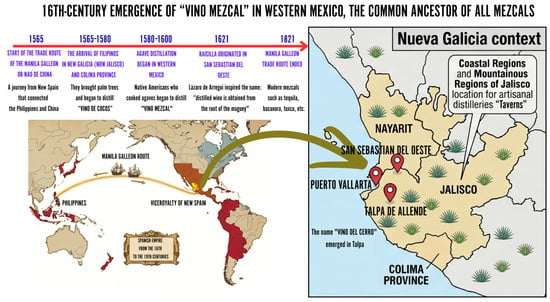
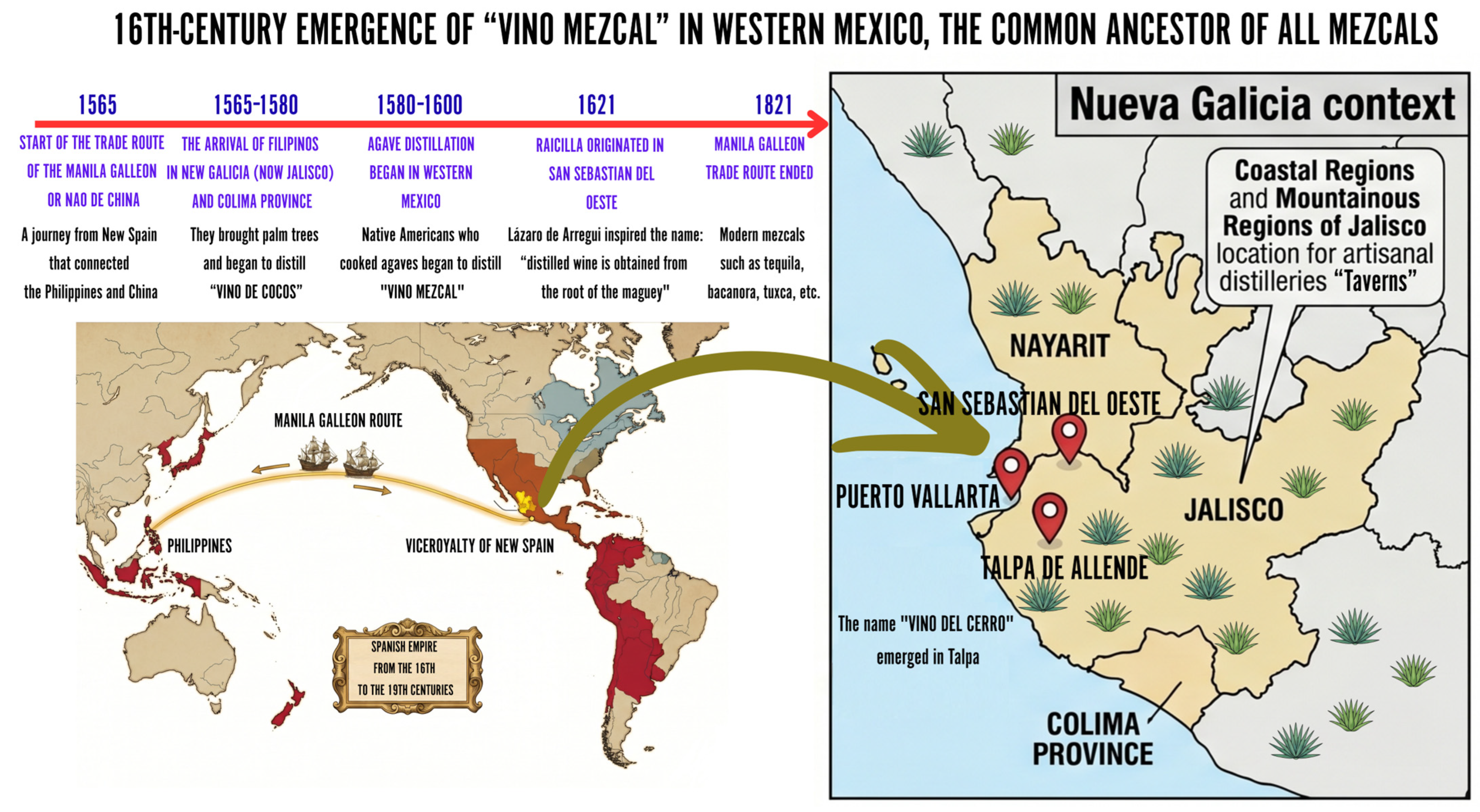
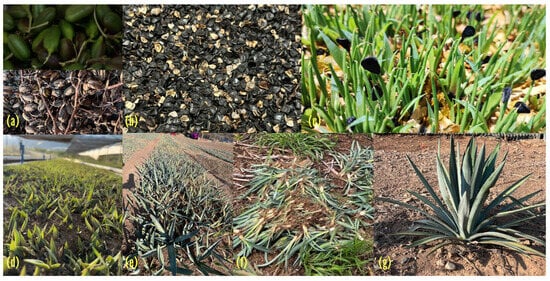
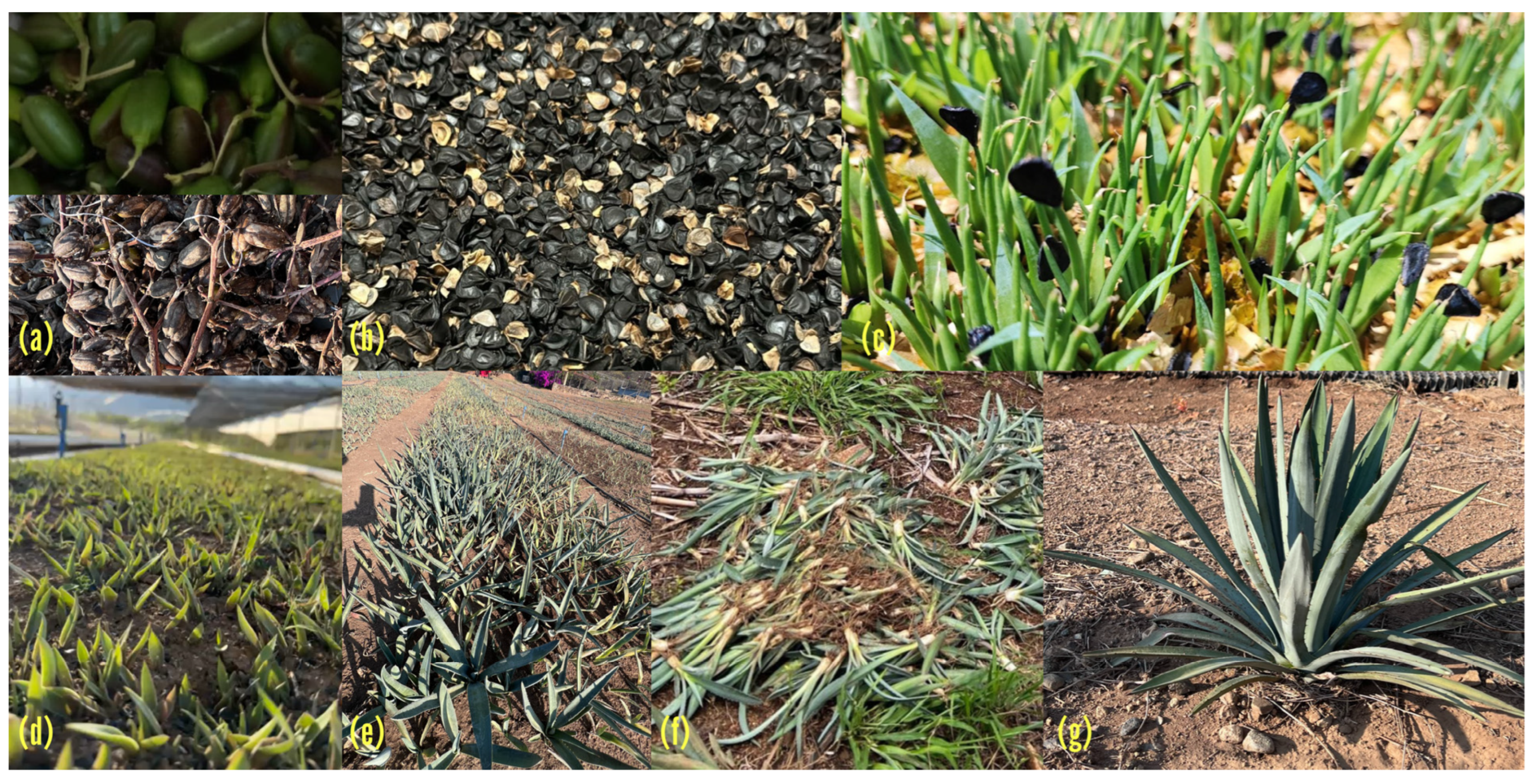
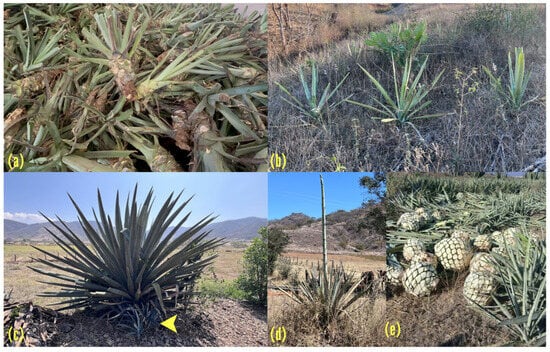
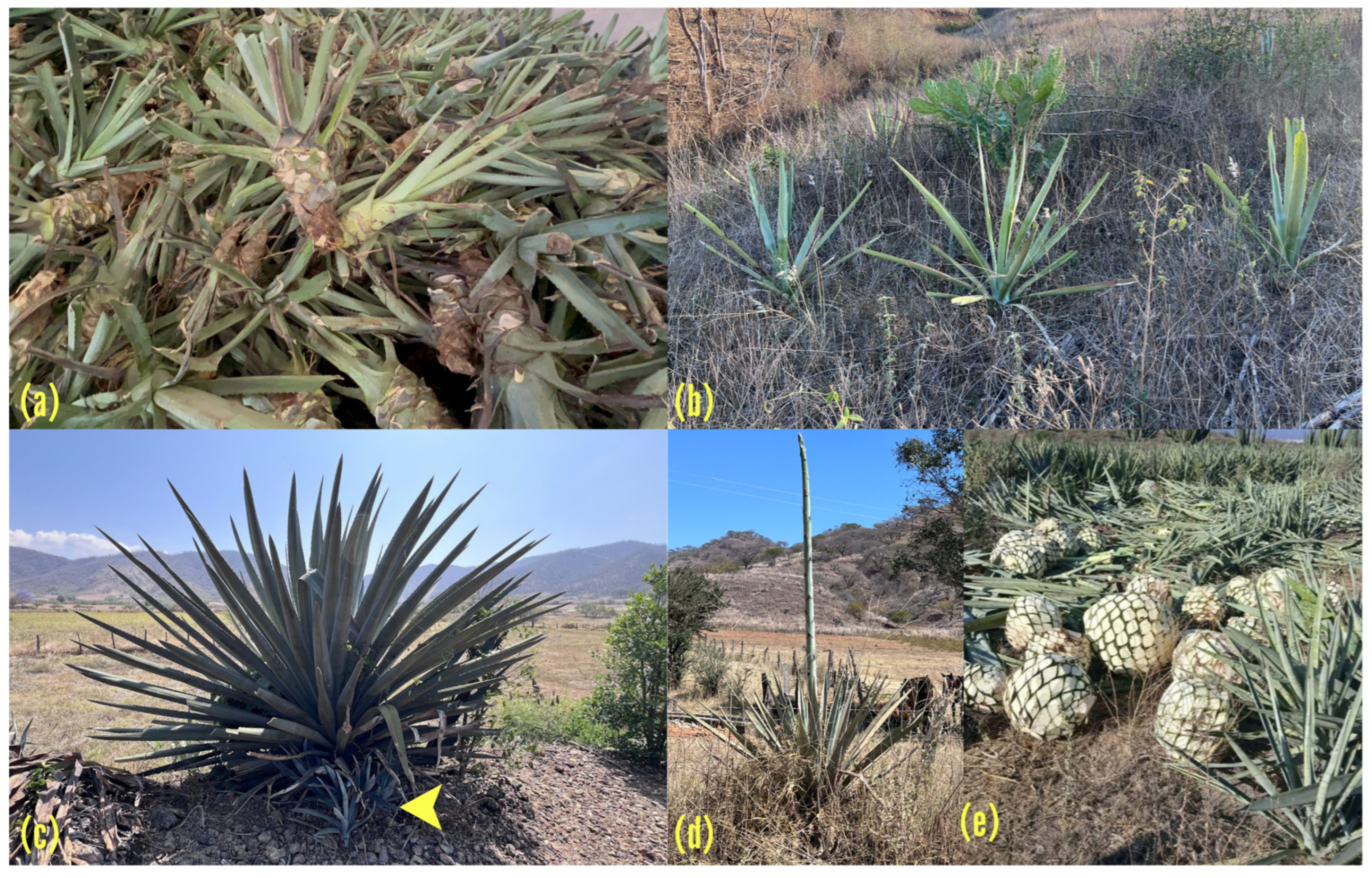
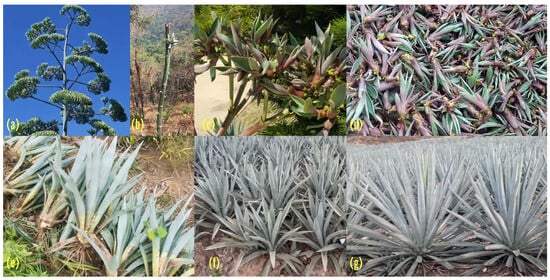
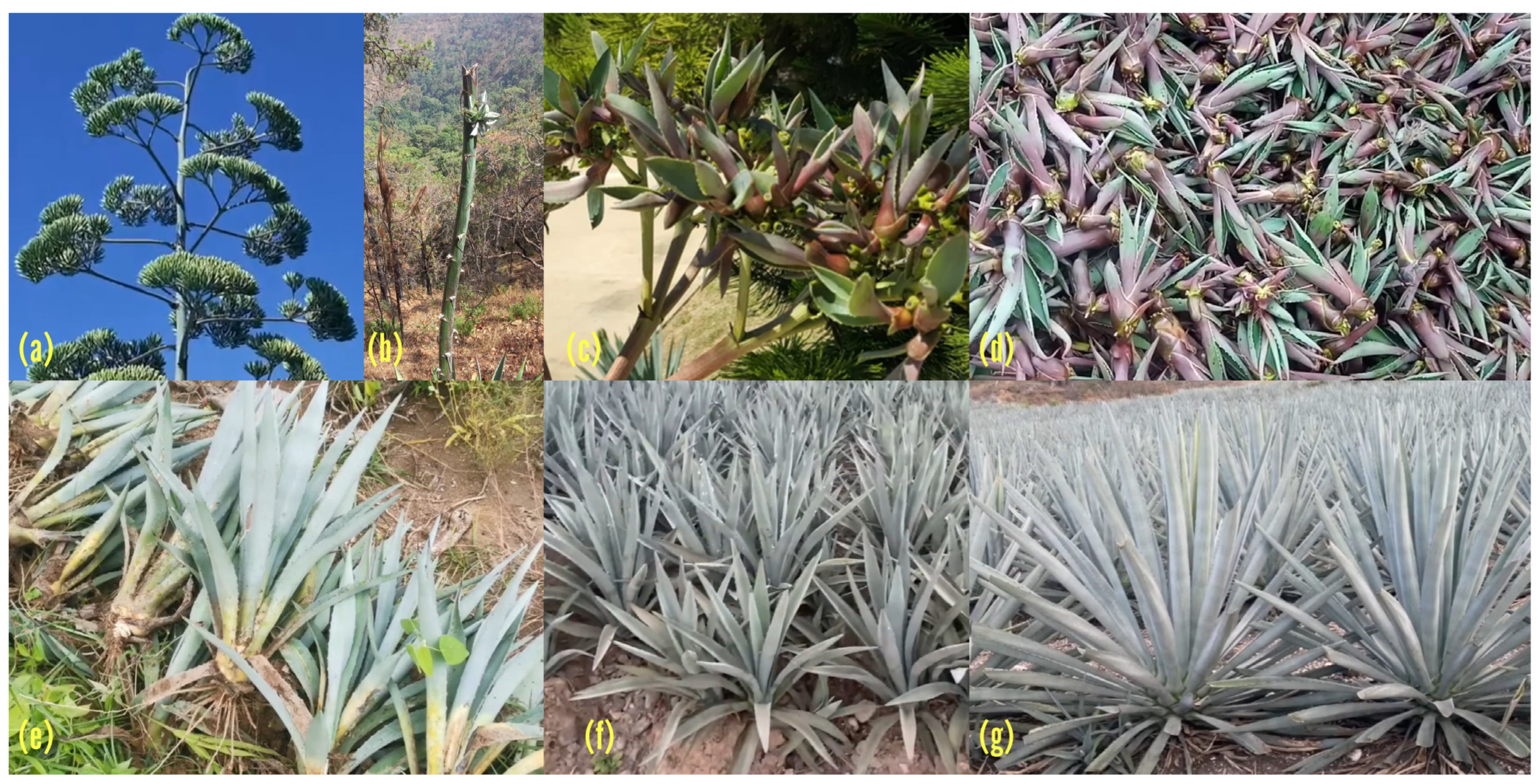
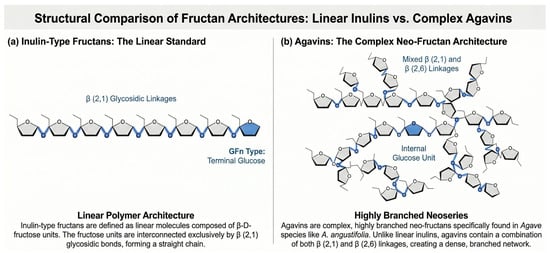
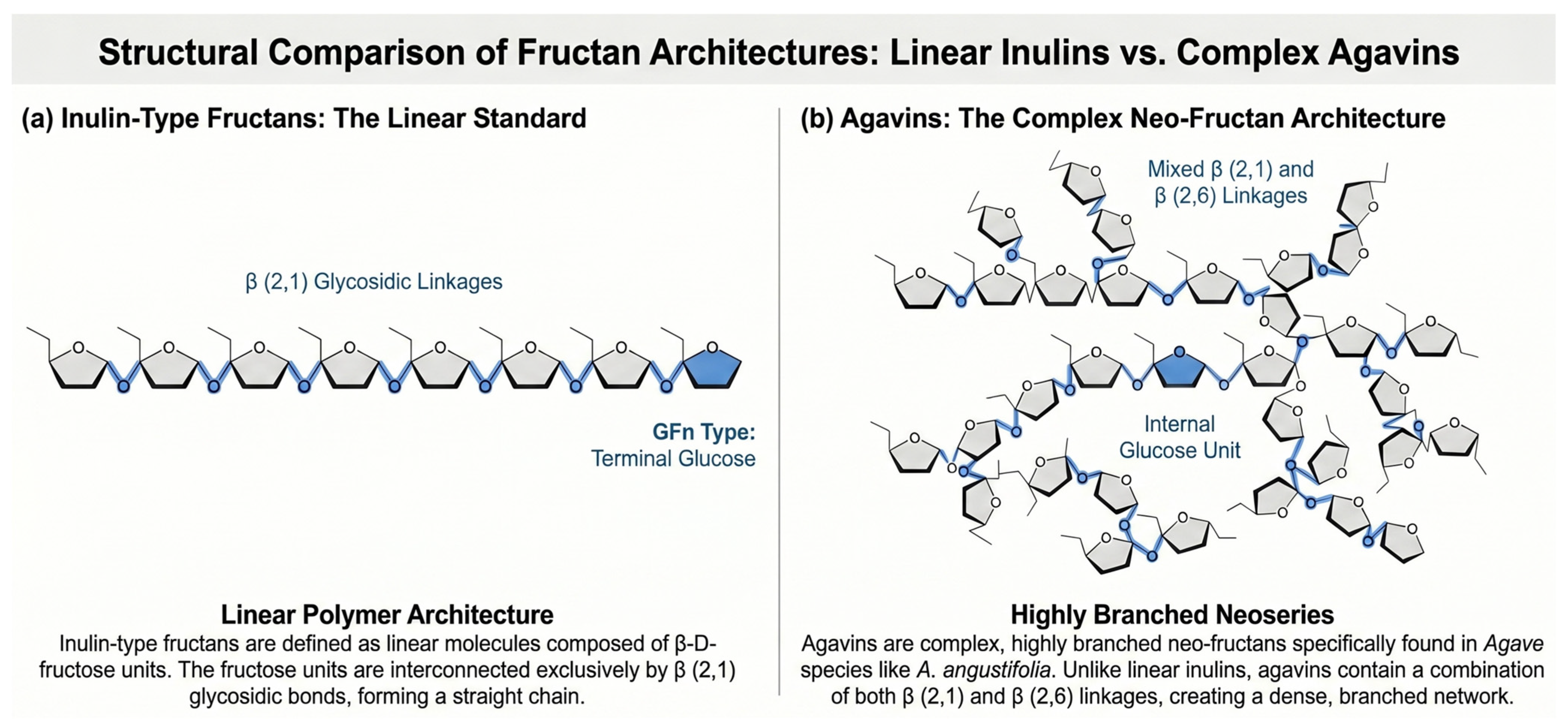
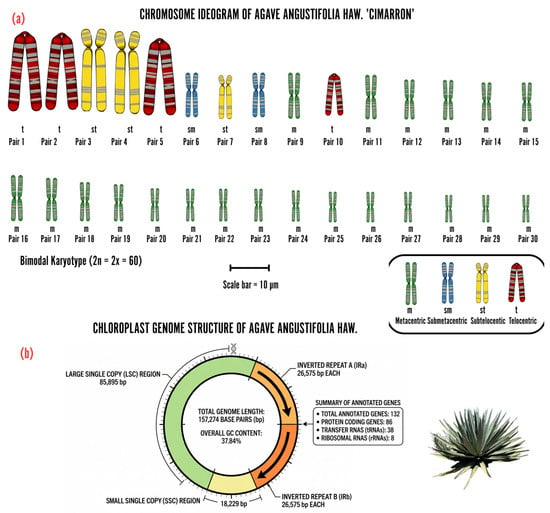
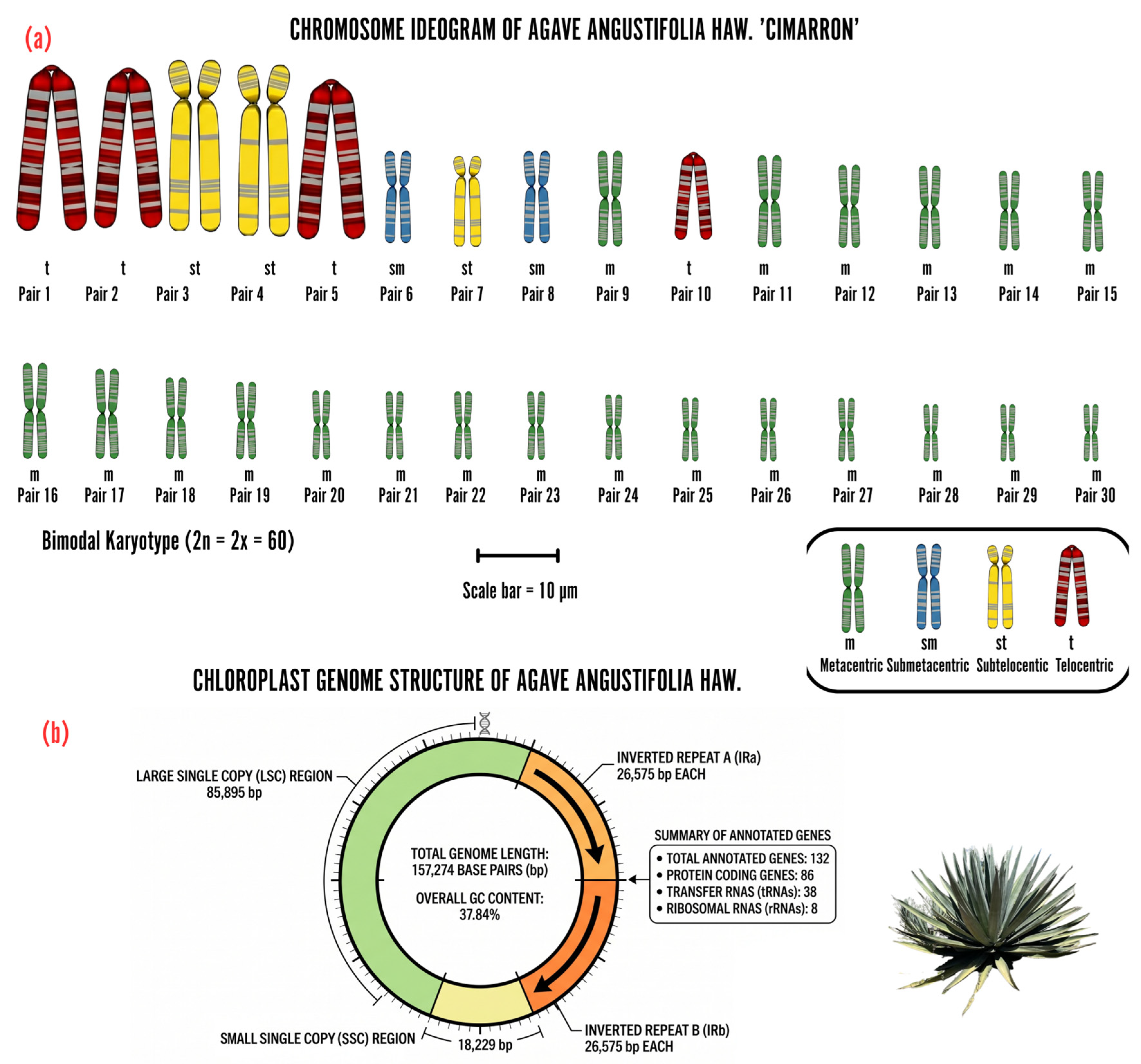
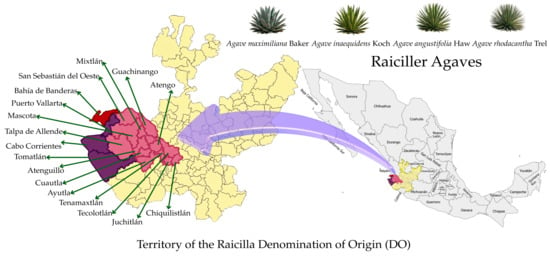
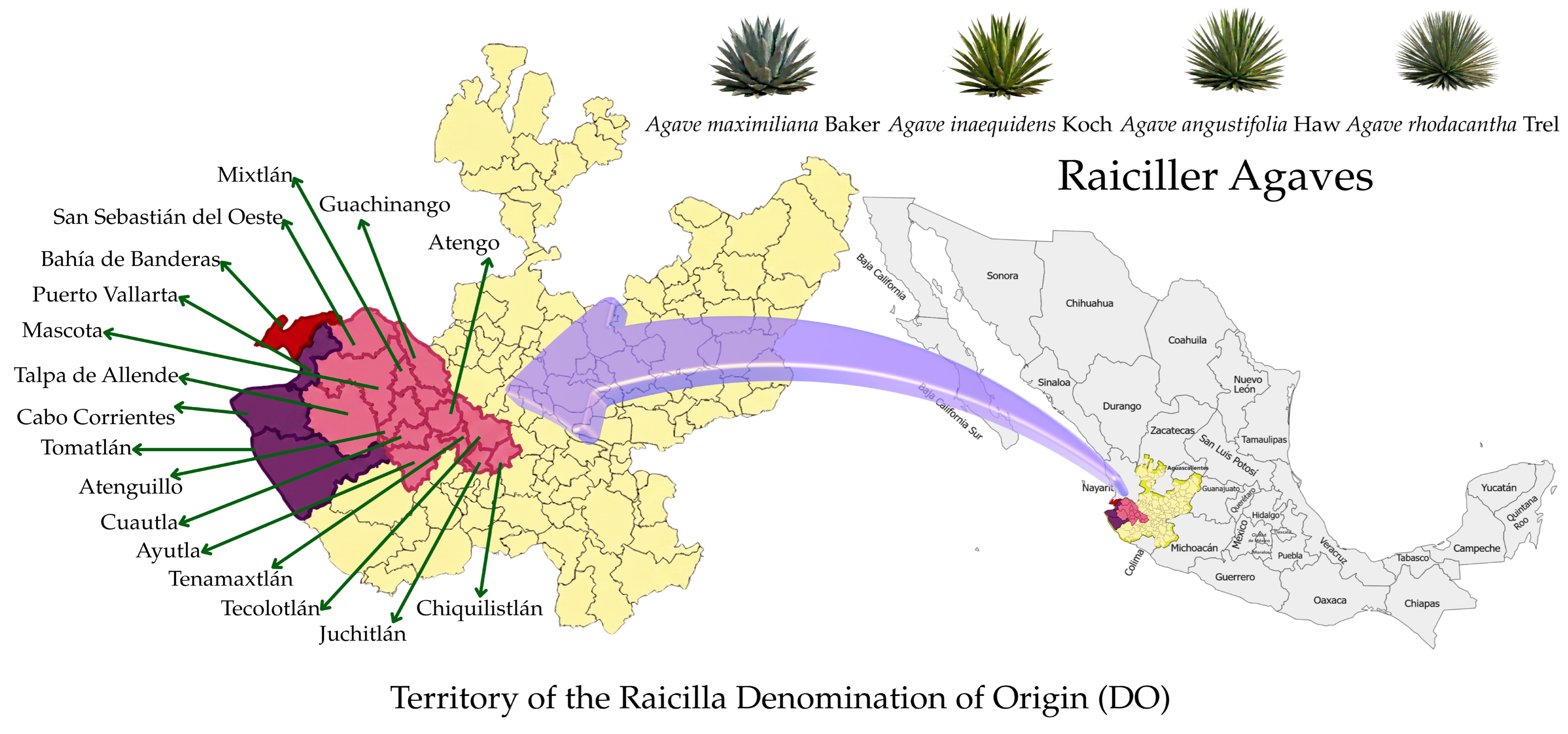
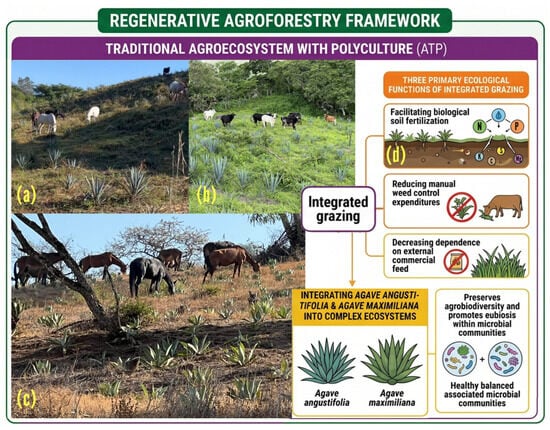
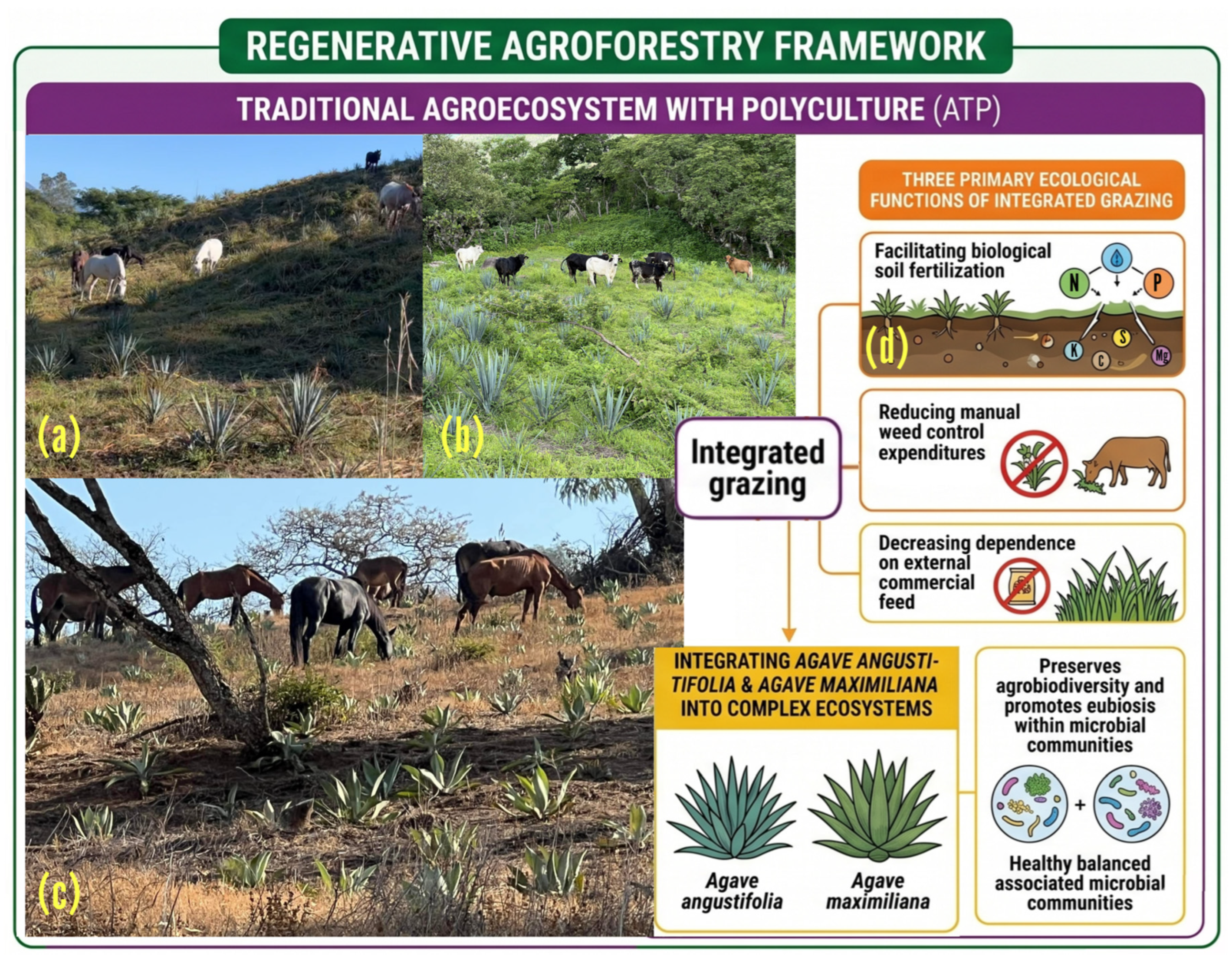

Disclaimer/Publisher’s Note: The statements, opinions and data contained in all publications are solely those of the individual author(s) and contributor(s) and not of MDPI and/or the editor(s). MDPI and/or the editor(s) disclaim responsibility for any injury to people or property resulting from any ideas, methods, instructions or products referred to in the content. |
© 2026 by the author. Licensee MDPI, Basel, Switzerland. This article is an open access article distributed under the terms and conditions of the Creative Commons Attribution (CC BY) license.