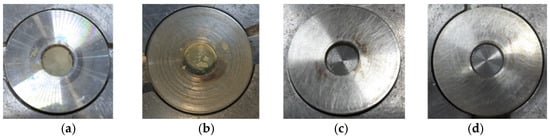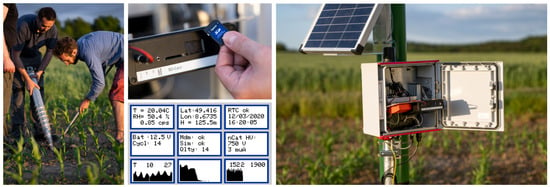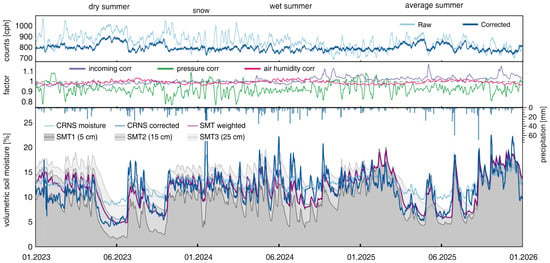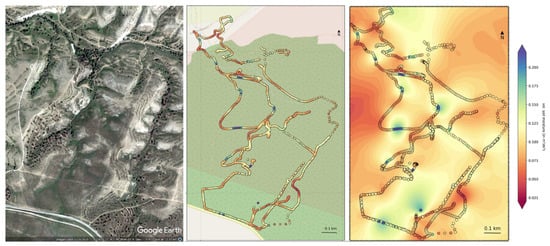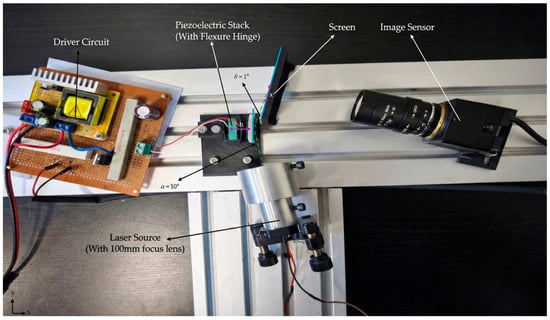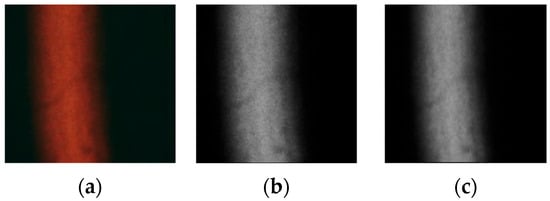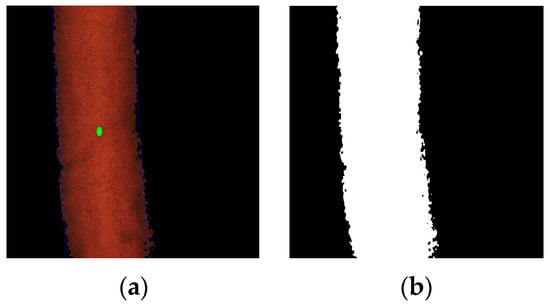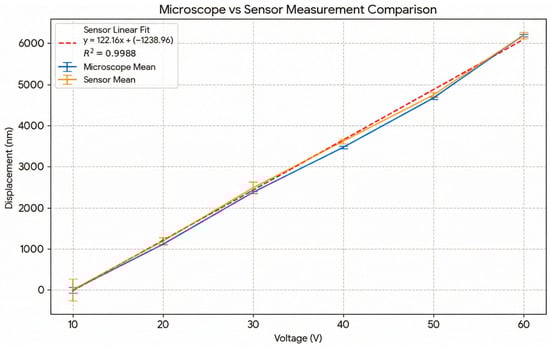

-
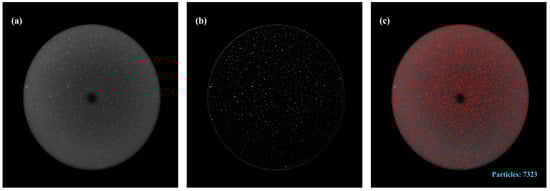
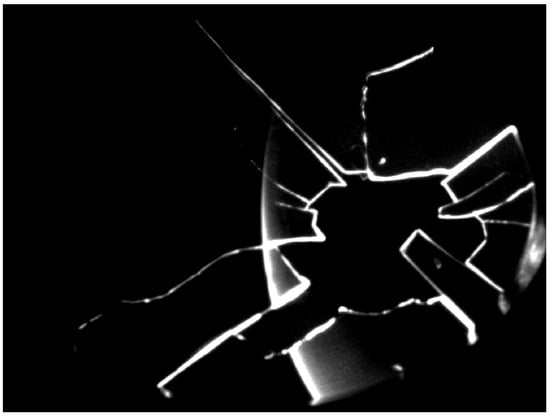
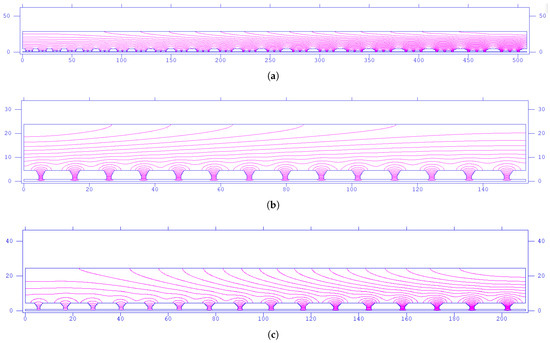
Wide-Aperture Diffraction-Based Beam-Shaping Structures for Enhanced Directivity in Next-Generation High-Frequency Communication Systems -
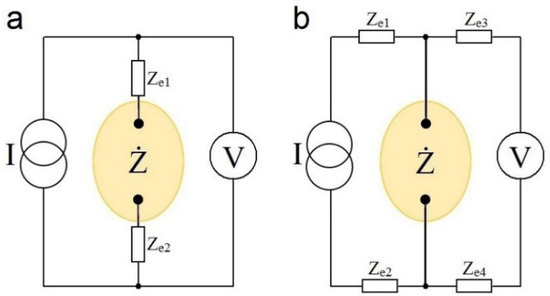
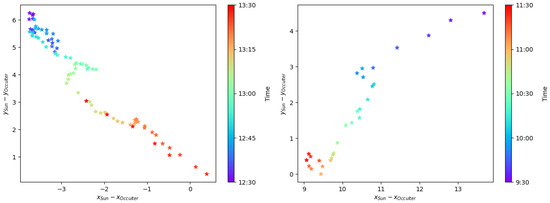
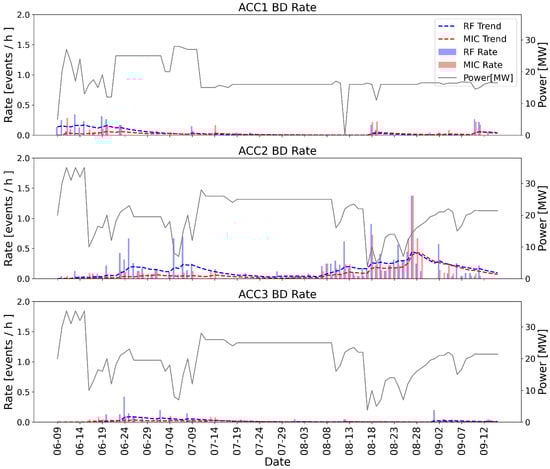
Evaluation of Gap and Flush Inspection Algorithms in a Portable Laser Line Triangulation System Through Measurement System Analysis (MSA) -
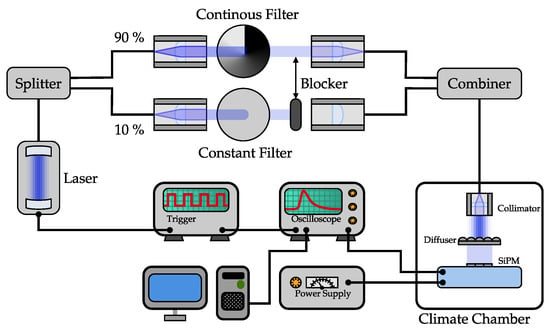
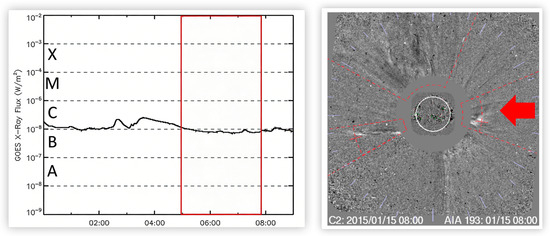
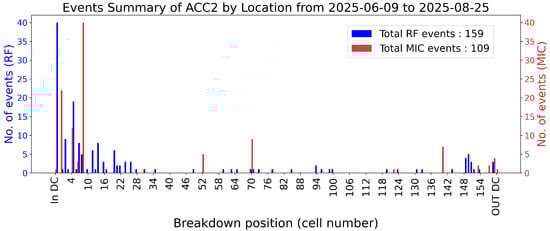
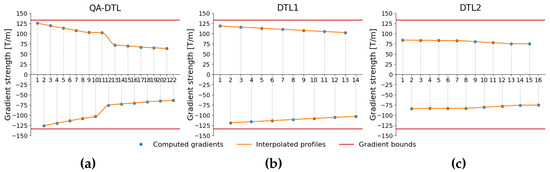
A Procedure for Performing Reproducibility Assessment of the Accuracy of Impact Area Classification for Structural Health Monitoring in Aerospace Structures -
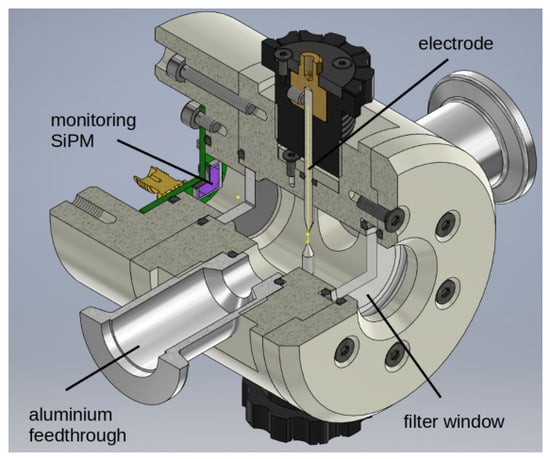
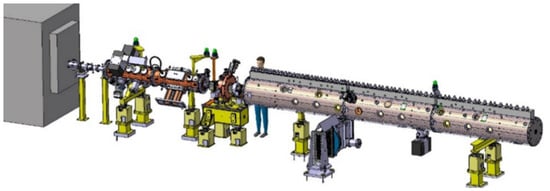
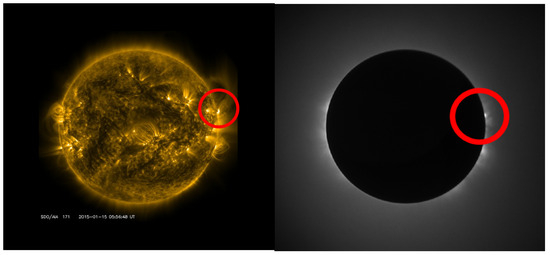
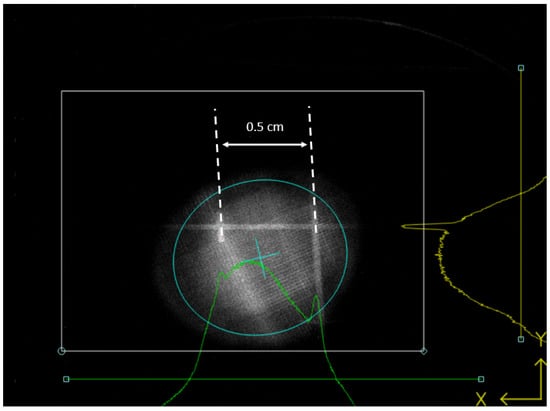
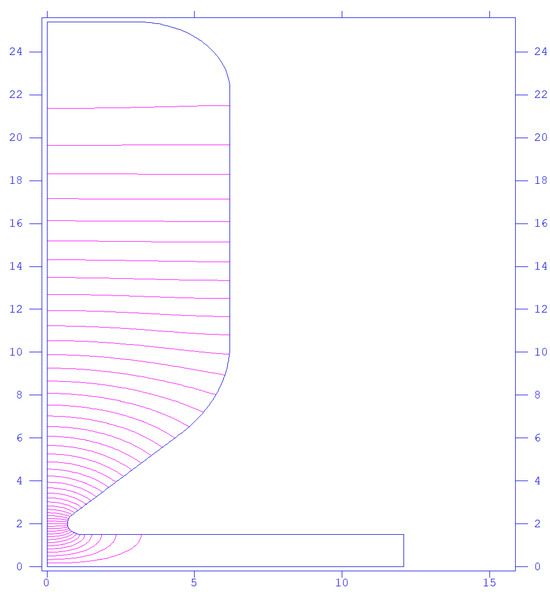
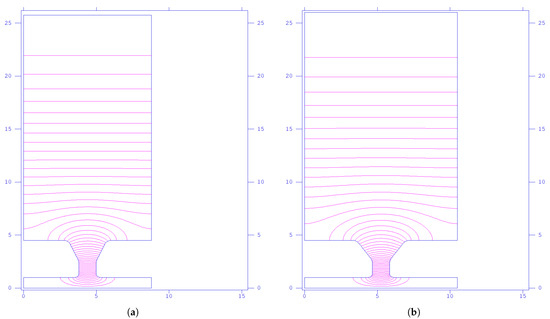
Characterization of the Extraction System of Supersonic Gas Curtain-Based Ionization Profile Monitor for FLASH Proton Therapy -
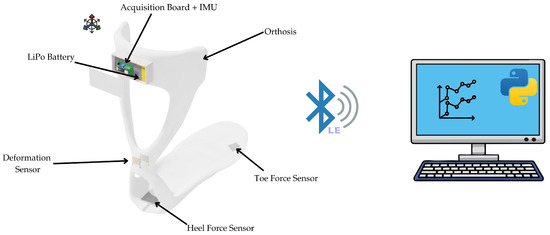
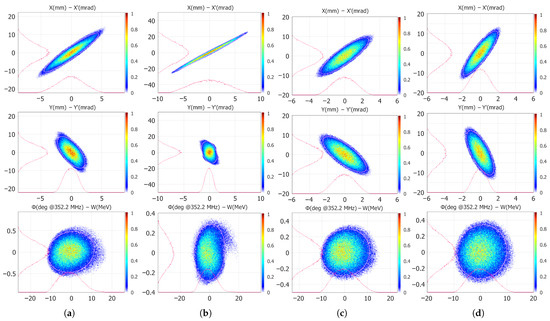
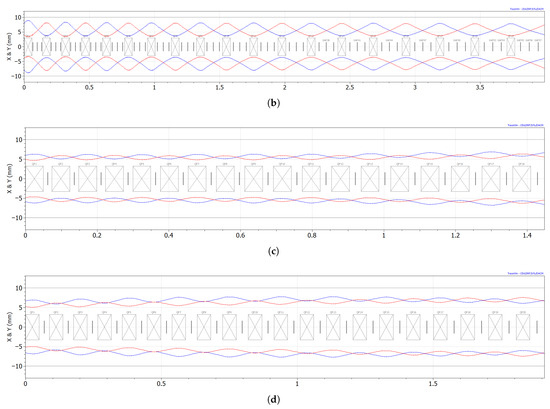
Design of Spectrometer Energy Measurement Setups for the Future EuPRAXIA@SPARC_LAB and SSRIP Linacs
Journal Description
Instruments
Instruments
is an international, peer-reviewed, open access journal on scientific instrumentation and its related methods and theory, published quarterly online by MDPI.
- Open Access— free for readers, with article processing charges (APC) paid by authors or their institutions.
- High Visibility: indexed within ESCI (Web of Science), Scopus, Inspec, CAPlus / SciFinder, INSPIRE, and other databases.
- Rapid Publication: manuscripts are peer-reviewed and a first decision is provided to authors approximately 22.8 days after submission; acceptance to publication is undertaken in 3.9 days (median values for papers published in this journal in the second half of 2025).
- Recognition of Reviewers: reviewers who provide timely, thorough peer-review reports receive vouchers entitling them to a discount on the APC of their next publication in any MDPI journal, in appreciation of the work done.
- Journal Cluster of Instruments and Instrumentation: Actuators, AI Sensors, Instruments, Metrology, Micromachines and Sensors.
Latest Articles
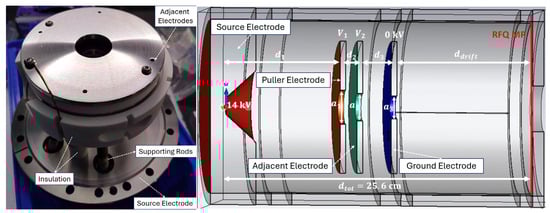
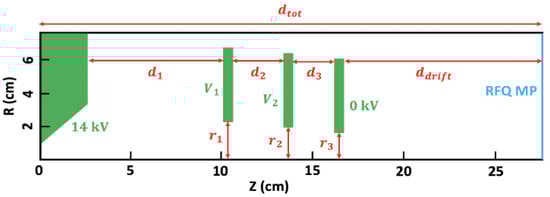
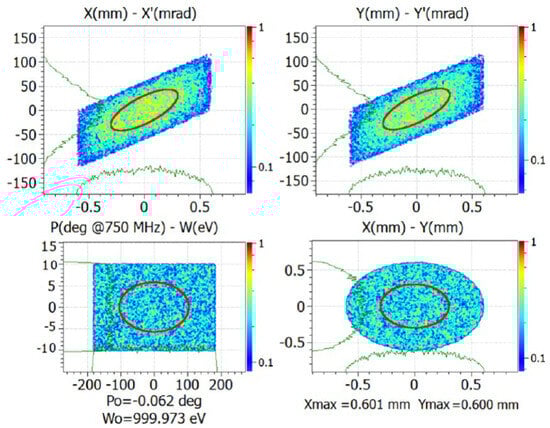
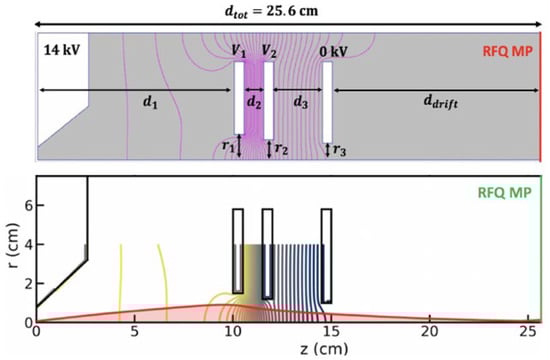
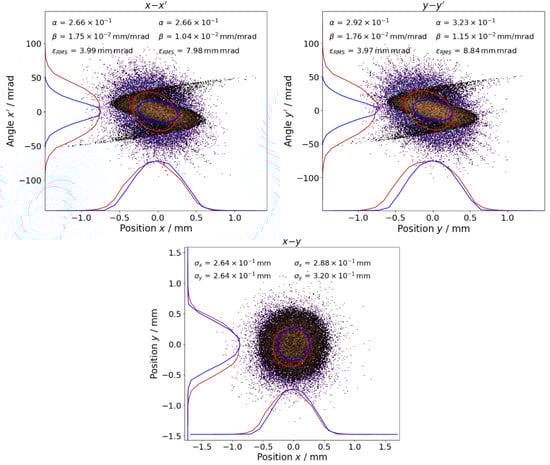
Design and Characterization of a Low-Current Compact Extraction and Matching System for a High-Frequency RFQ in Medical Applications
Instruments 2026, 10(2), 22; https://doi.org/10.3390/instruments10020022 - 6 Apr 2026
Abstract
A low-current compact extraction and matching system has been designed and experimentally tested to evaluate its capability for direct proton injection of 15 keV into a 750 MHz radiofrequency quadrupole for medical applications. The design methodology combined 2D and 3D layouts, supported by
[...] Read more.
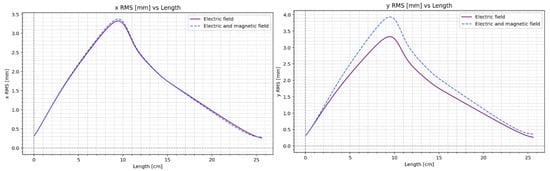
A low-current compact extraction and matching system has been designed and experimentally tested to evaluate its capability for direct proton injection of 15 keV into a 750 MHz radiofrequency quadrupole for medical applications. The design methodology combined 2D and 3D layouts, supported by detailed electrostatic simulations. First experimental results are reported, including beam current characterization and irradiation measurements under varying operating conditions. These results are benchmarked against simulation data to provide a preliminary evaluation of system performance. Ongoing efforts focus on extending the experimental campaign to consolidate these findings. A comparative study with a gridded-lens-based extraction and transport system is also being conducted to achieve reliable matching of high-quality beams to high-frequency RFQs for clinical implementation.
Full article
(This article belongs to the Special Issue Compact Accelerators)
Open AccessArticle
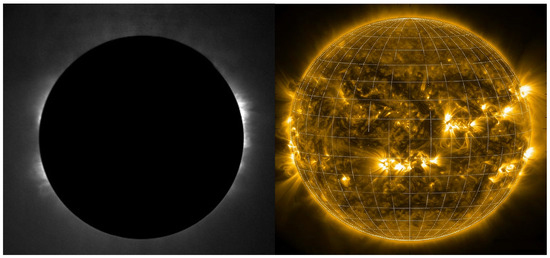
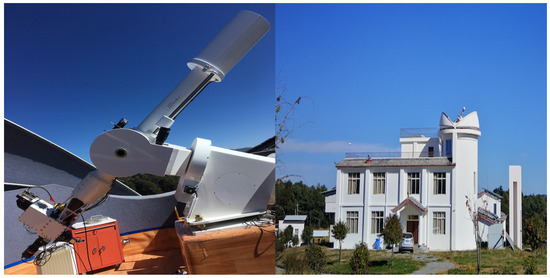
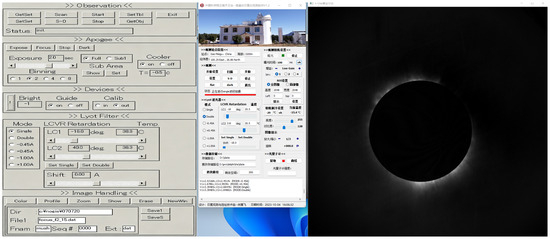
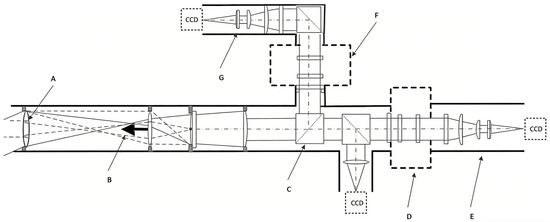
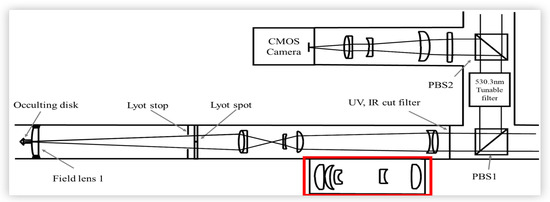
Observational Technological Innovations and Future Development of the Lijiang Coronagraph
by
Xuefei Zhang, Yu Liu, Tengfei Song, Mingyu Zhao, Xiaobo Li, Mingzhe Sun, Feiyang Sha and Xiande Liu
Instruments 2026, 10(2), 21; https://doi.org/10.3390/instruments10020021 - 3 Apr 2026
Abstract
As a core ground-based coronal observation facility in the low-latitude and high-altitude regions of China, the Lijiang Coronagraph takes advantage of the natural endowments of the Lijiang Astronomical Observation Station, such as an altitude of 3200 m and low atmospheric turbulence. It has
[...] Read more.
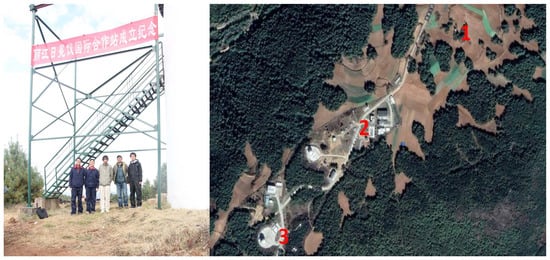
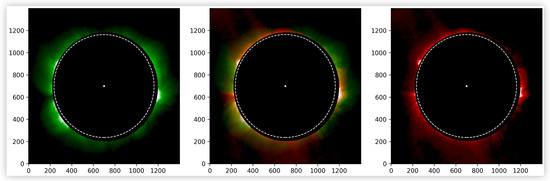
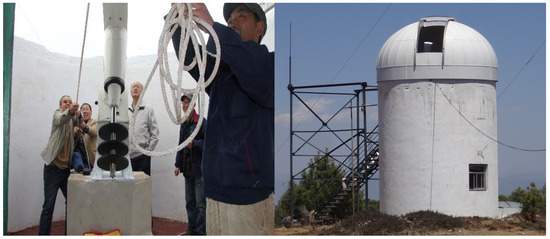
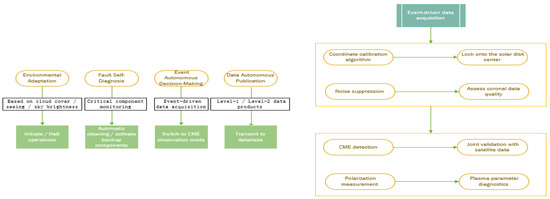
As a core ground-based coronal observation facility in the low-latitude and high-altitude regions of China, the Lijiang Coronagraph takes advantage of the natural endowments of the Lijiang Astronomical Observation Station, such as an altitude of 3200 m and low atmospheric turbulence. It has gone through a complete development process from introduction through Chinese–Japanese cooperation to independent innovation and iteration. This paper systematically summarizes the core technological innovation achievements of this facility, including the upgrade of the automatic operating system, the integration of the dual-band observation system, the stray light suppression technology based on the image difference method before and after cleaning, and the high-precision image calibration and registration technology. These innovations have significantly improved observation efficiency and data quality, laying a solid foundation for high-quality observations. At the scientific research level, the observation data reveal that 1.1 R⊙ (solar radius) is a highly correlated region between coronal green line brightness and magnetic field intensity. This study also confirms a strong correlation between the coronal green line and the SDO/AIA 211 Å extreme ultraviolet band (correlation coefficient: 0.89–0.99), which can support the research on early warning of Coronal Mass Ejections (CMEs). These achievements provide key data support for the verification of coronal heating mechanisms and the exploration of the origin of the slow solar wind. The technical experience accumulated from the Lijiang Coronagraph has not only laid a solid foundation for the research and development of China’s next-generation large-aperture coronagraphs, but also facilitated and accelerated substantial progress in China’s technical capabilities for low coronal observation, enabling the country to establish internationally parallel competitive capabilities in this field. This system has also become an important part of the global coronal observation network.
Full article
(This article belongs to the Special Issue Instruments for Astroparticle Physics)
►▼
Show Figures

Figure 1
Open AccessArticle
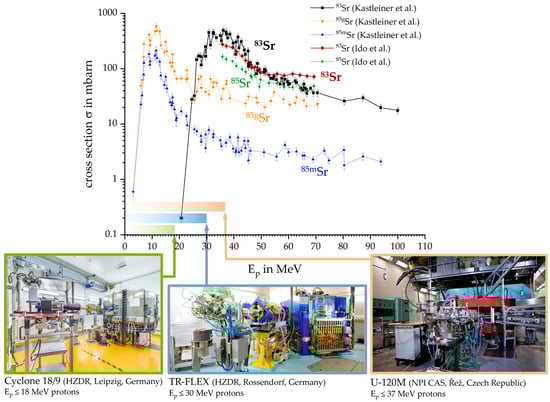
Cyclotron Production and Purification of 83Sr as a 90Sr Substitute for Positron Emission Tomography (PET)
by
Marcel Lindemann, Jann Schöngart, Jan Štursa and Karsten Franke
Instruments 2026, 10(2), 20; https://doi.org/10.3390/instruments10020020 - 30 Mar 2026
Abstract
Radioactive contaminations in soil, which originate from nuclear power production, nuclear weapon testing, or uncontrolled release, are of great environmental concern. One of the major fission product contaminants is 90Sr, whose high mobility demands a method to track contamination pathways and remediation
[...] Read more.
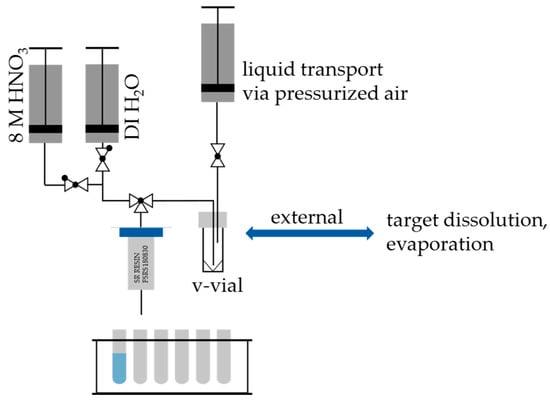
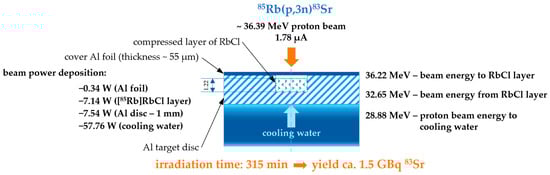
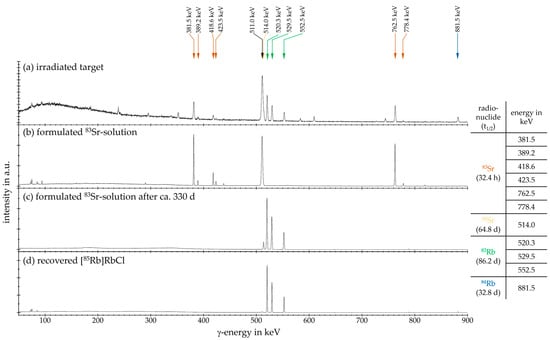
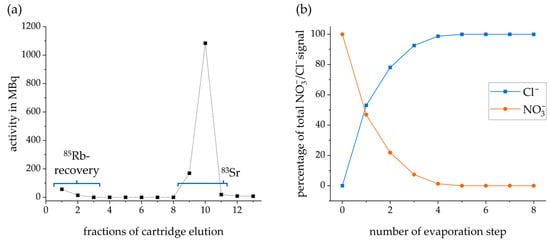
Radioactive contaminations in soil, which originate from nuclear power production, nuclear weapon testing, or uncontrolled release, are of great environmental concern. One of the major fission product contaminants is 90Sr, whose high mobility demands a method to track contamination pathways and remediation processes. Positron emission tomography (PET) is a valuable tool for the required studies. As a β−/γ-emitter, 90Sr is not suitable for PET, which requires β+-emitters. As an alternative, 83Sr, with a 12% intensity of β+-emission and a half-life of 32.4 h, is an appropriate PET substitute for 90Sr. We produced 83Sr with an enriched target of [85Rb]RbCl in a 85Rb(p,3n)83Sr reaction. The target material was bombarded with 36.22 MeV protons (ø 1.78 µA, 315 min), at a solid target station at the cyclotron U-120M (NPI CAS). The irradiated target (1.5 GBq) was dissolved in water, evaporated to dryness, redissolved in nitric acid, and transferred onto a Sr-selective cartridge (Sr-SpecTM, TRISKEM, France). Following target material wash out, 83Sr elution with water, solvent evaporation, and reformulation (in dilute nitric acid) yielded 1.2 GBq (82% radiochemical extraction efficiency, non-decay-corrected) of an 83Sr-solution. The easy and fast method is able to produce non-carrier-added 83Sr with high radionuclidic purity.
Full article
(This article belongs to the Special Issue Selected Papers from the 16th Workshop of the European Network of Research Cyclotrons (CYCLEUR 2025))
►▼
Show Figures

Figure 1
Open AccessArticle
Design and Characterization of the POKERINO Prototype for the POKER/NA64 Experiment at CERN
by
Andrei Antonov, Pietro Bisio, Mariangela Bondì, Andrea Celentano, Anna Marini and Luca Marsicano
Instruments 2026, 10(2), 19; https://doi.org/10.3390/instruments10020019 - 27 Mar 2026
Abstract
The NA64 experiment at the CERN H4 beamline recently started a high-energy positron-beam program to search for light dark matter particles through a thick-target, missing-energy measurement. To fulfill the energy resolution requirement of the physics measurement
[...] Read more.
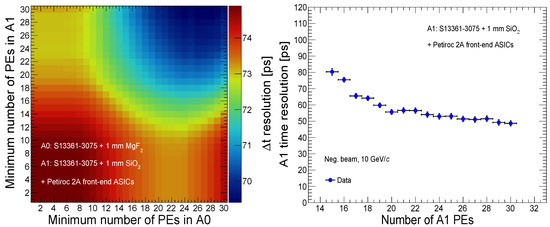
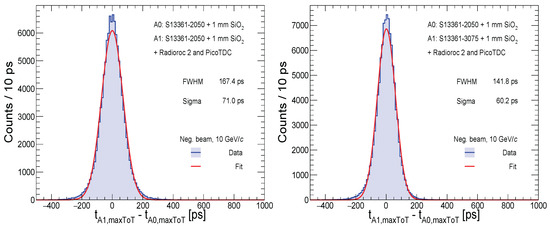
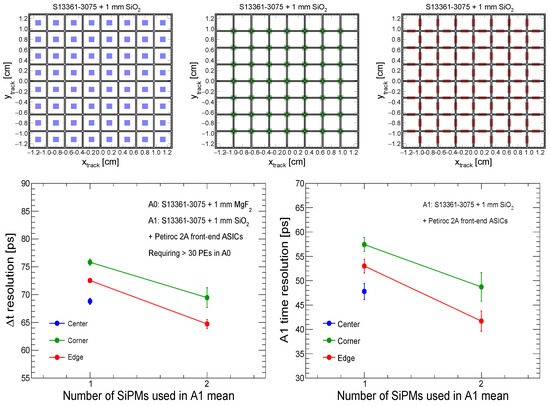
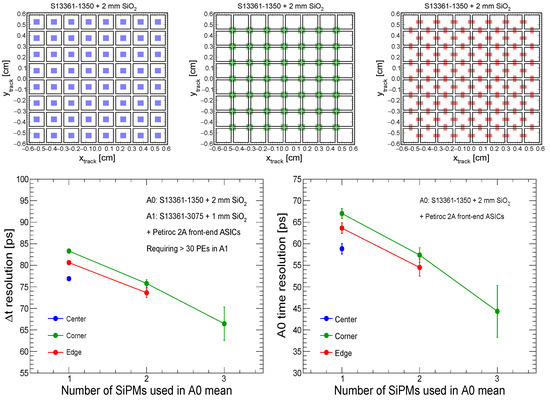
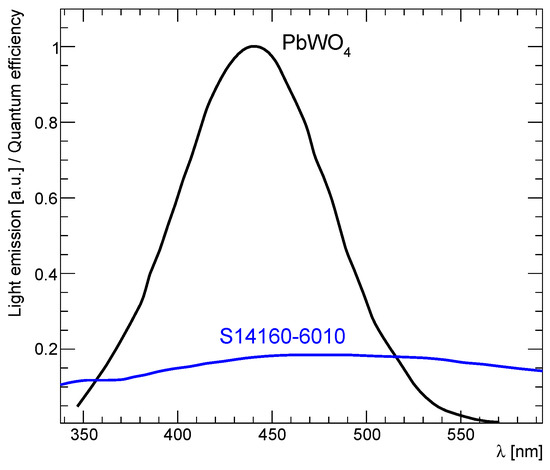
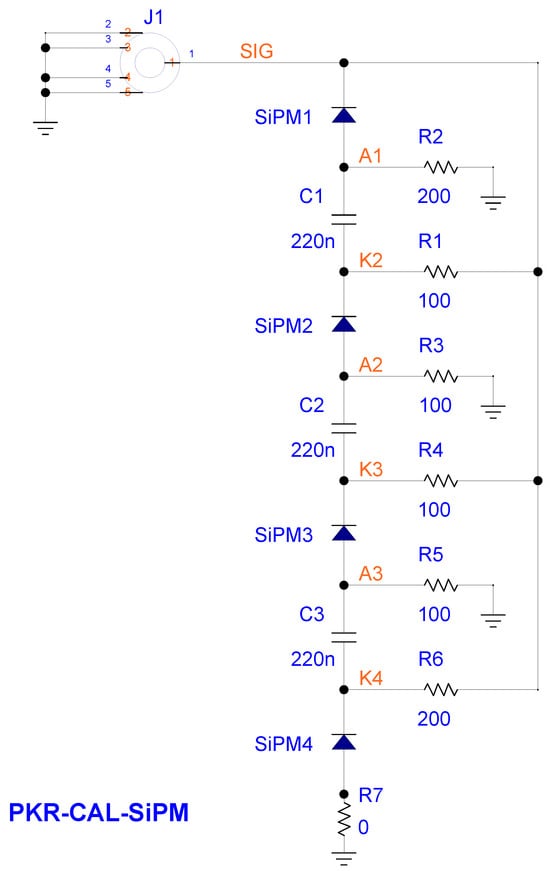
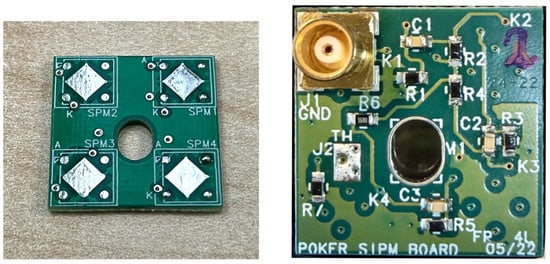
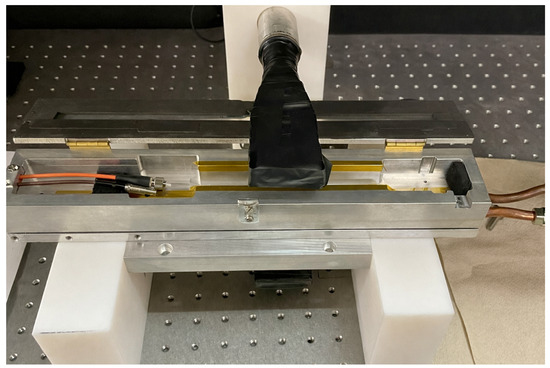
The NA64 experiment at the CERN H4 beamline recently started a high-energy positron-beam program to search for light dark matter particles through a thick-target, missing-energy measurement. To fulfill the energy resolution requirement of the physics measurement and cope with the constraints and performance requests of the NA64 setup, a new high-resolution homogeneous electromagnetic calorimeter PKR-CAL has been designed. The detector is based on PbWO4 crystals, each read by multiple SiPM sensors to maximize the light collection. The PKR-CAL design has been optimized to mitigate and control unavoidable SiPM saturation effects at high light levels, as well as to minimize the gain fluctuations induced by instantaneous variations of the H4 beam intensity. The R&D program culminated in the construction of a small-scale prototype, POKERINO. In this work, we present the results from the experimental characterization campaign of the POKERINO, aiming at demonstrating that the obtained performances are compatible with the application requirements.
Full article
(This article belongs to the Special Issue Silicon Photomultiplier-Based Systems for Particle and Radiation Detection)
►▼
Show Figures

Figure 1

Open AccessFeature PaperArticle
Operation of a Modular 3D-Pixelated Liquid Argon Time-Projection Chamber in a Neutrino Beam
by
S. Abbaslu, A. Abed Abud, R. Acciarri, L. P. Accorsi, M. A. Acero, M. R. Adames, G. Adamov, M. Adamowski, C. Adriano, F. Akbar, F. Alemanno, N. S. Alex, K. Allison, M. Alrashed, A. Alton, R. Alvarez, T. Alves, A. Aman, H. Amar, P. Amedo, J. Anderson, D. A. Andrade, C. Andreopoulos, M. Andreotti, M. P. Andrews, F. Andrianala, S. Andringa, F. Anjarazafy, S. Ansarifard, D. Antic, M. Antoniassi, A. Aranda-Fernandez, L. Arellano, E. Arrieta Diaz, M. A. Arroyave, M. Arteropons, J. Asaadi, M. Ascencio, A. Ashkenazi, D. Asner, L. Asquith, E. Atkin, D. Auguste, A. Aurisano, V. Aushev, D. Autiero, D. Ávila Gómez, M. B. Azam, F. Azfar, A. Back, J. J. Back, Y. Bae, I. Bagaturia, L. Bagby, D. Baigarashev, S. Balasubramanian, A. Balboni, P. Baldi, W. Baldini, J. Baldonedo, B. Baller, B. Bambah, F. Barao, D. Barbu, G. Barenboim, P. B̃arham Alzás, G. J. Barker, W. Barkhouse, G. Barr, A. Barros, N. Barros, D. Barrow, J. L. Barrow, A. Basharina-Freshville, A. Bashyal, V. Basque, M. Bassani, D. Basu, C. Batchelor, L. Bathe-Peters, J. B. R. Battat, F. Battisti, J. Bautista, F. Bay, J. L. L. Bazo Alba, J. F. Beacom, E. Bechetoille, B. Behera, E. Belchior, B. Bell, G. Bell, L. Bellantoni, G. Bellettini, V. Bellini, O. Beltramello, A. Belyaev, C. Benitez Montiel, D. Benjamin, F. Bento Neves, J. Berger, S. Berkman, J. Bermudez, J. Bernal, P. Bernardini, A. Bersani, E. Bertholet, E. Bertolini, S. Bertolucci, M. Betancourt, A. Betancur Rodríguez, Y. Bezawada, A. T. Bezerra, A. Bhat, V. Bhatnagar, M. Bhattacharjee, S. Bhattacharjee, M. Bhattacharya, S. Bhuller, B. Bhuyan, S. Biagi, J. Bian, K. Biery, B. Bilki, M. Bishai, A. Blake, F. D. Blaszczyk, G. C. Blazey, E. Blucher, B. Bogart, J. Boissevain, S. Bolognesi, T. Bolton, L. Bomben, M. Bonesini, C. Bonilla-Diaz, A. Booth, F. Boran, R. Borges Merlo, N. Bostan, G. Botogoske, B. Bottino, R. Bouet, J. Boza, J. Bracinik, B. Brahma, D. Brailsford, F. Bramati, A. Branca, A. Brandt, J. Bremer, S. J. Brice, V. Brio, C. Brizzolari, C. Bromberg, J. Brooke, A. Bross, G. Brunetti, M. B. Brunetti, N. Buchanan, H. Budd, J. Buergi, A. Bundock, D. Burgardt, S. Butchart, G. Caceres V., R. Calabrese, R. Calabrese, J. Calcutt, L. Calivers, E. Calvo, A. Caminata, A. F. Camino, W. Campanelli, A. Campani, A. Campos Benitez, N. Canci, J. Capó, I. Caracas, D. Caratelli, D. Carber, J. M. Carceller, G. Carini, B. Carlus, M. F. Carneiro, P. Carniti, I. Caro Terrazas, H. Carranza, N. Carrara, L. Carroll, T. Carroll, A. Carter, E. Casarejos, D. Casazza, J. F. Castaño Forero, F. A. Castaño, C. Castromonte, E. Catano-Mur, C. Cattadori, F. Cavalier, F. Cavanna, S. Centro, G. Cerati, C. Cerna, A. Cervelli, A. Cervera Villanueva, J. Chakrani, M. Chalifour, A. Chappell, A. Chatterjee, B. Chauhan, C. Chavez Barajas, H. Chen, M. Chen, W. C. Chen, Y. Chen, Z. Chen, D. Cherdack, S. S. Chhibra, C. Chi, F. Chiapponi, R. Chirco, N. Chitirasreemadam, K. Cho, S. Choate, G. Choi, D. Chokheli, P. S. Chong, B. Chowdhury, D. Christian, M. Chung, E. Church, M. F. Cicala, M. Cicerchia, V. Cicero, R. Ciolini, P. Clarke, G. Cline, A. G. Cocco, J. A. B. Coelho, A. Cohen, J. Collazo, J. Collot, H. Combs, J. M. Conrad, L. Conti, T. Contreras, M. Convery, K. Conway, S. Copello, P. Cova, C. Cox, L. Cremonesi, J. I. Crespo-Anadón, M. Crisler, E. Cristaldo, J. Crnkovic, G. Crone, R. Cross, A. Cudd, C. Cuesta, Y. Cui, F. Curciarello, D. Cussans, J. Dai, O. Dalager, W. Dallaway, R. D’Amico, H. da Motta, Z. A. Dar, R. Darby, L. Da Silva Peres, Q. David, G. S. Davies, S. Davini, J. Dawson, R. De Aguiar, P. Debbins, M. P. Decowski, A. de Gouvêa, P. C. De Holanda, P. De Jong, P. Del Amo Sanchez, G. De Lauretis, A. Delbart, M. Delgado, A. Dell’Acqua, G. Delle Monache, N. Delmonte, P. De Lurgio, R. Demario, G. De Matteis, J. R. T. de Mello Neto, A. P. A. De Mendonca, D. M. DeMuth, S. Dennis, C. Densham, P. Denton, G. W. Deptuch, A. De Roeck, V. De Romeri, J. P. Detje, J. Devine, K. Dhanmeher, R. Dharmapalan, M. Dias, A. Diaz, J. S. Díaz, F. Díaz, F. Di Capua, A. Di Domenico, S. Di Domizio, S. Di Falco, L. Di Giulio, P. Ding, L. Di Noto, E. Diociaiuti, G. Di Sciascio, V. Di Silvestre, C. Distefano, R. Di Stefano, R. Diurba, M. Diwan, Z. Djurcic, S. Dolan, M. Dolce, M. J. Dolinski, D. Domenici, S. Dominguez, S. Donati, S. Doran, D. Douglas, T. A. Doyle, F. Drielsma, D. Duchesneau, K. Duffy, K. Dugas, P. Dunne, B. Dutta, D. A. Dwyer, A. S. Dyshkant, S. Dytman, M. Eads, A. Earle, S. Edayath, D. Edmunds, J. Eisch, W. Emark, P. Englezos, A. Ereditato, T. Erjavec, C. O. Escobar, J. J. Evans, E. Ewart, A. C. Ezeribe, K. Fahey, A. Falcone, M. Fani’, D. Faragher, C. Farnese, Y. Farzan, J. Felix, Y. Feng, M. Ferreira da Silva, G. Ferry, E. Fialova, L. Fields, P. Filip, A. Filkins, F. Filthaut, G. Fiorillo, M. Fiorini, S. Fogarty, W. Foreman, J. Fowler, J. Franc, K. Francis, D. Franco, J. Franklin, J. Freeman, J. Fried, A. Friedland, M. Fucci, S. Fuess, I. K. Furic, K. Furman, A. P. Furmanski, R. Gaba, A. Gabrielli, A. M Gago, F. Galizzi, H. Gallagher, M. Galli, N. Gallice, V. Galymov, E. Gamberini, T. Gamble, R. Gandhi, S. Ganguly, F. Gao, S. Gao, D. Garcia-Gamez, M. Á. García-Peris, S. Gardiner, A. Gartman, A. Gauch, P. Gauzzi, S. Gazzana, G. Ge, N. Geffroy, B. Gelli, S. Gent, L. Gerlach, A. Ghosh, T. Giammaria, D. Gibin, I. Gil-Botella, A. Gioiosa, S. Giovannella, A. K. Giri, V. Giusti, D. Gnani, O. Gogota, S. Gollapinni, K. Gollwitzer, R. A. Gomes, L. S. Gomez Fajardo, D. Gonzalez-Diaz, J. Gonzalez-Santome, M. C. Goodman, S. Goswami, C. Gotti, J. Goudeau, C. Grace, E. Gramellini, R. Gran, P. Granger, C. Grant, D. R. Gratieri, G. Grauso, P. Green, S. Greenberg, W. C. Griffith, K. Grzelak, L. Gu, W. Gu, V. Guarino, M. Guarise, R. Guenette, M. Guerzoni, D. Guffanti, A. Guglielmi, F. Y. Guo, A. Gupta, V. Gupta, G. Gurung, D. Gutierrez, P. Guzowski, M. M. Guzzo, S. Gwon, A. Habig, L. Haegel, R. Hafeji, L. Hagaman, A. Hahn, J. Hakenmüller, T. Hamernik, P. Hamilton, J. Hancock, M. Handley, F. Happacher, B. Harris, D. A. Harris, L. Harris, A. L. Hart, J. Hartnell, T. Hartnett, J. Harton, T. Hasegawa, C. M. Hasnip, R. Hatcher, S. Hawkins, J. Hays, M. He, A. Heavey, K. M. Heeger, A. Heindel, J. Heise, P. Hellmuth, L. Henderson, K. Herner, V. Hewes, A. Higuera, A. Himmel, E. Hinkle, L. R. Hirsch, J. Ho, J. Hoefken Zink, J. Hoff, A. Holin, T. Holvey, C. Hong, S. Horiuchi, G. A. Horton-Smith, R. Hosokawa, T. Houdy, B. Howard, R. Howell, I. Hristova, M. S. Hronek, H. Hua, J. Huang, R. G. Huang, X. Huang, Z. Hulcher, A. Hussain, G. Iles, N. Ilic, A. M. Iliescu, R. Illingworth, G. Ingratta, A. Ioannisian, M. Ismerio Oliveira, C. M. Jackson, V. Jain, E. James, W. Jang, B. Jargowsky, D. Jena, I. Jentz, C. Jiang, J. Jiang, A. Jipa, J. H. Jo, F. R. Joaquim, W. Johnson, C. Jollet, R. Jones, N. Jovancevic, M. Judah, C. K. Jung, K. Y. Jung, T. Junk, Y. Jwa, M. Kabirnezhad, A. C. Kaboth, I. Kadenko, O. Kalikulov, D. Kalra, M. Kandemir, S. Kar, G. Karagiorgi, G. Karaman, A. Karcher, Y. Karyotakis, S. P. Kasetti, L. Kashur, A. Kauther, N. Kazaryan, L. Ke, E. Kearns, P. T. Keener, K. J. Kelly, R. Keloth, E. Kemp, O. Kemularia, Y. Kermaidic, W. Ketchum, S. H. Kettell, N. Khan, A. Khvedelidze, D. Kim, J. Kim, M. J. Kim, S. Kim, B. King, M. King, M. Kirby, A. Kish, J. Klein, J. Kleykamp, A. Klustova, T. Kobilarcik, L. Koch, K. Koehler, L. W. Koerner, D. H. Koh, M. Kordosky, T. Kosc, V. A. Kostelecký, I. Kotler, W. Krah, R. Kralik, M. Kramer, F. Krennrich, T. Kroupova, S. Kubota, M. Kubu, V. A. Kudryavtsev, G. Kufatty, S. Kuhlmann, A. Kumar, J. Kumar, M. Kumar, P. Kumar, P. Kumar, S. Kumaran, J. Kunzmann, V. Kus, T. Kutter, J. Kvasnicka, T. Labree, M. Lachat, T. Lackey, I. Lalău, A. Lambert, B. J. Land, C. E. Lane, N. Lane, K. Lang, T. Langford, M. Langstaff, F. Lanni, J. Larkin, P. Lasorak, D. Last, A. Laundrie, G. Laurenti, E. Lavaut, H. Lay, I. Lazanu, R. LaZur, M. Lazzaroni, S. Leardini, J. Learned, T. LeCompte, G. Lehmann Miotto, R. Lehnert, M. Leitner, H. Lemoine, D. Leon Silverio, L. M. Lepin, J.-Y. Li, S. W. Li, Y. Li, R. Lima, C. S. Lin, D. Lindebaum, S. Linden, R. A. Lineros, A. Lister, B. R. Littlejohn, J. Liu, Y. Liu, S. Lockwitz, I. Lomidze, K. Long, J. Lopez, I. López de Rego, N. López-March, J. M. LoSecco, A. Lozano Sanchez, X.-G. Lu, K. B. Luk, X. Luo, E. Luppi, A. A. Machado, P. Machado, C. T. Macias, J. R. Macier, M. MacMahon, S. Magill, C. Magueur, K. Mahn, A. Maio, N. Majeed, A. Major, K. Majumdar, A. Malige, S. Mameli, M. Man, R. C. Mandujano, J. Maneira, S. Manly, K. Manolopoulos, M. Manrique Plata, S. Manthey Corchado, L. Manzanillas-Velez, E. Mao, M. Marchan, A. Marchionni, D. Marfatia, C. Mariani, J. Maricic, F. Marinho, A. D. Marino, T. Markiewicz, F. Das Chagas Marques, M. Marshak, C. M. Marshall, J. Marshall, L. Martina, J. Martín-Albo, D. A. Martinez Caicedo, M. Martinez-Casales, F. Martínez López, S. Martynenko, V. Mascagna, A. Mastbaum, M. Masud, F. Matichard, G. Matteucci, J. Matthews, C. Mauger, N. Mauri, K. Mavrokoridis, I. Mawby, F. Mayhew, T. McAskill, N. McConkey, B. McConnell, K. S. McFarland, C. McGivern, C. McGrew, A. McNab, C. McNulty, J. Mead, L. Meazza, V. C. N. Meddage, A. Medhi, M. Mehmood, B. Mehta, P. Mehta, F. Mei, P. Melas, L. Mellet, T. C. D. Melo, O. Mena, H. Mendez, D. P. Méndez, A. Menegolli, G. Meng, A. C. E. A. Mercuri, A. Meregaglia, M. D. Messier, S. Metallo, W. Metcalf, M. Mewes, H. Meyer, T. Miao, J. Micallef, A. Miccoli, G. Michna, R. Milincic, F. Miller, G. Miller, W. Miller, A. Minotti, L. Miralles Verge, C. Mironov, S. Miscetti, C. S. Mishra, P. Mishra, S. R. Mishra, D. Mladenov, I. Mocioiu, A. Mogan, R. Mohanta, T. A. Mohayai, N. Mokhov, J. Molina, L. Molina Bueno, E. Montagna, A. Montanari, C. Montanari, D. Montanari, D. Montanino, L. M. Montaño Zetina, M. Mooney, A. F. Moor, M. Moore, Z. Moore, D. Moreno, G. Moreno-Granados, O. Moreno-Palacios, L. Morescalchi, C. Morris, E. Motuk, C. A. Moura, G. Mouster, W. Mu, L. Mualem, J. Mueller, M. Muether, A. Muir, Y. Mukhamejanov, A. Mukhamejanova, M. Mulhearn, D. Munford, L. J. Munteanu, H. Muramatsu, J. Muraz, M. Murphy, T. Murphy, A. Mytilinaki, J. Nachtman, Y. Nagai, S. Nagu, D. Naples, S. Narita, J. Nava, A. Navrer-Agasson, N. Nayak, M. Nebot-Guinot, A. Nehm, J. K. Nelson, O. Neogi, J. Nesbit, M. Nessi, D. Newbold, M. Newcomer, D. Newmark, R. Nichol, F. Nicolas-Arnaldos, A. Nielsen, A. Nikolica, J. Nikolov, E. Niner, X. Ning, K. Nishimura, A. Norman, A. Norrick, P. Novella, A. Nowak, J. A. Nowak, M. Oberling, J. P. Ochoa-Ricoux, S. Oh, S. B. Oh, A. Olivier, T. Olson, Y. Onel, Y. Onishchuk, A. Oranday, M. Osbiston, J. A. Osorio Vélez, L. O’Sullivan, L. Otiniano Ormachea, L. Pagani, G. Palacio, O. Palamara, S. Palestini, J. M. Paley, M. Pallavicini, C. Palomares, S. Pan, M. Panareo, P. Panda, V. Pandey, W. Panduro Vazquez, E. Pantic, V. Paolone, A. Papadopoulou, R. Papaleo, D. Papoulias, S. Paramesvaran, J. Park, S. Parke, S. Parsa, S. Parveen, M. Parvu, D. Pasciuto, S. Pascoli, L. Pasqualini, J. Pasternak, G. Patel, J. L. Paton, C. Patrick, L. Patrizii, R. B. Patterson, T. Patzak, A. Paudel, J. Paul, L. Paulucci, Z. Pavlovic, G. Pawloski, D. Payne, A. Peake, V. Pec, E. Pedreschi, S. J. M. Peeters, W. Pellico, E. Pennacchio, A. Penzo, O. L. G. Peres, Y. F. Perez Gonzalez, L. Pérez-Molina, C. Pernas, J. Perry, D. Pershey, G. Pessina, G. Petrillo, C. Petta, R. Petti, M. Pfaff, V. Pia, G. M. Piacentino, L. Pickering, L. Pierini, F. Pietropaolo, V. L. Pimentel, G. Pinaroli, S. Pincha, J. Pinchault, K. Pitts, P. Plesniak, K. Pletcher, K. Plows, C. Pollack, T. Pollmann, F. Pompa, X. Pons, N. Poonthottathil, V. Popov, F. Poppi, J. Porter, L. G. Porto Paixão, M. Potekhin, M. Pozzato, R. Pradhan, T. Prakash, M. Prest, F. Psihas, D. Pugnere, D. Pullia, X. Qian, J. Queen, J. L. Raaf, M. Rabelhofer, V. Radeka, J. Rademacker, F. Raffaelli, A. Rafique, A. Rahe, S. Rajagopalan, M. Rajaoalisoa, I. Rakhno, L. Rakotondravohitra, M. A. Ralaikoto, L. Ralte, M. A. Ramirez Delgado, B. Ramson, S. S. Randriamanampisoa, A. Rappoldi, G. Raselli, T. Rath, P. Ratoff, R. Ray, H. Razafinime, R. F. Razakamiandra, E. M. Rea, J. S. Real, B. Rebel, R. Rechenmacher, J. Reichenbacher, S. D. Reitzner, E. Renner, S. Repetto, S. Rescia, F. Resnati, C. Reynolds, M. Ribas, S. Riboldi, C. Riccio, G. Riccobene, J. S. Ricol, M. Rigan, A. Rikalo, E. V. Rincón, A. Ritchie-Yates, D. Rivera, A. Robert, A. Roberts, E. Robles, M. Roda, D. Rodas Rodríguez, M. J. O. Rodrigues, J. Rodriguez Rondon, S. Rosauro-Alcaraz, P. Rosier, D. Ross, M. Rossella, M. Ross-Lonergan, T. Rotsy, N. Roy, P. Roy, P. Roy, C. Rubbia, D. Rudik, A. Ruggeri, G. Ruiz Ferreira, K. Rushiya, B. Russell, S. Sacerdoti, N. Saduyev, S. K. Sahoo, N. Sahu, S. Sakhiyev, P. Sala, G. Salmoria, S. Samanta, M. C. Sanchez, A. Sánchez-Castillo, P. Sanchez-Lucas, D. A. Sanders, S. Sanfilippo, D. Santoro, N. Saoulidou, P. Sapienza, I. Sarcevic, I. Sarra, G. Savage, V. Savinov, G. Scanavini, A. Scanu, A. Scaramelli, T. Schefke, H. Schellman, S. Schifano, P. Schlabach, D. Schmitz, A. W. Schneider, K. Scholberg, A. Schroeder, A. Schukraft, B. Schuld, S. Schwartz, A. Segade, E. Segreto, A. Selyunin, C. R. Senise, J. Sensenig, S. H. Seo, D. Seppela, M. H. Shaevitz, P. Shanahan, P. Sharma, R. Kumar, S. Sharma Poudel, K. Shaw, T. Shaw, K. Shchablo, J. Shen, C. Shepherd-Themistocleous, J. Shi, W. Shi, S. Shin, S. Shivakoti, A. Shmakov, I. Shoemaker, D. Shooltz, R. Shrock, M. Siden, J. Silber, L. Simard, J. Sinclair, G. Sinev, Jaydip Singh, J. Singh, L. Singh, P. Singh, V. Singh, S. Singh Chauhan, R. Sipos, C. Sironneau, G. Sirri, K. Siyeon, K. Skarpaas, J. Smedley, J. Smith, P. Smith, J. Smolik, M. Smy, M. Snape, E. L. Snider, P. Snopok, M. Soares Nunes, H. Sobel, M. Soderberg, H. Sogarwal, C. J. Solano Salinas, S. Söldner-Rembold, N. Solomey, V. Solovov, W. E. Sondheim, M. Sorbara, M. Sorel, J. Soto-Oton, A. Sousa, K. Soustruznik, D. Souza Correia, F. Spinella, J. Spitz, N. J. C. Spooner, D. Stalder, M. Stancari, L. Stanco, J. Steenis, R. Stein, H. M. Steiner, A. F. Steklain Lisbôa, J. Stewart, B. Stillwell, J. Stock, T. Stokes, T. Strauss, L. Strigari, A. Stuart, J. G. Suarez, J. Subash, A. Surdo, L. Suter, A. Sutton, K. Sutton, Y. Suvorov, R. Svoboda, S. K. Swain, C. Sweeney, B. Szczerbinska, A. M. Szelc, A. Sztuc, A. Taffara, N. Talukdar, J. Tamara, H. A. Tanaka, S. Tang, N. Taniuchi, A. M. Tapia Casanova, A. Tapper, S. Tariq, E. Tatar, R. Tayloe, A. M. Teklu, K. Tellez Giron Flores, J. Tena Vidal, P. Tennessen, M. Tenti, K. Terao, F. Terranova, G. Testera, T. Thakore, A. Thea, S. Thomas, A. Thompson, C. Thorpe, S. C. Timm, E. Tiras, V. Tishchenko, S. Tiwari, N. Todorović, L. Tomassetti, A. Tonazzo, D. Torbunov, D. Torres Muñoz, M. Torti, M. Tortola, Y. Torun, N. Tosi, D. Totani, M. Toups, C. Touramanis, V. Trabattoni, D. Tran, J. Trevor, E. Triller, S. Trilov, D. Trotta, J. Truchon, D. Truncali, W. H. Trzaska, Y. Tsai, Y.-T. Tsai, Z. Tsamalaidze, K. V. Tsang, N. Tsverava, S. Z. Tu, S. Tufanli, C. Tunnell, J. Turner, M. Tuzi, M. Tzanov, M. A. Uchida, J. Ureña González, J. Urheim, T. Usher, H. Utaegbulam, S. Uzunyan, M. R. Vagins, P. Vahle, G. A. Valdiviesso, E. Valencia, R. Valentim, Z. Vallari, E. Vallazza, J. W. F. Valle, R. Van Berg, D. V. Forero, A. Vannozzi, M. Van Nuland-Troost, F. Varanini, D. Vargas Oliva, N. Vaughan, K. Vaziri, A. Vázquez-Ramos, J. Vega, J. Vences, S. Ventura, A. Verdugo, M. Verzocchi, K. Vetter, M. Vicenzi, H. Vieira de Souza, C. Vignoli, C. Vilela, E. Villa, S. Viola, B. Viren, G. V. Stenico, R. Vizarreta, A. P. Vizcaya Hernandez, S. Vlachos, G. Vorobyev, Q. Vuong, A. V. Waldron, L. Walker, H. Wallace, M. Wallach, J. Walsh, T. Walton, L. Wan, B. Wang, H. Wang, J. Wang, M. H. L. S. Wang, X. Wang, Y. Wang, D. Warner, L. Warsame, M. O. Wascko, D. Waters, A. Watson, K. Wawrowska, A. Weber, C. M. Weber, M. Weber, H. Wei, A. Weinstein, S. Westerdale, M. Wetstein, K. Whalen, A. J. White, L. H. Whitehead, D. Whittington, F. Wieler, J. Wilhlemi, M. J. Wilking, A. Wilkinson, C. Wilkinson, F. Wilson, R. J. Wilson, P. Winter, J. Wolcott, J. Wolfs, T. Wongjirad, A. Wood, K. Wood, E. Worcester, M. Worcester, K. Wresilo, M. Wright, M. Wrobel, S. Wu, W. Wu, Z. Wu, M. Wurm, J. Wyenberg, B. M. Wynne, Y. Xiao, I. Xiotidis, B. Yaeggy, N. Yahlali, E. Yandel, G. Yang, J. Yang, T. Yang, A. Yankelevich, L. Yates, U. Yevarouskaya, K. Yonehara, T. Young, B. Yu, H. Yu, J. Yu, W. Yuan, M. Zabloudil, R. Zaki, J. Zalesak, L. Zambelli, B. Zamorano, A. Zani, O. Zapata, L. Zazueta, G. P. Zeller, J. Zennamo, J. Zettlemoyer, K. Zeug, C. Zhang, S. Zhang, Y. Zhang, L. Zhao, M. Zhao, E. D. Zimmerman, S. Zucchelli, V. Zutshi, R. Zwaska and On behalf of the DUNE Collaborationadd
Show full author list
remove
Hide full author list
Instruments 2026, 10(1), 18; https://doi.org/10.3390/instruments10010018 - 17 Mar 2026
Abstract
►▼
Show Figures
The 2x2 Demonstrator, a prototype for the Deep Underground Neutrino Experiment (DUNE) liquid argon (LAr) Near Detector, was exposed to the Neutrinos from the Main Injector (NuMI) neutrino beam at Fermi National Accelerator Laboratory (Fermilab). This detector is a prototype of a new
[...] Read more.
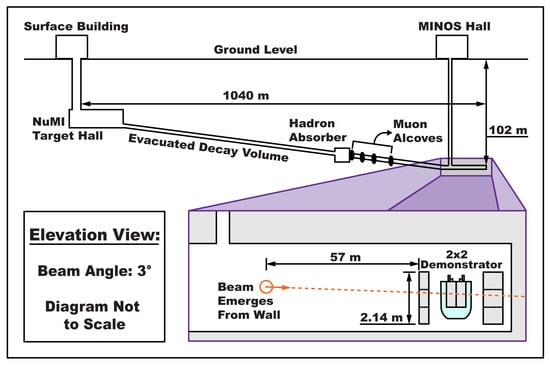
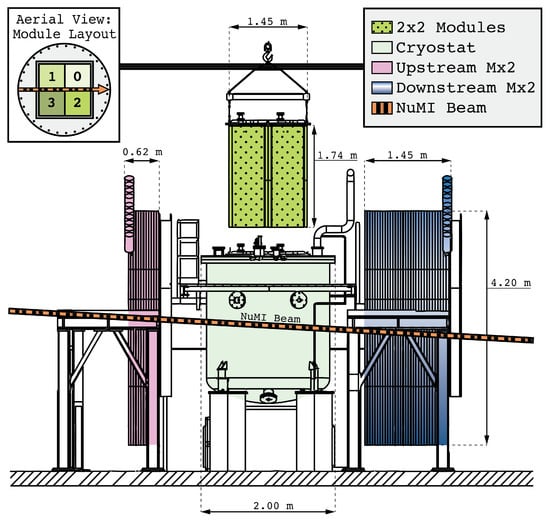
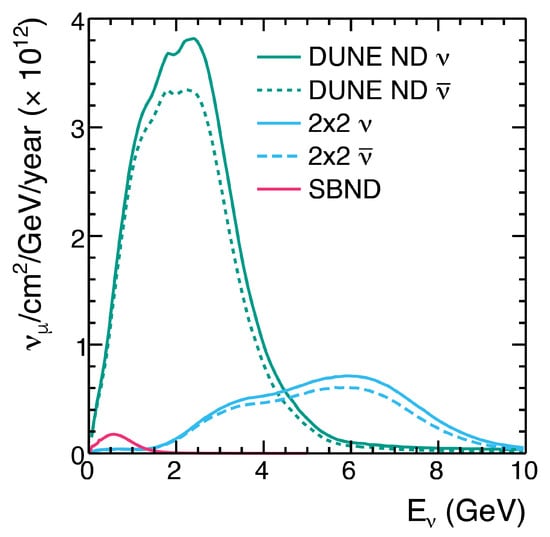
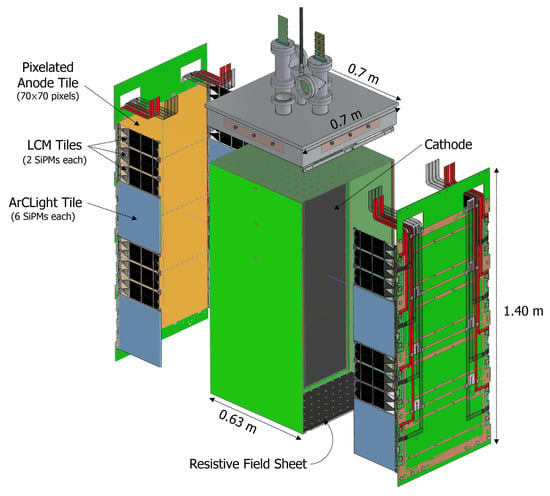
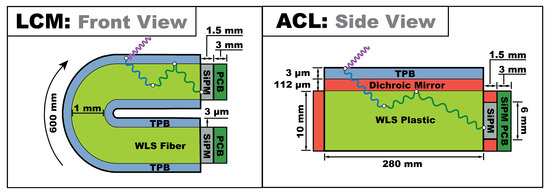
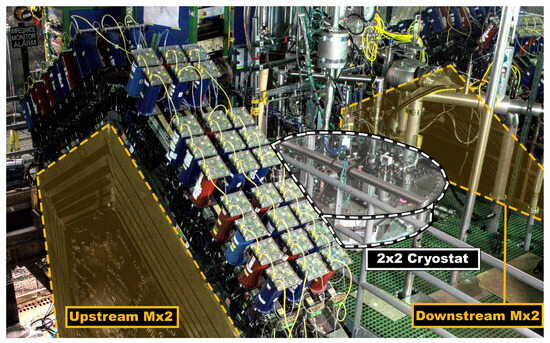
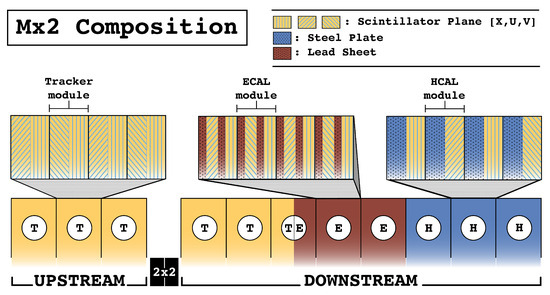
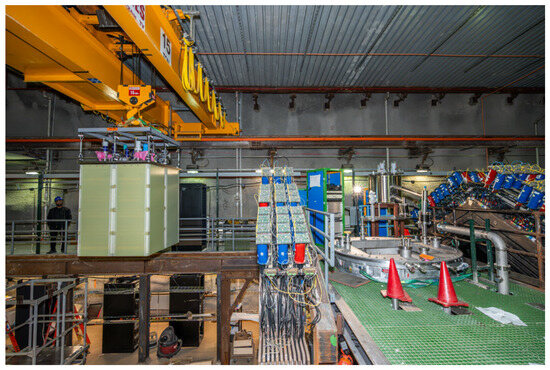
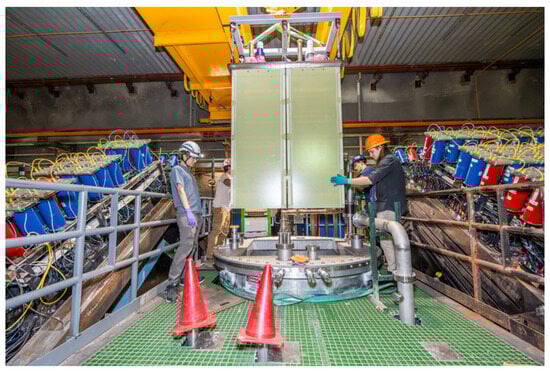
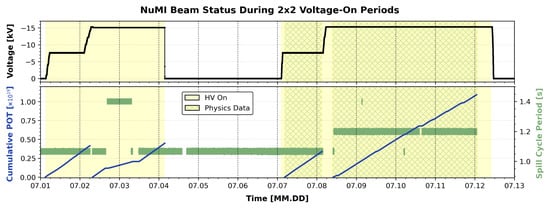
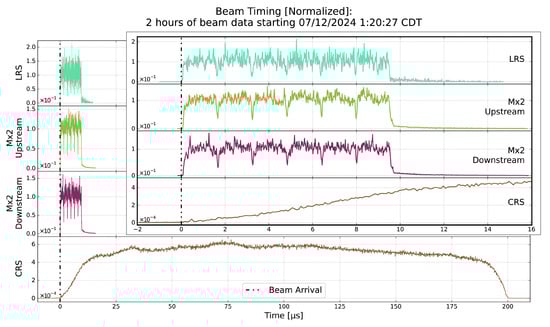
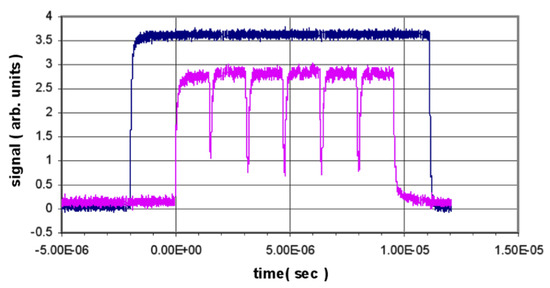
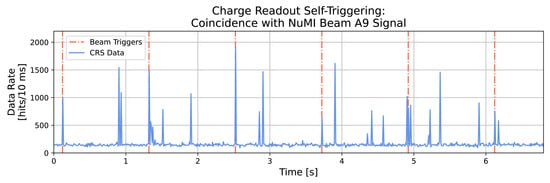
The 2x2 Demonstrator, a prototype for the Deep Underground Neutrino Experiment (DUNE) liquid argon (LAr) Near Detector, was exposed to the Neutrinos from the Main Injector (NuMI) neutrino beam at Fermi National Accelerator Laboratory (Fermilab). This detector is a prototype of a new modular design for a liquid argon time-projection chamber (LArTPC), comprising a two-by-two array of four modules, each further segmented into two optically isolated LArTPCs. The 2x2 Demonstrator features a number of pioneering technologies, including a low-profile resistive field shell to establish drift fields, native 3D ionization pixelated imaging, and a high-coverage dielectric light readout system. The 2.4-tonne active mass detector is flanked upstream and downstream by supplemental solid-scintillator tracking planes, repurposed from the MINERvA experiment, which track ionizing particles exiting the argon volume. The antineutrino beam data collected by the detector over a 4.5 day period in 2024 include over 30,000 neutrino interactions in the LAr active volume—the first neutrino interactions reported by a DUNE detector prototype. During its physics-quality run, the 2x2 Demonstrator operated at a nominal drift field of 500 V/cm and maintained good LAr purity, with a stable electron lifetime of approximately 1.25 ms. This paper describes the detector and supporting systems, summarizes the installation and commissioning, and presents the initial validation of collected NuMI beam and off-beam self-triggers. In addition, it highlights observed interactions in the detector volume, including candidate muon antineutrino events.
Full article

Figure 1
Open AccessArticle
Return of Experience in the Commissioning of the New CLS LINAC Injector
by
Frédéric Le Pimpec, Ward A. Wurtz, Johannes M. Vogt, Xavier Stragier, Tylor Sové, Jon Stampe, Sheldon Smith, Benjamen Smith, David Schneberger, Xiaofeng Shen, Bryan Schreiner, Brian Schneider, Shervin Saadat, Alex Rosset, Melissa A. Ratzlaff, Chelsea-Lea Randall, Emma Paulson, Alexander Nikolaichuk, Eduardo Nebot del Busto, Tyler Morhart, Thomas McKeith, Karen McKeith, Andrew McCormick, Linda Lin, Rukma Shree Kotha, Iaroslav Kolmakov, Emilio Heredia, Julia Doucette-Garr, Joshua Erikson, Brock Dube, Shawn Carriere, John Campbell, Michael Bree, Grant Bilbrough, Duane Bergstrom, Denis Beauregard, Tonia Batten, Cameron Baribeau, Johannes Hottenbacher, Peter Biegun, Benjamin Bromberger, Kai Dunkel, Marc Grewe, Björn Keune, Wolfgang Korte, Anja Kraemer, Christian Piel and Anne Vanselowadd
Show full author list
remove
Hide full author list
Instruments 2026, 10(1), 17; https://doi.org/10.3390/instruments10010017 - 16 Mar 2026
Abstract
After approximately 60 years of service, the 2856 MHz LINAC injector, of the Canadian Light Source (CLS), has been retired to make space for a new 3000.24 MHz LINAC injector, the frequency of which is a multiple of the 500.04 MHz CESR-B-type superconductive
[...] Read more.
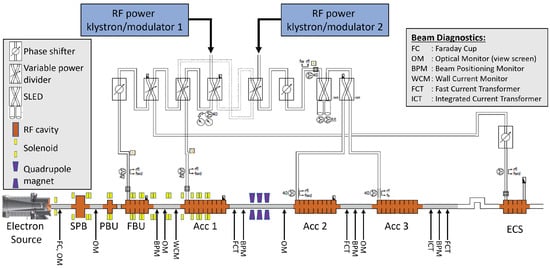
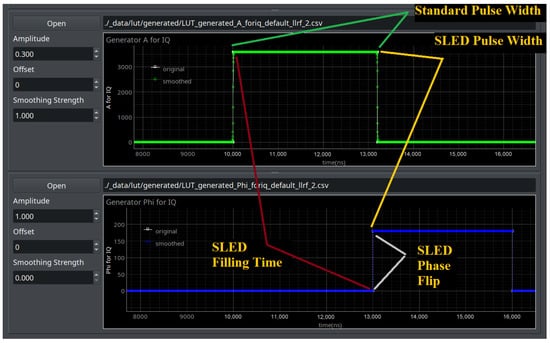
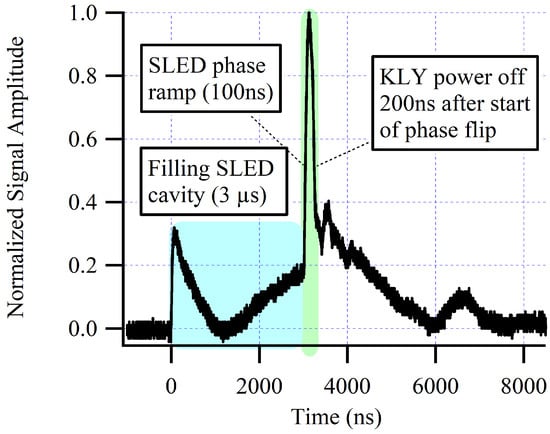
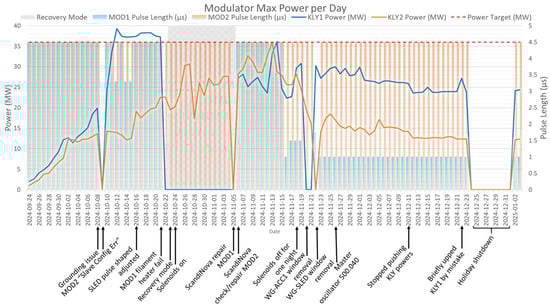
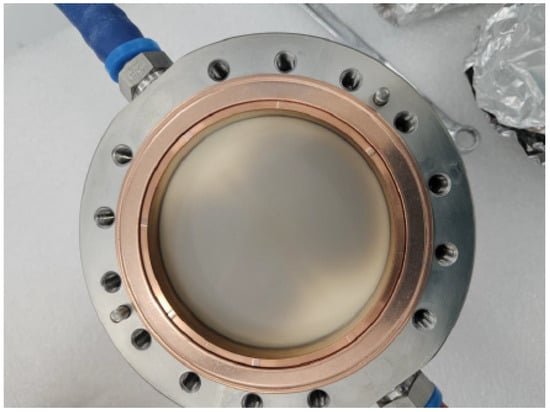
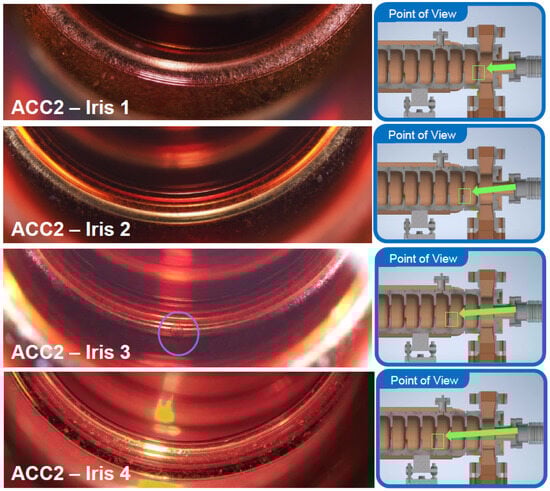
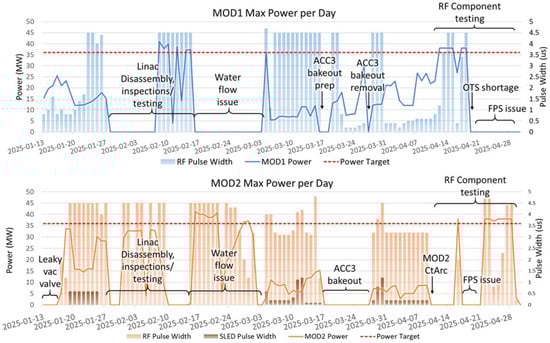
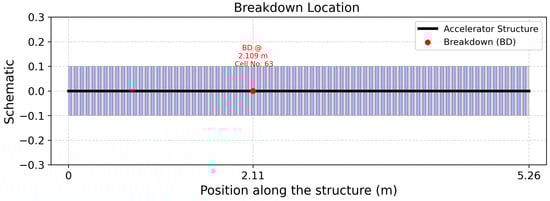
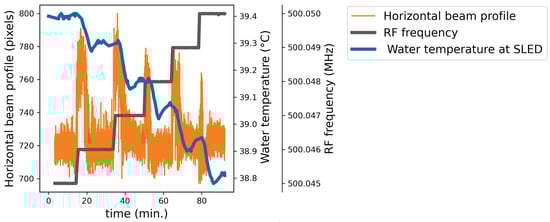
After approximately 60 years of service, the 2856 MHz LINAC injector, of the Canadian Light Source (CLS), has been retired to make space for a new 3000.24 MHz LINAC injector, the frequency of which is a multiple of the 500.04 MHz CESR-B-type superconductive radio frequency cavity used in the CLS storage ring. The new CLS LINAC injector has been designed and built by RI Research Instruments GmbH. The design is based on their robust S-band RF traveling-wave accelerating structures technology already serving other laboratories in the USA, Australia, Taiwan, Switzerland, and Sweden. In order to reduce cost and optimize space, the CLS has replaced its six accelerating RF structures, each 3.05 m long, delivering a 250 MeV electron beam with three 5.26 m long accelerating structures that will deliver the same beam energy. In order to do so, one RF structure is powered by one klystron modulator, and the last two RF structures receive their RF power from a second klystron modulator that passes through a SLED system. The SLED system multiplies the peak power by a factor of 5 to 6 and is then equally split to power each structure. We are reporting on the issues encountered during the commissioning of this new injector, on how we have tackled them and where the injector, compared to its technical specification, is standing today.
Full article
(This article belongs to the Section Particle Detectors and Accelerators)
►▼
Show Figures

Figure 1
Open AccessArticle
An Alvarez-Type Linac Configuration for Future Carbon and Helium Ion Therapy Facilities with Parallel Radioisotope Production
by
Lazar Nikitovic, Maurizio Vretenar and Toms Torims
Instruments 2026, 10(1), 16; https://doi.org/10.3390/instruments10010016 - 7 Mar 2026
Abstract
The increasing demand for ion beams heavier than protons—particularly carbon and helium ions—for cancer therapy has driven the development of advanced accelerator technologies. Although proton therapy is well established, its physical properties limit its effectiveness against certain tumor types, thereby motivating the use
[...] Read more.
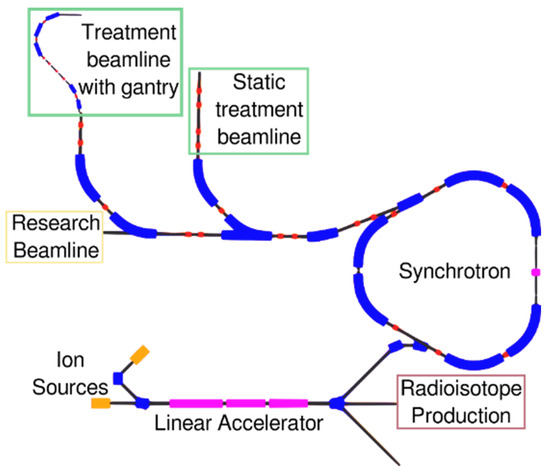
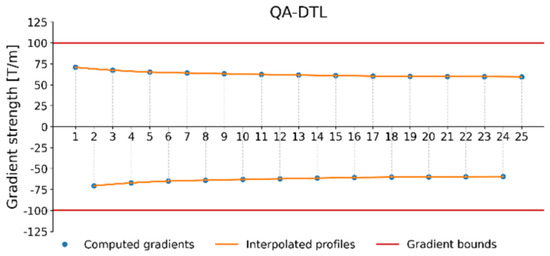
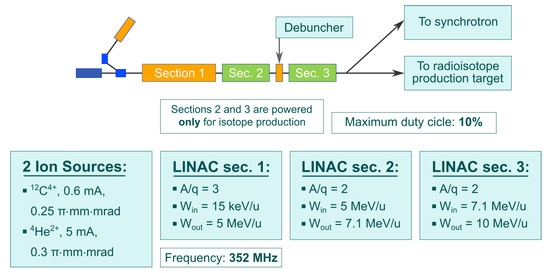
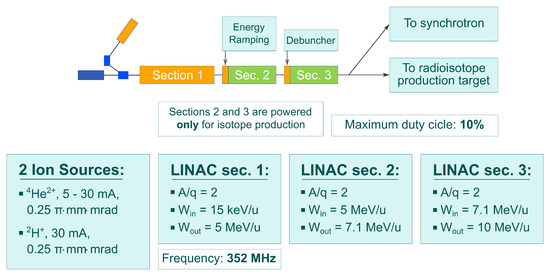
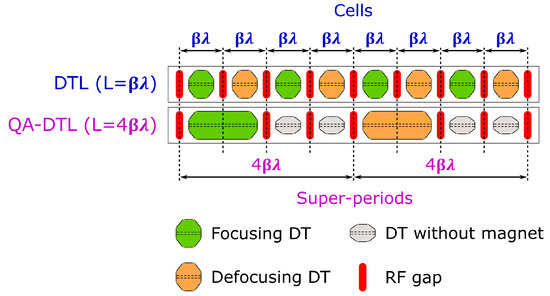
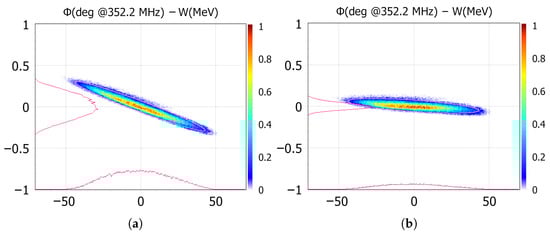
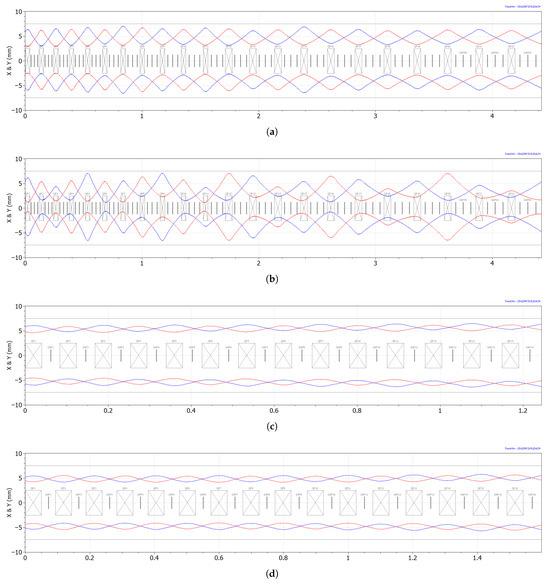
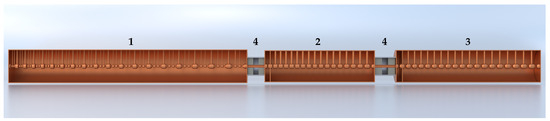
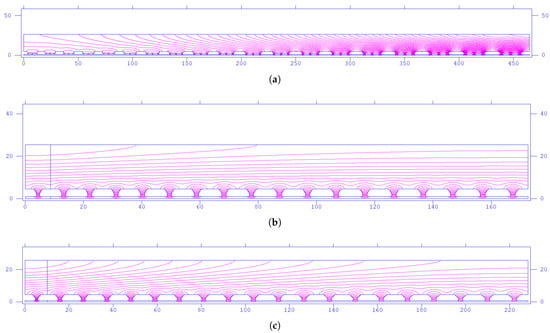
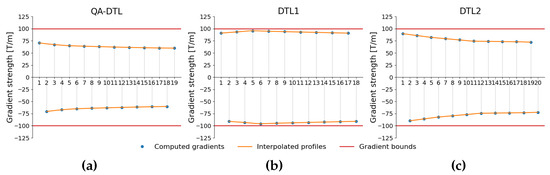
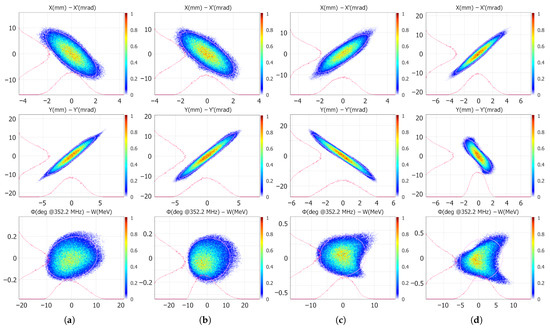
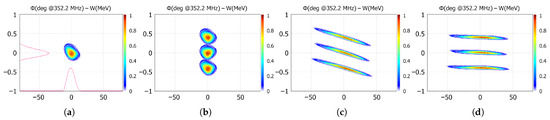
The increasing demand for ion beams heavier than protons—particularly carbon and helium ions—for cancer therapy has driven the development of advanced accelerator technologies. Although proton therapy is well established, its physical properties limit its effectiveness against certain tumor types, thereby motivating the use of ions with higher linear energy transfer (LET) and greater biological effectiveness. This study presents the design of an Alvarez-type linear accelerator configuration that combines a Quasi-Alvarez Drift Tube Linac (QA-DTL) and a conventional Alvarez Drift Tube Linac (DTL). The proposed systems are intended for accelerating and injecting carbon or helium ions into a cancer therapy synchrotron, as well as accelerating helium ions for radioisotope production. The optimized QA-DTL and DTL structures provide a versatile and efficient solution for future particle therapy facilities, addressing the growing demand for compact, high-performance, and multifunctional accelerator systems. The proposed linac configurations are designed to operate at 352.2 MHz and consist of three sections. For accelerating low-velocity ions, the first section is a QA-DTL, which is the only section powered during the injection of carbon or helium ions (depending on configuration) into the therapy synchrotron at the energy of 5 MeV/u. The QA-DTL is followed by two DTL cavities forming the second and third sections, which further accelerate helium ions to energies of up to 7.1 MeV/u and 10 MeV/u, respectively. The energy of 7.1 MeV/u is chosen because it represents the production threshold of 211At, one of the most promising alpha emitters for targeted alpha therapy.
Full article
(This article belongs to the Special Issue Compact Accelerators)
►▼
Show Figures

Figure 1

Open AccessArticle
Smartphone-Based Quantitative Measurement of Capillary Refill Time
by
Chiho Miyazawa, Masayoshi Shinozaki, Yayoi Miwa, Satoshi Karasawa, Taka-aki Nakada, Yukihiro Nomura and Toshiya Nakaguchi
Instruments 2026, 10(1), 15; https://doi.org/10.3390/instruments10010015 - 3 Mar 2026
Abstract
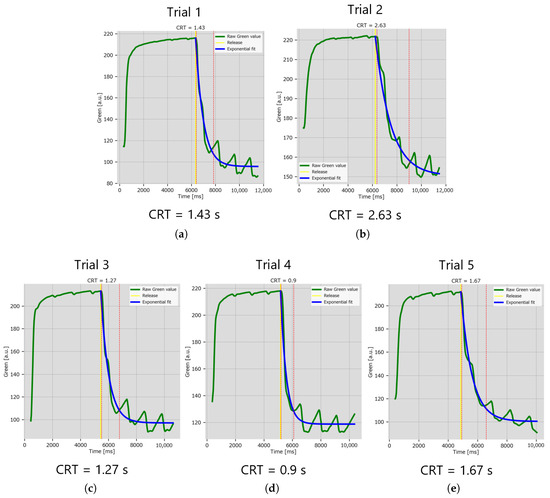
Capillary refill time (CRT) is widely used in pediatric and emergency medicine as an indicator of peripheral circulation. CRT is defined as the time required for the skin to return to its original color after external compression is applied and then released. In
[...] Read more.
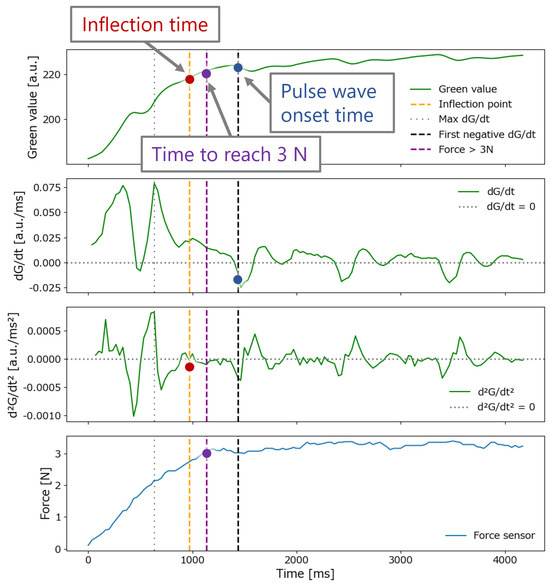
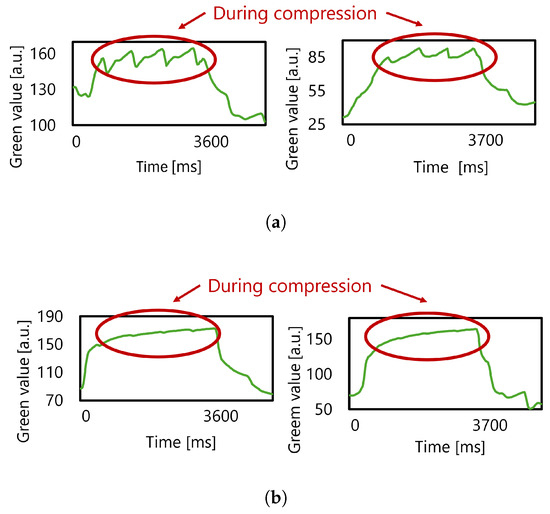
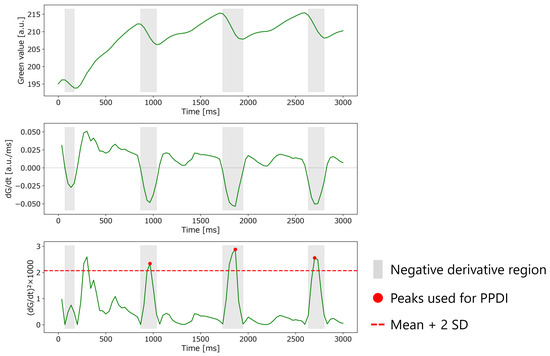
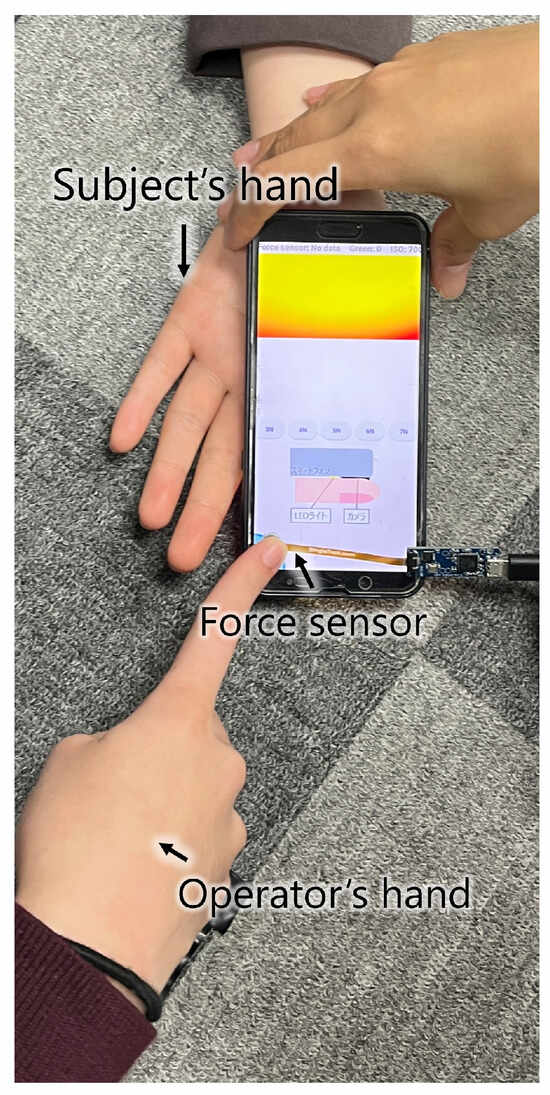
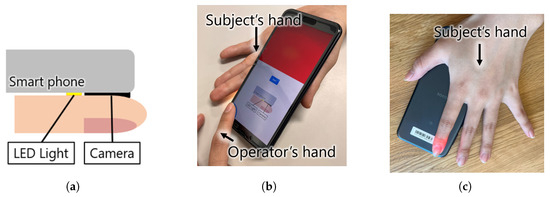
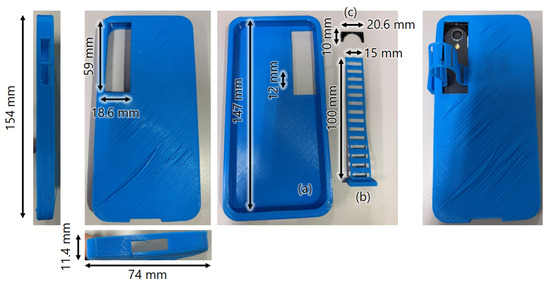
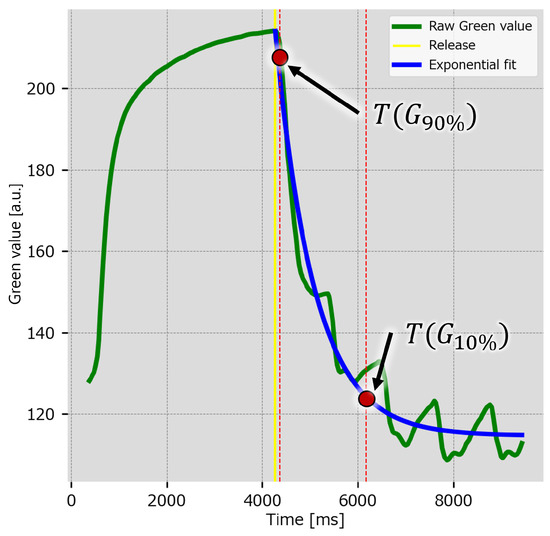
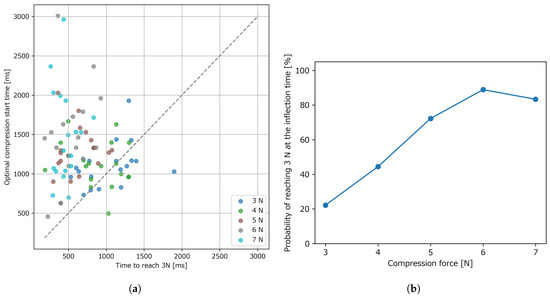
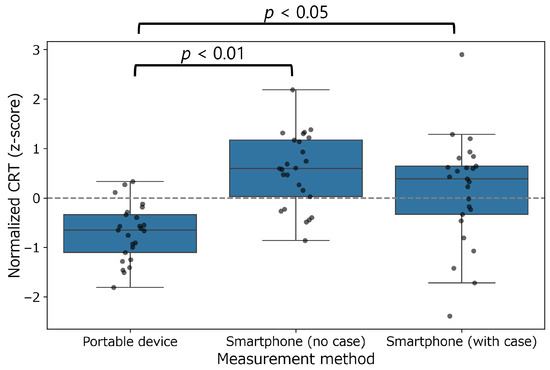
Capillary refill time (CRT) is widely used in pediatric and emergency medicine as an indicator of peripheral circulation. CRT is defined as the time required for the skin to return to its original color after external compression is applied and then released. In current clinical practice, however, CRT assessment remains qualitative and relies heavily on the magnitude and consistency of compression applied by the measurer, as well as on subjective visual color perception, which together result in limited measurement reliability. To improve measurement reliability, several quantitative CRT measurement devices have been developed. Nevertheless, these devices are dedicated specifically to CRT measurement, which limits their versatility and complicates clinical implementation. In this study, we developed a simple and quantitative CRT measurement method using a smartphone. Based on skin color changes captured by the rear camera, we proposed a method to assess the adequacy of the applied compression force and implemented an application to calculate CRT. In addition, we investigated an algorithm to reduce the influence of pulse waves observed in the post-release waveform, enabling more stable CRT estimation. Furthermore, a dedicated smartphone case was designed to immobilize the finger during measurement, thereby improving measurement reliability. The feasibility of the proposed method was evaluated by examining agreement with a previously developed CRT measurement device and by assessing intraexaminer reliability, confirming its effectiveness.
Full article
(This article belongs to the Special Issue Instrumentation and Measurement Methods for Industry 4.0 and IoT)
►▼
Show Figures

Figure 1
Open AccessFeature PaperArticle
Production and Purification of 165Er from Pressed Ho2O3:Al Targets on a 16.5 MeV Cyclotron
by
Kristina Søborg Pedersen, Claire Deville, Trine Borre, Ghazal Torabi, Clive Naidoo and Mikael Jensen
Instruments 2026, 10(1), 14; https://doi.org/10.3390/instruments10010014 - 27 Feb 2026
Abstract
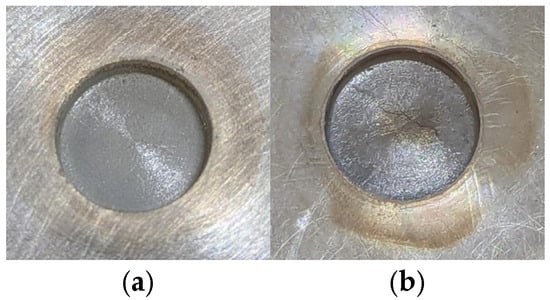
Erbium-165 (165Er) is an Auger electron emitter with 7.2 electrons per decay and very few other emissions, making it an interesting candidate for Auger electron therapy. We present here a procedure for producing 165Er by the natHo(p,n)165Er
[...] Read more.
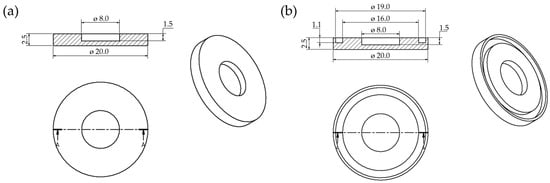
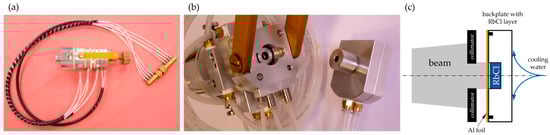
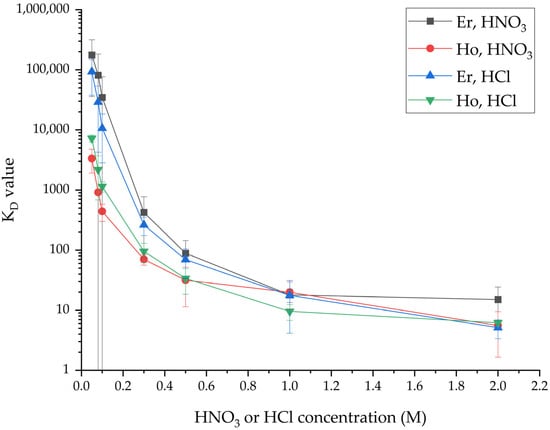
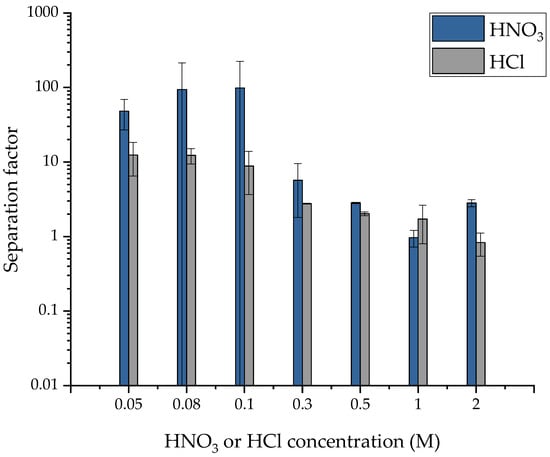
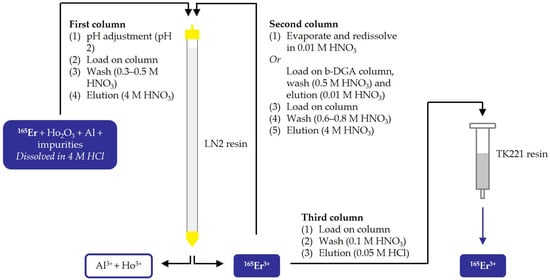
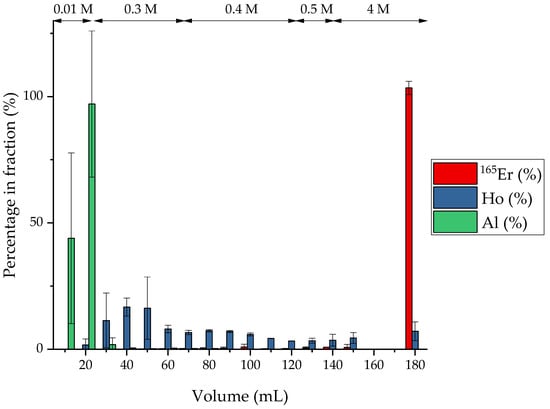
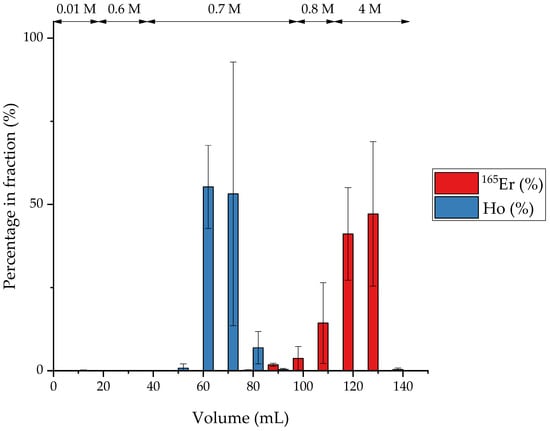
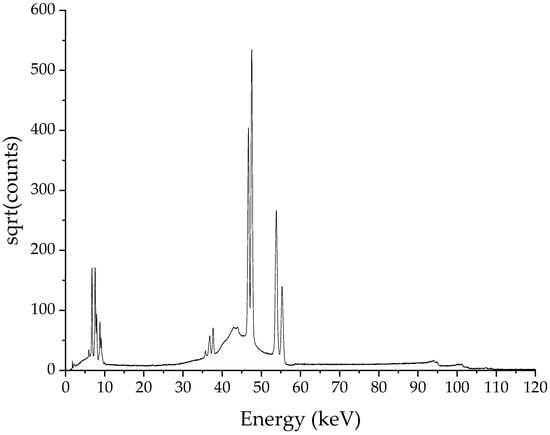
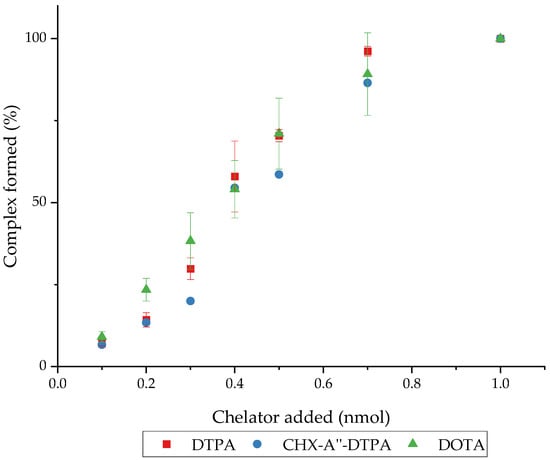
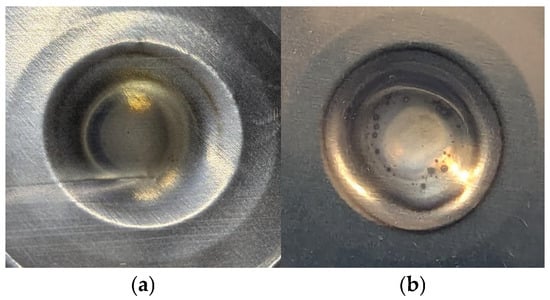
Erbium-165 (165Er) is an Auger electron emitter with 7.2 electrons per decay and very few other emissions, making it an interesting candidate for Auger electron therapy. We present here a procedure for producing 165Er by the natHo(p,n)165Er nuclear reaction on a 16.5 MeV medical cyclotron. The target was prepared by pressing a Ho2O3:Al 1:1 (w/w) powder mixture on a Ag disc with a cylindrical depression in the center. With a 0.1 mm Nb foil in front, degrading the energy to 15 MeV, and water cooling at the back of the Ag disc, the target could withstand irradiation at currents up to 45 µA without showing any signs of damage. The beam tolerance of the target was also estimated by calculating the temperature and heat dissipation in the target via the numerical solution of the heat transport equations. For a 180 mg target, the production yield was 12.3 ± 1.9 MBq/µAh. The separation of two neighboring lanthanides is challenging, which led us to study the distribution coefficients for Er and Ho on commercially available LN2 resin for both HNO3 and HCl eluents. Based on these values, we propose a purification procedure involving two successive LN2 columns for separating the 165Er from Ho and Al, followed by a small TK221 column to concentrate the final eluate. No radionuclidic impurities were detected, and the chemical impurities found in the final formulation were traces of Ho, Er, Ca, Pb, and Fe. For three different chelators (DOTA, DTPA, and CHX-A″-DTPA), the effective molar activity of the final formulation was measured. The stability of the three complexes formed was also assessed upon incubation in mouse serum for 28 h.
Full article
(This article belongs to the Special Issue Selected Papers from the 16th Workshop of the European Network of Research Cyclotrons (CYCLEUR 2025))
►▼
Show Figures

Figure 1
Open AccessArticle
Enhanced Optical Triangulation Method for Piezoelectric Stack
by
Sinan Köksu and Sedat Nazlıbilek
Instruments 2026, 10(1), 13; https://doi.org/10.3390/instruments10010013 - 26 Feb 2026
Abstract
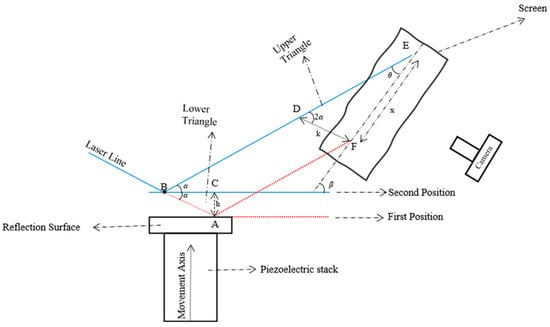
The precise control of piezoelectric actuators is limited by inherent hysteresis, creep, and nonlinear behavior, which necessitate high-resolution displacement sensing for effective closed-loop operation. Although optical interferometers can achieve nanometer and sub-nanometer resolution, their practical implementation is often constrained by complex optical alignment,
[...] Read more.
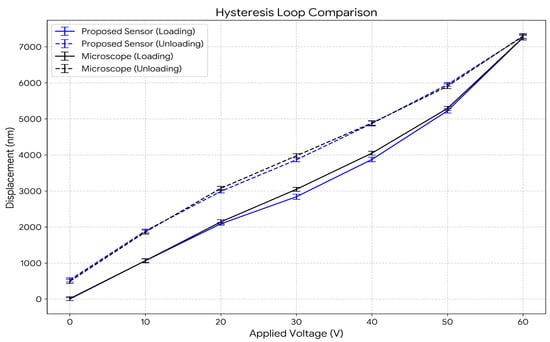
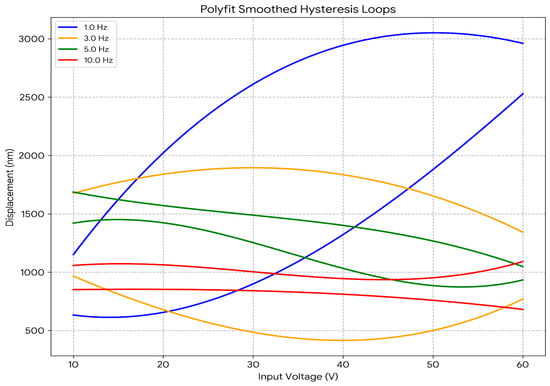
The precise control of piezoelectric actuators is limited by inherent hysteresis, creep, and nonlinear behavior, which necessitate high-resolution displacement sensing for effective closed-loop operation. Although optical interferometers can achieve nanometer and sub-nanometer resolution, their practical implementation is often constrained by complex optical alignment, sensitivity to environmental disturbances, and limited robustness in high-speed measurements. Optical triangulation sensors offer a more robust and straightforward alternative; however, their resolution is typically insufficient for nanometer-scale displacement measurements. In this study, a novel optical triangulation sensor based on a two-stage geometric optical amplification scheme is proposed for measuring the expansion of piezoelectric stacks. The method relies purely on geometric optical amplification and does not require interferometric techniques or complex signal processing. Using off-the-shelf optical components and an industrial imaging sensor, the proposed system achieves a displacement resolution of 109.6 nm, a repeatability of 74.62 nm, and an accuracy of 98.81% with a maximum error of 207.14 nm under hysteresis measurements. The achieved resolution is primarily limited by the spatial resolution of the camera sensor, indicating that further improvements are possible through optimization of the optical configuration or the use of higher-resolution imaging devices. Owing to its simplicity and robustness, the proposed sensor is well suited for real-time closed-loop control of piezoelectric actuators.
Full article
(This article belongs to the Section Sensing Technologies and Precision Measurement)
►▼
Show Figures

Figure 1
Open AccessArticle
Determination of Super Luminescent Diode Junction Temperature via Static Modulated Fourier-Transform Spectrometer
by
Ju Yong Cho and Won Kweon Jang
Instruments 2026, 10(1), 12; https://doi.org/10.3390/instruments10010012 - 8 Feb 2026
Abstract
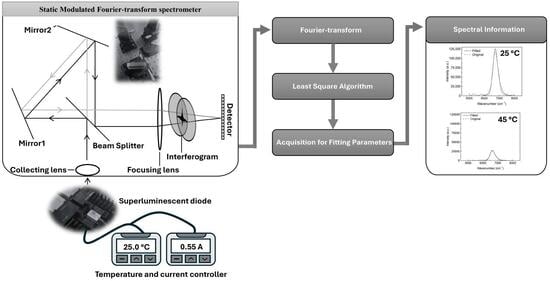
The accurate and rapid measurement of junction temperature is critical for optimizing the performance and ensuring the longevity of a super luminescent diode. However, due to diverse diode structures, directly measuring and monitoring the junction temperature of a super luminescent diode are often
[...] Read more.
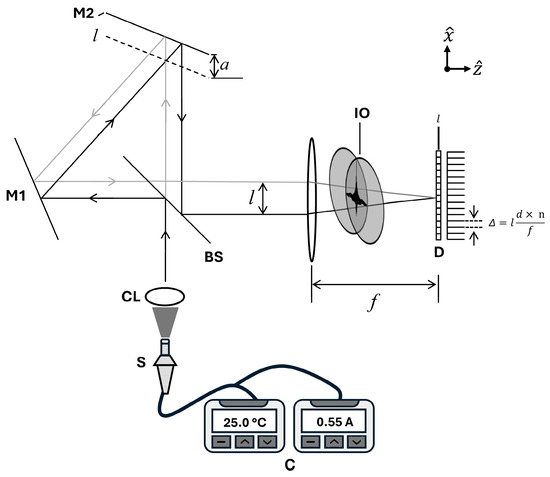
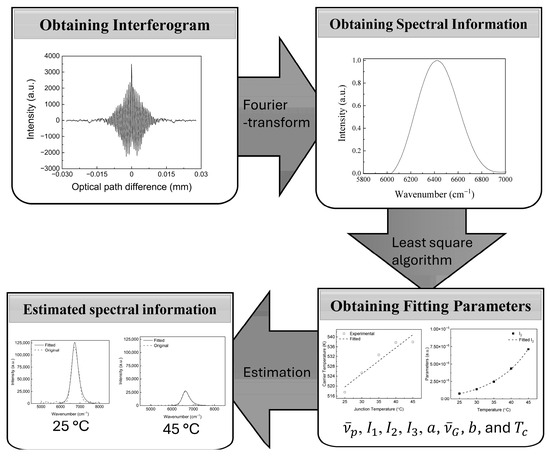
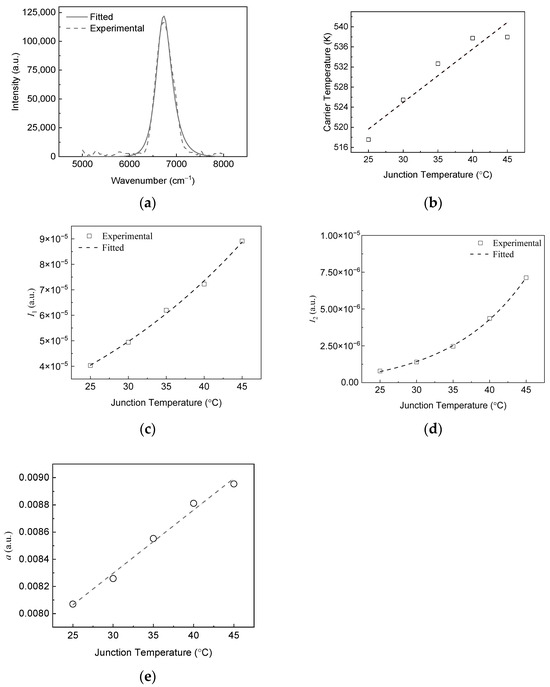
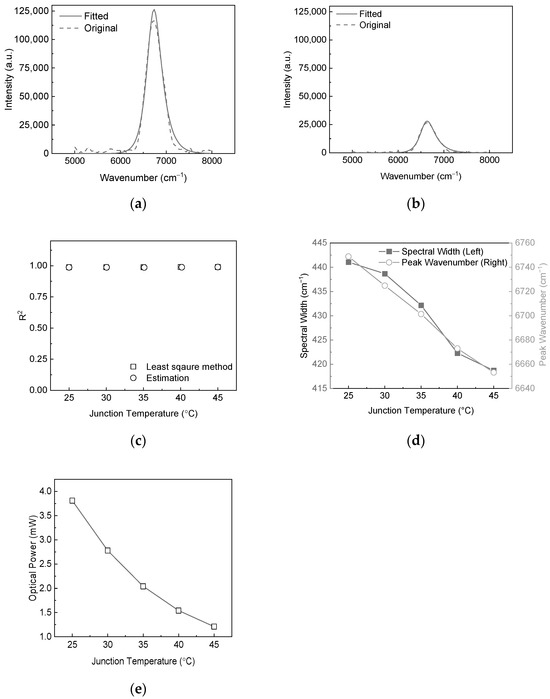
The accurate and rapid measurement of junction temperature is critical for optimizing the performance and ensuring the longevity of a super luminescent diode. However, due to diverse diode structures, directly measuring and monitoring the junction temperature of a super luminescent diode are often challenging and impractical. We propose a non-invasive methodology to precisely determine the junction temperature and spectral characteristics of a super luminescent diode. This method utilizes a modified static modulated Fourier-transform spectrometer alongside a generalized analyzing expression derived from Gaussian components. Fast acquisition of spectral information is achieved through the modified static modulated Fourier-transform spectrometer and analyzing method. The proposed model has exceptional accuracy, yielding an average coefficient of determination R2 of 0.99 across a range of operating currents and junction temperatures. Our analysis reveals a distinct linear correlation between the extracted fitting parameters—specifically the carrier temperature, the spectral shape parameter and the physical junction temperature. These findings demonstrate that the critical internal physical conditions of the diode can be accurately inferred directly from its measured spectrum, providing a robust tool for device characterization.
Full article
(This article belongs to the Section Optical and Photonic Instruments)
►▼
Show Figures

Graphical abstract
Open AccessArticle
Calibration of a Capacitive Coupled Ring Resonator for Non-Invasive Measurement of Wood Moisture Content
by
Livio D’Alvia, Ludovica Apa, Emanuele Rizzuto, Erika Pittella and Zaccaria Del Prete
Instruments 2026, 10(1), 11; https://doi.org/10.3390/instruments10010011 - 5 Feb 2026
Abstract
The accurate and non-invasive measurement of moisture content in wood is essential for the preservation of historical and artistic artifacts. This study presents the calibration of a planar Microwave Planar Capacitive Coupled Ring Resonator (MPCCRR) designed to indirectly and non-destructively assess the water
[...] Read more.
The accurate and non-invasive measurement of moisture content in wood is essential for the preservation of historical and artistic artifacts. This study presents the calibration of a planar Microwave Planar Capacitive Coupled Ring Resonator (MPCCRR) designed to indirectly and non-destructively assess the water content in wood samples. The method relies on analyzing shifts in the resonant frequencies and variations in the transmission parameter |S21| resulting from changes in the material’s dielectric permittivity. After preliminary characterization via parametric simulations (εr = 1–10) and validation with low-permittivity reference materials, the sensor was tested on three wood species (poplar, fir, beech), including measurements at two sensor positions and with different grain orientations. The results demonstrate a monotonic, repeatable response to increasing moisture content with frequency shifts up to ≈220 MHz and normalized sensitivities ranging from 3 to 9 MHz/% water content, depending on species and measurement position. Position 2 showed the greatest sensitivity due to stronger field–sample interaction, while Position 1 provided a quasi-isotropic response with excellent repeatability. Linear regression analyses revealed good correlations between the frequency shifts and the gravimetric water content (R2 ≥ 0.85). The MPCCRR sensor therefore proves to be a promising tool for the non-invasive monitoring of wood moisture, which is particularly suitable for the low-moisture range encountered in cultural heritage conservation, with an estimated moisture uncertainty of 0.12–0.35% under controlled laboratory conditions.
Full article
(This article belongs to the Section Sensing Technologies and Precision Measurement)
►▼
Show Figures

Figure 1
Open AccessArticle
Wide-Aperture Diffraction-Based Beam-Shaping Structures for Enhanced Directivity in Next-Generation High-Frequency Communication Systems
by
Vladislovas Čižas, Simonas Driukas, Andrius Masaitis, Kotryna Nacienė, Kasparas Stanaitis, Egidijus Šideika and Linas Minkevičius
Instruments 2026, 10(1), 10; https://doi.org/10.3390/instruments10010010 - 4 Feb 2026
Abstract
Sub-terahertz (sub-THz) frequencies are in the spotlight in the ongoing development of sixth-generation (6G) wireless communication systems, offering ultra-high data rates and low latency for rapidly emerging applications. However, employment of sub-THz frequencies introduces strict propagation challenges, including free-space path loss and atmospheric
[...] Read more.
Sub-terahertz (sub-THz) frequencies are in the spotlight in the ongoing development of sixth-generation (6G) wireless communication systems, offering ultra-high data rates and low latency for rapidly emerging applications. However, employment of sub-THz frequencies introduces strict propagation challenges, including free-space path loss and atmospheric absorption, which limit coverage and reliability. To address these issues, highly directional links are required. The conventional beam-shaping solutions such as refractive lenses and parabolic mirrors are bulky, heavy, and costly, making them less attractive for compact systems. Diffractive optical elements (DOEs) offer a promising alternative by enabling precise wavefront control through phase modulation, resulting in thin, lightweight components with high focusing efficiency. Employing the fused deposition modelling (FDM) using high-impact polystyrene (HIPS) allows cost-effective fabrication of DOEs with minimal material waste and high diffraction efficiency. This work investigates the beam-shaping performance of the FDM-printed structures comparing DOEs and spherical refraction-based structures, wherein both are aiming for application in sub-THz communication systems. DOEs exhibit clear advantages over classically employed solutions.
Full article
(This article belongs to the Section Optical and Photonic Instruments)
►▼
Show Figures

Figure 1

Open AccessReview
The Intelligent Knife (iKnife): Revolutionizing Intraoperative Tissue Diagnosis Through Rapid Evaporative Ionization Mass Spectrometry (REIMS)
by
Gabriel Amorim Moreira Alves, Mohan Dodeja, Fazal Khan, Mary Szocik and Arosh Shavinda Perera Molligoda Arachchige
Instruments 2026, 10(1), 9; https://doi.org/10.3390/instruments10010009 - 3 Feb 2026
Abstract
The intelligent surgical knife (iKnife), based on rapid evaporative ionization mass spectrometry (REIMS), represents a transformative advance in intraoperative tissue characterization. By integrating mass spectrometry with electrosurgical dissection, the iKnife enables real-time differentiation between cancerous and healthy tissues through molecular fingerprinting of the
[...] Read more.
The intelligent surgical knife (iKnife), based on rapid evaporative ionization mass spectrometry (REIMS), represents a transformative advance in intraoperative tissue characterization. By integrating mass spectrometry with electrosurgical dissection, the iKnife enables real-time differentiation between cancerous and healthy tissues through molecular fingerprinting of the aerosol generated during cutting. This innovation significantly shortens operative time by eliminating delays associated with conventional histopathological analysis and enhances surgical precision by providing continuous feedback on tissue composition. Since its inception by Zoltán Takáts and colleagues, the iKnife has demonstrated remarkable diagnostic accuracy across multiple cancer types, including breast, ovarian, and colorectal malignancies, with reported sensitivities and specificities > 90% in selected tumour types. Beyond oncology, REIMS technology also shows promise for microbial identification and metabolomic profiling. This review provides a comprehensive overview of the iKnife’s development, underlying principles, clinical validation, and emerging applications, as well as its integration into surgical workflows and the challenges remaining for widespread clinical adoption. Future perspectives include miniaturization, AI-driven spectral interpretation, and expansion into robotic and image-guided surgery.
Full article
(This article belongs to the Section Analytical Science and Biomedical Instruments)
►▼
Show Figures

Figure 1
Open AccessSystematic Review
A Systematic Review of Deep Reinforcement Learning for Legged Robot Locomotion
by
Bingxiao Sun, Sallehuddin Mohamed Haris and Rizauddin Ramli
Instruments 2026, 10(1), 8; https://doi.org/10.3390/instruments10010008 - 30 Jan 2026
Abstract
►▼
Show Figures
Legged robot locomotion remains a critical challenge in robotics, demanding control strategies that are not only dynamically stable and robust but also capable of adapting to complex and changing environments. deep reinforcement learning (DRL) has recently emerged as a powerful approach to automatically
[...] Read more.
Legged robot locomotion remains a critical challenge in robotics, demanding control strategies that are not only dynamically stable and robust but also capable of adapting to complex and changing environments. deep reinforcement learning (DRL) has recently emerged as a powerful approach to automatically generate motion control policies by learning from interactions with simulated or real environments. This study provides a systematic overview of DRL applications in legged robot control, emphasizing experimental platforms, measurement techniques, and benchmarking practices. Following PRISMA guidelines, 27 peer-reviewed studies published between 2018 and 2025 were analyzed, covering model-free, model-based, hierarchical, and hybrid DRL frameworks. Our findings reveal that reward shaping, policy representation, and training stability significantly influence control performance, while domain randomization and dynamic adaptation methods are essential for bridging the simulation-to-real-world gap. In addition, this review highlights instrumentation approaches for evaluating algorithm effectiveness, offering insights into sample efficiency, energy management, and safe deployment. The results aim to guide the development of reproducible and experimentally validated DRL-based control systems for legged robots.
Full article

Figure 1
Open AccessArticle
Evaluation of Gap and Flush Inspection Algorithms in a Portable Laser Line Triangulation System Through Measurement System Analysis (MSA)
by
Guerino Gianfranco Paolini, Sara Casaccia, Matteo Nisi, Cristina Cristalli and Nicola Paone
Instruments 2026, 10(1), 7; https://doi.org/10.3390/instruments10010007 - 26 Jan 2026
Abstract
The shift toward Industry 5.0 places human-centred and digitally integrated metrology at the core of modern manufacturing, particularly in the automotive sector, where portable Laser Line Triangulation (LLT) systems must combine accuracy with operator usability. This study addresses the challenge of operator-induced variability
[...] Read more.
The shift toward Industry 5.0 places human-centred and digitally integrated metrology at the core of modern manufacturing, particularly in the automotive sector, where portable Laser Line Triangulation (LLT) systems must combine accuracy with operator usability. This study addresses the challenge of operator-induced variability by evaluating how algorithmic strategies and mechanical support features jointly influence the performance of a portable LLT device derived from the G3F sensor. A comprehensive Measurement System Analysis was performed to compare three feature extraction algorithms—GC, FIR, and Steger—and to assess the effect of a masking device designed to improve mechanical alignment during manual measurements. The results highlight distinct algorithm-dependent behaviours in terms of repeatability, reproducibility, and computational efficiency. More sophisticated algorithms demonstrate improved sensitivity and feature localisation under controlled conditions, whereas simpler gradient-based strategies provide more stable performance and shorter processing times when measurement conditions deviate from the ideal. These differences indicate a trade-off between algorithmic complexity and operational robustness that is particularly relevant for portable, operator-assisted metrology. The presence of mechanical alignment aids was found to contribute to improved measurement consistency across all algorithms. Overall, the findings highlight the need for an integrated co-design of algorithms, calibration procedures, and ergonomic aids to enhance repeatability and support operator-friendly LLT systems aligned with Industry 5.0 principles.
Full article
(This article belongs to the Special Issue Instrumentation and Measurement Methods for Industry 4.0 and IoT)
►▼
Show Figures

Figure 1
Open AccessArticle
A Procedure for Performing Reproducibility Assessment of the Accuracy of Impact Area Classification for Structural Health Monitoring in Aerospace Structures
by
Luciano Chiominto, Giulio D’Emilia, Antonella Gaspari, Emanuela Natale, Francesco Nicassio and Gennaro Scarselli
Instruments 2026, 10(1), 6; https://doi.org/10.3390/instruments10010006 - 26 Jan 2026
Abstract
The principal objective of this work is to develop an optimized procedure that guarantees the reproducibility of results across different applications and laboratories, facilitating potential field applications of methodologies for Structural Health Monitoring in aerospace structures. The focus is to accurately detect and
[...] Read more.
The principal objective of this work is to develop an optimized procedure that guarantees the reproducibility of results across different applications and laboratories, facilitating potential field applications of methodologies for Structural Health Monitoring in aerospace structures. The focus is to accurately detect and localize impact areas on planar structures using in situ transducers and Machine Learning (ML) techniques. The research concentrates on an aluminum plate where impacts are generated by metal spheres of different masses dropped from a fixed height. The resulting Lamb waves are detected by PZT sensors glued on the surface. Various data processing and feature extraction algorithms are implemented and compared to extract the differences in Time of Flight (ΔToF). The obtained features are used for training ML classification models. Then, the influence of various parameters in signal acquisition and data processing are assessed along with the reproducibility of the results. For this reason, an interlaboratory comparison is conducted in which the trained models are applied to data collected under varying conditions. The experimental results show that the most influencing factors for impact area classification are the algorithm for ΔToF estimation, the number of training points used in ML models, the type of classification model, the distribution of the impact points on the component, and their balance in the classification area. This evidence suggests approaches for reducing both issues, therefore improving the reproducibility of results.
Full article
(This article belongs to the Special Issue Instrumentation and Measurement Methods for Industry 4.0 and IoT)
►▼
Show Figures

Open AccessArticle
Button Sample Holders for Infrared Spectroscopy
by
Robert L. White
Instruments 2026, 10(1), 5; https://doi.org/10.3390/instruments10010005 - 26 Jan 2026
Abstract
The design features and applications of button sample holders are described. The similarities and contrasts between the button method and the transmission cell and attenuated total reflection techniques are discussed. Different button sample holder analysis methodologies are outlined, and examples are provided for
[...] Read more.
The design features and applications of button sample holders are described. The similarities and contrasts between the button method and the transmission cell and attenuated total reflection techniques are discussed. Different button sample holder analysis methodologies are outlined, and examples are provided for mid-infrared spectroscopy measurements of solids, liquids, and pastes. Results obtained for 10-nonadecanone powder, a vitamin C tablet, a soil sample, and poly(methyl methacrylate) are used to illustrate different solid sample analysis approaches. Time-dependent spectrum variations detected during evaporation of a blood drop are elucidated and spectra obtained from different quantities of liquid chlorobenzene loaded into buttons and transmission cells are characterized. Infrared spectra derived from three toothpaste brands are compared and a sample perturbation study to identify temperature-dependent changes to the structure of poly(bisphenol A carbonate) is provided as an example of variable temperature infrared spectroscopy.
Full article
(This article belongs to the Section Optical and Photonic Instruments)
►▼
Show Figures

Figure 1
Open AccessArticle
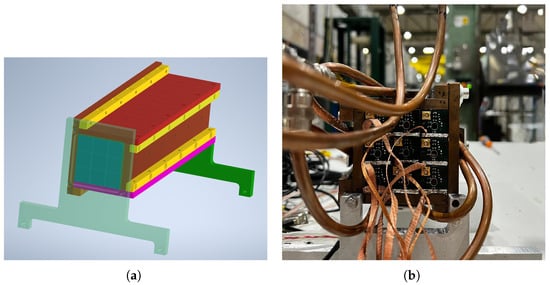
Characterization of the Extraction System of Supersonic Gas Curtain-Based Ionization Profile Monitor for FLASH Proton Therapy
by
Farhana Thesni Mada Parambil, Milaan Patel, Narender Kumar, Bharat Singh Rawat, William Butcher, Tony Price and Carsten P. Welsch
Instruments 2026, 10(1), 4; https://doi.org/10.3390/instruments10010004 - 25 Jan 2026
Abstract
FLASH radiotherapy requires real-time, non-invasive beam monitoring systems capable of operating under ultra-high dose rate (UHDR) conditions without perturbing the therapeutic beam. In this work, we characterized the extraction system of Supersonic Gas Curtain-based Ionization Profile Monitor (SGC-IPM) for its capabilities as a
[...] Read more.
FLASH radiotherapy requires real-time, non-invasive beam monitoring systems capable of operating under ultra-high dose rate (UHDR) conditions without perturbing the therapeutic beam. In this work, we characterized the extraction system of Supersonic Gas Curtain-based Ionization Profile Monitor (SGC-IPM) for its capabilities as a transverse beam profile and position monitor for FLASH protons. The monitor utilizes a tilted gas curtain intersected by the incident beam, leading to the generation of ions that are extracted through a tailored electrostatic field, and detected using a two stage microchannel plate (MCP) coupled to a phosphor screen and CMOS camera. CST Studio Suite was employed to conduct electrostatic and particle tracking simulations evaluating the ability of the extraction system to measure both beam profile and position. The ion interface, at the interaction region of proton beam and gas curtain, was modeled with realistic proton beam parameters and uniform gas curtain density distributions. The ion trajectory was tracked to evaluate the performance across multiple beam sizes. The simulations suggest that the extraction system can reconstruct transverse beam profiles for different proton beam sizes. Simulations also supported the system’s capability as a beam position monitor within the boundary defined by the beam size, the dimensions of the extraction system, and the height of the gas curtain. Some simulation results were benchmarked against experimental data of 28 MeV proton beam with 70 nA average beam current. This study will further help to optimize the design of the extraction system to facilitate the integration of SGC-IPM in medical accelerators.
Full article
(This article belongs to the Special Issue Plasma Accelerator Technologies)
►▼
Show Figures

Figure 1
Open AccessArticle
Scalable Relay Switching Platform for Automated Multi-Point Resistance Measurements
by
Edoardo Boretti, Kostiantyn Torokhtii, Enrico Silva and Andrea Alimenti
Instruments 2026, 10(1), 3; https://doi.org/10.3390/instruments10010003 - 31 Dec 2025
Abstract
In both research and industrial settings, it is often necessary to expand the input/output channels of measurement instruments using relay-based multiplexer boards. In research activities in particular, the need for a highly flexible and easily configurable solution frequently leads to the development of
[...] Read more.
In both research and industrial settings, it is often necessary to expand the input/output channels of measurement instruments using relay-based multiplexer boards. In research activities in particular, the need for a highly flexible and easily configurable solution frequently leads to the development of customized systems. To address this challenge, we developed a system optimized for automated direct current (DC) measurements. The result is based on a switching platform that simplifies measurement procedures that require instrument routing. The platform is based on a custom-designed circuit board controlled by a microcontroller. We selected bistable relays to guarantee contact stability after switching. We finally developed a system architecture that allows for straightforward expansion and scalability by connecting multiple platforms. We share both the hardware design source files and the firmware source code on GitHub with the open-source community. This work presents the design and development of the proposed system, followed by the performance evaluation. Finally, we present a test of our designed system applied to a specific case study: the DC analysis of complex resistive networks through multi-point resistance measurements using only a single voltmeter and current source.
Full article
(This article belongs to the Section Sensing Technologies and Precision Measurement)
►▼
Show Figures

Figure 1
Journal Menu
► ▼ Journal Menu-
- Instruments Home
- Aims & Scope
- Editorial Board
- Reviewer Board
- Instructions for Authors
- Special Issues
- Topics
- Sections & Collections
- Article Processing Charge
- Indexing & Archiving
- Editor’s Choice Articles
- Most Cited & Viewed
- Journal Statistics
- Journal History
- Journal Awards
- Conferences
- Editorial Office
Journal Browser
► ▼ Journal BrowserHighly Accessed Articles
Latest Books
E-Mail Alert
News
Topics
Conferences
Special Issues
Special Issue in
Instruments
Microelectronics and Photonics Design, Technology and Instrumentation
Guest Editors: Christos Riziotis, Matthias Bucher, George KonstantinidisDeadline: 31 May 2026
Special Issue in
Instruments
Compact Accelerators
Guest Editors: Bruce E. Carlsten, Roark MarshDeadline: 30 June 2026
Special Issue in
Instruments
Selected Papers from the 14th International Beam Instrumentation Conference (IBIC2025)
Guest Editors: Carsten Welsch, Tonia Batten, Alessandro Cianchi, Thibaut Lefevre, Junxia WuDeadline: 30 June 2026
Special Issue in
Instruments
Recent Advances in Neutrino Detectors
Guest Editor: Andrew T. MastbaumDeadline: 30 June 2026
Topical Collections
Topical Collection in
Instruments
Selected Papers from Instruments’ Editorial Board Members
Collection Editor: Antonio Ereditato