




Factors Affecting the Choice and Consumption Behavior Towards Aquatic Products
A special issue of Foods (ISSN 2304-8158). This special issue belongs to the section "Foods of Marine Origin".
Deadline for manuscript submissions: closed (28 February 2026) | Viewed by 5854
Special Issue Editors

Interests: sensory evaluation of food; new sensory methods; human sensory sensitivity; factors affecting consumer food behavior; liking and consumer choice
Special Issues, Collections and Topics in MDPI journals

Interests: consumers’ preferences and choice; sensory sensitivity; psychological traits; mechanical and rheological properties of food
Special Issues, Collections and Topics in MDPI journals

Interests: new food product development; microalgae and aquatic protists cultivation; sustainable food systems; bioconversion of food by-products through aquatic protist; emerging food-processing technologies
Special Issues, Collections and Topics in MDPI journals
Special Issue Information
Dear Colleagues,
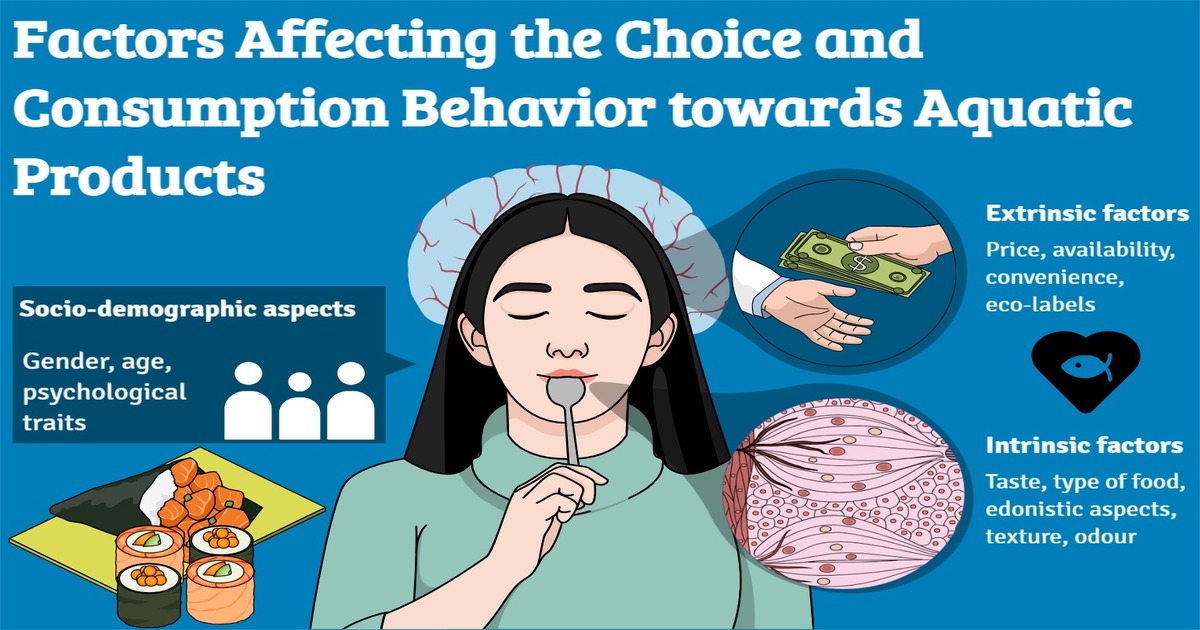
Aquatic foods are highly heterogeneous in terms of their type/species, origin, production, and processing. It is estimated that approximately 2500 species or groups of fish, invertebrates, algae, and aquatic protists are currently consumed by humans. Regarding all other types of food, many intrinsic and extrinsic factors (type of food, taste, texture, odour, as well as price, availability, convenience, eco-labels, etc.) cause to choose or prefer one type of aquatic food over another. In addition, individual factors, such as socio-demographic characteristics, gender, age, psychological traits, and sensory sensitivity, play a pivotal role in the preferences and choices of consumers.
Moreover, many researchers are aiming to ensure the sustainability of aquatic production, which also influences consumer preferences. Despite this, the consumption of aquatic foods aligns with the criteria for a sustainable diet and provides more environmentally friendly options than land-based animal production. Additionally, numerous studies have indicated that for many vulnerable groups, the consumption of aquatic foods (such as new and tailored processed foods) is essential in guaranteeing food and nutrition security.
Therefore, from a marketing perspective, and in order to expandthe literature in this field, an enhanced understanding of the factors that influence the consumption of aquatic food is necessary.
This Special Issue of Foods aims to collect both original research papers and reviews, compiling insights from interdisciplinary fields. We particularly welcome articles that focus on the relationships among variables that determine food preferences, food choices or people’s eating habits, as well articles that address the development of new aquatic foods.
Prof. Dr. Rossella Di Monaco
Dr. Sharon Puleo
Dr. Giovanni Luca Russo
Guest Editors
Manuscript Submission Information
Manuscripts should be submitted online at www.mdpi.com by registering and logging in to this website. Once you are registered, click here to go to the submission form. Manuscripts can be submitted until the deadline. All submissions that pass pre-check are peer-reviewed. Accepted papers will be published continuously in the journal (as soon as accepted) and will be listed together on the special issue website. Research articles, review articles as well as short communications are invited. For planned papers, a title and short abstract (about 250 words) can be sent to the Editorial Office for assessment.
Submitted manuscripts should not have been published previously, nor be under consideration for publication elsewhere (except conference proceedings papers). All manuscripts are thoroughly refereed through a single-blind peer-review process. A guide for authors and other relevant information for submission of manuscripts is available on the Instructions for Authors page. Foods is an international peer-reviewed open access semimonthly journal published by MDPI.
Please visit the Instructions for Authors page before submitting a manuscript. The Article Processing Charge (APC) for publication in this open access journal is 2900 CHF (Swiss Francs). Submitted papers should be well formatted and use good English. Authors may use MDPI's English editing service prior to publication or during author revisions.
Keywords
- aquatic foods
- sustainable food systems
- consumers’ characteristics
- intrinsic and exstrinsic characteristics of aquatic foods
- diet habits
- new tailored aquatic foods
- aquatic food development
Benefits of Publishing in a Special Issue
- Ease of navigation: Grouping papers by topic helps scholars navigate broad scope journals more efficiently.
- Greater discoverability: Special Issues support the reach and impact of scientific research. Articles in Special Issues are more discoverable and cited more frequently.
- Expansion of research network: Special Issues facilitate connections among authors, fostering scientific collaborations.
- External promotion: Articles in Special Issues are often promoted through the journal's social media, increasing their visibility.
- Reprint: MDPI Books provides the opportunity to republish successful Special Issues in book format, both online and in print.
Further information on MDPI's Special Issue policies can be found here.
