

Storage and Shelf-Life Assessment of Food Products: 2nd Edition

A special issue of Foods (ISSN 2304-8158). This special issue belongs to the section "Food Packaging and Preservation".

Deadline for manuscript submissions: 15 November 2026 | Viewed by 5652

Special Issue Editor


E-Mail Website
Guest Editor
1. Department of Food Engineering, Institute of Engineering, Universidade do Algarve, Campus da Penha, 8005-139 Faro, Portugal
2. MED-Mediterranean Institute for Agriculture, Environment and Development and CHANGE-Global Change and Sustainability Institute, Faculty of Sciences and Technology, Campus de Gambelas, Universidade do Algarve, 8005-139 Faro, Portugal
Interests: food packaging; food processing; emerging technologies; biomaterials; sustainability; mathematical modeling; shelf-life; food preservation; food waste recovery
Special Issues, Collections and Topics in MDPI journals

Special Issue Information

Dear Colleagues,

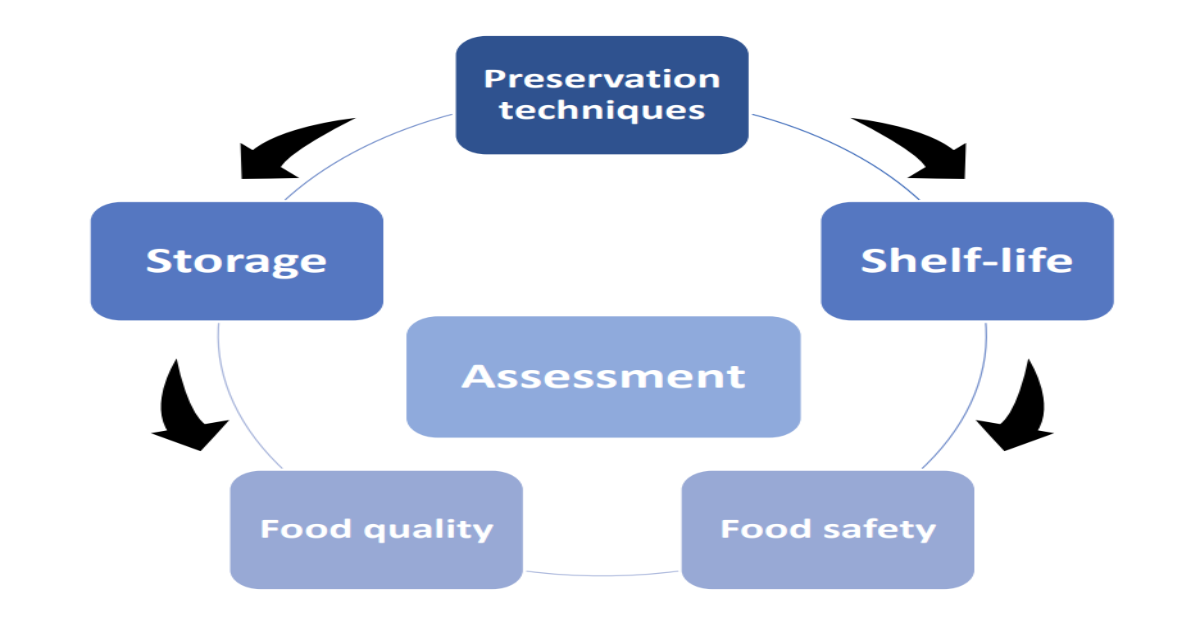
This is the second volume of the Special Issue Storage and Shelf-Life Assessment of Food Products of the journal Foods. Assessing food product storage and shelf life is critical to ensuring food safety, quality, and sustainability in the food industry. This entails a methodical assessment of numerous factors, such as oxygen, moisture, and microbial growth, among others, which affect food-storage circumstances and the time frame for which the desired characteristics of a food product can be preserved. In today's food industry, there is a growing focus on increasing shelf life while reducing the use of artificial additives and preservatives. Innovations in packaging technology, processing techniques, and natural preservatives have resulted from this focus. Therefore, this Special Issue is open to receiving research results and/or quality reviews focused on new challenges and new technological approaches related to the storage and shelf life of food products. 

Dr. Rui M. S. Cruz
Guest Editor

Manuscript Submission Information

Manuscripts should be submitted online at www.mdpi.com by registering and logging in to this website. Once you are registered, click here to go to the submission form. Manuscripts can be submitted until the deadline. All submissions that pass pre-check are peer-reviewed. Accepted papers will be published continuously in the journal (as soon as accepted) and will be listed together on the special issue website. Research articles, review articles as well as short communications are invited. For planned papers, a title and short abstract (about 250 words) can be sent to the Editorial Office for assessment.

Submitted manuscripts should not have been published previously, nor be under consideration for publication elsewhere (except conference proceedings papers). All manuscripts are thoroughly refereed through a single-blind peer-review process. A guide for authors and other relevant information for submission of manuscripts is available on the Instructions for Authors page. Foods is an international peer-reviewed open access semimonthly journal published by MDPI.

Please visit the Instructions for Authors page before submitting a manuscript. The Article Processing Charge (APC) for publication in this open access journal is 2900 CHF (Swiss Francs). Submitted papers should be well formatted and use good English. Authors may use MDPI's English editing service prior to publication or during author revisions.

Keywords

  • food storage
  • shelf-life assessment
  • food safety
  • food quality
  • food sustainability
  • food industry
  • storage parameters
  • preservation techniques
  • packaging innovations

Benefits of Publishing in a Special Issue

  • Ease of navigation: Grouping papers by topic helps scholars navigate broad scope journals more efficiently.
  • Greater discoverability: Special Issues support the reach and impact of scientific research. Articles in Special Issues are more discoverable and cited more frequently.
  • Expansion of research network: Special Issues facilitate connections among authors, fostering scientific collaborations.
  • External promotion: Articles in Special Issues are often promoted through the journal's social media, increasing their visibility.
  • Reprint: MDPI Books provides the opportunity to republish successful Special Issues in book format, both online and in print.

Further information on MDPI's Special Issue policies can be found here.

Published Papers (4 papers)

Order results
Result details
Select all
Export citation of selected articles as:

Research

17 pages, 4465 KB  
Article
Evaluation of Quality Changes in Huajiao Seed Oil During Different Storage Conditions
by Xiaowei Peng, Bofei Fu, Haibo Liu, Cuilan Fang and Jianquan Kan
Foods 2026, 15(10), 1708; https://doi.org/10.3390/foods15101708 - 13 May 2026
Viewed by 224
Abstract
Huajiao seed oil is a high-quality edible vegetable oil that is rich in unsaturated fatty acids. Because of this characteristic, it exhibits poor stability and is prone to oxidation. However, storage methods significantly influence oxidative stability. Therefore, this study investigated the effects of [...] Read more.
Huajiao seed oil is a high-quality edible vegetable oil that is rich in unsaturated fatty acids. Because of this characteristic, it exhibits poor stability and is prone to oxidation. However, storage methods significantly influence oxidative stability. Therefore, this study investigated the effects of temperature (4, 25, and 37 °C), light exposure, and packaging materials (glass bottle, PET bottle, and iron can) on the quality of Huajiao seed oil during storage. The results demonstrate that low temperature effectively retarded the increase in acid value, peroxide value, p-anisidine value, and the content of secondary oxidation products. It also slowed down the degradation of squalene and α-tocopherols. Prolonged light exposure accelerated the oxidative rancidity of Huajiao seed oil. Oil stored in glass bottles exhibited a lower degree of oxidation than that stored in PET bottles or iron cans, and when stored under conditions of 4 °C/glass bottle/darkness, it had a shelf life of up to 7.34 months. The main volatile compounds generated in Huajiao seed oil during storage were aldehydes and acids. Full article
(This article belongs to the Special Issue Storage and Shelf-Life Assessment of Food Products: 2nd Edition)
Show Figures

Figure 1

33 pages, 7361 KB  
Article
Comparison of Deep-Fat Frying and Tray Drying on Ambient Storage Stability and Quality of Instant Noodles with and Without Catfish Powder
by Somwang Lekjing, Paramee Noonim, Narin Charoenphun, Jaraslak Pechwang, Jessada Rattanawut, Thanamat Paongoen and Karthikeyan Venkatachalam
Foods 2026, 15(6), 983; https://doi.org/10.3390/foods15060983 - 10 Mar 2026
Viewed by 1387
Abstract
Instant noodle fortification with fish-derived proteins enhances nutritional value; however, the effects of catfish powder (CFP) combined with different drying methods and barrier packaging on prolonged storage stability remain unknown. This study incorporated 10% (w/w) CFP into wheat flour-based [...] Read more.
Instant noodle fortification with fish-derived proteins enhances nutritional value; however, the effects of catfish powder (CFP) combined with different drying methods and barrier packaging on prolonged storage stability remain unknown. This study incorporated 10% (w/w) CFP into wheat flour-based instant noodles processed by tray drying or deep-fat frying, yielding four treatments: control tray-dried (CD), control fried (CF), CFP tray-dried (TD), and CFP fried (TF). Samples were packed in metallized low-density polyethylene (M-LDPE) and evaluated every 15 days over 180 days. CFP fortification increased protein and mineral content, which remained stable throughout storage. CFP incorporation and frying elevated lipid oxidation, whereas tray drying improved oxidative stability. Drying methods influenced moisture attributes, product structure, rehydration behavior, and color; tray-dried noodles retained higher lightness and hardness, whereas fried noodles showed faster water uptake. Cooking performance remained largely stable, with gradual shifts noticed in CF and TF samples over time. Microbiological quality remained acceptable, with no pathogens detected. Multivariate analysis identified the drying method as the primary driver of quality differentiation, with storage time intensifying oxidation and color divergence. Overall, tray drying with M-LDPE packaging is recommended to optimize the nutritional and storage stability of CFP-fortified instant noodles. Full article
(This article belongs to the Special Issue Storage and Shelf-Life Assessment of Food Products: 2nd Edition)
Show Figures

Figure 1

14 pages, 669 KB  
Article
Mixing Ratio and Packaging Amount Synergistically Improved Antioxidant Properties of Baby Lettuce (Lactuca sativa L.) and Spinach (Spinacia oleracea L.) Mixes
by Lijuan Zhan, Cosimo M. Profico, Giuseppe Pignata, Manuela Casale, Han Gao, Marco Devecchi and Silvana Nicola
Foods 2026, 15(3), 499; https://doi.org/10.3390/foods15030499 - 1 Feb 2026
Viewed by 837
Abstract
Fresh baby leaves are commercially marketed in various mixing ratios and packaging amounts, creating very distinct microenvironmental conditions that significantly affect the postharvest quality of the fresh product. This study investigated the synergistic effect of mixing ratio (50LB, 50% lettuce + 50% spinach; [...] Read more.
Fresh baby leaves are commercially marketed in various mixing ratios and packaging amounts, creating very distinct microenvironmental conditions that significantly affect the postharvest quality of the fresh product. This study investigated the synergistic effect of mixing ratio (50LB, 50% lettuce + 50% spinach; 75LB, 75% lettuce + 25% spinach; 100LB, 100% lettuce) and packaging amount (125F, 125 g; 250F, 250 g) on the antioxidant qualities of baby lettuce and spinach mixes during 9 days of storage at 4 °C. The results showed that 50LB × 250F inhibited the degradation of chlorophyll and carotenoids and preserved 28% higher total antioxidant capacity (TAC), 43% higher total phenolic compounds (TPC), and 20% higher vitamin C (Vit.C) than the mean values of all samples, resulting in 0.8% lower O2 and 14.7% higher CO2 levels at the end of storage. TPC, Vit.C, and carotenoids were the main contributors to TAC, with strong correlations (p < 0.001). The total bacterial (TB) and yeast + mold (Y + M) counts were only affected by the mixing ratios, with TB increasing by only 1 Log10 cfu g−1 FW, and Y + M remaining within the same order of magnitude over time. After 9 days of storage, the leaves were still fresh and marketable. This study not only provides a practical strategy for the fresh-cut industry to enhance product quality but also underscores the significance of multifactorial synergism in salad mix packaging. Full article
(This article belongs to the Special Issue Storage and Shelf-Life Assessment of Food Products: 2nd Edition)
Show Figures

Figure 1

15 pages, 279 KB  
Article
The Effect of Storage Time on the Quality of Low-Sugar Apple Jams with Steviol Glycosides
by Marlena Pielak and Ewa Czarniecka-Skubina
Foods 2025, 14(21), 3678; https://doi.org/10.3390/foods14213678 - 28 Oct 2025
Viewed by 1364
Abstract
This study investigated the effect of storage time on the quality of low-sugar apple jams partially substituted with steviol glycosides (SGs). Apple jams were prepared with 0%, 10%, 20%, 30%, and 40% sugar replacement using highly purified SGs (95.1%). The jams were evaluated [...] Read more.
This study investigated the effect of storage time on the quality of low-sugar apple jams partially substituted with steviol glycosides (SGs). Apple jams were prepared with 0%, 10%, 20%, 30%, and 40% sugar replacement using highly purified SGs (95.1%). The jams were evaluated immediately after production and after 3 and 6 months of storage at 22 °C in the dark. Physicochemical analyses included dry matter, total soluble solids, vitamin C, total ash, pH, titratable acidity, malic acid, and color parameters (L*, a*, b*). Sensory and microbiological assessments were also carried out. During storage, the dry matter content significantly decreased from 41.4% (control) to 35.6% (40% SGs), while titratable acidity increased from 10.69° to 16.73° (p < 0.05), and pH values remained stable (3.15–3.29). Vitamin C content decreased significantly (from 0.56 mg/100 g to 0.19 mg/100 g; 33–66% degradation). The color of jams became lighter with increasing SG substitution (L* increased from 17.19 to 24.73; ΔE up to 9.66) and slightly darkened after storage (ΔL ≈ −1.0). Microbiological analysis confirmed complete safety, with total colony counts < 10 CFU/g and no presence of Listeria monocytogenes or coagulase-positive Staphylococcus. Sensory evaluation by a trained panel (10 assessors, aged 34–56 years, with similar training in fruit and vegetable preserve evaluation) showed that jams with 10–30% SG substitution maintained desirable apple aroma and sweetness, whereas higher SG levels enhanced metallic odor (0.12–0.95 c.u.) and bitterness (0.2–1.9 c.u.) while slightly reducing apple flavor intensity (p < 0.05). Despite these differences, all jams remained acceptable after 6 months of storage. Overall, replacing up to 40% of sucrose with steviol glycosides provided microbiological stability, controlled color changes, and acceptable sensory quality, supporting the production of low-sugar jams in line with clean-label and sustainability trends in modern food technology. Full article
(This article belongs to the Special Issue Storage and Shelf-Life Assessment of Food Products: 2nd Edition)
Back to TopTop