Skip to Content
  • 1.8
    CiteScore
  • 24 days
    Submission to First Decision
  • 6 days
    Acceptance to Publication

Engineering Proceedings

Engineering Proceedings is an open access journal dedicated to publishing findings resulting from conferences, workshops, and similar events, in all areas of engineering. The conference organizers and proceedings editors are responsible for managing the peer-review process and selecting papers for conference proceedings.

Get Alerted

Add your email address to receive forthcoming volumes of this journal.

All Articles (8,204)

  • Proceeding Paper
  • Open Access

Extended Reality (XR), encompassing Virtual Reality (VR), Augmented Reality (AR), and Mixed Reality (MR), has emerged as a powerful enabler of experiential learning for complex skill acquisition. Complex skills often require the integration of procedural knowledge, spatial reasoning, and adaptive decision-making, which are difficult to achieve through traditional instructional methods. This paper investigates XR-enabled experiential learning frameworks designed to support such skills by combining immersive simulation, multimodal interaction, and adaptive feedback. A layered XR learning architecture is presented, integrating simulation engines, interaction technologies, and learning analytics. Illustrative experimental results indicate that XR-based training improves task performance, procedural accuracy, and skill transfer while maintaining manageable cognitive load. The findings suggest that XR offers a scalable and effective approach for advanced skill training in engineering, healthcare, and technical education.

Eng. Proc.

14 October 2026

Immersive XR learning for complex skills.
  • Proceeding Paper
  • Open Access

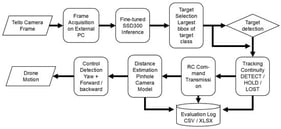
We investigated an object tracking control method for a low-cost compact UAV using single-shot multibox detector-based real-time object detection. The model employs Da-Jiang Innovation Tello and performs all inference on an external personal computer using Wi-Fi, avoiding onboard computation. Distance was estimated from bounding box size using a pinhole camera model and smoothed with an exponential moving average. A proportional control scheme was applied for visual servoing. Experiment results under six conditions showed stable tracking at medium distances, achieving a detection persistence rate above 0.98, demonstrating its feasibility and limitations.

Eng. Proc.

14 October 2026

Inference and tracking-control flow of the proposed UAV monitoring system.
  • Proceeding Paper
  • Open Access

Determination of Excavation Boundaries and Construction of the Profile of a Construction Site

  • Aleksandrina Bankova,
  • Stefan Tenev and
  • Anastas Yangyozov
  • + 1 author

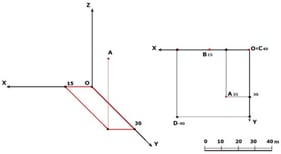
This article presents an in-depth theoretical analysis and a systematized methodology for the digital design of general site plans in construction engineering, based on the precise processing of digital topographic data. The focus of the research is the development of a complex engineering structure comprising a horizontal construction platform and two specific ramps—straight and curved—whose implementation is grounded in the fundamental principles of descriptive geometry and vertical planning. Through the application of the method of projections with numerical marks in an automated environment, the study demonstrates how geometric relationships can be transformed into an applied algorithm for defining complex spatial interrelations between design elevations. On this basis, not only the geometric configuration and dimensions of the structure are determined, but also its gradients, excavation volumes, and the flow directions of floodwater and stormwater runoff. The scientific novelty of the study lies in the systematization of a hodology for transitioning from theoretical geometric principles to the digitalized design of vertical planning within the environment of AutoCAD. The main contribution consists of the implementation of an algorithmic approach for generating an unambiguously defined and reversible model that integrates, within a unified process, the calculation of design contours, earthwork volumes, and hydrological runoff parameters. The study further demonstrates the operational interoperability of the generated data with highly specialized software modules, thereby providing a precise foundation for subsequent engineering-geological and linear infrastructure design.

Eng. Proc.

9 October 2026

Site plan.
  • Proceeding Paper
  • Open Access

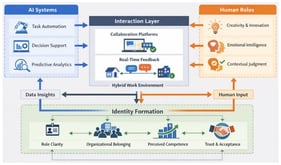
The integration of artificial intelligence (AI) into hybrid work environments has transformed organizational structures, collaboration patterns, and employee identity formation. Human–AI collaboration enables enhanced productivity through automation, decision support, and data-driven insights. However, it also reshapes how individuals perceive their roles, social belonging, and professional identity. This paper investigates the socio-technical dynamics of Human–AI collaboration, focusing on its impact on social identity formation in hybrid work settings. A multi-layer framework combining AI-assisted workflows, social interaction modeling, and identity perception analysis is proposed. Experimental findings indicate that AI integration improves efficiency and collaboration quality, but introduces challenges related to trust, role ambiguity, and identity shifts. Survey results reveal that employees’ acceptance of AI is strongly influenced by transparency, perceived fairness, and organizational culture. The study concludes that successful Human–AI collaboration requires balanced integration of technology and human-centric design to support identity stability and organizational cohesion.

Eng. Proc.

13 October 2026

Human–AI Collaboration and Social Identity Formation Framework in Hybrid Work.

Highly Accessed Articles

News & Conferences

Latest Volumes

Open for Submission

Journal Sections

2nd International Conference on Green Aviation (ICGA 2024)
Reprint

2nd International Conference on Green Aviation (ICGA 2024)

Editors: Weihong Zhang, Shichun Yang, Leiting Dong, Xungang Diao, Shijun Yin, Lixin Guan, Zuxi Xia, Xue Zhang
XFacebookLinkedIn
Eng. Proc. - ISSN 2673-4591