Skip to Content

European Journal of Investigation in Health, Psychology and Education

European Journal of Investigation in Health, Psychology and Education (EJIHPE) is a scientific, peer-reviewed, open access journal that publishes original articles and systematic reviews or meta-analyses related to research on human development throughout the life cycle, published monthly online. It is the official journal of the Spanish Scientific Society for Research and Training in Health Sciences (SOCI-CCSS) (formerly the University Association of Education and Psychology (ASUNIVEP)).
  • Open Access— free for readers, with article processing charges (APC) paid by authors or their institutions.
  • High Visibility: indexed within Scopus, ESCI (Web of Science), PMC, PubMed, and other databases.
  • Journal Rank: JCR - Q1 (Psychology, Clinical) / CiteScore - Q1 (Clinical Psychology)
  • Rapid Publication: manuscripts are peer-reviewed and a first decision is provided to authors approximately 27 days after submission; acceptance to publication is undertaken in 3.6 days (median values for papers published in this journal in the first half of 2026).
  • Recognition of Reviewers: Reviewers whose reports are timely and of high quality receive an APC discount voucher for a future publication in an MDPI journal. Become a reviewer.

Get Alerted

Add your email address to receive forthcoming issues of this journal.

All Articles (1,322)

  • Systematic Review
  • Open Access

Measurement Heterogeneity and Pooled Prevalence of Academic Procrastination Among Health Sciences Students: A Systematic Review and Meta-Analysis

  • Víctor Juan Vera-Ponce,
  • Fiorella E. Zuzunaga-Montoya and
  • Mario J. Valladares-Garrido
  • + 6 authors

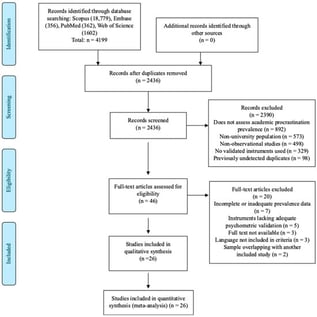
Background/Objectives: In health sciences students, academic procrastination can affect performance, mental health, and professional development. This systematic review and meta-analysis aimed to estimate the pooled prevalence of study-defined elevated academic procrastination among health sciences students and to describe the methodological and measurement characteristics of the instruments used to assess it. Methods: A systematic review with meta-analysis was conducted. We included observational studies reporting the prevalence of academic procrastination among undergraduate students enrolled in health sciences programs, including medicine, nursing, dentistry, psychology, and related health professions. The reported measurement characteristics of the instruments used to assess academic procrastination, including validity, reliability, and cut-off criteria, were reviewed and systematized. The meta-analysis was performed employing a random-effects model and the double arcsine transformation (Freeman–Tukey) to stabilize variance. Subgroup analyses and meta-regressions were calculated to explore possible sources of variation. Results: Twenty-six studies were included with a total of 8211 students. The pooled prevalence of study-defined elevated academic procrastination was 55.35% (95% CI: 46.55–63.98%, I2 = 98%). The prevalence was higher in nursing students (62.60%), followed by psychology (61.67%), medicine (52.62%), and dentistry (45.76%). The most commonly used instruments were the Procrastination Assessment Scale for Students (38.5%), Academic Procrastination Scale (23.1%), Tuckman’s Procrastination Scale or its adaptations (15.4%), Academic Procrastination Scale by McCloskey and Scielzo or related APS versions (11.5%), Lay’s Procrastination Scale (7.7%), and MHCA (3.8%). Most studies used non-probabilistic sampling, and only 8% validated instruments specifically for their target populations. Reliability coefficients were generally adequate (α = 0.75–0.95). The meta-regression revealed a slight upward trend in prevalence as a function of publication year, although this was not statistically significant. Conclusions: Academic procrastination appears to be frequent among health sciences students; however, the pooled estimate should be interpreted as a descriptive summary of study-defined prevalence rather than as a universal prevalence estimate, given the very high between-study heterogeneity and the variability in instruments, cut-off criteria, and population-specific validation. Educational institutions should implement prevention and support strategies, while research should prioritize instrument validation, measurement standardization, and transparent case definition criteria.

Flowchart of study selection.
  • Article
  • Open Access

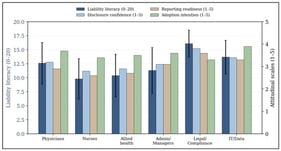
Background and Objectives: Errors generated by clinical artificial intelligence (AI) can obscure responsibility and complicate disclosure and incident reporting. This exploratory study examined AI-error liability literacy and its behavioral correlates among Romanian healthcare professionals. Materials and Methods: An exploratory, single-center cross-sectional survey was conducted from February to May 2026 among 109 clinical, managerial, legal/compliance, and IT/data professionals. No a priori sample-size calculation was performed; only moderate or larger effects were detectable. Participants completed a 20-item AI Error Liability Literacy Index and five-point behavioral measures. Analyses included Spearman correlations, k-means clustering, logistic regression, and covariate-adjusted mediation, with Firth penalization, role-adjusted, use-stratified, and competing-model sensitivity analyses, and bootstrap validation. Results: Mean liability literacy was 11.6 ± 4.2/20. Familiarity was higher for the General Data Protection Regulation (GDPR) (67.9%) than for the EU AI Act (24.8%). Literacy correlated with disclosure confidence (ρ = 0.49; 95% CI [0.33, 0.62]), an association that was attenuated but persisted after adjustment for professional role (partial ρ = 0.41), which correlated with adoption intention (ρ = 0.38), as did trust (ρ = 0.43); defensive stance correlated negatively (ρ = −0.31). Three exploratory profiles were identified (bootstrap Jaccard 0.71–0.82) that also differed on variables not used in clustering, and an indirect statistical association between literacy and adoption intention through disclosure confidence was observed (indirect effect 0.12; 95% CI [0.04, 0.22]), although concurrent measurement precludes causal or temporal interpretation. Under penalization, associations for literacy, trust, and disclosure confidence persisted; defensive stance and prior training did not. Conclusions: In this exploratory sample, adoption readiness was associated with regulatory knowledge, disclosure confidence, and calibrated trust. These hypothesis-generating findings require confirmation in larger, longitudinal studies before informing practice, and the appropriate goal is calibrated rather than maximal adoption.

Professional-role means for liability literacy, disclosure confidence, reporting readiness, and adoption intention. Error bars indicate standard deviations. Between-role differences were significant for liability literacy (p < 0.001), disclosure confidence (p = 0.013), and reporting readiness (p = 0.003), but not for adoption intention (p = 0.302).
  • Article
  • Open Access

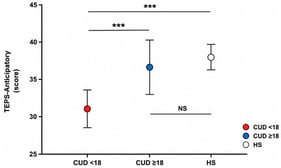
Background: Cannabis is the most widely used illicit substance, particularly among youth. Earlier onset is associated with poorer clinical trajectories in cannabis use disorder (CUD), but its relationship with hedonic–motivational components remains unclear. Methods: Outpatients with severe CUD (n = 121) were stratified by age at onset (<18 vs. ≥18 years) and compared on hedonic–motivational functioning using the Snaith–Hamilton Pleasure Scale (SHAPS) and the Temporal Experience of Pleasure Scale (TEPS). Healthy subjects (n = 112) served as a reference group. Results: CUD groups were comparable in clinical characteristics and cannabis use patterns. TEPS-Anticipatory scores were lower in patients with onset before age 18 (p < 0.001) and remained associated with onset group after adjustment for gender, education, and CUD duration (p < 0.001). When healthy subjects were included, significant group effects were observed (p < 0.001). Post hoc comparisons confirmed reduced TEPS-Anticipatory scores in early-onset vs. both later-onset and control groups, and higher SHAPS scores in both CUD groups vs. controls. Conclusions: CUD onset before age 18 is associated with reduced anticipatory pleasure, suggesting a greater involvement of anticipatory than other dimensions of hedonic functioning. Age at onset may therefore help identify patients with greater motivational vulnerability and inform early, targeted prevention and intervention strategies.

Between-group differences in anticipatory pleasure (TEPS-Anticipatory) with age and gender as covariates (ANCOVA). Adjusted estimated marginal means of TEPS-Anticipatory scores across groups. Error bars represent 95% confidence intervals. Abbreviations: ANCOVA, Analysis of Covariance; CUD, Cannabis Use Disorder; HS, Healthy Subjects; NS, not significant; TEPS, Temporal Experience of Pleasure Scale. Bonferroni-adjusted pairwise comparisons are indicated: *** p &lt; 0.001.
  • Article
  • Open Access

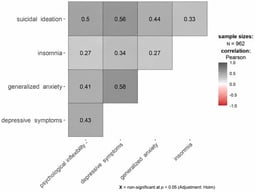
Introduction: Suicidal ideation during pregnancy is an important public health concern. Psychological inflexibility may be associated with emotional and sleep-related symptoms linked to suicidal ideation; however, these patterns of association remain insufficiently understood in pregnant women. Objective: The objective was to examine the relationship between psychological inflexibility and suicidal ideation in pregnant women by evaluating the multiple mediating roles of depressive symptoms, insomnia, and generalized anxiety. Method: A quantitative, cross-sectional associative study using latent variables was conducted with 962 pregnant women receiving care at the National Maternal and Perinatal Institute (INMP), located in Cercado de Lima, Lima, Peru, between October and December 2025. Participants completed the Acceptance and Action Questionnaire-II (AAQ-II), Frequency of Suicidal Ideation Inventory (FSII), Athens Insomnia Scale (AIS), Patient Health Questionnaire-2 (PHQ-2), and Generalized Anxiety Disorder-2 (GAD-2). Structural equation modeling (SEM) was performed using R version 4.5.1 within the RStudio Version 4.5.1 environment. Results: The proposed model showed a good fit, scaled χ2(179) = 506.334, p < 0.001, robust CFI = 0.968, robust TLI = 0.963, robust RMSEA = 0.052, 90% CI [0.046, 0.057], and SRMR = 0.030. Psychological inflexibility showed a significant direct association with suicidal ideation (β = 0.246, p < 0.001) and significant indirect associations through depressive symptoms (β = 0.245, p < 0.001) and insomnia (β = 0.030, p = 0.007), whereas the indirect association through generalized anxiety was not significant (β = 0.007, p = 0.749). The total indirect association was significant (β = 0.282, p < 0.001), while the direct association remained statistically significant after inclusion of the mediators. Conclusions: Psychological inflexibility was associated with suicidal ideation among pregnant women, with depressive symptoms and insomnia showing significant indirect associations. These cross-sectional findings identify relevant correlates of suicidal ideation that warrant further longitudinal investigation.

Correlation matrix among psychological inflexibility, insomnia, generalized anxiety, depressive symptoms, and suicidal ideation in pregnant women.

Highly Accessed Articles

News & Conferences

Latest Issues

Open for Submission

Journal Sections

Parenting across the Lifespan
Reprint

Parenting across the Lifespan

Perinatal Mental Health, Infant Feeding, and Child Development
Editors: Leanne Jackson
Health and Well-Being among Older Adults
Reprint

Health and Well-Being among Older Adults

Current Trends and Future Challenges
Editors: Paulo Santos-Costa, Manuela Vilar, Liliana B. Sousa
XFacebookLinkedIn
Eur. J. Investig. Health Psychol. Educ. - ISSN 2254-9625