New Insights into Everyday Heritage: Surface Analysis and Conservation

A special issue of Coatings (ISSN 2079-6412). This special issue belongs to the section "Surface Characterization, Deposition and Modification".

Deadline for manuscript submissions: 31 July 2026 | Viewed by 5077

Special Issue Editors


E-Mail Website
Guest Editor
Heritage Conservation Laboratory, Faculty of Humanities and Arts, Macau University of Science and Technology, Taipa, Macau 999078, China
Interests: application of AI in architecture; regional cultural architecture in china; sustainable building design for data centers
Special Issues, Collections and Topics in MDPI journals

Special Issue Information

Dear Colleagues,

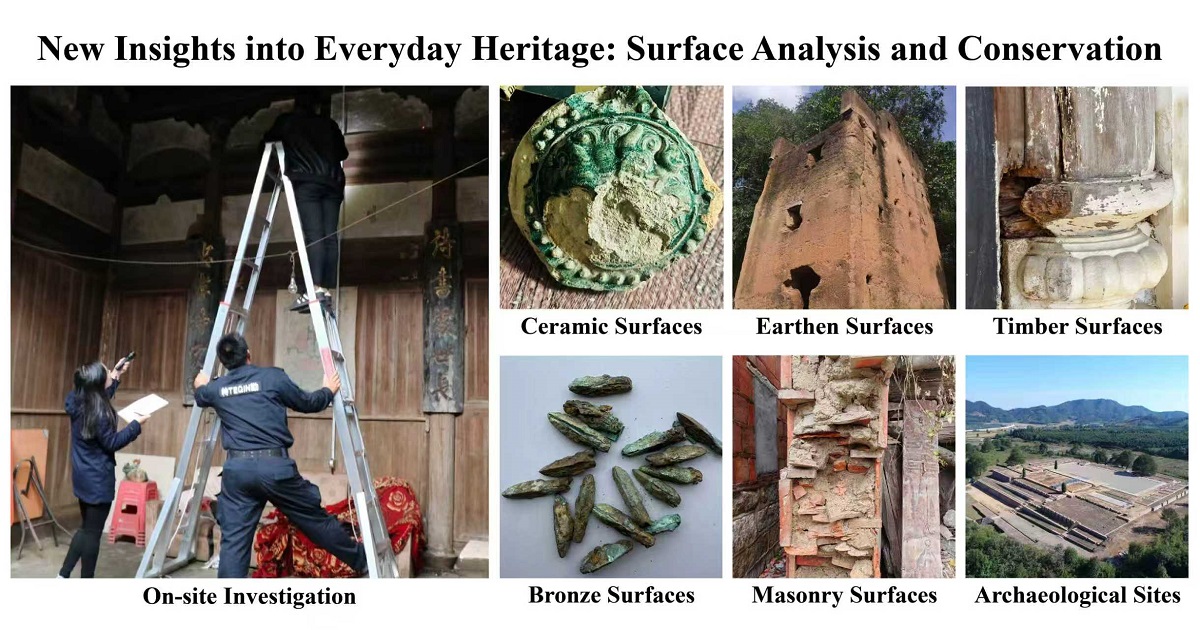
Everyday heritage is an “ordinary cultural carrier” that originates from the daily production and life practices of human beings and carries the cultural memory and identity of a specific group. It includes both tangible material remains and intangible practical wisdom. Its core characteristics are “daily” and “life-oriented”. Different from “iconic heritage”, with grand narrative attributes such as monuments and palaces, it is rooted in the daily life of ordinary people, such as their food, clothing, housing, transportation, work, and rest. It is the most vivid and lasting presentation of culture in trivial daily life. Everyday heritage can be divided into two dimensions: (1) Material everyday heritage: Physical objects and spaces directly related to daily needs, such as rural houses that carry the wisdom of regional life, traditional tools accompanying labor, utensils that record daily aesthetic and practical needs, and public spaces that constitute daily activity scenes. (2) Intangible daily life heritage: Practices, skills, and rituals embedded in daily processes, such as technical methods related to traditional production. However, due to its low “monumentality”, everyday heritage has long been marginalized in conservation discourse. Its fragile surfaces, such as peeling paint or coatings on vernacular architectural heritage or corroded metalware, are often overlooked during restoration. Intangible practices associated with these surfaces, such as the art of polishing pottery to a specific sheen or the techniques and rituals used in traditional households, are at risk of disappearing amidst rapid urbanization and digitization. Conventional conservation frameworks prioritize the “authenticity of grand architecture” over the “integrity of everyday life”, failing to address the unique challenges of preserving these mundane yet vital cultural expressions.

This Special Issue aims to rethink the conservation of everyday heritage through a critical perspective on “surface analysis and conservation”. We invite original research from interdisciplinary perspectives, including but not limited to cultural heritage studies, materials science, conservation science, cultural anthropology, and urban planning, to explore how surface characterization technologies influence the value of everyday heritage and how targeted conservation strategies can preserve its authenticity and vitality.

The scope of this Special Issue includes, but is not limited to, the following topics:

  • Surface material analysis of everyday heritage artifacts;
  • Conservation challenges of fragile surfaces;
  • Intangible surface-related practices in conservation;
  • Digital technologies for surface documentation and conservation;
  • Mechanisms of surface corrosion on everyday heritage.

We look forward to receiving your contributions.

Dr. Yile Chen
Dr. Liang Zheng
Guest Editors

Manuscript Submission Information

Manuscripts should be submitted online at www.mdpi.com by registering and logging in to this website. Once you are registered, click here to go to the submission form. Manuscripts can be submitted until the deadline. All submissions that pass pre-check are peer-reviewed. Accepted papers will be published continuously in the journal (as soon as accepted) and will be listed together on the special issue website. Research articles, review articles as well as short communications are invited. For planned papers, a title and short abstract (about 250 words) can be sent to the Editorial Office for assessment.

Submitted manuscripts should not have been published previously, nor be under consideration for publication elsewhere (except conference proceedings papers). All manuscripts are thoroughly refereed through a single-blind peer-review process. A guide for authors and other relevant information for submission of manuscripts is available on the Instructions for Authors page. Coatings is an international peer-reviewed open access monthly journal published by MDPI.

Please visit the Instructions for Authors page before submitting a manuscript. The Article Processing Charge (APC) for publication in this open access journal is 2600 CHF (Swiss Francs). Submitted papers should be well formatted and use good English. Authors may use MDPI's English editing service prior to publication or during author revisions.

Keywords

  • everyday heritage
  • heritage science
  • conservation
  • architectural surface
  • intangible cultural heritage surface

Benefits of Publishing in a Special Issue

  • Ease of navigation: Grouping papers by topic helps scholars navigate broad scope journals more efficiently.
  • Greater discoverability: Special Issues support the reach and impact of scientific research. Articles in Special Issues are more discoverable and cited more frequently.
  • Expansion of research network: Special Issues facilitate connections among authors, fostering scientific collaborations.
  • External promotion: Articles in Special Issues are often promoted through the journal's social media, increasing their visibility.
  • Reprint: MDPI Books provides the opportunity to republish successful Special Issues in book format, both online and in print.

Further information on MDPI's Special Issue policies can be found here.

Published Papers (7 papers)

Order results
Result details
Select all
Export citation of selected articles as:

Research

40 pages, 27233 KB  
Article
Microclimatic Effects and Durability of Surface Soil Materials in Fujian Tulou Rammed-Earth Wall
by Lina Yan, Huiqin Zeng, Jianqiang Yin, Yi Zhang and Xingkang Jia
Coatings 2026, 16(3), 301; https://doi.org/10.3390/coatings16030301 - 1 Mar 2026
Viewed by 479
Abstract
This study focuses on the surface materials of rammed-earth walls of Fujian Tulou in Xiaoshu Village, exploring the microscopic characteristics of rammed earth in different orientations and the microclimate adaptation mechanism and degradation law of the walls. Specimens were collected from the inner [...] Read more.
This study focuses on the surface materials of rammed-earth walls of Fujian Tulou in Xiaoshu Village, exploring the microscopic characteristics of rammed earth in different orientations and the microclimate adaptation mechanism and degradation law of the walls. Specimens were collected from the inner and outer surface soil layers of the four directional walls of a representative Tulou. SEM, XRD, and XRF analyses were performed to characterize the materials’ microstructure, mineral composition, and elemental distribution, with the test results correlated to the microclimatic conditions of each wall orientation. The conclusion is as follows: (1) The microscopic particle size of rammed earth exhibits significant directional differences at dual scales of 300 nm and 2 μm. Solar radiation duration and wind speed are positively correlated with the coefficient of variation in particle size. (2) The southeast and north walls were the most severely damaged (soil loss, quartz enrichment: 79.9%), the west wall had minor cracks, the north wall showed slight salt crystallization (Halite = 0.3%), and the east wall exhibited moisture-related moss growth. (3) Traditional organic additives (bamboo strips, rice husks) mitigate deterioration and enhance structural integrity. (4) The diversity of soil color (related to hematite and iron oxide) can serve as a simple indicator of deterioration. This study has proposed differentiated protection schemes for the “microclimate-compounds” on walls facing different directions on the rammed-earth surface of the Tulou. The findings provide a theoretical basis for orientation-specific conservation of Tulou heritage and offer scientific references for the modification of modern rammed-earth materials. Full article
Show Figures

Graphical abstract

19 pages, 3397 KB  
Article
Nyemo Xuelai Tibetan Paper (Tibet, China): Research on Synergistic Correlations Between Surface Properties, Aging Resistance Mechanisms, Traditional Papermaking Crafts, and Protection Strategies
by Zhipeng Xiao, Xinyun Zhang, Yanxiang Li, Zhengfeng Liu, Haomiao Li, Xinyuan Zhang and Ruiying Ma
Coatings 2026, 16(3), 273; https://doi.org/10.3390/coatings16030273 - 25 Feb 2026
Cited by 1 | Viewed by 427
Abstract
As a representative intangible cultural heritage of Tibet, China, Nyemo Xuelai Tibetan paper has maintained its millennium-old inheritance, relying on its unique surface properties and aging resistance. However, at present, there remains a research gap regarding the surface characteristics of Nimu Xuela Tibetan [...] Read more.
As a representative intangible cultural heritage of Tibet, China, Nyemo Xuelai Tibetan paper has maintained its millennium-old inheritance, relying on its unique surface properties and aging resistance. However, at present, there remains a research gap regarding the surface characteristics of Nimu Xuela Tibetan paper and their correlation with aging mechanisms. To reveal their intrinsic mechanisms and provide scientific protection schemes, this study systematically analyzed the surface microstructure, chemical composition, pH variation, and aging resistance of 7 groups of Xuelai Tibetan paper samples using SEM-EDS, ATR-FTIR, pH testing, and dry-heat aging experiments (105 °C, 144 h). Combined with traditional crafts, the formation mechanism of properties was clarified, and multi-dimensional protection strategies were proposed. The results show that aging time exerted a highly significant effect on the D65 brightness, pH value, and tensile index of Xuelai Tibetan paper (p < 0.001). The fibers of Xuelai Tibetan paper are flat and ribbon-like, with an aspect ratio of 50–80, forming a tightly intertwined network structure. The core chemical component is cellulose with a relatively low lignin content, and the elemental composition is dominated by carbon and oxygen. Some samples contain calcium-based substances (0%–1.79%) derived from salt lake alkali. After aging, the D65 blue light diffuse reflectance factor (abbreviated as D65 brightness) retention rate of the samples ranges from 84.81% to 92.21%, and the tensile strength retention rate ranges from 30.78% to 90.00%. Calcium-based substances can inhibit the hydrolysis of cellulose glycosidic bonds through a weak alkaline buffering effect, improving aging-resistance stability. The excellent performance of Tibetan paper originates from the synergistic effect of traditional crafts: Stellera chamaejasme as raw material provides the material basis of high cellulose and long fibers; alkaline cooking removes lignin and retains the buffering components; manual beating optimizes the fiber’s interweaving structure; and natural air-drying ensures surface uniformity. Based on this, a multi-dimensional strategy of preventive protection and living inheritance is proposed: cultural relic protection focuses on pH stabilization, controlled storage, and non-destructive cleaning, and craft inheritance achieves sustainable development through raw material standardization, process refinement, and digital training. This study establishes the craft–characteristic–performance correlation mechanism of Xuelai Tibetan paper, verifying the statistical significance of aging-induced property changes and providing a scientific basis for the protection and inheritance of traditional handmade paper. Full article
Show Figures

Graphical abstract

21 pages, 12415 KB  
Article
Novel Adhesive Film for Glyoxal-Dehydrated Lacquerware: Composite Modification of Natural Lacquer with Soy Protein Isolate and Nano-SiO2
by Zifan Chen, Xiaolong Zhang, Peng Xia, Xiaohan Qi, Xueling Zou and Shuya Wei
Coatings 2026, 16(2), 262; https://doi.org/10.3390/coatings16020262 - 21 Feb 2026
Viewed by 436
Abstract
A novel composite adhesive for lacquer film restoration was developed by modifying natural lacquer with Tween-20, soy protein isolate (SPI), and nano-SiO2 to address the bonding failure and interfacial instability of glyoxal-dehydrated lacquerware. The optimal formulation (70% lacquer, 10% Tween-20, 15% SPI, [...] Read more.
A novel composite adhesive for lacquer film restoration was developed by modifying natural lacquer with Tween-20, soy protein isolate (SPI), and nano-SiO2 to address the bonding failure and interfacial instability of glyoxal-dehydrated lacquerware. The optimal formulation (70% lacquer, 10% Tween-20, 15% SPI, 5% nano-SiO2) achieved a shear bond strength of 3.8 ± 0.3 MPa, corresponding to a 58% increase compared with pure lacquer (2.4 ± 0.2 MPa). After 30 days of immersion in a pH 4.0 acidic solution, the adhesive retained 91 ± 3% of its initial shear strength, significantly higher than that of pure lacquer (65 ± 5%). Under accelerated aging conditions (50 °C and 95% relative humidity), the composite adhesive exhibited minimal weight gain (1.0 ± 0.2%) and no visible mold growth, whereas pure lacquer showed greater moisture uptake (3.0 ± 0.4%) accompanied by evident fungal colonization. The cured film displayed good color compatibility (ΔE ≈ 2.0) and improved flexibility (elongation at break: 12.5% vs. 4.2%). XPS and FTIR analyses suggested enhanced interfacial bonding through hydrogen-bond interactions and possible Si–O–C linkages at the wood–lacquer interface. Practical restoration of a Warring States period lacquer ear cup (China) demonstrated effective and stable reattachment of detached fragments with satisfactory visual integration and long-term durability. Overall, this work provides a compatible and durable material strategy for the conservation of glyoxal-dehydrated lacquerware. Full article
Show Figures

Figure 1

22 pages, 42228 KB  
Article
The Mechanism of Surface Blackening and Deterioration of a Traditional Construction Material, CATC, for Coastal Stone Masonry Jointing
by Yuhong Ding, Li Chen, Yili Fu, Yujing Lai, Tengfei Ma and Ruiming Guan
Coatings 2026, 16(2), 251; https://doi.org/10.3390/coatings16020251 - 15 Feb 2026
Viewed by 466
Abstract
Crust Ash Triad Clay (CATC) is a traditional construction material commonly used for jointing coastal stone masonry in Southeast China. Its surface is prone to blackening in coastal environments. This study focused on traditional stone masonry residences within the protection area of Quanzhou [...] Read more.
Crust Ash Triad Clay (CATC) is a traditional construction material commonly used for jointing coastal stone masonry in Southeast China. Its surface is prone to blackening in coastal environments. This study focused on traditional stone masonry residences within the protection area of Quanzhou Shihu Ancient Wharf. A systematic detection and analysis were conducted using combined technologies: XRD, Raman, SEM-EDS, and 16S rRNA sequencing. The results revealed that the CATC substrate is mainly composed of quartz and feldspar minerals, with calcite and other substances as binding components. The black coating on the surface is a loose material attached to the substrate, retaining some of the original minerals. The core mechanism of blackening lies in the coastal environment’s abundance of salt spray and humidity. The sulfate substances carried by rainwater react synergistically with metal ions such as Cu, Fe, and Mn in the substrate under the metabolic action of anaerobic bacteria, producing metal sulfide minerals. Photoautotrophic bacteria generate oxygen through photosynthesis, promoting the oxidation and acidification of metal sulfide. This process directly triggers the chain deterioration of the CATC substrate. Based on the principle of “minimal intervention”, physical waterproofing or laser stain removal can be implemented. This study provides scientific support for optimizing the durability and achieving precise protection of traditional building materials in coastal stone structure heritage. Full article
Show Figures

Figure 1

17 pages, 13859 KB  
Article
Research on the BEM Reinforcement Mechanism of the POSF Method for Ocean Stone Construction
by Yuhong Ding, Yujing Lai, Jinxuan Wang, Yili Fu, Li Chen, Tengfei Ma and Ruiming Guan
Coatings 2026, 16(1), 145; https://doi.org/10.3390/coatings16010145 - 22 Jan 2026
Cited by 1 | Viewed by 609
Abstract
The Planting Oysters to Strengthen the Foundation (POSF) method, as a construction technique for coastal stone structures in the Northern Song Dynasty of China (1059), has been preserved to this day. Exploring its long-term reinforcement mechanism can provide theoretical support and practical guidance [...] Read more.
The Planting Oysters to Strengthen the Foundation (POSF) method, as a construction technique for coastal stone structures in the Northern Song Dynasty of China (1059), has been preserved to this day. Exploring its long-term reinforcement mechanism can provide theoretical support and practical guidance for the protection and sustainable development of world marine cultural heritage. This article uses Crustacean Ash Triad Clay (CATC) from Shihu Ancient Wharf in Quanzhou as a case study and conducts a systematic investigation using XRD, Raman, SEM-EDS, FTIR, and 16S rRNA high-throughput sequencing. The results show that CATC has a core skeleton of 94.6% quartz, with potassium feldspar, dolomite, and metal compounds as auxiliary components; that its 19.04% porosity provides enrichment space for positively charged ions and tide-borne microorganisms; that electrostatic adsorption between barnacle adhesive and the material achieves physical reinforcement; and that microbial metabolism promotes dolomite formation, producing chemical reinforcement. Thus, the ternary coupling of Biology–Environment–Materials forms a BEM long-term reinforcement mechanism suitable for low-carbon construction in the ocean. Full article
Show Figures

Graphical abstract

19 pages, 5163 KB  
Article
Differentiated Surface Deterioration Mechanisms of the Macao Rammed Earth Wall Based on Terrestrial Laser Scanning
by Yiru Zheng, Kam Kin Lao, Guang Huang, Meng Wang, Wei Liu and Yalong Xing
Coatings 2026, 16(1), 12; https://doi.org/10.3390/coatings16010012 - 22 Dec 2025
Viewed by 874
Abstract
The Macao rammed earth wall is a typical representative of cultural heritage in hot-humid regions. However, the spatial differentiation mechanisms of its surface deterioration remain unclear. This study, taking the Old Wall in Macao as a case, combined field investigation with terrestrial laser [...] Read more.
The Macao rammed earth wall is a typical representative of cultural heritage in hot-humid regions. However, the spatial differentiation mechanisms of its surface deterioration remain unclear. This study, taking the Old Wall in Macao as a case, combined field investigation with terrestrial laser scanning (TLS) and thermal imaging to systematically reveal the spatial distribution patterns of surface pathologies and their hydrological driving mechanisms. Based on structural separations and deterioration characteristics, the wall was divided into three adjacent sections for comparative analysis. The main conclusions are as follows: (1) Quantitative analysis showed the section with a gentler slope (77%) experienced significant flatness deterioration due to uneven settlement, promoting internal water penetration that triggered severe undercutting (35% of its surface area); (2) The other two sections maintained steep slopes (86%) that promoted surface runoff, which combined with adjacent building drainage led to significant biological colonization (68% in the section most affected by nearby temple drainage); (3) Thermal imaging verified the correlation between water infiltration cores and temperature-flatness anomalies, enabling construction of a coupled “geometry-hydrology-pathology” model that elucidates the complete causal chain from foundation settlement to surface pathology. This study provides a theoretical basis and technical support for the differentiated protection of rammed earth heritage in hot-humid environments. Full article
Show Figures

Figure 1

29 pages, 18594 KB  
Article
Weathering and Restoration of Traditional Rammed-Earth Walls in Fujian, China
by Carlos Ka Nok Lo and Junxin Song
Coatings 2025, 15(12), 1491; https://doi.org/10.3390/coatings15121491 - 17 Dec 2025
Viewed by 886
Abstract
Traditional rammed-earth buildings, a key component of Fujian’s architectural heritage, are increasingly vulnerable to environmental degradation and urban relocation. This study focuses on the weathering patterns and restoration strategies of the rammed-earth walls at Zishantang, a typical 19th-century residence in Yongtai County. Through [...] Read more.
Traditional rammed-earth buildings, a key component of Fujian’s architectural heritage, are increasingly vulnerable to environmental degradation and urban relocation. This study focuses on the weathering patterns and restoration strategies of the rammed-earth walls at Zishantang, a typical 19th-century residence in Yongtai County. Through SEM, EDS, XRD, and Raman spectroscopy, eight groups of samples were analyzed to evaluate microstructural deterioration under different forms of environmental exposure. Results show that walls lacking intact soot ash coatings (“Wu-yan-hui”) exhibit greater porosity, microcracking, and mineral loss—particularly on exposed facades. These findings highlight the protective role of traditional soot–lime coatings and suggest that orientation and exposure-specific conservation strategies are essential. This study provides a scientific basis for preserving the material authenticity and structural integrity of relocated rammed-earth heritage in humid subtropical climates. Full article
Show Figures

Figure 1

Back to TopTop