



Cells 2024, 13(15), 1290; https://doi.org/10.3390/cells13151290 - 31 Jul 2024
Cited by 3 | Viewed by 2066
Abstract
►
Show Figures
Muscle-derived mesenchymal stromal cells (mdMSCs) hold great promise in regenerative medicine due to their immunomodulatory properties, multipotent differentiation capacity and ease of collection. However, traditional in vitro expansion methods use fetal bovine serum (FBS) and have numerous limitations including ethical concerns, batch-to-batch variability,
[...] Read more.
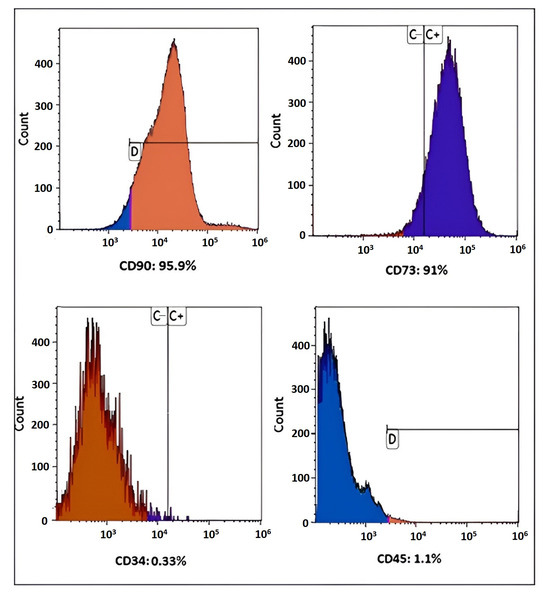
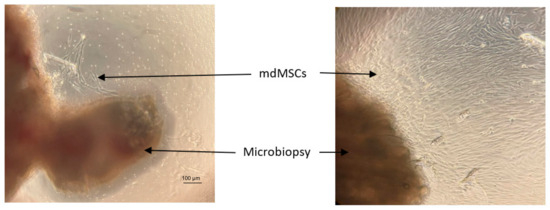
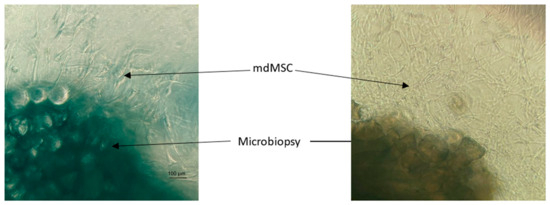
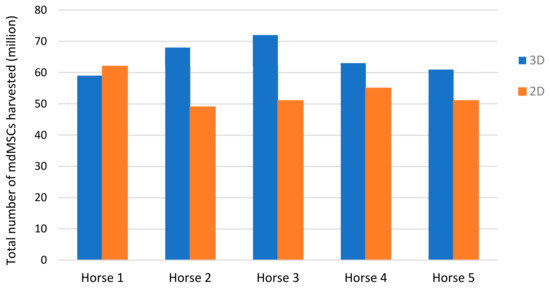
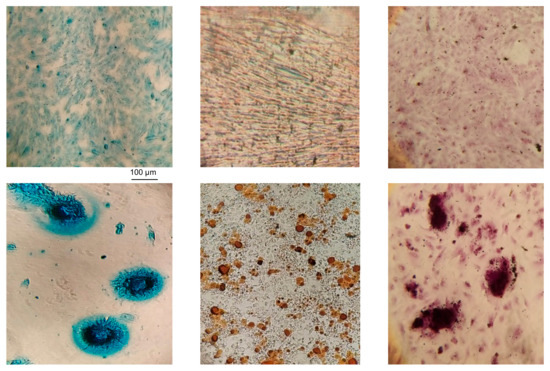
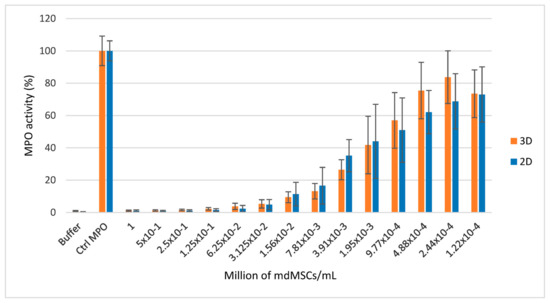
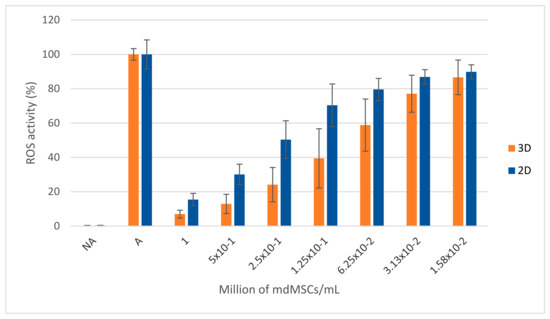
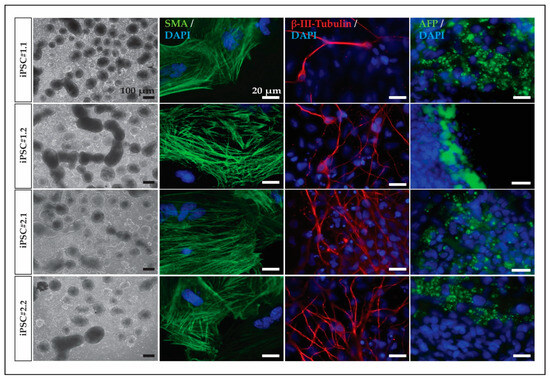
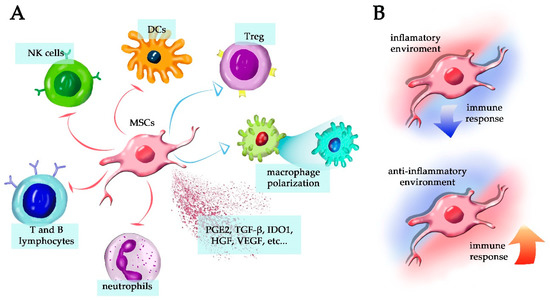
Muscle-derived mesenchymal stromal cells (mdMSCs) hold great promise in regenerative medicine due to their immunomodulatory properties, multipotent differentiation capacity and ease of collection. However, traditional in vitro expansion methods use fetal bovine serum (FBS) and have numerous limitations including ethical concerns, batch-to-batch variability, immunogenicity, xenogenic contamination and regulatory compliance issues. This study investigates the use of 10% equine platelet lysate (ePL) obtained by plasmapheresis as a substitute for FBS in the culture of mdMSCs in innovative 2D and 3D models. Using muscle microbiopsies as the primary cell source in both models showed promising results. Initial investigations indicated that small variations in heparin concentration in 2D cultures strongly influenced medium coagulation with an optimal proliferation observed at final heparin concentrations of 1.44 IU/mL. The two novel models investigated showed that expansion of mdMSCs is achievable. At the end of expansion, the 3D model revealed a higher total number of cells harvested (64.60 ± 5.32 million) compared to the 2D culture (57.20 ± 7.66 million). Trilineage differentiation assays confirmed the multipotency (osteoblasts, chondroblasts and adipocytes) of the mdMSCs generated in both models with no significant difference observed. Immunophenotyping confirmed the expression of the mesenchymal stem cell (MSC) markers CD-90 and CD-44, with low expression of CD-45 and MHCII markers for mdMSCs derived from the two models. The generated mdMSCs also had great immunomodulatory properties. Specific immunological extraction followed by enzymatic detection (SIEFED) analysis demonstrated that mdMSCs from both models inhibited myeloperoxidase (MPO) activity in a strong dose-dependent manner. Moreover, they were also able to reduce reactive oxygen species (ROS) activity, with mdMSCs from the 3D model showing significantly higher dose-dependent inhibition compared to the 2D model. These results highlighted for the first time the feasibility and efficacy of using 10% ePL for mdMSC expansion in novel 2D and 3D approaches and also that mdMSCs have strong immunomodulatory properties that can be exploited to advance the field of regenerative medicine and cell therapy instead of using FBS with all its drawbacks.
Full article
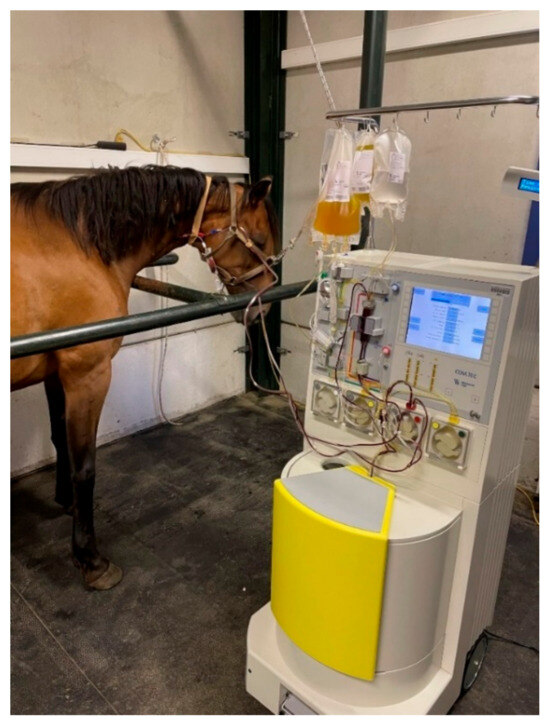
Figure 1