

- Review

Decoding Glioblastoma Through Liquid Biopsy: Molecular Insights and Clinical Prospects
- Tomasz Wasiak,
- Maria Jaskólska and
- Adrianna Rutkowska
- + 2 authors
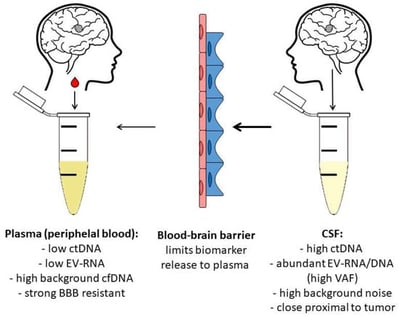
Liquid biopsy (LB) offers a minimally invasive approach to characterizing and monitoring glioblastoma (GB), a tumor marked by extensive heterogeneity, limited surgical accessibility and rapid molecular evolution. By analyzing circulating tumor-derived components such as circulating tumor DNA (ctDNA), extracellular vesicles (EVs), circulating RNA species and circulating tumor cells (CTC), LB provides dynamic molecular information that cannot be captured by neuroimaging or single-site tissue sampling. Cerebrospinal fluid (CSF) currently yields the highest sensitivity for detecting tumor-specific alterations, while plasma enables repeat monitoring despite lower biomarker abundance. EVs have gained particular prominence due to their ability to preserve DNA, RNA, and protein cargo that reflects key genomic changes, treatment resistance mechanisms, and immune evasion. Although advances are substantial, clinical implementation remains constrained by low analyte concentrations, methodological variability, limited standardization and the high cost of testing, which is rarely reimbursed by insurers. This review summarizes current evidence on circulating biomarkers in GB and highlights research priorities essential for integrating LB into future diagnostic and therapeutic workflows.
6 February 2026