


Journal Menu
► ▼ Journal Menu-
- Catalysts Home
- Aims & Scope
- Editorial Board
- Reviewer Board
- Topical Advisory Panel
- Early Career Editorial Board
- Instructions for Authors
- Special Issues
- Topics
- Sections & Collections
- Article Processing Charge
- Indexing & Archiving
- Editor’s Choice Articles
- Most Cited & Viewed
- Journal Statistics
- Journal History
- Journal Awards
- Society Collaborations
- Conferences
- Editorial Office
Journal Browser
► ▼ Journal BrowserNeed Help?
Announcements
31 July 2026
Ursula Röthlisberger Receives the Inaugural Michele Parrinello Award
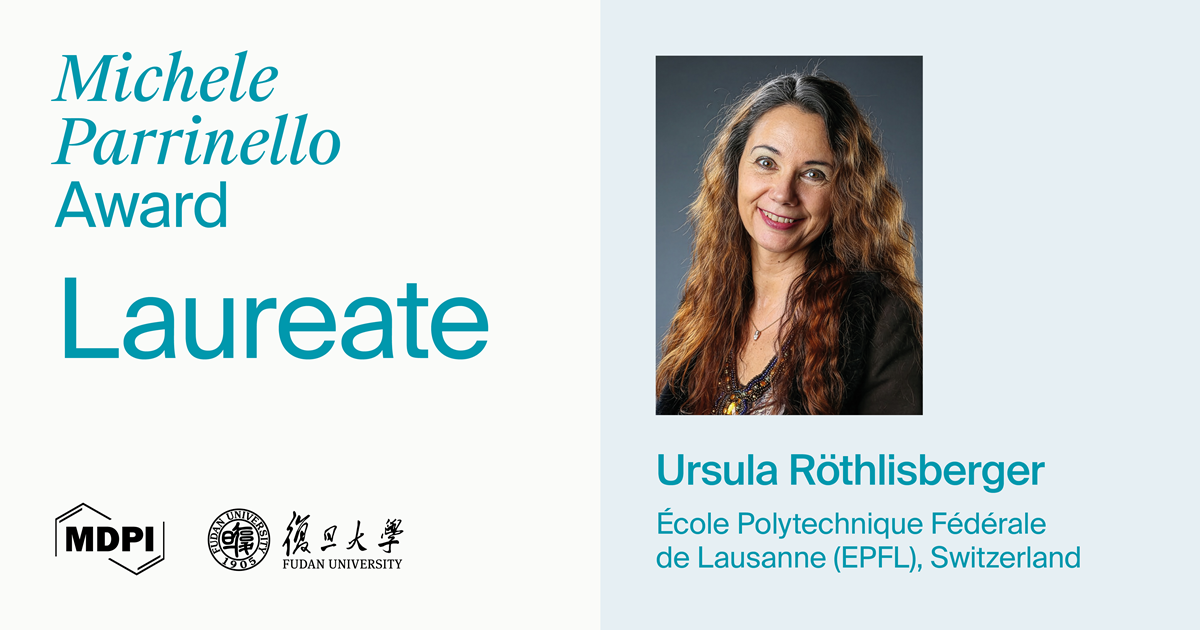
We are pleased to announce that the inaugural Michele Parrinello Award has been conferred upon Prof. Ursula Röthlisberger, in recognition of her outstanding contributions to computational chemistry and molecular simulation, particularly through her pioneering work in ab initio molecular dynamics and QM/MM multiscale simulation methods. This award celebrates researchers whose work embodies the spirit of scientific innovation and rigor that Professor Parrinello has championed throughout his career. We warmly congratulate Prof. Röthlisberger on this well-deserved recognition.
The achievements of Prof. Ursula Röthlisberger highlight the profound impact of computational methods on our understanding of complex chemical, biological, and materials systems. We invite the global scientific community to join us in celebrating her outstanding contributions to computational science.
“Professor Ursula Röthlisberger has been recognized by the 2026 Michele Parrinello Award Committee as an exceptional leader in computational chemistry and molecular simulation. Her innovative research has significantly advanced the predictive modeling of complex chemical and biological systems and has created lasting impact across multiple scientific disciplines. Through her outstanding scientific achievements, dedication to education, and leadership in the international research community, she has played a vital role in shaping the development of modern computational science.”
—Prof. Dr. Xin-Gao Gong, Chair of the Award Committee
2026 Michele Parrinello Award Laureate
|
Ursula Röthlisberger |
Prof. Ursula Röthlisberger is a professor at the Institute of Chemical Sciences and Engineering, EPFL, Switzerland, where she leads the Laboratory of Computational Chemistry and Biochemistry. Her research focuses on developing computational methods for molecular simulation, including ab initio molecular dynamics and quantum mechanical/molecular mechanical (QM/MM) multiscale approaches, to study complex chemical, biological, and materials systems. Her work has contributed to the advancement of computational frameworks for understanding molecular processes at the atomic level. She has also applied computational approaches to investigate next-generation photovoltaic materials, including dye-sensitized and perovskite solar cells, providing insights into material properties, stability, and performance through collaboration with experimental researchers. |

2026 Award Committee
Committee Chair:
- Prof. Dr. Xin-Gao Gong, Fudan University, China.
Committee Members (listed in alphabetical order):
- Prof. Alessandro Laio, Scuola Internazionale Superiore di Studi Avanzati, Italy;
- Prof. Michiel Sprik, University of Cambridge, UK;
- Prof. David J. Srolovitz, the University of Hong Kong, China;
- Prof. Mark E. Tuckerman, New York University, USA;
- Prof. Su-Huai Wei, Eastern Institute of Technology, Ningbo, China.
Note: The 2026 Award Committee comprises six members, including one anonymous member.
2026 Award Ceremony
The inaugural Michele Parrinello Award Ceremony will take place on 7 November 2026, at the Southern University of Science and Technology (SUSTech) in Shenzhen, China, as part of the 2026 MDPI Materials Science Conference. Further information and updates will be available on the official Michele Parrinello Award website.
About the Michele Parrinello Award
The Michele Parrinello Award was established in November 2025 to honor Professor Michele Parrinello’s enduring legacy in advancing computational science. This biennial international award recognizes senior researchers who have made outstanding contributions to computational physical sciences, encompassing physics, chemistry, and materials science. The recipient will receive a monetary prize of 50,000 EUR, a commemorative medal, and a certificate.
For further information about the award and the laureate, please visit the Michele Parrinello Award website.
7 September 2026
Catalysts | Top Cited Papers in 2024–2025 in the “Electrocatalysis” Section

The Section “Electrocatalysis” is part of Catalysts (ISSN 2073-4344), MDPI. The Section aims at publishing original, novel, and high-impact works related to the cross-disciplinary field of electrocatalysis. This includes the electrochemical conversion of CO2, electroanalytical sensors, wastewater treatment, oxygen reduction reactions, and electrochemical reactions in fuel cells, electrolysers, metal–air batteries, and other energy conversion or storage devices.
We welcome you to read the top cited papers published in 2024 and 2025. As these are open access publications, you have free and unlimited access to the full text of all the articles published in our journal.
- “Navigating Alkaline Hydrogen Evolution Reaction Descriptors for Electrocatalyst Design”
by Samuel Akinlolu Ogunkunle, Fabien Mortier, Assil Bouzid, Jack Jon Hinsch, Lei Zhang, Zhenzhen Wu, Samuel Bernard, Yong Zhu and Yun Wang
Catalysts 2024, 14(9), 608; https://doi.org/10.3390/catal14090608
Available online: https://www.mdpi.com/2073-4344/14/9/608 - “Enhancing Trace Pb2+ Detection via Novel Functional Materials for Improved Electrocatalytic Redox Processes on Electrochemical Sensors: A Short Review”
by Duowen Yang, Xinyu Wang and Hao Xu
Catalysts 2024, 14(7), 451; https://doi.org/10.3390/catal14070451
Available online: https://www.mdpi.com/2073-4344/14/7/451 - “Recent Advances of PtCu Alloy in Electrocatalysis: Innovations and Applications”
by Ziyang Shen, Jinyao Tang and Xiaochen Shen
Catalysts 2024, 14(6), 373; https://doi.org/10.3390/catal14060373
Available online: https://www.mdpi.com/2073-4344/14/6/373 - “Direct Ink Writing for Electrochemical Device Fabrication: A Review of 3D-Printed Electrodes and Ink Rheology”
by Nickolas D. Polychronopoulos and Angeliki Brouzgou
Catalysts 2024, 14(2), 110; https://doi.org/10.3390/catal14020110
Available online: https://www.mdpi.com/2073-4344/14/2/110 - “One-Step Synthesis of Ultrathin High-Entropy Layered Double Hydroxides for Ampere-Level Water Oxidation”
by Jianlei Jing, Wei Liu, Tianshui Li, Xiaoqian Ding, Wenhai Xu, Mengze Ma, Daojin Zhou, Yaping Li and Xiaoming Sun
Catalysts 2024, 14(3), 171; https://doi.org/10.3390/catal14030171
Available online: https://www.mdpi.com/2073-4344/14/3/171 - “Large-Scale and Simple Synthesis of NiFe(OH)x Electrode Derived from Raney Ni Precursor for Efficient Alkaline Water Electrolyzer”
by Tianshui Li, Wei Liu, Huijun Xin, Qihao Sha, Haijun Xu, Yun Kuang and Xiaoming Sun
Catalysts 2024, 14(5), 296; https://doi.org/10.3390/catal14050296
Available online: https://www.mdpi.com/2073-4344/14/5/296 - “Proton Exchange Membrane Fuel Cell Catalyst Layer Degradation Mechanisms: A Succinct Review”
by Paul C. Okonkwo
Catalysts 2025, 15(1), 97; https://doi.org/10.3390/catal15010097
Available online: https://www.mdpi.com/2073-4344/15/1/97 - “Rational Design Strategies for Covalent Organic Frameworks Toward Efficient Electrocatalytic Hydrogen Peroxide Production”
by Yingjie Zheng, Yi Zhao, Wen Luo, Yifan Zhang, Yong Wang and Yang Wu
Catalysts 2025, 15(5), 500; https://doi.org/10.3390/catal15050500
Available online: https://www.mdpi.com/2073-4344/15/5/500 - “Design and Optimization of Chromium-Based Polymeric Catalysts for Selective Electrocatalytic Synthesis of Hydrogen Peroxide”
by Huiying Meng, Wen Luo, Yang Wu and Yifan Zhang
Catalysts 2025, 15(6), 513; https://doi.org/10.3390/catal15060513
Available online: https://www.mdpi.com/2073-4344/15/6/513 - “Research Progress of Pt-Based Catalysts toward Cathodic Oxygen Reduction Reactions for Proton Exchange Membrane Fuel Cells”
by Yue Chen, Zhiyin Huang, Jiefen Yu, Haiyi Wang, Yukuan Qin, Lixin Xing and Lei Du
Catalysts 2024, 14(9), 569; https://doi.org/10.3390/catal14090569
Available online: https://www.mdpi.com/2073-4344/14/9/569 - 11. “Transition Metal Dichalcogenides in Electrocatalytic Water Splitting”
by Jiebo Zeng, Yundan Liu, Zongyu Huang, Hui Qiao and Xiang Qi
Catalysts 2024, 14(10), 689; https://doi.org/10.3390/catal14100689
Available online: https://www.mdpi.com/2073-4344/14/10/689 - “Performance Evaluation and Durability Analysis of NiFeCoOx Catalysts for Alkaline Water Electrolysis in Anion Exchange Membrane Electrolyzers”
by Khaja Wahab Ahmed and Michael Fowler
Catalysts 2024, 14(5), 322; https://doi.org/10.3390/catal14050322
Available online: https://www.mdpi.com/2073-4344/14/5/322 - “Electrocatalytic Hydrogen Evolution Reaction of Cobalt Triaryl Corrole Bearing Nitro Group”
by Jie Zeng, Xu-You Cao, Shi-Yin Xu, Yi-Feng Qiu, Jun-Ying Chen, Li-Ping Si and Hai-Yang Liu
Catalysts 2024, 14(7), 454; https://doi.org/10.3390/catal14070454
Available online: https://www.mdpi.com/2073-4344/14/7/454 - “Recent Advances in Membrane Electrode Assembly Based Nitrate Reduction Electrolyzers for Sustainable Ammonia Synthesis”
by Keon-Han Kim and Jeonghoon Lim
Catalysts 2025, 15(2), 172; https://doi.org/10.3390/catal15020172
Available online: https://www.mdpi.com/2073-4344/15/2/172 - “Mechanisms for the Production and Suppression of Hydrogen Peroxide at the Hydrogen Electrode in Proton Exchange Membrane Fuel Cells and Water Electrolyzers: Theoretical Considerations”
by Donald A. Tryk, Guoyu Shi, Katsuyoshi Kakinuma, Makoto Uchida and Akihiro Iiyama
Catalysts 2024, 14(12), 890; https://doi.org/10.3390/catal14120890
Available online: https://www.mdpi.com/2073-4344/14/12/890
At Catalysts, we are passionate about the fast distribution of quality science. If you are also working in the electrocatalysis field and would like to enjoy our professional open access publishing service, you are welcome to contact our journal’s Editor Dr. Maeve Yue (maeve.yue@mdpi.com).
2 September 2026
Catalysts | Top Cited Papers in 2024–2025 in the “Biocatalysis” Section

Catalysts (ISSN 2073-4344) has launched the Section “Biocatalysis”; the Section is dedicated to publishing original, novel, and high-impact contributions related to this cross-disciplinary field of biotechnology, and aims to attract the interest of chemists, enzymologists, microbiologists, molecular biologists, polymer scientists, bioinformaticians, and engineers.
All papers are in an open access format, granting our readers free and unlimited access to the full text of all the articles published in our journal. We welcome you to read our most highly cited papers published in 2024 and 2025, which are listed below.
1. “Recent Advances in Enzyme Immobilization: The Role of Artificial Intelligence, Novel Nanomaterials, and Dynamic Carrier Systems”
by Melesse Tadesse and Yun Liu
Catalysts 2025, 15(6), 571; https://doi.org/10.3390/catal15060571
Available online: https://www.mdpi.com/2073-4344/15/6/571
2. “Enzymes as Catalysts in Industrial Biocatalysis: Advances in Engineering, Applications, and Sustainable Integration”
by Mohd Farhan, Ibrahim W. Hasani, Doaa S. R. Khafaga, Waleed Mahmoud Ragab, Raisa Nazir Ahmed Kazi, Mohammad Aatif, Ghazala Muteeb and Yosri A. Fahim
Catalysts 2025, 15(9), 891; https://doi.org/10.3390/catal15090891
Available online: https://www.mdpi.com/2073-4344/15/9/891
3. “Moving towards Biofuels and High-Value Products through Phytoremediation and Biocatalytic Processes”
by Elena Ionata, Emilia Caputo, Luigi Mandrich and Loredana Marcolongo
Catalysts 2024, 14(2), 118; https://doi.org/10.3390/catal14020118
Available online: https://www.mdpi.com/2073-4344/14/2/118
4. “Protein Engineering for Industrial Biocatalysis: Principles, Approaches, and Lessons from Engineered PETases”
by Konstantinos Grigorakis, Christina Ferousi and Evangelos Topakas
Catalysts 2025, 15(2), 147; https://doi.org/10.3390/catal15020147
Available online: https://www.mdpi.com/2073-4344/15/2/147
5. “Biocatalysis for Lignin Conversion and Valorization: Driving Sustainability in the Circular Economy”
by Parushi Nargotra, Vishal Sharma, Hui-Min David Wang, Chwen-Jen Shieh, Yung-Chuan Liu and Chia-Hung Kuo
Catalysts 2025, 15(1), 91; https://doi.org/10.3390/catal15010091
Available online: https://www.mdpi.com/2073-4344/15/1/91
6. “Functionalized Chitosan and Alginate Composite Hydrogel-Immobilized Laccase with Sustainable Biocatalysts for the Effective Removal of Organic Pollutant Bisphenol A”
by Hong Zhang, Xin Zhang, Lei Wang, Bo Wang, Xu Zeng and Bo Ren
Catalysts 2024, 14(5), 304; https://doi.org/10.3390/catal14050304
Available online: https://www.mdpi.com/2073-4344/14/5/304
7. “Catalase Functions and Glycation: Their Central Roles in Oxidative Stress, Metabolic Disorders, and Neurodegeneration”
by Fahad A. Alhumaydhi, Hina Younus and Masood Alam Khan
Catalysts 2025, 15(9), 817; https://doi.org/10.3390/catal15090817
Available online: https://www.mdpi.com/2073-4344/15/9/817
8. “Immobilized Lipases in the Synthesis of Short-Chain Esters: An Overview of Constraints and Perspectives”
by Ronaldo Rodrigues de Sousa, Michelle M. dos Santos, Matheus W. R. Medeiros, Evelin A. Manoel, Ángel Berenguer-Murcia, Denise Maria Guimarães Freire, Roberto Fernandez-Lafuente and Viridiana Santana Ferreira-Leitão
Catalysts 2025, 15(4), 375; https://doi.org/10.3390/catal15040375
Available online: https://www.mdpi.com/2073-4344/15/4/375
9. “The Effects of Buffer Nature on Immobilized Lipase Stability Depend on Enzyme Support Loading”
by Pedro Abellanas-Perez, Diego Carballares, Javier Rocha-Martin and Roberto Fernandez-Lafuente
Catalysts 2024, 14(2), 105; https://doi.org/10.3390/catal14020105
Available online: https://www.mdpi.com/2073-4344/14/2/105
10. “Preparation of Ordered Macroporous ZIF-8-Derived Magnetic Carbon Materials and Its Application for Lipase Immobilization”
by Yongheng Shi, Hao Zhou, Lingmei Dai, Dehua Liu and Wei Du
Catalysts 2024, 14(1), 55; https://doi.org/10.3390/catal14010055
Available online: https://www.mdpi.com/2073-4344/14/1/55
1 September 2026
MDPI INSIGHTS: The CEO’s Letter #38 – 2 Million Published Articles, Outstanding Reviewers, Michele Parrinello Award, AIS 2026 & WSF-12

Welcome to the MDPI Insights: The CEO's Letter.
In these monthly letters, I will showcase two key aspects of our work at MDPI: our commitment to empowering researchers and our determination to facilitating open scientific exchange.
Opening Thoughts

MDPI Reaches 2 million Published Articles
This month, MDPI reached an important milestone: the publication of our two-millionth article.
It is a number that would have been difficult to imagine in 1996, when MDPI’s first journal, Molecules, published its first volume of 74 papers. It took 25 years to reach our first million published articles in December 2022, and less than four years to reach the second million in August 2026.
From 74 Papers to Two Million Articles
The milestone also comes during our 30th anniversary year, providing another opportunity to reflect on how both MDPI and Open Access publishing have developed over the past three decades. Today, more than half of the world’s published research is Open Access, while MDPI has grown into a portfolio of journals supported by more than 70,000 Editorial Board Members. In 2025 alone, articles published in MDPI journals received 1.9 billion views and downloads.
While two million is an impressive number, what matters most is what sits behind it. Every article represents research conducted and shared by authors, editorial decisions made by academic editors, expertise contributed by reviewers, and the work of colleagues across MDPI supporting the publication and dissemination of research.
Many of the stories in this month’s CEO Letter reflect these communities. We recognize the contributions of the more than 209,000 reviewers who supported MDPI journals in 2025, celebrate scientific excellence through the inaugural Michele Parrinello Award, and look at how communities continue to develop through AIS 2026 and the 12th World Sustainability Forum.
“In 2025 alone, articles published in MDPI journals received 1.9 billion views and downloads”
Publishing at Scale, with Purpose
Reaching two million articles is an important milestone in MDPI’s history, but it is also a reminder of the responsibility that comes with publishing at this scale. As we look ahead, our focus remains on quality, research integrity, strong editorial standards, and providing researchers with reliable and efficient ways to share their work openly with the world.
Thank you to our authors, editors, reviewers, institutional partners, and colleagues around the world who have contributed to this journey.
Impactful Research

Recognizing Scientific Excellence: The Michele Parrinello Award
Supporting researchers means more than publishing and disseminating scientific work. It also means recognizing the researchers, editors, reviewers, and scholars whose contributions advance their fields.
I’m pleased to highlight the inaugural Michele Parrinello Award, which has been awarded to Prof. Ursula Röthlisberger of the École Polytechnique Fédérale de Lausanne (EPFL), Switzerland. Prof. Röthlisberger was recognized for her contributions to computational chemistry and molecular simulation, particularly her pioneering work in ab initio molecular dynamics and quantum mechanical/molecular mechanical (QM/MM) multiscale simulation methods.
Prof. Röthlisberger leads the Laboratory of Computational Chemistry and Biochemistry at EPFL, developing computational approaches to understand complex chemical, biological, and materials systems at the atomic level. Her work also extends to next-generation photovoltaic materials, demonstrating the interdisciplinary reach of computational science.
The Michele Parrinello Award was established in 2025 to honor Prof. Michele Parrinello's pioneering contributions to atomistic simulation and computational science. Presented biennially, it recognizes senior researchers who have made significant contributions across physics, chemistry, and materials science. The recipient receives a EUR 50,000 prize, commemorative medal, and certificate.
Awarding Scientific Excellence
The selection was overseen by an international Award Committee, chaired by Prof. Dr. Xin-Gao Gong of Fudan University and a group of researchers from institutions in China, Italy, the UK, and the USA. Nominations were evaluated based on rigor, integrity, and academic excellence. In announcing the winner, Prof. Gong highlighted the impact of Prof. Röthlisberger’s research across multiple scientific disciplines, alongside her contributions to education and leadership within the international research community.
Recognizing Contributions Across the Research Community
The Michele Parrinello Award is part of MDPI’s broader commitment to recognizing excellence across different disciplines, contributions, and career stages.
Our journal awards include:
- Best Paper Awards – recognizing outstanding published research
- Young Investigator Awards – supporting exceptional early-career researchers
- Best PhD Thesis Awards – recognizing promising emerging scholars
- Outstanding Reviewer Awards – acknowledging the essential contribution of peer reviewers
- Travel Awards – helping early-career researchers participate in international conferences
- Editor of Distinction Awards – recognizing exceptional contributions from Editorial Board Members.
Alongside these journal awards, MDPI supports flagship initiatives including the Tu Youyou Award, the World Sustainability Award, the Emerging Sustainability Leader Award, and now the Michele Parrinello Award.
Learn More:
Inside MDPI

Recognizing the People Behind Peer Review: MDPI’s 2025 Outstanding Reviewer Awards
Behind every published article is a network of people contributing their expertise to the scholarly record. Among them, reviewers play an essential role, providing independent assessment, feedback, and subject expertise that help editors make informed decisions and authors build on their research.
In 2025, more than 209,000 individuals contributed their expertise as reviewers for MDPI journals. This represents an enormous contribution of time and knowledge from researchers around the world, occurring often alongside their own research, teaching, and professional responsibilities.
I’m pleased to share the recipients of MDPI’s 2025 Outstanding Reviewer Awards, recognizing reviewers who have shown great dedication, expertise, and responsiveness throughout the peer-review process.
Outstanding Reviewers
As at July 2026, 181 MDPI journals have presented Outstanding Reviewer Awards to 412 recipients, highlighting their work across disciplines ranging from biology, chemistry, engineering, and medicine to environmental sciences, public health, and the social sciences. To learn more about the list of outstanding reviewers, please visit the following pages:
- Biology and Life Sciences;
- Business and Economics;
- Chemistry and Materials Science;
- Computer Science and Mathematics;
- Engineering;
- Environmental and Earth Sciences;
- Medicine and Pharmacology;
- Physical Sciences;
- Public Health and Healthcare;
- Social Sciences, Arts and Humanities.
While these awards highlight a select group of outstanding contributors, they also create an opportunity to acknowledge our entire reviewer community. Peer review depends on researchers sharing their knowledge and experience with others. Their feedback can improve manuscripts, support editors in making informed decisions, and contribute to maintaining the quality and integrity of the scientific record.
“Reviewers play an essential role, providing independent assessment, feedback, and subject expertise”
Supporting the Academic Community
The Outstanding Reviewer Awards are part of MDPI’s awards program, through which our journals recognize contributions across the academic community, including those from researchers, early-career scholars, reviewers, and Editorial Board Members.
Bringing these contributions to the forefront is important because much of the work that supports scholarly publishing happens behind the scenes. The time, expertise, and critical feedback provided by reviewers are essential to a rigorous and constructive peer-review process.
As MDPI celebrates its 30th anniversary, I would like to thank the more than 209,000 reviewers who contributed to our journals in 2025 and to congratulate the 412 Outstanding Reviewer Award recipients recognized for going above and beyond in supporting their respective research communities.
Coming Together for Science

AIS 2026: Growing a Community Around AI and Sensor Research
One of the most rewarding aspects of our conference program is seeing scientific communities develop over time. A conference may begin by bringing together researchers around an emerging field, but with each edition it can create new relationships, collaborations, and opportunities for researchers to reconnect and exchange ideas.
The 3rd International Conference on AI Sensors and Transducers (AIS 2026) is a good example of this growth.

“What stands out is the community developing around AIS”
This year’s conference took place from 2 to 7 August in Jeju, South Korea, welcoming over 560 participants – an increase of 225 attendees compared with 2025 and 160 compared with the inaugural conference of 2024. Across the program, participants contributed 373 presentations and 109 poster displays, including four plenary presentations, 52 keynote speeches, 192 invited talks, and 125 oral presentations.
Building an International Research Community
Beyond the numbers, what stands out is the community developing around AIS. Many researchers have now participated in all three editions of the conference, with delegates already expressing their intention to return for AIS 2027. The program also brought together established researchers from across the field for discussions on AI sensors and emerging sensing technologies.
 |
 |
Building Engagement in South Korea
This year’s conference reflects our continued engagement with the research community in South Korea. AIS 2026 welcomed 150 participants from the Korean academic community and strengthened our cooperation with the Korean Sensors Society.

This is an important part of what our conferences can achieve. By bringing researchers together in person, we create opportunities to present the latest research and build relationships between scholars, institutions, societies, and at MDPI that can continue after an event concludes.
Looking Ahead
With this momentum, AIS 2027 is planned for 29 July to 3 August 2027 in Kunming, Yunnan, China, with the participation of an international group of Conference Chairs already confirmed from institutions in Europe, North America, and Asia-Pacific.
Three editions into AIS, the continued growth of this conference shows what is possible when we invest consistently in scientific communities. The objective is not simply to organize larger conferences each year but to create spaces where researchers return, new collaborations develop, and scientific communities become stronger.
Many thanks to the Conference Chairs, speakers, sponsors, supporting organizations, participants, and all MDPI colleagues who contributed to AIS 2026. Growing an international event takes years of relationship-building and considerable work behind the scenes, and this year’s conference reflects that collective effort.

Closing Thoughts

World Sustainability Forum 12: Coming Together for a More Sustainable Future
Sustainability challenges rarely sit within a single discipline, institution, or country. Addressing them requires researchers, policymakers, industry, and communities to exchange ideas and work across traditional boundaries.
This is one of the ideas behind the World Sustainability Forum (WSF), which has now reached its 12th edition.
 |
 |
From 21 to 24 August, the 12th World Sustainability Forum (WSF-12) took place in Hong Kong, bringing together more than 300 experts, scholars, policymakers, and industry representatives from over 100 universities and research institutions across 53 countries and regions. The Forum received 543 abstract submissions, showcasing international interest in sustainability research.
Connecting Research, Policy, and Industry
Across four days, the scientific program featured 230 onsite presentations, including plenary, keynote, invited and oral presentations, together with 53 poster presentations. The program also included a plenary panel discussion, Connecting Sustainability Solutions Across Sectors, presenting perspectives from academia, government, and industry.
 |
 |
This interdisciplinary exchange is particularly important in sustainability research. Challenges relating to our cities, environment, energy systems, economies, and societies are increasingly interconnected, and progress depends on creating opportunities for different disciplines and sectors to learn from one another.
WSF-12 also generated opportunities for industry participation. As a Strategic Partner, the China National Petroleum Corporation (CNPC) E-Light International Communication Brand contributed to industry engagement throughout the Forum.

MDPI Sustainability Foundation Awards
Another highlight of WSF-12 was the presentation of three MDPI Sustainability Foundation Awards, celebrating the 2025 and 2026 winners of the World Sustainability Award and the 2026 winner of the Emerging Sustainability Leader Award.
 |
 |
 |
Recognizing researchers and emerging leaders in their fields is an important part of supporting scientific communities. These awards are an opportunity to celebrate individual achievements and highlight research that contributes to a more sustainable future.
Looking Ahead to WSF-13
After twelve editions, WSF is a great example of how a scientific community can develop over time. This is also what we hope to achieve through MDPI’s broader conference program. Scientific meetings should be more than individual events: by investing consistently in research communities, we can create spaces where people return, new relationships develop, different perspectives meet, and collaboration continues beyond the conference itself.

The next chapter is already taking shape. The 13th World Sustainability Forum(WSF-13) will take place from 8 to 11 June 2027 in Nice, France. Chaired by Prof. Dr. Adel Ben Youssef and organized by MDPI and the journal Sustainability in collaboration with Université Côte d’Azur, WSF-13 will continue the Forum’s interdisciplinary approach across the natural sciences, engineering, and social sciences.
Thank You
Many thanks to the Conference Chairs, speakers, strategic partners, sponsors, supporting organizations, participants, and all MDPI colleagues who contributed to WSF-12. Events of this scale require considerable coordination and collaboration behind the scenes, and the continued growth of WSF reflects the collective efforts of the MDPI Conference Department and a global community committed to sustainability research, innovation, and collaboration.

Chief Executive Officer
MDPI AG
31 August 2026
Catalysts | Top Cited Papers in 2024–2025 in the “Nanostructured Catalysts” Section

The “Nanostructured Catalysts” Section of Catalysts (ISSN 2073-4344) is dedicated to publishing original and high-quality research communications, articles, and review articles on topics covering the design, synthesis, modeling, and catalytic application of nanomaterials. This Section covers the broad fields of catalysis via nanoparticles (including colloidal, supported, alloy, and core–shell structures), nanocomposites (where intimate contact is engineered between two or more unique phases at the nanoscale), nanoporous materials (including zeolites and MOFs), and single atoms or sites (including single-atom alloys and immobilized homogeneous catalysts). All our papers are in an open access format, granting our readers free and unlimited access to the full text of all the articles published in our journal. We welcome you to read our highly cited papers published in 2024 and 2025, which are listed below:
1. “Bubbles Management for Enhanced Catalytic Water Splitting Performance”
by Zheng Zhang, Chen Gu, Kun Wang, Haoxuan Yu, Jiaxuan Qiu, Shiyan Wang, Longlu Wang and Dafeng Yan
Catalysts 2024, 14(4), 254; https://doi.org/10.3390/catal14040254
Available online: https://www.mdpi.com/2073-4344/14/4/254
2. “Oxides and Metal Oxide/Carbon Hybrid Materials for Efficient Photocatalytic Organic Pollutant Removal”
by Abu Saad Ansari, Griszha Azzahra, Fairuz Gianirfan Nugroho, Momin M. Mujtaba and
Abu Talha Aqueel Ahmed
Catalysts 2025, 15(2), 134; https://doi.org/10.3390/catal15020134
Available online: https://www.mdpi.com/2073-4344/15/2/134
3. “Recent Advances in Vanadium-Based Electrocatalysts for Hydrogen and Oxygen Evolution Reactions: A Review”
by Haoyu Li, Juan Wu, Mengyao Li and Yude Wang
Catalysts 2024, 14(6), 368; https://doi.org/10.3390/catal14060368
Available online: https://www.mdpi.com/2073-4344/14/6/368
4. “Enhancing C-C Coupling in CO2 Electroreduction by Engineering Pore Size of Porous Carbon-Supported Cu Catalysts”
by Aiming Huang, Jiayue Yu, Junjun Zhang, Yifan Zhang, Yang Wu, Yong Wang and Wen Luo
Catalysts 2025, 15(3), 199; https://doi.org/10.3390/catal15030199
Available online: https://www.mdpi.com/2073-4344/15/3/199
5. “S-Scheme Heterojunction Photocatalysts for CO2 Reduction”
by Mingli Li, He Cui, Yi Zhao, Shunli Li, Jiabo Wang, Kai Ge and Yongfang Yang
Catalysts 2024, 14(6), 374; https://doi.org/10.3390/catal14060374
Available online: https://www.mdpi.com/2073-4344/14/6/374
6. “Design and Preparation of ZnIn2S4/g-C3N4 Z-Scheme Heterojunction for Enhanced Photocatalytic CO2 Reduction”
by Jinghong Fang, Min Wang, Xiaotong Yang, Qiong Sun and Liyan Yu
Catalysts 2025, 15(1), 95; https://doi.org/10.3390/catal15010095
Available online: https://www.mdpi.com/2073-4344/15/1/95
7. “Aspects of Reaction Engineering for Biodiesel Production”
by Afsanehsadat Larimi, Adam P. Harvey, Anh N. Phan, Mehdi Beshtar, Karen Wilson and Adam F. Lee
Catalysts 2024, 14(10), 701; https://doi.org/10.3390/catal14100701
Available online: https://www.mdpi.com/2073-4344/14/10/701
8. “TiO2/Zeolite Composites for SMX Degradation under UV Irradiation”
Saule Mergenbayeva, Zhanibek Abitayev, Milana Batyrbayeva, John Vakros, Dionissios Mantzavinos, Timur Sh. Atabaev and Stavros G. Poulopoulos
Catalysts 2024, 14(2), 147; https://doi.org/10.3390/catal14020147
Available online: https://www.mdpi.com/2073-4344/14/2/147
9. “Development of Electrochemical Water Splitting with Highly Active Nanostructured NiFe Layered Double Hydroxide Catalysts: A Comprehensive Review”
by Aviraj M. Teli, Sagar M. Mane, Sonali A. Beknalkar, Rajneesh Kumar Mishra, Wookhee Jeon and Jae Cheol Shin
Catalysts 2025, 15(3), 293; https://doi.org/10.3390/catal15030293
Available online: https://www.mdpi.com/2073-4344/15/3/293
10. “Photocatalytic Degradation of Paracetamol and Antibacterial Activity of La-Modified TiO2 Obtained by Non-Hydrolytic Sol–Gel Route”
by Angelina Stoyanova, Hristina Hitkova, Nina Kaneva, Albena Bachvarova-Nedelcheva, Reni Iordanova and Polya Marinovska
Catalysts 2024, 14(8), 469; https://doi.org/10.3390/catal14080469
Available online: https://www.mdpi.com/2073-4344/14/8/469
11. “Synthesis of ZnPc/BiVO4 Z-Scheme Heterojunction for Enhanced Photocatalytic Degradation of Tetracycline Under Visible Light Irradiation”
by Lulu Zhong, Liuyun Chen, Xinling Xie, Zuzeng Qin and Tongming Su
Catalysts 2024, 14(10), 722; https://doi.org/10.3390/catal14100722
Available online: https://www.mdpi.com/2073-4344/14/10/722
12. “Challenges and Opportunities for g-C3N4-Based Heterostructures in the Photodegradation of Environmental Pollutants”
by Eduardo Estrada-Movilla, Jhonathan Castillo-Saenz, Benjamín Valdez-Salas, Álvaro Ortiz-Pérez, Ernesto Beltrán-Partida, Jorge Salvador-Carlos and Esneyder Puello-Polo
Catalysts 2025, 15(7), 653; https://doi.org/10.3390/catal15070653
Available online: https://www.mdpi.com/2073-4344/15/7/653
13. “Platinum-Modified Rod-like Titania Mesocrystals with Enhanced Photocatalytic Activity”
by Zhishun Wei, Yuanyuan Ji, Zuzanna Bielan, Xin Yue, Yuqi Xu, Jiajie Sun, Sha Chen, Guoqiang Yi, Ying Chang and Ewa Kowalska
Catalysts 2024, 14(4), 283; https://doi.org/10.3390/catal14040283
Available online: https://www.mdpi.com/2073-4344/14/4/283
11 August 2026
Empowering Academic Publishing Success with MDPI: Academic Publishing Workshop at the University of Vermont, 19 August 2026

MDPI is pleased to be hosting an Academic Publishing Workshop at the University of Vermont on 19 August 2026. Designed for graduate students, early career researchers, and faculty members, this workshop will provide practical guidance on key aspects of academic publishing and will equip participants with the knowledge required to confidently navigate the landscape of scholarly communication.
The workshop will be led by MDPI Regional Engagement Editor Dr. Sally Wu and Deputy Managing Editor Ms. Hannah Peterson, who will share their expertise on a range of topics essential to successful publishing. Throughout the session, participants will gain valuable insights on writing high-quality research papers, responding effectively to peer reviewers, understanding publication ethics, and navigating the opportunities and challenges associated with artificial intelligence in scholarly publishing.
In the first part of the workshop, attendees will receive practical advice on preparing academic manuscripts for publication, from the initial research idea through to journal submission. Participants will also learn how the peer review process works, along with strategies for responding to reviewer comments in a professional and constructive manner. The second part of the workshop will focus on publication ethics, introducing common ethical challenges faced by authors and outlining best practices for maintaining integrity throughout the research and publication process. The final session will examine the growing role of artificial intelligence in academic publishing, highlighting responsible and ethical approaches to incorporating AI tools into research and writing workflows.
Through educational initiatives such as this workshop, MDPI continues to foster excellence, transparency, and integrity in scholarly communication while helping researchers strengthen their publishing skills and maximize the impact of their work.
Learning objectives
Attendees will:
- Receive practical guidance on writing an academic journal article, from initial idea to final submission;
- Learn effective strategies for responding to peer reviewers through real-world examples and best practices;
- Explore key issues in publication ethics and understand how to avoid common ethical pitfalls;
- Learn best practices for maintaining academic integrity throughout the research and publication process;
- Gain insights into the ethical use of artificial intelligence in academic writing and publishing;
- Have the opportunity to engage directly with MDPI editors during dedicated Q&A sessions.
Date: 19 August 2026
Time: 9:00 a.m.–12:00 p.m.
Venue: University of Vermont, Lafayette Hall, Room L-108
Schedule:
| Speaker | Program | Time |
| Introduction | 9:00–9:10 a.m. | |
| Ms. Hannah Peterson | Tips for Writing Great Research Papers | 9:10–9:50 a.m. |
| Ms. Hannah Peterson | How to Respond to Peer Reviewers | 9:50–10:30 a.m. |
| Dr. Sally Wu | Publication Ethics for Authors | 10:30–11:10 a.m. |
| Dr. Sally Wu | AI in Publishing: Challenges and Opportunities | 11:10 a.m.–12:00 p.m. |
MDPI Speakers:
Moderator & Panelist: Ms. Hannah Peterson, Deputy Managing Editor, MDPI
|
Ms. Hannah Peterson completed a Master of Science in entomology at the Pennsylvania State University, where she studied the effects of drought and flooding stress on entomopathogenic fungi in agricultural systems. After graduating, she worked for the US Food and Drug Administration before starting at MDPI as an Assistant Editor for Insects. She now works as a Deputy Managing Editor for the same journal. In this role, Ms. Peterson meets with scholars in biological and agricultural sciences online and in person to collect feedback and improve journal processes. She is passionate about open science and interdisciplinary research. |

Moderator & Panelist: Dr. Sally Wu, Regional Engagement Editor, MDPI
|
Dr. Sally Wu completed a PhD in medical science at the University of Toronto, studying the metabolic side effects of antipsychotics drugs in patients with schizophrenia. Shortly after graduating, Dr. Wu began working for MDPI as an Assistant Editor for Cells. She now works as a Regional Engagement Editor. In this role, Dr. Wu travels across North America to attend conferences and other scholarly events, communicating with a diverse array of academic stakeholders. She is passionate about scientific communication and dissemination. |

Organizers:
|
A pioneer in scholarly open access publishing, MDPI has supported academic communities since 1996. Based in Basel, Switzerland, MDPI’s mission is to foster open scientific exchange in all forms and across all disciplines. |

|
Catalysts (ISSN 2073-4344) is an international, peer-reviewed, open access journal with a focus on catalysts and catalyzed reactions, published online monthly by MDPI. |

|
Molbank (ISSN 1422-8599) is an international, peer-reviewed, open access journal comprising a unique collection of one-compound-per-paper short notes on synthetic compounds and natural products, published online bimonthly by MDPI. |

5 August 2026
MDPI INSIGHTS: The CEO’s Letter #37 – Canada Summit, Sciforum Relaunch, 30 Years of Impactful Research & ISPRS 2026
Welcome to the MDPI Insights: The CEO's Letter.
In these monthly letters, I will showcase two key aspects of our work at MDPI: our commitment to empowering researchers and our determination to facilitating open scientific exchange.
Opening Thoughts

Reflections from the MDPI Canada Summit 2026 in Toronto (9–10 July)
As part of this year’s MDPI Summit events, we were delighted to host Editors-in-Chief (EiCs) and Editorial Board Members (EBMs) in Toronto for the MDPI Canada Summit 2026 this July.
Across the two days, we presented on topics including research integrity, editorial leadership, artificial intelligence, peer review, and the evolving role of the EiC. More importantly, the Summit created space for feedback and conversations with the academic community: these engagements continue play and important role in shaping how MDPI develops its journals and services.
Why Canada?
Canada has become one of the world’s leading Open Access (OA) nations. In 2025, 68% of Canadian research publications were published OA, with more than 73,000 OA articles produced during the year. Over the past five years alone, Canadian researchers have published more than 526,000 scholarly articles, showing both the scale and quality of Canadian research.
MDPI Toronto Office

“Canada has become one of the world’s leading Open Access nations”
Since opening in 2019, our Toronto office has grown to more than 85 colleagues supporting editorial operations, research integrity, marketing, societies, conferences, indexing, author services, and many other functions across North America. It was great to spend time with the team, see first-hand the energy and enthusiasm they bring to their work, and recognize the significant role they play in building relationships with the Canadian research community and delivering events such as this Summit.
MDPI and Canada
Today, Canada is an important part of the MDPI community:
- More than 53,800 articles from Canadian institutions published with MDPI since 1996
- More than 5,800 MDPI publications from Canadian researchers in 2025
- Nearly 1,900 Canadian Editorial Board Members, including 24 Editors-in-Chief; 49 Section Editors-in-Chief
- More than 30 Institutional Open Access Partnerships (IOAP) with universities across Canada

“The academic community is at the center of everything we do”
These numbers reflect the long-term partnerships with researchers, reviewers, editors, and institutions who continue to place their trust in MDPI.
Summit Program
Throughout the Summit, we presented and discussed topics against the following agenda:
- MDPI at 30: Introduction, Reflections and the Road Ahead – Stefan Tochev (CEO)
- Engagement with Academic Community and Society Partnerships – Karen Irwin (Associate Editorial Engagement Manager) and Carla Aloè (Head of Societies and Acquisition)
- Latest Developments in the Editorial Process – Summer Huggard (Operations Manager)
- Research Integrity and Publication Ethics – Renato Merki (Research Integrity Specialist)
- AI and Technology in Publishing – Dr. Barnaby Crook (Regional Engagement Editor)
- Panel Discussion – Bob Vrooman (Head of Business Development / Operations Manager, USA), Summer Huggard, Renato Merki, and myself

These presentations reinforce something we often say at MDPI: The academic community is at the center of everything we do. Each session concluded with a Q&A, allowing for discussions throughout the Summit to engage directly with our EiCs and EBMs.
Further Reading
I also had the opportunity to be interviewed by University Affairs about the evolving landscape of scholarly publishing, Open Access, and the importance of engaging with the research community. If you’re interested, you can read the interview in:
- English: University Affairs – MDPI Toronto Summit 2026: Bringing Together Leaders to Shape the Future of Scholarly Publishing
- Français: Affaires universitaires – Sommet MDPI de Toronto 2026
Thank You
As OA continues to grow around the world, events such as the MDPI Canada Summit remind us of the importance of meeting with our academic community in person. Listening to feedback, exchanging ideas, and building relationships are essential to ensuring that MDPI continues to evolve alongside the researchers, editors, reviewers, and institutions we serve.

Impactful Research

Five Journals, Five Different Stories of Success
Each year, the release of the Journal Citation Reports (JCR) provides an opportunity to look at the progress of our journal portfolio and, more importantly, the achievements of the research communities behind it.
A recent MDPI Blog article from Tommy Lax (Content Specialist, MDPI) highlights five journals whose 2025 Journal Impact Factor results show that success can take many forms – from achieving a first Impact Factor, to steady long-term growth, to leadership within highly competitive disciplines.
The featured journals include:
- Machine Learning & Knowledge Extraction (MAKE) – Among the 330 MDPI journals which received an Impact Factor in 2025, MAKE (ISSN 2504-4990) holds the accolade of having the highest rating of 8.4. The journal, which provides an advanced forum for the study of machine learning and its applications, is placed in Q1 for three subject categories: Computer science, artificial intelligence; Computer science, interdisciplinary applications; and Engineering, electrical & electronic.
- Antioxidants – Continuing its strong position across multiple scientific disciplines, Antioxidants (ISSN 2076-3921) was awarded an exceptional Impact Factor of 8.2. In addition, the journal was placed in Q1 in three subject categories: Biochemistry & molecular biology; Chemistry, medicinal; and Food science & technology.
- Biomass – This year, Biomass (ISSN 2673-8783) was recognized in the JCR for the first time, with a strong debut Impact Factor of 6.7. What makes this achievement even more impressive is the journal’s placement in Q1 of the category Engineering, chemical.
- Analytica – Remaining with the theme of growth, Analytica (ISSN 2673-4532), which provides an advanced forum for all aspects of fundamental and applied analytical chemistry, recorded one of the largest year-on-year increases in Journal Impact Factor, with a 7.4 – an astounding 3.8-point increase from its 2024 rating of 3.6.
- Batteries – Indexed in SCIE, Batteries (ISSN 2313-0105) received an updated Impact Factor of 6.3 this year, representing an increase of 1.5 versus last year, demonstrating consistent growth and increasing visibility over several years.
While citation metrics provide one perspective on journal performance, they tell only part of the story. Every milestone reflects the dedication of Editors-in-Chief, Editorial Board Members, reviewers, authors, and colleagues across MDPI who work together to uphold rigorous editorial standards and support high-quality research.
As a signatory of the Declaration on Research Assessment (DORA), MDPI supports a balanced approach to research evaluation. Journal-level metrics should be viewed alongside article-level indicators and the broader scientific and societal impact of published research.
Thank you to everyone whose commitment continues to strengthen our journals and advance Open Access across the global research community.
Inside MDPI

Building Better Tools for the Research Community: The Relaunch of Sciforum
Innovation at MDPI extends beyond journals. Over the past decade, we have continued to invest in products that support researchers, conference organizers, editors, reviewers, and institutions throughout the research lifecycle. As part of this ongoing investment, our Product and Engineering teams have been modernizing several of MDPI’s digital platforms. One important milestone in that journey is the relaunch of Sciforum, our conference management platform.
Read More: Sciforum Relaunch: Empowering Science through Seamless Event Management
Rather than simply updating an existing system, our product and engineering teams have rebuilt Sciforum, using a modern architecture designed to improve the user experience, support future growth, and continue to strengthen our position in the conference management market.
“Scalable technology is essential to delivering a high-quality experience”
Why We Rebuilt Sciforum
Technology must continue evolving alongside the needs of our users. The previous platform had served MDPI well for many years but had become difficult to extend and maintain. The new platform introduces a modular architecture that enables faster development, more flexibility, and a scalable foundation for future work.
Major improvements include:
- Simplified submission workflows
- Role-based dashboards
- A modern website builder
- Flexible pricing options
- Permanent data hosting
- A scalable architecture for future development

Supporting Our Conference Community
Sciforum is more than a software platform: it supports researchers, conference organizers, reviewers, speakers, and attendees by helping them organize, participate in, and share scientific meetings more efficiently. As MDPI continues to expand its conference activities worldwide, investing in modern, scalable technology is essential to delivering a high-quality experience for both our external partners and our internal teams.
Looking Ahead
The relaunch represents the beginning Sciforum’s next chapter. Planned improvements include: the Program Builder, Communication Hub, expanded payment options, Zoom integration, and a mobile application. These will continue to enhance the platform over the coming months.
Coming Together for Science

Highlights from ISPRS Congress 2026 – Toronto, Canada
In early July, I had the pleasure of attending the XXV ISPRS Congress in Toronto, one of the world’s leading gatherings for the geospatial and remote sensing research community. It was a great opportunity to meet researchers, editors, society leaders, and collaborators, while gaining insights into some of the latest developments in geospatial science and technology.
Over several days, I had the privilege of presenting the Jack Dangermond Award; speaking about MDPI’s approach to AI in publishing and our 30-year journey in Open Access publishing; participating in Editorial Board meetings; and engaging with members of the ISPRS community.
Below is a summary of these activities:
Celebrating excellence in research
One of the highlights of the week was presenting the Jack Dangermond Award for the best paper published in the ISPRS International Journal of Geo-Information (IJGI). Sponsored by MDPI and ESRI, the award recognizes an outstanding paper published over a four-year period and includes an ISPRS certificate together with a USD 10,000 prize.

Awards such as these remind us that journals are much more than publication platforms: they celebrate research that advances knowledge, inspires future work, and delivers meaningful impact for both science and society.
Presentations at ISPRS
I also had the pleasure to give two presentations during the congress:

1. The AI Revolution in Publishing: Challenges, Innovations, and MDPI’s Vision
The development of AI continues to transform scholarly publishing. During this session, I shared how MDPI is integrating AI responsibly, not to replace editorial judgement or peer review, but to support our staff by improving efficiency while maintaining scientific quality and research integrity.
2. MDPI: 30 Years of Open Access Publishing
I also had the opportunity to share MDP’s 30-year journey from a small publishing initiative to becoming a global Open Access publisher serving millions of researchers worldwide. As part of this session, my colleague Carla Aloè (Head of Societies and Acquisitions) introduced the ISPRS International Journal of Geo-Information (IJGI), sharing its development and contribution to the geospatial research community.

Meeting with Our Editorial Boards
Another rewarding aspect of the congress was meeting with the Editorial Boards of two of our journals:
- Remote Sensing
- ISPRS International Journal of Geo-Information
These discussions went beyond journal metrics. We heard ideas about editorial quality and emerging research areas, and we discussed reviewer engagement, diversity within editorial boards, and how journals can continue serving their communities for the future. These conversations are a great way to connect directly to the scientists who help shape our journals.


“One of our core missions has always been to make high-quality research openly accessible”
Partnerships matter
Scientific publishing is built on collaboration. Throughout the congress, our team welcomed researchers to the MDPI booth, met with authors and editors, and discussed opportunities for collaboration across our journals and society partnerships.
Special thanks to our MDPI colleagues who were present throughout the ISPRS congress supporting our Editorial Board meetings and the MDPI booth: Andy Tran, Carla Aloè, Carlo Cunanan, Diana Ribeiro Tosato, and Elena Duan.

Thank you to ISPRS for organizing this congress, to the researchers who shared their work, to our Editorial Board members, and to MDPI colleagues whose dedication continues to shape the journals and communities we support.
Closing Thoughts

Insights Into 30 Years of Impactful MDPI Research
As we celebrate 30 years of MDPI, it’s worth reflecting on the impact that the research we publish has on society. One of our core missions has always been to make high-quality research openly accessible so that it can inform new discoveries, public policy, education and innovation around the world.
A recent article on the MDPI Blog highlights several examples of MDPI publications that have gone beyond academic citations to help inform governments, international organizations and public policy discussions.
Research Creating Real-World Impact
The MDPI blog article features research that has contributed to topics including:
- protecting the Amazon rainforest through satellite mapping
- understanding climate change and urban heat inequality
- encouraging more young women to pursue STEM careers
- tackling obesity through healthier food environments
- shaping sustainable urban planning through the “15-minute city” concept
These examples remind us that publishing research is not only about producing articles: it is about helping knowledge reach the people who can use it to improve lives and address global challenges.
Thirty Years of Open Access
MDPI’s 30th Anniversary is also an opportunity to recognize the collective contribution of everyone across MDPI. Every manuscript processed, every review coordinated, every system developed, every conference organized, every partnership established and every article published contributes to a much larger purpose: helping scientific knowledge move further and faster.
You can explore the full article here: 30 Years of Impactful MDPI Research
You can also visit our 30th Anniversary page to learn more about MDPI’s journey over the past three decades.
Chief Executive Officer
MDPI AG
31 July 2026
Announcing the Award Committee for the Inaugural Michele Parrinello Award

MDPI is pleased to announce the Award Committee for the inaugural Michele Parrinello Award, presented alongside the announcement of the 2026 laureate.
Established in 2025 in honor of Prof. Michele Parrinello’s pioneering contributions to atomistic simulation and computational science, the Michele Parrinello Award is presented biennially to recognize distinguished senior scientists who have made significant contributions to computational physical sciences, encompassing physics, chemistry, and materials science, with particular emphasis on fundamental research.
To ensure the highest standards of evaluation, the Award Committee brings together internationally recognized experts whose expertise spans computational physical sciences, including physics, chemistry, and materials science. Chaired by a distinguished scientist in the field, the committee provides independent perspectives to evaluate nominations based on rigor, integrity, and academic excellence.
Committee Chair:
|
|
Prof. Dr. Xin-Gao Gong |

Committee Members:
|
|
Prof. Alessandro Laio |
|
|
Prof. Michiel Sprik |
|
|
Prof. David J. Srolovitz |
|
|
Prof. Mark E. Tuckerman |
|
|
Prof. Su-Huai Wei |


Note: The 2026 Award Committee comprises six members, including one anonymous member.
We sincerely thank the committee members for their valuable contributions and dedication to the Michele Parrinello Award. Their expertise and commitment are essential to maintaining the academic excellence and integrity of this international award.
For more information about the Michele Parrinello Award, please visit the official award website: https://mparrinelloaward.org/.
29 July 2026
Catalysts Webinar | Hybrid CO₂-to-Syngas Technologies: Integrating Catalysis, Plasma, and Electrochemical Pathways, 10 August 2026

Message from the webinar Chair:
Welcome to the webinar, “Hybrid CO₂-to-Syngas Technologies: Integrating Catalysis, Plasma, and Electrochemical Pathways”. As Chair, it is my great pleasure to welcome this diverse community of researchers and industry pioneers, dedicated to tackling one of the most pressing challenges of our time: transforming carbon emissions into valuable chemical feedstocks. Today’s session will explore the cutting edge of CO₂ valorization by moving beyond isolated techniques to examine the powerful synergies unlocked when catalytic, plasma-driven, and electrochemical processes are combined.
By bridging these distinct fields, we aim to uncover novel ways to overcome traditional thermodynamic barriers, boost energy efficiency, and accelerate the scale-up of sustainable green syngas production. I encourage you to actively engage with our expert speakers and one another as we collaborate to shape the future of industrial decarbonization and clean energy technology.
Date: 10 August 2026
Time: 10:00 a.m. (CEST) | 4:00 p.m. (CST Asia)
Webinar ID: 832 2987 0565
Register for free!

Program:
|
Speaker/Presentation |
Time (CEST) |
Time (CST Asia) |
|
Ms. Tanja Nikolic |
10:00–10:05 a.m. |
4:00–4:05 p.m. |
|
Dr. Bamidele Victor Ayodele |
10:05–10:10 a.m. |
4:05–4:10 p.m. |
|
Dr. Kok Keong Lau |
10:10–10:30 a.m. |
4:10–4:30 p.m. |
|
Dr. Shahid Rasul |
10:30–10:50 a.m. |
4:30–4:50 p.m. |
|
Dr. Bawadi Abdullah |
10:50–11:10 a.m. |
4:50–5:10 p.m. |
|
Dr. Herma Dina Setiabudi |
11:10–11:40 a.m. |
5:10–5:40 p.m. |
|
Q&A Session |
11:40 a.m.–12:05 p.m. |
5:40–6:05 p.m. |
|
Dr. Bamidele Victor Ayodele |
12:05–12:10 p.m. |
6:05–6:10 p.m. |
This is a free webinar. After registration, you will receive a confirmation email containing information on how to join the webinar. Registrations with academic institutional email addresses will be prioritized.
Unable to attend? Register anyway and we will let you know when the recording is available for viewing.
Webinar Chair and Keynote Speakers:- Dr. Bamidele Victor Ayodele, Department of Chemical Engineering, Universiti Teknologi PETRONAS (UTP), Malaysia;
- Dr. Kok Keong Lau, Department of Chemical Engineering, Universiti Teknologi PETRONAS (UTP), Malaysia;
- Dr. Shahid Rasul, Faculty of Engineering and Environment, Northumbria University, United Kingdom;
- Dr. Bawadi Abdullah, Department of Chemical Engineering, King Faisal University, Saudi Arabia;
- Dr. Herma Dina Setiabudi, Faculty of Chemical and Process Engineering, Universiti Malaysia Pahang Al-Sultan Abdullah (UMPSA), Malaysia.
24 July 2026
Meet Us at the 21st National Youth Congress on Catalysis, 23–26 August 2026, Hohhot, China

Conference: 21st National Youth Congress on Catalysis
Organization: The Catalysis Society of China
Date: 23–26 August 2026
Place: Hohhot, China
The 21st National Youth Congress on Catalysis will be held in Hohhot from 23 to 26 August 2026. The conference is guided by the Catalysis Society of China and hosted by Inner Mongolia University.
Initiated in 1987, the National Youth Congress on Catalysis aims to provide a platform for academic exchange and professional development for young catalysis researchers in China (aged 45 and under). The theme of this year’s conference is “Green and Sustainable Catalysis Empowering High-Quality Development of New Productive Forces”. The program will cover a wide range of topics, including biocatalysis, organocatalysis, artificial intelligence in catalysis, theoretical and computational studies, advanced characterization techniques, fossil resource utilization and environmental catalysis, transformation of regional resources and industrial catalysis, catalyst design and preparation, photocatalysis, electrocatalysis, and catalytic conversion of biomass and plastics.
The conference will showcase the latest research advances, facilitate in-depth discussions on current opportunities, challenges, and future directions in catalysis, and promote stronger collaboration between academia and industry, contributing to the advancement of catalysis science and technology in China.
The organizing committee warmly welcomes submissions and participation from young catalysis researchers nationwide, including experts, scholars, postdoctoral researchers, and graduate students from related fields. Representatives from enterprises, instrument manufacturers, and the publishing industry are also sincerely invited to attend the conference.
MDPI will attend the 21st National Youth Congress on Catalysis. We welcome researchers from different backgrounds to visit and share their latest ideas with us.
The following MDPI journals will be represented:
- Catalysts;
- Molecules;
- Analytica;
- Biomass;
- Chemistry;
- Inorganics;
- Sustainable Chemistry;
- Crystals;
- Photochem;
- Physchem.
If you attend this conference, please feel free to visit our booth. Our delegates look forward to meeting you in person and answering any questions that you may have. For more information about the conference, please visit the official website: https://21nycc.scimeeting.cn/.
