
You are currently viewing a new version of our website. To view the old version click .

Analytica

Analytica is an international, peer-reviewed, open access journal on analytical chemistry and chemical analysis published quarterly online by MDPI.

Quartile Ranking JCR - Q2 (Chemistry, Analytical)

All Articles (195)

  • Systematic Review
  • Open Access

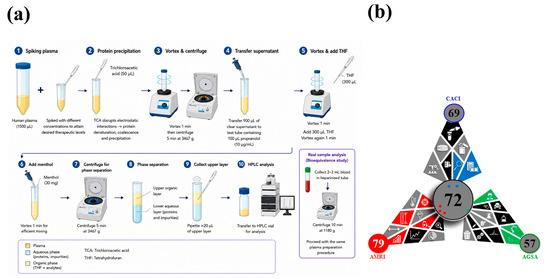
In clinical medicine it is of interest to know vitamin C blood levels. There are numerous variations in published sample preparation methods for quantifying vitamin C using HPLC. For the determination of vitamin C in human probes, the method needs to be simple, fast, and accurate. A systematic search in Pubmed was carried out to identify the methods for the quantification of vitamin C with HPLC in combination with a UV detector in human plasma. A total of 83 reports were screened, from which seven methods were selected and examined in detail. Tabular overviews compare the different sample preparation options, HPLC parameters, and validation criteria. Different reagents for protein precipitation and extraction are discussed. By allowing the user to see the criteria of interest at a glance, it can be used as a tool for the rapid development and establishment of a vitamin C determination method using HPLC.

23 December 2025

Flow diagram according to PRISMA 2020 [21].

Exploring green organic solvents is a global demand. Most of the currently used solvents pose some concerns regarding environmental sustainability and occupational health risks. In this work, propylene glycol was employed for the first time as a green solvent for mobile phase preparation in the reversed phase chromatographic separation of a mixture of two antioxidants, glutathione and ascorbic acid. The slight viscosity of propylene glycol was manipulated by using water as a co-fluidizing agent to facilitate pumping. Method optimization was performed using factorial design experimental Expert 13® Software (Minneapolis, MN, USA) to achieve the maximum resolution and the minimum run time. The reported method was properly validated according to the International Conference on Harmonization criteria at the linearity range of 1–500 µg/mL, with acceptable accuracy and precision for both drugs. The method was effectively applied for the quantification of both drugs in their commercial pharmaceutical formulation. The proposed method was assessed for environmental and operator safety by means of global tools like AGREE and MoGAPI and has proved high degrees of greenness. Propylene glycol has several benign properties, such as low volatility, less toxicity, compatibility with UV detectors and very low flammability, that will soon assemble it as a promising alternative for the conventionally used solvents.

23 December 2025

Chemical structures of ascorbic acid (a) and glutathione (b).

Chemometric Approaches for Identification of Herbal Medicinal Products

  • Olga V. Levitskaya,
  • Tatiana V. Pleteneva and
  • Elena V. Uspenskaya
  • + 4 authors

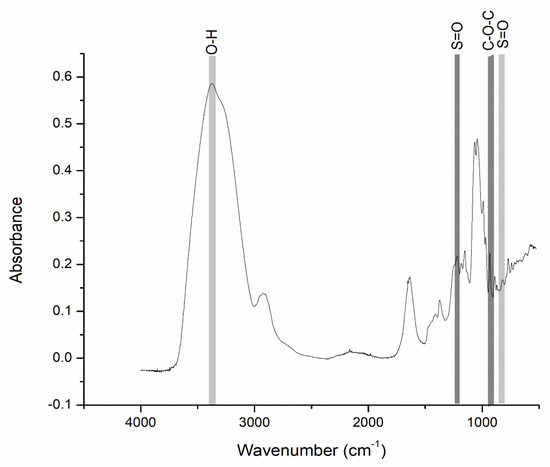
Quality control of herbal medicinal products (HMPs) is challenging due to their multicomponent composition. For most HMPs, chemical reference standards (CRSs) required for traditional chromatographic and spectral analyses are unavailable. According to USP and Ph. Eur., an exception is valerian tincture, for which highly specific CRSs have been developed. The aim of this study was to use principal component analysis (PCA) and the novel two-dimensional diffuse laser scattering (2D-DLS) method to identify HMPs and their aqueous-ethanolic extracts according to their botanical genera without relying on specific marker compounds. Spectral data were compiled into an extensive library covering a wide wavelength range—from 0.02 nm to 15,000 nm. PCA of the spectral data (UV spectrophotometry, fluorimetry, FTIR spectroscopy, and X-ray diffraction) enabled clustering of samples by individual botanical genera. The most significant information for sample differentiation was provided by wavenumbers of 1400, 1180, and 931 cm−1 in the IR spectra and wavelengths of 450 nm and 672 nm in the UV and fluorescence spectra, respectively. During model cross-validation, all “blind samples” were correctly classified by botanical genus, achieving a non-error rate (NER) of 100%. Furthermore, the unique 2D-DLS method was used to rapidly identify tinctures without opening the glass bottles.

16 December 2025

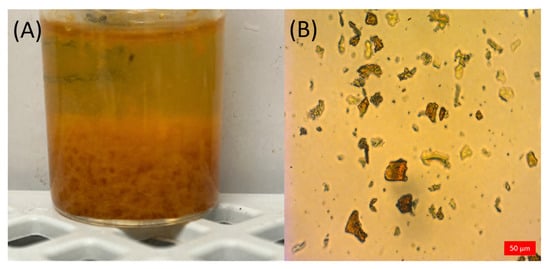
The morphology and dimensions of particles from the medicinal plant valerian after dispersion, as determined microscopically (a), along with the volume distribution of the particles measured using the LALLS method (b).

This paper presents the design and evaluation of a fluorescent probe based on fluorescein hydrazide for the selective detection of hypochlorite (ClO), bromide (Br), and iodide (I) ions in solution. The starting chemosensor, fluorescein hydrazide, is suitable for detecting hypochlorite anions in solution, as observed for the first time. The Br and I ions could be discovered after activating the probe with hypochlorite. Upon interaction with ClO ions, the proposed probe exhibits a significant increase in fluorescence emission, a sharp rise in absorbance, and a distinct color change, which is attributed to the conversion from the spirolactam closed form to the open form of the fluorescein ring. ClO and Br ions added together were found to brominate the probe in an acetonitrile–water mixture, resulting in a pronounced bathochromic shift in both absorption and emission spectra. Notably, the combination of ClO and I was more effective in cleaving the spirolactam ring than hypochlorite alone. Quantum chemical calculations were used to understand the detection mechanism of Br and I ions in a probe–hypochlorite mixture. The probe demonstrated exceptional selectivity and rapid response towards the target analytes, with detection limits determined to be 2.61 μM for ClO, 66 nM for Br, and 13 nM for I. Furthermore, it successfully monitored fluctuations in ClO, Br, and I concentrations within complex systems, highlighting its potential application in environmental and biological monitoring.
15 December 2025

Molecular structure of probe 1.

News & Conferences

Issues

Open for Submission

Editor's Choice

Get Alerted

Add your email address to receive forthcoming issues of this journal.

XFacebookLinkedIn
Analytica - ISSN 2673-4532