


Abstract
With recent advances in surgery and immunosuppressive drugs, organ transplantation has become a major treatment for irreversible organ failure. However, organ transplant recipients returning home after operation may face ongoing physiological, psychological, and social difficulties. To increase recipients’ quality of life, postoperative care at home is critical. Thus, the aim of this systematic literature review was to explore recipients’ difficulties and needs during postoperative care at home. Our search conformed to Preferred Reporting Items for Systematic Reviews and Meta-Analyses (PRISMA) guidelines and returned 23 relevant articles published from 1997–2020 in PubMed, MEDLINE, EBSCO, Cochrane, ProQuest, and CEPS, which were assessed using the Modified Jadad Scale or the 32 Consolidated Criteria for Reporting Qualitative Research (COREQ) appraisal indices and then synthesized through narration. The most common difficulties faced were psychological difficulties, followed by physiological, social, and other difficulties; the most common needs were psychological needs, followed by education and information training, social, and other needs. These results demonstrated that healthcare professionals can do more to provide patients with comprehensive care and promote successful self-management and quality of life at home. They also confirmed that collaboration between transplant teams, caregivers, and patients is necessary to optimize postoperative outcomes. We suggest that customized care may promote postoperative patients’ self-management and quality of life at home.
1. Introduction
With the advances in surgery and immunosuppressive drugs, organ transplantation—the epoch-making breakthrough in modern surgical science—has become one of the major treatments for irreversible organ failure, as it can prolong patients’ lives and improve their quality of life [1,2]. Organ transplantation is currently the most effective method for treating end-stage organ failure, enabling patients on the verge of death to continue living [3]. Organ transplantation refers to the removal of all or part of a body organ or tissues and the provision of these to suitable patients experiencing organ failure. It is performed to treat diseases and save lives, thereby improving patients’ quality of life and prolonging their life expectancy [4].
Every transplant organ must go through a series of evaluation, matching, screening, and waiting procedures before it can be used in the transplant surgery; as such, it is often difficult for patients to secure organs and transplant surgeries. During the organ transplantation process, patients often undergo complicated physiological, psychological, social, and spiritual dark-recovery experiences, requiring close assistance from their healthcare team [5]. Healthcare teams should pay attention not only to patients’ physical conditions but, also, to their mental states in order to improve their overall prognosis.
Although organ transplantation enables patients to live longer, they may still face the postoperative difficulties of infections, organ rejections, and even death. The previous literature has noted that, owing to the need for the long-term use of immunosuppressive drugs after surgery, transplant recipients face many physical, mental, and social difficulties caused by side effects after surgery, and patients may encounter many comorbidities during postoperative long-term care [6]. However, the needs of transplant recipients and the difficulties they face when they return home are often ignored by healthcare professionals [7]. Difficulties and needs can present barriers to successful treatment; as such, a deeper understanding of patients’ perceived barriers is needed to develop better interventions.
Although transplantation gives patients a new chance to live, the process entails an emotional roller coaster. Even after the psychological torture of the waiting period and the joy following a successful transplantation, various postoperative problems can cause physical and mental difficulties for patients, such as taking on the risks of transplant surgery, acute and chronic rejection of organs, adherence to medication regimens that must be strictly followed throughout life, lingering side effects of immunosuppressive agents, adaptation and maintenance of new organs, uncertainty about the future, and renewal of new organs [8].
Needs arise as the result of judgment from personal, subjective cognition. The perception of a lack or insufficiency impels an individual to act in order to meet these needs. Meeting needs can relieve or reduce an individual’s level of anxiety or annoyance, improve their feelings about their current situation, and increase comfort and well-being [9]. If difficulties are the problems that patients face after discharge, then needs allude to the solutions that could potentially solve these problems. Therefore, healthcare professionals should care for the difficulties and needs of postoperative transplant recipients at home.
Organ transplantation is a relatively new breakthrough in the rapid advancement of modern surgical medicine, and it not only prolongs the lives of patients but, also, enables them to regain their health and happiness. Nonetheless, complex physiological, psychological, social, and spiritual issues arise for patients in the process of organ transplantation [10]. Transplant recipients and their families require close assistance from medical teams. Therefore, the aim of this systematic review is to empower medical teams to provide specific assistance sooner by locating literature related to the difficulties and needs faced by transplant recipients who are receiving postoperative care at home.
2. Materials and Methods
This study involved a systematic review that did not use a review protocol. The databases of PubMed, MEDLINE, EBSCO, Cochrane, ProQuest, and CEPS were used, with the following inclusion criteria for studies: (1) participants were organ transplant recipients, and (2) the study results revealed the difficulties and/or needs of organ recipients during the process of postoperative care at home. The exclusion criteria were studies examining participants that were (1) organ donors, (2) the primary caregivers of organ transplant recipients, and (3) medical staff involved in organ transplantation. The search terms were “transplant recipients” AND “difficulties” OR “difficulty”, “adjustment” OR “Quality of Life” OR “needs” AND “postoperative home care”, and “recipients” AND “difficulties” OR “difficulty” OR “adaptation” OR “quality of life” OR “needs” AND “home care process.”
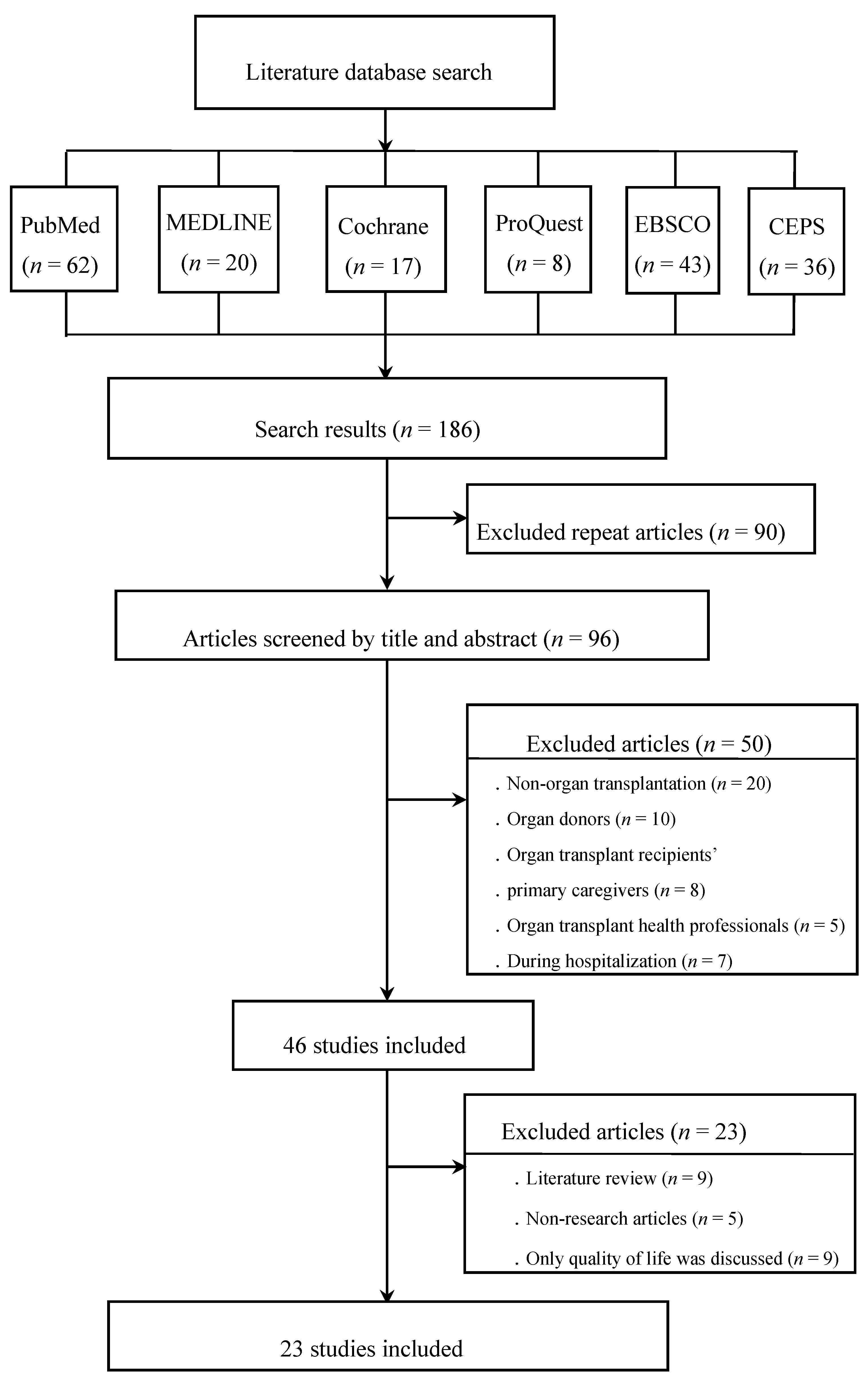
Only published articles written in English or Chinese that discussed research involving humans were included. Since there were insufficient articles available on this topic before 1997, the date range was extended from January 1997 to January 2020. This review conforms to the Preferred Reporting Items for Systematic Reviews and Meta-Analyses (PRISMA) guidelines [11]; see Table S3. The PRISMA flow diagram is shown in Figure 1.
Figure 1.
Preferred Reporting Items for Systematic Reviews and Meta-Analyses (PRISMA) flow diagram: results of the literature search and selection.
2.1. Search Strategy and Outcomes
Relevant articles were gradually retrieved based on the database characteristics and the complete search strategy—which involved examining the research aim, methods, research design, level of evidence, quality of research, and results for each article—to ensure the integrity of the literature retrieval. A total of 186 articles were retrieved—at which point, we read each article manually and deleted duplicate and unqualified articles. In the end, 23 articles were selected for inclusion.
2.2. Quality Appraisal
We reviewed 16 quantitative and 7 qualitative studies at the outcome level. We used the Modified Jadad Scale [12] to assess the quality of the quantitative studies and the Consolidated Criteria for Reporting Qualitative Research (COREQ) [13] to assess the quality of the qualitative studies. Three researchers independently assessed the quality of the studies.
The Modified Jadad Scale includes eight questions (total scores range from −2–8 points): (1) whether there is a description of randomization, (2) whether the randomization is appropriate, (3) whether there is a description of blinding, (4) whether the blinding is appropriate, (5) whether there is a description of withdrawals and dropouts, (6) whether there is a description of inclusion and exclusion criteria, (7) whether there is a description of the evaluation process for adverse reactions, and (8) whether there is a description of the statistical analysis methods. Higher scores indicate better research quality [14]. Among these 16 quantitative studies, one study (6.3%) scored 1, four studies (25%) scored 2, eight studies (50%) scored 3, two studies (12.5%) scored 4, and one study (6.3%) scored 6. Most studies used purposive sampling instead of random assignment, and no double-blind trials were performed, showing that the quality of the research designs could be strengthened and that there might be selection bias. The quality scores of each study are shown in Table S1.
COREQ, developed by Tong, Sainsbury, and Craig [13], includes 32 appraisal indices (Table S2). Using the indices most relevant to the contents of each study, we found that (1) the researchers of the 7 qualitative studies all had a nursing background, (2) the participants were all transplant recipients, (3) purposive sampling was used in all studies, (4) the number of participants ranged from 8 to 41, and (5) most data were collected through interviews. One of the studies collected retrospective data (within a limited time frame) in the form of posts from two discussion threads on the International Transplant Community website.
2.3. Data Extraction and Synthesis
In addition to the information we extracted to perform the quality assessments (regarding methods, interviewer information, samples, and so on—see Tables S1 and S2), we extracted information relating to transplant patients’ difficulties and needs during postoperative care at home. This included details about patients’ symptoms, emotions, fears, relationships, strategies, and resources. For qualitative studies, participants’ care needs and difficulties were identified through the themes deduced from a content analysis. Finally, we employed a systematic review approach, because the included studies had varied results; thus, the findings are presented through narration.
3. Results
Twenty-three research articles were obtained through our complete systematic review strategy (Figure 1 and Table A1). The 23 articles were from 15 countries, and they were published between 1997 and 2020. The countries included Germany (n = 1), the Netherlands (n = 1), Sweden (n = 2), Switzerland (n = 2), Norway (n = 1), Spain (n = 1), the United Kingdom (n = 1), Turkey (n = 1), the United States (n = 5), Canada (n = 1), Brazil (n = 1), Australia (n = 1), Japan (n = 1), China (n = 2), and Taiwan (n = 2). All included articles were summarized to present a complete understanding of the transplant recipients’ postoperative care at home (Table A1).
3.1. Research Aim and Participants
Most participants were kidney transplant recipients [7,15,16,17,18,19,20,21,22,23,24,25,26], followed by heart transplant recipients [5,27,28,29], liver transplant recipients [30,31], and lung transplant recipients [32]. Three studies were not limited to specific organ transplant recipients [33,34,35]. One study focused on adolescents and pediatric recipients [18]. Eight studies assessed the psychological adjustment of organ transplant recipients [7,16,18,20,21,30,31,34], eight studies assessed both the quality of life and other aspects of transplant recipients’ experiences [22,23,24,26,28,29,33,35], two studies assessed the sleep quality of transplant recipients [15,25], and six studies assessed patients’ experiences and coping strategies, alongside the assistance they needed during the dark-recovery stage [5,17,19,27,28,32].
3.2. Difficulties Faced by Recipients
With the advances in and prevalence of organ transplantation, the importance of postoperative care and the maintenance of patients’ quality of life cannot be ignored. However, the fact that organ transplant recipients must return home for self-care after surgery makes intervention during this period difficult. The physical, mental, and social barriers that recipients encounter during the post-operation transition are key issues that influence patients’ quality of life, potentially slowing or preventing their total recovery.
Based on our analysis of the 23 selected studies, the most common difficulties faced by transplant recipients in the process of postoperative care at home included (1) psychological difficulties, including anxiety or depression in response to uncertainty about the future, (2) physiological difficulties, such as physical discomfort after the transplantation, (3) social difficulties, including economic challenges, and (4) other difficulties, such as medical difficulties and difficulties faced by adult transplant recipients of different genders. These are summarized below.
3.2.1. Psychological Difficulties
Recipients often faced various difficulties simultaneously. Among them, psychological difficulties were the most common. Eleven studies [5,7,16,19,21,25,26,28,31,32,33] reported the psychological difficulties that patients experienced, such as emotional and psychological problems owing to the fear of organ rejection, infection, and graft dysfunction. Nine studies [5,19,21,25,26,28,31,32,33] discovered that, after transplantation, patients experienced depression, distress, and anxiety, which influenced various aspects of their daily life and lowered their medical adherence. Causes of psychological difficulties included the stress of maintaining medical regimens, worries about the future, and fears of graft loss, as well as discomfort concerning medication side effects. Eight studies [5,7,16,19,21,26,28,31] found that, post-transplantation, patients often experienced mood swings based on their physical conditions, coped with emotional ups and downs, and experienced anxiety or depression concerning the uncertainty of the future and the threat of graft loss. Four studies [5,19,21,32] showed that patients experienced psychological recovery and emotional transition with the aid of various support sources.
3.2.2. Physiological Difficulties
Nine studies [5,15,18,21,24,25,26,32,33] identified the physiological difficulties that patients experienced, including physical discomfort, pain, infection, fatigue, sleep disorders, various complications, and side effects from the long-term use of antirejection and immunosuppressive drugs. Multiple symptom distresses caused inconveniences, including rehospitalization and restrained daily activities, leading to a reduced quality of life. Patients reported challenges in symptom and pain management, which, in some cases, induced serious psychological difficulties.
3.2.3. Social Difficulties
Six studies [7,16,18,21,31,32] explored the social difficulties experienced by transplant recipients. These studies noted that recipients may feel socially isolated because of their chronic physical condition, which may affect their self-image and relationships with others. After transplantation, patients need to adapt to a new lifestyle and social role. For example, to avoid infection, patients may need to limit their social contact with others. Four studies [24,25,31,33] noted that, owing to the considerable costs of the medical and surgical procedures, recipients faced economic difficulties that became a family burden post-transplantation.
3.2.4. Other Difficulties
Other difficulties mentioned were medical difficulties [7,19,21], such as challenges managing one’s medical regimen. Four studies compared the distinct difficulties faced by men and women [16,24,28,30]. One study indicated that men felt more stressed about “interactions” and “uncertainty” than did women [16]. However, another study discovered that women had more difficulties with psychosocial adjustments than men did [30]. Wang et al. [24] specifically noted that male patients experienced impotence, which may, in some way, cast a shadow on their sense of masculinity. The difficulties faced by patients of different genders were notably distinct, which requires further investigation.
3.3. Needs Faced by Recipients
Beyond attending to the difficulties encountered by transplant patients at home, studies have found that healthcare professionals could improve patients’ quality of life by paying attention to their needs. Maslow, the father of humanistic psychology, believed that maintaining optimal health for humans involves meeting humans’ basic needs. His well-known theory, the Hierarchy of Needs, progresses from lower-level to higher-level needs: physiological (such as air, food, place to live, sleep, etc.); safety (such as sense of security, freedom from pain, and protection); love and belongingness (such as intimacy and friendship); esteem; and self-actualization [36]. Maslow asserted that higher-level needs could only arise when lower-level needs were met. Maslow’s theory helps clinical practitioners to assist patients with meeting their basic needs, such as by relieving their pain or treating their sleeping disorders.
Based on review of the 23 studies, the common needs faced by transplant recipients in the process of postoperative care at home included (1) psychological needs, (2) education and information training needs, (3) social needs, and (4) other needs.
3.3.1. Psychological Needs
The most common needs noted by patients were psychological needs, as revealed in eight studies [5,7,20,22,27,29,30,34]. Following operation, emotional and spiritual support needs are particularly crucial for patients’ mental well-being. In addition to the physical pain after transplantation, recipients often experience negative emotions, which lead to further psychological needs. Psychological needs are common among patients, because patients rely on the help and care of others, a dependence that becomes pronounced when they are left alone.
3.3.2. Education and Information Training Needs
Many patients believed that they did not obtain clear and necessary information before discharge. Six studies [7,17,18,23,31,35] discussed the need for education and information, which can help patients address various challenges after transplantation. Education and information are necessary to improve patients’ self-management.
3.3.3. Social Needs
Five studies addressed patients’ social needs [7,19,22,27,28]. These found that patients sought social support from family, friends, and other patients post-operation. It is necessary to support patients in their interactions with friends and family to promote patients’ quality of life. One study [28] specified the need for tangible and financial support to address economic needs.
3.3.4. Other Needs
Three studies [19,21,32] explored patients’ medical needs—for example, healthcare support to limit the impact of symptom distress. Two studies discussed different needs by gender [20,28]. One study [18] discovered that the needs of adolescents included information, coping strategies, and social support, which helped adolescent patients in their transition to adult healthcare. Future research should examine the needs of transplant recipients in different age groups.
4. Discussion
This systematic literature review of 23 studies explored the difficulties and needs of organ transplant recipients during postoperative care at home. Eleven studies showed that most transplant recipients experienced psychological difficulties [5,7,16,19,21,25,26,28,31,32,33], and five studies showed that recipients were susceptible to anxiety and depression [5,16,19,21,31]. One study also indicated that depressive symptoms could influence patients’ therapy adherence after kidney transplantation [37].
Other factors were also associated with postoperative care at home, such as gender-related factors—namely, the different difficulties faced by men and women [16,24,28,30]. In addition to gender differences, age differences should be considered when implementing effective postoperative care at home. One study discussed the difficulties faced by adolescent transplant recipients, which differed from those faced by adults [18]. Organ transplant recipients of different ages may thus have distinct difficulties that are worthy of attention.
The physiological difficulties encountered by patients post-operation, including impaired sleep quality, affect patients’ overall quality of life. This result echoes another study, which found that sleep quality is associated with key psychological indicators, such as depressive symptoms and psychological well-being [38]. Medical teams should therefore consider how to help organ transplant recipients overcome the multiple dark-recovery experiences they may face.
This systematic review discovered that patient needs for education, training, and information have not been sufficiently met [7,17,18,21,22,23,29,31,35]. Past studies have shown that supporting transplant recipients by increasing their disease-specific knowledge can produce medical and psychological benefits [39]. As such, healthcare professionals should arrange appropriate postoperative educational activities to help patients undergo the adjustment process of returning home.
This review found that psychological adjustment was patients’ most prevalent need [5,7,18,19,21,22,27,28,29,30,32,34], echoing the findings of previous research [40,41,42]. Furthermore, we found that the care needs of transplant recipients—including psychological needs, medical system and information needs, physiological needs, and so on—were not met through postoperative care at home. Many studies have shown that social needs are commonly reported by transplant recipients [7,18,19,21,22,27,28,29,32,34]. Therefore, it is vital to empower patients to obtain social support from family, friends, and medical team members in order to bolster their quality of life. In addition, healthcare providers should offer organ transplant recipients targeted counseling concerning postoperative care at home that considers patients’ psychological, spiritual, and social difficulties based on their age and gender.
Healthcare professionals should pay more attention to patients’ psychological difficulties post-transplantation to improve their quality of care. Healthcare professionals—as part of their role and as a way of completing their job—should involve themselves in this postoperative phase of the transplantation process to improve patients’ overall prognoses. Medical teams particularly need to equip transplant recipients to self-regulate and manage their self-care after they return home. Case-by-case counseling assistance should also be provided to assist patients, to improve the quality of professional care, and to serve as a reference for postoperative home care and future research.
Limitations
At the study level, the conclusions reported in most of the quantitative studies included in our analysis may have reflected selection bias, as these studies used purposive sampling rather than random assignment and because none involved double-blind trials. At the review level, this systematic review was limited to literature from 1997 to 2020. The articles were only written in English, and only published articles were included. Therefore, this review may not fully or accurately represent the overall needs and difficulties of all organ transplant recipients.
5. Conclusions
Organ transplantation plays a vital role in patients’ survival, but the difficulties and needs experienced by transplant recipients during postoperative care at home also affects their recovery situation. This systematic literature review revealed the varied difficulties and needs of recipients post-transplantation, including how these difficulties generate further needs. Although this issue is critical for improving the treatment quality, it has rarely been discussed. Focusing on organ transplant recipients’ difficulties, needs, and the continuity of care in the postoperative period is beneficial for enhancing the quality of care that transplant recipients receive at home. Future research should expand on this study to isolate additional means of enhancing the quality of professional care.
We suggest that close cooperation between transplant teams, significant caregivers, and patients be established to meet patients’ needs post-operation. In addition, patients and families may benefit from post-transplantation psychological interventions to help them confront difficulties after returning home. Healthcare professionals should develop strategies based on patient needs, establish an Interprofessional Collaborative Practice care model, and provide tailored follow-up care to promote patients’ self-management and increase their quality of life at home.
Supplementary Materials
The following are available online at https://www.mdpi.com/1660-4601/17/16/5798/s1: Table S1: Quality appraisal of included quantitative studies. Table S2: Quality appraisal of included qualitative studies. Table S3: PRISMA Checklist.
Author Contributions
F.-C.Y., C.-M.C., S.-S.W., and C.-M.H. were responsible for the conception and design of the study; F.-C.Y., C.-M.C., and H.-M.C. were involved in the data collection; F.-C.Y., C.-M.C., S.-S.W., and P.-L.H. conducted the data analysis; all authors contributed to the interpretation of the findings; F.-C.Y., C.-M.C., S.-S.W., and H.-M.C. wrote the first draft of the paper; and F.-C.Y., C.-M.C., S.-S.W., C.-M.H., and H.-M.C. made critical revisions. All authors have read and agreed to the published version of the manuscript.
Funding
This study did not receive any external grants from government, private, or commercial sources.
Conflicts of Interest
The authors report no declarations of interest.
Appendix A
Table A1.
Descriptions of the included studies.
References
- Burra, P.; De Bona, M. Quality of life following organ transplantation. Transpl. Int. 2007, 20, 397–409. [Google Scholar] [CrossRef] [Scilit] [PubMed]
- Burra, P.; De Bona, M.; Germani, G.; Canova, D.; Masier, A.; Tomat, S.; Senzolo, M. The concept of quality of life in organ transplantation. Transplant. Proc. 2007, 39, 2285–2287. [Google Scholar] [CrossRef] [Scilit] [PubMed]
- Grinyó, J.M. Why is organ transplantation clinically important? Cold Spring Harb. Perspect. Med. 2013, 3, a014985. [Google Scholar] [CrossRef] [Scilit]
- Phadke, K.D.; Anandh, U. Ethics of paid organ donation. Pediatr. Nephrol. 2002, 17, 309–311. [Google Scholar] [CrossRef] [Scilit] [PubMed]
- Lin, C.S.; Wang, S.S.; Chang, C.L.; Shih, F.J. Dark-recovery experiences, coping strategies, and needs of adult heart transplant recipients in Taiwan. Transplant. Proc. 2010, 42, 940–942. [Google Scholar] [CrossRef] [Scilit] [PubMed]
- Shih, F.J.; Wang, S.S.; Hsiao, S.M.; Tseng, P.H.; Chu, S.S. Comparison of the psychospiritual needs of Chinese heart transplant recipients at pre-and postoperative stages. Transplant. Proc. 2008, 40, 2597–2599. [Google Scholar] [CrossRef] [Scilit]
- Been-Dahmen, J.M.; Grijpma, J.W.; Ista, E.; Dwarswaard, J.; Maasdam, L.; Weimar, W.; Van Staa, A.; Massey, E.K. Self-management challenges and support needs among kidney transplant recipients: A qualitative study. J. Adv. Nurs. 2018, 74, 2393–2405. [Google Scholar] [CrossRef] [Scilit]
- Schulz, K.H.; Kroencke, S. Psychosocial challenges before and after organ transplantation. Transpl. Res. Risk Manage. 2015, 7, 45–58. [Google Scholar] [CrossRef] [Scilit]
- Tseng, Y.C. Difference in the Perceived Family Needs Importance and Satisfaction between Family Members of Critical Patients and Nurses in the Emergency Department. Master’s Thesis, National Taiwan University Graduate Institute of Nursing, Taipei, Taiwan, 2007. Unpublished. [Google Scholar]
- Weng, L.C.; Dai, Y.T. Physical, psychological, social, and spiritual issues facing kidney transplant recipients. Hu Li Za Zhi J. Nurs. 2005, 52, 65–70. [Google Scholar]
- Moher, D.; Shamseer, L.; Clarke, M.; Ghersi, D.; Liberati, A.; Petticrew, M.; Shekelle, P.; Stewart, L.A.; PRISMA-P Group. Preferred reporting items for systematic review and meta-analysis protocols (PRISMA-P) 2015 statement. Syst. Rev. 2015, 4, 1–25. [Google Scholar] [CrossRef]
- Jadad, A.R.; Moore, R.A.; Carroll, D.; Jenkinson, C.; Reynolds, D.J.M.; Gavaghan, D.J.; McQuay, H.J. Assessing the quality of reports of randomized clinical trials: Is blinding necessary? Control. Clin. Trials 1996, 17, 1–12. [Google Scholar] [CrossRef] [Scilit]
- Tong, A.; Sainsbury, P.; Craig, J. Consolidated criteria for reporting qualitative research (COREQ): A 32-item checklist for interviews and focus groups. Int. J. Qual. Healthc. 2007, 19, 349–357. [Google Scholar] [CrossRef] [Scilit] [PubMed]
- Oremus, M.; Wolfson, C.; Perrault, A.; Demers, L.; Momoli, F.; Moride, Y. Interrater reliability of the modified Jadad quality scale for systematic reviews of Alzheimer’s disease drug trials. Dement. Geriatr. Cogn. Disord. 2001, 12, 232–236. [Google Scholar] [CrossRef] [Scilit] [PubMed]
- Burkhalter, H.; Brunner, D.P.; Wirz-Justice, A.; Cajochen, C.; Weaver, T.E.; Steiger, J.; Fehr, T.; Venzin, R.M.; De Geest, S. Self-reported sleep disturbances in renal transplant recipients. BMC Nephrol. 2013, 14, 220. [Google Scholar] [CrossRef] [Scilit]
- Chen, K.H.; Weng, L.C.; Lee, S. Stress and stress-related factors of patients after renal transplantation in Taiwan: A cross-sectional study. J. Clin. Nurs. 2010, 19, 2539–2547. [Google Scholar] [CrossRef] [Scilit]
- Klewitz, F.; Nöhre, M.; Bauer-Hohmann, M.; Tegtbur, U.; Schiffer, L.; Pape, L.; Schiffer, M.; de Zwaan, M. Information needs of patients about immunosuppressive medication in a German kidney transplant sample: Prevalence and correlates. Front. Psychiatry 2019, 10, 444. [Google Scholar] [CrossRef] [Scilit]
- Korus, M.; Stinson, J.N.; Pool, R.; Williams, A.; Kagan, S. Exploring the information needs of adolescents and their parents throughout the kidney transplant continuum. Prog. Transplant. 2011, 21, 53–60. [Google Scholar] [CrossRef] [Scilit]
- Low, J.K.; Crawford, K.; Manias, E.; Williams, A. Stressors and coping resources of Australian kidney transplant recipients related to medication taking: A qualitative study. J. Clin. Nurs. 2017, 26, 1495–1507. [Google Scholar] [CrossRef] [Scilit]
- Martin, J.C.; Sachse, D.S. Spirituality characteristics of women following renal transplantation. Nephrol. Nurs. J. 2002, 29, 577–581. [Google Scholar]
- Schmid-Mohler, G.; Schäfer-Keller, P.; Frei, A.; Fehr, T.; Spirig, R. A mixed-method study to explore patients’ perspective of self-management tasks in the early phase after kidney transplant. Prog. Transplant. 2014, 24, 8–18. [Google Scholar] [CrossRef] [Scilit]
- Tamura, Y.; Urawa, A.; Watanabe, S.; Hasegawa, T.; Ogura, T.; Nishikawa, K.; Sugimura, Y.; Komori, T.; Okada, M. Mood status and quality of life in kidney recipients after transplantation. Transplant. Proc. 2018, 50, 2521–2525. [Google Scholar] [CrossRef] [Scilit]
- Urstad, K.H.; Øyen, O.; Andersen, M.H.; Moum, T.; Wahl, A.K. The effect of an educational intervention for renal recipients: A randomized controlled trial. Clin. Transplant. 2012, 26, 246–253. [Google Scholar] [CrossRef] [Scilit] [PubMed]
- Wang, H.; Du, C.; Liu, H.; Zhang, S.; Wu, S.; Fu, Y.; Zhao, J. Exploration of symptom experience in kidney transplant recipients based on symptoms experience model. Qual. Life Res. 2020. [Google Scholar] [CrossRef] [Scilit] [PubMed]
- Xie, J.; Wang, L.; Tang, X.; Yi, Y.; Ding, S.; Yan, J.; Wu, X.; Liu, J. Sleep quality and related psychosocial variables among renal transplant patients. Transplant. Proc. 2018, 50, 3426–3433. [Google Scholar] [CrossRef] [Scilit] [PubMed]
- Zarifian, A. Symptom occurrence, symptom distress, and quality of life in renal transplant recipients. Nephrol. Nurs. J. 2006, 33, 609–618. [Google Scholar] [PubMed]
- Kaba, E.; Shanley, E. Identification of coping strategies used by heart transplant recipients. Br. J. Nurs. 1997, 6, 858–862. [Google Scholar] [CrossRef] [Scilit]
- Trevizan, F.B.; Miyazaki, M.C.D.O.S.; Silva, Y.L.W.; Roque, C.M.W. Quality of life, depression, anxiety and coping strategies after heart transplantation. Braz. J. Cardiovasc. Surg. 2017, 32, 162–170. [Google Scholar] [CrossRef] [Scilit]
- White-Williams, C.; Grady, K.L.; Myers, S.; Naftel, D.C.; Wang, E.; Bourge, R.C.; Rybarczyk, B. The relationships among satisfaction with social support, quality of life, and survival 5 to 10 years after heart transplantation. J. Cardiovasc. Nurs. 2013, 28, 407–416. [Google Scholar] [CrossRef] [Scilit]
- Blanch, J.; Sureda, B.; Flaviá, M.; Marcos, V.; de Pablo, J.; De Lazzari, E.; Rimola, A.; Vargas, V.; Navarro, V.; Margarit, C.; et al. Psychosocial adjustment to orthotopic liver transplantation in 266 recipients. Liver Transplant. 2004, 10, 228–234. [Google Scholar] [CrossRef] [Scilit]
- Pelgur, H.; Atak, N.; Kose, K. Anxiety and depression levels of patients undergoing liver transplantation and their need for training. Transplant. Proc. 2009, 41, 1743–1748. [Google Scholar] [CrossRef] [Scilit]
- Lundmark, M.; Lennerling, A.; Almgren, M.; Forsberg, A. Recovery after lung transplantation from a patient perspective–proposing a new framework. J. Adv. Nurs. 2016, 72, 3113–3124. [Google Scholar] [CrossRef] [Scilit] [PubMed]
- Forsberg, A.; Persson, L.O.; Nilsson, M.; Lennerling, A. The organ transplant symptom and well-being instrument–psychometric evaluation. Open Nurs. J. 2012, 6, 30–40. [Google Scholar] [CrossRef] [Scilit] [PubMed]
- Grumme, V.S.; Gordon, S.C. Social media use by transplant recipients for support and healing. CIN Comput. Inform. Nurs. 2016, 34, 570–577. [Google Scholar] [CrossRef] [Scilit] [PubMed]
- Myers, J.; Pellino, T.A. Developing new ways to address learning needs of adult abdominal organ transplant recipients. Prog. Transplant. 2009, 19, 160–166. [Google Scholar] [CrossRef] [Scilit] [PubMed]
- Maslow, A.H. Motivation and Personality; Harper: New York, NY, USA, 1954. [Google Scholar]
- Cukor, D.; Rosenthal, D.S.; Jindal, R.M.; Brown, C.D.; Kimmel, P.L. Depression is an important contributor to low medication adherence in hemodialyzed patients and transplant recipients. Kidney Int. 2009, 75, 1223–1229. [Google Scholar] [CrossRef] [Scilit]
- Liaveri, P.G.; Dikeos, D.; Ilias, I.; Lygkoni, E.P.; Boletis, I.N.; Skalioti, C.; Paparrigopoulos, T. Quality of sleep in renal transplant recipients and patients on hemodialysis. J. Psychosom. Res. 2017, 93, 96–101. [Google Scholar] [CrossRef] [Scilit]
- Coster, S.; Norman, I. Cochrane reviews of educational and self-management interventions to guide nursing practice: A review. Int. J. Nurs. Stud. 2009, 46, 508–528. [Google Scholar] [CrossRef] [Scilit]
- McDowell, M.E.; Occhipinti, S.; Ferguson, M.; Dunn, J.; Chambers, S.K. Predictors of change in unmet supportive care needs in cancer. Psycho Oncol. 2010, 19, 508–516. [Google Scholar] [CrossRef] [Scilit]
- Sanson-Fisher, R.; Girgis, A.; Boyes, A.; Bonevski, B.; Burton, L.; Cook, P. The unmet supportive care needs of patients with cancer. Cancer 2000, 88, 226–237. [Google Scholar] [CrossRef]
- Schlairet, M.; Heddon, M.A.; Griffis, M. Piloting a needs assessment to guide development of a survivorship program for a community cancer center. Oncol. Nurs. Forum 2010, 37, 501–508. [Google Scholar] [CrossRef] [Scilit]

© 2020 by the authors. Licensee MDPI, Basel, Switzerland. This article is an open access article distributed under the terms and conditions of the Creative Commons Attribution (CC BY) license (http://creativecommons.org/licenses/by/4.0/).