


Abstract
Planning debates increasingly recognise that climate adaptation, community wellbeing, and tourism development cannot be treated as separate domains; yet existing place-based frameworks rarely integrate Indigenous governance, multidimensional wellbeing, and visitor dynamics within a single cohesive model. This article develops the Relational Resilient Place Framework as a conceptual model for understanding how culturally grounded landscapes can balance Indigenous authority, local community interests, and destination pressures. Drawing on mātauranga Māori (Indigenous knowledge) scholarship, therapeutic landscapes research, and the destination governance literature, the framework positions place as relational infrastructure. In this model, ecological vitality (mauri), collective wellbeing, cultural integrity, and visitor engagement are treated as interdependent rather than competing objectives. The framework is structured through six lenses: partnership integrity, cultural safety, community wellbeing, climate transition capacity, visitor–resident alignment, and long-term stewardship. The article establishes a conceptual basis for evaluating the theoretical conditions under which places function as resilient systems across rural, regional, and destination contexts. It argues that Indigenous governance principles provide a structural foundation for aligning wellbeing and tourism without reproducing extractive or growth-centric logics. In doing so, the framework demonstrates how Indigenous ontologies can move beyond symbolic inclusion to underpin resilient, non-extractive approaches to place-based planning.
1. Introduction
Regional and rural landscapes globally are experiencing intensifying environmental, social, and economic pressures. Climate volatility is accelerating spatial transformation; tourism reshapes local economies and infrastructures; and many communities report growing concerns regarding social cohesion, identity, and long-term resilience [1,2,3]. In these contexts, public spaces function not merely as amenities, but as ecological buffers, sites of social interaction, and interfaces between residents and visitors. Their design and governance increasingly influence both environmental adaptation and collective wellbeing.
Environmental psychology and public health research demonstrates that exposure to natural environments supports stress recovery, cognitive functioning, and social cohesion [4,5,6,7,8,9]. However, the distribution and accessibility of these benefits are not uniform, and are often shaped by underlying governance arrangements, planning decisions, and patterns of resource allocation [10,11]. Public spaces are therefore increasingly recognised not merely as aesthetic amenities, but as critical forms of social and environmental infrastructure that contribute to population health.
At the same time, emerging research complicates this positive narrative by demonstrating that green infrastructure interventions can produce uneven social outcomes, including processes of green gentrification and displacement [12]. Equity-focused analyses further show that the provision of parks or environmental upgrades does not necessarily translate into distributive or procedural justice [13]. These findings show that spatial interventions alone are insufficient; rather, governance arrangements, institutional capacity, and broader socioeconomic conditions play a determining role in whether wellbeing benefits are equitably realised.
Furthermore, the uneven outcomes of spatial climate interventions may, in part, reflect what has been described as forms of “climate coloniality,” whereby certain greening initiatives or conservation measures can align with broader political or institutional priorities [14]. Such approaches can contribute to the enclosure of Indigenous lands and marginalisation of cultural narratives. Within Aotearoa New Zealand and other Indigenous contexts, such processes can extend beyond material displacement to affect relational and cultural dimensions of wellbeing. For example, within Māori worldviews, the concept of whakapapa, referring to the interconnected relationships between people, ancestors, and the natural environment, highlights the depth of these place-based connections [15,16,17,18]. Disruptions to access, stewardship, or customary relationships with land may therefore carry broader cultural significance. A related risk, less frequently acknowledged in the planning literature, concerns the institutional co-option of Indigenous concepts: situations in which terms such as mauri, kaitiakitanga, or whakapapa are incorporated into policy frameworks in ways that preserve their symbolic register while severing them from the governance authority and epistemic grounding they require to function meaningfully [15,19]. The RRPF is explicitly designed to resist this dynamic. These considerations underscore the importance of meaningfully incorporating Indigenous governance, knowledge systems, and cultural values into climate adaptation planning in ways that support outcomes that are both equitable and culturally grounded.
These studies converge in recognising the importance of landscape for wellbeing. However, they diverge in how governance, tourism, and cultural authority are conceptualised [20,21,22,23,24,25,26]. As a result, relationships between landscape health, governance legitimacy, tourism dynamics, and wellbeing remain insufficiently integrated.
Addressing this requires approaches that recognise tensions between environmental transitions, governance systems, and cultural authority. Following Tsing’s [27] concept of ‘friction,’ the encounter between global pressures, such as tourism and climate mandates, and localised Indigenous authority should be viewed as the very site where ‘traction’ for systemic change emerges. Rather than assuming harmonious integration, this perspective highlights how relational negotiation, institutional conflict, and cultural encounter shape contemporary place governance. Recognising these dynamics enables planning approaches that engage with the socio-technical and emotional dimensions of place management [28].
In response, this article develops the Relational Resilient Place Framework (RRPF), a conceptual model that synthesises insights from therapeutic landscape research, sustainability transitions scholarship, tourism governance studies, and mātauranga Māori.
The RRPF advances existing scholarship by moving beyond normative advocacy toward a structured, descriptive mapping of landscape as relational infrastructure. While [28] articulates the moral imperative to “socialise” tourism for ecological justice, the RRPF provides an operational lens for analysing how these ethical commitments are spatially mediated within specific destinations. In contrast to governance-centric approaches such as [29], which emphasise institutional drivers of climate action, the framework foregrounds how visitor and community dynamics are materially and culturally constituted through place, thereby revealing potential misalignments between governance intent and lived spatial outcomes. Similarly, while [30] examine regenerative planning through a community wellbeing lens, the RRPF extends this work by explicitly integrating mātauranga Māori, including Te Whare Tapa Whā [16], to position wellbeing as an emergent property of relationships between people, visitors, and ancestral landscapes. Through six relational lenses, the framework functions not only as an interpretive tool, but as a diagnostic device for identifying tensions between Indigenous authority, transition processes, and destination management priorities.
The framework makes three contributions. First, it reconceptualises landscape as a relational system grounded in Indigenous ontology. Second, it introduces a six-lens analytical structure linking governance, wellbeing, tourism, and climate transitions. Third, it establishes a conditional logic (legitimacy → negotiation → stewardship) for evaluating place-based interventions.
2. Literature Synthesis Approach and Method
A structured literature synthesis [31,32,33] was conducted to identify scholarship informing the relational dimensions of the framework. The purpose of the review was not to produce an exhaustive systematic mapping of all available studies, but to identify and synthesise interdisciplinary scholarship at the intersection of Indigenous governance, wellbeing-oriented place design, climate transition, and destination management. Attention was given to studies applicable to regional and non-metropolitan contexts, where governance complexity and visitor–community dynamics are often pronounced yet under-theorised.
A structured search was conducted in Scopus in February 2026 and limited to peer-reviewed journal articles and review papers. Six thematic search blocks were constructed to capture the key domains of scholarship informing the emerging framework. These included: (1) wellbeing, health, and social connection; (2) climate and environmental transition; (3) public space, landscape, and design; (4) Indigenous knowledge and participatory approaches; (5) tourism, visitor experience, and destination planning; and (6) regional and community contexts. Each block contained selected keywords and Boolean operators to capture conceptual breadth [34,35] while retaining relevance to the blocks mentioned above.
To ensure intersectional alignment, integrated TITLE-ABS-KEY searches combined terms across blocks (e.g., wellbeing AND public space AND climate transition AND destination management). Additional targeted searches focused on Indigenous-led planning, kaupapa Māori approaches, and governance applications relevant to councils and destination management organisations. Search strings were iteratively refined to balance sensitivity (capturing conceptual diversity) and specificity (excluding unrelated domains).
Given the large number of results across search combinations, a staged screening strategy was adopted. Priority was given to recent publications, English-language articles, and the most relevant or highly cited studies within each search set. Articles were included if they linked place-based or landscape interventions to community wellbeing and/or visitor or destination outcomes; addressed governance or decision-making implications; demonstrated Indigenous or participatory grounding; or offered evaluative or practice-oriented insights transferable beyond single-case contexts. Studies focused exclusively on tourism marketing or demand modelling, non-spatial public health analysis, or climate modelling without community dimensions were excluded. Highly urban megacity case studies with limited contextual transferability were also screened out.
Following full-text screening, 124 articles were included in the final synthesis, while 69 were excluded. Exclusions were made where studies lacked sufficient engagement with spatial or place-based dimensions of wellbeing (n = 21); did not address governance or decision-making relevance (n = 18); focused narrowly on tourism demand, marketing, or behavioural modelling without community or spatial implications (n = 12); or presented highly context-specific findings with limited transferability to regional or non-metropolitan settings (n = 18).
The analytical dimensions were used as a concept-coding framework to identify recurring patterns, tensions, convergences, and absences across the included literature rather than as a statistical coding protocol. Each included study was assessed for its contribution to one or more analytical dimensions, allowing themes to emerge through iterative comparison across the literature. The objective was not to quantify thematic frequencies, but to identify conceptual relationships and gaps that could inform framework development. This process informed the subsequent thematic clustering and construction of the six RRPF lenses.
Each included study was assessed against six analytical dimensions. These dimensions were inductively developed through iterative engagement with the literature and refined to capture recurring conceptual patterns across the interdisciplinary domains of the review, rather than being predetermined. These included: conceptual framing of wellbeing and experience; role of public space within broader destination systems; governance and decision-making relevance; positioning of Indigenous knowledge (central or supplementary); evaluation of social or experiential outcomes; and transferability to planning or policy practice.
The synthesis proceeded through thematic clustering across three overarching domains: Indigenous ontologies and governance; therapeutic landscapes and multidimensional wellbeing; and destination dynamics and multi-stakeholder tension. Within each domain, recurring conceptual patterns, theoretical convergences, and structural gaps were identified. The final stage involved cross-field integration, aligning insights from planning theory, public health scholarship, Indigenous research paradigms, and tourism governance to construct a coherent and internally consistent conceptual framework.
The study therefore follows a structured integrative synthesis rather than a formal systematic review [31,32,33]. Its methodological transparency supports procedural clarity, as the search blocks, inclusion criteria, and analytical dimensions can be reproduced or adapted in other geographic or cultural contexts. By explicitly articulating how the literature was identified, filtered, and conceptually integrated, the study provides a transparent basis for the development of the resulting framework while allowing flexibility for contextual adaptation [34,35].
3. Literature Review: Theoretical Foundations
This section reviews the bodies of scholarship that inform the development of the RRPF. The purpose is analytical: to examine how existing research conceptualises landscape, wellbeing, governance, and transition, and to clarify the ontological and epistemological assumptions underpinning these fields.
Existing research establishes that natural environments support wellbeing [4,5,6,7,9], but these benefits are uneven and shaped by governance and access [12,13].
Parallel debates in wellbeing science have established subjective wellbeing indicators as widely validated and policy-relevant measures [36,37,38]. Yet these approaches remain contested for their emphasis on individualised and psychometric conceptions of wellbeing, which risk marginalising relational, ecological, and collective dimensions. Atkinson and White [39,40] argue that wellbeing is better understood as a relational and situated process rather than an individual attribute.
In sustainability transitions research, early technological innovation models have expanded into socio-technical and governance-oriented frameworks. The multi-level perspective conceptualises transitions as interactions between niche, regime, and landscape levels [41,42]. Subsequent scholarship has expanded this perspective to emphasise institutional change, politics, and justice, as well as the emotional and affective dimensions of transitions, including climate anxiety and hope, as drivers of engagement and legitimacy [43,44,45,46,47,48].
Across the literature, a recurring limitation emerges: wellbeing, governance, and environmental change are often analysed in separate conceptual registers. Planning scholarship similarly critiques technocratic rationality and highlights the persistence of colonial logics within spatial governance systems [49], yet these critiques are not always integrated with wellbeing or transition theory.
Individually, these fields offer robust insights; collectively, they reveal fragmentation in how landscape, governance, and wellbeing are conceptualised. This creates a conceptual gap in understanding how ecological systems, social relations, institutional arrangements, and lived experience interact within place-based contexts undergoing climate and tourism pressures.
Rather than attempting to impose a pre-existing evaluative structure, the synthesis in the following sections draws from these studies to identify recurring tensions, overlaps, and absences. These include: (i) the relationship between ecological systems and human wellbeing, (ii) the governance conditions that mediate spatial and social outcomes, (iii) the role of Indigenous knowledge systems in reframing land–people relations, and (iv) the implications of tourism and development pressures in regional contexts.
The review therefore integrates therapeutic landscape theory, wellbeing science, sustainability transitions research, governance scholarship, and Indigenous environmental thought as complementary but historically separate traditions. Section 3.1 extends this synthesis by examining Indigenous ontologies and governance as a foundational epistemic challenge to dominant planning and transition frameworks.
3.1. Indigenous Ontologies and Governance
The literature demonstrates that sustainability transitions and planning systems are increasingly attentive to governance, justice, and institutional complexity [41,42,44,45,47]. However, these fields largely retain socio-technical and institutional assumptions that treat land as a system, governance as coordination, and wellbeing as an outcome.
Indigenous scholarship from Aotearoa New Zealand challenges these foundational assumptions by articulating relational ontologies in which land, waters, and communities are genealogically interconnected through whakapapa. Within mātauranga Māori, environment is not an external system, but a living relational field characterised by mauri (vitality), where wellbeing emerges through balance and reciprocity rather than extraction or optimisation.
Māori health scholarship conceptualises wellbeing (oranga) as multidimensional and collective [16], aligning with broader wellbeing science while extending it into genealogical and ecological domains. Te Whare Tapa Whā frames wellbeing as interdependent across spiritual, physical, mental, and social dimensions, reinforcing that environmental and social wellbeing are inseparable.
Indigenous methodological scholarship further reframes knowledge production itself as relational, Smith [19] positions research as accountable to communities and place, and Mahuika et al. [50] describes wānanga as a collective, place-based process of knowledge formation, and Fraser [51] emphasises relational ethics grounded in reciprocity and accountability rather than procedural compliance.
In environmental governance, these ontologies translate into principles of authority and responsibility rather than consultation. Concepts such as tino rangatiratanga and kaitiakitanga establish governance as relational stewardship embedded in obligations to land and future generations [18]. These are not participatory additions to existing systems but alternative foundations for legitimacy.
Two-Eyed Seeing [52,53] offers an approach for epistemic bridging between Indigenous and scientific knowledge systems, while [54] further extends relational ontology through sensory and vibrational understandings of ecological connection. Together, these perspectives expand what counts as knowledge, evidence, and governance.
Decolonisation research further underscores that structural reflexivity is required. Finn et al. [55] demonstrate that educational reform in Aotearoa New Zealand remains Western-centric unless reflexivity confronts epistemic dominance directly. This insight applies to climate transitions and spatial planning systems. Sustainability transitions may inadvertently replicate such structures when ontological assumptions remain unexamined, even when pursuing decarbonisation or justice-oriented goals.
A critical dimension of the literature, however, concerns the risk of institutional co-option. When concepts such as mauri, kaitiakitanga, and tino rangatiratanga are incorporated into mainstream planning documents without meaningful transfer of governance authority, they risk functioning as legitimising rhetoric rather than as operative principles. Documented cases across settler-colonial planning contexts suggest that participatory framing can co-opt Indigenous concepts while preserving institutional power structures [15,19]. This critique directly shapes the RRPF’s design logic: the framework positions Partnership Integrity and Cultural Safety as upstream conditions of legitimacy, specifically to prevent the reduction in Indigenous authority to procedural consultation. The framework cannot be responsibly applied where these conditions are not substantively met. At the same time, Indigenous-led or Indigenous-grounded governance should not be interpreted as an uncomplicated resolution to planning challenges. The exercise of Indigenous authority occurs within wider institutional, legal, political, and economic structures that may constrain decision-making capacity, resource availability, and implementation pathways. Governance responsibilities may also be distributed across multiple organisations and communities whose priorities are not always identical. Consequently, tensions between Indigenous authority, statutory planning requirements, community expectations, and development pressures may persist even where legitimacy conditions are formally recognised. The RRPF does not assume that such tensions can be eliminated. Rather, it positions them as an expected feature of relational governance that requires ongoing negotiation and stewardship.
Tourism-dependent landscapes intensify these governance tensions. Destination governance scholarship identifies trust, legitimacy, and institutional coordination as central to resilient visitor economies [20,22,24,25,26]. However, network governance models frequently struggle to generate broad-based legitimacy, particularly where decision-making appears elite-driven [56,57]. Climate justice scholarship further warns that low-carbon transitions can produce exclusion and enclosure if local authority is marginalised [47,58]. Within such contexts, reducing Indigenous authority to consultation risks further compounding governance fragility.
In contrast, mātauranga Māori (i.e., concerned with relationships and responsibilities, rather than only the allocation of resources) reframes justice as relational rather than solely distributive. Justice involves recognition of mana (authority, dignity, and status), protection of mauri (life force or vital essence), and upholding tino rangatiratanga (self-determination or chiefly authority) across generations. Governance becomes the practice of restoring balance within relationships between people and place. Empirical research demonstrating the restorative effects of nature contact [59,60] provides complementary support for the proposition that environmental vitality underpins human wellbeing. Yet Māori ontology extends this insight beyond instrumental benefit: the health of the environment is constitutive of collective identity and responsibility.
Importantly, the literature does not function here as a predefined evaluative framework. Instead, it informs the synthesis by revealing that dominant planning and transition paradigms are ontologically limited in how they conceptualise land, governance, and wellbeing.
3.2. Therapeutic Landscapes and Multidimensional Wellbeing
The concept of therapeutic landscapes [61] establishes that place influences health through material, symbolic, and experiential dimensions, departing from biomedical models by situating health within relational environments rather than individual bodies. Subsequent scholarship extended the framework from exceptional healing sites to everyday landscapes—green spaces, waterfronts, and public realms—positioning landscape not as a context for health but as an active constituent of it [60]. Environmental psychology has reinforced this through Stress Recovery Theory [7] and Attention Restoration Theory, generating substantial empirical evidence for associations between nature contact, psychological wellbeing, and social cohesion at both individual and population scales [4,6,8]. Environmental psychology has reinforced this through Stress Recovery Theory [7] and Attention Restoration Theory, generating substantial empirical evidence for associations between nature contact, psychological wellbeing, and social cohesion at both individual and population scales [4,6,8].
However, recent research emphasises that these effects are uneven, context-dependent, and mediated by access, quality, and social conditions [10,62]. Landscapes therefore operate not only as ecological or aesthetic assets but as socially structured infrastructures of wellbeing. Research on green gentrification sharpens this point: green infrastructure improvements can paradoxically reduce wellbeing for lower-income residents by triggering displacement through rising property values [12,13]. The therapeutic potential of place is therefore not a stable design property but a contingent outcome of governance, access, and distributional justice.
Dominant frameworks within environmental psychology have also been critiqued for universalising restoration mechanisms derived from Western, individualist conceptions of nature contact [59]. Cross-cultural research indicates that the symbolic and relational dimensions of place, including ancestral significance, cultural memory, and community practice, are constitutive of restorative experience rather than incidental to it [17]. By integrating mātauranga Māori with restorative environment research, it repositions cultural knowledge as an epistemological foundation rather than a supplement. This is directly relevant to the RRPF’s treatment of mauri: both frameworks resist the instrumentalisation of nature as a health resource and instead emphasise the relational obligations through which landscapes sustain communities over time.
Subjective wellbeing research provides validated measurement tools for assessing life satisfaction and mental wellbeing [36,37,38]. Yet these instruments remain limited in capturing relational and ecological dimensions of wellbeing. In response, holistic models such as Te Whare Tapa Whā [16] and relational wellbeing frameworks [63] expand wellbeing beyond individual cognition to include social and ecological embeddedness. Standardised metrics tend to aggregate individual responses in ways that obscure distributional inequities and suppress Indigenous wellbeing experiences [39,40]. Atkinson et al.’s [63] concept of ‘being well together’, in which community wellbeing emerges from collective practices of care, reciprocity, and shared place stewardship, resonates closely with Māori conceptions of oranga as relational flourishing, and signals that governance arrangements, not design quality alone, are the primary condition of place-based wellbeing outcomes.
Across the literature, wellbeing emerges as a multi-dimensional and place-mediated phenomenon, but also one that is unevenly distributed and shaped by governance and spatial design decisions.
3.3. Destination Dynamics and Governance Tensions
The tourism and destination governance literature highlights the dual role of tourism as both an economic driver and a source of socio-environmental pressure [64,65]. While tourism can enhance wellbeing and quality of life [66,67,68], impacts are uneven and context-dependent, with risks including displacement, congestion, and environmental degradation [1,69].
Governance scholarship emphasises that institutional trust, legitimacy, and coordination are central to sustainable destination management [22,26]. However, network governance approaches can reproduce elite capture and uneven participation [56]. Climate transition research further highlights that governance systems are shaped not only by institutions but also by emotion, trust, and perceived fairness [57,70].
Indigenous and justice-oriented scholarship complicates this further by demonstrating that governance is not neutral but embedded in historical and epistemic power relations [14,47]. This reinforces the importance of examining tourism and transition systems as relational and contested systems rather than purely managerial domains.
The literature highlights tensions between economic development, ecological limits, and governance legitimacy within place-based systems. While Indigenous environmental governance demonstrates how ecological restoration, cultural authority, and community wellbeing can be integrated through relational approaches, these logics are rarely translated into evaluative structures within mainstream planning and tourism systems.
Existing frameworks (Table 1) therefore struggle to account for how ecological vitality, governance legitimacy, and community wellbeing are co-produced through spatial interventions, often treating these dimensions in isolation. This limitation underscores the need for an integrative conceptual structure.
Table 1.
Conceptual orientations of key frameworks informing the RRPF.
4. The Relational Resilient Place Framework
The Relational Resilient Place Framework (RRPF) addresses the four gaps identified in the preceding sections by integrating wellbeing, governance, tourism, and climate transitions within a single relational structure. It positions landscape as a site where authority, wellbeing, and ecological conditions are co-produced, and treats Indigenous governance as a foundational condition of legitimacy rather than a consultative input. In doing so, it introduces a conditional diagnostic logic through which the interaction of legitimacy, negotiation, and stewardship can be evaluated in practice.
Within this framework, resilience is understood not as a fixed system property, but as an emergent condition of negotiated relationships between people, place, and institutions (Figure 1).
Figure 1.
Relational Resilient Place Framework (RRPF).
Figure 1 presents the RRPF as a nested relational diagram. At the outer ring, Stewardship and Governance Feasibility (Lens 6) forms an institutional envelope representing long-term continuity conditions. Within it, three domains of relational negotiation, Community Wellbeing (Lens 3), Climate-Conscious Transition Readiness (Lens 4), and Destination and Visitor Alignment (Lens 5), interact as a dynamic field with bidirectional arrows indicating ongoing relational tension and trade-off rather than linear flow. Cultural Safety (Lens 2) forms an inner boundary condition governing the epistemic and relational terms of engagement. At the centre, Partnership Integrity (Lens 1) grounds the entire system in tino rangatiratanga. Mauri Ora is positioned at the core as the emergent evaluative condition of sustained relational balance. Directional arrows from the centre outward indicate the conditional logic: Legitimacy (Lenses 1 and 2) → Negotiation (Lenses 3–5) → Stability (Lens 6). Climate-Conscious Transition Readiness is additionally indicated as a cross-cutting force permeating all lenses, rather than operating solely within the negotiation phase.
The framework adopts the principle of Etuaptmumk (Two-Eyed Seeing), which positions Indigenous and Western knowledge systems as co-present but governed through relational accountability rather than conceptual equivalence [52,53]. Within this framing, resilience is articulated through Mauri Ora, the sustained vitality of socio-ecological relationships grounded in Indigenous authority, ecological integrity, and institutional legitimacy [18,71].
4.1. Ontological Reframing: Relational Continuity Beyond the Rural–Urban Binary
A foundational move of the RRPF is a reframing of the rural–urban binary. From a mātauranga Māori perspective grounded in Te Taiao, landscapes are not segmented into administrative categories such as “urban” and “rural”, but understood as a continuous relational field in which land, water, settlement, and infrastructure are genealogically interconnected through whakapapa [71].
This extends beyond a descriptive adjustment to an ontological repositioning. Public realm environments, whether coastal marae precincts, regional hubs, or visitor-oriented town centres, are treated as relational landscapes capable of generating or degrading mauri. This framing challenges the planning assumption that landscapes can be partitioned into discrete governance zones. While socio-technical systems and assemblage approaches attempt to bridge these divides [41,42,44], they tend to treat environment as context rather than a constitutive relation.
In contrast, the RRPF advances a notion of relational continuity, in which infrastructure is understood as genealogically embedded rather than merely functional. Within this logic, a mahinga kai site and a visitor-oriented town centre are not treated as separate land-use categories but as interdependent expressions of a single socio-ecological system.
This reframing has three implications. First, it challenges zoning systems that fragment authority and responsibility by emphasising ontological continuity over managerial partitioning. Second, it positions mauri as a systemic relational condition, extending wellbeing beyond site-specific “green exposure” to the vitality of interconnected landscapes. Third, it foregrounds intergenerational stewardship, shifting from conservation–development binaries toward continuity-based forms of legitimacy.
4.2. Internal Structure: Six Interdependent Lenses
The RRPF is structured through six interdependent lenses that function as a relational diagnostic system rather than additive criteria. Together, they define how legitimacy, wellbeing, transition, and stewardship interact within place-based systems.
A key distinction is made between Partnership Integrity (Lens 1) and Cultural Safety (Lens 2). Partnership Integrity addresses structural authority and decision-making power, grounded in tino rangatiratanga [18]. Cultural Safety addresses relational and symbolic enactments of culture, grounded in tikanga and epistemic practice [19,50]. This distinction prevents conceptual collapse between participation and authority, ensuring Indigenous governance is not reduced to procedural consultation.
Lens 1: Partnership Integrity. It evaluates whether tino rangatiratanga is formally embedded in governance structures and decision-making processes, rather than accommodated as a consultative supplement. Specific evaluative questions include: Are co-governance arrangements legally or procedurally formalised? Does iwi authority extend to veto or consent conditions rather than advisory roles only? Are governance processes accountable to relational obligations, including to land and future generations, rather than institutional compliance frameworks alone? Absence of satisfactory responses to these questions constitutes a threshold failure: under the conditional logic of the RRPF, no downstream lens can compensate for a Lens 1 deficit.
Lens 2: Cultural Safety. It evaluates the relational and epistemic conditions under which planning and governance processes engage with Indigenous knowledge. This lens asks: Are cultural protocols consistently observed throughout all phases of planning and engagement? Is mātauranga Māori treated as epistemically authoritative, that is, as a primary source of knowledge with its own internal standards, rather than as contextual background to Western technical assessments? Are spaces provided for culturally appropriate knowledge-sharing practices, including wānanga? Is cultural impact assessment conducted as a structuring input rather than a retrospective requirement? The distinction between Lens 1 and Lens 2 is critical: a governance process may formally recognise tino rangatiratanga while failing to create conditions of cultural safety in which that authority can be meaningfully exercised. Both conditions must be satisfied for the framework’s legitimacy threshold to be met. The distinction can be illustrated through situations in which the two conditions become misaligned. Governance arrangements may formally recognise Indigenous participation or authority within decision-making structures, yet continue to privilege Western technical evidence as the dominant basis for planning decisions, thereby limiting the meaningful influence of mātauranga Māori and other Indigenous knowledge systems. Conversely, planning processes may incorporate Indigenous knowledge workshops, cultural narratives, or culturally respectful engagement practices while leaving substantive decision-making authority unchanged. In the first instance, Partnership Integrity may be present while Cultural Safety remains weakened; in the second, Cultural Safety may be partially achieved while Partnership Integrity remains absent. The RRPF treats both situations as legitimacy deficits because neither satisfies the relational conditions required for Mauri Ora.
Lens 3: Community Wellbeing. It draws on therapeutic landscape theory [61] and wellbeing science [36,72], alongside Indigenous frameworks such as Te Whare Tapa Whā [16]. Wellbeing here is defined as collective, spatial, and relational rather than individualised [39,63]. In practice, this lens evaluates place-based interventions across multiple wellbeing dimensions: the extent to which public environments support psychological restoration and social connection; whether design and governance processes address distributional equity in access; and whether ecological vitality, understood as a constitutive rather than instrumental condition of wellbeing, is maintained. Lens 3 incorporates both quantitative indicators (validated wellbeing scales, green space access metrics) and qualitative assessments of lived experience grounded in community-led monitoring. Neither mode of evidence is privileged a priori. Critically, this lens explicitly evaluates whether wellbeing benefits are distributed equitably across resident, Indigenous, and visitor populations. Attention is given to situations in which improvements to environmental quality or public amenity produce uneven social outcomes [12,13], including affordability pressures, reduced access to place, community displacement, or forms of green gentrification. Within the RRPF, such outcomes are interpreted as potential indicators of relational imbalance because they suggest that the benefits of place-based enhancement are not being experienced equitably across those connected to place.
Lens 4: Climate-Conscious Transition Readiness. It integrates socio-technical transition theory [41,44] with emotional and justice-oriented climate scholarship [70,73]. It evaluates adaptive capacity, decarbonisation pathways, and governance legitimacy. While analytically distinct, this lens operates as a cross-cutting structuring force across the framework. It is not a standalone domain of “transition performance” but an affective and institutional engine that permeates all other lenses. A transition that achieves decarbonisation while undermining Indigenous authority (Lens 1), cultural safety (Lens 2), or community wellbeing (Lens 3) cannot satisfy Mauri Ora conditions. Unlike conventional multi-criteria evaluation frameworks, the RRPF does not assume that competing objectives can be reduced to a common metric or resolved through weighted optimisation. Instead, Climate-Conscious Transition Readiness functions as a cross-cutting evaluative consideration through which proposed adaptation and transition pathways are assessed in relation to their effects on legitimacy, cultural safety, community wellbeing, visitor alignment, and long-term stewardship. The framework therefore adopts a relational and deliberative approach in which trade-offs remain visible and subject to governance negotiation rather than numerical optimisation.
Lens 5: Destination and Visitor Alignment. It builds on tourism wellbeing research [66,67,68] and the destination governance literature [20,22,24,25]. It evaluates alignment between visitor economies, resident wellbeing, and ecological thresholds, incorporating concerns around overtourism and relational disruption [1,69]. This lens evaluates alignment between visitor economies, resident wellbeing, and ecological thresholds through three interrelated dimensions. The first concerns distributional equity, including how tourism-related benefits, costs, opportunities, and pressures are experienced across different groups connected to place, including Indigenous communities. The second concerns temporal alignment between short-term visitor demand and long-term community wellbeing, recognising that tourism strategies may generate immediate economic gains while creating longer-term social, cultural, or environmental pressures. The third concerns ecological carrying capacity as a governance constraint rather than a technocratic optimisation variable. Together, these dimensions direct attention to the extent to which visitor activity remains compatible with community priorities, cultural integrity, ecological vitality, and long-term stewardship. Destination governance approaches that treat visitor experience as the primary optimisation target are assessed critically within this lens: visitor alignment is evaluated as a secondary condition, downstream from the legitimacy and cultural safety conditions established by Lenses 1 and 2. Cultural heritage is accordingly not treated as an asset to be leveraged for destination appeal, but as a living expression of whakapapa that conditions the terms on which any visitor economy can operate with legitimacy.
Lens 6: Stewardship and Governance Feasibility. It draws on governance capacity and the institutional resilience literature [11,57,74]. It ensures that relational and ecological gains are sustained across political cycles. This lens evaluates institutional capacity across three dimensions: the durability of governance arrangements across political cycles and changes in council leadership; the presence of relational accountability mechanisms that extend beyond procedural compliance to include iwi oversight and community voice; and the degree to which intergenerational stewardship obligations, framed through kaitiakitanga, are embedded in institutional design rather than dependent on individual champions. Stewardship is not assessed solely through technical performance indicators but through the continuity of relationships between people, place, and governance institutions over time. A governance system that performs well on environmental metrics while remaining structurally dependent on short-term political will cannot satisfy the conditions of this lens.
The RRPF does not assume that its six lenses will always produce aligned evaluative conclusions. Productive tension between lenses is anticipated as a diagnostic signal rather than a framework failure. The conditional logic described in Section 4.3 provides principled adjudication for the most common inter-lens conflicts.
Where Lens 5 (Destination and Visitor Alignment) and Lens 3 (Community Wellbeing) generate conflicting assessments, for example, where visitor economy growth enhances economic wellbeing while degrading social cohesion or placing pressure on culturally significant sites, the framework’s governance hierarchy provides the adjudication principle: downstream lenses cannot override upstream conditions. A visitor economy strategy that strengthens economic dimensions of wellbeing while undermining Lens 1 or Lens 2 conditions fails the framework’s threshold, regardless of its performance on Lens 3 economic indicators.
Within the negotiation lenses (3–5), trade-offs are possible and expected, but must be evaluated through the cross-cutting lens of Climate-Conscious Transition Readiness (Lens 4). Short-term wellbeing or economic gains that foreclose long-term transition pathways. For example, tourism infrastructure investments that lock in high-emission transport dependencies represent a Lens 4 failure that cannot be offset by gains in Lens 3 or Lens 5.
These adjudication principles do not resolve all tensions algorithmically. They establish the normative conditions within which governance actors, community representatives, and institutional partners must deliberate. The RRPF functions as a diagnostic scaffold for structured deliberation, not as a decision-making algorithm. Its value lies in surfacing the governance conditions under which deliberation is legitimate, not in pre-determining its outcomes.
4.3. Conditional Logic: How the Framework Operates
The RRPF operates through a conditional sequence rather than a linear or additive model, where each stage establishes the conditions for the next.
Stage 1: Foundational Legitimacy (Lenses 1 and 2) establishes governance authority and cultural legitimacy. Without tino rangatiratanga and the integrity of tikanga, interventions risk reproducing extractive or “therapeutic colonial” dynamics [19].
Stage 2: Relational Implementation (Lenses 3–5) functions as a field of negotiation in which wellbeing, visitor economies, and climate transitions interact. This stage involves ongoing trade-offs between access, ecological protection, and cultural continuity, rather than optimisation of a single outcome.
Stage 3: Sustained Stewardship (Lens 6) focuses on maintaining these outcomes over time, ensuring continuity across institutional and political cycles.
The framework culminates in Mauri Ora, understood as the sustained flourishing of socio-ecological systems under conditions of legitimate Indigenous authority and governance [18].
A critical governance question follows from positioning Mauri Ora as the evaluative endpoint: who has legitimate authority to determine whether Mauri Ora has been achieved? Within the relational logic of the RRPF, such assessment is conceptualised as being iwi-led and grounded in Indigenous monitoring practices rather than externally imposed metrics. Within Aotearoa New Zealand, this would involve engagement with relevant iwi and hapū as primary evaluative authorities, drawing on community-held knowledge of ecological and relational conditions across generations.
References to Indigenous authority within the RRPF should not be interpreted as a single or uniform governance category. Depending on place, decision-making and evaluative responsibilities may be exercised through iwi, hapū, or other recognised Māori governance arrangements, each operating within distinct historical, cultural, and institutional contexts. The framework therefore does not prescribe a fixed hierarchy of governance entities. Rather, it requires that legitimate place-based authority be identified and engaged in ways that are consistent with the governance relationships, tikanga, and responsibilities relevant to the landscape under consideration.
Importantly, recognising Indigenous authority within the RRPF should not be interpreted as excluding other governance actors from place-based decision-making. Rather, the framework positions Indigenous authority as a condition of legitimacy within broader processes of collaborative governance. Resilient places emerge through ongoing negotiation among Indigenous communities, local residents, public institutions, land managers, and, where relevant, visitor-sector stakeholders. The role of the RRPF is therefore not to privilege a single actor, but to ensure that collaborative place-making occurs on foundations that recognise legitimate authority, relational accountability, and shared responsibility for long-term stewardship.
The RRPF does not provide a universal Mauri Ora metric; it proposes the governance conditions under which such an assessment can occur with legitimacy. Non-Indigenous practitioners and researchers working with the framework are understood as participants in, rather than arbiters of, this evaluative process. Any application of the RRPF that assigns Mauri Ora assessments solely to external evaluators, without meaningful involvement of the legitimate Indigenous authorities connected to that place, risks misalignment with the framework’s foundational logic.
4.4. Integrative Function of the RRPF
The RRPF does not replace existing disciplinary frameworks but reorganises them through a relational governance structure in which epistemic, ecological, and institutional domains are held in structured interaction. By synthesising therapeutic landscape research, wellbeing science, governance capacity studies, justice scholarship, tourism research, and mātauranga Māori, the RRPF advances a governance-embedded model for designing culturally grounded and climate-conscious landscapes. It integrates:
- Therapeutic landscape theory [17,61];
- Wellbeing science [36,72];
- Transition theory [41,44];
- tourism governance [21,22,24,26];
- Justice and climate equity scholarship [47];
- Indigenous ontologies of relational authority [18,19].
However, unlike integrative frameworks that aggregate domains horizontally, the RRPF organises these studies through a governance hierarchy in which legitimacy conditions precede optimisation outcomes. Its internal logic follows a conditional sequence: Legitimacy (Lenses 1 and 2)‚ Üí Negotiation (Lenses 3–5)‚ and Üí Stability (Lens 6). Within this structure, Partnership Integrity and Cultural Safety operate as upstream conditions of possibility rather than parallel evaluative criteria. Climate-Conscious Transition Readiness functions across the negotiation phase as a cross-cutting structuring force, ensuring that decarbonisation pathways remain constrained by relational legitimacy. The final evaluative condition, Mauri Ora, is achieved only when ecological, cultural, and institutional systems are held in relational balance through governance arrangements that maintain continuity across time.
Rather than treating resilience as a system attribute, the RRPF reframes it as an emergent property of governed relationships. In this sense, wellbeing is not an output of transition processes but a constitutive condition through which they must be evaluated (Table 2). To support the diagnostic use of the framework, Table 2 presents a set of evaluative questions associated with each relational lens. These questions are intended to guide structured reflection on legitimacy, wellbeing, transition readiness, visitor alignment, and stewardship. Consistent with the conceptual nature of the RRPF, they are not presented as a universal assessment index, scoring tool, or fixed performance framework. Rather, they provide a basis for context-sensitive deliberation and interpretation of concepts such as Partnership Integrity, Cultural Safety, Community Wellbeing, and Visitor Alignment that can be adapted to the governance arrangements, knowledge systems, and community priorities relevant to a particular place.
Table 2.
RRPF Evaluative Questions for Relational Planning.
5. Implications for Planning and Governance
The RRPF shifts planning from infrastructural provision to relational governance, repositioning landscapes as socio-ecological systems in which wellbeing, ecological vitality, and governance legitimacy are co-produced. Under this framing, the success of green infrastructure or tourism development cannot be assessed solely through carbon metrics, visitor numbers, or economic performance [75]. Instead, legitimacy, distributive equity, epistemic justice, and the integrity of ecological and cultural systems become central evaluative considerations.
Within tourism contexts, the framework highlights destination governance as a critical arena where economic development, heritage stewardship, and community wellbeing intersect. While tourism can enhance both material and non-material wellbeing, these benefits are uneven and context dependent [67,68]. The RRPF therefore encourages evaluation of visitor economies within relational thresholds defined by ecological regeneration, community wellbeing, and Indigenous authority. Cultural heritage is not treated as an asset to be leveraged, but as a living expression of whakapapa that conditions the legitimacy of development strategies.
The framework also reframes participatory planning by positioning co-design as an ongoing governance condition rather than a procedural stage. Governance effectiveness depends not only on institutional performance but on relational accountability, including the recognition of Indigenous authority and the integration of diverse knowledge systems [19]. Planning interventions that undermine cultural integrity or displace vulnerable communities raise significant legitimacy concerns, regardless of environmental performance.
Indicative evaluative metrics demonstrate how the lenses can inform applied assessment. For example, Partnership Integrity can be examined through the distribution of decision-making authority, Community Wellbeing through both quantitative indicators and lived experience, and Stewardship through the condition of mauri as assessed through Indigenous monitoring practices [18]. These metrics are illustrative rather than prescriptive, offering a means to anticipate legitimacy, equity, and resilience outcomes prior to implementation. The six evaluative questions in Table 2 provide an entry point for this assessment across each lens and are designed to be adapted to specific governance contexts through iwi-led processes rather than applied as a universal audit instrument.
In this way, the framework informs climate transition strategy by repositioning public realm landscapes as sites where environmental change and everyday wellbeing intersect. Natural environments provide measurable health benefits and climate mitigation functions [8,76], but their transition value also lies in their capacity to build collective agency and support socially legitimate change. When embedded in relational governance structures, such spaces can support ecological restoration while strengthening community wellbeing and cultural continuity.
The planning implications of the RRPF are developed within an Aotearoa New Zealand context and should be interpreted accordingly. The framework’s conditional logic, legitimacy before optimisation, relational accountability over institutional compliance, may offer productive resonance in other settings where Indigenous or community governance authority intersects with global development, tourism, and climate pressures. However, applications beyond Aotearoa New Zealand must be developed in partnership with locally appropriate Indigenous and community authorities, not imported as a ready-made template. The RRPF’s transferability lies in its governance architecture and conditional logic, not in its specific cultural content, which is irreducibly grounded in mātauranga Māori.
6. Limitations and Future Research
As a conceptual framework, the RRPF provides theoretical scaffolding for future empirical testing rather than an operational toolkit or performance measurement system. Its purpose is diagnostic and anticipatory, offering a governance-embedded structure to inform early-stage planning and destination strategy. The framework has not yet been empirically validated through case-study application, expert elicitation, Delphi review, comparative testing, or practical implementation. Its explanatory and diagnostic utility therefore remains a matter for future research.
Future research should examine how the six relational lenses operate in real planning, destination, and climate-transition contexts. Comparative case studies, longitudinal assessments, expert review processes, and iwi-led applications would be particularly valuable for assessing whether the RRPF can identify governance tensions, wellbeing effects, visitor–resident misalignments, and stewardship challenges in practice. Such applications would help evaluate the explanatory utility of the framework and identify opportunities for further refinement. The long-term value of the RRPF will depend not only on its conceptual coherence but also on its capacity to support analysis of real-world governance challenges across diverse place contexts.
The framework’s engagement with mātauranga Māori is grounded in a co-authored and interdisciplinary research process that integrates planning theory, Indigenous scholarship, and applied design research. Rather than positioning mātauranga Māori as an external knowledge system to be represented or interpreted through a single disciplinary lens, the framework engages with it as part of an ongoing relational process shaped by distinct epistemic traditions and responsibilities. This requires careful attention to epistemic difference, authorship roles, and the ethical conditions under which knowledge is represented within planning and governance contexts [18,19]. Drawing on the concept of Ethical Space [77], the framework is positioned as a relational interface through which distinct epistemologies can engage without presuming assimilation, hierarchy, or equivalence of form, while acknowledging that such engagement remains shaped by institutional and epistemic asymmetries.
Transferability therefore requires methodological caution. While grounded in mātauranga Māori and Indigenous-informed relational thinking, the RRPF is not intended as a universally transferable Indigenous governance model. Rather, it offers a governance logic through which questions of authority, wellbeing, stewardship, and place-based legitimacy may be considered. Application beyond Aotearoa New Zealand must be grounded in locally specific ontologies, governance traditions, and Indigenous leadership. Concepts such as Mauri Ora should not be assumed to have direct equivalents across cultures, even where comparable relational understandings of wellbeing, stewardship, or human–environment relationships exist. Replication without such contextual reinterpretation risks epistemic extraction and undermines the framework’s ethical foundations.
The six analytical dimensions applied in the literature synthesis, namely conceptual framing of wellbeing and experience, role of public space within destination systems, governance and decision-making relevance, positioning of Indigenous knowledge, evaluation of social or experiential outcomes, and transferability to planning practice, proved productive in surfacing fragmentation and convergence across disciplines. Future applications of this synthesis methodology should consider whether these dimensions require adaptation for non-Western institutional contexts, where the boundaries between governance relevance and Indigenous knowledge positioning may operate differently than assumed within the OECD-oriented planning scholarship that shapes much of the literature reviewed here.
The framework’s evaluative endpoint of Mauri Ora raises governance questions that require ongoing engagement beyond the scope of this article. As discussed in Section 4.3, the RRPF proposes that assessments of Mauri Ora should be grounded in the authority and knowledge of the relevant iwi and hapū connected to place, rather than being determined solely by researchers or practitioners applying the framework instrumentally. Future empirical work should examine how such assessment authority is exercised in practice, what institutional conditions support it, and how disagreements between iwi evaluative conclusions and external institutional assessments are negotiated and adjudicated. These questions are not resolvable through framework design alone; they require sustained relational engagement between researchers, iwi communities, and governance institutions.
Future research should focus on translating the six relational lenses into context-sensitive indicators while preserving their ontological grounding. Empirical studies could examine how these lenses shape wellbeing outcomes, governance trust, distributive justice, and transition legitimacy over time. Longitudinal research in mid-sized cities and tourism regions may be valuable, given their capacity for governance experimentation [78]. Further work is needed to assess whether concept-stage relational evaluation can anticipate justice risks and mediate tensions between visitor economies and decarbonisation processes.
Within Aotearoa New Zealand, any empirical application must be iwi-led to ensure that relational integrity and tino rangatiratanga are upheld substantively. The framework’s long-term validity will depend not only on theoretical coherence but on its capacity to support governance transformations that sustain ecological vitality, cultural continuity, and equitable climate transitions.
7. Conclusions
This article developed the Relational Resilient Place Framework (RRPF) as a conceptual framework for examining how governance, wellbeing, tourism, and climate transition interact within place-based systems. Drawing on mātauranga Māori, therapeutic landscape theory, sustainability transitions research, destination governance scholarship, and the relational wellbeing literature, the framework addresses a persistent limitation across these fields: the tendency to treat ecological systems, social outcomes, governance arrangements, and cultural relationships as separate analytical domains.
The RRPF proposes an alternative interpretation of resilience. Rather than defining resilience as the capacity of a system to maintain function under disturbance, the framework understands resilience as emerging from the quality of relationships between people, place, governance institutions, and ecological systems. Under this interpretation, resilience cannot be evaluated solely through environmental indicators, economic outcomes, or institutional performance. It must also be considered in relation to questions of legitimacy, authority, accountability, and stewardship.
The framework also challenges approaches to climate transition that prioritise technical implementation while treating governance and cultural considerations as secondary concerns. Decarbonisation, adaptation, and environmental restoration do not occur independently of the institutional and cultural settings through which they are pursued. Transition strategies that weaken community relationships, marginalise Indigenous authority, or diminish cultural continuity may achieve policy objectives while simultaneously reducing the conditions that support long-term resilience. The RRPF therefore positions legitimacy as a prerequisite of transition rather than a consideration to be addressed after implementation.
A similar argument applies to tourism and destination governance. The framework suggests that tourism cannot be assessed solely through visitor outcomes, economic contribution, or environmental performance. Instead, tourism must be evaluated according to its relationship with place, including its effects on community wellbeing, ecological vitality, cultural integrity, and long-term stewardship. From this perspective, destination success is not a question of maximising benefits, but of maintaining relationships that remain socially, culturally, and ecologically viable over time.
The contribution of the RRPF is therefore not a new set of indicators or a universal planning tool. Its contribution is a governance logic that places legitimacy before optimisation, negotiation before implementation, and stewardship before short-term performance. While grounded in mātauranga Māori and developed within the context of Aotearoa New Zealand, the framework is not intended as a universally transferable Indigenous governance model. Rather, it offers a structural logic for understanding relationships between authority, wellbeing, stewardship, and place. The concepts through which these relationships are understood will necessarily differ across cultural contexts. For example, notions of collective wellbeing may be articulated through concepts such as Sumak Kawsay in parts of Latin America, rather than through Māori understandings of Mauri Ora or oranga. The relevance of the RRPF therefore lies not in the direct transfer of its cultural content, but in the broader governance architecture through which legitimacy, relational accountability, and long-term stewardship are understood. Any application beyond Aotearoa New Zealand would require reinterpretation through locally grounded knowledge systems, governance traditions, and cultural values rather than direct replication.
The central argument of the framework is that place is not simply the setting within which resilience is pursued. Place is part of the governance process itself. The quality of relationships sustained within and through place shapes whether climate transitions, tourism development, and wellbeing initiatives strengthen or weaken long-term resilience. In this sense, resilience is not achieved through balancing competing objectives. It emerges from the capacity of governance systems to maintain legitimate, enduring, and accountable relationships between people, communities, institutions, and the environments on which they depend.
Author Contributions
Conceptualisation, A.H.L.N., B.M., J.M. and R.S.; methodology, A.H.L.N.; analysis, A.H.L.N.; resources, A.H.L.N., B.M., J.M. and R.S.; writing—original draft preparation, A.H.L.N.; writing—review and editing, A.H.L.N., B.M., J.M. and R.S.; visualisation, A.H.L.N.; supervision, B.M. and J.M.; project administration, A.H.L.N.; funding acquisition, A.H.L.N. All authors have read and agreed to the published version of the manuscript.
Funding
This research was supported by the Lottery Health Research Community Matters grant awarded to the first author through The Research Trust of Victoria University of Wellington.
Data Availability Statement
No new data were created or analysed in this study. Data sharing is not applicable to this article.
Acknowledgments
The authors acknowledge the contribution of colleagues, community partners, and stakeholders who have informed the broader development of the He Oranga Taiao, He Oranga Tangata research programme. The authors also thank the anonymous reviewers and editors for their constructive comments and suggestions.
Conflicts of Interest
The authors declare no conflicts of interest. The funders had no role in the design of the study; in the conceptual development of the framework; in the interpretation of the literature; in the writing of the manuscript; or in the decision to publish the results.
References
- Milano, C.; Novelli, M.; Cheer, J.M. Overtourism and Tourismphobia: A Journey Through Four Decades of Tourism Development, Planning and Local Concerns. Tour. Plan. Dev. 2019, 16, 353–357. [Google Scholar] [CrossRef] [Scilit]
- Nnawulezi, U.; Olujobi, O.J.; Agboola, Y.H.; Kabano, J. Local Communities in Era of Climate Change: Addressing Challenges Through the Lens of Sustainable Development Goals 2015. J. Sustain. Dev. Law Policy 2026, 17, 246–275. [Google Scholar] [CrossRef] [Scilit]
- Sovacool, B.K.; Geels, F.W.; Andersen, A.D.; Grubb, M.; Jordan, A.J.; Kern, F.; Kivimaa, P.; Lockwood, M.; Markard, J.; Meadowcroft, J.; et al. The Acceleration of Low-Carbon Transitions: Insights, Concepts, Challenges, and New Directions for Research. Energy Res. Soc. Sci. 2025, 121, 103948. [Google Scholar] [CrossRef] [Scilit]
- Hartig, T.; Mitchell, R.; de Vries, S.; Frumkin, H. Nature and Health. Annu. Rev. Public Health 2014, 35, 207–228. [Google Scholar] [CrossRef] [Scilit] [PubMed]
- Jennings, V.; Rigolon, A.; Thompson, J.; Murray, A.; Henderson, A.; Gragg, R.S. The Dynamic Relationship between Social Cohesion and Urban Green Space in Diverse Communities: Opportunities and Challenges to Public Health. Int. J. Environ. Res. Public Health 2024, 21, 800. [Google Scholar] [CrossRef] [Scilit] [PubMed]
- Jennings, V.; Bamkole, O. The Relationship between Social Cohesion and Urban Green Space: An Avenue for Health Promotion. Int. J. Environ. Res. Public Health 2019, 16, 452. [Google Scholar] [CrossRef] [Scilit] [PubMed]
- Ulrich, R. View Through a Window May Influence Recovery from Surgery. Science 1984, 224, 420–421. [Google Scholar] [CrossRef] [Scilit] [PubMed]
- Wood, L.; Hooper, P.; Foster, S.; Bull, F. Public Green Spaces and Positive Mental Health–Investigating the Relationship between Access, Quantity and Types of Parks and Mental Wellbeing. Health Place 2017, 48, 63–71. [Google Scholar] [CrossRef] [Scilit] [PubMed]
- World Health Organization. Urban Green Spaces and Health. A Review of Evidence; World Health Organization: Geneva, Switzerland, 2016. [Google Scholar]
- Ekkel, E.D.; De Vries, S. Nearby Green Space and Human Health: Evaluating Accessibility Metrics. Landsc. Urban Plan. 2017, 157, 214–220. [Google Scholar] [CrossRef] [Scilit]
- Karataş, A. Governance as a Determinant of Quality of Life: A Cross-Indicator Analysis of OECD Countries. Int. Rev. Adm. Sci. 2026, 00208523251409546. [Google Scholar] [CrossRef] [Scilit]
- Anguelovski, I.; Connolly, J.J.T.; Masip, L.; Pearsall, H. Assessing Green Gentrification in Historically Disenfranchised Neighborhoods: A Longitudinal and Spatial Analysis of Barcelona. Urban Geogr. 2018, 39, 458–491. [Google Scholar] [CrossRef] [Scilit]
- Rigolon, A.; Németh, J. Green Gentrification or ‘Just Green Enough’: Do Park Location, Size and Function Affect Whether a Place Gentrifies or Not? Urban Stud. 2020, 57, 402–420. [Google Scholar] [CrossRef] [Scilit]
- Sultana, F. The Unbearable Heaviness of Climate Coloniality. Polit. Geogr. 2022, 99, 102638. [Google Scholar] [CrossRef] [Scilit]
- Domínguez, L.; Luoma, C. Decolonising Conservation Policy: How Colonial Land and Conservation Ideologies Persist and Perpetuate Indigenous Injustices at the Expense of the Environment. Land 2020, 9, 65. [Google Scholar] [CrossRef] [Scilit]
- Durie, M.H. A Maori Perspective of Health. Soc. Sci. Med. 1985, 20, 483–486. [Google Scholar] [CrossRef] [Scilit] [PubMed]
- Marques, B.; Freeman, C.; Carter, L.; Zari, M.P. Conceptualising Therapeutic Environments through Culture, Indigenous Knowledge and Landscape for Health and Well-Being. Sustainability 2021, 13, 9125. [Google Scholar] [CrossRef] [Scilit]
- Matunga, H.; Matunga, H.; Urlich, S. From Exploitative to Regenerative Tourism: Tino Rangatiratanga and Tourism in Aotearoa New Zealand. MAI J. N. Z. J. Indig. Scholarsh. 2020, 9, 295–308. [Google Scholar] [CrossRef] [Scilit]
- Smith, L.T. Decolonizing Methodologies. Research and Indigenous Peoples, 3rd ed.; Bloomsbury Publishing: London, UK, 2022. [Google Scholar]
- Cave, J.; Dredge, D. Regenerative Tourism Needs Diverse Economic Practices. Tour. Geogr. 2020, 22, 503–513. [Google Scholar] [CrossRef] [Scilit]
- Dredge, D. DMOs: Where To? Tour. Recreat. Res. 2016, 41, 362. [Google Scholar] [CrossRef] [Scilit]
- Hall, C.M. A Typology of Governance and Its Implications for Tourism Policy Analysis. J. Sustain. Tour. 2011, 19, 437–457. [Google Scholar] [CrossRef] [Scilit]
- Higgins-Desbiolles, F. Sustainable Tourism: Sustaining Tourism or Something More? Tour. Manag. Perspect. 2018, 25, 157–160. [Google Scholar] [CrossRef] [Scilit]
- Nomm, A.H.L.; Albrecht, J.N.; Lovelock, B. Leadership in National Level Destination Management: The Case of Estonia. Int. J. Tour. Policy 2020, 10, 68–87. [Google Scholar] [CrossRef] [Scilit]
- Nomm, A.H.L.; Albrecht, J.N.; Lovelock, B. Advocacy and Community Leadership as Functions in National and Regional Level Destination Management. Tour. Manag. Perspect. 2020, 35, 100682. [Google Scholar] [CrossRef] [Scilit]
- Nunkoo, R. Governance and Sustainable Tourism: What Is the Role of Trust, Power and Social Capital? J. Destin. Mark. Manag. 2017, 6, 277–285. [Google Scholar] [CrossRef] [Scilit]
- Tsing, A. The Global Situation. Cult. Anthropol. 2000, 15, 327–360. [Google Scholar] [CrossRef] [Scilit]
- Higgins-Desbiolles, F. Socialising Tourism for Social and Ecological Justice after COVID-19. Tour. Geogr. 2020, 22, 610–623. [Google Scholar] [CrossRef] [Scilit]
- Becken, S.; Loehr, J. Tourism Governance and Enabling Drivers for Intensifying Climate Action. J. Sustain. Tour. 2024, 32, 1743–1761. [Google Scholar] [CrossRef] [Scilit]
- McKeeman, H.; Houge Mackenzie, S.; Lovelock, B. Fostering Community Wellbeing via Regenerative Destination Planning: An Aotearoa New Zealand Case Study. J. Destin. Mark. Manag. 2026, 39, 101057. [Google Scholar] [CrossRef] [Scilit]
- Snyder, H. Literature Review as a Research Methodology: An Overview and Guidelines. J. Bus. Res. 2019, 104, 333–339. [Google Scholar] [CrossRef] [Scilit]
- Torraco, R.J. Writing Integrative Literature Reviews: Guidelines and Examples. Hum. Resour. Dev. Rev. 2005, 4, 356–367. [Google Scholar] [CrossRef] [Scilit]
- Whittemore, R.; Knafl, K. The Integrative Review: Updated Methodology. J. Adv. Nurs. 2005, 52, 546–553. [Google Scholar] [CrossRef] [Scilit] [PubMed]
- Tranfield, D.; Denyer, D.; Smart, P. Towards a Methodology for Developing Evidence-Informed Management Knowledge by Means of Systematic Review. Br. J. Manag. 2003, 14, 207–222. [Google Scholar] [CrossRef] [Scilit]
- Watson, R.T.; Webster, J. Analysing the Past to Prepare for the Future: Writing a Literature Review a Roadmap for Release 2.0. J. Decis. Syst. 2020, 29, 129–147. [Google Scholar] [CrossRef] [Scilit]
- Diener, E.; Inglehart, R.; Tay, L. Theory and Validity of Life Satisfaction Scales. Soc. Indic. Res. 2013, 112, 497–527. [Google Scholar] [CrossRef] [Scilit]
- Diener, E.; Oishi, S.; Tay, L. Advances in Subjective Well-Being Research. Nat. Hum. Behav. 2018, 2, 253–260. [Google Scholar] [CrossRef] [Scilit] [PubMed]
- OECD. OECD Guidelines on Measuring Subjective Well-Being; OECD: Paris, France, 2013. [Google Scholar]
- Atkinson, S. Beyond Components of Wellbeing: The Effects of Relational and Situated Assemblage. Topoi 2013, 32, 137–144. [Google Scholar] [CrossRef] [Scilit] [PubMed]
- White, S.C. Analysing Wellbeing: A Framework for Development Practice. Dev. Pract. 2010, 20, 158–172. [Google Scholar] [CrossRef] [Scilit]
- Geels, F.W. Technological Transitions as Evolutionary Reconfiguration Processes: A Multi-Level Perspective and a Case-Study. Res. Policy 2002, 31, 1257–1274. [Google Scholar] [CrossRef] [Scilit]
- Geels, F.W. The Multi-Level Perspective on Sustainability Transitions: Responses to Seven Criticisms. Environ. Innov. Soc. Transit. 2011, 1, 24–40. [Google Scholar] [CrossRef] [Scilit]
- Hickman, C.; Marks, E.; Pihkala, P.; Clayton, S.; Lewandowski, R.E.; Mayall, E.E.; Wray, B.; Mellor, C.; van Susteren, L. Climate Anxiety in Children and Young People and Their Beliefs about Government Responses to Climate Change: A Global Survey. Lancet Planet. Health 2021, 5, e863–e873. [Google Scholar] [CrossRef] [Scilit] [PubMed]
- Köhler, J.; Geels, F.W.; Kern, F.; Markard, J.; Onsongo, E.; Wieczorek, A.; Alkemade, F.; Avelino, F.; Bergek, A.; Boons, F.; et al. An Agenda for Sustainability Transitions Research: State of the Art and Future Directions. Environ. Innov. Soc. Transit. 2019, 31, 1–32. [Google Scholar] [CrossRef] [Scilit]
- Meadowcroft, J. Engaging with the Politics of Sustainability Transitions. Environ. Innov. Soc. Transit. 2011, 1, 70–75. [Google Scholar] [CrossRef] [Scilit]
- Ojala, M. Hope and Climate Change: The Importance of Hope for Environmental Engagement among Young People. Environ. Educ. Res. 2012, 18, 625–642. [Google Scholar] [CrossRef] [Scilit]
- Sovacool, B.K. Who Are the Victims of Low-Carbon Transitions? Towards a Political Ecology of Climate Change Mitigation. Energy Res. Soc. Sci. 2021, 73, 101916. [Google Scholar] [CrossRef] [Scilit]
- Wullenkord, M.C.; Ojala, M. Climate-Change Worry among Two Cohorts of Late Adolescents: Exploring Macro and Micro Worries, Coping, and Relations to Climate Engagement, Pessimism, and Well-Being. J. Environ. Psychol. 2023, 90, 102093. [Google Scholar] [CrossRef] [Scilit]
- Watson, V. ‘The Planned City Sweeps the Poor Away…’: Urban Planning and 21st Century Urbanisation. Prog. Plan. 2009, 72, 151–193. [Google Scholar] [CrossRef] [Scilit]
- Mahuika, N.; Mahuika, R. Wānanga as a Research Methodology. Altern. Int. J. Indig. Peoples 2020, 16, 369–377. [Google Scholar] [CrossRef] [Scilit]
- Fraser, G. Relational Ethics between Researchers: An Indigenous Qualitative Perspective. Methods Psychol. 2025, 13, 100196. [Google Scholar] [CrossRef] [Scilit]
- Bartlett, C.; Marshall, M.; Marshall, A. Two-Eyed Seeing and Other Lessons Learned within a Co-Learning Journey of Bringing Together Indigenous and Mainstream Knowledges and Ways of Knowing. J. Environ. Stud. Sci. 2012, 2, 331–340. [Google Scholar] [CrossRef] [Scilit]
- Rayne, A.; Byrnes, G.; Collier-Robinson, L.; Hollows, J.; McIntosh, A.; Ramsden, M.; Rupene, M.; Tamati-Elliffe, P.; Thoms, C.; Steeves, T.E. Centring Indigenous Knowledge Systems to Re-Imagine Conservation Translocations. People Nat. 2020, 2, 512–526. [Google Scholar] [CrossRef] [Scilit]
- Sheehan, M.A.H.; Murray, J.; Smith, V. Ihirangaranga: Interwoven Tapestry of Connection through Vibration and Frequencies. Altern. Int. J. Indig. Peoples 2026, 22, 99–110. [Google Scholar] [CrossRef] [Scilit]
- Finn, K.; Turner-Adams, H.; Webber, M. Reorienting Aotearoa New Zealand Secondary School Geography Towards Decolonisation and Indigenisation. Eur. J. Geogr. 2026, 17, S1–S15. [Google Scholar] [CrossRef] [Scilit]
- Khan, J. What Role for Network Governance in Urban Low Carbon Transitions? J. Clean. Prod. 2013, 50, 133–139. [Google Scholar] [CrossRef] [Scilit]
- Sivonen, J.; Härmä, V.; Karvonen, S. Support for Coercive and Voluntary Climate Policies: The Relevance of Climate Change Concern, Political Trust and Generalised Trust in Finland. Int. J. Clim. Change Strateg. Manag. 2025, 18, 70–90. [Google Scholar] [CrossRef] [Scilit]
- Adamu, S.; Yong, H.; Bello, A.; Yusuf, D.A.; Balaya, N.S.; Alhaji, M. Green Infrastructure–Urban Planning Nexus: Role, Discourse and Possibilities in Achieving Socio-Ecological Sustainability and Resilience. Cities 2026, 171, 106810. [Google Scholar] [CrossRef] [Scilit]
- Baitalik, A.; Bhattacharjee, T. Why Do Green Spaces Matter for Mental Health in Urban Environments? Int. J. Hum. Cap. Urban Manag. 2026, 11, 65–80. [Google Scholar] [CrossRef]
- Bell, S.L.; Phoenix, C.; Lovell, R.; Wheeler, B.W. Seeking Everyday Wellbeing: The Coast as a Therapeutic Landscape. Soc. Sci. Med. 2015, 142, 56–67. [Google Scholar] [CrossRef] [Scilit] [PubMed]
- Gesler, W.M. Therapeutic Landscapes: Medical Issues in Light of the New Cultural Geography. Soc. Sci. Med. 1992, 34, 735–746. [Google Scholar] [CrossRef] [Scilit] [PubMed]
- Barlow, P.; Lyons, S.; Nolan, A. How Perceived Adequacy of Open Public Space Is Related to Objective Green Space and Individuals’ Opinions of Area-Level Quality. Sustainability 2021, 13, 8516. [Google Scholar] [CrossRef] [Scilit]
- Atkinson, S.; Bagnall, A.-M.; Corcoran, R.; South, J.; Curtis, S. Being Well Together: Individual Subjective and Community Wellbeing. J. Happiness Stud. 2020, 21, 1903–1921. [Google Scholar] [CrossRef] [Scilit] [PubMed]
- Crabolu, G.; Torres-Delgado, A.; Ribeiro, M.A. Destination Marketing Organisations: Envisioning a Regenerative Tourism Operating Model. J. Sustain. Tour. 2026, 1–32. [Google Scholar] [CrossRef] [Scilit]
- Rastegar, R. Tourism and Justice: Rethinking the Role of Governments. Ann. Tour. Res. 2020, 85, 102884. [Google Scholar] [CrossRef] [Scilit]
- Kim, K.; Uysal, M.; Sirgy, M.J. How Does Tourism in a Community Impact the Quality of Life of Community Residents? Tour. Manag. 2013, 36, 527–540. [Google Scholar] [CrossRef] [Scilit]
- Uysal, M.; Sirgy, M.J.; Woo, E.; Kim, H.L. Quality of Life (QOL) and Well-Being Research in Tourism. Tour. Manag. 2016, 53, 244–261. [Google Scholar] [CrossRef] [Scilit]
- Woo, E.; Kim, H.; Uysal, M. Life Satisfaction and Support for Tourism Development. Ann. Tour. Res. 2015, 50, 84–97. [Google Scholar] [CrossRef] [Scilit]
- Zhong, D.; Guo, W.; Ali, S.; Nazar, R.; Anser, M.K. Analyzing the Asymmetric Impact of Tourism Demand on Residents’ Happiness: Evidence from Quantile Estimation. J. Travel Res. 2026, 65, 371–391. [Google Scholar] [CrossRef] [Scilit]
- Martiskainen, M.; Sovacool, B.K. Mixed Feelings: A Review and Research Agenda for Emotions in Sustainability Transitions. Environ. Innov. Soc. Transit. 2021, 40, 609–624. [Google Scholar] [CrossRef] [Scilit]
- Waiti, J.T.A.; Awatere, S. Kaihekengaru: Māori Surfers’ and a Sense of Place. J. Coast. Res. 2019, 87, 35–43. [Google Scholar] [CrossRef] [Scilit]
- Costanza, R.; Fisher, B.; Ali, S.; Beer, C.; Bond, L.; Boumans, R.; Danigelis, N.L.; Dickinson, J.; Elliott, C.; Farley, J.; et al. Quality of Life: An Approach Integrating Opportunities, Human Needs, and Subjective Well-Being. Ecol. Econ. 2007, 61, 267–276. [Google Scholar] [CrossRef] [Scilit]
- Chung, Y.; Kim, M.S.; Song, I.H. Climate Anxiety in the Age of Neoliberal Individualization—A Photovoice Analysis among South Korean Young Generation. Humanit. Soc. Sci. Commun. 2025, 13, 61. [Google Scholar] [CrossRef] [Scilit]
- Stewart, I.T.; Baez Morales, A.; Maurer, E.P.; Li, Q.; Díaz, R.S.; Guingona, B.; Torres Torres Landa, A. Challenges and Opportunities in Building Community-Driven Adaptive Capacity under Climate Change for Smallholder Farmers in the Global South. Int. J. Clim. Change Strateg. Manag. 2025, 18, 20–41. [Google Scholar] [CrossRef] [Scilit]
- Guttormsen, T.S.; Skrede, J.; Guzman, P.; Fouseki, K.; Bonacchi, C.; Pastor Pérez, A. Assemblage Urbanism: The Role of Heritage in Urban Placemaking. J. Cult. Herit. Manag. Sustain. Dev. 2023, 16, 36–53. [Google Scholar] [CrossRef] [Scilit]
- Oliveira, S.; Andrade, H.; Vaz, T. The Cooling Effect of Green Spaces as a Contribution to the Mitigation of Urban Heat: A Case Study in Lisbon. Build. Environ. 2011, 46, 2186–2194. [Google Scholar] [CrossRef] [Scilit]
- Ermine, W. The Ethical Space of Engagement. Indig. Law J. 2007, 6, 193. [Google Scholar]
- Searle, G.; Forsyth, A.; Gurran, N.; Darcy, M. Underappreciated Mid-Sized Cities: Policy Opportunities and Challenges. Cities 2026, 171, 106751. [Google Scholar] [CrossRef] [Scilit]
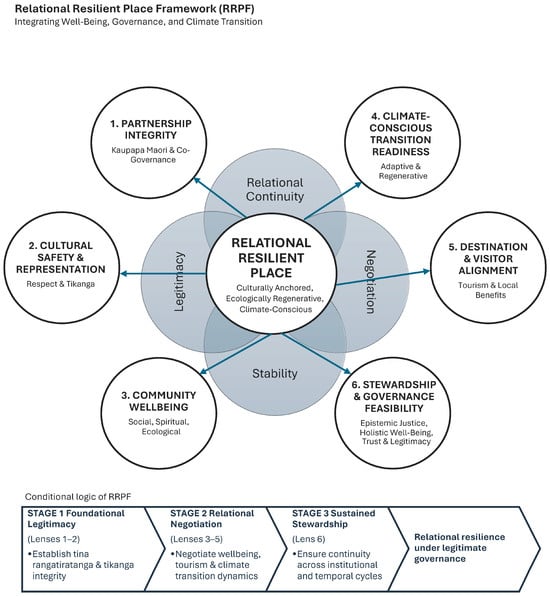
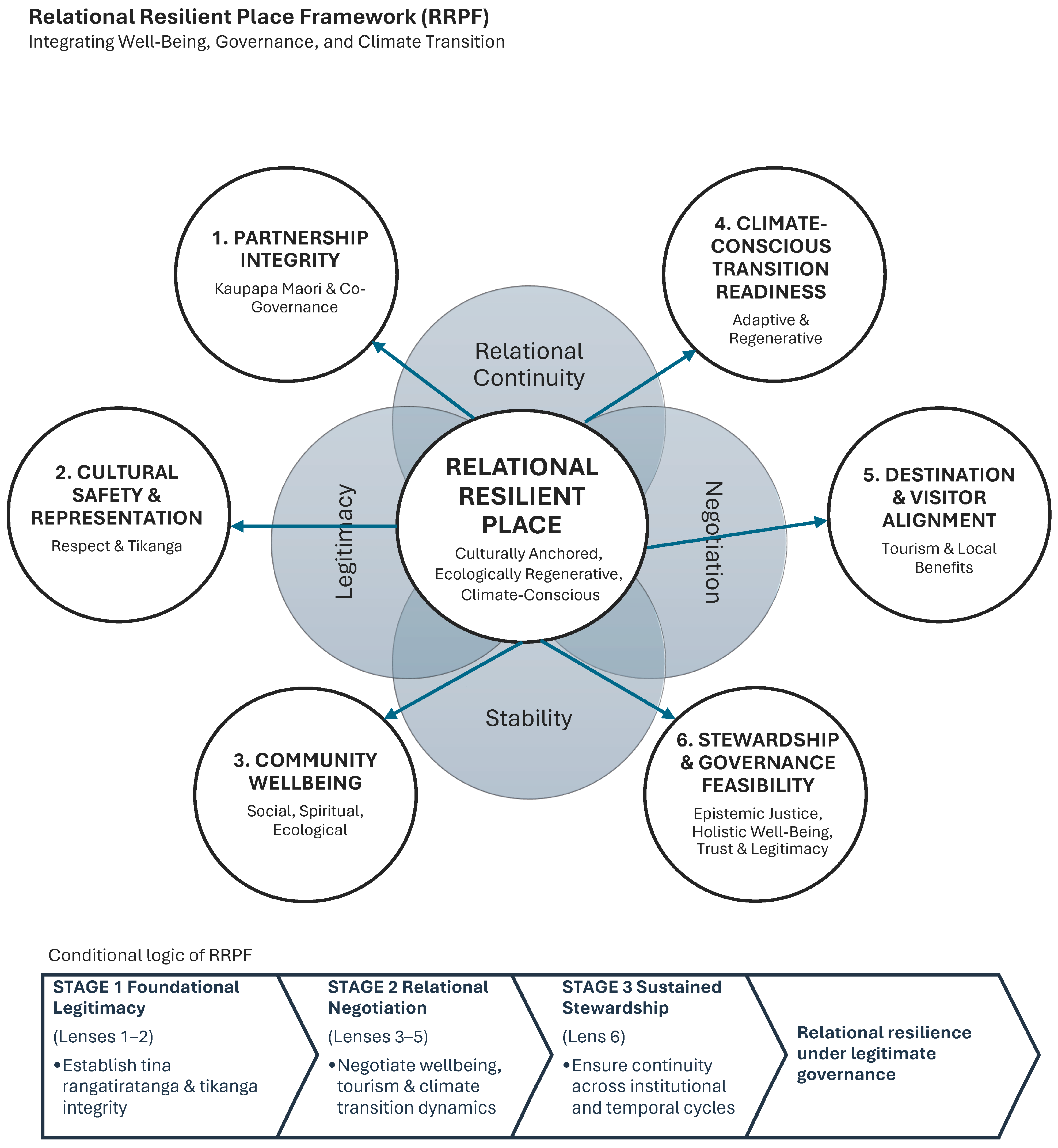

Disclaimer/Publisher’s Note: The statements, opinions and data contained in all publications are solely those of the individual author(s) and contributor(s) and not of MDPI and/or the editor(s). MDPI and/or the editor(s) disclaim responsibility for any injury to people or property resulting from any ideas, methods, instructions or products referred to in the content. |
© 2026 by the authors. Licensee MDPI, Basel, Switzerland. This article is an open access article distributed under the terms and conditions of the Creative Commons Attribution (CC BY) license.