


Abstract
This study explores key technological challenges and innovative strategies for improving the combustion performance and emission characteristics of low-carbon fuel engines, with a focus on natural gas applications. The core bottlenecks of natural gas combustion, including slow combustion speed and high methane slip under lean burn conditions due to wall quenching, crevice effects, and the long distance of flame propagation from the ignition zone to the whole cylinder, are analyzed. The decarbonization of engines further aggravates these issues. Technological solutions are summarized in four categories, including turbulence enhancement, high-energy ignition, fuel reactivity modification, and fuel synergy with zero-carbon fuels. Geometry modifications of the combustion chamber, dual-fuel operation, pre-chamber ignition, and fuel activation are systematically reviewed and evaluated. A fusion technology integrating diesel pilot ignition with jet flame propagation is analyzed as a new combustion concept, termed induced jet flame combustion. This approach demonstrates significant potential in enhancing both combustion efficiency and stability, especially for lean burn conditions. This work highlights the role of natural gas engines as a transitional technology and a support platform for ultralow-emission and high-efficiency power systems fueled with low/zero-carbon fuels in the context of global decarbonization goals.
Keywords:
natural gas; lean burn; diesel pilot; induced flame jet combustion; jet; flame propagation; engine 1. Introduction
The global imperative to decarbonize the transportation [1] and power generation sectors has catalyzed an urgent shift away from conventional fossil fuels [2,3]. This transition necessitates the development and deployment of high-efficiency, ultralow-emission propulsion systems capable of utilizing sustainable, low/zero-carbon fuels such as hydrogen [4], ammonia [5], and methanol [6]. However, the widespread adoption of these future fuels is impeded by significant combustion-related challenges intrinsic to their physicochemical properties [7], most notably difficult ignition [8,9] and slow flame propagation [10] from the ignition zone to the entire combustion chamber under lean burn conditions in the engine cylinder. Hydrogen has an extremely high burning rate; however, in practical engineering applications, it is necessary to adopt a lean combustion operation mode to precisely regulate the hydrogen combustion phase, effectively suppress the formation of nitrogen oxides (NOx), and avoid abnormal combustion phenomena such as pre-ignition and knock. Under typical lean combustion conditions with an equivalence ratio of φ = 0.5 and an ambient pressure of 1 atm, the laminar burning velocity of hydrogen will significantly decrease from 110 cm/s at φ = 0.7 to below 50 cm/s, and the flame propagation capacity is greatly weakened, which also poses a severe challenge to the stability of the combustion process from the ignition zone to the whole cylinder. These bottlenecks are particularly acute in applications demanding high reliability and power density such as large-bore marine [11,12] and stationary power engines.
Decades ago, natural gas [13] emerged as a critical and strategic alternative fuel. Its importance stems not only from its lower carbon percentage [14] compared to traditional liquid fuels but also from a confluence of practical advantages, including abundant global reserves, low cost, mature supply infrastructure, and long-time and well-established engine-employing technologies [15]. Furthermore, the prospect of bio-derived [16] or synthetic methane [17] enhances its sustainability profile. More importantly, natural gas shares fundamental combustion challenges of low laminar flame speed [18] and hard ignition due to high chemical bond energy with many prospective low/zero-carbon fuels [19]. The technological breakthroughs achieved in optimizing [20] the premixed combustion of natural gas directly provide solutions for ammonia and other premixed low/zero-carbon fuels.
Extensive research has been dedicated to overcoming the core limitations of natural gas combustion, including a slow burning velocity and methane slip. The strategies [21] include diesel pilot, geometry optimization of combustion chamber [22], pre-chamber turbulent jet ignition (TJI), and fuel activation via additives or hydrogen. Recent trends indicate a clear paradigm shift from pursuing single-technology optimizations toward the deep integration and synergistic control of multiple physical and chemical processes. An example of this trend is induced jet flame combustion, which synergistically combines the chemical activation of a pilot diesel fuel with the physical enhancement of a turbulent jet flame [23] to create distributed, high-intensity ignition sources and flame jet [24] propagation.
Despite considerable progress, a cohesive framework that systematically links the fundamental physicochemical origins of these combustion bottlenecks to the spectrum of technological solutions and further maps their transferability to future zero-carbon fuels is still lacking in the literature. Most reviews remain confined to either specific technologies or focus on fuel types. This review aims to provide a comprehensive and systematic analysis of the technological pathways for enhancing combustion from the ignition zone to the whole cylinder and reducing emissions in natural gas engines.
Figure 1 shows the conceptual framework of this paper. The challenges in high emissions, low combustion efficiency, knock risks, and related technical optimizations, including enhancements in ignition reliability, acceleration in combustion speed, and stabilization of end-gas combustion, are systematically reviewed in detail. In natural gas engines, the combustion process can be initiated primarily through two distinct ignition modes, spark ignition (SI) [25,26] and compression ignition (CI) [27,28]. Each mode possesses inherent characteristics that influence engine performance, efficiency, and emissions, making their comparative analysis essential for identifying the most suitable approach under specific operating conditions. Therefore, CI and SI for natural gas have been discussed and compared. Then, the landscape of combustion enhancement [29,30] strategies, including turbulence enhancement, high-energy ignition, fuel reactivity modification, and fuel synergy are reviewed and categorized in detail. Furthermore, a fusion technology is proposed, which combines multi-zone ignition [31] and jet flame propagation, named as induced jet flame combustion, to enhance combustion speed under lean burn conditions on large-bore engines. This work will provide a theoretical reference for the development of premixed low/zero-carbon fuel combustion technologies. By establishing this systematic framework, from problems to integrated solutions and future extrapolation, this review aims to serve as a strategic reference for researchers and engineers navigating the complex transition from conventional to sustainable, carbon-neutral premixed combustion systems.
Figure 1.
Conceptual framework of this paper.
2. Overall Review of Natural Gas Engine
Figure 2 reveals the natural gas engine temporal evolution of three stages. The early stage is from year 2005 to 2012 [32,33], in which dual-fuel, hydrogen [34], chemical kinetic mechanism [35], and combustion efficiency show sustained bursts, corresponding to the initial application phase of natural gas engines and the need for performance and emission optimization. The mid-stage is from 2013 to 2019 [36,37,38,39,40], in which lean burn, pre-chamber, and combustion instability increase, reflecting a shift in research focus toward high-efficiency combustion modes and their stability challenges. The recent stage is from 2020 to 2026, in which methane oxidation catalysis [41] and ammonia–natural gas blending indicate that research frontiers are extending toward carbon-neutral fuel integration. This transition exacerbates difficulties and challenges in ignition and flame propagation from the ignition zone to the whole cylinder.
Figure 2.
The temporal evolution of natural gas combustion.
Research on natural gas engine combustion has established a knowledge system centered on dual-fuel and lean combustion. These directions collectively signify a paradigm shift in natural gas combustion technology from alternative fuel application to low-carbon intelligent combustion systems, providing scientific support for advancing the critical transitional role of natural gas in achieving the dual carbon goals.
3. Compression Ignition and Spark Ignition of Natural Gas
Natural gas, closely intertwined with other fuels, technologies, research methods, and performance indicators, is a significant low-carbon alternative fuel [42,43] in the current energy transition landscape. Natural gas research is deeply integrated into the existing engine technology system, primarily through diesel and gasoline engines [44], as shown in Table 1. However, the combustion speed of natural gas is slower than that of gasoline and diesel [45], resulting in poor power performance and high methane emissions. The combustion process of natural gas in engines needs to be further optimized. In response, scholars at home and abroad have proposed and developed a series of technologies to enhance the combustion performance [46] of natural gas, including natural gas lean burn [47], pre-chamber ignition [48], dual spark plugs [49], diesel pilot ignition [50], direct injection stratified combustion [51], in-cylinder thermochemical fuel reforming [52], natural gas–hydrogen blending [46], EGR [53], and combinations among these.
One of the mainstream application modes of natural gas is the dual-fuel compression ignition engine. A small amount of diesel serves as the pilot ignition source [44] to ignite the mixture, dominated by natural gas. Diesel pilot ignition technology features a high compression ratio, no throttle loss, minor structural modifications, and excellent combustion and emission performance; hence, it has been widely applied to improve the combustion of methane, ammonia, and methanol. However, diesel-piloted natural gas engines still suffer from problems [54], such as high hydrocarbon emissions, low thermal efficiency under low-load conditions, and knock under high-load conditions, which restrict its application and development process. Optimizing the natural gas combustion process and developing high-efficiency and clean combustion technologies for diesel-piloted natural gas engines are crucial technical approaches to support the large-scale promotion of natural gas-fueled transportation vehicles.
For natural gas in spark ignition engines, the core challenge lies in the contradiction between its high knock resistance and its slow burning velocity. Methane’s high octane value (RON ≈ 120) permits aggressive compression ratios and extreme lean operation that theoretically lead to high thermal efficiency. However, the inherently low laminar flame speed of methane–air mixtures severely constrains the practical realization of these benefits. Under lean conditions, the combustion duration stretches beyond the optimal crank-angle window, inducing cycle-to-cycle instability, and elevated unburned hydrocarbon emissions. Pre-chamber jet ignition technology emerges as a key breakthrough to accelerate combustion, suppress cycle-by-cycle variation [55], and expand the stable limits under low load conditions.
A pre-chamber [2,48] is a small auxiliary volume located adjacent to the main combustion chamber. It is equipped with a spark plug and communicates with the main chamber through a series of small orifices. In its most basic configuration, the pre-chamber charge is inducted solely from the main chamber during the compression stroke, termed a passive pre-chamber. While structurally simple and widely adopted, the mixture composition of the passive pre-chamber is entirely dictated by the main chamber condition. Under lean- or high-dilution operation, the pre-chamber charge becomes excessively dilute, resulting in weak jet formation and compromised ignition reliability. To overcome this constraint, the active pre-chamber [56] was developed. In this configuration, a dedicated auxiliary fuel supply line provides independent control over the pre-chamber mixture composition, enabling the maintenance of a near-stoichiometric, readily ignitable charge, regardless of the main chamber dilution level. By actively regulating the fuel–air ratio within the pre-chamber, the active design substantially enhances jet vigor, accelerates flame propagation into the main chamber, and extends the stable operating range toward ultra-lean conditions. Despite their differences in charge preparation, both passive and active pre-chambers share the common functional principle that the combustion event within the pre-chamber ejects a high-velocity jet of hot radicals and turbulent flame kernels through the orifices, serving as a distributed ignition source that enlarges the initial flame area and accelerates the overall combustion rate in the main chamber.
Table 1.
Comparisons of natural gas integrated into diesel and gasoline engines.
As shown in Table 1, the ultimate goals and core contradictions of natural gas engine research are pursuing high thermal efficiency and optimizations aimed at reducing carbon dioxide and greenhouse gas (GHG) emissions, as well as nitrogen oxides during lean or high-temperature combustion and methane slip. Particularly, methane and NOx emissions have a very high global warming potential, posing a severe and unique challenge for natural gas engines. Therefore, research coupled with strategies, like EGR and fuel reforming [58], have been investigated to control NOx and unburned methane while improving thermal efficiency. CO2 and NOx emissions were measured by the emission analyzer, HORIBA MEXA-1500DS under steady-state engine operating conditions in Ref [48].
Diesel pilot ignition is essentially a fuel chemical reactivity compensation strategy with a high compression ratio, introducing a highly reactive fuel to overcome the difficulty of natural gas auto-ignition and improve its thermal efficiency [59]. Pre-chamber jet ignition [60] is fundamentally a combustion physical process intensification strategy, creating high-intensity turbulence and multiple ignition kernels to accelerate combustion. Its strengths are its high potential for combustion speed and stability improvement [61]. In the future, driven by the pursuit of ultimate efficiency and ultralow emissions, diesel pilot ignition combined with jet ignition could achieve faster, more stable, and cleaner combustion on a compression ignition platform.
4. Core Technological Pathways for Optimizing Natural Gas Combustion and Emissions
Natural gas is primarily composed of CH4 with a low carbon-to-hydrogen ratio, resulting in lower CO2 emissions and clean combustion with extremely low particulate emissions. However, the stable molecular structure of CH4 leads to a laminar flame speed significantly lower than that of gasoline and hydrogen, resulting in prolonged combustion duration [62].
Stable molecular structures and low reactivity, due to the high chemical bond energy, is a common issue for low/zero-carbon fuels, facing challenges of slow combustion speed, difficulty in ignition [56], and poor flame stability. In addition, wall quenching, crevice effects, and distance from the ignition zone to the whole cylinder further intensify the challenges in the combustion of low/zero-carbon fuels. Therefore, enhancing thermodynamic conditions, chemical reactivity, and ignition energy to ensure combustion stability are of paramount importance to improve the thermal efficiency, power density, and ultralow emissions of low/zero-carbon lean combustion engines. In addition, it is essential to optimize the flame propagation process from the ignition zone to the entire cylinder. Enhancing in-cylinder turbulence, improving premixed mixture activity, expanding ignition area, and increasing ignition energy can accelerate flame propagation and ensure combustion stability. Meanwhile, tailored combustion optimization and low-carbon fuel adaptation should be implemented to meet carbon neutrality goals. The methods to accelerate natural gas combustion have been summarized in Figure 3. The main technological solutions are summarized in four categories, including turbulence enhancement, high-energy ignition, fuel reactivity modification, and fuel synergy with zero-carbon fuels.
Figure 3.
Methods to optimize natural gas combustion and emissions.
4.1. Turbulence Enhancement
The development of novel high turbulence intensity combustion chambers, such as designs with aggressive squish surfaces and high tumble ratios, is a progressing method with which to enhance natural gas combustion by generating ultra-strong turbulence. As shown in Table 2, enhancements of turbulence realized by modifying the piston geometry have been widely validated; the chamber shape is paramount to reducing the combustion duration of natural gas, boost engine efficiency, and decrease methane and NOx emissions.
The inherent limitations of natural gas, such as low laminar flame speed and prolonged combustion duration, pose significant challenges to the efficiency and emission performance of natural gas-fueled engines. To address these issues, extensive research has focused on optimizing the piston geometry in combustion chambers, as it directly governs in-cylinder fluid flow, turbulent kinetic energy (TKE) distribution, and fuel–air mixing uniformity, key factors that accelerate natural gas combustion.
The shape of the piston bowl is a core element of combustion chamber design; different structural configurations exhibit distinct advantages in regulating combustion processes, as shown in Table 3. Sechul and coworkers [63] conducted experimental studies on a natural gas–diesel dual-fuel reactivity-controlled compression ignition (RCCI) engine with various piston shapes. Their results indicated that, compared to re-entrant bowl pistons, bathtub surface pistons achieved lower incomplete combustion due to the active reaction of natural gas in the squish volume. Additionally, shallow bowl piston geometries, characterized by a lower surface-to-volume ratio, effectively reduce heat transfer, thereby yielding higher thermal efficiencies than re-entrant bowl designs. However, the trade-off is that shallow bowl pistons diminish natural thermal stratification, leading to faster combustion and more severe engine knock under the same operating conditions; this was also further supported by Gainey and coworkers [64] in their research.
Kakaee and coworkers [65] specifically investigated the impact of piston bowl geometry on natural gas/diesel RCCI combustion. They selected three piston bowl types, stock, bathtub, and cylindrical, with a constant compression ratio of 16.1:1, and adopted a double-injection strategy. Their findings revealed that increasing bowl depth led to elevated in-cylinder pressure and temperature, which in turn intensified the combustion reaction. Liu and coworkers [66] optimized the combination of injection parameters and combustion chamber geometries to pursue low fuel consumption and low pollutant emissions. Their research concluded that straight combustion chambers result in significantly lower CH4 emissions compared to re-entrant combustion chambers, achieving an indicated thermal efficiency of 50.2%.
For specialized combustion demands, innovative piston bowl designs have been developed. Li and coworker [67] developed three bowl geometries, the omega combustion chamber (OCC), the shallow-depth combustion chamber (SCC), and the hemispherical combustion chamber (HCC), and found that SCC enables better combustion performance while maintaining relatively low CO, NOx, and soot emissions in gasoline–biodiesel-fueled RCCI engines. Tay and coworkers [68] compared three combustion bowl geometries: OCC, SCC, and the shallow-depth re-entrant combustion chamber (SRCC). Among these, the SRCC geometry exhibited the shortest throat length, the highest turbulent kinetic energy, and the shortest combustion duration, demonstrating superior performance in accelerating combustion.
Table 2.
Piston core geometric characteristics and performance of multi-type combustion chambers.
Nayak and coworkers [70] modified the combustion chamber geometry from a baseline hemispherical combustion chamber (HCC) to toroidal combustion chamber (TCC), SCC, SRCC, and toroidal re-entrant combustion chamber (TrCC) while maintaining a consistent compression ratio. The results showed that the TrCC geometry improved BTE by 6.4% compared to the original diesel baseline.
In addition to piston bowl shape optimization, innovations in the overall piston contour have been tailored to meet the operational requirements of specialized engine structures, further enhancing combustion acceleration effects. Zhu and coworkers [69] conducted research on a two-stroke rodless spark ignition opposed-pistons engine and analyzed three piston types: pancake piston, pit piston, and pit-guided piston. The pancake piston, with its simple and smooth spherical arc structure, is beneficial for maintaining intake swirl strength. In contrast, the swirl strength of the pit and pit-guided pistons decreases significantly, while their tumble strength is well-preserved. Compared to the pancake and pit-guided pistons, the pit piston increases average TKE by approximately 25%, with a more concentrated distribution at spark timing. Although the pit piston exhibits a 0.3% reduction in indicated thermal efficiency, it shortens combustion duration by 13.1%, thereby reducing knock tendency.
Benajes and coworker [71] demonstrated that a reduced piston surface area and diminished charge motion are key factors for improving gross indicated efficiency across different engine loads. Specifically, a shallow piston geometry with a smooth transition from the center to the squish region, featuring a 16% reduced surface area, significantly enhances gross work at low loads. However, this advantage diminishes at higher loads, due to increased combustion losses.
The effectiveness of piston geometry optimization in accelerating natural gas combustion relies on synergistic matching with other key engine parameters. Stocchi and coworkers [72] used multi-dimensional CFD code AVL FIRE to simulate the combustion process and fluid flow in spark ignition natural gas engines with three different combustion chamber designs. Their results indicated that turbulence intensity has almost no influence on the combustion process during the flame kernel development phase. However, appropriately enlarging the squish area can increase inverse extrusion flow, improve in-cylinder TKE, and thereby promote flame propagation. Wu and coworkers [73] further supplemented this finding by noting that, while turbulence intensity has little effect during flame kernel development, it directly and significantly influences flame propagation velocity during the rapid combustion period. This highlights that the synergistic optimization of piston geometry, squish area design, and turbulence intensity regulation is critical for accelerating combustion.
The optimization of high-pressure direct injection (HPDI) technology, when combined with piston geometry optimization, further enhances combustion acceleration. HPDI enables late injection and faster fuel–air mixing; when paired with diesel pilot ignition, it achieves both high speed and efficiency. Multiple injections during the intake and compression strokes create a reactivity-stratified chemical atmosphere within the cylinder, enabling rapid and controllable combustion. This technical combination fully leverages the advantages of piston geometry in organizing in-cylinder flow, forming a synergistic effect that accelerates natural gas combustion.
Yan and coworkers [74] investigated three representative chamber geometries through experiments and simulations, providing additional data support for the synergistic optimization of piston geometry and combustion systems. Lim and Reitz [75] developed a chamfered piston crown design to reduce unburned hydrocarbon (UHC) emissions from ring-pack crevices, achieving a 17–41% reduction in crevice-borne UHC emissions compared to conventional piston designs. This optimization of the piston crown contour [76,77] improved combustion completeness, indirectly contributing to combustion acceleration.
Liu and coworkers [78,79] focused on heavy-duty spark-ignited natural gas engines with bowl-in-piston chambers. Their research highlighted that increasing natural gas utilization in heavy-duty engines helps to reduce greenhouse gas emissions from power generation and transportation. However, retrofitting compression ignition engines to natural gas spark ignition operation can increase methane emissions without expensive aftertreatment. A key reason for the low combustion efficiency in retrofitted engines is the low laminar flame speed of natural gas, coupled with the larger bowl size of diesel engines as compared to traditional gasoline engines; it increases flame travel length and extends combustion duration. Optical measurements in their study showed that fast-propagating flames can be formed even under extremely lean operating conditions, as the squish region of the bowl-in-piston chamber generates high turbulence intensity inside the bowl. Nevertheless, the flame propagation speed decreases by 55% when transitioning from the bowl to the squish region, due to a significant reduction in turbulence intensity in the squish region. Furthermore, the squish volume traps a substantial fuel fraction, which undergoes slow and inefficient combustion during the expansion stroke. These results emphasize the paramount importance of optimizing chamber shape to improve engine efficiency and reduce emissions. Overall, piston geometry optimization achieves accelerated natural gas combustion by regulating in-cylinder flow-field structure, enhancing turbulent kinetic energy, and improving fuel–air mixing uniformity. The research findings confirm that reasonable piston geometry design, whether through bowl shape modification, overall contour innovation, or synergistic matching with injection parameters, can effectively address the inherent limitations of natural gas combustion, providing valuable technical references for the development of high-efficiency, low-emission natural gas engines.
Table 3.
Piston geometries to enhance natural gas combustion.
While considerable research has been devoted to optimizing combustion chamber geometry for enhanced in-cylinder turbulence, most efforts remain focused on the intensification of flow motion within the piston bowl region. In premixed lean burn natural gas engines, however, the flame propagation pathway extends well beyond the bowl from the ignition zone across the entire cylinder to the liner walls and crevice regions. Effective combustion optimization must, therefore, adopt a full-cylinder, full-pathway perspective. During the propagation phase, excessive clearance distances between the ignition zone and distant cylinder regions delay flame arrival and increase knock propensity, while cold-wall quenching extinguishes the flame at all solid boundaries, regardless of in-cylinder turbulence levels. Addressing these challenges requires integrated strategies that combine ignition system designs such as pre-chamber or jet targeting.
4.2. Chemical Activation
Fuel activation [80] significantly increases flame speed [81] using highly reactive additives [82] blended with the main fuel, and catalytic/non catalytic additives [83], such as formaldehyde (CH2O) radical precursors or hydrogen, shorten CH4 ignition delay [84] and flame propagation. The validation and simplification of detailed CH4 reaction mechanisms [85,86] under high-pressure and lean burn conditions provide accurate models for combustion system design. The exploration of surface catalytic combustion by coating catalysts [87] on combustion chamber walls or specialized substrates is needed to achieve low-temperature, flameless, rapid oxidation of CH4.
To address natural gas’s inherent limitations of low laminar flame speed and combustion inefficiency, improving fuel reactivity has emerged as a key strategy for enhancing its combustion performance. Hydrogen [88], as a clean fuel, enables lean premixed combustion to curb NOx emissions, yet faces significant challenges in pre-ignition control and stable combustion management in practical engines. Non-thermal plasma [89], the reforming of methane to generate hydrogen–methane blends, significantly boosts laminar flame speed due to additional reaction kinetics from long-lived species or altered energy levels, outperforming bottled hydrogen–methane blends [90], while reducing pure hydrogen demand [89]. For composite propellant-related combustion systems, a Cl2 addition modifies DME/N2O reaction [91] pathways and flux distribution without changing ignition activation energy, offering insights into reactivity regulation [92]. Meanwhile, kinetic models critically impact super-knock [93,94] prediction in high-compression natural gas engines, as discrepancies among models lead to varying detonation [95] regime predictions, highlighting the need for validated mechanisms tailored to engine conditions. Collectively, fuel reactivity improvement via hydrogen blending, plasma reforming, additive modulation, and kinetic model optimization effectively addresses natural gas combustion challenges, enabling efficient, low-emission operation. Table 4 shows the main additives employed in internal combustion.
Table 4.
Additives employed in references.
Accurate chemical reaction mechanisms serve as the theoretical foundation and optimization prerequisite for achieving high-efficiency and clean combustion. Fakhari and coworkers [123] developed a reduced mechanism comprising 60 species and 372 reactions, which improved the prediction accuracy of ignition delay time for natural gas–diesel dual fuel by 20% and reduced the simulation error to 0.2 milliseconds. Additionally, the physicochemical properties of the fuel itself are crucial. Lou and coworkers [124] conducted experiments using a constant-volume combustion bomb and found that the proportion of ethane (C2H6) in natural gas significantly impacts its laminar flame speed. For every 2.5% increase in ethane content, the laminar flame speed increased by approximately 5.1% on average. This indicates that optimizing the chemical composition and reaction kinetics of the fuel forms the basis for enhancing combustion rate and stability.
Lean combustion [125] is a key pathway to improving thermal efficiency. However, the inherently slow flame speed of natural gas makes it prone to combustion instability and cyclic variations under lean conditions. Zhang and coworkers [126] provided a solution to this problem. They found that using high ignition energy (150–200 mJ) combined with a large spark plug gap could extend the lean combustion limit of methane to an excess air ratio (λ) of 1.55, primarily due to the enlargement of the initial flame kernel. However, while high exhaust gas recirculation (EGR) rates help to reduce NOx emissions, they often deteriorate flame stability. Camacho and coworkers [127] revealed the opposing effects of EGR and H2 on flame stability: high EGR worsens flame stability, whereas increasing H2 improves it. This provides a strategy for synergistic control, leveraging the chemical activation effect of hydrogen to counteract the negative impacts of high EGR, thereby maintaining stable operation under lean conditions without significantly increasing CO2 emissions.
The utilization of hydrogen blending is currently one of the most active directions for improving natural gas combustion. Its effects manifest across multiple levels, from macroscopic power enhancement to microscopic chemical reaction promotion. Kim and coworkers [128] demonstrated that, for a hydrogen-fueled spark ignition engine under lean conditions with λ = 1.4 using port fuel injection and a high compression ratio of 14, a brake power of 14.7 kW could be achieved. By switching to direct injection, the power could be further increased to 21.1 kW, while maintaining the same thermal efficiency. Ayad and coworkers [120] employed optical engine studies and found that even trace amounts of hydrogen (as low as 0.42 mg/s) could promote the formation of OH* radicals, leading to more uniform flames and better radical distribution. This enhancement improved all combustion phases, including the post-combustion period, providing empirical support for onboard hydrogen production as a transitional strategy. However, abnormal combustion phenomena, such as backfire, often occur in the port fuel-injected engine. Tyrewala and coworkers [129] found that adding hydrogen to methane (with hydrogen energy shares ranging from 0% to 20%) under constant intake pressure, combined with EGR, effectively reduced emissions of unburned hydrocarbons, carbon monoxide, and nitric oxide. They attributed the more-than-linear decay rates of CH4 and H2 to the chemical synergistic effects of hydrogen addition and EGR. To achieve more precise control over the combustion process, researchers have explored physical activation based on fuel stratification [130] and advanced ignition technologies. Chen and coworkers [125] pointed out that, under lean conditions, delayed hydrogen injection reduces mixture inhomogeneity, offering an effective pathway for efficient stratified combustion [131] that simultaneously achieves high thermal efficiency and low emissions.
Chemical activation serves as a core technological pathway for enabling high-efficiency, low-emission combustion in natural gas engines. Its essence lies in accelerating reaction kinetics and reducing ignition energy barriers through the introduction of additives, such as hydrogen, thereby achieving precise control over the combustion process. However, this must be integrated with other control measures, such as stratified combustion and high-energy ignition, to enable more accurate spatiotemporal regulation of combustion. Such integration extends the lean combustion limit, suppresses knock tendency, and reduces methane slip, ultimately achieving synergistic optimization of thermal efficiency improvement and pollutant emission control.
4.3. Advanced Ignition
Advanced ignition technologies have evolved to address the persistent challenges of slow flame propagation, narrow lean burn limits, and combustion instability in natural gas engines. On the one hand, high energy-density ignition methods, such as laser ignition, microwave ignition, and plasma-assisted ignition, promote rapid ignition and initial flame kernel development in natural gas/air mixtures through localized high energy flux, and have been widely studied in internal combustion engines. On the other hand, multi-point or jet ignition technologies have developed rapidly, utilizing high-temperature jet flames generated from one or more pre-chambers as distributed ignition sources. These simultaneously ignite multiple regions in the main combustion chamber, drastically increasing the combustion surface area and significantly shortening the combustion duration. Complementing these ignition advances, variable compression ratio (VCR) systems integrated with intelligent thermal management have been proposed. This approach allows for reduced compression ratios under high loads to prevent knock, while increasing compression ratios and synergistically raising intake temperatures under low loads to ensure rapid and stable ignition. Table 5 summarizes advanced ignition technologies.
Further mechanistic insights into jet ignition have been gained through detailed investigations. Sun et al. [132] revealed how a pre-chamber flame propagates through a small-diameter nozzle into the main chamber without extinguishing, with the key being the maintenance of distance between the flame core and the wall to preserve temperature and free radicals. Zhong and coworkers [60] investigated the mechanism of pre-chamber TJI for high-pressure direct-injection methane jets. They found that TJI significantly expands the lean burn limit and improves combustion characteristics compared to homogeneous premixed combustion, primarily through mixture stratification [133] and turbulence effects. Hydrogen enrichment in the pre-chamber can further enhance jet intensity and energy. Extending the applicability of this concept, Zhong and coworkers [134] applied TJI to liquid ammonia spray combustion, revealing a three-stage process (pre-chamber combustion, partially premixed combustion, and mixing-controlled combustion), thus offering a novel ignition approach for ammonia engines. The practical effectiveness of such systems has been demonstrated by Gürbü and coworkers [135], who applied hydrogen-assisted jet ignition (HAJI) in a direct-injection spark ignition engine. Under lean conditions, this approach achieved substantial improvements in pressure rise rate, heat release rate, combustion duration, and cycle-to-cycle variability, demonstrating its effectiveness in enhancing performance and reducing HC emissions. Beyond jet-based methods, Zhang and coworkers [136] conducted breakthrough research using transient plasma ignition to combust hydrogen in a retrofitted natural gas engine under ultra-lean conditions (λ up to 5). This resulted in a two-fold improvement in engine stability, a four-fold reduction in NOx emissions, and a 175% increase in maximum mechanical power. The enhancement mechanisms are attributed to the hydrodynamic effects of ionic wind and chemical activation generated by the plasma. Compared with conventional spark ignition, plasma ignition provides higher energy, larger ignition volume, and more active radicals, enabling reliable ignition under high-speed flow and lean conditions.
Optimizing ignition also involves understanding and controlling its interaction with in-cylinder flows and fuel injection. Zhang and coworkers [137] systematically studied the ignition characteristics of premixed methane jets impinging on walls. They identified two ignition modes and found that ignition performance is significantly influenced by the dimensionless impingement distance (H/D) and wall shape, noting that optimizing wall geometry can minimize high-turbulent kinetic energy stagnation zones, thereby promoting ignition. Qiu and coworkers [138] investigated the interaction between high-pressure methane jets and premixed flames, revealing a shift in the dominant combustion mode from premixed flame surfaces to diffusion flame surfaces within the main chamber. Relatedly, research on hydrogen jet cold ignition of coalbed methane [139] demonstrated that the interval between ignition and hydrogen injection decisively affects combustion duration and flame morphology transition, with earlier hydrogen involvement accelerating combustion speed.
Finally, the synergy between fuel composition and ignition systems presents another avenue for improvement. Pan and coworkers [140] conducted simulation studies showing that blending 10–30% hydrogen into methane significantly reduces the ignition delay of glow plug ignition and allows for reliable ignition at lower glow plug operating temperatures, thereby extending component life. Supporting this integrated view, Arutyunov and coworkers [141] emphasized, in their review, that for hydrogen-enriched natural gas mixtures, ignition kinetics may undergo significant changes at temperatures below 1000 K (relevant to engine operating conditions). This challenges existing knock-resistance evaluation criteria and underscores the potential of co-optimizing fuel composition and ignition strategies to improve overall combustion characteristics.
Together, these advances illustrate a multi-faceted approach where next-generation ignition technologies, synergistic control of in-cylinder processes, and tailored fuel formulations are being integrated to push the boundaries of efficiency, stability, and cleanliness in natural gas combustion.
Table 5.
Advance ignition technologies.
4.4. Fuel Synergy
With the acceleration of global carbon-neutrality efforts, carbon-neutral fuels have emerged as a critical research frontier in energy and power sectors. Consequently, the focus of natural gas engine research is shifting decisively from traditional fuel optimization toward deep integration with carbon-neutral fuels such as hydrogen and ammonia. This strategic integration achieves deep decarbonization for internal combustion while simultaneously to improve combustion characteristics. Table 6 lists fuel synergy among natural gas and zero/low-carbon fuels.
Hydrogen, distinguished by its high flame speed, wide flammability limits, and zero-carbon properties, serves as the most direct means to enhance flame propagation of natural gas. Supporting this, Carvalho and coworkers [143] found that adding 33% hydrogen to producer gas yields a flame morphology comparable to pure natural gas. Furthermore, a hydrogen blending ratio of 24–36% provides an optimal performance window for engines originally designed for natural gas, achieving an effective balance between power output and emissions, while notably reducing unburned hydrocarbon (UHC) emissions. In parallel, ammonia (NH3) is gaining prominence as a practical zero-carbon hydrogen carrier fuel. However, its application faces inherent challenges, including slow combustion speed, difficulty in ignition, and a propensity to generate fuel-borne NOx. To address these, Wu and coworkers [144] investigated CH4/NH3 mixtures by integrating pre-chamber ignition with lean burn technology and developed corresponding combustion mechanisms. Zhang and coworkers [145] studied the oxidation characteristics of NH3/H2 and NH3/CH4 mixtures in a high-pressure flow reactor, providing essential foundational data for kinetic model development. At the engine application level, Zhu and coworkers [146] conducted a numerical study on an NH3–H2 engine, employing secondary hydrogen injection in both the pre-chamber and main chamber. Their results demonstrate that this strategy effectively regulates in-cylinder combustion processes and increases the mean effective pressure. Meanwhile, Fan and coworkers [147] explored an innovative on-board approach using gliding arc plasma for ammonia decomposition to produce hydrogen, subsequently coupling it with an ammonia engine. This method increased brake thermal efficiency by over 3% and significantly improved the combustion stability of pure ammonia.
Beyond hydrogen and ammonia, research is also expanding to include synergistic blends with other renewable fuels. For instance, Zhang and coworkers [148] investigated ammonia–methanol blended fuels, comparing the effects of methanol reforming gas and cracking gas (both containing H2) on combustion and NO formation. Their findings indicate that reforming gas offers advantages in both the combustion rate and NO control, attributed to its higher hydrogen yield and the dilutive effect of CO2. Such explorations of ammonia blended with renewable fuels, like biomethanol and biodiesel, pave the way for constructing more flexible, resilient, and sustainable multi-fuel energy systems.
The unique combustion properties of these alternative fuels, particularly their low reactivity, necessitate advanced ignition and combustion management strategies. Pre-chamber TJI has thus emerged as a key technology. As previously noted, TJI has been successfully extended to challenging applications such as liquid ammonia spray combustion (Zhong and coworkers [134]) and ammonia–hydrogen engines (Zhu and coworkers [146]). By generating multiple, distributed ignition sources and enhancing in-cylinder turbulence, TJI effectively overcomes the challenges of difficult ignition and slow flame propagation.
Emission control, especially for ammonia-based fuels, presents a distinct set of challenges and focuses. Ammonia combustion produces significant fuel-borne NOx, whose formation mechanism fundamentally differs from thermal NOx. Wei and coworkers [149] elucidated that under lean burn conditions, fuel-borne NO dominates, whereas under stoichiometric conditions, thermal NO prevails. Their work also revealed that the effect of the ammonia blending ratio (XNH3) on total NOx emissions exhibits opposite trends under these two combustion regimes. Further insights come from Gain and coworkers [150], who, through combined experiments and simulations, found that ammonia blending alters flame structure and temperature distribution. While it reduces the peak flame temperature, the secondary combustion of hydrogen produced from in situ ammonia decomposition can lead to increased flame height and more uniform heat distribution. To mitigate NOx emissions, strategies extend beyond advanced ignition. Tu and coworkers [151] demonstrated the effectiveness of air staging in controlling NO emissions from NH3/CH4 swirling flames in a model combustor. Additionally, optimizing spark ignition timing (SIT), as studied by Wei and coworkers [149], and carefully calibrating fuel blending ratios, as highlighted by Zhang and coworkers [148], remain crucial for emission control in engines fueled by ammonia blends.
A truly sustainable transition requires a holistic perspective that extends beyond the engine itself. Álvarez and coworkers [152] underscored this by employing a lifecycle assessment methodology to compare the environmental impacts of hydrogen production via various pathways. Their work emphasizes that while global warming potential (GWP) is critical, a comprehensive evaluation of other environmental indicators is equally necessary. This highlights that the “color” of hydrogen (green or not) fundamentally determines its net contribution to carbon neutrality. Therefore, future research must adopt a system-level approach, integrating and co-optimizing fuel production, engine combustion, and aftertreatment systems to genuinely achieve carbon neutrality goals across the entire lifecycle.
Finally, the research landscape is further enriched by comparative and combinatory studies involving a broader spectrum of alternative fuels. Biodiesel, methanol, and ethanol are frequently examined alongside or in blends with natural gas, hydrogen, or ammonia. These studies provide valuable benchmarks, reveal compatibility insights, and help to map out the complex matrix of potential multi-fuel strategies for a diversified, low-carbon future.
Table 6.
Fuel synergy among natural gas and zero/low-carbon fuels.
5. Combination of Multi-Technologies
To meet increasingly stringent global emission regulations and carbon neutrality goals, the optimization of combustion for low/zero-carbon fuels has been divided into four distinct technological pathways, including turbulence enhancement, high energy ignition, fuel activation, and zero-carbon fuel synergy, by which, the performance of natural gas engines has been improved significantly. However, natural gas combustion research has expanded from the automotive sector to the marine power market. In the future, marine engines will constitute the main arena for competition in powertrain system technologies [153,154]. Promoting the innovation and application of low/zero-carbon marine engine technologies is of importance. Large-bore and long-duration combustion of marine engine pose greater challenges to low/zero-carbon fuels, such as natural gas and ammonia, because these fuels have stable molecular structures and low reaction activity due to high-energy chemical bonds. Consequently, the integration of existing technologies has become a potential solution to the above problems, as shown in Figure 4.
Figure 4.
Challenges and solutions of natural gas lean burn combustion from ignition zone to clearances.
Since combustion chamber geometry can effectively enhance in-cylinder turbulence, it forms a foundational and essential component of any integrated solution. Krieger and coworkers [155] demonstrated that re-entrant and cylindrical piston geometries reduced combustion duration by approximately 40% compared to a baseline design, attributing this improvement to higher post-ignition turbulence intensity, which enhances flame acceleration and stretching. Similarly, Fu and coworkers [156] highlighted the combined effects of piston shape and swirl ratio on combustion and emissions in a diesel pilot natural gas engine. Therefore, by coupling proper piston geometries with advanced ignition methods, more efficient combustion control can be realized.
Current studies in the literature report on two established paradigms of such integration. The first combines diesel multi-zone auto-ignition [157] with a geometry-driven in-cylinder turbulent jet. Here, the high reactivity of diesel ensures reliable multi-point ignition, while a specially designed piston crown geometry transforms the flame momentum into a coherent, annular propagating jet. This organized annular flow rapidly stretches the ignition kernels, significantly accelerating flame propagation.
The second paradigm integrates a pre-chamber system [158] with geometry-driven in-cylinder turbulence. High-energy combustion within the pre-chamber generates multiple high-velocity, radical-rich turbulent flame jets. These jets interact synergistically with a high-intensity background turbulent field, which is pre-organized by the main chamber geometry, leading to markedly faster flame propagation.
To guide the fusion of existing technologies, four jet generation methods are summarized and compared in Table 7. Aerodynamic jet, energy injection jet, fuel injection jet and acoustic induced jet all have the potential to accelerate the flame propagation of natural gas. For large-bore engines, multi-zone ignition and jet flame are able to support ultra-lean combustion and low/zero-carbon fuels.
Table 7.
Jet generation methods that may be integrated in internal combustion engines.
Looking forward, further combustion intensification may be achieved through next-generation fusion concepts, such as coupling plasma jet ignition with geometry-driven in-cylinder flow structures, or by integrating pre-chamber systems with specifically designed annular jet-generating geometries. These advanced syntheses aim to leverage both distributed ignition and macro-flow organization for superior combustion control. However, such integrative approaches remain largely unexplored in the current literature and represent a promising frontier for future research aimed at mastering combustion in next-generation, large-bore, zero-carbon marine engines.
5.1. Fusion of Diesel Pilot Ignition and Geometry Modification
Driven by the pursuit of ultimate efficiency and ultralow emissions, diesel pilot ignition combined with jet flame presents a promising pathway toward faster, more stable, and cleaner combustion on lean burn compression ignition platforms due to multi-zone autoignition realized by pilot diesel and fast flame propagation through jet motion.
Shen and coworkers [157] proposed induced jet flame combustion to enhance natural combustion at low load which realized by combining diesel pilot and jet combustion. An annular jet flame inducing protrusion is designed on the piston, forming a convergent-divergent structure, like a throttling ring, together with the cylinder head along the entire circumferential direction of the cylinder, as shown in Figure 5. This induces a high-speed flame jet from the piston bowl toward the near-wall crevice region, rapidly fills the combustion chamber with the burning flame, and enhances combustion in the distal flammable gas mixture. With the induced jet flame piston, a distinct flame jet appears at 5° CA after the top dead center, achieving a maximum turbulent kinetic energy of 35 m2/s2, significantly higher than the results of existing studies on piston structural modifications, with a maximum turbulent kinetic energy of 10 m2/s2. In practical combustion devices for hydrocarbon fuels, airflow velocities exceed the maximum possible turbulent flame propagation speeds. This high-speed airflow poses challenges for the stable propagation of flames toward the cylinder wall region. To stabilize the flame within such high-speed flows, the protrusions serve as bluff bodies that stabilize high-speed airflow flames. With this combustion method, the combustion duration of natural gas is reduced from the original 56.2° CA to 35.1° CA. This improvement is achieved without modifying any other engine operating, structural, or control parameters. At a low load condition of 1200 r/min, this method results in a reduction in methane emissions by 61.8%, an increase in IMEP by 14.6%, and a reduction in soot emissions by 51.4%, as shown in Figure 6.
Figure 5.
Fusion of multi-zone autoignition and jet flame.
Figure 6.
Comparisons of soot and methane emissions among OPD, DSO1, and DSO2.
Compared to other combustion chamber structural modifications, the induced jet flame combustion integrates optimizations across multiple aspects, including jet generation, high-speed flame stabilization, and diesel pilot ignition. It simultaneously addresses the requirements of improving ignition efficiency, accelerating flame propagation speed, maintaining flame stability.
Fusion of the diesel pilot ignition and jet flame mentioned for induced jet flame combustion shows significant improvements in the combustion process, with lower combustion duration and methane slip. As proven by existing studies, further integration of diesel pilot ignition and jet flame can be explored in the future to enhance the combustion performance of low-carbon fuels, providing support for the efficient and clean operation of engines.
5.2. Fusion of Pre-Chamber and Geometry Modification
The pursuit of higher combustion efficiency and stability in natural gas engines has driven the development of integrated strategies that combine advanced ignition systems with active in-cylinder flow management. Among these, the coupling of pre-chamber ignition with deliberate turbulence enhancement realized by piston geometry modifications represents a particularly effective pathway to substantially increase the combustion speed of natural gas. While pre-chamber jets introduce turbulence locally and at a specific timing, a well-organized global in-cylinder turbulent flow field is essential to sustain and propagate the flame rapidly throughout the entire chamber.
Xiong and coworkers [158] combined the technologies of prechamber and piston geometry modification to enhance combustion of natural gas based on a 6-cylinder large-bore engine with a cylinder radius of 75 mm. Various geometrical pistons, as shown in Figure 7, have been evaluated; the results indicate that, with a shallower piston bowl, the faster velocity of the flame jet impinges on the piston. Among these four pistons, the best thermal efficiency is obtained with the S7216 piston. The thermal efficiency is higher than that of a flat piston, by 0.9%, as shown in Figure 8. The pre-chamber jets provide the essential ignition energy and distributed flame nuclei within a main chamber that is already filled with a high level of pre-existing, organized turbulence. This turbulence immediately stretches and wrinkles the nascent flame fronts from each jet, significantly increasing their surface area. The global turbulent flow field, now further energized by the jet momentum and the early heat release, ensures that the subsequent flame propagation occurs at a turbulent flame speed that is substantially higher than the laminar flame speed. The enhanced mixing of burned and unburned gases improves heat and mass transfer, further supporting complete and fast combustion.
Figure 7.
Piston shapes [158].
Figure 8.
Thermal efficiency, total heat loss, and the degree of constant volume heat release for four pistons [158].
6. Future Outlook
Research on combustion optimization in natural gas/diesel dual-fuel engines has evolved from single-parameter adjustments to a systematic engineering approach integrating multiple technologies. This is driven by the need to address core challenges such as the slow combustion speed of natural gas, poor stability under low loads, and high methane emissions under high loads. Current research focuses on the deep integration of key pathways, including refined combustion chamber design (large squish-area pistons, customized piston bowl geometries [163]), active control of injection [170], ignition strategies (precise pilot diesel timing adjustment [171,172], stratified combustion [173,174], and pre-chamber ignition [175,176]), and diversification of fuel systems (hydrogen blending [177,178], biofuels application [179,180,181]). In terms of research methodologies, high-fidelity numerical simulations [182] and multi-objective optimization algorithms [183] have become essential tools for investigating mechanisms and supporting system design. Future trends emphasize integrated system-wide optimization [184], fuel-adaptive control [185], and the adoption of zero-carbon fuels, in order to achieve higher efficiency, ultralow emissions, and greater adaptability, thereby playing a crucial role in the ongoing energy transition.
With the goals to reduce carbon emissions and minimize climate changes, the application of low-carbon/zero-carbon fuels, such as natural gas, hydrogen, and ammonia, in engines has become an irreversible trend. However, challenges, such as slow combustion speed, ignition difficulties, and poor flame stability, severely restrict their large-scale application in high-efficiency, low-emission power systems. Based on current research progress and technological bottlenecks, future development in this field will revolve around the deep integration and innovative breakthroughs in three dimensions: fuel reactivity regulation, combustion process enhancement, and system intelligence and synergy.
Future high-efficiency, clean combustion engines will no longer rely on a single technological pathway. Instead, they will intelligently integrate multiple technologies, such as diesel micro-pilot ignition [186], fuel reactivity modification and jet flame propagation [187], to construct adaptive, multi-fuel combustion [188] control platforms. By integrating high-precision in-cylinder sensors to provide real-time feedback on combustion status, jet parameters [189,190], such as trigger timing, duration, intensity, and spatial direction, will be dynamically adjusted to achieve precise matching between jet energy and combustion requirements. Optimizing diesel spray distribution and the spatial guidance of jet flames will form a distributed, gradient-based ignition network within the cylinder. The spatiotemporal synergy of multiple ignition kernels will significantly shorten flame propagation distances and further extend the stability boundaries of ultra-lean combustion. Co-design of fuel and combustion system can be realized by developing dedicated jet structures tailored to the physicochemical properties of zero-carbon fuels, such as hydrogen and ammonia, enabling efficient coupling of fuel chemical energy and jet kinetic energy. The extreme complexity of combustion processes requires research methodologies to evolve from local modeling to full-system, multi-scale coupled simulations. Multi-fuel detailed chemical reaction kinetics, turbulence flame [191] interaction models, and two-phase spray dynamics to build simulation platforms capable of predicting the closed-loop relationships among jets, turbulence, combustion, and emissions, will enable dynamic calibration and optimization of combustion processes, providing a virtual testing environment for adaptive control strategies.
As zero-carbon energy carriers, such as hydrogen, ammonia [192,193], and synthetic fuels, gradually mature, the compatibility between their combustion characteristics and jet technologies will become a focal point of frontier research. The auto-ignition characteristics of hydrogen and the cracking combustion coupling processes of ammonia under high-pressure jet conditions will be explored, as well as the reliable ignition and rapid propagation of zero-carbon fuels through thermodynamic [194] regulation of jets. The inherent high NOx generation tendency of ammonia combustion [195] will be addressed by developing synergistic emission reduction pathways based on jet mixing intensification, temperature stratification, and chemical inhibition. Multi-fuel compatible jet system design will be developed using versatile jet combustion platforms capable of flexibly switching between natural gas, hydrogen, ammonia, and even liquid synthetic fuels. Through modular nozzle design [196] and control logic reconfiguration, high-efficiency operation with flexible fuel engine will be achieved. Boundary expansion [197] and limit exploration [198] of ultra-lean combustion should be developed to improve thermal efficiency and reduce emissions by utilizing diesel micro-pilot ignition to provide a multi-ignition kernel and combining it with high-intensity turbulent jets [199,200] to accelerate flame propagation. This will explore stable operation ranges for ultra-lean combustion.
7. Conclusions
The core challenges of natural gas combustion are slow combustion speed and high methane slip, which are rooted in its physicochemical properties, and the high sensitivity of flame propagation in the engine cylinder. Strategies, such as combustion chamber geometry optimization (shallow bowl, high squish ratio) and variable swirl/tumble ratios, enhance in-cylinder turbulent kinetic energy and lay the foundation for combustion acceleration.
Multi-point ignition technologies, represented by pre-chamber jet ignition, address both the difficulty of lean ignition and slow flame propagation simultaneously by generating multiple high-energy, radical-rich turbulent jets, demonstrating significant effectiveness.
Fuel activation by blending additives as a combustion promoter into natural gas fundamentally enhances reactivity and extends the lean burn limit. Mixing with zero-carbon fuels, like ammonia, opens new pathways for deep decarbonization. Synergistic design and integrated control among turbulence organization, advanced ignition, and fuel activation are key to future technological breakthroughs.
Based on the trend of technology integration, the concept of induced jet combustion, which combines the chemical activation of diesel, multi-zone pilot ignition with the geometry activation of jet flame, creating a synergistic effect of distributed, high-intensity ignition sources and rapid turbulent flame propagation, holds promise as a transformative solution for enhancing the combustion of not only natural gas but also future fuels like ammonia.
The systematic cognitive framework developed in this study, ranging from problem essence to technological pathways, is applicable not only to natural gas but also provides analytical methods and solution insights for similar combustion challenges faced by future mainstream zero-carbon fuels like ammonia’s ignition difficulty and hydrogen’s abnormal combustion control. This offers important guidance for promoting the low-carbon transition of powertrain systems.
In summary, the future development of natural gas engine combustion technology will inevitably move towards the deep integration of multi-technology synergy. Through continuous deepening of fundamental research and iterative innovation in engineering technology, natural gas engines will play a crucial role during the energy transition and lay a solid technical foundation for achieving carbon neutrality goals in powertrain systems and marine applications.
Limitations
Current relevant studies mostly rely on simulation analysis and bench-scale experimental tests under ideal and steady operating conditions. Real-road/real-ship dynamic operating conditions, complex variable load environments, and long-term durability performance have not been fully verified. In addition, the collaborative optimization effect and practical adaptability of multi-technology integrated systems still lack sufficient real-world data support. Future research should focus on field validation, long-term operation monitoring, and system-level adaptive optimization to further promote the practical engineering application of relevant combustion technologies.
Author Contributions
Z.S.: Investigation, Writing and editing, Conceptualization. L.W.: Writing, Data curation, Editing and analysis. L.H.: Data curation, Analysis. H.Z.: Writing and editing, Methodology. F.W.: Data curation and writing, G.L.B.: Data curation and writing, E.N.: Data curation and writing, B.A.-T.: Data curation and writing, A.Y.: Data curation and writing, Q.Y.: Modelling and editing. W.C.: Analysis and editing, Methodology, Conceptualization. All authors have read and agreed to the published version of the manuscript.
Funding
This work was supported by the National Natural Science Foundation of China, [52402107] and [51606052].
Data Availability Statement
The data that support the findings of this study are available from the corresponding author upon reasonable request.
Conflicts of Interest
Author Lu Han was employed by the company Audi FAW NEV Co., Ltd. The remaining authors declare that the research was conducted in the absence of any commercial or financial relationships that could be construed as a potential conflict of interest.
References
- Yang, R.; Yue, Z.Y.; Zhang, S.Z.; Lv, Z.J.; Yao, M.F. Ammonia thermal atmosphere compression ignition combustion mode to achieve efficient combustion and low greenhouse gas emissions. Energy Convers. Manag. 2025, 325, 119427. [Google Scholar] [CrossRef]
- Kakoee, A.; Bakhshan, Y.; Aval, S.M.; Gharehghani, A. An improvement of a lean burning condition of natural gas/diesel RCCI engine with a pre-chamber by using hydrogen. Energy Convers. Manag. 2018, 166, 489–499. [Google Scholar] [CrossRef]
- Duan, X.B.; Xu, L.B.; Xu, L.X.; Jiang, P.F.; Gan, T.; Liu, H.B.; Ye, S.B.; Sun, Z.Q. Performance analysis and comparison of the spark ignition engine fuelled with industrial by-product hydrogen and gasoline. J. Clean. Prod. 2023, 424, 138899. [Google Scholar] [CrossRef]
- Gao, N.; Geng, Z.B.; Zhao, W.; Geng, L.M.; Dong, F.J.; Huang, D. Review on the combustion and emission characteristics of hydrogen engine. Int. J. Hydrogen Energy 2025, 143, 121–146. [Google Scholar] [CrossRef]
- Dahham, R.Y.; Wei, H.Q.; Zhang, R.; Li, J.G.; Shu, G.Q.; Pan, J.Y. Numerical study for the comparison between direct dual-fuel stratification and reactivity-controlled compression ignition of ammonia-based engines. Appl. Therm. Eng. 2025, 258, 124624. [Google Scholar] [CrossRef]
- Chen, Z.M.; Zhao, P.Y.; Wang, T.; He, H.B.; Chen, H.; Zhang, P.; Li, Y.Y.; Geng, L.M.; Qi, D.H. Visualization study the cross spray and combustion characteristics of diesel and methanol in a constant volume combustion chamber at cold and flare flash boiling regions. Energy 2024, 301, 131654. [Google Scholar] [CrossRef]
- Montoya, J.P.G.; Olsen, D.B. A novel theory for designing SI engines based on exergy efficiency, entropy, octane rating, and fuels’ physicochemical properties for Otto cycles. Energy Convers. Manag. 2024, 322, 119144. [Google Scholar] [CrossRef]
- Wang, C.H.; Tian, Y.F.; Wang, T.H.; Liu, C.X.; Wang, K.X.; Wang, S.L.; Liu, F.Q.; Mu, Y.; Xu, G. Study on ignition mechanism and flame dynamic characteristics in a strut and cavity integrated bypass combustor. Phys. Fluids 2025, 37, 055110. [Google Scholar] [CrossRef]
- Navanth, A.; Sharma, T.K.; Rao, G.A.P. CFD analysis of turbulent flow characteristics of charge inside the combustion chamber of a dual-fuel homogeneous charge compression ignition engine under varying swirl ratios. Int. J. Comput. Methods Eng. Sci. Mech. 2025, 26, 169–186. [Google Scholar] [CrossRef]
- Wang, N.; Zhang, S.F.; Shi, Z.C.; Sun, Q.B.; Wu, H. Combustion and flame propagation characteristics of toluene reference fuel in an optical GDI engine. Energy 2025, 335, 138137. [Google Scholar] [CrossRef]
- Liu, S.H.; Liu, L.; Wu, Y.; Liu, D. Research on suppressing pressure oscillation and improving thermal efficiency in a dual-fuel low-speed marine engine. Therm. Sci. Eng. Prog. 2025, 57, 103112. [Google Scholar] [CrossRef]
- Li, Z.H.; Zhang, Z.Y.N.; Fan, Y.Z.; Li, J.Z.; Wu, K.J.; Gao, Z.; Li, A.; Zhu, L.; Huang, Z. Fuel reactivity stratification assisted jet ignition for low-speed two-stroke ammonia marine engine. Int. J. Hydrogen Energy 2024, 49, 570–585. [Google Scholar] [CrossRef]
- Bi, H.F.; Agrawal, A.K. Study of autoignition of natural gas in diesel environments using computational fluid dynamics with detailed chemical kinetics. Combust. Flame 1998, 113, 289–302. [Google Scholar] [CrossRef]
- Soylu, S.; Van Gerpen, J. Development of empirically based burning rate sub-models for a natural gas engine. Energy Convers. Manag. 2004, 45, 467–481. [Google Scholar] [CrossRef]
- Langille, J.A.; Pasale, J.; Ren, J.Y.; Egolfopoulos, F.N.; Tsotsis, T.T. Ignition enhancement by in situ generated C2 additives for natural gas practical combustor applications. Chem. Eng. Sci. 2004, 59, 5311–5318. [Google Scholar] [CrossRef]
- Li, J.; Ye, L.; Gong, S.Q.; Deng, X.R.; Wang, S.; Liu, R.; Yang, W.M. Review on the combustion progress and engine application of tailor-made fuels from biomass. Renew. Sustain. Energy Rev. 2024, 192, 114242. [Google Scholar] [CrossRef]
- Jena, P.; Tirkey, J.V. Power and efficiency improvement of SI engine fueled with boosted producer gas-methane blends and LIVC-miller cycle strategy: Thermodynamic and optimization studies. Energy 2024, 289, 130068. [Google Scholar] [CrossRef]
- De Felice, M.; Raggi, R.; Martin, J.; De Bellis, V. Towards low-carbon mobility through 0D phenomenological modelling of oxy-fuel combustion in internal combustion engines. Energy Convers. Manag. 2026, 347, 120561. [Google Scholar] [CrossRef]
- Huang, Y.H.; Surawski, N.C.; Zhuang, Y.; Zhou, J.L.; Hong, G. Dual injection: An effective and efficient technology to use renewable fuels in spark ignition engines. Renew. Sustain. Energy Rev. 2021, 143, 110921. [Google Scholar] [CrossRef]
- Guo, H.S.; Liko, B.; Stevenson, D.; Austin, K. An Experimental Investigation on Combustion and Emissions of a Hydrogen Enriched Ammonia-Diesel Dual Fuel Engine at a Medium Load Condition. J. Eng. Gas Turbines Power-Trans. Asme 2025, 147, 091010. [Google Scholar] [CrossRef]
- Duan, X.B.; Zhang, S.H.; Liu, Y.Q.; Li, Y.T.; Liu, J.P.; Lai, M.C.; Deng, B.L. Numerical investigation the effects of the twin-spark plugs coupled with EGR on the combustion process and emissions characteristics in a lean burn natural gas SI engine. Energy 2020, 206, 118181. [Google Scholar] [CrossRef]
- Zhang, S.H.; Duan, X.B.; Liu, Y.Q.; Guo, G.M.; Zeng, H.B.; Liu, J.P.; Lai, M.C.; Talekar, A.; Yuan, Z.P. Experimental and numerical study the effect of combustion chamber shapes on combustion and emissions characteristics in a heavy-duty lean burn SI natural gas engine coupled with detail combustion mechanism. Fuel 2019, 258, 116130. [Google Scholar] [CrossRef]
- Wang, D.; Zhang, M.; Zhang, Y.; Yang, R.X.; Chen, Z.X. Large-eddy simulation of turbulent spray flames: Effects of scalar correlation and enthalpy reduction in flamelet modeling. Appl. Therm. Eng. 2025, 280, 128300. [Google Scholar] [CrossRef]
- Fei, L.H.; Zhang, F.; Tang, C.L.; Xu, T.A.; Yang, A.L.; Yang, B.; Huang, Z.H. An experimental investigation on MMH/NTO impinging jets flame characteristics at high chamber pressure. Proc. Combust. Inst. 2024, 40, 105709. [Google Scholar] [CrossRef]
- Liu, Z.B.; Zhen, X.D.; Tian, Z.; Liu, D.M.; Wang, Y. Study on the effect of injection strategy on the combustion and emission characteristics of direct injection spark ignition bio-butanol engine. Energy 2024, 289, 129958. [Google Scholar] [CrossRef]
- de Carvalho, F.S.; Mendoza, A.P.; dos Santos, L.R.; Rufino, C.H.; de Oliveira, E.M.; Silva, M.F.; Machin, E.B.; Pedroso, D.T.; Lacava, P.T. Experimental study of the methane and producer gas blends in an optical spark ignition engine: Combustion characteristics, thermodynamics and emissions. Int. J. Engine Res. 2023, 24, 2708–2726. [Google Scholar] [CrossRef]
- Pan, K.; Wallace, J.S. A low temperature natural gas reaction mechanism for compression ignition engine application. Combust. Flame 2019, 202, 334–346. [Google Scholar] [CrossRef]
- Pan, K.; Wallace, J.S. Numerical studies of the ignition characteristics of a high-pressure gas jet in compression ignition engines with glow plug ignition assist: Part 2-Effects of multi-opening glow plug shields. Int. J. Engine Res. 2018, 19, 977–1001. [Google Scholar] [CrossRef]
- Li, J.G.; Zhang, R.; Yang, P.H.; Pan, J.Y.; Wei, H.Q.; Chen, L. Optical investigations on lean combustion improvement of natural gas engines via turbulence enhancement. J. Cent. South Univ. 2022, 29, 2225–2238. [Google Scholar] [CrossRef]
- Shen, K.; Xu, Z.S.; Chen, H.; Du, J.K. Combined effects of high energy ignition and tumble enhancement on performance of lean combustion for GDI engine. Exp. Therm. Fluid Sci. 2021, 129, 110464. [Google Scholar] [CrossRef]
- Millo, F.; Accurso, F.; Piano, A.; Fogla, N.; Caputo, G.; Cafari, A.; Hyvönen, J. Development and Validation of a Multi-zone Predictive Combustion Model for Large-Bore Dual-Fuel Engines. Sae Int. J. Engines 2022, 15, 703–718. [Google Scholar] [CrossRef]
- Wei, L.; Geng, P. A review on natural gas/diesel dual fuel combustion, emissions and performance. Fuel Process. Technol. 2016, 142, 264–278. [Google Scholar] [CrossRef]
- Sen, A.K.; Zheng, J.J.; Huang, Z.H. Dynamics of cycle-to-cycle variations in a natural gas direct-injection spark-ignition engine. Appl. Energy 2011, 88, 2324–2334. [Google Scholar] [CrossRef]
- Wang, J.H.; Huang, Z.H.; Tang, C.L.; Zheng, J.J. Effect of hydrogen addition on early flame growth of lean burn natural gas-air mixtures. Int. J. Hydrogen Energy 2010, 35, 7246–7252. [Google Scholar] [CrossRef]
- Yang, H.T.; Krishnan, S.R.; Srinivasan, K.K.; Midkiff, K.C. Sensitivity analysis of NOx formation kinetics in pilot-ignited natural gas engines. J. Eng. Gas Turbines Power-Trans. Asme 2007, 129, 261–270. [Google Scholar] [CrossRef]
- Liu, C.P.; Li, F.B.; Song, H.P.; Wang, Z. Effects of H2/CO addition on knock tendency and lean limit in a natural gas SI engine. Fuel 2018, 233, 582–591. [Google Scholar] [CrossRef]
- Dumitrescu, C.E.; Padmanaban, V.; Liu, J.L. An Experimental Investigation of Early Flame Development in an Optical Spark Ignition Engine Fueled with Natural Gas. J. Eng. Gas Turbines Power-Trans. Asme 2018, 140, 082802. [Google Scholar] [CrossRef]
- Wang, T.; Zhang, X.; Zhang, J.B.; Hou, X.S. Numerical analysis of the influence of the fuel injection timing and ignition position in a direct-injection natural gas engine. Energy Convers. Manag. 2017, 149, 748–759. [Google Scholar] [CrossRef]
- Jafarmadar, S. Multi-dimensional modelling of the effect of the diesel fuel quantity on the exergy terms in an engine fueled with a mixture of diesel and natural gas. Proc. Inst. Mech. Eng. Part D-J. Automob. Eng. 2016, 230, 423–434. [Google Scholar] [CrossRef]
- Gholamisheeri, M.; Wichman, I.S.; Toulson, E. A study of the turbulent jet flow field in a methane fueled turbulent jet ignition (TJI) system. Combust. Flame 2017, 183, 194–206. [Google Scholar] [CrossRef]
- Guan, B.; Zhuang, Z.Q.; Zhu, L.; Hu, X.H.; Zhu, C.Y.; Zhao, S.K.; Chen, J.Y.; Gao, J.J.; Shu, K.Y.; Dang, H.T.; et al. Preparation and NH3-SCR Performance Study of TiVO Catalyst by Flame Synthesis Method. Ind. Eng. Chem. Res. 2025, 64, 19394–19417. [Google Scholar] [CrossRef]
- Kim, W.; Park, C.; Bae, C. Characterization of combustion process and emissions in a natural gas/diesel dual-fuel compression-ignition engine. Fuel 2021, 291, 120043. [Google Scholar] [CrossRef]
- Hassan, H.A.; Nguyen, T.; Yousuf, A.; Patterson, M.; Duan, C.C.; Merchan-Merchan, W.; Parthasarathy, R.; Kazempoor, P. Performance and emissions of natural gas/hydrogen blends in large-bore spark-ignition engines. Int. J. Hydrogen Energy 2025, 125, 168–180. [Google Scholar] [CrossRef]
- Korakianitis, T.; Namasivayam, A.M.; Crookes, R.J. Natural-gas fueled spark-ignition (SI) and compression-ignition (CI) engine performance and emissions. Progress. Energy Combust. Sci. 2011, 37, 89–112. [Google Scholar] [CrossRef]
- Sahoo, S.; Srivastava, D.K. Numerical analysis of performance, combustion, and emission characteristics of PFI gasoline, PFI CNG, and DI CNG engine. Energy 2023, 278, 127749. [Google Scholar] [CrossRef]
- Alrazen, H.A.; Ahmad, K.A. HCNG fueled spark-ignition (SI) engine with its effects on performance and emissions. Renew. Sustain. Energy Rev. 2018, 82, 324–342. [Google Scholar] [CrossRef]
- Malfi, E.; De Bellis, V.; Bozza, F.; Cafari, A.; Caputo, G.; Hyvönen, J. A phenomenological model for the description of unburned hydrocarbons emission in ultra-lean engines. Int. J. Engine Res. 2022, 23, 995–1011. [Google Scholar] [CrossRef]
- Jamrozik, A. Lean combustion by a pre-chamber charge stratification in a stationary spark ignited engine. J. Mech. Sci. Technol. 2015, 29, 2269–2278. [Google Scholar] [CrossRef]
- Huang, Q.; Liu, J.L. Preliminary assessment of the potential for rapid combustion of pure ammonia in engine cylinders using the multiple spark ignition strategy. Int. J. Hydrogen Energy 2024, 55, 375–385. [Google Scholar] [CrossRef]
- Hosseini, S.H.; Tsolakis, A.; Alagumalai, A.; Mahian, O.; Lam, S.S.; Pan, J.T.; Peng, W.X.; Tabatabaei, M.; Aghbashlo, M. Use of hydrogen in dual-fuel diesel engines. Prog. Energy Combust. Sci. 2023, 98, 101100. [Google Scholar] [CrossRef]
- Ziyaei, S.; Mazlan, S.K.; Lappas, P. A Review of Ultra-lean and Stratified Charged Combustion in Natural Gas Spark Ignition Engines. Sae Int. J. Engines 2023, 16, 883–922. [Google Scholar] [CrossRef]
- Pan, J.Y.; Tang, R.Y.; Gao, J.; Wang, Z.D.; Wei, H.Q.; Shu, G.Q. A Theoretical Study on Cool Flame Oxidation as an Effective Way for Fuel Reforming: Emphasis on Ignition Characteristics and Chemical Analysis. Combust. Sci. Technol. 2023, 195, 1042–1058. [Google Scholar] [CrossRef]
- Feyijimi, C.; Depcik, C. Predictive Zero-Dimensional Combustion Modeling in Internal Combustion Engines with Residual Fraction and Exhaust Gas Recirculation. J. Eng. Gas Turbines Power-Trans. Asme 2025, 147, 071012. [Google Scholar] [CrossRef]
- Korakianitis, T.; Namasivayam, A.M.; Crookes, R.J. Diesel and rapeseed methyl ester (RME) pilot fuels for hydrogen and natural gas dual-fuel combustion in compression-ignition engines. Fuel 2011, 90, 2384–2395. [Google Scholar] [CrossRef]
- Duan, X.B.; Xu, L.X.; Jiang, P.F.; Lai, M.C.; Sun, Z.Q. Parallel perturbation analysis of combustion cycle-to-cycle variations and emissions characteristics in a natural gas spark ignition engine with comparison to consecutive cycle method. Chemosphere 2022, 308, 136334. [Google Scholar] [CrossRef]
- Dai, Z.W.; He, Y.T.; Wang, Z.Y.; Wu, Y.H. Numerical investigation of hydrogen injection strategies in an active pre-chamber ammonia-hydrogen engine. Int. J. Hydrogen Energy 2025, 189, 152208. [Google Scholar] [CrossRef]
- Jiang, L.L.; Long, W.Q.; Wang, Y.; Meng, X.Y.; Dong, D.S.; Cao, J.L.; Wei, F.X.; Xiao, G. The Impact of Pilot Diesel Injection Strategies on the Combustion and Emission Characteristics of Diesel-Natural Gas Dual-Fuel Medium-Speed Marine Engines Based on Large-Eddy Simulation. J. Energy Eng. 2024, 150, 04024025. [Google Scholar] [CrossRef]
- Qu, H.; Feng, Y.; Xu, G.; Zhang, M.; Zhu, Y.; Zhou, S. Design and thermodynamics analysis of marine dual fuel low speed engine with methane reforming integrated high pressure exhaust gas recirculation system. Fuel 2022, 319, 123747. [Google Scholar] [CrossRef]
- Yousefi, A.; Guo, H.S.; Birouk, M. Split diesel injection effect on knocking of natural gas/diesel dual-fuel engine at high load conditions. Appl. Energy 2020, 279, 115828. [Google Scholar] [CrossRef]
- Zhong, L.J.; Wei, H.Q.; Liu, Z.K.; Zhou, L. Fundamental Experiment of Ignition and Flame Development in Turbulent Jet Ignition Ignited Methane Jet Flame. Combust. Sci. Technol. 2025, 197, 683–704. [Google Scholar] [CrossRef]
- Trombley, G.; Toulson, E. A fuel-focused review of pre-chamber initiated combustion. Energy Convers. Manag. 2023, 298, 117765. [Google Scholar] [CrossRef]
- Luo, J.B.; Liu, Z.H.; Wang, J.; Xu, H.X.; Tie, Y.H.; Yang, D.Y.; Zhang, Z.Q.; Zhang, C.T.; Wang, H.J. Investigation of hydrogen addition on the combustion, performance, and emission characteristics of a heavy-duty engine fueled with diesel/natural gas. Energy 2022, 260, 125082. [Google Scholar] [CrossRef]
- Sechul Oa Junho, O.; Hyeong, J.; Seokhwan, L.; Sunyoup, L.; Changgi, K.; Jeongwoo, L. Effects of piston shape and nozzle specifications on part-load operation of natural gas–diesel dual-fuel RCCI engine and its application to high load extension. Fuel 2022, 328, 125361. [Google Scholar] [CrossRef]
- Gainey, B.; Gohn, J.; Hariharan, D.; Rahimi-Boldaji, M.; Lawler, B. Assessing the impact of injector included angle and piston geometry on thermally stratified compression ignition with wet ethanol. Appl. Energy 2020, 262, 114528. [Google Scholar] [CrossRef]
- Kakaee, A.H.; Nasiri-Toosi, A.; Partovi, B.; Paykani, A. Effects of piston bowl geometry on combustion and emissions characteristics of a natural gas/diesel RCCI engine. Appl. Therm. Eng. 2016, 102, 1462–1472. [Google Scholar] [CrossRef]
- Liu, J.; Wang, J.L.; Zhao, H.B. Optimization of the injection parameters and combustion chamber geometries of a diesel/natural gas RCCI engine. Energy 2018, 164, 837–852. [Google Scholar] [CrossRef]
- Li, J.; Yang, W.M.; Zhou, D.Z. Modeling study on the effect of piston bowl geometries in a gasoline/biodiesel fueled RCCI engine at high speed. Energy Convers. Manag. 2016, 112, 359–368. [Google Scholar] [CrossRef]
- Tay, K.L.; Yang, W.M.; Zhao, F.Y.; Yu, W.B.; Mohan, B. Numerical investigation on the combined effects of varying piston bowl geometries and ramp injection rate-shapes on the combustion characteristics of a kerosene-diesel fueled direct injection compression ignition engine. Energy Convers. Manag. 2017, 136, 1–10. [Google Scholar] [CrossRef]
- Zhu, Z.J.; Yang, Z.M.; Li, Y.K.; Sun, C.H. Computational analysis of piston shape effects on in-cylinder gas flow, fuel-charge mixing, and combustion characteristics in a two-stroke rod-less spark ignition opposed-pistons engine. Proc. Inst. Mech. Eng. Part D-J. Automob. Eng. 2025, 239, 4305–4316. [Google Scholar] [CrossRef]
- Nayak, S.K.; Mishra, P.C. Achieving high performance and low emission in a dual fuel operated engine with varied injection parameters and combustion chamber shapes. Energy Convers. Manag. 2019, 180, 1–24. [Google Scholar] [CrossRef]
- Benajes, J.; García, A.; Pastor, J.M.; Monsalve-Serrano, J. Effects of piston bowl geometry on Reactivity Controlled Compression Ignition heat transfer and combustion losses at different engine loads. Energy 2016, 98, 64–77. [Google Scholar] [CrossRef]
- Stocchi, I.; Liu, J.L.; Dumitrescu, C.E.; Battistoni, M.; Grimaldi, C.N. Effect of Piston Crevices on the Numerical Simulation of a Heavy-Duty Diesel Engine Retrofitted to Natural-Gas Spark-Ignition Operation. J. Energy Resour. Technol.-Trans. Asme 2019, 141, 112204. [Google Scholar] [CrossRef]
- Wu, C.M.; Deng, K.Y.; Wang, Z. The effect of combustion chamber shape on cylinder flow and lean combustion process in a large bore spark-ignition CNG engine. J. Energy Inst. 2016, 89, 240–247. [Google Scholar] [CrossRef]
- Yan, B.W.; Wang, H.; Zheng, Z.Q.; Qin, Y.F.; Yao, M.F. The effect of combustion chamber geometry on in-cylinder flow and combustion process in a stoichiometric operation natural gas engine with EGR. Appl. Therm. Eng. 2018, 129, 199–211. [Google Scholar] [CrossRef]
- Lim, J.H.; Reitz, R.D. Improving the Efficiency of Low Temperature Combustion Engines Using a Chamfered Ring-Land. J. Eng. Gas Turbines Power-Trans. Asme 2015, 137, 111509. [Google Scholar] [CrossRef]
- Rakopoulos, C.D.; Kosmadakis, G.M.; Dimaratos, A.M.; Pariotis, E.G. Investigating the effect of crevice flow on internal combustion engines using a new simple crevice model implemented in a CFD code. Appl. Energy 2011, 88, 111–126. [Google Scholar] [CrossRef]
- Lee, S.; Park, S. Optimization of the piston bowl geometry and the operating conditions of a gasoline-diesel dual-fuel engine based on a compression ignition engine. Energy 2017, 121, 433–448. [Google Scholar] [CrossRef]
- Liu, J.L.; Ulishney, C.J.; Dumitrescu, C.E. Optical and Numerical Investigation of Flame Propagation in a Heavy Duty Spark Ignited Natural Gas Engine with a Bowl-in-Piston Chamber. J. Eng. Gas Turbines Power-Trans. Asme 2022, 144, 111007. [Google Scholar] [CrossRef]
- Liu, J.L.; Dumitrescu, C.E. Numerical Simulation of Re-Entrant Bowl Effects on Natural-Gas Spark-Ignition Operation. J. Eng. Gas Turbines Power-Trans. Asme 2019, 141, 061023. [Google Scholar] [CrossRef]
- Shivapuji, A.M.; Dasappa, S.; Rao, L.K.A.R.Y.A. Assessment of planar laminar flame speed of Hythane generated in-situ from non-thermal plasma reforming of Methane: Flame tube based experiments and thermo-chemical analysis. Therm. Sci. Eng. Prog. 2022, 29, 101179. [Google Scholar] [CrossRef]
- Su, J.Y.; Dai, P.; Chen, Z. Detonation development from a hot spot in methane/air mixtures: Effects of kinetic models. Int. J. Engine Res. 2021, 22, 2597–2606. [Google Scholar] [CrossRef]
- Cho, M.; Oh, W.; Park, N.; Song, H.H. Experimental study on the effects of gas additives on uncatalyzed partial oxidation of methane in a spark-ignition engine. Int. J. Engine Res. 2025, 26, 149–160. [Google Scholar] [CrossRef]
- Ishida, A.; Nishimura, A.; Uranishi, M.; Kihara, R.; Nakamura, A.; Newman, P. The development of the ECOS-DDF natural gas engine for medium-duty trucks: Exhaust emission reduction against base diesel engine. JSAE Rev. 2001, 22, 237–243. [Google Scholar] [CrossRef]
- Muhssen, H.S.; Mate, Z.; Akos, B. A comprehensive review on the hydrogen-natural gas -diesel tri-fuel engine exhaust emissions. Energies 2024, 17, 3862. [Google Scholar] [CrossRef]
- Feng, H.Q.; Zhang, J.; Wang, X.Y.; Lee, T.H. Analysis of auto-ignition characteristics of low-alcohol/iso-octane blends using combined chemical kinetics mechanisms. Fuel 2018, 234, 836–849. [Google Scholar] [CrossRef]
- Kaczmarek, D.; Atakan, B.; Kasper, T. Investigation of the partial oxidation of methane/n-heptane-mixtures and the interaction of methane and n-heptane under ultra-rich conditions. Combust. Flame 2019, 205, 345–357. [Google Scholar] [CrossRef]
- Yang, B.; Hu, L.B.; Ping, W.W.; Roy, R.S.; Gupta, A.K. Boron-Nitride Nanosheet-Based Thermal Barrier Coating for Micro-Combustor Performance Improvement. J. Energy Resour. Technol.-Trans. Asme 2022, 144, 062106. [Google Scholar] [CrossRef]
- Wu, X.Q.; Liu, K.Q.; Liu, Q.; Fu, J.N.; Liu, J.P. Effects of direct water injection timings on knock suppression, combustion, and emission performance of high compression ratio hydrogen-enriched natural gas engine. Energy Convers. Manag. 2021, 250, 114887. [Google Scholar] [CrossRef]
- Taesong, L.; Kyu, T.K. High-frequency transverse combustion instabilities of lean-premixed multislit hydrogen-air flames. Combust. Flame 2022, 238, 111899. [Google Scholar] [CrossRef]
- Aliramezani, M.; Chitsaz, I.; Mozafari, A.A. Thermodynamic modeling of partially stratified charge engine characteristics for hydrogen-methane blends at ultra-lean conditions. Int. J. Hydrogen Energy 2013, 38, 10640–10647. [Google Scholar] [CrossRef]
- Cai, P.; Liu, Z.; Li, M.; Zhao, Y.; Li, P.; Li, S.; Li, Y. Experimental study of effect of equivalence ratio and initial turbulence on the explosion characteristics of LPG/DME clean blended fuel. Energy 2022, 250, 123858. [Google Scholar] [CrossRef]
- Liu, Z.; Yang, L.; Song, E.; Wang, J.; Zare, A.; Bodisco, T.A.; Brown, R.J. Development of a reduced multi-component combustion mechanism for a diesel/natural gas dual fuel engine by cross-reaction analysis. Fuel 2021, 293, 120388. [Google Scholar] [CrossRef]
- Dong, G.Y.; Zhou, Y.X.; Wu, Z.J.; Dibble, R.; Li, L.G.; Wang, Z. Study on the in-flame electron transport behaviors towards early-stage engine knocking detection. Combust. Flame 2025, 276, 114140. [Google Scholar] [CrossRef]
- Zhou, F.; Wu, C.H.; Fu, J.Q.; Liu, J.P.; Duan, X.B.; Sun, Z.Q. Abnormal combustion and NOx emissions control strategies of hydrogen internal combustion engine. Renew. Sustain. Energy Rev. 2025, 219, 115847. [Google Scholar] [CrossRef]
- Dai, P.; Chen, Z.; Gan, X.H. Autoignition and detonation development induced by a hot spot in fuel-lean and CO2 diluted n-heptane/air mixtures. Combust. Flame 2019, 201, 208–214. [Google Scholar] [CrossRef]
- Cui, Y.; Liu, F.G.; Cao, S.H.; Ma, Y.; Niu, Y.G.; Zhao, D.F. Experimental study of emission characteristics for fully premixed combustion of dimethyl ether and hydrogen based on flame ions. J. Energy Inst. 2024, 114, 101654. [Google Scholar] [CrossRef]
- Guiberti, T.F.; Juddoo, M.; Lacoste, D.A.; Dunn, M.J.; Roberts, W.L.; Masri, A.R. Fuel effects on the stability of turbulent flames with compositionally inhomogeneous inlets. Proc. Combust. Inst. 2017, 36, 1777–1784. [Google Scholar] [CrossRef]
- Zhu, S.S.; Xu, Q.; Tang, R.Y.; Gao, J.; Wang, Z.D.; Pan, J.Y.; Zhang, D.K. A comparative study of oxidation of pure ammonia and ammonia/dimethyl ether mixtures in a jet-stirred reactor using SVUV-PIMS. Combust. Flame 2023, 250, 112643. [Google Scholar] [CrossRef]
- Zhao, Q.; Zhang, Y.J.; Curran, H.J.; Huang, Z.H. Theoretical correction on the existing understanding for hydroper-oxymethyl formate dissociation in DME low temperature oxidation. Combust. Flame 2022, 241, 112065. [Google Scholar] [CrossRef]
- Zhao, R.; Liu, D. Temperature dependence of chemical effects of ethanol and dimethyl ether mixing on benzene and PAHs formation in ethylene counter-flow diffusion flames. Energy 2022, 257, 124809. [Google Scholar] [CrossRef]
- Zhou, G.; Kong, Y.; Bing, Y.X.; Zhang, Q.; Niu, C.X.; Wei, Z.K.; Huang, Q.; Lu, H.H.; Mi, Q.Y. Characterization of explosion venting flame-shock wave coupling dynamics of LPG/DME blended gas under the influence of highly reactive DME. Combust. Flame 2025, 274, 113980. [Google Scholar] [CrossRef]
- Liu, J.; Yang, F.Y.; Wang, H.W.; Ouyang, M.G. Numerical study of hydrogen addition to DME/CH4 dual fuel RCCI engine. Int. J. Hydrogen Energy 2012, 37, 8688–8697. [Google Scholar] [CrossRef]
- Cong, X.Y.; Ji, C.W.; Wang, S.F. Investigation into engine performance of a hydrogen-dimethyl ether spark-ignition engine under various dimethyl ether fractions. Fuel 2021, 306, 121429. [Google Scholar] [CrossRef]
- Liang, C.; Ji, C.W.; Liu, X.L. Combustion and emissions performance of a DME-enriched spark-ignited methanol engine at idle condition. Appl. Energy 2011, 88, 3704–3711. [Google Scholar] [CrossRef]
- Ji, C.W.; Liang, C.; Gao, B.B.; Wei, B.J.; Liu, X.L.; Zhu, Y.M. The cold start performance of a spark-ignited dimethyl ether engine. Energy 2013, 50, 187–193. [Google Scholar] [CrossRef]
- He, R.; Ren, X.; Bai, X.; Tong, Y.H.; Lin, W.; Zhao, Z.W.; Bruce, F.N.O.; Wang, F.; Liang, J.H.; Li, Y. An experimental and modeling study on combustion characteristics of dimethyl ether/ nitrous oxide/ chlorine. Combust. Flame 2025, 275, 114071. [Google Scholar] [CrossRef]
- Chen, Z.M.; Chen, H.; Wang, L.; Geng, L.M.; Zeng, K. Parametric study on effects of excess air/fuel ratio, spark timing, and methanol injection timing on combustion characteristics and performance of natural gas/methanol dual-fuel engine at low loads. Energy Convers. Manag. 2020, 210, 112742. [Google Scholar] [CrossRef]
- Ramalingam, S.; DhakshinaMoorthy, M.; Subramanian, S. Effect of natural antioxidant additive on hydrogen-enriched biodiesel operated compression ignition engine. Int. J. Hydrogen Energy 2022, 47, 20771–20783. [Google Scholar] [CrossRef]
- He, W.; Xu, Q.; Xie, C.; Yin, J.Z.; Li, P.D.; Wang, Z.D.; Zhang, L.D.; Wei, L.X. Experimental and kinetic modeling studies of 2-acetylfuran pyrolysis at atmospheric pressure. Combust. Flame 2022, 236, 111824. [Google Scholar] [CrossRef]
- Ma, F.H.; Wang, Y.; Liu, H.Q.; Li, Y.; Wang, J.J.; Ding, S.F. Effects of hydrogen addition on cycle-by-cycle variations in a lean burn natural gas spark-ignition engine. Int. J. Hydrogen Energy 2008, 33, 823–831. [Google Scholar] [CrossRef]
- Gao, J.B.; Wang, X.C.; Song, P.P.; Tian, G.H.; Ma, C.C. Review of the backfire occurrences and control strategies for port hydrogen injection internal combustion engines. Fuel 2022, 307, 121553. [Google Scholar] [CrossRef]
- Sun, X.Y.; Liu, H.L.; Duan, X.B.; Guo, H.; Li, Y.Y.; Qiao, J.H.; Liu, Q.; Liu, J.P. Effect of hydrogen enrichment on the flame propagation, emissions formation and energy balance of the natural gas spark ignition engine. Fuel 2022, 307, 121843. [Google Scholar] [CrossRef]
- Miao, H.Y.; Lu, L.; Huang, Z.H. Flammability limits of hydrogen-enriched natural gas. Int. J. Hydrogen Energy 2011, 36, 6937–6947. [Google Scholar] [CrossRef]
- Xin, G.; Ji, C.W.; Wang, S.F.; Meng, H.; Chang, K.; Yang, J.X.; Hong, C. Monitoring of hydrogen-fueled engine backfires using dual manifold absolute pressure sensors. Int. J. Hydrogen Energy 2022, 47, 13134–13142. [Google Scholar] [CrossRef]
- Zhunqing, H.; Nannan, S.; Yi, J.; Xin, Z. Experimental research on a blended hydrogen-fuel engine. Int. J. Hydrogen Energy 2023, 48, 7115–7121. [Google Scholar] [CrossRef]
- Laget, H.; Griebel, P.; Gooren, L.; Hampp, F.; Jouret, N.; Lammel, O. Demonstration of Natural Gas and Hydrogen Cocombustion in an Industrial Gas Turbine. J. Eng. Gas Turbines Power-Trans. Asme 2023, 145, 041007. [Google Scholar] [CrossRef]
- Wang, D.Y.; Yan, L.; Yao, J.F.; Dong, W.L.; Chu, H.Q. Multi-scale exploration of the effects of fuel structure and hydrogen-doped on soot formation. J. Energy Inst. 2025, 120, 102056. [Google Scholar] [CrossRef]
- Van, K.; Hu, A.G.; Fang, J.Z.; Bera, T.K.; Aradi, A.A.; Jain, S.K.; Egolfopoulos, F.N. Quantitative studies of instabilities of confined spherically expanding flames: Application to flame propagation and autoignition of natural gas blends with hydrogen at engine-relevant conditions. Combust. Flame 2025, 274, 114009. [Google Scholar] [CrossRef]
- Kumar, D.; Pradeep, P.; Agarwal, A.K. Macroscopic jet characteristics of hydrogen and natural gas in direct injection spark ignition engine-like conditions. Int. J. Hydrogen Energy 2024, 80, 1328–1338. [Google Scholar] [CrossRef]
- Ayad, S.M.M.E.; Zanella, I.Z.; de Brito, C.H.G.; Torres, E.R.; Belchior, C.R.P.; de Oliveira, P.L.; Bispo, F.; Villanueva, H.H.; Krieger, G.C. Study on the effects of micro-addition of hydrogen in diesel combustion in an optically accessible engine. Int. J. Hydrogen Energy 2024, 75, 363–387. [Google Scholar] [CrossRef]
- Anand, T.; Bedi, N.; Ranjan, S.; Ramalingam, S. Analysis of Performance and Emission Trends in Spark Ignition Engines Using Hydrogen-Enriched Compressed Natural Gas Blends. J. Energy Resour. Technol. Part A-Sustain. Renew. Energy 2025, 1, 062303. [Google Scholar] [CrossRef]
- Peñaranda, A.; Martinez Boggio, S.D.; Lacava, P.T.; Merola, S.; Irimescu, A. Characterization of flame front propagation during early and late combustion for methane-hydrogen fueling of an optically accessible SI engine. Int. J. Hydrogen Energy 2018, 43, 23538–23557. [Google Scholar] [CrossRef]
- Fakhari, A.H.; Salahi, M.M.; Gharehghani, A.; Hunicz, J.; Mikulski, M.; Wari, A.M. Novel chemical kinetic mechanism for CFD simulation of hydrogen-enriched natural gas/diesel RCCI combustion. Int. J. Hydrogen Energy 2025, 105, 1408–1424. [Google Scholar] [CrossRef]
- Lou, D.M.; Zhu, K.; Zhang, Y.H.; Ren, Y.D.; Tan, P.Q.; Fang, L.; Fan, L.L. Influence of Mixture Gas Conditions on the Laminar Combustion Characteristics of Natural Gas. J. Therm. Sci. 2024, 33, 1231–1241. [Google Scholar] [CrossRef]
- Chen, L.; Zhang, X.; Zhang, R.; Li, J.G.; Pan, J.Y.; Wei, H.Q. Effect of hydrogen direct injection on natural gas/hydrogen engine performance under high compression-ratio conditions. Int. J. Hydrogen Energy 2022, 47, 33082–33093. [Google Scholar] [CrossRef]
- Zhang, X.; Zhang, R.; Chen, L. Optical Study on Spark Plug Gap in Extending Methane Lean Combustion Limits under High Ignition Energy Conditions. Sae Int. J. Engines 2023, 16, 1057–1067. [Google Scholar] [CrossRef]
- Camacho, J.R.; Le, D.; Blust, J.; O’Connor, J. Impact of Diluents on Flame Stability with Blends of Natural Gas and Hydrogen. J. Eng. Gas Turbines Power-Trans. Asme 2025, 147, 011017. [Google Scholar] [CrossRef]
- Kim, Y.; Park, C.; Oh, J.; Oh, S.; Choi, Y.; Lee, J.W. Effect of Excessive Air Ratio on Hydrogen-fueled Spark Ignition Engine with High Compression Ratio Using Direct Injection System toward Higher Brake Power and Thermal Efficiency. Int. J. Automot. Technol. 2023, 24, 79–89. [Google Scholar] [CrossRef]
- Tyrewala, D.S.; Rothamer, D.; Ghandhi, J. Assessing the influence of EGR on diesel pilot ignition combustion with methane/hydrogen blends in a single-cylinder compression ignition engine. Int. J. Engine Res. 2024, 26, 1003–1016. [Google Scholar] [CrossRef]
- Santos, N.D.S.A.; Alvarez, C.E.C.; Roso, V.R.; Baeta, J.G.C.; Valle, R.M. Combustion analysis of a SI engine with stratified and homogeneous pre-chamber ignition system using ethanol and hydrogen. Appl. Therm. Eng. 2019, 160, 113985. [Google Scholar] [CrossRef]
- Feng, S.; Hong, W.; Xie, F.X.; Yang, Y.; Su, Y.; Li, X.P. Influence of stratified charge organized by double injection strategy on combustion and emissions on an EGR diluted GDI engine. Appl. Therm. Eng. 2019, 158, 113803. [Google Scholar] [CrossRef]
- Sun, Q.B.; Lee, T.H.; Zhu, D.C.; Wu, H.; Shi, Z.C.; Lee, C.F. Study on ignition mechanism of turbulent jet pre-chamber of H 2 / CO mixture. Int. J. Hydrogen Energy 2024, 68, 853–866. [Google Scholar] [CrossRef]
- Firat, M. Investigation of multistage injection strategies in a DISI engine fueled with methane under stratified charge lean combustion conditions. Environ. Prog. Sustain. Energy 2020, 39, e13402. [Google Scholar] [CrossRef]
- Zhong, L.J.; Zhao, W.H.; Wei, H.Q.; Shu, G.Q.; Zhou, L. A novel concept of pre-chamber turbulent jet ignition-induced liquid ammonia spray flame. Phys. Fluids 2024, 36, 126107. [Google Scholar] [CrossRef]
- Gürbüz, H.; Topalci, Ü.; Akçay, H. Experimental evaluation of the combustion process of H2-assisted flame jet ignition conditions in a direct injection gasoline SI engine. Appl. Therm. Eng. 2025, 270, 126248. [Google Scholar] [CrossRef]
- Zhang, B.X.; Rubio, M.; Lam, J.E.T.; Ortiz-Ramirez, A.; Riggs, T.; Hernandez, O.; Chen, Y.S.; Medchill, C.; Egolfopoulos, F.; Cronin, S.B. Transient plasma enhanced combustion of ultra-lean H2 in an internal combustion engine for reduced NOx emission. Fuel 2025, 381, 133233. [Google Scholar] [CrossRef]
- Zhang, Y.X.; Ma, X.; Mao, J.S.; Fang, Y.W.; Jiang, C.Z.; Wang, Z.; Shuai, S.J. Optical and numerical study on the effect of wall impingement on passive jet ignition characteristics of methane/air mixture. Fuel 2024, 367, 131467. [Google Scholar] [CrossRef]
- Qiu, T.; Chen, H.H.; Lei, Y.; Wang, Y.; Zhang, A. Study on the effect of high-pressure methane jet on lean burn laminar flame. Proc. Inst. Mech. Eng. Part D-J. Automob. Eng. 2025, 239, 3132–3146. [Google Scholar] [CrossRef]
- Wang, Q.; He, Y.T.; Qin, Z.H.; Liu, Z.H.; Fu, Y.Y. Numerical Simulation on Combustion Characteristics of Methane-Air Premixed Flame Impacted by Hydrogen Jet. J. Energy Resour. Technol.-Trans. Asme 2024, 146, 112301. [Google Scholar] [CrossRef]
- Pan, K.; Han, X.L.; Xu, Z.; Chen, L.F.; Wallace, J.S. Numerical study of ignition and early flame propagation characteristics of methane-hydrogen blends assisted by glow plug in high-pressure direct-injection engines. Appl. Therm. Eng. 2025, 261, 125114. [Google Scholar] [CrossRef]
- Arutyunov, V.S.; Arutyunov, A.V.; Belyaev, A.A.; Troshin, K.Y. Controlled ignition of low-carbon gas-engine fuels based on natural gas and hydrogen: Process kinetics. Russ. Chem. Rev. 2023, 93, RCR5084. [Google Scholar] [CrossRef]
- Li, Y.; Yang, F.; Xu, L.; Liu, J.; Wang, J.; Duan, X. Influences of the control parameters and spark plug configurations on the performance of a natural gas spark-ignition engine. Fuel 2022, 324, 124728. [Google Scholar] [CrossRef]
- de Carvalho, F.S.; Rufino, C.H.; de Oliveira, E.M.; Mendoza, A.P.; dos Santos, L.R.; Machin, E.B.; Pedroso, D.T.; Lacava, P.T. Experimental investigation of hydrogen-producer gas mixtures in an optically accessible SI engine. Int. J. Hydrogen Energy 2024, 58, 500–513. [Google Scholar] [CrossRef]
- Wu, X.F.; Feng, Y.M.; Gao, Y.X.; Xia, C.; Zhu, Y.Q.; Shreka, M.; Ming, P.J. Numerical simulation of lean premixed combustion characteristics and emissions of natural gas-ammonia dual-fuel marine engine with the pre-chamber ignition system. Fuel 2023, 343, 127990. [Google Scholar] [CrossRef]
- Zhang, Z.Y.N.; Li, A.; Li, Z.H.; Ren, F.; Zhu, L.; Huang, Z. An experimental and kinetic modelling study on the oxidation of NH3, NH3/H2, NH3/CH4 in a variable pressure laminar flow reactor at engine-relevant conditions. Combust. Flame 2024, 265, 113513. [Google Scholar] [CrossRef]
- Zhu, G.H.; Chen, W.; Xiang, M.X.; Wang, Y.; Zuo, Q.S.; Shen, Z. The influence of the secondary hydrogen injection strategy on the combustion process of jet ignition ammonia-hydrogen engines. Energy 2025, 338, 138761. [Google Scholar] [CrossRef]
- Fan, Y.Z.; Zhu, T.K.; Li, Z.H.; Li, J.Z.; Gao, P.B.; Wu, J.; Gao, Z.; Li, A.; Zhu, L.; Huang, Z. Gliding arc plasma-driven ammonia decomposition for pure ammonia spark-ignition engine. Fuel 2026, 405, 136471. [Google Scholar] [CrossRef]
- Zhang, M.K.; Meng, X.Y.; Zhu, W.C.; Tian, J.P.; Bi, M.S. Experimental and numerical study of combustion and emission behaviors for ammonia/methanol conversion products under lean-burn operation in a constant volume combustion chamber. Appl. Therm. Eng. 2025, 265, 125669. [Google Scholar] [CrossRef]
- Wei, W.W.; Li, G.S.; Zhang, H.Y.Y.; Wei, F.; Cai, W.W.; Dong, D.S.; Zhang, Z.H. NOx generation in marine dual-fuel engines: Effects of ammonia blending ratio and spark ignition timing. J. Clean. Prod. 2024, 470, 143332. [Google Scholar] [CrossRef]
- Gain, B.; Bilal, M.; Wang, Y.F.; Daniel, S.; Du, W.; Mansy, A.E.; Jin, K.R.; Tian, Z.Y. Insight into the effect of ammonia doping on the methane jet flame. Fuel 2025, 395, 135140. [Google Scholar] [CrossRef]
- Tu, Y.J.; Zhang, H.Y.; Guiberti, T.F.; Jimenez, C.D.A.; Liu, H.; Roberts, W.L. Experimental and numerical study of combustion and emission characteristics of NH3/CH4/air premixed swirling flames with air-staging in a model combustor. Appl. Energy 2024, 367, 123370. [Google Scholar] [CrossRef]
- Alvarez, L.F.; Askari, O.; Dumitrescu, C.E. Effect of Blending Ammonia with Natural Gas Hydrocarbons on the Performance of a Heavy-Duty Spark Ignition Engine. J. Eng. Gas Turbines Power-Trans. Asme 2025, 147, 091005. [Google Scholar] [CrossRef]
- Wu, Y.; Liu, L.; Liu, B.; Cao, E.; Xiong, Q. Investigation of rapid flame front controlled knock combustion and its suppression in natural gas dual-fuel marine engine. Energy 2023, 279, 128078. [Google Scholar] [CrossRef]
- Yu, H.; Chen, J.; Duan, S.; Sun, P.; Wang Wi Tian, H. Effect of natural gas injection timing on performance and emission characteristics of marine low speed two-stroke natural gas/diesel dual-fuel engine at high load conditions. Fuel 2022, 314, 123127. [Google Scholar] [CrossRef]
- Krieger, G.C.; Silva, F.M.F.; Fagundez, J.L.S.; da Silva, C.D.R.; Lanzanova, T.D.M.; Martins, M.E.S. Design and validation of a combustion chamber for internal combustion engines operated with methane based fuels. Appl. Therm. Eng. 2025, 271, 126007. [Google Scholar] [CrossRef]
- Fu, J.Q.; Li, C.; Zhou, F.; Shu, J.; Liu, J.P. Effects of piston shapes and swirl ratios on combustion and emissions of a micro diesel pilot-ignition natural gas engine. Sustain. Energy Fuels 2023, 7, 3949–3963. [Google Scholar] [CrossRef]
- Shen, Z.J.; Wang, X.Y.; Zhao, H.; Lin, B.; Shen, Y.; Yang, J.G. Numerical investigation of natural gas-diesel dual-fuel engine with different piston geometries and radial clearances. Energy 2021, 220, 119706. [Google Scholar] [CrossRef]
- Xiong, Q.; Zhao, K.L.; Moriyoshi, Y.S.; Morikawa, K.; Kuboyama, T. Influence of the flame jet on heat loss and thermal efficiency of lean burn pre-chamber natural gas engine with various geometrical combustion chambers. Int. J. Engine Res. 2025, 26, 386–400. [Google Scholar] [CrossRef]
- Ali, K.; Amna, R.; Ali, M.I.H. Numerical study to improve the combustion and thermal efficiencies of off-gas/synthesis gas-fueled HCCI-engine at different loads: Piston-shape and crevice design. Case Stud. Therm. Eng. 2023, 45, 102956. [Google Scholar] [CrossRef]
- Park, H.; Shim, E.; Lee, J.; Oh, S.; Kim, C.; Lee, Y.; Kang, K. Large-squish piston geometry and early pilot injection for high efficiency and low methane emission in natural gas-diesel dual fuel engine at high-load operations. Fuel 2022, 308, 122015. [Google Scholar] [CrossRef]
- Doppalapudi, A.T.; Azad, A.K.; Khan, M.M.K. Combustion chamber modifications to improve diesel engine performance and reduce emissions: A review. Renew. Sustain. Energy Rev. 2021, 152, 111683. [Google Scholar] [CrossRef]
- Huang, S.; Li, T.; Chen, R.; Yi, P.; Li, S.Y.; Wang, X.R.; Wang, N. Computational analysis of the scavenging characteristic and optimization of passive pre-chamber. Appl. Therm. Eng. 2024, 243, 122676. [Google Scholar] [CrossRef]
- Zhou, L.; Zhong, L.J.; Liu, P.L.; Feng, Z.H.; Wei, H.Q. Experimental observation of the combustion modes based on a novel multistage pre-chamber turbulent jet ignition (TJI) system. Phys. Fluids 2023, 35, 066113. [Google Scholar] [CrossRef]
- Afkhami, B.; Wang, Y.Y.; Miers, S.A.; Naber, J.D. Experimental Study of Spark Plasma Stretching and Combustion Variations Analysis Using Flame Luminosity Images From an Optically Accessible Internal Combustion Engine. J. Eng. Gas Turbines Power-Trans. Asme 2020, 142, 041011. [Google Scholar] [CrossRef]
- Tang, Y.; Li, C.K.; Huang, B.D.; Shi, B.L.; Wang, N.F. Burning of aluminum particles assisted by selective energy coupling with a microwave plasma torch. Proc. Combust. Inst. 2024, 40, 105324. [Google Scholar] [CrossRef]
- Yang, Z.Y.; Yu, X.; Zhu, H.; Ting, D.S.K.; Zheng, M. Effect of spark discharge energy scheduling on ignition under quiescent and flow conditions. Proc. Inst. Mech. Eng. Part D-J. Automob. Eng. 2020, 234, 2878–2891. [Google Scholar] [CrossRef]
- Chen, G.S.; Yang, S.; Wei, F.; Yang, J.; Shen, Y.G.; Gong, H. Numerical study on the effect of the combustion system parameters on combustion and emission characteristics for a HPDI natural gas/diesel dual fuel engine. Fuel 2024, 358, 130158. [Google Scholar] [CrossRef]
- Zhao, S.H.; Qiang, Y.F.; Wang, F.Z.; Yang, J.X.; Wang, S.F.; Ji, C.W. Impact of multi-mode injection strategies on flow, combustion, and emission characteristics of ammonia-enriched hydrogen engine. Appl. Therm. Eng. 2026, 284, 128967. [Google Scholar] [CrossRef]
- Cheng, T.F.; Duan, R.L.; Li, X.Y.; Yan, X.D.; Yang, X.Y.; Shi, C. Progressive split injection strategies to combustion and emissions improvement of a heavy-duty diesel engine with ammonia enrichment. Energy 2025, 316, 134660. [Google Scholar] [CrossRef]
- Wang, Q.Y.; Wang, Y.; Zhou, Y.H.; Hao, Y.N.; Long, W.Q.; Tian, H.; Dong, P.B. Impact of diesel post-injection strategy on combustion and emission characteristics of a high-speed ammonia/diesel dual direct-injection engine. Energy 2025, 338, 138777. [Google Scholar] [CrossRef]
- Huang, H.Z.; Xing, K.Z.; Ning, D.Z.; Guo, X.Y.; Wang, Y. Quantitative analysis of the relationship between charge motion and knocking combustion in spark-ignition natural-gas engines under critical knocking conditions. Fuel 2024, 371, 132060. [Google Scholar] [CrossRef]
- Liang, Y.C.; Xing, K.Z.; Huang, H.Z.; Ning, D.Z.; Wang, Y.; Wang, X.K. Investigation of knock combustion mechanism and injection angle optimization in a heavy-duty direct-injection hydrogen engine. Energy 2025, 335, 138041. [Google Scholar] [CrossRef]
- Wang, Y.; Zhang, L.N.; Zhou, C.Z.; Guo, X.Y.; Xing, K.Z.; Huang, H.Z. Numerical Study on the Potential of Stratified Mixture to Improve Thermal Efficiency and Reduce Carbon Emissions in High-Speed Gasoline Direct Injection Engine. J. Eng. Gas Turbines Power-Trans. Asme 2024, 146, 121015. [Google Scholar] [CrossRef]
- Zhao, W.H.; Shi, H.Z.; Sun, T.; Zhou, L.; Wei, H.Q. A Numerical Study on the Ignition and Flame Propagation for Locally Stratified Methanol/n-Heptane Dual-Fuel Mixtures. Combust. Sci. Technol. 2025, 197, 1248–1271. [Google Scholar] [CrossRef]
- Ju, D.H.; Huang, Z.; Li, X.; Zhang, T.T.; Cai, W.W. Comparison of open chamber and pre-chamber ignition of methane/air mixtures in a large bore constant volume chamber: Effect of excess air ratio and pre-mixed pressure. Appl. Energy 2020, 260, 114319. [Google Scholar] [CrossRef]
- Li, X.; Zhang, W.Z.; Huang, Z.; Ju, D.H.; Huang, L.; Feng, M.Z.; Lu, X.C.; Huang, Z. Pre-chamber turbulent jet ignition of methane/air mixtures with multiple orifices in a large bore constant volume chamber: Effect of air-fuel equivalence ratio and pre-mixed pressure. Front. Energy 2019, 13, 483–493. [Google Scholar] [CrossRef]
- Montoya, J.P.G.; Amell, A.A.; Olsen, D.B. Operation of a Spark Ignition Engine with High Compression Ratio Using Biogas Blended with Natural Gas, Propane, and Hydrogen. J. Eng. Gas Turbines Power-Trans. Asme 2019, 141, 051006. [Google Scholar] [CrossRef]
- Rinaldini, C.A.; Scrignoli, F.; Savioli, T.; Mattarelli, E. Combustion Optimization of a Premixed Ultra-Lean Blend of Natural Gas and Hydrogen in a Dual Fuel Engine Running at Low Load. Sae Int. J. Engines 2024, 17, 441–465. [Google Scholar] [CrossRef]
- Ozgur, C.; Uludamar, E.; Soyhan, H.S.; Shah, R.M.R.A. Optimisation of exhaust emissions, vibration, and noise of unmodified diesel engine fuelled with canola biodiesel-diesel blends with natural gas addition by using response surface methodology. Sci. Technol. Energy Transit. 2024, 79, 37. [Google Scholar] [CrossRef]
- Babusankar, G.; Manieniyan, V.; Sivaprakasam, S. Numerical Investigation of a Dual Fuel Engine Fueled by Diesel-Acetylene and Biodiesel-Acetylene with Modified Piston Bowl Geometry. Arab. J. Sci. Eng. 2023, 48, 3783–3795. [Google Scholar] [CrossRef]
- Dong, J.C.; Sui, M.; Li, F.S.; Wang, S.; Chen, P.J. Experimental investigation of the effects of sinusoidal disturbances on combustion of Jatropha biodiesel in an industrial furnace. Energy Sources Part A-Recovery Util. Environ. Eff. 2025, 47, 8148–8171. [Google Scholar] [CrossRef]
- Sun, T.; Zhao, W.H.; Niu, Z.Q.; Wang, T.; Wei, H.Q.; Zhou, L. Large-Eddy Simulations of Diesel-Assisted Ignition of Methanol Spray Under Engine-Relevant Conditions. J. Eng. Forgas Turbines Power-Trans. Asme 2025, 147, 111013. [Google Scholar] [CrossRef]
- Paykani, A.; Frouzakis, C.E.; Boulouchos, K. Numerical optimization of methane-based fuel blends under engine-relevant conditions using a multi-objective genetic algorithm. Appl. Energy 2019, 242, 1712–1724. [Google Scholar] [CrossRef]
- Catapano, F.; Iorio, S.D.; Sementa, P.; Vaglieco, B.M. Optimization of the compressed natural gas direct injection in a small research spark ignition engine. Int. J. Engine Res. 2017, 18, 118–130. [Google Scholar] [CrossRef]
- Liu, K.X.; Hubbard, P.; Sadasivuni, S.; Bulat, G. Extension of Fuel Flexibility by Combining Intelligent Control Methods for Siemens SGT-400 Dry Low Emission Combustion System. J. Eng. Forgas Turbines Power-Trans. Asme 2019, 141, 011003. [Google Scholar] [CrossRef]
- Duan, J.Q.; Ying, Y.Y.; Liu, D. Novel nanoscale control on soot formation by local CO2 micro-injection in ethylene inverse diffusion flames. Energy 2019, 179, 697–708. [Google Scholar] [CrossRef]
- Wang, T.F.; Qiao, X.Q.; Li, T.; Wu, G.; Wang, X.R. Micro Morphology of Soot Particles Sampled from High Pressure Jet Flames of Diesel from Direct Coal Liquefaction. J. Therm. Sci. 2022, 31, 2155–2170. [Google Scholar] [CrossRef]
- Mishra, V.K.; Murthy, K.M.; Rao, G.A.P. Reactivity-Controlled Compression Ignition Engine Mode of Operation with Quaternary Fuel Blends. J. Energy Resour. Technol. Part A-Sustain. Renew. Energy 2026, 2, 012302. [Google Scholar] [CrossRef]
- Sun, X.P.; Lv, J.; Han, Y.; Zhang, X.L.; Tang, F.; Hu, L.H. A global evolution of the downward jet flame behavior: From the laminar to the turbulent. Combust. Flame 2025, 272, 113906. [Google Scholar] [CrossRef]
- Chen, L.; Wei, H.Q.; Chen, C.Y.; Feng, D.Q.; Zhou, L.; Pan, J.Y. Numerical investigations on the effects of turbulence intensity on knocking combustion in a downsized gasoline engine. Energy 2019, 166, 318–325. [Google Scholar] [CrossRef]
- Yuvraj Im, H.G.; Chaudhuri, S. How mixingaffects propagation and structure of intensely turbulent, lean, hydrogen-air premixed flames. Combust. Flame 2025, 273, 113903. [Google Scholar] [CrossRef]
- Sun, B.; Liu, H.; Shi, C.; Duan, R.L.; Cheng, T.F.; Zhao, X. Parametric analysis of flow and combustion phenomena for ammonia-diesel heavy-duty engine considering intake air temperature and swirl ratio number. Energy 2025, 335, 138191. [Google Scholar] [CrossRef]
- Cui, C.C.; Cao, P.J.; Liao, J.J.; Cheng, P.; Li, Q.L. Experimental study on the characteristics and mechanism of flame stabilization in liquid oxygen/methane pintle injector. Phys. Fluids 2025, 37, 083347. [Google Scholar] [CrossRef]
- Jena, P.; Tirkey, J.V.; Raj, R.; Prajapati, L.K. Quasi-Dimensional Thermodynamic Performance and Emission Modelling for Dual-Fuel SI Engine Operation Using Waste-Based Producer Gas and Methane. J. Polym. Compos. 2025, 13, S446–S458. [Google Scholar]
- Jiang, L.L.; Xiao, G.; Long, W.Q.; Dong, D.S.; Wei, F.X.; Cao, J.L.; Wang, Y.; Tian, H. Effects of split injection strategy on combustion characteristics and NOx emissions performance in dual-fuel marine engine. Appl. Therm. Eng. 2024, 248, 123153. [Google Scholar] [CrossRef]
- Shi, C.; Cheng, T.F.; Duan, R.L.; Nie, F.Q.; Yan, X.D.; Yang, X.Y. An insight into the effects of injection pressure and nozzle dimension on combustion characteristics and pollutant formation of ammonia/diesel dual-fuel engines. Energy 2025, 329, 136784. [Google Scholar] [CrossRef]
- Zhao, X.M.; Zhu, Z.; Zheng, Z.Q.; Yue, Z.Y.; Wang, H.; Yao, M.F. Effects of flame propagation speed on knocking and knock-limited combustion in a downsized spark ignition engine. Fuel 2021, 293, 120407. [Google Scholar] [CrossRef]
- Crane, J.; Shi, X.; Xu, R.; Wang, H. Natural gas versus methane: Ignition kinetics and detonation limit behavior in small tubes. Combust. Flame 2022, 237, 111719. [Google Scholar] [CrossRef]
- Wang, Z.; Zhang, T.Y.; Yang, H.W.; Wang, S.F.; Ji, C.W. Effects of N2 dilution on NH3/H2/air combustion using turbulent jet ignition. Int. J. Hydrogen Energy 2024, 82, 685–692. [Google Scholar] [CrossRef]
- Distaso, E.; Amirante, R.; Cassone, E.; De Palma, P.; Sementa, P.; Tamburrano, P.; Vaglieco, B.M. Analysis of the combustion process in a lean-burning turbulent jet ignition engine fueled with methane. Energy Convers. Manag. 2020, 223, 113257. [Google Scholar] [CrossRef]
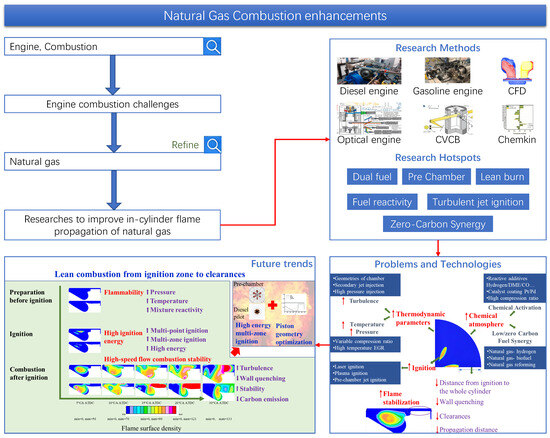
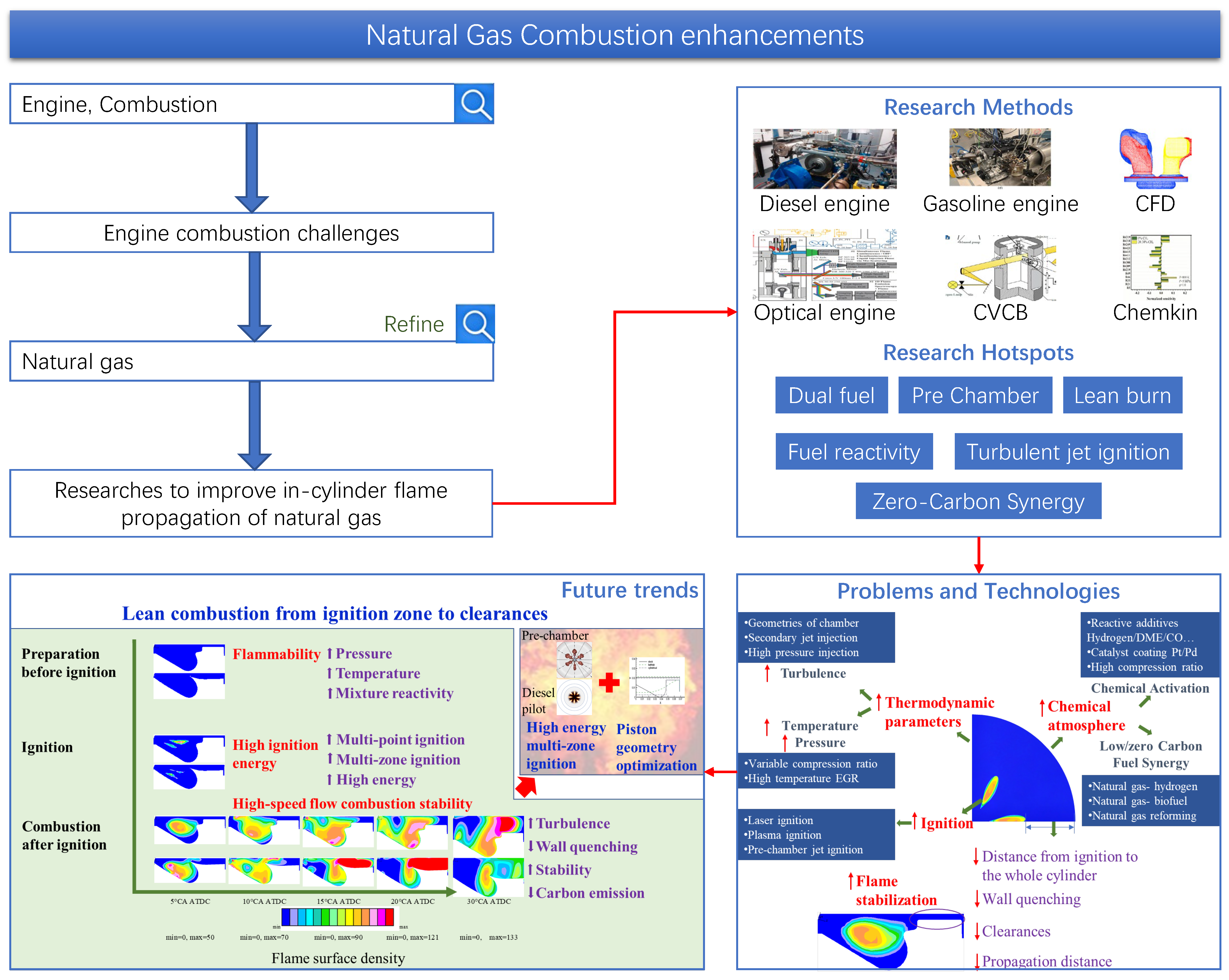
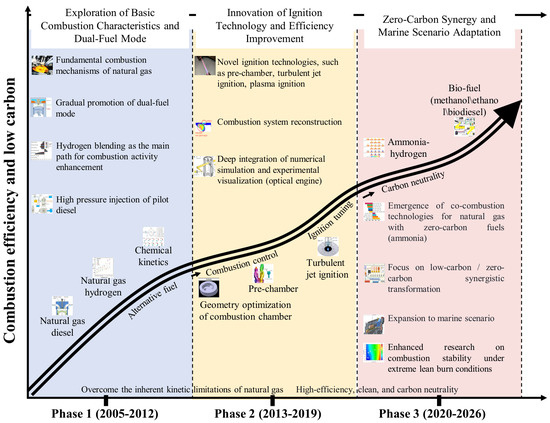
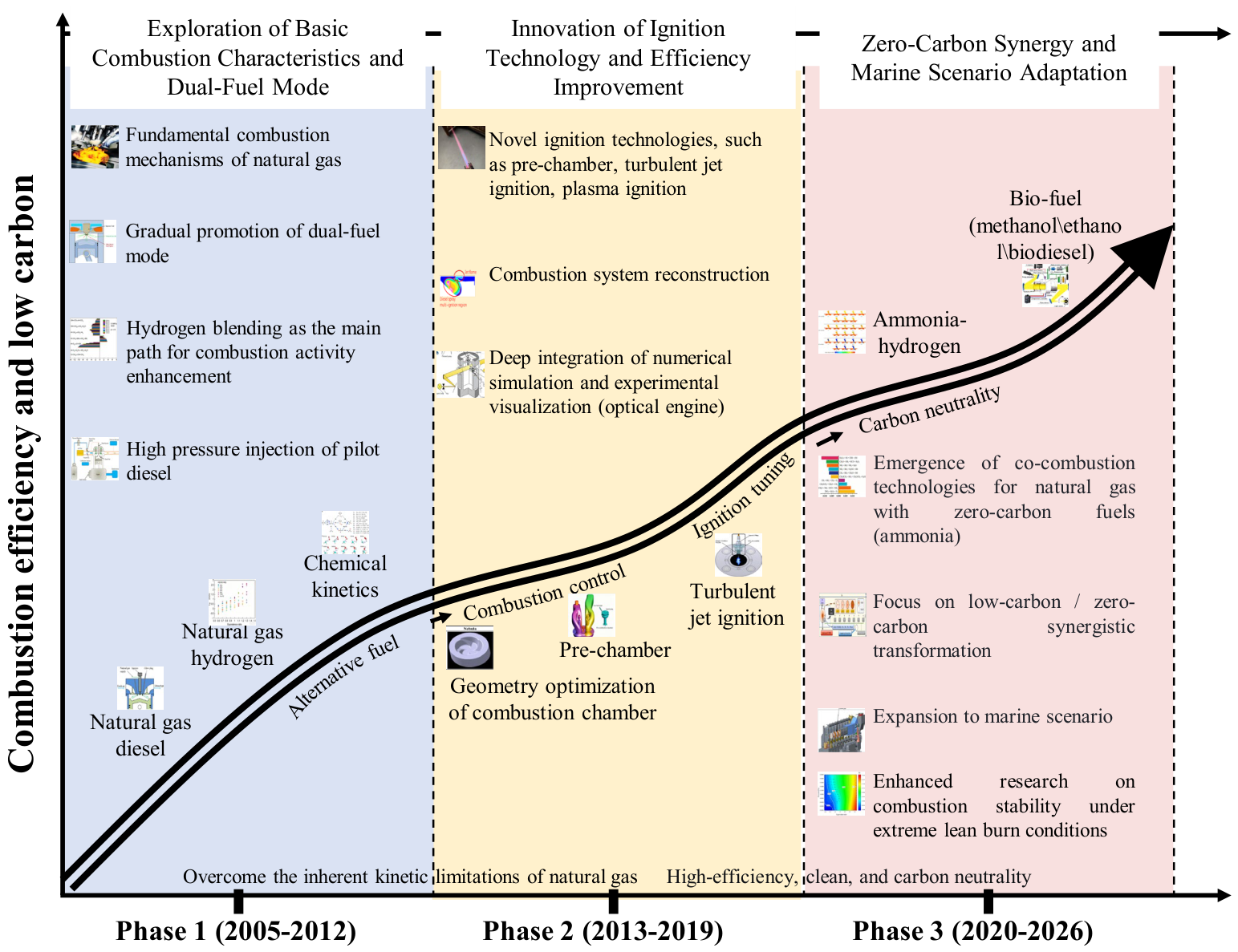
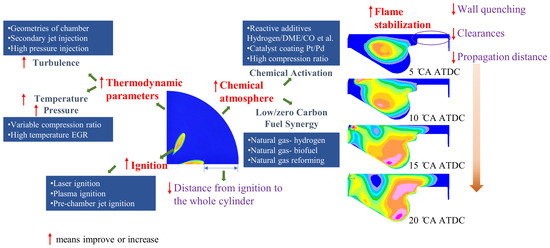
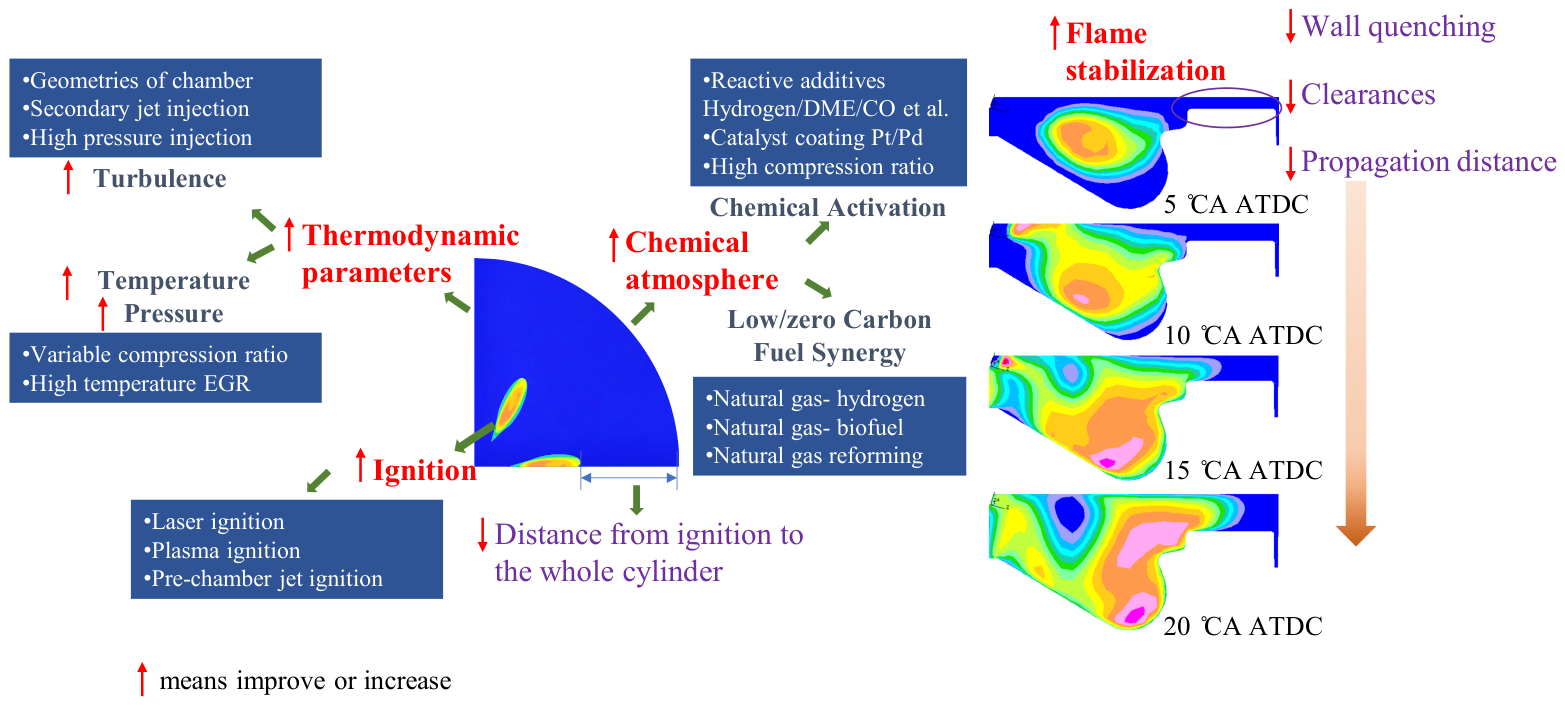
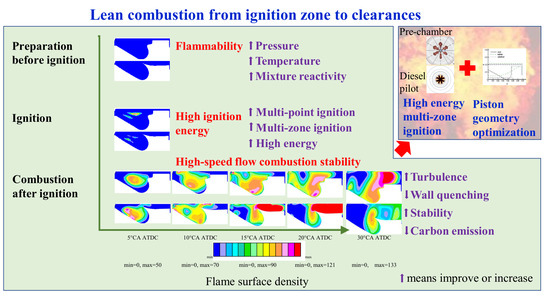
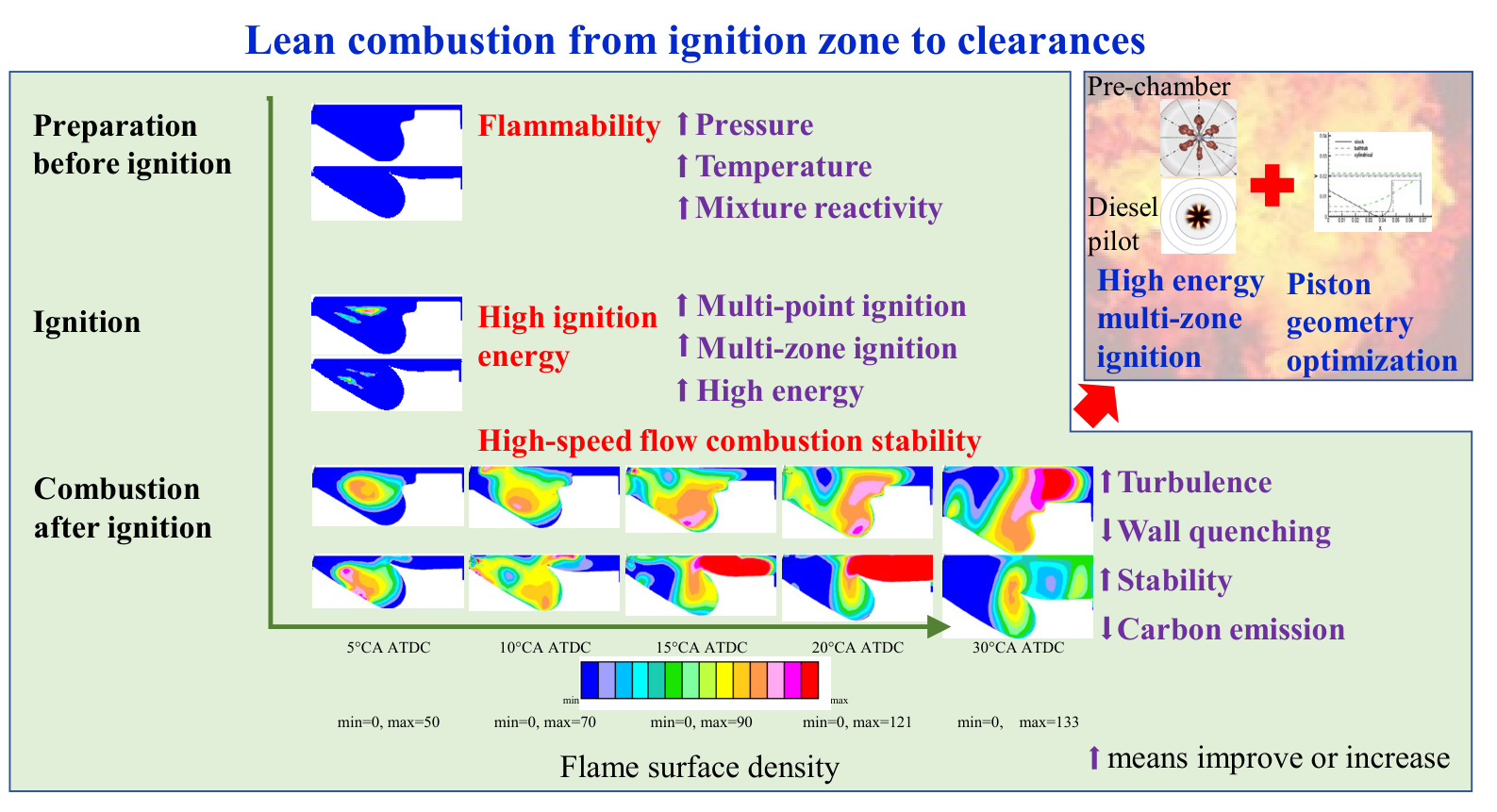
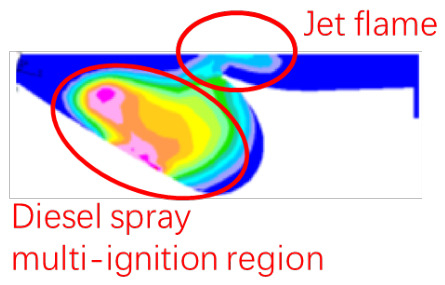
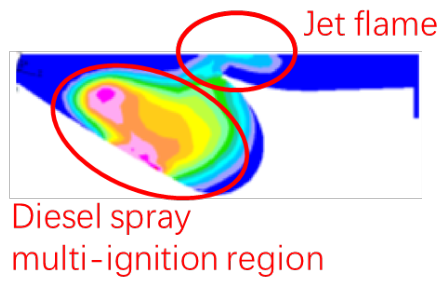
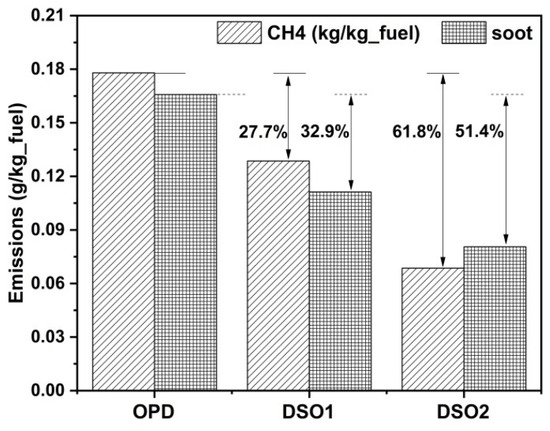
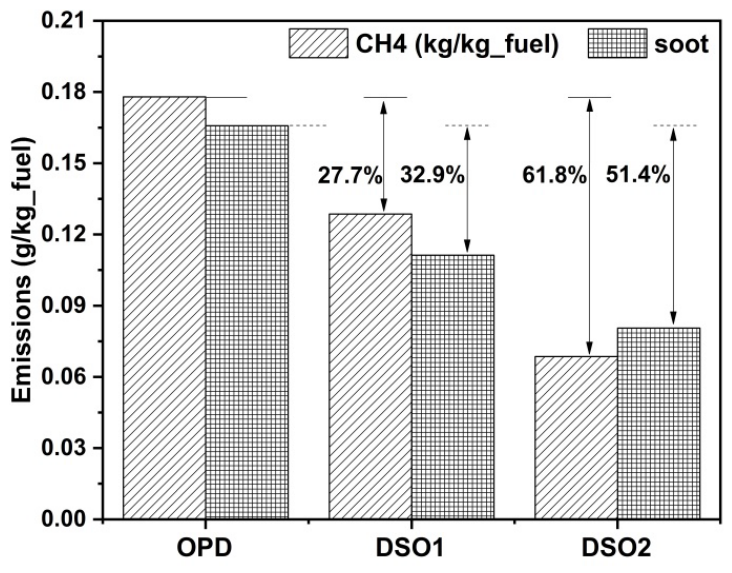
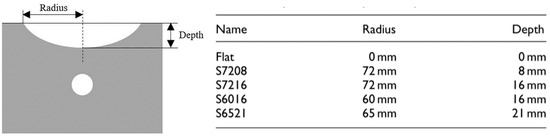
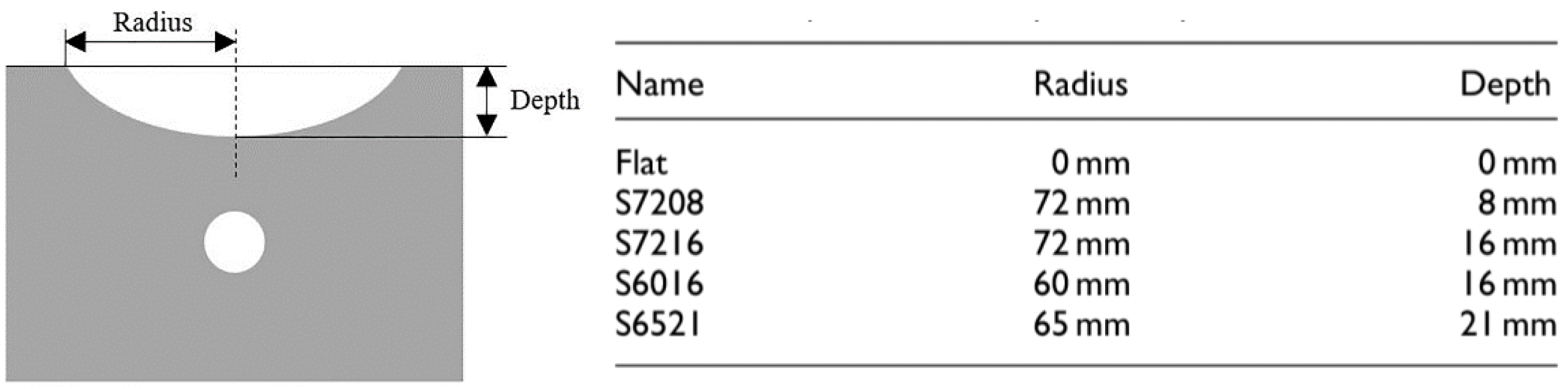
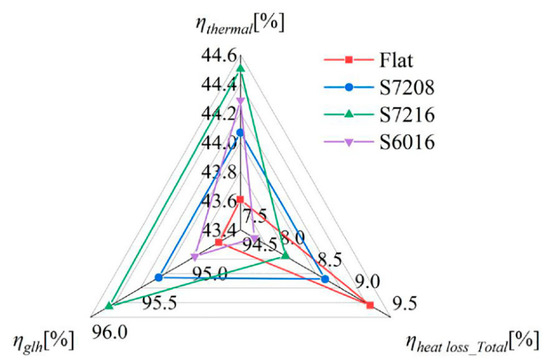
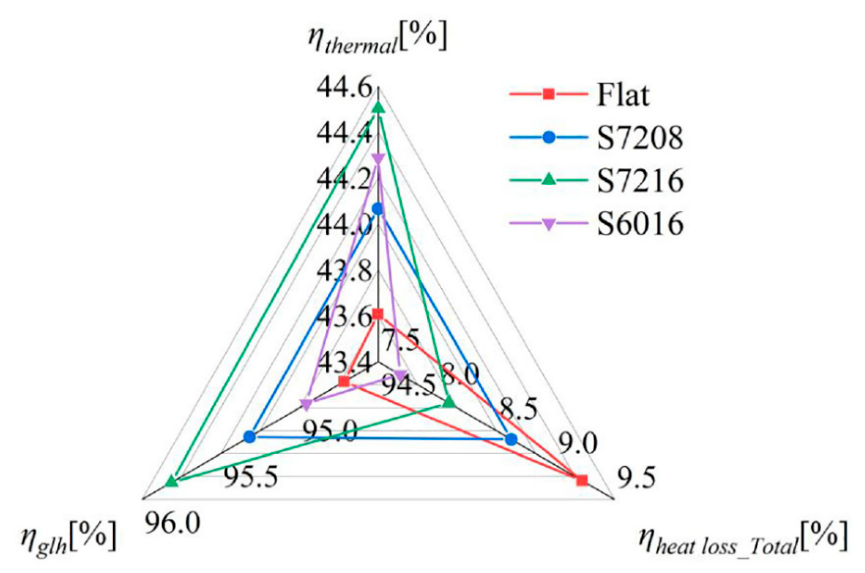

Disclaimer/Publisher’s Note: The statements, opinions and data contained in all publications are solely those of the individual author(s) and contributor(s) and not of MDPI and/or the editor(s). MDPI and/or the editor(s) disclaim responsibility for any injury to people or property resulting from any ideas, methods, instructions or products referred to in the content. |
© 2026 by the authors. Licensee MDPI, Basel, Switzerland. This article is an open access article distributed under the terms and conditions of the Creative Commons Attribution (CC BY) license.