


Abstract
Effect of magnetic field on mixed convection in a vented square cavity with volumetric heat generation or absorption in presence of a cylindrical obstacle is analyzed numerically. The right vertical wall is considered at the hot temperature Th and other partitions of the enclosure are adiabatic. The governing equations are solved based on finite element method. The relevant parameters in the current investigation, Prandtl number (0.03 ≤ Pr ≤ 2.97), Reynolds number (100 ≤ Re ≤ 500), Hartmann number (0 ≤ Ha ≤ 30), and volumetric heat generation or absorption parameter (-10 ≤ Q ≤ 10) are taken to find streamlines and heat transfer nature. Flow and temperature fields inside the enclosure are investigated for the mentioned parameters whereas effective trend is determined. On the other hand, heat generation or absorption parameter is found almost invariant for the streamline and isotherm plots. In addition, average Nusselt numbers are found to explain the heat transport inside the cavity and the average temperature are assumed to be a powerful tool to analyze and discussion.
1. Introduction
In the present, numerous scientists have given additional effort on mixed convection in different geometries because of its enormous applications in science and engineering fields as such heat exchangers, electronic cooling, solidification, food processing, float glass production, chemical processing equipment, nuclear reactors and solar collectors, etc. In addition, magnetic field effect on mixed convection flow and heat transfer have received considerable attentions due to it significant applications in crystal growth in liquids, electronic and micro-electronic devices, solar technologies and nuclear reactors, etc. Moreover, a few specialists have investigated mixed convection inside the enclosure with volumetric heat generation or absorption by numerically under thinking about its significance. Some existing literature review is listed from them.
Basak et al. [1] numerically studied the effects of different temperature conditions on mixed convection in lid driven cavity and observed that heat transfer rate reached to 1for the case of linearly heated wall and increased for cold right wall. They also found heat transfer rate strongly depend on Grashof and Prandtl numbers. Later on, Basak et al. [2] performed a similar study for porous medium and found that Nusselt number increases from left edge to right edge of the bottom wall due to linearly heated left wall and cold right wall at the case of Re = 10 and 100 which was found irrespective for Prandtl and Darcy numbers. Hassan and Jamal [3] used finite volume method to investigate mixed convection in partially heated lid driven cavity with constant heat flux. They showed that temperature contours are nonlinear and peak shifts toward the center at greater Richardson number. It was also observed that the peak velocity near the right half of the cavity for top moving wall in that direction. Charttopadhyay et al. [4] conducted a parametric study for mixed convection in a lid driven porous cavity with sinusoidally heated wall and found heat transfer rate enhances with the increase in value of amplitude. Merkroussi et al. [5] studied mixed convection inside nonuniformly heated wavy cavity with top moving wall and showed that heat transfer rate strongly influenced due to the variable temperature at the wavy walls. Azizul et al. [6] analyzed numerically the heatline visualization of mixed convection in lid driven cavity with wavy bottom. Their results indicated that optimum heat transfer found for low Richardson number with one oscillation of wavy surface. Uddin et al. [7] used non-homogenous dynamic model to analyze the local and average Nusselt number for tubes with plain and uneven side walls. They found that higher heat transfer occurs at lower thermal Rayleigh number for the tube of having uneven vertical-walls whereas heat transfer rate become higher with the higher values thermal Rayleigh number for the tube of having smooth vertical-walls. The problem of natural convection flow and heat transfer in a wavy cavity was numerically investigated by Fayz-Al-Asad et al. [8]. In their study, a horizontal fin was attached to its hot vertical wall, and they observed the flow structure and temperature field affected with the length and location of the fin and mean Nusselt number increases with increasing Rayleigh number and fin length. Later on, Islam et al. [9] examine natural convection flow and heat transfer in a right-angle triangular cavity. They used finite element method to simulate the problem considered. They noted that heat transfer rate reduces with increasing Hartmann number but increases for increasing buoyancy driven Rayleigh number. Rahman et al. [10] studied numerically heatconducting cylinder effect on mixed convection inside the enclosure. They found that the heat transfer and flow structure characteristics strongly depend on the mixed convection and cavity aspect ratio. Later on, Rahman and Alim [11] carried out similar study by incorporating magnetic field and Joule heating effects. that noticed that streamlines and isotherms are strongly influenced due to variation in Ha, Re and Ri but little for Joule heating parameter. Ali et al. [12] used similar method to analyze magnetic field effect on mixed convection in a hexagonal cavity. They found that isotherms are remarkably modified for greater Ri and flow disseminations are additionally modified for each greater Ri and Ha. Oğlakkaya and Bozkaya [13] used DRBE method to investigate unsteady mixed convection in sinusoidal wavy lid driven cavity under the effect of magnetic field and concluded that flow and heat transfer rate augments for increasing Ra (Ra ≥ 104) and decreases for higher Ha when undulation number kept fixed. Bakar et al. [14] analyzed magnetic inclination angle effect on flow and heat transfer in a 2D cavity with top moving wall and the flow field was retarded due to magnetic field effect whereas heat transfer rate increases for magnetic field angle. The problem of mixed convection flow in lid driven rectangular cavity with wavy top wall and rectangular heater was numerical studied by Sarkar et al. [15] and found that stronger magnetic field at higher Rayleigh number decreases the mixed convection heat transfer. Geridonmez and Oztop [16] used pseudo spectral method to investigate mixed convection in lid driven 2D cavity under the effect of partial magnetic field and found that convective heat transfer reduces for increase in length of the partial magnetic field. Chamkha [17] studied numerically combined convection in lid-driven cavity subjected to magnetic field effect for heat generation or absorption. They determined that velocity and heat transfer profile firmly rely upon the appearance of the magnetic field and Nuav is lessened for assisting and opposing flow. Saha et al. [18] conducted a numerical study of mixed convection in lid driven cavity with uniformly heated bottom wall and taken into account internal heat generation or abortion effects and showed significant reduction in heat transfer rate for increased magnetic field strength. The flow and heat transfer distributions in mixed convection in a nanofluid filled lid driven enclosure considering heat generation or absorption were analyzed by Hussian et al. [19]. They performed that larger heat absorption provided greater heat transfer and opposite behavior is occurred for Hartmann number. In the forced convection region, heat generation or absorption inconsequential influenced but another is extensively affected.
Considering the literature survey presented in this paper, it is apparent that magnetic field effect on mixed convection in different geometries is of great interest to the researchers. Though researchers accomplished many studies of mixed and natural convection in different geometries presented in literature, heat generation/absorption effect on mixed convection heat transfer in a vented enclosure is rarely investigated. In the present study, the authors have studied mixed convection in a vented square cavity with a circular obstacle considering heat generation or absorption under the effect of magnetic field. To the best of the authors’ knowledge, no work has been done yet relating to this issue. The main objective of this work is to numerically analyze the efficiency of dimensionless parameters such as Reynolds number, Hartmann and Prandtl numbers and heat generation or absorption parameter on mixed convection flow and heat transfer in a vented square cavity in order to control the fluid flow and heat transfer characteristics. As the present study offers a variety of improved performances in controlling flow and heat transfer mechanisms, the present investigation would be a great influence in the industrial and engineering appellations.
2. Physical Model
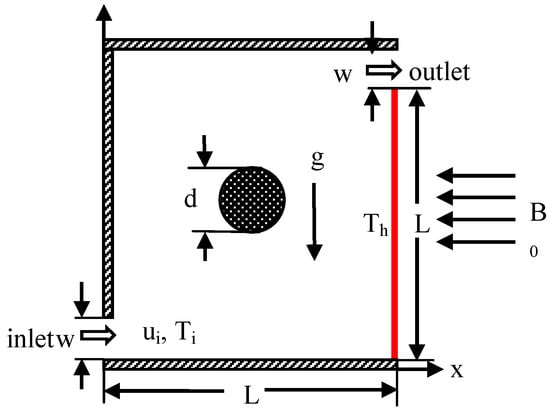
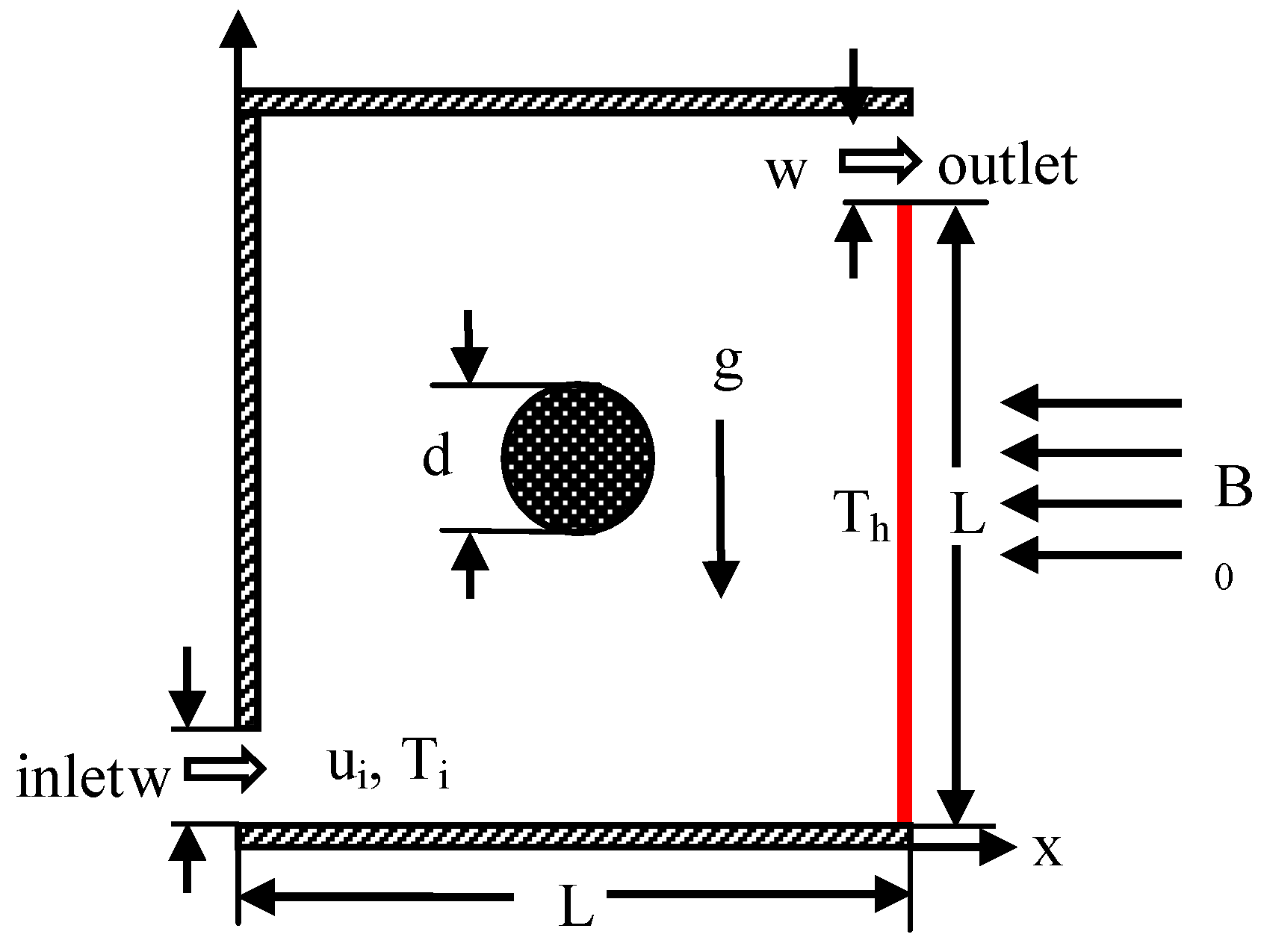
The geometry consists of a square enclosure with length L is displayed in Figure 1, and contains an adiabatic cylindrical obstacle with a diameter d placed at the center. The left lower corner considered as the origin in Cartesian coordinate system. A uniform constant temperature Th is applied to the right vertical wall whereas remaining sidewalls are adiabatic. The inflow and outflow are set to the lower left and right top corner respectively and its width is w (w = 0.1L). Cold air is considered as working fluid that enters into the incoming path with uniform velocity ui, and temperature Ti. The outflow of the working fluid has zero diffusion flux is considered for all pertinent variables. The non- slip boundary conditions is used for cylinder surface and side walls of the enclosure.
Figure 1.
Geometry of the physical.
3. Mathematical Modeling
The functioning flow is assumed to be steady, laminar, two-dimensional, and also considered as constant for every single fluid property. Under the Boussinesq approximation, the current problem can be described by using the dimensionless governing equations are as follows:
Continuity Equation

Momentum Equations
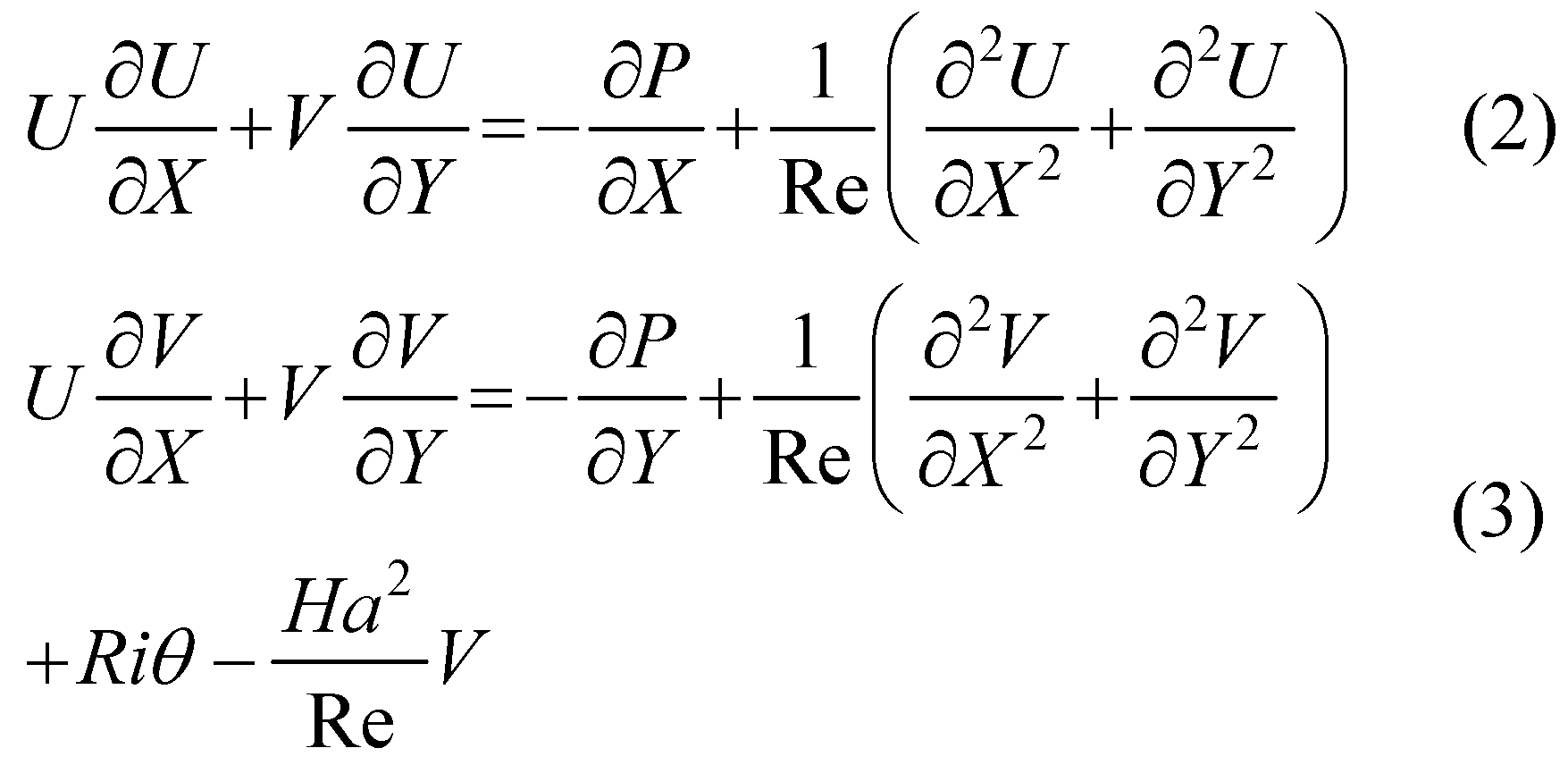
Energy Equation

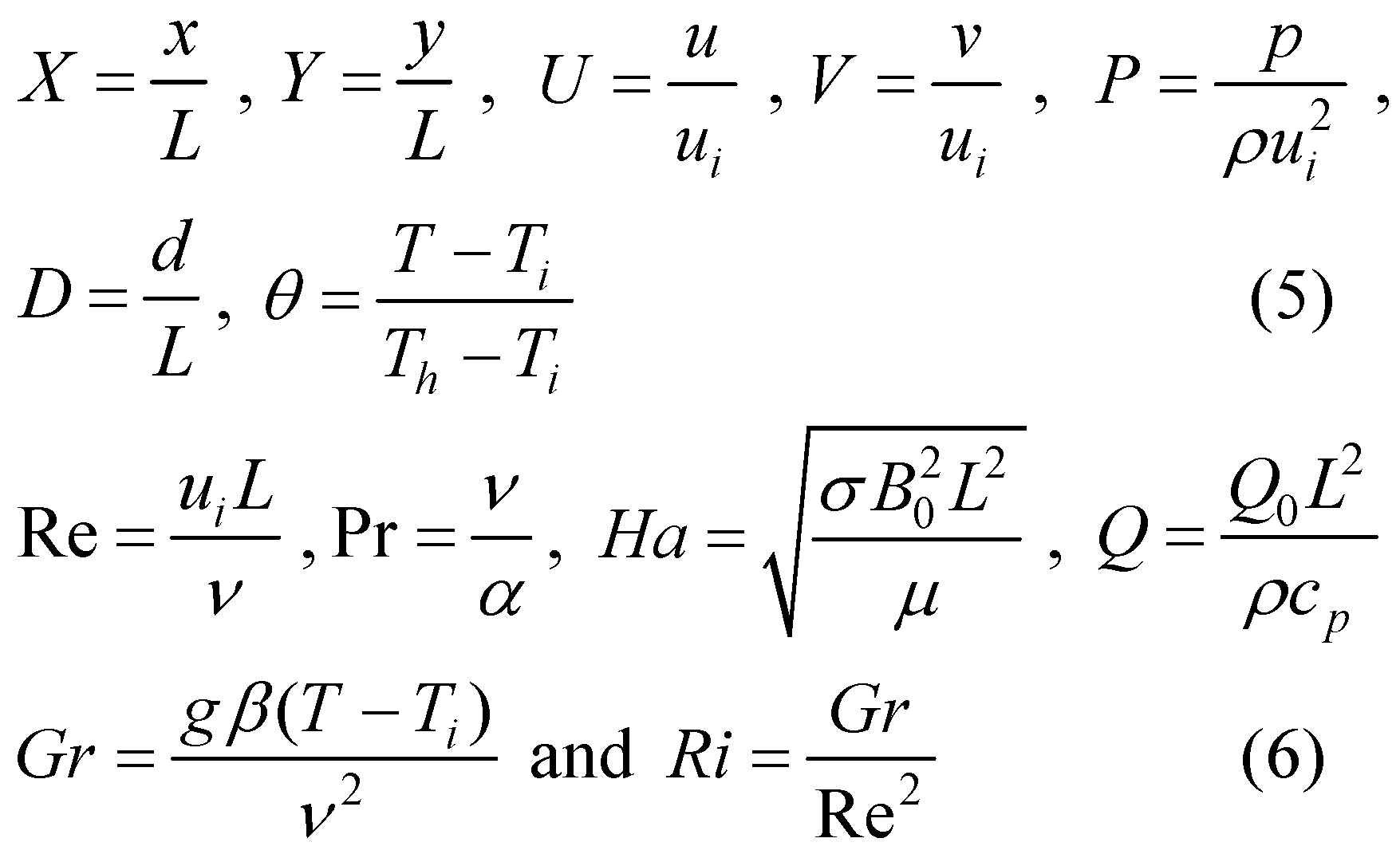
The dimensionless variables and parameters are characterized as:
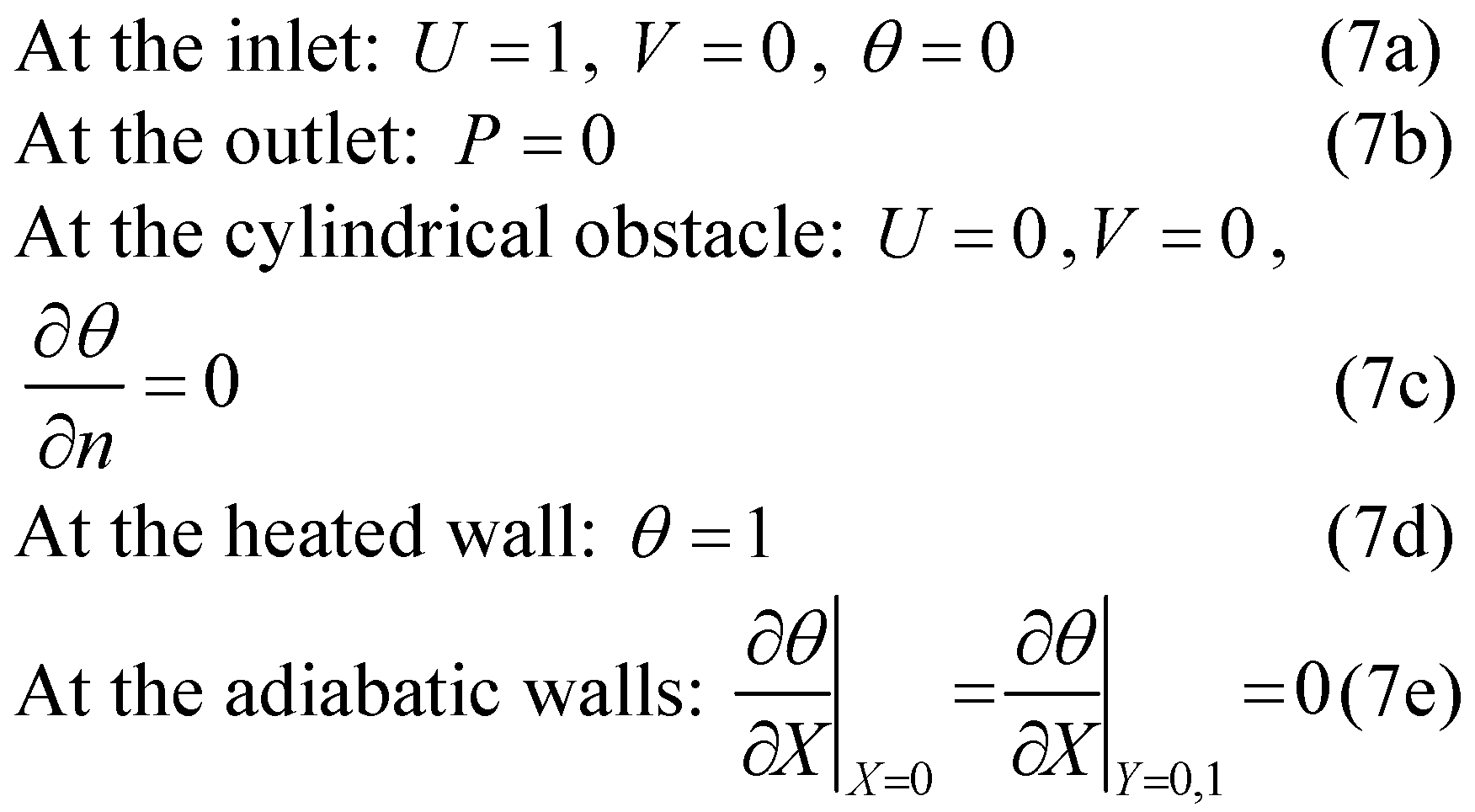
Equations (Equations (1)–(4)) are solved based on the following dimensionless boundary conditions:
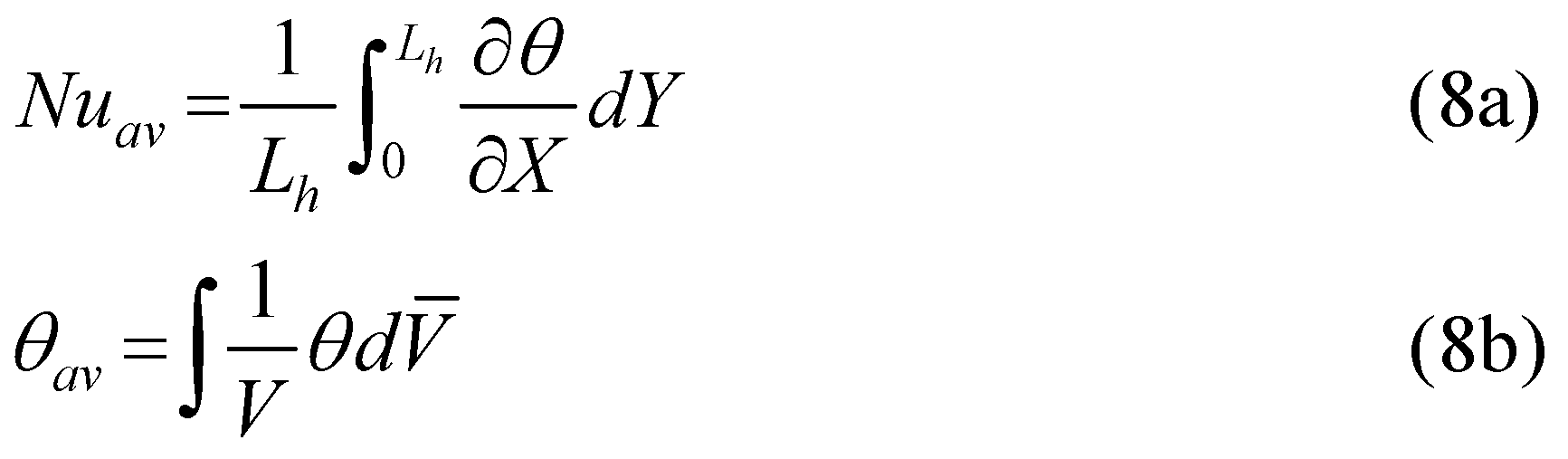
The average Nusselt number at the heated wall and average temperature are defined as [10,11,12]:
3.1. Computational Procedure
The governing equations (Equations (1)–(4)) along with boundary conditions (Equations (7)a–e) are solved by using Galerkin weighted residual finite element method which is well described by Taylor and Hood [20] and Dechaumphai [21]. The detail application of this method is available in Refs. [22,23].
3.2. Code Validation
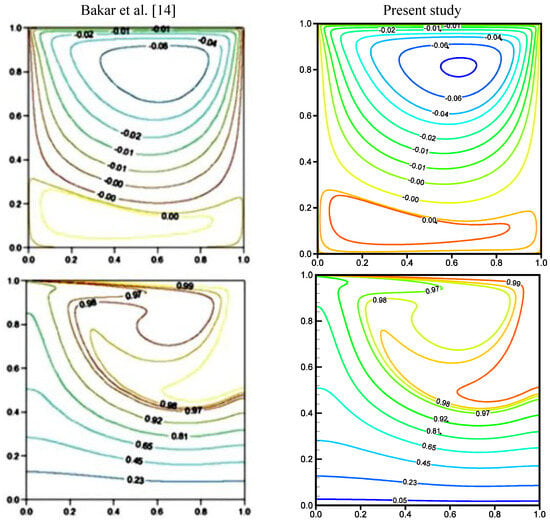
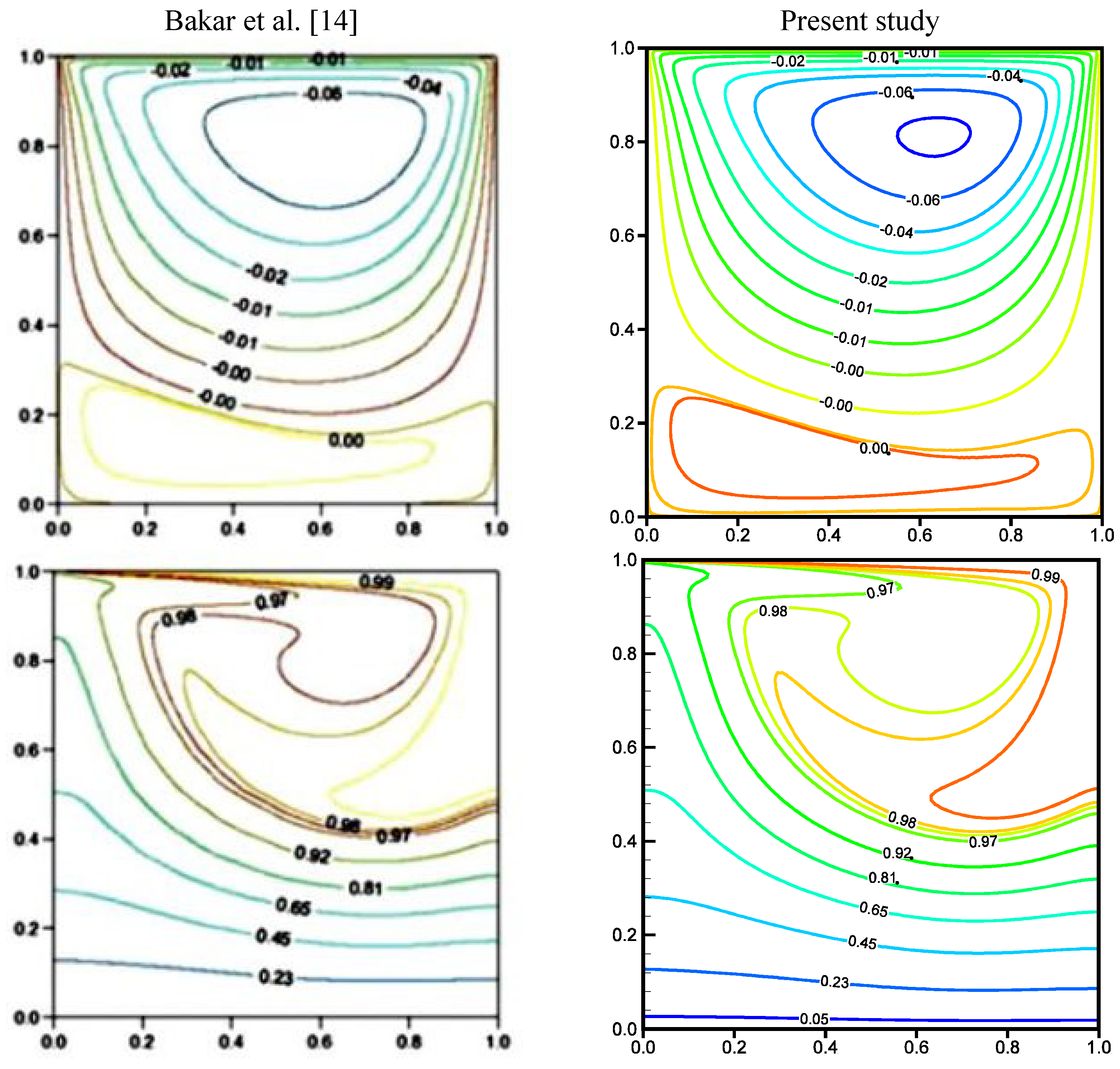
The current work is extensively validated comparing with numerical results available in Rahman and Alim [11] and Bakar et al. [14]. The results are found in respect of average Nusselt number with considering similar cavity and boundary conditions of Rahman [11] is demonstrated in Table 1 which is contained a precise agreement. In addition, we have used our present code to simulate the problem mixed convection in a lid driven cavity in presence of inclined magnetic field [14] and plotted the obtained numerical results in Figure 2 using streamlines and isotherms which shows a good agreement between our results and the results presented by Bakar et al. [14].
Table 1.
Comparison of the average Nusselt number (Nuav).
Figure 2.
Comparison of streamlines (top) and isotherms (bottom) for present results with that of Bakar et al. [14].
4. Result and Discussion
In this section, impacts of the pertinent parameters on flow and heat transfer through streamlines, isotherms, average Nusselt number and average temperature gives a clear explanation of fluid flow and heat transport characteristics. The diameter of the cylindrical obstacle d = 0.2L considered throughout the simulation. The red color of the streamlines indicated the higher fluid velocity where the blue color corresponds to lower velocity. Similarly, the red color of isotherms also indicated the high temperature region and blue color corresponds to low temperature region.
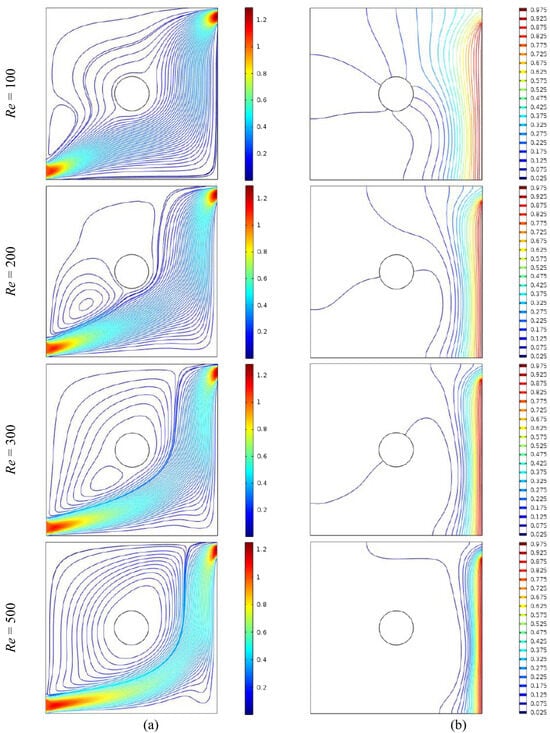
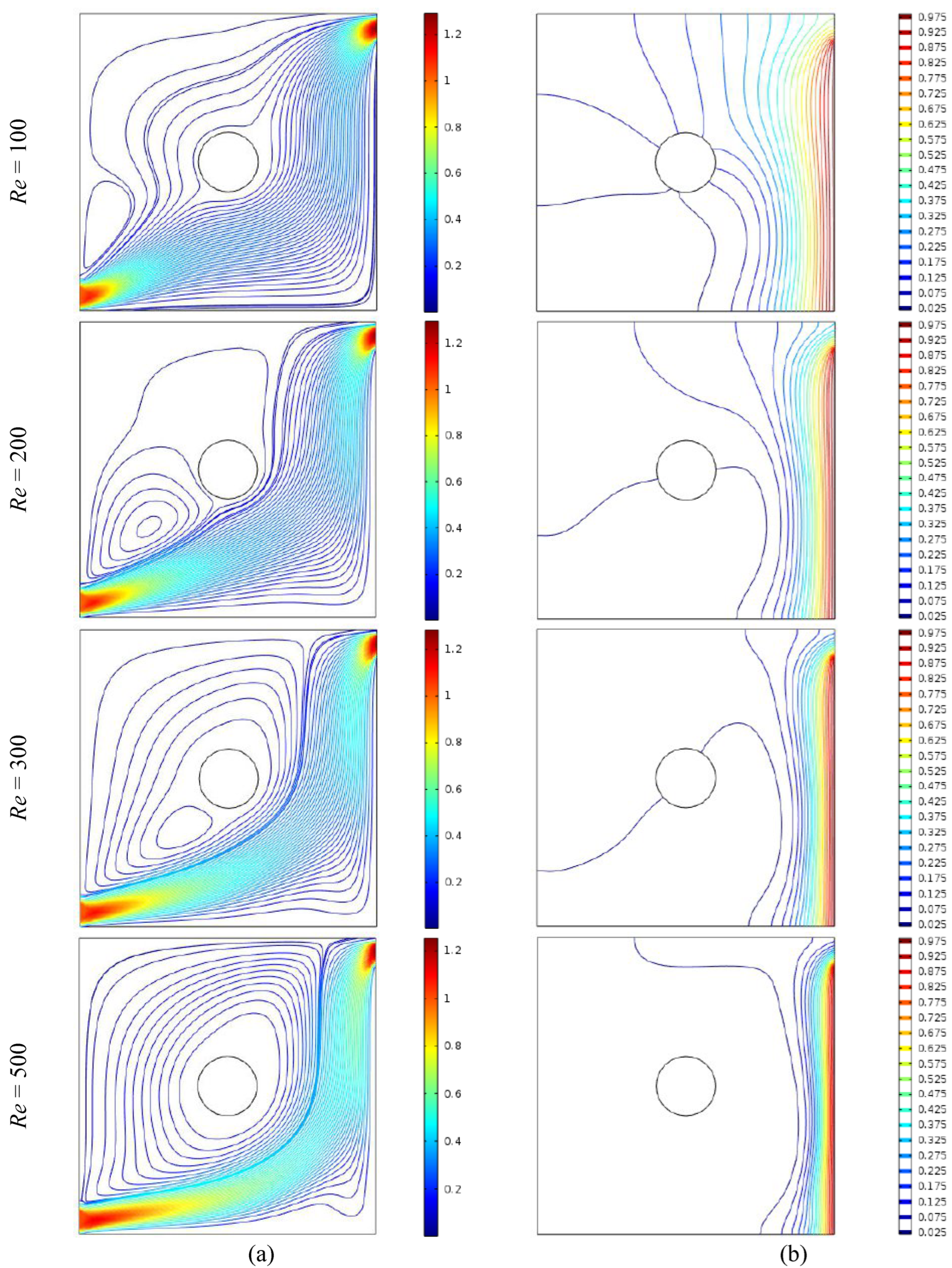
Figure 3 represents the impact of Reynolds number on stream field and temperature distribution for Pr = 0.71, Ri = 1, Q = 0, and Ha = 10. In Figure 3a, at Re = 100 it is seen that streamlines of the fluid flow densely moves toward the outlet where streamlines are more concentrated under the cylinder than over the cylinder. In addition, a small vortex is generated near the incoming port. After that, at Re = 200, the denseness is increased and a counter-clockwise rotating eddies is visible near inlet. As Re expands, counter-clockwise rotating circulation gets in large size around the obstacle. Further increase in Re, rotating cells are enlarged that occupy the most of the cavity and the strength fluid flow increases remarkably from inlet to outlet. On the other hand, in Figure 3b, isotherms are distributed near the left vertical as it was isothermally heated. Moreover, it occupies the half of the cavity and some isotherms are also connected with the centered cylinder as it was insulated. In addition, the isotherms are effectively close toward the hot wall as Re is increased. At each increment in Reynolds numbers, there is a clear changed in isotherms distribution compared to previous one.
Figure 3.
(a) Streamlines (b) Isotherms for various Re while Pr = 0.71, Ri = 1, Q = 0, and Ha = 10.
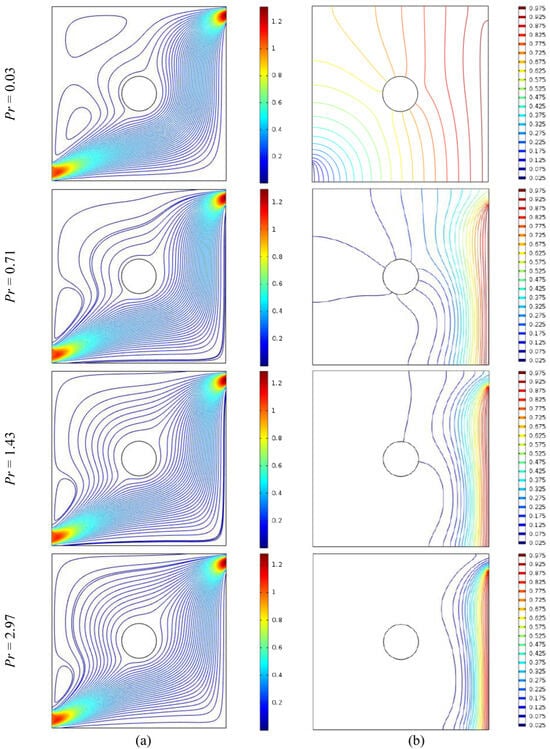
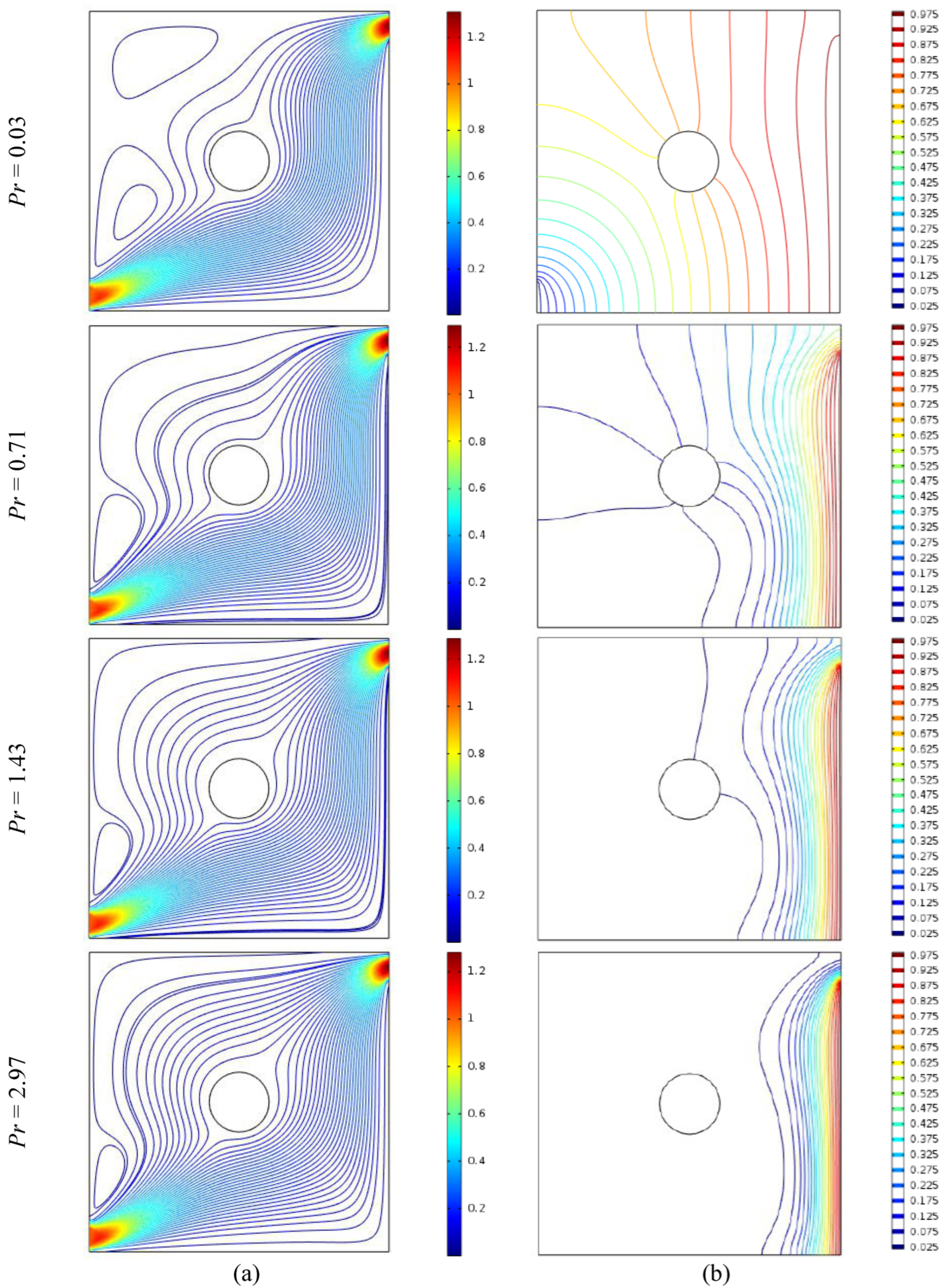
Figure 4 shows the variation of streamlines and temperature dissemination inside the cavity for different Prandtl number. In Figure 4a, due to inertia and buoyancy induced flow at lower Pr, two small cells are developed over the main flow path of both side of the obstacle. Then at Pr = 0.71, one of the cells is disappeared and the streamlines over the cylinder elongated towards the top left corner of the cavity. Further increasing in values of Pr, streamlines are more elongated toward the both top left and bottom right corners of that cavity that occupies the whole of the cavity and the small rotating cell gradually decreases for the higher Pr. It is important to note that higher values of Prandtl number increase fluid density which causes a reduction in fluid motion. Besides this in Figure 4b at low Pr, isotherm contours are distributed from right vertical wall towards the left adiabatic wall and cover the whole cavity. Then, isotherms become concentrated to the right vertical heated wall with increasing value of Pr. From these figures, it has been observed that thermal boundary layer are thinner near heated wall for higher value of Pr than that of the lower Pr.
Figure 4.
(a) Streamlines and (b) Isotherms for various Pr while Re = 100, Ri = 1, Q = 0, and Ha = 10.
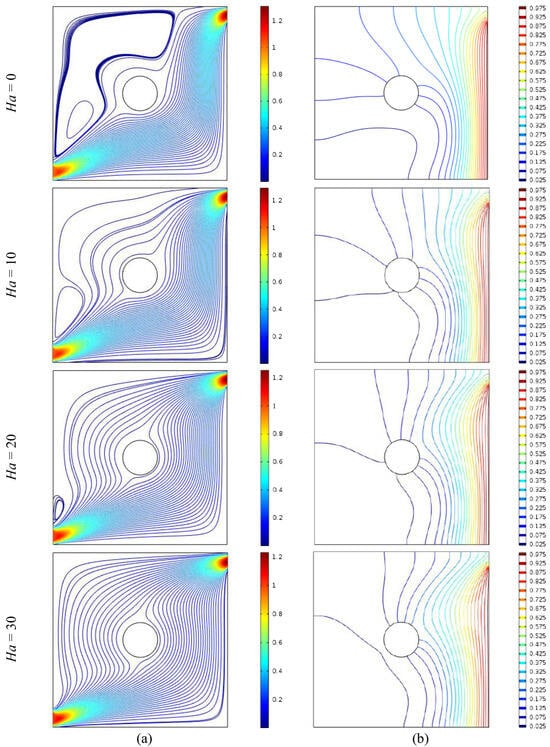
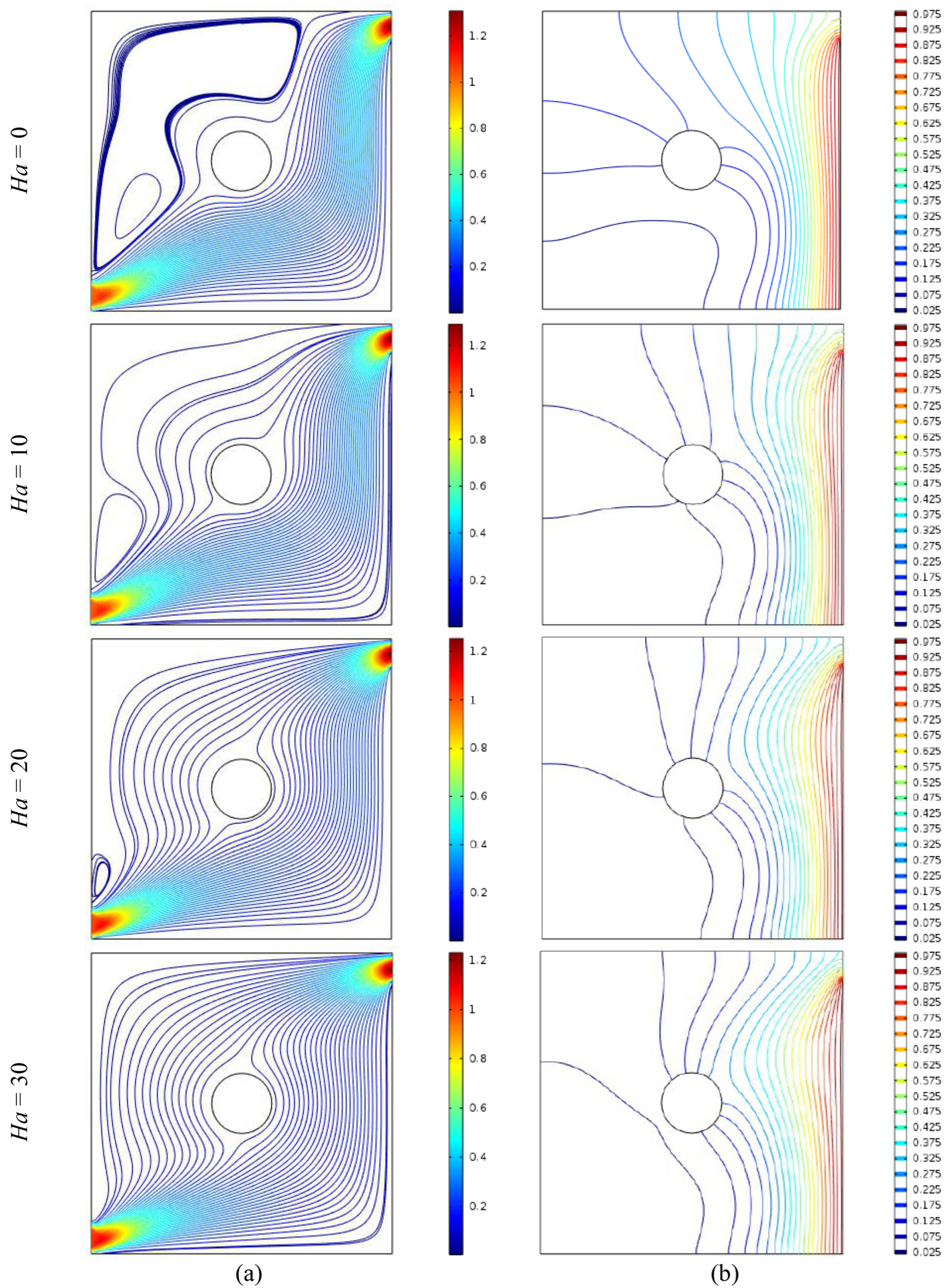
Figure 5 depicts the influence of Hartmann number on flow and temperature fields while Q = 0, Re = 100, Pr = 0.71 and Ri = 1. From Figure 5a, it can be seen that in the absence of magnetic field (Ha = 0), the recalculating cell is generated close to the stream flow over the obstruction. After that at Ha = 10, the recalculating cell reduced to a small vortex is created above the inlet port. From these figures it can also be seen those increased values of magnetic field, the vortex becomes smaller and finally disappeared and the flow fields occupy almost of the cavity which indicates that magnetic field effect retards the fluid motion within the cavity. In Figure 5b, insignificant changes are occurred in temperature distribution for increasing Hartmann number as the magnetic impact produces temperature inside the flow field.
Figure 5.
(a) Streamlines (b) Isotherms for various Ha while Re = 100, Ri = 1, Q = 0, and Pr = 0.71.
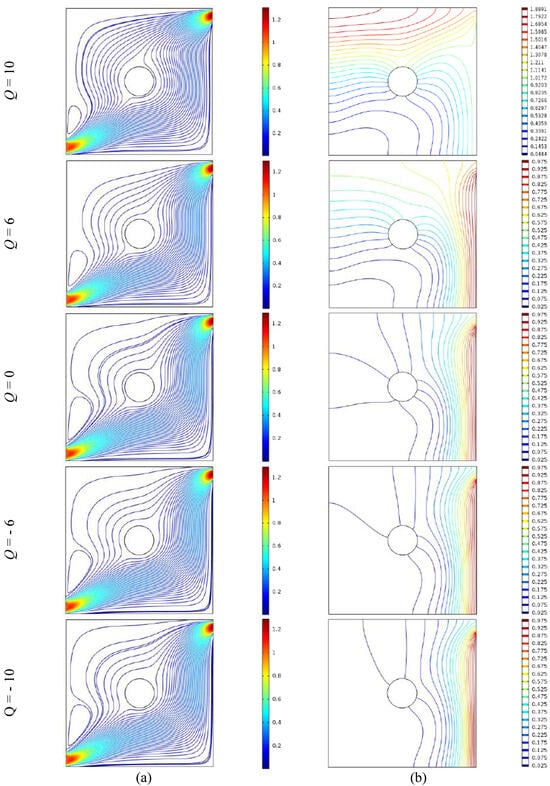
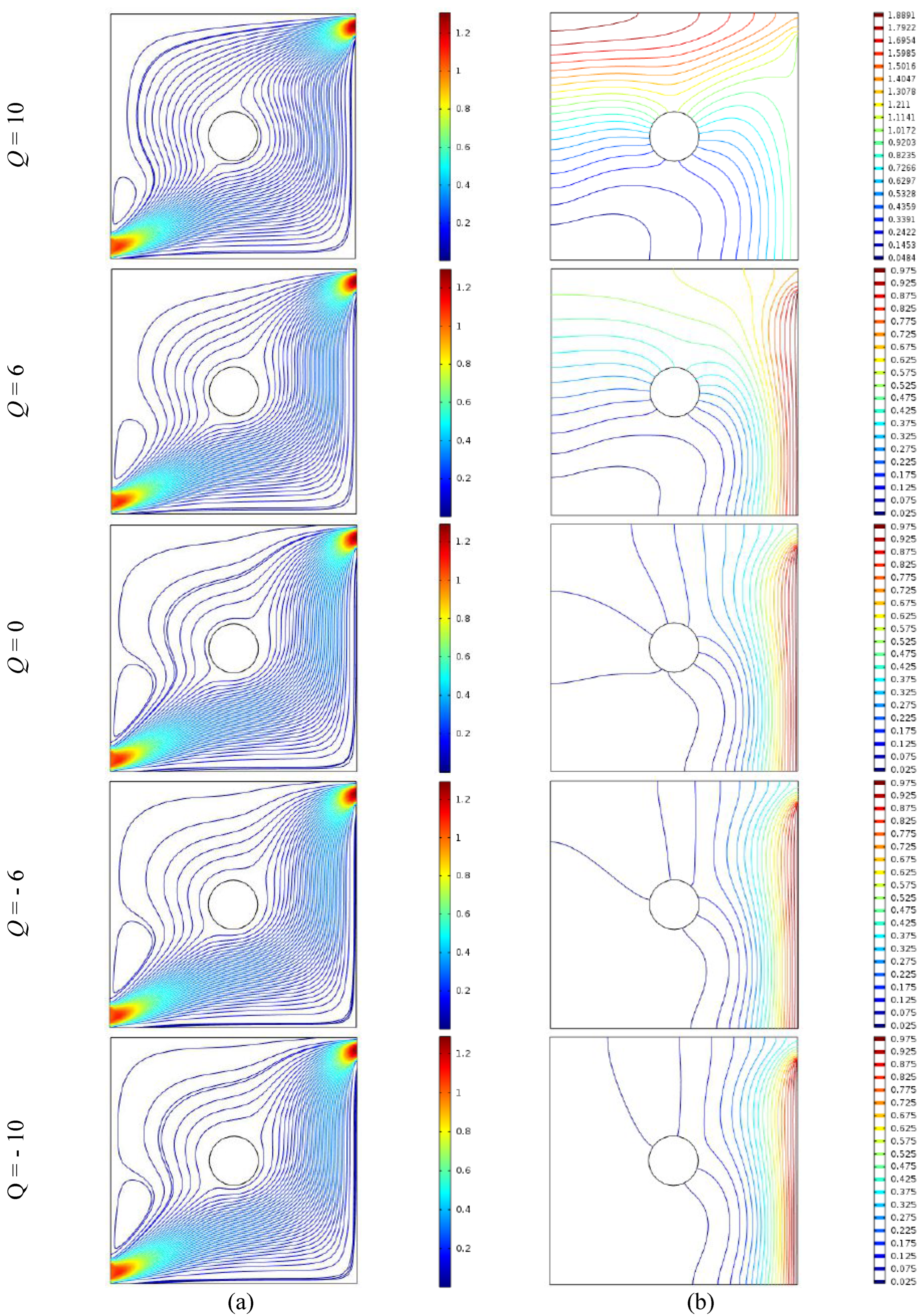
Figure 6 demonstrates the effect of heat generation or absorption parameter on streamline and isotherm plots while Re = 100, Ri = 1, Pr = 0.71 and Ha = 10. In Figure 6a, in the absence of volumetric heat generation or absorption parameter, streamlines is occupied almost of the cavity and generated a small vortex on inflow port. The flow pattern is minutely changed for the effect of volumetric heat generation or absorption upon increasing the value of heat generation or absorption parameter. On the other hand, isotherms distribution strongly depends on the effect of heat generation or absorption parameter as shown in Figure 6b which indicates that temperature fields inside the cavity are significantly affects by the heat generation or absorption. It can be observed that high temperature region is generated top side of the cavity, and also near the heated wall and finally it reaches its maximum for Q = 10. When heat absorption is increased, the high temperature distribution is decreased gradually and is shifted toward the right heated wall.
Figure 6.
(a) Streamlines (b) Isotherms for various Q while Ha = 10, Pr = 0.71, Ri = 1, and Re = 100.
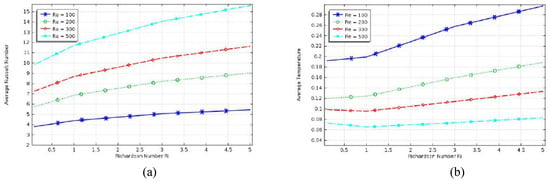
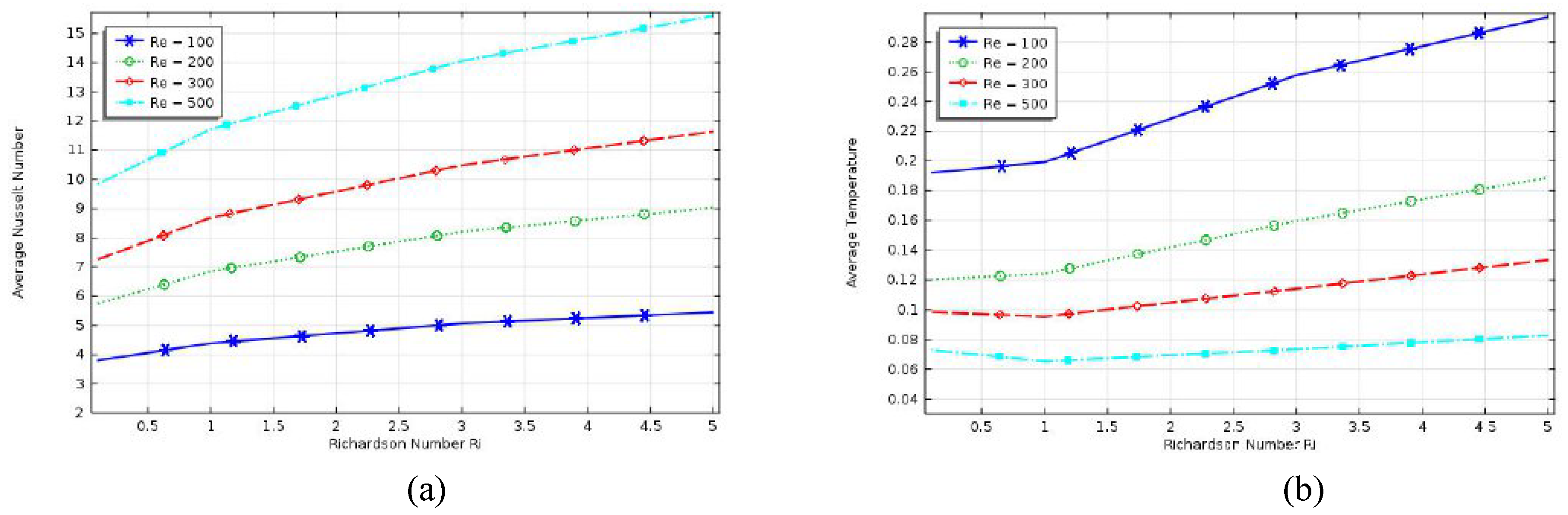
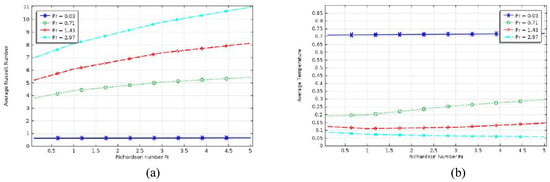
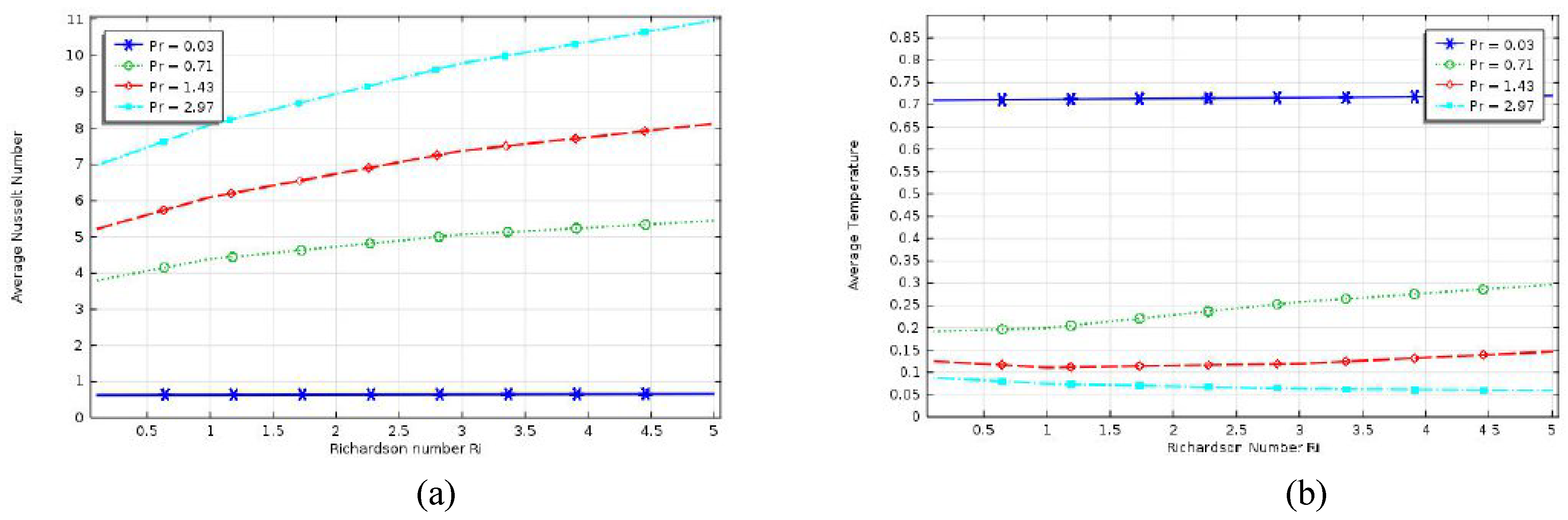
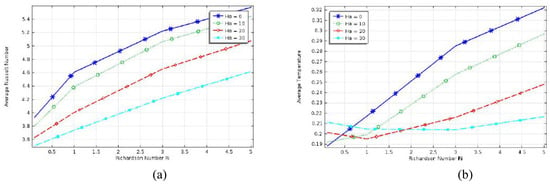
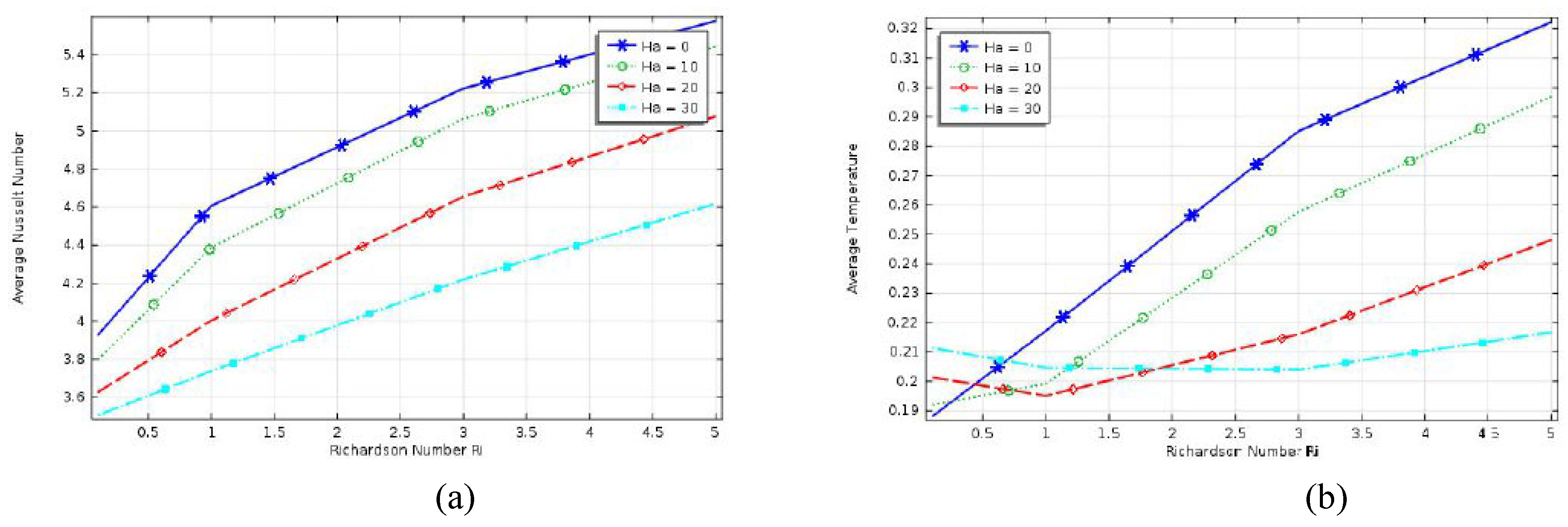
Figure 7, Figure 8 and Figure 9 demonstrate the heat transfer rate and average temperature for different combination of governing parameters. From Figure 7a, Figure 8a and Figure 9a, it is evident that heat transfer rate monotonically increases with increasing Richardson number and which gets higher values for increased Reynolds and Prandtl number as the increased values of Prandtl number increases the fluid density which increases the energy absorbing capacity and increases Re increases fluid inertia whereas heat transfer rate decreases for increased magnetic field strength. On the other hand, average temperature profiles increase for Richardson number. It is important to note that these variations are different for the case of variation in Reynolds and Pransdtl number and also magnetic parameters as shown in Figure 7b, Figure 8b and Figure 9b.
Figure 7.
Variation of (a) Average Nusselt number, (b) Average temperature for Re while Pr = 0.71, Q = 0 and Ha = 10.
Figure 8.
Variation of (a) Average Nusselt number, (b) Average temperature for Pr while Q = 0, Re = 100 and Ha = 10.
Figure 9.
Variation of (a) Average Nusselt number, (b) Average temperature for Ha while Q = 0, Re = 100 and Pr = 0.71.
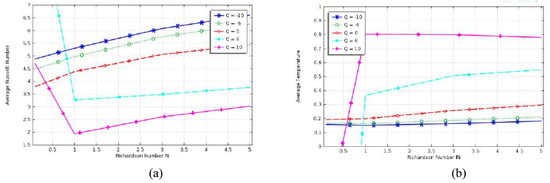
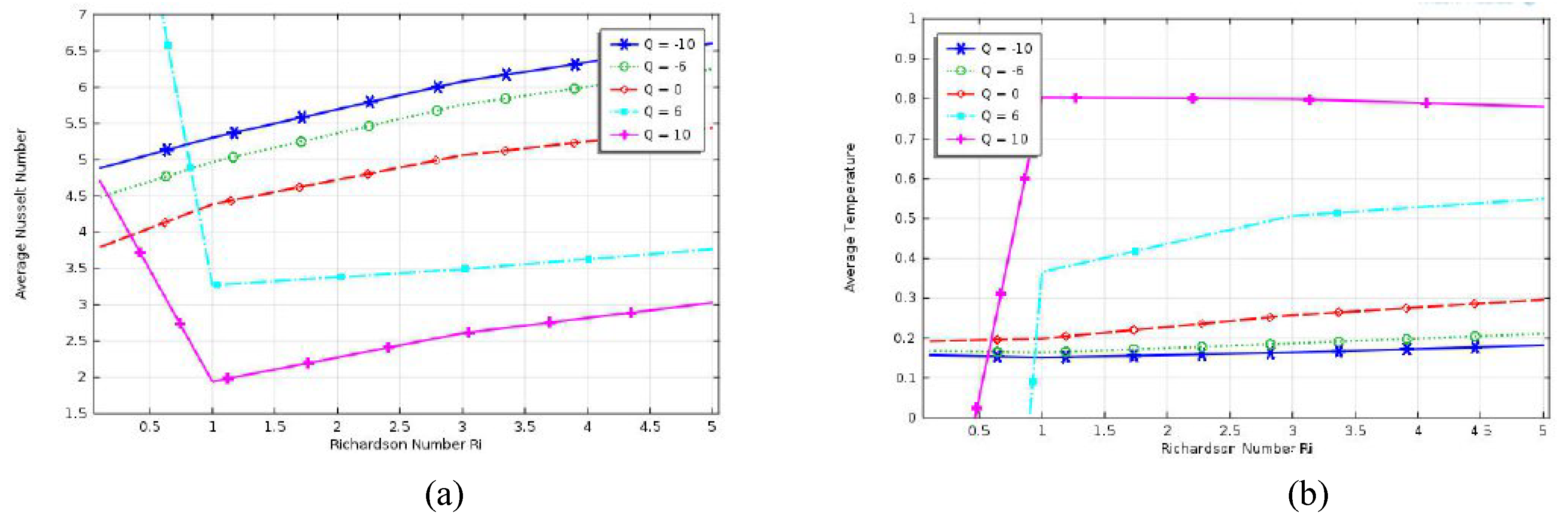
Figure 10 plotted the effect of heat generation or absorption parameters on average Nusselt number and average temperature variation. In Figure 10a for all Q < 0, it can be easily seen that heat transfer rate gradually increases whereas heat transfer rate gradually decreases for all Q > 0. The reason behind it is that higher heat generation parametric values increase fluid temperature whereas absorption parameters reduce fluid temperature. Consistent behavior is also found in average temperature shown in Figure 10b. These variation for Q > 0 in both Figure 10a,b are depend Richardson number.
Figure 10.
Variation of (a) Average Nusselt number, (b) Average temperature for Q while Ha = 10, Re = 100 and Pr = 0.71.
5. Conclusion
The above study has been numerically investigated and the conclusions are to find out and listed as follows:
- The flow and temperature distributions have remarkable changed for Reynolds number. The heat transfer rate enhancing with increasing Re. Also, it is obtained that maximum Nuav and minimum θav for highest Re.
- Thermal layers near the right vertical wall become thinner with increasing Pr. Moreover, Nuav increases and θav inversely decreases with increasing Pr.
- Due to the strength of magnetic field, flow and heat transfer characteristics have noticeably changed. The highest Nuav is acquired inside the cavity in absence of magnetic field.
- Streamlines and isotherms have practically invariant due to heat generation or absorption parameter. Also, minimum θav is found in presence of heat absorption.
Acknowledgments
The author would like to acknowledge the financial support received from the National Science and Technology (NST) fellowship 2018-19 in physical science (Grant ID-6322, BDT-54,000 (USD-637.43)), Bangladesh.
References
- Basak, T.; Roy, S.; Sharma, P.K.; Pop, I. Analysis of mixed convection flows within a square cavity with linearly heated side wall (s). International Journal of Heat and Mass Transfer 2009, 52(9-10), 2224–2242. [Google Scholar] [CrossRef] [Scilit]
- Basak, T.; Roy, S.; Sing, S.K.; Pop, I. “Analysis of mixed convection in a lid driven porous square cavity with linearly heated side walls”. International Journal of Heat and Mass transfer 2010, 53, 1819–1840. [Google Scholar] [CrossRef] [Scilit]
- Hassan, M.A.; Jamal, S. Mixed convection in lid driven square cavity using finite volume method. In Applied Mechanics and Materials 2014, 592, 1652–1656. [Google Scholar] [CrossRef] [Scilit]
- Charttopadhyay, A.; Pandit, S.K; Sarma, S.S.; Pop, I. Mixed convection in a double lid-driven sinusoidally heated porous cavity. International Journal of Heat and Mass Transfer 2016, 93, 361–378. [Google Scholar] [CrossRef] [Scilit]
- Mekroussi, S.; Kherris, S.; Mebarki, B.; Benchatti, A. Mixed convection in complicated cavity with non-uniform heating on both sidewalls. Int J Heat Technol 2017, 35(4), 1023–1033. [Google Scholar] [CrossRef] [Scilit]
- Azizul, M.; Alsabery, A.I.; Hashim, I.; Chamkha, A.J. Heatline visualization of mixed convection inside double lid-driven cavity having heated wavy wall. Journal of Thermal Analysis and Calorimetry 2020, 1–18. [Google Scholar] [CrossRef] [Scilit]
- Uddin, M.J.; Hoque, A.F.; Rahman, M.M.; Vajravelu, K. Numerical simulation of convective heat transport within the nanofluid filled vertical tube of plain and uneven side walls. International Journal of Thermofluid Science and Technology 2019, 6(1), 19060101. [Google Scholar] [CrossRef] [Scilit]
- Fayz-Al-Asad, M.; Munshi, M.J.H.; Sarker, M.M.A. Effect of Fin Length and Location on Natural Convection Heat Transfer in a Wavy Cavity. International Journal of Thermofluid Science and Technology 2020, 7(3), 070303. [Google Scholar] [CrossRef] [Scilit]
- Islam, T.; Parveen, N.; Asad, M.F. Hydromagnetic natural convection heat transfer of copper-water nanofluid within a right-angled triangular cavity. International Journal of Thermofluid Science and Technology 2020, 7(3), 070304. [Google Scholar]
- Rahman, M.M.; Elias, M.; Alim, M.A. Mixed convection flow in a rectangular ventilated cavity with a heat conducting solid circular cylinder at the center. Journal of Engineering and Applied Sciences 2009, 24(1), 20–29. [Google Scholar]
- Rahman, M.M.; Alim, M.A. MHD mixed convection flow in a vertical lid-driven square enclosure including a heat conducting horizontal circular cylinder with joule heating. Nonlinear analysis: Modeling and Control 2010, 17, 199–211. [Google Scholar] [CrossRef] [Scilit]
- Mohammad Mokaddes Ali, M. A. Alim, S. S. Ahmed, Magnetohydrodynamic Mixed Convection Flow in a Hexagonal Enclosure, Procedia Engineering 194 (2017) 479–486.
- Oğlakkaya, F.S.; Bozkaya, C. Unsteady MHD mixed convection flow in a lid-driven cavity with a heated wavy wall. International Journal of Mechanical Sciences 2018, 148, 231–245. [Google Scholar] [CrossRef] [Scilit]
- Bakar, N.A.; Roslan, R.A.; Karimipour, R.; Hashim, I. Mixed convection in lid-driven cavity with inclined magnetic field. Sains Malaysiana 2019, 48(2), 451–471. [Google Scholar] [CrossRef] [Scilit]
- A. Sarkar, M. A., Alim, M. J. H. Munshi, M.M. Ali, Numerical study on MHD mixed convection in a lid driven cavity with a wavy top wall and rectangular heaters at the bottom. In AIP conference proceedings, 2121 (2019) 030004.
- Geridonmez, B.P.; Oztop, H.F. Mixed convection heat transfer in a lid-driven cavity under the effect of a partial magnetic field. Heat Transfer Engineering 2021, 42(10), 875–887. [Google Scholar] [CrossRef] [Scilit]
- Chamkha, A.J. Hydromagnetic combined convection flow in a vertical lid-driven cavity with internal heat generation or absorption. Numerical Heat Transfer, Part A 2002, 41, 529–546. [Google Scholar] [CrossRef] [Scilit]
- Saha, L.K.; Uddin, K.M.S.; Taher, M.A. Effect of internal heat generation or absorption on MHD mixed convection flow in a lid driven cavity. American Journal of Applied Mathematics 2015, 3(3), 20–29. [Google Scholar] [CrossRef] [Scilit]
- S. Hussain, H. F. Oztop, Khalid Mehmood, Nidal Abu-Hamdeh,” Effects of inclined magnetic field on mixed convection in ananofluid filled double lid-driven cavity with volumetric heat generation or absorption using finite element method”, Chinese Journal of Physics(2018).
- Taylor, C.; Hood, P. A numerical solution of the Navier-Stokes equations using finite element technique. Computer and Fluids 1973, 1, 73–89. [Google Scholar] [CrossRef] [Scilit]
- Dechaumphai, P. Finite Element Method in Engineering, 2nd ed.; Chulalongkorn University Press: Bangkok, 1999. [Google Scholar]
- Akhter, R.; Ali, M.M.; Alim, M.A. Hydromagnetic natural convection heat transfer in a partially heated enclosure filled with porous medium saturated by nanofluid. International Journal of Applied and Computational Mathematics 2019, 5(3), 1–27. [Google Scholar] [CrossRef] [Scilit]
- Ali, M.M.; Akhter, R.; Alim, M.A. MHD natural convection and entropy generation in a grooved enclosure filled with nanofluid using two-component non-homogeneous model. SN Applied Sciences 2020, 2(4), 1–25. [Google Scholar] [CrossRef] [Scilit]


Copyright © 2021. This article is licensed under a CC BY-NC-ND 4.0.