


Abstract
The influence of the combined impact of vertical throughflow and variable downward gravity variance on a Darcy-Brinkman penetrative convective motion in a porous matrix is considered analytically. For gravity force variation, linear, quadratic, cubic, and exponential functions are considered. Stability analysis based on the small perturbation approach is performed using the assumption of normal mode. The results show that the onset of convective movement is delayed by the Petlect number, gravity variance parameter, and Darcy number, while the heat source strength parameter is improving the onset of convective movement. The scheme becomes more unstable for the cubic gravity force and more stable for the exponential downward gravity variance.
1. Introduction
The study of buoyancy-driven flows in the porous matrix is significant as it has various applications in fields such as building insulation, geothermal reservoirs, and engineering chemical reactors. The buoyancy force produced by considering internal heat generation with vertical throughflow is one of the primary sources of research interest in the onset of convective movement in a porous matrix. Many authors researched the beginning of convection in a porous matrix using the Darcy rule (Lapwood [1], Barletta et al. [2], Brevdo and Ruderman [3], Chen [4], Nield [5], Nield and Kuznetsov [6], Gangadharaiah [7] Suma et al. [8] Shivakumara et al. [9]). However, a drawback of Darcy law is that it does not contain the viscous energies practiced by the particle. In this manner, it does not permit the role of a no-slip boundary situation on the plane of the particle.
To overcome this, Brinkman [10] proposed the accumulation of an extra viscous term for the Darcy model to solve this problem, leading to the development of the Darcy-Brinkman model. Many researchers were drawn to study the impact of throughflow along with or without internal heat generation using the Darcy-Brinkman model as it offers the opportunity to control convective instability(Nield, [11], Rees [12], Deepika et al. [13], Yadav et al. [14], Wang and Tan [15], Yadav et al. [16] and Amit Mahajan and Reena [17] ).
It is noted that in a wide variety of significant circumstances, the changeable gravity effect with the height of its planes for large-scale flows in geophysical research, engineering, atmosphere, and sea. We generally disregard this variation of gravity in laboratory experiments and conclude that the force of gravity is constant. But, to a large degree, understanding gravity as a variable quantity is important. In this way, it seems to be necessary to analyze the convective movement in a porous matrix with a variable gravity effect. The study of the impact of the variable gravity effect in a porous bed is, however, very limited. Alex and Patil [18] investigated the downward gravity effect with Darcy penetrative convection in a porous bed and found that the stability of the arrangement is improved by a reduction in the gravity factor. The effect of linear variable gravity variance and throughflow penetrative convective motion in a porous matrix was reported by Suma et al. [19] using regular perturbation technique. Gangadharaiah et al. [20] investigated the variable gravity field and throughflow effects on penetrative convection in a porous layer. Surface-driven convective motion in a composed system with binary fluid is investigated by Gangadharaiah [21]. Dhananjay Yadav [22]and Nagarathnamma et al. [23] investigated variable gravity field effects on porous layers by using Galerkin technique. The main objective of this study is to analyze the mutual effect on the beginning of Darcy-Brinkman convective movement in a porous bed with throughflow and a changeable downward gravity effect. By means of normal perturbation techniques, analytical findings are derived from the predominant equations. The outcomes of various relevant convection arrival parameters have been presented in detail.
2. Conceptual Model
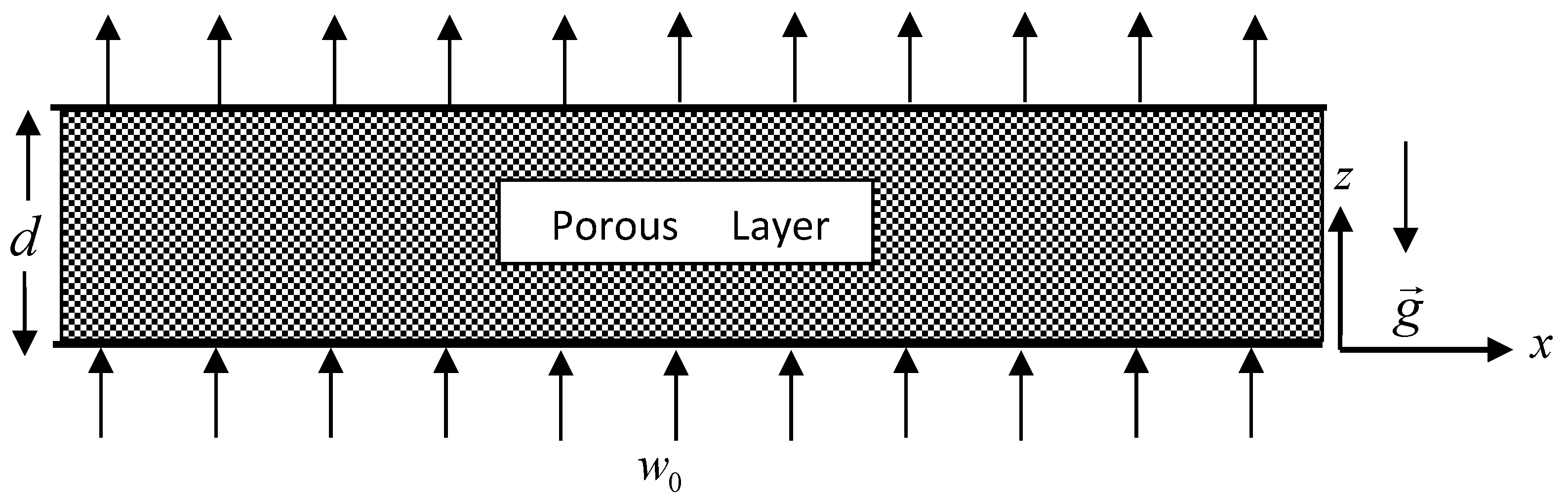
Consider an infinite horizontal layer of an isotropic porous matrix of width d and uniformly distributed internal heat source Q with variable downward gravity field g(z) is given by  , is operates in the direction of negative z-axis. The temperatures of the lower and upper boundaries are taken to be uniform and equal to Tl and Tu respectively, with Tl < Tu.
Figure 1.
Physical configuration.
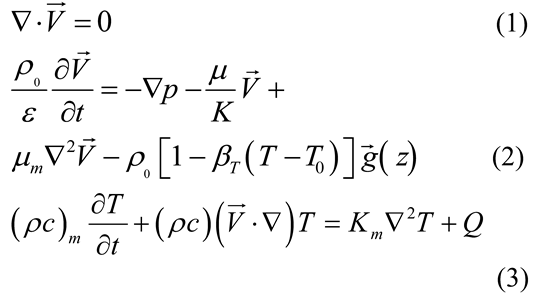
The basic governing equations are
Then the basic steady-state solution is

The basic state temperature is given by
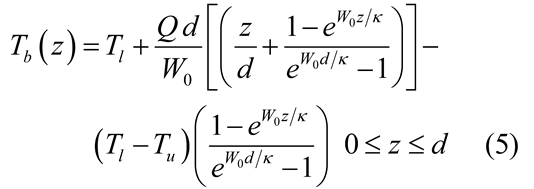
The impact of Throughflow is to adjust the Tb(z) from linear to an exponential with regard to vertical coordinates in a porous matrix (Figure 2). Infinitesimal disruptions are superimposed in the form of exploring the stability of the basic state.

Where the perturbations are the primed quantities and are considered to be small and linearized in the normal way. The expression for pressure is omitted from Eq. (2) finally, we get
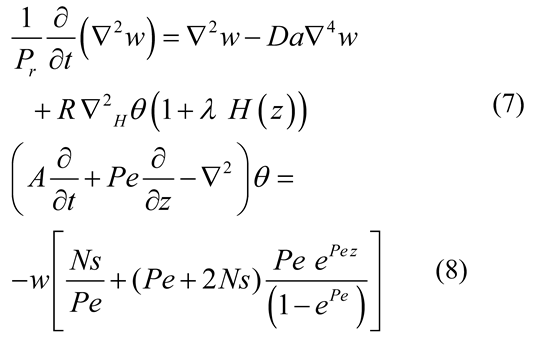
Where A = (ρc)m/(ερc) heat capacity ratio, Pe = W0d/κ is the Peclet number, R = βTKg∇Td/μα is the Rayleigh number, Ns = qd2/2k∇T is the heat source strength, and Da = K/ is the Darcy number.
We assume the solution is of the form

and substituting this in Eqs. (7)–(8), we get
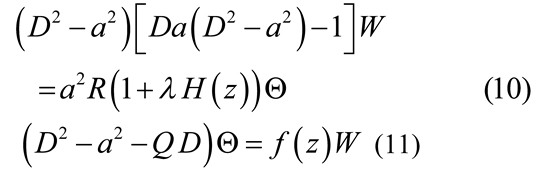
Where 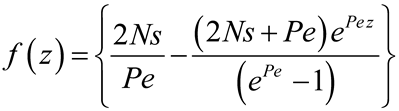 .
.And

are boundary conditions.
3. Method of Solution
The analytical solutions of the eigenvalue problem Eq.(10) and Eq.(11) are obtained by using a using regular perturbation procedure. Accordingly, the variables W, and Θ are expanded in powers of a2 as

Substitution of Eq. (14) into Eqs. (10)–(11) and the boundary conditions (12)–(13), zeroth-order equations are

and

The solution to the zeroth-order is given by

At the first order in a2 Eqs. (10)–11 then reduce to

and the boundary conditions (12)–(13) become

Equations (21) involving D2Θ1 gives us

The Eq. (20) together with solvability condition Eq. (24) are solved using MATHEMATICA; the Rc is obtained for four different cases of variable gravity functions.
4. Outcomes and discussion
In this study, four types of variations in the gravitational force are considered: linear, quadratic, cubic, and exponential. The gravity force functions are taken as Case (i): H(z) = −z (for linear variations), Case (ii): H(z) = −z2 (for quadratic variations), Case (iii): H(z) = −z3 (for cubic variations), and Case (iv): H(z) = −(ez − 1) (for exponential variations). The influence of the throughflow parameter, gravity variation parameter, heat source parameter, and Darcy number on the Rc is calculated, and outcomes are presented in Figure 4, Figure 5 and Figure 6. To confirm our calculation accuracy, the results obtained without internal heating (Ns = 0) and throughflow (Pe = 0), we recover the known exact value Rc = 12 (Nield and Bejan [24]).
Figure 3 indicates the deviance of Rc as a function of λ for different values of Peclet number Pe for four distinct cases (Case(i), (ii), (iii) & (iv)) of gravity field variations. The value of the essential Rc increases on increasing Pe is recognized, so the feeling of increasing Pe delays the arrival of the convective movement. This took place because the imperative heat gradients are changed progressively to a layer of the boundary where the throughflow is specified. In addition, the stability of the convection is found to be higher for Case(iv) and the instability is higher for the gravity variance function of Case(iii).
Figure 4 displays the deviance of Rc as a function of λ for different values of Da for four cases (Case(i), (ii), (iii) & (iv)) of gravity field variations. Both Da and λ have been found to improve the structure's stability. This occurred because the outcome of growth is to increase the viscous effects of the system. As λ is increased, the critical Rayleigh number Rc increases because of an improvement in the value of λ decreases in the frequency of gravity force. Since the disruption in the system reappears when the force of gravity decreases and the beginning of the convective wave is delayed. With an increase in the estimate Da, the size of the convective cells decreased while with λ it decreased. In addition, it is known that the scheme has more stability for Case (iv).
Figure 5, Figure 6 and Figure 8 demonstrate the effect of internal heat source variation on the system. From Figure 5, it is recognized that the mechanism stabilizes both downward and upward throughflow for distinct gravity field variations without heat source strength. In the absence of Ns , the path of the throughflow has no effect on the scheme's stability and delays the onset of convection. From Figure 6, it is noted that the for Pe > 0 has no influence on the stability and for Pe < 0 destabilizes the system when −1.7 ≤ Pe ≤ 1.2 with Ns. The Rc plotted against the Ns is showed in Figure 7 for the values of Da = 0.01 and Pe = 5 for four cases (Case(i), (ii), (iii) & (iv)) of gravity field variations. The value of Rc decrease can be observed as the value of Ns increases. As a consequence, the internal heat source increases the medium's global temperature and induces the start of instability.
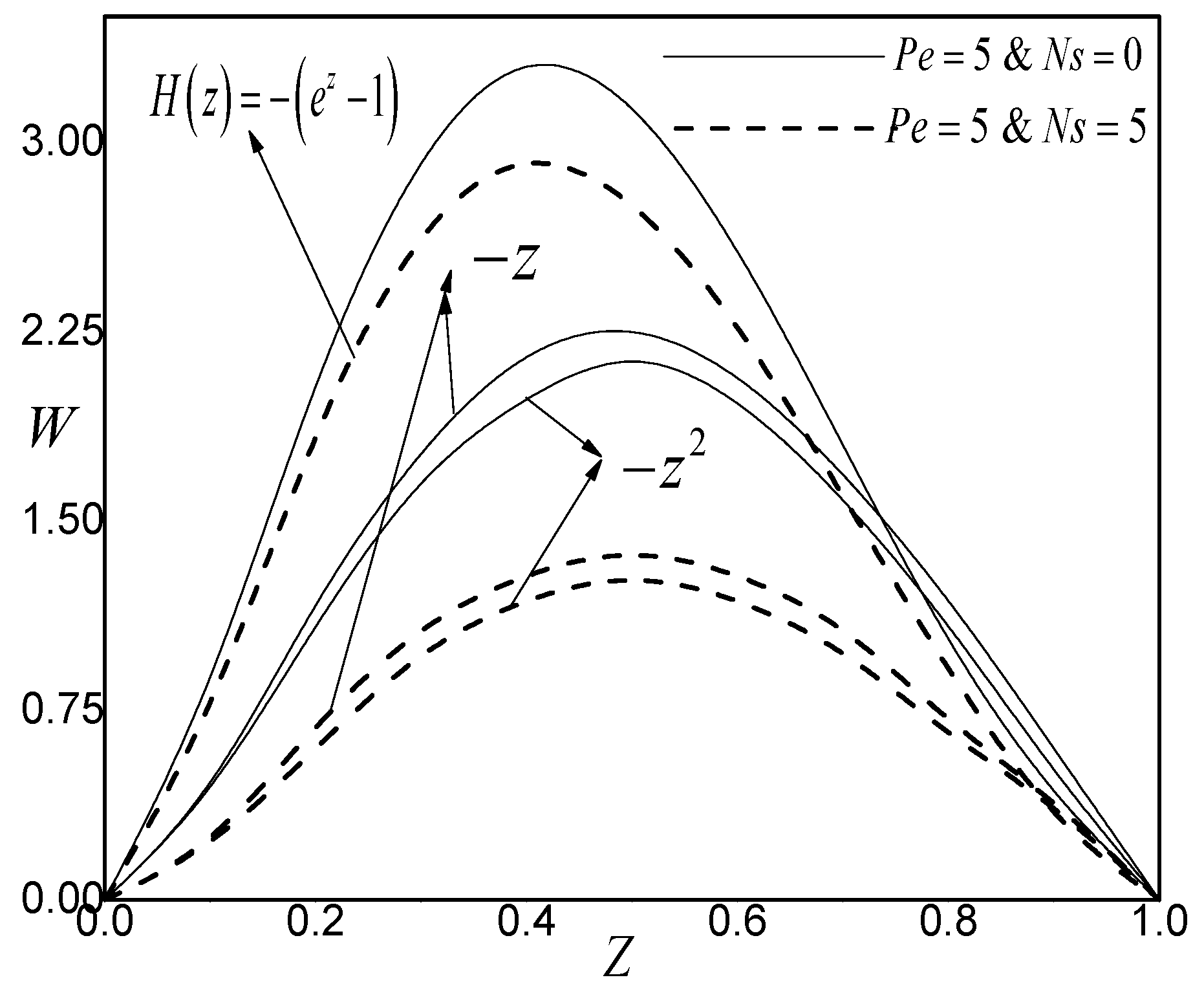
The disturbed vertical velocity functions is shown in Figure 8 for various values of Ns for Da = 0.01 and Pe = 5 . In the absence of Ns in the porous matrix is to accelerate W compared to in the presence of internal heating for all for four distinct cases of downward gravity forces.
Figure 2.
Plot of the basic state temperature distributions for different values of Tb(z) with Ns = 0.
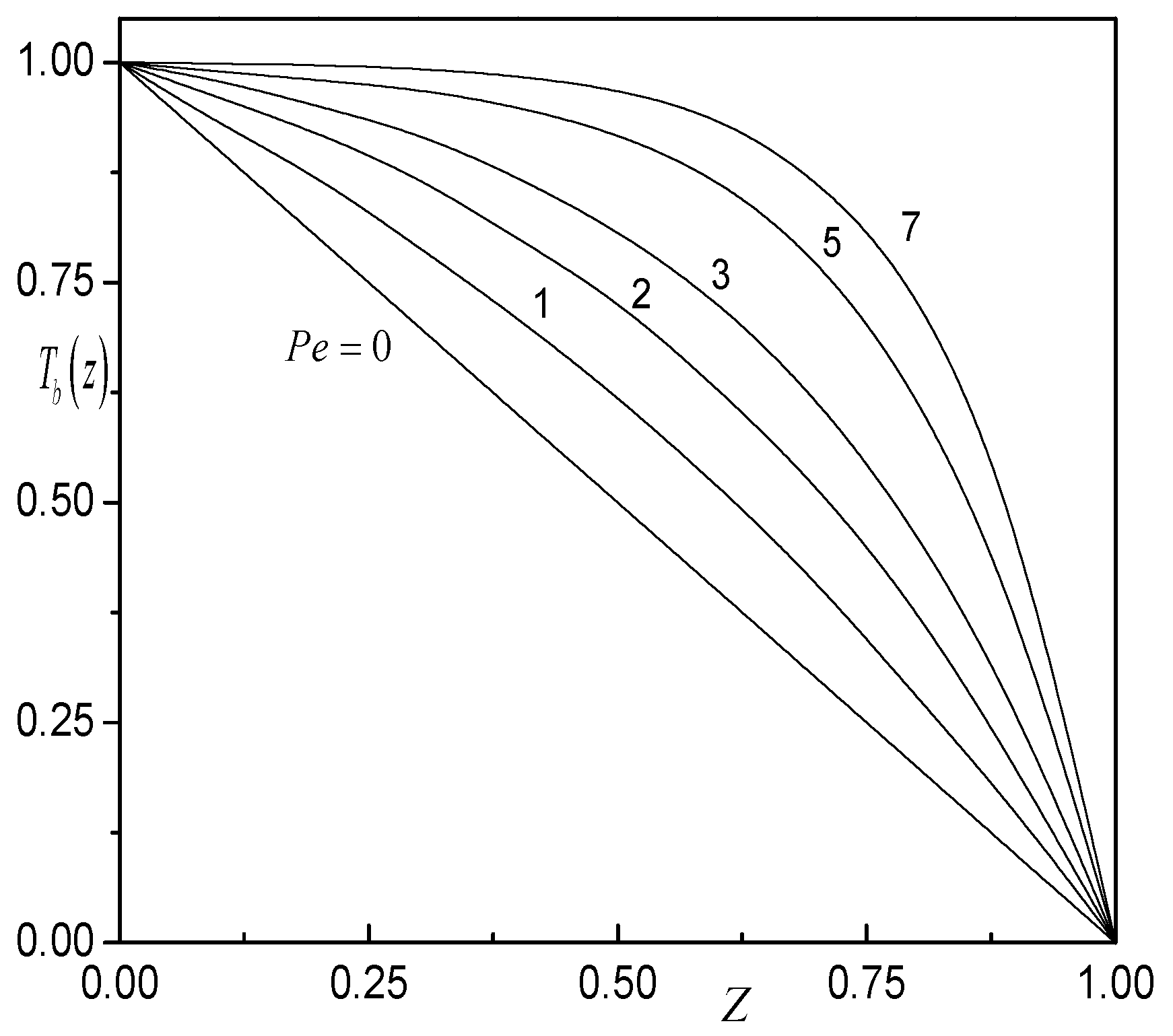
Figure 3.
Variation of Rc with λ for various values of Pe at Da = 0.01 & Ns = 5 for cases (a): H(z) = −z, (b): H(z) = −z2, (c): H(z) = −z3 and (d): H(z) = −(ez − 1).
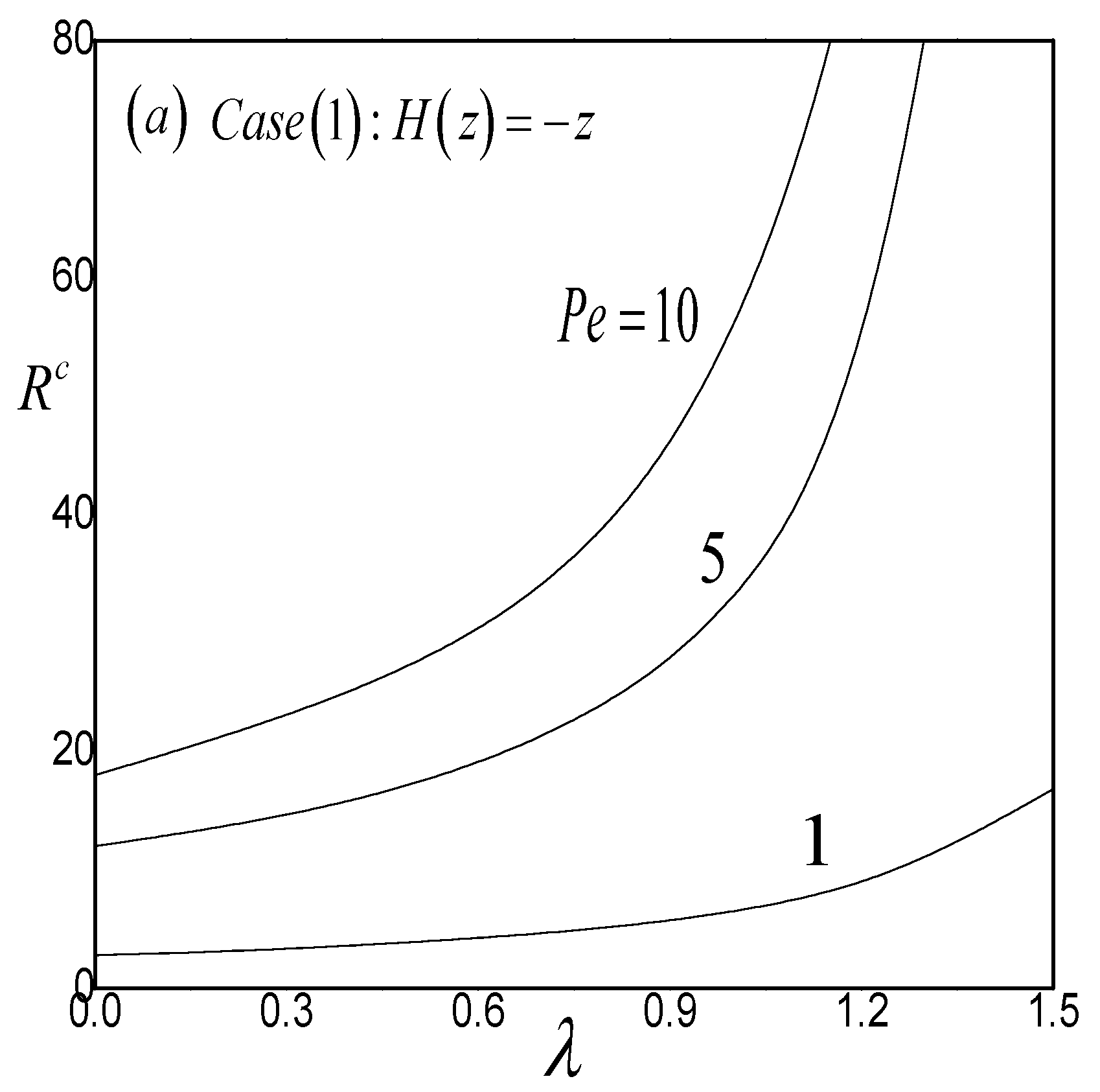
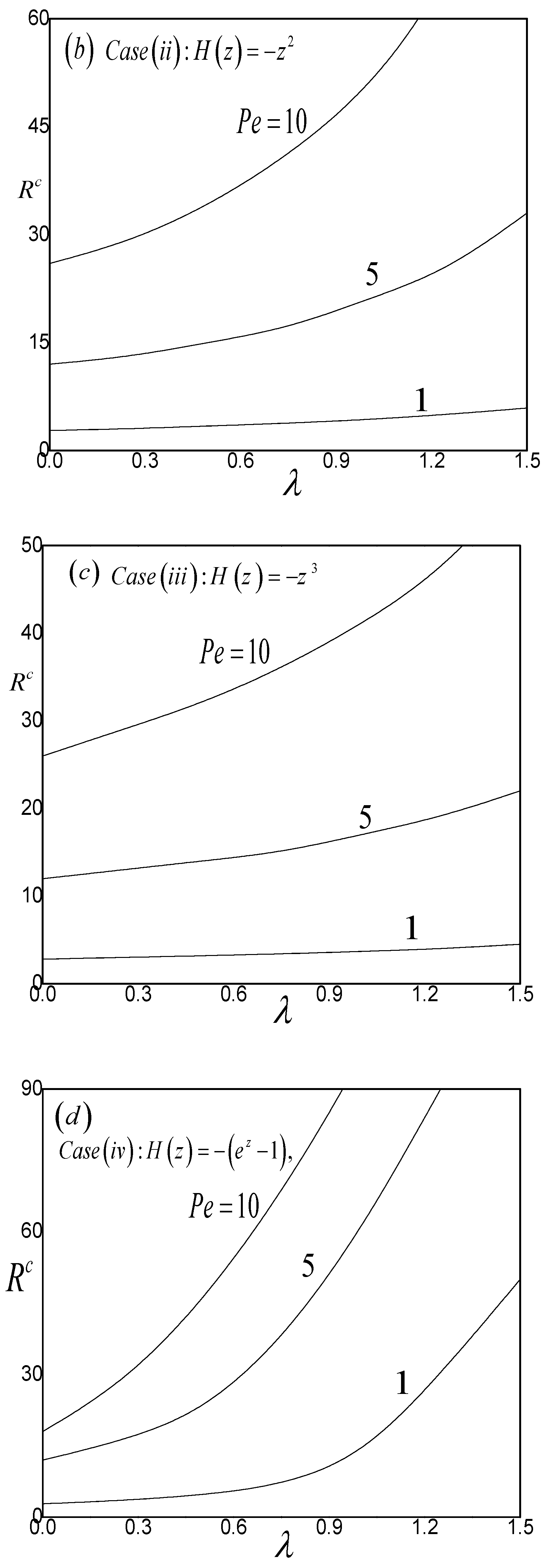
Figure 4.
Variation of Rc with λ for different values of Da at Pe = 5 = Ns for cases (a): H(z) = −z, (b): H(z) = −z2, (c): H(z) = −z3, and (d): H(z) = −(ez − 1).
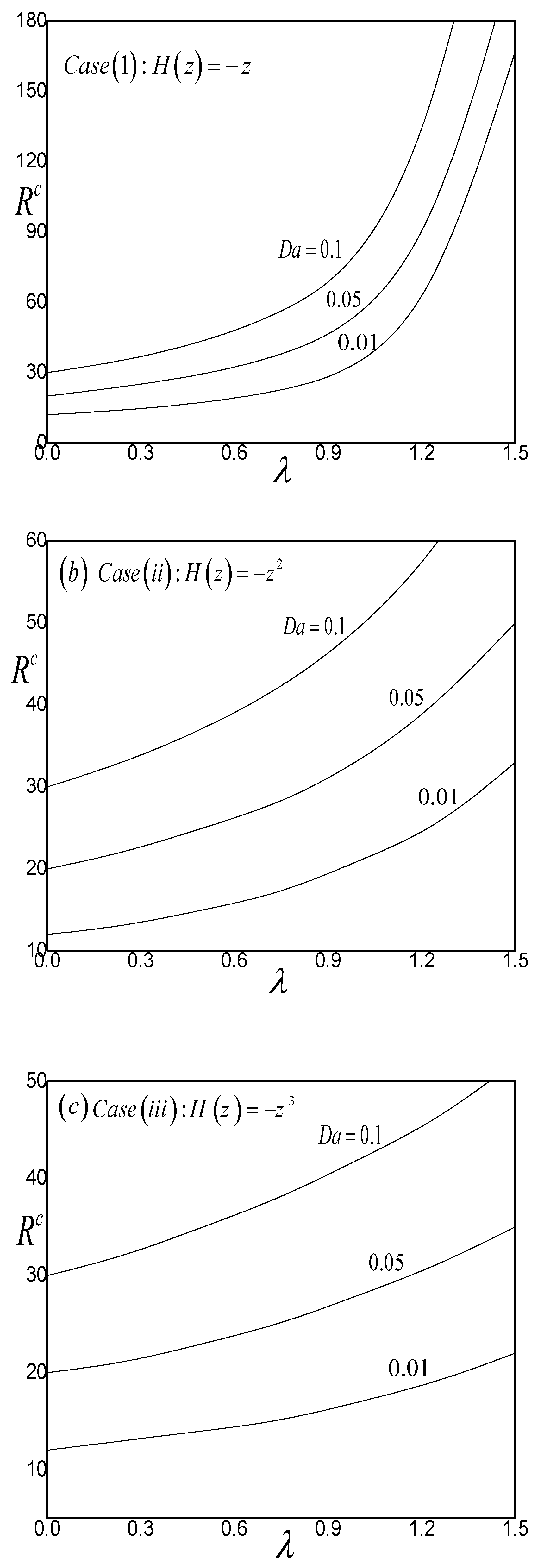
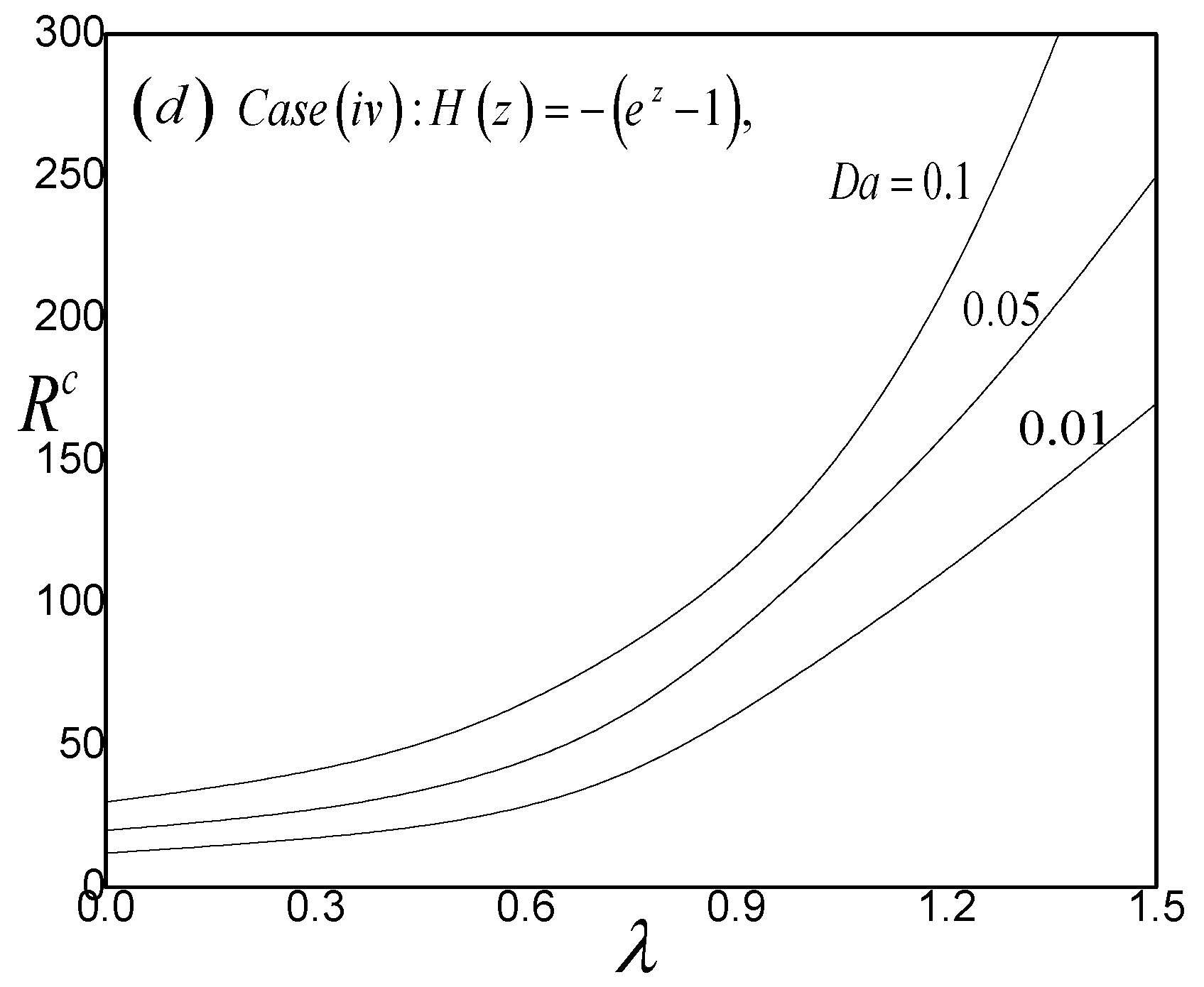
Figure 5.
Variation of Rc with Pe at Ns = 0 & Da = 0.01 for all cases of gravity variance.
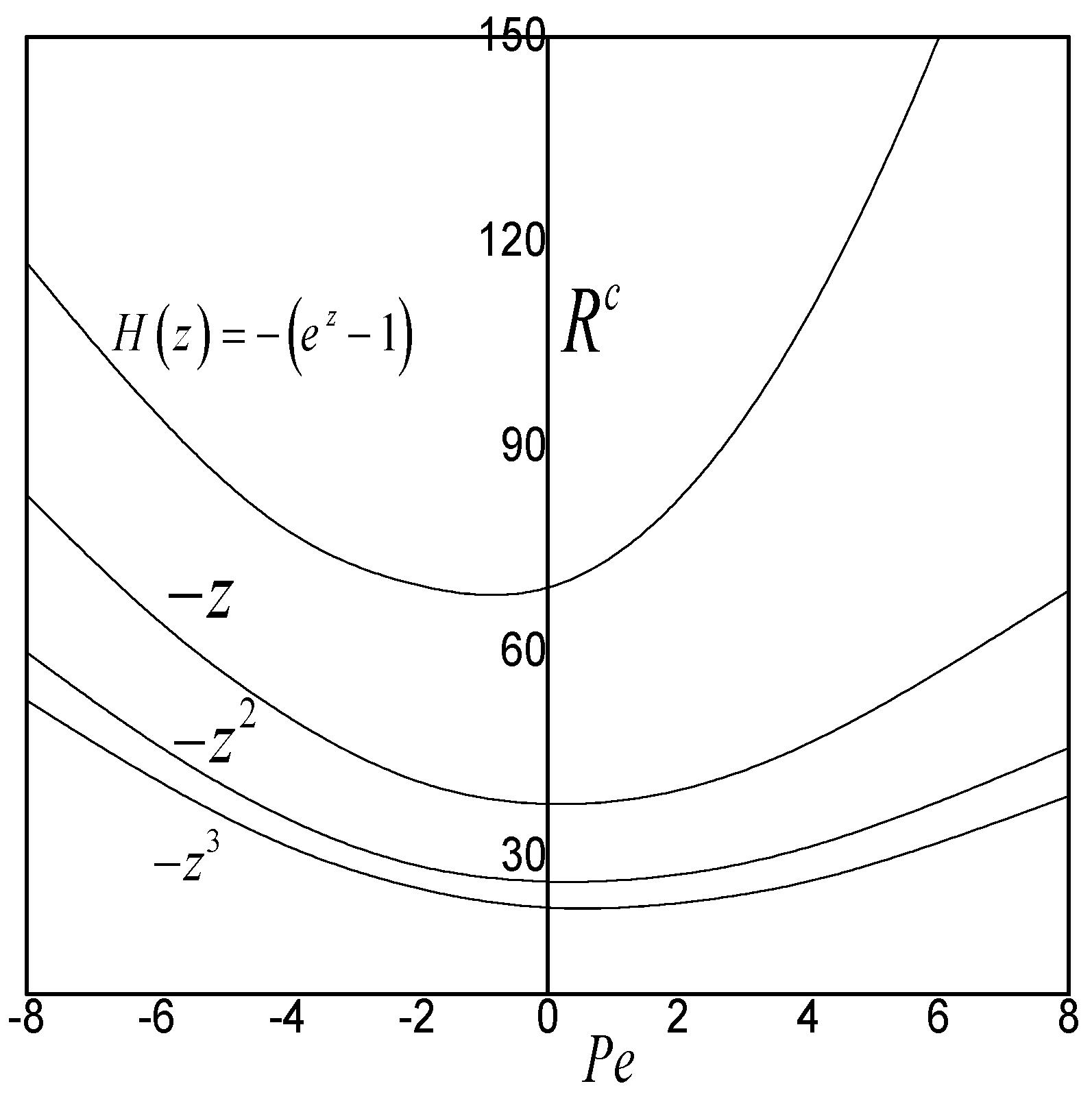
Figure 6.
Variation of Rc with Pe at Ns = 5 & Da = 0.01 for all cases of gravity variance.
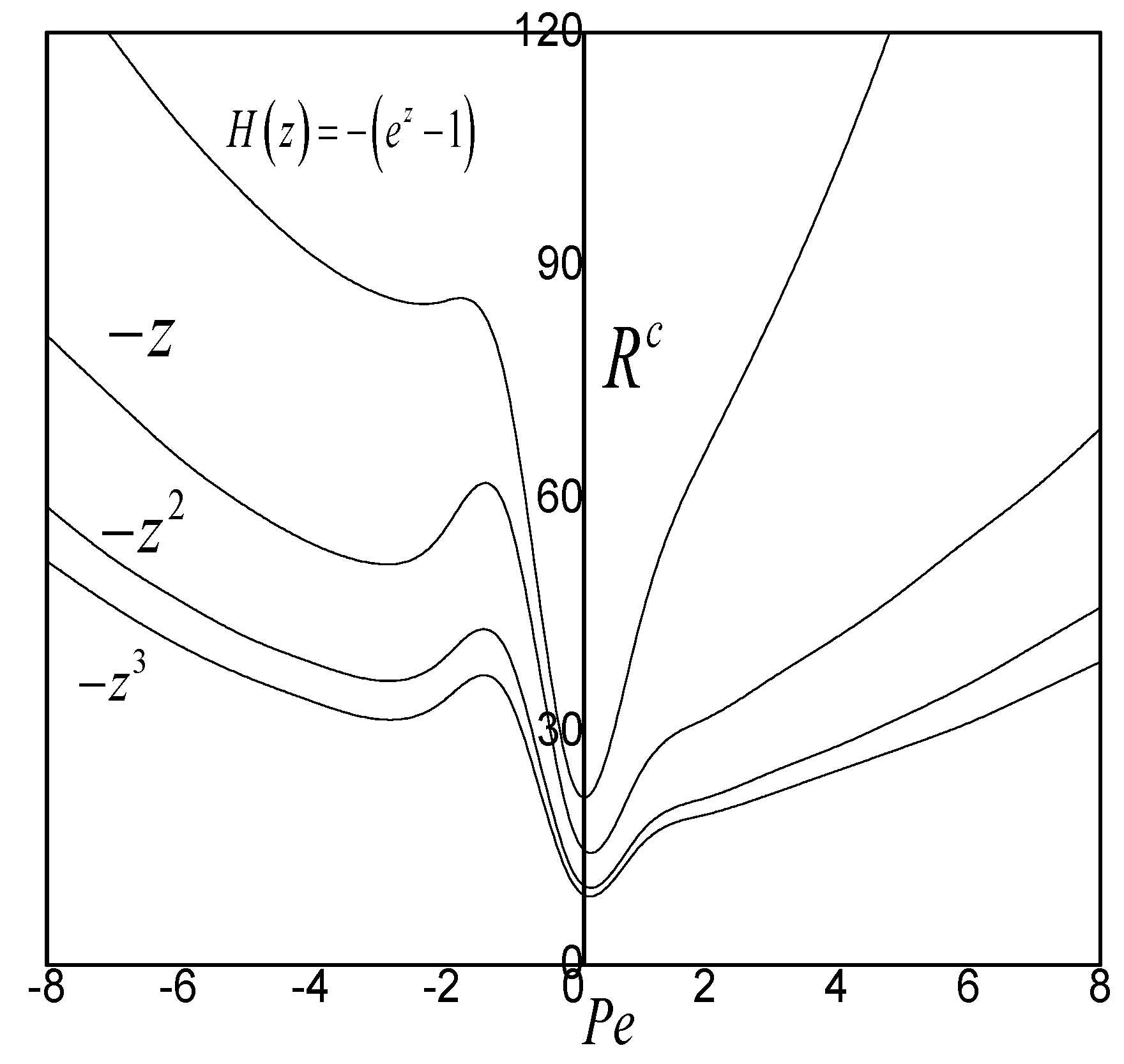
Figure 7.
Variation of Rc with Ns at Pe= 5 & Da = 0.01 for all cases of gravity variance.
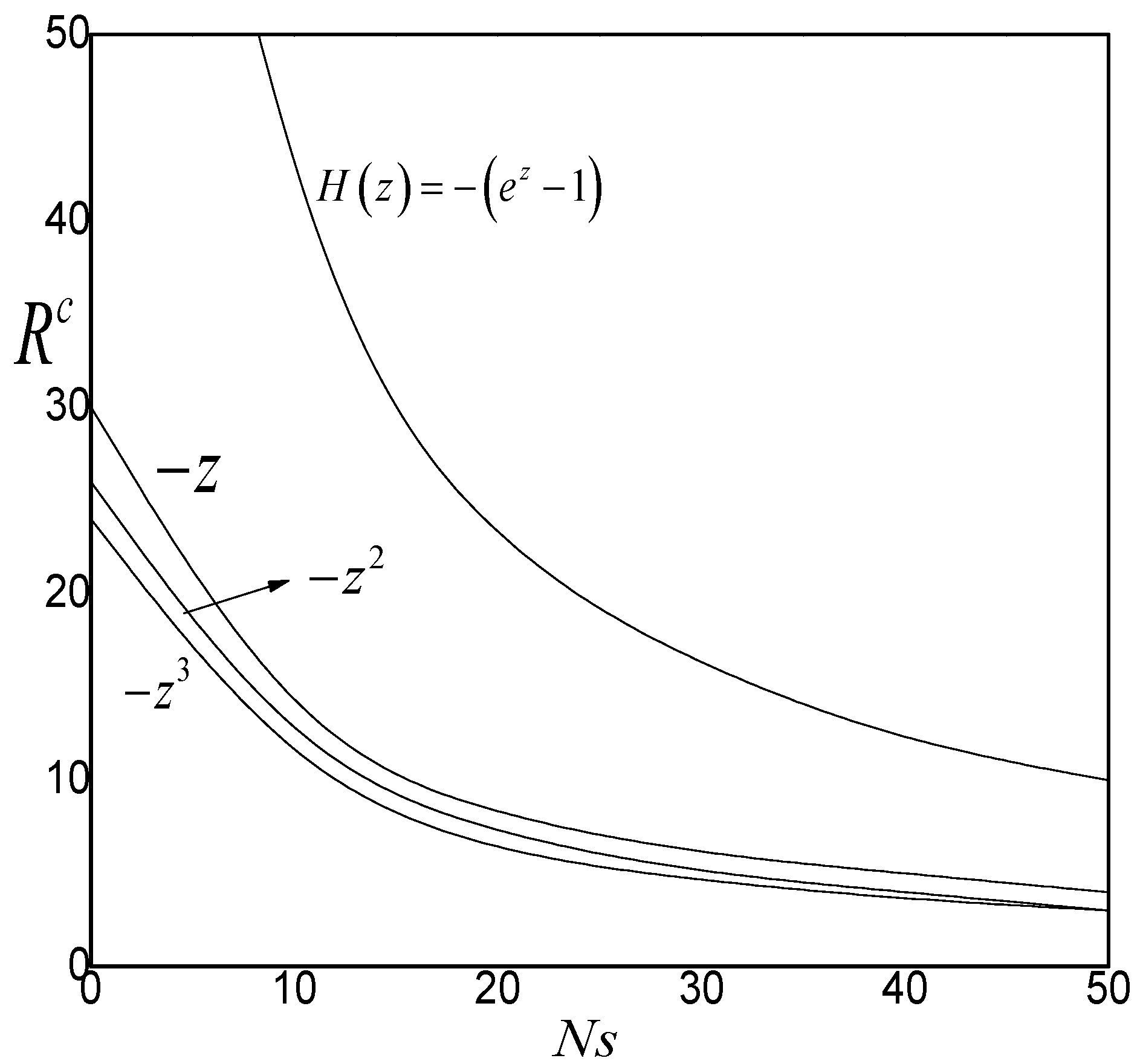
Figure 8.
Variation of W with Z for different values of Ns for all cases of gravity variance with Pe = 5.
5. Conclusions
Changeable gravity fields with height, due to the combined impact of vertical throughflow and an inner heat source, the thermal convection in a porous matrix is studied. The analysis takes into account four distinct forms of variations in the gravity field. The key outcomes of the study of linear stability are defined as follows:
- The effect of increasing Pe, λ and Da is discovered to prolong the onset of convective motion while Ns is reacted to increase the onset of convective motion.
- As the effect of the λ, Da and upward throughflow (Pe > 0) increases, the size of the convective cells decreases, whereas the internal heat source parameter has a double character on the convection cell scale.
- It is distinguished that for cubic gravity force, the flow is more stable, and for exponential gravity force, the flow is more unstable.
 |
References
- Lapwood E.(1948) Convection of a fluid in a porous medium. Paper presented at: Mathematical Proceedings of the Cambridge Philosophical Society. [CrossRef] [Scilit]
- Barletta, A., Rossi di Schio, E. & Storesletten, L, Convective roll instabilities of vertical throughflow with viscous dissipation in a horizontal porous layer. Transp. Porous Media, 81, (2010) 461–477. [CrossRef] [Scilit]
- Brevdo, L.& Ruderman, M.S, On the convection in a porous medium with inclined temperature gradient and vertical throughflow. Part I. Normal modes. Transp. Porous Media, 80, (2009) 137–151. [CrossRef] [Scilit]
- Chen, F, Throughflow effects on convective instability in superposed fluid and porous layers. J. Fluid Mech,231, (1990) 113–133. [CrossRef] [Scilit]
- Nield, D.A, Convection in a porous medium with inclined temperature gradient and vertical throughflow. Int.J. Heat Mass Transf. 41,(1998) 241–243. [CrossRef] [Scilit]
- Nield, D.A.& Kuznetsov, A.V, The Onset of convection in a layered porous medium with vertical throughflow. Transp. Porous Media, 98, (2013) 363–376. [CrossRef] [Scilit]
- Gangadharaiah.Y.H Onset of Benard–Marangoni convection in a composite layers with anisotropic porous material. Journal of Applied Fluid Mechanics. 9, (2016) 1551-1558. [CrossRef] [Scilit]
- S. P. Suma, Y. H. Gangadharaiah, R. Indira & I. S. Shivakumara, Throughflow effects on penetrative convection in superposed fluid and porous layers. Transp. Porous Med, 95, (2012) 91–110. [CrossRef] [Scilit]
- Shivakumara, I. S., S. P. Suma, R. Indira, and Y. H. Gangadharaiah , Effect of internal heat generation on the onset of Marangoni convection in a fluid layer overlying a layer of an anisotropic porous medium, Transp. Porous Med, 92(2012) 727-743. [CrossRef] [Scilit]
- Brinkman H, A calculation of the viscous force exerted by a flowing fluid on a dense swarm of particles. Flow Turbul Combust,1(1), (1949) 27. [CrossRef] [Scilit]
- Nield D.A, The boundary correction for the Rayleigh-Darcy problem: limitations of the Brinkman equation. J Fluid Mech,128, (1983) 37-46. [CrossRef] [Scilit]
- Rees DAS, The onset of Darcy-Brinkman convection in a porous layer: an asymptotic analysis. Int J Heat Mass Transfer, 45(11), (2002)2213-2220. [CrossRef] [Scilit]
- Deepika N., Narayana PAL & Hill AA, Onset of Darcy-Brinkman convection with a uniform internal heat source and vertical throughflow. Int J Therm Sci, 117, (2017) 136-144. [CrossRef] [Scilit]
- Yadav D., Wang J.& Lee J, Onset of Darcy-Brinkman convection in a rotating porous layer induced by purely internal heating. J Porous Media, 20(8), (2017) 691-706. [CrossRef] [Scilit]
- Wang S. &Tan W, The onset of Darcy-Brinkman thermosolutal convection in a horizontal porous media. Phys Lett A, 373(7), (2009) 776-780. [CrossRef] [Scilit]
- Yadav D., Bhargava R, & Agrawal GS, Boundary and internal heat source effects on the onset of Darcy–Brinkman convection in a porous layer saturated by nanofluid. Int J Therm Sci, 60, (2012) 244-254. [CrossRef] [Scilit]
- Amit Mahajan. &Reena Nandal. Penetrative convection in a fluid saturated Darcy-Brinkman porous media with LTNE via internal heat source. Nonlinear Engineering, 8, (2019) 546-58. [CrossRef] [Scilit]
- Alex, S. M.& Patil, P. R, Effect of variable gravity field on soret driven thermosolutal convection in a porous medium, Int. Comm. Heat Mass Transfer,28, (2001) 509–518. [CrossRef] [Scilit]
- S.P Suma, Y. H Gangadharaiah, R. Indira 2011 Effect of throughflow and variable gravity field on thermal convection in a porous layer. Int. J. Eng. Sci. Tech. 2,(2011) 37657–7668.
- Y.H. Gangadharaiah, S.P. Suma, K & Ananda, Variable gravity field and throughflow effects on penetrative convection in a porous layer. Int. J. Comput. Technol, 5, (2013) 172–191. [CrossRef] [Scilit]
- Y.H. Gangadharaiah, Double diffusive surface-driven convection in a fluidporous system. International Journal of Thermofluid Science and Technology, 8, (2021) 080301. [CrossRef]
- Dhananjay Yadav, The onset of Darcy-Brinkman convection in a porous medium layer with vertical throughflow and variable gravity field effects. Heat transfer,49, (2020) 187-194. [CrossRef] [Scilit]
- H. Nagarathnamma, Y. H. Gangadharaiah, K. & Ananda, Effects of variable internal heat source and variable gravity field on convection in a porous layer. Malaya Journal of Matematik, 8, ( 2020) 915-919. [CrossRef] [Scilit]
- D.A. Nield, A. Bejan, Convection in Porous Media, Springer, New York, (2013).
Copyright © 2021. This article is licensed under a CC BY-NC-ND 4.0.