


Abstract
Protein binders play a crucial role in determining the quality of emulsified meat products, such as chicken meatballs. Soy protein isolate (SPI) is widely used as a protein binder; however, its production in Indonesia relies predominantly on imported soybeans, underscoring the need to explore alternative protein sources derived from locally available legumes. This study investigated the effects of autoclaving on the antioxidant and techno-functional properties of pigeon pea (Cajanus cajan L. Millsp.) protein hydrolysates (PPHs) and evaluated their potential as a partial substitute for SPI in chicken meatballs. Based on the overall performance across the evaluated antioxidant and techno-functional properties, including DPPH radical-scavenging activity, reducing power, water- and oil-holding capacities, and emulsifying activity and stability, autoclaving at 121 °C for 15 min was selected for subsequent application. Incorporation of PPH into chicken meatballs affected their physical and sensory properties, with increasing PPH proportions resulting in darker color and lower hardness. Despite these changes, the 75:25 PPH:SPI formulation showed overall sensory acceptability comparable to the SPI-only formulation. Overall, autoclaving modified pigeon pea protein and improved several antioxidant and techno-functional properties, supporting its potential as a multifunctional co-protein ingredient for meat-based food formulations and providing a value-added application for an underutilized legume.
1. Introduction
Chicken meatballs (bakso) are among the most widely consumed processed meat products in Indonesia and represent an important component of the country’s culinary heritage. As a traditional food, bakso is consumed by people of all ages and is readily available through street vendors, restaurants, and the food service industry [1]. The quality of chicken meatballs is largely determined by their texture, elasticity, water-holding capacity, and emulsion stability, which are influenced by interactions among meat proteins, water, and fat during processing [2,3]. Consequently, protein-based binders are commonly incorporated into meatball formulations to improve gel formation, moisture retention, and overall product quality [4]. Soy protein isolate (SPI) is widely used as a protein binder because of its favorable functional properties. However, Indonesia still relies heavily on imported soybeans, creating concerns regarding supply security and production costs. Therefore, developing alternative binders from locally available protein sources is important for supporting sustainable food production while preserving Indonesia’s culinary identity and local food resources.
Pigeon pea (Cajanus cajan L. Millsp.) is an underutilized legume cultivated in several regions of Indonesia. Its seeds contain approximately 18–25% protein with a balanced essential amino acid composition and exhibit good adaptability to drought and marginal agricultural lands [5]. Despite these advantages, pigeon pea remains underexploited as a food ingredient because its proteins generally exhibit inferior functional properties compared with commercial soy protein isolate, particularly in terms of protein solubility, water- and oil-holding capacities, and emulsifying properties, which can limit their performance in food formulation [6]. Protein modification is therefore required to improve its technological performance before application in processed foods. Among various modification approaches, protein hydrolysis has attracted considerable attention because it can generate peptides with improved solubility, water-holding capacity, oil-holding capacity, and emulsifying properties, which are important characteristics for emulsified meat products [7,8,9]. Protein hydrolysis may also generate peptides with antioxidant activity, providing additional functional benefits [10]. Although enzymatic hydrolysis is widely used to improve protein functionality and generate bioactive peptides, physical processing approaches may provide an alternative means of inducing protein structural modification without the addition of exogenous enzymes.
Among these physical approaches, autoclaving has emerged as an attractive physical approach for protein modification because it is relatively simple, does not require enzymes or chemical reagents, and can be readily integrated into food processing [11,12]. During autoclaving, heat and pressure induce protein unfolding by disrupting intramolecular interactions and altering protein conformation, potentially exposing hydrophobic and hydrophilic groups involved in water binding, oil binding, and emulsification [13]. In addition to protein denaturation and unfolding, prolonged exposure to high temperature and pressure in an aqueous environment may promote limited cleavage of peptide bonds, resulting in partial protein hydrolysis and the generation of lower-molecular-weight peptides [14,15]. Such structural modifications may increase the accessibility of functional groups and alter the size and conformation of protein molecules, thereby affecting their techno-functional properties. Previous studies have demonstrated that autoclaving can enhance the techno-functional properties of legume-based ingredients. For example, autoclaving of Mucuna flagellipes flour improved water and oil absorption, gelation, foaming, swelling, and solubility, highlighting the potential of autoclaved legume ingredients as functional components in food formulations [11,14]. Nevertheless, the effects of autoclaving temperature and treatment time on the antioxidant and techno-functional properties of pigeon pea protein hydrolysates have not been comprehensively investigated.
Previous studies have evaluated pigeon pea protein isolate as an ingredient in meat products using the native protein [6], whereas other studies have reported improvements in the functional properties of autoclaved protein without examining its application in food systems [11,12]. In addition, the antioxidant properties of pigeon pea protein hydrolysates have mainly been investigated following enzymatic hydrolysis, leaving limited information regarding hydrolysates produced through physical autoclaving [16,17]. More importantly, the potential of autoclaved pigeon pea protein hydrolysates as a partial substitute for SPI in chicken meatballs has not yet been explored. Therefore, this study investigated the effects of autoclaving temperature and treatment time on the antioxidant and techno-functional properties of pigeon pea protein hydrolysates and evaluated their potential as a partial substitute for SPI in chicken meatballs based on the physical and sensory properties of the resulting products. This work provides a basis for valorizing Indonesian pigeon pea through thermal protein modification and its application as a value-added plant protein ingredient in meat products.
2. Results
2.1. DPPH Radical-Scavenging Activity of Pigeon Pea Protein Hydrolysates
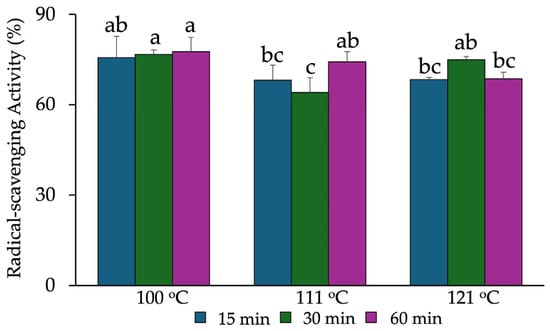
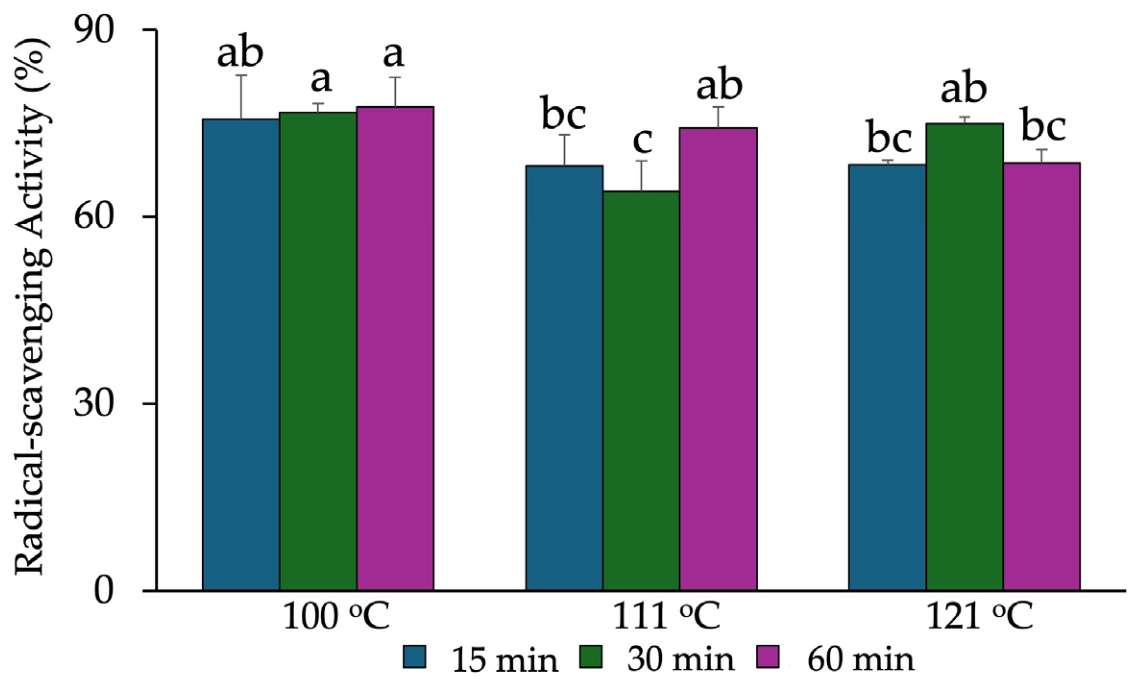
Two-way ANOVA showed a significant main effect of autoclaving temperature on the DPPH radical-scavenging activity of pigeon pea protein hydrolysates (p < 0.05), whereas the main effect of treatment time was not significant (p > 0.05). A significant interaction between autoclaving temperature and treatment time was also observed (p < 0.05) (Figure 1). At 100 °C, the scavenging activity ranged from 75.68 to 77.60%, with no significant differences among the 15-, 30-, and 60-min treatments. At 111 °C, the 30-min treatment showed the lowest activity (68.20%) and differed significantly from the 60-min treatment, whereas the 15-min treatment was not significantly different from either. At 121 °C, no significant differences were observed among the three treatment times. Based on these results, the 15-min treatment was selected for subsequent analyses because it provided DPPH radical-scavenging activity comparable to the longer treatment times while requiring a shorter processing time.
Figure 1.
Effect of autoclaving temperature and treatment time on the DPPH radical-scavenging activity of pigeon pea protein hydrolysates. Values are presented as mean ± standard deviation (SD) (n = 3). Different lowercase letters indicate significant differences among treatment combinations based on Tukey–Kramer post hoc comparisons following two-way ANOVA (p < 0.05).
2.2. Reducing Power of Pigeon Pea Protein Hydrolysates
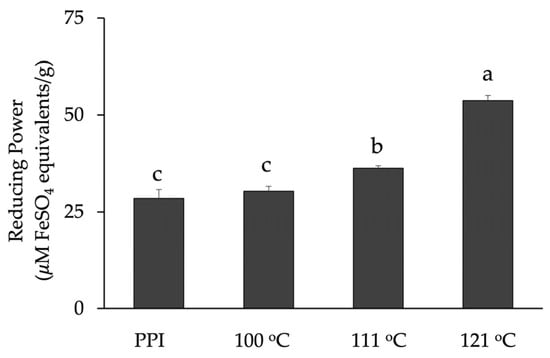
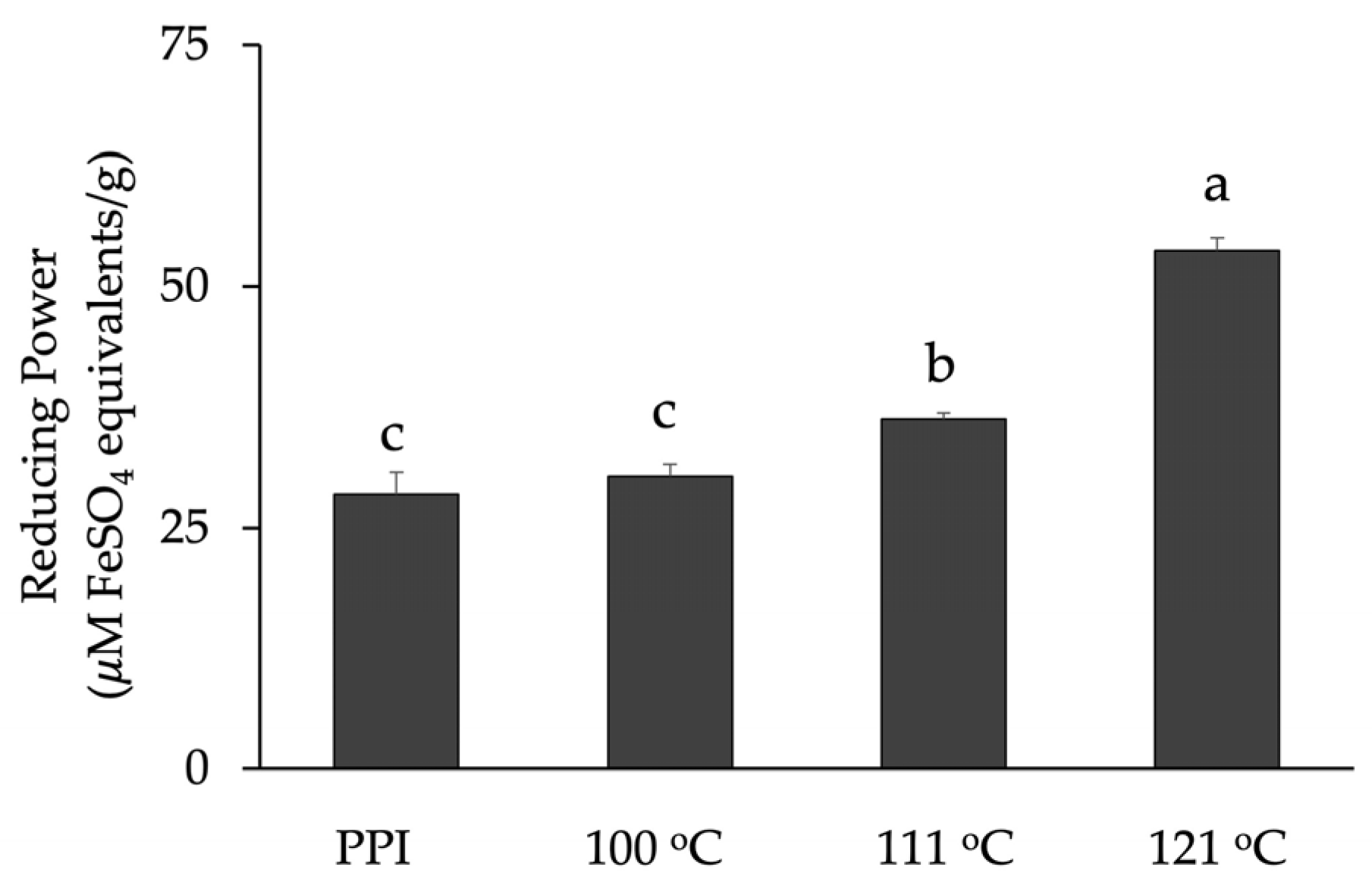
The reducing power of pigeon pea protein hydrolysates was significantly affected by autoclaving temperature (p < 0.05) (Figure 2). The reducing power increased from 28.54 μM FeSO4 equivalents/g extract in the pigeon pea protein isolate (PPI) to 30.18, 36.49, and 53.74 μM FeSO4 equivalents/g extract after autoclaving at 100, 111, and 121 °C, respectively. The reducing power at 100 °C was not significantly different from that of the PPI, whereas the treatments at 111 and 121 °C showed significantly higher values.
Figure 2.
Effect of autoclaving temperature on the reducing power of pigeon pea protein. Pigeon pea protein was autoclaved for 15 min at 100, 111, and 121 °C. Values are presented as mean ± standard deviation (SD) (n = 3). Different lowercase letters indicate significant differences among treatments according to the Tukey–Kramer post hoc test (p < 0.05).
2.3. Techno-Functional Properties of Pigeon Pea Protein Hydrolysates
2.3.1. Water- and Oil-Holding Capacity
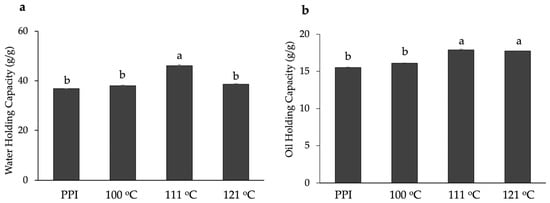
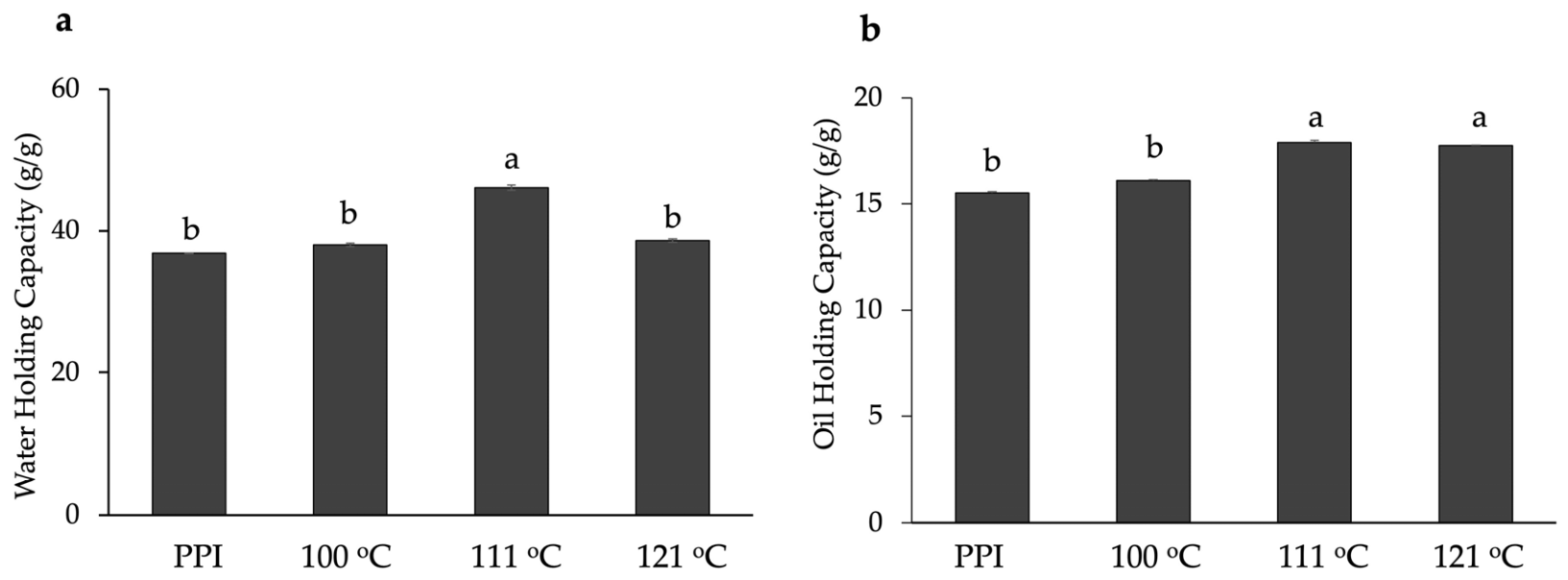
The water-holding capacity (WHC) and oil-holding capacity (OHC) of pigeon pea protein were significantly affected by autoclaving treatment (Figure 3a,b). WHC increased with temperature up to 111 °C, reaching a maximum of 46.1 g/g at 111 °C for 15 min, followed by a decrease at 121 °C (p < 0.05). In contrast, OHC increased significantly at 111 and 121 °C compared with the untreated PPI and the sample treated at 100 °C (p < 0.05). However, no significant difference in OHC was observed between the 111 and 121 °C treatments (p > 0.05).
Figure 3.
Effect of autoclaving temperature on (a) water-holding capacity and (b) oil-holding capacity of pigeon pea protein. Pigeon pea protein was autoclaved for 15 min at 100, 111, and 121 °C. Values are presented as mean ± standard deviation (SD) (n = 3). Different lowercase letters indicate significant differences among treatments according to the Tukey–Kramer post hoc test (p < 0.05).
2.3.2. Emulsifying Properties
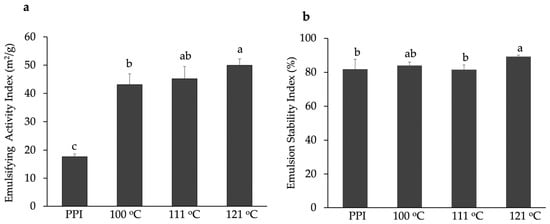
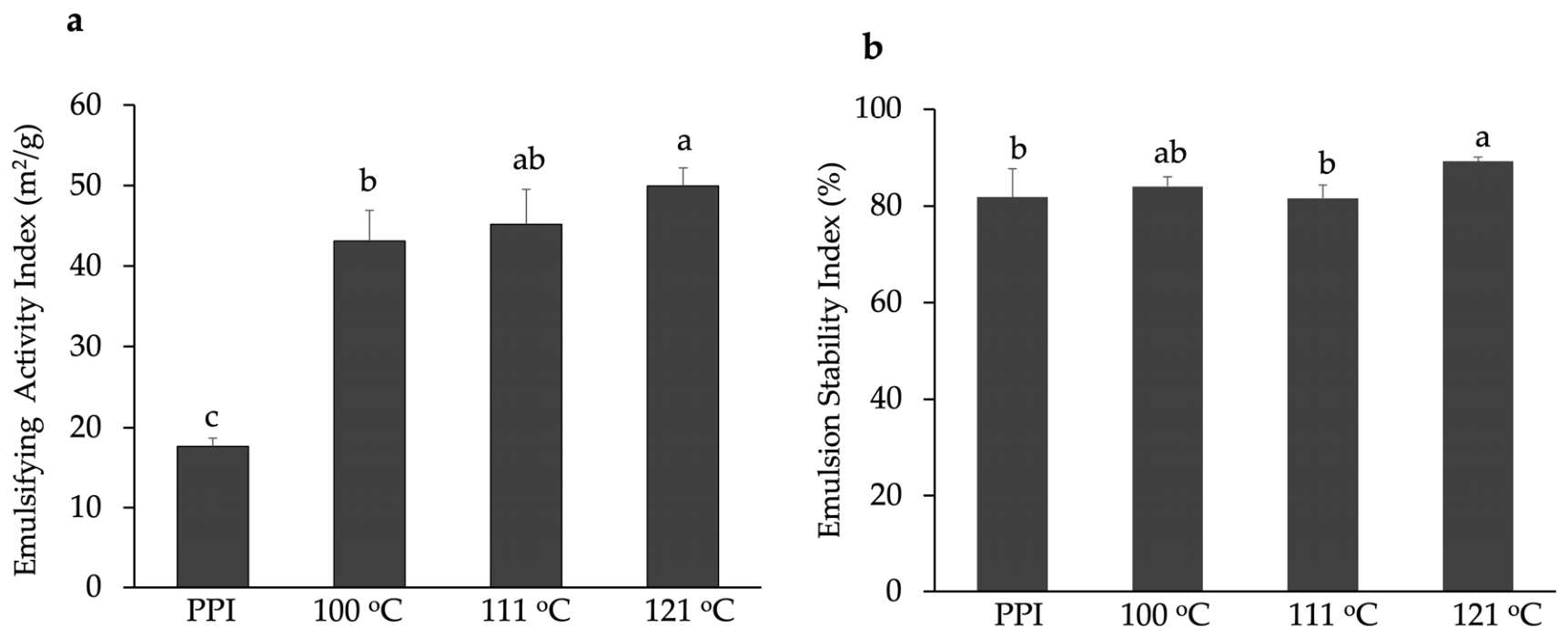
The emulsifying properties of pigeon pea protein were significantly affected by autoclaving treatment (Figure 4a,b). Compared with the PPI, autoclaving significantly increased the emulsifying activity index (EAI), from 17.52 m2/g to 43.15, 45.28, and 49.87 m2/g at 100, 111, and 121 °C, respectively. Although the EAI at 121 °C was higher than that at 111 °C, the difference was not statistically significant (p > 0.05). The emulsion stability index showed a similar response, with the highest value observed at 121 °C (88.91%), which was significantly higher than those at 111 °C (81.55%) and in the PPI (81.77%). The value at 100 °C (83.86%) was intermediate and did not differ significantly from either the PPI or the 121 °C treatment, while no significant difference was observed between the PPI and the 111 °C treatment.
Figure 4.
Effect of autoclaving temperature on (a) emulsifying activity index and (b) emulsion stability index of pigeon pea protein. Pigeon pea protein was autoclaved for 15 min at 100, 111, and 121 °C. Values are presented as mean ± standard deviation (SD) (n = 3). Different lowercase letters indicate significant differences among treatments according to the Tukey–Kramer post hoc test (p < 0.05).
Considering the overall antioxidant and techno-functional performance, the hydrolysate obtained at 121 °C for 15 min was selected for subsequent application in chicken meatballs. Although WHC reached its highest value at 111 °C, the treatment at 121 °C for 15 min exhibited the highest reducing power and ESI. Therefore, the selection of the optimum condition was based on the overall balance among the evaluated antioxidant and techno-functional properties rather than on the maximum value of a single response. Overall, the hydrolysate obtained at 121 °C for 15 min showed the most favorable performance across reducing power, WHC, OHC, EAI, and ESI and was selected for subsequent application in chicken meatball formulations.
2.4. Degree of Hydrolysis
The degree of hydrolysis (DH) increased significantly from 8.51% in untreated pigeon pea protein to 27.15% following autoclaving at 121 °C for 15 min (p < 0.05). DH was determined under the selected optimum condition as supporting evidence for the occurrence of protein hydrolysis rather than to evaluate the effect of autoclaving temperature on DH. The substantial increase in DH provides supporting evidence for partial protein hydrolysis during autoclaving.
2.5. Physical Properties of Chicken Meatballs
2.5.1. Color
The color characteristics of chicken meatballs formulated with different ratios of PPH obtained from 121 °C for 15 min and SPI are presented in Table 1. Significant differences were observed among formulations for all color parameters (L*, a*, and b*) (p < 0.05). Lightness (L*) increased progressively with increasing SPI proportion, from 64.51 in the 100:0 PPH:SPI formulation to 77.60 in the 0:100 formulation. In contrast, redness (a*) decreased from 3.71 to −0.70, whereas yellowness (b*) increased from 13.47 to 15.15 as the proportion of SPI increased. The total color difference (ΔE) decreased from 13.92 to 2.77 with increasing SPI proportion.
Table 1.
Color characteristics of chicken meatballs formulated with different pigeon pea protein hydrolysate (PPH) and soy protein isolate (SPI) ratios.
2.5.2. Hardness
The hardness of chicken meatballs, expressed as the maximum compression force (Fmax), is presented in Table 2. Hardness was significantly affected by the PPH:SPI ratio (p < 0.05). Increasing the proportion of SPI progressively increased hardness, from 8.95 N in the 100:0 formulation to 24.91 N in the 0:100 formulation. The 75:25 and 50:50 formulations showed comparable hardness values (13.60 and 13.53 N, respectively), with no significant difference between them, whereas all other formulations differed significantly from one another.
Table 2.
Hardness of chicken meatballs formulated with different pigeon pea protein hydrolysate (PPH) and soy protein isolate (SPI) ratio.
2.6. Sensory Evaluation
The hedonic evaluation showed significant differences among PPH:SPI formulations for meatball aroma, color, springiness, cohesiveness, aftertaste, and overall acceptability (p < 0.05) (Table 3). In contrast, no significant differences were observed for chicken flavor. For meatball aroma, the 100:0 and 75:25 formulation received comparable score, whereas the 25:75 and 0:100 formulations showed significantly higher scores. The 50:50 formulation showed an intermediate response and was not significantly different from either group. Beany aroma scores also differed significantly among formulations, with the 100:0 formulation receiving the lowest score and the 25:75 and 0:100 formulations receiving the highest scores, while the 75:25 and 50:50 formulations showed intermediate responses.
Table 3.
Hedonic liking scores of chicken meatballs formulated with different pigeon pea protein hydrolysate (PPH) and soy protein isolate (SPI) ratios.
Color preference decreased progressively with increasing SPI proportion, from 5.94 in the 100:0 formulation to 4.06 in the 0:100 formulation. Texture-related attributes also differed significantly among formulations. The 100:0 formulation showed the lowest scores for springiness and cohesiveness, whereas the 0:100 formulation received the highest scores. For both attributes, the 75:25, 50:50, and 25:75 formulations showed comparable intermediate scores. Aftertaste scores differed significantly among formulations, with the 100:0 and 75:25 formulations showing comparable scores, while the 50:50, 25:75, and 0:100 formulations had higher and comparable scores. Overall acceptability ranged from 4.48 to 5.52, with the 100:0 formulation receiving the lowest score and differing significantly from all formulations containing SPI. No significant differences were observed in overall acceptability among the 75:25, 50:50, 25:75, and 0:100 formulations.
For the intensity evaluation, significant differences were observed for grayish color, elasticity, and texture density (p < 0.05), whereas typical meatball aroma, beany aroma, chicken flavor, and aftertaste did not differ significantly among formulations (Table 4). The intensity of grayish color decreased progressively with increasing SPI proportion, from 5.90 in the 100:0 formulation to 2.46 in the 0:100 formulation. In contrast, springiness of meatball increased from 3.24 to 5.38, while its cohesiveness increased from 3.14 to 5.64 across the same formulation range.
Table 4.
Sensory intensity attribute scores of chicken meatballs formulated with different pigeon pea protein hydrolysate (PPH) and soy protein isolate (SPI) ratios.
3. Discussion
Thermal processing is widely used to modify protein structure and functionality in food systems. Heating can disrupt non-covalent interactions within protein molecules, resulting in unfolding, exposure of previously buried hydrophilic and hydrophobic regions, and subsequent structural rearrangement [11,18]. These changes may alter protein hydrolysis, antioxidant activity, hydration properties, and interfacial behavior. However, excessive heating can promote intermolecular interactions and aggregation, which may reduce the accessibility of functional groups and compromise some functional properties [19]. The present study demonstrated that autoclaving produced substantial modifications in pigeon pea protein, but the response varied according to temperature and treatment time.
The DPPH radical-scavenging activity showed a temperature- and time-dependent response rather than a simple increase with increasing thermal severity. At 121 °C, the activity increased from 15 to 30 min and subsequently decreased after 60 min, whereas different responses were observed at lower temperatures. Controlled thermal treatment may promote partial unfolding and hydrolysis, increasing the exposure of amino acid residues and peptide structures capable of participating in radical scavenging. Similar effects have been reported for thermally treated food proteins, where controlled heating enhanced protein unfolding and was associated with the generation or exposure of antioxidant-active peptide fractions [19,20,21]. In contrast, prolonged heating may promote aggregation or other secondary reactions that reduce the accessibility of reactive residues. Thus, the present results suggest that antioxidant functionality depends on an appropriate degree of structural modification rather than simply on increasing processing severity.
The increase in degree of hydrolysis (DH) from 8.51% in the untreated protein to 27.15% after autoclaving at 121 °C for 15 min provides further evidence of thermal modification. During autoclaving, thermal unfolding may increase the accessibility of peptide bonds and facilitate their cleavage, resulting in partial hydrolysis and the formation of shorter peptide structures [22,23]. Nevertheless, DH alone does not determine antioxidant functionality because peptide molecular size, sequence, amino acid composition, and conformation also influence bioactivity. This may explain why the DPPH response did not increase consistently with treatment severity.
The antioxidant properties were further supported by the reducing power results. The highest reducing power was observed at 121 °C, indicating that this treatment favored the availability of electron-donating groups. Whereas DPPH reflects radical-scavenging capacity, reducing power primarily reflects electron-donating ability [24]. The different response patterns between DPPH and reducing power indicate that antioxidant properties were not governed solely by the extent of hydrolysis but may also depend on the availability and accessibility of different antioxidant-active groups [19,20,21].
The structural modification induced by autoclaving was also reflected in the hydration and oil-binding properties of pigeon pea protein. WHC increased up to 111 °C but declined at 121 °C, whereas OHC increased particularly at 111 and 121 °C. The WHC of proteins is largely associated with polar groups such as –COOH, –NH2, and –OH, which interact with water through hydrogen bonding and related molecular interactions [15]. Protein unfolding can expose these groups and enhance water affinity [25]. Previous studies on pigeon pea protein hydrolysates have likewise reported increased WHC following hydrolysis, which was attributed to changes in protein conformation and greater exposure of polar groups [16]. The decline in WHC at 121 °C in the present study may therefore indicate that further thermal treatment promoted intermolecular association, reducing the accessibility of some hydrophilic groups.
In contrast, the increase in OHC at 111 and 121 °C suggests greater exposure of hydrophobic regions capable of interacting with lipid molecules. Protein OHC has been associated with non-covalent interactions between exposed hydrophobic regions and lipid molecules [26]. Similar increases in OHC have been reported following hydrolysis of pigeon pea protein, indicating that structural modification can alter the accessibility of both polar and non-polar functional groups [16]. The comparable OHC values at 111 and 121 °C suggest that sufficient hydrophobic regions had already become accessible at 111 °C, with further heating providing little additional improvement. However, because no direct structural characterization was performed in the present study, this explanation should be considered a possible mechanism rather than a direct structural effect of autoclaving.
Emulsifying properties provide further evidence of the structural changes induced by autoclaving. Protein emulsification depends on the ability of molecules to migrate to and adsorb at the oil–water interface while maintaining sufficient interfacial stability [27]. Unfolding can increase molecular flexibility and expose hydrophobic patches that facilitate interfacial anchoring, while hydrophilic regions maintain interactions with the aqueous phase [28]. Pigeon pea and cowpea proteins have previously been reported to possess good emulsifying properties, although their performance is strongly influenced by protein solubility and conformational stability [6,29]. In the present study, autoclaving increased emulsifying activity index (EAI), with the highest numerical value observed at 121 °C for 15 min. The increase in EAI may reflect greater protein unfolding and exposure of hydrophobic groups, facilitating adsorption and coverage of the oil–water interface. In contrast, the emulsion stability index (ESI) reflects the ability of the interfacial layer to maintain emulsion stability over time. The highest ESI was also observed under this condition, suggesting that the structural modification achieved at 121 °C promoted favorable interfacial interactions and the formation of a more stable interfacial layer. The increase in the degree of hydrolysis (DH) from 8.51% in untreated protein to 27.15% after autoclaving further indicates that partial protein hydrolysis occurred under the optimized treatment. The resulting structural modification, including protein unfolding and partial hydrolysis, may have increased molecular flexibility and interfacial accessibility, thereby contributing to the improved emulsifying properties. Nevertheless, excessive structural association can potentially reduce solubility and interfacial mobility, emphasizing the importance of controlled rather than excessive thermal treatment.
Taken together, these findings indicate that the effects of autoclaving were property-specific. WHC was maximized at 111 °C, whereas reducing power and emulsion stability index were highest at 121 °C, while DPPH radical-scavenging activity showed a more complex response to treatment time. Therefore, 121 °C for 15 min was selected based on its overall functional profile rather than as the absolute optimum for every individual property. This condition, combined high antioxidant-related functionality, improved emulsifying performance, and a substantial increase in DH within a relatively short treatment period. Such an integrated selection is more relevant for food application than optimizing the protein solely according to one analytical response.
The application of the selected pigeon pea protein hydrolysate (PPH) in chicken meatballs further demonstrated the relevance of these functional modifications in a complex food matrix. Increasing PPH substitution resulted in darker meatballs, whereas increasing SPI proportion produced lighter and firmer products. The darker color may be related to the intrinsic pigments and phenolic compounds of pigeon pea and their behavior during thermal processing [14,15]. This was consistent with the sensory intensity results, in which the characteristic gray color became more pronounced at higher PPH levels. The agreement between instrumental and sensory measurements indicates that the color changes associated with PPH incorporation were perceptible to the panelists.
The textural response similarly showed consistency between instrumental and sensory evaluations. Increasing the SPI proportion increased instrumental hardness as well as the sensory intensity of elasticity and texture density. Intact soy proteins can form interconnected protein networks during heating, contributing to a firmer and denser product structure. In contrast, the partial hydrolysis of PPH, reflected by its DH of 27.15%, may reduce its capacity to form a continuous and rigid gel network. Consequently, PPH-rich formulations exhibited lower hardness and lower perceived elasticity and texture density. These findings suggest that the structural characteristics of the modified pigeon pea protein directly influenced both the instrumental and perceived textural properties of the meatballs.
PPH substitution significantly affected meatball aroma, beany aroma, and aftertaste, whereas chicken flavor was not significantly affected. The higher aroma scores at greater SPI proportions suggest that the PPH:SPI ratio influenced perceived aroma characteristics. Differences in beany aroma may be associated with changes in protein-related volatile compounds during thermal processing, which can affect the perception of legume-derived aromas [13,15]. However, the specific compounds responsible were not determined in this study. Aftertaste scores were also higher in formulations containing 50–100% SPI, suggesting that increasing SPI proportion may improve perceived aftertaste.
Although PPH substitution altered specific sensory attributes, overall acceptability did not differ significantly among the 75:25, 50:50, 25:75, and 0:100 PPH formulations, whereas the 100:0 formulation received the lowest score. This finding is important because it indicates that partial replacement of SPI with PPH can be achieved without significantly compromising overall sensory acceptance. In particular, the 75:25 formulation incorporated a relatively high proportion of PPH while maintaining overall acceptability comparable to the SPI-only formulation. Thus, the sensory results, together with the instrumental measurements, support the use of PPH as a functional co-binder rather than a complete replacement for SPI in chicken meatballs. However, the formulations were prepared on an equal-mass basis, and the protein content of PPH was not independently quantified. Further characterization would help clarify the respective protein contributions of PPH and SPI to the formulations.
Overall, the present findings indicate that controlled autoclaving can modify pigeon pea protein to provide a combination of antioxidant and techno-functional properties relevant to food formulation. The 121 °C/15 min treatment provided the most favorable overall profile, while partial incorporation of the resulting PPH into chicken meatballs was feasible without significantly reducing overall sensory acceptability. The complementary roles of PPH and SPI suggest that PPH may be better positioned as a functional co-protein ingredient, providing antioxidant, oil-binding, and interfacial functionality while SPI contributes to structural firmness. This approach provides a potential strategy for increasing the utilization of pigeon pea as an underutilized local protein source. Further studies involving peptide molecular-weight distribution, peptide sequencing, protein conformation, and interfacial characterization would help clarify the structural mechanisms underlying the observed functionality.
4. Materials and Methods
4.1. Materials
Pigeon pea seeds were obtained from a local farmer in Purworejo, Central Java, Indonesia. Commercial soy protein isolate (Solpro® 920), chicken meat, tapioca flour, salt, baking soda, and seasonings were purchased from local commercial suppliers and used for chicken meatball preparation. n-Hexane, hydrochloric acid (HCl), sulfuric acid (H2SO4), boric acid, and bromocresol green–methyl red (BCG–MR) indicator were obtained from Merck Millipore (Burlington, MA, USA). Mercuric oxide (HgO), potassium sulfate (K2SO4), sodium hydroxide (NaOH), sodium thiosulfate (Na2S2O3), bovine serum albumin (BSA), sodium carbonate (Na2CO3), copper sulfate pentahydrate (CuSO4·5H2O), sodium potassium tartrate (Na2Tartrate·2H2O), Folin–Ciocalteu reagent, and potassium cyanide (KCN) were purchased from Sigma-Aldrich (St. Louis, MO, USA). All other chemicals were purchased from Merck Millipore.
4.2. Preparation of Pigeon Pea Flour
Pigeon pea flour was prepared according to a previously described procedure [5] with slight modifications with respect to soaking duration. The seeds were manually sorted to remove damaged seeds and foreign materials, washed with tap water, and soaked in a 5% (w/v) sodium bicarbonate (NaHCO3) solution at a seed-to-solution ratio of 1:3 (w/v) for 48 h at room temperature. The soaking solution was replaced every 12 h. After soaking, the seeds were drained, manually dehulled, and dried in a cabinet dryer (Genlab E3, Genlab Ltd., Widnes, UK) at 50 °C for 24 h. The dried seeds were then ground using a laboratory grinder (Orion MG-200B, PT. Indotara, Jakarta, Indonesia) and passed through a 60-mesh sieve to obtain pigeon pea flour with a uniform particle size.
4.3. Preparation of Autoclaved Pigeon Pea Protein Isolate
Pigeon pea protein isolate (PPI) was prepared using a modified previously reported method [16]. Pigeon pea powder was defatted twice with petroleum ether at a 1:2 (w/v) ratio for 30 min under continuous stirring. The defatted powder was dispersed in distilled water (1:4, w/v), and the pH was adjusted to 10.0 with 1 M NaOH. After stirring for 1 h, the suspension was centrifuged at 10,000× g for 15 min at 4 °C (Suprema 21, Tomy Seiko Co., Ltd., Tokyo, Japan). The supernatant was adjusted to pH 4.5 with 1 M HCl and centrifuged at 5000× g for 15 min at 4 °C to recover the precipitated protein. The protein was then lyophilized (FDU-1200, EYELA, Tokyo, Japan) and designated as PPI powder. The PPI powder was dispersed in distilled water at 5% (w/v) and adjusted to pH 7.0. A 50 mL aliquot of the PPI suspension was transferred to the autoclave and treated at 100, 111, or 121 °C for 15, 30, or 60 min. The treatment time was started after the autoclave (TOMY FLS-1000, Tommy Seiko Co., Ltd., Tokyo, Japan) reached the designated temperature and pressure. After cooling, the samples were centrifuged at 2380× g for 30 min, and the supernatants were collected as pigeon pea protein hydrolysates (PPH). For WHC and OHC analyses and chicken meatball formulations, PPH was freeze-dried to obtain a dry powder.
4.4. Characterization of Pigeon Pea Protein Hydrolysates
4.4.1. DPPH Radical-Scavenging Activity
The radical-scavenging activity of the protein hydrolysates was evaluated based on their ability to scavenge 2,2-diphenyl-1-picrylhydrazyl (DPPH) free radicals following a modified procedure [18]. Briefly, 100 μL of the hydrolysate solution was mixed with 1.0 mL of 0.2 mM DPPH reagent freshly prepared in a 1:1 (v/v) mixture of 96% ethanol and distilled water. After gentle vortexing, the reaction mixture was allowed to stand at room temperature in the absence of light for 20 min to ensure complete reaction. The absorbance was then recorded at 520 nm using a microplate reader (LMPR-A14, Labtron, London, UK). The radical-scavenging activity was expressed as the percentage inhibition of DPPH radicals and calculated using the following equation:
- A sample blank: Absorbance of the hydrolysate prepared without DPPH.
- A sample: Absorbance of the hydrolysate mixed with the DPPH solution.
- A control: Absorbance of the DPPH solution containing only the solvent.
4.4.2. Ferricyanide Reducing-Power Assay
The reducing power of pigeon pea protein hydrolysates was evaluated based on the method reported previously [30]. A 1.0 mL of the hydrolysate was mixed with 2.5 mL of 0.2 M phosphate buffer (pH 6.6) and 2.5 mL of 1% (w/v) potassium ferricyanide solution. The reaction mixture was incubated at 50 °C for 20 min to facilitate the reduction in ferricyanide ions. Following incubation, 2.5 mL of 10% (w/v) trichloroacetic acid was added to terminate the reaction, and the mixture was centrifuged at 2380× g for 10 min at 4 °C. Subsequently, 2.5 mL of the clear supernatant was transferred to a new tube and mixed with an equal volume of distilled water, followed by the addition of 0.5 mL of 0.1% (w/v) ferric chloride solution. After color development, the absorbance was measured at 700 nm using a microplate reader (LMPR-A14, Labtron, London, UK). The reducing power was determined from FeSO4 calibration curve (0–100 ppm) and expressed as μM FeSO4 equivalents per gram of extract.
4.4.3. Water and Oil-Holding Capacity (OHC)
The water-holding capacity (WHC) and oil-holding capacity (OHC) of the protein hydrolysates were determined following a previously reported method with minor modifications [31]. Protein powder (0.5 g) was weighed into a 50 mL screw-cap centrifuge tube and mixed with 5.0 g of either distilled water or canola oil. The suspension was intermittently vortex-mixed for 10 s at 5 min intervals over a total equilibration period of 30 min. The mixtures were subsequently centrifuged at 1000× g for 15 min. After carefully removing the unbound liquid, the weight of the retained residue was recorded. The holding capacity was expressed as the amount of water or oil retained per unit weight of the original sample.
4.4.4. Emulsifying Properties of PPI and PPH
The emulsifying activity index (EAI) and emulsion stability index (ESI) were determined using a previously described method, with minor modifications [29]. Briefly, 2 mL of corn oil was mixed with 8 mL of protein solution and homogenized using a T18 Ultra-Turrax homogenizer (IKA, Staufen, Germany) at 10,000 rpm for 3 min. Immediately after homogenization, 50 µL of the resulting emulsion was diluted with 2.45 mL of 0.1% (w/v) sodium dodecyl sulfate (SDS) solution. The absorbance of the diluted emulsion was measured at 500 nm immediately after homogenization (A0) and after 10 min of standing (A10). The EAI and ESI were then calculated using Equations (1) and (2), respectively, as follows:
where Φ is the volume fraction of corn oil (v/v), DF is the dilution ratio, and C is the concentration of emulsifier (g/mL).
4.4.5. Determination of Degree of Hydrolysis
The degree of hydrolysis (DH) was quantified using the trichloroacetic acid (TCA) soluble nitrogen method described by Wang et al. [28]. An aliquot of 500 μL of the protein hydrolysate was combined with 500 μL of 20% (w/v) TCA solution, resulting in a final TCA concentration of 10% (w/v). The mixture was incubated at room temperature for 30 min to precipitate the non-hydrolyzed protein fraction, and then centrifuged at 2380× g for 30 min at 4 °C. The resulting supernatant, containing the TCA-soluble peptides, was collected, and its nitrogen content was determined using the Kjeldahl method. The degree of hydrolysis was expressed as the percentage of TCA-soluble nitrogen relative to the total nitrogen content and calculated using the following equation:
4.5. Preparation of Chicken Meatballs
Chicken meatballs were prepared according to the method described by Telezhenko et al. [3] with modifications. The modification consisted of replacing soy protein isolate (SPI) with pigeon pea protein hydrolysate (PPH) on an equal-mass basis at five different ratios, while maintaining the total PPH + SPI addition at 2% (w/w) of the total formulation. The PPH:SPI ratios were 100:0, 75:25, 50:50, 25:75, and 0:100. The formulation for each treatment is presented in Table S1. Boneless chicken meat (62.55%, w/w) was cut into small pieces and ground in a food processor (HR7627, Philips, Guangzhou, China) for 1 min. Ice, tapioca starch, salt, garlic, chicken stock powder, monosodium glutamate, white pepper, and the designated protein mixture were then added, and the mixture was blended for an additional 3 min until a homogeneous batter was obtained. The batter was manually shaped into small balls weighing approximately 13.00 ± 0.50 g and cooked in water at 90 °C until the meatballs floated to the surface as the empirical endpoint for cooking completion. All formulations were prepared using the same standardized meatball size and subjected to identical cooking condition. The cooked meatballs were drained and allowed to cool to room temperature before further analyses.
4.6. Physical Properties of Chicken Meatballs
4.6.1. Color of Chicken Meatballs
Color was evaluated using the CIE Lab color system. Measurements of L*, a*, and b* values were performed on freshly cut cross-sections of the meatballs using a Minolta colorimeter (CR-200; Konica Minolta, Tokyo, Japan). The instrument was operated with a D65 illuminant, an 8-mm measuring aperture, and a 2° standard observer angle. Prior to measurement, the instrument was calibrated using a white calibration plate with L* = 97.81, a* = −0.45, and b* = +1.88. The total color difference (ΔE) between meatballs containing PPH and the corresponding control product.
4.6.2. Texture Analysis
Texture (hardness) was determined using a texture analyzer (EZ Texture Analyzer, Shimadzu, Kyoto, Japan). Chicken meatball samples were standardized to uniform dimensions and subjected to a double-compression test to 50% of their original height using a cylindrical probe (SMS P/36; 36 mm diameter). The probe was operated at a pre-test speed of 2 mm/min, a test speed of 1 mm/min, and a post-test speed of 1 mm/min. Hardness (N) was determined using the instrument’s texture analysis software. All measurements were conducted at ambient temperature (25 °C).
4.7. Sensory Evaluation of Chicken Meatballs
The sensory evaluation was conducted in a dedicated sensory testing laboratory equipped with individual testing facilities and maintained under controlled environmental conditions. Consistent and adequate lighting and minimal background noise were maintained throughout the evaluation. A total of 65 untrained panelists aged 18–40 years who regularly consumed chicken meatballs were recruited through convenience sampling. Panelists evaluated the samples individually to minimize interaction and potential distraction among panelists. Sensory evaluation of the chicken meatballs was conducted using consumer acceptance (hedonic) and sensory attribute intensity tests. Consumer acceptance was assessed using a 7-point hedonic scale ranging from 1 (“dislike extremely”) to 7 (“like extremely”). The evaluated attributes included characteristic meatball aroma, beany aroma, grayish color, chicken flavor, springiness, cohesiveness, aftertaste, and overall acceptability. For clarity, each sensory attribute was defined as follows: characteristic meatball aroma referred to the overall aroma typically associated with chicken meatballs; beany aroma referred to the characteristic bean-like odor associated with pigeon pea protein; grayish color referred to the perceived degree of gray coloration of the meatball, chicken flavor referred to the characteristic taste/flavor associated with chicken meat, springiness referred to the degree to which the sample returned to its original shape after compression during chewing, cohesiveness referred to the extent to which the sample remained intact during chewing, and aftertaste referred to the flavor sensation remaining after swallowing. Panelists were instructed to evaluate each attribute independently to minimize overlap among these attributes. Sensory attribute intensity was evaluated using a 7-point category scale for the same attributes, with scores ranging from 1 (“very weak”) to 7 (“very strong”). All meatball samples were served warm and presented in randomized monadic order using three-digit codes. Drinking water was provided for palate cleansing between sample evaluations. Before participation, all panelists were informed of the study procedures and provided written informed consent. The sensory evaluation protocol was approved by the Research Ethics Committee of Universitas Ahmad Dahlan (Approval No. REC-UAD/01/02/01-2026/047, issued on 20 February 2026).
4.8. Statistical Analysis
Statistical analysis was performed using IBM SPSS Statistics version 25 (IBM Corp., Armonk, NY, USA). Differences among treatments were assessed using one-way analysis of variance (ANOVA), followed by Tukey–Kramer post hoc comparisons when appropriate. For DPPH radical-scavenging activity, two-way ANOVA was performed to assess the effects of autoclaving temperature, treatment time, and their interaction, followed by appropriate post hoc comparisons. Sensory data from the hedonic and attribute intensity evaluations were analyzed using the Friedman test, followed by pairwise Wilcoxon signed-rank tests with Holm adjustment. Statistical significance was considered at p < 0.05.
5. Conclusions
Autoclaving promoted partial hydrolysis of pigeon pea protein and led to favorable changes in its antioxidant and techno-functional properties. Among the evaluated conditions, autoclaving at 121 °C for 15 min provided the most favorable overall balance of functional properties and was therefore selected for food application. The resulting pigeon pea protein hydrolysate (PPH) was successfully incorporated into chicken meatballs, where partial replacement of soy protein isolate (SPI) with PPH maintained overall sensory acceptability relative to the 100% SPI formulation. Overall, these findings demonstrate the potential of autoclaved pigeon pea protein as a functional ingredient for meat-based formulations and support the valorization of pigeon pea as an underutilized plant protein source.
Supplementary Materials
The following supporting information can be downloaded at https://www.mdpi.com/article/10.3390/legumes1020011/s1, Table S1: Formulation of chicken meatballs containing different pigeon pea protein hydrolysate (PPH) and soy protein isolate (SPI) ratios.
Author Contributions
Conceptualization, B.D.W.; Methodology, B.D.W. and S.K.N.; Validation, A.Y.I., A.A. and B.D.W.; Formal analysis, S.K.N.; Investigation, S.K.N.; Resources, B.D.W.; Data curation, B.D.W., A.Y.I. and A.A.; Writing—original draft preparation, B.D.W. and S.K.N.; Writing—review and editing, B.D.W. and A.A.; Visualization, S.K.N., A.Y.I. and B.D.W.; Project administration, B.D.W.; Funding acquisition, B.D.W. All authors have read and agreed to the published version of the manuscript.
Funding
This research was funded by the Innovative Research Grant Program Batch 2 through RKAT 2025, Faculty of Agricultural Technology, Universitas Gadjah Mada, under Grant No. 3030/UN1/FTP.1.3/SET-D/KU/2025.
Data Availability Statement
The original contributions presented in the study are included in the article/Supplementary Materials. Further inquiries can be directed to the corresponding author.
Acknowledgments
The authors are grateful to the students and staff of the Faculty of Agricultural Technology, Universitas Gadjah Mada, for their participation as panelists in the sensory evaluation of the samples.
Conflicts of Interest
The authors declare no conflicts of interest.
Abbreviations
The following abbreviations are used in this manuscript:
| PPI | Pigeon Pea Protein Isolate |
| PPH | Pigeon Pea Protein Hydrolysate |
| EAI | Emulsifying Activity Index |
| ESI | Emulsion Stability Index |
| WHC | Water-Holding Capacity |
| OHC | Oil-Holding Capacity |
| DH | Degree of Hydrolysis |
| DPPH | 2,2-diphenyl-1-picrylhydrazyl |
References
- Ahmadi, N.; Mahyuni, M.; Saputra, A. Metaphorical Expression of Meatball and the Naturalization of Meatball Conceptualiation. In Proceedings of the 2nd Annual Conference on Education and Social Science (ACCESS 2020), Mataram, Indonesia, 26–27 October 2020. [Google Scholar] [CrossRef] [Scilit]
- Meng, X.; Wu, D.; Zhang, Z.; Wang, H.; Wu, P.; Xu, Z.; Gao, Z.; Mintah, B.K.; Dabbour, M. An Overview of Factors Affecting the Quality of Beef Meatballs: Processing and Preservation. Food Sci. Nutr. 2022, 10, 1961–1974. [Google Scholar] [CrossRef] [Scilit] [PubMed]
- Telezhenko, L.; Salavelis, A.; Dubyna, A. Formation of Meatball Mass as a Multicomponent Food System. Food Sci. Technol. 2025, 19, 129–138. [Google Scholar] [CrossRef] [Scilit]
- Herz, E.; Herz, L.; Dreher, J.; Gibis, M.; Ray, J.; Pibarot, P.; Schmitt, C.; Weiss, J. Influencing Factors on the Ability to Assemble a Complex Meat Analogue Using a Soy-Protein-Binder. Innov. Food Sci. Emerg. Technol. 2021, 73, 102806. [Google Scholar] [CrossRef] [Scilit]
- Paramita, O.; Samanhudi, S.; Ariviani, S.; Zaman, M.Z. Nutritional Content and Antinutrient Composition of Pigeon Pea (Cajanus cajan (L.) Millsp.) Flour from Various Regions in Indonesia. In Proceedings of the E3S Web of Conferences; EDP Sciences: Les Ulis, France, 2025; Volume 674. [Google Scholar]
- Locali-Pereira, A.R.; Boire, A.; Berton-Carabin, C.; Taboga, S.R.; Solé-Jamault, V.; Nicoletti, V.R. Pigeon Pea, An Emerging Source of Plant-Based Proteins. ACS Food Sci. Technol. 2023, 3, 1777–1799. [Google Scholar] [CrossRef] [Scilit]
- Neji, C.; Semwal, J.; Kamani, M.H.; Máthé, E.; Sipos, P. Legume Protein Extracts: The Relevance of Physical Processing in the Context of Structural, Techno-Functional and Nutritional Aspects of Food Development. Processes 2022, 10, 2586. [Google Scholar] [CrossRef] [Scilit]
- Resendiz-Vazquez, J.A.; Ulloa, J.A.; Urías-Silvas, J.E.; Bautista-Rosales, P.U.; Ramírez-Ramírez, J.C.; Rosas-Ulloa, P.; González-Torres, L. Effect of High-Intensity Ultrasound on the Technofunctional Properties and Structure of Jackfruit (Artocarpus heterophyllus) Seed Protein Isolate. Ultrason. Sonochem. 2017, 37, 436–444. [Google Scholar] [CrossRef] [Scilit] [PubMed]
- Singh, A.; Sit, N. Dual Modification of Manila Tamarind Protein Isolate by Ultrasonication and Autoclaving and Their Characterization. Food Bioproc. Tech. 2023, 16, 2947–2960. [Google Scholar] [CrossRef] [Scilit]
- Sarabandi, K.; Tamjidi, F.; Akbarbaglu, Z.; Samborska, K.; Gharehbeglou, P.; Kharazmi, M.S.; Jafari, S.M. Modification of Whey Proteins by Sonication and Hydrolysis for the Emulsification and Spray Drying Encapsulation of Grape Seed Oil. Pharmaceutics 2022, 14, 2434. [Google Scholar] [CrossRef] [Scilit] [PubMed]
- Paula, L.C.; Lemes, A.C.; Valencia-Mejía, E.; Moreira, B.R.; Oliveira, T.S.; Campos, I.T.N.; Neri, H.F.S.; Brondani, C.; Ghedini, P.C.; Batista, K.A.; et al. Effect of Extrusion and Autoclaving on the Biological Potential of Proteins and Naturally-Occurring Peptides from Common Beans: Antioxidant and Vasorelaxant Properties. Food Chem. X 2022, 13, 100259. [Google Scholar] [CrossRef] [Scilit] [PubMed]
- Venketeish, K.S.N.; Govindarajan, N.; Pandiselvam, R. Mechanistic Insights of Germination and Autoclaving Effects on Chickpea (Cicer arietinum L.) and Fava Bean (Vicia faba L.): Molecular, Structural, and Functional Perspectives. J. Food Compos. Anal. 2026, 150, 108844. [Google Scholar] [CrossRef] [Scilit]
- Guo, X.; Gu, F.; Li, Y.; Zhang, Q.; Hu, R.; Jiao, B.; Wang, F.; Wang, Q. Precooking Treatments Affect the Sensory and Tensile Properties of Autoclaved Recooked Noodles via Moisture Distribution and Protein Structure. Food Chem. 2023, 421, 136218. [Google Scholar] [CrossRef] [Scilit] [PubMed]
- Obi, C.D.; And Okoye, J.I. Effects of Boiling and Autoclaving on the Chemical Composition and Functional Properties of Mucuna Flagellipes Seed Flours. Int. J. Innov. Food Nutr. Sustain. Agric. 2017, 5, 18–24. [Google Scholar]
- Mir, N.A.; Riar, C.S.; Singh, S. Structural Modification in Album (Chenopodium album) Protein Isolates Due to Controlled Thermal Modification and Its Relationship with Protein Digestibility and Functionality. Food Hydrocoll. 2020, 103, 105708. [Google Scholar] [CrossRef] [Scilit]
- Mukherjee, J.; Shivshetty, N.; Poosarla, V.G. Assessment of the Physicochemical, Antioxidant, in-Vitro Anti-Diabetic and Nutritional Characteristics of Pigeon Pea Protein Hydrolysates. Appl. Food Biotechnol. 2024, 11, e19. [Google Scholar] [CrossRef]
- Azman, A.T.; Isa, N.S.M.; Zin, Z.M.; Abdullah, M.A.A.; Aidat, O.; Zainol, M.K. Protein Hydrolysate from Underutilized Legumes: Unleashing the Potential for Future Functional Foods. Prev. Nutr. Food Sci. 2023, 28, 209–223. [Google Scholar] [CrossRef] [Scilit] [PubMed]
- Suh, S.; Kim, Y.E.; Yang, H.J.; Ko, S.; Hong, G.P. Influence of Autoclave Treatment and Enzymatic Hydrolysis on the Antioxidant Activity of Opuntia ficus-indica Fruit Extract. Food Sci. Biotechnol. 2017, 26, 581–590. [Google Scholar] [CrossRef] [Scilit] [PubMed]
- Wei, Z.; Zheng, Y.; Hao, J.; Deng, Y.; Zhang, Y.; Tang, X.; Liu, G.; Li, P.; Zhong, L.; Zhao, Z.; et al. Effects of Soybean Oil and Whey Protein Complexation by Temperature Treatments on the Structural, Physicochemical and Digestive Characteristics of Autoclaved Rice. Food Struct. 2022, 31, 100252. [Google Scholar] [CrossRef] [Scilit]
- Zhu, Y.; Lao, F.; Pan, X.; Wu, J. Food Protein-Derived Antioxidant Peptides: Molecular Mechanism, Stability and Bioavailability. Biomolecules 2022, 12, 1622. [Google Scholar] [CrossRef] [Scilit] [PubMed]
- Teshome, E.; Tola, Y.B.; Admassu, H.; Teka, T.A. Extraction Condition–Driven Changes in the Techno-Functional and Thermal Properties of Protein Isolates From Underutilized Lupine (Lupinus Spp.): Implications for Food Applications. Legume Sci. 2025, 7, e70070. [Google Scholar] [CrossRef] [Scilit]
- Gong, Y.; Feng, M.; Sun, J. Effect of Different Thermal Processing Methods and Thermal Core Temperatures on the Protein Structure and in Vitro Digestive Characteristics of Beef. Food Chem. 2025, 464, 141751. [Google Scholar] [CrossRef] [Scilit] [PubMed]
- Montserrat-de la Paz, S.; Villanueva, A.; Pedroche, J.; Millan, F.; Martin, M.E.; Millan-Linares, M.C. Antioxidant and Anti-Inflammatory Properties of Bioavailable Protein Hydrolysates from Lupin-Derived Agri-Waste. Biomolecules 2021, 11, 1458. [Google Scholar] [CrossRef] [Scilit] [PubMed]
- Li, B.; Xie, Y.; Guo, Q. Thermal Acid Hydrolysis Modulates the Solubility of Quinoa Protein: The Formation of Different Types of Protein Aggregates. Food Hydrocoll. 2024, 151, 109825. [Google Scholar] [CrossRef] [Scilit]
- Bühler, J.M.; Dekkers, B.L.; Bruins, M.E.; Van Der Goot, A.J. Modifying Faba Bean Protein Concentrate Using Dry Heat to Increase Water Holding Capacity. Foods 2020, 9, 1077. [Google Scholar] [CrossRef] [Scilit] [PubMed]
- Huamaní-Perales, C.; Vidaurre-Ruiz, J.; Salas-Valerio, W.; Cabezas, D.M.; Repo-Carrasco-Valencia, R. A Review of Techno-Functional Properties of Legume Proteins and Their Potential for Development of New Products. Eur. Food Res. Technol. 2024, 250, 2069–2092. [Google Scholar] [CrossRef] [Scilit]
- Mota da Silva, A.M.; Souza Almeida, F.; Kawazoe Sato, A.C. Functional Characterization of Commercial Plant Proteins and Their Application on Stabilization of Emulsions. J. Food Eng. 2021, 292, 110277. [Google Scholar] [CrossRef] [Scilit]
- Wang, Y.; Li, Z.; Li, H.; Selomulya, C. Effect of Hydrolysis on the Emulsification and Antioxidant Properties of Plant-Sourced Proteins. Curr. Opin. Food Sci. 2022, 48, 100949. [Google Scholar] [CrossRef] [Scilit]
- Thompson, C.M.B.; Acevedo, B.A.; Añón, M.C.; Avanza, M.V. Emulsifying Capacity of Cowpea Protein Isolates. Effect of Thermal and Hydrolytic Treatment. Plant Foods Hum. Nutr. 2023, 78, 366–374. [Google Scholar] [CrossRef] [Scilit] [PubMed]
- Canabady-Rochelle, L.L.S.; Harscoat-Schiavo, C.; Kessler, V.; Aymes, A.; Fournier, F.; Girardet, J.M. Determination of Reducing Power and Metal Chelating Ability of Antioxidant Peptides: Revisited Methods. Food Chem. 2015, 183, 129–135. [Google Scholar] [CrossRef] [Scilit] [PubMed]
- Mohammadi, M.; Soltanzadeh, M.; Ebrahimi, A.R.; Hamishehkar, H. Spirulina Platensis Protein Hydrolysates: Techno-Functional, Nutritional and Antioxidant Properties. Algal Res. 2022, 65, 102739. [Google Scholar] [CrossRef] [Scilit]

Disclaimer/Publisher’s Note: The statements, opinions and data contained in all publications are solely those of the individual author(s) and contributor(s) and not of MDPI and/or the editor(s). MDPI and/or the editor(s) disclaim responsibility for any injury to people or property resulting from any ideas, methods, instructions or products referred to in the content. |
© 2026 by the authors. Licensee MDPI, Basel, Switzerland. This article is an open access article distributed under the terms and conditions of the Creative Commons Attribution (CC BY) license.