


Abstract
Plant hormones are chemical messengers that regulate plant development from seed to seed and their adaptation to environmental stress. Salt stress limits food production by inhibiting seed germination and impeding seedling emergence. The Arachis hypogaea L. is an economically important legume crop; however, peanut seed germination and seedling development are affected by soil salinity. The aim of this study was to investigate the significance of ethylene and abscisic acid synthesis in mitigating salt stress during seed germination and the post-germination growth phase in the peanut. Ethylene synthesis in peanut seeds of the cultivar ‘IAPAR25’ was progressively inhibited with increasing NaCl concentration in the germination medium without significant changes in abscisic acid biosynthesis. In contrast, the exposure of seeds of the cultivar ‘Tatu-53’ to NaCl solutions at concentrations of 100, 150, and 200 mM resulted in a significant increase in abscisic acid concentration, but ethylene synthesis by these peanut seeds was not affected by saline conditions. In addition, ‘IAPAR 25’ seeds incubated in increasing concentrations of NaCl exhibited relatively higher germination in comparison with ‘Tatu-53’ seeds. The peanut cultivar ‘IAPAR 25’ was more tolerant to salt stress than the cultivar ‘Tatu-53’, showing little reduction in total dry weight production and a high plant salinity tolerance index. Therefore, different capacities to produce ethylene and abscisic acid by peanut seeds of the cultivars ‘IAPAR25’ and ‘Tatu-53’ explain the differences in salinity tolerance between cultivars.
1. Introduction
Salinity stress negatively affects the germination of legume seeds and hence seedling establishment itself [1]. The direct effects of salt stress on the seed germination of some plant species are ameliorated by hormone adjustments that improve germination and seedling growth [2]. For instance, the capacity of seeds of Stylosanthes humilis, a forage legume, to produce ethylene contributes to mitigating the negative effects of salinity on germination and seedling growth [3]. On the other hand, salt stress inhibits the germination of legume seeds by triggering abscisic acid (ABA) synthesis [4]. In this regard, the balance between ethylene and ABA synthesis may be an important factor for seed germination and seedling growth under saline conditions. In support of this, the 1-aminocyclopropane-1-carboxylate synthase 7 (acs7) mutant, which produces less ethylene, exhibits a higher ABA concentration in its seeds, resulting in the reduced germination of Arabidopsis seeds under saline conditions [5]. Additionally, the application of ethylene to legume seeds increases germination by antagonizing the action of ABA under salt stress conditions [4,6]. This supports the idea that ethylene mainly affects sensitivity to ABA during salt stress. Salt stress effects vary with the developmental stage of the plant with seed germination and seedling emergence being the most sensitive to salt stress [7]. Therefore, an understanding of the mechanisms that regulate seed germination and seedling growth during salt stress is essential to maintain optimal crop yield in saline areas.
The peanut (Arachis hypogaea L.), an economically important legume, is considered moderately salt-sensitive; however, the biological processes that regulate seed germination during salt stress remain unclear [8,9]. Salt stress may inhibit the germination of legume seeds through osmotic effects, ion toxicity or both [10]. Previous investigations with legume seeds treated with NaCl or polyethylene glycol (PEG) solution at the same osmotic potential indicated an ion toxicity effect as the principal factor influencing seed germination [3,4]. The exposure of peanut seeds to iso-osmotic solutions of NaCl and PEG may be particularly relevant for an improved understanding of the mechanism responsible for the reductions in germination under salinity. In the peanut, PEG solution increases the expression of 9-cis-epoxycarotenoid dioxygenase 1 (AhNCED1) gene, resulting in an accumulation of ABA in seedlings [11]. Moreover, ABA inhibits the lateral root development of peanut plants by increasing the transcription of the AhNCED1 gene [12]. A previous study on the germination of peanut seeds emphasizes the importance of ethylene production during germination processes [13]. The control of ethylene production in seeds is also correlated with salinity tolerance in some plant species [3,14]. However, it is unclear whether ethylene and ABA exert their effects on peanut seed germination, particularly in response to salinity.
It has been reported that ethylene is the signal that helps seedlings of the peanut cultivars ‘Tatu-53’ and ‘IAPAR 25’ sense soil temperature at different planting depths [15]. In this context, the establishment of peanut seedlings in response to planting depth apparently depends on the initial ethylene production, which influences cell division and cell elongation of the hypocotyl and root. These results indicate that ethylene may be a key regulator in both developmental processes and stress adaptation in peanuts. However, we know little about how hormonal metabolism influences models of germination and subsequent seedling growth in peanuts under stress conditions, particularly in response to salinity stress. In this study, we investigated the hypothesis that modifications in ethylene and ABA synthesis in response to salt stress affect peanut seed germination and seedling growth. In addition, we examined the relative importance of ion toxicity and osmotic effects on seed germination in the peanut cultivars ‘Tatu-53’ and ‘IAPAR 25’.
2. Material and Methods
2.1. Germination Assay
Mature peanut pods were collected from plants of the cultivars ‘Tatu-53’ and ‘IAPAR 25’ grown at the Universidade Federal de Viçosa (20°45′ S, 42°15′ W), Minas Gerais, Brazil, during the 2024–2025 growing season. Peanut pods were stored in brown paper bags at ambient laboratory temperature (25 ± 3 °C). These peanut cultivars were selected due to their widespread popularity in Brazil and similar maturity patterns. Peanut pods of the cultivars ‘Tatu-53’ and ‘IAPAR 25’ were shelled, and the seeds were surface sterilized with a 0.5% (v/v) sodium hypochlorite solution for 10 min and thoroughly rinsed with deionized water. The seeds were transferred to glass Petri dishes (150 mm in diameter) or 125 mL Erlenmeyer flasks (for ethylene determination) containing two layers of filter paper. Each Petri dish or Erlenmeyer flask containing 25 seeds received 12 mL of the test solution. Petri dishes and sealed Erlenmeyer flasks containing peanut seeds were maintained in the dark in a growth chamber at 25 °C. A peanut seed was considered germinated when radicle protrusion reached 3–5 mm [15,16]. The experiment was repeated twice over time.
2.2. Effect of Salt Stress on Peanut Seed Germination
Seeds of the cultivars ‘Tatu-53’ and ‘IAPAR 25’ were soaked in NaCl solutions at concentrations of 0, 100, 150, and 200 mM, and germination was determined for a period of 72 h. To determine the germination recovery capacity of the seeds, non-germinated seeds were washed in water and then transferred to the Petri dishes containing 12 mL of deionized water for an additional 24 h.
To compare the effects of salt stress and osmotic stress on germination, seeds of the cultivars ‘Tatu-53’ and ‘IAPAR 25’ were treated with deionized water, 200 mM NaCl or polyethylene glycol 6000 (PEG-6000) at an iso-osmotic level (−0.99 MPa) for 72 h. Following the exposure period, seed germination and Na+ concentration in seed tissues were determined. The seeds were rinsed with distilled water, oven-dried at 50 °C for 24 h, and ground. For Na+ quantification, the seed samples were subjected to nitric–perchloric acid digestion (65% and 70%, respectively), which was followed by analysis using inductively coupled plasma optical emission spectroscopy (ICP-OES, Perkin-Elmer, Shelton, CT, USA).
To investigate the relationships between the effect of salt stress and the action of ethylene and ABA on peanut seed germination, seeds of the cultivars ‘Tatu-53’ and ‘IAPAR 25’ were treated with combined solutions of NaCl (200 mM), 1-aminocyclopropane-1-carboxylic acid (ACC; 0.1 mM) and fluridone (an ABA synthesis inhibitor; 0.1 mM). Fluridone, ABA, and ACC were obtained from Sigma-Aldrich (St. Louis, MO, USA). PEG-6000 and NaCl were purchased from Synth (São Paulo, SP, Brazil).
2.3. Measurements of Abscisic Acid and Ethylene
Following 72 h of incubation in deionized water, seeds of the cultivars ‘Tatu-53’ and ‘IAPAR 25’ showed the maximum germination percentage; therefore, ethylene and ABA production by the seeds were measured at this time.
Abscisic acid (ABA) was extracted, purified, and quantified according to the method described in reference [17]. The ABA extraction was carried out in a medium containing isopropanol/acetic acid (99/1; v/v), 2.5 mM dithiothreitol, and an internal standard (0.25 nmol [2H6] ABA). Abscisic acid analysis was performed by liquid chromatography-tandem mass spectrometry (LC-MS/MS).
For ethylene analysis, a gas sample (1.0 mL) was collected from the headspace of the Erlenmeyer flasks using 1.0 mL gas-tight syringes. The samples were injected into a 5890 Series II gas chromatograph (Hewlett-Packard, Palo Alto, CA, USA) equipped with a flame ionization detector. Ethylene peaks were recorded using software (Peak Simple, Version 3.92) coupled to the chromatograph and quantified by a comparison of peak areas with those produced by authentic ethylene standards.
2.4. Analysis of Seedling Growth
Peanut seeds were sown in 2 L pots containing commercial substrate (Tropstrato HT®, Mogi Mirim, Brazil) and grown under greenhouse conditions. After 7 d, each seedling received 50 mL of a 200 mM NaCl solution twice weekly. After 21 d, control peanut plants and those treated with NaCl were separated into shoots and roots, and plant tissues were dried at 70 °C for 72 h, after which the dry weights were measured. The plant salinity tolerance index of both peanut cultivars was determined using the following equation [18]:
where Total DWsalt and Total DWcontrol are the total plant dry weight value of the NaCl treatment and the total plant dry weight value of the control, respectively.
Plant salinity tolerance index = Total DWsalt/Total DWcontrol
2.5. Experimental Design and Data Analysis
The experiments were conducted using a completely randomized design. The experimental unit of the experiments consisted of 25 peanut seeds per Petri dish or Erlenmeyer flask with six biological replicates per treatment. To analyze seedling growth, twelve seedlings of each peanut cultivar were assayed per treatment. All results were analyzed using analysis of variance (ANOVA), and the means were contrasted using Tukey’s test (p < 0.05), utilizing the R statistical software version 4.1.0.
3. Results
3.1. Germination of Peanut Seeds in Response to Salinity Stress
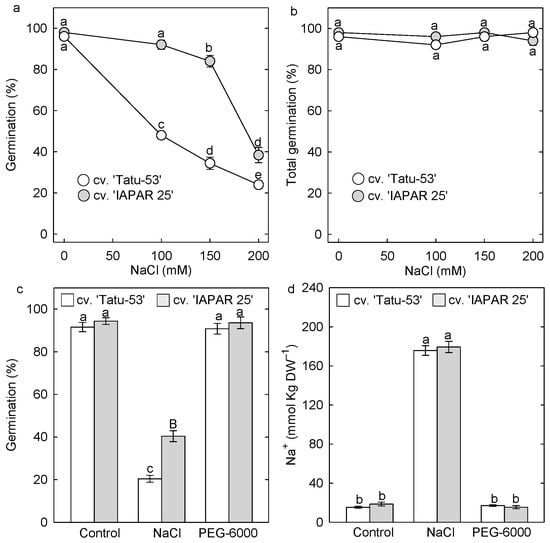
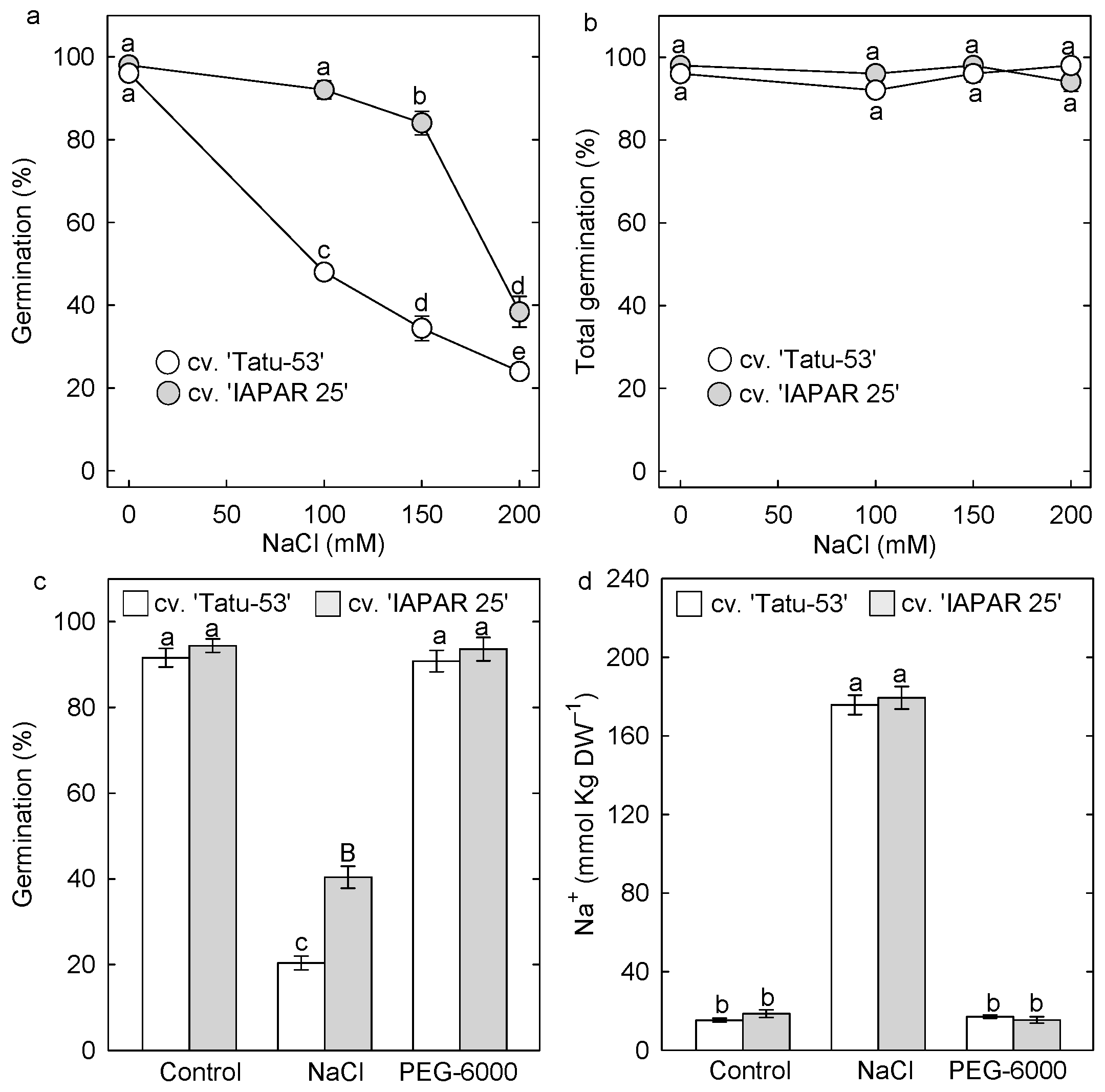
NaCl solutions inhibited seed germination of the cultivar ‘Tatu-53’ in a dose-dependent manner, causing a significant decrease in peanut seed germination at concentrations as low as 100 mM NaCl (Figure 1a). At 100 mM NaCl, peanut seed germination of the cultivar ‘Tatu-53’ decreased by 50% compared with the control. On the other hand, seeds of the cultivar ‘IAPAR 25’ did not show a significant reduction in germination up to 100 mM NaCl, but a significant decrease in seed germination occurred above this concentration (Figure 1a). The maximum significant effect induced by salinity occurred at a concentration of 200 mM NaCl, when peanut seed germination of the cultivars ‘IAPAR 25’ and ‘Tatu-53’ was reduced by 60% and 75%, respectively, when compared with the control. It is important to emphasize that the inhibition of seed germination of both cultivars induced by salt stress was completely reversed after shifting the peanut seeds from saline conditions to deionized water (Figure 1b). In contrast with the treatment of peanut seeds with 200 mM NaCl, the iso-osmotic solution of PEG-6000 did not alter the seed germination of both peanut cultivars compared with the control (Figure 1c). Moreover, there were no significant differences in relative water content for peanut seeds soaked in water (92 ± 3.4% for ‘IAPAR 25’ and 91 ± 2.5% for ‘Tatu-53’), NaCl (89 ± 4.1% for ‘IAPAR 25’ and 87 ± 3.7% to ‘Tatu-53’), and PEG-6000 (88 ± 4.5% for ‘IAPAR 25’ and 89 ± 3.1 for ‘Tatu-53’). The endogenous Na+ concentration increased in seed tissues of both peanut cultivars treated with 200 mM NaCl solution but not in seeds imbibed in an iso-osmotic solution of PEG-6000 compared with the control (Figure 1d).
Figure 1.
Comparative analysis of germination (a–c) and Na+ concentration (d) in seeds of the cultivars ‘Tatu-53’ and ‘IAPAR 25’ treated with NaCl and polyethylene glycol (PEG-6000) at an iso-osmotic level. Values with the same letter are not significantly different at the 5% level by Tukey test. Data are mean ± standard error (n = 6). DW, dry weight.
3.2. Influence of Salt Stress on Ethylene and ABA Synthesis
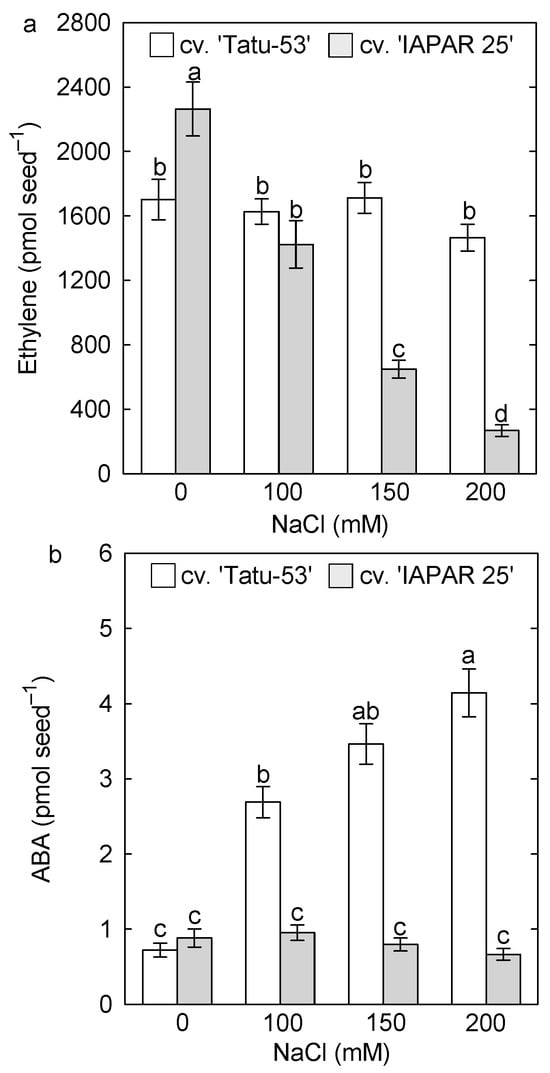
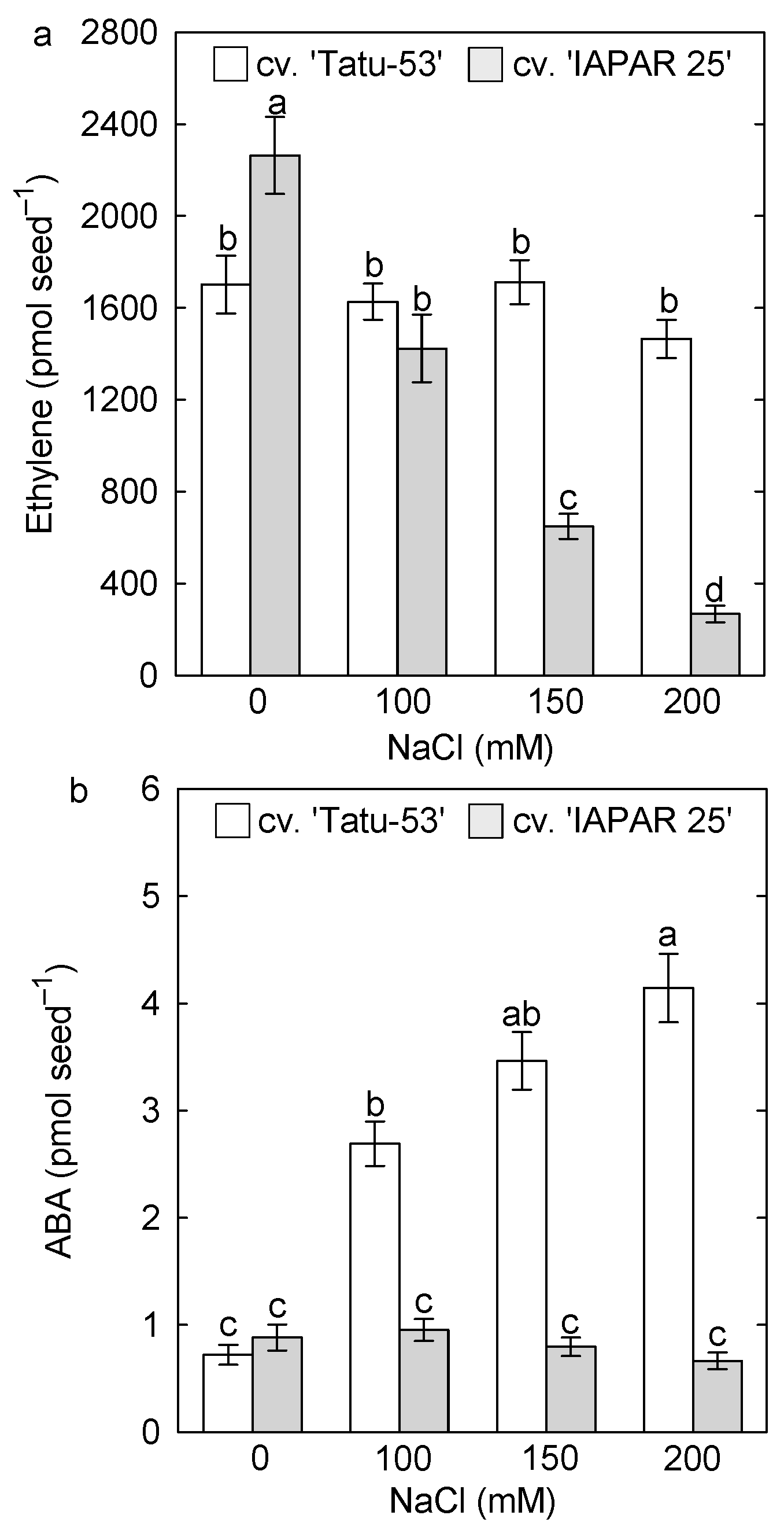
To investigate if salt stress affects the synthesis of ethylene and ABA by peanut seeds, we measured the ethylene and ABA production of the seeds of the cultivars ‘IAPAR 25’ and ‘Tatu-53’ imbibed with increasing concentrations of NaCl. Ethylene production by the seeds of the cultivar ‘IAPAR 25’ decreased in response to increasing concentrations of NaCl (Figure 2a). At high salt treatments (200 mM NaCl), ethylene synthesis by seeds of the cultivar ‘IAPAR 25’ was reduced by 88% compared with the control. Interestingly, seeds of the cultivar ‘Tatu-53’ incubated in solutions of 100, 150, and 200 mM NaCl did not show significant changes in ethylene biosynthesis compared to the control (Figure 2a). Moreover, the exposure of peanut seeds of the cultivar ‘Tatu-53’ to NaCl solutions at concentrations of 100, 150, and 200 mM led to a progressive increase in ABA concentration compared with the non-saline control (Figure 2b). Compared to the non-saline control, ABA production by seeds of the cultivar ‘Tatu-53’ increased by 4.7-fold in response to the highest dose of NaCl. In contrast, seeds of the cultivar ‘IAPAR25’ incubated in solutions of 100, 150, and 200 mM NaCl showed no significant changes in ABA synthesis compared to the control (Figure 2b).
Figure 2.
Concentrations of ethylene (a) and abscisic acid (b) in seeds of the cultivars ‘Tatu-53’ and ‘IAPAR 25’ treated with increasing concentrations of NaCl. Values with the same letter are not significantly different at the 5% level by Tukey test. Data are mean ± standard error (n = 6).
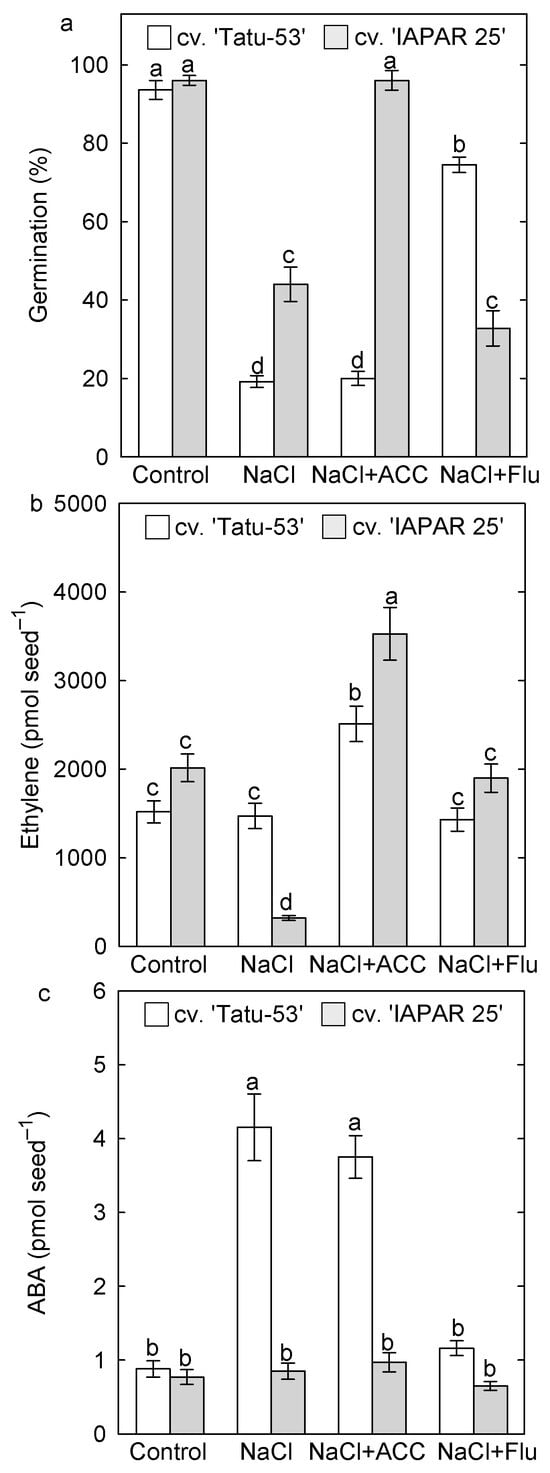
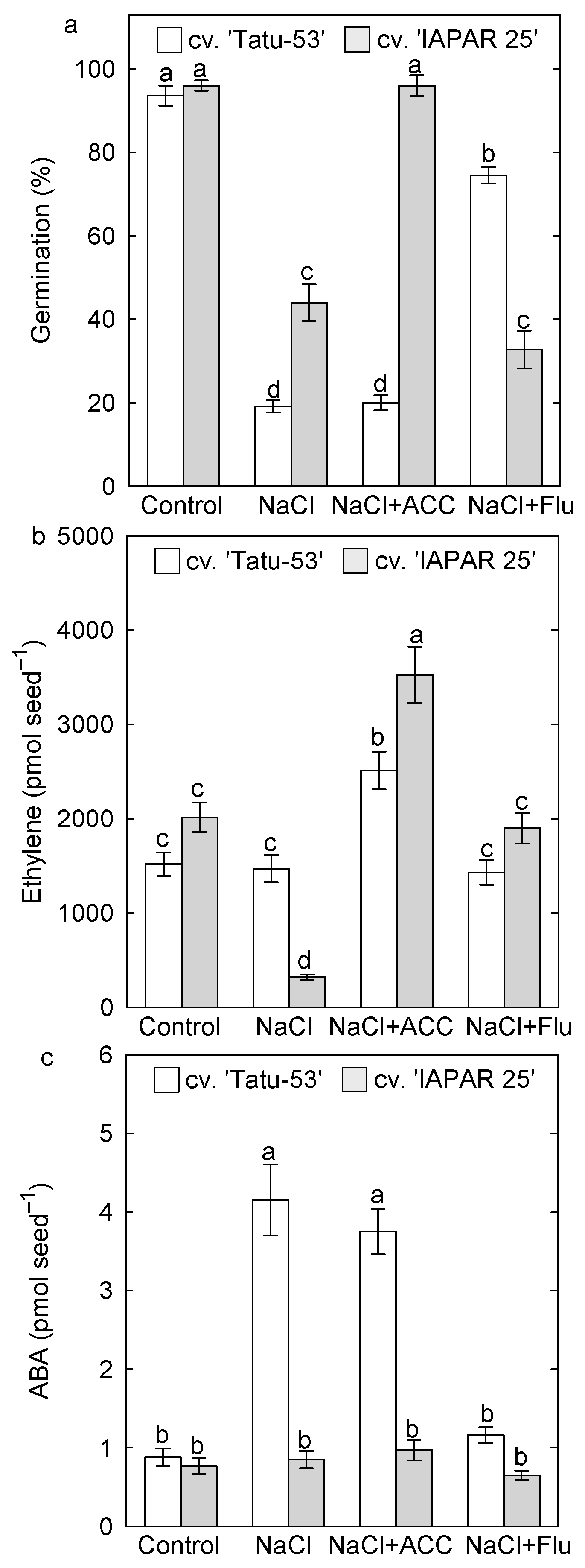
To investigate whether ethylene and ABA synthesis is required for the regulation of seed germination under salt stress, we incubated peanut seeds with ACC or fluridone together with NaCl. The inhibition of seed germination in 200 mM NaCl was overcome by ACC in the cultivar ‘IAPAR 25’, but not in the cultivar ‘Tatu-53’ (Figure 3a). Moreover, salt-induced inhibition in germination percentages was overcome when seeds of the cultivar ‘Tatu-53’ were treated with fluridone, but fluridone did not affect the germination of salt-stressed seeds in the cultivar ‘IAPAR 25’ (Figure 3a). Seeds of both cultivars incubated with NaCl + ACC showed increased ethylene production compared with the control (Figure 3b). Interestingly, seeds of the cultivar ‘IAPAR 25’ incubated with NaCl + ACC showed higher capacity for ethylene synthesis compared with seeds of the cultivar ‘Tatu-53’ (Figure 3b). There were no significant differences in ethylene synthesis in seeds of both peanut cultivars incubated with NaCl + fluridone when compared with the control (Figure 3b). ABA synthesis was significantly reduced in seeds of the cultivar ‘Tatu-53’ incubated with NaCl + fluridone compared with the NaCl treatment, but NaCl + fluridone did not affect the ABA synthesis in the cultivar ‘IAPAR 25’ (Figure 3c).
Figure 3.
Comparative analysis of germination (a), as well as ethylene (b) and abscisic acid (c) synthesis, in seeds of the cultivars ‘Tatu-53’ and ‘IAPAR 25’ treated with deionized water (control), or with 200 mM NaCl alone or supplemented with 0.1 mM 1-aminocyclopropane-1-carboxylic acid (ACC) (NaCl + ACC) and 0.1 mM fluridone (NaCl + Flu). Values with the same letter are not significantly different at the 5% level by Tukey test. Data are mean ± standard error (n = 6).
3.3. Peanut Seedling Growth in Response to Salt Stress
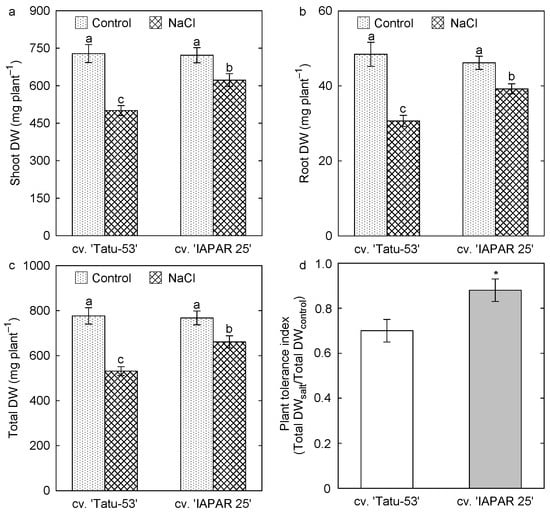
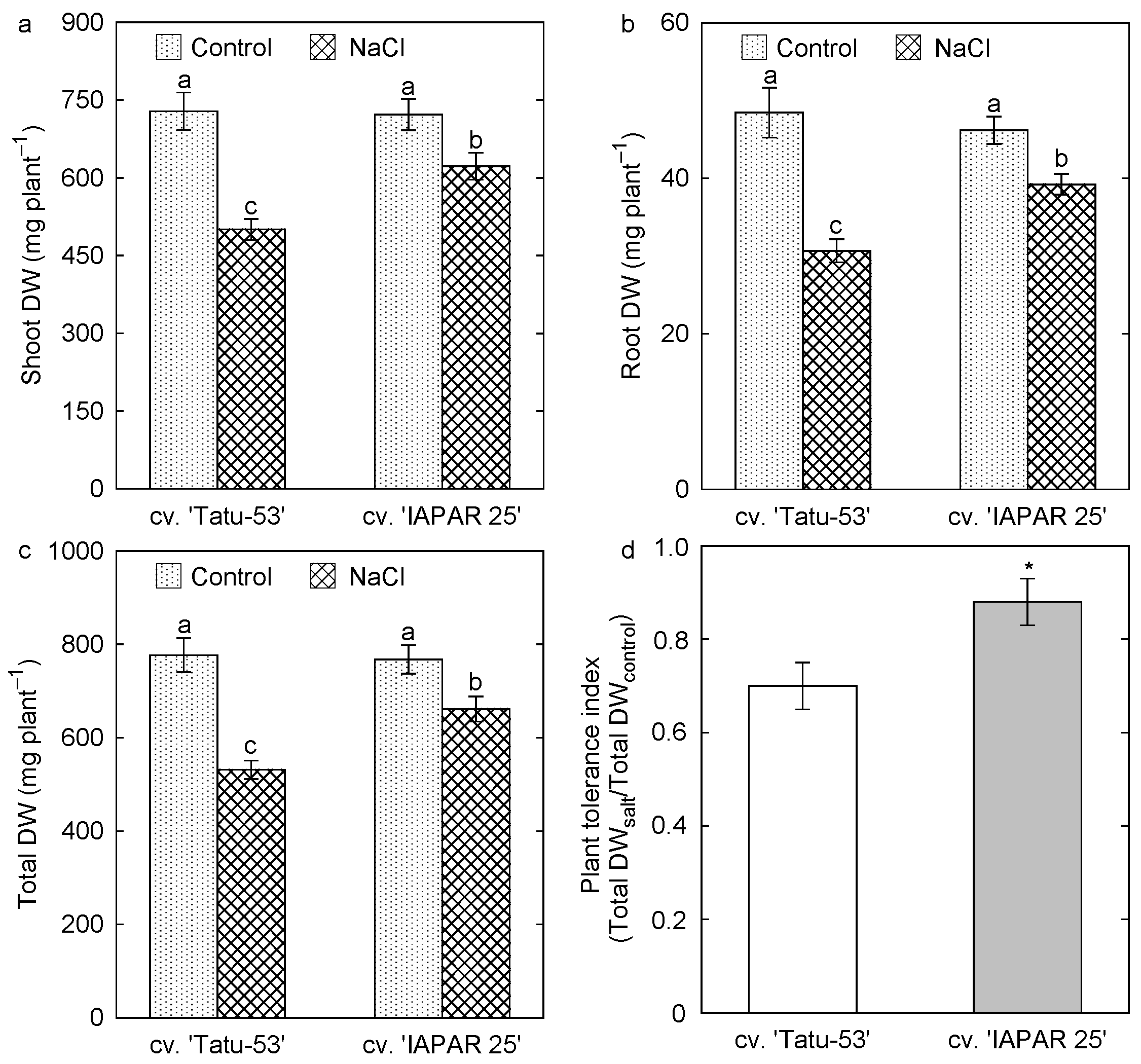
To investigate the impacts of salt stress on seedling growth, peanut seedlings growing singly in pots were watered with a 200 mM NaCl solution. Overall, the inhibition of peanut seedling growth under salt stress conditions was much higher in the cultivar ‘Tatu-53’ than in the cultivar ‘IAPAR 25’ (Figure 4a–c). The treatment of peanut seedlings with NaCl decreased shoot dry weight by 31% and 14% in the cultivars ‘Tatu-53’ and ‘IAPAR 25’, respectively, when compared with the control (Figure 4a). Root dry weight decreased significantly by 37% and 15% in seedlings of the cultivars ‘Tatu-53’ and ‘IAPAR 25’, respectively, grown under salt stress conditions compared with their respective controls (Figure 4b). Similar observations were apparent in the total peanut seedling growth; as a result, the total seedling dry weight was 25% higher in the cultivar ‘IAPAR 25’ than in the cultivar ‘Tatu-53’. Moreover, the cultivar ‘IAPAR 25’ showed a high plant tolerance index compared with the cultivar ‘Tatu-53’ when grown in 200 mM NaCl (Figure 4d). It is important to note that the total seedling dry weight of the cultivar ‘IAPAR 25’ was similar to that observed in the cultivar ‘Tatu-53’ under control conditions (Figure 4c). Thus, it appears that salinity tolerance in peanut cultivars may be related to a tissue tolerance mechanism rather than plant growth rate.
Figure 4.
Differences in salinity tolerance between the cultivars ‘Tatu-53’ and ‘IAPAR 25’. Peanut seedlings were grown singly in pots for 7 d before being treated with either deionized water (control) or 200 mM NaCl for 21 d. Dry weights (DW) of both shoot (a) and root (b) were measured and used to calculate total plant dry weight (c) and plant salinity tolerance (d). Values with the same letter are not significantly different at the 5% level by Tukey test. Asterisk indicates a value determined by Student’s t-test to be significantly different from the cultivar ‘Tatu-53’ (p < 0.05). Data are mean ± standard error (n = 12).
4. Discussion
This investigation indicates that the peanut cultivar ‘Tatu-53’ shows a greater sensitivity to saline environments than the cultivar ‘IAPAR 25’ in terms of seed germination and seedling growth (Figure 1). The recovery of seed germination for both cultivars in deionized water following transfer from saline solutions suggests that there was no damage to the cell membrane of the seeds. The germination of legume seeds may be affected by the ion effects of NaCl or osmotic stress [4,10]. The observation that 200 mM NaCl decreased seed germination of both peanut cultivars, but an iso-osmotic solution of PEG-6000 did not influence the germination compared to the control, indicates that the ionic effect of NaCl is the causal factor that inhibits peanut seed germination under saline conditions (Figure 1). The morphological structure of legume seeds can play an important role in germination under salt stress by decreasing the accumulation of Na+ in seeds [19,20]. The fact that there were no differences in Na+ accumulation in seeds of both peanut cultivars treated with 200 mM NaCl is interesting because it suggests that the mechanism of Na+ loading to the seed tissues is not the cause of the germination difference between the cultivars ‘Tatu-53’ and ‘IAPAR 25’.
Given that seed germination is controlled by the action of hormones, among which ethylene and ABA are involved in the control of legume seed germination [4,6], we were interested in examining the contribution of ethylene and ABA to the germination difference between the cultivars ‘Tatu-53’ and ‘IAPAR 25’. Our results suggest that salt stress did not influence the ethylene synthesis by ‘Tatu-53’ seeds but rather increased ABA production in a dose-dependent manner (Figure 2). By contrast, salt stress inhibited ethylene synthesis by seeds of the cultivar ‘IAPAR 25’ in a dose-dependent manner without changes in ABA production compared to the control. Thus, the differences in the synthesis of ethylene and ABA appear to be the major factors controlling the contrasting salinity sensitivity levels of the cultivars ‘Tatu-53’ and ‘IAPAR 25’ in germination during salt stress (Figure 2). Support for this model is that the inhibition of seed germination of the cultivar ‘IAPAR 25’ induced by NaCl was fully reversed by ACC, which correlated with increased ethylene synthesis (Figure 3). Moreover, fluridone application to seeds of the cultivar ‘Tatu-53’ treated with NaCl increased germination, which was a result that was associated with the inhibition of ABA synthesis. It is interesting to note that ACC also increased ethylene synthesis in ‘Tatu-53’ seeds incubated with NaCl, but ACC did not eliminate the differences in seed germination of the cultivar ‘Tatu-53’ during salt stress when compared to the NaCl treatment. In contrast, the inhibition of seed germination of the cultivar ‘IAPAR 25’ induced by a salt solution was overcome by the application of ACC, but the NaCl-induced inhibition of germination of these seeds was not overcome by fluridone (Figure 3). These findings support the idea that ABA and ethylene synthesis exhibit contrasting regulation in the control of seed germination of the cultivars ‘Tatu-53’ and ‘IAPAR 25’ during salt stress conditions. Previously, it was proposed that salt stress increases ABA synthesis in seeds of Stylosanthes humilis, a forage legume, which was associated with decreased germination and ethylene synthesis [4]. The germination of Arabidopsis thaliana seeds under salt stress conditions involved an interaction between the synthesis and signaling of ABA and ethylene [21]. Moreover, the endophytic bacterium Priestia megaterium PH3 enhanced peanut seed germination under salt stress, which was associated with an increased expression of genes involved in ABA catabolism and gibberellin synthesis [22]. Our results with peanut seeds in the context of these prior studies suggest that the synthesis of ethylene and ABA permits a flexible response of the germination of peanut seeds in saline environments, thus contributing to a difference in sensitivity to salinity between seeds of the cultivars ‘Tatu-53’ and ‘IAPAR 25’. It remains to be determined if the salt stress also alters ethylene and ABA signaling pathways and cellular processes that use storage lipids and phospholipids for peanut seed germination and seedling growth. Additionally, other mechanisms of tolerance could contribute to enabling peanut to grow in saline conditions. One, for example, is the regulation of the antioxidant enzyme system for the fine-tuning of the levels of reactive oxygen species (ROS) during peanut seed germination under salt stress [23].
Adaptation and tolerance to salinity involve a number of sensing, signaling, and stress response mechanisms [24]. To examine if the differential response to salt stress in the seed germination of the peanut cultivars can be extended to the growth of peanut plants, seedlings of ‘Tatu-53’ and ‘IAPAR 25’ grown in pots were watered with deionized water or a 200 mM NaCl solution. Our results indicate that the inhibitory effect of salt stress on the growth of the shoot, root, and whole plant was greater in ‘Tatu-53’ than ‘IAPAR 25’ (Figure 4). These results indicate that plants of the cultivar ‘Tatu-53’ are less tolerant and plants of the cultivar ‘IAPAR 25’ are more tolerant to the salt stress. Consistent with this finding, the cultivar ‘IAPAR 25’ has a higher salinity tolerance index than the cultivar ‘Tatu-53’ when grown in 200 mM NaCl. This may reflect the greater importance of ethylene compared with ABA synthesis in determining the differential response to salt stress between the cultivars ‘Tatu-53’ and ‘IAPAR 25’ during seed germination. In fact, greater salt tolerance in the forage legume Stylosanthes has been associated with ethylene production [3]. Interestingly, ethylene production in peanut seeds of the cultivar ‘Tatu-53’ remained similar across all NaCl (range 100–200 mM) treatments when compared to the control (Figure 2). This then raises the question: what is the mechanism for the regulation of ABA by ethylene in peanut seeds of the cultivar ‘Tatu-53’? One possibility is that as ABA synthesis increases in peanut seeds of the cultivar ‘Tatu-53’during salt stress, ABA signaling overshadows the independent role of ethylene in peanut seed germination. Thus, the ability of ‘Tatu-53’ seeds to maintain a fixed pattern of ethylene synthesis while allowing an increase in ABA synthesis during salt stress conditions may play an important role in optimizing the inhibition of seed germination. On the other hand, the strategy employed by ‘IAPAR 25’ seeds to regulate germination during salt stress conditions exhibits a combination of robustness of ethylene synthesis and flexibility of ABA synthesis. Given that the differential responses to salt stress in seed germination of the cultivars ‘Tatu-53’ and ‘IAPAR 25’ were similar to those in seedling growth, it is feasible that the synthesis of ABA and ethylene is also a good predictor for salt effects at the seedling establishment stage. However, further studies are needed to investigate how broadly applicable our findings regarding peanut seed germination are to the seedling stage.
5. Conclusions
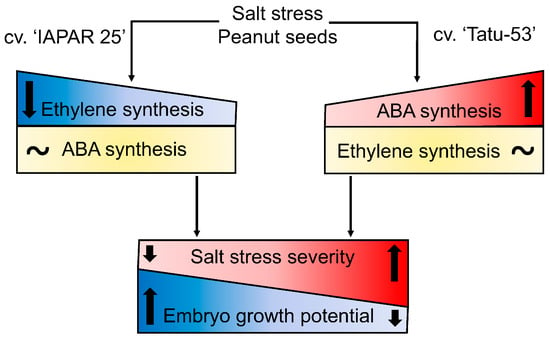
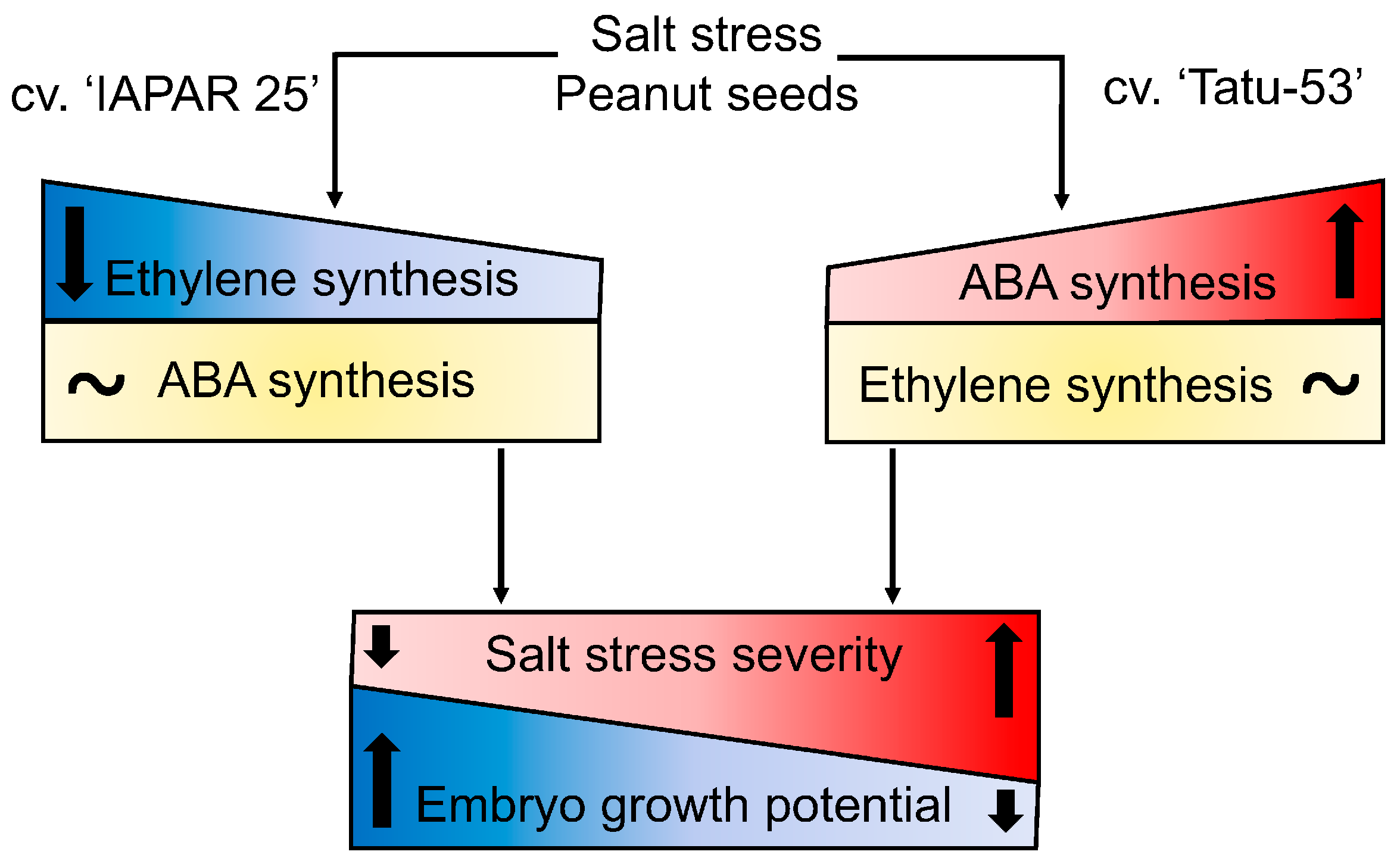
The cultivar ‘IAPAR 25’ is more salt tolerant than the cultivar ‘Tatu-53’ during seed germination and seedling growth (Figure 5). There is a considerable degree of flexibility in the synthesis of ethylene and ABA in peanut seeds during salt stress. Salt stress decreases ethylene synthesis in ‘IAPAR 25’ seeds without changes in ABA synthesis, which is accompanied by a higher embryo growth potential and smaller inhibition of seedling growth under saline conditions (Figure 5). In the case of the cultivar ‘Tatu-53’, the larger inhibition of seedling growth and lower embryo growth potential during salt stress conditions were associated with increased ABA synthesis without any change in ethylene synthesis (Figure 5). The increase in ethylene synthesis capacity induced by ACC application in seeds of the cultivar ‘IAPAR 25’ treated with NaCl together with the maintenance of ABA synthesis at a relatively low rate plays an important role in preventing the inhibition of seed germination during salt stress conditions. Thus, signals generated by a favorable balance between ethylene/ABA and the resulting increase in seed germination under salt stress trigger a regulatory response that leads to an enhanced salt tolerance in peanut seedlings.
Figure 5.
Model for the roles of ethylene and abscisic acid (ABA) in the control of seed germination and seedling growth under salt stress. Ethylene production in peanut seeds of the cultivar ‘IAPAR25’ is progressively inhibited by NaCl in the germination medium. Moreover, seeds of the cultivar ‘IAPAR25’ treated with NaCl do not show significant changes in ABA biosynthesis. In contrast, the exposure of peanut seeds of the cultivar ‘Tatu-53’ to NaCl increases ABA concentration, but ethylene production by these seeds is not affected by NaCl solution. Thus, the cultivar ‘IAPAR25’ treated with NaCl exhibits relatively higher embryo growth potential and salinity tolerance compared with the cultivar ‘Tatu-53’. Therefore, a favorable balance between ethylene/ABA has the potential to improve peanut embryo growth and post-germination seedling growth under salt stress conditions. The tilde symbol (~) denotes a statistically non-significant change in hormone concentration.
Author Contributions
Conceptualization, A.K.d.F.S., L.S.T., and D.M.R.; methodology, A.K.d.F.S., L.S.T., D.J.C.L., and D.M.R.; formal analysis, A.K.d.F.S., L.S.T., and D.J.C.L.; investigation, A.K.d.F.S., L.S.T., and D.M.R.; resources, D.M.R.; data curation, A.K.d.F.S., L.S.T., D.J.C.L., and D.M.R.; writing—original draft preparation, A.K.d.F.S., L.S.T., D.J.C.L., and D.M.R.; writing—review and editing, A.K.d.F.S., L.S.T., D.J.C.L., and D.M.R.; supervision, D.M.R.; project administration, D.M.R.; funding acquisition, D.M.R. All authors have read and agreed to the published version of the manuscript.
Funding
Grants from the Foundation for Research Assistance of Minas Gerais State, Brazil (FAPEMIG, RED-00060-23) and by the National Institute of Science and Technology in Plant Physiology under Stress Conditions (INCT, Plant Stress Physiology, 406455/2022-8) supported this research. This study was financed in part by the Coordenação de Aperfeiçoamento de Pessoal de Nível Superior—Brasil (CAPES)—Finance Code 001.
Data Availability Statement
The data that support the findings of this study are available from the corresponding author upon reasonable request.
Acknowledgments
Research fellowship granted by the National Council for Technological and Scientific Development (CNPq) to D.M.R. (Grant 303230/2022-3) is gratefully acknowledged.
Conflicts of Interest
The authors declare no conflicts of interest.
References
- Manono, B.O. Effects of salinity on seed germination: Mechanisms, impacts, and mitigation strategies. Seeds 2026, 5, 1. [Google Scholar] [CrossRef] [Scilit]
- Ghosh, T.; Atta, K.; Mondal, S.; Bandyopadhyay, S.; Singh, A.P.; Jha, U.C.; Kumar, R.; Gujjar, R.S. Hormonal signaling at seed germination and seedling stage of plants under salinity stress. Plant Growth Regul. 2025, 105, 583–600. [Google Scholar] [CrossRef] [Scilit]
- Silva, P.O.; Medina, E.F.; Barros, R.S.; Ribeiro, D.M. Germination of salt-stressed seeds as related to the ethylene biosynthesis ability in three Stylosanthes species. J. Plant Physiol. 2014, 171, 14–22. [Google Scholar] [CrossRef] [Scilit] [PubMed]
- Silva, N.C.; de Souza, G.A.; Pimenta, T.M.; Brito, F.A.; Picoli, E.A.; Zsögön, A.; Ribeiro, D.M. Salt stress inhibits germination of Stylosanthes humilis seeds through abscisic acid accumulation and associated changes in ethylene production. Plant Physiol. Biochem. 2018, 130, 399–407. [Google Scholar] [CrossRef] [Scilit] [PubMed]
- Dong, H.; Zhen, Z.; Peng, J.; Chang, L.; Gong, Q.; Wang, N.N. Loss of ACS7 confers abiotic stress tolerance by modulating ABA sensitivity and accumulation in Arabidopsis. J. Exp. Bot. 2011, 62, 4875–4887. [Google Scholar] [CrossRef] [Scilit] [PubMed]
- Gonçalves, J.P.; Gasparini, K.; Picoli, E.A.T.; Costa, M.D.L.; Araujo, W.L.; Zsögön, A.; Ribeiro, D.M. Metabolic control of seed germination in legumes. J. Plant Physiol. 2024, 295, 154206. [Google Scholar] [CrossRef] [Scilit] [PubMed]
- Irik, H.A.; Bikmaz, G. Effect of different salinity on seed germination, growth parameters and biochemical contents of pumpkin (Cucurbita pepo L.) seeds cultivars. Sci. Rep. 2024, 14, 6929. [Google Scholar] [CrossRef] [Scilit] [PubMed]
- Li, G.; Guo, X.; Sun, Y.; Gangurde, S.S.; Zhang, K.; Weng, F.; Wang, G.; Zhang, H.; Li, A.; Wang, X.; et al. Physiological and biochemical mechanisms underlying the role of anthocyanin in acquired tolerance to salt stress in peanut (Arachis hypogaea L.). Front. Plant Sci. 2024, 15, 1368260. [Google Scholar] [CrossRef] [Scilit] [PubMed]
- Chakraborty, K.; Bishi, S.K.; Goswami, N.; Singh, A.L.; Zala, P.V. Differential fine-regulation of enzyme driven ROS detoxification network imparts salt tolerance in contrasting peanut genotypes. Environ. Exp. Bot. 2016, 128, 79–90. [Google Scholar] [CrossRef] [Scilit]
- Bouzroud, S.; Henkrar, F.; Fahr, M.; Smouni, A. Salt stress responses and alleviation strategies in legumes: A review of the current knowledge. 3 Biotech 2023, 13, 287. [Google Scholar] [CrossRef] [Scilit] [PubMed]
- Liu, S.; Li, M.; Su, L.; Ge, K.; Li, L.; Li, X.; Li, L. Negative feedback regulation of ABA biosynthesis in peanut (Arachis hypogaea): A transcription factor complex inhibits AhNCED1 expression during water stress. Sci. Rep. 2016, 6, 37943. [Google Scholar] [CrossRef] [Scilit] [PubMed]
- Guo, D.; Liang, J.; Li, L. Abscisic acid (ABA) inhibition of lateral root formation involves endogenous ABA biosynthesis in Arachis hypogaea L. Plant Growth Regul. 2009, 58, 173–179. [Google Scholar] [CrossRef] [Scilit]
- Whitehead, C.S.; Nelson, R.M. Ethylene sensitivity in germinating peanut seeds: The effect of short-chain saturated fatty acids. J. Plant Physiol. 1992, 139, 479–483. [Google Scholar] [CrossRef] [Scilit]
- Riyazuddin, R.; Verma, R.; Singh, K.; Nisha, N.; Keisham, M.; Bhati, K.K.; Kim, S.T.; Gupta, R. Ethylene: A master regulator of salinity stress tolerance in plants. Biomolecules 2020, 10, 959. [Google Scholar] [CrossRef] [Scilit] [PubMed]
- Lopez, D.J.; Arruda, R.S.; Pimenta, T.M.; Souza, G.A.; Teixeira, L.S.; Araújo, W.L.; Zsögön, A.; Ribeiro, D.M. Ethylene modulates peanut (Arachis hypogaea L.) growth and yield in response to planting depth. Field Crops Res. 2025, 322, 109751. [Google Scholar] [CrossRef] [Scilit]
- Pelacani, C.R.; Barros, R.S.; Ribeiro, D.M.; Frigeri, R.B. Breaking dormancy of Stylosanthes humilis seeds with low pH solutions. Acta Physiol. Plant. 2005, 27, 387–394. [Google Scholar] [CrossRef] [Scilit]
- Maia, J.; Dekkers, B.J.W.; Dolle, M.J.; Ligterink, W.; Hilhorst, H.W.M. Abscisic acid (ABA) sensitivity regulates desiccation tolerance in germinated Arabidopsis seeds. New Phytol. 2014, 203, 81–93. [Google Scholar] [CrossRef] [Scilit] [PubMed]
- Jha, D.; Shirley, N.; Tester, M.; Roy, S.J. Variation in salinity tolerance and shoot sodium accumulation in Arabidopsis ecotypes linked to differences in the natural expression levels of transporters involved in sodium transport. Plant Cell Environ. 2010, 33, 793–804. [Google Scholar] [CrossRef] [PubMed]
- Nichols, P.G.H.; Malik, A.I.; Stockdale, M.; Colmer, T.D. Salt tolerance and avoidance mechanisms at germination of annual pasture legumes: Importance for adaptation to saline environments. Plant Soil 2009, 315, 241–255. [Google Scholar] [CrossRef] [Scilit]
- Chaves, I.D.S.; Silva, N.C.Q.; Ribeiro, D.M. Effect of the seed coat on dormancy and germination in Stylosanthes humilis HBK seeds. J. Seed Sci. 2017, 39, 114–122. [Google Scholar] [CrossRef] [Scilit]
- Wilson, R.L.; Kim, H.; Bakshi, A.; Binder, B.M. The ethylene receptors ETHYLENE RESPONSE1 and ETHYLENE RESPONSE2 have contrasting roles in seed germination of Arabidopsis during salt stress. Plant Physiol. 2014, 165, 1353–1366. [Google Scholar] [CrossRef] [Scilit] [PubMed]
- Li, Z.; Jiang, J.; Sun, K.; Ye, S. Germination of peanut seeds promoted by an endophytic Priestia megaterium PH3 via activating ROS and hormone metabolism pathway under salt stress. Plant Cell Environ. 2025, 48, 7426–7439. [Google Scholar] [CrossRef] [Scilit] [PubMed]
- Chakraborty, K.; Bishi, S.K.; Goswami, N.; Singh, A.L.; Bhaduri, D.; Zala, P.V. Salinity-induced changes in seed germination and the expression profile of antioxidant enzymes in peanut as early and late responses in emerging radicles. Acta Physiol. Plant. 2019, 41, 134. [Google Scholar] [CrossRef] [Scilit]
- Badavath, H.; Saski, C.A. Plant Adaptation to Salinity: Physiological Pathways and Prospects for Crop Improvement-A Review. Genes 2026, 17, 253. [Google Scholar] [CrossRef] [Scilit] [PubMed]
Disclaimer/Publisher’s Note: The statements, opinions and data contained in all publications are solely those of the individual author(s) and contributor(s) and not of MDPI and/or the editor(s). MDPI and/or the editor(s) disclaim responsibility for any injury to people or property resulting from any ideas, methods, instructions or products referred to in the content. |
© 2026 by the authors. Licensee MDPI, Basel, Switzerland. This article is an open access article distributed under the terms and conditions of the Creative Commons Attribution (CC BY) license.