


Abstract
European countries with formally comprehensive antimicrobial resistance (AMR) governance frameworks do not always achieve commensurate epidemiological outcomes. Existing benchmarking instruments, which rely either on aggregate mortality counts or on self-reported policy implementation scores, are poorly suited to detecting this dissociation between policy adoption and clinical impact. This study aims to empirically detect and characterize governance–outcome decoupling in the management of AMR across selected European countries, with France as the focal case. We employed a most-similar systems comparative design including Sweden, The Netherlands and Norway as top-performing comparators, and Italy and Greece as contrasting Southern European cases. Outcomes were measured using a normalized indicator developed for this study, the Proportion of Deaths Attributable to AMR relative to Deaths due to Sepsis (PDAA/DS), constructed from MICROBE platform estimates for 2019 and 2021. Implementation profiles were derived from the WHO TrACSS country self-assessment dataset and from a structured review of national strategy documents and surveillance reports. Cross-national rankings were triangulated with ECDC ESAC-Net antibiotic consumption data. The PDAA/DS revealed a stable cross-national performance gradient (Sweden 4.02% in 2019; France 7.67%; Greece 10.32%) and discriminated three distinct configurations of the policy–outcome relationship: embedded governance in the top-performing comparators (high implementation, low PDAA/DS), negative coherence in Italy (low implementation, high PDAA/DS), and policy decoupling in Greece (moderately high self-reported implementation, high PDAA/DS). France, despite reporting maximum implementation across six of nine TrACSS dimensions, occupies an intermediate position consistent with a partial decoupling pattern. A strong ecological correlation between national antibiotic consumption and PDAA/DS (r = 0.886, R2 = 0.785, n = 6) supports the construct validity of the indicator and is consistent with consumption volume being a principal correlate of cross-national variation. Effective AMR governance is not captured by the breadth of policy adoption but by the depth of clinical embedding. The PDAA/DS indicator, by normalizing AMR mortality against the broader sepsis burden, enables discrimination between coherent and decoupled governance configurations that are invisible to existing benchmarking tools. France’s profile suggests that the marginal return on additional policy adoption is now low, and that the priority should shift toward operational embedding instruments: prescriber-level surveillance feedback, structured pharmacist–prescriber consultations, and binding justification requirements for prescribing deviations.
1. Introduction
Antibiotic resistance (AMR), the ability of bacteria to resist previously effective antibiotics, constitutes a global crisis of alarming proportions. Naghavi et al. (2024) warn that without significant intervention, AMR could lead to 1.91 million deaths annually by 2050 [1]. The burden is already severe: in 2019, AMR was estimated to have been associated with 4.95 million deaths globally, of which 1.27 million were directly attributable to resistant bacterial infections [2]. In Western Europe specifically, 229,184 deaths were linked to AMR in 2019, with 51,061 directly caused by it [3].
Antibiotics inhibit or kill pathogenic bacteria with selective toxicity, without significantly affecting human cells [4]. Following their introduction, they revolutionized medicine, drastically reducing mortality from bacterial infections [5,6]. However, their excessive use in human and veterinary medicine, as well as in agriculture, has led to the emergence of bacterial resistance [1,7]. Resistance develops through various biological mechanisms, including the production of degradation enzymes such as beta-lactamases [8] and carbapenemases, which confer resistance to last-resort antibiotics [9]. Changes in antibiotic targets also play a key role; for instance, alterations in penicillin-binding proteins (PBPs) reduce beta-lactam efficacy, a phenomenon observed in methicillin-resistant Staphylococcus aureus (MRSA) [10,11]. Furthermore, efflux systems and membrane impermeability allow bacteria to expel antibiotics or prevent their entry, thereby reducing intracellular concentrations [12].
Existing comparative work on European AMR governance has typically taken one of two forms. Quantitative comparisons rely on aggregate mortality counts or on resistance proportions for selected pathogen–antibiotic pairs, neither of which normalizes for the broader infectious burden in which AMR exerts its lethal effects. Qualitative comparisons of governance frameworks rely on self-reported implementation scores such as those collected by the WHO Tracking AMR Country Self-Assessment Survey (TrACSS) [13], which capture the formal adoption of policies but cannot distinguish administrative compliance from operational effectiveness. As a result, countries that adopt the recommended policies on paper may appear comparable to countries that have integrated those policies into clinical routines, while their epidemiological outcomes differ substantially.
This study addresses that gap. Its single integrated contribution is the empirical detection and characterization of governance–outcome decoupling in European AMR management. The detection rests on a normalized mortality indicator (PDAA/DS) that we introduce as an analytic instrument rather than as a contribution in its own right. It is not the aim of this indicator to capture the full clinical, demographic and systemic complexity of AMR, which no single metric can summarize. Its purpose is narrower and instrumental. Population-normalized mortality (deaths per 100,000) measures a crude burden, and pathogen–antibiotic resistance proportions measure a microbiological phenomenon, but neither situates resistance mortality within the nosological compartment in which it is lethal. By expressing AMR-attributable mortality relative to the broader sepsis burden, the PDAA/DS captures the net clinical translation of resistance, functioning as a screening and benchmarking instrument that complements rather than replaces existing indicators and that must be read alongside them. The characterization rests on a structured comparative analysis of governance configurations across five top- and bottom-performing countries plus France. The two elements are not parallel claims but components of a single argument: the indicator is what makes the typology empirically detectable, and the typology is what the indicator is for.
2. Materials and Methods
This study employed a comparative policy analysis of antimicrobial resistance (AMR) management strategies across selected European countries, using France as the primary case for benchmarking. The approach combined epidemiological indicator analysis with a structured review of national policy documents, surveillance reports, and peer-reviewed literature. Data collection and analysis were conducted between January 2024 and February 2025. Epidemiological data were extracted from two principal sources: the MICROBE platform (Institute for Health Metrics and Evaluation, University of Washington, Seattle, WA, USA, in collaboration with the University of Oxford, Oxford, UK, accessed on 8 February 2025), which provided country-level estimates of deaths attributable to AMR and deaths due to sepsis for 2019 and 2021, and the European Centre for Disease Prevention and Control (ECDC) Antimicrobial Consumption Database (ESAC-Net) (Stockholm, Sweden), which supplied antibiotic consumption data expressed in defined daily doses (DDDs) per 1000 inhabitants per day. European surveillance data on veterinary antimicrobial use, notably measures to reduce use in animal husbandry [14], informed the qualitative characterization of the veterinary and agricultural governance dimension and did not enter the PDAA/DS computation. Policy implementation levels were assessed using the WHO Global Database for Tracking AMR Country Self-Assessment Survey (TrACSS) (Geneva, Switzerland). National strategy documents, annual surveillance reports, and clinical prescribing guidelines were retrieved from official governmental and institutional sources. All calculations, including the PDAA/DS values, the Pearson and Spearman correlation coefficients and the associated confidence intervals, were performed in Microsoft Excel Version 16.111.
Comparator countries were selected through a two-step process. First, countries with the lowest AMR rates among OECD members were identified using ECDC resistance proportion data. Second, countries exhibiting the lowest Proportion of Deaths Attributable to AMR relative to Deaths due to Sepsis (PDAA/DS) were identified from the MICROBE platform. Countries appearing in both rankings were shortlisted and further filtered based on three criteria: demographic comparability with France or French regions, geographic and institutional proximity within the European regulatory framework, and availability of comprehensive policy documentation in accessible languages. This process yielded Sweden (population ~10 million, robust Strama program), The Netherlands (~17 million, integrated SWAB/NethMap system), and Norway (~5 million, NORM/NORM-VET surveillance). The absence of an intermediate-performing comparator constitutes a limitation acknowledged in Section 4.7.
The study followed a most-similar systems design [15], in which countries selected for comparison share key contextual characteristics (European location, high-income healthcare systems with universal coverage, comparable epidemiological surveillance capacity, and EU/EEA regulatory framework membership) while varying systematically on the main outcome of interest (AMR mortality burden) and on the explanatory dimension of governance configuration. This design enables the attribution of outcome variation to differences in governance variables rather than to broad contextual differences. Italy and Greece were included as contrasting Southern European cases, capturing distinct configurations along the policy adoption to clinical outcome axis rather than serving as additional reference models.
The governance analysis was qualitative and comparative. Three dimensions, drawn from the One Health framework and the AMR governance literature [16], structured the cross-country comparison. (i) Regulatory and legislative instruments, covering the presence, scope and historical depth of binding restrictions on antimicrobial use in the human and veterinary sectors, including bans on antimicrobial growth promoters and prophylactic use in livestock. (ii) Surveillance and monitoring architecture, covering data flows, reporting frequency, integration of human and animal data, and the presence of feedback mechanisms to prescribers. (iii) Prescribing stewardship instruments, covering clinical guidelines, structured pharmacist to prescriber consultation formats, and accountability mechanisms for deviation from recommendations. Two further domains, education and awareness and the broader veterinary and agricultural governance framework, were not developed as separate comparative axes and are represented in this study through the WHO TrACSS self-assessment summarized in Section 3.3. These three dimensions are conceptual axes for the narrative comparison and are related to, but not identical with, the nine TrACSS survey items reported in Section 3.3.
The published programme descriptions used in the comparison, such as Strama, NethMap, NORM/NORM-VET and the Dutch pharmacotherapeutic consultation model, provided illustrative detail on how specific instruments operate and were used qualitatively rather than as a systematic, per-country evaluation of effectiveness. Direct evidence on prescribing behaviour and on the operational uptake of stewardship instruments was not available for all comparators, a limitation returned to in the Discussion.
The PDAA/DS rankings derived from the MICROBE platform [3] provided an outcome metric independent of self-reported implementation. Cases were then classified along the joint distribution of (a) self-reported implementation level [13] and (b) PDAA/DS rank [3]. Four configurations are theoretically possible: high implementation–low PDAA/DS (embedded governance), low implementation–high PDAA/DS (negative coherence), high implementation–high PDAA/DS (policy decoupling), and low implementation–low PDAA/DS (which was unobserved in our sample). The classification of countries within this two-dimensional space is the core analytical operation of the study and is what justifies the joint use of the indicator and the policy framework. Countries where the two metrics align (Nordics and Italy) confirm the conventional reading that policy adoption predicts outcomes; countries where the two metrics diverge (Greece and, to a lesser degree, France) require an explanation that the conventional reading cannot provide. The typology developed in the Discussion is the response to that explanatory demand.
The possibility that this association reflects reverse causation is examined in detail in Section 4.4.
To enable cross-national comparison of AMR impact independently of population size, we introduced a synthetic indicator termed the Proportion of Deaths Attributable to AMR relative to Deaths due to Sepsis (PDAA/DS). The PDAA/DS measures, for a given country and year, the share of sepsis-related deaths that can be directly attributed to antimicrobial resistance. It is computed as
Both the numerator and the denominator were extracted from the MICROBE platform, accessed on 8 February 2025, for the reference year 2019 and 2021. To ensure internal consistency, both values were obtained for the same country, the same calendar year, and the same demographic scope (all ages, both sexes). The numerator strictly uses the “attributable deaths” metric, which represents the more conservative estimate reflecting deaths directly caused by resistant pathogens, rather than the broader “associated deaths” metric, which captures a wider but less specific burden.
The PDAA/DS offers distinct analytical properties that validate its utility for cross-national benchmarking. As a standardized relative measure, it normalizes the burden of antimicrobial resistance (AMR) against the total burden of sepsis, effectively neutralizing the confounding effect of population size and enabling direct comparison between nations of varying demographic scales. Crucially, by utilising the “attributable” mortality burden (derived from a counterfactual scenario of susceptible infection) the numerator isolates the specific lethality of resistance, distinguishing deaths caused by AMR from those merely occurring with resistant pathogens. As a result, the indicator provides a signal directly relevant to the evaluation of antimicrobial stewardship and infection prevention at the population level.
The three governance dimensions were then applied to the reference countries and used to benchmark French practice, which was assessed against the Stratégie Nationale 2022–2025 [17] and the 2022 [18] and 2023 [19] annual implementation reports.
3. Results
3.1. Quantitative Findings: Cross-National PDAA/DS Ranking
Application of the PDAA/DS indicator to data extracted from the MICROBE platform for two reference years—2019 (pre-pandemic) and 2021 (pandemic period)—reveals both persistent cross-national disparities and a universal downward shift in the indicator that requires careful decomposition (Table 1 and Table 2) [3].
Table 1.
Ranking by Proportion of Deaths Attributable to AMR relative to Deaths due to Sepsis (PDAA/DS). Data derived from the MICROBE platform [3] for the year 2019.
Table 2.
Ranking by Proportion of Deaths Attributable to AMR relative to Deaths due to Sepsis (PDAA/DS). Data derived from the MICROBE platform [3] for the year 2021.
As detailed in Table 1, the 2019 pre-pandemic data establish a clear performance gradient across Europe [3]. Sweden ranks first with a PDAA/DS of 4.02%, followed by Norway (4.15%) and The Netherlands (4.29%). These three comparator countries cluster within a narrow band of 0.27 percentage points, substantially below the Western European average of 7.15% and the global average of 8.51% [2,3]. France ranks 14th out of 22 analyzed regions with a PDAA/DS of 7.67%, positioned between Ireland (7.05%) and Austria (7.84%) and slightly above the regional average [3]. The bottom of the distribution is occupied by Cyprus (10.21%), Greece (10.32%), and Italy (9.73%), with ratios exceeding those of the global average [3].
Table 2 presents the 2021 data, which reveal a universal decline in PDAA/DS values across all countries and regions analyzed [3]. Sweden retains the top position (2.83%), now followed by the United Kingdom (2.84%) and The Netherlands (2.98%). The Western European average falls to 4.27%, and the global average to 5.34% [2,3]. France improves to a PDAA/DS of 4.52%, ranking 13th, positioned between Austria (3.86%) and Belgium (4.75%) [3].
Although the universal decline in PDAA/DS values might at first suggest a broad improvement in AMR governance between 2019 and 2021, decomposition of the numerator and denominator trends reveals a more nuanced interpretation (Figure 1). Across Western Europe, total sepsis deaths increased by 56.0% (692,284 to 1,080,000), while AMR-attributable deaths decreased by only 6.9% (49,484 to 46,068) [3]. This asymmetry indicates that the decline in PDAA/DS is predominantly driven by denominator inflation rather than by a proportionate reduction in the AMR burden. In France specifically, sepsis deaths rose by 54.9% (104,963 to 162,580) while AMR-attributable deaths decreased by 8.8% (8047 to 7342) [3].
Figure 1.
PDAA/DS evolution by country, 2019–2021. Data derived from the MICROBE platform [3]. Countries ordered by 2021 PDAA/DS ranking. Orange markers indicate the 2019 values and blue markers the 2021 values, the grey segments connecting them showing the change between the two years. The vertical dashed lines indicate the Western European average for each year (7.15% in 2019, 4.27% in 2021). France is shown in bold as the focal case.
This pattern is consistent with the impact of the COVID-19 pandemic, which substantially increased sepsis-related mortality through direct viral complications, secondary bacterial infections, and critical care system strain [20]. Across countries, the relative increase in sepsis mortality is strongly associated with the accompanying fall in the indicator, the larger the sepsis surge, the steeper the decline in PDAA/DS (Pearson r = −0.85 between the sepsis increase and the signed change in PDAA/DS, Spearman ρ = −0.83). Supplementary Figure S1 decomposes this effect country by country, showing that the ratio contracts through inflation of the sepsis denominator while AMR-attributable mortality changes comparatively little. This decomposition confirms that the temporal shift in the indicator is largely attributable to an exogenous denominator effect, as anticipated in the methodological limitations of the PDAA/DS described above.
Despite this confounding effect, the data retain analytical value when interpreted comparatively rather than longitudinally. The relative ranking of countries remains broadly stable between 2019 and 2021: Sweden, The Netherlands, and Norway consistently occupy the upper tier, while Southern European countries remain in the lower tier. France maintains its position in the lower-middle segment of the distribution in both years [3]. This stability suggests that the cross-national gradient reflects enduring structural differences in AMR governance rather than transient pandemic effects. However, the magnitude of inter-country differences has narrowed considerably in 2021, the spread between the best performer (Sweden, 2.83%) and the worst (Cyprus, 7.03%) contracts from 6.19 to 4.21 percentage points, indicating that the denominator surge has compressed the distribution and reduced discriminatory power. For these reasons, the 2019 pre-pandemic data should be considered the more reliable baseline for cross-national benchmarking, while the 2021 data primarily illustrate the sensitivity of the PDAA/DS to exogenous mortality shocks and underscore the need for multi-year trend analysis once post-pandemic data become available.
3.2. Validation of the Mortality Indicator Against Consumption Metrics
To assess the coherence of the PDAA/DS rankings, we compared mortality data with standardised antibiotic consumption metrics from the European Centre for Disease Prevention and Control (ECDC ESAC-Net) [21]. We present both the 2019 pre-pandemic and the 2021 reference years, for which PDAA/DS and ESAC-Net consumption data are available for all six countries—Sweden, Denmark, The Netherlands, France, Italy, and Greece. Denmark replacing Norway as a country that represents the upper tier of the PDAA/DS ranking for this analysis.
As illustrated in Supplementary Figure S2 and quantified in Figure 2, the spatial distribution of antibiotic consumption (ATC group J01) exhibits a marked gradient that aligns with the PDAA/DS mortality rankings. Sweden, identified as the top performer in the mortality index (PDAA/DS: 2.83%), reports a consumption density of 10.06 DDD per 1000 inhabitants per day, placing it within the lowest epidemiological bracket [21]. The Netherlands, ranked third (PDAA/DS: 2.98%), reports an even lower consumption of 8.33 DDD, while Denmark (PDAA/DS: 3.65%) reports 14.41 DDD [21]. By contrast, France—ranked 13th (PDAA/DS: 4.52%)—records a consumption density of 21.54 DDD, representing 2.1 times the Swedish level and 2.6 times the Dutch level [21]. At the lower end of the performance spectrum, Greece (PDAA/DS: 5.65%) reports 23.55 DDD, and Italy (PDAA/DS: 5.44%) reports 17.53 DDD [21].
Figure 2.
Ecological correlation between antibiotic consumption and AMR-attributable mortality proportion in 2021. Diamonds indicate the top-performing comparators (Sweden, The Netherlands, Denmark), the square indicates France and circles indicate the high-burden countries (Italy, Greece). The dashed line is the ordinary least squares regression line and the horizontal dotted line the Western European average PDAA/DS for 2021 (4.27%). DDD, defined daily dose.
The ecological correlation between antibiotic consumption and PDAA/DS across these six countries is strong (r = 0.89, R2 = 0.79, n = 6) (Figure 2), indicating that approximately 79% of the inter-country variance in AMR-attributable mortality proportion can be statistically associated with differences in antibiotic selection pressure. Notably, France falls below the regression line, its observed PDAA/DS (4.52%) being appreciably lower than the value predicted from its consumption level alone (about 5.17%), which indicates that France performs somewhat better on AMR-attributable mortality than its high antibiotic consumption would predict. Italy, by contrast, falls above the regression line, exhibiting a higher mortality proportion than its consumption level would predict—possibly reflecting additional factors such as healthcare-associated infection control weaknesses or surveillance heterogeneity.
To strengthen the temporal coherence of the analysis, we repeated the comparison for the pre-pandemic reference year 2019. Total-care-sector consumption of ATC group J01 was 11.80 DDD per 1000 inhabitants per day in Sweden, 9.48 in The Netherlands, 15.30 in Denmark, 25.08 in France, 21.69 in Italy and 34.09 in Greece. The ecological correlation with the 2019 PDAA/DS was strong and consistent with the 2021 estimate (r = 0.899, R2 = 0.808, n = 6), indicating that the consumption–mortality association is stable across both reference years rather than an artefact of the pandemic period. These associations rest on six countries and cannot support causal inference, but their stability across two independent years reinforces the construct coherence of the indicator.
Available 2024 ESAC-Net data, although incomplete (Sweden and Denmark not yet reported), reveal a concerning upward trend in consumption across all countries for which data are available (Figure 3). France increased from 21.5 to 26.5 DDD (+23.1%), while The Netherlands rose from 8.3 to 9.8 DDD (+17.8%), Italy from 17.5 to 22.3 DDD (+27.5%), and Greece from 23.5 to 29.9 DDD (+27.0%) [21]. This post-pandemic rebound in antibiotic use, likely reflecting deferred consultations and a return to pre-pandemic prescribing behaviours, warrants close monitoring given the established ecological relationship between consumption pressure and AMR burden demonstrated above. Of particular concern, the French increase of nearly five DDD in absolute terms widens the gap with the top-performing comparators and may presage a deterioration in future PDAA/DS rankings if the trend is not reversed.
Figure 3.
Antibiotic consumption trends, 2021 vs. 2024. Data from ECDC ESAC-Net [21]. The grey band highlights France, the focal case of the analysis, and the percentages above each pair of bars indicate the relative change between 2021 and 2024. For Sweden and Denmark, 2024 data had not been reported to ESAC-Net at the time of data extraction.
While this ecological convergence between consumption and mortality metrics does not constitute formal validation of the PDAA/DS (as ecological correlations cannot establish individual-level causation and six data points do not permit robust statistical inference) it provides supportive evidence of construct coherence and confirms that the PDAA/DS rankings are not artefactual but reflect underlying differences in antibiotic selection pressure that are independently quantifiable through ESAC-Net surveillance data.
3.3. Comparative Governance Analysis: The Policy-Implementation Decoupling
Analysis of the three reference countries reveals strong structural convergences in their governance models. Sweden, The Netherlands, and Norway have all implemented robust National Action Plans supported by restrictive prescription policies. These frameworks rely on sophisticated surveillance systems designed to monitor antibiotic use and resistance trends, creating continuous data streams that inform public policy adjustments. Key examples include the Strama programme in Sweden [22,23], the NethMap reporting system in The Netherlands managed by the SWAB [24,25], and the NORM/NORM-VET system in Norway which bridges human and animal populations [26].
However, these convergences coexist with substantial divergences in regulatory instruments tailored to local contexts. Sweden is characterized by its early legislative framework, notably the ban on antimicrobial growth promoters and prophylactic use in livestock enacted in 1986 [27]. In contrast, The Netherlands has focused on bridging the gap between guidelines and practice through the institutionalization of pharmacotherapeutic consultations (FTO) designed to enhance compliance and convergence towards recommended standards [28]. Norway distinguishes itself through a rigorous clinical decision support system based on a comprehensive hospital antibiotic guide of approximately 1000 pages [29]. This guide details principles of prudent use and requires explicit justification from clinicians in cases of significant deviation from recommendations [29].
Crucially, surveillance systems in these jurisdictions function as active feedback loops rather than passive observation tools. Sweden utilizes web-based systems for notifiable pathogens and electronic data standardization to enable robust temporal comparisons [22]. The Netherlands produces NethMap to provide a detailed overview of consumption and resistance profiles, effectively acting as a governance tool based on evidence [25]. Norway uses NORM/NORM-VET to integrate human and animal surveillance while prioritizing the rapid detection of emerging signals [26], and complements this surveillance infrastructure with interdisciplinary research consortia such as CAMRIA [30].
An analysis of national self-assessment data (TrACSS) reveals two distinct governance profiles among countries with high resistance burdens, challenging the assumption of a linear relationship between policy adoption and clinical outcomes (Table 3). Italy represents a “negative coherence” model where critical gaps in governance infrastructure, notably in IPC practices and education, correlate directly with high mortality and resistance rates. In this context, the poor epidemiological outcomes could be explained by regulatory absence.
Table 3.
Self-reported implementation levels across nine TrACSS governance dimensions for the five comparator countries and France, 2021 survey cycle. Data derived from the WHO Tracking AMR Country Self-Assessment Survey (TrACSS) [13]. Ratings follow the WHO five-level ordinal scale, from A (lowest) to E (highest); higher letters indicate that the progress described for all lower letters has also been achieved.
In contrast, Greece illustrates a paradox of “policy decoupling”: despite reporting maximum implementation levels across four of nine key governance dimensions, the country fails to mitigate AMR impact. This discrepancy suggests that while the regulatory architecture is formally in place, it lacks operational effectiveness. This phenomenon highlights a critical “implementation gap” where administrative compliance does not translate into clinical practice modification. This distinction is vital for benchmarking France, which risks drifting towards the Greek paradox rather than the top-performing comparators model of integrated stewardship. This remains an inference from aggregate indicators. Direct evidence on prescribing behaviour and on the operational uptake of stewardship instruments would be required to confirm whether France is genuinely drifting toward the decoupled Greek configuration.
3.4. The French Context: The Implementation Gap
The analysis of the French situation highlights a contrast between strategic ambition and performance outcomes. The Stratégie Nationale 2022–2025 aims to coordinate efforts across human, animal, and environmental health [17]. The strategy includes infection prevention through reinforced hygiene practices, improved surveillance, and various training efforts [17]. The 2022 annual report indicates that France has launched social marketing campaigns targeting the general public and healthcare professionals and strengthened regional structures such as CPias and CRAtb with funding exceeding 20 million euros [18]. Furthermore, the 2023 report details the development of decision-support tools published by the French National Authority for Health (Haute Autorité de Santé, HAS) and the deployment of the AntibioResist program in the Grand-Est region [19].
Despite these measures, the results remain average compared to the top performers identified in the quantitative analysis [3]. The initiatives deployed in France, such as awareness campaigns and guidelines, mirror those of Sweden, Norway, and The Netherlands but appear to lack the same level of regulatory stringency or integration into clinical practice [18,19]. For instance, while France promotes prudent use through recommendations [17], it relies less on the binding accountability mechanisms seen in Norway [29] or the long-standing restrictive veterinary legislation of Sweden [27]. Consequently, France currently appears to be in a phase of catching up by replicating existing European best practices rather than pioneering new governance models.
4. Discussion
4.1. Interpretation of Findings: From Policy Adoption to Clinical Impact
The central finding of this study is that the relationship between AMR governance and epidemiological outcomes is neither linear nor self-executing. This manuscript presents a cross-country comparative analysis of six European countries, systematically contrasting their governance structures, PDAA/DS metrics, antibiotic consumption, and policy implementation to identify patterns of effectiveness and failure. Three distinct national archetypes emerge from the combined quantitative and qualitative analysis, each illuminating a different mechanism through which policy translates (or fails to translate) into reduced antimicrobial mortality.
The first archetype, exemplified by Sweden, The Netherlands, and Norway, may be termed “embedded governance.” In these countries, low PDAA/DS values (4.01–4.29% in 2019; 2.83–3.78% in 2021) coexist with low antibiotic consumption (8.33–14.41 DDD/1000 inhabitants/day) and mature regulatory infrastructures [3,21]. Crucially, however, the success of these nations cannot be reduced to the mere existence of National Action Plans or prescribing guidelines, instruments that are now near-universal across the European Union [31]. What distinguishes these top performers is the degree to which governance mechanisms are structurally embedded within clinical workflows. Sweden’s Strama programme does not merely publish guidelines; it generates individualized prescriber feedback from electronic medical records, creating a closed loop between surveillance data and clinical behavior [22,32]. The Dutch pharmacotherapeutic consultation model (FTO) institutionalizes regular, structured dialogue between prescribers and pharmacists, transforming guideline adherence from a passive expectation into an active collaborative process [28,33]. Norway’s hospital antibiotic guide requires explicit clinical justification for deviation from recommended protocols, thereby inverting the default: clinicians must explain non-compliance rather than compliance being aspirational [29]. In each case, the governance instrument is not external to the clinical encounter but woven into its structure.
The second archetype, represented by Italy, reflects what we have termed “negative coherence”: a scenario in which governance deficits logically predict poor outcomes. Italy reports low implementation levels across critical dimensions, including infection prevention and control (IPC) practices and professional education (Table 3) [13]. Its PDAA/DS of 9.73% in 2019, substantially above the global average, and its consumption of 17.53 DDD in 2021 are consistent with these structural gaps [3,21]. Furthermore, Italy’s position above the regression line in the consumption–mortality correlation (Figure 2) suggests that factors beyond prescribing volume (plausibly including weaknesses in healthcare-associated infection control and heterogeneity in microbiological surveillance) amplify the mortality burden relative to what consumption pressure alone would predict. In this archetype, the pathway from regulatory absence to clinical failure is transparent and, in a sense, uncomplicated: the system lacks the instruments necessary to modify prescribing behavior and prevent resistant infections.
The third archetype, illustrated by Greece, is the most analytically consequential. Greece reports maximum self-assessed implementation across four of nine TrACSS governance dimensions, yet exhibits a PDAA/DS of 10.32% in 2019 and the highest antibiotic consumption among the analyzed countries at 23.55 DDD in 2021 [3,13,21]. This “policy decoupling” paradox challenges the implicit assumption underpinning most AMR governance frameworks: namely, that policy adoption is a reliable proxy for policy effectiveness. The Greek case suggests that a regulatory architecture can achieve formal completeness while remaining operationally inert, a phenomenon that may partly reflect the self-reported nature of TrACSS assessments, which capture administrative declarations rather than clinical realities [13]. This distinction between de jure and de facto governance has important implications for international benchmarking: aggregate compliance scores may systematically overestimate the maturity of AMR management systems, particularly in contexts where implementation depends on decentralized healthcare delivery.
France occupies a position of particular analytical interest because it shares characteristics with multiple archetypes simultaneously. Its TrACSS profile is among the most complete in Europe, with maximum implementation reported across six of nine dimensions [13]—a profile closer to the top-performing comparators countries than to Italy. Yet its PDAA/DS of 7.67% in 2019, its antibiotic consumption of 21.54 DDD in 2021 (more than twice the Swedish level), and its proximity to the regression line (Figure 2) indicate that outcomes remain commensurate with a high-consumption system rather than with a high-governance system [3,21]. France thus represents what might be called a “governance-outcome dissociation”: the policy infrastructure exists, but the transmission mechanisms between policy intent and prescribing behaviour appear attenuated. This places France closer to the Greek paradox than to the top-performing comparators model on the implementation spectrum, though with a critical difference as France’s gap appears more amenable to correction because the institutional infrastructure (CPias, CRAtb, HAS guidelines, AntibioResist) is operational rather than nominal [18,19]. As noted above, this positioning is inferred from aggregate consumption and mortality data rather than from direct measurement of prescribing practice.
4.2. The Denominator Paradox as a Methodological Contribution
The two-year temporal analysis provides a demonstration of a structural limitation inherent to any ratio-based health indicator. The 56% surge in sepsis deaths across Western Europe between 2019 and 2021, attributable to the COVID-19 pandemic, mechanically deflated PDAA/DS values by approximately 40% despite a modest 6.9% decline in AMR-attributable deaths [3]. The relative increase in sepsis mortality is strongly associated with the accompanying fall in the indicator, the larger the sepsis surge, the steeper the decline in PDAA/DS (Pearson r = −0.85 between the sepsis increase and the signed change in PDAA/DS, Spearman ρ = −0.83) (Supplementary Figure S1). This finding has three important implications. First, it provides a demonstration that the denominator paradox (the risk that exogenous inflation of the denominator deflates the ratio independently of the numerator) is an observable distortion in real-world data. Second, country rankings stayed broadly stable across 2019–2021, so cross-sectional PDAA/DS comparisons keep their value even when absolute values shift. Third, it cautions against naive longitudinal interpretation of PDAA/DS without systematic decomposition of numerator and denominator dynamics, a principle that could extend to any mortality ratio used in comparative health policy analysis.
4.3. Consumption as the Proximate Determinant: The Ecological Evidence and Its Limits
The relationship described here is associational. The PDAA/DS reflects multiple determinants beyond governance, including demographic structure, healthcare-system organization and surveillance intensity, and the cross-national correlation is based on six countries, which excludes causal inference.
The ecological correlation between antibiotic consumption and PDAA/DS is positive and statistically detectable (r = 0.89, R2 = 0.79, n = 6, p = 0.02), and its direction is robust to leaving out any single country (r remains between 0.82 and 0.96). It should be read as supportive rather than confirmatory. With only six countries the estimate is very imprecise: the 95% confidence interval for r spans roughly 0.27 to 0.99, so the point value of R2 cannot be interpreted as a stable share of explained variance, and the figure of “79% of the inter-country variance” is best understood as a descriptive property of this small sample rather than a generalizable quantity. As an ecological association, it also cannot be transposed to the individual level [34]. We therefore treat this correlation as one convergent line of evidence that the PDAA/DS rankings track genuine differences in antibiotic selection pressure rather than measurement artefacts (Figure 2), consistent with the well-established role of population-level antibiotic use in driving resistance [2,35,36], and not as independent proof of it.
France falls below the regression line, its mortality being somewhat lower than its consumption alone would predict, which indicates the absence of additional systemic failures such as catastrophic IPC deficits. This observation has direct policy implications: the most efficient lever for reducing the French PDAA/DS is likely to be consumption reduction rather than targeted interventions addressing hospital-acquired infections or surveillance gaps, which may yield marginal rather than transformative gains.
The 2024 consumption rebound is a source of considerable concern. The increase of 23.1% observed in France (21.5 to 26.5 DDD) substantially exceeds The Netherlands’ increase of 17.8% (8.3 to 9.8 DDD), both in absolute terms (+5.0 vs. +1.5 DDD) and proportionally [21]. If the ecological relationship holds, this widening consumption gap is likely to translate into a divergence in future PDAA/DS trajectories, potentially reversing whatever modest gains the pandemic period may have facilitated through reduced ambulatory consultations and antibiotic prescribing. The fact that all four countries with available 2024 data show post-pandemic increases suggests a systemic rebound phenomenon, but the magnitude of the French increase (which brings consumption to levels exceeding those of Greece in 2021) signals a failure of stewardship systems to maintain pandemic-era reductions.
4.4. Addressing Reverse Causality and Endogeneity
The strong ecological association between national antibiotic consumption and PDAA/DS (r = 0.886) raises a legitimate concern about the direction of causation. The cross-sectional ecological design cannot, in isolation, establish causal direction. However, six convergent arguments make the consumption-to-mortality direction substantially more plausible than the reverse.
First, temporal precedence. The current cross-national resistance gradient is the cumulative product of policy trajectories that diverged decades ago. Sweden banned antimicrobial growth promoters in livestock in 1986 [27], restricted critical antibiotics in human medicine progressively from the early 1990s, and established the Strama programme in 1995 [22]. Norway has maintained a structured national strategic framework against AMR for over two decades, anchored in the NORM/NORM-VET surveillance programme and the national hospital antibiotic guide [26,29]. These institutional decisions preceded the contemporary mortality estimates by twenty to thirty-five years. A reverse-causal interpretation would require that current 2019 or 2021 mortality drives policy choices made in 1986, which is not temporally coherent. The contemporary correlation reflects accumulated structural divergence, not contemporaneous behavioural adjustment.
Second, the PDAA/DS construction excludes the reverse pathway by design. The numerator uses the attributable counterfactual estimate from the Global Burden of Bacterial AMR methodology [2], which represents the deaths that would not have occurred had the infections been susceptible to first-line therapy. This estimate is computed by replacing resistant infections with susceptible infections in a counterfactual scenario [2,3], rather than by counting deaths in patients with resistant infections. By construction, the metric isolates the additional mortality caused by resistance per se, not the underlying mortality of severe infectious disease that might prompt broader-spectrum prescribing in clinical practice. The counterfactual structure therefore severs the mechanical link that a reverse-causal interpretation would require.
Third, biological implausibility at the population scale. At the bedside of a critically ill patient with suspected resistant infection, broader-spectrum prescribing is clinically appropriate. But the consumption metric used here (defined daily doses per 1000 inhabitants per day, ATC group J01, total care sector [21]) is dominated by ambulatory prescribing for mild and often self-limiting conditions: respiratory tract infections, otitis media, uncomplicated urinary tract infections. At the population scale, the volume of community prescribing is shaped by prescriber culture, patient demand, diagnostic uncertainty tolerance, and reimbursement structures, not by the prevalence of severe AMR sepsis. A reverse-causal mechanism would require ambulatory prescribers to systematically intensify community prescribing in response to inpatient mortality patterns of which they have no direct knowledge.
Fourth, partial cross-validation against an independent denominator. ECDC EARS-Net resistance proportions for sentinel pathogen–antibiotic combinations (third-generation cephalosporin resistance in Escherichia coli, methicillin resistance in Staphylococcus aureus, carbapenem resistance in Klebsiella pneumoniae) [37] display the same north–south gradient as the PDAA/DS. These proportions do not use the sepsis mortality denominator on which the PDAA/DS is built, so their convergence with the PDAA/DS gradient argues against that gradient being an artefact of denominator construction. This convergence does not, however, establish full independence: EARS-Net resistance data are among the primary inputs to the GBD-AMR estimation framework [2] that generates the AMR-attributable death counts forming the PDAA/DS numerator. The two metrics thus share upstream information on the numerator side while differing entirely on the denominator side, which is precisely why the argument bears on denominator artefact rather than on independence in general.
Fifth, within-country longitudinal evidence supports the consumption-to-resistance direction. Multiple national studies have documented that sustained reductions in antibiotic consumption are followed by reductions in resistance proportions: Sweden after the 1986 antimicrobial growth promoter ban [27] and the subsequent twenty years of Strama-led stewardship [22], The Netherlands after the institutionalization of structural antibiotic surveillance and indication-linked quality indicators [38], and Norway through the NORM/NORM-VET integrated reporting infrastructure [26]. The reverse temporal sequence—declining mortality followed by declining consumption—is not documented in the comparator literature. Where the temporal sequence is observable, it supports the conventional causal direction.
Sixth, biological mechanism. The selection of resistant strains by antibiotic exposure is one of the most extensively documented mechanisms in microbiology, with experimental evidence at the molecular, organismal and population levels. The reverse pathway lacks any analogous mechanistic basis. The asymmetry of evidence at the mechanistic level reinforces the asymmetry at the epidemiological level.
These six arguments do not constitute formal causal identification, which would require longitudinal individual-level data linking exposure histories to resistance carriage and outcomes, data that do not currently exist at the cross-national scale used here. They establish, however, that the consumption-to-mortality direction is the substantially more plausible reading of the observed correlation, and that the residual uncertainty does not undermine the policy implication, namely that consumption reduction is a primary and readily actionable lever for improving the French AMR mortality burden.
4.5. Toward a Typology of Governance Effectiveness
The typology presented in this section is the central empirical contribution of the study. The PDAA/DS indicator described in the Section 2 and validated in the Section 3 does not stand as a parallel contribution: it is the analytical instrument that makes the typology detectable. Existing benchmarking tools like aggregate mortality counts [2], raw resistance proportions and self-reported implementation scores [13] are individually insufficient to discriminate between governance configurations. Aggregate counts are confounded by population size; raw resistance proportions are confounded by surveillance intensity; self-reported scores are confounded by the gap between de jure adoption and de facto implementation. The PDAA/DS, by normalizing AMR mortality against the broader sepsis burden using MICROBE-derived counterfactual estimates [3], produces a discriminating signal that, when crossed with TrACSS implementation profiles [13], reveals configurations that are invisible to either metric used alone. This is why the indicator and the typology must be presented together: each is incomplete without the other, and the contribution of the paper lies in their joint analytical use.
Synthesizing the quantitative and qualitative findings, this study suggests that effective AMR governance operates through three recurring and individually insufficient conditions that, taken together, distinguish the Nordic model from the French implementation gap.
The first condition is regulatory stringency with historical depth. Sweden’s 1986 ban on antimicrobial growth promoters preceded the European Union-wide prohibition by nearly two decades [27]. This early commitment established institutional norms that shaped veterinary and agricultural practices over a generation. France’s later adoption of equivalent regulations, while compliant with EU directives, lacks this formative depth and the cultural embedding that accompanies prolonged regulatory exposure [17,39].
The second condition is surveillance as a governance tool rather than a reporting obligation. In all three comparator countries, surveillance data flow back to prescribers in actionable formats: individualized reports in Sweden [22], NethMap dashboards in The Netherlands [24,25], NORM/NORM-VET integrated reports in Norway [26]. French surveillance, while technically comprehensive, appears to function predominantly as an epidemiological monitoring exercise rather than as a behavioral modification instrument [18]. The distinction is not in the data collected but, in the speed, granularity, and directness with which it is returned to the clinical decision-maker.
The third condition is embedded accountability mechanisms. The Norwegian model of requiring explicit clinical justification for guideline deviation [29], the Dutch FTO system mandating regular pharmacist–prescriber consultations [28,40], and the Swedish Strama feedback loops [22] all create micro-level accountability structures that operate within the clinical encounter. French governance, by contrast, relies predominantly on macro-level instruments (national strategies, annual reports, awareness campaigns) that operate at a distance from the prescribing moment [17,18,19]. The role of the pharmacist is emblematic of this distinction: in The Netherlands and the United Kingdom, pharmacists function as active stewardship partners within structured consultation frameworks [33,41], whereas the French model has only recently begun to formalize the pharmacist’s contribution to antimicrobial stewardship through the AntibioResist programme [19].
The governance archetypes identified here can be anchored in the broader sociology of organizations literature on institutional decoupling. Meyer and Rowan introduced the concept of decoupling to describe situations in which organizations adopt formal structures conforming to environmental institutional norms without these structures penetrating actual operational practices [42]. Applied to AMR governance, this framework suggests that international standardized assessment grids such as TrACSS [13] measure the adoption of recommended norms rather than their embedding in clinical and veterinary routines. The Greek case, in which four of nine governance dimensions are reported at maximum implementation level [13] alongside one of the highest PDAA/DS values in our sample, is the empirical signature of institutional decoupling in this sense: the formal structure is in place, but the operational substance is absent.
The French case is more analytically interesting because the decoupling is partial rather than total. France reports maximum implementation across six of nine TrACSS dimensions [13], a near-complete profile, yet its PDAA/DS and consumption metrics place it in the lower-middle tier of the European distribution. Three non-mutually exclusive hypotheses can account for this attenuated decoupling, each carrying distinct policy implications.
The first hypothesis concerns operational translation deficit. The French national strategy 2022–2025 explicitly favours a triptych of recommendations, guidelines and incentives, without binding mechanisms [17]. In Norway, the national professional guidelines (nasjonal faglig retningslinje) for hospital antibiotic use constitute the expected standard of practice. Any substantial deviation must be documented in the medical record, and the clinician must be able to justify it in the event of an audit or dispute [29,43]. Sweden similarly enforces a legally binding ban on prophylactic antibiotic use in livestock, in place since 1986 [27]. By contrast, the French framework relies on a logic of persuasion whose effectiveness depends on the voluntary adherence of professional actors. Empirical evidence suggests that nudges and non-binding incentives produce modest [44] and often non-durable [45] effects on prescribing behaviour, particularly when they conflict with patient demand and prescriber risk aversion [46].
The second hypothesis concerns the inertia of socio-cultural prescribing determinants. France belongs to a Mediterranean prescribing gradient documented for decades [47,48], characterized by strong patient demand for antibiotic therapy, a liberal ambulatory prescribing tradition, and a lower tolerance for diagnostic uncertainty leading to covering prescriptions [49,50,51]. These determinants, deeply embedded in collective representations of medical care, are only weakly modifiable by surface-level institutional reforms.
The third hypothesis concerns the structural fragmentation of the French healthcare system. The dualism between ambulatory and hospital care, the dispersion of regulatory actors (regional health agencies, infection control centres, regional antibiotic centres), the multiplicity of ministerial supervisors, and the limited integration of clinical information systems collectively constitute systemic obstacles to the homogeneous diffusion of best practices [52,53,54,55]. Top-performing comparators countries, by contrast, benefit from more integrated public health systems, interconnected digital registries, and a culture of data transparency that facilitates the feedback loops between surveillance, recommendations and clinical practice on which embedded governance depends [22,23,32].
These three hypotheses converge on a single theoretical conclusion: performance in AMR management is not a linear function of the number of policy instruments deployed, but a function of the quality of articulation between formal instruments, institutional capacities, professional culture and accountability mechanisms.
4.6. Recommendations for the French Context
Based on the governance typology derived from this analysis, three priority interventions emerge for France, each targeting a specific gap identified in the comparative analysis. These proposals are hypothesis-generating inferences derived from an observational, cross-national comparison. They identify plausible priority directions rather than validated interventions, and each would require prospective evaluation before broad implementation.
First, France could transform its surveillance infrastructure from a reporting system into a feedback system. This would involve the development of automated, prescriber-level consumption dashboards linked to resistance data, modelled on the Swedish Strama architecture [22] and the Dutch NethMap-linked quality indicators [25,40]. The technical infrastructure exists within the French health information systems; what is required is the political commitment to redirect surveillance outputs toward individual prescriber accountability rather than aggregate national reporting.
Second, France could institutionalize structured pharmacist–prescriber consultations at the primary care level, drawing on the Dutch FTO model [28,33]. The existing CRAtb (Centres Régionaux en Antibiothérapie) network provides a potential institutional anchor, but their current advisory function would need to evolve toward a systematic, recurring consultation format integrated into the quality assurance framework of ambulatory care. Evidence from collaborative physician–pharmacist stewardship programmes in comparable healthcare settings demonstrates the feasibility and effectiveness of this approach [33,41].
Third, France could move toward binding accountability for prescribing deviations, inspired by the Norwegian model [29]. This does not necessarily require punitive mechanisms, but rather a shift in the default orientation: prescribers should be required to document justification for departures from evidence-based protocols, creating a systematic record that enables audit, feedback, and quality improvement. Such a system would close the gap between the French model (which produces recommendations without monitoring their application) and the top-performing comparators model (which embeds recommendations within structures of accountability).
4.7. Limitations of the Study
Several limitations should be considered when interpreting these findings.
First, the PDAA/DS has not been formally validated against established AMR indicators through convergent validity testing. By construction it is a proportion in which the numerator is a subset of the denominator, since AMR-attributable deaths are estimated within the sepsis-related mortality envelope of the Global Burden of Bacterial AMR framework. This nesting is intentional and is shared by established clinical proportions such as the case fatality ratio. The relevant caution is not the structural dependence itself, which is inherent to any proportion, but the sensitivity of the ratio to movements of the denominator that are independent of the numerator. This is the denominator paradox demonstrated in Section 4.2, and it is the reason we recommend the 2019 pre-pandemic data as the more reliable benchmarking baseline and the use of the indicator alongside, rather than instead of, its separate components. The indicator also measures mortality exclusively and does not capture the morbidity, healthcare cost or quality-of-life burden of AMR.
Second, the indicator and the resistance comparisons are sensitive to cross-national heterogeneity in microbiological surveillance. Differences in laboratory testing capacity, blood culture completeness, sepsis coding practices and resistance definitions may introduce systematic bias that differentially affects the numerator and the denominator [56]. The meaningful-difference threshold for the PDAA/DS also remains undetermined: the narrow spread between France (4.52%) and the Western European average (4.27%) in 2021, a gap of 0.25 percentage points, may fall within the uncertainty bounds of the IHME modelling framework [3]. Future work should establish formal confidence intervals through sensitivity analyses accounting for these sources of heterogeneity.
Third, the ecological correlation between consumption and PDAA/DS is based on six countries and cannot establish individual-level causation. The ecological fallacy remains a fundamental constraint [34]: an association between aggregate national variables does not necessarily reflect the relationship between individual prescribing and individual outcomes. The inference offered here operates strictly at the population scale, where national antibiotic consumption is itself a population-level lever, so the policy implication does not require individual-level causal identification. Formal identification of the consumption-to-mortality pathway would require longitudinal individual-level data linking exposure histories, resistance carriage and outcomes, which do not currently exist at this cross-national scale. Future work using interrupted time series designs around specific national policy changes could provide stronger quasi-experimental evidence.
Fourth, the policy analysis relies partially on self-reported TrACSS data [13], which capture administrative declaration and may reflect formal reporting rather than actual clinical practice, as the Greek case illustrates.
Finally, the design itself constrains generalization. The absence of an intermediate-performing comparator limits the ability to characterize the full spectrum of governance–outcome relationships, and the most-similar systems design, by restricting the comparison to European high-income countries with comparable surveillance capacities, limits transferability to other settings. Low- and middle-income countries face structurally different challenges, including weaker laboratory infrastructure, parallel informal pharmaceutical markets and competing public health priorities, which fall outside the scope of this study.
5. Conclusions
This study makes a single integrated contribution to comparative AMR governance research: it detects and characterizes governance–outcome decoupling in European AMR management, using a normalized mortality indicator (PDAA/DS) as the analytical instrument and a structured comparative analysis as the explanatory framework. Used jointly, they reveal a typology of three configurations and they situate France as a partial-decoupling case where the institutional infrastructure is in place but the operational embedding is incomplete. The methodological by-product of this analysis is the demonstration of the denominator paradox, a structural sensitivity of PDAA/DS to exogenous mortality shocks, which the COVID-19 period exposed.
The consumption data paint a concerning trajectory. France’s antibiotic consumption in 2021 was 2.1 times the Swedish level and 2.6 times the Dutch level [21]. Given the ecological association between consumption and AMR-attributable mortality observed in this study (r = 0.886, six countries), this trajectory, if uncorrected, carries predictable consequences for future PDAA/DS rankings.
Our comparison of the three governance archetypes suggests that effective AMR management does not emerge from the breadth of policy adoption but from the depth of its clinical embedding. Sweden did not achieve some of the lowest resistance rates in Europe through the comprehensiveness of its National Action Plan; it achieved them through decades of sustained structural integration of surveillance feedback, prescriber accountability, and veterinary regulation into the fabric of clinical and agricultural practice [22,23,27,32]. The challenge for France is not to adopt more policies, as its policy portfolio is already among the most complete in Europe, but to transform the mode of governance from declarative to operational. This could mean converting surveillance from an epidemiological observatory into a prescriber feedback instrument, institutionalising pharmacist-led stewardship consultations as a routine component of ambulatory care, or establishing binding justification requirements for prescribing deviations that create a culture of accountability without requiring a culture of punishment.
The post-pandemic period presents both a risk and an opportunity. The 2024 consumption rebound could erase whatever behavioural change the pandemic period was associated with, while the shared experience of that period may temporarily raise clinical and political attention to infection management. Because France already reports one of the most complete policy portfolios in Europe, the priority indicated by this comparison is not further policy adoption but operational embedding: returning surveillance outputs to individual prescribers, structuring pharmacist-led stewardship in ambulatory care, and documenting justifications for prescribing deviations. Whether these directions translate into measurable reductions in consumption and mortality is an empirical question that prospective evaluation will have to answer.
Supplementary Materials
The following supporting information can be downloaded at: https://www.mdpi.com/article/10.3390/tph1020011/s1, Figure S1: Decomposition of PDAA/DS change: Sepsis mortality surge vs AMR mortality trend. The universal increase in the denominator (sepsis deaths) mechanically deflates the PDAA/DS ratio; Figure S2: Spatial distribution of antibiotic consumption (ATC group J01, total care sector) across the six study countries, 2021.
Author Contributions
Conceptualization, M.B. and M.V.; methodology, M.V. and M.B.; validation, M.V. and M.B.; formal analysis, M.B.; investigation, M.B.; data curation, M.B.; writing—original draft preparation, M.B.; writing—review and editing, M.B. and M.V.; supervision, M.V. All authors have read and agreed to the published version of the manuscript.
Funding
This research received no external funding.
Institutional Review Board Statement
Not applicable.
Informed Consent Statement
Not applicable.
Data Availability Statement
The original contributions presented in this study are included in the article and in its Supplementary Materials. All data analysed are publicly available: AMR-attributable and sepsis mortality estimates from the MICROBE platform (https://vizhub.healthdata.org/microbe), antibiotic consumption data from the ECDC ESAC-Net database, and implementation levels from the WHO TrACSS database. Further inquiries can be directed to the corresponding author.
Acknowledgments
The authors acknowledge the support of Université de Lorraine for providing an academic environment conducive to this work.
Conflicts of Interest
The authors declare no conflicts of interest.
Abbreviations
The following abbreviations are used in this manuscript:
| AMR | Antimicrobial resistance |
| ATC | Anatomical Therapeutic Chemical classification |
| CPias | Centre d’appui pour la Prévention des Infections Associées aux Soins |
| CRAtb | Centre Régional en Antibiothérapie |
| DDD | Defined daily dose |
| EARS-Net | European Antimicrobial Resistance Surveillance Network |
| ECDC | European Centre for Disease Prevention and Control |
| ESAC-Net | European Surveillance of Antimicrobial Consumption Network |
| EU/EEA | European Union/European Economic Area |
| FTO | Farmacotherapeutisch Overleg (pharmacotherapeutic consultation) |
| GBD | Global Burden of Disease |
| HAS | Haute Autorité de Santé |
| IHME | Institute for Health Metrics and Evaluation |
| IPC | Infection prevention and control |
| MICROBE | Measuring Infectious Causes and Resistance Outcomes for Burden Estimation |
| MRSA | Methicillin-resistant Staphylococcus aureus |
| NORM/NORM-VET | Norwegian surveillance of antimicrobial resistance (human and veterinary) |
| OECD | Organisation for Economic Co-operation and Development |
| PBP | Penicillin-binding protein |
| PDAA/DS | Proportion of Deaths Attributable to AMR relative to Deaths due to Sepsis |
| Strama | Swedish Strategic Programme against Antibiotic Resistance |
| SWAB | Stichting Werkgroep Antibioticabeleid |
| TrACSS | Tracking AMR Country Self-Assessment Survey |
| WHO | World Health Organization |
References
- Naghavi, M.; Vollset, S.E.; Ikuta, K.S.; Swetschinski, L.R.; Gray, A.P.; Wool, E.E.; Aguilar, G.R.; Mestrovic, T.; Smith, G.; Han, C.; et al. Global burden of bacterial antimicrobial resistance 1990–2021: A systematic analysis with forecasts to 2050. Lancet 2024, 404, 1199–1226. [Google Scholar] [CrossRef] [Scilit] [PubMed]
- Antimicrobial Resistance Collaborators. Global burden of bacterial antimicrobial resistance in 2019: A systematic analysis. Lancet 2022, 399, 629–655. [Google Scholar] [CrossRef] [Scilit] [PubMed]
- Institute for Health Metrics and Evaluation (IHME), University of Oxford. MICROBE; IHME, University of Washington: Seattle, WA, USA, 2024; Available online: https://vizhub.healthdata.org/microbe (accessed on 8 February 2025).
- Bentley, R.; Bennett, J.W. What is an antibiotic? Revisited. Adv. Appl. Microbiol. 2003, 52, 303–331. [Google Scholar] [CrossRef] [Scilit] [PubMed]
- Gottfried, J. History Repeating? Avoiding a Return to the Pre-Antibiotic Age; Harvard Law School Student Papers; Harvard Library: Cambridge, MA, USA, 2005; Available online: https://dash.harvard.edu/handle/1/8889467 (accessed on 22 December 2024).
- Omilusik, K. From Dyes to Peptides: The Evolution of Antibiotic Drugs; The Science Creative Quarterly: Vancouver, BC, Canada, 2006; Available online: https://www.scq.ubc.ca/from-dyes-to-peptides-the-evolution-of-antibiotic-drugs/ (accessed on 21 July 2024).
- World Health Organization. Antimicrobial Resistance. 2023. Available online: https://www.who.int/news-room/fact-sheets/detail/antimicrobial-resistance (accessed on 25 January 2024).
- Castanheira, M.; Simner, P.J.; Bradford, P.A. Extended-spectrum β-lactamases: An update on their characteristics, epidemiology and detection. JAC-Antimicrob. Resist. 2021, 3, dlab092. [Google Scholar] [CrossRef] [Scilit] [PubMed]
- Wei, X.; Li, Q.; He, Y.; Li, L.; Li, S.; Li, T. Molecular characteristics and antimicrobial resistance profiles of carbapenem-resistant Klebsiella pneumoniae isolates at a tertiary hospital in Nanning, China. BMC Microbiol. 2023, 23, 318. [Google Scholar] [CrossRef] [Scilit] [PubMed]
- Panchal, V.V.; Griffiths, C.; Mosaei, H.; Bilyk, B.; Sutton, J.A.F.; Carnell, O.T.; Hornby, D.P.; Green, J.; Hobbs, J.K.; Kelley, W.L.; et al. Evolving MRSA: High-level β-lactam resistance in Staphylococcus aureus is associated with RNA polymerase alterations and fine tuning of gene expression. PLoS Pathog. 2020, 16, e1008672. [Google Scholar] [CrossRef] [Scilit] [PubMed]
- Lade, H.; Kim, J.S. Molecular determinants of β-lactam resistance in methicillin-resistant Staphylococcus aureus (MRSA): An updated review. Antibiotics 2023, 12, 1362. [Google Scholar] [CrossRef] [Scilit] [PubMed]
- Huang, L.; Wu, C.; Gao, H.; Xu, C.; Dai, M.; Huang, L.; Hao, H.; Wang, X.; Cheng, G. Bacterial multidrug efflux pumps at the frontline of antimicrobial resistance: An overview. Antibiotics 2022, 11, 520. [Google Scholar] [CrossRef] [Scilit] [PubMed]
- World Health Organization. Global Database for Tracking Antimicrobial Resistance (AMR) Country Self-Assessment Survey (TrACSS). Available online: http://amrcountryprogress.org/ (accessed on 25 July 2024).
- European Food Safety Authority; European Centre for Disease Prevention and Control. The European Union summary report on antimicrobial resistance in zoonotic and indicator bacteria from humans, animals and food in 2015. EFSA J. 2017, 15, e04694. [Google Scholar] [CrossRef] [Scilit] [PubMed]
- Przeworski, A.; Teune, H. The Logic of Comparative Social Inquiry; Wiley-Interscience: New York, NY, USA, 1970. [Google Scholar]
- World Health Organization. Critically Important Antimicrobials for Human Medicine, 6th ed.; World Health Organization: Geneva, Switzerland, 2019; Available online: https://www.who.int/publications/i/item/9789241515528 (accessed on 26 July 2024).
- Ministry of Solidarity and Health (France). National Strategy 2022–2025 for Infection Prevention and Antimicrobial Resistance. February 2022. Available online: https://sante.gouv.fr/IMG/pdf/strategie_nationale_2022-2025_prevention_des_infections_et_de_l_antibioresistance.pdf (accessed on 2 August 2024).
- Ministry of Labour, Health and Solidarities (France). Assessment of Actions Taken in Human Health in 2022 Within the Framework of the National Strategy for Infection Prevention and Antimicrobial Resistance. September 2023. Available online: https://sante.gouv.fr/IMG/pdf/rapport_annuel_2022_antibioresistance_vf.pdf (accessed on 4 August 2024).
- Ministry of Labour, Health and Solidarities (France). Assessment of Actions Taken in Human Health in 2023 Within the Framework of the National Strategy for Infection Prevention and Antimicrobial Resistance. June 2024. Available online: https://sante.gouv.fr/IMG/pdf/rapport_annuel_2023_snpia_vf.pdf (accessed on 4 August 2024).
- GBD 2021 Global Sepsis Collaborators. Global, regional, and national sepsis incidence and mortality, 1990-2021: A systematic analysis. Lancet Glob. Health 2025, 13, e2013–e2026. [Google Scholar] [CrossRef] [Scilit] [PubMed]
- European Centre for Disease Prevention and Control (ECDC). Antimicrobial Consumption Dashboard (ESAC-Net). Available online: https://www.ecdc.europa.eu/en/antimicrobial-consumption/surveillance-and-disease-data/database (accessed on 6 June 2026).
- Mölstad, S.; Löfmark, S.; Carlin, K.; Erntell, M.; Aspevall, O.; Blad, L.; Hanberger, H.; Hedin, K.; Hellman, J.; Norman, C.; et al. Lessons learnt during 20 years of the Swedish strategic programme against antibiotic resistance. Bull. World Health Organ. 2017, 95, 764–773. [Google Scholar] [CrossRef] [Scilit] [PubMed]
- The Public Health Agency of Sweden. Exploring Sweden’s Approach to Antibiotic Resistance in the Human Health Sector. 2024. Available online: https://www.folkhalsomyndigheten.se/the-public-health-agency-of-sweden/communicable-disease-control/antibiotics-and-antimicrobial-resistance/overview-of-swedens-one-health-response-to-antibiotic-resistance/exploring-swedens-approach-to-antibiotic-resistance-in-the-human-health-sector/ (accessed on 6 August 2024).
- SWAB (Stichting Werkgroep Antibioticabeleid). NethMap. Available online: https://swab.nl/en/nethmap-pvid369 (accessed on 22 December 2024).
- de Greeff, S.; Kolwijck, E.; Schoffelen, A. NethMap 2023. Consumption of Antimicrobial Agents and Antimicrobial Resistance Among Medically Important Bacteria in The Netherlands in 2022/MARAN 2023. Monitoring of Antimicrobial Resistance and Antibiotic Usage in Animals in The Netherlands in 2022; RIVM: Bilthoven, The Netherlands, 2023; Available online: https://rivm.openrepository.com/handle/10029/627075 (accessed on 28 July 2024).
- Norwegian Institute of Public Health. NORM and NORM-VET: Usage of Antimicrobial Agents and Occurrence of Antimicrobial Resistance in Norway. 2022. Available online: https://www.amr-insights.eu/norm-og-norm-vet-usage-of-antimicrobial-agents-and-occurrence-of-antimicrobial-resistance-in-norway/ (accessed on 31 July 2024).
- Wierup, M. The Swedish experience of the 1986 year ban of antimicrobial growth promoters, with special reference to animal health, disease prevention, productivity, and usage of antimicrobials. Microb. Drug Resist. 2001, 7, 183–190. [Google Scholar] [CrossRef] [Scilit] [PubMed]
- National Institute for Public Health and the Environment (RIVM). Strategy to Combat Antimicrobial Resistance (AMR) for Primary Care Providers. Available online: https://www.rivm.nl/en/antimicrobial-resistance/strategy-to-combat-antimicrobial-resistance-amr-for-primary-care-providers (accessed on 27 July 2024).
- Norwegian Directorate of Health. Antibiotics in Hospitals (Antibiotika i Sykehus). Available online: https://www.helsedirektoratet.no/retningslinjer/antibiotika-i-sykehus (accessed on 30 July 2024).
- CAMRIA. Combatting Anti-Microbial Resistance with Interdisciplinary Approaches. Available online: https://camria.w.uib.no/what-is-camria/ (accessed on 22 December 2024).
- Carelli, D.E.; Ogne, J.B.; Pierre, J. Coming of age: Governance challenges in updated AMR national action plans in the EU. Eur. J. Public Health 2024, 34, 885–889. [Google Scholar] [CrossRef] [Scilit] [PubMed]
- ReAct. Sweden’s Successful Approach to Antibiotic Resistance Can Be Used as Inspiration in Other Countries. 2023. Available online: https://www.reactgroup.org/news-and-views/news-and-opinions/2023-2/swedens-successful-approach-to-antibiotic-resistance-can-be-used-as-inspiration-in-other-countries/ (accessed on 22 December 2024).
- Pardo, A.; Ntabaza, V.; Rivolta, M.; Goulard, A.; Sténuit, S.; Demeester, R.; Milas, S.; Duez, P.; Patris, S.; Joris, M.; et al. Impact of collaborative physician-pharmacist stewardship strategies on prophylactic antibiotic practices: A quasi-experimental study. Antimicrob. Resist. Infect. Control 2022, 11, 100. [Google Scholar] [CrossRef] [Scilit] [PubMed]
- Robinson, W.S. Ecological correlations and the behavior of individuals. Am. Sociol. Rev. 1950, 15, 351–357. [Google Scholar] [CrossRef] [Scilit]
- OECD. Embracing a One Health Framework to Fight Antimicrobial Resistance; OECD Health Policy Studies; OECD Publishing: Paris, France, 2023; Available online: https://www.oecd.org/en/publications/embracing-a-one-health-framework-to-fight-antimicrobial-resistance_ce44c755-en.html (accessed on 22 December 2024).
- Cars, O.; Mölstad, S.; Melander, A. Variation in antibiotic use in the European Union. Lancet 2001, 357, 1851–1853. [Google Scholar] [CrossRef] [Scilit] [PubMed]
- European Centre for Disease Prevention and Control. Antimicrobial Resistance Surveillance in Europe—EARS-Net; ECDC: Stockholm, Sweden, 2025; Available online: https://www.ecdc.europa.eu/en/about-us/networks/disease-networks-and-laboratory-networks/ears-net-data (accessed on 19 July 2026).
- van der Velden, A.W.; van Triest, M.I.; Schoffelen, A.F.; Verheij, T.J.M. Structural antibiotic surveillance and stewardship via indication-linked quality indicators: Pilot in Dutch primary care. Antibiotics 2020, 9, 670. [Google Scholar] [CrossRef] [Scilit] [PubMed]
- EMA Committee for Medicinal Products for Veterinary Use (CVMP) and EFSA Panel on Biological Hazards (BIOHAZ); Murphy, D.; Ricci, A.; Auce, Z.; Beechinor, J.G.; Bergendahl, H.; Breathnach, R.; Bureš, J.; Duarte Da Silva, J.P.; Hederová, J. EMA and EFSA Joint Scientific Opinion on measures to reduce the need to use antimicrobial agents in animal husbandry in the European Union, and the resulting impacts on food safety (RONAFA). EFSA J. 2017, 15, e04666. [Google Scholar] [CrossRef] [Scilit] [PubMed]
- van den Eijnde, S.E.J.D.; van der Linden, P.D.; van der Velden, A.W. Diagnosis-linked antibiotic prescribing quality indicators: Demonstrating feasibility using practice-based routine primary care data, reliability, validity and their potential in antimicrobial stewardship. J. Antimicrob. Chemother. 2024, 79, 767–773. [Google Scholar] [CrossRef] [Scilit] [PubMed]
- Ashiru-Oredope, D.; Fleming, N.; Ladenheim, D. The Role of the Pharmacist in Antimicrobial Stewardship. Hospital Pharmacy Europe. 2015. Available online: https://hospitalpharmacyeurope.com/news/editors-pick/the-role-of-the-pharmacist-in-antimicrobial-stewardship/ (accessed on 22 December 2024).
- Meyer, J.W.; Rowan, B. Institutionalized organizations: Formal structure as myth and ceremony. Am. J. Sociol. 1977, 83, 340–363. [Google Scholar] [CrossRef] [Scilit] [PubMed]
- Høgli, J.U.; Garcia, B.H.; Skjold, F.; Skogen, V.; Småbrekke, L. An audit and feedback intervention study increased adherence to antibiotic prescribing guidelines at a Norwegian hospital. BMC Infect. Dis. 2016, 16, 96. [Google Scholar] [CrossRef] [Scilit] [PubMed]
- Hallett, M.F.; Kjær, T.; Pedersen, L.B. The Use of Nudge Strategies in Improving Physicians’ Prescribing Behavior: A Systematic Review and Meta-analysis. Med. Decis. Mak. 2024, 44, 986–1011. [Google Scholar] [CrossRef] [Scilit] [PubMed]
- Raban, M.Z.; Gonzalez, G.; Nguyen, A.D.; Newell, B.R.; Li, L.; Seaman, K.L.; Westbrook, J.I. Nudge interventions to reduce unnecessary antibiotic prescribing in primary care: A systematic review. BMJ Open 2023, 13, e062688. [Google Scholar] [CrossRef] [Scilit] [PubMed]
- Richards, A.R.; Linder, J.A. Behavioral Economics and Ambulatory Antibiotic Stewardship: A Narrative Review. Clin. Ther. 2021, 43, 1654–1667. [Google Scholar] [CrossRef] [Scilit] [PubMed]
- Goossens, H.; Ferech, M.; Vander Stichele, R.; Elseviers, M.; ESAC Project Group. Outpatient antibiotic use in Europe and association with resistance: A cross-national database study. Lancet 2005, 365, 579–587. [Google Scholar] [CrossRef] [PubMed]
- Bruyndonckx, R.; Hoxha, A.; Quinten, C.; Ayele, G.M.; Coenen, S.; Versporten, A.; Adriaenssens, N.; Muller, A.; Heuer, O.; Monnet, D.L.; et al. Change-points in antibiotic consumption in the community, European Union/European Economic Area, 1997–2017. J. Antimicrob. Chemother. 2021, 76, ii68–ii78. [Google Scholar] [CrossRef] [Scilit] [PubMed]
- Touboul-Lundgren, P.; Jensen, S.; Drai, J.; Lindbæk, M. Identification of cultural determinants of antibiotic use cited in primary care in Europe: A mixed research synthesis study of integrated design “Culture is all around us”. BMC Public Health 2015, 15, 908. [Google Scholar] [CrossRef] [Scilit] [PubMed]
- Harbarth, S.; Albrich, W.; Brun-Buisson, C. Outpatient antibiotic use and prevalence of antibiotic-resistant pneumococci in France and Germany: A sociocultural perspective. Emerg. Infect. Dis. 2002, 8, 1460–1467. [Google Scholar] [CrossRef] [Scilit] [PubMed]
- Borg, M.A.; Camilleri, L. Broad-spectrum antibiotic use in Europe: More evidence of cultural influences on prescribing behaviour. J. Antimicrob. Chemother. 2019, 74, 3379–3383. [Google Scholar] [CrossRef] [Scilit] [PubMed]
- Conlin, M.; Leroy, A.G.; Asquier-Khati, A.; Boutoille, D.; Birgand, G. Qualitative assessment of the national initiative to implement antimicrobial stewardship centres in French administrative regions. Antimicrob. Resist. Infect. Control 2023, 12, 41. [Google Scholar] [CrossRef] [Scilit] [PubMed]
- Collineau, L.; Bourély, C.; Rousset, L.; Berger-Carbonne, A.; Ploy, M.C.; Pulcini, C.; Colomb-Cotinat, M. Towards One Health surveillance of antibiotic resistance: Characterisation and mapping of existing programmes in humans, animals, food and the environment in France, 2021. Eurosurveillance 2023, 28, 2200804. [Google Scholar] [CrossRef] [Scilit] [PubMed]
- Agence nationale de sécurité sanitaire de l’alimentation, de l’environnement et du travail (ANSES). Towards the Integrated Surveillance of Antimicrobial Resistance; ANSES: Maisons-Alfort, France, 2024; Available online: https://www.anses.fr/en/content/towards-integrated-surveillance-antimicrobial-resistance (accessed on 2 August 2026).
- Collineau, L.; Rousset, L.; Colomb-Cotinat, M.; Bordier, M.; Bourely, C. Moving towards One Health surveillance of antibiotic resistance in France: A semi-quantitative evaluation of the level of collaboration within the national surveillance system. JAC-Antimicrob. Resist. 2024, 6, dlae008. [Google Scholar] [CrossRef] [Scilit] [PubMed]
- World Health Organization. Report Signals Increasing Resistance to Antibiotics in Bacterial Infections in Humans and Need for Better Data. 2022. Available online: https://www.who.int/news/item/09-12-2022-report-signals-increasing-resistance-to-antibiotics-in-bacterial-infections-in-humans-and-need-for-better-data (accessed on 22 December 2024).
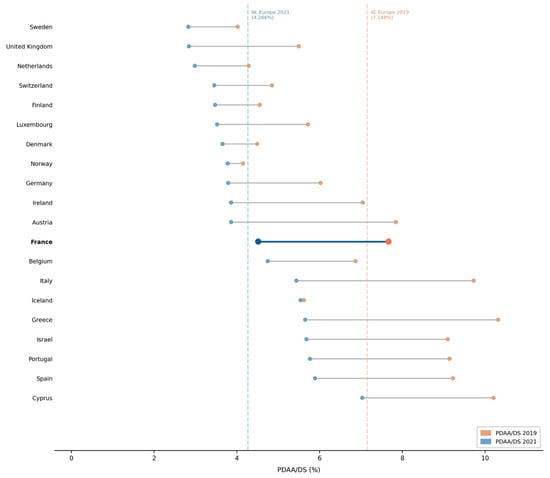
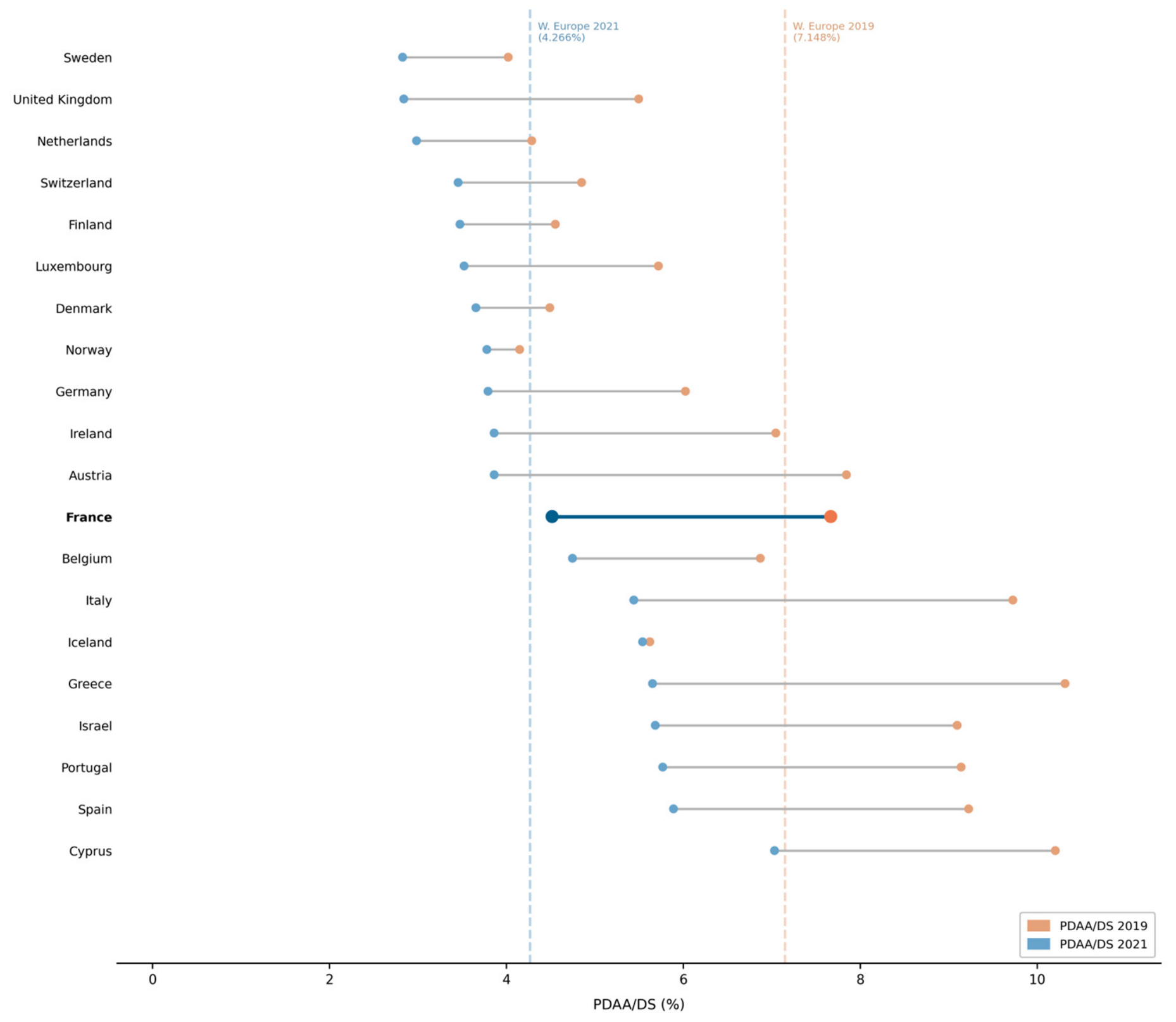
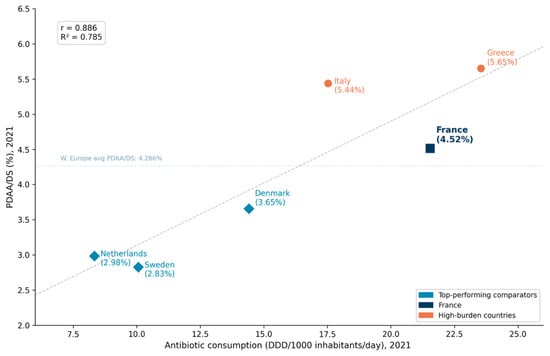
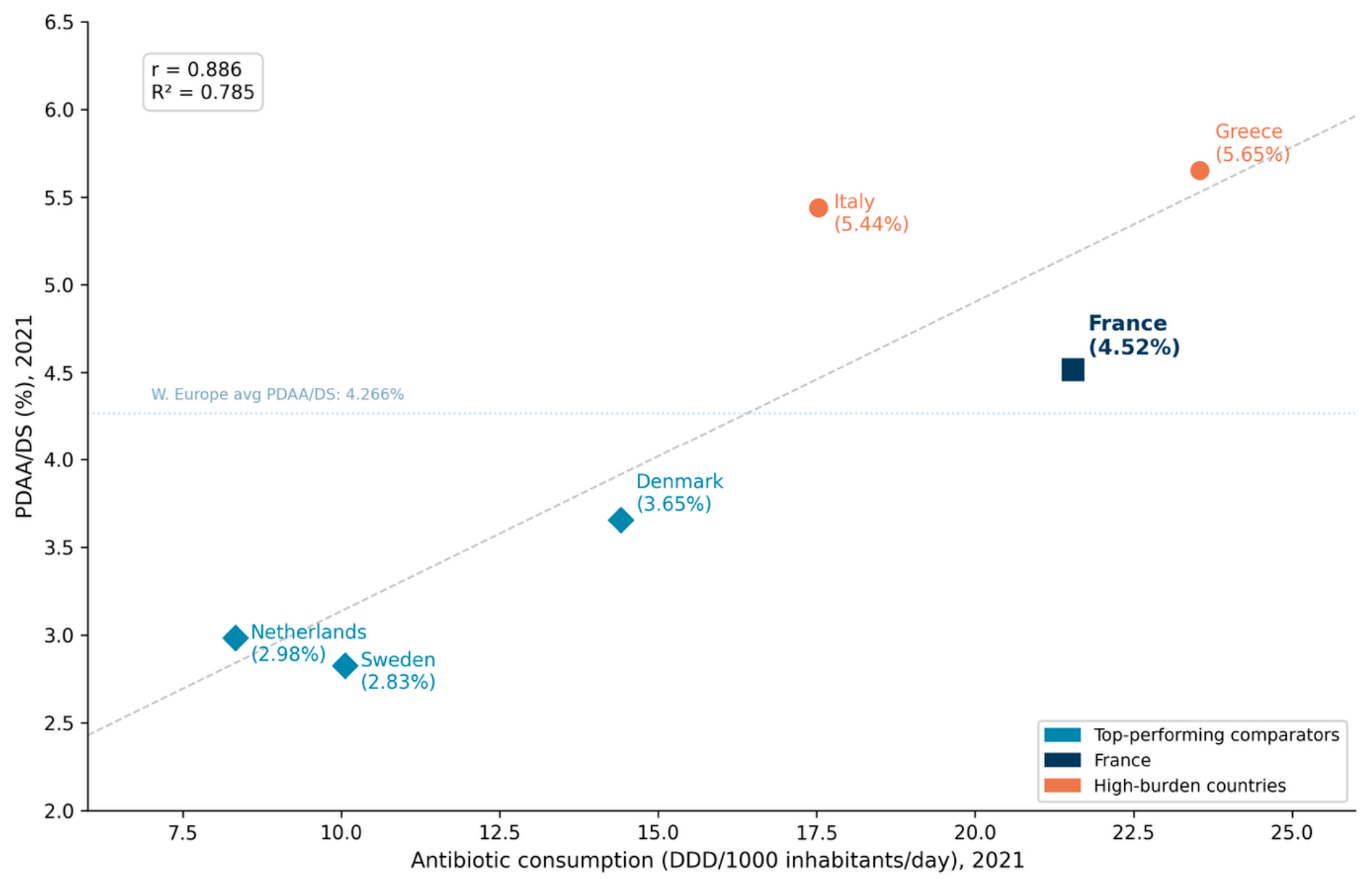
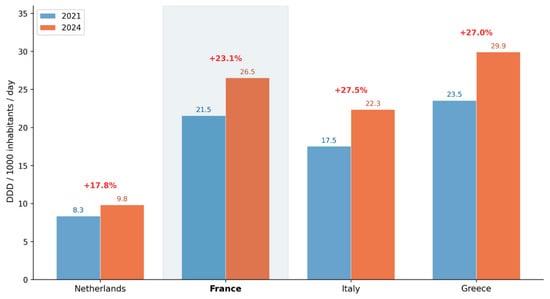

Disclaimer/Publisher’s Note: The statements, opinions and data contained in all publications are solely those of the individual author(s) and contributor(s) and not of MDPI and/or the editor(s). MDPI and/or the editor(s) disclaim responsibility for any injury to people or property resulting from any ideas, methods, instructions or products referred to in the content. |
© 2026 by the authors. Licensee MDPI, Basel, Switzerland. This article is an open access article distributed under the terms and conditions of the Creative Commons Attribution (CC BY) license.