


Abstract
Yam (Dioscorea rotundata) is a major staple crop in West Africa and plays a central role in regional food security, rural livelihoods, and cultural identity. Its wide ecological adaptation, diverse maturity periods, and in-ground storage capacity make yams critical to seasonal food availability and resilience of smallholder farming systems. Despite its importance, existing yam research has largely emphasized biophysical and agronomic dimensions, with limited integration of the socio-cultural and ecological factors that shape yam-based food systems. This review addresses this gap by synthesizing interdisciplinary knowledge on yam food ecology, focusing on how socio-cultural values, beliefs, behaviours, and interactions influence production, utilization, and sustainability of yam systems. We examine the roles of culture, politics, power relations, gender dynamics, and community organization in structuring yam production and consumption across the West African yam belt. The review further explores the long-standing human–yam relationship and the implications of eroding traditional knowledge for future food system resilience. By adopting a systems and ecological perspective that integrates life and social sciences, this review provides a framework to inform sustainable yam crop improvement, value chain development, and inclusive policy interventions, thereby supporting long-term food security and rural development in West Africa.
1. Introduction
Yam is the largest genus within the family Dioscoreaceae, comprising over 600 species worldwide [1,2]. Among these, Dioscorea rotundata Poir. (African white yam) is a clonally propagated staple crop cultivated primarily for its underground edible tubers with white-fleshed interiors [3]. Production is concentrated within the West African “yam belt,” spanning latitudes 4–10° N and longitudes 5° W–10° E and encompassing Cameroun, Nigeria, Benin, Togo, Ghana, and Côte d’Ivoire, which together account for approximately 94% of global yam output [1]. Within this region, yams are predominantly grown across humid forest and savannah agro-ecologies and play a critical role in food security, rural livelihoods, and cultural identity [4,5]. Although commonly regarded as a carbohydrate-rich crop, yam tubers also provide proteins, fats, and essential vitamins, underscoring their nutritional importance.
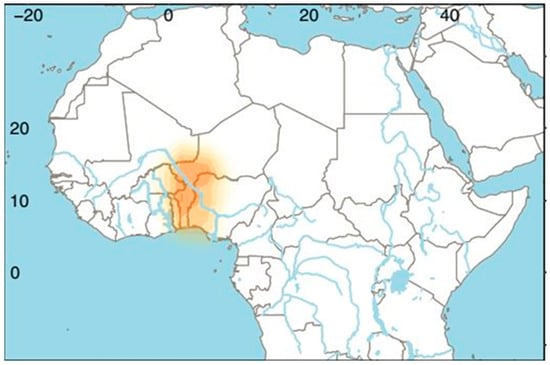
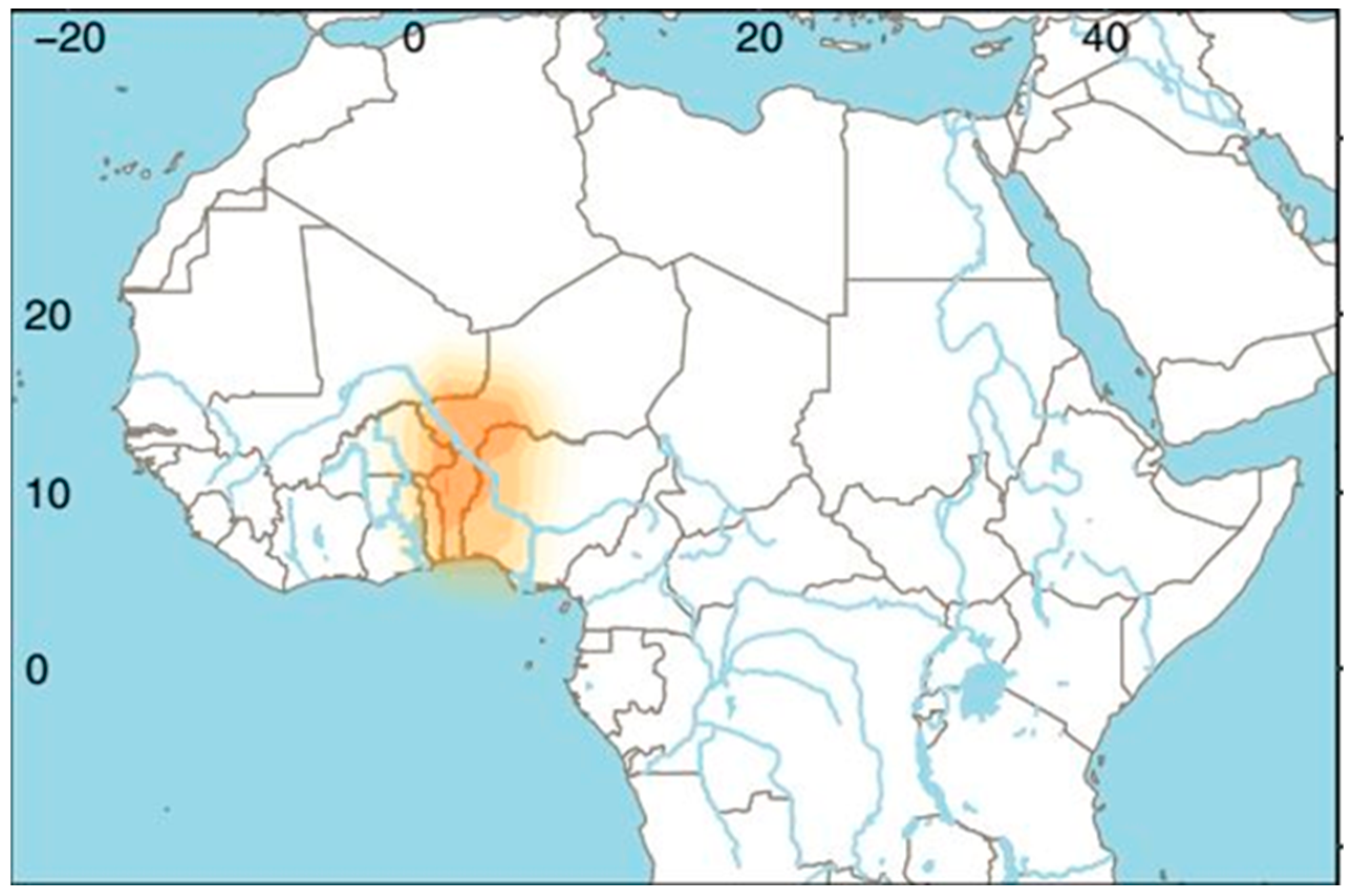
The domestication of African white yams reflects a complex evolutionary history shaped by hybridization and polyploidization. Genetic and phylogeographic studies identify West Africa—particularly the Niger River basin (Figure 1) between eastern Ghana and western Nigeria—as the primary domestication hotspot of D. rotundata involving wild relatives such as D. praehensilis and possibly D. abyssinica [6,7,8,9,10]. Archeological and ethnobotanical evidence further indicates that yam cultivation in the region dates back more than 11,000 years BCE [8]. Over millennia, yam-based farming systems have supported dense human populations and contributed to the emergence of complex political, artistic, and cultural institutions within the yam belt [11],. Yam continues to structure social and spiritual life, featuring prominently in ceremonies such as marriages, chieftaincy rites, conflict resolution, and religious observances, while also serving as a major source of income for rural households, including women engaged as producers, processors, and traders [12,13].
Figure 1.
Inferred (shaded) area of geographical origin of African white yams based on an approximate Bayesian Spatial Model [6].
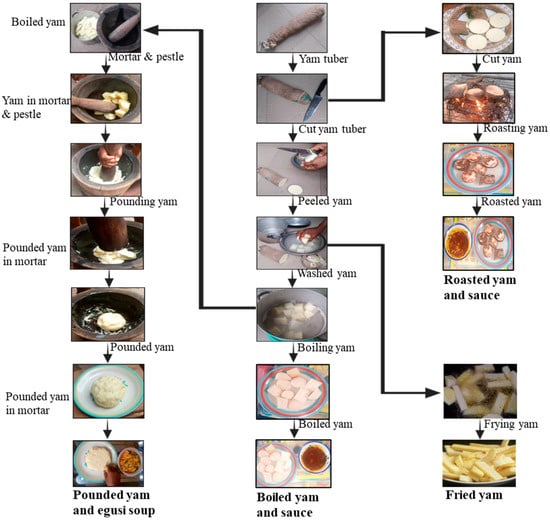
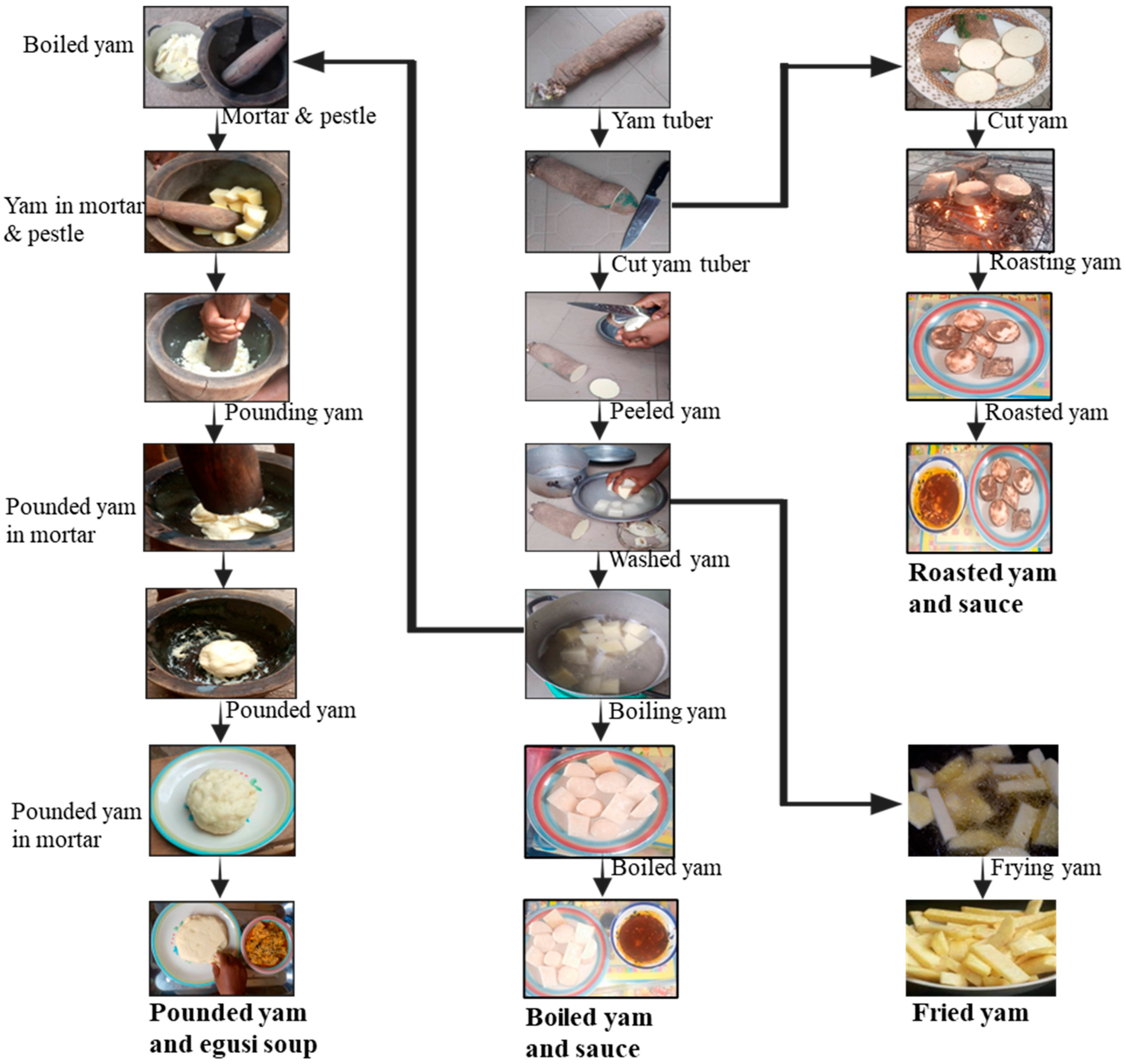
Agricultural tradition in the yam belt has its foundation in the indigenous African yam before 5000 BCE, with virgin forest clearing paving the way for yam cultivation [9]. The yam-fed human concentrates in this carbohydrate-poor forest ecology established powerful political and artistic cultural complexes in the ethnic tribes that make up the yam belt [14]. Within these established processes, consumption varies in diverse food forms, including boiling, pounding, and roasting (Figure 2). Yam food culinary diversity reflects cultural preferences, nutritional needs, and local traditions. These preparations not only provide essential carbohydrates, proteins, and vitamins but also serve as markers of social identity and communal practice, particularly during festivals and family gatherings.
Figure 2.
Flow chat of yam preparation (pounded yam, boiled yam, fried yam, and roasted yam).
Caplan [15] submits that food has ingredients of social relations, identity, and selfhood. The author alluded that it is often viewed as a language that represents a way of communicating with our fellow human beings or even our deities. Food traverses generations and communities and thus sets the template for understanding the history and culture of a people. Food equally establishes linkage and partnerships. A dissection of food habits can yield insights into the configurations of a society [16]. Despite this deep biological and cultural embedding, contemporary yam research has remained largely fragmented. Existing studies have predominantly emphasized agronomy, genetics, and yield improvement, often treating yams as a purely biophysical system. Consequently, limited attention has been given to the socio-cultural, ecological, and indigenous knowledge dimensions that shape yam production, utilization, and sustainability. In particular, there is a paucity of integrative analyses examining how cultural values, social institutions, gender relations, power dynamics, and traditional practices interact with crop biology to influence the adoption of improved varieties, management decisions, and food system outcomes. At the same time, indigenous knowledge systems related to yam cultivation, storage, processing, and ritual use are increasingly threatened by globalization, urbanization, dietary transitions, and the erosion of traditional institutions, raising concerns about the loss of valuable knowledge critical for sustainable crop improvement.
This review is therefore premised on the hypothesis that sustainable yam crop improvement and food system resilience in West Africa require the integration of biological, ecological, and socio-cultural knowledge systems, and that neglecting these interactions constrains the effectiveness and adoption of conventional improvement strategies. Guided by this premise, the review seeks to address several interrelated questions: how biological processes of yam domestication and production intersect with social and cultural systems; how gender roles, power relations, and community institutions shape yam-based food systems; what forms of indigenous knowledge underpin yam cultivation and use, and how these knowledge systems are being transformed or lost; and how insights from food ecology and social sciences can complement breeding, agronomy, and value-chain research. By synthesizing evidence across disciplines, this review aims to provide a holistic framework for repositioning yam improvement efforts within a broader food systems perspective that supports sustainability, inclusivity, and long-term food security in West Africa.
2. Review Method
This review relied primarily on secondary data from published and grey literature. A comprehensive search was conducted across Medline/PubMed, ScienceDirect, Web of Science, Google Scholar, and Google. Additional sources included journal articles, conference proceedings, theses, abstracts, and reports from governmental and non-governmental organizations. Search terms included combinations of “yam,” “West Africa,” “culture,” “food,” “history,” “production,” “consumption,” “processing,” “gender,” “domestication,” “sociology,” and “art,” alongside themes such as myths, taboos, rituals, proverbs, and traditional practices associated with yam cultivation. Documentary evidence was complemented by local narratives and experiential knowledge informed by the authors’ familiarity with indigenous customs in the yam belt.
Relevant studies were identified, appraised, and thematically synthesized with a focus on West Africa, where African white yam (Dioscorea rotundata) holds strong religious, social, and cultural significance. Limitations include fragmented documentation of indigenous knowledge, restricted comparative analysis, and potential interpretive bias arising from reliance on secondary sources and experiential insights. Despite these constraints, the review consolidates dispersed evidence and provides a foundation for future interdisciplinary research on yam-based food systems in West Africa.
3. Results
3.1. The Cultural Setting of the Yam Belt of West Africa
The yam belt of West Africa spans the basins of the Niger and Senegal rivers in connection with smaller waterways, including the Faleme, Benue, and Volta rivers. These resources allowed the development of the belt as a cultural hearth. These areas include modern-day Nigeria, the Benin Republic, Togo, Ghana, and Côte d’Ivoire. Peripheral influences of yams are felt beyond this domain, to neighbouring countries farther west and east. By 400 BCE, ironworking technology allowed an expansion of agricultural productivity in the region [17,18]. The migration of various people into these regions, before and during the period 500–1590, led to the urban development of West African kingdoms and empires and the extensive utilization and spread of metallurgy [19]. The belt experiences heavy rainfall and is characterized by tropical forests with dense foliage. This represents the hub of yam production with peripheral and yet substantial production in the transition areas of the savannah. These forest and savannah areas predominantly host ancient kingdoms, including Igbo, Ibibio, Yoruba, Tiv, Edo, Fon, Akan, Asante, Ewe, Ga, Fante, and Anyi. As a cultural hearth, the yam belt metamorphosed into an agricultural hub with distinctive social stratifications based on a division of labour and thus evolved rituals, rites, and sometimes multi-layered religious processes associated with major yam food production. Groups of people within these ancient yam-growing kingdoms have their own language with much similarity in poetry style, stories, prose narratives and riddles, proverbs, music, visual arts, a unique supreme being, intermediate divinities that bridge the gap between God and man, ancestral spirits that oversee their descendants, and spiritual forces that influence the lives of humans [20,21].
Coursey et al. [22] opined that the yam zone was the home of the highest cultures of the forest regions of Africa (Ashanti, Dahomey, Ife, and Benin) with yam as their major crop. With a mindset of ancestral preservation, the people excelled in woodcarving, sculpture, bronze, and brass. Folk musicians use drums, xylophones, bells, and flutes in producing rhythmic accompaniment that ushers in religious rituals. Vocal music styles characterized by polyphonic textures and sophisticated rhythms were thus visible [23]. Their ancestral link defines their personality and has a great influence on resource (human and material) control and jurisprudence [24]. This entails that all social gatherings are respected with acts of ground libation. Acknowledging the presence of ancestral spirits is highly ritualistic and illuminates social settings. Social values usually manifest as myths, legends, folktales, and riddles, which most often conceal sociological and historical meanings not easily understood by strangers. The indigenous worship style was polytheistic and animistic, while homage is paid to numerous divinities and spirits. There is an obvious consensus that these lesser gods represent the forces of nature (soil, trees, rocks, and mountains) and serve the supreme creator.
In principle, the region was driven by innovation in areas such as food production, environment, government, and religion. Early lives were centred close to rivers Niger, Faleme, Benue, and Volta, and thus used systematic agriculture and irrigation to produce surplus food supplies for a predominantly sedentary population. The New Yam Festival is celebrated across the yam belt with variations in content and procedure, but predominantly ushers in the beginning of the yam harvest, thus showing gratitude to the earth goddess and the yam deity. The popularity and international outlook of this festival are well documented due to the pioneering effort of Coursey et al. [22]. The New Yam Festivals, as revealed by Coursey and Donald [25], have intricated socializations practiced by diverse cultures which dispersed from the other. Some of these ethnic socializations show similarity in standards of singing, dancing, merrymaking, sacrificing, and thanksgiving. They include the Agni (Ivory Coast), Ashanti (Ghana), Fanti (Ghana), Ewe (Ghana and Togoland), Fon (Dahomey), Holli (Dahomey), Yoruba (Nigeria), Ibo (Nigeria), Igala (Nigeria), Tiv (Nigeria), Niger Delta (Nigeria), and Cross River (Nigeria). This festival has since been exported through the slave trade to the Caribbean’s thus exhibiting food’s ability to link people and tell their story [16]. The people structured living within hamlets, villages, and clans. Families and lineages were either patrilineal (social rank and property passed in the male line from fathers to sons) or matrilineal (rank and property, although controlled by men, passed from generation to generation in the female line). A somewhat stateless society is visible with decisions taken within extended family systems and lineages. The family units, including nuclear, extended, and polygynous units, serve as economic units. People farmed land communally, dividing tasks by gender. The physically demanding duties like land clearing are an exclusive preserve of men. Women tended less physically demanding duties on the farm, including taking care of children, meal preparation, and fabricating household pottery. It is obvious that the yam belt region of West Africa was a masculine-dominated society, and to a degree, custom held women to be the property of men. The abundance of secret societies instils ethical standards by emphasizing female virtue, honour, politics, trade, medical practice, recreation, and social gatherings [26]. A significant component of this ancestral recognition and identity is found in yams. The preparation of food finds its utility in group social maintenance and cohesion [27]. Food yam culture represents a significant avenue of balancing the relationship between the gods, ancestors, and the living. This is considered a sine qua non for good health. The Igbos and the surrounding ethnic groups can be regarded as the most enthusiastic yam cultivators in the world [28], as it is philosophically referred to as the staff of life [29]. Achebe [30] referred to yams as the king of crops, while [31] holds the view that the yam attachment is mystical. Alexander Falconbridge, who made trips to the Bight of Biafra during the second half of the 18th century, thus observed, ‘‘Yams are the favourite food of the Eboe” [32]. It is interestingly obvious that agriculture and the social system in the region were nurtured by the security that arose from yams [28].
3.2. Domestication and Yam Civilization
Increasing evidence suggests that foraging humans in the tropical rainforests had access to poor and nutritionally depleted plant foods. Meat from hunting was shrouded in scarcity and uncertainty, as these animals were mostly used for ritual sacrifice at the individual, extended family, village community, and entire clan levels. Bahuchet et al. [33] argued that a purely foraging mode of subsistence occurred in the yam belt environment and further suggested that knowledge about these plants by rain forest pygmies, who had long been gathering their tubers and engaging in their manipulation, may have guided these first forest farmers to the plants. There is limited archeological proof that the rain forest agriculture, including indigenous African plants like yam existed long before the arrival of Malaysian crop plants. There are no empirical data concerning the use of wild yams by pre-agricultural man anywhere in the tropics, although it is a logical enough deduction that yams were an important food, if not a major staple, at the end of the Pleistocene. The emergence of a yam culture and settled life supported the development of a complex social system associated with yam cultivation, yam festivals, yam deities, and yam titles [34]. The concept of domestication is a consequence of major morphological differentiation from wild yam species into the present species. Archeology plays an important role in the identification of these different stages of yam morphology, as Begna [35] explains that domestication is the sign of the beginning of agriculture, and it is the outcome of a selection process that leads to increased adaptation of crop plants from wild relatives to mitigate the effect of food security problems. Yam defined agriculture because it was probably one of the earliest crops to be domesticated in the region. Nri ancient myths link the beginning of agriculture and civilization to the emergence of yams [36].
The above narratives create the anthropological inclination that civilizations in the region were obviously based on yams, and it was fundamental to the cultural life of the people. This was reflected in the large volume of ritual and magico-religious practices associated with almost every aspect of yam cultivation and storage [25]. The author holds the view that in many parts of the tropics, people who use no grain crops, or use them only to a very secondary degree, have achieved substantial cultural levels. Indeed, the high degree of individual attention given to vegetatively propagated food plants suggests a greater degree of symbiotic integration with the environment. Coursey [25] states that yam-growing people have achieved higher levels of civilization (Ashanti, Dahomey, Ife, Benin, and Igbo Ukwu) than many neighbouring grain-crop-oriented groups. As human population and resource-based pressure increased, Bailey et al. [37] argued that there was simply not enough wild food in the central African forests to support a pure hunting and gathering economy year-round as wild yams were not abundant, small in size, not available year-round, hard to harvest and process, poor in taste, deep under the ground, and most importantly, the human digestive tract simply could not tolerate them. It then suffices that a more pragmatic approach towards unravelling the domestication process of yams is in the established process of “ennoblement” [38,39,40]. Ennoblement is a traditional farmers’ practice encompassing the collection and planting of wild yam tubers from the bush and forest in cultivated fields. The yam domestication and ennoblement represent an excellent proof that yam-growing people achieved higher levels of food-based civilization when compared to grain-crop-oriented groups. This contributes to the genetic diversity of yams through hybridization and introgression [40]. Well-documented evidence on the “ennoblement” and genetic diversity contribution of wild relatives to yams is seen in the locus of the SWEETIE gene. The SWEETIE gene is known to be implicated in sugar flux [41] while showing the signature of extensive introgressions from D. abyssinica and D. praehensilis [7]. The authors inferred that the locus SWEETIE gene was under selection. The literature on the domestication of these clonal derivatives is initially characterized by wild traits, including large and long thorns, highly fibrous, and irregular in shape. Once plants are placed in cultivated environments and carefully managed, these and other wild traits disappear over several clonal generations [42]. In optimizing this practice, farmers produce novel and cherished yams that meet their expectations. This process, which seems to achieve domestication with little or no genetic change, has remained somewhat mysterious [43], although somatic mutations and epigenesis seem implicated in this scenario [44].
The West African yam belt provided a challenge to the pre-hominid primates to develop tools, and habitual users of these simple tools obtained their carbohydrate food supply with less effort and in less time than those who did not use tools and were thus at an evolutionary advantage. The habitual, and eventually obligatory, use of tools stimulated the enhanced coordination of manual, visual, and intellectual skills that eventually led to the evolution of man in the region. It is thus reasonable to place in context that the exhumation of yam tubers with simple tools was a significant factor in the advent of modern man, thus initiating the phase of cultural, as opposed to purely biological evolution [45]. It then suffices that the domestication of yams is a reciprocal process. This implies that man has been domesticated by his crops just as he has domesticated them [45]. Yam cultivation is unique in the sense that it follows a non-sedentary pattern of traditional “shifting cultivation,” bush fallowing, and land rotation. The cropping system demands either virgin or fallow due to the substantial demand for soil organic matter (SOM), nitrogen (N), potassium (K), and phosphorus (P). Important cultural practices include mulching and staking [46]. These cultural habits come at a huge economic and human cost, and it then suffices that special attention and care are accorded to the yam crop.
3.3. Cultural Perspective on Yam as a Food
Food is an object of consumption. The preparation and eating give interpretations and contextual meanings, thus organizing complex information towards a perspective [47]. Yam food is prepared mostly from fresh tubers into food forms like roasted, boiled, and pounded yams. Secondary intermediate products in different modifications of flour are obtainable. The roasted and boiled consumption is simple because the yams can be eaten straight without a condiment. The cooking methods must have been adopted when man discovered yams in the region [8]. There is a high likelihood that the early man first prepared yams for consumption by roasting them in open fire using firewood that must have been in abundance in his environment, and later by boiling them in water. Pounded yams must have been prepared when man’s food consumption habits became more sophisticated [48]. The yam belt people have developed sophisticated yam cuisines oriented by epistemic and aesthetic principles that allow for the pleasure-driven exploration of the experience of taste. The food system reveals a testimony to the vitality of the culinary skills and aesthetic sensibility that is somewhat enshrined in dance, music, art, and design [49]. Through deep religious thoughts, the deities prefer yam food sacrifices, which are cooked with great care and offered to them in ceremonies. Thompson [50] denotes the moral cum aesthetic attitude prevalent in West Africa and thus defines it as an artistic interweaving of responsibility and pleasure. Cuisine and taste culture resonate aesthetic principles within the yam belt [51].
It is noteworthy to highlight that eating sumptuous foods can aid in mental health balance and physical balance, thus maintaining the original state of nobility [50]. The Yorubas of West Africa places premium on shining smoothness and roundness as the aesthetic principles in sculpture. These qualities portray the diligent skill and care of the artist and further establish a connection with this artistic preference in the preparation and advent of West African swallows [50]. Pounded yam is a glutinous dough made by peeling, boiling, pounding, and kneading yam tubers. It is a very popular food product in the yam belt of West Africa, and it is the dish of choice served to honoured guests during festivals, weddings, and various traditional ceremonies [52]. Physico-chemical composition of yam tuber such as the granule morphology, pasting properties, swelling, water binding capacity of yam starch, nutrient composition in terms of proximate, minerals, vitamins, and anti-nutritional factors in the yam tuber describes the food quality in yam which is directly associated with the degree of yam food product’s acceptability and significance in determining its utilization [53]. Pounded yam is arguably the most popular traditional yam food and are called iyan and utara in Nigeria, foutou in the Ivory Coast, and fufu in Togo, Benin, and Ghana. The consistency of swallow lies in its smoothness, guiding a pleasurable swallowing experience [51]. Swallows represent types of West African food that originate from yam domestication. The art of swallowing, which entails non-mastication of food, thus drew its origin from West Africa. This gastronomic mystique buttresses the recognition of deep philosophical and religious thoughts. With swallows, soups are central to their ingestion. Soup making can be elastic, including preparation of consistencies from very liquid to dry, with ingredients providing texture and aroma. What turns these staple ingredients into a swallow is the pounding or cooking that forms a rounded mass. The consistency of the swallow has to be smooth for it to glide pleasurably when swallowing. Swallows often look like a beautiful, shiny ball that seems luminous, sitting next to or inside. A dish of swallow and soup has a striking visual appeal, and it provides tactile and gustatory pleasure as the swallow is moulded with fingers to better carry the stew to the mouth [51]. Pounded yam is enjoyed with different kinds of soups, with each ethnic group in the yam belt of West Africa having its own preference. Eating with fingers, which allows for the tactile enjoyment of food before it is placed in the mouth, has been one of the main sensory pleasures of eating pounded yams in the yam belt. This has its own techniques and etiquette that allow for social distinctions and add to the sensory appreciation and enjoyment of the food.
Despite the subtle differences among swallows in West Africa, eating this dish leads the way to the very heart of a culinary experience. Soups and swallows are jointly eaten, creating a harmonious complexity that defiles the mastication process. The preparation of the yam by pounding into a paste, which perhaps reduces toxicity and makes the tuber more digestible, may go back to proto-agricultural times [54]. Lucas et al. [55] reveal that every society seems to have a variety of food texture terms. They suggest that the origin of these texture concepts is likely from the need to communicate the learned manual dexterity that was required. Humans connect food to rituals, symbols, and belief systems. In sacred religious contexts, food “binds” people to their faiths [56]. In some scenarios, food can attain the status of sacred through its association with supernatural beings and processes [57]. Simoons [58] holds the view that belief systems and their attendant rituals are the causal factors behind food types. People use the act of eating as a vehicle to express and create spirituality [59]. This concept of protection of the crop by means of a religious sanction is developed to a much greater degree in the yam belt of West Africa. Ritual performances are common practice in the field between clearing and harvesting. The traditional farmers perform these sacrifices to the gods of yams so that their yams will produce well. These sacrifices are repeated, if need be, especially during poor vegetative establishment and abiotic stress like drought [60]. The novel Things Fall Apart celebrated the culinary and ritual significance of yams. The feast of the New Yam was held every year before the harvest began, to honour the earth goddess and the ancestral spirits of the clan. New yams could not be eaten until some had been offered to these powers. Men and women, young and old, looked forward to the New Yam Festival because it began the season of plenty. All cooking pots, calabashes, and wooden bowls were thoroughly washed, especially the wooden mortar in which yams were pounded” [30]. Thus, the festival initiates the rite of passing from lack and hunger to abundance of food, and a period of oldness to newness.
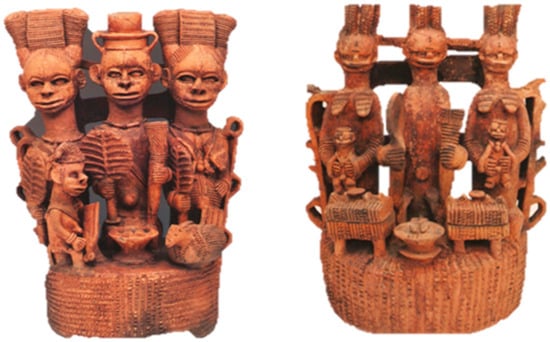
The philosophy behind the dominant New Yam Festivals in the yam belt may not be unconnected with the covenant between the soil and humanity, in which humanity is dependent on the soil for existence and survival [61]. The author further buttressed that elements of fasting and other forms of mortifications are implicated in the rituals. This establishes a state of worthiness to placate the gods, who in turn will heed their request for fertility of both man and soil. Nwanze [62] drew an illustration with the yam god of Ossissa, an Igbo community based in Nigeria. There are variations of this artistic approach and rituals, but the philosophy seems central across the yam belt. These ancestors are represented by images (Figure 3). The images are symbolic and revered. These sculptures are associated with ancestors and are highly charged with meaning. They are perceived to carry complex symbolic messages, thus engaging the participation of living descendants and their ancestors. The belief by all is that the identity and presence of these ancestors are inextricably bound to this terracotta carving. The presence and power of past leaders or ancestors affirm the social expectation of the ruling chiefs to undergo the same process when they die. The synthesis of these art forms establishes a social and spiritual order. The human body is used somewhat as a metaphor for the social body. These images are re-enacted in rituals and during the New Yam Festivals. The Ifejioku terracotta remains an embodiment of sociological and cosmological messages [62].
Figure 3.
Images of Ifejioku yam gods [62].
It is important to highlight that the cutting of roasted yams is a significant activity in the course of the New Yam celebration, and most of the time, it is conspicuous because it is done in the middle of a beautifully carved wooden board under the leadership of a traditional elite alongside cabinet members. It represents a deeply spiritual and solemn process, especially at the peak of invocation, the supernatural powers [63]. Unya [64] had the submission that people celebrate the New Yam in the spirit of new harvest, plenitude, recreation, renewal, accomplishment, and freedom from hunger. The author was of the view that these communal celebrations exhibit the spirit of communalism. Over time, yams attained a luxury food status, thus illuminating the political setting, as their production, setting, timing, preparation, and accessories are directly tied to the blessings of the ancestors and thus to the justification of social existence and political difference. A major component of ancestral recognition, group identity, and elite formation was proven within yam food presentation.
3.4. The Place of Yam in Social Stability, Sustainability, and Order
The yam belt societies are deeply communal in their existence. This is philosophically driven by the concept that an individual’s existence is drawn from community approval. Agriculture and social systems were nurtured by the security that the adaptation of the yam crop provided and thus led to the advent of social change that resulted in the development of settlements based on communal property [28]. Yam consumption synergized the ties of kinship, comradeship, and friendship, and its distribution generated new ties through trade and alliance [65]. This mutually chained relationship is stabilized and orchestrated with an effective justice system and ethical values that dissuade the people from any form of infringement. This is enshrined in various forms of mythology accorded to yams within the various ethnic hubs of the yam belt [66]. A common denominator with these myths is that yams are life savers and a product to avert hunger. The cultivation of yams was governed by strict rules. As a highly ritualized process, yam production often involved elaborate ceremonial rituals at the planting and harvest seasons [65].
Taboos and abominations are essential features of the traditional cultural heritage that is transmissible via indigenous knowledge systems of the yam belt people. Certain acts and omissions are classified as taboos, thus playing a significant role in stabilizing moral and ethical standards [67]. Baco et al. [68] confirmed yams as a unique crop in the Northern Benin Republic and highly utilized in offerings for transmission between the ancestors and the living, and whose production was subject to special rites. From planting to harvesting the yams, customary rules were observed to ensure a better yield and avoid unhappiness in the family. Sexual abstinence was required for some cultivars the day before sowing, and alms were prescribed on the day of planting to avoid cutting mortality [69]. Any infraction of taboo translates to transgression against the gods and sets the template of wrath from the specific god whose taboo is violated. Among the Igbo of Nigeria, yam planting is a serious and important business, and thus any breach of the farming etiquette leads to grave consequence as yam stealing, whether of freshly planted seed or the matured tuber, which was punishable by death. Eating the new yams in any agricultural year is forbidden until the New Yam Festival has taken place [30]. Coursey [22] projected two hypotheses to explain the use of sanctions and the prohibition of the eating of new yams before the performance of the New Yam Festival. He speculated that the wild ancestors of the West African species were toxic, and the immature ones were even more toxic. The New Yam Festival was therefore designed to tell the group the time when the toxic content has reached a level that the body could tolerate. The second hypothesis links the festival with the need to protect the plant from anxious and hungry people during the period of growth. The festival marked the earliest date during which harvest could take place without impairing the normal growth of the plant. In both cases, strict observation or adherence to the time was achieved through ritualization of the sanctions. In a land dispute, the party that cultivates seed yams first on the land possesses the land temporarily, as his opponent, even if he is the actual owner of the land, must wait for the yam crop to be harvested before he can reclaim it [63]. The cutting of yams’ tendril and stealing of yams is regarded as a heavy crime when compared to the theft of other goods. When a new yam is sighted in the yam field, a person quickly reacts by covering the tubers with soil to avoid another eye seeing the near-abominable act [70]. The unearthing and theft of seed yams is seen as the ultimate rape of Mother Earth or as an abomination against the yam deity. This could be likened to digging up a buried relative. The consequence of such action is believed to result in the proliferation of premature birth, stillbirth, and infant death [13]. Rites must be performed if someone accidentally falls in the course of carting yam tubers from the farm to home after harvest or vice versa. If this unfortunately takes place, necessary ritual cleansing involving the sacrifice of a chicken would have to be performed before the affected set of yams is admitted for use. These rites tend to restore the productivity and sanctity of yams already ransacked by thieves or contaminated by unclean individuals or possessed by evil spirits [13]. The mortar and pestle used in pounding is regarded as the first implement of processing in the early ages (personal communication). The carving styles vary with the different ethnic groups that make up the yam belt. Some of the associated taboos are seen in Table 1.
Table 1.
The yam food system and some associated taboos and consequences.
It is speculated that yam production was the foundation of population growth in the yam belt, and a correlation between its consumption and high fertility rates has been opined [28]. The population growth in Africa is driven mostly by East Africa and West Africa [72]. This draws more attention with the report of Obidiegwu et al. [73] who showed yams contain a form of natural progesterone in the name of dioscin. It is noteworthy to mention that the yam belt of West Africa boasts the highest twinning rates in the world. The highest national twinning rate is found in Benin with 27 twin births per 1000 [74]. The small West African nation of Benin has a higher concentration of twins than any other country in the developing world. Most of the countries in the region, including Nigeria, Benin, Togo, and Ghana, had more than 18 twins per 1000 births. It is noteworthy to mention that Akinboro et al. [75] reported an overall average frequency of 40.2 per 1000 deliveries for the four hospitals in Southwestern Nigeria and ranks among the highest recorded rates of twin births in the world. Similar studies in Nigeria’s south-western states in the past reported twinning rates of 33–66.5 per 1000 births [76,77]. The popularity of amala, a processed secondary food derivative from yam flour have been implicated in this trend (personal communication), and the hypothesis holds that yams prompt the production of gonadotropins, a chemical agent that stimulates the production of eggs. The yam belt twin birth rate far exceeds the global incidence of twins, at 4 per 1000 births [78]. Past studies in Western European countries accounted for 9–11 per 1000 twinning rates [79], while Asian countries, including Japan, Hong Kong, and Singapore, showed rates of 5 to 6 per 1000 births [80]. Interestingly, these areas of high twining rate represent the hub of yam domestication [6]. We hypothesize that the high twinning is linked to the cultural groups reputed for advanced yam food culture. This hypothesis needs to be validated with a clear demarcation of food and dietary patterns while putting into context other factors like maternal and genetic drivers of twinning, and some other socio-environmental factors.
4. Discussion
4.1. Intersections of Yam Domestication, Production, and Socio-Cultural Systems
The biological domestication and continued cultivation of African white yam (Dioscorea rotundata) are deeply interwoven with social and cultural systems in the West African yam belt, reflecting a co-evolutionary relationship that spans millennia. Genomic studies reveal that cultivated D. rotundata likely arose through hybridization between wild relatives (D. praehensilis and D. abyssinica), with selection pressure favouring traits such as larger storage organs, starch biosynthesis, and adaptation to open, cultivated environments—characteristics that directly align with human food preferences and management practices (e.g., selection for high starch content important for food uses [6]. These biological changes did not occur in isolation but were shaped by indigenous knowledge systems that guided farmers’ selection and propagation of preferred landraces, often based on attributes valued for culinary and cultural purposesSocial and cultural systems further influence production through festivals and ceremonies such as the New Yam Festival—an agrarian celebration marking harvest cycles and community cohesion—that reinforce the symbolic importance of yams and, by extension, shape cultivation timing and varietal choices tied to ritual calendars. Thus, the domestication and ongoing management of yams in West Africa exemplify a socio-biological feedback loop in which human cultural priorities influence crop evolution, while the crop itself reinforces social identity, cultural continuity, and community resilience.
4.2. Gender Dimensions in Yam Food Production
The yam belt of West Africa evolved with yam farming dominating the space in symbolic acknowledgement as the king of crops. This denotes that the indicators of success and affluence are premised on yam productivity. By implication, having many wives and numerous children is intrinsically linked to large farm size and bountiful harvests since they form the core of labour requirement for the then agrarian practice. Most significant titles and heroic accomplishments are tied to a bountiful harvest. Successes and fame were considered from the notion of a great yam farmer, medicine man, hunter, craftsmanship and warrior [30]. In all, a bountiful yam harvest is most prized. Yam cultivation is an art reserved for men, and having a full yam barn is a great feat and, as such, only men are allowed to cultivate yams [80]. Power is won within gender groups by attaining success in the fruition of the yam crop [13]. The yam crop is the crux of social developments as the gender paradigms become reliant on the relative success of their agricultural efforts [81]. Success in yam production acted as the ladder for social mobility, with men distinguishing themselves as yam farmers, receiving titles and privileges within communities. The wives of these titled men tend to show their prowess in the art of taro production, thus reinforcing the gender hierarchy and division of crops among the people. This implies that yam-based status was perhaps the most valued male identity as relates to politics, social, and economic life [65]. The yam economy breaks the frontiers of subsistence needs by catering to marriage, burials, and other ceremonies. The ability to fulfil these social obligations separated the wealthy and the poor [65]. The evolution of ritual ceremonies formed a critical dimension in power relations through the instrumentality of male domination that led to the advent of complex social systems that triggered resource (land, women, and children) ownership mediated by strong men who aspired to become title holders [28]. This obviously laid the foundation for gender division of crops and land ownership [65].
The philosophical narrative above sets the very foundation of polygamy and sets a patriarchal society, where the cultural and traditional decisions are dominated by the male gender. Men and women are assessed or evaluated in accordance with the role expectations ascribed to them by society. Land is inherited patrilineally; therefore, communal developments relied on these male foundations, and individual developments of wives and offspring would be influenced by underlying possession by men as their husbands and fathers. Women do not have direct access to land and are usually bound to a large extent by the decision of the landowner. Patriarchal structures and authorities give more resources to men, resulting in women having less access to productive resources in agriculture. Their male counterparts are favoured by patrilineal rules for inheritance of land, even in matrilineal societies. Women’s access to land is through their male counterparts or relatives, therefore increasing their dependence on men [82]. The inheritance of seed yams is part of the inheritance of male children in Northern Benin [69]. This social organization birthed a yam culture of masculinity, which consisted of the men’s duty to provide food for and protect their families [81]. The females were groomed to be domestic, loyal, morally upright housekeepers while playing motherly roles. By extension, the females help financially by supporting the household through farming, marketing, and trading. An average woman from the yam belt of WA was taught to be industrious for it would be profitable in her husband’s house [81]. The yam crop thus epitomized strength and power, which resonates from the patriarchal culture that is prevalent in the region. It is viewed and seen as a male crop and a male thing, and by implication, a symbol of authority. The female gender is thus consciously sanctioned with the main task of procreation [83].
Evidence from the Tai region of Côte d’Ivoire shows that yam alongside coffee and cacao, are considered to be the responsibility of men. The domination of males in yam cultivation fits into the obsession of being perceived as hyper-masculine. The labour-intensive nature of the crop, coupled with the sociocultural significance accorded to the staple diets make it the most important food crop. The soil fertility requirement of yams suggests that they are often planted as the first crop on newly cleared land. Beyond the land clearing, the preparation of a large expanse of mounds per hectare is extremely labour-intensive as it involves shifting many layers of topsoil into mounds up to one metre in height [84]. These mounds aid yams with sufficient nutrients by aggregating topsoil while creating a good physical environment for tuber development. The mounds equally facilitate harvesting and thus prevent waterlogged conditions [85]. The labour requirements in yam cultivation, including mound making, staking, weeding, and harvesting, exceed those of any crop grown in the region. Men farmers cut the undergrowth, clear fields, raise yam mounds, and plant the yam setts, while women weed the yam fields until men harvest the crop [85]. There is a notion that the female body is strictly built by God, the creator, to foster procreation, including gestation, childbearing, breastfeeding, and nurturing of babies. To buttress this aforementioned narrative, it is evident that the traditional society of the West African yam belt celebrates marriage principally on the altar of continuity of the family lineage [83]. The labour need for yam cultivation set the foundation for marriage alliances and polygamy, while the extended family system is organized within the framework of yam production and sustenance [29]. In some communities, the planting of yams by women is viewed as a disruption of the spiritual and social order, and the culprit is mandated to appease the gods immediately or face ostracism from the community [13]. Within some cultures in Ghana, women during their menstrual period are particularly disallowed from even visiting yam farms during specified times in the cultivation cycle [86]. Historical perspective shares the view that women should not enter yam fields. This is done at the risk of decreasing production. An exception to this is the widows who have the responsibility of sustaining families. Some of the cultures only permit women to visit the yam farm during the harvest period.
Despite significant contributions of women to economic development and household food security, they have less access to land and capital. This significantly entrenches poverty in the female gender [82]. It thus suffices that man’s role in traditional yam belt society includes land acquisition and the establishment of a seasonal yam field. The notion of yam cultivation being an exclusive preserve of men remains a cultural construction that has been passed down from time immemorial through socialization due to the gender role differences. In most yam belt communities, men are entrusted with the responsibility of taking care of the family, thus providing food, accommodation, health needs, and clothing. This required them to engage in activities that would enable them to shoulder these responsibilities. Women are only seen as helpers and thus do not need to compete with their husbands in the performance of such roles. Women, however, did not challenge this position; they accepted it. It was found that men play crucial roles in the labour-intensive aspects of yam farming namely clearing of bushes, making of yam mounds, staking and harvesting while women traditionally provide services in the areas of carting of yam setts to planting sites, cooking for workers after work, planting of subordinate crops (pepper, okra, green vegetables, etc.) inside yam farm, carrying of harvested yams home, and selling of yams [87]. Women are more disposed to cultivating food for home consumption on household plots, whereas men usually grow the main cash crop on personal plots. This implies that women who cultivate yams for household food consumption have a likelihood of being relegated to the more marginal and soil nutrient-depleted land and will thus have lower production in terms of yield than men who grow on the more fertile soil [88]. There are exceptions to the notion of male domination. In some cultures, like the Tiv people of Nigeria, yam has been reported to be a women’s crop [89]. It is noteworthy to mention that men and women play critical roles in ceremonial and social events in which yam is the fulcrum of activities such as marriage, chieftaincy rites, age-grade rites, and New Yam Festivals. Women are significantly engaged in cooking, serving meals, singing, and dancing [90]. The gender patterns of yam cropping infer that among Ghanaian farmers, there were no clear gender distinctions in recent times [91]. Both men and women harvest yams. During harvesting season, the man only digs the yams, and women carry them to the hut, home, or marketplace to be sold [88]. Though yam was traditionally considered a man‘s crop, it is clear that women farmers contribute greatly to yam cultivation, especially during weeding, harvesting, and processing. The gap and unequal rights between men and women for both natural and physical capital lead to the inadequate and inappropriate use of resources, low incomes, poor diets, and a low standard of living. These disparities have socio-cultural consequences as relates to the well-being of women, their families, and society [92]. It is noteworthy to highlight that if women are accorded the necessary resources and the same enabling environment as their male counterparts, they show greater efficiency in the utilization of resources [93].
4.3. Indigenous Knowledge in Yam Cultivation and Its Transformation
Indigenous knowledge underpins virtually every stage of yam (Dioscorea rotundata) cultivation and use in the West African yam belt, shaping decisions about seed selection, varietal maintenance, planting schedules, field and soil management, and cultural use. Farmers rely on long-standing empirical wisdom to choose planting materials and practices that align with ecological conditions, crop performance, and cultural food preferences, including varieties prized for traditional food forms such as boiled, pounded, roasted, and fried yams. This localized knowledge is grounded in socio-cultural beliefs and community learning systems, and contributes to livelihood strategies, social cohesion, and ecological adaptation within yam farming communities [87]. However, these indigenous systems are being transformed and increasingly lost due to urbanization, migration, the spread of institutionalized religions, and changing dietary habits that reduce participation in communal rituals and festivals historically tied to yam production and consumption. As younger generations move away from traditional agriculture and social structures evolve, much of the tacit ecological knowledge and cultural practices that once governed yam cultivation and use are at risk of erosion. This dynamic pose significant challenges for sustaining not only the genetic diversity and food culture of yams but also the socio-ecological processes that have historically supported resilient yam food systems in West Africa.
4.4. Integrating Yam Social Ecology with Novel Biological Systems
Integrating insights from yam food ecology into breeding, agronomy, and value-chain research can significantly enhance the relevance and adoption of technological innovations in yam systems. Understanding end-user preferences for key food products such as boiled and pounded yams—especially sensory traits like texture, colour, taste, and aroma—provides crucial guidance on priority traits that breeding programmes should target, bridging the gap between agronomic performance and consumer demand [52,53]. Gender-inclusive value-chain studies further highlight how preferences and roles differ among producers, processors, and consumers, underscoring the need for participatory approaches in varietal selection and trait prioritization. From an agronomic perspective, indigenous knowledge about planting times, seed selection, and soil and field management can inform sustainable practices tailored to local ecological conditions, while value-chain research benefits from understanding how different forms of yam foods are processed, marketed, and consumed. By incorporating food ecological insights into breeding and agronomy, researchers and practitioners can ensure that improved varieties and practices are culturally grounded, socially acceptable, and economically viable, fostering stronger links between production potential and food system outcomes.
5. Future Perspective
Yam (Dioscorea rotundata) continues to hold profound cultural, nutritional, and socio-economic significance across the West African yam belt. Its historical prominence is reflected in ritual ceremonies, symbolic belief systems, and elaborate festivals, which once reinforced communal identity and social cohesion [22]. However, the observance of these traditions has declined in recent decades due to the spread of institutionalized religions, urbanization, globalization, and the weakening of traditional governance structures. Competition from other staples, such as cassava, rice, and maize, further undermines the prominence of yams in both production and cultural practice. Despite these changes, strong sentimental attachment persists among urban and rural populations, indicating an enduring cultural and social value that can inform research and intervention strategies [60].
The decline in traditional institutions and increasing urban migration have altered sociocultural and agricultural practices, leading to reduced participation in yam rituals and diminishing attention to traditional production knowledge. At the same time, yam yields under extensive land-use systems are plateauing, highlighting the urgent need for sustainable intensification strategies to meet growing demand [94]. These dynamics underscore a critical research gap: the interaction between cultural practices, socio-economic pressures, and ecological sustainability in yam production remains poorly understood. Gendered dynamics in yam cultivation represent another key area for future investigation. While men have historically dominated ownership and decision-making—aligning yams with masculinity and social status [13]—women form the backbone of production, processing, and marketing. Constraints in access to land, credit, inputs, education, and appropriate technology continue to limit women’s potential contributions. Future research should explore pathways to integrate gender-sensitive interventions, inclusive policies, and technology adoption strategies to enhance productivity, value-chain participation, and social equity [82,95].
Although improved technologies and sustainable production practices have been developed [96,97], adoption remains limited due to insufficient attention to socio-cultural and ecological contexts [94]. Addressing these knowledge gaps will enable the design of locally relevant, culturally sensitive, and environmentally sustainable innovations. Finally, research investment in yams remains disproportionately low relative to cereals and other tuber crops [98], constraining potential for crop improvement, policy development, and food system resilience. Further studies are needed to understand farmers’ and consumers’ preferences, including the physico-chemical, functional, sensory, and therapeutic traits of yams that define quality along the value chain [99]. Future interdisciplinary research should integrate life sciences, social sciences, and indigenous knowledge to capture the complex ecology of yam food culture. By doing so, scholars and policymakers can support sustainable yam production, strengthen cultural continuity, promote gender equity, and enhance livelihoods across the West African yam belt.
6. Conclusions
This review set out to examine yam (Dioscorea rotundata) as a biologically important crop and a deeply embedded socio-cultural system in West Africa, guided by the hypothesis that sustainable yam improvement cannot be achieved through biophysical innovation alone, but requires the integration of indigenous knowledge, socio-cultural dynamics, gender relations, and evolving production constraints. By synthesizing evidence across historical, ecological, agronomic, and sociological domains, the review addressed key questions on how yam domestication history, cultural symbolism, gendered production systems, and technological transitions interact to shape contemporary yam food systems. The findings confirm that yams remain central to food security, livelihoods, identity, and social cohesion in the West African yam belt, despite declining traditional institutions, reduced ritual observance, and increasing pressure from urbanization, competing staples, and climate variability. The erosion of indigenous knowledge systems—identified in the introduction as a critical research gap—emerges as a major threat to the sustainability and cultural continuity of yam production. At the same time, the persistence of strong sentimental and cultural attachment to yams demonstrate untapped potential for leveraging cultural value to drive the adoption of improved varieties and sustainable technologies.
Consistent with the study hypothesis, the review reveals that gender relations play a decisive role in shaping access to resources, technology uptake, and value-chain participation. Although women contribute substantially to yam production and processing, structural inequalities continue to limit their influence on decision-making and innovation pathways. Addressing these constraints through gender-responsive breeding, policy reform, and technology dissemination is therefore essential for achieving inclusive and sustainable productivity gains. The review further demonstrates that current yam production systems have reached the limits of extensive land expansion, validating the need—posed in the introduction—for intensification strategies grounded in ecological sustainability, improved agronomy, and user-oriented crop improvement. Knowledge gaps in technology adoption, quality trait preferences, and value addition highlight the importance of interdisciplinary approaches that integrate farmers’, processors’, and consumers’ priorities with genetic and physiological research.
In conclusion, this review substantiates the central premise that the future of yam production in West Africa depends on a systems-level approach that bridges biological innovation with socio-cultural understanding. By aligning crop improvement, gender equity, indigenous knowledge preservation, and sustainable intensification, yam can be repositioned as a resilient, culturally grounded, and economically viable crop. The synthesis presented here provides a conceptual framework and research agenda to guide future investments, policy interventions, and interdisciplinary studies aimed at sustaining yam-based food systems and livelihoods in West Africa.
Author Contributions
Conceptualization, J.E.O. and C.A.C.; data curation, J.E.O. and C.A.C.; project administration, J.E.O.; writing—original draft, J.E.O., E.M.A., A.U.O. and C.A.C.; writing—review and editing, J.E.O. and C.A.C. All authors have read and agreed to the published version of the manuscript.
Funding
This Research received no external funding. The APC was funded by Queen’s University Belfast, UK.
Institutional Review Board Statement
Not applicable.
Informed Consent Statement
Not applicable.
Data Availability Statement
No new data were created or analyzed in this study.
Acknowledgments
We acknowledge the Yam Team of the National Root Crops Research Institute, Umudike, Nigeria.
Conflicts of Interest
The authors declare no conflicts of interest.
References
- Ayensu, E.S.; Coursey, D.G. Guinea yams: The botany, ethnobotany, use and possible future of yams in West Africa. Econ. Bot. 1972, 26, 301–318. [Google Scholar] [CrossRef] [Scilit]
- Govaerts, R.; Wilkin, P.; Saunders, R.M.K. World Checklist of Dioscoreales Yams and Their Families; Royal Botanic Gardens, Kew: London, UK, 2007. [Google Scholar]
- Akoroda, M.O.; Chheda, R.H. Agro-botanical and species relationships of Guinea yams. Trop. Agric. 1983, 60, 242–248. [Google Scholar]
- Asiedu, R.; Mignouna, H.; Odu, B.; Hughes, J.A. Yam breeding. In Plant Virology in Sub–Saharan Africa; Hughes, J.A., Odu, B.O., Eds.; International Institute of Tropical Agriculture (IITA): Ibadan, Nigeria, 2003; pp. 466–475. [Google Scholar]
- Nweke, F.I.; Aidoo, R.; Okoye, B. Yam Consumption Patterns in West Africa; Final Report for Bill and Melinda Gates Foundation (BMGF); Bill and Melinda Gates Foundation: Seattle, WA, USA, 2013. [Google Scholar] [CrossRef] [Scilit]
- Scarcelli, N.; Cubry, P.; Akakpo, R.; Thuillet, A.C.; Obidiegwu, J.E.; Baco, N.M.; Otoo, E.; Sonke, B.; Dansi, A.; Djedatin, G.; et al. Yam genomics supports West Africa as a major cradle of crop domestication. Sci. Adv. 2019, 5, aaw1947. [Google Scholar] [CrossRef] [Scilit] [PubMed]
- Sugihara, Y.; Darkwa, K.; Yaegashi, H.; Natsume, S.; Shimizu, M.; Abe, A.; Hirabuchi, A.; Ito, K.; Oikawa, K.; Tamiru-Oli, M.; et al. Genome analyses reveal the hybrid origin of the staple crop white Guinea yam (Dioscorea rotundata). Proc. Natl. Acad. Sci. USA 2020, 117, 31987–31992. [Google Scholar] [CrossRef] [Scilit]
- Coursey, D.G. Yams, Dioscorea spp. (Dioscoreaceae). In Evolution of Crop Plants; Simmonds, N., Ed.; Longman: London, UK; New York, NY, USA, 1976; pp. 70–74. [Google Scholar]
- Coursey, D.G. The origins and domestication of yams in Africa. In Origins of African Plant Domestication; Jack, H., Ed.; De Gruyter Mouton: Boston, MA, USA, 1976; pp. 383–408. [Google Scholar]
- Terauchi, R.; Chikwendu, S.C.; Thottappilly, G.; Hahn, S.K. Origin and phylogeny of Guinea yams as revealed by RFLP analysis. Theor. Appl. Genet. 1992, 83, 743–748. [Google Scholar] [CrossRef] [Scilit] [PubMed]
- Chukwu, G.O.; Ikwelle, M.C. Yam: Threats to its sustainability in Nigeria. CGPRT Cent. Newsl. 2000, 17, 1–14. [Google Scholar]
- Nweke, F.I.; Ugwu, B.O.; Asadu, C.; Ay, P. Production costs in the yam-based cropping systems of Southeastern Nigeria. In Resource and Crop Management Research Monograph, 6; International Institute of Tropical Agriculture: Ibadan, Nigeria, 1991. [Google Scholar]
- Obidiegwu, J.E.; Akpabio, M.E. The geography of yam cultivation in southern Nigeria: Exploring its social meanings and cultural functions. J. Ethn. Foods 2017, 4, 28–35. [Google Scholar] [CrossRef] [Scilit]
- McCann, J.C. Stirring the Pot: A History of African Cuisine; Ohio University Press: Athens, OH, USA, 2009. [Google Scholar]
- Caplan, P. Feasts, Fasts, Famine: Food/or thought. In Professional Inaugural Lecture Delivered at Goldsmiths’ College; Routledge: New York, NY, USA, 1994. [Google Scholar]
- Duru, M.C. Diaspora, Food and Identity Nigerian Migrants in Belgium; Peter Lang International Academic Publishers: Lausanne, Switzerland, 2017. [Google Scholar]
- Basil, D. Africa in History: Themes and Outlines; Macmillan: New York, NY, USA, 1969. [Google Scholar]
- Basil, D. West Africa Before the Colonial Era: A History to 1850; Longman: London, UK, 1998. [Google Scholar]
- Levtzion, N. The Early States of the Western Sudan to 1500. In History of West Africa, 2nd ed.; Ajayi Ade, J.F., Michael, C., Eds.; Longman: London, UK, 1976; pp. 114–151. Available online: https://archive.org/details/historyofwestafr0000ajay/page/n7/mode/2up (accessed on 13 August 2025).
- Asante, M.K.; Ama, M. Encyclopedia of African Religion; Sage Publications: Los Angeles, CA, USA, 2009. [Google Scholar]
- Lugira, A.M. African Traditional Religion, 3rd ed.; Chelsea House: New York, NY, USA, 2009. [Google Scholar]
- Coursey, D.G.; Coursey, C.K. The new yam festivals of West Africa. Anthropos 1971, 66, 444–484. [Google Scholar]
- Nketia, K.J.H. The Music of Africa; Norton: New York, NY, USA, 1974. [Google Scholar]
- Mabogunje, A.L. Historical Geography: Economic Aspects. In Methodology and African Prehistory. In UNESCO General History of Africa; Joseph, K.Z., Ed.; University of California Press: Berkeley, CA, USA, 1981; Volume 1, pp. 333–347. Available online: https://unesdoc.unesco.org/ark:/48223/pf0000042832 (accessed on 5 August 2025).
- Coursey, D.G. The civilizations of the yams: Interrelationships of man and yams in Africa and the Indo-Pacific region. Archaeol. Phys. Anthropol. Ocean. 1972, 7, 215–233. [Google Scholar]
- Oliver, R. The African Experience: Major Themes in AFRICAN History from Earliest Times to the Present; Harper Collins: New York, NY, USA, 1991. [Google Scholar]
- Allen, A. Foodways in Cultural Identity: A Case Study of the Yorùbá of West Africa and Their Diasporas. In Making Sense of Food: Exploring Cultural and Culinary Identities; Sally, B., Gregory, K., Eds.; Inter-Disciplinary.Net: Oxford, UK, 2016; pp. 21–40. [Google Scholar]
- Onwuejeogwu, A.M. Evolutionary Trends in the History of the Development of Igbo Civilisation in the Culture Theatre of Igboland in Southern Nigeria Culture Division; Ministry of Information, Culture, Youth, and Sports: Owerri, Nigeria, 1987. [Google Scholar]
- Basden, G.T. Niger Ibos: A Description of the Primitive Life, Customs and Animistic Beliefs of the Ibo People of Nigeria; Barnes & Noble: New York, NY, USA, 1966; pp. 389–390. [Google Scholar]
- Achebe, C. Things Fall Apart; Anchor Books: New York, NY, USA, 1958. [Google Scholar]
- Okigbo, P.C. Towards a Reconstruction of the Political Economy of Igbo Civilisation; Ministry of Information, Culture, Youth, and Sports: Owerri, Nigeria, 1986. [Google Scholar]
- Falconbridge, A. An Account of the Slave Trade on the Coast of Africa; George Yard, Lombard-Street: London, UK, 1788. [Google Scholar]
- Bahuchet, S.; McKey, D.; de Garine, I. Wild Yams Revisited: Is Independence from Agriculture Possible for Rain Forest Hunter-Gatherers? Hum. Ecol. 1991, 19, 213–243. [Google Scholar] [CrossRef] [Scilit]
- Meek, C.K. Law and Authority in a Nigerian Tribe: A Study in Indirect Rule; Barnes and Noble Publishers: NewYork, NY, USA, 1970. [Google Scholar]
- Begna, T. Importance and impact of ecological approaches to crop domestication. J. Biol. Agric. Health 2020, 10, 32–37. [Google Scholar]
- Shaw, T.C. Igbo–Ukwu: An Account of Archaeological Discoveries in Eastern Nigeria; Northwestern University Press: Evanston, IL, USA, 1970; pp. 1–2. [Google Scholar]
- Bailey, R.C.; Head, G.; Jenike, M.; Owen, B.; Rechtman, R.; Zechenter, E. Hunting and gathering in tropical rain forest: Is it possible? Am. Anthropol. 1989, 91, 59–82. [Google Scholar] [CrossRef] [Scilit]
- Dumont, R.; Vernier, P. Domestication of yams (Dioscorea cayenensis-rotundata) within the Bariba ethnic group in Benin. Outlook Agric. 2000, 29, 2137–2142. [Google Scholar] [CrossRef] [Scilit]
- Mignouna, H.D.; Dansi, A. Yam (Dioscorea spp.) domestication by the Nago and Fon ethnic groups in Benin. Genet. Res. Crop Evol. 2003, 50, 519–528. [Google Scholar] [CrossRef] [Scilit]
- Chaïr, H.; Cornet, D.; Deu, M.; Baco, M.N.; Agbangla, A.; Duval, M.F.; Noyer, J.-L. Impact of farmer selection on yam genetic diversity. Conserv. Genet. 2010, 11, 2255–2265. [Google Scholar] [CrossRef] [Scilit]
- Veyres, N.; Aono, M.; Sangwan-Norree, S.B.; Sangwan, S.R. Has Arabidopsis SWEETIE protein a role in sugar flux and utilization? Plant Signal Behav. 2008, 3, 722–725. [Google Scholar] [CrossRef] [Scilit]
- Chikwendu, V.E.; Okezie, C.E.A. Factors responsible for the ennoblement of African yams: Inferences from experiments in yam domestication. In Foraging and Farming: The Evolution of Plant Exploitation; Harris, D.R., Gordon, H., Eds.; Unwin Hyman: London, UK, 1989; pp. 344–357. [Google Scholar]
- McKey, D.; Elias, M.; Pujol, B.; Duputié, A. Ecological Approaches to Crop Domestication. In Biodiversity in Agriculture: Domestication, Evolution and Sustainability; Paul, G., Robert, B., Stephen, B., Thomas, F., Patrick, M., Calvin, Q., Eds.; Cambridge University Press: Cambridge, UK, 2012; p. 377. [Google Scholar]
- Tostain, S.; Okry, F.K.; Baco, N.M.; Mongbo, R.L.; Agbangla, C.; Daïnou, O. La ‘domestication’ des ignames Dioscorea abyssinica dans les sous-préfectures de Sinendé et de Banté au Bénin (Afrique de l’Ouest). Ann. Sci. Agron. Bénin 2003, 4, 33–53. [Google Scholar] [CrossRef] [Scilit]
- Coursey, D.G. Homind evolution and hypogeous plant foods. Man 1973, 8, 634–635. [Google Scholar]
- Neina, D. Ecological and edaphic drivers of yam production in West Africa. Appl. Environ. Soil Sci. 2021, 63, 565–582. [Google Scholar] [CrossRef] [Scilit]
- Whit, W.C.; Whipps, J.D. Food practice as epistemology. J. Food Cult. Soc. 2000, 4, 19–28. [Google Scholar] [CrossRef] [Scilit]
- Nweke, F.I. West African yam food technologies: Prospects and impediments to change. Afr. J. Food Sci. Technol. 2017, 8, 40–49. [Google Scholar] [CrossRef]
- Thornton, J. Africa and Africans in the Making of the Atlantic World; Cambridge University Press: Cambridge, UK, 1998; pp. 1400–1800. [Google Scholar]
- Thompson, R.F. An aesthetic of the cool. Afr. Arts 1973, 7, 40–43. [Google Scholar] [CrossRef] [Scilit]
- Janer, Z. The Coloniality of Modern Taste: A Critique of Gastronomic Thought; Routledge: New York, NY, USA, 2022. [Google Scholar]
- Otegbayo, B.O.; Aina, J.; Sakyi-Dawson, E.; Bokanga, M.; Asiedu, R. Sensory texture profiling and development of standard rating scales for pounded yam. J. Texture Stud. 2005, 36, 478–488. [Google Scholar] [CrossRef] [Scilit]
- Otegbayo, B.; Kehinde, A.L.; Sangoyomi, T.; Samuel, F.O.; Okonkwo, C. Perception of food quality in yams among some Nigerian farmers. Afr. J. Food Sci. 2009, 4, 541–549. [Google Scholar]
- Davies, O. The origins of agriculture in West Africa source. Curr. Anthropol. 1968, 9, 479–482. [Google Scholar] [CrossRef] [Scilit]
- Lucas, P.W.; Prinz, F.J.; Agrawal, R.; Bruce, I.C. Food physics and oral physiology. Food Qual. Prefer. 2002, 13, 203–213. [Google Scholar] [CrossRef] [Scilit]
- Feeley-Harnik, G. Religion and food: An anthropological perspective. J. Am. Acad. Relig. 1995, 63, 565–582. [Google Scholar] [CrossRef] [Scilit]
- Feeley-Harnik, G. The Lord’s Table: The Meaning of Food in Early Judaism and Christianity, 2nd ed.; Smithsonian Books: Washington, DC, USA, 1994. [Google Scholar]
- Simoons, F.J. Food in China: A Cultural and Historical Inquiry; CRC Press: Boca Raton, FL, USA, 1991. [Google Scholar]
- Cooper, E. Chinese table manners: You are how you eat. Hum. Organ. 2001, 45, 179–184. [Google Scholar] [CrossRef] [Scilit]
- Onwueme, I.C.; Charles, W.B. Tropical Root and Tuber Crops: Production, Perspectives and Future Prospects; Food and Agriculture Organisation: Rome, Italy, 1994. [Google Scholar]
- Madu, J.E. Fundamentals of Religious Studies; Franedoh Publisher: Calabar, Nigeria, 2010. [Google Scholar]
- Nwanze, B. Images of Yam Gods. The Art World. Available online: https://www.the-art-world.com/articles/yamgods-art.htm (accessed on 28 November 2025).
- Ukpokolo, F.C.; Okoye, O.C.; Lawuyi, O.B. Cultural reconstruction of Iwa Ji festival in Igbo-Ukwu, and fractured Igbo identity. Synth. Philos. 2018, 65, 149–164. [Google Scholar] [CrossRef] [Scilit]
- Unya, I.U. The transformation and significance of the new yam festival in contemporary Igbo society of Nigeria. UZU J. Hist. Int. Stud. 2021, 8, 59–80. [Google Scholar]
- Korieh, C.J. Yam is king! But cassava is the mother of all crops: Farming, culture, and identity in Igbo Agrarian economy. Dialect. Anthropol. 2007, 31, 221–232. [Google Scholar] [CrossRef] [Scilit]
- Alan, D. Yams. In The Oxford Companion to Food; Oxford University Press: Oxford, UK, 2006. [Google Scholar]
- Essel, E.A. The Role of Taboos in African Governance Systems. Polgári Szle. 2018, 14, 372–386. [Google Scholar] [CrossRef] [Scilit]
- Baco, M.N.; Tostan, S.; Mongbo, R.L.; Biaou, G.; Lescure, J.-P. Igname, plantealimentairecommerciale et culturelle au Nord Benin. Ann. Sci. Agron. Bénin 2007, 9, 49–67. [Google Scholar]
- Delga, P.K.; Sourokou, N. Food, socio cultural and economic importance of yam in the North-East of Benin. J. Agric. Environ. Sci. 2020, 9, 97–106. [Google Scholar] [CrossRef] [Scilit]
- Nwonwu, F.O.C. Indigenous Knowledge Systems Applications in Traditional Agriculture Among Igbo People of Southeastern Nigeria; AuthorHouse: Milton Keynes, UK, 2010. [Google Scholar]
- Okorley, E.L.; Addai, O.E. Factors influencing the accessibility of yam planting materials in the Techiman district of Ghana. Ghana J. Dev. Stud. 2010, 7, 47–52. [Google Scholar] [CrossRef] [Scilit]
- Kaba, A. Explaining Africa’s rapid population growth, 1950 to 2020: Trends, factors, implications, and ecommendations. Sociol. Mind 2020, 10, 226–268. [Google Scholar] [CrossRef]
- Obidiegwu, J.E.; Lyons, B.J.; Chilaka, C.A. The Dioscorea genus (yam)—An appraisal of nutritional and therapeutic potentials. Foods 2020, 9, 1304. [Google Scholar] [CrossRef] [Scilit]
- Smits, J.; Monden, C. Twinning across the developing world. PLoS ONE 2011, 6, e0025239. [Google Scholar] [CrossRef] [Scilit]
- Akinboro, A.; Azeez, M.A.; Bakare, A.A. Frequency of twinning in southwest Nigeria. Indian J. Hum. Genet. 2008, 14, 41–47. [Google Scholar] [CrossRef] [Scilit] [PubMed]
- Nylander, P.P. Ethnic differences in twinning rates in Nigeria. J. Biosoc. Sci. 1971, 3, 151–158. [Google Scholar] [CrossRef] [Scilit]
- Nylander, P.P. Causes of high twinning frequencies in Nigeria. Prog. Clin. Biol. Res. 1978, 24, 35–43. [Google Scholar] [PubMed]
- Hankins, G.V.D.; Saade, R.G. Factors influencing twins and zygosity. Paediatr. Perinat. Epidemiol. 2005, 19, 8–9. [Google Scholar] [CrossRef] [Scilit] [PubMed]
- Macfarlane, A.; Blondel, B. Demographic trends in western european countries. In Multiple Pregnancy, 2nd ed.; Isaac, B., Louis, K.G., Eds.; Taylor and Francis Group: New York, NY, USA, 2005; pp. 11–21. [Google Scholar]
- Imaizumi, Y. Demographic trends in Japan and Asia. In Multiple Pregnancy, 2nd ed.; Isaac, B., Louis, K.G., Eds.; Taylor and Francis Group: London, UK; New York, NY, USA, 2005; pp. 33–38. [Google Scholar]
- Ezumah, N.N.; Domenico, C.M.D. Enhancing the role of women in crop production: A case study of Igbo women in Nigeria. World Dev. 1995, 23, 1731–1744. [Google Scholar] [CrossRef] [Scilit]
- Amadiume, I. Male Daughters, Female Husbands; Zed Books, Ltd.: Totowa, NJ, USA, 1987. [Google Scholar]
- Ajani, O.I.Y. Gender Dimensions of Agriculture, Poverty, Nutrition and Food Security in Nigeria; Nigeria Strategy Support Program (NSSP), Background Paper No. NSSP 005; International Food Policy Research Institute (IFPRI): Abuja, Nigeria, 2008. [Google Scholar]
- Nduka, U.; Ozioma, G.N. Chinua Achebe’s Things Fall Apart and the Role of Women in Igbo Traditional Religious Culture. Open J. Soc. Sci. 2019, 7, 712020. [Google Scholar] [CrossRef]
- Ekanayake, I.J.; Asiedu, R. Problems and perspectives of yam-based cropping systems in Africa. J. Crop Prod. 2003, 9, 531–558. [Google Scholar] [CrossRef] [Scilit]
- Budelman, A.; Zander, P.M. Land-use by immigrant Baoulé farmers in the Tai region, South-west Cote d‘Ivoire (Ivory Coast). Agrofor. Syst. 1990, 11, 101–123. [Google Scholar] [CrossRef] [Scilit]
- Ema, E.S.; Obidiegwu, J.E.; Chilaka, C.A.; Akpabio, E.M. Indigenous food yam cultivation and livelihood practices in Cross River State, Nigeria. World 2023, 4, 314–332. [Google Scholar] [CrossRef] [Scilit]
- Cook, J.; Curran, S.; Leigh, A. Gender and Cropping: Yam in Sub-Saharan Africa; Prepared for the Science and Technology Team of the Bill and Melinda Gates Foundation; Evans School Policy Analysis and Research Group (EPAR): Seattle, WA, USA, 2009; pp. 1–6. [Google Scholar]
- Burfisher, M.E.; Horenstein, N. Sex Roles in the Nigerian Tiv Farm Household and the Differential Impacts of Development Projects, Case Studies of the Impact of Large-Scale Development Projects on Women 2; Population Council: New York, NY, USA, 1993. [Google Scholar]
- Omojola, A.O. Gender differences in Agricultural services and socio cultural activities involving yam in Ekiti State. Gend. Behav. 2021, 19, 18206–18213. [Google Scholar]
- Doss, C.R. Men’s Crops? Women’s Crops? The Gender Patterns of Cropping in Ghana. World Dev. 2002, 30, 1987–2000. [Google Scholar] [CrossRef] [Scilit]
- Akinsanmi, A.; Doppler, W. Gender inequalities and their implications for living standard and food security among male and female-headed households in Imo State, Nigeria. In Proceedings of the Conference on International Agricultural Research for Development Tropentag, Stuttgart-Hohenheim, Germany, 11–13 October 2005. [Google Scholar]
- Adesina, A.A.; Djato, K.K. Relative efficiency of women as farm managers: Profit function analysis in Côte d’Ivoire. Agric. Econ. 1997, 16, 47–53. [Google Scholar] [CrossRef] [Scilit]
- Danquah, E.O.; Danquah, F.O.; Frimpong, F.; Dankwa, K.O.; Weebadde, C.K.; Ennin, S.A.; Asante, M.O.O.; Brempong, M.B.; Dwamena, H.A.; Addo-Danso, A.; et al. Sustainable intensification and climate-smart yam production for improved food security in West Africa: A review. Front. Agron. 2022, 4, 858114. [Google Scholar] [CrossRef] [Scilit]
- Okoye, B.; Ofoeze, M.; Ejechi, M.; Onwuka, S.; Nwafor, S.; Onyemauwa, N.; Ukeje, B.; Eluagu, C.; Obidiegwu, J.E.; Olaosebikan, O.; et al. Prioritizing preferred traits in the yam value chain in Nigeria: A gender situation. Front. Sociol. 2023, 8, 1232626. [Google Scholar] [CrossRef] [Scilit]
- Frimpong, F.; Danquah, O.E.; Aidoo, K.A.; Ennin, A.S.; Asumadu, H.; Maroya, G.N. Demonstrating the efficacy of existing yam technologies in the forest-savannah transition zone of Ghana. J. Agric. Sci. Pract. 2020, 5, 107–118. [Google Scholar] [CrossRef] [Scilit]
- Kiba, D.I.; Hgaza, K.V.; Aighewi, B.; Aké, S.; Barjolle, D.; Bernet, T.; Lucien, N.D.; Léa, I.J.; Gian, N.; Oka, E.; et al. A transdisciplinary approach for the development of sustainable yam (Dioscorea sp.) production in West Africa. Sustainability 2020, 12, 4016. [Google Scholar] [CrossRef] [Scilit]
- Mignouna, D.B.; Akinola, A.A.; Suleman, I.; Nweke, F.; Abdoulaye, T. Yam: A Cash Crop in West Africa; YIIFSWA Working Paper Series No. 3; Yam Improvement for Income and Food Security in West Africa; International Institute of Tropical Agriculture: Ibadan, Nigeria, 2014; p. 46. [Google Scholar]
- Otegbayo, B.; Oluyinka, O.; Tanimola, A.R.; Bisi, F.; Ayomide, A.; Tomilola, B.; Madu, T.; Okoye, B.; Chijioke, U.; Ofoeze, M.; et al. Food quality profile of pounded yam and implications for yam breeding. J. Sci. Food Agric. 2023, 104, 4635–4651. [Google Scholar] [CrossRef] [Scilit]

Disclaimer/Publisher’s Note: The statements, opinions and data contained in all publications are solely those of the individual author(s) and contributor(s) and not of MDPI and/or the editor(s). MDPI and/or the editor(s) disclaim responsibility for any injury to people or property resulting from any ideas, methods, instructions or products referred to in the content. |
© 2026 by the authors. Licensee MDPI, Basel, Switzerland. This article is an open access article distributed under the terms and conditions of the Creative Commons Attribution (CC BY) license.