


Abstract
The dialectical relationship between national culture and civic culture has become central to understanding the cultural foundations of modern nation-states. Under conditions of globalization and intensified international competition, culture operates not only as a marker of collective identity but also as a crucial source of national soft power and social cohesion. Engaging with ongoing theoretical debates on cultural construction, this study examines the dynamics interplay between top-down cultural frameworks and bottom-up cultural practices. It combines perspectives from cultural hegemony, cultural consumption, and cultural psychology to analyze the two-way processes through which national culture shapes civic practice via ideology, law, and cultural production, while civic culture simultaneously reshapes national culture through consumer behavior, subcultural formations, and shared mental dispositions. Drawing on case analyses of contemporary Chinese cultural practices in the digital era, the study shows that this interaction generates both tensions and new possibilities. The findings indicate that the vitality of national culture depends less on unilateral imposition than on sustained negotiation with lived cultural practices. Strengthening this constructive interaction therefore offers an important pathway for fostering cultural confidence in the twenty-first century.
1. Introduction
Culture has long played a central role in shaping communities, sustaining social consensus, and driving the historical development of civilization. In the contemporary world, China operates within a global political order structured around the nation-state, a political form that originated in modern Europe and later spread worldwide through the expansion of Western European powers. Under current conditions of globalization, competition among nation-states, which remain the primary units of political allegiance [1], has undergone a fundamental transformation. It now extends beyond traditional forms of hard power, such as economic, scientific, technological, and military capacities, to include soft power dimensions such as national spirit, cultural appeal, and social cohesion. Within the broader narrative of globalization, culture has shifted from a peripheral concern to a central arena of competition. As John Tomlinson has noted, “globalization lies at the heart of modern culture, and cultural practices lie at the heart of globalization.” [2]. Classical and contemporary scholars, including Hans Morgenthau, Joseph Nye, and Raymond Cline, have consistently emphasized the significance of national soft power, arguing that factors such as national morale, collective character, and social will constitute essential components of comprehensive national power. Importantly, their relationship with hard power is not merely additive but mutually reinforcing. In recent decades, international competition has increasingly taken the form of soft power rivalry, centered on cultural attraction, value resonance, and national cohesion. Xi Jinping’s assertion that “the prosperity of culture is the prosperity of the nation, and the strength of culture is the strength of the nation” succinctly captures the foundational role of culture in national survival and rejuvenation. In an era marked by accelerated globalization and digital transformation, culture has become not only a key indicator of national soft power but also a frontline arena of geopolitical contestation and a critical safeguard of national identity. Against this backdrop, examining the internal operating mechanisms of a country’s cultural system, particularly the ways in which the reciprocal relationship between macro-level national will and the micro-level lived experiences of citizens unfolds, carries both theoretical significance and practical relevance.
Therefore, the core questions guiding this study are as follows: What are the internal mechanisms through which national culture and civic culture mutually transform and influence one another? And what new features and challenges characterize these mechanisms in an era in which digitization and globalization are deeply intertwined?
This study conceptualizes the dynamic relationship between national culture and civic culture as a process of dialectical interaction. National culture is understood as a deliberately constructed, top-down cultural framework promoted by state institutions and social elites, serving strategic purposes such as fostering a shared national identity and supporting the legitimacy of prevailing political and economic arrangements within a sovereign state. Civic culture, by contrast, refers to the lived cultural world of ordinary people. It emerges from everyday practices, shared symbols, consumption patterns, and collective memories, representing the spontaneous and resilient web of meanings that constitute the life-world of citizens. The core issue examined in this paper lies in how the hegemonic project of national culture is continuously negotiated, filtered, and reshaped through everyday cultural experience. From this perspective, national culture and civic culture correspond to two interconnected dimensions of social life. National culture should not be equated with traditional ethnic culture rooted in kinship or locality; rather, it represents a modern cultural formation grounded in territorial boundaries, ecological conditions, political and economic institutions, and shared identity structures, and aims to align individual orientations with broader national goals. Civic culture, in contrast, is embedded in routine social practices and expressed through lifestyles, behavioral norms, consumption habits, and value orientations shared within the national community. With its multilayered structure encompassing artifacts, institutions, behaviors, and mentalities, civic culture is more grounded, practical, and spontaneous. A complex dialectical relationship exists between national culture and civic culture: national culture seeks to shape and guide civic culture through various mechanisms to achieve political integration and value unity, and this relationship is neither linear nor one-directional. While national culture seeks to guide and organize civic life in pursuit of the same goals, civic culture—endowed with strong resilience—responds selectively by selecting, filtering, adapting to, and at times resisting these efforts, thereby exerting a reverse influence on the formation and trajectory of national culture itself.
On this basis, the study asks two central questions: through what processes do national culture and civic culture mutually shape one another, and how are these processes being transformed under conditions of deepening digitization and globalization?
To analyze this dialectical process, our framework integrates two key theoretical lenses: Antonio Gramsci’s cultural hegemony and Jan and Aleida Assmann’s cultural memory. Gramsci’s theory illuminates the underlying power dynamics, showing that national culture operates not only through coercive means but also by securing the “voluntary consent” of the governed, thereby shaping society’s “common sense.” From this perspective, civic culture becomes the arena in which such consent is secured, contested, or withdrawn. Meanwhile, Assmann’s theory offers a lens for understanding the substantive content of this struggle by distinguishing between the fluid, everyday communicative memory of the populace and the formalized, state-endorsed cultural memory that constitutes the canon of national culture. The interplay between these two forms of memory is central to the construction of collective identity. By combining these two theoretical traditions, we are able to examine both the mechanisms of power and the substantive processes of identity formation within the nation-state.
At present, no consensus has been reached in either domestic or international scholarship regarding the definition of national culture. Dutch scholar Geert Hofstede [3] defines national culture as a set of deeply shared values common to all members of a nation, consisting of shared norms, value orientations, and priorities that collectively shape everyday life. Through comparative analysis, Sun Lung-kee [4] examines the deep structure of Chinese culture in relation to other cultural systems. Michael Roskin [5] provides a systematic analysis of national culture in major countries, addressing historical trajectories, key institutions, political culture, current conditions, and ongoing controversies. In recent years, international scholarship has increasingly examined the relationship between national culture and state governance [6], national innovation capacity [7], and leadership styles from a cultural perspective [8].
Research on civic culture has moved beyond the classical framework proposed by Almond and Verba, which primarily linked civic culture to political stability [9]. Contemporary studies have expanded the analytical scope to include a wider range of social and cultural domains. Chinese scholars such as Qin Dejun [10], Zheng Hao [11], and Zhao Lifen [12] have contributed to analyses of civic cultural characteristics, its relationship with party systems, and its multidimensional structure. With regard to how cultural practices influence official narratives, scholars have increasingly focused on everyday life, consumption patterns, and digital interactions as sources of collective emotion that feed back into broader cultural dynamics, as illustrated by studies on the phenomenon of lying flat conducted by Xu Jilin [13] and Tao Dongfeng [14].
Existing studies offer robust models for understanding state-led cultural construction at the macro level and grassroots cultural practices at the micro level. However, research that systematically examines their mutual construction, transformation, and interaction remains limited. While public creativity and negotiation have been well documented, less attention has been paid to how these forces, such as consumption trends and online sentiments, filter, reshape, and ultimately feed back into state cultural strategies. How states, in turn, adapt to such feedback remains insufficiently theorized.
The contributions of this study are threefold. Conceptually, it operationalizes national culture and civic culture as a paired analytical framework, offering a more precise and integrative tool than the traditional state–society dichotomy for analyzing the cultural ecosystem of contemporary nation-states. Theoretically, it develops an integrated model to explain the bidirectional feedback loop between national culture and civic culture by synthesizing theories of state power, consumption culture, and digital media. Empirically, the framework is applied to contemporary China. Against the backdrop of accelerated state–society interaction driven by digital technologies, case analyses of fan community governance and the “Guochao (China Chic)” phenomenon provide new insights into cultural governance, digital nationalism, and evolving state–society relations in the digital era.
2. Methodological Framework
This study adopts a conceptual research approach supported by illustrative case analysis. Rather than employing quantitative empirical methods, it aims to construct a theoretical model for interpreting the dynamic interaction between national culture and civic culture. The methodological framework is grounded in a critical synthesis of two core theoretical perspectives: Gramsci’s theory of cultural hegemony [9], which explains top-down processes of cultural construction, and Jan Assmann’s theory of cultural memory, which illuminates bottom-up mechanisms of cultural persistence and resilience.
To anchor these theoretical constructs in empirical contexts, the study employs a qualitative case study approach focused on contemporary China. Data are drawn primarily from secondary sources, including official policy documents (e.g., reports from the State Administration of Radio, Film, and Television), digital platform reports (e.g., the Douyin Intangible Cultural Heritage Report), and widely observed cultural phenomena (e.g., Guochao). These materials are not used for statistical analysis or causal testing; instead, they serve as qualitative evidence to illustrate how the proposed theoretical mechanisms operate in practice.
In terms of research methods, this study employs four complementary approaches: literature review, theoretical analysis, case study, and data analysis. First, the literature review provides the foundation for the entire inquiry. By systematically examining both classical and contemporary research on national culture (e.g., Hofstede; Wang Baoguo) and civic culture (e.g., Qin Dejun; Zhao Lifen), the study establishes a theoretical baseline, clarifies the contributions and limitations of existing scholarship, and defines the core research questions and analytical trajectory. Secondly, the theoretical analysis offers a framework for interpreting the mechanisms of interaction. For national culture, the study draws on Gramsci’s cultural hegemony and Althusser’s concept of the ideological state apparatus to analyze the top-down construction and penetration of national culture and its role in contemporary social practice. At the same time, Bourdieu’s notions of habitus and distinction, Baudrillard’s theory of consumption, and Jan Assmann’s theory of cultural memory are employed to explain the bottom-up reproduction and feedback mechanisms that shape civic culture. Thirdly, the case study method integrates theoretical discussion with contemporary Chinese cultural practices. The digital transformation of online platforms, the rise of Guochao (China-chic), the culture of the fan circle and the “Qinglang” campaign, and online discourses surrounding “involution” and “lying flat” serve as typical cases through which the new forms and challenges of national–civic cultural interaction in the digital age are examined. Finally, the data analysis method provides quantitative support for the study. Data from the National Reading Survey, cable television subscription statistics, Internet user metrics, the scale of the digital creative industry, and Douyin’s intangible cultural heritage dissemination figures are used to demonstrate macro-level trends in cultural production, dissemination, and consumption.
Jan Assmann’s theory of cultural memory provides a foundational framework for understanding how collective pasts are constructed and preserved. Assmann draws a crucial distinction between communicative memory and cultural memory. The former is rooted in everyday interaction and oral transmission, typically limited to a shifting horizon of three to four generations. In contrast, cultural memory is defined as “objectivized culture,” consisting of texts, images, rituals, architecture, and monuments that endure beyond the biological lifespan of individuals [15]. As Assmann notes [16], cultural memory functions as a “connective structure” that binds a society together. It does not simply record historical facts; rather, it reconstructs the past in ways that are continuously adapted to contemporary needs. Through these crystallized “figures of memory,” a group cultivates a shared We-consciousness, thereby establishing its identity and continuity over time.
Based on the methodological framework outlined above, this study constructs a multi-level and multi-type system of research materials. The first category consists of academic monographs and journal articles. These materials provide the foundation for the study’s theoretical development. They include both Chinese and international classics, such as Hofstede’s Culture and Organization [3], Said’s Culture and Imperialism [17], and Sun Longji’s The Deep Structure of Chinese Culture [4]. They also include recent empirical studies published in leading journals on national culture, innovation capacity, national psychology, and network society. The second category includes policies, regulations, and official statistics. Legal documents such as the Constitution, the Law of the People’s Republic of China on the Promotion of the Film Industry, and the Cybersecurity Law define the institutional framework of cultural activity. At the same time, annual reports and datasets released by the State Administration of Radio, Film and Television (SARFT) and the China Internet Network Information Center (CNNIC) provide authoritative evidence of macro-level developments in the cultural sector. The third category consists of materials drawn from online platforms and cultural practices. These materials offer direct insight into the dynamics of civic culture. They include phenomena such as Guochao (China-chic) consumption, online buzzwords, short-form dramas, online literature and its adaptations, and expressions of online nationalist sentiment. Together, these materials reveal the creative vitality of civic culture and its ongoing tension with national culture.
In conclusion, this study combines qualitative theory with quantitative data and links macro-level analysis with micro-level cases. This integrated approach forms a methodological framework suited to examining the complex interaction between national culture and civic culture. The research materials bring together theoretical rigor, policy relevance, and empirical immediacy. They provide stable and sufficient support for the study’s core arguments and analytical claims.
3. Connotation and Structure of National Culture and Civic Culture
To examine the dialectical relationship between national culture and civic culture, it is necessary to clarify the connotations, components, and functions of these two core concepts within the broader social system. National culture and civic culture do not exist separately. They represent two distinct but closely connected levels within a shared social and cultural ecology.
3.1. Connotation, Function, and Structure of National Culture
National culture is not a fixed or timeless category. It did not exist in the same form in ancient societies. Instead, it emerged with the rise of the modern nation-state. Its formation involves clear purposes, strategic intentions, and deliberate planning.
National culture refers to a set of cultural forms promoted and shaped by dominant political, economic, and cultural elites within a country’s political boundaries. Its central orientation lies in the protection and strengthening of national interests. It includes shared norms, values, historical narratives, and collective priorities. These elements offer citizens a common framework for everyday life and social behavior. They also foster a national identity that rises above region, ethnicity, and class. This identity operates at the level of the nation-state.
Consequently, national culture has strong constructive and instrumental features. It functions as a form of other-value-oriented culture. Its evaluation does not depend on cultural authenticity. Instead, it depends on its effectiveness in strengthening national cohesion and state power.
From the perspective of generative logic, national culture is both a requirement and a result of modern nation-state formation. As Charles Tilly shows in his analysis of Western European state formation, modern states must combine institutions and culture to build a rational system of power. Such a system allows the state to mobilize, manage, and supervise society. In pre-modern societies, individual loyalty often focused on local lords, clans, or religious groups. With the rise of the modern state, a new form of loyalty became necessary. This loyalty was directed toward the abstract idea of the state. National culture serves this political purpose. As Edward Said also argues, culture is a site of political and ideological struggle. It is not a purely aesthetic or spiritual sphere [17].
Structurally, national culture can be understood as an interdependent cultural ecosystem composed of five subsystems. The first is the sovereign territory system, which functions as the physical and spatial basis of national culture. It includes land, territorial waters, and airspace. It also operates as a visible cultural symbol. National borders define both physical and psychological boundaries between “us” and “them.” In this way, they give concrete form to national sovereignty. The second subsystem is the ecological environment system, which provides the material conditions for the development of national culture. Natural resources, biological diversity, and climatic conditions shape patterns of production, such as agrarian, pastoral, or maritime economies. They also influence myths, philosophical traditions, and artistic forms. For this reason, the ecological environment plays an early and lasting role in shaping cultural patterns. The third subsystem is the political-economic system, which constitutes the social infrastructure of national culture. It reflects the interaction between political institutions and economic models. Representative governments and market economies often support cultural values related to individual rights, competition, and legal procedure. In contrast, authoritarian governments and state-led economies tend to encourage cultural orientations that stress collective interests, social stability, and state authority. Through resource distribution, social hierarchy, and legal regulation, the political-economic system sets the basic direction of cultural development. The fourth subsystem is the identity system, which is the most central and least visible component of national culture. It functions as the spiritual core that links material conditions and institutional arrangements. Its main role is to shift individual loyalty away from family, clan, locality, or religion toward the political community of the modern nation-state. This identity system consists of several interconnected dimensions. Cultural identity draws on shared historical memory and cultural traditions. Political identity is based on recognition of the national political system and citizenship. Ethnic identity concerns relations among different groups within the national territory. The state actively shapes this system through unified historical narratives, national heroes, a common language, and shared memories of national shame and national glory. The fifth subsystem is the cultural sector system, which includes the public cultural service system and the cultural industry system. Public cultural services refer to non-profit activities that organize cultural production and provide resources for citizens’ spiritual and intellectual life. These activities address needs related to leisure, education, aesthetics, and communication. The cultural industry system focuses on profit-oriented cultural production and service provision. Together, these two systems form a comprehensive mechanism of cultural mobilization. They also serve as key channels through which national culture and civic culture interact and transform.
These five subsystems are closely connected and mutually dependent. Together, they constitute the macro-structure of national culture. Sovereign territory and the ecological environment provide the natural foundation. The political-economic system and the cultural sector system supply institutional support and practical capacity. The identity system gives national culture its internal coherence and continuity.
3.2. Connotation, Function, and Structure of Civic Culture
In contrast to the macro-level narrative of national culture, civic culture is the “living” culture that circulates through the social atmosphere and is embodied in the everyday words and actions of millions of citizens. Civic culture is not designed or imposed by authoritative institutions. Instead, it emerges through long historical processes and develops through repeated social interaction. It exists as a shared field of meaning that is continuously reproduced in daily practice.
Civic culture comprises the shared psychological elements, values, and behavioral patterns of a population—conceptualized as the “coagulation of citizens’ common psychological elements.” These function as cultural genes, deeply embedded within members of a community, transmitted intergenerationally, and expressed through material forms and daily practices. From a semiotic perspective, civic culture operates as an extensive symbolic system. Ordinary objects and acts—like food, tea, a gesture, or a festival—take on rich symbolic meaning within specific cultural contexts. Through sustained social and historical practice, these symbols accumulate and reinforce cultural significance. They ultimately condense into carriers of profound collective memory and shared values, their meaning far exceeding their practical function. Thus, the process of becoming a citizen involves continually learning and internalizing this symbolic system. By using shared symbols, individuals communicate effectively and recognize each other as part of a collective “us.” This symbolic field constitutes the fundamental domain of civic culture.
Within the civic culture system, perceptible elements, often described as the signifier or representamen, include food, clothing, and architecture. These elements gradually acquire cultural meaning through lived experience and memory. In this process, concrete objects interact with historical and traditional experiences that provide textual meaning. As a result, the meaning of civic cultural symbols, often described as the signified or object, becomes stronger through repeated symbolization. The sundial in ancient China offers a clear example. It originally served as a practical tool for measuring time. At this stage, it carried little symbolic meaning. Over long historical use, the sundial gained additional cultural value. It came to represent ancient scientific knowledge and the moral idea of valuing time. Through historical symbolization, it has evolved from a practical object into a representative cultural symbol. This process, which strengthens the meaning (signified) more than the physical form (signifier), does not make the form irrelevant. Rather, the perceptible object remains the essential vessel for that symbolic meaning. Within the civic culture system, through shared associations and imagination, citizens, as recipients, interpret cultural symbols within their holistic system. This process endows the symbols with cultural meaning and reinforces collective memory. The German sociologist Angela Kepler discussed this: “Social memory requires certain crystallization points upon which recollections can be anchored, such as certain dates and festivals, names and documents, symbols and monuments, even everyday objects, etc. Such practices of recollection make an important contribution to the realistic self-understanding of many cultures, collectives, and their members in a given period.” [18]. From the perspective of Jan Assmann’s cultural memory theory, this process reflects the gradual transformation of communicative memory into cultural memory. Civic culture is not only symbols shared by people in the “present” but also “congealed time” from the “past,” transmitted through careful selection and ritualized inheritance. Jan Assmann emphasizes: “Thoughts can only become objects of memory and enter memory by becoming concretely perceptible; in this process, concepts and images merge.” [19]. In this sense, cultural memory constitutes the core of civic culture and gives symbolic systems temporal depth and normative force.
Structurally, civic culture can be understood as a concentric system composed of four interconnected layers. The first is the artifact layer. This layer represents the most visible and material manifestation of civic culture. It includes everyday objects such as food, clothing, architecture, and transportation. As the outermost layer, it is the most open to external influence, evident in the widespread adoption of foreign commodities. However, deeper production techniques, usage habits, and aesthetic preferences often persist, carrying forward underlying cultural traits. The second layer is the institution layer. Positioned between formal state law and informal custom, this layer functions as the cultural “software” that translates abstract values into operable social norms. It includes family structures, marriage systems, social organizations, interpersonal rules, and business practices. Serving as a critical link between material artifacts and deeper patterns of behavior and mentality, it defines social roles, rights, and obligations, providing guidance for social order. The third is the behavior layer. It consists of relatively stable patterns and customs formed through long-term socialization, including communication styles, concepts of time, consumption and leisure habits, and life-cycle rituals like weddings and festivals. Although more flexible than formal institutions, behavior still follows shared cultural expectations. Cross-societal differences in everyday interaction clearly illustrate this layer. The fourth and deepest is the mentality layer. This constitutes the core and the enduring motivational structure of civic culture. It comprises stable systems of values, cognitive styles, aesthetic sensibilities, religious beliefs, and national character formed through historical accumulation. Although it changes slowly, it shapes how citizens understand the world, evaluate situations, and make choices.
These four layers function as an integrated whole. The mentality layer influences the institutional, behavioral, and material layers from within. At the same time, changes in the outer layers caused by modernization or external contact can gradually affect the deeper mentality layer. Civic culture thus evolves through ongoing interaction between surface forms and internal values.
In summary, national culture operates as a macro-level cultural construction centered on state power and national interests. It follows a five-component ecological structure. Civic culture functions as a micro-level system rooted in shared meanings and symbolic practice. It follows a four-layer concentric structure shaped by psychological and cultural processes. Although the two differ in origin, logic, and function, they remain closely connected. Within a shared social space, national culture and civic culture continuously interact and reshape one another.
4. The Infiltration of National Culture into Civic Culture and the Dynamic Influence of Civic Culture to National Culture
The nation-state is not only a political entity defined by territory and population. It is also a relatively stable human community unified by a shared language and culture. The homogeneity of civic culture reflects the convergence of these two dimensions [20]. Within the nation-state system, civic culture develops through long historical processes. Over time, it becomes consolidated, accumulates cultural resources, and gradually takes the position of mainstream culture. When the state succeeds in unifying the political nation around civic culture, it begins to influence ethnic cultures and civic culture itself. This influence follows national interests and unfolds in a gradual but lasting manner.
The relationship between national culture and civic culture is continuous and interactive. It operates through a two-way dynamic process. On the one hand, state power seeks to shape civic culture from the top down in order to achieve political and social goals. On the other hand, civic culture shows strong resilience. Through acceptance, selection, and adaptation, it generates bottom-up responses that influence national cultural agendas.
4.1. Mechanisms of National Culture’s Penetration into Civic Culture
Drawing on Gramsci’s framework, this section analyzes how state apparatuses seek to transform “political force” into “cultural consent”. For national culture to transition from blueprint to reality, it must find effective pathways to internalize its values, behavioral norms, and grand narratives into the conscious awareness and daily practices of the people. This process does not always rely on coercive force but is more frequently achieved through a more subtle form of cultural hegemony aimed at “winning consent.” Gramsci pointed out that stable rule depends not only on the coercion of the state apparatus within political society, such as the military, police, and courts. More crucially, it depends on the establishment of hegemony within civil society, including schools, churches, media, trade unions and other non-governmental organizations, thereby gaining the consent of the people. Cultural hegemony refers to the process by which the worldview, values, and moral standards of the ruling class are successfully shaped into the “common sense” of the entire society, leading other social strata to voluntarily accept the existing order ideologically and culturally. This process is “capillary” in nature—subtle, pervasive, and omnipresent. The permeation of national culture into Civic Culture vividly illustrates this logic. Its main pathways include:
4.1.1. Propaganda, Dissemination, and Ideological Socialization Discipline and Guidance Through Laws, Institutions, and Policies
Control over key channels of ideological production and dissemination represents the most direct and fundamental means of building cultural hegemony. By exercising authority or influence over these channels, the state embeds its core values and official historical narratives into civic life. This influence is especially strong among younger generations.
Within the realm of propaganda and dissemination, the most important mechanism is the national education system. Promoting the official language, standardizing curricula, and regulating history textbooks constitute the most fundamental and enduring means by which a modern state shapes a homogeneous civic culture. Althusser identified the education system as the most significant “ideological state apparatus.” Through standardized curricula, teacher training, and examination systems, the state embeds narratives of national origin, state history, heroic figures, civic duties, and political legitimacy into the minds of successive generations. In this way, cultural hegemony is consolidated in a seemingly natural and non-coercive manner through intergenerational transmission.
Mass media also enable the state to influence civic culture through agenda-setting and framing. By operating official media outlets or shaping commercial media through regulation, funding, and personnel control, the state directs public attention. It determines which issues receive emphasis and which remain marginal. It also provides approved interpretive frameworks. Through repeated narratives about development achievements and moral role models, as well as through the construction of external images of allies and rivals, mass media strengthen emotional and cognitive support for national narratives.
Furthermore, national symbols and rituals function as everyday performances of national culture. Visual and auditory symbols such as the national flag, anthem, and emblem appear frequently in public life. Their repeated presence activates national consciousness. Large-scale celebrations, military parades, and commemorative events further intensify this effect. Through ritualized performances at specific times and places, they produce emotional resonance and collective identity. In this way, the abstract idea of the nation becomes visible, tangible, and emotionally compelling.
4.1.2. Discipline and Guidance Through Laws, Institutions, and Policies
If propaganda and dissemination represent “soft” influence, laws and policies function as the “hard” mechanisms of cultural governance. Through institutional arrangements, the state sets clear boundaries in the cultural domain, applies reward and punishment mechanisms, and directs cultural production and consumption toward its strategic goals.
First, laws and regulations play a boundary-setting role in the cultural field. In China, the state defines cultural rights and obligations in the Constitution and further regulates cultural activities through specific laws, including the Publication Law, the Regulations on Radio and Television Administration, the Film Industry Promotion Law, and the Cybersecurity Law. Together, these legal frameworks govern the production, dissemination, consumption, import, and export of cultural content. They distinguish between lawful and encouraged cultural activities and those that are restricted or prohibited, thereby establishing explicit “red lines” and “bottom lines” for the cultural market.
In addition to formal legal norms, the state acts as a “gatekeeper” through censorship and licensing systems. These systems include film approval procedures, book-publishing licenses, game-license management, and internet-content review mechanisms. Cultural products are examined before entering the market, and content deemed violence, pornography, discrimination against socially vulnerable groups, insulting or defaming others, promoting terrorism, or inconsistent with mainstream social values is excluded. Through these mechanisms, the state ensures that cultural products circulating in public spaces generally conform to the cultural orientation it promotes. This is not unique to China, governments around the world supervise and regulate cultural production activities.
In China, the state also uses industrial policies to guide cultural development. By establishing special cultural-industry funds, offering financial subsidies, providing tax incentives, and extending preferential credit policies, the state selectively supports cultural enterprises and projects that align with its ideological orientation and industrial strategies. These targeted measures reshape the supply structure of the cultural market and increase the availability and visibility of cultural products favored by the state.
4.1.3. Popularization and Acculturation Through the Public Cultural Service System
In addition to direct propaganda and regulatory measures, the state also builds an extensive public cultural service system to provide mainstream value–aligned cultural products and services to citizens on a continuous, free, or low-cost basis, thereby achieving a “silent influence” of gradual acculturation.
Public cultural institutions such as libraries, museums, art galleries, cultural centers, science and technology museums, and comprehensive cultural service centers are widely distributed across urban and rural areas. Together, they form a “capillary network” that extends national culture to the grassroots level. Through collections, exhibitions, lectures, training programs, and related activities, these institutions disseminate scientific knowledge, cultural traditions, and mainstream arts. As a result, they enhance citizens’ cultural literacy while subtly shaping cultural tastes and value identification.
Similarly, national theaters, symphony orchestras, ballet companies, and film studios are responsible for producing “classical works” that reflect the nation’s highest artistic standards and value aspirations. Through national tours, television broadcasts, and art festivals, these works set benchmarks for cultural creation and influence public aesthetic standards across society.
In conclusion, as shown in Figure 1, through propaganda and education, legal regulation, and public cultural services, national culture constructs a multidimensional system of influence. This system seeks to integrate citizens’ cognition, emotions, tastes, and behaviors into a broader framework of cultural hegemony.
Figure 1.
Mechanism Diagram of the Interaction Between National Culture and Civic Culture. (Created by the authors).
4.2. The Dynamic Influence of Civic Culture on National Culture
Here, Assmann’s distinction between “communicative memory” and “cultural memory” helps explain how citizens selectively filter and reinterpret national narratives. Although national culture shapes citizens through propaganda, legislation, and institutional arrangements, citizens are not passive recipients of ideological messages. Instead, they act as active, creative, and critical participants in cultural practice. Grounded in everyday life, civic culture possesses strong resilience and vitality. It therefore exerts a diversified counterforce against the top-down construction of national culture. This bottom-up dynamic constitutes a key dimension of the dialectical relationship between national culture and civic culture. To understand this process, it is necessary to draw on theories of cultural consumption and cultural-psychological structures.
From the 1970s onward, theorists such as Pierre Bourdieu and Jean Baudrillard challenged the view of consumers as passive recipients of cultural manipulation. Bourdieu’s concepts of Habitus and Taste show that cultural consumption is shaped by durable dispositions formed through social class and educational experience. Consumption choices therefore reflect structured preferences rather than free individual choice. Cultural consumption becomes a form of distinction. Through it, individuals mark social boundaries and express identity. Baudrillard further argued that in postmodern societies, people increasingly consume the symbolic value of goods rather than their material utility. Objects function less as tools and more as signs. Stuart Hall’s encoding and decoding theory adds an important dimension to this discussion. Cultural producers encode messages in line with dominant ideology, but audiences do not always accept these meanings as intended. Instead, audiences may adopt a dominant-hegemonic reading, a negotiated reading, or an oppositional reading. This interpretive agency introduces uncertainty into the circulation of national culture. Together, these theories show that cultural consumption and reception are active processes of meaning-making. Individuals select, adjust, and recreate meanings through everyday practices. In doing so, they continuously test, negotiate, and reshape national culture.
4.2.1. Selection, Resistance and Driving by Marketized Consumption
In contemporary society, where the market plays a central role in allocating cultural resources, consumers’ “voting with their feet” and “voting with their money” has become a key channel through which civic culture influences national culture. Indicators such as box office revenue, television ratings, book sales, and online click-through rates provide direct feedback on cultural products. A work that meets ideological and artistic standards but fails to engage the public will have limited impact. By contrast, a commercial product that resonates widely may achieve significant social influence even without official endorsement, eventually drawing attention from official media and critics. These market signals affect the distribution of cultural capital and shape production decisions. Cultural producers, including state-owned enterprises, are therefore compelled to study public aesthetic preferences and entertainment needs more carefully. At the same time, they seek to integrate mainstream values into cultural products in ways that are acceptable and appealing to the public.
In the current digital and mobile internet era, the logic behind the emergence of cultural hotspots has fundamentally changed. An online drama, a viral song, or an internet buzzword can rapidly gain traction through social media and become a cultural phenomenon in a very short time. These bottom-up, grassroots trends often disrupt the agenda-setting of official media, driving state cultural institutions to respond, interpret, or even co-opt them. In November 2020, a young Kangba Tibetan named Ding Zhen unexpectedly entered a photographer’s camera frame. The photographer posted his photo on Douyin, where it quickly received millions of likes. After Ding Zhen went viral, local media and government agencies responded quickly. On 14 November, the Douyin account “Sichuan Guancha”, operated by Sichuan Radio and Television, released an interview video with him. This further amplified his online popularity. On 18 November, Litang Cultural Tourism, a company under the Litang County State-owned Assets Supervision and Administration Commission, officially signed him. He then became the tourism image ambassador of Litang County [21]. The “Ding Zhen” phenomenon is a representative case of short-video IP formation in the self-media era. An ordinary young man from a remote area gained sudden national attention. Local authorities quickly acted on his popularity. They signed him as a tourism image ambassador. They linked his image with local cultural resources. In this way, they turned online traffic into concrete developmental value [22]. His transformation from a viral figure into a symbol of regional tourism and poverty alleviation shows how grassroots appeal can be incorporated into state narratives.
When people are dissatisfied with certain state policies or cultural products, they may also engage in “soft” resistance through consumer behavior. For instance, audiences respond to overly didactic or plot-implausible film and TV works by giving low ratings on review sites and “roasting” (criticizing) them on social media, creating negative word-of-mouth that affects market performance. This kind of collective criticism, mediated by consumption, constitutes a kind of effective supervision and pressure on nationalized production.
4.2.2. Filtering, Adaptation, and Reshaping by the Cultural-Psychological Structure
Beyond the direct feedback generated through cultural consumption, the interaction between national culture and civic culture is even more profound at the psychological level. A nation’s “cultural-psychological structure,” formed through millennia of historical experience and embedded in the collective subconscious, functions as an invisible yet powerful “filter” that processes top-down cultural inputs in highly complex ways.
When national culture enters society as external information, individuals first attempt to assimilate it through existing cultural-psychological structures, often described as “schema”. If the information aligns closely with these schemata, it is more likely to be accepted. For example, state propaganda that emphasizes collectivism is easily received in a society influenced by Confucian cultural traditions. By contrast, when new information strongly contradicts existing schemata, individuals may reject it or reinterpret it so that it can be accommodated within their cognitive framework.
Although the state seeks to construct a unified and official collective memory, this narrative does not exist in isolation. It coexists with family memories, local memories, and folk narratives that are passed down across generations. These unofficial forms of memory often carry stronger emotional resonance and richer experiential detail. As a result, they can supplement, reshape, or even challenge official grand narratives. When state narratives conflict with personal experiences or inherited folk memories, their persuasive power is significantly reduced.
Even when people accept abstract concepts promoted by the state, they frequently reinterpret them through everyday experience and local knowledge. The broad idea of the “Chinese Dream” for instance, is often translated into concrete goals such as buying a home or securing better education for one’s children. Similarly, solemn political discourse may be transformed and circulated in humorous forms through memes and emoticon packs created by netizens. This form of “creative misinterpretation” makes national culture more accessible and easier to spread, but it may also weaken or alter its original seriousness and meaning.
At certain historical moments, societies may also develop a dominant collective mood, such as anxiety, optimism, nostalgia, or confusion. This shared sentiment can temporarily become the most active element within the cultural-psychological structure. It strongly shapes how people interpret national cultural messages. For example, during periods of widespread social anxiety, “healing-oriented” cultural products often become popular, while propaganda centered on “struggle” may receive limited response. These shifts in collective sentiment form what can be described as the “pulse of the people.” Cultural policymakers must remain sensitive to this pulse, as even well-designed cultural products are unlikely to resonate if they ignore prevailing public emotions.
4.2.3. Negotiation, Distinction and Identity Construction of Subcultures
In the context of globalization and digitalization, civic culture has become increasingly fragmented. This fragmentation has led to the emergence of numerous subcultural communities organized around shared interests, identities, and values. Each subculture develops its own symbolic system, specialized language, and behavioral norms. At the same time, these groups maintain a negotiated and often tense relationship with the state-promoted mainstream culture, which aims to sustain ideological and cultural coherence.
Members of subcultures employ distinctive clothing styles, music genres, linguistic expressions, and online vernacular to construct group boundaries and articulate their difference from other communities. Through this symbolic differentiation, they achieve a heightened sense of identity and belonging. For many young people, identification with a subcultural community may, in certain contexts, outweigh their broader identity as citizens.
This growing pluralization of identities poses challenges to the state’s attempt to construct a single and homogeneous national identity. Some subcultures, particularly online interest-based communities, also function as spaces for expressing dissent or symbolic resistance. Through parody, satire, and spoofing, they may question or undermine mainstream discourse. As Dick Hebdige demonstrated in his study of punk culture, subcultural groups often create distinctive “styles” through bricolage. By reappropriating ordinary objects from mainstream society and assigning them new meanings, these groups symbolically express resistance to, or alienation from, the dominant social order.
However, subcultures do not always stand in direct opposition to mainstream culture. In many cases, their relationship is characterized by negotiation and mutual adaptation. For example, non-mainstream genres such as rap, once introduced to wider audiences through variety shows, have often been required to adjust their content by removing references to violence or drugs and incorporating themes of “positive energy.” At the same time, hip-hop aesthetics and fashion have exerted a strong influence on mainstream popular culture. This process illustrates a pattern of mutual incorporation and transformation.
As society continues to develop, forms of “identity politics” based on gender, ethnicity, and sexual orientation have become more prominent. Through social movements and cultural expression, these groups demand recognition of their specific cultural identities and seek to correct inequalities and biases embedded in national culture. Feminist movements, for instance, challenge patriarchal assumptions within dominant cultural narratives, while ethnic minority cultural revivals call for greater inclusion in the national story. Such demands push national culture to adjust over time, moving away from a singular model toward greater diversity and inclusiveness.
In summary, as shown in Figure 2, civic culture generates a strong bottom-up influence on national culture through consumer behavior, psychological processes, and subcultural negotiation. This ongoing tension transforms cultural construction into a dynamic process of dialogue rather than a one-way project of indoctrination. It is through this dialectical interaction, marked by mutual penetration and reciprocal shaping, that national culture and civic culture continue to evolve together.
Figure 2.
Internal Logic of National Culture and Civic Culture. (Created by the authors).
5. Challenges and Integration in the Age of Digitization: Practice and Reflection in Contemporary China
The theoretical framework developed in the previous sections, which conceptualizes the interaction between national culture and civic culture as a dialectical tension between hegemonic construction and grassroots memory, finds a clear empirical setting in contemporary China. This section applies the proposed model to examine how digitization has disrupted and reconfigured the mechanisms presented in Figure 1. It focuses on the shift from one-way cultural transmission to multi-directional negotiation. National culture and civic culture are not fixed or isolated forms. They function as a dialectical whole that shapes a nation’s spiritual outlook through ongoing tension, interaction, and integration. Since the beginning of the twenty-first century, this dialectical relationship has been transformed by a new structural factor: digitization. Digital technologies, including the Internet, big data, and artificial intelligence, are not merely technical instruments. They constitute a new field that reorganizes social relations, redistributes symbolic power, and reshapes the cultural environment. Through their speed and scale, digital systems have altered the conditions of dialogue, the channels of cultural circulation, the modes of cultural production, and the balance between national culture and civic culture.
5.1. Reconstruction and Challenges of China’s National Culture in the Digitalized Field
In the traditional era of one-way communication, national culture was primarily inculcated and shaped from the top, down through centralized and authoritative channels such as textbooks, official media, and state-owned cultural and artistic troupes. However, the advent of digitization has completely disrupted this communication pattern, and the influence of traditional media is undergoing a structural decline. From 2017 to 2021, the number of cable TV subscribers in China continued to decline, with the average annual decrease in revenue reaching as high as 9.65% [23]. Meanwhile, the newspapers readership dropped from 55.1% in 2014 to 22.5% in 2024 [24,25]. At the same time, both the number of Internet users and the Internet usage rate have been continuously rising. According to data from the China Internet Network Information Center (CNNIC), as of June 2025, the number of Internet users in China had reached 1.123 billion [26]. The deep penetration of mobile Internet means that nearly every citizen has become a potential information publisher and cultural producer. Behind these data lies a profound shift in information-dissemination power. The Internet, especially mobile Internet, has dismantled the monopoly of information and empowered people with the unprecedented agency to select information and create discourse, thus posing a serious challenge to the traditional way of constructing national culture. The efficacy of the “broadcast-style” one-way inculcation channels that national culture previously relied on has sharply diminished. The main battlefield for the contest over cultural hegemony has irreversibly shifted to the digital cyberspace characterized by social media, short-video platforms, and algorithmic recommendations. On this new battlefield, every netizen has become a potential “decoder” and “re-encoder,” and the flow of information has assumed a complex “many-to-many” pattern. This presents an unprecedented challenge to agenda-setting in the construction of national culture. In response to this structural transformation, China has undertaken a series of profound strategic adaptations at the level of national cultural construction, attempting to reshape its cultural hegemony within this new digital “field”.
With the rapid development of big data and AI, the interaction between China’s national culture and its civic culture has taken on a series of new characteristics and practical forms. The UGC (User-Generated Content) and PGC (Professional Generated Content) models that preceded AIGC (AI-Generated Content) significantly lowered the barrier to cultural creation. In 2024, the number of newly established enterprises in China’s digital creative industry reached 192,300; the revenue of the online literature market amounted to 38.9 billion yuan, and the market size of its IP adaptations exceeded 250 billion yuan [27]. The micro-drama market grew at a high rate of 267% in 2023 [28]. The rise of forms such as short videos, live streaming, online literature, and podcasts has enabled ordinary people to participate in the production of cultural content, giving rise to a massive amount of cultural creativity originating from the public. This has led to an unprecedented enrichment and diversification of the content supply of civic culture, releasing its vitality and creativity to a great extent. At the same time, the “ubiquitous media” trend of platform technologies is systematically undermining the legitimacy of traditional public cultural institutions. For example, the Douyin platform has demonstrated astonishing capacity in disseminating intangible cultural heritage. Over the past year, Douyin added more than 200 million videos related to national-level intangible cultural heritage, with cumulative views reaching 749.9 billion. On average, 65,000 live broadcasts related to intangible cultural heritage were held daily [29]. This has, in fact, surpassed the communication effectiveness of the vast majority of official cultural institutions. This “bottom-up” cultural productivity constitutes the most dynamic component of civic culture in the digital era. It enriches the cultural ecosystem while simultaneously presenting national culture with a massive amount of new content that requires guidance or discipline. At the same time, algorithmic recommendation technology, while providing users with personalized content, also intensifies the formation of “information cocoons” and cultural circles. People are increasingly inclined to consume content that interests them and aligns with their own values, forming relatively closed cultural “circle-layer” or “digital tribes.” These circle-layers possess a highly unified “jargon,” value system, and behavioral norms internally, exhibiting extremely strong cohesion. As a result, the unified cultural narrative that the state attempts to construct for all citizens faces the risk of being filtered, refracted, or even blocked by various circle-layers during dissemination.
Facing the challenges brought by digitization, China has not remained bound to traditional models of national cultural construction. Instead, it has actively pursued strategic adjustment and digital transformation. Through these efforts, the state seeks to reshape and reinforce cultural hegemony within a rapidly changing media environment.
First, discursive innovation has taken place at the level of top-level design. The introduction of the concept of cultural confidence represents a strategic response to the pressures confronting national cultural development in the new era. This concept does not focus solely on ideological adherence. Rather, it draws on excellent traditional Chinese culture, revolutionary culture, and advanced socialist culture. Through this broader cultural foundation, it aims to foster a deeper sense of cultural identity and shared pride among the population.
Second, national culture is sustained through its discourse system. In recent years, the state has promoted the integrated development of traditional media and emerging media. It has established new mainstream platforms such as “Yangshipin” (CCTV Video) and “Xuexi Qiangguo” (Study the Great Nation). In the mobile internet era, conventional top-down and didactic communication has become less effective. Government agencies, official media, as well as military and judicial institutions have therefore entered social media spaces. They participate in public discussions, release authoritative information, conduct live broadcasts, and interact directly with netizens. National mainstream media have also adjusted their communicative style. They increasingly adopt youth-oriented and personalized forms of expression. By operating on platforms such as Bilibili and Douyin (TikTok China) and using internet expressions and familiar cultural references, official actors seek to communicate national policies in accessible ways. This strategic shift reflects an adaptive response to new forms of civic culture. It aims to embed the national narrative into the daily cultural consumption of young people in a more acceptable manner. It also signifies a transformation in the state’s approach from traditional “management” thinking to actively “guiding” and “competing” in the digital sphere.
Third, China has placed growing emphasis on digital tools in both external communication and internal consensus building. On the external level, it has supported high-tech science fiction films such as the Wandering Earth series, along with high-quality historical dramas and animated works. These productions convey Chinese values through industrialized film and television language and narrative styles aligned with contemporary aesthetics. They have gained notable influence in Southeast Asia and other overseas regions. At the same time, China has made greater use of overseas social media platforms such as Twitter, Facebook, and YouTube to communicate Chinese narratives. On the one hand, Chinese stories take the form of short videos, documentaries, and live broadcasts. They spread globally through CGTN and other external communication channels. On the other hand, China continues to communicate its urban brand image within an “other” narrative framework. For example, on YouTube, the well-known American internet influencer IShowSpeed, who has more than 38 million followers, released a “China Travel” livestream series. Over a period of 17 days, he visited eight cities [30]. Across more than 50 h of livestreaming, he presented elements such as high-speed rail, mobile payment, and square dancing in a natural way. This exposure helped overseas audiences gain a clearer understanding of China’s urban brand image. In the field of public cultural services, a series of initiatives has strengthened China’s public cultural service system. These efforts seek to expand channels of cultural expression and to challenge the dominance of mainstream Western media narratives.
In terms of the public cultural service system, the Chinese government is also promoting digital transformation. National digital libraries, public culture cloud platforms, and online exhibitions in museums have made it possible for high-quality cultural resources to break through time and space constraints and reach a wider audience. This is not only a manifestation of cultural benefit to the people, but also a way to popularize mainstream culture and cultivate national literacy in the digital space.
To a certain extent, these measures and strategic adjustments have achieved positive results; however, they still face profound challenges inherent in the digital realm itself. The trend towards “media ubiquity” of platform technologies is systematically undermining the legitimacy of traditional public cultural institutions. For example, the Douyin platform has demonstrated an astonishing energy in the dissemination of intangible cultural heritage—according to the “2025 Douyin Intangible Cultural Heritage Data Report”, in the past year Douyin has added more than 200 million new national intangible cultural heritage-related videos, with a cumulative total of 749.9 billion plays—which in fact exceeds the dissemination effectiveness of most official cultural institutions.
5.2. New Forms of Civic Culture and Their Profound Impacts
In the new era, technological iteration has created an unprecedented space for the expression and production of civic culture. China’s civic culture has been activated to a degree not seen before, generating new cultural forms that strongly influence social mentality and broader cultural trends. At the same time, this vitality has produced new tensions and contradictions. As a result, the expression of civic culture in digital space has become highly complex and uneven.
From the perspective of market consumption, the rise of guochao in recent years offers a representative example of civic culture shaping national culture. Guochao refers to a trend in which domestic brands collaborate with cultural IP and integrate traditional Chinese elements into commercial products. It combines consumer goods with cultural symbolism and presents them in a fashionable form. Many internet users regard 2018 as the first year of Guochao. During the 2018 Double Eleven shopping festival, searches related to Guochao on JD.com were more than 5.4 times higher than usual. On Weibo, the reading volume of the Hanfu Super Topic exceeded 1.73 billion. Some Guochao brands even appeared at Paris Fashion Week in 2018. The Z generation, mainly those born in the 1990s, has a strong sense of self awareness and individuality. They value self-expression and personal style. In a period when Western culture has wide global visibility and influence, Guochao, with its distinct cultural identity, has gained recognition and support from this group. It has become a form of popular fashion among young trendsetters. Their interest in Guochao includes songs with strong Chinese stylistic features such as Qinghuaci, as well as visually appealing products like Li Ning apparel, Warrior sneakers, and Palace Museum lipstick [31]. Guochao reflects a market-based expression of cultural confidence emerging from the grassroots. It has reshaped domestic consumption patterns and brand strategies. More importantly, it has provided visible public support for the official narrative of cultural confidence. In this area, national cultural agendas and popular consumption preferences have formed a clear resonance.
Alongside relatively positive phenomena such as guochao, the integration of cultural consumption and digital platforms has also generated new challenges. The most prominent example is the rise of the fan-circle. Centered on idol worship, fan-circle communities display strong organizational and mobilizational capacity in the digital age. They are capable of executing highly efficient collective actions such as coordinated data-boosting, comment manipulation, public opinion steering, and organized philanthropic campaigns. This organizational strength can be mobilized for positive purposes, amplifying patriotic sentiment; yet it can also produce serious social controversy, challenging legal and ethical boundaries through irrational idol worship, cyber aggression, and encroachment upon public interests. Moreover, fandom dynamics have expanded beyond entertainment into sports, digital products, automobiles, and even cities and historical narratives. State intervention, most clearly represented by the Qinglang campaign, should not be understood only as a response to market disorder. It reflects a cyclical process between subcultural autonomy and the reassertion of state hegemony. Fan-circles emerged as a form of civic power that could rapidly mobilize online discourse beyond direct state control. In this sense, Qinglang functioned as a disciplinary intervention aimed at restoring authority over youth values and the digital public sphere. Such digitally rooted communities will continue to test the adaptability of national cultural governance.
The widespread diffusion of mobile Internet and social media has also accelerated the circulation and amplification of collective emotions. Sentiments surrounding particular issues can now spread rapidly, becoming part of the temporary national collective memory. For instance, the popularity of online buzzwords such as “involution” and “lying flat” has captured—and amplified—the fatigue, anxiety, and sense of powerlessness felt by many young people facing intense social competition. Circulating widely through humorous and self-deprecating memes, these expressions constitute a form of soft resistance and a counter-discourse to the mainstream values of “struggle” and “hard work” promoted by the state. Their widespread dissemination has sparked broad public debate on youth development, social mobility, and distributional fairness, effectively compelling mainstream media and policymakers to acknowledge and respond to the deeper structural issues underlying these sentiments. This vividly demonstrates how the cultural-psychological structure of civic culture filters, negotiates, and reshapes national grand narratives within digital space.
Digitization has further contributed to the growth of vocal online nationalist sentiment. While digital nationalism exists globally, it is especially visible in China. Many young netizens actively participate in online actions to defend national sovereignty and ethnic dignity. They often enter domestic and international online spaces to protect China’s image. This bottom-up nationalism partly aligns with national cultural objectives and can even exceed official discourse in intensity. However, it also shows tendencies toward emotional escalation, irrational behavior, and cyber violence. In some cases, it moves beyond effective official control. This suggests that even when civic culture aligns with national culture, it may generate amplified resonance effects that create new governance challenges.
5.3. Towards a New Dynamic Balance: Negotiation, Guidance, and Integration
Contemporary Chinese practice shows that in the digital age, the relationship between national culture and civic culture has moved beyond simple dichotomies such as control versus submission or conflict versus confrontation. Instead, the two now form a dynamic and interactive relationship that is continuously negotiated. National cultural construction can no longer rely on one-way, top-down models of propaganda and inculcation. It must shift toward a model based on dialogue and guidance. This requires the state to uphold the direction of mainstream values while also listening to, understanding, and absorbing the creative energy and genuine social sentiments of the public. Only by combining grand national narratives with content rooted in everyday experience, and with cultural products that are both socially meaningful and recognized by the market, can cultural hegemony be effectively strengthened in the new era.
A vibrant civic culture encourages individuality and creative expression, but it must also establish constructive connections with national development and social well-being. Digitalization has expanded the space for civic participation, but it also brings new risks. Civic actors therefore need to develop rational civic awareness, critical thinking, and a sense of social responsibility. Without these capacities, civic culture may become trapped in information cocoons or slide into emotional expression and venting associated with digital populism.
The core of the integration path lies in structural embedding rather than directive overlay, and the state has already made concrete attempts in this direction. When influential subcultures emerge in cyberspace, the state and capital often adopt strategies of co-option. Online novels and pop-up culture illustrate this process. Once regarded as marginal, these cultural forms are now widely incorporated into mainstream film and television production and official media. By embedding them within commercial cultural industry chains, the state reduces their potential disruptiveness while drawing on their creative vitality to enrich the expressive repertoire of national culture. This strategy allows subcultural forms to be absorbed into a broader national cultural framework rather than excluded from it. In practice, this shift is reflected in changes in cultural policy priorities. Instead of investing heavily in elite but inaccessible mainstream melody films, policy guidance and financial support increasingly encourage works such as “The Longest Day in Chang’an” and the micro-drama “Escape from the British Museum”. These productions operate according to market logic while naturally conveying historical depth and national sentiment. This development indicates that the role of national culture is changing from direct cultural production toward the strategic facilitation of high-quality content. At the same time, through cooperation with platform companies and targeted policy guidance, the state employs algorithmic recommendation systems to promote positive energy content, including patriotic narratives, scientific and technological achievements, and popularized traditional culture. This mechanism functions as a more implicit and efficient form of agenda-setting, subtly shaping the overall tone of public opinion in digital space.
Integration requires a two-way feedback mechanism rather than one-way indoctrination. Mobile internet technologies have weakened traditional models of one-directional cultural transmission. They have also made feedback channels technically feasible. By using big data, the state can better understand public demands, emotional trends, and changes in cultural taste. These insights increasingly inform cultural policy design and adjustment.
At the same time, it is changing traditional subsidy methods and establishing a positive interaction incentive mechanism for cultural consumption between the state and individuals. For example, promoting models like “cultural consumption vouchers”, where part of the financial subsidies is given directly to citizens, allowing them to choose cultural products autonomously. This model not only respects the market choice rights of civic culture but also provides the most direct market feedback to cultural suppliers (including state-owned troupes) through consumption flows, compelling them to reform and innovate, thereby bridging the boundary between cultural endeavors and cultural industries and realizing a virtuous cycle between state guidance and citizen choice.
Ultimately, this integrative path depends on adaptive governance that is both flexible and responsive. The vitality of the digital cultural industry lies in creativity, fluidity, and grassroots participation. Governance should therefore move away from restrictive control toward facilitative regulation that allows room for new cultural forms. In the context of global cultural competition, China also needs a more refined global communication strategy. While China ranks first in global exports of creative commodities, it ranks only fifth in exports of high value-added creative services. This gap signals considerable growth potential. The global popularity of Labubu in 2025 highlights the role of private-sector creativity in expanding China’s cultural presence abroad. Cultural products that connect emotionally with global audiences in transcultural contexts can generate economic value and enhance China’s international discursive power. This reflects deeper dialectical integration. National cultural confidence is advanced not through assertion, but through the empowerment of cultural creativity, allowing Chinese culture to engage the world in a more natural and diverse manner.
Under new technological conditions, national culture and civic culture are likely to reach a new dynamic balance. In this balance, the state increasingly acts as a platform builder, a guide of quality content, and a rule maintainer. Citizens participate as active co-builders of culture. The process remains complex and contested, but its long-term aim is clear. It seeks to contribute to the construction of a modern Chinese civilization that is grounded in core values while sustained by cultural diversity, creative vitality, and continuous innovation.
6. Conclusions
This study offers concrete insights for policymakers. In the digital era, national culture construction can no longer rely solely on traditional top-down indoctrination. Policymakers need to adopt a model of responsive governance. This model should integrate legitimate elements of civic subcultures into the national narrative in order to sustain cultural legitimacy. For the cultural industry, the rise of Guochao shows that commercial success depends on bridging national macro-narratives with the micro-level experiences of citizens. National culture and civic culture are two indispensable dimensions of a nation’s cultural life. They exist in a dialectical relationship marked by unity, tension, and mutual dependence. National culture offers society a shared framework of values, orientation, and identity. Civic culture, in turn, provides national culture with social legitimacy, innovative vitality, and grounding in everyday reality. Neglecting either dimension disrupts the cultural ecology. A national culture detached from lived experience becomes hollow and fragile. A civic culture lacking core value guidance risks fragmentation and disorientation. Their interaction is therefore a continuous and dynamic process. The quality of this interaction is a key indicator of the modernization of national governance capacity.
The effective embedding of national culture into civic culture depends on the synergistic functioning of multiple institutional mechanisms—education, media, law, and ritualized social practices. The success of this embedding lies in whether the grand national narrative can be translated into everyday experiences and emotional connections that citizens can perceive, comprehend, and internalize. At the same time, the healthy feedback of civic culture into national culture requires open channels of public expression, a tolerant environment for social innovation, and a state willing to recognize and incorporate popular wisdom into the cultural system. Establishing and maintaining such a virtuous cycle of two-way interaction is essential for achieving social integration and cultivating a shared sense of collective purpose.
In an era of intensified globalization and geopolitical competition, struggles over national soft power increasingly take the form of competition over cultural hegemony. A country’s long-term stability and developmental momentum depend on whether it can build a cultural system that is both cohesive and dynamic. Such a system must clearly articulate and guide society with core socialist values, while remaining open and inclusive enough to respond to new cultural demands emerging from civic life. For individuals within this system, understanding the co-constructive relationship between national culture and civic culture helps clarify the cultural environment they inhabit. It also enables them to critically interpret the intentions embedded in different cultural messages and to cultivate reflective forms of modern citizenship.
The digital age has fundamentally reshaped the spaces, modes, and rules that structure the interaction between national culture and civic culture. This transformation has introduced new levels of complexity. Cyberspace functions both as a key channel for the dissemination and innovation of national culture and as a public sphere where civic culture thrives and diverse views collide. Digital technologies grant individuals unprecedented cultural agency, but they also generate risks, including information cocoons, cultural polarization, and online populism. Under these conditions, traditional top-down governance models are increasingly difficult to sustain. Contemporary Chinese practice suggests that future cultural governance must become more open, dialogical, refined, and intelligent. It must uphold basic normative boundaries while fully activating social creativity. The goal is to achieve a higher-level dynamic balance between cultural guidance and cultural empowerment. Emerging technologies such as artificial intelligence, the metaverse, and brain–computer interfaces will further reshape cultural production, interaction, and identity formation. As virtual and physical worlds grow more interconnected, new questions will arise about the boundaries of national culture, the evolution of civic culture, and their future modes of interaction. Despite technological change, one principle remains constant. National culture and civic culture are mutually dependent and mutually constitutive. This dialectical relationship remains the fundamental starting point for imagining and constructing a desirable cultural community for humanity in an uncertain future.
Author Contributions
Conceptualization, C.F. and Q.Q.; methodology, C.F.; formal analysis, C.F.; investigation, Q.Q.; resources, C.F.; data curation, Y.W.; writing—original draft preparation, C.F., Y.W. and Q.Q.; writing—review and editing, Y.W.; visualization, Y.W. All authors have read and agreed to the published version of the manuscript.
Funding
This research received no external funding.
Data Availability Statement
The original contributions presented in this study are included in the article. Further inquiries can be directed to the corresponding author(s).
Acknowledgments
This research was made possible through the provision of materials and investigative support from the National Institute for Cultural Development at Wuhan University and the School of Journalism and Communication at Wuhan University. Additional support was generously provided by the Hubei Provincial Federation of Social Sciences. We are deeply grateful for their assistance.
Conflicts of Interest
The authors declare no conflicts of interest.
References
- Brzezinski, Z. Out of Control: Global Turmoil on the Eve of the Twenty-First Century; China Social Sciences Press: Beijing, China, 1994; p. 235. [Google Scholar]
- Tomlinson, J. Globalization and Culture; Guo, Y., Translator; Nanjing University Press: Nanjing, China, 2002; p. 1. [Google Scholar]
- Hofstede, G.; Hofstede, G.J.; Minkov, M. Cultures and Organizations: Software of the Mind, 2nd ed.; Li, Y.; Sun, J.M., Translators; China Renmin University Press: Beijing, China, 2010; p. 224. [Google Scholar]
- Sun, L.-K. The Deep Structure of Chinese Culture; Guangxi Normal University Press: Guilin, China, 2011; p. 15. [Google Scholar]
- Roskin, M.G. Countries and Concepts: Politics, Geography, Culture; Xia, W.Y.; Yang, Y., Translators; World Book Publishing Company: Beijing, China, 2013. [Google Scholar]
- Goodell, J.W. Trust and Governance: The conditioning role of national culture. Financ. Res. Lett. 2017, 23, 80–86. [Google Scholar] [CrossRef] [Scilit]
- Handoyo, S. The Role of National Culture in National Innovative Capacity. Asian J. Technol. Manag. 2018, 11, 137–149. [Google Scholar] [CrossRef] [Scilit]
- Janićijević, N. The Impact of National Culture on Leadership. Econ. Themes 2019, 57, 127–144. [Google Scholar] [CrossRef] [Scilit]
- Almond, G.A.; Verba, S. (Eds.) The Civic Culture Revisited; Little, Brown: Boston, MA, USA, 1980; pp. 26–30. [Google Scholar]
- Qin, D.J. An Analytical Model of Chinese National Cultural Characteristics. Acad. Circ. 2010, 2, 18–25. [Google Scholar]
- Zheng, H. National Culture and the Construction of Party Systems. Talent 2011, 20, 353–354. [Google Scholar]
- Zhao, L.F. Management: Theory and Practice; Lixin Accounting Press: Shanghai, China, 2016; pp. 263–267. [Google Scholar]
- Xu, J.L. “Lying Flat”: Post-Youth Culture under Generational Conflict. Explor. Free. Views 2021, 12, 8–11. [Google Scholar]
- Tao, D.F. A Meta-Critique of Internet Buzzword Studies: A Case Study of “Lying Flat”. Explor. Free. Views 2021, 12, 25–27. [Google Scholar]
- Assmann, J. Collective memory and cultural identity. New Ger. Crit. 1995, 65, 125–133. [Google Scholar] [CrossRef] [Scilit]
- Assmann, J. Cultural Memory and Early Civilization: Writing, Remembrance, and Political Imagination; Czaplicka, J., Translator; Cambridge University Press: Cambridge, UK, 2011. [Google Scholar]
- Said, E.W. Culture and Imperialism; SDX Joint Publishing Company: Beijing, China, 2003; pp. 2–4. [Google Scholar]
- Kepler, A. The Social Forms of Personal Memory: Communication and Transmission of Family History. In History, Memory, Transmission; Welzer, H., Ed.; Peking University Press: Beijing, China, 2007; p. 91. [Google Scholar]
- Assmann, J. Cultural Memory: Writing, Remembrance, and Political Identity in Early High Cultures; Peking University Press: Beijing, China, 2015; p. 30. [Google Scholar]
- Ning, S. Nation and State; Peking University Press: Beijing, China, 1995; p. 269. [Google Scholar]
- Sun, M.; Wang, Q. Multiple Interactions among Government, Media, and the Public: Marketing Communication Strategies of Government Short Videos—A Case Study of the Ding Zhen Phenomenon. J. Beihang Univ. (Soc. Sci. Ed.) 2021, 34, 46–52. [Google Scholar] [CrossRef]
- Wang, Y.; Lu, Y. Rural Areas and Youth: IP Production and Traffic Monetization in Self-Media Short Videos—A Case Study of the Litang “Ding Zhen” Phenomenon. China Youth Study 2021, 90–97. [Google Scholar] [CrossRef]
- National Radio and Television Administration. Data from the Official Website. Available online: http://www.nrta.gov.cn/col/col2178/index.html (accessed on 30 October 2022).
- Liu, B. The 12th National Reading Survey Results Released. Guangming Daily, 21 April 2015; p. 9.
- Han, H.; Yang, J. The 22nd National Reading Survey Results Released. Guangming Daily, 30 April 2025; p. 9.
- State Council of China. Statistical Report on the Development of the Internet in China. Available online: https://www.gov.cn/yaowen/liebiao/202507/content_7033007.htm (accessed on 21 July 2025).
- Institute of Literature, Chinese Academy of Social Sciences. 2022 Report on the Development of Online Literature in China. Available online: http://www.chinawriter.com.cn/n1/2023/0412/c404023-32662256.html (accessed on 12 April 2023).
- Xinhua Net Zhejiang. 2023–2024 Report on the Chinese Micro-Drama Market. Available online: http://www.zjxinhuanet.com/20241123/53430aeddf214048974da5cb2bacó6f2/c.html (accessed on 23 November 2024).
- Guangming Online. Douyin Releases 2025 Intangible Cultural Heritage Data Report: Number of Post-2000 Users Posting ICH Videos Increased by 95%. Available online: https://it.gmw.cn/2025-05/26/content_38049106.htm (accessed on 26 May 2025).
- Li, L.; Li, X.; Ge, S. Intercultural Perspective on the “Other” Narrative in the Communication of China’s Urban Brand Image: A Case Study of IShowSpeed’s “China Travel” Livestream on YouTube. New Media Soc. 2026, 1–18. Available online: https://link.cnki.net/urlid/CN.20251027.1833.004 (accessed on 28 October 2025).
- Xing, H. “Guochao” and “Authentic Self”: Youth Self Presentation in the Internet Era. J. Southwest Minzu Univ. (Humanit. Soc. Sci. Ed.) 2021, 42, 126–134. [Google Scholar] [CrossRef]
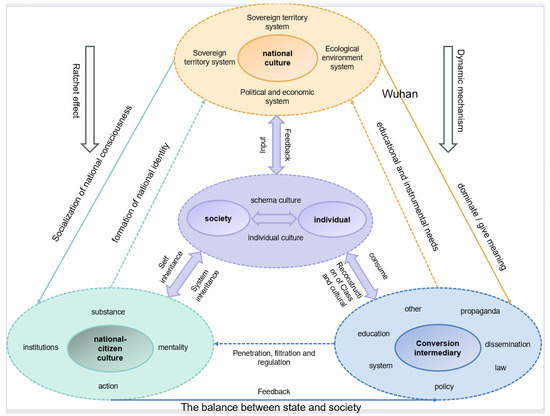
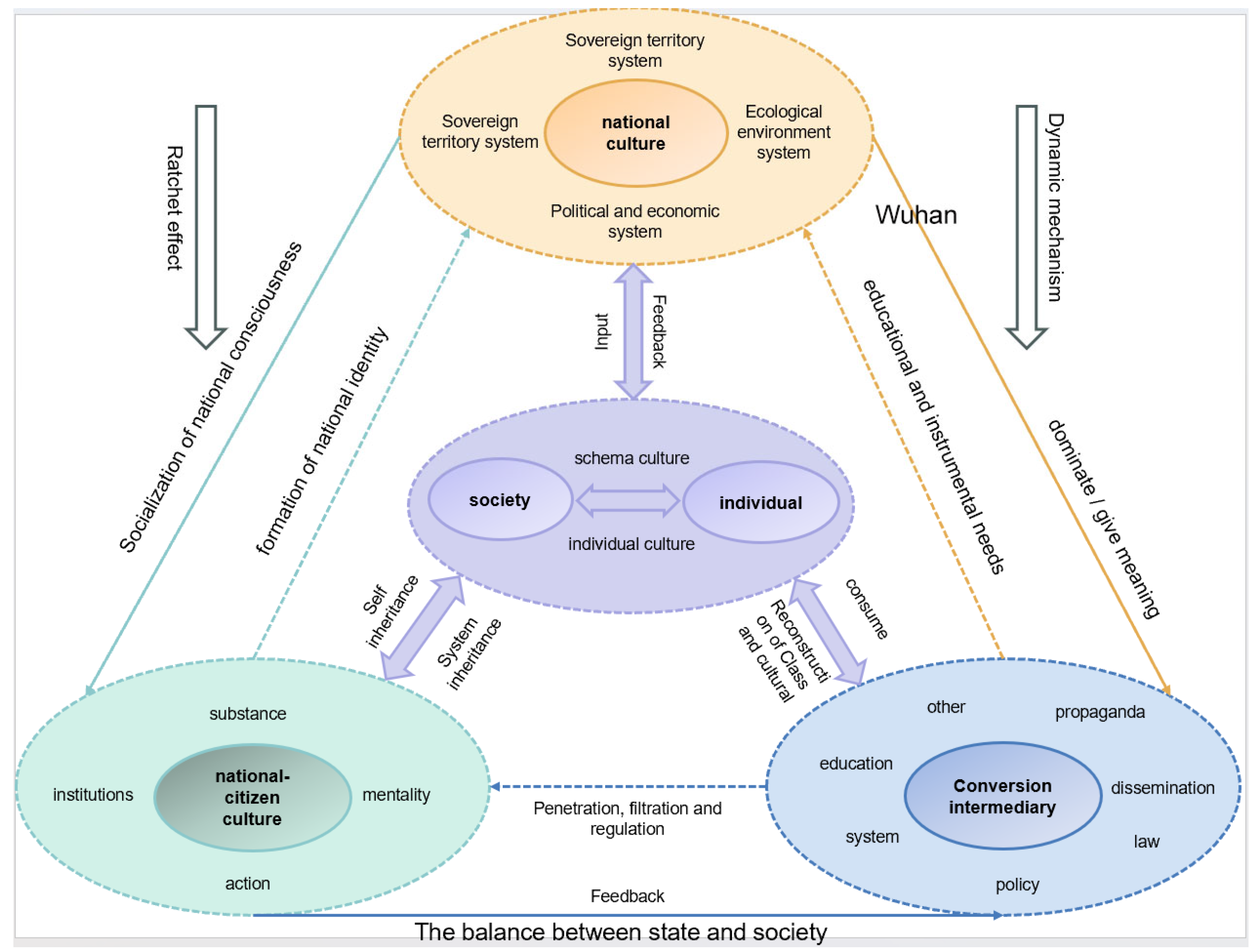
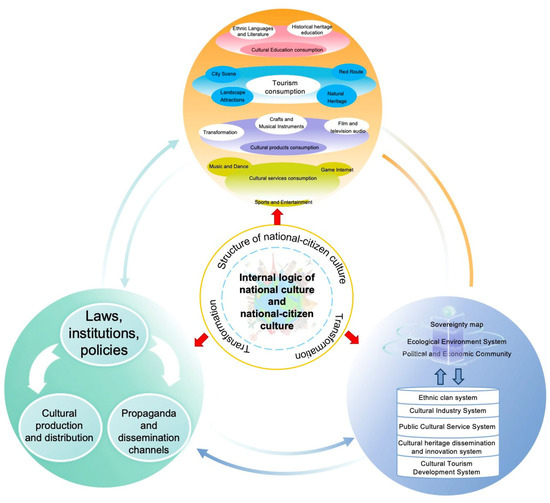
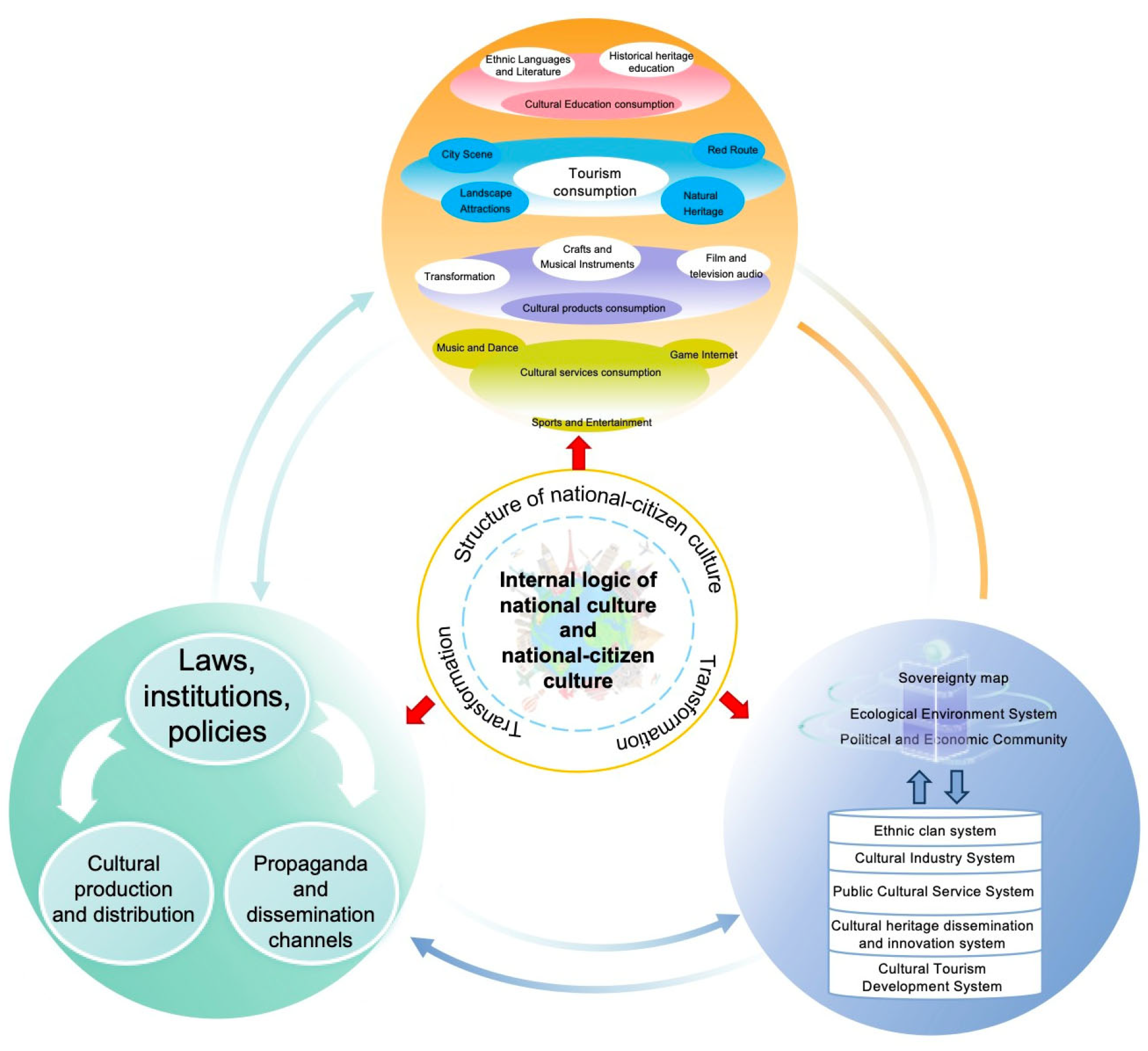
Disclaimer/Publisher’s Note: The statements, opinions and data contained in all publications are solely those of the individual author(s) and contributor(s) and not of MDPI and/or the editor(s). MDPI and/or the editor(s) disclaim responsibility for any injury to people or property resulting from any ideas, methods, instructions or products referred to in the content. |
© 2026 by the authors. Licensee MDPI, Basel, Switzerland. This article is an open access article distributed under the terms and conditions of the Creative Commons Attribution (CC BY) license.