


Abstract
U.S. land-grant universities, with their campus departments, regional research centers, and county extension offices, play a unique role in promoting innovation in the circular bioeconomy. We examine various public–private R&D partnerships being undertaken by the University of Arizona to evaluate university roles in agricultural innovation. This study adapts Pray and Birner’s International Bioeconomy Innovation System (IBIS) framework to analyze regional innovation systems. The framework assesses systems in terms of the Public Research and Education Domain, Business Domain, Bridging Institutions, Demand for Innovations, Policies and Regulations, and Socio-cultural Factors. The framework is applied to projects including rural STEM (science, technology, engineering and math) training, vertical farming, aquaponics, microbial algae production, and food production in outer space. Projects emphasized introducing circularity in water-scarce production systems, reflecting regional resource scarcity. Supply chains are not linear with a single industry putting wastes to use in its own internal production. Rather, circularity means the creation of value webs where production processes span multiple value chains. This means introducing circularity is not just a bioengineering problem but also a marketing problem. Rural areas in Arizona face a bioeconomy workforce development dilemma where STEM-adept students tend to leave rural areas, while prospective employers may not locate in rural areas because of the lack of STEM-trained workers. A new federal-university program aims to break this cycle. Many of the case studies introduced circularity to meet environmental compliance goals or reduce carbon emissions. Greater consistency regarding climate change policy could bolster future bioeconomy development.
1. Introduction
More than 60 countries have developed formal strategies to promote their bioeconomies [1]. There is no consensus among countries, organizations, or academics about a precise definition of the bioeconomy. Definitions and strategies have involved to varying degrees: (i) deployment of biotechnology and commercialization of products and processes enabled by advances in life sciences, computing, and information, (ii) substituting renewable biological resources for fossil fuels and developing new value chains in bio-based industries, and (iii) emphasizing ecological processes and biodiversity while avoiding degradation of biological systems. Countries have developed strategies in response to their own particular economic priorities, biological resource base, technological capacity, and regulatory approaches toward biotechnology [2,3].
Countries have also pursued policies to promote their circular economies [4,5,6,7]. Similar to the bioeconomy, there is no consensus on what constitutes a circular economy, with more than 100 existing definitions [8]. Circular economic systems are often compared with traditional “take-make-use-dispose” linear systems, where raw inputs are harvested or extracted, transformed into products, and then discarded as waste. In contrast, circular systems aim to minimize consumption of natural resources and maximize use of waste and byproduct materials. A circular economy reduces waste through reuse, sharing, repair, refurbishment, remanufacturing, and recycling, often called the “4R” framework—reduce, reuse, repair, recycle [9,10].
The circular bioeconomy has been conceived of as economic activities at the intersection of the bioeconomy and the circular economy [11,12]. Activities of the bioeconomy or that exhibit circularity are well-established. Indeed, some are millennia old. Yet, activities at the intersection of the circular and bioeconomy are actually a quite limited share of all economic activity. Carus and Dammer [11] note that many bio-based production processes are not circular, while many circular activities (e.g., recycling aluminum) are not bio-based. Montanía et al. [13], in a study of southern Arizona, found virtually no overlap between industries of the bioeconomy and industries that specialize in providing circular services. There is a large gap between the circular bioeconomy as a concept or policy goal and actual commercial outcomes. Many production practices and technologies of the circular bioeconomy are only recently emerging.
At this early-development stage, how are technologies and products of the circular bioeconomy coming into existence? To address this question, we first posit that U.S. land-grant universities (LGUs) and all colleges of agriculture within them are uniquely suited to stimulate innovation in the circular bioeconomy. They have a long history of supporting bio-based production linked to the most recent advances in biological sciences. Through state experiment stations, region- and commodity-specific research centers, and the Cooperative Extension system, they adapt innovations to local production conditions, furthering technology transfer. While the LGU system is particular to the U.S., there are similar systems internationally. Centers of medical, public health, and pharmacy research are also critical to bioeconomy innovation.
Next, we adapt the framework developed by Pray and Birner [14] to evaluate International Bioeconomy Innovation Systems (IBIS) to consider LGUs as a critical part of Regional Circular Bioeconomy Innovation Systems (RCBIS). Where Pray and Birner expand on earlier work on national innovations looking upward to international factors, we bore downward to the sub-national level where much LGU activity is centered. We apply the Pray–Birner framework to assess ten case studies from the U.S. State of Arizona [15] to understand how circular bioeconomy innovations are commercialized.
1.1. IBIS Framework
Pray and Birner suggest that the way innovations are brought to market is conditioned by the interactions of six factors: (1) Public Research and Education Domain, (2) Business Domain, (3) Bridging Institutions (which link the public and private domains), (4) Demand for Innovations, (5) Policies and Regulations, and (6) Socio-cultural Factors. They apply the IBIS framework to two case studies: COVID vaccine development and CRISPR (Clustered Regularly Interspaced Short Palindromic Repeats) technology. Because of the complexity and time lags in commercialization, a case study approach is useful. Innovations are idiosyncratic and factors that turn out to be consequential may not be understood for several years.
1.2. Education-Industrial Complex
Other pertinent work has considered universities in general, and LGUs in particular, as innovation systems. Zilberman et al. [16,17,18] have considered the education-industrial complex. Here, university researchers, supported by public research funding, produce life science innovations that are patented and licensed. Frequently, a key step prior to commercialization is testing and development in experiment stations and extension units. This complex is not the only innovation supply chain (ISC) that travels from scientific discovery to commercial products and processes, but it is a critical one, especially for biological innovations. ISCs may be distinguished from product supply chains (PSC) where an “innovating firm forms expectations of the demand for their products, designs a supply chain to produce and market its products (p. 1) [17].” These two supply chains (ISC and PSC) are complementary. How well these interlinked chains complement each other often determines the success of commercialization.
1.3. Land-Grant Universities as Innovation Systems
Lyons et al. [19] also examined LGUs as overarching innovation systems. They highlight LGU roles in workforce development. Through dispersed research centers and the extension system, they become hubs and networks of local innovation. The viability of applications of agricultural innovations is often highly location specific, depending on local agronomic conditions and natural resource constraints. The extended LGU system is uniquely suited to adaptive commercialization. It can also counter disadvantages of remoteness of rural areas that can hinder the uptake of new information and technologies. LGUs can emphasize specialization, based on local resource conditions and natural comparative advantage. Lyons et al. state, “We envision the land grant university, with state funding and mandates for rural economic development, to be the glue and leadership that makes this system work (p. 42) [19].”
1.4. Induced Technological and Institutional Innovation Models
Hayami and Ruttan’s theories of induced innovation and induced institutional innovation are also useful for assessing the RCBIS [20,21]. In the theory of induced innovation, the demand for technologies is driven by relative factor scarcities, where innovations are demanded to save on those inputs that are most scarce and expensive [22]. The path of innovation is thus driven by local resource scarcities. This relates directly to Pray and Birner’s [14] Demand for Innovations component in their IBIS framework and Lyons et al.’s [19] emphasis on locally appropriate innovation. As we shall see, saving on scarce factors is a major driver of demand for circularity in our Arizona case studies. In the theory of induced institutional innovation, institutional change is driven by technological changes and underlying cultural endowments of regions. This relates to Pray and Birner’s public policies and regulations and socio-cultural factors. A key insight is that underlying cultural and political conditions can promote or retard commercialization of innovations.
1.5. Helix Models of Innovation
Triple helix models consider the interconnected roles of the state, academia, and industry in conducting research and development. The helix metaphor alludes to the structure of DNA where intertwined parts are inextricably linked. Innovation does not come from the three entities operating independently. Rather, there is a “research environment” that includes university spin-off companies, trilateral projects, and strategic alliances among firms [23]. The innovation system is also conceived as an engine of regional economic development. The triple helix concept has been expanded to quadruple and quintuple helix concepts. The quadruple helix model, in addition to considering the roles of government, academia, and industry, also includes adding “the perspective of the media-based and culture-based public [24].” To these four, the quintuple helix accounts for natural resources and the environment [25]. Pray and Birner note similarities between helix models and the educational industrial complex approach. Quintuple helix models are also similar to earlier induced institutional innovation models which stressed the role of regional cultural endowments and resource scarcity in driving the pace and direction of research. The role of media in quadruple helix models relates to Birner and Pray’s socio-cultural factors. Public acceptance of new technologies and products is conditioned by consumer knowledge, which in turn depends on how risks and benefits are communicated to them from the scientific and business communities.
1.6. LGUs in the Circular Bioeconomy
This paper highlights the central role of LGUs in the circular bioeconomy. Zilberman et al. [17] emphasize that a key to turning scientific discoveries into commercial applications is the interplay between complementary innovation and product supply chains. We demonstrate that the Pray–Birner IBIS framework is quite useful for understanding the nature of these linkages and identifying where they are strong (which promotes commercialization) and where they are weak (which retards or prevents it). We explicitly examine the role of circularity in bioeconomy innovation and product supply chains. We address what functions circularity serves and what the potential benefits of circularity are. We also examine implications for supply chain analysis. Circularity means that supply chains are not linear or isolated. It introduces feedback loops and creates inputs for different supply chains. “Value webs”—networks across value chains—are especially important [26]. Considerations of circularity provide a greater focus on the environmental impacts of supply chains. Residuals and byproducts are often disposed of as environmental contaminants generating external social costs. Circularity can turn these “bads” into “goods” (productive inputs), at least partially internalizing some externalities.
The paper proceeds as follows. Section 2 introduces case studies from Arizona to illustrate circular bioeconomy commercialization potential and barriers. Including multiplier effects, the southern Arizona bioeconomy has been estimated to support 36,400 jobs and contribute $2.9 billion to regional value added and $6.6 billion to regional gross output [13]. The framework is applied to projects ranging from STEM (science, technology, engineering and math) training in rural areas, vertical farming, aquaponics, and microbial algae production, to extraterrestrial food production (on space stations, the Moon, and Mars). In Section 3, we apply the Pray–Birner IBIS evaluation framework to these cases. We also highlight the demand for and potential benefits of introducing circularity into bio-based production systems.
We conclude by drawing policy lessons from the evaluation of the case studies. First, rural areas in Arizona face a dilemma regarding bioeconomy employment. Without local employment opportunities, the best STEM students leave the area. Without a STEM-trained workforce, potential employers hesitate to locate in the areas. There is a role for government in stemming this out-migration and creating a circularity in rural labor markets where young people become the next generation of local higher-skilled labor and entrepreneurs. Second, the innovations of the case studies were often spurred by resource scarcity (water, land, assimilative capacity of the environment). A motivation for introducing circularity into production was often achieving regulatory compliance and reducing the carbon footprint of production. The U.S. has adopted a de facto “on-again off-again” approach to policies to mitigate climate change. Federal policies and research priorities regarding climate change oscillate wildly with different presidential administrations [27,28,29,30]. Periodic funding cuts and priority redirections thwart research programs that build on long-term, cumulative activities. There are historical examples of political missteps slowing innovation and agricultural productivity growth. For the U.S., the inconsistency in research funding and priorities increases the risks of falling behind in bioscience-based technologies.
2. Circular Bioeconomy Case Studies
As part of a project supported by the Economic and Business Research Center at the University of Arizona, in August 2022, a call for case studies was announced in the Cooperative Extension Tuesday Extension Notes. This electronic publication goes out to faculty and extension personnel in the College of Agriculture, Life and Environmental Sciences (CALES) at the University of Arizona’s main campus in Tucson, to County and Tribal Cooperative Extension Offices, and CALES Agricultural Research Centers throughout the state, which are operated by the Arizona Experiment Station. The call for case studies is included in this article’s Appendix A. The call requested case studies of public and private R&D, programs, and education efforts tied to the bioeconomy, circular economy, or the circular bioeconomy ongoing in Arizona. Submitters were encouraged to provide examples of how circularity was being introduced in production processes and product development. Ten case studies in total were received, and these were included in a larger report on southern Arizona’s circular bioeconomy. Below are short summaries of these ten case studies. Bickel et al. [15] provide these in greater detail with additional supporting references.
These case studies provide a comprehensive picture of circular bioeconomy research and commercialization projects being undertaken within CALES at the University of Arizona. They do not, however, include other circular bioeconomy projects ongoing in other colleges of the University of Arizona. Nor do they consider projects at Arizona State University or Northern Arizona University. Lessons drawn are from a reference frame of a college of agriculture within a land-grant university. Experiences and insights from these case studies, therefore, may not necessarily transfer over to other educational institutions.
2.1. Guayule: Bio-Based Products for Desert Environments
Guayule is a drought-tolerant, low-water-use perennial shrub native to deserts of southern Texas and Mexico, with potential to produce natural rubber, latex, resins, and biofuels. Recognizing its relevance for water-scarce regions, the USDA funded the Sustainable Bioeconomy for Arid Regions (SBAR) Center of Excellence (2017–2023), a public–private research partnership involving the University of Arizona, Colorado State University, New Mexico State University, USDA, and Bridgestone Tire Company.
SBAR conducted integrated research across the guayule value chain, including genetic improvement, agronomy, irrigation optimization, rubber extraction and processing, byproduct development, logistics, environmental assessment, and economic analysis. The project developed tools to reduce adoption risk, including an irrigation scheduling application and economic models to help growers evaluate profitability under water scarcity. This research infrastructure also supported workforce development through graduate education, teacher training, and K–12 outreach.
Bridgestone, the primary private sector partner, contributed germplasm development, cultivation and harvesting technologies, and processing innovations, and is advancing commercialization through planned investment in a guayule processing facility and active recruitment of regional growers. While rubber is the primary revenue stream, circularity is enhanced through co-product utilization, including conversion of woody bagasse into bioenergy and soil amendments, and use of guayule resin for adhesives and high-value chemicals. Beyond industrial applications, guayule provides environmental benefits as a low-water alternative to conventional crops, offering soil conservation through deep root systems and compatibility with marginal lands and solar farms.
2.2. Biochar for Irrigated Desert Croplands
Biochar is a stable, carbon-rich material produced from organic residues such as wood waste and agricultural byproducts. When applied to soil—particularly when combined with compost or nutrients—biochar can improve water-holding capacity, fertilizer efficiency, and long-term soil carbon storage. These properties are especially relevant for irrigated croplands in arid regions, where water scarcity poses growing risks to agricultural productivity.
Research conducted by University of Arizona scientists has examined biochar and co-composted biochar as soil amendments for desert agriculture, focusing on their effects on water efficiency, nutrient cycling, and broader soil health. While biochar does not necessarily reduce crop water requirements, evidence suggests that it can increase yields, thereby improving production per unit of water applied. Research also indicates that integrating biochar into composting processes can accelerate compost maturation, reduce production costs, and enhance the nutrient quality of compost.
From a circular bioeconomy perspective, producing biochar from local organic waste streams diverts material from landfills, recycles nutrients, and returns carbon to the soil for long-term sequestration. Biochar systems can link forestry and landscaping residues, agricultural waste, and composting facilities with irrigated agriculture, thus creating closed-loop material and nutrient flows.
2.3. Urban and Peri-Urban Vertical Farming
Urban and peri-urban vertical farming is a form of controlled environment agriculture (CEA) where crops are grown in vertically stacked systems using hydroponic, aeroponic, soil-less methods and electrical lighting, typically with LEDs (light-emitting diodes). These systems can substantially increase yields while using significantly less water and land per yield outcome than conventional open-field agriculture, making them attractive for arid and land-constrained regions.
Researchers in the University of Arizona’s Biosystems Engineering Department have developed a portfolio of patented and patent-pending automated vertical farming and nutrient delivery systems designed for scalable production of vegetables, berries, herbs, and microgreens. Research focuses on system design, automation, advanced environmental controls, water efficiency, and integration with other bio-based production systems, positioning vertical farming as a technically feasible option for Southern Arizona.
Southern Arizona offers potential advantages for urban and peri-urban vertical farming, including relatively low land costs. From a circular bioeconomy perspective, vertical farming systems could be linked with external regional nodes—such as power generation, greenhouses, open field agriculture, aquaculture, and food and beverage processing.
2.4. Integrated Leafy Greens and Mushroom Production in Controlled Environment Agriculture
A major challenge in indoor and vertical farming systems is the high energy demand associated with LED lighting and air conditioning, which together account for a large share of total electricity use. University of Arizona Biosystems Engineering Department and Controlled Environment Agriculture Center researchers are addressing this challenge by developing integrated controlled environment agriculture (CEA) systems that co-produce other high-value crops, such as mushrooms, with leafy greens while recycling key resource flows such as CO2 and water.
Mushroom production generates substantial quantities of CO2, which is typically vented to maintain optimal growing conditions. Indoor leafy green production requires elevated CO2 levels for optimal growth, and this must be supplemented. An integrated system that exchanges airflow between units captures and reuses the CO2 from mushroom production to enhance plant growth in leafy greens production and provides low CO2 and pre-humidified air for optimal mushroom production. By increasing CO2 concentration, crops can maintain yields at lower light intensities, reducing electricity demand. This approach can also decrease cooling and dehumidification required for conventional CO2 generation methods, such as natural gas burners.
Preliminary research indicates that this integrated production strategy can achieve meaningful energy savings—roughly 15%—without reducing fresh produce yields [15]. In addition, increased local mushroom production addresses regional market demand for highly perishable specialty mushrooms, creating opportunities for local business development while reducing reliance on out-of-state suppliers.
2.5. Decoupled Aquaponics for Integrated Fish and Plant Production
Aquaponics combines recirculating aquaculture with soil-less plant production by using nutrients from fish waste to grow crops, reducing reliance on industrially produced hydroponic fertilizers, and achieving substantial water savings relative to soil-based agriculture. In decoupled aquaponics systems, the fish and plant components operate as separate but connected systems, allowing each to be managed independently for improved efficiency.
University of Arizona researchers have examined decoupled aquaponics as a strategy to enhance the economic and environmental performance of integrated food systems. In these systems, filtered effluent from the recirculating aquaculture system supplies nutrients to hydroponic crops, while solid fish waste is removed and treated separately. This design improves system control and can support improved fish and plant productivity, with commercial-scale estimates suggesting potential cost advantages for plant production compared to conventional hydroponics.
From a circular bioeconomy perspective, decoupled aquaponics enables multiple resource loops. Solid wastes can be aerobically or anaerobically digested to release additional nutrients, and residual stabilized biosolids can be recovered as organic soil amendments rather than disposed of as waste. In addition to sales of produce and fish, systems may generate value from nutrient-rich effluent and biosolids, reducing waste generation and creating additional revenue streams.
2.6. Underground Vertical Farming Inspired by Lunar and Martian Agriculture
Southern Arizona offers favorable conditions for urban and peri-urban vertical farming due to relatively low land costs and abundant solar radiation, but extreme seasonal temperature swings increase energy demands for climate control in above-ground facilities. An alternative approach explored by University of Arizona researchers involves underground vertical farming, which leverages naturally stable subsurface temperatures to reduce energy inputs. Southern Arizona is home to underground silos at 18 Titan II missile program sites that were decommissioned in the 1980s. These underground silos have a natural capacity to maintain lower and stable ambient temperatures year-round compared to above-ground facilities.
The University of Arizona’s Biosystems Engineering Department has designed and operated underground controlled environment agriculture facilities through NASA (National Aeronautics and Space Administration)-sponsored research on food production for space exploration. Meanwhile, with a reinvigorated commitment to space exploration that includes long-duration crewed missions on the Moon and Mars, national space programs such as NASA in cooperation with private aerospace companies—including SpaceX, Blue Origin, Virgin Galactic, NanoRacks, Voyager Space, Lockheed Martin, Sierra Space, and Bigelow Aerospace—are developing innovations in service of such missions. This includes innovations for food production in extraterrestrial environments. Long-duration crewed missions require bioregenerative life support systems that encompass food crop production via an engineered controlled environment. Plants can provide food for astronauts and can also play key roles in air regeneration and water purification and reuse within an extraterrestrial human habitat.
The surfaces of the Moon and Mars lack flowing water and arable land. They are also constantly exposed to ionizing radiation, bombarded by meteors and micrometeorites, often plagued by gigantic dust storms, and regularly subjected to wild diurnal swings in ambient temperature. Building, operating, and maintaining structures on the surfaces of the Moon and Mars requires materials of sufficient strength and durability to withstand these challenges. These efforts include the design of the patent-pending BORING (BurrOwing & Regenerative IN Ground) Vertical Farm, intended for deployment in subterranean environments such as lava tubes on the Moon or Mars. The system draws on technologies developed for space life support systems, including highly controlled plant production integrated with air and water regeneration.
The research builds on terrestrial and extraterrestrial precedents. International examples, such as underground commercial farms in former military structures, demonstrate the feasibility of subsurface food production, while Southern Arizona’s retired missile silos represent potential infrastructure for adaptation. From a circular bioeconomy perspective, underground vertical farming emphasizes resource efficiency and system closure, using stable thermal conditions and integrated life support principles to minimize energy, water, and material inputs. Space sector partnerships and cross-domain knowledge transfer can generate novel agricultural concepts with potential applications in extreme terrestrial environments as well as future off-planet habitats.
2.7. Bioregenerative Life Support Systems for Space Habitats and Earth Applications
Bioregenerative Life Support Systems (BLSS) are engineered food production systems designed to operate in fully enclosed environments by recycling water, nutrients, and biomass, while converting CO2 into food and oxygen through plant growth. These systems have been developed and tested by space agencies worldwide such as NASA, ESA (European Space Agency), CNSA (China National Space Administration), and JAXA (Japan Aerospace Exploration Agency) as essential infrastructure for long-duration human habitation in space, where resupply is impossible and resource efficiency is critical.
University of Arizona Biosystems Engineering and Controlled Environment Agriculture Center researchers, in collaboration with industry partners and NASA, have designed and evaluated BLSS concepts through the development of a prototype Lunar Greenhouse (LGH). The facility integrates hydroponic crop production within a highly controlled environment intended to mimic conditions relevant to future lunar missions. NASA-targeted crops—including leafy greens, fruiting vegetables, and root crops—have been successfully grown to maturity, demonstrating the technical feasibility of sustained food production in closed systems.
The research has focused on maximizing productivity per unit area and volume while quantifying key system metrics, including water recycling efficiency, nutrient recovery, air revitalization, energy use, and labor requirements. Beyond space applications, these BLSS designs provide transferable knowledge for terrestrial controlled environment agriculture, particularly in water-scarce or extreme environments.
2.8. Phyto-Mediated Wastewater Treatment for Circular Water Reuse
Tertiary treated wastewater effluent in Tucson contains numerous unregulated contaminants of emerging concern (CECs), including pharmaceuticals and endocrine disrupting compounds, which are not fully removed by conventional treatment and may ultimately reach aquifers. In response to this water quality challenge, University of Arizona researchers developed a phyto-mediated, recirculating wastewater treatment system designed to remove contaminants without generating secondary waste streams.
The innovation builds on principles from constructed wetlands and phytoremediation, integrating plants, microbial communities, and a clay substrate into a scalable, patent-pending bioreactor. Unlike reverse osmosis or carbon filtration, which produce concentrated waste requiring disposal, the system relies on biological uptake and degradation of contaminants, thereby supporting a circular approach to water treatment.
Greenhouse trials demonstrated that the system reduced most contaminants by over 90% or below detection limits, with plant species and associated microbiomes playing complementary roles. The technology can be adapted for municipal, agricultural, aquacultural, or livestock effluent and is designed to enable safe water reuse rather than one-way disposal by removing contaminants of emerging concern and reducing ammonia and other nutrient loads.
2.9. Microalgae for High-Value Bioproducts
Microalgae are increasingly produced worldwide for high-value applications including human food, animal feed, nutraceuticals, lipids, biofuels, cosmetics, and vitamins. Global production has expanded rapidly as demand for bio-based and low-footprint products has grown. While open pond systems remain relatively inexpensive, closed and semi-closed bioreactor systems offer greater control, higher productivity, and reduced contamination risk—features that are especially important in arid and environmentally sensitive regions.
University of Arizona Biosystems Engineering researchers have developed a portfolio of patented and patent-pending scalable microalgae bioreactors designed to improve mixing efficiency, modularity, and cost effectiveness. The research focus has been on producing high-value microalgal products rather than bulk biomass, improving economic feasibility.
A microalgae industry in Southern Arizona could be integrated into a regional circular bioeconomy by utilizing inputs from external systems, including CO2 from power plants, nutrients from municipal wastewater, and byproducts from agriculture, aquaculture, and food processing. In this configuration, microalgae function as a biological conversion platform, transforming waste or low-value streams into economically and environmentally valuable outputs.
2.10. Growing Our Own (GOO) Initiative: Building Regional Bioeconomy Capacity
The Growing Our Own (GOO) Initiative is a regionally coordinated workforce and innovation effort led by the University of Arizona Yuma in partnership with economic development organizations, community colleges, industry associations, and regional government. A key bridging institution is the Yuma Center for Excellence in Desert Agriculture (YCEDA), a public–private partnership where industry groups and producers work closely with university researchers and jointly set research priorities. Supported by a USDA NRCS (Natural Resources Conservation Service) Collaborative Multistate Grant, the initiative aims to expand bachelor’s degree attainment and strengthen the skilled labor pipeline needed to support the bioeconomy, life sciences, engineering, and advanced agricultural sectors in neighboring Yuma County, Arizona, and Imperial County, California.
The region is a nationally significant agricultural hub—supplying more than 90% of North America’s winter leafy greens—while also facing rapid technological change and increasing water scarcity. As agriculture incorporates precision technologies, automation, data analytics, and biotechnology, demand for specialized skills in engineering, computation, biosciences, and resource management has intensified. The GOO Initiative responds by aligning educational institutions with industry workforce needs and regional innovation priorities.
A core component of GOO has been a four-symposium series that convened over 400 participants from industry, education, and government to assess workforce gaps, foster collaboration, and develop a shared innovation strategy. More than 45% of surveyed participants reported difficulty filling specialized agriculture, engineering, and biotechnology positions, underscoring the importance of coordinated talent development. While GOO does not focus on a single technology or production system, it contributes to the circular bioeconomy by closing regional human capital loops—educating, training, and retaining local talent to support innovation in desert agriculture and bio-based industries.
The findings of the GOO symposia mirror those of the Schmidt Futures bioeconomy strategy at the national level [31]. That report discussed US labor force bottlenecks in bio-based manufacturing. It emphasized that there were opportunities for skill development, not only at the MS and BS levels, but also at the community college level or through post-secondary certification programs. GOO is already contributing to some specific recommendations of the Schmidt Futures report. These include collecting information for a nationwide assessment of bioeconomy workforce needs, instituting “curricula development for vocational training, 2-year, 4-year, and master’s degrees, “and expanding and coordinating training programs based on industry partnerships [31].”
3. Evaluating a Regional Circular Bioeconomy Innovation System (RCBIS)
To map the regional circular bioeconomy innovation system (RCBIS), qualitative evidence from the ten Arizona case studies was synthesized using the six-domain framework of Pray and Birner [14]. Each case was examined to identify the principal public sector actors, private sector actors, and bridging institutions critical to research and commercialization or workforce development (Table 1). This was followed by an evaluation of the case studies in terms of the source of demand for innovation, key regulatory and policy drivers, and key socio-cultural drivers (Table 2). Finally, each case study was classified in terms of its dominant form of circularity with a brief summary of how circularity was introduced (Table 3).
Table 1.
The role of Pray and Birner’s Public Research and Education Domain, Business Domain, and Bridging Institutions in circular bioeconomy innovation and commercialization in 10 Arizona case studies.
Table 2.
The role of Pray and Birner’s Demand for Innovations, Policies and Regulations, and Socio-cultural Factors in circular bioeconomy innovation and commercialization in 10 Arizona case studies.
Table 3.
Introduction of circularity into production systems from 10 Arizona case studies.
3.1. Public Research and Education Domain
The ten case studies highlight the central role of LGU research at the University of Arizona in the innovation process (Table 1). Even when commercial products and processes are anticipated, the university is often leading in prototype development. Guayule development relies on decades of publicly funded agronomic, breeding, and systems research to develop drought-tolerant rubber crops suitable for arid lands, a classic public good problem given long time horizons and uncertain returns. Urban and underground vertical farming emerge from university biosystems engineering research programs, with patented or patent-pending systems developed in academic laboratories rather than in startups. Bioregenerative life support systems and phyto-mediated wastewater treatment are framed as research innovations motivated by space exploration and environmental regulation compliance rather than direct product development.
3.2. The Business Domain
The engagement of private business varies greatly across the case studies. It is strongest where formal markets and products already exist and weakest where benefits are tied less to markets and more to providing external environmental benefits. Guayule development benefits from existing industrial demand (natural rubber) and a large financial commitment by Bridgestone Tires, which is investing $35 million over multiple years in the project. Microalgae shows stronger commercial logic. It is tied to established global markets for nutraceuticals, feeds, and specialty chemicals. In contrast, underground vertical farming and bioregenerative life support systems (BLSS) involve high capital intensity and uncertain consumer markets. Although there is interest from national space programs and private space firms, NASA is the primary source of demand to date. This echoes Pray and Birner’s finding that market proximity conditions the speed of innovation diffusion. When firms can identify near-term revenue (vaccines), commercialization accelerates; when markets are uncertain (CRISPR agricultural traits), progress slows.
3.3. Bridging Institutions
Bridging institutions are the major constraint in translating research-based innovation into commercial processes and products. The cases depend on formal and informal bridging mechanisms: Cooperative Extension, the Controlled Environment Agriculture Center, YCEDA, and patenting activities that link research to potential industry partners. Transforming wastes into useful byproducts (biochar; aquaponics sludge reuse) requires coordination among researchers, municipalities, and end users to create circular flows, highlighting the relational role of bridging organizations. Although the wastewater treatment program has a patent-pending bioreactor, uptake depends on partnerships with utilities and end users, as well as on satisfying regulatory requirements associated with the intended reuse application. Table 2 shows the roles of the next three drivers of the innovation system: demand for innovation, policies and regulations, and socio-cultural factors.
3.4. Demand for Innovations
Water scarcity is a central demand driver across nearly all cases, shaping innovation objectives themselves. This fits Hayami and Ruttan’s induced innovation hypothesis as factor scarcity shapes demand for new technologies [20,21]. CEA, vertical farming, and aquaponics are responding to rising urban demand for local food with water constraints. Wastewater treatment and biochar address regulatory and ecological demand for cleaner water and improved soil carbon sequestration.
3.5. Policies and Regulations
Water rights, wastewater standards, landfill diversion rules, and zoning codes significantly affect feasibility, particularly for wastewater reuse, underground farming, and urban agriculture. An outcome and goal of many of the case studies was lowering carbon emissions. These, however, have commercial appeal only to the extent that carbon emissions are regulated or priced. In the U.S. Southwest this is not the case, which lessens the economic potential of these projects.
3.6. Socio-Cultural Factors
Many of the case studies are in such early stages of development that it may be too early to know the extent to which socio-cultural factors (farmers’ risk attitudes to producing guayule or consumer attitudes to novel food products) may constrain commercialization. Consumer acceptance of reclaimed waste (biochar, aquaponics sludge, treated wastewater) is critical but not assured. Adoption prospects hinge as much on consumer acceptance as technical performance. New food production systems (urban vertical farming, algae-based proteins) will not be adopted if they do not overcome consumer skepticism.
3.7. Introducing Circularity into Bio-Based Production
Table 3 summarizes how circularity is introduced into production processes in the ten case studies. In these cases, circularity is introduced to address a specific bioengineering problem—conserving water, reducing electricity costs, or complying with environmental regulations. The cases of extraterrestrial food production represent the epitome of circularity, where all inputs are scarce and nearly 100% recycling of air, water, and wastes is necessary. The case studies illustrate that circularity can repurpose wastes causing environmental damage as inputs in supply chains. This also highlights that supply chains are not linear with a single industry putting wastes to use in its own internal production. Rather, circularity implies the creation of value webs where production processes span multiple value chains. This means that introducing circularity is not just a bioengineering problem but also a marketing problem.
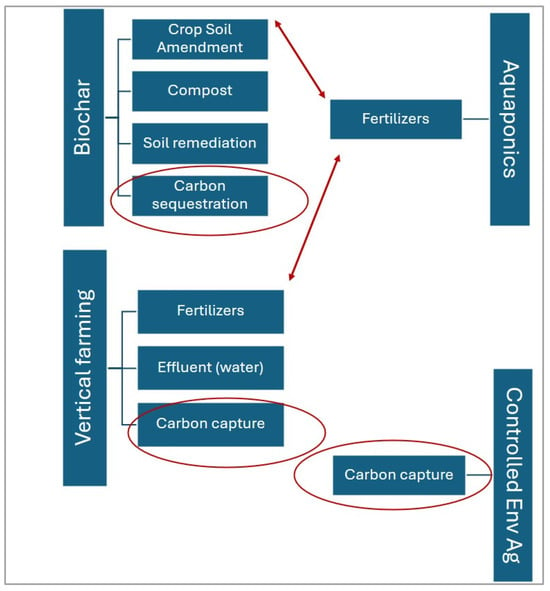
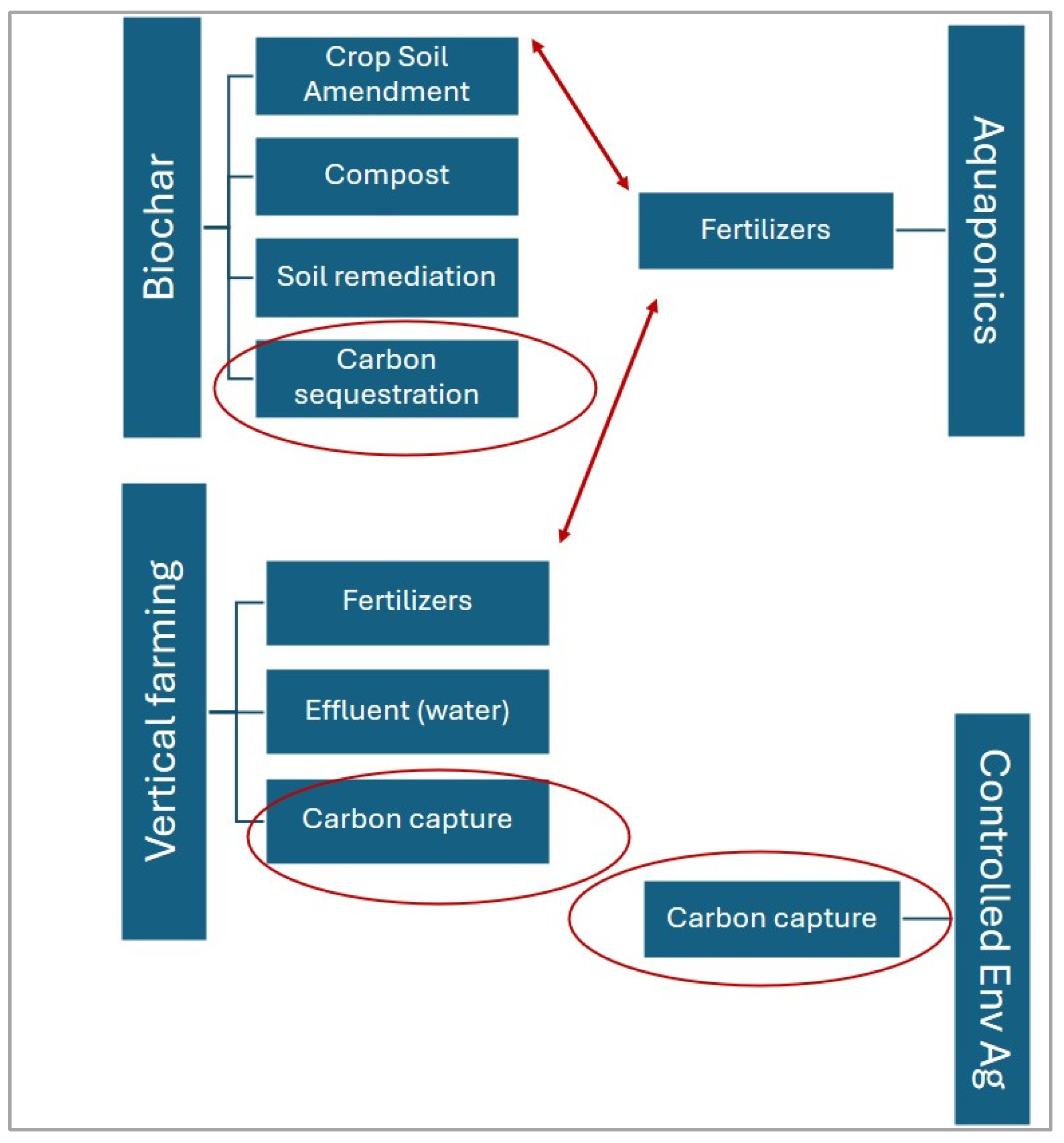
Figure 1 illustrates potential value webs arising from four of the case study projects. For some of these projects there are multiple types of by-products that could feed into different industries. Commercialization, thus, requires linkages to multiple value chains and industries. Commercialization does not emanate linearly to a single market but spreads out (as does a web) across multiple industries. Another web aspect is that multiple projects feed into some common applications. Two examples flagged in Figure 1 are in the areas of fertilizers/soil management and in carbon sequestration/capture. In fertilizers, rather than bilateral collaboration between individual university projects and the firms, it could be advantageous for a fertilizer firm or firms to consider a portfolio of university projects and products. A common output from a number of the projects involves sequestration or capture of carbon. Whether these have commercial potential depends largely on policy toward climate change. Carbon capture/sequestration has value only to the extent that limiting carbon emissions is viewed as a desirable policy goal. Commercialization potential thus depends critically on Pray and Birner’s policy and regulation factors.
Figure 1.
Potential value webs from Arizona research and commercialization projects, with cross-project applications to fertilizer production and carbon capture/sequestration.
4. Policy Lessons and Conclusions
The potential for circular bioeconomy activities to support economic prosperity while enabling more efficient and beneficial resource use hinges on national and regional policies. Rural regions are natural areas for bioeconomy development as they commonly specialize in bio-based production (e.g., agriculture, forestry). Yet rural areas in Arizona face a dilemma. Without local employment opportunities in STEM-based industries, the best STEM students leave the area. But, without a STEM-trained workforce, potential employers hesitate to locate in the areas. This is an example of the broader phenomena of rural “hollowing out” or “brain drain” [32,33,34,35]. Yuma’s Grow Our Own Initiative illustrates that there is a role for government in stemming this out-migration and creating a circularity of sorts in rural labor markets where young people become the next generation of local higher-skilled labor. Lyons et al. [19] also highlight the importance of LGUs in workforce development.
The innovations of the case studies examined here were often spurred by resource scarcity (water, land, assimilative capacity of the environment). A motivation for introducing circularity into production was often regulatory compliance. This means that water management and environmental regulation will be a significant driver of circular bioeconomy innovation as the private and public sectors adapt to existing and emerging resource constraints.
Finally, the U.S. has followed an “on-again off-again policy” regarding climate change mitigation and climate change research, with wild oscillations between presidential administrations [24,30,31,32]. This is disruptive of research programs. As an example, the University of Arizona received a $35 million multi-year grant under USDA’s Partnership for Climate Smart Commodities (PCSC) to continue guayule commercialization research. This was matched by $35 million from Bridgestone Tires. In 2025, the PCSC program was terminated and university funding from USDA was rescinded. While Bridgestone has maintained its participation and funding, this led to discontinued university research. Federal funding uncertainty highlights the importance of regional university-bridging institutions. Diversified local/private funding mechanisms, like YCEDA, can build resilience against federal policy oscillations and provide continuity in research and commercialization projects.
Hayami and Ruttan [22] and de Janvry [36] have noted that inappropriate policies toward agricultural technologies in Argentina led to agricultural productivity stagnation in that country in the early 20th century. Without policy consistency regarding climate change, the U.S. runs the risk of similar stagnation in bioeconomy development. Conversely, greater policy consistency regarding climate change research could bolster future bioeconomy development.
Author Contributions
Conceptualization, G.B.F., D.D., J.C.B., B.B., J.L.C., K.D., K.L.F.-P., T.H., M.K., B.M.P. and M.S.R.; methodology, G.B.F.; writing—original draft preparation, G.B.F., D.D., J.C.B., B.B., J.L.C., K.D., K.L.F.-P., T.H., M.K., B.M.P. and M.S.R.; writing—review and editing, G.B.F., D.D., J.C.B., J.L.C., K.D., M.K. and M.S.R.; supervision, G.B.F.; project administration, G.B.F. and D.D.; funding acquisition, G.B.F. and D.D. All authors have read and agreed to the published version of the manuscript.
Funding
This research was supported by the Economic and Business Research Center, University of Arizona, and the Cardon Endowment, University of Arizona.
Data Availability Statement
The original data and information about case studies presented in this article are available at the Making Action Possible for Southern Arizona Dashboard of the Economic and Business Research Center, University of Arizona https://mapazdashboard.arizona.edu/bioeconomy-circular-economy-southern-arizona (accessed on 14 August 2026).
Conflicts of Interest
The authors declare no conflicts of interest.
Abbreviations
The following abbreviations are used in this manuscript:
| AZ | Arizona |
| BLSS | Bioregenerative Life Support Systems |
| BORING | BurrOwing & Regenerative IN Ground |
| CALES | College of Agriculture, Life and Environmental Sciences |
| CEA | Controlled Environment Agriculture |
| CECs | Contaminants of Emerging Concern |
| CNSA | China National Space Administration |
| CO | Colorado |
| CRISPR | Clustered Regularly Interspaced Short Palindromic Repeats |
| EPA | Environmental Protection Agency |
| ESA | European Space Agency |
| GOO | Growing Our Own |
| ISC | Innovations Supply Chain |
| IBIS | International Bioeconomy Innovation System |
| JAXA | Japan Aerospace Exploration Agency |
| LED | Light-Emitting Diode |
| LGH | Lunar Greenhouse |
| LGU | Land-Grant Universities |
| NASA | National Aeronautics and Space Administration |
| NM | New Mexico |
| NRCS | Natural Resources Conservation Service |
| PSC | Product Supply Chains |
| PCSC | Partnership for Climate Smart Commodities |
| RCBIS | Regional Circular Bioeconomy Innovation Systems |
| STEM | Science, Technology, Engineering and Math |
| SBAR | Sustainable Bioeconomy for Arid Regions |
| USDA | US Department of Agriculture |
| YCEDA | Yuma Center for Excellence in Desert Agriculture |
Appendix A
Call for Case Studies
The National Academies of Science, Engineering and Medicine define the bioeconomy as “economic activity that is driven by research and innovation in the life sciences and biotechnology, and that is enabled by technological advances in engineering and in computing and information sciences.”
According to the Ellen MacArthur Foundation, the circular economy “is based on three principles, driven by design: eliminate waste and pollution, circulate products and materials (at their highest value), and regenerate nature. It is underpinned by a transition to renewable energy and materials. A circular economy decouples economic activity from the consumption of finite resources.”
The Schmidt Futures Foundation’s Task Force on Synthetic Biology and the Bioeconomy has defined the circular bioeconomy as “an economy that forgoes the traditional linear economic model of “take-make-consume-throw away” for one that uses the power of biotechnology, design for bioproduction, and machine learning/artificial intelligence to create an economic system in which waste products serve as inputs to create highly valued products and materials, that are used as long as possible, and reused.”
As part of the Making Action Possible (MAP) Dashboard White Paper series of the Economic and Business Research Center in the University of Arizona’s Eller College of Management, the Departments of Agricultural and Resource Economics and of Biosystems Engineering are publishing the report Southern Arizona’s Circular Bioeconomy: Economic Contributions, Applications, and Outlook. As part of this report, we seek short, illustrative case studies of public and private R&D, programs, and education efforts tied to the bioeconomy, circular economy, or circular bioeconomy ongoing in Southern Arizona.
Guidelines for submitting a case study:
Case studies should be short, 500–750 words.
Questions to address (only if relevant to the particular case study):
- What does the technology or program in your case study do?
- What are existing or potential commercial applications of this technology or program? For a research-enabling technology, how does it facilitate life science, biomedical, or biotechnology research?
- How does this process or program introduce circularity (how does it rely on the 3Rs: Reducing, Reusing, and Recycling materials)?
- What are notable potential environmental benefits?
- For an education or training program, how does it contribute to a well-trained bioeconomy workforce?
- What has been the role of local/state/federal funding/collaboration? Private sector partners?
- What are Weblinks for additional information?
References
- Johnson, F.; Bößner, S.; Diaz-Chavez, R.; Lima, M. Bioeconomy visions, strategies, policies, and governance across different world regions. In Handbook on the Bioeconomy; Viaggi, D., Ed.; Edward Elgar: Cheltenham, UK, 2025; pp. 51–81. [Google Scholar]
- Frisvold, G.; Moss, S.; Hodgson, A.; Maxon, M. Understanding the U.S. bioeconomy: A new definition and landscape. Sustainability 2021, 13, 1627. [Google Scholar] [CrossRef] [Scilit]
- Gallo, M.E. The Bioeconomy: A Primer. Congressional Research Service. Report R46881. 2022. Available online: https://www.congress.gov/crs_external_products/R/PDF/R46881/R46881.3.pdf (accessed on 14 August 2026).
- Abu-Bakar, H.; Charnley, F.; Hopkinson, P.; Khedmati Morasae, E. Towards a typological framework for circular economy roadmaps: A comprehensive analysis of global adoption strategies. J. Clean. Prod. 2024, 434, 140066. [Google Scholar] [CrossRef] [Scilit]
- Cramer, J. Effective Governance of Circular Economies: An International Comparison. J. Clean. Prod. 2022, 343, 130874. [Google Scholar] [CrossRef] [Scilit]
- Herrador, M.; Van, M.L. Circular economy strategies in the ASEAN region: A comparative study. Sci. Total Environ. 2024, 908, 168280. [Google Scholar] [CrossRef] [Scilit]
- Marino, A.; Pariso, P. Comparing European countries’ performances in the transition towards the Circular Economy. Sci. Total Environ. 2020, 729, 138142. [Google Scholar] [CrossRef] [Scilit]
- Tan, E.C.D.; Lamers, P. Circular bioeconomy concepts—A perspective. Front. Sustain. 2021, 2, 701509. [Google Scholar] [CrossRef] [Scilit]
- Loiseau, E.; Saikku, L.; Antikainen, R.; Droste, N.; Hansjürgens, B.; Pitkänen, K.; Leskinen, P.; Kuikman, P.; Thomsen, M. Green economy and related concepts: An overview. J. Clean. Prod. 2016, 139, 361–371. [Google Scholar] [CrossRef] [Scilit]
- Venkatesh, G. Circular bio-economy—Paradigm for the future: Systematic review of scientific journal publications from 2015 to 2021. Circ. Econ. Sustain. 2022, 2, 231–279. [Google Scholar] [CrossRef] [Scilit]
- Carus, M.; Dammer, L. The Circular Bioeconomy-Concepts, Opportunities, and Limitations. Ind. Biotechnol. 2018, 14, 83–91. [Google Scholar] [CrossRef] [Scilit]
- Kardung, M.; Cingiz, K.; Costenoble, O.; Delahaye, R.; Heijman, W.; Lovrić, M.; Zhu, B.X. Development of the circular bioeconomy: Drivers and indicators. Sustainability 2021, 13, 413. [Google Scholar] [CrossRef] [Scilit]
- Montanía, C.; Duval, D.; Frisvold, G.B.; Bickel, A. Measuring the economic contribution of the bioeconomy and circular economy: An example from Arizona. Agric. Resour. Econ. Rev. 2026, 55, 242–250. [Google Scholar] [CrossRef] [Scilit]
- Pray, C.; Birner, R. International innovation systems for the bioeconomy. In Handbook on the Bioeconomy; Viaggi, D., Ed.; Edward Elgar: Cheltenham, UK, 2025; pp. 152–196. [Google Scholar]
- Bickel, A.K.; Duval, D.; Frisvold, G.; Cuello, J.; Didan, K.; Farrell-Poe, K.; Giacomelli, G.; Li, H.; Kacira, M. The Bioeconomy and Circular Economy in Southern Arizona: Profile, Economic Baseline, and Prospects; Making Action Possible in Southern Arizona (MAP Dashboard) White Paper; Economic Business Research Center, University of Arizona: Arizona, AZ, USA, 2023; Available online: https://mapazdashboard.arizona.edu/bioeconomy-circular-economy-southern-arizona (accessed on 14 August 2026).
- Zilberman, D.; Kim, E.; Kirschner, S.; Kaplan, S.; Reeves, J. Technology and the future bioeconomy. Agric. Econ. 2013, 44, 95–102. [Google Scholar] [CrossRef] [Scilit]
- Zilberman, D.; Reardon, T.; Silver, J.; Lu, L.; Heiman, A. From the laboratory to the consumer: Innovation, supply chain, and adoption with applications to natural resources. Proc. Natl. Acad. Sci. USA 2022, 119, e2115880119. [Google Scholar] [CrossRef] [Scilit]
- Zilberman, D.; Cooper, J.; Hochman, G.; Reardon, T.; Shoemaker, S. Understanding supply chains is crucial for good agricultural policy. Choices 2023, 38, 1–6. [Google Scholar]
- Lyons, T.S.; Miller, S.R.; Mann, J.T. A New Role for Land Grant Universities in the Rural Innovation Ecosystem? J. Reg. Anal. Policy 2018, 48, 16. [Google Scholar]
- Hayami, Y.; Ruttan, V.W. Agricultural Development: An International Perspective; Johns Hopkins University Press: Baltimore, MD, USA, 1985. [Google Scholar]
- Ruttan, V.W.; Hayami, Y. Toward a theory of induced institutional innovation. J. Dev. Stud. 1984, 20, 203–223. [Google Scholar] [CrossRef] [Scilit]
- Ruttan, V. Induced Innovation, Evolutionary Theory and Path Dependence: Sources of Technical Change. Econ. J. 1997, 107, 1520–1529. [Google Scholar] [CrossRef]
- Etzkowitz, H.; Leydesdorff, L. The Dynamics of Innovation: From National Systems and “Mode 2” to a Triple Helix of University–Industry–Government Relations. Res. Policy 2000, 29, 109–123. [Google Scholar] [CrossRef] [Scilit]
- Carayannis, E.G.; Campbell, D.F. ‘Mode 3’ and ‘Quadruple Helix’: Toward a 21st Century Fractal Innovation Ecosystem. Int. J. Technol. Manag. 2009, 46, 201–234. [Google Scholar] [CrossRef] [Scilit]
- Carayannis, E.G.; Campbell, D.F. Triple Helix, Quadruple Helix and Quintuple Helix and How Do Knowledge, Innovation and the Environment Relate to Each Other?: A Proposed Framework for a Trans-disciplinary Analysis of Sustainable Development and Social Ecology. Int. J. Soc. Ecol. Sustain. Dev. 2010, 1, 41–69. [Google Scholar]
- Scheiterle, L.; Ulmer, A.; Birner, R.; Pyka, A. From commodity-based value chains to biomass-based value webs: The case of sugarcane in Brazil’s bioeconomy. J. Clean. Prod. 2018, 172, 3851–3863. [Google Scholar] [CrossRef] [Scilit]
- Cingiz, K.; Chavarria, H.; Ecuru, J.; Frisvold, G.; Kardung, M.; Wesseler, J. Perspectives on bioeconomy policies. In Encyclopedia of Energy, Natural Resource, and Environmental Economics, 2nd ed.; Mason, C., Ancev, T., Eds.; Elsevier: Amsterdam, The Netherland, 2025; Volume 2, pp. 236–248. [Google Scholar]
- Hauger, J.S.; Mizo, R. Climate Change, National Security and Geopolitics: Strategies and Responses of Five Major Powers; Routledge: New York, NY, USA, 2026. [Google Scholar]
- Al-Kassimi, K.; Atif, M.; Saeed, T. A Comparative Analysis of Climate Change Policy Frameworks in China and the US. Cogent Soc. Sci. 2026, 12, 2684099. [Google Scholar] [CrossRef] [Scilit]
- Yang, Y.T. Climate Realignment: The US Shift and Global Implications. Lancet 2025, 405, 972–973. [Google Scholar] [CrossRef] [Scilit]
- Hodgson, A.; Maxon, M.E.; Alper, J. The US Bioeconomy: Charting a Course for a Resilient and Competitive Future. Ind. Biotechnol. 2022, 18, 115–136. [Google Scholar] [CrossRef] [Scilit]
- Brooks, T.; Lee, S.L.; Berry, H.; Toney, M.B. The Effects of Occupational Aspirations and Other Factors on the Out-migration of Rural Youth. J. Rural Community Dev. 2010, 5, 19–36. [Google Scholar]
- Carr, P.J.; Kefalas, M.J. Hollowing Out the Middle: The Rural Brain Drain and What It Means for America; Beacon Press: Boston, MA, USA, 2009. [Google Scholar]
- Petrin, R.A.; Schafft, K.A.; Meece, J. Educational Sorting and Residential Aspirations among Rural High School Students: What Are the Contributions of Schools and Educators to Rural Brain Drain. Am. Educ. Res. J. 2014, 51, 294–326. [Google Scholar]
- Sherman, J.; Rayna, S. Sending off All Your Good Treasures: Rural Schools, Brain-drain, and Community Survival in the Wake of Economic Collapse. J. Res. Rural Educ. 2011, 26, 1–14. [Google Scholar]
- de Janvry, A. A socioeconomic model of induced innovations for Argentine agricultural development. Q. J. Econ. 1973, 87, 410–435. [Google Scholar] [CrossRef] [Scilit]

Disclaimer/Publisher’s Note: The statements, opinions and data contained in all publications are solely those of the individual author(s) and contributor(s) and not of MDPI and/or the editor(s). MDPI and/or the editor(s) disclaim responsibility for any injury to people or property resulting from any ideas, methods, instructions or products referred to in the content. |
© 2026 by the authors. Licensee MDPI, Basel, Switzerland. This article is an open access article distributed under the terms and conditions of the Creative Commons Attribution (CC BY) license.