


Abstract
Horsehair generated during seasonal coat shedding represents an underutilized biogenic by-product with potential for textile valorization. In this Communication, we present a first proof-of-concept investigation of the suitability of equine body hair as a raw material for nonwoven production. Hair samples collected during the spring shedding period (March–May) were analyzed for their morphology, fiber dimensions, elemental composition, lipid content, and processing behavior. Pretreatment methods included cleaning and washing, solvent-based degreasing using methyl tert-butyl ether (MTBE), and lipid extraction using supercritical CO2. Fiber processing trials were conducted using manual and industrial nonwoven formation techniques, followed by mechanical consolidation through needle punching and hydroentanglement. While the results demonstrate that horsehair can be processed into nonwoven structures, pure horsehair webs showed limited fiber cohesion and surface fiber shedding. Blended nonwovens containing Lyocell and sheep wool as well as multilayer structures were therefore produced and showed improved handling and reduced fiber release. In addition, preliminary supercritical CO2 extraction trials demonstrated the recovery of a substantial lipid-rich fraction, indicating the potential to combine extraction and subsequent fiber utilization within a preliminary cascade valorization strategy. Our study establishes the technical feasibility of this approach while identifying limitations requiring further investigation, particularly quantitative mechanical and functional characterization, optimization of fiber cohesion, chemical characterization of the recovered extract, and environmental and economic assessment.
1. Introduction
The textile industry is among the most resource-intensive industrial sectors worldwide and has increasingly been challenged to develop sustainable alternatives to conventional synthetic fibers [1]. Rising concerns regarding climate change, resource depletion, and textile waste have intensified research into renewable raw materials and circular material systems [2,3]. Consequently, increasing attention has been directed toward underutilized biological side streams that can be transformed into value-added products instead of being disposed of after primary use.
However, the utilization of such side streams should not be considered inherently environmentally preferable, as collection, cleaning, pretreatment, processing, and transportation may themselves generate environmental impacts. Their actual sustainability therefore requires assessment across the entire processing chain. Animal-derived fibers have been used for textile applications for centuries, with sheep wool representing the most established example [4]. More recently, keratin-rich by-products such as feathers, wool waste, horns, hooves, bristles, and animal hair have emerged as promising renewable feedstocks within the circular bioeconomy [5,6]. Their potential results from their combination of renewability, biodegradability, high protein content, and unique structural properties.
Recent studies have demonstrated their potential in biomaterials, composites, packaging, insulation materials, filtration media, and functional textiles [7,8,9,10]. In particular, keratin has attracted considerable attention because of its hierarchical structure, sulfur-rich amino acid composition, and excellent mechanical stability, making it an attractive bio-based polymer for advanced material applications [11,12]. In addition to keratin extraction, current research has investigated the direct utilization of animal fibers in order to preserve their native morphology while reducing processing effort and potentially reducing the number of processing steps required for material utilization [8,9,10].
Beyond the utilization of keratin alone, recent research has increasingly promoted integrated biorefinery concepts, in which valuable constituents of biological side streams are recovered and converted into multiple products. Instead of focusing on a single product, biorefinery approaches aim to fractionate biomass into different value streams, thereby seeking to increase resource efficiency and improve the economic viability of bio-based materials. Within keratin-rich feedstocks, this may include not only the fibrous protein fraction but also naturally occurring lipids, waxes, sterols, and other extractable compounds that could potentially provide additional material value after appropriate chemical characterization [5,6,11,12]. At an early stage of development, such approaches may more appropriately be described as cascade valorization strategies until the individual fractions, their functionality, and the environmental and economic performance of the overall process have been sufficiently characterized.
Horsehair represents one of the least explored animal fibers despite its long history of technical use. Traditionally, horsehair obtained from the mane and tail has been utilized for upholstery, brushes, haircloth, musical instruments, surgical sutures, and decorative textiles due to its durability, elasticity, and moisture resistance [13,14,15,16,17]. More recent studies have focused on the physical, thermal, and mechanical properties of mane and tail hair, as well as their application in composite materials [18,19]. However, these investigations almost exclusively address long horsehair, whereas body hair obtained during seasonal coat shedding has received limited scientific attention as a potential textile feedstock.
This lack of research is particularly relevant considering that horse body hair is generated annually during spring coat shedding. Collection occurs during routine grooming, making it a non-invasive biological side stream that does not require animals to be kept specifically for fiber production. Nevertheless, the material is generally not utilized as a textile raw material, despite its potential as a locally available keratin-based resource. At present, however, reliable data on the amount of collectable material, variability between animals, and realistic collection rates remain limited. Consequently, its potential should initially be considered in the context of regional and niche valorization rather than large-scale commodity production.
Nonwoven technology offers particularly favorable processing conditions for heterogeneous natural fibers because it eliminates the need for spinning continuous yarns. Instead, loose fibers are mechanically, thermally, or chemically consolidated into sheet-like structures [20,21]. Such processes have successfully been applied to numerous natural fibers and agricultural residues and therefore provide an attractive processing route for coarse animal fibers that exhibit limited spinnability. Whether seasonally shed horsehair provides sufficient fiber cohesion for such processes, and whether blending with other fibers is required, has not yet been systematically established.
Despite increasing research on keratin-based materials and animal-derived fibers, the available literature provides little information on the combined characterization, pretreatment, lipid recovery, and nonwoven processing of horse body hair obtained during seasonal coat shedding. Its morphology, chemical composition, lipid content, pretreatment requirements, and processing behavior therefore remain insufficiently characterized. This knowledge gap limits an evidence-based assessment of whether the material can serve as a technically usable feedstock and which limitations must be addressed in subsequent material-development studies.
Accordingly, the present study was designed as an exploratory proof-of-concept Communication reporting first results on the utilization of horsehair obtained during seasonal coat shedding. Rather than providing a complete application-specific qualification of horsehair-based nonwovens, our study establishes the technical feasibility of a preliminary cascade valorization strategy comprising raw-material characterization, pretreatment, and lipid recovery, followed by processing of the remaining fibers into nonwoven structures. Lipid recovery was investigated using conventional solvent extraction and lipid extraction with supercritical CO2, while the fiber fraction was subsequently evaluated using manual and industrially relevant nonwoven processing routes. This approach enables the opportunities and limitations of both material streams to be identified and provides a basis for more comprehensive subsequent investigations.
This study addresses the following research questions:
- What is the suitability of horsehair obtained during seasonal coat shedding for nonwoven manufacturing?
- Which morphological and chemical characteristics govern its textile processing behavior?
- Which pretreatment strategy provides the best compromise between textile processability and recovery of the lipid fraction?
The novelty of the present work does not reside in the individual extraction or nonwoven manufacturing technologies, which are established processes. Rather, its contribution lies in applying and combining these approaches to investigate seasonally shed equine body hair as a largely unexplored keratin-rich feedstock. The study links initial fiber and chemical characterization with lipid recovery and subsequent nonwoven formation and thereby evaluates the feasibility of a preliminary cascade valorization pathway. Potential further steps, including chemical characterization and utilization of the recovered lipid-rich extract, modification of fiber properties through supercritical CO2 processing, and supercritical CO2 impregnation of finished nonwovens, are considered future research and were not experimentally demonstrated in the present study.
2. Materials and Methods
2.1. Collection and Storage of Horsehair
Horsehair samples were collected during the spring shedding period between March and May 2025 from privately owned horses and equestrian facilities in Austria. Hair was obtained during routine grooming and brushing and was collected independently of anatomical body region. Long hair, including mane and tail hair, was systematically excluded from the investigated material. Before fiber-length measurement, the collected material was manually freed of dust and coarse contaminants but was not washed.
Our study was designed to investigate the technological suitability of seasonally shed horsehair for textile processing rather than animal-, breed-, sex-, age-, or body-region-specific biological effects. As several participating establishments used communal collection containers, the exact number of donor animals and the proportional contribution of individual horses could not be determined retrospectively. Identifiable analytical samples included material from a Pinto, a Spanish-type horse, Icelandic horses, a New Forest Pony, and an Icelandic–Arabian cross, while other samples represented pooled material from several animals or establishments. Although the known age range of contributing horses was approximately 4–38 years, the age distribution within pooled samples and the sex distribution were not systematically recorded. Consequently, animal, breed, age, sex, and anatomical body region could not be included as controlled factors in the statistical analysis.
Following collection, the raw material was stored in kraft-paper bags and subsequently cleaned, air-dried, and stored in open containers under ambient conditions. Because collection occurred continuously between March and May 2025 and analytical and textile processing experiments were conducted between July and September 2025, the exact storage duration of individual samples could not be determined. Depending on the respective collection and analysis dates, storage duration was approximately two to six months.
2.2. Morphological and Chemical Analysis
The collected horsehair was visually examined and microscopically analyzed to determine fiber morphology, cuticle structure, fiber diameter, and fiber length. Fiber dimensions were measured using light microscopy (Zeiss Labscope, 18MP MicroqSPU3 MikroCam, Oberkochen, Germany).
Fiber length was determined using a modified manual single-fiber measurement procedure based on the principle of DIN 53808-1 [22]. The reference procedure was adapted for the exploratory character of the present study and was therefore not performed as a fully standardized DIN test. Two pooled raw-material samples were prepared according to the conspicuous difference in coat length: (1) hair from at least ten Icelandic horses and (2) hair from at least ten non-Icelandic horses.
Individual fibers were manually separated from the previously collected pooled material using forceps and measured with a ruler in their extended but unstretched state. No stretching was required because the investigated horsehair showed no visible crimp and was naturally straight. The material was measured in its raw state after manual removal of dust and coarse contaminants but before washing. A total of 400 individual fibers were evaluated, comprising 200 fibers randomly selected from each pooled sample.
The fiber-length data were evaluated using descriptive statistics only (minimum, maximum, mean, median, and standard deviation). Since individual fibers originated from pooled raw-material samples and could not be assigned to individual donor animals, they were not considered independent biological replicates. No inferential statistical tests or breed-level comparisons were therefore performed, and the results characterize the two investigated raw-material pools only.
Fiber diameter analysis comprised 88 individual fiber measurements obtained from four individually identified horses—a 16-year-old Pinto, a 15-year-old Spanish-type horse, a 9-year-old New Forest Pony, and a 38-year-old Icelandic horse—and one pooled sample from an establishment housing 14 horses. Since the hair was collected during routine brushing without standardized sampling by anatomical body region, individual fibers could not be assigned to specific body regions. The diameter measurements were therefore intended as a preliminary descriptive characterization of the investigated material and should not be considered statistically representative of the entire collected raw-material stream or interpreted as evidence of animal-, breed-, age-, or body-region-specific differences.
To determine the elemental composition of the hair samples (C, H, N, S, and moisture content), a vario MACRO cube elemental analyzer (Elementar Analysensysteme GmbH, Langenselbold, Germany) was used. The instrument operates according to the principle of dynamic combustion and enables the simultaneous quantitative determination of the major constituents of carbon-based organic materials.
Prior to analysis, the hair samples were mechanically reduced to a homogeneous particle size and weighed into suitable tin capsules. Depending on the sample type, sample masses between 5 and 20 mg were used. The analysis was based on the complete oxidation of the samples in an oxygen-enriched carrier gas stream at temperatures of up to 1200 °C. The resulting gaseous combustion products (CO2, H2O, N2 or NOx, and SO2) were subsequently converted into defined gas fractions through catalytic reduction and chromatographic separation. Quantification was carried out using a thermal conductivity detector (TCD), and the measured detector signals were calibrated using certified reference standards such as acetanilide.
The detected gas fractions were software-calculated into mass fractions of carbon, hydrogen, nitrogen, sulfur, and moisture content, with the results expressed as mass percentages (%) relative to the absolute dry mass of the samples.
Lipid content was determined through Soxhlet extraction using petroleum ether as a nonpolar solvent. Additional larger-scale degreasing experiments were performed using static solvent extraction by Tert-Butylmethylether ≥99.5% (MTBE). Both solvents were purchased from Carl Roth GmbH + Co. KG, Karlsruhe, Germany. Extracted lipid fractions were recovered using rotary evaporation, while Soxhlet extraction was carried out using manually pre-cleaned horsehair samples in cellulose extraction thimbles and followed established standard procedures for lipid determination from natural fibers.
2.3. Pretreatment of Fibers Prior to Textile Processing
Several pretreatment steps were necessary to transform the raw horsehair into a textile-processable fiber material. The pretreatment focused on the removal of impurities, dust, and sebaceous surface lipids while preserving fiber integrity for subsequent nonwoven processing.
2.3.1. Cleaning and Washing
Only hair samples that were already relatively free from contamination at the time of collection were selected for further processing. Initially, coarse impurities such as hay, straw, and particulate contaminants were manually removed. Additional dust removal was performed using sieves, and the fibers were pre-sorted according to color.
A preliminary washing step was conducted to remove coarse dirt and reduce contamination prior to machine washing. The fibers were immersed in water heated to approximately 55 °C using a preserving cooker. Soap nuts were used to generate a mild washing solution. This treatment also contributed to the partial removal of equine sebum, whose wax-like components exhibit melting points close to equine body temperature. The amounts of soap nuts and detergent were not systematically recorded during these exploratory washing trials and therefore cannot be reported retrospectively.
Subsequently, the fibers were washed in a household washing machine using a delicate or silk washing program at 40 °C and a spin speed of 600 rpm. The horsehair was loosely placed into laundry bags to minimize felting and fiber entanglement during washing. A wool detergent formulated for delicate fibers was used. Additional experiments with higher spinning speeds were performed to investigate felting behavior and mechanical stress sensitivity.
After washing, the fibers were air-dried under sheltered outdoor conditions, followed by fine sorting and storage in open containers to allow residual moisture evaporation.
The wastewater generated during the laboratory-scale washing procedure was discharged through the municipal wastewater system. No wastewater treatment or compositional analysis was performed within the scope of the present proof-of-concept study.
2.3.2. Solvent-Based Degreasing with MTBE
To obtain larger quantities of degreased horsehair and to isolate the lipid fraction of equine sebum, a manual solvent extraction procedure was performed using methyl tert-butyl ether (MTBE).
Horsehair samples were placed in sealed glass containers and fully immersed in solvent. The extraction was carried out over a period of 24 h with regular manual agitation to ensure homogeneous solvent contact with the fibers.
Following extraction, the solvent was separated from the fibers using filtration. The same solvent batch was subsequently reused for additional extraction cycles to increase lipid concentration before solvent recovery.
The lipid-containing solvent fractions were concentrated using rotary evaporation at a bath temperature of 70 °C and a rotation speed of 40 rpm. Recovered lipid fractions were collected for further analysis, while the purified solvent was reused for subsequent extraction procedures. The degreased fibers were air-dried and stored for further characterization and textile processing.
In addition to the production of degreased fibers, selected experiments were performed to compare the effectiveness of different cleaning and extraction approaches. These included comparisons between untreated fibers, machine-washed fibers with and without detergent, and MTBE-extracted fibers relative to Soxhlet extraction results.
2.3.3. Supercritical CO2 Extraction
Supercritical CO2 extraction was investigated as an environmentally favorable pretreatment method for lipid removal from horsehair. In contrast to conventional organic solvents, supercritical carbon dioxide enables extraction without leaving solvent residues and can be recycled within the process.
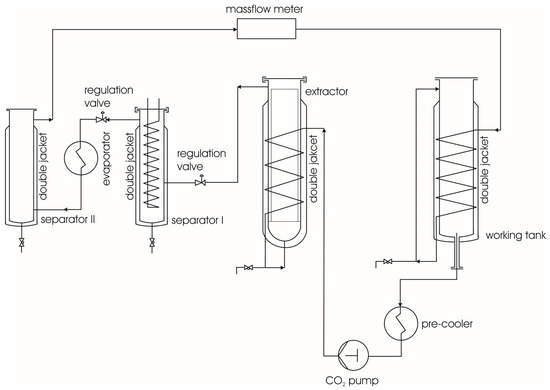
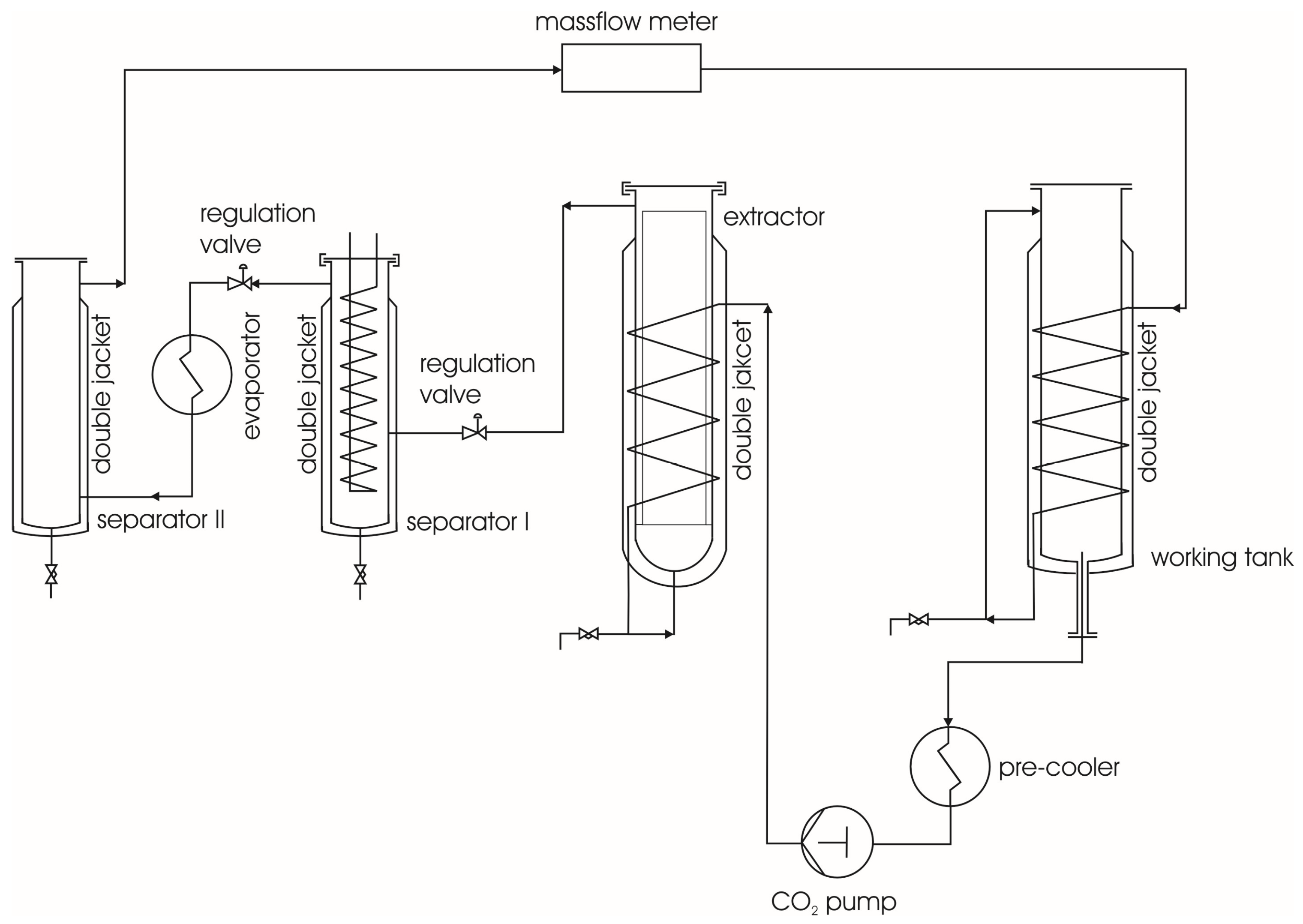
The extraction was performed on a 5 L/1000 bar extraction unit designed and built by NATEX Processtechnologie (Ternitz, Austria), composed of one extractor equipped with a basket of 5 L internal volume and two separators in series for precipitation of the extracted lipophilic substances. In between the first and second separator, an extra heat exchanger provides additional heat to the CO2 in case a fractionation step is needed. After the second separator, all CO2 must be in a gaseous state before it is recondensed and recycled back to the working tank. A Coriolis mass flowmeter monitored the consumption of CO2 during the experiment (Figure 1).
Figure 1.
Simplified P&ID diagram of the 5 L/1000 bar unit used in the experiment’s design and built by NATEX [23].
Two extraction conditions were tested to observe any influence of temperature on the extraction kinetics and stability of the horsehair residue after the scCO2 extraction process. The horsehair was filled into the basket while gently pressing the material down to fit in as much material as possible. The first extraction was conducted at 460 bar and 60 °C using 566.0 g of horsehair. The extract was drained every 15 min from the first separator set at 60 bar and 60 °C until no further recovery of the extract occurred. The second separator set at 48 bar and 30 °C was filled with 1.2 kg of activated carbon to entrap possible volatile organic compounds (VOCs) still solubilized in gaseous CO2. In the second trial, a lower extraction temperature was applied (50 °C), keeping a constant pressure (460 bar) and CO2 mass flowrate (30 kg/h). The second trial was conducted using 81.0 g of horsehair.
2.4. Nonwoven Formation and Consolidation
The pretreated horsehair fibers were processed in nonwoven production trials conducted in cooperation with Groz-Beckert KG (Albstadt, Germany) and Hof University of Applied Sciences (Hof, Germany). Both manual and machine-assisted approaches were investigated to evaluate the general nonwoven-forming capability of equine body hair and its suitability for textile applications.
The incomplete documentation of selected washing and hydroentanglement parameters further limits process reproducibility and highlights the need for standardized processing protocols in subsequent optimization studies.
2.4.1. Manual Nonwoven Trials at Groz-Beckert
Initial feasibility studies were performed at the Groz-Beckert Technology and Development Center for Nonwovens. Washed and untreated horsehair samples were manually opened using hand carding devices and formed into loose fiber webs. The resulting webs were mechanically consolidated using a laboratory needle-punching machine. During needle punching, barbed needles repeatedly penetrated the fiber web and mechanically entangled the fibers, increasing cohesion and structural stability. The documented needle-punching parameters comprised a needle-board density of 1517 needles/m using Groz-Beckert 411 needles, a stroke frequency of 120 min−1, a penetration density of 61.7 penetrations/cm2, and a penetration depth of 11 mm. Depending on the sample, needling was performed either from one side or from both sides. The approximate basis weights of the produced 100% horsehair nonwovens ranged from 280 to 750 g/m2.
These trials served as a first assessment of the processability of horsehair in dry-laid nonwoven manufacturing.
2.4.2. Industrial Nonwoven Trials at Hof University of Applied Sciences
Further processing trials were conducted at Hof University of Applied Sciences. For manual web preparation, either 100% horsehair was used for needle-punching trials or a 50:50 mass ratio of horsehair and Lyocell was used for hydroentanglement. The Lyocell fibers had a linear density of 6.3 dtex and a fiber length of 50 mm. Manual carding was performed using a Louet XL drum carder with a clothing density of 72 tpi, a tooth length of 14 mm, a drum size of approximately 30 × 78 cm, and a batch capacity of approximately 120 g.
For machine processing, 2.5 kg of horsehair and 2.5 kg of Lyocell were used, corresponding to a 50:50 mass ratio. The Lyocell fibers were initially opened separately and subsequently mixed with the horsehair using a Temafa bale opener. The blend passed through the opener a second time during feeding to a Hergeth-Hollingsworth random card equipped with coarse card clothing. The resulting web was cross-laid to a target basis weight of approximately 100 g/m2, and the subsequently measured mean basis weight was 99.06 g/m2.
Needle punching was performed using a DILO OUG/II/6 needle loom equipped with Groz-Beckert 15 × 32 × 40 × 3½ needles. The needle-board density was 2700 needles/m, with a stroke frequency of 300 min−1, a penetration density of 90 penetrations/cm2, and a penetration depth of 11 mm. Needling was performed from one side (top side).
Hydroentanglement was performed using a Fleissner Aquajet laboratory unit with a working width of 500 mm and a maximum material width of 450 mm. The hydroentanglement trials were conducted using a 50:50 horsehair/Lyocell blend. Water pressure and line-speed data were not documented during these exploratory trials.
The resulting materials were characterized at the testing laboratory of Hof University of Applied Sciences regarding thickness (DIN EN ISO 9073-2 [24]), area weight (DIN EN ISO 9073-1 [25]), and air permeability (DIN EN ISO 9073-15 [26]).
3. Results
3.1. Raw-Material Characteristics
Horsehair displayed considerable variation depending on breed, body region, and seasonal adaptation.
Two principal fiber-length groups were identified: horses excluding Icelandic breeds exhibited an average fiber length of 3.34 cm, whereas Icelandic horses showed longer fibers with an average length of 6.02 cm (see also Table 1). The horsehair fibers were analyzed using light microscopy to determine fiber diameter.
Table 1.
Fiber length of horsehair obtained from seasonal shedding (cm).
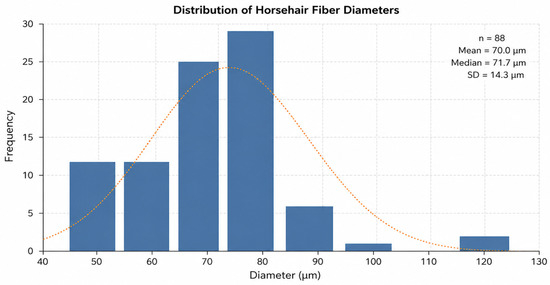
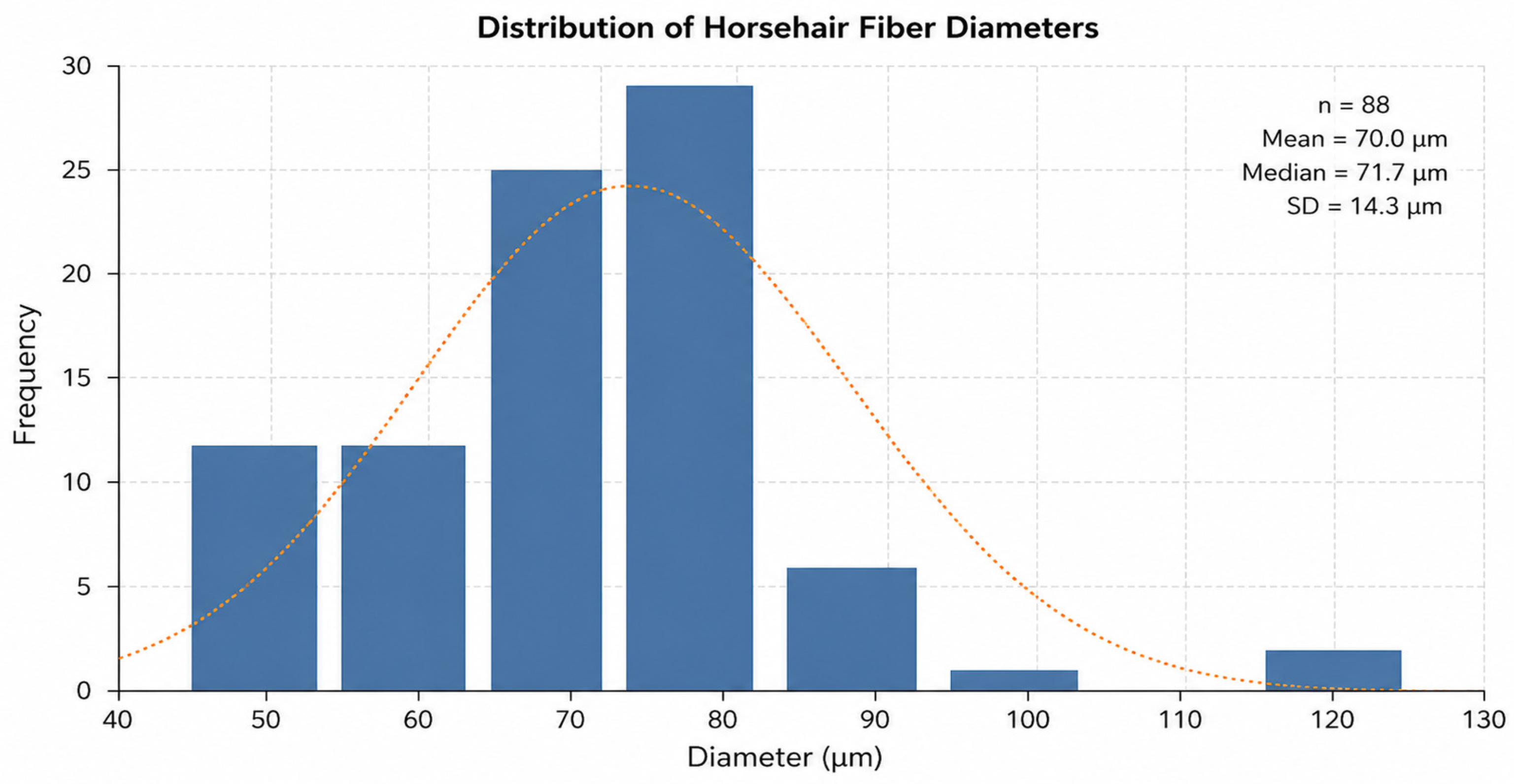
The distribution of the measured fiber diameter is shown in Figure 2. The diameters ranged from 40 to 120 µm, with a mean value of 70.0 µm and a median of 71.7 µm. The most frequent diameter class was 80 µm. The diameters measured confirm that horsehair from seasonal coat shedding belongs to the group of relatively coarse animal fibers.
Figure 2.
Distribution of horsehair fiber diameters obtained from seasonal coat shedding (n = 88).
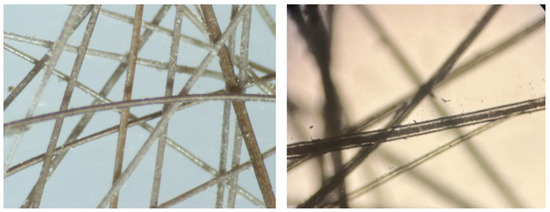
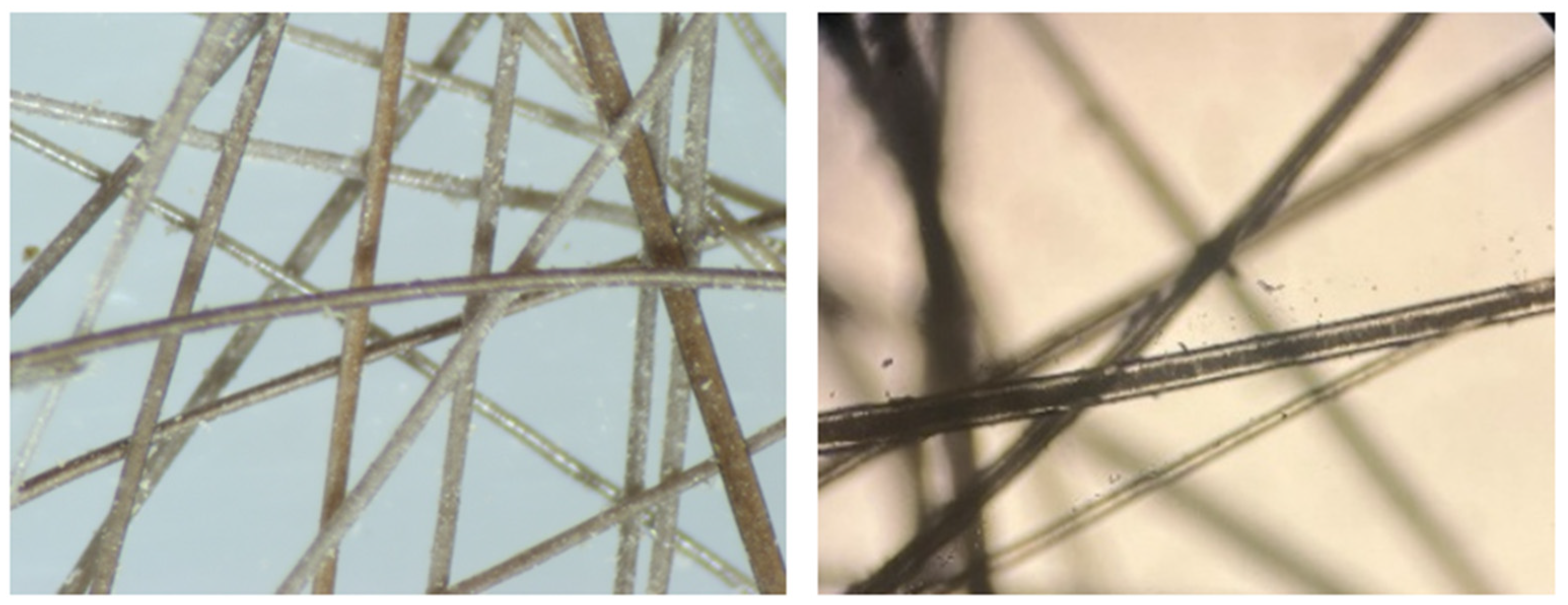
Microscopic analysis confirmed the typical structure of animal keratin fibers consisting of cuticle, cortex, and medulla (see Figure 3). Compared with sheep wool, light microscopy observations suggested a comparatively smooth surface morphology and confirmed the absence of visible natural crimp. These characteristics may have contributed to the limited inter-fiber cohesion observed during web formation.
Figure 3.
Light microscopy images of horsehair fibers at 40× magnification: (left) reflected-light microscopy showing the comparatively smooth surface morphology and absence of visible natural crimp; (right) transmitted-light microscopy showing the visible medulla within the horsehair fiber.
The elemental analysis revealed an overall homogeneous composition of the investigated horsehair samples, with only minor variations between individual measurements (Table 2).
Table 2.
Statistical parameters of the elemental analysis (n = 8).
The moisture content showed slight variation between the samples, with a mean value of 8.00% and a standard deviation of 0.75% (CV: 9.43%). Such variations are typical for biological materials and may result from differences in storage conditions, ambient humidity, and residual surface moisture. A moisture content below 10% is advantageous for storage stability and helps prevent microbial growth and mold formation.
Hydrogen, carbon, and nitrogen exhibited a highly homogeneous distribution among the analyzed samples. The obtained values correspond well with reported reference values for comparable protein-based fibers: the mean nitrogen content of 14.69% reflects the high protein content characteristic of keratin fibers, and the measured hydrogen (7.00%) and carbon contents (44.51%) were consistent with the literature data for animal-derived keratin materials. Sulfur was detected at an average concentration of 2.84%, which is characteristic of keratinous fibers containing sulfur-rich amino acids such as cysteine. The measured sulfur content is consistent with the literature values reported for sulfur-containing keratinous animal fibers.
The lipid content of four horsehair samples was determined through Soxhlet extraction to quantify the extractable sebaceous components of equine coat hair. The measured lipid contents ranged from 6.56% to 9.40%, with an average value of 7.60%. Due to the limited sample number, the results should be regarded as preliminary indications of the lipid content range of horsehair. Nevertheless, the analysis confirmed the presence of relevant amounts of extractable wax-like lipids, supporting the necessity of degreasing pretreatments prior to textile processing. Analytical characterization of the extracted sebum remained inconclusive due to interfering matrix components.
3.2. Pretreatment and Degreasing
The washing procedure at 40 °C using a silk washing program and a spin speed of 600 rpm proved suitable for cleaning the horsehair while simultaneously preventing excessive felting. The preliminary manual washing step in the preserving cooker at 55 °C effectively removed coarse contaminants such as dust, straw, and dirt. In addition, the elevated temperature already contributed to a partial removal of the lipid fraction, as equine sebum contains wax-like components with melting points close to body temperature.
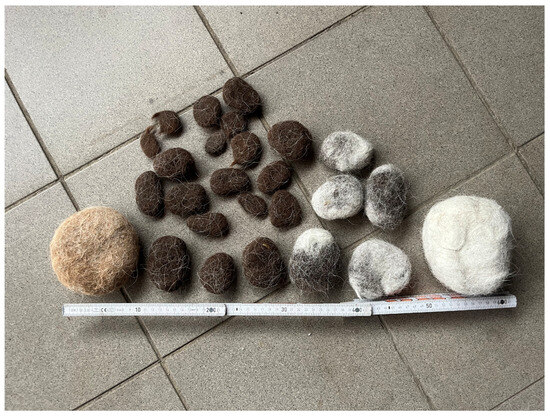
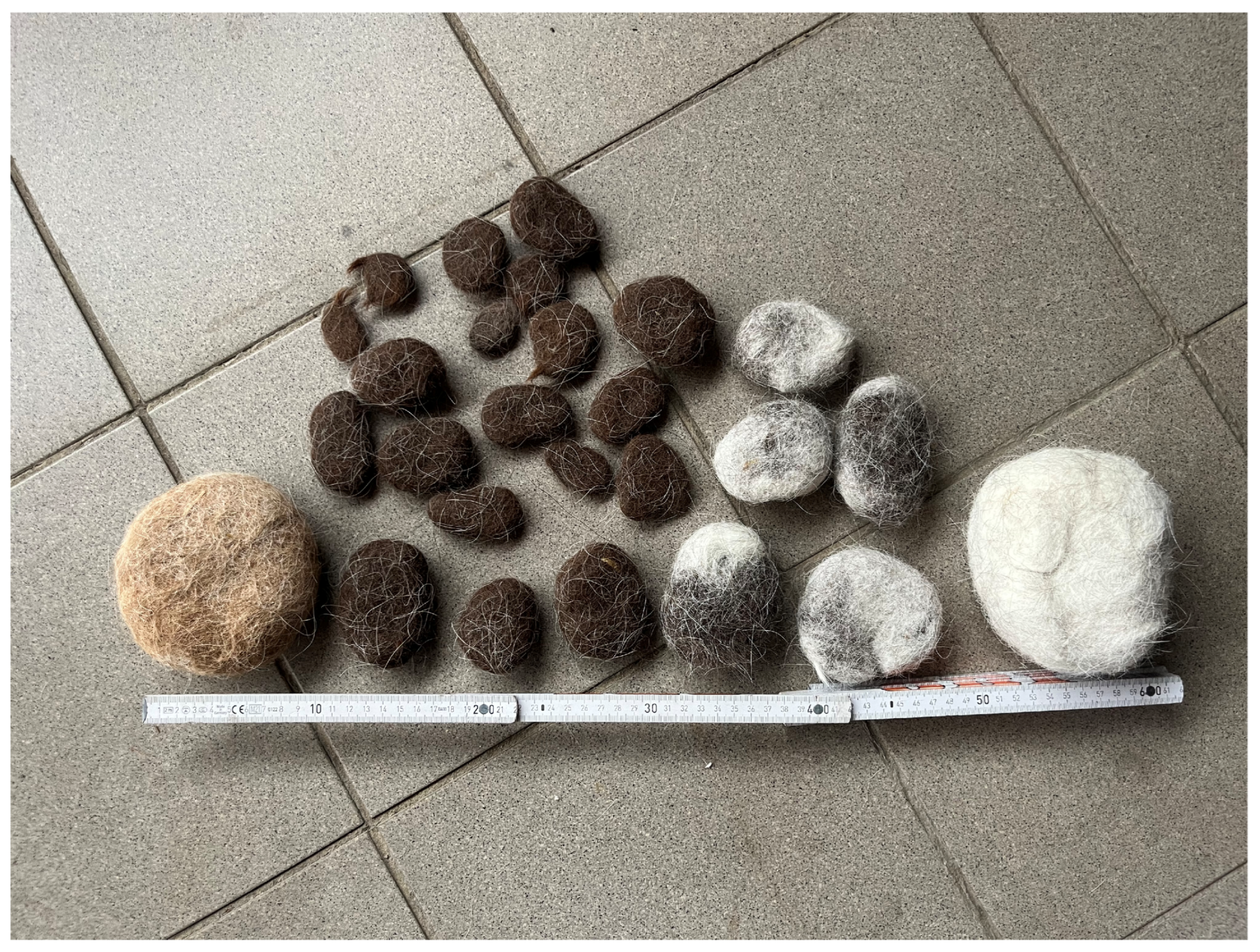
Experiments using alternative washing programs with higher spinning speeds demonstrated that horsehair has a clear tendency to felt under combined mechanical movement, moisture, and elevated temperatures (see Figure 4). This behavior indicates that equine coat hair can mechanically interlock similarly to other animal fibers under specific processing conditions.
Figure 4.
Felt structure formed from horsehair fibers during washing under mechanical agitation, moisture, and elevated temperature.
Drying times after washing ranged from several days up to one week depending on ambient weather conditions. The prolonged drying behavior may be attributed to the partial removal of the hydrophobic lipid layer, resulting in increased moisture absorption and fiber swelling. After drying, the fibers were stored in open containers to allow for the evaporation of residual moisture and to prevent microbial growth.
The comparison of degreasing methods utilizing different solvents (Ethanol, Water, Detergent and MTBE) demonstrated that MTBE extraction removed approximately 82% of the extractable lipid fraction relative to Soxhlet extraction. Washing without detergent removed roughly 40% of the lipid fraction, while washing with detergent reduced the lipid content by more than 50%. The results indicate that simple washing at 40 °C may already be sufficient for textile pretreatment if a certain residual lipid content is acceptable for further processing. However, if recovery of the lipid fraction is desired, solvent-based extraction methods are necessary, as washing processes do not allow lipid recovery.
Following the identification of a substantial lipid fraction in horsehair and its high solubility in MTBE, supercritical CO2 extraction was investigated as an alternative extraction method. In addition to enabling the removal of lipophilic compounds, supercritical CO2 extraction allows for the recovery of a lipid-rich fraction whose chemical composition, properties, and potential utilization require further characterization.
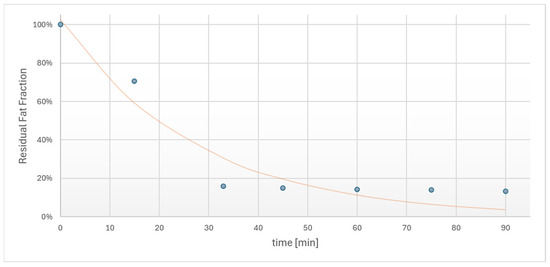
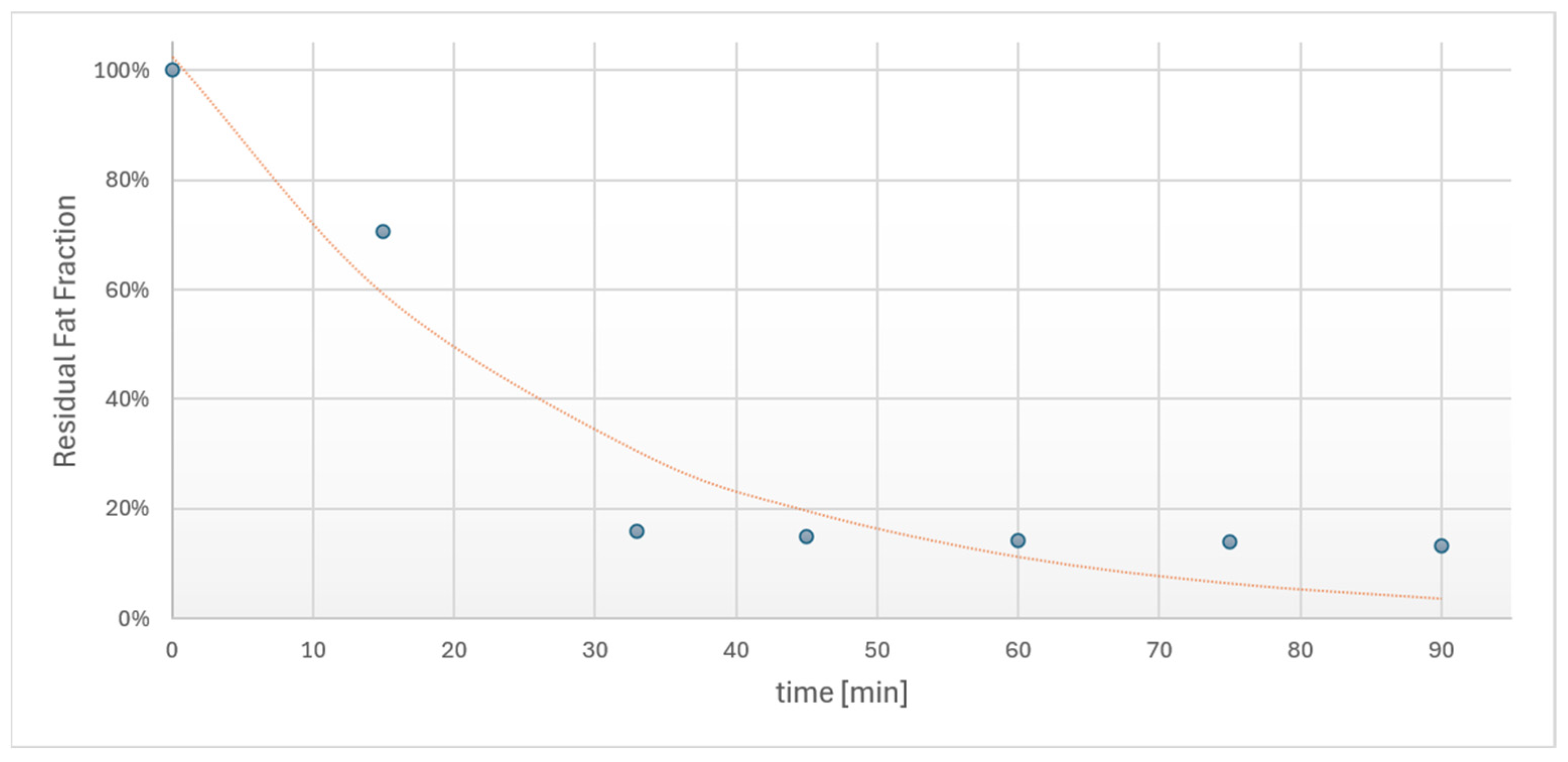
Preliminary supercritical CO2 extraction trials resulted in an extraction yield of 6.59% (based on applied raw material—566.0 g horsehair). In relation to the measured average lipid content of 7.6%, these results indicate that approximately 87% of the lipid fraction can be extracted using supercritical CO2. Moreover, supercritical CO2 extraction requires only a relatively short extraction time (see Figure 5—the residual fat fraction was expressed as the normalized fraction of lipid remaining in the horsehair relative to the average initial lipid content of 7.60 wt.% determined by Soxhlet extraction; accordingly, a residual fat fraction of 1.0 represents the initial lipid content (7.60 wt.%), whereas a value of 0.1 corresponds to approximately 10% of the initial lipid content remaining in the material (approximately 0.76 wt.%)), presumably because the lipid fraction is predominantly located on the hair surface and mass transfer is therefore only weakly limited by diffusion.
Figure 5.
Extraction profile at 460 bar/60 °C. The fitted line is included solely to visualize the course of the extraction process.
However, extraction at lower temperatures (50 °C) resulted in longer extraction times and lower extraction yields. These preliminary results demonstrate that supercritical CO2 is, in principle, well suited for recovering the lipid fraction from horsehair. At the same time, the comparison of the two investigated extraction temperatures (50 and 60 °C) revealed considerable differences in extraction time and yield, indicating a pronounced influence of the process conditions on extraction performance. Therefore, although the initial trials demonstrate the feasibility and potential efficiency of the process, a systematic optimization of extraction temperature, pressure, CO2 flow rate, extraction time, and solvent-to-feed ratio is required to identify suitable operating conditions and to maximize lipid recovery.
In terms of the specific consumption of CO2, in the first extraction, where the 5 L basket was completely full, 47.2 kg of CO2 was used to defat 566 g of horsehair, resulting in an S/F ratio of approximately 83.4. As shown in Figure 5, after 30 min, the extraction yield increased only little. At an S/F ratio of approximately 30, further CO2 consumption resulted in only a marginal increase in extraction yield, suggesting that most of the readily extractable lipid fraction had been recovered under the investigated conditions. However, while the first batch was extracted for 1.5 h at 60 °C, at the lower temperature, it was necessary to extract for 2 h to reach the same extraction yield.
In addition to its extraction performance, the CO2 technology offers further potential for textile applications. Due to the penetration capability of supercritical CO2, the recovered lipid fraction could potentially be reintroduced into the nonwoven matrix after fabrication by means of supercritical impregnation. This approach may enable the functional finishing of horsehair nonwovens while maintaining a solvent-reduced and recyclable processing route.
3.3. Nonwoven Processing
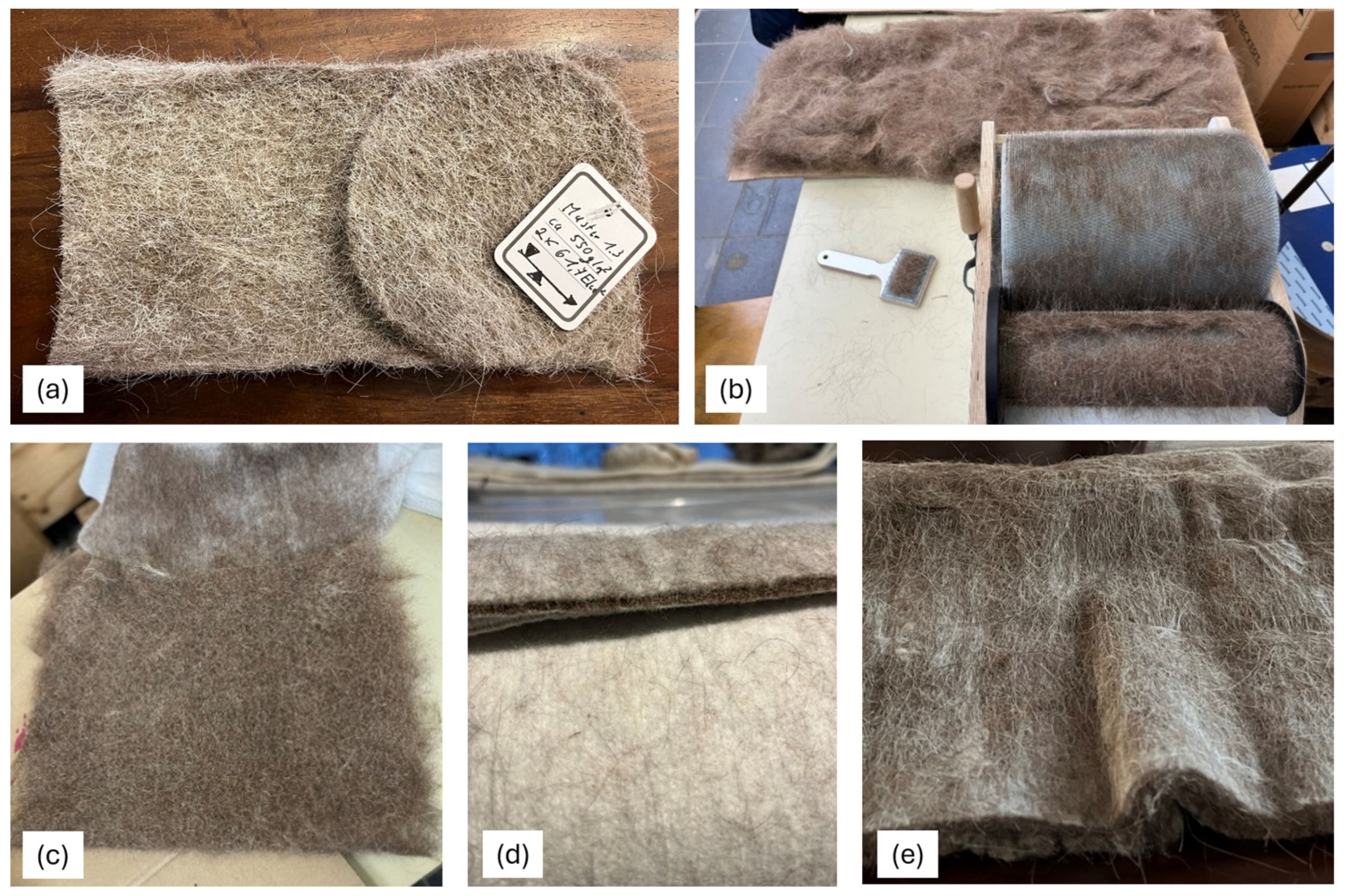
Manual nonwoven formation using hand carding followed by needle punching enabled the production of nine different nonwoven samples from 100% horsehair. These samples were produced as repeated feasibility trials rather than as part of a systematic parameter study. The repeated successful formation of coherent nonwoven structures indicates that nonwoven formation from pure horsehair was achievable under the investigated exploratory processing conditions and was not limited to a single trial. However, the samples were not produced according to a factorial or otherwise controlled experimental design and therefore cannot be used to quantify the effects of individual processing parameters. Depending on the area weight, compact nonwoven structures that remained sufficiently coherent for handling during the subsequent processing trials could be obtained. However, all pure horsehair nonwovens showed noticeable fiber shedding at the surface, confirming the limited natural cohesion of equine coat hair already observed during the preliminary Groz-Beckert trials (see Figure 6a).
Figure 6.
Representative nonwoven structures produced from horsehair fibers: (a) manually carded and needle-punched nonwoven made from 100% horsehair (Groz-Beckert trials); (b) horsehair web produced by drum carding at Hof University of Applied Sciences; (c) needle-punched nonwoven from the carded web; (d) three-layer composite consisting of a horsehair core layer enclosed between wool/Lyocell nonwoven layers; (e) hydroentangled nonwoven produced from a 50/50 horsehair–Lyocell blend.
Additional processing trials were conducted at Hof University of Applied Sciences using a drum carding machine and needle-punching technology. Horsehair fibers could be successfully carded into a coherent web structure and subsequently consolidated into a nonwoven material. As with the observations made during the trials at Groz-Beckert, fiber cohesion remained limited due to the smooth cuticle morphology, the absence of natural crimp, and the comparatively coarse fiber structure of the horsehair (see Figure 6b,c). To reduce this effect, multilayer composite structures were developed in which the horsehair layer was embedded between two wool/Lyocell nonwoven layers (Figure 6d). Qualitative observations during handling indicated reduced surface fiber shedding and improved handling of the multilayer structures compared with the pure horsehair nonwovens. No quantitative shedding or mechanical tests were performed in the present proof-of-concept study. Material testing further showed that the three-layer composites were thicker, heavier, and showed lower air permeability compared to wool/Lyocell reference materials. However, because thickness and basis weight differed between the materials, the observed difference in air permeability cannot be attributed specifically to the incorporation of horsehair. Although these structural differences provide motivation for further investigations of such multilayer materials, acoustic and thermal performance were not evaluated in the present study.
Additional hydroentanglement trials were performed using blended nonwovens consisting of 50% horsehair and 50% Lyocell (see Figure 6e). Although water-jet consolidation successfully bonded the fibers, some surface fiber shedding remained visible.
The successful processing of mixed horsehair batches with wool also showed that fibers from different animals can be combined without major processing limitations.
Our experiments demonstrated that nonwoven formation from pure horsehair is fundamentally feasible: the resulting materials exhibited sufficient coherence for handling and further processing within the experimental trials. This observation demonstrates the feasibility of nonwoven formation, though it does not establish application-specific material performance. In addition, the natural variation in hair color enabled the creation of visually heterogeneous surface effects, which may offer aesthetic opportunities for future design-oriented applications. Nonwovens of manually carded horsehair webs produced compact structures with improved integrity, though surface fiber release remained a recurring issue.
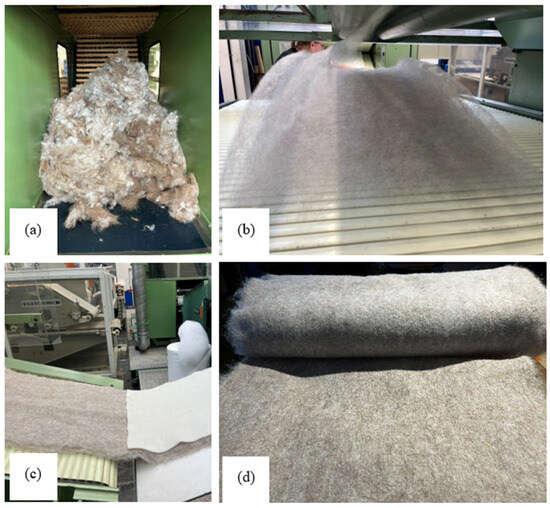
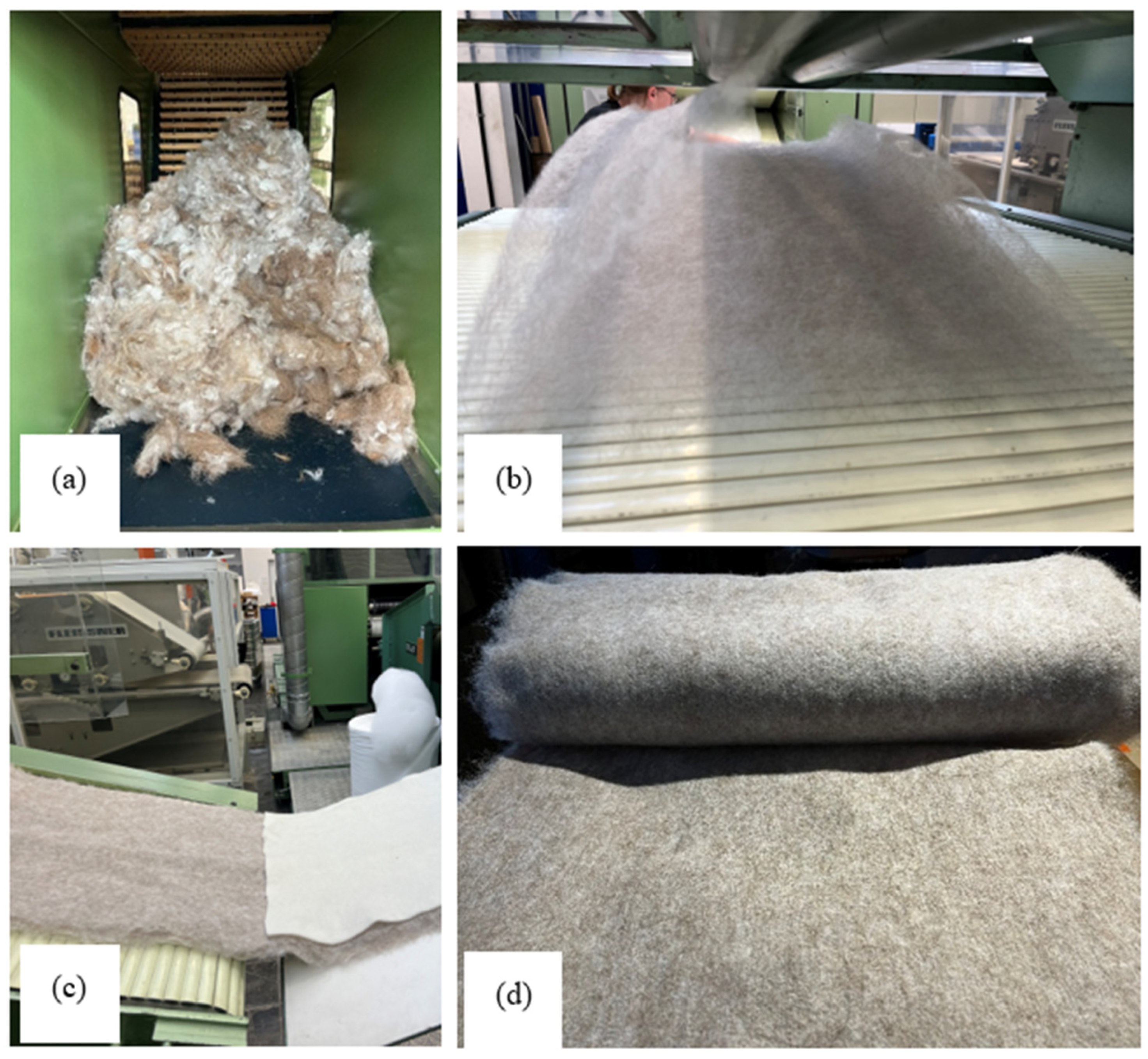
Industrial-scale processing trials demonstrated that a single mixing step followed by a second opening process was sufficient for obtaining a reasonably homogeneous fiber blend for further processing. The blended fibers could subsequently be carded, cross-lapped, and needle-punched into continuous nonwoven structures (see Figure 7).
Figure 7.
Mechanical processing of a 50/50 horsehair–Lyocell blend: (a) fiber blend after one passage through the bale opener; (b) web formation after carding during cross-lapping; (c) cross-lapped web before needle punching; (d) finished needle-punched material.
During carding, however, the horsehair showed a tendency toward electrostatic charging, resulting in fiber accumulation on the carding rollers and incomplete fiber transport through the machine. This effect may potentially be reduced through antistatic fiber finishing or the adjustment of residual moisture and lipid content.
The material characterization of the industrially produced nonwoven structures revealed thin and open-porous materials with high air permeability and breathability. These measurements provide an initial quantitative characterization of the produced material but, in the absence of a systematically matched reference material and further thermal, acoustic, and mechanical testing, do not establish suitability for a specific technical application.
4. Discussion
The present proof-of-concept study demonstrates that horsehair obtained during seasonal coat shedding can be processed into nonwoven structures using established textile processing technologies (RQ1). While keratin-rich animal by-products have increasingly been investigated as renewable raw materials for biomaterials, composites, and functional textiles [5,6,7,8,9,10,11,12], research has focused almost exclusively on slaughter-derived resources such as feathers, wool waste, horns, or industrial animal hair. In contrast, horse body hair generated during seasonal shedding has received virtually no scientific attention despite being generated annually as a non-invasive biological side stream. In the present work, we contribute initial experimental data toward closing this knowledge gap by characterizing the investigated raw-material stream and evaluating its textile processability.
The morphological analyses revealed that horsehair differs considerably from sheep wool due to the comparatively smooth surface morphology observed during light microscopy, relatively large fiber diameter, and absence of natural crimp (RQ2). These observations are consistent with previous descriptions of horsehair morphology reported by Hunter [17] and Üstüntağ and Paşayev [27], who described comparable structural characteristics for mane and tail hair. Unlike wool, whose crimp promotes fiber entanglement during textile processing, the absence of pronounced crimp in horsehair provides a plausible explanation for the lower fiber cohesion observed during the processing trials. The contribution of the respective parameters (i.e., cuticle morphology, fiber diameter, residual lipid content, surface friction) cannot be separated on the basis of the present experiments and requires dedicated mechanistic investigation.
Because the material was collected as a practical biological side stream and partly pooled across animals and establishments, animal-specific metadata were not available for all samples. Consequently, the present results characterize the investigated raw-material pool rather than breed-, age-, sex-, or body-region-specific horsehair properties. Systematically stratified sampling will be required in future studies to quantify the influence of these biological variables on fiber morphology, lipid content, and textile processability.
Despite these limitations, the experiments clearly demonstrate that horsehair can be processed into coherent nonwoven structures using conventional dry-laid technologies. Similar processing strategies have previously been applied to coarse natural fibers and other difficult-to-spin materials [20,21], supporting the suitability of nonwoven technology for heterogeneous biological fibers. However, the present study further shows that blending and multilayer construction facilitated web handling and qualitatively reduced the observed fiber release. The improved handling observed for the Lyocell- and wool-containing structures may result from enhanced fiber entanglement associated with the finer Lyocell fibers and the natural crimp of wool, though this interpretation remains qualitative because mechanical cohesion was not measured directly. These findings are consistent with previous reports describing the advantages of hybrid natural-fiber systems for improving mechanical performance [8,9,10].
A second important outcome of this study is the identification of a relatively high lipid content in horsehair. The Soxhlet and MTBE extraction experiments demonstrated that the wax-rich sebum represents a considerable secondary product rather than merely an impurity that must be removed before textile processing. The preliminary supercritical CO2 trials demonstrated that this technology is, in principle, well suited for recovering the lipid-rich fraction from horsehair (RQ3). An extraction yield of 6.59 wt.% was obtained, corresponding to >85% of the average lipid content determined through Soxhlet extraction. However, this comparison represents an estimate based on the average Soxhlet lipid content rather than a direct measurement of the residual lipid content after supercritical CO2 extraction.
A notable characteristic observed in the preliminary trials was the relatively rapid extraction at 60 °C. This may be related to the predominantly superficial location of equine sebum on the hair fibers, which could reduce diffusion limitations compared with lipids embedded within a dense biological matrix. Nevertheless, the comparison of the two investigated extraction temperatures revealed considerable differences in extraction behavior: lowering the temperature from 60 to 50 °C resulted in a longer extraction time and a lower extraction yield under the investigated conditions. These observations indicate that extraction performance is sensitive to process conditions and that the present experiments should be regarded as preliminary feasibility trials rather than an optimized extraction process. Systematic investigation of temperature, pressure, CO2 flow rate, extraction time, and solvent-to-feed ratio will therefore be required to determine optimum operating conditions and maximize lipid recovery. Such approaches have been increasingly promoted within circular bioeconomy concepts and integrated keratin valorization strategies [5,6,11,12].
Beyond lipid extraction, supercritical CO2 offers additional potential as a processing medium compared with conventional solvent-based processes. Owing to its tunable solvent properties and excellent penetration into porous materials, supercritical CO2 could provide a versatile processing platform within a future cascade valorization concept for horsehair. In addition to the selective recovery of the lipid fraction, the process conditions may be adjusted to influence the physical structure of the remaining fibers [28,29]. In particular, controlled pressure release after extraction may induce modifications of the fiber morphology, potentially increasing bulkiness, surface roughness, or fiber cohesion and thereby improving subsequent textile processing. However, no such structural modification was investigated or demonstrated in the present study, and the influence of extraction and depressurization conditions on horsehair morphology and subsequent textile processability therefore represents a specific objective for future work.
Furthermore, supercritical CO2 is already established as a carrier medium for the impregnation of functional compounds into polymeric and textile materials [30,31]. Consequently, the lipid fraction recovered during extraction could potentially be reintroduced into the finished horsehair nonwoven through supercritical CO2 impregnation. Such an approach could provide a route toward functional finishing while reducing the need for conventional solvent-based impregnation processes. However, neither the chemical functionality of the recovered horsehair extract nor its reimpregnation into nonwovens was evaluated in the present study, so both aspects therefore remain conceptual elements for subsequent investigations.
Combining selective lipid extraction, potential fiber modification, and subsequent impregnation within a common supercritical CO2 process platform could ultimately enable a cascade valorization strategy in which different fractions and properties of seasonally shed horsehair are utilized sequentially. At the present stage, however, the experimental evidence supports a preliminary cascade valorization concept, which is consistent with current biorefinery strategies aiming to maximize resource efficiency while minimizing waste generation [2,5,6]. Future work will therefore focus on optimization of the supercritical CO2 extraction parameters, direct determination of residual lipid contents, chemical characterization of the recovered extract, investigation of CO2-induced changes in fiber morphology, and evaluation of supercritical impregnation.
From a sustainability perspective, horsehair possesses several potential advantages compared with many other animal-derived materials. Unlike slaughter by-products, horsehair from seasonal coat shedding is generated naturally during the annual hair cycle and can be collected during routine grooming without harming the animal or requiring dedicated animal production for fiber generation. Consequently, its utilization offers the possibility of recovering material from an existing biological side stream. However, the present study does not demonstrate an overall environmental advantage, as washing, drying, extraction, high-pressure CO2 processing, transportation, and the use of blending fibers also involve resource and energy requirements. Wastewater generation and treatment must also be considered in future environmental assessment and process development.
Although the estimated quantities of available horsehair are unlikely to support large-scale commodity production, they could potentially provide a feedstock for regional material valorization, subject to further material and application-specific characterization. The material properties identified in this study provide motivation for further investigations of equestrian products, acoustic absorbers, thermal insulation materials, and other technical nonwoven applications in which high loft, breathability, and renewable origin could be beneficial. These applications were not functionally validated in the present study and therefore represent potential directions for application-specific research rather than demonstrated end uses.
Several challenges remain before industrial implementation can be achieved. The limited cohesion of pure horsehair requires further optimization through fiber modification, blending strategies, or composite architectures, while the chemical composition and functionality of the recovered lipid fraction require further investigation before its potential value or specific applications can be assessed. Quantitative mechanical testing, fiber-shedding and abrasion measurements, and application-specific thermal, acoustic, moisture-management, and durability testing will also be necessary to establish the performance of the resulting nonwovens. Finally, comprehensive life-cycle assessment and techno-economic analysis will be necessary to quantify the environmental and economic performance of the proposed cascade utilization concept under industrial conditions.
5. Conclusions
In this proof-of-concept Communication, we demonstrate that horsehair obtained during seasonal coat shedding can be processed into nonwoven structures using established textile processing technologies. Although pure horsehair nonwovens can be produced through carding and needle punching, limited fiber cohesion and surface fiber shedding were identified as major challenges. Blending with Lyocell and wool and the use of multilayer structures improved handling and qualitatively reduced fiber release, though quantitative mechanical performance and shedding behavior were not evaluated in the present study.
In parallel, the experiments demonstrated that horsehair contains a substantial extractable lipid-rich fraction and that supercritical CO2 is, in principle, suitable for its recovery. Our results therefore provide initial experimental support for a preliminary cascade valorization strategy combining lipid recovery with subsequent utilization of the remaining fibers for nonwoven production. Further optimization of the supercritical CO2 extraction conditions and chemical characterization of the recovered extract are required before its potential value and possible applications can be assessed.
Overall, seasonally shed horsehair represents an underutilized biological side stream with potential for further material valorization. However, the present study establishes technical feasibility rather than application-ready material performance or environmental superiority. Quantitative mechanical and fiber-shedding characterization, as well as application-specific thermal, acoustic, moisture-management, and durability testing, will be required to evaluate potential end uses. Furthermore, environmental and economic assessments will be necessary before broader sustainability or industrial-scale conclusions can be drawn. The present results therefore provide a basis for subsequent material-development and process-optimization studies rather than a final qualification of horsehair-based nonwovens for specific applications.
Author Contributions
Conceptualization, A.E. and E.H.; methodology, A.E., C.-E.K., F.S. and S.B.; validation, A.E., C.-E.K., F.S., S.B. and E.H.; formal analysis, A.E.; investigation, A.E., C.-E.K., F.S. and S.B.; resources, C.-E.K., F.S. and S.B.; data curation, A.E.; writing—original draft preparation, A.E. and E.H.; writing—review and editing, A.E., C.-E.K., F.S., S.B. and E.H.; visualization, A.E.; supervision, E.H.; project administration, A.E. and E.H. All authors have read and agreed to the published version of the manuscript.
Funding
This research received no external funding.
Institutional Review Board Statement
Not applicable. Ethical review and approval were not required for this study because no experimental procedures involving animals were performed. Horsehair samples were collected during routine grooming and seasonal coat shedding without causing any harm or distress to the animals.
Informed Consent Statement
Not applicable.
Data Availability Statement
The data generated and analyzed during the current study are available from the corresponding author upon reasonable request.
Acknowledgments
The authors would like to thank all horse owners who provided horsehair samples for this study.
Conflicts of Interest
Author Stefano Barbini was employed by the company NATEX Prozesstechnologie GesmbH. The remaining authors declare that the research was conducted in the absence of any commercial or financial relationships that could be construed as a potential conflict of interest.
Abbreviations
The following abbreviations are used in this manuscript:
| CO2 | Carbon dioxide |
| MTBE | Methyl tert-butyl ether |
| DIN | Deutsches Institut für Normung |
| ISO | International Organization for Standardization |
References
- Costa, C.; Azoia, N.; Silva, C.; Marques, E. Textile Industry in a Changing World: Challenges of Sustainable Development. U. Porto J. Eng. 2020, 6, 86–97. [Google Scholar] [CrossRef] [Scilit]
- Geissdoerfer, M.; Savaget, P.; Bocken, N.M.P.; Hultink, E.J. The Circular Economy—A New Sustainable Paradigm? J. Clean. Prod. 2017, 143, 757–768. [Google Scholar] [CrossRef] [Scilit]
- Teufel, J.; Lopez, V.; Moch, K.; Gascón, L. Ökologische Bewertung Textiler Fasern—Von „Klassischen” Fasern über Recyclingfasern bis hin zu Innovativen und Wiederentdeckten Fasern; (Texte 117/2024); Umweltbundesamt: Dessau-Roßlau, Germany, 2024. [Google Scholar]
- Babu, K.M. Chapter 3—Natural Textile Fibres: Animal and Silk Fibres. In Textiles and Fashion; Woodhead Publishing: Cambridge, UK, 2015; pp. 57–78. [Google Scholar] [CrossRef] [Scilit]
- Barone, G.D.; Tagliaro, I.; Oliver-Simancas, R.; Radice, M.; Kalossaka, L.M.; Mattei, M.; Biundo, A.; Pisano, I.; Jiménez-Quero, A. Keratinous and corneous-based products towards circular bioeconomy: A research review. Environ. Sci. Ecotechnol. 2024, 22, 100444. [Google Scholar] [CrossRef] [Scilit] [PubMed]
- Banasaz, S.; Ferraro, V. Keratin from Animal By-Products: Structure, Characterization, Extraction and Application—A Review. Polymers 2024, 16, 1999. [Google Scholar] [CrossRef] [Scilit] [PubMed]
- Liu, F.; Wang, H.; Altaf, A.R.; Sohail, A.; Zhao, Z.; Zhou, W.; Yao, D.; Liu, P. Upcycling waste hair and feathers derived keratin into intact cortical cell-derived micro-units via periodate oxidation: Applications & life cycle assessment. Int. J. Biol. Macromol. 2026, 346, 150680. [Google Scholar] [CrossRef] [Scilit] [PubMed]
- Olanrewaju, O.; Oladele, I.O.; Adelani, S.O. A Comprehensive Review on plant and animal fiber reinforced composites: Experimental and theoretical approaches to interfacial strength optimization and potential applications. Hybrid Adv. 2025, 10, 100474. [Google Scholar] [CrossRef] [Scilit]
- Ali, F.; Hossain, S.; Ahmed, S.; Chowdhury, A.M.S. Fabrication and characterization of eco-friendly composite materials from natural animal fibers. Heliyon 2021, 7, e06954. [Google Scholar] [CrossRef] [Scilit] [PubMed]
- Talabi, S.I.; Ismail, S.O.; Akpan, E.I.; Hassen, A.A. Quest for environmentally sustainable materials: A case for animal-based fillers and fibers in polymeric biocomposites. Compos. Part A Appl. Sci. Manuf. 2024, 183, 108216. [Google Scholar] [CrossRef] [Scilit]
- Rahaman, T.; Moshwan, M. Advancements in natural fibers for sustainable textile manufacturing: Importance, sources, applications, and future prospects. Next Mater. 2026, 10, 101564. [Google Scholar] [CrossRef] [Scilit]
- Gupta, S.; Sharma, S.; Kapoor, B. From waste to biomaterial: Valorization of keratin for 3D printing and bioprinting. Mater. Sci. Eng. B 2026, 325, 119135. [Google Scholar] [CrossRef] [Scilit]
- Schweizer Textilmuseum. (Reference on the Historical Use of Horsehair. 1983). Available online: https://fliphtml5.com/bookcase/ukldl (accessed on 21 August 2026).
- World Animal Foundation. How Many Horses Are There in the World? 2024. Available online: https://worldanimalfoundation.org/advocate/how-many-horses-are-there/ (accessed on 8 July 2026).
- Arrieta, I.; Debrisay, M. Equine Survey Report; Eurogroup for Animals: Brussels, Belgium, 2025; Available online: https://www.eurogroupforanimals.org/files/eurogroupforanimals/2025-04/20250428-Equine%20survey%20report%20-%20English_0.pdf (accessed on 8 July 2026).
- Kalayci, E.; Avinc, O.; Yavaş, A. Usage of Horse Hair as A Textile Fiber and Evaluation of Color Properties. Ann. Univ. Oradea Fascicle Text. Leatherwork 2019, 20, 57–62. [Google Scholar]
- Hunter, L. 10—Mohair, cashmere, and other animal hair fibres. In Handbook of Natural Fibres, 2nd ed.; Kozłowski, R.M., Mackiewicz-Talarczyk, M., Eds.; Woodhead Publishing Series in Textiles; Woodhead Publishing: Cambridge, UK, 2020; pp. 279–383. [Google Scholar] [CrossRef] [Scilit]
- Babel, S.; Baral, S.; Poudel, S. History of Horsehair Hair Sutures: Perspectives in Green Surgery. Am. Surg. 2024, 90, 3155–3161. [Google Scholar] [CrossRef] [Scilit] [PubMed]
- Kumar, N.; Singh, A.; Ranjan, R. Fabrication and mechanical characterization of horse hair (HH) reinforced polypropylene (PP) composites. Mater. Today Proc. 2019, 19, 622–625. [Google Scholar] [CrossRef] [Scilit]
- Gries, T.; Veit, D.; Wulfhorst, B. Textile Fertigungsverfahren: Eine Einführung, 3rd ed.; Carl Hanser: München, Germany, 2018. [Google Scholar]
- Albrecht, W.; Fuchs, H.; Kittelmann, W. (Eds.) Vliesstoffe: Rohstoffe, Herstellung, Anwendung, Eigenschaften, Prüfung; Wiley-VCH: Weinheim, Germany, 2012. [Google Scholar]
- Schmied, S. Faserlängenmessung Mittels Bildbearbeitung; Deutsche Institute für Textil- und Faserforschung (DITF): Denkendorf, Germany, 2016. [Google Scholar]
- Available online: https://natex.at/projects/research-and-development-plants/ (accessed on 8 July 2026).
- DIN EN ISO 9073-1:2023; Nonwovens—Test Methods—Part 1: Determination of Mass per Unit Area. DIN Deutsches Institut für Normung e. V.: Berlin, Germany, 2023.
- DIN EN ISO 9073-2:1997; Textiles—Test Methods for Nonwovens—Part 2: Determination of Thickness. DIN Deutsches Institut für Normung e. V.: Berlin, Germany, 1997.
- DIN EN ISO 9073-15:2008; Textiles—Test Methods for Nonwovens—Part 15: Determination of Air Permeability. DIN Deutsches Institut für Normung e. V.: Berlin, Germany, 2008.
- Üstüntağ, S.; Paşayev, N. Physical, thermal and mechanical properties of horse tail and mane hairs. Res. J. Text. Appar. 2025, 29, 341–355. [Google Scholar] [CrossRef] [Scilit]
- Bertran-Llorens, S.; Perondi, F.; de Freitas, A.L.S.; Chen, J.; van Erven, G.; Deuss, P.J. Supercritical CO2 as effective wheat straw pretreatment for subsequent mild fractionation strategies. Chem. Eng. J. 2024, 497, 154491. [Google Scholar] [CrossRef] [Scilit]
- Zhao, M.-J.; Xu, Q.-Q.; Li, G.-M.; Zhang, Q.-Z.; Zhou, D.; Yin, J.-Z.; Zhan, H.-S. Pretreatment of agricultural residues by supercritical CO2 at 50–80 °C to enhance enzymatic hydrolysis. J. Energy Chem. 2019, 31, 39–45. [Google Scholar] [CrossRef] [Scilit]
- Machado, N.D.; Mosquera, J.E.; Martini, R.E.; Goñi, M.L.; Gañán, N.A. Supercritical CO2-assisted impregnation/deposition of polymeric materials with pharmaceutical, nutraceutical, and biomedical applications: A review (2015–2021). J. Supercrit. Fluids 2022, 191, 105763. [Google Scholar] [CrossRef] [Scilit]
- Haimer, E.; Wendland, M.; Schlufter, K.; Frankenfeld, K.; Miethe, P.; Potthast, A.; Rosenau, T.; Liebner, F. Loading of bacterial cellulose aerogels with bioactive compounds by antisolvent precipitation with supercritical carbon dioxide. Macromol. Symp. 2010, 294, 64–74. [Google Scholar] [CrossRef] [Scilit]

Disclaimer/Publisher’s Note: The statements, opinions and data contained in all publications are solely those of the individual author(s) and contributor(s) and not of MDPI and/or the editor(s). MDPI and/or the editor(s) disclaim responsibility for any injury to people or property resulting from any ideas, methods, instructions or products referred to in the content. |
© 2026 by the authors. Licensee MDPI, Basel, Switzerland. This article is an open access article distributed under the terms and conditions of the Creative Commons Attribution (CC BY) license.