


Abstract
The transition from a linear to a circular economic model is critical for the sustainability of the Amazonian bioeconomy. Although Amazon nuts (internationally recognized as Brazil nuts, Bertholletia excelsa) represent a major natural bioresource, their production chain faces structural challenges, particularly concerning the underutilization and disposal of agro-industrial residues. This narrative review analyzes the Amazon nut market, processing technologies, and supply chain, with a specific focus on biomass valorization. By evaluating the recent literature across major scientific databases, this study maps the technological readiness and feasibility of integrating a circular economy model. We critically examine alternative technologies for transforming specific residues, particularly the woody fruit pods, hard seed shells, and oil press cakes, into value-added bioproducts. Key valorization routes discussed include protein concentrates and amino acid supplements from the press cake, cellulose nanocrystals and organic panels from the hard seed shell, biosolvents, and bioenergy/biochar generation via pyrolysis. The review concludes that while the current industry remains strictly focused on kernel commerce, transitioning toward a circular model appears technically promising, but its economic feasibility remains unconfirmed for most valorization pathways. However, successful industrial implementation requires overcoming logistical supply chain barriers and advancing the technology readiness levels of these valorization pathways.
1. Introduction
Economic, environmental and climatic challenges are promoting a rethinking of consumer market patterns in all spheres, highlighting the urgency to shift away from traditional linear production models. One of the primary measures adopted globally to mitigate these impacts is the biorefinery concept, which treats industrial and agricultural waste as co-products, transforming them into high-value raw materials [1,2]. By inserting these co-products into value chains as an alternative to generating large volumes of waste, industries contribute to circular production with long-term economic and environmental development [3,4]. Process costs may decrease depending on the technological route and production scale, making the utilization of secondary matrices economically attractive under suitable conditions. Environmentally, this approach maximizes resource utilization while minimizing waste generation [5,6]. Socially, it provides agribusiness with opportunities to expand employment possibilities, allowing economic diversification and opening new labor markets in agricultural regions [7].
Within this global context of biological resources, the Amazon region is recognized worldwide for being one of the largest biomes in the world, not only in terms of territorial coverage but also in terms of richness of biodiversity [8,9]. Among the thousands of plant species that inhabit this territory, Bertholletia excelsa (Amazon nut) makes up a vital class of oleaginous plants, which stand out in the industrial field for their applicability [10,11,12]. Although internationally recognized by the standard commercial and scientific term ‘Brazil nut’, the seeds of Bertholletia excelsa are referred to herein as ‘Amazon nut’. This terminology is adopted to reflect a more inclusive and ecological perspective, recognizing that this bioresource belongs to the entire Amazon basin rather than a single country. Considering that Bolivia and Peru currently account for the vast majority of global production, this broader designation aligns directly with global sustainability frameworks and the Pan-Amazonian circular economy. Therefore, in both commercial contexts and the scientific literature, these terms refer to the exact same raw material and are considered synonymous [13,14]. Its exploitation is highly versatile, serving as a critical resource across multiple sectors: from the food industry (due to its significant dietary fat and fiber content) to the cosmetics sector in the preparation of hygiene and beauty bioproducts [15].
The B. excelsa production chain is characterized by a high degree of informality, limited use of technology, and heavy dependence on intermediary agents for the flow of production. As a result, the socioeconomic benefits reflected in the extractive populations that make up the base of the production scale remain limited [10,16]. Given the high national and international demand for this nut and the low public management to mediate a fairer distribution of income, regional financing mechanisms have helped to structure collective businesses and allow greater autonomy for extractive populations [17,18]. The lack of efficient technologies to manage the generated waste remains a critical barrier for the true circularity of this sector.
To overcome these technological barriers and add value to the discarded biomass, researchers are developing new products from agricultural waste using more efficient industrial methods. Biotechnology plays a key role in improving this production, offering solutions to environmental problems and creating new income sources for local families [19,20,21]. While several reviews have been published regarding the nutritional composition and health benefits of the Amazon nut [15,22,23], its socio-ecological and conservation aspects [17,24], and its oil extraction technologies [25,26], the literature on the full utilization of its agro-industrial residues is still scarce. Most previous studies focus only on a linear food supply chain or on pure ecology [19,20,21]. Therefore, the novelty of this review is its focus on a circular bioeconomy. This is important because the Amazon nut industry can only be truly sustainable if it finds practical uses for the waste generated during its processing. By mapping specific residues (such as hard shell, seed coat, and press cake) and evaluating their potential for new bioproducts, this paper connects agricultural waste with real industrial applications.
The specific objective of this review is to critically map the generation of Amazon nut by-products (such as hard shell, seed coat, and press cake) and evaluate the technological readiness and feasibility of specific valorization pathways, such as bioenergy, activated carbon, and biomaterials. This study was conducted as a narrative review to provide an updated and critical perspective on the Amazon nut circular economy. The literature search was carried out using leading academic databases, including Scopus, Web of Science, and Google Scholar. The search strategy utilized combinations of keywords such as ‘Amazon nut’, ‘Brazil nut’, ‘Bertholletia excelsa’, ‘biomass valorization’, ‘circular economy’, ‘biorefinery’, and ‘agro-industrial residues’. While no strict chronological restriction was applied to historical contexts, the screening process prioritized experimental studies, market reports, and technological data published within the last decade (2014–2026) to ensure relevance to current industrial and economic scenarios. The inclusion criteria focused on articles directly applicable to the processing chain, bioeconomy, and waste valorization of the Amazon nut. Conversely, studies focusing strictly on unrelated botanical, genetic, or purely ecological aspects without connection to the production chain or by-product utilization were excluded.
2. Amazon Nut Case Study
Agribusiness is a sector that most interferes with the forest ecosystem [27], and the Amazon nut has emerged as a prominent crop due to its commercial growth in recent years [28]. This oleaginous plant species belongs to the Lecythidaceae family. Native to the Amazon region, this species is found across an estimated forest surface of approx. 325 million hectares, with the vast majority located in Brazil (300 million ha), followed by Bolivia (10 million ha) and Peru (2.5 million ha) [29,30,31].
Despite Brazil’s territorial dominance, production is geographically concentrated in the so-called “Amazon nut Arc”. As detailed in Figure 1, the global supply originates almost entirely from three countries: Bolivia (the leading global producer, accounting for approximately 78% of world production), Peru (14%), and Brazil (7.5%) [29,30,31].
Figure 1.
Comparison of Amazon nut production (In-shell Basis, Metric Tons). GPAI Chat (gpai.app) was used to prepare the figure. The authors reviewed and edited all AI-generated outputs and take full responsibility for the content of this publication.
Currently, the global Amazon nut market is experiencing one of the most unstable and transformative periods in its recent history [28]. Market analyses indicate that commercial production is subject to significant fluctuations due to climatic variables. Recent reports from the International Nut and Dried Fruit Council (INC) show that global in-shell production reached 100,200 metric tons in the 2024/2025 season. However, severe El Niño-related droughts across the Amazon biome drove a sharp 37% decline to approximately 63,060 metric tons in the 2025/2026 crop [32,33]. Although the three leading nations share the same biome, their resilience to this climate crisis varies significantly:
Bolivia maintains its dominant position, being responsible for the vast majority of the global supply. However, the 2025/2026 crop is estimated to face a 40% decline in production, falling from 78,000 metric tons to 46,800 metric tons (in-shell basis).
Peru, which has historically acted as a vital link in processing nuts originating from other countries, showed slightly greater resilience than its neighbors, experiencing a 20% drop from 14,000 metric tons to an estimated 11,700 metric tons.
Brazil, in turn, followed the sharp downward trend seen in Bolivia, recording a 40% reduction compared to the previous crop, with harvests dropping from 7500 metric tons to an estimated 4500 metric tons.
This sharp and simultaneous contraction across the “Amazon nut Arc” exposes a critical vulnerability in the global supply chain [31]. The correlated harvest failure in the two largest producing nations indicates that the severe droughts and elevated temperatures are affecting the Amazon biome on a macro-regional scale, drastically reducing the natural fruiting capacity of the trees [34,35]. Economically, this scarcity inevitably drives up raw material prices. With these resource limitations, the traditional linear processing model, where large volumes of biomass are discarded, becomes economically and environmentally unsustainable [36,37]. Therefore, the current climatic crisis reinforces the urgent need for industry to adopt circular economy strategies, maximizing the biotechnological valorization of every generated co-product, such as shells and press cakes, to compensate for the reduced primary kernel yields [36,38].
In commercial terms, most of the world’s production of Amazon nut is traded for the national and international market, and a smaller portion is traded at the regional level [39]. For countries that export the asset, this commercialization contributes to foreign exchange earnings, generating decentralized employment and income. Meanwhile, processed nuts have become a value-added product, highlighting the importance of exporting countries in the international trade scenario [21,40,41].
Product pricing is established prior to the beginning of the harvest, which takes place in December. At this stage, the producers establish the reference price for the following year’s commercialization [42,43]. The market value is based on the final price recorded in the middle of the previous harvest, which ends in May; however, some regions extend until June [41]. Consequently, the value of the world production of Amazon nut acts as an economic driver. However, socio-environmental challenges must be addressed regarding the guarantee of a resilient global production [44,45].
The international trade of Amazon nut has undergone significant changes in the field of supply and demand, with the replacement of Brazil by Bolivia as the main world supplier in recent decades and the international expansion of the product to countries in Oceania [15,46]. Currently, the two countries, together with Peru, account for almost 100% of the world’s primary production and exports (excluding re-exports). In international statistics, certain countries appear as key re-exporters, particularly within Europe, where the Netherlands has emerged as the leading hub in 2025, followed by Germany and Spain. This reconfiguration reflects changes in intra-European trade logistics and processing capacity [32]. Amazon nuts are primarily exported to developed markets, notably the United States and European countries [47]. Recently, severe climate-driven shortages in global production have caused a sharp rise in average import prices [32,33]. This economic pressure reinforces the need to maximize the use of the entire nut, including its by-products, to maintain the sector’s profitability.
The primary factor driving the global interest in Amazon nut trees and, consequently, the increased demand for their fruits, is their high nutritional value. The kernels provide a rich profile of unsaturated fatty acids, essential amino acids, vitamins, and minerals, notably being the highest natural dietary source of selenium [48,49]. These nutritional characteristics have driven import demand beyond traditional markets, meeting the needs of various sectors, including the food industry, cosmetics, pharmaceuticals, and biodiesel production [15].
The processing stages of B. excelsa generate two main categories of solid waste: lignocellulosic residues from mechanical fruit opening and by-products from oil extraction. Their physicochemical characteristics and biotechnological potential are explored in detail in the following section [50].
3. Production, Processing and Availability of Amazon Nut Waste
Within the socioeconomic-environmental context of the Amazon nut sector, three interconnected pillars drive the progressive accumulation of agro-industrial waste: the expansion of the agribusiness model, the high commercial performance of B. excelsa, and the steady increase in global consumption [51]. Despite this growing production scale, the solid residues generated throughout nut processing and final consumption have been systematically overlooked, largely due to the absence of consolidated valorization pathways and clearly defined market value for these by-products. This negligence represents not only environmental liability but also a missed opportunity for socioeconomic development in Amazonian extractive communities [4,52].
The processing of Amazon nuts to extract the edible kernels (Table 1) generates two main categories of agro-industrial waste. The first originates from the breaking of the fruit pod and, subsequently, the hard outer shell to obtain the kernel [50]. These lignocellulosic by-products exhibit intrinsic physicochemical characteristics, including low moisture content and a high concentration of rigid fibers [53]. The second category, derived from oil extraction, consists of a homogeneous defatted press cake characterized by high residual fat and moisture contents, along with a pasty consistency [54].
Table 1.
Main stages of Amazon nuts processing, solid waste generation, and current destination [41,53,54].
Quality control stages during processing introduce specific challenges for the subsequent valorization of these residues [55]. Maintaining batch homogeneity and effectively eliminating the natural microbiota present in the shells and press cake are complex procedures [56]. In addition to their endogenous microbiota, these organic matrices are highly susceptible to microbial colonization and contamination during storage [57]. To mitigate this issue, thermal processing of the raw material is often employed, significantly reducing the microbial load of the residues [56,58].
The mass of agro-industrial residues generated during Amazon nuts processing significantly exceeds the yield of the final edible kernels, often accounting for more than 70% of the fruit’s total gross weight. To optimize the valorization of these by-products, they must be classified based on their specific physicochemical characteristics to determine the most viable route for bioproduct generation [39]. A practical application of the defatted press cake, for instance, is its incorporation into functional foods and dietary supplements, leveraging its high residual protein and lipid contents [54]. Additionally, the carbon-rich nature of these organic biomasses, combined with essential micronutrients such as nitrogen and phosphorus, facilitates their biotransformation into agricultural inputs, including soil bioremediation agents [59].
Developing resource-efficient processes to convert these residues into value-added products is a pressing need in the agro-industrial sector to establish a circular production model with reduced environmental impacts [60]. The lignocellulosic nature of Amazon nut solid waste, with cellulose, hemicellulose, and lignin as its primary structural components, positions these matrices as versatile feedstocks for a broad range of biotechnological applications, from biocomposites and biosorbents to bioactive compounds with antioxidant and antimicrobial properties. Applying circular economy principles can optimize raw material use and minimize waste by reinserting these co-products into the supply chain as high-value matrices, in line with the biorefinery and zero-waste concepts [3,61,62]. Rather than following the traditional linear model of extraction, processing, and disposal, the circular approach treats each residue stream as a potential input for a subsequent productive stage, maximizing economic and environmental returns [63]. Adopting this circular economy model for the Amazon nut supply chain enables the transformation of waste into strategic resources, promoting the full utilization of biomass and enhancing value generation throughout the chain. Beyond reducing environmental impacts and reliance on virgin raw materials, this model has the potential to strengthen the Amazonian bioeconomy, foster innovation in food, cosmetics, biomaterials, and bioenergy, and contribute to the sustainable development of extractive communities [64].
Compared to the linear model, the circular economy can provide greater resource efficiency, revenue diversification, reduced operating costs, and increased economic resilience, aligning with sustainable development principles and the Sustainable Development Goals (SDGs), particularly those related to responsible consumption and production, climate action, and the conservation of terrestrial ecosystems [65,66]. However, the transition from a linear to a circular production model requires substantial economic investments to enable the valorization of agro-industrial residues. Implementing technologies capable of converting by-products (such as fruit pods, hard shells, and defatted press cakes) into value-added products depends on adequate processing infrastructure, quality control systems, storage facilities, and continuous investments in research, technological innovation, and regulatory compliance. For many cooperatives and small enterprises operating in remote Amazonian regions, these requirements often exceed their financial capacity, highlighting the importance of external financing mechanisms, targeted public policies, and innovation incentives to support the adoption of circular production systems [67,68]. These fundamental differences between the production models are summarized in Table 2.
Table 2.
Comparison between the linear model and the circular economy for bioproducts.
Implementing this cascading use of resources not only mitigates the carbon footprint of the nut processing industry but also decentralizes revenue streams by creating secondary markets for extractive communities. This closed-loop framework is illustrated in Figure 2, which proposes a circular life cycle for the Amazon nut chain based on the utilization of its processing waste.
Figure 2.
Circular economy model in the life cycle proposal of Amazon nut. GPAI Chat (gpai.app) was used to prepare the figure. The authors reviewed and edited all AI-generated outputs and take full responsibility for the content of this publication.
Another important barrier to the implementation of circular economy strategies is the limited production scale observed in many extractive communities. The seasonal nature of Amazon nut harvesting, combined with the geographic dispersion of collection areas, often prevents the continuous supply of sufficient biomass volumes to economically justify investments in waste-processing facilities. Moreover, the high costs associated with transporting bulky, low-density biomass over long distances, together with the limited transportation and storage infrastructure available in many Amazonian regions, substantially reduce the competitiveness of value-added products derived from these by-products.
Beyond physicochemical classification, the logistical feasibility of recovering these residues heavily dictates their actual availability for industrial upcycling [21]. A critical spatial disparity exists in the generation of Amazon nut waste: while the defatted press cake and hard shells are centrally accumulated at urban or peri-urban processing facilities, allowing for streamlined integration into biorefinery pipelines, the bulky fruit pods present a severe logistical limitation [69]. Because the primary extraction (fruit opening) predominantly occurs deep within the Amazonian forest, transporting these low-density, high-volume pods to centralized industrial hubs incurs prohibitive transportation costs and elevated carbon emissions [70]. To fully harness the availability of this biomass, future valorization strategies must also consider the implementation of decentralized, in situ pre-processing technologies capable of densifying or thermochemically transforming forest-bound residues locally, thereby bridging the gap between raw biomass generation and viable supply chain logistics [71]. For instance, implementing mobile carbonization units or pelletizing extruders directly at extractive camps could convert the bulky pods into energy-dense biochar or briquettes. This strategy not only drastically reduces transportation volumes but also offers the possibility of returning biochar to the forest, functioning as an organic soil amendment that enhances nutrient retention and carbon sequestration right at the harvest source [72,73].
Integrating a circular framework into the Amazon nuts processing chain significantly reduces post-harvest losses and maximizes resource efficiency. A systematic mapping of the production stages is essential to track the material flow of raw materials and their conversion into by-products [74]. This operational overview enables the identification of processing restrictions and specific stages where novel technologies can be integrated to upgrade residues into advanced bioproducts [21,75]. Creating an accurate mass balance inventory allows the sector to establish industrial symbiosis networks. In such networks, the validated volume of lignocellulosic waste from a nut processing plant can be securely contracted as continuous feedstock for neighboring bioenergy or polymer industries, effectively transforming a disposal cost into a predictable revenue stream [36,76].
Transitioning to this circular model requires a structured analysis of the Amazon nut value chain across three interconnected domains: processing technologies, advanced bioproducts, and market applications [77,78]. This integrated perspective also establishes the mass balance between kernel production and by-product generation, providing the basis for selecting the most appropriate valorization strategy for each biomass stream.
Figure 3 synthesizes the production chain into three interconnected components: processing stages, products and derivatives, and market applications. Because the literature adopts different terminologies for residues generated throughout processing, including fruit pod, shell, press cake, brown skin, and other related terms, the biomass streams are organized according to the stage at which they are generated. By-products I comprise forest collection residues, mainly fruit pods and materials remaining after fruit opening in the forest. By-products II correspond to shelling residues generated during mechanical opening of the nuts, predominantly hard shells and shell fragments. By-products III include residues from oil extraction, particularly the defatted press cake remaining after mechanical pressing. By-products IV encompass secondary processing residues, such as brown skin and other residual fractions generated during industrial processing. Organizing the residues according to their point of generation establishes a consistent classification that standardizes the terminology adopted throughout the discussion of residue-specific technologies [50,79].
Figure 3.
Conceptual framework of the Amazon nut value chain, illustrating the relationship between the main processing stages, generated products and by-products, and their respective market applications [41,50,79,80]. GPAI Chat (gpai.app) was used to prepare the figure. The authors reviewed and edited all AI-generated outputs and take full responsibility for the content of this publication.
The framework also distinguishes the principal commercial products generated during processing. Edible kernels are classified according to the commercial grading system established by the UNECE Standard DDP-27 for Brazil nut kernels (2025 edition), which recognizes the quality categories Extra, Class I, and Class II, thereby linking industrial processing with internationally accepted commercial standards [79].
The conventional Amazon nut production chain is primarily oriented toward kernel commercialization, whereas the remaining biomass is distributed among residue streams with distinct physicochemical characteristics and technological potential [29]. Forest collection residues and shelling residues are predominantly lignocellulosic and suitable for thermochemical conversion, activated carbons, and biomaterials. Oil extraction residues contain higher protein and residual lipid contents, making them attractive for food and nutraceutical applications. Secondary processing residues also represent valuable feedstocks for fertilizers, bioenergy, and other emerging technologies [4,21].
Consolidating these technological routes stimulates the regional bioeconomy by integrating agro-industrial residues into value-added material supply chains. The valorization of this biomass into advanced bioproducts effectively closes the production loop, aligning the Amazon nut agro-industrial sector with modern bio-based economy and circular sustainability frameworks [81,82].
To quantify the magnitude of the residue streams generated throughout the supply chain, Table 3 provides a comprehensive assessment of residue yields by production stage. These data underscore the critical inefficiency of the current linear model, where a significant portion of the total biomass, often reaching over 70% of the fruit’s gross weight, is relegated to disposal rather than valorization. This quantitative overview highlights that the ‘waste’ generated is not merely an environmental burden but a substantial industrial feedstock that remains largely untapped.
Table 3.
Quantitative residue yields along the Amazon Nut (Bertholletia excelsa) value chain.
It becomes evident that the high yield of lignocellulosic residues at the factory level, specifically the hard shells (approx. 60–70% of the batch), presents a significant potential for centralized energy recovery or activated carbon production, given their concentrated availability. In contrast, the fruit pods (ouriços) represent a distributed residue stream with high moisture content, which, if left at the forest floor or transported without pre-processing, poses severe sanitary and logistical hurdles. This quantitative baseline reinforces the necessity of the circular economy strategies discussed herein: while high-value residues like the defatted cake and brown skin are ideal for nutraceutical upcycling, the structural and high-volume residues, such as shells and pods, require distinct thermochemical or biocomposite valorization pathways. Thus, the systematic characterization of these yields is a prerequisite for developing a cost-effective, decentralized biorefinery infrastructure.
4. Potential Uses of By-Products from Amazon Nut Processing
Research on Amazon nut residues has identified several potential applications for materials generated during fruit opening, shelling, oil extraction, and food processing. The hard shell, fruit pod and press cake have been investigated as feedstocks for food ingredients, biocomposites, adsorbents, porous carbon materials and energy products. These studies provide initial evidence of the technical potential of residue valorization and indicate possible routes for reintegrating these materials into productive cycles [77].
Table 4 details the available valorization routes to provide a critical comparison of these technologies. It categorizes the processes by their Technology Readiness Level (TRL), representative performance indicators, and the specific barriers affecting industrial scalability. The TRL framework assesses the maturity of emerging technologies from basic scientific principles at level 1 to commercially deployed systems at level 9. The classification applied here reflects the highest level of technological validation reported in the literature. This systematic approach provides an objective measure of the current development stage for each valorization pathway [92,93].
Table 4.
Comparative assessment of the main valorization technologies for Amazon nut processing residues.
Most valorization technologies for Amazon nut residues remain at TRL 4. This level indicates validation restricted to controlled laboratory scales. Applications reaching TRL 5 are currently limited to specific food formulations and direct agricultural uses evaluated under relevant operational conditions. A significant gap exists between laboratory research and feasible industrial implementation. The recurrent barriers across different technological routes involve high processing costs, complex biomass logistics, a lack of process standardization, and strict regulatory requirements. Moving these technologies toward commercial viability requires a shift in research priorities. Future studies must focus on pilot-scale validation and robust techno-economic assessments rather than focusing exclusively on optimizing physicochemical parameters in a laboratory setting [92,93].
4.1. Oil Press Cake: Nutraceutical and Food Potential
Rather than being treated as agricultural waste, the Amazon nut press cake, the primary co-product of cold-pressing, is increasingly recognized as a nutrient-dense matrix within an Amazonian biorefinery framework [80].
Because mechanical pressing does not completely remove the oil, the resulting press cake may retain a substantial lipid fraction (>50% w/w). When this residual oil is subsequently extracted with a solvent, the remaining solid is herein referred to as defatted press cake. Recent advances demonstrate that recovering this residual oil using renewable green solvents, such as bioethanol, not only yields a highly stable oil enriched with polyphenols but also leaves behind a fully defatted, nutrient-dense solid matrix [54,75]. However, this apparent selectivity warrants further scrutiny, as bioethanol is a polar solvent capable of co-extracting phenolic compounds alongside lipids. Almeida et al. [75] reported that bioethanol-recovered oil contained substantially higher polyphenol content than the commercial cold-pressed oil (377.39 µg/g vs. 106.11–257.43 µg/g). This finding suggests that the process should be described as a redistribution of bioactive compounds between the two fractions, rather than an unequivocal gain for the solid cake alone, and future studies should report a full mass balance to confirm this trade-off.
Chemical characterization studies indicate that further-defatted Amazon nut cake may contain substantial concentrations of protein, carbohydrates, dietary fiber, and minerals, including potassium, phosphorus, magnesium, and calcium [105,106]. Furthermore, the press cake preserves a rich profile of bioactive phenolic compounds, particularly (+)-catechin and protocatechuic acid, which impart high antioxidant capacity (measured via TEAC and FRAP assays) to the by-product [107]. However, because the cited studies may have used different defatting procedures, analytical bases, and sample origins, their results should not be interpreted as the composition of a single standardized material. Table 5 details the updated biochemical, nutritional, and functional profile strictly derived from defatted matrix analyses.
Table 5.
Reported compositional and functional characteristics of Amazon nut cake and further-defatted cake in different studies [105,106,107].
The biological value of this matrix is notable due to its exceptional protein content (over 43%) and a dense profile of essential amino acids, particularly sulfur-containing amino acids (such as methionine and cysteine), which are typically deficient in other plant-based proteins [106]. Crucially, the extraction process concentrates selenium to exceptional levels (approx. 142–143 mg/kg), which remains covalently bound to the protein fractions as selenomethionine and selenocystine [105]. This selenium-protein binding is frequently cited as a functional advantage. However, it also introduces a practical constraint rarely addressed in the specific context of the press cake: selenium in this organic form can be partially volatilized at processing temperatures around 200 °C [108]. Available studies characterize only the raw defatted cake, leaving the actual selenium retention across a full industrial processing line, involving drying, pasteurization, or baking, as an open question.
To fully exploit this biochemical matrix without thermally degrading it, targeted fractionation is required. Through pH-adjusted extraction, the cake can be processed into concentrated protein fractions (yielding between 52% and 59% protein) and isolates (reaching from 67% to 81.6% protein, depending on the chosen methodology) [109]. As demonstrated by Carvalho et al. [109], alkaline solubilization yields protein isolates with higher purity, whereas isoelectric precipitation produces a highly efficient protein concentrate with exceptional yield (over 74%). These distinct fractionation routes offer promising ingredients for the plant-based food market, but none of the available studies reported processing cost per kilogram of protein obtained, reagent consumption, or water use, information essential to evaluate industrial scalability.
Protein solubility constitutes a highly relevant functional property in formulating these nutraceutical foods, directly influencing stability, texture, and acceptability [110]. Because the cake’s proteins are predominantly globulins, they exhibit minimum solubility at their isoelectric point (pH 3.0) and higher solubility at highly acidic (pH < 3) or alkaline conditions (pH 9.0) [109]. This pH-driven behavior, combined with their water and oil retention capacities and emulsifying activity [111], expands their technological applications across differently formulated matrices, from acidic beverages to neutral plant-based products [112,113]. Macroscopically, incorporating the defatted cake into plant-based spreads acts as a natural rheological stabilizer that traps the lipid network and reduces phase separation to as low as 12% under accelerated storage, successfully upgrading the dietary fiber and protein profile without sacrificing sensory acceptance [54,75,114].
The transition of this functional profile from a raw byproduct to a formulated nutraceutical product, however, highlights a critical intersection between thermodynamic stability and toxicological safety. Ensuring the safety of such formulations depends heavily on the primary extraction stage. The humid Amazonian climate favors aflatoxin contamination, a well-documented toxicological barrier for nut consumption, with Pacheco and Scussel [115] reporting measurable aflatoxin levels alongside selenium in raw Amazon nuts from different Amazon regions. Whether the green solvent extraction process used to recover residual oil also reduces mycotoxin content in the resulting solid matrix remains a plausible but unconfirmed hypothesis [108].
Beyond standard microbiological concerns, the safety of upcycled Brazil nut ingredients faces escalating environmental and operational pressures. Recent molecular tracking reveals that extreme drought events in the Amazon induce severe metabolic stress in toxigenic fungi, particularly Aspergillus species from the Flavi section, amplifying aflatoxin biosynthesis as an adaptive response [35]. This climate-driven threat is further complicated by the extraction process itself. DNA sequencing technologies demonstrate that the mechanical separation of the oil and cake exposes the residual matrix to intense cross-contamination. The press cake frequently retains the highest aflatoxin load and harbors a highly diverse microbiome that goes beyond Aspergillus, encompassing opportunistic bacteria and other toxigenic fungi such as Alternaria [56]. To mitigate this concentrated risk before the nuts ever reach the pressing stage, rigorous visual and manual sorting post-shelling remains a highly effective strategy for discarding damaged kernels and drastically reducing the initial microbial load [116].
The nut’s endogenous chemical profile introduces an additional layer of complexity. The naturally high selenium concentration is widely promoted as a functional asset, but it exhibits a unique dual risk. Ecologically, elevated selenium levels in specific Amazonian soils might act as an oxidative stress agent on the fungal microbiota, potentially triggering the secondary metabolic pathways responsible for aflatoxin production [115]. From a human health perspective, selenium accumulation fluctuates drastically depending on the exact geographical origin of the harvest [108]. Although clinical selenosis from dietary sources is relatively rare, extreme cases from specific regions can yield nuts containing over 1000 µg of selenium per kernel. This extreme concentration easily crosses the Tolerable Upper Intake Level and triggers pro-inflammatory responses rather than the expected antioxidant benefits [117]. Therefore, standardized quantification must be an absolute requirement in quality control protocols to ensure that concentrated press cake formulations remain a nutritional benefit rather than a toxicological hazard. Ultimately, the commercial feasibility of these ingredients rests on regulatory and safety compliance rather than purely technological achievements. Validating nutritional functionality in controlled environments becomes meaningless if the resulting biomaterial fails to meet these international safety specifications.
4.2. Hard Seed Shell: Composite Materials and Environmental Solutions
The direct application of crushed Amazon nut hard shells presents viable environmental and agricultural solutions. Due to the slow release of residual macronutrients trapped in its robust lignocellulosic matrix, Lopes and Giglio [94] demonstrated that applying crushed shells as an organic substrate and biofertilizer effectively improves the root growth of vegetable crops, such as lettuce, providing a low-cost, decentralized circular economy pathway for rural communities. However, this result comes from a single crop trial. The authors did not report whether the same slow-release behavior holds across different soil types or over multiple growing cycles. This omission limits how far the finding can be generalized prior to wider agronomic testing.
The development of polymer composites using these residues faces a primary challenge: physical adhesion between the natural filler and the plastic matrix. Silva et al. [95] observed this limitation when using untreated Amazon nut shells in a high-impact polystyrene matrix. In their study, the high lignin and hemicellulose content of the raw shells prevented the polymer from wetting the particles, which acted as stress concentrators and caused the material to become brittle and easily fractured. To solve this incompatibility, recent studies have proposed the use of coupling agents or advanced physical treatments. For instance, research on polypropylene (PP) and Brazil nut shell biocomposites demonstrated that incorporating irradiated polypropylene (PPI) or maleic anhydride (MAPP) as coupling agents significantly improves the interfacial adhesion between the natural fiber and the polymeric matrix, resulting in a higher Young’s modulus and stiffness [96]. Similarly, applying electron-beam irradiation to shell fibers promotes cross-linking that enhances mechanical performance in polymer matrices [118]. This contrast illustrates a genuine trade-off rather than a simple technical fix. Improving adhesion through coupling agents or radiation adds energy-intensive processing steps and material costs that are absent in the untreated route. Neither study fully reports the life-cycle environmental burden of these additional steps. Therefore, it remains unclear whether the mechanical gain justifies the extra processing at an industrial scale.
Despite the mechanical drawbacks of untreated shells, natural internal voids provide a thermal insulation effect. These voids trap air, lowering the composite’s specific heat capacity and effectively transforming it into a thermal insulator [95]. In contrast, applying advanced treatments, such as the electron-beam irradiation of shell fibers in polyethylene matrices, has been shown to significantly increase the Vicat softening temperature and heat distortion temperature, shifting the material’s profile toward higher overall thermal stability [119]. Taken together, these approaches point to a genuine design dilemma: the untreated shell favors thermal insulation and low-impact processing, while the treated and compatibilized shells favor mechanical strength and thermal stability. Furthermore, none have quantified how much mechanical performance is sacrificed to preserve the insulating behavior of the untreated filler.
The environmental impact of these composite materials also requires critical assessment. Rojas-Bringas et al. [97] addressed this by evaluating the Life Cycle Assessment of fully biodegradable composites made from starch and Amazon nut shell fibers. Their results demonstrated that replacing synthetic plastics or glass fibers with Amazon nut residues significantly lowers the carbon footprint and fossil resource depletion of the final product. Corroborating the idea that agricultural wastes are “burden-free” materials, the authors showed that increasing the fiber content (up to 30 wt%) progressively reduces the environmental impact, helping to compensate for the high energy and water consumption usually required to extract starch and produce plasticizers [80,97]. This LCA is nonetheless built on laboratory-scale production data, and the authors themselves attribute a large share of the total environmental burden to the starch and plasticizer stages rather than to the fiber itself. This means that the environmental advantage reported for the Amazon nut fiber cannot be extrapolated to composites that use a different biodegradable matrix without repeating the full assessment.
Converting the Amazon nut into activated carbons offers effective solutions for water and air remediation. For the removal of organic pollutants in liquid phases, da Silva et al. [101] demonstrated that optimizing the KOH-to-biomass ratio (1:1) expands the carbon skeleton to generate predominantly mesoporous structures. In their work, this engineered matrix effectively accommodated complex aromatic molecules, achieving nearly 48% removal efficiency even in highly competitive simulated industrial effluents. To deepen this macroscopic perspective, Knani et al. [100] applied statistical physics models to investigate the adsorption mechanism, revealing that derivatives like catechol anchor in nonparallel orientations and form dimers through hydrogen bonding and π-π interactions. These adsorption processes display distinct thermodynamic behaviors. For instance, da Silva et al. [120] observed an endothermic nature for phenol adsorption, whereas the removal of catechol by Knani et al. [100] proved exothermic, indicating that subtle variations in the pollutant’s functional groups drastically alter the electron energy exchange with the solvent. This divergence could reflect differences in calorimetric protocols or isotherm-fitting assumptions between the research groups. Neither study cross-validated its thermodynamic parameters against the other’s methodology. Consequently, it is not yet possible to state with confidence whether the endothermic and exothermic behaviors are true chemical effects of the pollutant or artifacts of how each dataset was fitted.
A further limitation cuts across all of these adsorption studies. KOH activation is well established in the activated carbon literature as an effective route to high surface area, but it is also a corrosive and energy-intensive process, and the resulting alkaline effluent requires neutralization before disposal, a step that is rarely accounted for or discussed in biomass valorization papers focused on Amazon nut shells [121]. In addition, the studies discussed here characterize adsorption performance on fresh carbon, but none report how many adsorption-regeneration cycles the material can withstand before losing capacity, a decisive parameter for real operating costs. Regenerating spent activated carbon is technically demanding. In most industrial settings, this regeneration still relies on thermal treatment rather than the chemical activation route used to produce these lab-scale materials. Until these two aspects, reagent handling at scale and reusability, are addressed for the specific case of Amazon nut shell carbons, comparisons of removal efficiency between studies say little about which material would actually perform better in a continuous industrial process [122,123].
The remediation of inorganic and biological contaminants exposes a limitation in the pristine mesoporous carbons used for organic molecules. While the native surface chemistry described by da Silva et al. [101] is highly effective for the physisorption of aromatics, Thomaz et al. [98] demonstrated that extracting metal ions like Fe2+ and Mn2+ from groundwater requires overcoming this chemical inertness through targeted surface modifications. Contrasting with the standard KOH activation, their work highlighted that microwave-assisted nitric acid functionalization sharply increases the population of carboxylic and lactonic groups. This treatment shifts the point of zero charge to highly acidic ranges (pH 3.9), triggering intense ion exchange mechanisms rather than the physical interactions mapped by Knani et al. [100], thereby achieving over 94% iron removal under natural pH conditions. Expanding this multifunctional approach, this oxidized surface serves as a robust platform for biological control; impregnating the matrix with silver ions (Ag+) transformed it into a potent antimicrobial barrier against Escherichia coli, establishing a stark contrast to the purely physicochemical filters proposed for industrial effluents. Silver impregnation, however, introduces its own unresolved question. The study does not report whether Ag+ leaches from the carbon matrix into the treated water over repeated use. This aspect must be quantified before considering the material for drinking water applications, since silver release above regulatory thresholds is a contamination concern [98].
In the context of gas-phase emissions, de Souza et al. [124] investigated Amazonian nutshells as highly selective solid sorbents for carbon capture and storage (CCS) systems. Their textural analyses clarified a critical physical constraint: although increasing the severity of KOH activation generates high specific surface areas up to 2730 m2/g, the CO2 uptake capacity is not directly proportional to the total BET area, but rather strictly governed by the precise volume of ultramicropores below 0.7 nm. Corroborating this paradigm, Serafin et al. [99] compared multiple lignocellulosic precursors and confirmed that these narrow slit-shaped pores perfectly match the kinetic diameter of CO2 (approx. 0.33 nm), leading to significant capture capacities exceeding 5.13 mmol/g at 273 K. Ultimately, their study proved that this unique structural geometry provides high CO2/N2 selectivity, outcompeting nitrogen in post-combustion flue gas streams due to the higher polarizability of carbon dioxide. This mechanism validates this material as a highly selective sorbent for greenhouse gas mitigation. This finding carries a practical implication not directly discussed by the authors. Because CO2 capacity depends on a narrow pore size window rather than total surface area, activation protocols require tight process control at production scale. Any batch-to-batch variability in the raw shell feedstock could shift the ultramicropore distribution and alter capture performance. This represents a significant scale-up risk that requires validation beyond laboratory batches.
4.3. Fruit Pod: Bioenergy Applications
The Amazon nut woody fruit pod, locally known as ouriço, has been investigated as a lignocellulosic feedstock for solid biofuel production. Souza et al. [125] demonstrated that fruit pods and other lignocellulosic fractions extremely low ash content (<3%) combined with a high proportion of volatile matter (>88%). This composition may favor ignition and reduce some operational problems associated with high ash contents, although combustion behavior also depends on moisture, particle size, mineral composition, and reactor conditions. Building upon these favorable characteristics, Pereira et al. [84] showed that carbonization at 450 °C produces charcoal with a high heating value exceeding 7000 kcal kg−1 (approximately 29.3 MJ kg−1), despite a gravimetric yield of only 41.6%. This result highlights an important trade-off. Although carbonization substantially increases the fuel’s energy density, nearly 60% of the original biomass is converted into volatile products. This conversion reduces the solid fuel yield. Consequently, the energetic and economic viability of this pathway depends not only on charcoal quality but also on the efficient utilization of these gaseous and condensable fractions. This aspect remains largely unexplored for Amazon nut residues. Furthermore, no studies have yet assessed the overall energy balance, techno-economic feasibility, or life-cycle performance of this conversion process under industrial or cooperative-scale operating conditions.
Despite the favorable fuel properties reported after carbonization, thermochemical conversion presents kinetic and operational constraints that must be considered. Colpani et al. [103] revealed through thermogravimetric modeling that the pyrolysis of raw Amazon nut residues is kinetically complex; the simultaneous breakdown of hemicellulose, cellulose, and lignin creates overlapping reaction mechanisms and fluctuating activation energies (135–153 kJ/mol), which complicates industrial scale-up. Colpani [102] proposed mild torrefaction (260 °C for 30 min) as a stabilizing pre-treatment. By thermally degrading the unstable hemicellulose while preserving the energy-dense cellulose and lignin, this process completely transforms the material’s thermal behavior. Unlike the chaotic reactions of the raw biomass mapped by Colpani et al. [103], the torrefied residues strictly follow predictable nucleation models (F1/A2/A3/A4) requiring very little additional energy to occur (<5 kJ/mol difference between Ea and ΔH) [102]. While this kinetic stabilization represents a clear technical advance, the study isolates the thermal mechanism without providing a net energy balance for the operation. Torrefaction at 260 °C requires the feedstock to be adequately dried beforehand. Given that freshly collected fruit pods on the forest floor contain high moisture levels, the energy penalty associated with this initial drying phase could easily negate the energetic advantages of the torrefied biofuel. Thermogravimetric models alone fail to capture this systemic gap. This thermal upgrading transforms the raw waste into a highly predictable solid biofuel. It also closes the circular bioeconomy loop, as these carbonized precursors can be further activated into high-efficiency environmental adsorbents [125].
Beyond direct thermal conversion, the global relevance of this Amazonian biomass has expanded its energy value worldwide [80]. Liu et al. [104] in Xinjiang, China, utilized these materials for emerging energy storage technologies. The authors demonstrated that the chemical activation of these carbonized residues produces highly efficient electrode materials for supercapacitors. By completely deconstructing the biomass cross-linked network using KOH, the authors produced a hierarchical porous carbon with an ultra-high specific surface area (2450 m2/g). Their Density Functional Theory calculations revealed that precisely tuning this pore structure in synergy with intrinsic nitrogen and oxygen heteroatom doping maximizes the adsorption energy of electrolyte ions (K+). This tailored atomic architecture delivered a high specific capacitance of 327 F/g and a high 99.4% cycling stability over 10,000 cycles. This performance indicates that the energetic potential of this residual biomass extends far beyond regional thermal generation. It highlights the material as a competitive precursor for the global renewable energy sector [104]. This technological sophistication exposes a stark disconnect between laboratory achievements and regional supply chain realities. Manufacturing supercapacitor electrodes demands strictly controlled environments, ultra-pure inert gases, and complex chemical washing protocols. Such infrastructure is virtually non-existent in remote extractive regions. Consequently, while the material exhibits excellent electrochemical properties, exporting low-density raw pods to overseas high-tech manufacturing centers would incur transport emissions and costs that nullify the environmental and economic benefits of utilizing an agricultural residue.
Industrial implementation requires a strict assessment of process feasibility. The natural energy density of the fruit pod supports a robust baseline for thermochemical conversion, but this thermodynamic advantage faces practical bottlenecks [126,127]. Freshly collected biomass often holds substantial moisture, forcing processing plants to expend considerable energy during the initial drying stages, which directly suppresses the net energy yield. Scaling up activated carbon production introduces even steeper financial and energetic demands. Opening the narrow pore structures of the pyrolyzed pods demands intense thermal treatment and aggressive chemical reagents, shifting the balance from a low-cost residue valorization to a capital-intensive operation [77,103].
These operational constraints are further amplified by the Amazonian logistical reality. The geographic dispersion of the harvest and the low bulk density of the pods heavily inflate river transportation budgets, making central industrial hubs highly inefficient. Deploying decentralized conversion reactors at extractive cooperatives could reduce transportation requirements and associated greenhouse gas emissions [128]. Aligning energy generation with a circular bioeconomy requires a cascading use framework [129]. High-value fractions like the press cake must be strictly reserved for nutraceuticals or biomaterials, ensuring that only the fully exhausted, rigid lignocellulosic waste feeds the pyrolysis reactors. This hierarchical distribution prevents internal resource competition and maximizes the socioeconomic return of the standing forest [129,130]. The practical adoption of these routes depends not only on the properties of each residue, but also on the conditions under which it is collected, stabilized, stored, and transported within the production chain.
5. Supply Chain Sustainability
The feasibility of Amazon nut residue valorization is directly associated with the organization of the production chain. Residues generated during fruit opening, shelling, oil extraction, and beverage processing differ in moisture content, composition, volume, and susceptibility to deterioration. Consequently, they require distinct handling strategies before conversion into food ingredients, adsorbents, biocomposites, biochar, or energy products. Primary processing near harvesting areas can reduce the transport of bulky raw materials and enable the early separation of kernels, shells, and press cake. Its effectiveness, however, depends on drying, storage, and handling conditions capable of maintaining material quality and limiting microbiological deterioration. Solar drying has been reported as an effective alternative for reducing the moisture content of Amazon nut processing residues and may be particularly relevant in areas with limited access to conventional energy sources [61,131].
This recommendation frequently ignores the local meteorological reality. The Amazon nut harvest strictly coincides with the regional rainy season, which runs from December to May [43,89]. Under these conditions, passive solar drying becomes highly unpredictable, and prolonged exposure without adequate radiation can exacerbate the fungal proliferation it intends to prevent. Developing low-cost, hybrid biomass-solar dryers that utilize the nut’s own lignocellulosic waste as backup fuel is a technological gap that must be bridged before decentralized drying becomes truly viable. Stabilized and segregated residue streams are more suitable for applications requiring consistent composition and quality, including protein-rich ingredients from press cake and cellulose-based materials from lignocellulosic fractions. Residues with heterogeneous compositions or inadequate preservation have more limited use in these applications and must be directed to thermochemical routes after appropriate conditioning. Improvements in residue collection, drying, storage, and local pre-processing can therefore reduce losses, alleviate logistical constraints, and influence the technological routes that can be implemented within the Amazon nut supply chain [132].
Structural vulnerabilities within the production chain threaten the long-term viability of this circular bioeconomy model. From an economic perspective, the activity remains deeply tied to subsistence extractivism with a high dependence on manual labor. Phanord et al. [4] demonstrated this fragility econometrically in the state of Amazonas (Brazil), revealing that a 10% increase in the number of extractivists raises production by 15.62%, evidencing a severe lack of mechanization. The same authors pointed out that a 10% increase in municipal per capita income reduces production by 6.24%. This substitution phenomenon suggests that, without technological value addition, extractivism is rapidly abandoned as soon as less arduous economic alternatives emerge. In situ processing is important to reverse this economic obsolescence. Corroborating this need, economic modeling by Nunes et al. [133] in Madre de Dios (Peru) proves that simple primary processing (shelling) raises forest profitability from US$ 3.1/ha/year to US$ 7.8/ha/year.
Extrapolating these regional econometric models to the entire Pan-Amazon basin requires caution. Bolivia, Peru, and Brazil possess fundamentally different land tenure systems, labor regulations, and state subsidy structures. An economic threshold that guarantees profitability in Madre de Dios may not hold true for extractivists in Amazonas or Acre. Generic economic prescriptions often fail when applied across different national jurisdictions without adapting to local market frictions [18,78]. Additionally, Brandão et al. [45] emphasize that the industrialization of by-products (such as dehydration and oil extraction) can multiply the final value by two to five times, ensuring financial competitiveness against deforestation drivers such as extensive cattle ranching.
Despite this economic potential, the commercial viability of many value-added products derived from Amazon nut by-products remains uncertain. Although demand for sustainable products has increased in recent years, several bioproducts are still entering emerging markets characterized by limited demand predictability and price fluctuations [38,43]. This uncertainty increases the perceived financial risk of new ventures, making access to credit and private investment more difficult, particularly for small enterprises and community-based organizations. Expanding the market for these products therefore depends not only on technological advances but also on financial mechanisms capable of reducing investment risks and encouraging innovation throughout the production chain [134].
Food safety and logistical obstacles strictly limit this industrial transition, most notably contamination by aflatoxigenic fungi (Aspergillus spp.). Pacheco et al. [135] identified that the peak of contamination occurs at the factory reception stage, a direct consequence of long river transport where the kernels reach critical moisture levels (22.43%). The severity of this scenario is exposed by Lima et al. [136], who detected critical levels of total aflatoxins (471.69 µg/kg) in nuts stored in the forests during the off-season, drastically exceeding strict European Union limits (4.0 µg/kg) and imposing serious toxicological risks to the extractivist families themselves. Such evidence attests that the implementation of the Hazard Analysis and Critical Control Points (HACCP) system and the development of decentralized forest drying technologies are not merely quality improvements, but essential sanitary barriers for maintaining access to global markets [97,98]. The literature frequently recommends HACCP adoption without addressing the prohibitive costs of implementation, certification, and continuous auditing for informal cooperatives. Suggesting advanced industrial protocols for communities lacking basic sanitation or reliable electricity creates an impossible compliance burden. For community-based processing to succeed, safety protocols must be technically adapted to low-resource settings rather than directly transplanted from large-scale industrial standards [67,68].
Market failures and dysfunctions in community governance hinder the effective adoption of these technologies and Good Management Practices (GMP). Using the MESMIS indicator method in Acre, Fonseca et al. [137] revealed that, although communities master the technical knowledge of GMP, there is strong resistance to applying them in the pre- and post-harvest stages because the conventional market and middlemen do not pay a price premium for product quality or traceability. In parallel, Souza et al. [16] highlighted that “nut-crackers” possess vast Traditional Ecological Knowledge and act as intrinsic monitors of environmental changes, yet face rapid cultural transitions that threaten the generational succession of the activity. To mitigate the historical cycle of indebtedness and capture added value, Waldhoff and Souza [10] demonstrated that intermediate-level organizations, such as local community associations, offer the most robust socioeconomic results compared to informal sales or highly complex cooperatives. Integrating the supply chain into Payment for Environmental Services schemes (such as the REDD+ program) is crucial to remunerate the conservation service performed by these communities, financing baseline infrastructure [133,137]. This reliance on carbon markets presents its own structural vulnerabilities. Environmental payment schemes are historically plagued by bureaucratic bottlenecks, delayed disbursements, and strict monitoring requirements that effectively marginalize communities lacking formal land titles. Positioning PES as the primary financial mechanism for the Amazon nut sector overlooks the frequent disconnect between international conservation funding structures and the immediate liquidity needs of extractive families [78,133].
Expanding these initiatives will also require stronger institutional support to accelerate the adoption of circular technologies throughout the production chain. Limited access to pilot-scale facilities, industrial infrastructure, and technology transfer mechanisms continues to slow the conversion of promising research into commercial applications [68]. Strengthening collaboration among universities, research centers, private companies, cooperatives, and public agencies, together with financing programs and innovation incentives, will be essential to reduce implementation barriers and promote the large-scale adoption of circular production systems in the Amazon [134].
Global climatic anomalies directly threaten the stability of this socioeconomic framework by altering the reproductive physiology of B. excelsa. Brandão et al. [45] established, through historical regressions in the Low Amazonas river, that a 1 °C increase in temperature is associated with a severe reduction of approximately 2600 tons in annual production, driven by the consequent increase in Vapor Pressure Deficit (VPD) and the frequency of El Niño events. At the individual tree level, Staudhammer et al. [138] attested that prolonged droughts and delayed onset of the rainy season cause fruiting collapses (such as the productive hiatus of 2017). Nevertheless, the same authors offer a perspective of silvicultural resilience: trees with a larger sapwood area and located in soils with higher Phosphorus (P) and Potassium (K) contents can produce up to three times more fruits, better withstanding atmospheric water stress. Integrating these findings, it is concluded that targeted management of Amazon nut groves, the adoption of Agroforestry Systems, and biotechnological fruit processing stand not only as portfolio optimization strategies but as important mechanisms for climate adaptation and the maintenance of standing forests [16,45]. This transition to agroforestry involves an extreme temporal lag. Bertholletia excelsa is a slow-growing species that requires well over a decade to reach commercial maturity [30]. While planting new trees is ecologically sound, it constitutes a multi-generational investment rather than an immediate operational buffer against the accelerating frequency of severe droughts [10,16]. Formulating short-term mitigation strategies to sustain the supply chain while these new plantations mature remains an unresolved challenge in current regional planning.
6. Conclusions
The transition of the Amazon nut production chain toward a circular economy represents a structural requirement to maintain economic viability and resilience against climate anomalies. The sector relies heavily on primary kernel commercialization, while the generated agro-industrial residues remain underutilized. Defatted press cakes, epicarps, and fruit pods offer an extensive repository of functional biomaterials. The defatted press cake retains selenium and sulfur-containing amino acids, presenting applications in the functional food and nutraceutical industries. The lignocellulosic fractions possess structural and thermochemical properties suitable for biocomposites, activated carbons for CO2 capture, and bioenergy materials like supercapacitor electrodes and solid biofuels.
Realizing this potential at an industrial scale requires overcoming critical logistical and sanitary impediments. Aflatoxin contamination and prohibitive transportation costs for bulky biomass remain significant barriers. Since most valorization technologies remain restricted to laboratory scales, large-scale implementation requires robust techno-economic validations. Furthermore, deploying decentralized pre-processing infrastructure near extractive sources is essential to bridge the gap between forest extraction and industrial application. Structuring these processing stages can mitigate environmental impacts and increase financial competitiveness against deforestation drivers, supporting a resilient regional bioeconomy.
Author Contributions
Conceptualization, O.S.L.-B., F.K.F.d.S. and V.F.d.V.-J.; methodology, O.S.L.-B., F.K.F.d.S., C.D.d.S. and E.M.M.M.d.A.; software, F.K.F.d.S. and E.M.M.M.d.A.; resources, C.D.d.S. and V.F.d.V.-J.; data curation, O.S.L.-B., F.K.F.d.S. and E.M.M.M.d.A.; writing—original draft preparation, O.S.L.-B.; writing—review and editing, O.S.L.-B., F.K.F.d.S., E.M.M.M.d.A., C.D.d.S. and V.F.d.V.-J.; visualization, O.S.L.-B., F.K.F.d.S., C.D.d.S. and E.M.M.M.d.A.; supervision, V.F.d.V.-J.; project administration, V.F.d.V.-J.; funding acquisition, V.F.d.V.-J. All authors have read and agreed to the published version of the manuscript.
Funding
CNPq (Brazilian National Council of Research, Grant number 310782/2022-8), and FAPERJ (Rio de Janeiro State Research Support Foundation, Grant Numbers E-26/200.512/2023 and E-26/211.315/2021).
Data Availability Statement
Data is available on request.
Acknowledgments
This study was financed in part by the Coordenação de Aperfeiçoamento de Pessoal de Nível Superior-Brasil (CAPES)-Finance Code 001. During the preparation of this manuscript, the authors used Google Gemini (version 1.5 Pro) for language refinement and GPAI Chat (gpai.app) for the preparation of the figures. The authors reviewed, edited, and validated all outputs and take full responsibility for the content of this publication.
Conflicts of Interest
The authors declare no conflicts of interest.
References
- Mohammady, E.Y.; Elshobary, M.; Ashour, M. From Wastes to Resources: Sustainable Applications of Agro-Industrial Byproducts for a Greener Future. In Circular Bioeconomy—Integrating Biotechnology and Sustainability for a Greener Planet; Abomohra, A., Elshobary, M., Hanelt, D., Eds.; IntechOpen: London, UK, 2025; ISBN 978-1-83634-512-1. [Google Scholar]
- Aït-Kaddour, A.; Hassoun, A.; Tarchi, I.; Loudiyi, M.; Boukria, O.; Cahyana, Y.; Ozogul, F.; Khwaldia, K. Transforming Plant-Based Waste and by-Products into Valuable Products Using Various “Food Industry 4.0” Enabling Technologies: A Literature Review. Sci. Total Environ. 2024, 955, 176872. [Google Scholar] [CrossRef] [Scilit] [PubMed]
- Oliveira, J.S.D.; Oliveira, J.P.D.; Oliveira, C.P.D.; Veloso, C.M. Circular Economy as a Tool for the Valorization of Agro-Industrial Residues and the Development of Biodegradable and Sustainable Packaging: A Bibliometric Review from 2015 to 2024. Clean. Circ. Bioecon. 2025, 12, 100188. [Google Scholar] [CrossRef] [Scilit]
- Phanord, C.; Rufino, J.P.F.; De Queiroz Costa Neto, P.; Lima, E.S. Diagnosis of the Brazil Nut Value Chain in the Amazonas, Brazil: Econometric and Market Analysis of a Traditional Agroforestry System. Agrofor. Syst. 2026, 100, 66. [Google Scholar] [CrossRef] [Scilit]
- Aiguobarueghian, I.; Adanma, U.M.; Ogunbiyi, E.O.; Solomon, N.O. Waste Management and Circular Economy: A Review of Sustainable Practices and Economic Benefits. World J. Adv. Res. Rev. 2024, 22, 1708–1719. [Google Scholar] [CrossRef] [Scilit]
- Mukherjee, P.K.; Das, B.; Bhardwaj, P.K.; Tampha, S.; Singh, H.K.; Chanu, L.D.; Sharma, N.; Devi, S.I. Socio-Economic Sustainability with Circular Economy—An Alternative Approach. Sci. Total Environ. 2023, 904, 166630. [Google Scholar] [CrossRef] [Scilit] [PubMed]
- Angulo, M.G.; Batista, M.T.; Caicedo, M.I.G. Advances and Challenges of a Circular Economy (CE) in Agriculture in Ibero-America: A Bibliometric Perspective. Sustainability 2024, 16, 11266. [Google Scholar] [CrossRef] [Scilit]
- Moraes, R.M.; Correa, S.B.; Rodrigues Da Costa Doria, C.; Duponchelle, F.; Miranda, G.; Montoya, M.; Phillips, O.L.; Salinas, N.; Silman, M.; Ulloa Ulloa, C.; et al. Chapter 4: Amazonian Ecosystems and Their Ecological Functions. In Amazon Assessment Report 2021; Nobre, C., Encalada, A., Anderson, E., Roca Alcazar, F.H., Bustamante, M., Mena, C., Peña-Claros, M., Poveda, G., Rodriguez, J.P., Saleska, S., et al., Eds.; UN Sustainable Development Solutions Network (SDSN): New York, NY, USA, 2021; ISBN 978-1-7348080-0-1. [Google Scholar]
- Hoorn, C.; Wesselingh, F.P.; Ter Steege, H.; Bermudez, M.A.; Mora, A.; Sevink, J.; Sanmartín, I.; Sanchez-Meseguer, A.; Anderson, C.L.; Figueiredo, J.P.; et al. Amazonia Through Time: Andean Uplift, Climate Change, Landscape Evolution, and Biodiversity. Science 2010, 330, 927–931. [Google Scholar] [CrossRef] [Scilit] [PubMed]
- Waldhoff, P.; Eduardo Xavier Franco De Souza, S. Bertholletia excelsa: Key Species for Sustainable Livelihoods and Forest Conservation. In Tropical Forests—Ecology, Diversity and Conservation Status; Cano Carmona, E., Maria Musarella, C., Cano Ortiz, A., Eds.; IntechOpen: London, UK, 2023; ISBN 978-1-83768-574-5. [Google Scholar]
- Pereira De Carvalho, H.; Barros, Q.S.; Ferreira, E.J.L.; Ferreira, L.; Rodrigues, N.M.M.; Silva, L.F.D.; Almeida, B.T.D.; Gomes Cruz, E.; Pinheiro, R.D.M.; Pádua, L. A Dataset for Brazil Nut (Bertholletia excelsa Bonpl.) Fruit Detection in Native Amazonian Forests Using UAV Imagery. Agronomy 2026, 16, 341. [Google Scholar] [CrossRef] [Scilit]
- Lima, B.D.C.D.C.; Luz, A.L.D.S.; Fajardo Villela Antolin Barberena, F. The Brazil Nut Tree (Bertholletia excelsa, Lecythidaceae) Is a Good Host Tree for Vascular Epiphytes in a Protected Area in the Brazilian Amazon. Aust. J. Bot. 2026, 74, BT25009. [Google Scholar] [CrossRef] [Scilit]
- Bezerra, S.G.A.; Cunha, S.R.P.D.; Soares, T.B. De Novo! Castanha-Do-Pará Ou Da Amazônia? Uma Análise Prévia Dos Discursos Sobre a Identidade Cultural e a Apropriação Regional. LínguaTec 2025, 10, 1–14. [Google Scholar] [CrossRef] [Scilit]
- Gomes, J.K.D.S.; Cunha, T.A.D.; Wadt, L.H.D.O.; Figueiredo, E.O. Evaluation of the Impact of Wood Forest Management Operations on Amazon Nut Trees in Forest Concession Areas in the Amazon. Rev. Árvore 2024, 48, 1–13. [Google Scholar] [CrossRef] [Scilit]
- Takeda, L.N.; Omine, A.; Laurindo, L.F.; Araújo, A.C.; Machado, N.M.; Dias, J.A.; Kavalakatt, J.; Banerjee, S.; De Alvares Goulart, R.; Atanasov, A.G.; et al. Brazil Nut (Bertholletia excelsa Bonpl.) in Health and Disease: A Narrative Review. Food Chem. 2025, 477, 143425. [Google Scholar] [CrossRef] [Scilit] [PubMed]
- Souza, A.O.; Santos, A.R.; De Faria Lopes, S.; Soares, T.R. Harvesting Bertholletia excelsa Bonpl. in a Western Amazon Rural Community: Local Ecological Knowledge and Meaning to “Nut-Crackers.”. J. Ethnobiol. Ethnomed. 2023, 19, 61. [Google Scholar] [CrossRef] [Scilit] [PubMed]
- Firmino, A.V.; Kainer, K.A.; Wadt, L.H.O.; Da Silva, H.J.P.; Gonçalves, D.A.; Rodrigues, E.G.; Guedes, M.C. Amazonian Forest Conservation through Sustainable Use: Evidence Based on Brazil Nut Life Histories Linked to Human Occupation. Environ. Conserv. 2025, 52, 98–107. [Google Scholar] [CrossRef] [Scilit]
- Rosenfeld, T.; Pokorny, B.; Marcovitch, J.; Poschen, P. Local Development Based on Non-Timber Forest Products: Revisiting the Case of São Francisco Do Iratapuru in the Brazilian Amazon. Ecol. Econ. 2026, 242, 108894. [Google Scholar] [CrossRef] [Scilit]
- Bhadange, Y.A.; Carpenter, J.; Saharan, V.K. A Comprehensive Review on Advanced Extraction Techniques for Retrieving Bioactive Components from Natural Sources. ACS Omega 2024, 9, 31274–31297. [Google Scholar] [CrossRef] [Scilit] [PubMed]
- Silva, S.D.O.; Mafra, A.K.C.; Pelissari, F.M.; Rodrigues De Lemos, L.; Molina, G. Biotechnology in Agro-Industry: Valorization of Agricultural Wastes, By-Products and Sustainable Practices. Microorganisms 2025, 13, 1789. [Google Scholar] [CrossRef] [Scilit] [PubMed]
- Morais, R.A.; Sousa, H.M.S.; Alves, L.R.P.; Martins, G.A.D.S. Emerging Trends in the Valorization of Brazilian Native Fruits and Nuts: Innovative Extraction Technologies and Green Solvents for the Recovery of Lipids and Bioactive Compounds. Trends Food Sci. Technol. 2025, 164, 105238. [Google Scholar] [CrossRef] [Scilit]
- Hou, L.; Rashid, M.; Chhabra, M.; Chandrasekhar, B.; Amirthalingam, P.; Ray, S.; Li, Z. The Effect of Bertholletia excelsa on Body Weight, Cholestrol, and c-Reactive Protein: A Systematic Review and Meta-Analysis of Randomized Controlled Trials. Complement. Ther. Med. 2021, 57, 102636. [Google Scholar] [CrossRef] [Scilit] [PubMed]
- Da Silva, A.; Silveira, B.K.S.; De Freitas, B.V.M.; Hermsdorff, H.H.M.; Bressan, J. Effects of Regular Brazil Nut (Bertholletia excelsa H.B.K.) Consumption on Health: A Systematic Review of Clinical Trials. Foods 2022, 11, 2925. [Google Scholar] [CrossRef] [Scilit] [PubMed]
- Guariguata, M.R.; Cronkleton, P.; Duchelle, A.E.; Zuidema, P.A. Revisiting the ‘Cornerstone of Amazonian Conservation’: A Socioecological Assessment of Brazil Nut Exploitation. Biodivers. Conserv. 2017, 26, 2007–2027. [Google Scholar] [CrossRef] [Scilit]
- Santos, O.V.D.; Freires, S.C.V.; Palheta, H.C.D.O.; Ferreira, P.H.D.M. Impact of Use of Ultrasound-Assisted Extraction on the Quality of Brazil Nut Oil (Bertholletia excelsa HBK). Separations 2025, 12, 182. [Google Scholar] [CrossRef] [Scilit]
- Cornelio-Santiago, H.P.; Bodini, R.B.; De Oliveira, A.L. Potential of Oilseeds Native to Amazon and Brazilian Cerrado Biomes: Benefits, Chemical and Functional Properties, and Extraction Methods. J. Am. Oil Chem. Soc. 2021, 98, 3–20. [Google Scholar] [CrossRef] [Scilit]
- Global Forest Review. Deforestation Linked to Agriculture Indicator. 2024. Available online: https://research.wri.org/gfr/forest-extent-indicators/deforestation-agriculture (accessed on 24 April 2026).
- Lemos, L.M.D.R.; Feltes, M.M.C. Exploring the Nutritional and Functional Properties of Brazil Nut (Bertholletia excelsa): A Scientific Prospection of Nut-Derived Food Products. J. Food Compos. Anal. 2025, 141, 107363. [Google Scholar] [CrossRef] [Scilit]
- Gazzola, R.; Gonçalves Gomes, E.; Araújo Aragão, A.; Cabral De Sousa Dias, J.M. Castanha-Do-Brasil Com Casca: Mercado Mundial e Taxas de Crescimento. REBAGRO 2024, 14, 01–09. [Google Scholar] [CrossRef] [Scilit]
- Scoles, R.; Gribel, R.; Klein, G.N. Crescimento e Sobrevivência de Castanheira (Bertholletia excelsa Bonpl.) Em Diferentes Condições Ambientais Na Região Do Rio Trombetas, Oriximiná, Pará, Brazil. Bol. Do Mus. Para. Emílio Goeldi-Ciências Nat. 2011, 6, 273–293. [Google Scholar] [CrossRef] [Scilit]
- Anjos, L.J.S.; Gonçalves, G.S.R.; Dutra, V.A.B.; Rosa, A.G.; Santos, L.B.; Barros, M.N.R.; De Souza, E.B.; De Toledo, P.M. Brazil Nut Journey under Future Climate Change in Amazon. PLoS ONE 2024, 19, e0312308. [Google Scholar] [CrossRef] [Scilit] [PubMed]
- Mundus Agri. Brazil Nuts: Will 2026 Bring Relief? 2025. Available online: https://www.mundus-agri.eu/news/brazil-nuts-2026-bring-relief.n36213.html (accessed on 24 April 2026).
- International Nut and Dried Fruit Council (INC). Global Brazil Nut Production Estimates; INC: Reus, Spain, 2025. [Google Scholar]
- Flores, B.M.; Montoya, E.; Sakschewski, B.; Nascimento, N.; Staal, A.; Betts, R.A.; Levis, C.; Lapola, D.M.; Esquível-Muelbert, A.; Jakovac, C.; et al. Critical Transitions in the Amazon Forest System. Nature 2024, 626, 555–564. [Google Scholar] [CrossRef] [Scilit] [PubMed]
- Kluczkovski, A.M.; Barroncas, J.S.; Lemos, H.; Barros, H.L.; Sodré, L.; Rocha, L.D.O.; Soto, T.S.; Vinhote, M.L.; Kluczkovski, A. Climate Change and Severe Drought Impact on Aflatoxins and Fungi in Brazil Nuts: A Molecular Approach. Int. J. Mol. Sci. 2025, 26, 9592. [Google Scholar] [CrossRef] [Scilit] [PubMed]
- Sadh, P.K.; Chawla, P.; Kumar, S.; Das, A.; Kumar, R.; Bains, A.; Sridhar, K.; Duhan, J.S.; Sharma, M. Recovery of Agricultural Waste Biomass: A Path for Circular Bioeconomy. Sci. Total Environ. 2023, 870, 161904. [Google Scholar] [CrossRef] [Scilit] [PubMed]
- Dos Santos, O.V.; Azevedo, G.O.; Santos, Â.C.; Lopes, A.S. Development of a Nutraceutical Product Derived from By-Products of the Lipid Extraction of the Brazil Nut (Bertolletia Excelsa H.B.K). Foods 2023, 12, 1446. [Google Scholar] [CrossRef] [Scilit] [PubMed]
- Khanna, M.; Zilberman, D.; Hochman, G.; Basso, B. An Economic Perspective of the Circular Bioeconomy in the Food and Agricultural Sector. Commun. Earth Environ. 2024, 5, 507. [Google Scholar] [CrossRef] [Scilit]
- Danielski, R.; Polmann, G.; Mara Block, J. Valorization of Native Nuts from Brazil and Their Coproducts. In Innovation in the Food Sector Through the Valorization of Food and Agro-Food By-Products; Novo De Barros, A., Gouvinhas, I., Eds.; IntechOpen: London, UK, 2021; ISBN 978-1-83880-682-8. [Google Scholar]
- Milton, T.; Assunção, P.A.C.L.; Cabello, N.; Mori, S.; De Oliveira, A.A.; Souza, P.; Vicentini, A.; Dick, C.W. Biomass and Demographic Dynamics of the Brazil Nut Family (Lecythidaceae) in a Mature Central Amazon Rain Forest. For. Ecol. Manag. 2022, 509, 120058. [Google Scholar] [CrossRef] [Scilit]
- Queiroz, J.F.D.; Homma, A.K.O.; Filgueiras, G.C.; Menezes, A.J.E.A.D.; Reymão, A.E.N.; Santos, M.A.S.D. Produção e Mercado Dos Produtos Florestais Não-Madeireiros: O Caso Da Castanha-Do-Pará (Bertholletia excelsa H.B.K.). Res. Soc. Dev. 2022, 11, e189111335284. [Google Scholar] [CrossRef] [Scilit]
- Rêgo, L.J.S.; Lopes, M.S.; Silva, M.L.d.; Soares, N.S.; Silva, L.F.d. Sazonalidade no preço de exportação da castanha-do-brasil. In Proceedings of the IV Brazilian Congress of Wood Science and Technology (IV CBCTEM); Federal University of Western Para (UFOPA): Santarem, Brazil, 2019; pp. 1–5. [Google Scholar]
- Rêgo, L.J.S.; Soares, N.S.; Isbaex, C.; Silva, S.; Zanuncio, J.C.; Silva, M.L.D.; Romero, F.M.B. Brazil Nuts a Non-Timber Potential: Uncertainties and Investments. Res. Soc. Dev. 2021, 10, e22101521868. [Google Scholar] [CrossRef] [Scilit]
- Alarcon, R.T.; Lamb, K.J.; Bannach, G.; North, M. Opportunities for the Use of Brazilian Biomass to Produce Renewable Chemicals and Materials. ChemSusChem 2021, 14, 169–188. [Google Scholar] [CrossRef] [Scilit] [PubMed]
- Oliveira Brandão, D.; Arieira, J.; Afonso Nobre, C. Threats and Sustainability of Brazil Nut (Bertholletia excelsa Bonpl.) Pre-Industrialization in the Amazon Region. In Sustainable Development; António Neves Lousada, S., Ed.; IntechOpen: London, UK, 2024; Volume 13, ISBN 978-0-85014-132-0. [Google Scholar]
- D’Amato, D.; Droste, N.; Allen, B.; Kettunen, M.; Lähtinen, K.; Korhonen, J.; Leskinen, P.; Matthies, B.D.; Toppinen, A. Green, Circular, Bio Economy: A Comparative Analysis of Sustainability Avenues. J. Clean. Prod. 2017, 168, 716–734. [Google Scholar] [CrossRef] [Scilit]
- Workman, D. Top Brazil Nuts Exports & Imports by Country Plus Average Prices. 2026. Available online: https://www.worldstopexports.com/top-brazil-nuts-exports-imports-by-country-plus-average-prices/ (accessed on 24 April 2026).
- Giovanini De Oliveira Sartori, A.; Canto Machado, M.; Markowicz Bastos, D.H.; De Alencar, S.M.; Bismara Regitano-d’Arce, M.A. Water-Extracted Brazil Nut Co-Products: Nutritional Value and Estimation of Nutrient Losses during Processing. Food Meas. 2020, 14, 1919–1925. [Google Scholar] [CrossRef] [Scilit]
- Barchielli, G.; Capperucci, A.; Tanini, D. The Role of Selenium in Pathologies: An Updated Review. Antioxidants 2022, 11, 251. [Google Scholar] [CrossRef] [Scilit] [PubMed]
- Da Costa Pinheiro, R.; Maria De Meneses Costa Ferreira, L.; Vasconcelos Da Silva Pereira, G.; Helena De Aguiar Andrade, E.; De Arimateia Rodrigues Do Rêgo, J.; Otávio Carréra Silva-Júnior, J.; Maria Ribeiro-Costa, R.; Brasil, D.D.S.B. Estudo Do Resíduo Sólido Do Processamento Da Castanha-Do-Brasil Para a Obtenção de Subprodutos Com Valor Agregado. CONJ 2022, 22, 672–691. [Google Scholar] [CrossRef] [Scilit]
- Jansen, M.; Guariguata, M.R.; Raneri, J.E.; Ickowitz, A.; Chiriboga-Arroyo, F.; Quaedvlieg, J.; Kettle, C.J. Food for Thought: The Underutilized Potential of Tropical Tree-sourced Foods for 21st Century Sustainable Food Systems. People Nat. 2020, 2, 1006–1020. [Google Scholar] [CrossRef] [Scilit]
- Alexandre Junior, A.; Nunes, A.; Maraschin, M. Transforming Agro-Industrial Waste into High-Value Industrial Products: A Systematic Review. RGSA 2025, 19, e011883. [Google Scholar] [CrossRef] [Scilit]
- Leandro, R.I.M.; Abreu, J.J.D.C.; Martins, C.D.S.; Santos, I.S.; Bianchi, M.L.; Nobre, J.R.C. Elementary, Chemical and Energy Characteristics of Brazil Nuts Waste (Bertholletia excelsa) in the State of Pará. Floresta Ambient. 2019, 26, e20180436. [Google Scholar] [CrossRef] [Scilit]
- Tonetto, M.L.; Lopes Teixeira, G.; Amboni, R.D.D.M.C.; Block, J.M.; Bornhorst, G.M.; Laurindo, J.B.; Feltes, M.M.C. Upcycling Brazil Nut Press Cake as an Ingredient of an Innovative Spread and Evaluation of Its Nutritional, Functional, and Sensory Properties. J. Sci. Food Agric. 2025, 105, 4306–4316. [Google Scholar] [CrossRef] [Scilit] [PubMed]
- Dos Santos, O.V.; De Alcantara, L.G.; Do Rosário, R.C.; Correa, N.C.F. Quality and Application of Brazil Nut (Bertholletia excelsa H.B.K.) Spent Biomass from Oil Extraction for Protein Isolate Production: Nutritional, Techno-Functional Properties, and Industrial Potential. Eur. Food Res. Technol. 2026, 252, 277. [Google Scholar] [CrossRef] [Scilit]
- Esperança, V.J.R.; Moreira, P.I.O.; Chávez, D.W.H.; Freitas-Silva, O. Evaluation of the Safety and Quality of Brazil Nuts (Bertholletia excelsa) Using the Tools of Dna Sequencing Technology and Aflatoxin Profile. Front. Nutr. 2024, 11, 1357778. [Google Scholar] [CrossRef] [Scilit] [PubMed]
- Costa, D.A.D.; Álvares, V.D.S.; Nogueira, R.M.; Kusdra, J.F.; Maciel, V.T.; Miqueloni, D.P. Quality of Brazil Nuts Stored in Forced Aeration Silos. Rev. Ceres 2016, 63, 305–314. [Google Scholar] [CrossRef] [Scilit]
- Da Silva, A.C.; Sarturi, H.J.; Dall’Oglio, E.L.; Soares, M.A.; De Sousa, P.T.; Gomes De Vasconcelos, L.; Kuhnen, C.A. Microwave Drying and Disinfestation of Brazil Nut Seeds. Food Control 2016, 70, 119–129. [Google Scholar] [CrossRef] [Scilit]
- De Souza, E.S.; Dias, Y.N.; Da Costa, H.S.C.; Pinto, D.A.; De Oliveira, D.M.; De Souza Falção, N.P.; Teixeira, R.A.; Fernandes, A.R. Organic Residues and Biochar to Immobilize Potentially Toxic Elements in Soil from a Gold Mine in the Amazon. Ecotoxicol. Environ. Saf. 2019, 169, 425–434. [Google Scholar] [CrossRef] [Scilit] [PubMed]
- Carrillo-Rodríguez, L.A.; Romero, M.C.; Galindo Larrahondo, J.A. The Use of Agro-Industrial Waste towards a Sustainable Circular Economy: A Systematic Review. Detritus 2025, 31, 45–61. [Google Scholar] [CrossRef] [Scilit]
- Wagh, M.S.; S, S.; Nath, P.C.; Chakraborty, A.; Amrit, R.; Mishra, B.; Mishra, A.K.; Mohanta, Y.K. Valorisation of Agro-Industrial Wastes: Circular Bioeconomy and Biorefinery Process—A Sustainable Symphony. Process Saf. Environ. Prot. 2024, 183, 708–725. [Google Scholar] [CrossRef] [Scilit]
- Lapola, D.M.; Pinho, P.; Barlow, J.; Aragão, L.E.O.C.; Berenguer, E.; Carmenta, R.; Liddy, H.M.; Seixas, H.; Silva, C.V.J.; Silva-Junior, C.H.L.; et al. The Drivers and Impacts of Amazon Forest Degradation. Science 2023, 379, eabp8622. [Google Scholar] [CrossRef] [Scilit] [PubMed]
- Đorđević, T.; Vujetić, J.; Pintać-Šarac, D. Current Circular Economy Aspect in Valorization of Agro-Industrial Waste as Value-Added Products. Food Feed Res. 2024, 51, 57–67. [Google Scholar] [CrossRef] [Scilit]
- Campello, M. ECONOMIA CIRCULAR: AFINAL, O QUE É ISSO? In Logística: Contribuições para melhorias na produção e nos resultados; Editora Científica Digital: São Paulo, Brazil, 2021; pp. 143–159. ISBN 978-65-89826-07-1. [Google Scholar]
- Oliveira, A.C.V.; Silva, A.D.S.; Moreira, Í.T.A. Economia Circular: Conceitos e Contribuições na Gestão de Resíduos Urbanos. RDE 2019, 3, 273–289. [Google Scholar] [CrossRef] [Scilit]
- United Nations Sustainable Development Goals. Available online: https://brasil.un.org/pt-br/sdgs (accessed on 12 July 2026).
- Saharan, A.; Samadhiya, A.; Kumar, A.; Pandey, K.K.; Luthra, S.; Garza-Reyes, J.A. Achieving Circularity Is a Distant Dream: Entrepreneurial Barriers to Circular Business Models in SMEs of Emerging Economies. MD 2024, 62, 2690–2713. [Google Scholar] [CrossRef] [Scilit]
- Mishra, S.; Sahoo, D.; Mohapatra, S. Barriers to Circular Economy Adoption in MSMEs: A WINGS Analysis of Challenges in Developing Economies. Circ. Econ. Sustain. 2025, 5, 4919–4944. [Google Scholar] [CrossRef] [Scilit]
- Lopes, M.S.; Ribeiro, C.A.A.S.; Marcatti, G.E.; Teixeira, A.P.M.; Domingues, G.F.; Mardeni, V.D.N.; Santos, A.R.D.; Leite, H.G. 3-D Network Routing of Brazil Nut Harvesting in Tropical Forests. CERNE 2023, 29, e-103242. [Google Scholar] [CrossRef] [Scilit]
- Lan, K.; Ou, L.; Park, S.; Kelley, S.S.; English, B.C.; Yu, T.E.; Larson, J.; Yao, Y. Techno-Economic Analysis of Decentralized Preprocessing Systems for Fast Pyrolysis Biorefineries with Blended Feedstocks in the Southeastern United States. Renew. Sustain. Energy Rev. 2021, 143, 110881. [Google Scholar] [CrossRef] [Scilit]
- Ghaffariyan, M.R. Short Review of Collecting Technologies and Methods in Forest Harvesting Residues Recovery. SBAL 2023, 24, 55–68. [Google Scholar] [CrossRef] [Scilit]
- Chen, X.; Zhang, H.; Xiao, R. Mobile Autothermal Pyrolysis System for Local Biomass Conversion: Process Simulation and Techno-Economic Analysis. Energy Fuels 2018, 32, 4178–4188. [Google Scholar] [CrossRef] [Scilit]
- Joseph, S.; Cowie, A.L.; Van Zwieten, L.; Bolan, N.; Budai, A.; Buss, W.; Cayuela, M.L.; Graber, E.R.; Ippolito, J.A.; Kuzyakov, Y.; et al. How Biochar Works, and When It Doesn’t: A Review of Mechanisms Controlling Soil and Plant Responses to Biochar. GCB Bioenergy 2021, 13, 1731–1764. [Google Scholar] [CrossRef] [Scilit]
- Angioletti Decker, B.L.; Fonteles, T.V.; Fernandes, F.A.N.; Rodrigues, S. Green Extraction Technologies for Valorising Brazilian Agri-Food Waste. Sustain. Food Technol. 2026, 4, 62–88. [Google Scholar] [CrossRef] [Scilit]
- Almeida, R.F.; De Souza, P.T.; Neuenfeldt, N.H.; Rabelo, L.D.S.D.; Hijo, A.A.C.T.; Pereira, G.S.L.; Luz, G.M.; De Oliveira, S.S.; Morgano, M.A.; Ruiz, A.L.T.G.; et al. Recovery of Brazil Nut Cake Oil as the First Step toward Designing a Sustainable Amazonian Biorefinery. J. Food Compos. Anal. 2025, 148, 108479. [Google Scholar] [CrossRef] [Scilit]
- Parulian, A.M.; Simatupang, T.M.; Okdinawati, L. Exploring Circular Economy Opportunities through Industrial Symbiosis in the Coffee Shop Industries of Emerging Economies. Sustain. Futur. 2026, 11, 101828. [Google Scholar] [CrossRef] [Scilit]
- Torres, F.G.; Gonzales, K.N.; Troncoso, O.P.; Chávez, J.; De-la-Torre, G.E. Sustainable Applications of Lignocellulosic Residues from the Production of Brazil Nut in the Peruvian Amazon. Environ. Qual. Manag. 2022, 31, 291–300. [Google Scholar] [CrossRef] [Scilit]
- Clement, C.R.; Dos Santos Pereira, H.; Vieira, I.C.G.; Homma, A.K.O. Challenges for a Brazilian Amazonian Bioeconomy Based on Forest Foods. Trees For. People 2024, 16, 100583. [Google Scholar] [CrossRef] [Scilit]
- United Nations Economic Commission for Europe. UNECE Standard DDP-27 Concerning the Marketing and Commercial Quality Control of Brazil Nut Kernels; United Nations Economic Commission for Europe: Geneva, Switzerland, 2025. [Google Scholar]
- Leite-Barbosa, O.; Pinto, C.C.D.O.; Leite-da-Silva, J.M.; De Aguiar, E.M.M.M.; Veiga-Junior, V.F. Polymer Composites Reinforced with Residues from Amazonian Agro-Extractivism and Timber Industries: A Sustainable Approach to Enhancing Material Properties and Promoting Bioeconomy. Polymers 2024, 16, 3282. [Google Scholar] [CrossRef] [Scilit] [PubMed]
- Yaashikaa, P.R.; Senthil Kumar, P.; Varjani, S. Valorization of Agro-Industrial Wastes for Biorefinery Process and Circular Bioeconomy: A Critical Review. Bioresour. Technol. 2022, 343, 126126. [Google Scholar] [CrossRef] [Scilit] [PubMed]
- Atabani, A.E.; Tyagi, V.K.; Fongaro, G.; Treichel, H.; Pugazhendhi, A.; Hoang, A.T. Integrated Biorefineries, Circular Bio-Economy, and Valorization of Organic Waste Streams with Respect to Bio-Products. Biomass Convers. Biorefin. 2022, 12, 565. [Google Scholar] [CrossRef] [Scilit]
- Brosler, E.M.; Reia, M.Y. Cadeia do Ouriço da Castanha da Amazônia em Lábrea, Amazonas; Instituto de Conservação e Desenvolvimento Sustentável da Amazônia (IDESAM): Manaus, Brazil, 2024; p. 43. [Google Scholar]
- Pereira, D.T.d.O.; Nobre, J.R.C.; Bianchi, M.L. Energy Quality of Waste from Brazil Nut (Bertholletia excelsa), in the State of Pará/Qualidade Energética de Resíduos Da Castanha-do-Brasil (Bertholletia excelsa), No Estado Do Pará. Braz. J. Dev. 2019, 5, 3258–3265. Available online: https://ojs.brazilianjournals.com.br/ojs/index.php/BRJD/article/view/1471 (accessed on 11 July 2026).
- LaFleur, J.R. Marketing of Brazil Nuts: A Case Study from Brazil; Food and Agriculture Organization of the United Nations (FAO): Rome, Italy, 1992. [Google Scholar]
- Santos, C.d.C.S.; Sena, C.d.C.; Santos, G.d.S.; Pastana, D.M.; Ferreira, A.d.O. Descarte e reaproveitamento de resíduos da castanha do Brasil (Bertholletia excelsa) em uma cooperativa extrativista no município de Laranjal do Jari. In Proceedings of the 1st South American Congress on Solid Waste and Sustainability (CONRESOL), Gramado, Brazil, 12–14 June 2018. [Google Scholar]
- Nogueira, R.M.; Álvares, V.D.S.; Ruffato, S.; Lopes, R.P.; Silva, J.D.S.E. Physical Properties of Brazil Nuts. Eng. Agríc. 2014, 34, 963–971. [Google Scholar] [CrossRef] [Scilit]
- Zanqui, A.; Da Silva, C.; Ressutte, J.; De Morais, D.; Santos, J.; Eberlin, M.; Cardozo-Filho, L.; Visentainer, J.; Gomes, S.; Matsushita, M. Brazil Nut Oil Extraction Using Subcritical N-Propane: Advantages and Chemical Composition. J. Braz. Chem. Soc. 2020, 31, 603–612. [Google Scholar] [CrossRef] [Scilit]
- Wadt, L.H.d.O.; Maroccolo, J.F.; Guedes, M.C.; Silva, K.E.d. (Eds.) Castanha-da-Amazônia: Estudos Sobre a Espécie e Sua Cadeia de Valor: Pós-Coleta e Tecnologia de Alimentos; Embrapa: Brasília, Brazil, 2023; ISBN 978-65-89957-92-8. [Google Scholar]
- John, J.A.; Shahidi, F. Phenolic Compounds and Antioxidant Activity of Brazil Nut (Bertholletia excelsa). J. Funct. Foods 2010, 2, 196–209. [Google Scholar] [CrossRef] [Scilit]
- Manfio, D.; Rodrigues, M.N.F.; Savi, G.D.; Scussel, V.M. Brazil Nut (Bertholettia Excelsa H.B.K.) Selenium Distribution and Physical Chemical Characteristics of Shell, Brown Skin and Edible Part from Two Amazon Regions. Asian J. Agric. Rural Dev. 2012, 2, 287–293. [Google Scholar]
- Manning, C.G. Technology Readiness Levels. Available online: https://www.nasa.gov/directorates/somd/space-communications-navigation-program/technology-readiness-levels (accessed on 12 July 2026).
- ABNT NBR ISO 16290:2015; Space Systems—Definition of the Technology Readiness Levels (TRL) and Their Criteria of Assessment. Associação Brasileira de Normas Técnicas: Rio de Janeiro, Brazil, 2015.
- Lopes, L.F.; Giglio, V.J. Eficiência Da Casca Da Castanha-Do-Pará e Do Coco Como Biofertilizantes No Cultivo de Hortaliças. Rev. Bras. Ciênc. Amaz. 2024, 13, 22–30. [Google Scholar]
- Silva, J.R.S.D.; Fonseca, J.C.P.; Santos, T.D.S.; Oliveira, J.B.D.; Maquiné, T.M.; Freitas, B.M.D.; Silva, R.N.A.; Nascimento, N.R.D.; Costa, J.M.D.; Bello, R.H.; et al. Polymer Composite Produced with Brazil Nut Residues and High Impact Polystyrene. Polímeros 2022, 32, e2022038. [Google Scholar] [CrossRef] [Scilit]
- Soares, C.; Moura, E.; Arenhardt, V.; Deliza, E.E.V.; Pedro Filho, F.D.S. Biotechnology Management in the Amazon and the Production of Polypropylene/Brazil Nut Shell Fiber Biocomposite. Rev. Gest. Secr. 2023, 14, 10734–10748. [Google Scholar] [CrossRef] [Scilit]
- Rojas-Bringas, P.M.; De-la-Torre, G.E.; Torres, F.G. Influence of the Source of Starch and Plasticizers on the Environmental Burden of Starch-Brazil Nut Fiber Biocomposite Production: A Life Cycle Assessment Approach. Sci. Total Environ. 2021, 769, 144869. [Google Scholar] [CrossRef] [Scilit] [PubMed]
- Thomaz, K.T.C.; Queiroz, L.S.; Faial, K.D.C.F.; Zamian, J.R.; Do Nascimento, L.A.S.; Rocha Filho, G.N.; De Souza, L.K.C.; Da Costa, C.E.F. Removal of Fe and Mn Ions from Groundwater Using Activated Carbon Obtained from Waste Products of Brazil Nut and Andiroba Cultivation in the Amazon Region. Sustain. Mater. Technol. 2023, 38, e00737. [Google Scholar] [CrossRef] [Scilit]
- Serafin, J.; Ouzzine, M.; Cruz Junior, O.F.; Sreńscek-Nazzal, J. Preparation of Low-Cost Activated Carbons from Amazonian Nutshells for CO2 Storage. Biomass Bioenergy 2021, 144, 105925. [Google Scholar] [CrossRef] [Scilit]
- Knani, S.; Ben Khemis, I.; Zahrouni, W.; Graba, B.; Selmi, R.; Mahmoud, S.A.; Alenazi, A.; Alshammari, A.; Dotto, G.L. Advanced Analysis via Statistical Physics Model to Study the Efficiency of Catechol Removal from Wastewater Using Brazil Nut Shell Activated Carbon. Sci. Rep. 2024, 14, 31634. [Google Scholar] [CrossRef] [Scilit] [PubMed]
- Da Silva, M.C.F.; Schnorr, C.; Lütke, S.F.; Knani, S.; Nascimento, V.X.; Lima, É.C.; Thue, P.S.; Vieillard, J.; Silva, L.F.O.; Dotto, G.L. KOH Activated Carbons from Brazil Nut Shell: Preparation, Characterization, and Their Application in Phenol Adsorption. Chem. Eng. Res. Des. 2022, 187, 387–396. [Google Scholar] [CrossRef] [Scilit]
- Colpani, D. Pyrolysis of Torrefied Brazil Nut Residues: Impacts on Thermal and Kinetic Behavior. Master’s Thesis (Chemistry), Federal University of Amazonas (UFAM), Manaus, Brazil, 2024. [Google Scholar]
- Colpani, D.; Santos, V.O.; Araujo, R.O.; Lima, V.M.R.; Tenório, J.A.S.; Coleti, J.; Chaar, J.S.; De Souza, L.K.C. Bioenergy Potential Analysis of Brazil Nut Biomass Residues through Pyrolysis: Gas Emission, Kinetics, and Thermodynamic Parameters. Clean. Chem. Eng. 2022, 1, 100002. [Google Scholar] [CrossRef] [Scilit]
- Liu, Z.; Liu, X.; Wei, P.; Mo, L.; Chen, J.; Liu, Z.; Yuan, Q.; Fu, Y. Novel Biomass Enhances Supercapacitor Performance by Precisely Controlling Pore Structure, Nitrogen/Oxygen (N/O) Atom Content, and Functional Group Distribution. Ind. Crops Prod. 2025, 232, 121327. [Google Scholar] [CrossRef] [Scilit]
- Chunhieng, T.; Pétritis, K.; Elfakir, C.; Brochier, J.; Goli, T.; Montet, D. Study of Selenium Distribution in the Protein Fractions of the Brazil Nut, Bertholletia excelsa. J. Agric. Food Chem. 2004, 52, 4318–4322. [Google Scholar] [CrossRef] [Scilit] [PubMed]
- Santos, O.V.; Corrêa, N.C.F.; Carvalho, R.N.; Costa, C.E.F.; França, L.F.F.; Lannes, S.C.S. Comparative Parameters of the Nutritional Contribution and Functional Claims of Brazil Nut Kernels, Oil and Defatted Cake. Food Res. Int. 2013, 51, 841–847. [Google Scholar] [CrossRef] [Scilit]
- Gomes, S.; Torres, A.G. Optimized Extraction of Polyphenolic Antioxidant Compounds from Brazil Nut (Bertholletia excelsa) Cake and Evaluation of the Polyphenol Profile by HPLC. J. Sci. Food Agric. 2016, 96, 2805–2814. [Google Scholar] [CrossRef] [Scilit] [PubMed]
- Cardoso, B.R.; Duarte, G.B.S.; Reis, B.Z.; Cozzolino, S.M.F. Brazil Nuts: Nutritional Composition, Health Benefits and Safety Aspects. Food Res. Int. 2017, 100, 9–18. [Google Scholar] [CrossRef] [Scilit] [PubMed]
- Carvalho, A.V.; Abreu, L.F.; de Freitas, A.F. Obtenção e Caracterização de Farinha, Concentrado e Isolado Proteico Derivados Da Castanha-Do-Brasil; Embrapa Amazônia Oriental: Belém, Brazil, 2025. [Google Scholar]
- Da Silva Matos, J.; Costa, J.E.G.; Azevedo, P.Z.; Vidigal, M.C.T.R.; De Araújo Bezerra, J.; Sanches, E.A.; Lamarão, C.V.; Stringheta, P.C.; Martins, E.; Campelo, P.H. Exploring Techno-Functional Properties of Brazil Nut (Bertholletia excelsa) Proteins: A Potential Ingredient for the Food Industry. Plant Foods Hum. Nutr. 2025, 80, 71. [Google Scholar] [CrossRef] [Scilit] [PubMed]
- Tang, J.; Yao, D.; Xia, S.; Cheong, L.; Tu, M. Recent Progress in Plant-Based Proteins: From Extraction and Modification Methods to Applications in the Food Industry. Food Chem. X 2024, 23, 101540. [Google Scholar] [CrossRef] [Scilit] [PubMed]
- Esperança, V.J.D.R.; Castro, I.P.L.D.; Couto, C.D.C.; Macedo, A.V.D.M.; Freitas De Sá, D.D.G.C.; Lima, J.P.; Freitas-Silva, O. Elderly People’s Evaluation and Understanding of Vegetable Beverages Based on Brazil Nuts (Betholletia excelsa). Beverages 2025, 11, 127. [Google Scholar] [CrossRef] [Scilit]
- Sá, A.G.A.; Laurindo, J.B.; Moreno, Y.M.F.; Carciofi, B.A.M. Influence of Emerging Technologies on the Utilization of Plant Proteins. Front. Nutr. 2022, 9, 809058. [Google Scholar] [CrossRef] [Scilit] [PubMed]
- Di Renzo, T.; Garzón, A.G.; Nazzaro, S.; Marena, P.; Carboni, A.D.; Puppo, M.C.; Drago, S.R.; Reale, A. An Overview of the Microbiological, Nutritional, Sensory and Potential Health Aspects of Tree Nut-Based Beverages. Beverages 2025, 11, 144. [Google Scholar] [CrossRef] [Scilit]
- Pacheco, A.M.; Scussel, V.M. Selenium and Aflatoxin Levels in Raw Brazil Nuts from the Amazon Basin. J. Agric. Food Chem. 2007, 55, 11087–11092. [Google Scholar] [CrossRef] [Scilit] [PubMed]
- Pacheco, A.M.; Martins, M. Brazil Nut Sorting for Aflatoxin Prevention: A Comparison between Automatic and Manual Shelling Methods. Food Sci. Technol. 2013, 33, 369–375. [Google Scholar] [CrossRef] [Scilit]
- Alcântara, D.B.; Dionísio, A.P.; Artur, A.G.; Silveira, B.K.S.; Lopes, A.F.; Guedes, J.A.C.; Luz, L.R.; Nascimento, R.F.; Lopes, G.S.; Hermsdorff, H.H.M.; et al. Selenium in Brazil Nuts: An Overview of Agronomical Aspects, Recent Trends in Analytical Chemistry, and Health Outcomes. Food Chem. 2022, 372, 131207. [Google Scholar] [CrossRef] [Scilit] [PubMed]
- Inamura, P.Y.; Shimazaki, K.; Colombo, M.A.; Rosa, R.D.; Moura, E.A.B.D.; Mastro, N.L.D. Effect of Electron Beam Irradiation on Mechanical Properties of Gelatin/Brazil Nut Shell Fiber Composites. Matéria 2010, 15, 380–385. [Google Scholar] [CrossRef] [Scilit]
- Polato, P.; Lorusso, L.A.; Souza, C.; Chinellato, A.; Rosa, R.; Moura, E. Contribution of Brazil Nut Shell Fiber and Electron-Beam Irradiation in Thermomechanical Properties of HDPE. In Proceedings of the 65th ABM International Congress, 18th IFHTSE Congress and 1st TMS/ABM International Materials Congress, Rio de Janeiro, Brazil, 26–30 July 2010; Volume 7, pp. 5478–5485. [Google Scholar]
- Da Silva, M.C.F.; Lütke, S.F.; Nascimento, V.X.; Lima, É.C.; Silva, L.F.O.; Oliveira, M.L.S.; Dotto, G.L. Activated Carbon Prepared from Brazil Nut Shells towards Phenol Removal from Aqueous Solutions. Environ. Sci. Pollut. Res. 2023, 30, 82795–82806. [Google Scholar] [CrossRef] [Scilit] [PubMed]
- Hui, T.S.; Zaini, M.A.A. Potassium Hydroxide Activation of Activated Carbon: A Commentary. Carbon Lett. 2015, 16, 275–280. [Google Scholar] [CrossRef] [Scilit]
- Alsawy, T.; Rashad, E.; El-Qelish, M.; Mohammed, R.H. A Comprehensive Review on the Chemical Regeneration of Biochar Adsorbent for Sustainable Wastewater Treatment. npj Clean Water 2022, 5, 29. [Google Scholar] [CrossRef] [Scilit]
- Osman, A.I.; El-Monaem, E.M.A.; Elgarahy, A.M.; Aniagor, C.O.; Hosny, M.; Farghali, M.; Rashad, E.; Ejimofor, M.I.; López-Maldonado, E.A.; Ihara, I.; et al. Methods to Prepare Biosorbents and Magnetic Sorbents for Water Treatment: A Review. Environ. Chem. Lett. 2023, 21, 2337–2398. [Google Scholar] [CrossRef] [Scilit]
- De Souza, L.K.C.; Ribeiro, F.C.P.; Araujo, R.O.; Santos, J.L.; Guimarães, M.N.; Lima, V.M.R.; Da, S.; Chaar, J.; Falcão, N.P.S. CO2 Capture by Microporous Carbon Based on Brazil Nut Shells. Environ. Sci. Pollut. Res. 2023, 30, 89114–89122. [Google Scholar] [CrossRef] [Scilit] [PubMed]
- Souza, C.D.R.D.; Silva, K.D.C.D. Potencial Energético Dos Resíduos Da Castanha Do Brasil (Bertholletia excelsa H.B.K.) Para Produção de Carvão Ativado. Res. Soc. Dev. 2021, 10, e53310212698. [Google Scholar] [CrossRef] [Scilit]
- Ou, L.; Kim, H.; Kelley, S.; Park, S. Impacts of Feedstock Properties on the Process Economics of Fast-pyrolysis Biorefineries. Biofuels Bioprod. Biorefin. 2018, 12, 442–452. [Google Scholar] [CrossRef] [Scilit]
- Liu, Z.; Clifton, N.; Faqdani, H.; Li, S.; Walpole, G. Implementing Circular Economy Principles: Evidence from Multiple Cases. Prod. Plan. Control 2025, 36, 1774–1791. [Google Scholar] [CrossRef] [Scilit]
- Van Den Bossche, G.; Vangeel, T.; Van Aelst, K.; Arts, W.; Trullemans, L.; Navare, K.; Van Den Bosch, S.; Van Acker, K.; Sels, B.F. Reductive Catalytic Fractionation: From Waste Wood to Functional Phenolic Oligomers for Attractive, Value-Added Applications. In Lignin Utilization Strategies: From Processing to Applications; Yoo, C.G., Ragauskas, A., Eds.; ACS Symposium Series; American Chemical Society: Washington, DC, USA, 2021; Volume 1377, pp. 37–60. ISBN 978-0-8412-9846-0. [Google Scholar]
- Liu, Y.; Nie, Y.; Lu, X.; Zhang, X.; He, H.; Pan, F.; Zhou, L.; Liu, X.; Ji, X.; Zhang, S. Cascade Utilization of Lignocellulosic Biomass to High-Value Products. Green Chem. 2019, 21, 3499–3535. [Google Scholar] [CrossRef] [Scilit]
- Coelho Junior, L.M.; Nunes, A.M.M.; Santos Júnior, E.P.; Simioni, F.J.; Dutra, E.D.; De Sá Barretto Sampaio, E.V. Forest-Based Power Plants In Brazil: Empirical Evidence For A Circular Economy. Circ. Econ. Sust. 2025, 5, 5149–5170. [Google Scholar] [CrossRef] [Scilit]
- Nascimento, C.J.D.; Oliveira, M.H.D.S.; Santos, D.D.C.; Lima, T.L.B.D.; Leite, D.D.D.F.; Ferreira, J.P.D.L.; Figueirêdo, R.M.F.D.; Feitosa, J.P.C.; Lara, E.Z. Solar Drying of Residue from Brazil Nut Processing. Braz. J. Food Technol. 2021, 24, e2020297. [Google Scholar] [CrossRef] [Scilit]
- Vasquez-Rojas, W.V.; Martín, D.; Miralles, B.; Recio, I.; Fornari, T.; Cano, M.P. Composition of Brazil Nut (Bertholletia Excels HBK), Its Beverage and By-Products: A Healthy Food and Potential Source of Ingredients. Foods 2021, 10, 3007. [Google Scholar] [CrossRef] [Scilit] [PubMed]
- Nunes, F.; Soares-Filho, B.; Giudice, R.; Rodrigues, H.; Bowman, M.; Silvestrini, R.; Mendoza, E. Economic Benefits of Forest Conservation: Assessing the Potential Rents from Brazil Nut Concessions in Madre de Dios, Peru, to Channel REDD+ Investments. Environ. Conserv. 2012, 39, 132–143. [Google Scholar] [CrossRef] [Scilit]
- Prado-Acebo, I.; Cubero-Cardoso, J.; Lu-Chau, T.A.; Eibes, G. Integral Multi-Valorization of Agro-Industrial Wastes: A Review. Waste Manag. 2024, 183, 42–52. [Google Scholar] [CrossRef] [Scilit] [PubMed]
- Pacheco, A.M.; Lucas, A.; Parente, R.; Pacheco, N. Association between Aflatoxin and Aflatoxigenic Fungi in Brazil Nut (Bertholletia excelsa H.B.K.). Ciênc. Tecnol. Aliment. 2010, 30, 330–334. [Google Scholar] [CrossRef] [Scilit]
- Lima, A.M.; Gonçalves, E.C.; Andrade, S.S.; Barbosa, M.S.; Barroso, K.F.; De Sousa, M.B.; Borges, L.; Vieira, J.L.; Teixeira, F.M. Critical Points of Brazil Nuts: A Beginning for Food Safety, Quality Control and Amazon Sustainability. J. Sci. Food. Agric. 2013, 93, 735–740. [Google Scholar] [CrossRef] [Scilit] [PubMed]
- Fonseca, F.L.D.; Rover, O.J.; Wadt, L.H.D.O.; Cartaxo, C.B.D.C. Sustainability Indicators of the Brazil Nut Tree Management. Rev. Bras. Ciênc. Ambient. 2021, 56, 551–563. [Google Scholar] [CrossRef] [Scilit]
- Staudhammer, C.L.; Wadt, L.H.O.; Kainer, K.A.; Da Cunha, T.A. Comparative Models Disentangle Drivers of Fruit Production Variability of an Economically and Ecologically Important Long-Lived Amazonian Tree. Sci. Rep. 2021, 11, 2563. [Google Scholar] [CrossRef] [Scilit] [PubMed]
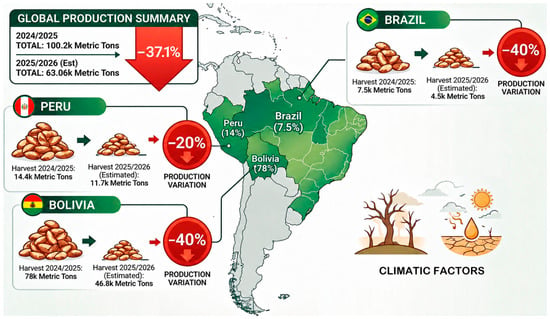
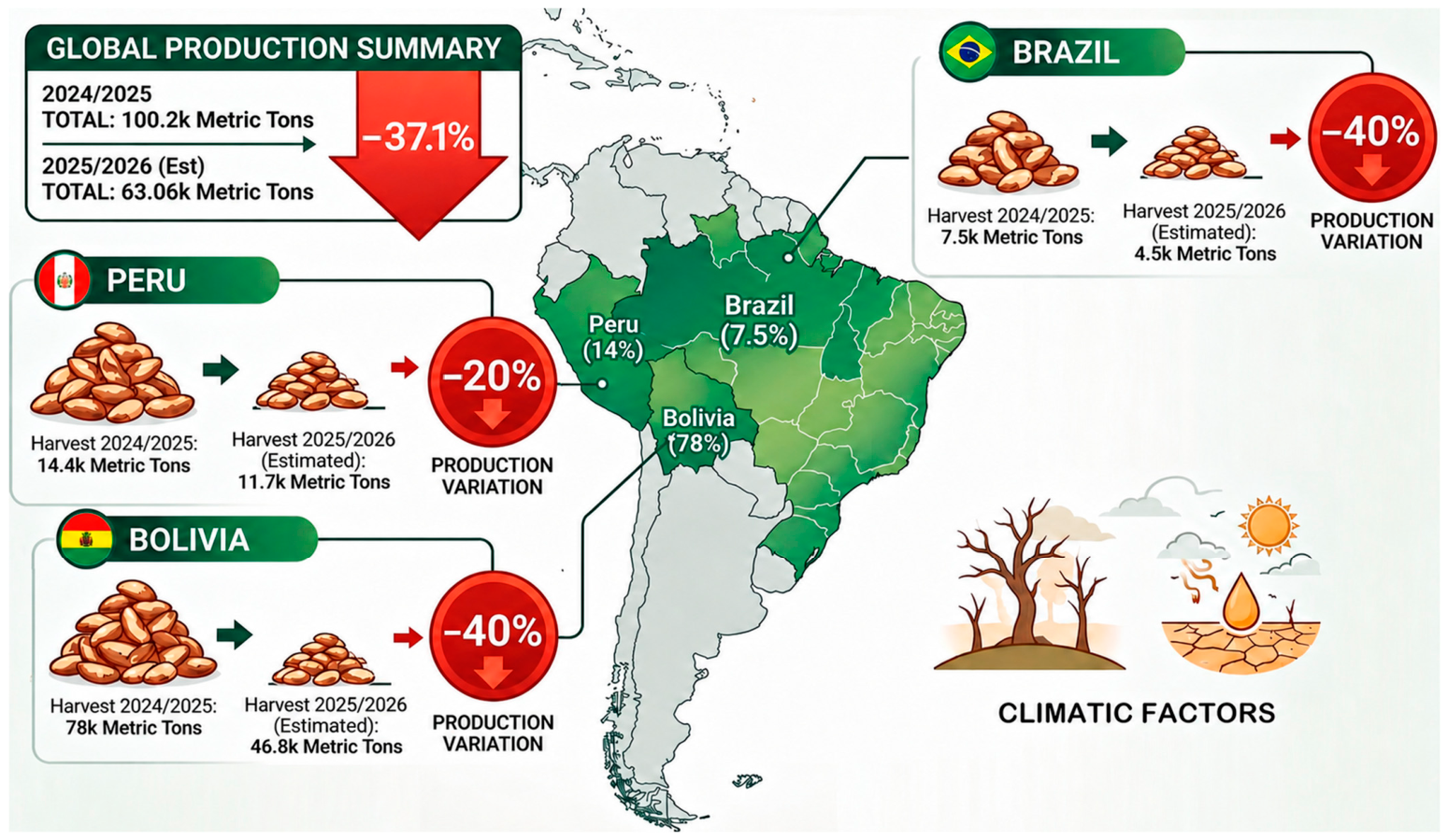
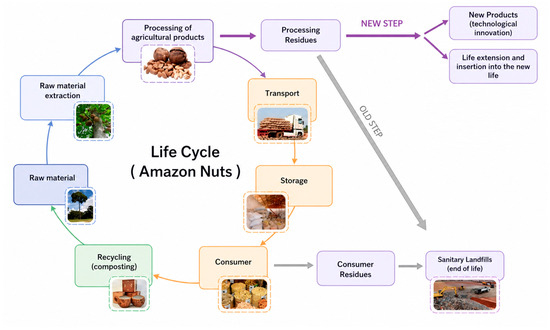
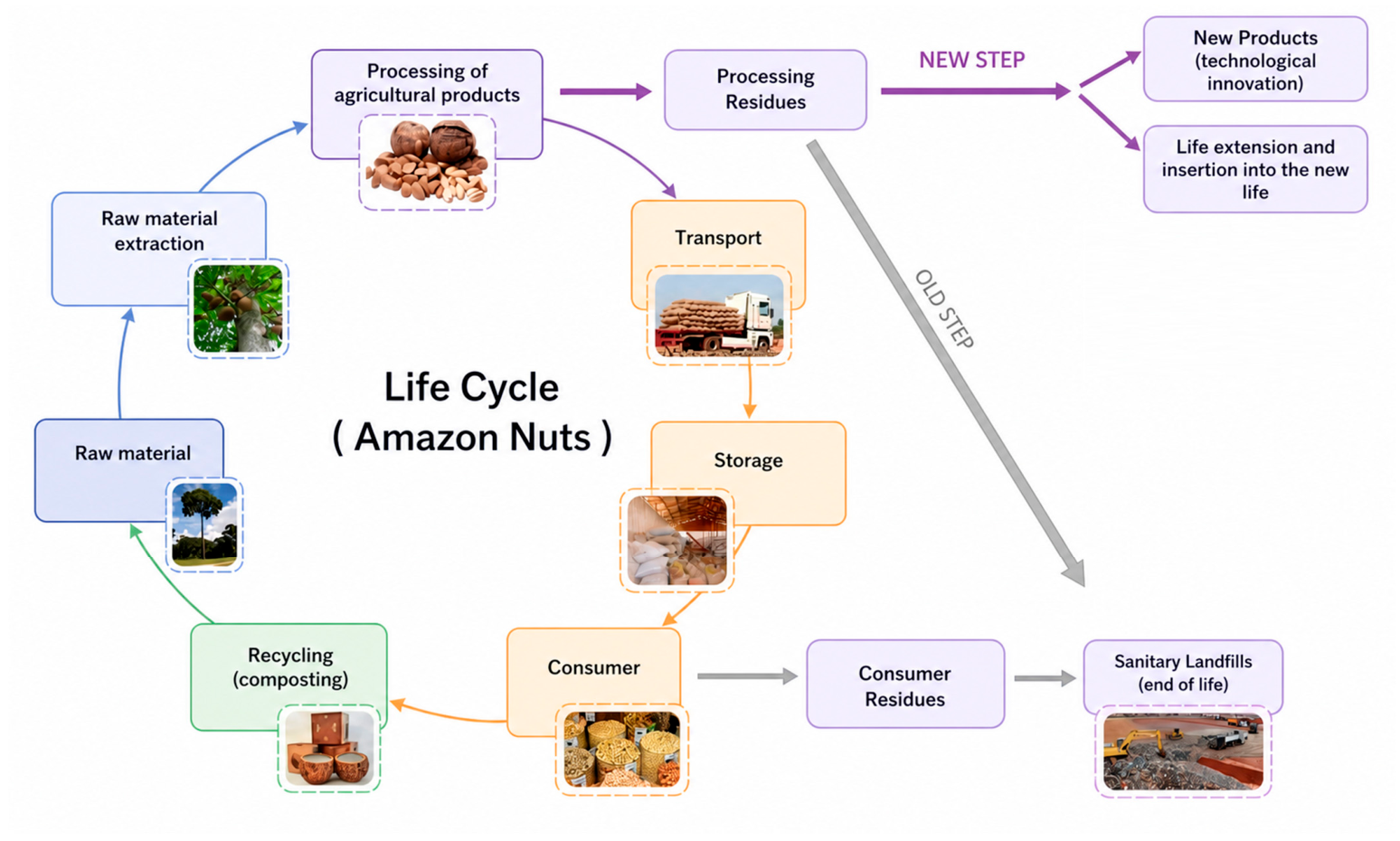
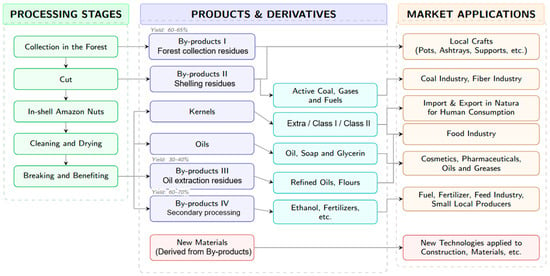
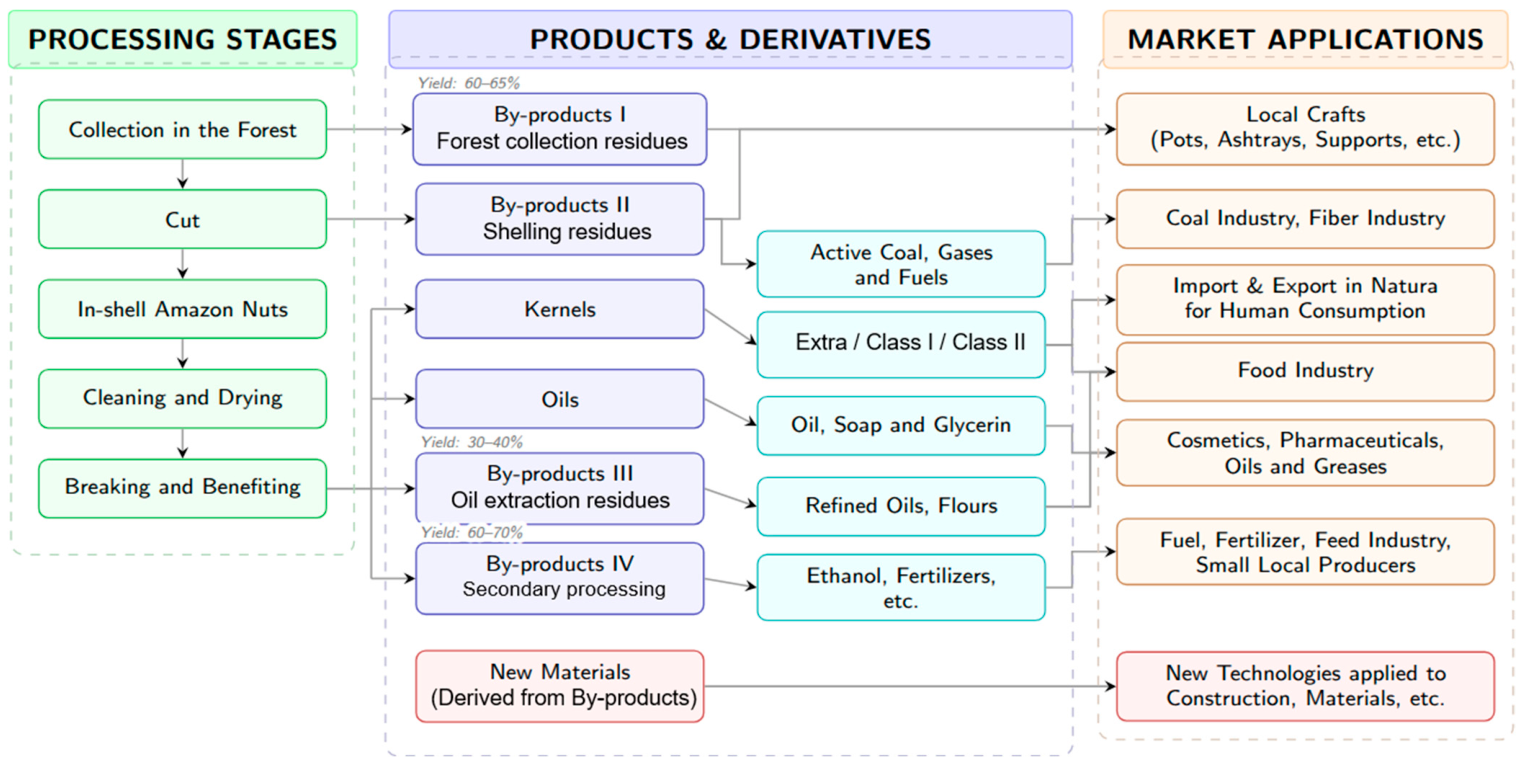

Disclaimer/Publisher’s Note: The statements, opinions and data contained in all publications are solely those of the individual author(s) and contributor(s) and not of MDPI and/or the editor(s). MDPI and/or the editor(s) disclaim responsibility for any injury to people or property resulting from any ideas, methods, instructions or products referred to in the content. |
© 2026 by the authors. Licensee MDPI, Basel, Switzerland. This article is an open access article distributed under the terms and conditions of the Creative Commons Attribution (CC BY) license.