


Abstract
Introduction: Renin–angiotensin–aldosterone system inhibitors (RAASis) are key treatments for heart failure (HF) and chronic kidney disease (CKD), but both conditions and RAASis raise a hyperkalaemia risk. This study explored healthcare professionals’ knowledge around the management of hyperkalaemia and examined real-world RAASis use after hyperkalaemia, including prescribing patterns, monitoring, and outcomes. Methods: A two-part prospective observational study was conducted between November 2021–23 at Portsmouth Hospitals University NHS Trust, UK. (i) An online survey assessed RAASis prescribing and hyperkalaemia management across several clinical scenarios. (ii) Following an index admission with hyperkalaemia (potassium ≥ 5.5 mmol/L) in patients already receiving RAASis, subsequent prescription patterns, blood tests, and 1-year outcomes were evaluated. Results: A total of 300 questionnaires were completed, comprising 91% physicians and 9% non-medical prescribers. There was a marked variation in clinical response across potassium ranges, irrespective of the indication (hypertension or HF). This was particularly apparent for patients with mild-to-moderate increases in potassium. A total of 93% of respondents identified the need for bespoke training around hyperkalaemia management. A total of 100 patients who were hospitalised with hyperkalaemia were enrolled (with a mean age of 75 ± 11 years; 26% women). Comorbidities and frailty were common. One-year mortality was 32%, and in the 92 patients who survived to discharge, there were 90 re-hospitalisations within 12 months. Within 3 months, a further 65 hyperkalaemia episodes occurred in 32 patients. Post-hospital discharge (within 2 weeks) blood tests (including renal and electrolyte testing) were performed in only 55% of patients. Conclusion: Our study highlights gaps in the knowledge of hyperkalaemia management and the value of RAASis in chronic diseases such as HF. Patients receiving RAASis who are hospitalised with co-existent hyperkalaemia have high rates of hyperkalaemia recurrence, hospitalisation, and mortality; yet, early repeat evaluation of bloods post-discharge is often lacking. Clear protocols for RAASis use in the context of hyperkalaemia and structured follow-up post-discharge are urgently needed to improve cardio-renal care.
1. Introduction
Renin–angiotensin–aldosterone system inhibitors (RAASis), including angiotensin-converting enzyme inhibitors (ACEis), angiotensin receptor blockers (ARBs), angiotensin receptor neprilysin inhibitors (ARNIs), and mineralocorticoid receptor antagonists (MRAs), are key therapies for patients with heart failure (HF) [1] or chronic kidney disease (CKD) [2], reducing the risk of mortality, hospitalisation [1], and disease progression [3]. RAASis counteract the effects of sustained RAAS activation by reducing myocardial fibrosis and adverse remodelling and lowering intraglomerular pressure and proteinuria [1,3].
However, HF and/or CKD are predictors of an increased risk of developing hyperkalaemia [4,5], a risk that is further elevated by the use of RAASis [6]. Hyperkalaemia can provoke potentially fatal arrhythmias, is associated with increased mortality, and frequently recurs [4,7]. However, the guidelines recommend managing hyperkalaemia so that RAASis can be continued rather than withdrawing them permanently [1,4]. Hyperkalaemia frequently leads to RAASi down-titration or discontinuation [8,9] and this is associated with worse cardiorenal outcomes [9,10]. While the incidence of hyperkalaemia ranges from 28% in CKD to 39% in HF [7,11], hospital-based data remain limited, with an estimated prevalence of 10% in patients with HF and CKD [12].
Despite existing guidelines, variability in health care professional (HCP) understanding of hyperkalaemia management and knowledge around the prognostic value of RAASis therapy in different conditions may contribute to inconsistent clinical practice [13,14,15]. To explore this, we conducted two complementary studies: (i) a HCP survey evaluating knowledge and prescribing practices, and (ii) a real-world observational study evaluating RAASis management and one-year clinical outcomes, following a hospital admission with hyperkalaemia in patients with and without HF, already receiving RAASis.
2. Methods
The prospective observational study was conducted in a large secondary care hospital (Portsmouth Hospitals University NHS Trust, UK) and was supported by an unrestricted grant from CSL Vifor, to enable data base set up and management. Patient and Public Involvement (PPI) informed the design, relevance, and conduct from the outset. Ethical approval was obtained from the NHS Research Ethics Committee (21/SC/0044) and the Health Research Authority (HRA). Portsmouth Hospitals University NHS Trust acted as the sponsor, and the study was registered on ClinicalTrials.gov (NCT4249648). The database complied with the Data Protection Act and General Data Protection Regulation (GDPR). Data were managed using REDcap, with the analyses performed in Excel and RAASis prescribing visualised using SankeyMATIC [16]. This observational study did not involve a clinical intervention and therefore several Transparent Reporting of Evaluations with Nonrandomized Designs (TREND) checklist items were not applicable; however, the checklist was included to enhance reporting transparency.
2.1. Health Care Professional Survey
An online survey was conducted across healthcare settings in Hampshire, UK, to assess the knowledge and practice in identifying, managing, and treating hyperkalaemia in patients on RAASis, with and without HF. The questionnaire was developed by the study team in line with current clinical guidelines and the study objectives. It was reviewed by local cardiology and heart failure specialists, as well as members of the cardiorenal multidisciplinary team. The questionnaire was also pilot tested by a group of clinicians to assess the clarity and the feasibility prior to wider dissemination. The expected completion time was 5 to 6 minutes. Each survey question required a single response and multiple responses per item were not permitted.
Respondents provided their clinical background, specialty, and prescribing practices. Decision-making around RAASis use at various potassium thresholds (5.0 to ≥ 6.5 mmol/L) was explored through three clinical scenarios, including patients receiving RAASis for hypertension (when other treatment options are available to control blood pressure) or HFrEF (when there is clear prognostic benefit). The decisions focused on continuation, reduction, or cessation of ACEis (ramipril or enalapril) and MRA (spironolactone), and whether respondents would consider reinitiating RAASis after resolution of the hyperkalaemia. The survey also assessed the perceptions of the prognostic or symptomatic benefit of RAASis therapy in patients with HF and reduced ejection fraction (HFrEF) and hypertension, local protocol use, and the preferred management strategies for patients with hyperkalaemia. (For in-depth survey details see Supplemental Material).
The survey was distributed via email, closed social media groups, and in-person outreach, targeting doctors, pharmacists, and non-medical prescribers in primary and secondary care. Consent was obtained electronically at survey entry, and the survey remained open for 14 months. It was hosted securely on RedCap [17,18] by Portsmouth Hospitals University Trust. The responses were anonymised to encourage open reporting. Descriptive statistics were used for the analysis. Due to varied distribution methods and anonymous participation, response tracking was limited.
2.2. Management, Follow-Up and Outcomes of Patients Presenting with Hyperkalaemia Already Receiving RAASi Therapy
The second part of the study was a prospective, observational cohort examining one-year outcomes in patients who were receiving RAASis therapy and were hospitalised with at least one episode of hyperkalaemia, defined as a serum potassium of ≥5.5 mmol/L, at Portsmouth Hospitals University NHS Trust, UK, between November 2021 and November 2023. Eligible participants were age ≥ 18 years, who were receiving RAASis therapy at the time of presentation, and were able to provide informed consent. Patients who were receiving maintenance dialysis, and those in whom hyperkalaemia was identified only on a haemolysed blood sample, were excluded.
Potential participants were identified via a bespoke alert from the hospital’s biochemistry department. Hyperkalaemia was classified according to the serum potassium as: mild 5.5 to 5.9 mmol/L, moderate 6.0 to 6.4 mmol/L, or severe ≥ 6.5 mmol/L. It is important to highlight that given constraints on the research team not all eligible patients could be approached for recruitment, particularly during weekends and holidays (see Section 5).
The research team collected data on the demographics, comorbidities, and blood results of the participants. In addition, based on data within the clinical notes, the research team assessed frailty using the modified Canadian Study of Health and Aging Clinical Frailty Scale (CFS), first described by Rockwood et al. [19] and previously applied in cardiology [20]. Frailty-stratified summaries were descriptive. Participants were grouped by CFS score (≤5 and >5), and their characteristics and outcomes were summarised using counts, percentages and means with standard deviations, as appropriate. No formal between-group hypothesis tests were performed; the numerical summaries were not intended to establish associations between frailty and clinical outcomes.
Participants were also asked to consent for follow up of their clinical data (no specific research visits) at 3 and 12 months post-discharge via their electronic health record (EHR). They were also invited to provide consent for the research team to notify the HF team and/or the primary care team, if RAASis withdrawal was observed following admission. EHR and death certificates were used to established the cause of death; cardiovascular death included death attributed to HF, ischaemic heart disease, arrhythmia, sudden cardiac death, or myocardial infarction.
Sankey diagrams were created to visualise two aspects of hyperkalaemia management: renal function monitoring and RAASis prescription over time. The ribbons width represents the number of patients in whom management was recorded or if the patient was deceased at those time points. RAASis re-initiation following discharge was determined, noting that this was at the discretion of the responsible treating clinician, and it was uncertain as to whether consistent local protocols or potassium thresholds were applied to the clinical decision making process. All-cause mortality was evaluated over 12 months and presented using Kaplan-Meier survival analysis.
The time point for early renal function and electrolyte monitoring was set at two weeks post discharge, since this is recommended by European Society of Cardiology HF guidelines and National Institute for Health and Care Excellence (NICE) [1,21,22]. Follow-up laboratory tests performed in primary care were able to be captured, since the hospital laboratory service is the sole provider for both hospital and primary care testing in this region. The cause of death was obtained from inpatient records or outpatient death certificates.
3. Results
3.1. Health Care Professional Survey
Due to the varied sampling techniques and untraceable email distribution, the detailed screening data are unavailable. Distribution records indicate that at least 1315 HCPs in secondary care (Portsmouth Hospitals University NHS Trust) received the survey, and this comprised approximately 1200 medical staff and 115 nonmedical prescribers. This is likely to be underestimation of the overall reach. From the 416 HCPs who started the survey, 300 surveys were completed (November 2021 to January 2023, see Supplementary Figure S1). The response rate could not be accurately calculated, as the distribution reach was unknown. Most respondents were doctors (n = 274, 91%) with the remainder being non-medical prescribers (n = 26, 9%). Of these 80% were based in secondary care. Specialist responses from cardiology (n = 31, 10%) and nephrology (n = 15, 5%) were limited.
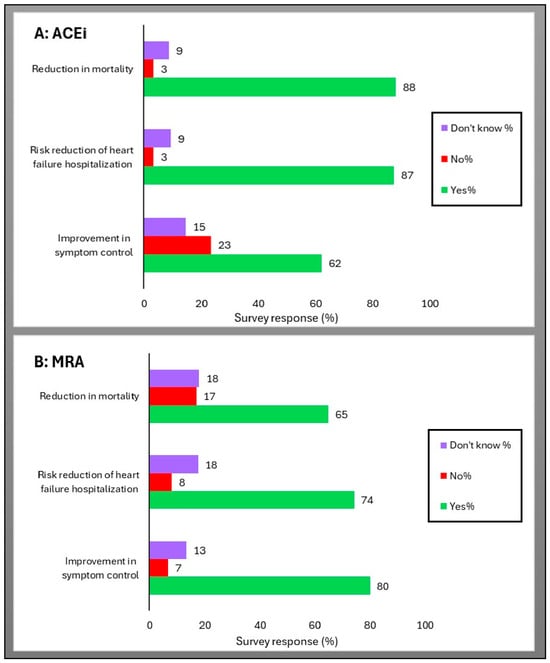
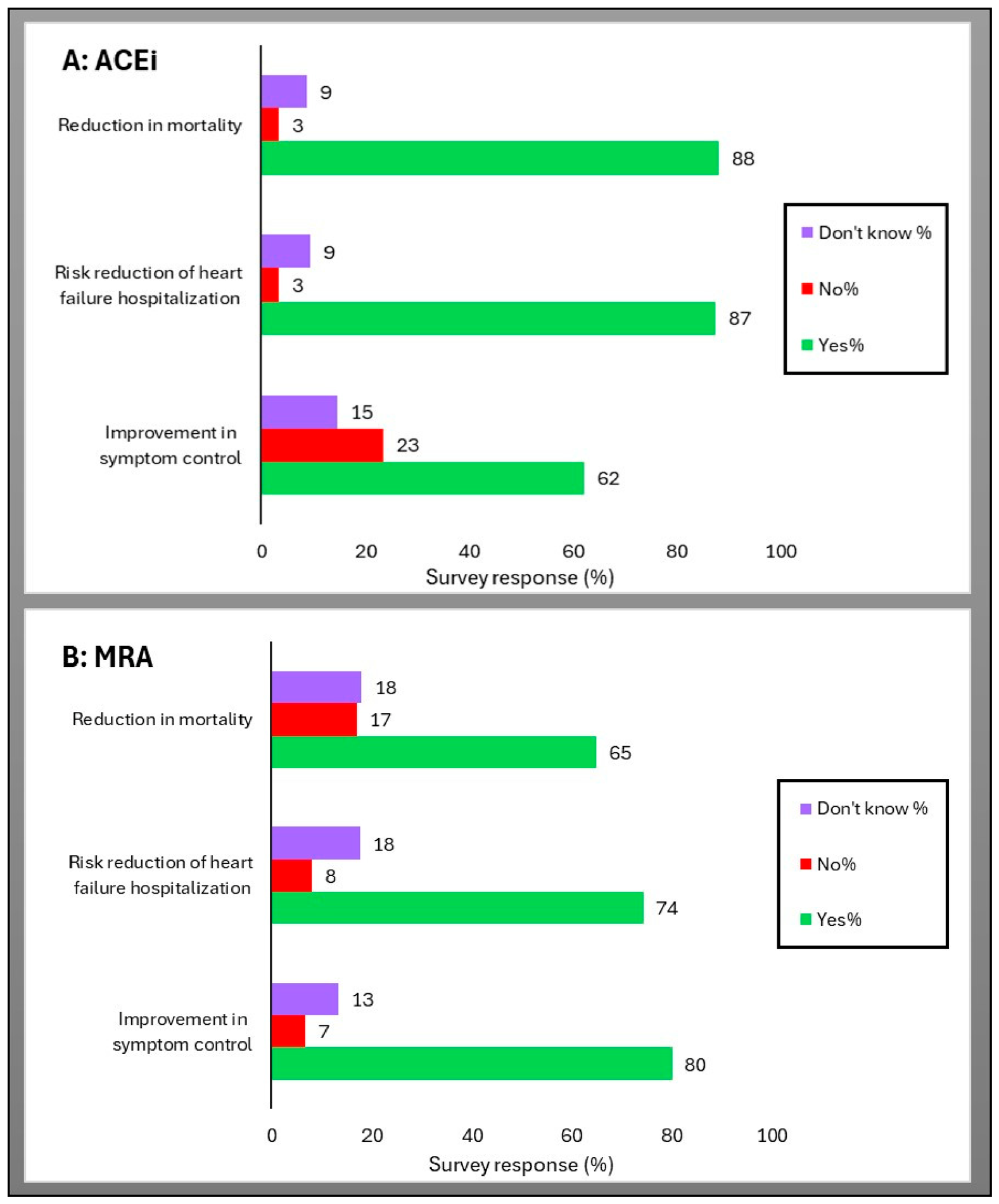
Whilst just under 90% of respondents recognised the prognostic benefit of ACEis in HFrEF, only 62% (186/300) were aware of their symptomatic effects (See Figure 1A). In contrast, MRAs were more often linked to symptom relief than survival or the reduction in the risk of HF hospitalisation (See Figure 1B).
Figure 1.
HCP understanding of beneficial effects of RAASis in HFrEF. (A) Benefits of angiotensin-converting enzyme inhibitors (ACEis). (B) Benefits of mineralocorticoid receptor antagonists (MRAs).
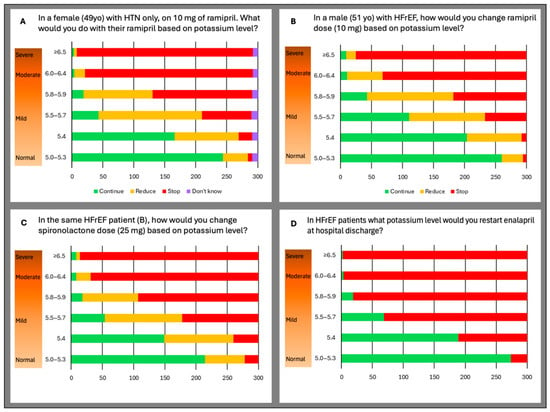
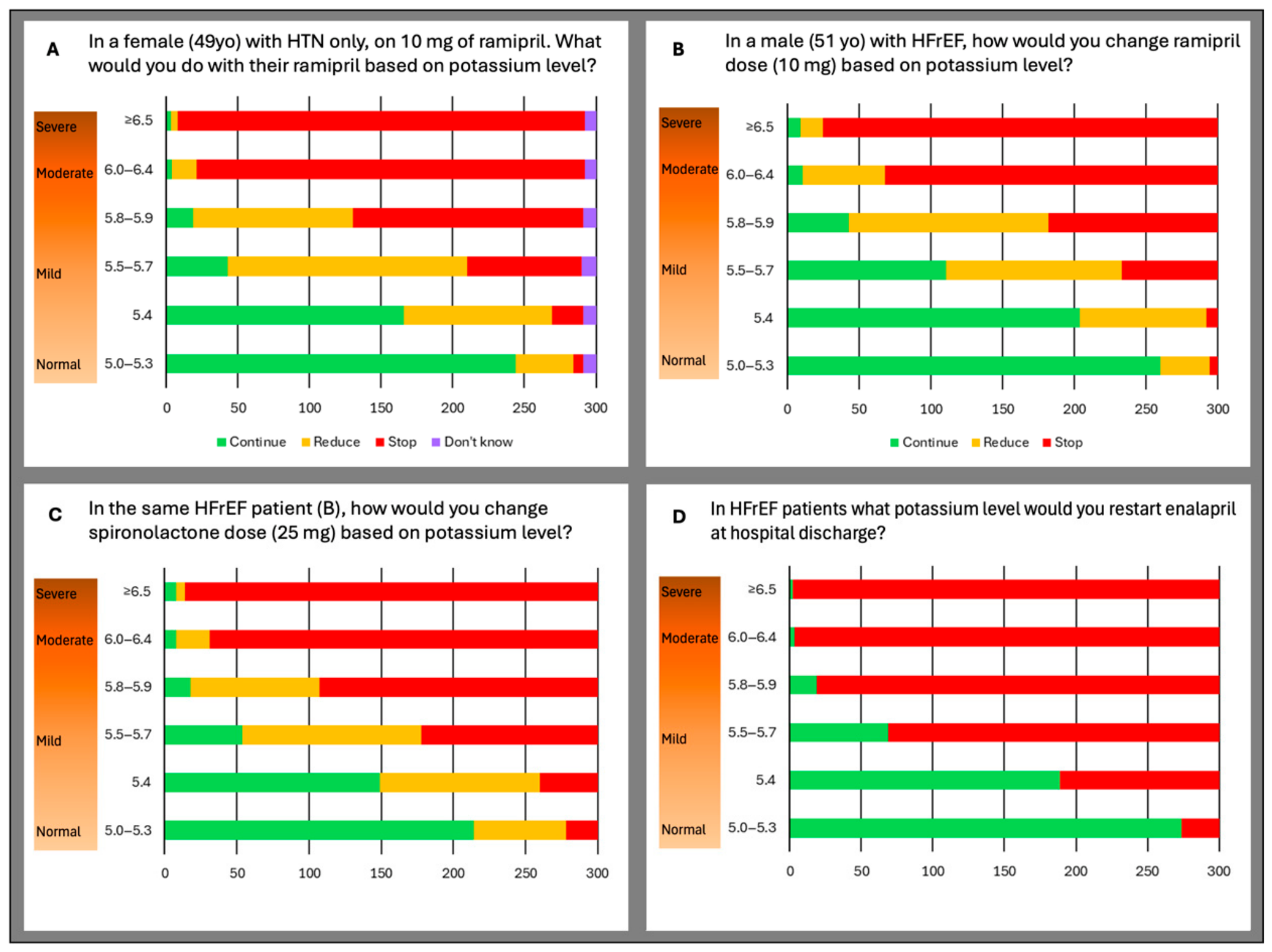
Figure 2 shows a summary of the responses for the different clinical scenarios. There was a marked variation in clinical response across potassium ranges, irrespective of the indication (hypertension or HFrEF), but this was particularly apparent for patients with mild-to-moderate increases in potassium. Whilst the majority of respondents would stop an ACEi or a MRA in patients with moderate or severe hyperkalaemia (potassium ≥ 6.0 mmol/L), a small number would continue or reduce the dose, irrespective of indication. Most respondents would not restart an ACEi unless potassium was at or approaching normal range (see Figure 2D).
Figure 2.
HCP responses to the clinical scenario questions detailing their actions based on potassium level. Scenario 1 (A), scenario 2 (B,C), scenario 3 (D). HTN: hypertension, HFrEF: heart failure with reduced ejection fraction.
While 74% of HCPs reported that they were familiar with local hyperkalaemia protocols, 93% expressed a need for further training in managing patients with HFrEF with hyperkalaemia. Preferred strategies included e-learning (55%), face-to-face training (48%), protocol updates (55%), and integrating lab-based alerts (54%).
3.2. Outcomes in Hyperkalaemia
For the patients hospitalised with an acute hyperkalaemia event (K ≥ 5.5 mmol/L), 1139 were screened (after excluding alerts that occurred during weekends, holidays, or periods of staff shortage). Of these 888 were ineligible for the study, 71 declined participations and 80 were not approached due to service capacity issues. A total of 100 were consented between July 2022 and November 2023 (see Supplementary Figure S1).
The baseline characteristics are shown in Table 1. Coded comorbidities and frailty were common, with 31% of patients having 4 or more comorbidities and 34% of patients being classified as frail (Clinical Frailty Scale (CFS) > 5). History of hyperkalaemia was common, with 55% of patients having experienced at least one episode prior to enrolment. At study entry, the mean serum potassium was 5.6 ± 0.7 mmol/L. According to the treating clinicians, the most frequently reported precipitants were acute kidney injury (AKI), defined by the laboratory reporting system as 1.5 times or greater increase in serum creatinine (n = 38), medications (n = 37), and infection (n = 33).
Table 1.
Baseline characteristics eGFR = estimated Glomerular Filtration Rate, RAASi = Renin-angiotensin aldosterone system inhibitors.
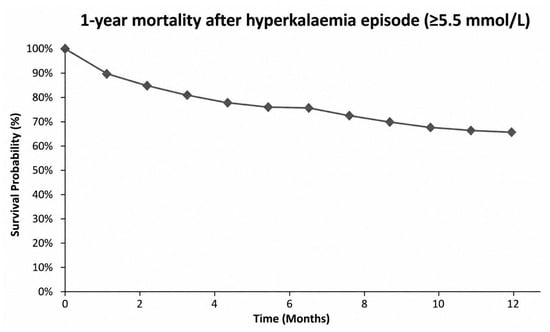
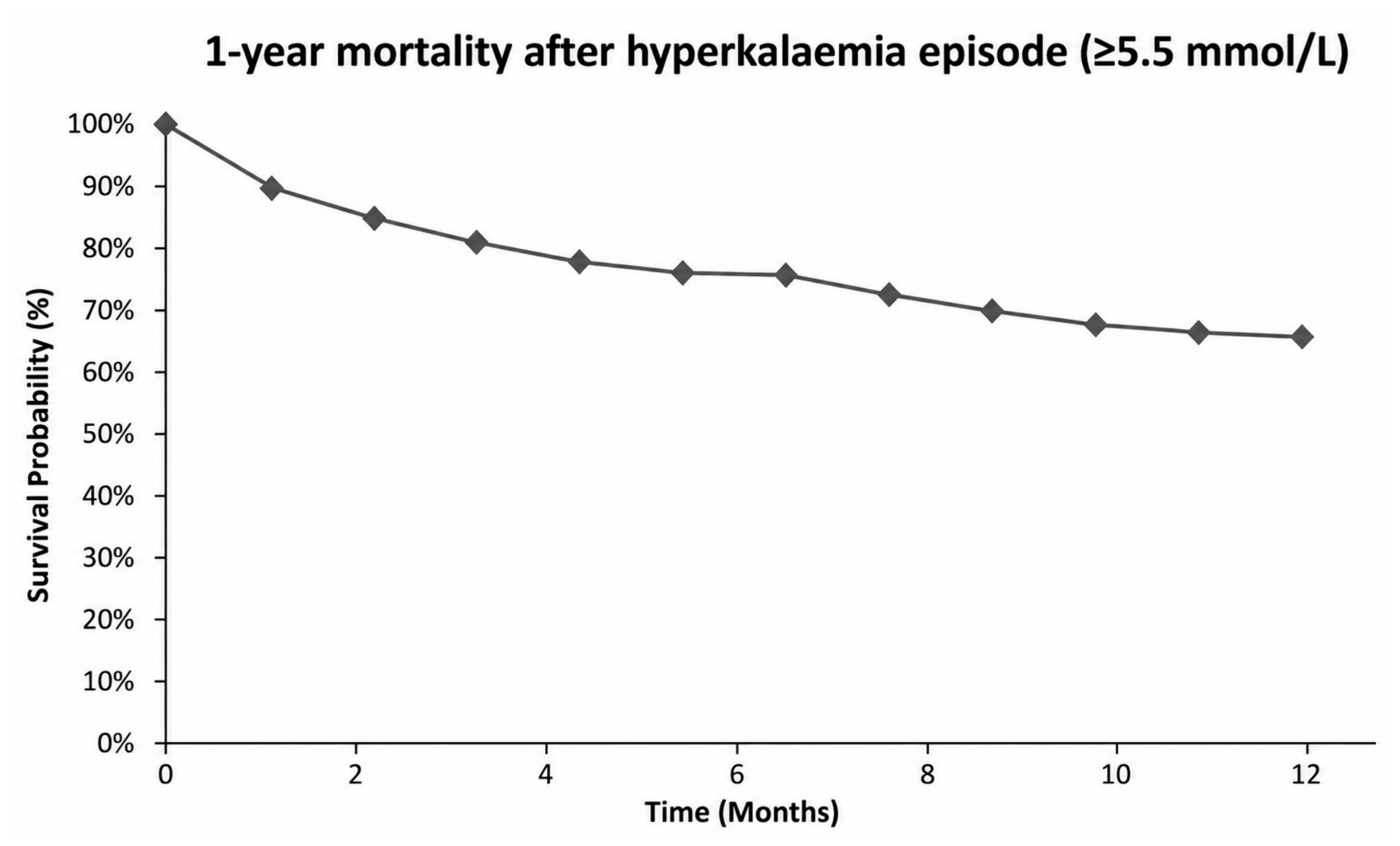
One year mortality was 32% (see Figure 3). Within the first 3 months, this was predominantly due to cardiovascular causes. Out of 100 participants, 92 survived the index admission, with in hospital death being due to cardiovascular cause in 7 and non-cardiovascular in one. At 3 months, 82 participants remained alive. When considering the further 10 deaths that occurred following discharge, 8 were due to cardiovascular disease and 2 due to non-cardiovascular aetiology. During this period, 65 hyperkalaemia episodes occurred in 32 patients (mean K 6.1 ± 0.6 mmol/L); 7 patients had multiple recurrences.
Figure 3.
1-year mortality after hyperkalaemia episode.
By 12 months follow up, 67 participants were alive. Of the 15 additional deaths occurring between 3 and 12 months, the majority were due to non-cardiovascular disease (n = 10). Between 3–12 months, 83 hyperkalaemia episodes occurred in 58 participants with a mean potassium of 6.4 ± 1.5 mmol/L. There were 90 re-hospitalisations within 12 months, with the majority (n = 51) occurring after 3 months and primarily (n = 71) being attributed to a non-cardiovascular reason.
Clinical characteristics, post discharge monitoring, mortality and RAASis use are presented descriptively by frailty category (CFS ≤ 5 and CFS > 5) in Table 2. Patients with moderate-to-severe frailty (CFS > 5) were of similar age to those with mild frailty or better, but were more likely to have HFrEF (54% vs. 40%). Early renal function monitoring following discharge was more frequently performed in patients with moderate-to-severe frailty (62% vs. 52%).
Table 2.
Descriptive summary of clinical characteristics, post-discharge monitoring, mortality, and RAASis use according to frailty status. Participants were stratified by Clinical Frailty Scale (CFS) score into mildly frail or better (CFS ≤ 5) and moderate-to-severe frailty (CFS > 5). Data are presented as mean (standard deviation), percentage and number of patients. HFrEF = heart failure with reduced ejection fraction; HF = heart failure; RAASi = renin–angiotensin–aldosterone system inhibitor.
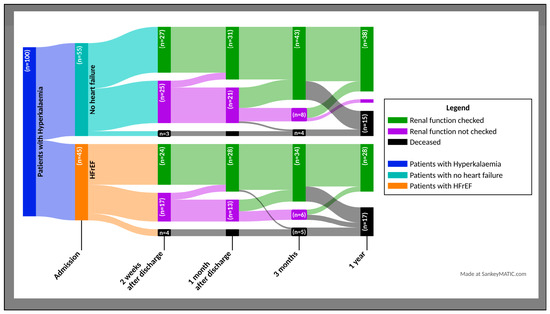
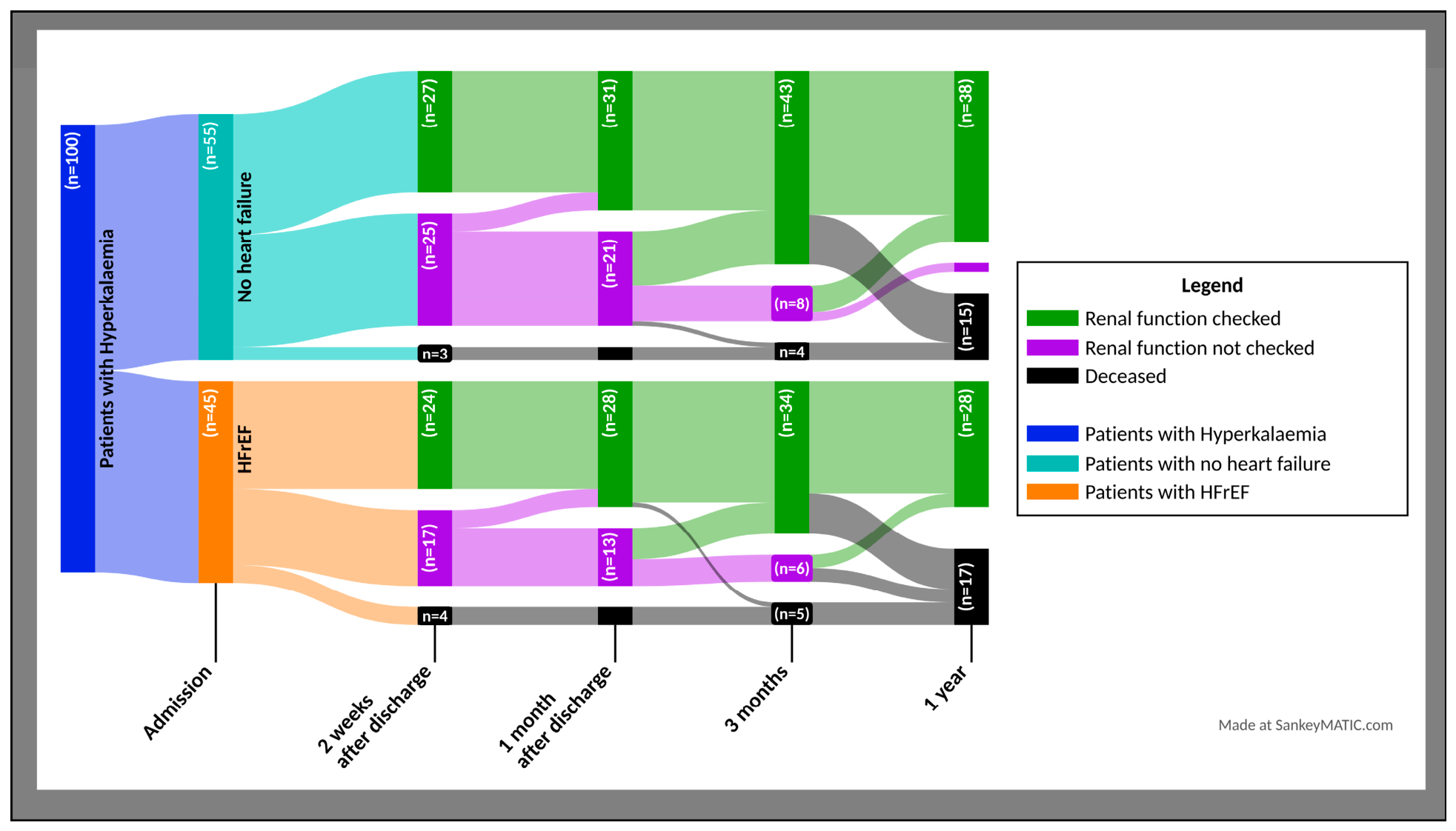
Early post-hospital discharge (within 2 weeks) blood assessments were performed in only 55% of patients (51/92). When considering patients with HFrEF, 48% (22/45) had blood checks by 2-weeks, and this increased to 71% by 1 month (See Figure 4).
Figure 4.
Renal function and electrolyte checks following hospitalisation for hyperkalaemia. Sankey diagram, the width of the bars represents the number of patients in that bar. RAASi: renin angiotensin aldosterone system inhibitors, HFrEF, heart failure with reduced ejection fraction.
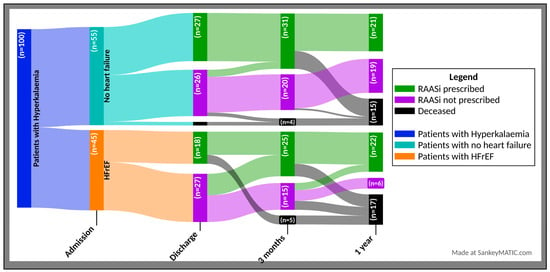
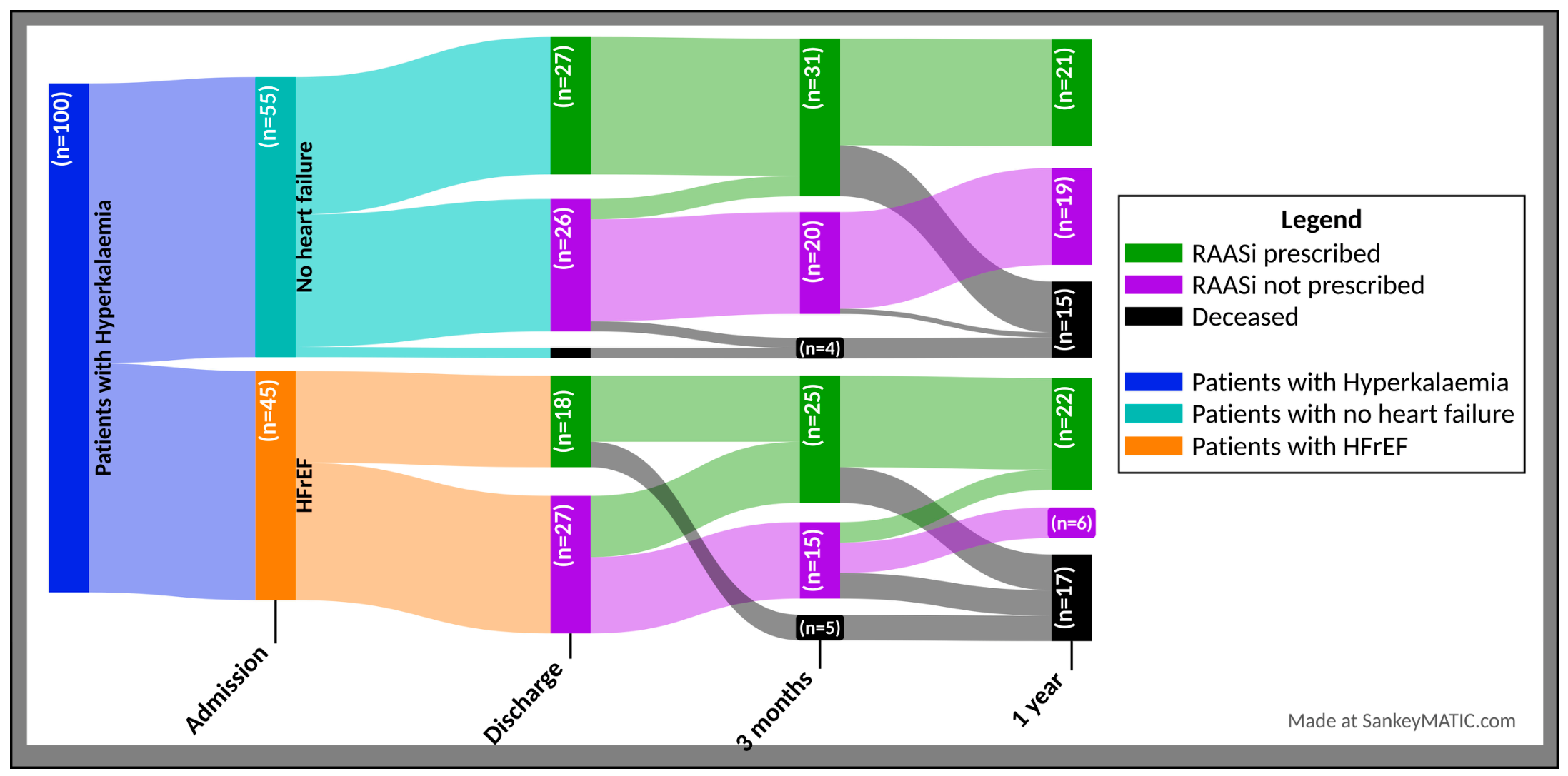
All RAASis therapy was discontinued during the index admission. Re-initiation over the sub-sequent 12 months is illustrated in Figure 5). At discharge, 49% (45/92) had at least one RAASi restarted, and of these 40% (18/45) had HFrEF. This had increased to 67% (56/82; HFrEF n = 25, no heart failure n = 31) by 3 months, before declining slightly to 63% (43/68; HFrEF n = 22, no heart failure n = 21) by 12 months.
Figure 5.
RAASi prescription following hospitalisation for hyperkalaemia. Sankey diagram, the width of the bars represents the number of patients in that bar. RAASis: renin angiotensin aldosterone system inhibitors; HFrEF, heart failure with reduced ejection fraction.
4. Discussion
This mixed-methods study highlights important gaps in the management of hyperkalaemia, including a variation in RAASis prescribing and the need for more clinician support and education. In this high-risk cohort, comorbidity, frailty, prior hyperkalaemia, recurrent hyperkalaemia, re-hospitalisations and mortality were common, with early deaths largely being due to cardiovascular causes. Despite the prognostic importance of RAASis, both re-initiation following the admission and post-discharge renal function monitoring were inconsistent.
4.1. Health Care Professional Survey
Despite treatment with RAASis being central to HF management for decades [23], the awareness of their prognostic benefits, in particular for MRA, and potassium thresholds for RAASi dose reduction or discontinuation varied. Clinicians were more inclined to continue or reduce ACEis for patients with HFrEF as compared to hypertension, yet the thresholds for the discontinuation of MRAs were lower. Our findings show a persistent gap between guidelines and real-world practice [9], which is consistent with registry data showing frequent RAASis down-titration even in mild hyperkalaemia [8]. As use of RAASis continues to expand, targeted education and system-level strategies are needed to support clinicians and patients to maintain guideline-directed therapy, particularly through effective hyperkalaemia management.
4.2. Hyperkalaemia Presentation and Subsequent Management
In keeping with larger studies, in this study over half of the patients enrolled had a prior episode of hyperkalaemia [7,11], and recurrent hyperkalaemia episodes were common [24,25]. This might be explained by the high number of comorbidities, including CKD, hypertension and diabetes that were prevalent in our study, and are predictors for AKI [26]. Women only represented 26% of the cohort, which may reflect either lower participation rates or true male predominance [27]. However, sex difference in HF management may also contribute [27].
Both hypo- and hyperkalaemia are associated with increased mortality [28] and maintaining potassium levels between 4.5 – 5.0 mmol/l may be optimal for outcomes [29]. Even though withdrawal of prognostic medications such as RAASis is associated with adverse outcomes [9,25], only around two thirds of surviving participants were receiving RAASis at 12 months, irrespective of frailty status. Whilst frailty is a recognised contributor to adverse outcomes [30,31], a previous study suggested that frailty itself was not independently associated with development of hyperkalaemia [32]. However, conditions that commonly contribute to frailty, particularly diabetes and CKD, are key drivers of hyperkalaemia [33] and are associated with poorer outcomes in older patients [34]. In our cohort study, outcomes and RAASis utilisation were broadly similar across frailty groups.
Recurrent hyperkalaemia and rehospitalisation rates were high, suggesting that hyperkalaemia management and RAASis optimisation remain important, potentially modifiable contributors to poor outcomes in this population. A failure to re-initiate RAASis likely reflects a combination of recurrent hyperkalaemia, renal dysfunction, and comorbidities, as well as clinical inertia in overburdened clinical services [35]. The inconsistent post-discharge laboratory monitoring further highlights gaps in follow-up pathways and the uncertainty regarding the responsibility for ongoing care across primary and secondary care.
When considering the cohort results alongside the survey results there seems to be considerable variability in hyperkalaemia management. In the survey of HCPs, prescribers reported differing potassium thresholds for RAASis modification, mirrored by frequent RAASis discontinuation and inconsistent post-discharge monitoring in the hyperkalaemia cohort. Together with the high demand for further education among survey respondents, these findings highlight important gaps in clinician support and follow-up pathways.
This mixed-methods study underscores the complex interplay between hyperkalaemia, RAASis prescription, multi-morbidity, frailty, and outcomes, and the uncertainty around how much of the associated risk is modifiable through RAASis re-optimisation. Given the high-risk nature of this population, both in terms of mortality and re-hospitalisation, a bespoke post-discharge review process is warranted. This may include medication optimisation, individualised potassium management (potentially incorporating dietary advice and/or potassium binders), closer monitoring, risk stratification, and where appropriate, advanced care planning. Targeted strategies such as dedicated post-discharge clinics and focused educational initiatives for HCPs may help reduce preventable risk and health care utilisation in this vulnerable group.
5. Limitations and Conclusions
5.1. Health Care Professional Survey
There are uncertainties as to the actual survey response rate and it is plausible that this is relatively low, possibly due to survey fatigue and clinical workload, particularly post-COVID19 [36]. Although this may introduce response bias, the low representation from cardiology (11%) and nephrology (5%) increases the relevance of the findings to non-specialist HCPs, who often manage hyperkalaemia in real-world settings. One might also argue that individuals who have some confidence in their knowledge of a subject area are more likely to respond, and hence the findings may represent a best-case reflection of knowledge. Although the survey was refined after review by local specialists and was designed to assess how individual’s manage patients in different clinical scenarios (as opposed to whether an answer was correct), we did not formally assess the validity or reliability of the questions.
5.2. Outcomes in Patients Presenting with Hyperkalaemia
The single centre design and modest sample size may affect generalisability. However, the local healthcare pathways and associated limitations in clinical practice are likely to be representative of healthcare systems more widely. Co-morbidity and frailty likely contribute to the occurrence of hyperkalaemia, RAASis prescribing pattern and adverse outcomes. Given the observational design and limited sample size, the study was not powered to assess the independent association of various clinical factors on outcomes; we therefore presented frailty-related findings descriptively. Furthermore, CKD stage could not be reliably determined, as albuminuria data were not available and eGFR was measured during the acute admission often in the context of AKI.
Several other considerations regarding potential selection bias should be acknowledged. Not all eligible patients were approached due to research service constraints, particularly during weekends and around national holidays. Some patients declined participation. However, with the elderly and co-morbid make-up of the cohort, and the inclusion of a large proportion of patients with moderate-to-severe frailty, we believe the findings will have generalisability.
Selection bias may at least partially explain the low number of female patients enrolled, as seen in many cardiovascular trials. Additionally, the observational nature limits causal inference, particularly around RAASis discontinuation and outcomes, and some events or medication changes may have occurred without documentation in the electronic health record. The precise timing of RAASis re-initiation could not be accurately determined, as medication status was only assessed at discharge and at 3- and 12-month follow-up time points.
The subgroup of patients receiving RAASis for prognostic indication such as HF, rather than for hypertension alone, was small, limiting the ability to perform meaningful comparative analysis. Larger cohort studies are needed to clarify the complex interplay between RAASis use, hyperkalaemia, frailty, and cardio-renal outcomes in patients with HF and CKD.
This study highlights gaps in the knowledge of hyperkalaemia management and the value of RAASis in chronic diseases such as heart failure. Patients receiving RAASis who are hospitalised with co-existent hyperkalaemia, are high risk and experience high rates of hyperkalaemia recurrence, hospitalisation, and mortality. Despite this, early repeat evaluation of bloods post-discharge is often lacking. Clear protocols for RAASis use and structured follow-up post discharge are urgently needed to improve cardio-renal care.
Supplementary Materials
The following supporting information can be downloaded at: https://www.mdpi.com/article/10.3390/jcrm2040013/s1, Figure S1: Participant recruitment and flow for the healthcare professional survey and hyperkalaemia cohort; Figure S2: Questionnaire for healthcare professionals.
Author Contributions
S.M.B., E.C., P.R.K. substantially contributed to the conception and design of the study; S.M.B., E.C., M.W., R.C.A., S.H., C.T., L.L. substantially contributed to the acquisition of data; S.M.B., R.C.A., E.C., C.T., L.L., S.H., K.G., G.M., P.R.K. substantially contributed to the analysis and interpretation of data, drafting, revision and publishing the manuscript. All authors have read and agreed to the published version of the manuscript.
Funding
CSL Vifor provided the institution with an unrestricted grant to support the work. They had no role in the design, data collection, data analysis, and reporting of this study.
Institutional Review Board Statement
The Review K+ study protocol “BuRden of hyperkalaemia and EValutIon of changEs to therapy With renin-angiotensin-aldosterone system inhibitors following episodes of elevated Potassium” was reviewed and approved by South Central Berkshire Research ethics committee (REC) on 19 February 2021, REC approval number 21/SC/0044, IRAS ID 260265. It was registered on ClinicalTrials.gov NCT4249648.
Informed Consent Statement
Written informed consent was obtained from all participants.
Data Availability Statement
Consideration will be made upon written request by the sponsor and will consider scientific merit and funding availability. The data that support the findings of this study are not currently publicly available due to the fact that a separate but related study is still being analysed, but are available from the corresponding author upon request.
Acknowledgments
All the healthcare professionals and patients who participated in the study, your data and opinions made this study possible. The research team at Portsmouth Hospitals University NHS Trust (Serena Howe, Charlotte Turner, Rosalynn Austin, Lilianna Lopes, Pedro Braga Sardo, Catherine Edwards, Petra Che, Sally Gosling, Sean Beech, Gemma Dixon, Monika Thwaites, and Stella Pearson) who coordinated, recruited, collected data, and completed follow-ups.
Conflicts of Interest
CSL Vifor provided the institution with an unrestricted grant to support the work. SMB has received funding for consultancy and talks for Astra Zeneca, Bayer, BMS, Pfizer, DaichiiSankyo. PRK has received funding for consultancy and/or talks for Astra Zeneca, CSL Vifor, Pharmacosmos, Bayer, Boehringer Ingelheim, Novartis. His institution has received research grants from Pharmacosmos, FIRE-1, CSL Vifor. RA receives support from the National Institute of Health and Care Research (NIHR) Applied Research Collaboration Wessex through a “PreApplication Support Fund” post-doctoral award. At the time of this work she also received funding from Norwegian Research Council (Grant No. 301472) as a part of her role as a postdoctoral researcher for the eHealth @ Hospital to Home project at the University of Stavanger. The remaining authors (EC, MW, CT, LL, SH, KG, and GM) have no conflicts of interest to declare. The views expressed are those of the authors and not necessarily the National Health Service, NIHR or Department of Health and Social Care.
References
- McDonagh, T.A.; Metra, M.; Adamo, M.; Gardner, R.S.; Baumbach, A.; Böhm, M.; Burri, H.; Butler, J.; Čelutkienė, J.; Chioncel, O.; et al. 2021 ESC Guidelines for the diagnosis and treatment of acute and chronic heart failure: Developed by the Task Force for the diagnosis and treatment of acute and chronic heart failure of the European Society of Cardiology (ESC) With the special contribution of the Heart Failure Association (HFA) of the ESC. Eur. Heart J. 2021, 42, 3599–3726. [Google Scholar] [CrossRef] [Scilit] [PubMed]
- Xie, X.; Liu, Y.; Perkovic, V.; Li, X.; Ninomiya, T.; Hou, W.; Zhao, N.; Liu, L.; Lv, J.; Zhang, H.; et al. Renin–angiotensin system inhibitors and kidney and cardiovascular outcomes in patients with CKD: A Bayesian network meta-analysis of randomized clinical trials. Am. J. Kidney Dis. 2016, 67, 728–741. [Google Scholar] [CrossRef] [Scilit] [PubMed]
- Lewis, E.J.; Hunsicker, L.G.; Bain, R.P.; Rohde, R.D. The effect of angiotensin-converting-enzyme inhibition on diabetic nephropathy. The Collaborative Study Group. N. Engl. J. Med. 1993, 329, 1456–1462. [Google Scholar] [PubMed]
- Rosano, G.M.C.; Tamargo, J.; Kjeldsen, K.P.; Lainscak, M.; Agewall, S.; Anker, S.D.; Ceconi, C.; Coats, A.J.S.; Drexel, H.; Filippatos, G.; et al. Expert consensus document on the management of hyperkalaemia in patients with cardiovascular disease treated with renin angiotensin aldosterone system inhibitors: Coordinated by the Working Group on Cardiovascular Pharmacotherapy of the European Society of Cardiology. Eur. Heart J. Cardiovasc. Pharmacother. 2018, 4, 180–188. [Google Scholar] [CrossRef] [Scilit]
- Paolillo, S.; Basile, C.; Dell’Aversana, S.; Esposito, I.; Chirico, A.; Colella, A.; Esposito, G.; Di Santo, M.; Fierro, M.F.; Carbone, F.; et al. Novel potassium binders to optimize RAASi therapy in heart failure: A systematic review and meta-analysis. Eur. J. Intern. Med. 2024, 119, 109–117. [Google Scholar] [CrossRef] [Scilit] [PubMed]
- Desai, A.S.; Liu, J.; Pfeffer, M.A.; Claggett, B.; Fleg, J.; Lewis, E.F.; McKinlay, S.; O’Meara, E.; Shah, S.J.; Sweitzer, N.K.; et al. Incident hyperkalemia, hypokalemia, and clinical outcomes during spironolactone treatment of heart failure with preserved ejection fraction: Analysis of the TOPCAT trial. J. Card. Fail. 2018, 24, 313–320. [Google Scholar] [CrossRef] [Scilit] [PubMed]
- Adelborg, K.; Nicolaisen, S.K.; Hasvold, P.; Palaka, E.; Pedersen, L.; Thomsen, R.W. Predictors for repeated hyperkalemia and potassium trajectories in high-risk patients—A population-based cohort study. PLoS ONE 2019, 14, e0218739. [Google Scholar] [CrossRef] [Scilit] [PubMed]
- Epstein, M.; Reaven, N.L.; Funk, S.E.; McGaughey, K.J.; Oestreicher, N.; Knispel, J. Evaluation of the treatment gap between clinical guidelines and the utilization of renin-angiotensin-aldosterone system inhibitors. Am. J. Manag. Care 2015, 21, S212–S220. [Google Scholar]
- Kanda, E.; Rastogi, A.; Murohara, T.; Lesén, E.; Agiro, A.; Arnold, M.; Chen, G.; Yajima, T.; Järbrink, K.; Pollack, C.V. Clinical impact of suboptimal RAASi therapy following an episode of hyperkalemia. BMC Nephrol. 2023, 24, 18. [Google Scholar] [CrossRef] [Scilit] [PubMed]
- Svensson, M.K.; Murohara, T.; Lesén, E.; Arnold, M.; Cars, T.; Järbrink, K.; Chen, G.; Morita, N.; Venkatesan, S.; Kanda, E. Hyperkalaemia-related reduction of RAASi treatment associates with more subsequent inpatient care. Nephrol. Dial. Transplant. 2024, 39, 1258–1267. [Google Scholar] [CrossRef] [Scilit] [PubMed]
- Thomsen, R.W.; Nicolaisen, S.K.; Hasvold, P.; Garcia-Sanchez, R.; Pedersen, L.; Adelborg, K.; Egfjord, M.; Egstrup, K.; Sørensen, H.T. Elevated potassium levels in patients with congestive heart failure: Occurrence, risk factors, and clinical outcomes: A Danish population-based cohort study. J. Am. Heart Assoc. 2018, 7, e008912. [Google Scholar] [PubMed]
- Mu, F.; Betts, K.A.; Woolley, J.M.; Dua, A.; Wang, Y.; Zhong, J.; Wu, E.Q. Prevalence and economic burden of hyperkalemia in the United States Medicare population. Curr. Med. Res. Opin. 2020, 36, 1333–1341. [Google Scholar] [CrossRef] [Scilit] [PubMed]
- Linde, C.; Bakhai, A.; Furuland, H.; Evans, M.; McEwan, P.; Ayoubkhani, D.; Qin, L. Real-world associations of renin–angiotensin–aldosterone system inhibitor dose, hyperkalemia, and adverse clinical outcomes in a cohort of patients with new-onset chronic kidney disease or heart failure in the United Kingdom. J. Am. Heart Assoc. 2019, 8, e012655. [Google Scholar] [CrossRef] [Scilit] [PubMed]
- Peacock, W.F.; Rafique, Z.; Clark, C.L.; Singer, A.J.; Turner, S.; Miller, J.; Char, D.; Lagina, A.; Smith, L.M.; Blomkalns, A.L.; et al. Real world evidence for treatment of hyperkalemia in the emergency department (REVEAL–ED): A multicenter, prospective, observational study. J. Emerg. Med. 2018, 55, 741–750. [Google Scholar] [CrossRef] [Scilit] [PubMed]
- Kashihara, N.; Kohsaka, S.; Kanda, E.; Okami, S.; Yajima, T. Hyperkalemia in real-world patients under continuous medical care in Japan. Kidney Int. Rep. 2019, 4, 1248–1260. [Google Scholar] [CrossRef] [Scilit] [PubMed]
- SankeyMATIC. Available online: https://sankeymatic.com (accessed on 1 November 2025).
- Harris, P.A.; Taylor, R.; Thielke, R.; Payne, J.; Gonzalez, N.; Conde, J.G. Research electronic data capture (REDCap)—A metadata-driven methodology and workflow process for providing translational research informatics support. J. Biomed. Inform. 2009, 42, 377–381. [Google Scholar] [CrossRef] [Scilit] [PubMed]
- Harris, P.A.; Taylor, R.; Minor, B.L.; Elliott, V.; Fernandez, M.; O’Neal, L.; McLeod, L.; Delacqua, G.; Delacqua, F.; Kirby, J.; et al. The REDCap consortium: Building an international community of software platform partners. J. Biomed. Inform. 2019, 95, 103208. [Google Scholar] [CrossRef] [Scilit] [PubMed]
- Rockwood, K.; Song, X.; MacKnight, C.; Bergman, H.; Hogan, D.B.; McDowell, I.; Mitnitski, A. A global clinical measure of fitness and frailty in elderly people. CMAJ 2005, 173, 489–495. [Google Scholar] [CrossRef] [Scilit] [PubMed]
- Murali-Krishnan, R.; Iqbal, J.; Rowe, R.; Hatem, E.; Parviz, Y.; Richardson, J.; Sultan, A.; Gunn, J. Impact of frailty on outcomes after percutaneous coronary intervention: A prospective cohort study. Open Heart 2015, 2, e000294. [Google Scholar] [CrossRef] [Scilit] [PubMed]
- Metra, M.; Gheorghiade, M.; Bonow, R.O.; Dei Cas, L. Postdischarge assessment after a heart failure hospitalization: The next step forward. Circulation 2010, 122, 1782–1785. [Google Scholar]
- National Guideline Centre (UK). Post-discharge early follow-up clinics. In Emergency and Acute Medical Care in Over 16s: Service Delivery and Organisation; NICE Guideline NG94; National Institute for Health and Care Excellence: London, UK, 2018; Available online: https://www.nice.org.uk/guidance/ng94 (accessed on 1 November 2025).
- Captopril Multicenter Research Group. A placebo-controlled trial of captopril in refractory chronic congestive heart failure. J. Am. Coll. Cardiol. 1983, 2, 755–763. [Google Scholar] [CrossRef] [Scilit] [PubMed]
- Pitt, B.; Bakris, G.L.; Bushinsky, D.A.; Garza, D.; Mayo, M.R.; Stasiv, Y.; Christ-Schmidt, H.; Berman, L.; Weir, M.R. Effect of patiromer on reducing serum potassium and preventing recurrent hyperkalaemia in patients with heart failure and chronic kidney disease on RAAS inhibitors. Eur. J. Heart Fail. 2015, 17, 1057–1065. [Google Scholar] [CrossRef] [Scilit] [PubMed]
- Beusekamp, J.C.; Tromp, J.; Cleland, J.G.F.; Givertz, M.M.; Metra, M.; O’Connor, C.M.; Teerlink, J.R.; Ponikowski, P.; Ouwerkerk, W.; van Veldhuisen, D.J.; et al. Hyperkalemia and treatment with RAAS inhibitors during acute heart failure hospitalizations and their association with mortality. JACC Heart Fail. 2019, 7, 970–979. [Google Scholar] [CrossRef] [Scilit] [PubMed]
- Chahal, R.S.; Chukwu, C.A.; Kalra, P.R.; Kalra, P.A. Heart failure and acute renal dysfunction in the cardiorenal syndrome. Clin. Med. 2020, 20, 146–150. [Google Scholar] [CrossRef] [Scilit] [PubMed]
- Akyıldız Akçay, F.; Sinan, Ü.Y.; Gürbüz, D.Ç.; Şafak, Ö.; Kaya, H.; Yüksek, Ü.; Zoghi, M. Gender-related differences in patients with acute heart failure: Observation from the Journey Heart Failure—Turkish Population Study. Anatol. J. Cardiol. 2023, 27, 639–649. [Google Scholar] [CrossRef] [Scilit] [PubMed]
- Cooper, L.B.; Benson, L.; Mentz, R.J.; Savarese, G.; DeVore, A.D.; Carrero, J.-J.; Dahlström, U.; Anker, S.D.; Lainscak, M.; Hernandez, A.F.; et al. Association between potassium level and outcomes in heart failure with reduced ejection fraction: A cohort study from the Swedish Heart Failure Registry. Eur. J. Heart Fail. 2020, 22, 1390–1398. [Google Scholar] [CrossRef] [Scilit] [PubMed]
- Jøns, C.; Zheng, C.; Winsløw, U.C.G.; Danielsen, E.M.; Sakthivel, T.; Frandsen, E.A.; Saffi, H.; Vakilzadeh-Hashemi, S.S.; Haugan, K.J.; Bruun, N.E.; et al. Increasing the potassium level in patients at high risk for ventricular arrhythmias. N. Engl. J. Med. 2025, 393, 1979–1989. [Google Scholar] [CrossRef] [Scilit] [PubMed]
- Mollar, A.; Bonanad, C.; Diez-Villanueva, P.; Segarra, D.; Civera, J.; Sastre, C.; Conesa, A.; Villaescusa, A.; Fernández, J.; Miñana, G.; et al. Frailty and hospitalization burden in patients with chronic heart failure. Am. J. Cardiol. 2022, 183, 48–54. [Google Scholar] [CrossRef] [Scilit] [PubMed]
- Talha, K.M.; Pandey, A.; Fudim, M.; Butler, J.; Anker, S.D.; Khan, M.S. Frailty and heart failure: State-of-the-art review. J. Cachexia Sarcopenia Muscle 2023, 14, 1959–1972. [Google Scholar] [CrossRef] [Scilit] [PubMed]
- Heemels, A.M.J.; Gadiot, N.P.P.M.; Kerckhoffs, A.P.M.; Goto, N.A. Exploring hyperkalemia risk in frail older patients using RAAS inhibitors. Drugs Aging 2025, 42, 135–142. [Google Scholar] [CrossRef] [Scilit] [PubMed]
- Hunter, R.W.; Bailey, M.A. Hyperkalemia: Pathophysiology, risk factors and consequences. Nephrol. Dial. Transplant. 2019, 34, iii2–iii11. [Google Scholar] [CrossRef] [Scilit] [PubMed]
- Weng, S.-C.; Lin, C.-F.; Hsu, C.-Y.; Lin, S.-Y. Effect of frailty, physical performance, and chronic kidney disease on mortality in older patients with diabetes: A retrospective longitudinal cohort study. Diabetol. Metab. Syndr. 2023, 15, 7. [Google Scholar] [CrossRef] [Scilit]
- Rosano, G.M.C.; Spoletini, I.; Vitale, C.; Agewall, S. Hyperkalemia and renin–angiotensin–aldosterone system inhibitors dose therapy in heart failure with reduced ejection fraction. Card. Fail. Rev. 2019, 5, 130–132. [Google Scholar] [CrossRef] [Scilit]
- Meyer, V.M.; Benjamens, S.; El Moumni, M.; Lange, J.F.M.; Pol, R.A. Global overview of response rates in patient and health care professional surveys in surgery: A systematic review. Ann. Surg. 2022, 275, e75–e81. [Google Scholar] [CrossRef] [Scilit] [PubMed]

Disclaimer/Publisher’s Note: The statements, opinions and data contained in all publications are solely those of the individual author(s) and contributor(s) and not of MDPI and/or the editor(s). MDPI and/or the editor(s) disclaim responsibility for any injury to people or property resulting from any ideas, methods, instructions or products referred to in the content. |
© 2026 by the authors. Licensee MDPI, Basel, Switzerland. This article is an open access article distributed under the terms and conditions of the Creative Commons Attribution (CC BY) license.