


Abstract
Dementia affects approximately 55 million people worldwide, yet the psychological experience of diagnosis and the determinants of post-diagnostic well-being remain underexplored relative to biomedical research priorities. The existing literature has been predominantly deficit-oriented, focusing on cognitive decline, neuropsychiatric symptoms, and carer burden, with limited attention to preserved psychological capacities and what supports flourishing following diagnosis. This narrative review applies a positive psychology framework to synthesise evidence on meaning, purpose, hope, and post-diagnostic adjustment in early-stage dementia. A central empirical observation motivating the review: the well-being paradox—subjective well-being in early-to-moderate dementia is frequently higher than carers and clinicians predict. It is also more strongly associated with psychosocial variables than with objective cognitive status. Evidence from the IDEAL (Improving the experience of Dementia and Enhancing Active Life) cohort and related longitudinal research demonstrates that emotional responsiveness, need satisfaction, and capacity for meaning-making are preserved in early-stage dementia and constitute clinically relevant assets. Four positive psychology constructs are identified as evidence-based targets for intervention: hope, self-compassion, social identity, and meaningful engagement. Clinical implications include integrating strengths-based assessment, meaning-centred group interventions, structured peer support, and validated positive outcome measures into post-diagnostic care pathways. Health equity considerations and research priorities are addressed, including the underrepresentation of minority ethnic communities and people with young-onset dementia in existing research. The review argues that meaningful progress requires deliberate reorientation of clinical, commissioning, and research priorities toward a positive psychology framework for dementia care.
1. Introduction
Dementia currently affects approximately 55 million people worldwide, with close to one million living with the condition in the United Kingdom alone [1]. Prevalence is projected to reach 139 million by 2050, driven primarily by global population ageing [1]. Despite the scale of this public health challenge, the psychological experience of diagnosis and the determinants of post-diagnostic well-being remain relatively underexplored compared with biomedical research priorities [2,3].
The existing psychological literature on dementia has been predominantly deficit-oriented, with research and clinical frameworks largely concerned with cataloguing depression, anxiety, behavioural disturbance, and functional impairment as primary outcomes of interest [4]. Whilst this focus has generated important clinical knowledge, it has produced a correspondingly limited evidence base regarding what supports psychological adjustment, preserved functioning, and subjective well-being in people living with the condition. Here, positive psychology, defined by Seligman and Csikszentmihalyi [5] as the scientific study of positive subjective experience, positive individual traits, and positive institutions, offers a theoretically grounded and empirically tractable framework to address this gap.
Specifically, Seligman’s PERMA model, encompassing positive emotion, engagement, relationships, meaning, and accomplishment (PERMA), provides a multidimensional account of well-being that extends well beyond the absence of psychopathology [6]. Applied to chronic illness contexts, constructs including hope, meaning, post-traumatic growth, and self-compassion have demonstrated measurable associations with health outcomes across a range of conditions, including Parkinson’s disease [7,8]. Their systematic application to dementia, however, remains limited.
Advances in diagnostic technology and the progressive implementation of memory assessment services mean that increasing numbers of individuals are now receiving dementia diagnoses at earlier disease stages, whilst retaining substantial cognitive, emotional, and social capacities [9]. This creates a clinically significant window for psychological intervention during a period when engagement with support remains feasible. The lived experience advocate Kate Swaffer [10], for instance, has argued that people with dementia are frequently subjected to what she terms ‘prescribed disengagement’, e.g., an implicit encouragement toward passivity and withdrawal at the very juncture when active psychological engagement would be most beneficial.
A further observation motivating this review is the so-called ‘well-being paradox’ in dementia: the consistent empirical finding that subjective well-being among people with early-to-moderate dementia is frequently higher than carers and clinicians predict and is often inconsistent with objective measures of cognitive or functional impairment [11]. This paradox challenges foundational assumptions about the relationship between cognitive capacity and psychological flourishing and therefore warrants a more nuanced theoretical account than the deficit model affords.
2. The Well-Being Paradox and Preserved Psychological Capacities in Early Dementia
A foundational assumption in both clinical practice and lay understanding of dementia is that subjective well-being declines in direct proportion to cognitive impairment. This assumption underpins the almost exclusive use of cognitive test scores, functional assessments, and carer-reported behavioural measures as primary outcome indices in dementia research and service evaluation. A growing body of evidence, however, demonstrates that this assumption is empirically incorrect.
The most comprehensive longitudinal data on this question are provided by the IDEAL (Improving the experience of Dementia and Enhancing Active Life) cohort study, conducted in the United Kingdom. Lamont et al. [11] report that a substantial proportion of participants with mild-to-moderate dementia returned positive self-ratings of life satisfaction, sense of purpose, and quality of life that were inconsistent with their objective cognitive status. Critically, psychological and social variables, including self-esteem, optimism, and perceived social support, were stronger predictors of well-being trajectories than cognitive test scores, even after adjustment for depression and functional impairment [12]. These findings suggest that the determinants of well-being in dementia are substantially psychosocial rather than neurobiological.
The theoretical foundation for this reframing was established by Tom Kitwood’s [13] landmark reconceptualisation of dementia, articulated in Dementia Reconsidered: The Person Comes First. Kitwood argued that the experience of dementia could not be reduced to neuropathology alone, and that personhood, defined as the ‘standing or a status that is bestowed on one human being, by another in the context of relationship and social being’, constituted both a determinant of and a buffer against psychological deterioration [11] (p. 8). His concept of ‘malignant social psychology’, which describes how care environments inadvertently undermine personhood through depersonalisation and disempowerment, anticipated key concerns of contemporary positive psychology regarding autonomy and dignity. Whilst Kitwood did not explicitly employ the language of positive psychology, his framework is widely regarded as its direct precursor in dementia studies [14].
A neuropsychological basis for the well-being paradox is provided by research on the differential vulnerability of brain systems to dementia pathology. Episodic memory, e.g., the capacity to encode and retrieve specific autobiographical events, is compromised early in the course of Alzheimer’s disease. Emotional memory, however, follows a distinct and relatively preserved trajectory. Feinstein et al. [15] demonstrated that people with severe amnesia, including those with dementia-related memory impairment, retained full affective responses to emotionally significant stimuli long after the declarative memory trace had dissolved. Positive and negative affect were experienced with full intensity in the moment, regardless of the individual’s capacity to subsequently recall the experience. This finding has important implications for how well-being in dementia should be conceptualised. If emotional experience is preserved independently of episodic memory, then moment-to-moment positive affect constitutes a legitimate and clinically meaningful well-being outcome in its own right. However, emotional processes are not uniformly beneficial; low-arousal, stable, positive states (e.g., contentment, calm) may have different implications for sustained well-being than high-arousal, reactive states (e.g., excitement, distress), and the regulatory demands associated with each may vary with cognitive capacity. The conditions under which preserved emotional responsiveness supports rather than undermines well-being represent a mechanistic question that future research should explore.
Self-determination theory (SDT), developed by Deci and Ryan [16], provides a further framework for understanding preserved psychological capacities in dementia. SDT holds that well-being depends upon the ongoing satisfaction of three universal psychological needs: autonomy, competence, and relatedness. Research applying SDT principles to dementia contexts has found that need satisfaction remains predictive of positive affect and engagement, even in moderate stages of the condition. Moreover, care environments that actively support, rather than undermine these needs, by involving residents in everyday decision-making produce measurable improvements in well-being outcomes [17]. These findings suggest that dementia does not abolish the fundamental psychological architecture of well-being. Instead, dementia generates conditions that constrain the satisfaction of core psychological needs through cognitive limitations, social stigma, and disempowering care cultures.
Historically, measurement methodology has largely contributed to the underestimation of well-being in dementia. Proxy-reported outcomes, whereby carers or clinicians rate the well-being of the person with dementia on their behalf, systematically underestimate subjective well-being relative to self-report across multiple published studies [18]. The development and validation of self-report instruments specifically designed for use with people with cognitive impairment, including the DEMQOL [19] and the Bath Assessment of Subjective Experience of Dementia (BASQID) [20], have recently provided more appropriate measurement tools. Their consistent adoption in research and clinical practice, however, remains varied to date.
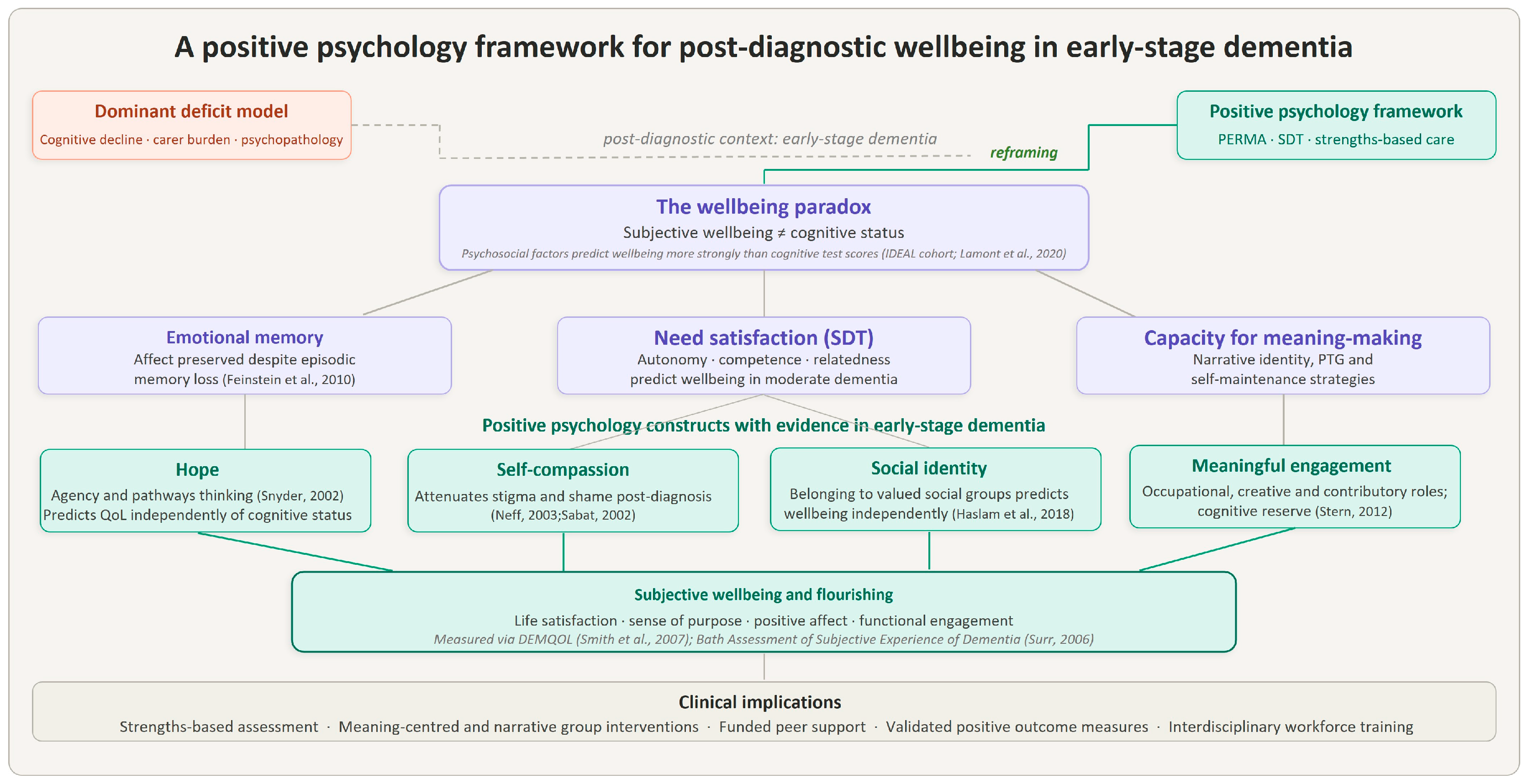
Taken together, the available evidence suggests that the relationship between cognitive decline and subjective well-being in dementia is neither linear nor inevitable. People with early-to-moderate dementia retain emotional responsiveness, a need for autonomy and social connection, and a capacity for meaningful subjective experience. At the process level, the well-being paradox is likely accounted for by several converging mechanisms: the relative preservation of emotional memory systems compared to episodic memory (Section 2); ongoing satisfaction of core psychological needs for autonomy, competence, and relatedness even under cognitive constraint (SDT; Section 2); and the continued availability of identity-sustaining social relationships and meaningful roles (Section 3 and Section 5). Taken together, these processes suggest that the dissociation between cognitive status and subjective well-being is neither anomalous nor paradoxical but reflects the independence of affective and social well-being systems from the memory and executive systems most affected by dementia pathology. A full mechanistic specification of these pathways constitutes an important priority for future experimental and longitudinal work in this area. Collectively, these findings establish the empirical foundation for the positive psychology framework proposed in this review (Figure 1), the constituent constructs of which are addressed in Section 3, Section 4 and Section 5.
Figure 1.
A positive psychology framework for post-diagnostic well-being in early-stage dementia. The figure illustrates the conceptual pathway from the well-being paradox whereby psychosocial factors predict well-being more strongly than cognitive status [11] through preserved psychological capacities [15] and evidence-based positive psychology constructs. These include: hope [21], self-compassion [22,23], social identity [24], and meaningful engagement [25], as well as well-being outcomes measured via the DEMQOL [19] and Bath Assessment of Subjective Experience of Dementia [20], and clinical implications for post-diagnostic care. The framework applies a positive psychology lens, drawing on PERMA, self-determination theory and strengths-based care as a reframing of the dominant deficit model. SDT, self-determination theory; PTG, post-traumatic growth.
3. Meaning-Making and Identity Reconstruction Following Dementia Diagnosis
The psychological impact of a dementia diagnosis is well-documented and includes threat to personal identity, anticipatory grief, stigma-related distress, and ongoing adjustment-related challenges [26,27,28,29]. Whilst these responses are clinically significant, the diversity of post-diagnostic experience is less well-represented in the literature. Indeed, a subset of individuals still report positive psychological adjustment, identity continuity, and, in some cases, post-traumatic growth following diagnosis, findings that warrant systematic attention.
Narrative identity theory provides a useful framework for understanding post-diagnostic psychological adjustment. According to McAdams [30], individuals maintain a coherent sense of self through the ongoing construction of a personal narrative that integrates past, present, and anticipated future experiences. A dementia diagnosis understandably constitutes a significant disruption to this narrative, threatening the individual’s sense of autobiographical continuity and future self. Research by Clare et al. [31] with people with early-stage Alzheimer’s disease identified a range of self-maintenance strategies, including reframing, selective comparison, and drawing on established strengths, all of which constitute strategies directly consistent with positive psychology principles of adaptive coping and meaning-making, which would seem transferable to individuals at early stages of dementia. However, identity maintenance strategies are not uniformly beneficial: rigid or over-investment in a single pre-diagnostic identity may, in some cases, increase vulnerability to loss when that identity becomes unsustainable. In contrast, more flexible forms of identity processing, including openness to revised self-narratives, are more robustly associated with adaptive adjustment [31].
Post-traumatic growth (PTG), defined as positive psychological change emerging from the struggle with highly challenging life circumstances [32], has been identified in a proportion of people following dementia diagnosis. Wolverson, Clarke, and Moniz-Cook [33] were amongst the first to apply positive psychology constructs explicitly to dementia, identifying resilience, humour, positive reappraisal, and the maintenance of a valued social role as active contributors to psychological well-being in this population. Subsequent studies report experiences of enhanced appreciation of relationships, reprioritisation of values, increased present-moment awareness, and a deepened sense of personal agency among individuals with early-stage dementia [34].
Acceptance and commitment therapy (ACT), a third-wave cognitive behavioural approach grounded in positive psychology-adjacent principles, has demonstrated preliminary efficacy in supporting post-diagnostic adjustment in dementia. ACT emphasises psychological flexibility, e.g., the capacity to accept difficult thoughts and feelings without excessive avoidance, and values clarification as a basis for meaningful engagement with life [35]. Small-scale feasibility trials of ACT-based interventions in early-stage dementia have reported improvements in psychological well-being and quality of life, with participants reporting a clearer sense of what mattered to them and greater capacity to act in accordance with those values [36].
Self-compassion, a construct identified within the proposed framework (Figure 1) as a key buffer against post-diagnostic distress, is defined by Neff [22] as a stance of kindness, shared humanity, and mindful awareness toward one’s own suffering has been gaining attention as a psychological resource in dementia. Unfortunately, shame and self-stigma are frequently associated with dementia diagnosis, along with cultural narratives that equate cognitive decline with loss of personhood, representing significant barriers to positive adjustment. Preliminary evidence suggests that self-compassion attenuates the relationship between stigma and psychological distress in people with dementia, and may in fact support engagement with post-diagnostic support services [23,37].
Lastly, biographical and narrative approaches to dementia care that support meaning making, including life review, reminiscence therapy, and life story work, represent positive psychology-aligned interventions with established clinical application. Haight and Haight [38] documented the beneficial effects of structured life review on well-being and sense of identity in older adults with cognitive impairment. These approaches support psychological adjustment by explicitly leveraging autobiographical memory, narrative continuity, and recognition of personal strengths, all constructs central to positive psychology. Their integration into post-diagnostic care pathways and across services, however, remains inconsistent and limited.
4. Hope, Future Orientation, and Engagement with Life
Hope, conceptualised within Snyder’s [21] agency-pathways model (Figure 1) as the perceived capacity to identify routes toward desired goals and the motivation to pursue them, has been identified as a clinically relevant psychological resource in chronic illness contexts. Its application to dementia is relatively recent but theoretically and empirically warranted. A dementia diagnosis is commonly associated with anticipatory loss and curtailed future planning. Research, however, suggests that hope distinct from denial is both measurable and psychologically functional in people with early-stage dementia.
Hunsaker et al. [39] assessed hope in a cohort of people with mild-to-moderate dementia using the Herth Hope Index and found that hope scores were positively associated with quality of life and inversely associated with depression and anxiety, independent of cognitive status. Participants described hope as maintaining relationships, continuing to contribute to family and community, and engaging in personally meaningful activities. Such framings are consistent with Snyder’s agency and pathways thinking. These findings indicate that hope is not merely an emotional state but an active and measurable psychological parameter that shapes behaviour and engagement with support.
Engagement in meaningful activity constitutes a further positive psychology outcome, directly relevant to dementia care, as captured in the proposed framework (Figure 1). Occupational engagement, defined broadly to include creative, social, physical, and contributory activities, is associated with higher levels of positive affect, greater functional independence, and slower rates of cognitive decline in longitudinal studies [25]. The cognitive reserve hypothesis pro poses that sustained engagement with stimulating activities confers neurological resilience against the functional consequences of dementia pathology [40], though the precise mechanisms remain under investigation.
Creative arts interventions represent another domain of particular interest, given evidence that aesthetic and expressive capacities are relatively preserved even in later stages of dementia. Musical engagement, visual arts participation, and dance movement therapy have each been associated with improvements in positive affect, reduced agitation, and enhanced social connection in people with dementia across multiple controlled trials [41,42]. The phenomenon of ‘paradoxical lucidity’ or ‘islands of clarity’, whereby individuals with moderate-to-severe dementia demonstrate striking increases in communicative capacity and social engagement during or following music engagement, has been documented anecdotally and is the subject of growing empirical interest.
The growing movement of people with dementia engaging in lived experience advocacy, peer support facilitation, and public awareness activities represents a further dimension of purposeful engagement with demonstrable psychological significance. A number of organisations, including the global Dementia Alliance International (DAI), the Scottish Dementia Working Group (SDWG), UK Dementia Research Institute (UK DRI), and Dementia Platform UK (DPUK), provide structured opportunities for people with dementia to contribute meaningfully to policy, research design, and public discourse, thereby providing access to roles directly associated with a sense of purpose and social value. Whilst the importance of patient and public involvement in dementia research has become increasingly common and recognised for its contribution to health research [43], early and limited evidence suggests that these roles may confer psychological benefits to the individuals fulfilling them, in addition to their broader social and policy impact [44]. However, more recent and systematic evaluations of this question are needed.
5. Social Connectedness, Belonging, and the Role of Relationships
Social connectedness is a well-established determinant of psychological well-being across the adult lifespan, with evidence of associations between social isolation and both accelerated cognitive decline and increased mortality in older adults [45]. In the context of dementia, the mechanisms through which social connection influences well-being are both psychological and neurobiological, and the evidence base is sufficient to identify social engagement as a modifiable protective factor of clinical relevance. Indeed, more robust social relationships in midlife may exert protective effects on dementia risk [46].
The social identity approach to health, developed by Haslam and colleagues [24] and represented as a core construct within the framework presented here (Figure 1), proposes that belonging to valued social groups constitutes a fundamental human need that contributes independently to both physical and psychological well-being. Applied to dementia, this framework predicts that maintaining valued social identities, such as spouse, parent, friend, community member, or professional, will buffer against the psychological consequences of diagnosis, independent of cognitive status. Empirical support for this prediction is provided by the IDEAL cohort, in which social participation and the maintenance of pre-diagnostic roles were among the strongest predictors of positive well-being ratings [12].
On the other hand, peer support, defined as the provision of practical and emotional assistance by individuals with shared lived experience, has an established evidence base in long-term condition management and its application is expanding in dementia. Post-diagnostic peer support groups have been associated with reductions in isolation and depression, improvements in self-efficacy and quality of life, and the facilitation of post-traumatic growth in people with early-stage dementia [47]. The peer relationship itself, grounded in shared experience, mutual recognition, and the reciprocal provision of support, provides a context for identity validation and purposeful engagement that is qualitatively distinct from professional support.
Dementia-friendly community initiatives, promoted internationally by the Alzheimer’s Society, the World Health Organisation (WHO), and national dementia strategies, represent structural attempts to extend social belonging beyond the clinical encounter. Evaluations of dementia-friendly community programmes have reported improvements in perceived social inclusion, reduced stigma, and greater community participation among people with dementia. However, methodological limitations, including small sample sizes and the absence of control conditions, limit the strength of the conclusions that can be drawn [48].
The dyadic nature of dementia experience warrants specific attention. The well-being of the person with dementia and their primary carer are interdependent: carer positive affect, adaptive coping, and psychological flexibility predict the care recipient’s well-being, and, reciprocally, the well-being of the person with dementia influences carer outcomes [49]. Consequently, positive psychology interventions targeting the couple or dyad rather than the person with dementia or the carer in isolation represent an underexplored but theoretically well-motivated avenue to post-diagnostic support.
6. Clinical and Policy Implications
6.1. Current Post-Diagnostic Support Landscape
Post-diagnostic support for people with dementia in the United Kingdom is largely governed by the National Institute for Health and Care Excellence (NICE) dementia guidelines NG97, published in 2018 and last reviewed in October 2025. Whilst the guidelines acknowledge the importance of psychological well-being and person-centred care, they have not been substantively updated since 2018 and draw upon an evidence base that remains predominantly deficit-focused, with psychosocial interventions positioned largely as adjuncts to pharmacological management and symptom control. The routine integration of positive psychology principles such as strengths-based assessment, meaning-centred intervention, peer support, and well-being measurement into post-diagnostic care pathways is not yet reflected in national guidance.
An additional structural constraint is the widespread reliance on proxy-reported outcomes across clinical and research settings. As noted in Section 2, proxy reports systematically underestimate subjective well-being in dementia. The continued use of carer- or clinician-reported measures as primary outcome indices in service evaluation perpetuates an underestimation of the psychological assets and well-being capacity of people living with dementia, with consequences for resource allocation and service design.
6.2. Proposed Clinical Recommendations
Collectively, the evidence reviewed here supports several specific recommendations for clinical practice and service design, organised around the framework presented in Figure 1. First, incorporating strengths-based psychological assessment into post-diagnostic review processes alongside established cognitive and functional measures, using tools such as the DEMQOL [19] and narrative-based assessment approaches, can provide accessible, validated options for capturing subjective well-being from the perspective of the person with dementia.
Second, evidence of feasibility, acceptability, and preliminary efficacy supports trialling meaning-centred and narrative group interventions, including life story work, reminiscence therapy, and ACT-based programmes, as a standard component of post-diagnostic care on a larger scale, rather than as specialist or discretionary provision.
Third, the psychological benefits of shared experience, mutual recognition, and reciprocal contribution, mechanisms underpinning peer support in dementia, are consistent with positive psychology theory regarding meaning, belonging, and purpose. Therefore, funding such structured programmes for integration into core post-diagnostic service offerings rather than voluntary or informal supplements could increase well-being and support disease management.
Fourth, integrating positive psychology frameworks into dementia care training for all professional groups is warranted. While existing workforce training focuses largely on symptom recognition and risk management, the present evidence highlights the importance of practitioner competence in recognising and fostering psychological strengths, retained capacities, and adaptive coping in individuals with dementia.
6.3. Health Equity Considerations
There are notable health equity considerations that must not be overlooked. Positive psychology interventions may risk replicating broader health inequalities if not designed with equity as an explicit priority. It should be acknowledged that the existing evidence base on positive psychology and dementia is disproportionately drawn from White, English-speaking, and relatively educated populations. People from minority ethnic communities, those with young-onset dementia, individuals with intellectual disabilities, and those in later stages of the condition are underrepresented in current research and in most intervention trials [50,51]. Future research and service development need to actively address these gaps through community-embedded co-production methods and culturally adapted intervention designs.
6.4. Research Priorities
Several research priorities emerge from the evidence reviewed here. Longitudinal studies tracking positive psychology variables, including hope, meaning, post-traumatic growth, and social identity, alongside standard dementia outcomes, are required to establish the predictive validity and causal relevance of these constructs. Adequately powered randomised controlled trials of positive psychology-informed interventions, co-produced with people with lived experience of dementia, are needed to generate the evidence base required for guideline integration. Furthermore, the development and validation of dementia-specific positive psychology measurement tools represent a methodological priority, particularly tools accessible to individuals with moderate cognitive impairment.
7. Conclusions
Dementia is amongst the most prevalent and burdensome conditions associated with ageing, and its psychological dimensions remain incompletely addressed within current care frameworks. This review has synthesised evidence demonstrating that subjective well-being in early-to-moderate dementia is neither a direct nor an inevitable function of cognitive impairment, and that psychological and social variables, including meaning, hope, social belonging, and self-determination, are stronger predictors of well-being outcomes. These findings are consistent across multiple study designs and theoretical frameworks, and support a fundamental reorientation of how the field conceptualises and measures success in dementia care.
The so-called well-being paradox, e.g., the repeated finding that people with dementia report higher subjective well-being than external observers predict, is not an artefact of measurement error or a consequence of impaired self-awareness. On the contrary, it reflects the genuine preservation of emotional responsiveness, social need, and capacity for meaning that characterises early-stage dementia, and that current post-diagnostic care frameworks largely fail to recognise or support. Kitwood’s [13] early insight that personhood persists in dementia, and Seligman’s [6] argument that flourishing is a distinct and measurable dimension of human experience, together provide the theoretical foundation for a more adequate account of what it means to live well with dementia.
The clinical implications are direct. Post-diagnostic support should incorporate and emphasise strengths-based assessment, meaning-centred intervention, structured peer support, and validated positive well-being measurement as standard components of care. Future research needs to prioritise co-produced longitudinal studies and adequately powered intervention trials that include positive psychology outcomes alongside established clinical endpoints. Research needs to prioritise co-produced longitudinal studies and adequately powered intervention trials that include positive psychology outcomes alongside established clinical endpoints. In particular, there remains a need for longitudinal studies tracking hope, meaning, post-traumatic growth, and social identity alongside standard dementia outcomes; for the development of dementia-specific positive psychology measurement tools accessible to those with moderate cognitive impairment; and for intervention research that actively includes minority ethnic communities, people with young-onset dementia, and those in later disease stages, populations currently underrepresented in the existing evidence base. Equity must be an explicit design principle at every stage. To conclude, the evidence discussed provides a foundation; implementing these approaches will require deliberate action and prioritisation of equity across clinical, commissioning, and policy decisions.
Funding
This research received no external funding.
Institutional Review Board Statement
Not applicable.
Informed Consent Statement
Not applicable.
Data Availability Statement
No new data were created or analysed in this study. Data sharing is not applicable to this article.
Conflicts of Interest
The author declares no conflicts of interest.
Abbreviations
The following abbreviations are used in this manuscript:
| PERMA | Positive emotion, Engagement, Relationships, Meaning, and Accomplishment |
| IDEAL | Improving the experience of Dementia and Enhancing Active Life |
| SDT | Self-Determination Theory |
| BASQID | Linear dichroism Bath Assessment of Subjective Experience of Dementia |
| PTG | Post-Traumatic Growth |
| ACT | Acceptance and Commitment Therapy |
| DAI | Dementia Alliance International |
| SDWG | Scottish Dementia Working Group |
| UK DRI | UK Dementia Research Institute |
| DPUK | Dementia Platform UK |
| WHO | World Health Organisation |
| NICE | National Institute for Health and Care Excellence |
References
- World Health Organization. Dementia: Key Facts. 2023. Available online: https://www.who.int/news-room/fact-sheets/detail/dementia (accessed on 19 March 2026).
- Vernooij-Dassen, M.; Moniz-Cook, E.; Verhey, F.; Chattat, R.; Woods, B.; Meiland, F.; Franco, M.; Holmerova, I.; Orrell, M.; de Vugt, M. Bridging the divide between biomedical and psychosocial approaches in dementia research: The 2019 INTERDEM manifesto. Aging Ment. Health 2021, 25, 206–212. [Google Scholar] [CrossRef] [Scilit]
- Miklitz, C.; Fliessbach, K.; McCormick, C. Happiness, positive emotions, and subjective well-being in dementia. Front. Neurol. 2024, 15, 1422354. [Google Scholar] [CrossRef] [Scilit]
- Orgeta, V.; Leung, P.; Del-Pino-Casado, R.; Qazi, A.; Orrell, M.; E Spector, A.; Methley, A.M. Psychological treatments for depression and anxiety in dementia and mild cognitive impairment. Cochrane Database Syst. Rev. 2022, CD009125. [Google Scholar] [CrossRef] [Scilit]
- Seligman, M.E.P.; Csikszentmihalyi, M. Positive psychology: An introduction. Am. Psychol. 2000, 55, 5–14. [Google Scholar] [CrossRef]
- Seligman, M.E.P. Flourish: A Visionary New Understanding of Happiness and Wellbeing; Free Press: New York, NY, USA, 2011. [Google Scholar]
- Aspinwall, L.G.; Tedeschi, R.G. The value of positive psychology for health psychology: Progress and pitfalls in examining the relation of positive phenomena to health. Ann. Behav. Med. 2010, 39, 4–15. [Google Scholar] [CrossRef] [Scilit]
- Yao, Y.; Wang, C.J.; Yin, S.Y.; Xu, G.Z.; Cheng, Y.F.; Huang, Q.Q.; Jin, Y. Effects of positive psychology intervention based on the PERMA model on psychological status and quality of life in patients with Parkinson’s disease. Heliyon 2024, 10, e36902. [Google Scholar] [CrossRef] [Scilit]
- Prince, M.; Wimo, A.; Guerchet, M.; Ali, G.; Wu, Y.; Prina, M. World Alzheimer Report 2016: Improving Healthcare for People Living with Dementia; Alzheimer’s Disease International: London, UK, 2016. [Google Scholar] [CrossRef]
- Swaffer, K. Dementia: Prescribed disengagement? Dementia 2015, 14, 3–6. [Google Scholar] [CrossRef] [Scilit] [PubMed]
- Lamont, R.A.; Nelis, S.M.; Quinn, C.; Martyr, A.; Rippon, I.; Kopelman, M.D.; Hindle, J.V.; Jones, R.W.; Litherland, R.; Clare, L. Psychological predictors of ‘living well’ with dementia: Findings from the IDEAL study. Aging Ment. Health 2020, 24, 956–964. [Google Scholar] [CrossRef] [Scilit]
- Clare, L.; Wu, Y.T.; Jones, I.R.; Victor, C.R.; Nelis, S.M.; Martyr, A.; Quinn, C.; Litherland, R.; Pickett, J.A.; Hindle, J.V.; et al. A comprehensive model of factors associated with subjective perceptions of living well with dementia: Findings from the IDEAL study. Alzheimer’s Dis. Assoc. Disord. 2019, 33, 39–45. [Google Scholar] [CrossRef] [Scilit] [PubMed]
- Kitwood, T. Dementia Reconsidered: The Person Comes First; Open University Press: Buckingham, UK, 1997. [Google Scholar] [CrossRef] [Scilit]
- Baldwin, C.; Capstick, A. (Eds.) Tom Kitwood on Dementia: A Reader and Critical Commentary; Open University Press: Maidenhead, UK, 2007. [Google Scholar] [CrossRef] [Scilit]
- Feinstein, J.S.; Duff, M.C.; Tranel, D. Sustained experience of emotion after loss of memory in patients with amnesia. Proc. Natl. Acad. Sci. USA 2010, 107, 7674–7679. [Google Scholar] [CrossRef] [Scilit] [PubMed]
- Deci, E.L.; Ryan, R.M. The what and why of goal pursuits: Human needs and the self-determination of behaviour. Psychol. Inq. 2009, 11, 227–268. [Google Scholar] [CrossRef] [Scilit]
- Colclough, C.; Perach, R.; Harris, P.; Rusted, J.; Banerjee, S.; Miles, E. Decision-making involvement and quality of life in people with dementia: The mediating role of psychological needs. Aging Ment. Health 2026, 30, 267–276. [Google Scholar] [CrossRef] [Scilit]
- Griffiths, A.W.; Smith, S.J.; Martin, A.; Meads, D.; Kelley, R.; Surr, C.A. Exploring self-report and proxy-report quality-of-life measures for people living with dementia in care homes. Qual. Life Res. 2020, 29, 463–472. [Google Scholar] [CrossRef] [Scilit]
- Smith, S.C.; Lamping, D.L.; Banerjee, S.; Harwood, R.H.; Foote, L.; Smith, P.; Cook, J.C.; Murray, J.; Prince, M.; Levin, E.; et al. Development of a new measure of health-related quality of life for people with dementia: DEMQOL. Psychol. Med. 2007, 37, 737–746. [Google Scholar] [CrossRef] [Scilit]
- Surr, C.A. Preservation of self in people with dementia living in residential care: A socio-biographical approach. Soc. Sci. Med. 2006, 62, 1720–1730. [Google Scholar] [CrossRef] [Scilit] [PubMed]
- Snyder, C.R. Hope theory: Rainbows in the mind. Psychol. Inq. 2002, 13, 249–275. [Google Scholar] [CrossRef] [Scilit]
- Neff, K.D. Self-compassion: An alternative conceptualisation of a healthy attitude toward oneself. Self Identity 2003, 2, 85–101. [Google Scholar] [CrossRef] [Scilit]
- Sabat, S.R. Surviving manifestations of selfhood in Alzheimer’s disease: A case study. Dementia 2002, 1, 25–36. [Google Scholar] [CrossRef] [Scilit]
- Haslam, S.A.; Jetten, J.; Cruwys, T.; Dingle, G.; Haslam, C. The New Psychology of Health: Unlocking the Social Cure; Routledge: London, UK, 2018. [Google Scholar] [CrossRef] [Scilit]
- Stern, Y. Cognitive reserve in ageing and Alzheimer’s disease. Lancet Neurol. 2012, 11, 1006–1012. [Google Scholar] [CrossRef] [Scilit] [PubMed]
- Clare, L. Managing threats to self: Awareness in early stage Alzheimer’s disease. Soc. Sci. Med. 2003, 57, 1017–1029. [Google Scholar] [CrossRef] [Scilit]
- Cotter, V.T.; Gonzalez, E.W.; Fisher, K.; Richards, K.C. Influence of hope, social support, and self-esteem in early stage dementia. Dementia 2018, 17, 214–224. [Google Scholar] [CrossRef] [Scilit] [PubMed]
- Xanthopoulou, P.; McCabe, R. Subjective experiences of cognitive decline and receiving a diagnosis of dementia: Qualitative interviews with people recently diagnosed in memory clinics in the UK. BMJ Open 2019, 9, e026071. [Google Scholar] [CrossRef] [Scilit]
- Pritchard, J.; Bartlett, R. Sources and perceptions of hope: A qualitative study involving younger people with dementia. Dementia 2024, 23, 757–778. [Google Scholar] [CrossRef] [Scilit] [PubMed]
- McAdams, D.P. The psychology of life stories. Rev. Gen. Psychol. 2001, 5, 100–122. [Google Scholar] [CrossRef]
- Clare, L.; Rowlands, J.; Quin, R. Collective strength: The impact of developing a shared social identity in early-stage dementia. Dementia 2008, 7, 9–30. [Google Scholar] [CrossRef] [Scilit]
- Tedeschi, R.G.; Calhoun, L.G. The Posttraumatic Growth Inventory: Measuring the positive legacy of trauma. J. Trauma. Stress 1996, 9, 455–471. [Google Scholar] [CrossRef]
- Wolverson, E.; Clarke, C.; Moniz-Cook, E. Remaining hopeful in early-stage dementia: A qualitative study. Aging Ment. Health 2010, 14, 450–460. [Google Scholar] [CrossRef] [Scilit]
- Wolverson, E.L.; Clarke, C.; Moniz-Cook, E.D. Living positively with dementia: A systematic review and synthesis of the qualitative literature. Aging Ment. Health 2016, 20, 676–699. [Google Scholar] [CrossRef] [Scilit]
- Hayes, S.C.; Strosahl, K.D.; Wilson, K.G. Acceptance and Commitment Therapy: An Experiential Approach to Behavior Change; Guilford Press: New York, NY, USA, 1999. [Google Scholar]
- Robinson, A.; De Boos, D.; Moghaddam, N. Acceptance and commitment therapy (ACT) for people with dementia experiencing psychological distress: A hermeneutic single-case efficacy design (HSCED) series. Couns. Psychother. Res. 2023, 23, 1108–1122. [Google Scholar] [CrossRef] [Scilit]
- Neff, K.D.; Germer, C.K. A pilot study and randomized controlled trial of the mindful self-compassion program. J. Clin. Psychol. 2013, 69, 28–44. [Google Scholar] [CrossRef] [Scilit] [PubMed]
- Haight, B.K.; Haight, B.S. The Handbook of Structured Life Review; Health Professions Press: Baltimore, MD, USA, 2007. [Google Scholar] [CrossRef] [Scilit]
- Hunsaker, A.E.; Terhorst, L.; Gentry, A.; Lingler, J.H. Measuring hope among families impacted by cognitive impairment. Dementia 2016, 15, 596–608. [Google Scholar] [CrossRef] [Scilit] [PubMed]
- Liu, Y.; Lu, G.; Liu, L.; He, Y.; Gong, W. Cognitive reserve over the life course and risk of dementia: A systematic review and meta-analysis. Front. Aging Neurosci. 2024, 16, 1358992. [Google Scholar] [CrossRef] [Scilit] [PubMed]
- Särkämö, T.; Tervaniemi, M.; Laitinen, S.; Numminen, A.; Kurki, M.; Johnson, J.K.; Rantanen, P. Cognitive, emotional, and social benefits of regular musical activities in early dementia: Randomized controlled study. Gerontologist 2014, 54, 634–650. [Google Scholar] [CrossRef] [Scilit] [PubMed]
- Hannemann, B.T. Creativity with dementia patients: Can creativity and art stimulate dementia patients positively? Gerontology 2006, 52, 59–65. [Google Scholar] [CrossRef] [Scilit]
- Miah, J.; Dawes, P.; Edwards, S.; Leroi, I.; Starling, B.; Parsons, S. Patient and public involvement in dementia research in the European Union: A scoping review. BMC Geriatr. 2019, 19, 220. [Google Scholar] [CrossRef] [Scilit]
- Bartlett, R. Modifying the diary interview method to research the lives of people with dementia. Qual. Health Res. 2012, 22, 1717–1726. [Google Scholar] [CrossRef] [Scilit]
- Holt-Lunstad, J.; Smith, T.B.; Baker, M.; Harris, T.; Stephenson, D. Loneliness and social isolation as risk factors for mortality: A meta-analytic review. Perspect. Psychol. Sci. 2015, 10, 227–237. [Google Scholar] [CrossRef] [Scilit]
- Groechel, R.C.; Liu, A.C.; Lutsey, P.L.; Palta, P.; Kucharska-Newton, A.M.; Koton, S.; Gottesman, R.F. Associations between mid-life social relationships and the risk of incident dementia: The ARIC study. Alzheimer’s Dement. 2025, 21, e70365. [Google Scholar] [CrossRef] [Scilit]
- Cheston, R.; Jones, K.; Gilliard, J. Group psychotherapy and people with dementia. Aging Ment. Health 2003, 7, 452–461. [Google Scholar] [CrossRef] [Scilit]
- Phillipson, L.; Hammond, A. More than talking: A scoping review of innovative approaches to qualitative research involving people with dementia. Int. J. Qual. Methods 2018, 17, 1609406918782784. [Google Scholar] [CrossRef] [Scilit]
- Donaldson, C.; Tarrier, N.; Burns, A. Determinants of carer stress in Alzheimer’s disease. Int. J. Geriatr. Psychiatry 1998, 13, 248–256. [Google Scholar] [CrossRef]
- Duran-Kiraç, G.; Uysal-Bozkir, Ö.; Uittenbroek, R.; van Hout, H.; Broese van Groenou, M.I. Accessibility of health care experi-enced by persons with dementia from ethnic minority groups and formal and informal caregivers: A scoping review of European literature. Dementia 2022, 21, 677–700. [Google Scholar] [CrossRef] [Scilit] [PubMed]
- Victor, C.R.; Gamble, L.D.; Pentecost, C.; Quinn, C.; Charlwood, C.; Matthews, F.E.; Clare, L. Living well with dementia: An ex-ploratory matched analysis of minority ethnic and white people with dementia and carers participating in the IDEAL programme. Int. J. Geriatr. Psychiatry 2024, 39, e6048. [Google Scholar] [CrossRef] [Scilit] [PubMed]
Disclaimer/Publisher’s Note: The statements, opinions and data contained in all publications are solely those of the individual author(s) and contributor(s) and not of MDPI and/or the editor(s). MDPI and/or the editor(s) disclaim responsibility for any injury to people or property resulting from any ideas, methods, instructions or products referred to in the content. |
© 2026 by the author. Licensee MDPI, Basel, Switzerland. This article is an open access article distributed under the terms and conditions of the Creative Commons Attribution (CC BY) license.