


Abstract
Background: Dementia and Type 2 diabetes (T2D) represent two of the most pressing global public health challenges of our time, both exacerbated by physical inactivity. These conditions disproportionately affect Global Majority populations, who experience earlier onset, higher prevalence, and poorer access to culturally appropriate preventive care. However, conventional research and interventions often overlook the sociocultural and structural factors that underpin this disparity. This study synthesises current evidence to understand how these three conditions intersect and to identify equitable pathways for prevention and support. Methods: A meta-narrative review approach was employed to integrate evidence from diverse biomedical, public health, sociocultural and intervention science traditions. Searches were undertaken across MEDLINE/PubMed-adapted searches, CINAHL, PsycINFO, Web of Science Core Collection, AMED and ASSIA, supplemented by grey literature searching and citation chasing. Five meta-narratives were identified: biomedical and epidemiological, public health, health disparities, sociocultural and behavioural, and intervention science. Cross-narrative synthesis produced a conceptual framework linking upstream determinants, lifestyle factors, and disease outcomes. Results: The review revealed that structural inequities such as deprivation, environmental barriers and sociocultural factors including stigma, gendered norms, limited access to culturally appropriate facilities that restrict physical activity (PA) opportunities within Global Majority communities. These constraints elevate T2D and dementia risk through biological pathways involving insulin resistance, vascular injury, and neuroinflammation. Community-based participatory research (CBPR) interventions particularly those delivered in trusted cultural or faith settings emerged as effective strategies to improve PA, glycaemic control, and cognitive well-being. Conclusions: This synthesis reframes dementia and diabetes as interlinked within a wider syndemic driven by structural and sociocultural inequities. The proposed framework underscores the importance of culturally grounded, community-led approaches to promote brain health, reduce risk, and achieve equitable healthy ageing among Global Majority populations.
1. Introduction
The world is undergoing a profound demographic shift. There has been an unprecedented rise in the number of older individuals in virtually every country in the world. According to the World Health Organization [1], 2020 recorded 1 billion individuals aged 60 and older. By 2030, this number is estimated to reach 2.1 billion, or 1 in every 6 people. Increased longevity almost always is accompanied by an increase in the time spent in periods of ill health or poor quality of life. Public health has been successful, but there are also high costs, as seen in the growing number of NCDs (non-communicable diseases) worldwide. In the UK, for example, men are living 16 years, and women 22 years, with some form of disability [2]. This is the opposite of what we would hope for in terms of public health system improvements, and this increased morbidity influences healthcare systems, economies, and societies in a big way.
Dementia and diabetes are two of the most difficult non-communicable diseases to tackle. The two are crises in their own right, yet their interdependence creates a complex public health issue that requires a sophisticated and integrated approach. Concern around dementia is justified. It is one of the most pressing issues that affects cognitive decline, which is a normal part of ageing, and it is currently estimated to affect 50 million people and is expected to increase to 150 million people by 2050 [3]. There are currently no medical or pharmaceutical treatments that can stop or reverse the course of common dementias, such as Alzheimer’s disease, so prevention and risk reduction strategies are the most important. At the same time, Type 2 diabetes (T2D) is reaching epidemic levels as its global prevalence in the absence of effective prevention is expected to increase from 451 million in 2017 to 693 million in 2045 [4]. Because of its significant contribution to morbidity and mortality, including an increased risk of cardiovascular disease, stroke, and kidney disease, as well as certain cancers, T2D is a significant driver of comorbidity and dementia, and many studies have shown its synergistic effect on the two diseases. For instance, in a meta-analysis, Cole et al. [5] showed that diabetes doubles or triples the risk of dementia. The link between dementia and diabetes creates a double dilemma for both patients and clinicians [6]. Due to diabetes’s stem effect, not only does it increase the risk for developing dementia, but dementia comes with its own set of challenges, from cognitive impairment to the extent that it can hinder one’s ability to control diabetes. This creates a cyclical negative impact, with patients missing their medications, losing glycemic control, and increasing their risk to fluctuate dangerously between hyperglycemia and hypoglycemia. This cycle further accelerates the overall decline of their health [1,7,8]. The purpose of this paper is to explain why dementia and T2D will be reviewed together as opposed to separately. Although dementia and T2D may be considered distinct issues, they are best understood as interconnected and co-occurring conditions that need to be tackled simultaneously. This is especially true as the two have a variety of common risk factors, a number of which are modifiable, and, in many cases, the presence of one will significantly impact the overall health of the other. The presence of one condition, therefore, makes an integrated approach essential for effective healthcare for the dual burden.
1.1. Dementia, Diabetes and Physical Inactivity (DDPI)
Within this multifaceted combination of chronic illnesses, another factor stands out as particularly important: lack of physical activity. The World Health Organisation (WHO) places physical inactivity as the fourth greatest risk factor for global mortality, with 5 million deaths each year attributed to it [9,10,11]. Physical inactivity as a risk factor is particularly important with regard to non-communicable diseases (NCDs) in general, and more specifically, with regard to its linkage to dementia and diabetes. An important study by Norton et al. [12] established that, in various regions of the world (including the US, Europe, and the UK), physical inactivity was the largest modifiable risk factor for Alzheimer’s disease. This indicates how large the impact of prevention through lifestyle change could be. In the case of Type 2 Diabetes (T2D) and its complications, regular physical activity is a critical element of its prevention and management. On a physiological basis, exercise directly improves glycaemic control through increased insulin sensitivity in muscle and liver tissues, as well as through stimulation of glucose uptake [13]. The advantages of physical activity go further than just the regulation of blood sugar. Physical activity also leads to the improvement of blood lipid levels, a decrease in blood pressure, a healthier overall weight, and a reduced risk of cardiovascular disease. When considering the effects of physical activity (PA) on brain health, PA is one of the best (if not the best) interventions that do not require medication. It is believed that physical activity protects the brain by: (1) decreasing neuroinflammation, (2) decreasing oxidative stress, (3) improving blood flow to the brain, and (4) promoting neurogenesis (the formation of new neurons). There are no current treatment options available for dementia. Therefore, increasing physical activity (when appropriate) is one of the most effective ways available to delay the worsening of one’s thinking ability and to help likely at-risk individuals maintain their ability to care for themselves. Inactivity and a lack of exercise are the primary factors that link Type 2 diabetes and dementia. Therefore, improving exercise levels is likely to bring benefits to both physical and mental (or cognitive) well-being. The combination of dementia, diabetes, and physical inactivity (sometimes abbreviated here as “DDPI”) forms the focus of our analysis.
1.2. DDPI in Global Majority Populations
Dementia, diabetes, and physical inactivity create burdens unevenly across populations. Global Majority populations, a term used to describe people of African, Asian, Middle Eastern, Latin American, and indigenous heritage, who as a whole, make up the majority of the world’s population, suffer the most in the UK and other Western countries. Global Majority is used in opposition to the term “Black, Asian and Minority Ethnic (BAME)” used in the UK, which presents those groups as a minority, despite being a majority globally. Global Majority focuses on the positives of being a majority and is meant to combat the deficit approach. An example is the UK, where the projected number of people living with dementia from these communities is expected to increase by 300 to 400 percent from 2011 to 2051 [14]. This is several times the increase expected in the White British population. There are several converging risk factors that explain this.
Research shows that individuals identified as South Asian, Black African, and African Caribbean communities are often at higher risk of developing Type 2 Diabetes, at an earlier age (sometimes mid-twenties, in comparison to 40s in White British communities) [15,16,17]. Specifically, this increased biological vulnerability, i.e., early onset of T2D, of the aforementioned communities is thought to be a predisposing factor associated with genetics (visceral fat) [15,18], dangerously compounded by behavioural and social factors. Research consistently shows that Asian and Black communities within the United Kingdom are more likely to experience relative physical inactivity, compared to the White communities [19,20]. These factors are further exacerbated by cultural and systemic factors that act as barriers to access and utilisation of healthcare services.
Global Majority communities are less likely to receive timely dementia diagnoses, and often have lower engagement with dementia support services [21]. Alzheimer’s Society [21] highlighted various causes, including stigma surrounding dementia; the absence of culturally sensitive, and even linguistically proximate, terms for cognitive disorders; and cultural patterns of caregiving that prohibit the seeking of external assistance. What may appear to be a mere additive collection of risk factors is more accurately classified as a syndemic: a collection of interrelated health problems (in this instance dementia and diabetes) that are present in a population and worsen the circumstances created by social, economic, and environmental inequities in the population. Dementia and T2D in Global Majority groups are syndemic; they do not just co-occur, they are interrelated and are driven by the same upstream causes of syndemic poverty, discrimination, and inadequate access to preventative resources. This syndemic framework helps to explain why standard one-size-fits-all interventions fail so frequently for these communities, and it is a primary conceptual basis for our review.
1.3. Rationale of This Review
There is substantial evidence of a syndemic comprising dementia, diabetes, and physical inactivity in Global Majority populations that has not been reflected in the research and practice of public health. The majority of studies on the modifiable risk factors of dementia have been focused on predominantly White populations in North America or Europe. Given the evidence base’s deficiencies concerning the risk factors, cultural contexts, and lived realities of specific and diverse populations, there is a distinct gap in our understanding of the evidence base’s components. In general, the risk factors that are identified as being modifiable for dementia are physical inactivity, diabetes, obesity in midlife, and hypertension. However, in the case of British South Asian, Black African-Caribbean, and other populations, there is a lack of understanding in terms of how these factors may be relevant in a culturally specific manner. It is important to integrate the evidence that is available in order to understand the problem in a more comprehensive manner, as there is evidence in the realm of biomedicine, public health, sociology, and the behavioural sciences that is fragmented. Evidence that is culturally blind and ignores the structural challenges and realities of the minority community’s lived experiences will fail. In this regard, the aim of this review is to integrate the disparate strands of research and elucidate the complementarities among explanatory frameworks and the gaps and conflicts, to the extent possible. By focusing on the gaps in the intersections of dementia, diabetes, and physical inactivity, this review aims to cover a significant gap by focusing on the intersections of health, culture, and care, and more specifically the Global Majority population. Our main objective is to influence the establishment of public health frameworks that are equitable and culturally proficient, and that can address this interrelated problem more efficiently.
2. Methods
2.1. Design
We undertook what is termed a meta-narrative review, a synthesis of the interpretation type intended for complex, heterogeneous literature [22]. This is unlike a traditional systematic review that attempts to address a specific question and thus pulls together the findings of a range of similar studies. Instead, a meta-narrative review attempts to articulate the way various research traditions have understood and approached a broad topic, and the identifiable contrasting and/or complementary storylines over time. This methodology fits our purpose to delve into the diverse literature (epidemiology, clinical medicine, public health, social sciences, etc.) in order to grapple with the various aspects that interlink dementia, T2D, and physical inactivity. In terms of methodology, we adhered to the principles and publication standards of the RAMESES project (Realist and Meta-narrative Evidence Syntheses: Evolving Standards). In accordance with the said standards [23], we made efforts to enhance the clarity and accuracy of our methods for literature identification, selection, and interpretation.
2.2. Search Strategy and Data Sources
The first scoping search was performed, focusing on literature dealing with simultaneously all three issues (dementia, T2D and physical inactivity) in Global Majority populations. After finding a few publications dealing with that intersection, we refined our strategy to capture important publications in each separate area and synthesised them. We searched all major electronic databases (MEDLINE/PubMed-adapted searches, CINAHL, PsycINFO, Web of Science of Core Collection, AMED and ASSIA) and found literature on the links between dementia and diabetes, the literature on physical activity with respect to either of these conditions, and the literature on health inequities of ethnic minority groups to document the above. The search combined terms for dementia (or Alzheimer’s), diabetes (and specifically T2D), and physical inactivity (or sedentary behaviour) and used various other terms for specific populations. We exhaustively searched grey literature and the reference lists of all key reports to ensure we captured the literature that was not in the databases.
2.3. Inclusion and Exclusion Criteria
To fit the requirements for the meta-narrative, we applied a broader range of descriptive parameters. We include English-language publications of any study type (quantitative, qualitative, mixed-methods, or review) and pertinent literature that analysed any of the three target areas (dementia, T2D, physical inactivity) and, more so, the literature that addressed two or three of the areas. With regard to our interest in Global Majority populations, we included studies focused on ethnic minority groups or studies conducted in non-Western countries; inclusion of evidence from predominantly White populations was permitted if it served any of the thematic narratives (for example, biomedical mechanisms of the dementia–diabetes link). Studies were excluded if they were irrelevant (for instance, focusing solely on laboratory models or on unrelated health topics) or if they lacked any substantive connection to our core concepts (e.g., a study on dementia care that did not mention either diabetes or physical activity). We did not impose a strict date cutoff; however, we prioritised literature from approximately the last 20 years (2000 onward) to capture current evidence, while still incorporating older landmark studies where appropriate to trace the historical development of each narrative. This flexibility allowed us to include classic research (such as earlier epidemiological findings on diabetes and dementia risk) alongside the latest findings. The search was iterative and continued until we reached a point of saturation, where additional sources were no longer yielding new themes or insights.
2.4. Meta-Narrative Synthesis Process
We followed the six overlapping phases described by Greenhalgh et al. [22] for conducting a meta-narrative review, with adaptations as needed for our topic:
Planning: We clarified the research scope and engaged a small multidisciplinary team (expertise in public health, gerontology, and sociology) to advise and reflect on the emerging findings. This helped ensure we captured multiple perspectives and reduced the risk of a single researcher’s bias during interpretation.
Searching: As described above, our search was broad and iterative. We began with tightly focused queries, then widened the net to include separate bodies of literature for each “storyline”. Key search terms included combinations of “dementia” OR “Alzheimer’s”, “diabetes” OR “type 2 diabetes”, and “physical inactivity” OR “sedentary lifestyle”, along with population terms like “ethnic minority” or specific group identifiers (e.g., “South Asian”, “African Caribbean”) when appropriate. The search results were screened in two stages: first by title/abstract to exclude obviously irrelevant hits, and then by full text to select sources for detailed extraction. Throughout this process, we also used snowball sampling (following citations of key papers) to ensure important contributions were not missed. All searches and selection decisions were documented for transparency.
Mapping: We identified five major meta-narratives—distinct research storylines—that recurred in the literature. These were: (1) the Biomedical and Epidemiological narrative, which quantifies links between T2D and dementia; (2) the Public Health narrative, which focuses on physical inactivity as a modifiable risk factor; (3) the Health Disparities narrative, which frames the problem as a syndemic driven by social inequities; (4) the Sociocultural and Behavioural narrative, which explores cultural beliefs and behavioural barriers underlying physical inactivity; and (5) the Intervention Science narrative, which examines how to design and implement effective interventions in diverse communities. We created a conceptual map outlining these narratives and their key concepts, theories, and findings.
Appraisal: In line with meta-narrative review principles, quality appraisal was approached contextually rather than by applying rigid exclusion criteria. Each source was assessed for its credibility, rigour, and relevance within its own research tradition, rather than being uniformly filtered by traditional hierarchies of evidence. Our goal was not to eliminate studies based on a narrow notion of quality, but to understand the strengths and limitations of each narrative’s body of work. For example, a small qualitative study might be appraised as yielding in-depth insights into cultural barriers (valuable for the sociocultural narrative) despite having a limited sample size by quantitative standards. We noted key methodological limitations (such as potential biases, generalisability issues, or conflicts of interest) in the influential studies of each narrative, so that these factors could be weighed during synthesis. Where possible, evidence was triangulated across sources and disciplines—if different narratives converged on a similar finding (e.g., that exercise improves cognitive outcomes), our confidence in that insight increased. The interpretive nature of meta-narrative synthesis means researcher judgement plays a role; therefore, we incorporated reflexive practices such as team discussions and external feedback. The multidisciplinary advisory input during appraisal helped challenge any individual preconceptions and enhance the reliability of our interpretations.
Synthesis: We then compared and integrated the findings across the five narratives to build an overarching explanation of the dementia–diabetes–inactivity intersection. This involved examining how each narrative’s “story” interacts with the others—identifying points of convergence (where different types of evidence agree), points of complementarity (where one narrative fills gaps left by another), and points of tension or contradiction (where explanations or data conflict). We paid special attention to cross-narrative themes: for instance, how do sociocultural barriers (Narrative 4) help explain why the biomedical benefits of physical activity (Narrative 2) are not realised in certain communities? And how do structural inequities (Narrative 3) amplify the biomedical risks identified in Narrative 1? Through iterative reflection, we constructed a conceptual framework (presented in the Results) that synthesises these insights into a cohesive model. Throughout the synthesis, we adhered to RAMESES reporting standards by documenting our analytical decisions and ensuring that the narrative we present is grounded in the evidence gathered from each tradition.
Recommendations: Finally, we derived a set of recommendations for research, policy, and practice, based on the integrated understanding from the synthesis. Rather than being general or purely speculative, these recommendations are explicitly tied to the evidence and narratives discussed. We formulated them with input from the literature (e.g., successful intervention case studies) and, where available, evaluations of what has or has not worked in real-world settings. Each recommendation was considered in terms of feasibility, scalability, cultural acceptability, and potential for impact, reflecting the review’s findings that interventions must be tailored and multi-faceted to be effective.
By using this pluralistic and historically informed approach, our review sought to produce a rich, contextually grounded synthesis. The methods outlined above ensured that we captured not only the facts (what is known about dementia, diabetes, and inactivity), but also the frameworks and assumptions various researchers have used to study these issues. This lays a robust foundation for the Results, where we present the identified meta-narratives, and for the subsequent Discussion, where we integrate these narratives and explore their implications for achieving equitable health outcomes.
3. Results and Integration
Our meta-narrative review revealed five distinct but overlapping narratives in the literature, each providing a different explanatory lens on the intersection of dementia, diabetes, and physical inactivity (especially as it affects Global Majority communities). For clarity, we briefly summarise each narrative below, and then offer an integrated analysis of how these narratives complement each other, where they conflict, and what none of them can explain in isolation.
Narrative 1: Biomedical and Epidemiological—Metabolic Links to Neurodegeneration: This narrative quantifies and elucidates the direct biological links between T2D and dementia. It shows that T2D is associated with a significantly elevated risk of both Alzheimer’s disease and vascular dementia. Large-scale cohort studies and meta-analyses consistently demonstrate a roughly 2–3-fold increase in dementia incidence among people with T2D [5,24,25,26,27]. Mechanistically, chronic hyperglycaemia and insulin resistance contribute to vascular damage and amyloid pathology in the brain, while diabetes-related inflammation and oxidative stress can accelerate neurodegeneration. Moreover, this narrative highlights the bidirectionality of the link: just as diabetes raises dementia risk, the onset of dementia makes diabetes self-management far more difficult. Researchers describe this as a “double dilemma” [6], where each condition exacerbates the other. From a clinical perspective, Narrative 1 establishes why the co-occurrence of diabetes and cognitive decline leads to particularly poor outcomes—for example, higher likelihood of complications, hospitalisations, and mortality—compared to either condition alone. However, the biomedical narrative by itself tends to focus on individual-level risk factors and pathophysiology, offering limited insight into why certain populations (e.g., ethnic minorities) might experience these problems more severely or at younger ages.
Narrative 2: Public Health and Preventive Medicine—Physical Inactivity as a Central Modifiable Risk: This narrative positions physical inactivity (sedentariness) as a powerful, common risk factor connecting metabolic and cognitive health. Building on epidemiological findings, it identifies insufficient physical activity as a major contributor to the burden of both dementia and T2D. For instance, Norton et al. [12] estimated that physical inactivity was the single largest modifiable risk factor for Alzheimer’s disease in several Western countries. In diabetes prevention and care, countless trials have demonstrated that regular exercise improves glycaemic control and helps prevent complications. Narrative 2 delves into physiological mechanisms: exercise increases cerebral blood flow, reduces systemic and neural inflammation, improves insulin sensitivity, and stimulates the release of neurotrophic factors like BDNF (Brain-Derived Neurotrophic Factor) that support neurogenesis and synaptic plasticity. These mechanisms help explain why active lifestyles correlate with better cognitive ageing and why lifestyle interventions can delay or prevent T2D. The public health narrative, therefore, reframes what might seem like inevitable, age-related conditions as partly preventable through behaviour change and policy. However, researchers in this tradition also acknowledge real-world complexity: achieving sustained increases in physical activity at the population level has proven difficult. Clinical trials often struggle to isolate the effect of exercise because individuals with T2D typically face multiple concurrent risk factors (obesity, poor diet, etc.), a cluster often referred to as the metabolic syndrome [28]. Thus, while Narrative 2 provides hope that improving physical activity could significantly reduce dementia incidence (potentially preventing millions of cases worldwide) and improve diabetes outcomes, it also raises the question of why such a preventable risk factor remains so prevalent. This segues into the next narratives, which explore the social and structural reasons behind inactivity.
Narrative 3: Health Disparities and Social Epidemiology—A Syndemic of Inequity: This narrative reframes the intersection of dementia, diabetes, and inactivity not as a coincidental co-occurrence of diseases, but as a syndemic—a set of synergistic epidemics fuelled by structural inequalities. Drawing on social determinants of health, it shifts focus from individual behaviours or biology to the upstream factors (“the causes of the causes”) that create vulnerability. For example, researchers have documented that certain ethnic minority populations (such as South Asians in Britain) exhibit a higher baseline risk of T2D at younger ages and lower body mass indices. This intrinsic risk is then compounded by environmental and social conditions: living in deprived neighbourhoods with limited access to healthy foods or safe spaces for exercise, experiencing chronic stress from socioeconomic disadvantage or discrimination, and facing barriers in healthcare access. Quantitative studies in this narrative show disparities at each stage of the disease pathway. To illustrate: in the year to November 2022 in England, 55.0% of Asian adults and 64.4% of White British adults aged 16 and over were classed as physically active, meaning they achieved 150 min or more of moderate-intensity physical activity per week [29]. After a diabetes diagnosis, longitudinal data indicate that ethnic minorities progress to dementia at higher rates even after controlling for clinical factors [30]. For instance, African Americans and Native Americans with T2D have been observed to have a significantly greater risk of developing dementia than White or Asian Americans with T2D, pointing to unmeasured socio-environmental influences. Looking to the future, projections warn of an impending explosion of dementia cases in minority communities as younger generations with high T2D prevalence age into later life. Narrative 3 provides a critical reality check: it argues that without addressing poverty, education, racism, and other root causes, biomedical advances or exhortations for lifestyle change will have limited effect in closing the dementia and diabetes gap. This narrative also introduces the idea that health interventions must be tailored to structural and cultural context—a theme that the final two narratives explore in more detail. On its own, however, the health disparities narrative may underplay individual agency and biological differences; it paints with a broad brush of structural causation, which is powerful for explanation and advocacy but needs to be integrated with the other narratives for a complete picture.
Narrative 4: Sociocultural and Behavioural—Understanding “Inaction”: This narrative, grounded in behavioural science and qualitative research, asks why certain groups are less physically active despite the known benefits. It moves beyond documenting disparities (as Narrative 3 does) to probe the cultural beliefs, social norms, and personal perceptions that influence health behaviours. The Theory of Planned Behaviour (TPB) [31] often guides studies in this vein, positing that behaviour is shaped by one’s attitudes (beliefs about the outcomes of the behaviour), subjective norms (perceived social pressures), and perceived behavioural control (one’s confidence in performing the behaviour given barriers and facilitators). Through interviews, focus groups, and ethnographic work, researchers have uncovered rich insights, particularly among South Asian older adults in the UK—a population with high rates of inactivity. Key findings include: (a) Attitudes: Many elders associate exercise with youth or view it as unsafe or inappropriate at their age, especially if they have chronic pain or fatigue [32]. Some believe that physical exertion might aggravate health problems rather than help. (b) Subjective Norms: In certain cultures, particularly for women, strong norms prioritise fulfilling family and household duties over personal exercise. There may be community expectations that devoting time to formal exercise is indulgent or culturally alien. Food practices and hospitality customs (e.g., encouraging guests to eat abundantly) can also conflict with health advice. (c) Perceived Behavioural Control: Perhaps most significantly, people face practical barriers that they feel powerless to overcome. For instance, as Safi and Myers [20] reported, some Afghan women in the UK indicated they lack access to women-only exercise facilities and feel uncomfortable or unsafe exercising in co-educational or public spaces due to religious modesty and social stigma. Others cite time constraints, language barriers in understanding health information, or simply not knowing where or how to engage in physical activity in a culturally comfortable way. Narrative 4 thus paints a detailed picture of how culture and context shape health behaviour. It demonstrates that physical inactivity in Global Majority communities is far from a simple “choice”—it is embedded in a web of family expectations, religious practices, fear of stigma, and experiences of exclusion. This narrative is highly complementary to Narrative 2: it explains why the clear public health message of exercise for prevention often fails to translate into action in certain groups. It also complements Narrative 3 by focusing on community contexts and individual level, revealing variability within broad demographics (not all members of an ethnic group have the same attitudes or barriers, for example). On its own, however, Narrative 4 does not fully account for the health outcomes—it can identify barriers to physical activity, but it does not assess how much these barriers affect disease rates without the quantitative context of Narratives 1–3. Nor does it necessarily design solutions, which leads to the final narrative.
Narrative 5: Intervention Science—Pathways to Equitable Solutions: This narrative addresses the pressing question: given all these challenges, what can be done? It shifts from analysis to action, reviewing evidence on interventions to reduce inactivity, improve metabolic health, and ultimately reduce dementia risk, especially in minority communities. A central theme in Narrative 5 is the critique of “top-down” interventions; many traditional programmes designed to increase physical activity or improve diabetes control have low uptake or limited success in Global Majority populations because they fail to resonate culturally. In response, researchers advocate for Community-Based Participatory Research (CBPR) as a guiding paradigm. CBPR involves co-creating interventions with the target community from the ground up, rather than imposing externally designed solutions. This approach is seen as crucial for building trust and ensuring interventions are culturally relevant and sustainable. For example, a notable pilot study in Ontario, Canada, tested a mosque-based physical activity programme for South Asian Muslim women [33]. By offering exercise classes in a familiar, women-only religious setting, facilitated by community insiders, the programme achieved high participation and acceptability. Similarly, in the UK, emerging evidence suggests that interventions delivered in trusted community spaces—such as gurdwaras, temples, or churches—and led by trained peer “health champions” can overcome many sociocultural barriers identified in Narrative 4. Narrative 5 also covers structural interventions: for instance, the role of urban planning in providing safe parks and community centres, or policy measures that enable GPs to prescribe exercise programmes (sometimes called “social prescribing”) to patients and link them with local activity groups. The effectiveness of culturally tailored lifestyle interventions is increasingly documented; pragmatic trials show that even modest increases in activity and slight improvements in diet can significantly delay progression to T2D [34] and improve cognitive function in at-risk individuals (e.g., those with mild cognitive impairment). However, a recurring challenge is scalability: successful small-scale interventions often struggle to expand into broader populations or new locales without losing fidelity. This narrative emphasises that addressing entrenched disparities requires multi-level strategies—combining individual behaviour change support with community engagement and policy reform. Narrative 5 thus builds on all prior narratives: it takes the biomedical goal of reducing disease risk (Narrative 1), uses the public health understanding of exercise as medicine (Narrative 2), is deeply informed by awareness of inequity and context (Narrative 3) and cultural nuance (Narrative 4), and attempts to integrate these into real-world solutions.
Cross-Narrative Integration: Each of the above narratives offers critical insight, but no single narrative is sufficient on its own. To truly understand the intersection of dementia, diabetes, and inactivity—and to craft effective responses—we must consider how these storylines interweave and inform one another. Our synthesis found several key points of complementarity and tension:
Complementary Explanations: The narratives often address different levels of the problem and together provide a more comprehensive picture. For example, the robust biomedical link between T2D and dementia (Narrative 1) explains how metabolic and neurological pathology are connected, but it does not explain why certain populations bear a heavier burden of this link. That explanation emerges from the syndemic context of Narrative 3, which shows that social disadvantage amplifies biological risk. Likewise, the preventive power of physical activity demonstrated in Narrative 2 can only be fully realised when viewed through Narratives 3 and 4: many Global Majority communities have not benefited from this preventive factor because sociocultural barriers (Narrative 4) and environmental constraints (Narrative 3) have limited their opportunities to be physically active. In other words, Narratives 3 and 4 provide reasons why the theoretical benefits identified in Narratives 1 and 2 are not uniformly achieved in practice. Conversely, the intervention approaches in Narrative 5 show solutions that implicitly draw on Narratives 3 and 4 (e.g., tailoring to cultural norms, addressing access barriers) in order to fulfil the promise of Narratives 1 and 2 (reducing biomedical risk through lifestyle change). When aligned, each narrative fills gaps left by the others. For instance, improving health outcomes requires both the “what” (what biological or behavioural changes are needed—answered by Narratives 1 and 2) and the “how” (how to bring about those changes in specific communities—answered by Narratives 3, 4, and 5). Together, the five narratives underscore that dementia, diabetes, and inactivity form not a simple cause-and-effect chain but a complex system of feedback loops and modifiers—a true syndemic where biology and society are interlinked.
Tensions and Conflicts: Our analysis also identified areas where narratives present contrasting perspectives or even conflicting findings. One such tension lies between individual-focused and structural-focused explanations. For example, a purely biomedical or behavioural approach might emphasise personal responsibility (e.g., urging individuals to exercise more to prevent disease), whereas the syndemic narrative might argue that responsibility lies principally with social policy (e.g., governments addressing poverty and urban design). These views can clash in public discourse. We found evidence of this tension in how different studies attribute causality: some epidemiological studies might adjust away social factors to highlight a “pure” effect of a biological risk factor, potentially underestimating the contextual influences; on the other hand, some sociological writings might downplay biological variability by focusing overwhelmingly on social determinants. Another conflict appears in intervention debates: standardised public health campaigns (Narrative 2) versus culturally tailored programmes (Narrative 5). The former offer simplicity and broad reach but risk being ineffective in diverse groups; the latter offer relevance but can be resource-intensive and hard to scale. There is also an inherent tension in research paradigms: quantitative vs. qualitative. Narrative 1 and 2 researchers often prioritise measurable outcomes (incidence rates, HbA1c levels, etc.), whereas Narrative 4 researchers delve into subjective experiences that cannot be easily quantified. This can lead to different conclusions—for instance, a quantitative study might conclude an intervention “works” based on clinical endpoints, while a qualitative study might reveal that the same intervention is viewed as inappropriate or inaccessible by the target community. Recognising these tensions is important because it suggests that any single approach to the problem could be misleading or incomplete. Our integrated perspective tries to respect each narrative’s insights while also mediating their disagreements. For example, we interpret the evidence to mean that individual behaviour change is crucial, and individuals’ choices are profoundly shaped by their environment—thus policy-level changes must accompany efforts to motivate personal change.
Gaps and Blind Spots: Finally, integration highlighted what each narrative cannot explain alone. Narrative 1 (biomedical) provides essential knowledge about risk and mechanism, but by itself it cannot explain why two people with the same biological risk (say, two individuals with T2D) might have different outcomes—the social context (Narrative 3) and personal circumstances (Narrative 4) fill that gap. Narrative 2 (public health) identifies what needs to change (more physical activity) but not how to change it in resistant settings—Narratives 4 and 5 address that by revealing barriers and designing context-sensitive interventions. Narrative 3 (health disparities) alerts us to structural injustice but does not tell us which specific interventions will work—Narratives 4 and 5 provide actionable paths. Narrative 4 (sociocultural) uncovers barriers but if considered alone, might seem to imply that attitudes are the root problem, whereas in reality those attitudes often stem from structural conditions (linking back to Narrative 3) or could be overcome with supportive policy (Narrative 5). Even Narrative 5 (interventions), when isolated, can be overly optimistic if it does not incorporate the epidemiological evidence on what risk factors matter most or the community’s voice on what is acceptable—thus it relies on Narratives 1–4 for justification and design. In sum, each narrative has blind spots: biomedical alone might ignore culture, behavioural alone might blame victims, social alone might neglect personal agency, etc. The strength of a meta-narrative review is that it brings these perspectives together, allowing their insights to complement one another and compensating for one narrative’s limitations with another’s strengths.
Our integrative conceptual framework (Figure 1) visually summarises this synthesis. In brief, it illustrates how structural inequities (poverty, discrimination, built environment) and sociocultural factors (community norms, stigma, gender roles) form the upstream drivers that limit physical activity and hinder effective care in Global Majority communities. Reduced physical activity and other behavioural risk factors, in turn, contribute to metabolic dysfunction (insulin resistance, obesity, vascular injury) which increases dementia risk, establishing the biomedical link. The framework also highlights positive feedback loops: for example, community-led interventions (shown as a moderating influence in the diagram) can break this cycle by improving physical activity levels and enhancing social support, thereby mitigating risk and improving outcomes. Crucially, the model emphasises that dementia and diabetes, rather than being independent problems, are part of a larger syndemic rooted in social injustice. This integrated understanding unequivocally points toward a new paradigm for addressing these challenges: one that situates individual health behaviours within their social context and prioritises community-driven, culturally competent strategies over one-size-fits-all solutions.
Figure 1.
Conceptual framework linking structural inequities, sociocultural barriers, and physical inactivity to type 2 diabetes, cognitive decline, and dementia risk in Global Majority populations. (Figure 1 provides an integrative visual summary of the five meta-narratives described, illustrating how upstream social determinants and cultural factors ultimately shape health outcomes, and where interventions can interrupt the pathways).
4. Discussion
This meta-narrative review synthesised evidence from five distinct yet interrelated research traditions to develop a holistic understanding of how dementia, T2D, and physical inactivity intersect, with a focus on Global Majority populations. The findings make it clear that these are not separate issues to be tackled in isolation, but rather elements of a complex, interconnected syndemic. Traditional siloed approaches in research and healthcare have often overlooked this complexity. Below, we discuss the implications of adopting a syndemic framework as an analytic lens, and how our integrated perspective can inform future research, policy, and practice.
4.1. Beyond Metaphor: The Syndemic Framework as an Analytic Tool
Thus far in this study, we have most often referred to the simultaneous occurrence of dementia, diabetes, and related aspects in lower socioeconomic status (SES) communities as a “syndemic”. However, the syndemic construct is invoked not merely as a descriptive label, but as a fully analytical framework with important conceptual and practical implications. In this case, the syndemic approach is unique in that, unlike a simple articulation of the phenomena, it posits that conditions of interest are inextricably linked to, and a result of, larger structural causal mechanisms. This is fundamentally different from the traditional “multiple risk factors” approach. In most models, dementia would be considered the result of a trifecta of diabetes, inactivity and social isolation as independent risk factors, and a researcher would be expected to consider each in isolation and parallel. This is where syndemic approaches differ and require that we understand how factors are mutually constitutive. If we consider the set of factors that are a consequence of living in a low SES neighbourhood, how do they collectively shape diet (contributing to diabetes), opportunity to exercise (contributing to inactivity), and level of stress or cognitive reserve (contributing to dementia)? Rather than addressing each of these constructs in isolation, syndemic thinking fundamentally examines how they work in concert to compound the problem in specific populations.
To incorporate the syndemic approach into policy formation and research means refocusing the scope of the policy and the questions of the research. It requires researchers to formulate questions that are multi-dimensional. Rather than looking at the prevention of diabetes and the prevention of dementia separately, a syndemic-oriented question could be: “In [a given community], how do economic deprivation, cultural norms, and healthcare access affect the progression of diabetes at midlife to cognitive decline at late life?” Such a scenario would likely produce research that is interdisciplinary and includes the biological and the social and/or research that is multi-methodological and includes the quantifiable and the qualitative. When developing interventions, syndemic-linked thinking facilitates the development of interventions that are multi-faceted. For example, rather than implementing a typical exercise programme for diabetes, and a different memory workshop for dementia, a syndemic-focused model might offer an integrated community intervention that includes exercise and memory activities, social support and mental wellness components to the community. An example is a community centre exercise programme that is designed for older adults with diabetes and includes culturally appropriate dementia awareness and cognitive stimulating activities that are designed with the local community.
Such a comprehensive programme recognises that someone in the target population may need both support for metabolic issues and support for cognitive issues, and that the programme may need to address social isolation or social stigma in addition to those issues in order to motivate participation. For the syndemic, paradigms in policy and public health practice shift in the direction of upstream, cross-sectoral collaboration. Classic health policy, for example, might target funding for a diabetes screening initiative or a week of public awareness for dementia, but a syndemic approach would focus on policy that improves community conditions in a broad spectrum of ways. This includes funding safe designated walking paths and providing multi-lingual health literacy, which advocates for physical movement and also provides information to the public. It includes improving the healthy food options available in areas that are designated as food deserts to address metabolic health, and it includes the early management of diabetes and cognitive issues by providing strengthened outreach of primary care services. A syndemic approach increases the need for a broader range of indicators to monitor the programme’s outcomes. Instead of only monitoring the incidence of particular cases (e.g., new cases of diabetes or new cases of dementia diagnoses), they also need to look at the metrics of the health and well-being of the population served, the equity of health in both minority and majority populations, and the healthy life expectancy of the populations. To utilise the syndemic framework entails a paradigm shift. It requires us to think integratively, address the structural determinants of health, and shift the evaluation of impact to broad community health improvements instead of small, immediate outcomes.
By doing so, it offers a pathway to more effective and just interventions, because it addresses the cluster of problems together in the context in which they actually occur.
4.2. Implications for Research and Policy—Embracing Complexity
Our integrated findings reinforce that achieving health equity in ageing will require coordinated strategies that span biomedical, behavioural, and socio-structural domains. Simply put, no single discipline or sector can solve this. Clinicians must work hand-in-hand with community leaders; urban planners and social policymakers must consider health implications of the environments they shape; and researchers must continue to break down disciplinary silos. Adopting a syndemic lens can aid policymakers in justifying comprehensive interventions (for example, arguing that investments in housing or education are also investments in dementia and diabetes prevention). It also highlights the importance of culturally competent healthcare: health systems need to adapt to the needs of diverse ageing populations by providing language-concordant services, training professionals in cultural humility, and integrating non-medical support (like community health workers who can navigate cultural issues) into care teams.
Finally, our review sheds light on the often under-recognised human aspect behind the statistics. For someone living at the crossroads of these conditions—say, a 60-year-old woman of Bangladeshi heritage in a UK city with T2D and early cognitive impairment—health challenges are not compartmentalised. She experiences them simultaneously and intertwined: managing medications in the face of memory loss, trying to exercise in a neighbourhood without safe parks, dealing with cultural expectations that may conflict with medical advice, and perhaps lacking adequate support from services that understand her needs. Our hope is that this meta-narrative synthesis, by highlighting such interconnections, contributes to a more empathetic and effective response—one that sees the whole person in their social context, rather than a checklist of risk factors. The next sections provide specific recommendations and considerations for translating these insights into action.
4.3. Recommendations
Drawing on the above synthesis, we propose several recommendations for researchers, public health practitioners, healthcare providers, and policymakers. Each recommendation is crafted to address a facet of the syndemic and is accompanied by considerations of feasibility, cost-effectiveness, scalability, and evaluation. These recommendations collectively aim to change practice to focus more on community-engaged, culturally relevant, and systems-level approaches to the reduction in inactivity, and improvement and protection of metabolic and cognitive health in Global Majority populations.
- For Researchers and Funding Bodies: Prioritise and Mandate Community-Based Participatory Research (CBPR) Paradigms
The evidence is clear that top-down, one-size-fits-all interventions are insufficient. To develop solutions that are trusted, relevant, and sustainable, research itself must become a partnership with the communities it intends to serve.
Implication: Future research on health interventions in Global Majority communities should be built on a CBPR framework. This means equitably involving community members, leaders, and local organisations in all phases of the research process—from defining the research questions to designing interventions and disseminating findings [35]. Embracing CBPR shifts traditional power dynamics, builds trust, and ensures that interventions are grounded in the lived realities and cultural contexts of the community rather than in assumptions made by outsiders. Over time, such an approach can generate more nuanced insights and innovative solutions that purely academic-driven research might overlook.
Recommendation: Funding bodies should create specific grant streams that require genuine community partnership for eligibility when the research targets health disparities. For example, calls for proposals could stipulate that projects include community advisory boards or co-investigators from the community. Academic institutions and research funders should also invest in training and infrastructure to support CBPR—helping researchers develop the skills (and patience) needed for effective community engagement, and providing flexible funding timelines that accommodate relationship-building. Ensuring the feasibility of this paradigm shift will require dedicated resources and time for trust-building; funding agencies might need to allow longer lead-in times and provide seed grants for preliminary community consultations. In the long term, however, co-created interventions are likely to be more cost-effective: they are better tailored to community needs, which can lead to higher uptake and more sustained outcomes, ultimately reducing the waste of resources on interventions that communities find irrelevant or unacceptable. To aid scalability, networks of community–academic partnerships could be established across regions to share best practices (for instance, a successful CBPR approach in one city can be adapted by another with mentorship). Evaluation metrics for this recommendation would include not only traditional research outputs (publications, etc.) but also measures of community engagement and capacity-building—for example, the number of community members trained in research methods, the level of community involvement in decision-making, and the degree to which research findings are translated into local practice. Over time, success would be reflected in interventions that demonstrate both high cultural acceptability and measurable health benefits.
- 2.
- For Public Health Commissioners and Providers
Develop and Scale Culturally Resonant Physical Activity Interventions in Trusted Community Spaces—Generic public health campaigns to promote exercise are failing to reach those most at risk. To improve physical activity in sedentary high-risk groups, interventions must be delivered in ways that respect cultural norms and leverage community trust.
Implication: The success of pilot programmes (such as the mosque-based exercise classes for South Asian women) provides a model that should be adapted and expanded. In essence, interventions need to be brought to where people are, both physically and culturally. A “culturally resonant” intervention meets people in their comfort zones—whether that is a place of worship, an ethnic community centre, or even informal settings like local parks frequented by the community—and aligns with their values (for instance, by allowing modest dress, or by incorporating culturally familiar forms of physical activity like dance or walking groups).
Recommendation: Public health commissioners should co-design and fund a diverse portfolio of physical activity programmes delivered in partnership with community organisations and set in trusted venues such as gurdwaras, temples, mosques, churches, tribal community halls, or cultural centres. These programmes should be tailored to address specific cultural needs identified in Narrative 4: for example, offering women-only exercise sessions (to accommodate gender norms around modesty), scheduling activities around religious calendars (so as not to conflict with important cultural/religious observances, like fasting periods or festivals), and incorporating language support or bilingual instructors for participants more comfortable in languages other than English. Using trained and respected community members called “community health champions” to lead and advocate for health programmes will enhance trust and reduce stigma and help with recruitment. The important thing for feasibility purposes is to start small and build on what is working; that is, pilot each culturally adapted programme to one or two communities and refine. Many of these types of community health programmes are cost-effective because they use community space and volunteers, and therefore, they have a good reach per dollar spent. In order to help these programmes grow, they will need to export their programmatic models that have been successful in one context to other geographic and cultural communities, adapting the models as necessary (i.e., what works in a Bangladeshi Muslim community will need changes for a West African Christian community). Using national charities or faith-based networks for community health programme expansion will help maintain the trust of the community. Programme evaluation should assess participation among the targeted and previously inactive participants, sustainable engagement, and health outcomes if measurement is feasible (e.g., fitness, cognitive test scores, and HbA1c levels). Continuous collection of qualitative data regarding the programme’s cultural alignment is important to maintain appropriate levels of cultural alignment in the programme. In the long term, the most significant outcome will be any decreases in the inactivity rates and imbalances in health such as diabetes, and dementia in the communities where these culturally specific interventions have been implemented. This will indicate that these culturally specific approaches are working, where universal campaigns have failed.
- 3.
- For Health Systems and Education
Equip Healthcare Professionals with Cultural Competency and Practical Tools to Support Lifestyle Change—Healthcare professionals are a critical yet underutilised resource in promoting healthy behaviours. Patients from Global Majority backgrounds often trust their GPs and nurses, but that trust can be undermined if they feel misunderstood or culturally alienated. We need to better prepare clinicians to offer advice that is both effective and culturally sensitive.
Implication: The high level of trust in primary care providers (for example, South Asian older adults often regard their GP’s advice as highly authoritative) represents a powerful opportunity to influence behaviour. However, as our review highlighted, short consultations and a lack of cultural understanding can prevent this potential from being realised. Thus, health professionals must be trained to recognise and navigate the syndemic nature of dementia and diabetes risk in diverse populations. This means going beyond generic advice (“exercise more, improve your diet”) to instead: (a) understand the combined risks a patient may face (e.g., a middle-aged patient with T2D who also has caregiving stress and faces cultural barriers to exercise); (b) use empathetic inquiry to uncover sociocultural barriers (for instance, asking about family responsibilities or beliefs that might limit activity, in a non-judgemental way); and (c) connect patients with appropriate resources (which might include non-traditional options like community walking groups led by peers or faith-based health programmes).
Recommendation: Medical and nursing schools, as well as ongoing professional development programmes, should incorporate mandatory training modules on cultural competency and syndemic thinking. This training must move beyond superficial cultural stereotypes and equip providers with concrete skills. For example, curricula should include case studies of patients from different backgrounds to practise culturally appropriate communication, role-playing exercises on how to discuss sensitive topics like dementia stigma or dietary habits, and introductions to tools like the Theory of Planned Behaviour so clinicians can better understand a patient’s perspective on behaviour change. Health professionals should also be trained in “social prescribing”—the practice of referring patients to non-medical support services and community activities that can help address social determinants of health. To support this, healthcare systems need to maintain updated directories of local culturally tailored programmes (as per Recommendation 2) and allow clinicians the time and resources (such as interpreter services or longer appointment slots) to engage in these conversations. In terms of feasibility, incorporating such training is achievable if mandated by accreditation bodies and supported by leadership, though it requires commitment and potentially reallocation of educational hours. The cost is relatively modest (curriculum development and training facilitation) and is justified by the potential improvement in care outcomes—culturally competent care can lead to better medication adherence, more effective lifestyle counselling, and reduced wasted referrals, which in turn is cost-effective through better health outcomes and patient satisfaction. Scalability is high: these changes can be implemented broadly across health education institutions and professional boards, standardising expectations for cultural competence similar to how hand-washing or bioethics are standardised. Evaluation metrics might include pre- and post-training assessments of provider knowledge/attitudes, patient feedback scores specifically from minority patients on how understood/respected they feel, and monitoring clinical indicators (for instance, whether more patients receive and engage with appropriate lifestyle change referrals). In the longer term, health systems can track whether disparities in management (like differences in diabetes control or dementia diagnostic rates between ethnic groups) narrow as provider competency improves.
4.4. For Policymakers and Urban Planners
Implement Systemic Changes to Address Social Determinants of Inactivity and Metabolic Health—Individual behaviour change is difficult, if not impossible, in environments that are not conducive to health. To truly combat the syndemic of dementia and diabetes, high-level policy must tackle the upstream factors: the quality of neighbourhoods, access to healthy lifestyles, and socio-economic inequalities.
Implication: The consistently low physical activity levels observed in many Global Majority communities are tightly linked to the socioeconomic and built environments of the areas where these communities often reside. Factors such as a lack of safe green spaces, poorly maintained sidewalks, high-density urban settings with few recreational facilities, and economic constraints (e.g., working multiple jobs, which limits opportunities for leisure-time physical activity) all serve as structural barriers to regular exercise and healthy living. Additionally, broader social policies—like those affecting education, employment, and housing—indirectly shape health behaviours and outcomes over the life course. Addressing the syndemic means that public health officials must become strong advocates for health-promoting environments and policies that reduce inequality. This aligns public health with urban planning, transportation, and economic policy in a common cause.
Recommendation: Policymakers at municipal, regional, and national levels should pursue a suite of “Healthy Communities” policies. This includes: investing in safe, well-lit, and accessible public parks, walking trails, and playgrounds in deprived or predominantly minority neighbourhoods; implementing urban design that encourages active transport (for example, bike lanes, pedestrian zones, reliable and affordable public transit that connects to parks or shopping areas); and ensuring that any new housing or commercial developments include spaces for physical activity (such as community gardens, sports areas, or leisure centres) as part of planning approvals. Beyond the physical environment, policies should also address economic and social support—for instance, subsidising membership fees for community sports facilities for low-income families, or providing tax incentives to workplaces that offer wellness programmes and flexible hours for exercise. Policymakers should also integrate health equity considerations into all policy areas (often termed “Health in All Policies”), recognising that decisions in housing, education, and transportation have health consequences. Though these changes require political will and upfront investment, they are highly feasible if framed within existing urban development and public infrastructure budgets—many cities already have renewal projects, so incorporating health features is a matter of priority and design. While infrastructure changes can be costly, they are long-term investments that yield broad benefits (not just for dementia and diabetes, but for cardiovascular disease, mental health, community cohesion, and more). The cost-effectiveness can be seen in long-term savings: communities with better walkability and green space tend to have healthier populations, which can reduce healthcare expenditures. Moreover, such improvements increase property values and can spur local economic activity, offering a social return on investment. Scalability of environmental interventions is generally high, as successes in one city can inform others, though modifications are needed to local context. National governments can assist scalability by providing funding pools or grants that municipalities can tap into for health-oriented infrastructure projects. Evaluation of these policy changes requires a big-picture view: metrics might include changes in population-level physical activity rates (e.g., as measured by surveys or wearable devices in samples), reductions in incidence or hospitalisations for T2D and hypertension in the targeted areas over time, and narrowing gaps in life expectancy or healthy life expectancy between communities. Intermediate measures like park usage statistics, traffic counts for pedestrian/cycle lanes, and citizen satisfaction surveys about neighbourhood livability are also useful to track progress. Crucially, an iterative evaluation should inform policy adjustments—for example, if a new park is built but underused, find out why (safety concerns? lack of programming?) and address it. By relentlessly focusing on creating environments where the healthy choice is the easy choice for everyone, policy can change the very context that has been driving the syndemic.
4.5. For Future Research: Address Critical Gaps and Monitor Implementation
Our review not only synthesised known evidence but also highlighted what is not yet known. Continued research is needed to fill these gaps and to evaluate the real-world impact of the above recommendations. Key areas for future study include:
Quantifying Syndemic Impact: Conduct large-scale longitudinal cohort studies within diverse UK-based Global Majority populations to better quantify how much each factor (e.g., diabetes, physical inactivity, sociocultural variables) contributes to dementia risk. For example, what proportion of dementia cases in British South Asian communities might be prevented if T2D were eliminated or if physical activity levels were improved? Such data would help prioritise interventions by giving a more precise estimate of the population-attributable risk for this syndemic in specific groups.
Broadening Qualitative Insights: Expand qualitative and mixed-methods research beyond well-studied groups (like South Asians) to include Black African, African Caribbean, Middle Eastern, Eastern European, and other communities. Each group has unique cultural contexts and migration histories; research is needed to understand the specific barriers and facilitators to healthy living in each case. For instance, what role do churches play in African Caribbean communities for health messaging? How do historical experiences (such as trauma among some refugee populations) intersect with trust in healthcare? These insights will ensure interventions are not wrongly generalised across all “Global Majority” groups and that we appreciate intragroup diversity.
Intervention Scalability and Adaptation: Pursue implementation science research on how to effectively scale up successful pilot interventions. If a mosque-based programme or a community health worker model showed success in a controlled setting, how can it be expanded to multiple sites or nationally without losing its core effectiveness? Research should examine factors like training standardisation, fidelity vs. adaptation balance, and long-term sustainability (funding models for community-led programmes, etc.). It should also explore the use of technology (e.g., smartphone apps tailored to specific communities) as a means to scale support for lifestyle changes.
Culturally Valid Assessments: Develop and validate cognitive assessment tools and diabetes management metrics that are culturally and linguistically adapted. Many current clinical tools (for diagnosing dementia or assessing diabetes self-care) were developed and normed on White Western populations, which can lead to misdiagnosis or underdiagnosis in other groups. For example, cognitive tests may need adjusting for language or education level differences, and concepts of depression or pain (which affect activity) may be expressed differently across cultures. Research in this area will improve the accuracy of both epidemiological data and clinical care for Global Majority patients.
Life course and Syndemic Modelling: Investigate via life course epidemiology how early-life factors (education quality, childhood health, early nutrition) in minority populations influence midlife T2D and late-life cognitive decline. Also, use systems science methods (like syndemic simulation models) to predict how interventions at different points (education vs. midlife lifestyle vs. elder care) might interact. This can guide integrated policy planning by showing, for instance, that investing in early-life education for minority children might yield health dividends decades later in terms of lower diabetes and dementia incidence.
Closing these research gaps is possible with collaborative efforts from funding bodies and research institutions. It requires more emphasis on interdisciplinary and community-focused research, and perhaps even modifying some of the more traditional funding stipulations. Although community-oriented and interdisciplinary applied research has the potential of being resource-demanding, and, for example, multilateral community-oriented cohort studies may be expensive, they can be economically viable, aimed at guiding research and applied activities from traditional nominalistic interventions to more effective ones, and targeting the interventions where they will be effective. For the purpose of building scalable research capacity, training of researchers from within the target communities will facilitate the simultaneous implementation of studies in different contexts, thereby increasing the depth and breadth of the evidence in the form of more robust and insightful datasets.
An example of measuring progress for this field of research would be looking for an expansion of studies which impact the Global Majority in relation to ageing and health; this may include a greater volume of research publications in this area and possibly an increase in citations. The degree to which research results have contributed to changes in policy or practice would be another measure. This may involve assessing the extent to which the results of this research and studies have been referenced in the development of clinical guidelines or the formulation of health policy. Research success will be determined by the more precise and equitable response to dementia, diabetes, and inactivity; this will be determined by the high quality of evidence and intervention response provided.
To summarise, the conjunction of dementia, T2D, and lack of physical activity may be among the most serious and inequitably emerging challenges to public health. Addressing this particular challenge calls for a paradigm shift from the usual siloed thinking to integrate community intelligence, cultural sensitivity, and systemic changes through a syndemic approach. Stakeholders can start to address the health inequities the above barriers to health interventions and action by community engagement to co-create strategies, culturally sensitive approaches to community healthcare systems, repositioning health professionals, and their resources, and trespassing purposeful gaps of knowledge to create health equity. Overall, the emphasis is on the equity of healthy ageing for the diverse communities of a growing society, along with evidence and empathy.
4.6. Strengths and Limitations
The main strength of this review lies in the meta-narrative approach. Constructing a detailed and layered description of the complex health issue which is difficult to discern from a single disciplinary approach by purposefully integrating evidence from disparate sources. Our synthesis combined epidemiological data (quantitative), sociocultural data (qualitative), and theories from the behavioural sciences to form a single narrative. Seeing things from this point of view is of the utmost importance when dealing with syndemic issues. It explains not only what problems exist, but also how and why they exist and interact. For policymakers and practitioners, this is more useful than a narrow statistical estimate because it highlights intervention and systemic change opportunities (biological, social, environmental) across various areas.
Meta-narratives are also generalisations that rely on interpretative processes, and so involve some form of risk from the researchers’ vantage point. Identifying which of the findings and/or theories are representative of a particular meta-narrative and the way meta-narratives are intertwined are all acts of judgement. This describes why the synthesis is highly susceptible to the authors’ perspectives and biases, no matter the attempts at reflexivity. Synthesis, while a risk accepted in the methodology (RAMESES), is also the reason we attempted to mitigate it by maximising rigour and transparency through documenting the strategies we used for searches and for selecting literature, auditing all literature citations and employing a documented process for inclusive/exclusive literature, and through peer debriefing and team discussions at all levels to obtain different collaborators to interpret differently, and to have different levels of expertise to have different perspectives. In the explicit framing of the meta-narrative on the analysed material, we also aimed to clearly articulate the review methodology so that readers are able to follow the review and have confidence in the findings.
Additionally, unlike quantitative meta-analyses, this review does not arrive at a single, summary effect size, or provide a conclusive answer to a narrowly defined question. However, a lack of statistical precisions offers explanatory breadth. This, however, does leave a level of ambiguity. In this case, we are unable to answer the question “How much of the disparity in dementia is explained by diabetes, inactivity, or social factors?” Instead, we provide a conceptual model and testable, evidence-informed hypotheses, which are left for future more focused studies. We also encountered practical limitations in the existing literature. There are few studies examining together dementia, diabetes, and physical inactivity, particularly with respect to the Global Majority populations in the UK. This means we had to extrapolate and make inferences by integrating disparate literature. While this more expansive approach enabled us to develop a story, it means many links in the framework are supported only by rational inference from proximal evidence, rather than direct empirical evidence. This illustrates a lack of more integrative studies, which we have proposed in our recommendations for future research.
The review focused on evidence concerning the South Asian communities in the UK, primarily because there are more studies, especially qualitative ones, focused on these communities than on others. This means that certain findings, especially those that describe particular cultural barriers to physical activities, can be less applicable to the rest of the Global Majority. Community divisions, such as the African Caribbean, Black African, Middle Eastern, and Eastern European communities, each present unique cultural contexts and migration histories, and these are less adequately covered in the literature that we reviewed. This was somewhat addressed by including wider disparity data (e.g., Whitmer et al. [30] on African Americans, or noting where UK statistics include Black groups), but we understand that there are unique nuances that the data may not be capturing. We have been careful not to assume homogeneity of “Global Majority” populations and have pointed out where an insight is derived mainly from one group’s data. This limitation reinforces our earlier recommendation that more research be conducted across a wider range of communities. Despite these limitations, we believe the narrative synthesis remains robust in its core message: that understanding and addressing the entwined challenges of dementia, diabetes, and inactivity requires weaving together multiple strands of evidence and privileging often-marginalised perspectives. By doing so, we take a step toward a more inclusive and effective approach to healthy ageing in our diverse global society.
4.7. Methods—Reporting Standard (RAMESES)
This meta-narrative review is reported in line with the RAMESES publication standards for meta-narrative reviews. We documented database search strategies, eligibility criteria, selection decisions, and analytic integration across narratives. Full search strings are provided in Supplementary Table S1; exemplar sources per meta-narrative are listed in Supplementary Table S2. Studies explicitly spanning dementia, diabetes, and physical activity are tabulated in Table 1 and Supplementary Table S3, which also notes the evidence gap where no study met all three domains with dementia outcomes.
Table 1.
Evidence at the intersection of dementia, type 2 diabetes, and physical activity (three-domain mapping).
Supplementary Materials
The following supporting information can be downloaded at: https://www.mdpi.com/article/10.3390/jdad3020028/s1, Table S1: Full Database Search Strings; Table S2: Exemplar Sources by Meta-Narrative Tradition; Table S3: Three-Domain Mapping of Included Evidence.
Funding
This research received no external funding.
Institutional Review Board Statement
Not applicable.
Informed Consent Statement
Not applicable.
Data Availability Statement
No new data were created or analyzed in this study.
Acknowledgments
The author thanks community partners and colleagues who provided informal feedback on early drafts.
Conflicts of Interest
The author declares no conflicts of interest.
References
- World Health Organization. Ageing and Health; World Health Organization: Geneva, Switzerland, 2025; Available online: https://www.who.int/news-room/fact-sheets/detail/ageing-and-health (accessed on 11 November 2025).
- Office for National Statistics. National Life Tables–Life Expectancy in England and Wales: 2021 to 2023; Office for National Statistics: Newport, UK, 2024. Available online: https://www.ons.gov.uk/releases/healthstatelifeexpectanciesinenglandnorthernirelandandwalesbetween2011to2013and2021to2023?utm_source=chatgpt.com (accessed on 21 February 2025).
- Alzheimer’s Association. 2023 Alzheimer’s disease facts and figures. Alzheimers Dement. 2023, 19, 1598–1695. [Google Scholar] [CrossRef] [Scilit]
- Cho, N.H.; Shaw, J.E.; Karuranga, S.; Huang, Y.; da Rocha Fernandes, J.D.; Ohlrogge, A.W.; Malanda, B. IDF Diabetes Atlas: Global estimates of diabetes prevalence for 2017 and projections for 2045. Diabetes Res. Clin. Pract. 2018, 138, 271–281. [Google Scholar] [CrossRef] [Scilit]
- Cole, J.H.; Vinberg, M.; Fotopoulou, A. The impact of type 2 diabetes on the risk of dementia. Diabetologia 2007, 50, 1364–1375. [Google Scholar]
- Hill, J. Diabetes and dementia: A double dilemma. J. Diabetes Nurs. 2019, 23, JDN063. [Google Scholar]
- Diabetes Canada Clinical Practice Guidelines Expert Committee; Meneilly, G.S.; Knip, A.; Miller, D.B.; Sherifali, D.; Tessier, D.; Zahedi, A. Diabetes in older people. Can. J. Diabetes 2018, 42, S283–S295. [Google Scholar] [CrossRef] [Scilit] [PubMed]
- Meneilly, G.S.; Tessier, D. Diabetes in elderly adults. J. Gerontol. A Biol. Sci. Med. Sci. 2001, 56, M5–M13. [Google Scholar] [CrossRef] [Scilit] [PubMed]
- World Health Organization Regional Office for the Eastern Mediterranean. Background. Physical Activity. Available online: https://www.emro.who.int/health-education/physical-activity/background.html (accessed on 5 January 2026).
- World Health Organization. Physical Activity; World Health Organization: Geneva, Switzerland, 2024; Available online: https://www.who.int/news-room/fact-sheets/detail/physical-activity (accessed on 16 July 2025).
- World Health Organization Regional Office for the Eastern Mediterranean. Physical Inactivity. Available online: https://www.emro.who.int/noncommunicable-diseases/causes/physical-inactivity.html (accessed on 12 October 2025).
- Norton, S.; Matthews, F.E.; Barnes, D.E.; Yaffe, K.; Brayne, C. Potential for primary prevention of Alzheimer’s disease: An analysis of population-based data. Lancet Neurol. 2014, 13, 788–794. [Google Scholar] [CrossRef] [Scilit]
- Piras, A.; Raffi, M. A narrative literature review on the role of exercise training in managing type 1 and type 2 diabetes mellitus. Healthcare 2023, 11, 2947. [Google Scholar] [CrossRef] [Scilit]
- All-Party Parliamentary Group on Dementia. Dementia Does Not Discriminate: The Experiences of Black, Asian and Minority Ethnic Communities; Alzheimer’s Society: London, UK, 2013; Available online: https://www.alzheimers.org.uk/sites/default/files/migrate/downloads/appg_2013_bame_report.pdf (accessed on 11 September 2025).
- Diabetes UK. Type 2 Diabetes Risk Factors; Diabetes UK: London, UK, 2026; Available online: https://www.diabetes.org.uk/about-diabetes/type-2-diabetes/diabetes-risk-factors (accessed on 15 February 2026).
- Farmaki, A.E.; Garfield, V.; Eastwood, S.V.; Farmer, R.; Mathur, R.; Giannakopoulou, O.; Patalay, P.; Kuchenbaecker, K.; Sattar, N.; Hughes, A.; et al. Type 2 diabetes risks and determinants in second-generation migrants and mixed ethnicity people of South Asian and African Caribbean descent in the UK. Diabetologia 2022, 65, 113–127. [Google Scholar] [CrossRef] [Scilit]
- Donin, A.; Nightingale, C.M.; Sattar, N.; Fraser, W.; Owen, C.; Cook, D.; Whincup, P. Cross-sectional study of the associations between circulating vitamin D concentrations and insulin resistance in children aged 9–10 years of South Asian, Black African-Caribbean and White European origins. J. Epidemiol. Community Health 2024, 78, 137–144. [Google Scholar] [CrossRef] [Scilit]
- Gujral, U.P.; Pradeepa, R.; Weber, M.B.; Narayan, K.M.V.; Mohan, V. Type 2 diabetes in South Asians: Similarities and differences with white Caucasian and other populations. Ann. N. Y. Acad. Sci. 2013, 1281, 51–63. [Google Scholar] [CrossRef] [Scilit]
- Public Health Walsall. Healthy Weight and Physical Activity Needs Assessment; Walsall Metropolitan Borough Council: Walsall, UK, 2015; Available online: https://www.walsallintelligence.org.uk/wp-content/uploads/sites/6/2018/07/HW-and-PA-adults-and-childrens-Needs-Assessment.pdf (accessed on 20 April 2024).
- Safi, A.; Myers, T. Barriers to physical activity: A comparison of Afghans living in the UK and Afghanistan. Adv. Phys. Educ. 2021, 11, 103–117. [Google Scholar] [CrossRef]
- Alzheimer’s Society. Left to Cope Alone: The Unmet Support Needs of People with Dementia from Black, Asian and Minority Ethnic Communities; Alzheimer’s Society: London, UK, 2023; Available online: https://www.alzheimers.org.uk/what-we-do/policy-and-influencing/left-cope-alone-unmet-support-needs-after-dementia-diagnosis (accessed on 11 March 2026).
- Greenhalgh, T.; Robert, G.; Macfarlane, F.; Bate, P.; Kyriakidou, O.; Peacock, R. Storylines of research in diffusion of innovation: A meta-narrative approach to systematic review. Soc. Sci. Med. 2005, 61, 417–430. [Google Scholar] [CrossRef] [Scilit] [PubMed]
- Wong, G.; Greenhalgh, T.; Westhorp, G.; Buckingham, J.; Pawson, R. RAMESES publication standards: Meta-narrative reviews. BMC Med. 2013, 11, 20. [Google Scholar] [CrossRef] [Scilit]
- Biessels, G.J.; Staekenborg, S.; Brunner, E.; Brayne, C.; Scheltens, P. Risk of dementia in diabetes mellitus: A systematic review. Lancet Neurol. 2006, 5, 64–74. [Google Scholar] [CrossRef] [Scilit] [PubMed]
- Gudala, K.; Bansal, D.; Schifano, F.; Bhansali, A. Diabetes mellitus and risk of dementia: A meta-analysis of prospective observational studies. J. Diabetes Investig. 2013, 4, 640–650. [Google Scholar] [CrossRef] [Scilit] [PubMed]
- Mayeda, E.R.; Karter, A.J.; Huang, E.S.; Moffet, H.H.; Haan, M.N.; Whitmer, R.A. Racial/ethnic differences in dementia risk among older type 2 diabetic patients: The Diabetes and Aging Study. Diabetes Care 2014, 37, 1009–1015. [Google Scholar] [CrossRef] [Scilit]
- Cao, F.; Yang, F.; Li, J.; Guo, W.; Zhang, C.; Gao, F.; Sun, X.; Zhou, Y.; Zhang, W. The relationship between diabetes and dementia risk: A meta-analysis. Diabetol. Metab. Syndr. 2024, 16, 101. [Google Scholar] [CrossRef] [Scilit]
- Bertram, S.; Brixius, K.; Brinkmann, C. “Physical exercise and dementia in patients with type 2 diabetes mellitus”. Authors’ reply. Endocrine 2016, 54, 840. [Google Scholar] [CrossRef] [Scilit]
- UK Government. Physical Activity; Ethnicity Facts and Figures, Cabinet Office: London, UK, 2025. Available online: https://www.ethnicity-facts-figures.service.gov.uk/health/diet-and-exercise/physical-activity/latest/ (accessed on 12 February 2025).
- Whitmer, R.A.; Karter, A.J.; Yaffe, K.; Quesenberry, C.P.; Selby, J.V. Hypoglycemic episodes and risk of dementia in older patients with type 2 diabetes mellitus. JAMA 2009, 301, 1565–1572. [Google Scholar] [CrossRef] [Scilit]
- Ajzen, I. The theory of planned behavior. Organ. Behav. Hum. Decis. Process. 1991, 50, 179–211. [Google Scholar] [CrossRef] [Scilit]
- Horne, M.; Tierney, S. What are the barriers and facilitators to exercise and physical activity uptake and adherence among South Asian older adults: A systematic review of qualitative studies. Prev. Med. 2012, 55, 276–284. [Google Scholar] [CrossRef] [Scilit]
- Banerjee, A.T.; Landry, M.; Zawi, M.; Childerhose, D.; Stephens, N.; Shafique, A.; Price, J. A Pilot Examination of a Mosque-Based Physical Activity Intervention for South Asian Muslim Women in Ontario, Canada. J. Immigr. Minor. Health 2017, 19, 349–357. [Google Scholar] [CrossRef] [Scilit] [PubMed]
- Ashra, N.B.; Spong, R.; Carter, P.; Davies, M.J.; Dunkley, A.; Gillies, C.; Greaves, C.; Khunti, K.; Sutton, S.; Yates, T.; et al. Diabetes Prevention Programmes: Evidence Review; Public Health England: London, UK, 2015. Available online: https://www.gov.uk/government/publications/diabetes-prevention-programmes-evidence-review (accessed on 11 March 2026).
- Shalowitz, M.U.; Isacco, A.; Barquin, N.; Clark-Kauffman, E.; Delger, P.; Nelson, D.; Quinn, A.; Wagenaar, K.A. Community-based participatory research: A review of the literature with strategies for community engagement. J. Dev. Behav. Pediatr. 2009, 30, 350–361. [Google Scholar] [CrossRef] [Scilit] [PubMed]
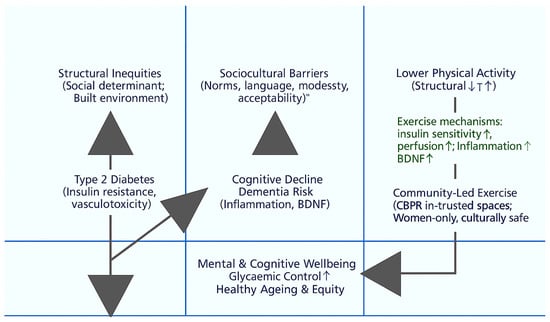
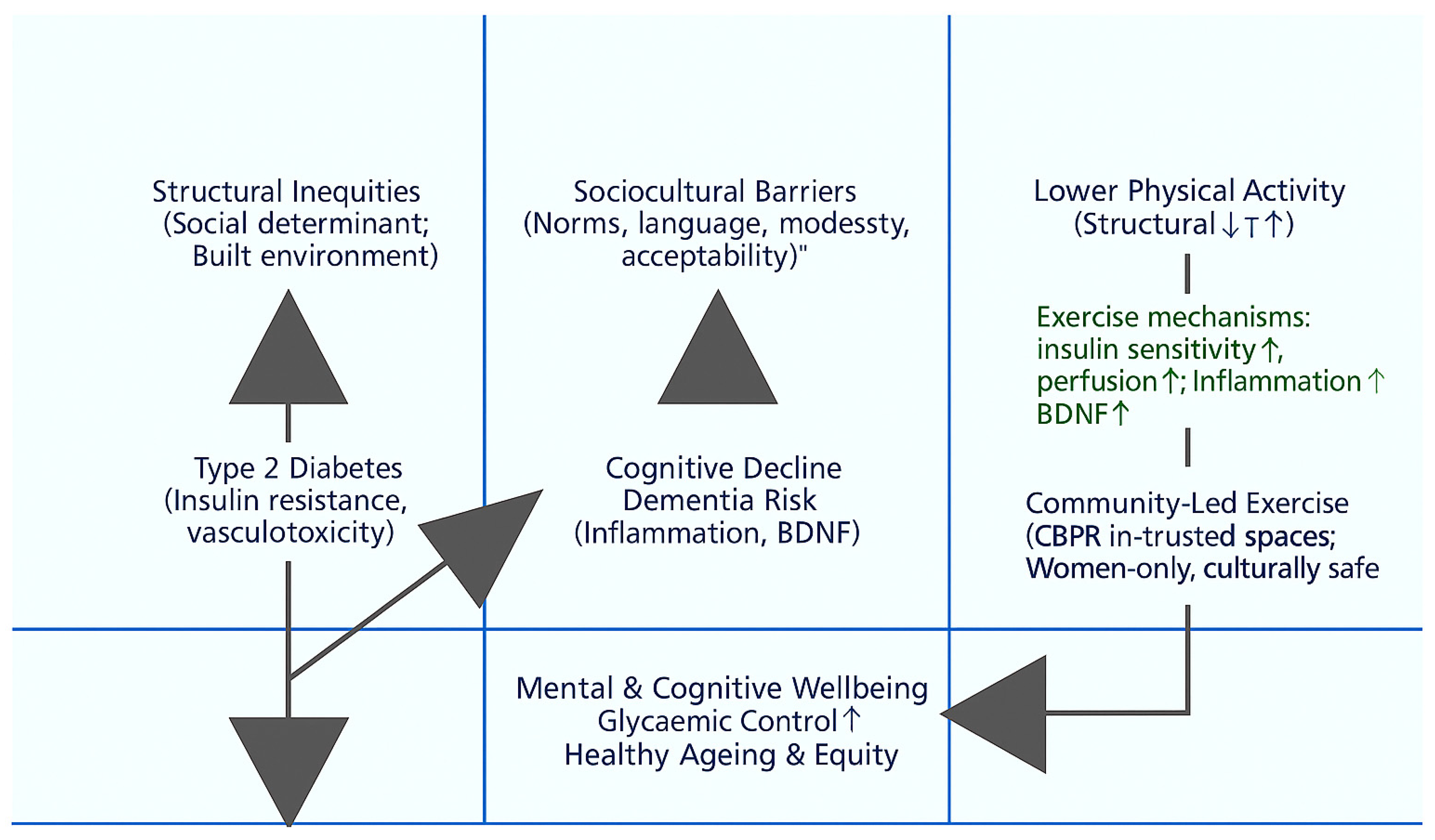

Disclaimer/Publisher’s Note: The statements, opinions and data contained in all publications are solely those of the individual author(s) and contributor(s) and not of MDPI and/or the editor(s). MDPI and/or the editor(s) disclaim responsibility for any injury to people or property resulting from any ideas, methods, instructions or products referred to in the content. |
© 2026 by the author. Licensee MDPI, Basel, Switzerland. This article is an open access article distributed under the terms and conditions of the Creative Commons Attribution (CC BY) license.