


Abstract
The COVID-19 pandemic introduced an additional major stressor for families in the Caribbean, a region already shaped by environmental risk and socioeconomic vulnerability. This study examined changes in family resilience across pandemic phases among English-speaking Caribbean populations, drawing on Walsh’s family resilience framework, which emphasizes belief systems, organizational processes, and communication. Using a convergent parallel mixed methods design, quantitative and qualitative data were integrated from two studies conducted before and during pandemic restrictions and after restrictions were lifted. Survey data were collected from 198 families across English-speaking Caribbean nations, and in-depth interviews were conducted with 31 families from Grenada, Jamaica, and Trinidad. Quantitative analyses indicated a significant decline in family resilience during periods of heightened restrictions, followed by a return to pre-pandemic levels. Qualitative findings identified faith, family connectedness, communication, resourcefulness, and a positive outlook as key processes supporting adaptation during the crisis. Overall, results suggest that while family resilience at the population level was strained during the pandemic, it demonstrated recovery over time. Policies and interventions that strengthen communication supports and community- and faith-based resources may enhance family resilience and preparedness for future public health and environmental disruptions in the Caribbean.
1. Introduction
The COVID-19 pandemic constituted an unprecedented global crisis that disrupted family life by altering daily routines, threatening emotional well-being, and restricting access to economic, social, and health-related resources. While these challenges were widespread, their effects were unevenly distributed, with families in structurally vulnerable regions experiencing disproportionate strain. In the Caribbean, the pandemic unfolded within a context already shaped by persistent social inequalities [1], recurrent exposure to natural disasters [2,3], and constrained health system capacity [4]. According to the Pan American Health Organization [5], English-speaking Caribbean nations reported over 12,000 cumulative COVID-19 cases among a population of approximately 6.9 million, prompting prolonged public health restrictions. Although regional governments adapted global mitigation strategies to local contexts [6], these measures also intensified disparities in healthcare access, digital connectivity, and economic security. Lockdowns were associated with rising poverty, technological strain, and increased reports of domestic and gender-based violence [4,7], underscoring the pandemic’s multifaceted impact on family systems.
Existing research on family resilience during COVID-19 presents divergent perspectives. Some studies emphasize heightened family cohesion, adaptability, and meaning-making in response to shared adversity, while others document significant declines in family functioning, communication, and mental health under prolonged stress. These mixed findings highlight ongoing debate regarding whether crises primarily strengthen or erode family resilience and suggest that resilience trajectories may vary across sociocultural and structural contexts. The Caribbean remains underrepresented in this literature, despite its unique exposure to overlapping crises and its strong reliance on family networks as primary sources of support.
Guided by Walsh’s [8] family resilience framework, which conceptualizes resilience as a dynamic process involving belief systems, organizational patterns, and communication, this study examines how family resilience among English-speaking Caribbean families shifted across different phases of the COVID-19 pandemic. Using a convergent parallel mixed methods design, the study integrates quantitative and qualitative data collected before, during, and after pandemic-related restrictions. The primary aims are to assess changes in family resilience over time and to identify the culturally grounded processes families drew upon to navigate uncertainty. By situating family resilience within the broader structural and sociocultural context of the Caribbean, this study seeks to contribute regionally grounded evidence to global discussions of family adaptation in times of crisis.
1.1. Family Resilience Processes Theory
To understand family resilience, it is important to first define what it is. Walsh’s [8] framework conceptualizes resilience as a dynamic interaction of belief systems, organizational patterns, and communication processes. Belief systems, which include spirituality and shared meaning, anchor families during adversity [9]. Organizational patterns, such as flexibility and connectedness, help families withstand disruptions [10]. Communication processes facilitate emotional expression and collaborative problem-solving. This theoretical framing is especially relevant in the Caribbean, where belief systems, community networks, and intergenerational bonds are coping mechanisms [11,12].
This framework is particularly applicable to the Caribbean context, where extended family networks, intergenerational narratives, and faith-based systems often serve as critical coping mechanisms [11,12]. To situate Caribbean family resilience within a broader comparative lens, it is helpful to first explore how families globally navigated the challenges of the COVID-19 pandemic.
1.2. Impact of COVID-19 on Families Globally
Globally, families experienced a range of outcomes as a result of the pandemic. Studies examining COVID-19’s impact on families highlight both negative and positive outcomes. Heightened stress [13], disruptions to family routines, financial strain, and mental health challenges have been widely documented [14,15]. At the same time, some families reported strengthened relationships, increased gratitude, or improved communication [16]. These diverging findings suggest that family resilience during the pandemic is complex and shaped by multiple environmental factors.
Further evidence reinforces the view that pandemic-related stress was unevenly experienced across contexts. For example in a study of Chilean families [17], found that economic hardships, which include job loss and reduced income, were strongly associated with higher levels of psychological distress among parents. The study also noted significant gendered effects, with mothers reporting disproportionately higher emotional strain, emphasizing how pandemic stress intersected with caregiving responsibilities and traditional gender roles.
Building on this, Adams et al. [13] documented how parenting stress in the United States increased significantly during the early stages of the pandemic and remained high over time. Parents struggled to manage disrupted routines, remote schooling, and emotional burnout, even as many employed coping strategies such as engaging in virtual social connections and family-centered activities.
Adding a youth perspective, Vélez-Grau et al. [18] explored the experiences of Latinx adolescents in the US and found that many were affected by family-level stressors. Adolescents reported increased anxiety, grief over loss of family members, and a heightened emotional burden as they tried to support family members, all while navigating remote learning and limited access to mental health services. These findings illustrate how resilience is not only a parental process but also involves youth as emotional actors within the family system.
Further supporting a global view, research from the Middle East sheds light on how individuals managed emotional strain under pandemic conditions. In Saudi Arabia, Alharbi et al. [19] found widespread mental health strain among adults during the pandemic. Factors such as financial insecurity, job loss, and health-related anxiety predicted greater distress. Nevertheless, nearly half of participants demonstrated moderate to high levels of resilience, reflecting the possibility for adaptive functioning even amid sustained hardship.
Findings from Brock et al. [16] further support the idea that pre-existing psychological and relational resources play a significant role in buffering pandemic stress. Their US-based longitudinal study revealed that families with strong interparental relationships and higher pre-pandemic well-being were more likely to report positive meaning-making during the pandemic. However, such flourishing experiences did not negate the broader effects of adversity. Families with greater exposure to hardship experienced declines in mental health, relationship satisfaction, and parenting efficacy, along with elevated child behavioral concerns.
Taken together, these studies highlight the heterogeneity of family experiences during COVID-19 and demonstrate how resilience is shaped by structural conditions, relational dynamics, and cultural contexts. While this global evidence provided valuable understanding, it also highlights the need to explore resilience within specific, underrepresented populations.
1.3. Caribbean Family Structure and Context
In this regard, Caribbean families present a compelling case for deeper exploration. Although global patterns offer valuable insight, the experience of Caribbean families during the pandemic must be understood within their unique cultural and structural contexts. Research indicates that Caribbean family relationships are a vital resource for coping and problem-solving [20,21]. Diverse household arrangements, fluid family structures, and interethnic or interracial marriages reflect broader regional tendencies toward collectivism, kinship-based connection, and transnational belonging [10]. For Afro-Caribbean families, frequent contact with relatives, even abroad, is common, and strong family unity helps sustain positive relationships despite separation, migration, and generational differences [22].
This emphasis on relational closeness also carries practical implications for family survival. Maintaining family bonds is also a key economic strategy. In contexts of financial hardship, Caribbean families rely on extended kinship systems for mutual support and shared responsibility [23]. Within the parent–child dyad, Caribbean parents often draw on retrospective narratives, that combine personal biography, family stories, and community history to pass down aspirations and build resilience in children. These narratives serve restorative, progressive, and preventive functions that help youth understand their place in a broader lineage of survival and achievement [24].
Complementing these relational strengths, spirituality and religion are also deeply embedded in Caribbean family life. These elements provide emotional grounding and foster adaptive responses during times of hardship. Spirituality anchors families amid stress and uncertainty, enabling survival, adaptation, and growth [9,25]. Faith-based practices strengthen familial bonds and promote emotional well-being across diverse religious traditions, and spiritual unity is often expressed through collective rituals such as family prayer and artmaking [26]. Prayer and shared faith practices within families offer comfort and emotional support [27], while faith itself stabilizes and reinforces collective identity during chronic illness and prolonged stress [28].
This spiritual framework extends into diasporic contexts as well. A study examining Jamaican students who received scholarships to attend university in the UK found that faith played a vital role in navigating financial difficulties, familial conflicts, and the scarcity of support and educational resources. Church participation strengthened parental bonds and fostered emotional endurance. Family, school, community, and church collectively promoted student resilience [12]. Moreover, students frequently turned to spiritual and religious leaders as trusted sources of guidance during crises [11,29]. These findings highlight the cross-border continuity of Caribbean resilience practices grounded in relational and spiritual frameworks.
1.4. Impact of COVID-19 on Caribbean Families
Against this backdrop, the COVID-19 pandemic affected Caribbean families through intersecting health, economic, and social shocks shaped by the region’s status as a group of small island developing states with longstanding vulnerabilities. Early regional analyses show that although the Caribbean initially experienced delays in case detection compared with North America and Europe, COVID-19 rapidly strained health systems, human resources for health, and surveillance infrastructure once community transmission was established [5]. Small populations, dependence on tourism, and exposure to concurrent health and climate threats heightened the impact on households and communities.
In addition to the health crisis, the pandemic produced widespread socioeconomic disruptions. An Inter-American Development Bank online survey reported sharp declines in income, job losses, increased food insecurity, and difficulty meeting basic needs, with the largest effects among low-income and informal workers [30]. Regional UN agencies also documented how pandemic restrictions intensified existing inequalities, including elevated unpaid care burdens, increased exposure to gender-based violence, and constrained access to social protection for women and marginalized groups [31].
These economic challenges were compounded by pre-existing limitations in the region’s health and mental health infrastructure. Seon et al. [32] described how many Caribbean nations faced shortages of specialized personnel and uneven mental health service distribution even prior to COVID-19. A comparative analysis of six Caribbean nations confirmed that underfunding and service fragmentation contributed to high unmet mental health needs during the pandemic [33]. PAHO [5] further documented how the redeployment of health staff to emergency COVID-19 responses reduced the availability of routine and preventive care for children and families.
Children and adolescents were especially vulnerable to these overlapping disruptions. Regional analyses by Evans-Gilbert et al. [6] highlighted not only variations in infection and mortality rates but also widespread disruption to schooling, immunization, and chronic disease management. Broader reports describe children in Latin America and the Caribbean as “hidden victims” of the pandemic due to increased poverty, learning loss, and reduced access to psychosocial services [34].
Gender disparities were also amplified during this time. Labor market analyses show that women disproportionately experienced job losses, reductions in paid work hours, and intensification of unpaid caregiving [35]. These conditions, combined with confinement measures, reflect global patterns of increased intimate partner and family violence. Although comprehensive Caribbean-wide data on domestic violence remain scarce, regional policy analyses suggest that pandemic conditions likely exacerbated existing patterns of gendered vulnerability.
Yet, despite these adversities, Caribbean families demonstrated remarkable resilience. Qualitative and mixed-methods research highlights the protective role of extended kin networks, flexible household structures, and communal support in buffering pandemic-related stress [36]. More recently, arts-based research with Caribbean families revealed how spiritual beliefs, family cohesion, and creative practices were employed to cope with emotional strain [37]. These studies suggest that resilience in the Caribbean context is not solely an individual characteristic but a collective process connected to cultural, relational, and symbolic resources.
1.5. Rationale
Despite cultural and spiritual traditions supporting resilience in Caribbean families [12], empirical evidence on how families responded to the COVID-19 pandemic remains limited. Understanding resilience across the phases of the pandemic offers insights into strengthening support for underrepresented communities, particularly during times of heightened stress. Therefore, the research question for this study is: “What is the relationship between family resilience and the COVID-19 pandemic among Caribbean families, and how did resilience processes evolve before, during, and post-pandemic phases?”.
2. Materials and Methods
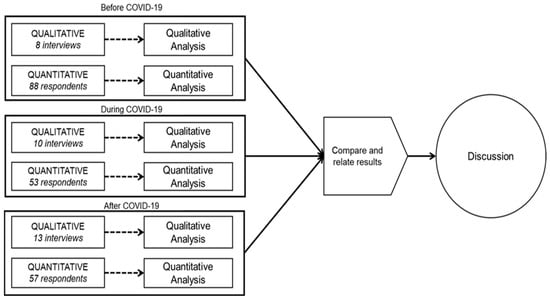
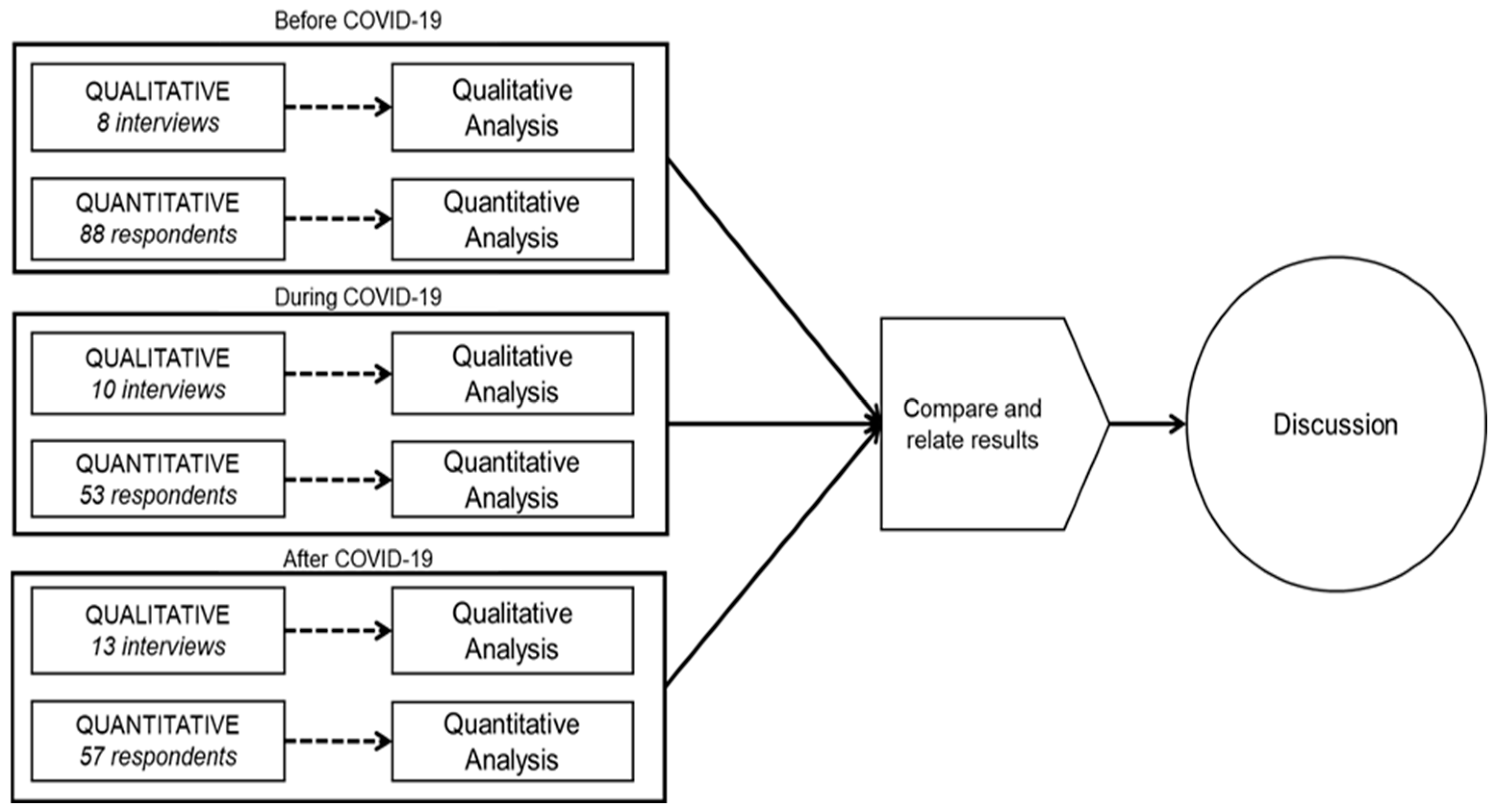
Data were drawn from two projects employing a convergent parallel mixed methods design to examine the resources and experiences of family resilience among Caribbean families (Figure 1). This design involves the concurrent collection of qualitative and quantitative data, which are analyzed separately and integrated during interpretation and discussion to provide a comprehensive understanding of the phenomenon [38].
Figure 1.
Diagram for Mixed Methods Design on COVID-19 Caribbean Family Resilience.
The first research project was conducted before and during COVID-19 restrictions (2019–2020), whereas the second project took place after restrictions were lifted in 2022. Although the projects were conceptually aligned, they involved separate cross-sectional samples. Therefore, the present study does not examine within-family changes over time, as different families may have participated in different phases of data collection (pre-restrictions, during restrictions, and post-restrictions). Comparisons therefore reflect differences across independent samples rather than longitudinal change within the same families.
The primary criterion for inclusion in both projects required that family members were born in the Caribbean and resided in an English-speaking Caribbean nation at the time of participation. Families were broadly defined to include biological, blended, and extended families; relatives by marriage; formal and informal adoptive relationships; and other kinship networks that reflect the realities of Caribbean families. When children under the age of 18 were present during interviews, parents or legal guardians provided consent on their behalf.
Families were recruited using multiple strategies to enhance reach across communities. Recruitment methods included collaboration with community gatekeepers (e.g., local leaders and community organizers), direct outreach by the first author, email invitations, and snowball sampling. Gatekeepers assisted in identifying families who met eligibility criteria and were willing to participate. Additional families were recruited through in-person interactions in community activities and through referrals from previously enrolled participants. Qualitative interviews were conducted with families residing in Grenada, Jamaica, and Trinidad and Tobago. These locations were selected based on the first author’s established community partnerships and access to trusted gatekeepers, which facilitated recruitment and rapport-building. All families who participated in qualitative interviews also completed the quantitative questionnaire.
The qualitative component of the research employed thematic analysis to explore patterns of meaning across participants’ accounts [39]. Interviews included open-ended questions such as: “Without identifying names or specific locations, what has been the most stressful situation your family experienced during this period?”; “What within your family helped you navigate this situation?”; and “What within the family made the situation more difficult?”. Additional prompts explored communication patterns, changes in family roles and routines, and sources of support. Analysis began by grouping transcripts according to the timeframes in which they were collected, before, during, or after pandemic-related restrictions. The first author conducted repeated readings of each transcript to develop familiarity with the data and then generated initial codes that captured meaningful expressions relevant to the research questions. These codes were refined through constant comparison that lead to the development of categories within each timeframe. Once categories were finalized, those that overlapped across timeframes were renamed to ensure coherence and clarity. Overarching themes were then developed to reflect patterned meanings across the data.
Credibility and trustworthiness were strengthened through bracketing and member checking. Bracketing involved the first author’s ongoing effort to set aside personal assumptions and prior knowledge to remain closely attuned to the meanings shared by families [40]. Analytic notes were kept to document decisions, reflections, and interpretive considerations throughout the process. Member checking further, though online discussions, to enhanced rigor, as four families (two from the pre-pandemic period, one from during restrictions, and one from after restrictions) reviewed the preliminary coding and provided feedback on the accuracy of the emerging interpretations. Their comments informed refinements to the codes that contributed to the accuracy of the final analysis.
Quantitative data were collected through a questionnaire that contained demographic questions and the Family Resilience Assessment Scale [41], administered online or through pen-and-paper surveys across English-speaking Caribbean nations. The FRAS, a widely used and psychometrically validated measure of family resilience [42,43,44,45], is developed in the family resilience theory and assesses core domains of family functioning, including communication and problem solving, resource utilization, positive outlook, connectedness, spirituality, and meaning-making [41]. Quantitative data were entered and analyzed using SPSS version 24 to examine patterns of family resilience across pandemic phases and family types.
3. Results
The purpose of this study was to examine the relationship between family resilience and the COVID-19 pandemic among Caribbean families and to explore how resilience processes evolved before, during, and after pandemic restrictions. Descriptive statistics of participants by survey completion timeline and family type are presented in Table 1. In total, 198 families contributed survey data across three time points: 88 before COVID-19, 53 during restrictions, and 57 after restrictions were lifted.
Table 1.
Demographics related to COVID and Family Type.
A one-way ANOVA was conducted to compare family resilience scores across three time periods (before COVID-19, during restrictions, and after restrictions were lifted). As shown in Table 2, family resilience scores varied across both timeline and family type.
Table 2.
Family Resilience Scores.
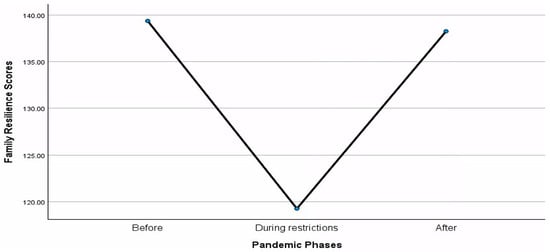
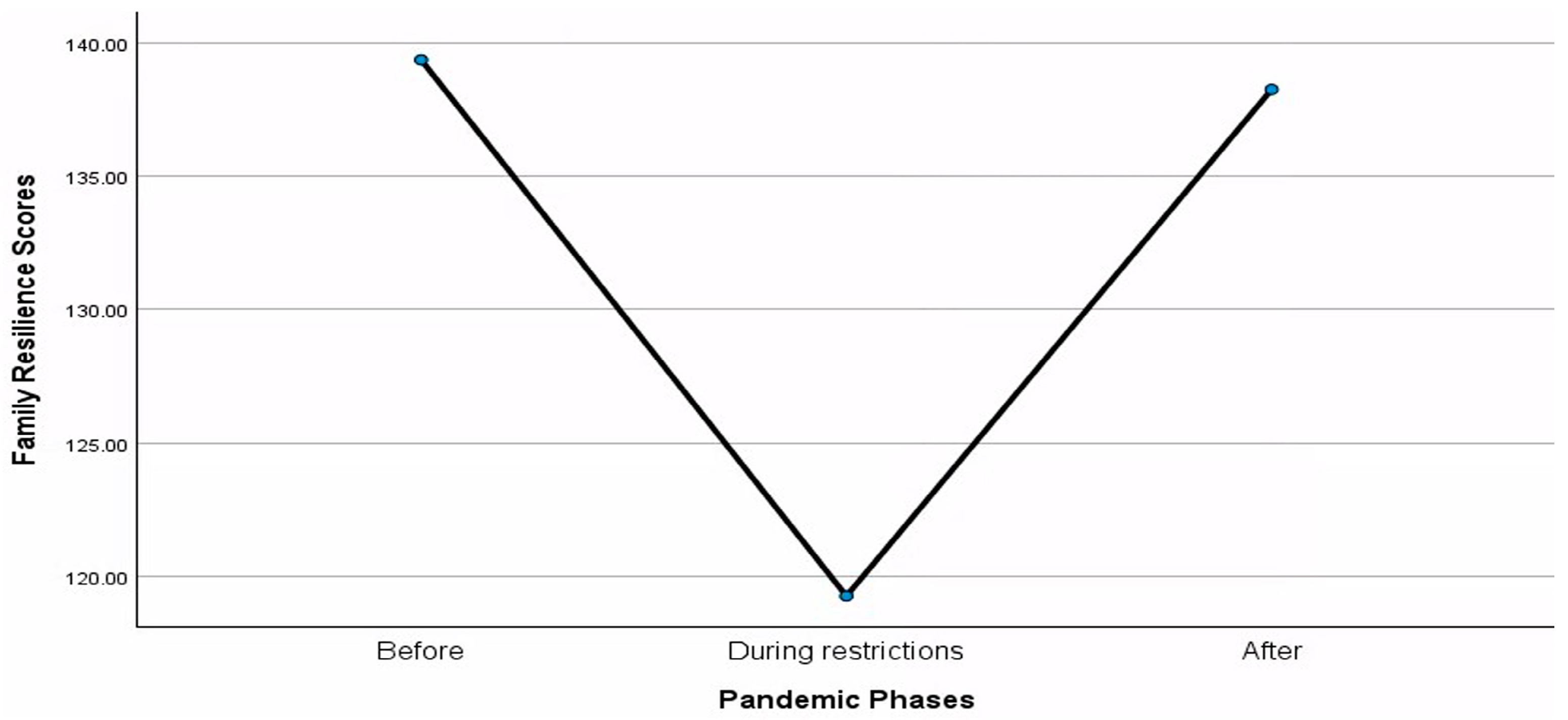
The ANOVA revealed a significant effect of pandemic phase on family resilience, F(2, 196) = 20.02, p < 0.001, η2 = 0.17, indicating a large effect size and demonstrating that the timing of the pandemic was associated with meaningful shifts in family resilience (Figure 2). Families who completed the survey before COVID-19 reported significantly higher resilience (M = 140.36, SD = 29.78) than those who reported resilience during pandemic restrictions (M = 114.79, SD = 26.53, p < 0.001). Resilience scores after restrictions were lifted (M = 142.25, SD = 17.74) returned to levels statistically comparable to the pre-pandemic period (p = 0.67), suggesting recovery and stabilization of resilience processes once acute stressors subsided. Patterns were generally consistent across family types.
Figure 2.
Caribbean Family Resilience across Pandemic Phases.
Based on interview transcripts from 31 families in Grenada, Jamaica, and Trinidad and Tobago, including 8 families interviewed before COVID-19, 10 during pandemic restrictions, and 13 after restrictions, five major themes emerged: Faith, Family Connectedness, Communication and Problem-Solving, Economic Adaptation and Resourcefulness, and Positive Outlook and Meaning-Making. These themes illustrate both continuity and transformation in family resilience as families navigated shifting conditions across the pandemic timeline. To more clearly capture how resilience resources were maintained, adapted, or redefined over time, Table 3 was developed.
Table 3.
Themes and quotes that emerged before, during, and after COVID Restrictions.
Across all phases, Faith emerged as a consistent resilience anchor, though its meaning and function shifted over time. Before the pandemic, families described spirituality and religious practice as central sources of guidance, comfort, and moral grounding, often embedded in routine worship and established traditions. During COVID-19, Faith became a more active coping mechanism. Families reported increased prayer, both individually and collectively, and a deepened reliance on religious communities and teachings to manage fear, grief, and uncertainty. After restrictions were lifted, families often reflected on Faith as a source of meaning-making, interpreting survival, loss, and transformation through spiritual narratives. Faith also supported adaptation as families resumed or reshaped religious and cultural practices.
Family Connectedness was central to resilience but changed in nuanced ways throughout the pandemic. Before COVID-19, families demonstrated togetherness through shared routines, emotional closeness, and culturally grounded caregiving roles. During the pandemic, families experienced heightened tension, communication breakdowns, and conflict, driven by confinement, economic strain, and health concerns. However, many families also described rapid recoveries from conflict and strengthened cohesion in the face of shared adversity, characterizing themselves as “bouncing back” and becoming more united under pressure. Afterward, families emphasized renewed appreciation for togetherness, referencing increased collaboration, stronger bonds, and collective gratitude for having navigated the crisis together.
Communication and Problem-Solving patterns shifted significantly across the three phases. Prior to the pandemic, families described open dialog, collaborative decision-making, and routine problem-solving as part of everyday functioning. During COVID-19, communication became strained by stress, uncertainty, and closer physical proximity. Families described miscommunication, emotional withdrawal, or avoiding difficult conversations. Yet families also adapted by seeking support from people outside of their system, sharing responsibilities, or accessing institutional resources to solve emerging problems. After the pandemic, families shared more intentional communication and mutual support, describing improved patterns developed from lessons learned during the crisis.
Economic Adaptation and Resourcefulness was an important resilience resource throughout the pandemic. Before the pandemic, families used budgeting strategies, resource “stretching”, and practical adjustments to manage financial limitations. During COVID-19, economic pressures intensified due to job loss, reduced income, and increased caregiving demands. Families responded by leaning on community resources, governmental or religious support, and extended kin networks. Many engaged in creative problem-solving to meet basic needs under hardship. After restrictions were lifted, families described ongoing adaptation as they rebuilt financial stability, adopted new routines, and adjusted to long-term changes in work, education, and care responsibilities.
Positive Outlook and Meaning-Making was a theme that connected resilience resources across all phases. Before the pandemic, families used cultural and spiritual frameworks to understand hardship and maintain hope. During COVID-19, meaning-making became essential for interpreting illness fears, loss, and unprecedented challenges. Families reframed experiences through faith, optimism, and emotional regulation strategies to sustain mental stability. After the pandemic, participants engaged in reflective meaning-making by interpreting the crisis as a period of growth, teaching important life lessons about family unity, gratitude, and resilience.
4. Discussion
Understanding how resilience shifted across different phases of the pandemic provides critical insight into how Caribbean families coped with, and adapted to, periods of severe stress. This temporal perspective is particularly important in contexts marked by structural vulnerability and limited institutional support, where family systems often serve as the primary source of stability. In this mixed-methods study, the convergence of quantitative and qualitative findings revealed a consistent pattern: Caribbean families experienced significant disruption during the height of COVID-19 restrictions but demonstrated notable recovery and adaptive capacity once pressures eased. Rather than functioning as fixed traits, resilience processes appeared fluid and responsive to changing social, economic, and emotional conditions. The alignment between shifts in family resilience scores and narrative accounts of hardship, unity, conflict, and meaning-making underscores the multidimensional nature of family resilience in the Caribbean. These integrated results provide a foundation for interpreting why these patterns emerged and how they reflect broader cultural, structural, and relational dynamics documented in the literature.
Situating these findings within global scholarship reveals both parallels and distinctions. International studies document that many families experienced heightened stress, financial strain, and declines in psychological well-being [13,14,15]; however, others reported strengthened relationships and deeper gratitude [16]. These contradictory outcomes illustrate that resilience during COVID-19 was not uniform but shaped by structural conditions, systemic supports, and cultural expectations.
Although global research offers useful context, it does not fully explain the experiences of Caribbean families. Structural influences in the region were particularly pronounced due to long-standing economic precarity, limited digital access, and constrained mental health systems. Such pressures likely intensified families’ emotional burden during the height of restrictions, consistent with global evidence from low-resource settings showing that economic shocks, job loss, and unequal caregiving responsibilities strongly predict distress [17,19].
At the same time, resilience processes are embedded within cultural and relational systems. Research on Caribbean family life highlights the importance of kinship networks, flexible household structures, intergenerational support, and traditions of relational problem-solving [10,21,22]. These systems buffer hardship through shared caregiving, emotional closeness, and collective decision-making, helping to explain why families in the region mobilized internal and extended networks to adapt despite substantial disruption.
Spirituality further clarifies why resilience processes remained active and supportive across the pandemic timeline. The literature emphasizes that faith and religious practice are core resilience resources for Caribbean communities [9,25]. In times of uncertainty, faith-based practices provide emotional regulation, stability, and familial connection [27]. Global evidence similarly finds that spirituality often becomes more prominent during crises as a source of coping and hope [19]. Since faith traditions in the Caribbean are interwoven with family routines and community identity, families were able to draw on these beliefs to interpret hardship, counter fear, and sustain emotional cohesion. The results explain why meaning-making and spiritual connection were central mechanisms that supported family resilience throughout the pandemic.
Structural and environmental factors unique to the Caribbean further contextualize why families experienced acute strain during restrictions but showed capacity for recovery afterward. Regional analyses describe how small island developing states were disproportionately impacted by the pandemic due to fragile health systems, reliance on tourism, and unequal access to digital infrastructure [5,31]. School closures, interruptions in chronic disease management, reduced access to health services, and declining income placed additional burdens on households, amplifying stressors well beyond those experienced in higher-resource countries [6,33]. These conditions align with global research that explains that families facing multiple layers of inequality exhibit higher distress during crises but may also rely more heavily on internal resilience strategies when formal support systems are constrained.
From a convergent mixed-methods perspective, the absence of distinct gendered, parenting, and generational effects across both quantitative and qualitative findings requires careful interpretation. The qualitative interviews were conducted primarily with adult family members. Most participants occupied caregiving or coordinating roles within the household, and children and adolescents were not interviewed independently. Although both women and men participated, gender distribution was not systematically recorded. Consequently, the qualitative narratives primarily reflect adult perspectives from those responsible for caregiving and household organization rather than equally separated accounts across gender and generational positions.
Quantitatively, family resilience scores did not differ systematically by family type or structure, suggesting that pandemic-related stress was experienced at the family-system level rather than being driven by specific caregiving roles or generational positions. Qualitatively, families similarly framed their pandemic experiences in collective terms that emphasized shared responsibility, mutual support, and family unity rather than role-differentiated stress. This convergence suggests that Caribbean families may conceptualize and enact resilience as a communal process, consistent with regional scholarship highlighting collectivism, flexible kinship structures, and interdependence as central organizing principles of family life [20,21,23]. However, this interpretation should not be understood to imply that gendered or age-related inequalities were absent. It is possible that burdens according to roles were present but not identified in family interviews, particularly in cultural contexts where caregiving labor and shared obligation are normalized and embedded within broader relational expectations [10]. The ways resilience was explained may demonstrate both cultural meaning-making and the positionality of those who participated in interviews.
This pattern contrasts with global literature detailing heightened gendered caregiving burdens, parenting stress, and youth distress during COVID-19 [13,17,18] and underlines the importance of cultural context in determining how stress and resilience are perceived, narrated, and measured. Rather than isolating individual-level vulnerability, Caribbean families appeared to absorb pandemic-related demands into broader systems of shared obligation and meaning-making, a process reinforced by spiritual beliefs and intergenerational narratives of endurance [9,24]. The convergence of quantitative patterns and qualitative narratives therefore strengthens the interpretation that resilience during the pandemic was organized relationally and culturally, rather than through differentiated role-based experiences.
Importantly, this convergence does not mean that gender- or age-related inequalities disappeared during the pandemic. Evidence from different regions shows that unpaid care work increased, families faced financial stress, and children’s schooling was disrupted [5,31]. Rather, it suggests that families in this study did not highlight these issues as the main ways they understood or described resilience.
Despite these exposures, many studies emphasize that Caribbean families possess strong adaptive capacities ingrained in cultural values, community solidarity, and flexible kin networks [36]. In line with Walsh’s [8] family resilience framework, Caribbean families’ cultural practices of meaning-making, spiritual grounding, and relational reciprocity likely supported their ability to adapt. Belief systems provided coherence amid uncertainty; organizational patterns such as flexible household roles and shared labor facilitated survival; and communication practices, though strained under pressure, ultimately served as tools for regrouping and problem-solving. These theoretical and empirical foundations help explain why resilience among Caribbean families, though disrupted by acute stressors, remains dynamic and recoverable rather than fixed.
4.1. Implications for Practice
Although family resilience rebounded after restrictions were lifted, this recovery should not be interpreted as evidence that Caribbean families do not require support during periods of severe stress. Instead, the temporary but significant decline in resilience observed during the restriction period demonstrates that families experience considerable strain when confronted with sudden loss of income, disrupted routines, limited mobility, and reduced access to social support. Practitioners and policymakers must therefore avoid assuming that cultural strengths alone are sufficient to sustain well-being during crises. Every crisis is context-specific, and support systems must be culturally responsive, timely, and attuned to the vulnerabilities that emerge as conditions change.
Whether there are lockdowns, natural disasters, or economic shocks, re-establishing family stability after major challenges requires intentional engagement with existing cultural strengths. A strengths-based family therapy approach is well suited to Caribbean contexts, where intergenerational kin networks, fluid household structures, and spiritual traditions form the foundation of resilience. Supporting families through these assets can help restore a sense of normalcy, preserve connectedness, and encourage collaborative problem-solving during periods of instability.
Communication emerged as a central yet unevenly accessible resilience mechanism. Unlike families in higher-resource nations who relied on reliable broadband, flexible work schedules, and widely available digital devices, many Caribbean families faced unstable internet access, intermittent electricity, and the financial burden of maintaining digital connectivity. These infrastructural constraints created disparities in families’ ability to stay connected with extended relatives, maintain social support systems, and communicate effectively within the household. Since communication is closely tied to cohesion, conflict resolution, and shared meaning-making [22,23,24], practitioners must help families develop strategies that do not depend solely on technology. This includes supporting households in establishing low-resource communication practices such as consistent shared routines, designated family check-in times, and community-level systems like neighborhood phone trees. Encouraging family-based activities that foster mutual support and reinforce communication capacities can also strengthen coping during periods of disconnection.
Faith was one of the most prominent resilience resources families drew upon, consistent with longstanding research showing the centrality of spirituality in Caribbean coping systems [9,11,12,25,29]. Yet pandemic restrictions barred access to communal worship, religious gatherings, and faith-based support structures that typically serve as emotional support. Family professionals can integrate this finding by explicitly drawing on families’ spiritual beliefs within therapeutic work, framing these beliefs as strengths that help organize coping processes and provide meaning during adversity. Collaboration between mental health providers and faith leaders is especially promising, as it can reduce stigma, enhance accessibility, and create culturally congruent pathways to care. Faith leaders can serve as trusted messengers for psychoeducation, crisis support, and referrals, particularly in communities where formal mental health services remain stigmatized or difficult to access.
4.2. Limitations
Several limitations require consideration when interpreting the findings of this study. First, key sociodemographic characteristics for each family (e.g., gender distribution, mean age, employment status, and parenting status) were not systematically collected across both projects. This limits the depth of demographic interpretation and restricts more nuanced subgroup analyses. In addition, the sample included unequal numbers of families across the three timeframes, which may reduce the precision of direct comparisons. The same families did not participate at each phase, preventing the examination of within-family change over time. Family-type distributions were also uneven, with only one sibling family represented in the post-restrictions period, potentially affecting the stability of subgroup findings. Although these imbalances do not invalidate the overall patterns observed, they highlight the need for future studies to recruit larger and more balanced samples.
Second, the study emerged serendipitously during the unfolding pandemic, which influenced both its design and implementation. The two projects from which this data was drawn were not initially conceptualized as intervention studies or as pandemic-specific investigations, and thus neither the qualitative nor quantitative instruments were tailored exclusively to pandemic-related experiences. Although the data provided rich and meaningful insight into Caribbean family resilience, the absence of crisis-focused inquiries limits the depth of pandemic-specific interpretation. More targeted qualitative inquiry, developed expressly to capture real-time responses to major disruptions, could provide a deeper understanding of how families navigate crises as they unfold.
Third, the qualitative sample demonstrates the experiences of families from only three English-speaking Caribbean nations, whereas the survey data were collected across all English-speaking nations in the region. This discrepancy in geographic representation may limit the integration and interpretation of qualitative and quantitative results. Future research would benefit from conducting interviews in all countries represented in the survey, using smaller but proportional samples, to enhance contextual understanding.
Finally, although this study offers rare empirical insight into Caribbean family resilience during a global health crisis, the replicability of the research is inherently constrained. COVID-19 was an unexpected and unprecedented event, and future pandemics or region-wide crises may differ in severity, duration, and sociopolitical context. Nevertheless, should another pandemic or large-scale crisis occur, the methodological framework and resilience constructs applied here may provide a valuable foundation for examining how Caribbean families adapt and recover under conditions of extreme stress.
5. Conclusions
The COVID-19 pandemic introduced an additional, unprecedented stressor, magnifying existing vulnerabilities in the Caribbean, and it also revealed important pathways of family resilience. This study examined how family resilience shifted across pandemic phases among English-speaking Caribbean families, drawing on Walsh’s family resilience framework.
Quantitative findings indicated a significant decline in family resilience during the height of COVID-19 restrictions, followed by a return to pre-pandemic levels after restrictions were lifted. This pattern underscores both the disruptive impact of prolonged crisis conditions and families’ capacity for recovery once external pressures eased. Complementary qualitative findings identified faith, family connectedness, communication and problem-solving, economic resourcefulness, and a positive outlook as key processes families mobilized to manage uncertainty and sustain cohesion.
Collectively, these findings highlight that family resilience in the Caribbean is neither static nor exclusively individual in nature but is shaped by ever-changing structural limitations and culturally embedded coping resources. Strengthening family communication, relational cohesion, and faith- and community-based supports may lessen vulnerability and enhance preparedness for future public health emergencies and environmental disruptions. Policy and practice efforts that invest in these resilience resources can play a critical role in supporting Caribbean families’ capacity to adapt, recover, and thrive in the face of ongoing and future challenges that lie ahead.
Author Contributions
Conceptualization, K.D.; methodology, K.D.; formal analysis, K.D.; investigation, K.D.; resources, K.D.; data curation, K.D.; writing—original draft preparation, K.D., L.D. and X.L.; writing—review and editing, L.D. and X.L.; visualization, K.D.; funding acquisition, K.D. All authors have read and agreed to the published version of the manuscript.
Funding
This research was funded by the Florida State University under the First Year Assistant Professor Grant and the Undergraduate Research Opportunity Program Materials Grant.
Institutional Review Board Statement
The Institutional Review Board at Florida State University approved our project and its modification (STUDY00003034 and approved on 11 May 2023), and Texas Woman’s University (IRB-FY2019-265 and approved on 25 May 2019).
Informed Consent Statement
All participants provided written informed consent prior to participation.
Data Availability Statement
The data presented in this article are not readily available because of the consent provided by participants for the project.
Conflicts of Interest
The authors declare no conflicts of interest.
Abbreviation
The following abbreviation is used in this manuscript:
| COVID-19 | Coronavirus Disease of 2019 |
References
- Knight, W.A. The nexus between vulnerabilities and violence in the Caribbean. Third World Q. 2019, 40, 405–424. [Google Scholar] [CrossRef] [Scilit]
- Rhiney, K. Geographies of Caribbean vulnerability in a changing climate: Issues and trends. Geogr. Compass 2015, 9, 97–114. [Google Scholar] [CrossRef] [Scilit]
- United Nations Office for the Coordination of Humanitarian Affairs. Natural Disasters in Latin America and the Caribbean; OCHA: New York, NY, USA, 2020; Available online: https://reliefweb.int/report/world/natural-disasters-latin-america-and-caribbean-2000-2019 (accessed on 29 November 2022).
- Gideon, J. Introduction to COVID-19 in Latin America and the Caribbean. Bull. Lat. Am. Res. 2020, 39, 4–6. [Google Scholar] [CrossRef] [Scilit]
- Pan American Health Organization. Q&A: SARS-CoV-2 in Latin America and the Caribbean 4 Years Later; Pan American Health Organization: Washington, DC, USA, 2024; Available online: https://www.paho.org/en/news/23-2-2024-qa-sars-cov-2-latin-america-and-caribbean-4-years-later (accessed on 19 September 2025).
- Evans-Gilbert, T.; Blades, E.; Boodoosingh, R.; Campbell, M.H.; Christie, C.D.C.; Manzanero, M.; Mullings-George, J.; Ottley, E.; Outerbridge, C.-M.; Sobers, N.P.; et al. Adaptation of WHO COVID-19 guidelines by Caribbean countries and territories. Bull. World Health Organ. 2024, 102, 699–706. [Google Scholar] [CrossRef] [Scilit]
- The Lancet. COVID-19 in Latin America: A humanitarian crisis. Lancet 2020, 396, 1463. [Google Scholar] [CrossRef] [Scilit]
- Walsh, F. Strengthening Family Resilience, 2nd ed.; Guilford Press: New York, NY, USA, 2016. [Google Scholar]
- Jones, K.F.; Dorsett, P.; Simpson, G.; Briggs, L. Moving forward on the journey: Spirituality and family resilience after spinal cord injury. Rehabil. Psychol. 2018, 63, 521–531. [Google Scholar] [CrossRef] [Scilit]
- Reynolds, T. Caribbean Mothers: Identity and Experience in the U.K.; Tufnell: London, UK, 2005. [Google Scholar]
- Bhui, K.; King, M.; Dein, S.; O’Connor, W. Ethnicity and religious coping with mental distress. J. Ment. Health 2008, 17, 141–151. [Google Scholar] [CrossRef] [Scilit]
- Robertson-Hickling, H. Resilience: Secrets of success in African-Caribbean people. In Perspectives in Caribbean Psychology; Hickling, F.W., Matthies, B.K., Morgan, K., Gibson, R.C., Eds.; Caribbean Institute of Mental Health and Substance Abuse-Carimensa, University of the West Indies: Kingston, Jamaica, 2008; pp. 70–92. [Google Scholar]
- Adams, E.; Smith, D.; Caccavale, L.J.; Bean, M.K. Parents are stressed! Patterns of parent stress across COVID-19. Front. Psychiatry 2020, 12, 626456. [Google Scholar] [CrossRef] [Scilit]
- Gadermann, A.C.; Thomson, K.C.; Richardson, C.G.; Gagné, M.; McAuliffe, C.; Hirani, S.; Jenkins, E. Examining the impacts of the COVID-19 pandemic on family mental health in Canada: Findings from a national cross-sectional study. BMJ Open 2021, 11, e042871. [Google Scholar] [CrossRef] [Scilit] [PubMed]
- Spinelli, M.; Lionetti, F.; Pastore, M.; Fasolo, M. Parents’ stress and children’s psychological problems in families facing the COVID-19 outbreak in Italy. Front. Psychol. 2020, 11, 1713. [Google Scholar] [CrossRef] [Scilit]
- Brock, R.L.; Calkins, F.C.; Hamburger, E.R.; Kumar, S.A.; Laifer, L.M.; Phillips, E.; Ramsdell, E.L. Learning from adversity: What the COVID-19 pandemic can teach us about family resiliency. Fam. Process 2022, 62, 1574–1591. [Google Scholar] [CrossRef] [Scilit]
- Espinoza, C.; Alink, L.; Laplante, D.P.; Elzinga, B.; van der Veek, S. COVID-19 hardship and mental health in Chilean parents: The role of disaster exposure and family resilience. Eur. J. Psychotraumatol. 2025, 16, 2465001. [Google Scholar] [CrossRef] [Scilit]
- Vélez-Grau, C.; Mufson, L.; Buelvas, K.; Lindsey, M.A. A qualitative study of the impact of COVID-19 on family relationships and the lives of Latinx Adolescents. J. Child Fam. Stud. 2024, 33, 3093–3103. [Google Scholar] [CrossRef] [Scilit]
- Alharbi, T.A.F.; Alqurashi, A.A.B.; Mahmud, I.; Alharbi, R.J.; Islam, S.M.S.; Almustanyir, S.; Maklad, A.E.; AlSarraj, A.; Mughaiss, L.N.; Al-Tawfiq, J.A.; et al. COVID-19: Factors Associated with the Psychological Distress, Fear and Resilient Coping Strategies among Community Members in Saudi Arabia. Healthcare 2023, 11, 1184. [Google Scholar] [CrossRef] [Scilit]
- Reynolds, T. Caribbean families, social capital and young people’s diasporic identities. Ethn. Racial Stud. 2006, 29, 1087–1103. [Google Scholar] [CrossRef] [Scilit]
- Donald, K.; Brock, L. Caribbean family resilience: A mixed methods arts-informed research. Int. J. Mult. Res. Approaches 2023, 15, 2–23. [Google Scholar] [CrossRef] [Scilit]
- Jackson, J.S.; Forsythe-Brown, I.; Govia, I.O. Age cohort, ancestry, and immigrant generation influences in family relations and psychological well-being among Black Caribbean family members. J. Soc. Issues 2007, 63, 729–743. [Google Scholar] [CrossRef] [Scilit]
- Ho, C. Caribbean transnationalism as a gendered process. Lat. Am. Perspect. 1999, 26, 34–54. [Google Scholar] [CrossRef] [Scilit]
- Franceschelli, M.; Schoon, I.; Evans, K. ‘Your past makes you who you are’: Retrospective parenting and relational resilience among Black Caribbean British young people. Sociol. Res. Online 2017, 22, 48–65. [Google Scholar] [CrossRef] [Scilit]
- Sato, M.; Horner, P.S.; Vélez Ortiz, D.; Nelson, A. The role of spirituality in family adjustment and resilience among Puerto Rican families post-Hurricane Maria. J. Relig. Spiritual. Soc. Work. Soc. Thought 2021, 41, 90–103. [Google Scholar] [CrossRef] [Scilit]
- Donald, K.E. Family Resilience Among Caribbean Families: A Mixed Methods Arts-Informed Study. Doctoral Dissertation, Texas Woman’s University, Denton, TX, USA, 2020. Available online: https://hdl.handle.net/11274/12593 (accessed on 29 November 2022).
- Freeman, S.S. African-Caribbean women ageing without children: Does African-Caribbean culture and religious identity shape their experiences? J. Women Aging 2022, 35, 49–64. [Google Scholar] [CrossRef] [Scilit]
- Cobb, M.; Puchalski, C.M.; Rumbold, B. (Eds.) Oxford Textbook of Spirituality in Healthcare; Oxford University Press: Oxford, UK, 2012. [Google Scholar] [CrossRef] [Scilit]
- Alessi, E.J. Resilience in sexual and gender minority forced migrants: A qualitative exploration. Traumatology 2016, 22, 203–213. [Google Scholar] [CrossRef] [Scilit]
- Arteaga Garavito, M.; Beuermann, D.; Giles Álvarez, L.; Gauto, V.; Khadan, J.; Mooney, H.; Smets, L. COVID-19: The Caribbean Crisis: Results from an Online Socioeconomic Survey; IDB: Washington, DC, USA, 2020. [Google Scholar] [CrossRef] [Scilit]
- UN Women. Latin American and the Caribbean Rapid Gender Analysis for COVID-19; UN Women: New York, NY, USA, 2020; Available online: https://lac.unwomen.org/sites/default/files/Field%20Office%20Americas/Documentos/Publicaciones/2020/05/ENLAC%20RGA%20Report%20English%20Final%20Junio2%201comprimido.pdf (accessed on 19 September 2025).
- Seon, Q.; Maharaj, S.; Dookeeram, D.; Ali, K.; Seemungal, T. Leveraging research, community and collaboration towards robust COVID-19 mental health response in the Caribbean. Lancet Reg. Health–Am. 2023, 19, 100440. [Google Scholar] [CrossRef] [Scilit] [PubMed]
- Walker, I.F.; Asher, L.; Pari, A.; Attride-Stirling, J.; Oyinloye, A.O.; Simmons, C.; Potter, I.; Rubaine, V.; Samuel, J.M.; Andrewin, A.; et al. Mental health systems in six Caribbean small island developing states: A comparative situational analysis. Int. J. Ment. Health Syst. 2022, 16, 39. [Google Scholar] [CrossRef] [Scilit]
- Kechagia, P.; Metaxas, T. Are working children in developing countries hidden victims of pandemics? Soc. Sci. 2021, 10, 321. [Google Scholar] [CrossRef] [Scilit]
- UN News. Tackling Disasters Means Safer and Fairer Future for Caribbean: A UN Resident Coordinator Blog; UN News: New York, NY, USA, 2023; Available online: https://news.un.org/en/story/2023/10/1142302 (accessed on 12 September 2025).
- Navara, G.S.; Lollis, S. How adolescent children of African Jamaican immigrants living in Canada perceive and negotiate their roles within a matrifocal family. Fam. Process 2009, 48, 441–458. [Google Scholar] [CrossRef] [Scilit] [PubMed]
- Donald, K.; Lin, K.-H.; Li, X. Visual narratives of resilience: Caribbean families’ coping before and since COVID-19. Fam. Sci. 2025, 1, 11. [Google Scholar] [CrossRef] [Scilit]
- Creswell, J.W.; Creswell, J.D. Research Design: Qualitative, Quantitative, and Mixed Methods Approaches, 6th ed.; SAGE Publications: Thousand Oaks, CA, USA, 2022. [Google Scholar]
- Ahmed, S.K.; Mohammed, R.A.; Nashwan, A.J.; Ibrahim, R.H.; Abdalla, A.Q.; Ameen, B.M.M.; Khdhir, R.M. Using thematic analysis in qualitative research. J. Med. Surg. Public Health 2025, 6, 100198. [Google Scholar] [CrossRef] [Scilit]
- Hamill, C.; Sinclair, H.A. Bracketing—Practical considerations in Husserlian phenomenological research. Nurse Res. 2010, 17, 16–24. [Google Scholar] [CrossRef] [Scilit]
- Sixbey, M. Development of the Family Resilience Assessment Scale to Identify Family Resilience Constructs. Doctoral Dissertation, University of Florida, Gainesville, FL, USA, 2005. Available online: http://ufdc.ufl.edu/UFE0012882/00001 (accessed on 24 May 2018).
- Tian, B.; Shen, R.; Huang, R.; Xu, Q.S. Psychometric Properties of the Family Resilience Assessment Scale for Children with Disabilities in China. Sage Open 2024, 14. [Google Scholar] [CrossRef] [Scilit]
- Demir, E.; Demircioğlu, H. A reliability generalization meta-analysis of the family resilience assessment scale (FRAS). J. Pediatr. Nurs. 2024, 77, e150–e157. [Google Scholar] [CrossRef] [Scilit] [PubMed]
- Valencia Londoño, P.A.; Trujillo Orrego, S.P.; Duque Monsalve, L.F.; Giraldo Cardona, L.S. Factor structure and reliability of the Family Resilience Scale (FRAS): Adaptation with Colombian families exposed to stressful events. Front. Psychol. 2025, 16, 1568139. [Google Scholar] [CrossRef] [Scilit] [PubMed]
- Zhou, J.; He, B.; He, Y.; Huang, W.; Zhu, H.; Zhang, M.; Wang, Y. Measurement properties of family resilience assessment questionnaires: A systematic review. Fam. Pract. 2020, 37, 581–591. [Google Scholar] [CrossRef] [Scilit] [PubMed]

Disclaimer/Publisher’s Note: The statements, opinions and data contained in all publications are solely those of the individual author(s) and contributor(s) and not of MDPI and/or the editor(s). MDPI and/or the editor(s) disclaim responsibility for any injury to people or property resulting from any ideas, methods, instructions or products referred to in the content. |
© 2026 by the authors. Licensee MDPI, Basel, Switzerland. This article is an open access article distributed under the terms and conditions of the Creative Commons Attribution (CC BY) license.