


Abstract
Neonatal sepsis remains a leading cause of morbidity and mortality in the first month of life, yet its presentation is nonspecific, and its microbiological confirmation is uniquely difficult. Low-circulating bacterial loads, small obtainable blood volumes, frequent intrapartum antibiotic exposure, and the ambiguity of skin-commensal isolates erode the sensitivity and specificity of blood culture, the long-standing reference standard, so that most evaluated infants are treated empirically despite sterile cultures. This review synthesizes current evidence on the integrated microbiological evaluation of the newborn: the host- and specimen-related diagnostic challenge; the etiologic spectrum and its antimicrobial-resistance burden; conventional culture; rapid and molecular methods, including mass spectrometry and syndromic and broad-range PCR; metagenomic and cell-free-DNA sequencing; host-response biomarkers; and antimicrobial-susceptibility determination. The evidence indicates that newer methods accelerate or supplement culture but do not yet replace it, each addressing one limitation while introducing caveats of its own. Notably, much of the evidence for direct-from-blood molecular testing, microbial cell-free DNA, and metagenomic sequencing is extrapolated from adults, whereas neonatal data are stronger for several biomarkers. The greatest benefit arises from integrating complementary modalities within diagnostic- and antimicrobial-stewardship frameworks. Neonatal-specific validation, standardized thresholds, and outcome-driven trials remain the principal priorities.
1. Introduction
Neonatal sepsis is among the foremost contributors to morbidity and mortality in the first month of life. A systematic review and meta-analysis estimated a pooled incidence of 2824 cases per 100,000 live births (95% CI, 1892–4194) and a case fatality of 17.6% (95% CI, 10.3–28.6%), with both incidence and mortality higher for early-onset than for late-onset disease. The burden falls disproportionately on preterm and very-low-birth-weight infants and on low- and middle-income settings [1]. The clinical phenotype is notoriously nonspecific, ranging from subclinical infection to fulminant multi-organ failure, and overlaps extensively with non-infectious conditions of the transitional period [2,3]. Compounding this clinical ambiguity is a definitional one: neonatal sepsis still lacks a universally accepted consensus definition, and the adult and pediatric consensus criteria are not suited to the newborn, least of all the preterm infant [3,4]. The absence of a shared reference standard has tangible consequences for the evidence reviewed here. It produces heterogeneous study populations, inconsistent definitions of culture-negative sepsis, and difficulty comparing diagnostic-accuracy studies that have been anchored to different and imperfect reference standards [4,5].
Because clinical signs neither confirm nor exclude infection with acceptable certainty, the microbiological evaluation of the newborn occupies a central diagnostic role. Isolation of a pathogen from a normally sterile site (blood, cerebrospinal fluid, or urine) remains the reference standard, anchors pathogen-directed therapy, and is the basis for antimicrobial stewardship [2,6]. Yet this evaluation is uniquely constrained in the neonate: low-circulating bacterial loads, small obtainable specimen volumes, frequent intrapartum antimicrobial exposure, and the ambiguity of skin-commensal isolates collectively erode the sensitivity and specificity of conventional culture [5,7,8]. The practical consequence is well documented: most infants evaluated for sepsis are culture-negative yet receive empirical antibiotics, a pattern that drives overtreatment, selects for resistance, and perturbs the developing microbiome [5,9].
This tension has propelled a broad diagnostic armamentarium beyond culture: rapid and multiplex molecular assays, mass-spectrometric organism identification, metagenomic sequencing, and host-response biomarkers, each promising faster or more sensitive detection, and each with distinct interpretive caveats. The aim of this comprehensive review is to synthesize current evidence on the integrated microbiological evaluation of the neonate with suspected sepsis, spanning the host- and specimen-related diagnostic challenge, conventional culture-based microbiology, rapid and molecular methods, metagenomic approaches, host-response biomarkers, and antimicrobial-susceptibility determination. It also considers how these modalities combine into rational, stewardship-aligned diagnostic algorithms (Figure 1).
Figure 1.
Integrated diagnostic evaluation of the newborn with suspected sepsis. The biological and pre-analytical features that make neonatal infection difficult to confirm (left) constrain a blood culture that nonetheless remains the reference standard (center, top). Three complementary strategies build on it: rapid identification and susceptibility from a positive culture (MALDI-TOF mass spectrometry, multiplex PCR panels); culture-independent detection when cultures are sterile (broad-range 16S rRNA PCR, microbial cell-free DNA, and metagenomic sequencing); and host-response biomarkers (CRP, procalcitonin, IL-6, and presepsin) that support ruling out infection and stopping therapy. Benefit is realized only when these modalities are integrated within coupled diagnostic- and antimicrobial-stewardship frameworks (right).
Several recent reviews have surveyed neonatal sepsis and its diagnosis [3,10,11]. This review is distinguished less by the technologies it describes than by the framework applied to them, and it differs from prior syntheses in four respects. It treats the microbiological evaluation as an integrated whole, following one diagnostic pathway from an adequately collected blood culture through rapid identification, culture-independent molecular and sequencing methods, and host-response biomarkers, rather than cataloguing each modality separately. It makes explicit the distinction between diagnostic stewardship, which governs which tests are performed and how their results are interpreted, and antimicrobial stewardship, which governs how those results alter prescribing; the former is positioned upstream of the latter. It asks directly why two decades of innovation in molecular, mass-spectrometric, and sequencing methods have not displaced a slow, century-old culture, and it locates the answer in constraints specific to the newborn. Finally, it foregrounds the neonatal-validation gap, namely that much of the supporting evidence for the newest methods is extrapolated from adults and older children and remains unconfirmed in neonates. These threads converge on a single organizing thesis: the value of a diagnostic test lies not in detection alone but in delivering actionable, neonatal-validated, and stewardship-anchored information.
2. Literature Search
This article is a narrative comprehensive review; it was not registered as a systematic review and did not apply formal PRISMA screening. Its conduct and reporting were nonetheless guided by the Scale for the Assessment of Narrative Review Articles (SANRA), which specifies the justification, aims, literature-search description, referencing, characterization of evidence level, and presentation expected of a non-systematic review [12]. Although designated as a comprehensive review in accordance with the journal’s article taxonomy, the present work is methodologically a non-systematic narrative synthesis; the qualifier “comprehensive” denotes breadth of scope rather than a systematic search protocol. Information was gathered through a structured literature search across PubMed/MEDLINE, PubMed Central, Scopus, Web of Science Core Collection, the Cochrane Library, and Google Scholar. The timeframe was primarily restricted to the last five years (2021–2026) to capture contemporary diagnostic technologies and current evidence; where information on a given topic was insufficient, the timeframe was subsequently extended to the preceding five to ten years and, for foundational or seminal sources (such as landmark disease definitions, reference-standard validation studies, and pivotal trials), beyond that window. To substantiate the comprehensive scope, the search deliberately spanned every major domain of contemporary neonatal sepsis diagnostics—conventional blood, cerebrospinal fluid, and urine culture; rapid organism identification by MALDI-TOF mass spectrometry; syndromic multiplex and broad-range 16S rRNA PCR; metagenomic next-generation sequencing and plasma microbial cell-free DNA; fungal diagnostics; host-response biomarkers; and phenotypic and genotypic antimicrobial-susceptibility determination—together with the antimicrobial-resistance epidemiology and diagnostic-stewardship frameworks that govern their application, and was examined across both early- and late-onset disease and high- and low-resource settings.
Systematic reviews, meta-analyses, and randomized controlled trials were prioritized, followed by large cohort and diagnostic-accuracy studies and authoritative guidelines, and the reference lists of retrieved articles were screened for further sources. The last database search was run in June 2026. A representative search combined controlled-vocabulary and free-text terms along the lines of (“neonat*” OR “newborn*” OR “preterm”) AND (“sepsis” OR “bacteraemia” OR “bloodstream infection”) AND (“blood culture” OR “multiplex PCR” OR “MALDI-TOF” OR “16S rRNA” OR “metagenomic” OR “cell-free DNA” OR “procalcitonin” OR “presepsin” OR “interleukin-6” OR “antimicrobial susceptibility” OR “diagnostic stewardship”), adapted to the syntax of each database. Titles and abstracts were screened for relevance, and a record was considered eligible when it reported diagnostic accuracy, clinical impact, epidemiology, or stewardship relevant to neonatal sepsis. Conference abstracts without an accompanying full-text publication, non-English articles without an available translation, and reports confined to intrauterine or congenital (TORCH) or purely viral infection were not retained. Consistent with its narrative, SANRA-guided design, this review did not apply PRISMA-based screening, dual independent study selection, or formal risk-of-bias appraisal.
3. The Neonate as a Diagnostic Challenge
3.1. Onset-Based Classification and the Shifting Pathogen Spectrum
Neonatal sepsis is conventionally stratified by age at onset, a distinction that carries epidemiological and microbiological meaning. Early-onset sepsis (EOS) is most often defined as infection within the first 72 h of life (some series extend the window to 7 days), and reflects vertical, intrapartum acquisition of organisms colonizing the maternal genital tract; Streptococcus agalactiae (group B streptococcus, GBS) and Escherichia coli predominate [6,10]. Late-onset sepsis (LOS), arising after this window, is driven principally by organisms acquired from the postnatal and nosocomial environment, with coagulase-negative staphylococci, Staphylococcus aureus, and Gram-negative bacilli figuring prominently among hospitalized preterm infants [2,10]. This temporal framework structures both the empirical antimicrobial choice and the pre-test probability against which any microbiological result must be interpreted [6].
3.2. Host-Related Constraints
The neonate, particularly the preterm neonate, mounts a quantitatively and qualitatively immature innate and adaptive immune response, which permits rapid progression from colonization to invasive disease and blunts the localizing signs that orient diagnosis in older patients [2]. The resulting clinical nonspecificity means that the decision to initiate, continue, or discontinue antimicrobials rests heavily on microbiological and laboratory data rather than on examination alone [2,6].
3.3. Pre-Analytical and Microbiological Constraints on Culture
Several features specific to the newborn undermine the sensitivity of blood culture, the cornerstone investigation. Neonatal bacteremia is frequently low-level, with a substantial subset of at-risk neonates harboring fewer than 4 colony-forming units (CFU) per milliliter, so that the limited volumes obtainable from a newborn frequently fall below the inoculum required for reliable detection—the dominant and most modifiable determinant of culture sensitivity, examined in detail in Section 6.2 [7,8]. Two further factors compound the problem: maternal intrapartum antibiotic prophylaxis, now widespread for group B streptococcus, can suppress neonatal culture yield. Isolation of skin commensals, such as coagulase-negative staphylococci, raises the perennial difficulty of distinguishing true bacteremia from contamination [5,7]. The cumulative effect is the entity of “culture-negative sepsis” (infants treated empirically for clinically suspected infection in the absence of a confirmatory isolate), which sits at the crossroads of safe sepsis care and antimicrobial stewardship and constitutes a principal motivation for the adjunctive and molecular methods reviewed below [5,9].
4. Clinical Syndromes Requiring Microbiological Evaluation
Microbiological workup of the newborn is not directed at a single disease but at a family of overlapping invasive syndromes, each with a characteristic specimen, pathogen distribution, and diagnostic pitfall. Defining these foci clarifies which specimens must be obtained and how a given result should be weighted.
4.1. Bloodstream Infection (Sepsis and Bacteremia)
Bloodstream infection is the diagnostic core of the neonatal sepsis evaluation, and blood culture is its reference standard [2]. The causative spectrum tracks the onset-based classification outlined above: Streptococcus agalactiae and Escherichia coli dominate early-onset disease, whereas coagulase-negative staphylococci, Staphylococcus aureus, and Gram-negative bacilli prevail in late-onset, predominantly nosocomial infection of hospitalized preterm infants [2,10]. Because the burden and case fatality of bacteremic sepsis are substantial and concentrated in the most immature infants [1], a confirmed bloodstream isolate, when obtained, remains the single most consequential microbiological result for guiding therapy.
4.2. Meningitis
Meningeal involvement may accompany or occur independently of detectable bacteremia, which makes cerebrospinal fluid (CSF) examination indispensable rather than optional. In a large multicenter series of culture-proven neonatal meningitis, only 62% of cases had a concomitantly positive blood culture, so reliance on blood culture alone would have missed roughly one in three infants. When both compartments grew an organism, the isolates were occasionally discordant and required different therapy [13]. The principal pathogens parallel those of EOS and LOS (group B streptococcus, E. coli, and Listeria monocytogenes among them) and the diagnostic consequence is unambiguous: a negative blood culture does not exclude meningitis, and lumbar puncture with CSF culture is integral to the evaluation of suspected invasive neonatal infection [2,13].
4.3. Pneumonia
Neonatal pneumonia spans congenital and early-onset forms, which overlap clinically and microbiologically with EOS and may reflect the same vertically acquired organisms, and later ventilator-associated pneumonia in the intensive-care setting [2]. Microbiological confirmation is hampered by the difficulty of obtaining uncontaminated lower-respiratory specimens in the newborn, so the diagnosis frequently rests on a composite of clinical, radiographic, and blood-culture data rather than on a definitive respiratory isolate [2].
4.4. Urinary Tract Infection
Urinary tract infection is among the more common serious bacterial infections of early infancy and is typically caused by ascending Gram-negative organisms, with E. coli predominating [2]. Its relevance to the sepsis evaluation is twofold: it is a recognized source of neonatal bacteremia, and its confirmation depends on an appropriately collected specimen (suprapubic aspiration or catheterization rather than a bag sample), because contamination otherwise confounds interpretation [2]. Importantly, urine culture is generally reserved for the evaluation of late-onset sepsis and is not part of the routine early-onset sepsis workup, since urinary tract infection is exceedingly rare in the first days of life and, when present, typically reflects hematogenous seeding rather than ascending infection [2,6].
4.5. Necrotizing Enterocolitis and the Dysbiosis Interface
Necrotizing enterocolitis (NEC) is not a culture-defined, single-pathogen syndrome but an inflammatory disease of the preterm gut in which microbial dysbiosis is implicated. A systematic review and meta-analysis of stool microbiome profiles found that NEC is preceded by a relative bloom of Proteobacteria with reciprocal decreases in Firmicutes and Bacteroidetes, rather than by a single causative organism [14]. NEC frequently coexists with, or progresses to, late-onset sepsis, which positions it at the interface between conventional culture-based diagnosis and the culture-independent, sequencing-based approaches considered later in this review [14].
Intrauterine and congenital (TORCH-spectrum) infections, by contrast, demand a distinct serological and nucleic acid-based diagnostic pathway and lie outside of the scope of this review, which is confined to the microbiological evaluation of postnatally suspected invasive bacterial and fungal infection. Viral causes of sepsis-like illness (notably herpes simplex virus, enterovirus, and parechovirus), although detectable on the CSF syndromic panel discussed below, similarly fall outside this bacterial and fungal focus.
5. Etiologic Spectrum and Epidemiology
Organisms responsible for neonatal sepsis are not static: they vary by age at onset, gestational maturity, geography, and era, and, critically for any diagnostic strategy, by their antimicrobial-resistance phenotype. The microbiological evaluation is therefore interpreted against a moving epidemiological background that also dictates empirical therapy.
5.1. The Early-Onset Spectrum
In high-income settings, Streptococcus agalactiae (group B streptococcus) and Escherichia coli account for the majority of early-onset disease [15]. Widespread intrapartum antibiotic prophylaxis has substantially reduced early-onset GBS disease, shifting the relative burden toward E. coli, particularly among preterm and very low birth weight infants in whom E. coli is now frequently the predominant early-onset pathogen [15,16]. This transition has direct diagnostic and therapeutic consequences, because E. coli carries a far greater likelihood of resistance to the conventional ampicillin–gentamicin regimen than does GBS [16].
5.2. The Late-Onset Spectrum
Late-onset disease in hospitalized infants reflects organisms of the postnatal and nosocomial environment. In high-income neonatal units, coagulase-negative staphylococci are the predominant late-onset isolates, followed by Staphylococcus aureus and Gram-negative bacilli [17]. This pattern is corroborated by large multicenter surveillance: in a nationally representative cohort of 118,650 very preterm infants across 774 Vermont Oxford Network centers, Gram-positive organisms predominated among late-onset isolates, with coagulase-negative staphylococci and S. aureus the leading pathogens ahead of Gram-negative bacilli, such as Escherichia coli and Klebsiella species [18]. The prominence of skin-commensal CoNS is itself a diagnostic challenge, since their isolation must be adjudicated as true infection versus contamination. Among extremely low birth weight (ELBW) infants, invasive candidiasis is a further important and frequently lethal late-onset entity, leading to substantial infection-related morbidity and mortality and demanding fungal-specific diagnostic vigilance [19].
5.3. Geographic Variation and the Low- and Middle-Income Picture
Pathogen distribution differs markedly in low- and middle-income countries, where Gram-negative organisms dominate. In the large multicountry BARNARDS surveillance of culture-confirmed neonatal sepsis across Africa and South Asia, Klebsiella pneumoniae was the leading cause, together with other Enterobacterales, including Serratia marcescens, E. coli, and Enterobacter species [20]. This divergence underscores that empirical regimens and diagnostic priorities cannot be transplanted uncritically between settings.
5.4. Antimicrobial Resistance as the Central Diagnostic-Stewardship Driver
Resistance is the thread that makes rapid, accurate microbiological characterization not merely informative but decisive [21]. The BARNARDS network documented that the Gram-negative organisms causing neonatal sepsis in LMICs were frequently resistant to the ampicillin–gentamicin combination recommended by the World Health Organization as first-line therapy, rendering a large share of empirical treatment potentially ineffective [20]. The trend is not confined to LMICs: surveillance of E. coli isolates from infants in United States neonatal intensive-care units has documented appreciable resistance to ampicillin and gentamicin, such that a non-trivial proportion of early-onset E. coli would not be covered by the standard empirical regimen [16,22]. These data establish the rationale for the diagnostic methods examined in the remainder of this review. The clinical value of any assay is measured not only by whether it detects an organism, but by how quickly and reliably it delivers the identification and susceptibility information needed to direct therapy and to enable stewardship.
The scale of the problem has since been quantified prospectively. The NeoOBS global observational cohort, enrolling more than 3200 neonates and young infants with sepsis across 19 hospitals in 11 countries, found that the predominant Gram-negative pathogens (chiefly Klebsiella pneumoniae and Acinetobacter species) were frequently resistant to the WHO first-line ampicillin–gentamicin regimen and to commonly used second-line agents. Empirical prescribing varied widely in the absence of regimens reliably matched to the local resistance ecology [23,24]. Rising resistance therefore undermines precisely the empirical strategies on which neonatal units depend, and it does so most acutely in the low- and middle-income settings that carry the greatest sepsis burden [20,23].
Among the resistance phenotypes most relevant to the newborn, extended-spectrum β-lactamase (ESBL)-producing Enterobacterales is foremost. A systematic review and meta-analysis of pediatric bloodstream infections estimated the pooled prevalence of ESBL-producing Enterobacterales at 11% (95% CI, 6–17) among neonates specifically; across the entire pediatric dataset (3381 bloodstream infections, 1996–2013), the pooled prevalence was 9% (95% CI, 6–13) and rose over the study period by approximately 3.2% per year (p = 0.04), with marked regional disparity (15% in Africa, 11% in India, and 4% in Europe) [25]. Critically, neonatal bloodstream infection due to an ESBL-producing organism carried a mortality of 36% (95% CI, 22–51), compared with 18% (95% CI, 15–22) for other neonatal bloodstream infections (p = 0.01) [25]. These pooled estimates derive from bloodstream infections reported between 1996 and 2013 and are therefore best interpreted as historical context; more recent surveillance (BARNARDS and NeoOBS, discussed above [20,23,24]) confirms that third-generation-cephalosporin-resistant and ESBL-producing Enterobacterales remain a major and, in several regions, increasing cause of neonatal sepsis. Because ESBL production confers resistance to third-generation cephalosporins and frequently co-segregates with aminoglycoside and fluoroquinolone resistance, its presence both narrows empirical options toward carbapenems and raises the premium on early, organism-specific susceptibility data.
Reliance on carbapenems has, predictably, selected for carbapenem-resistant organisms. Carbapenem-resistant K. pneumoniae is now reported worldwide as a cause of neonatal sepsis and of NICU outbreaks, with resistance most often mediated by transmissible plasmid-encoded carbapenemases (KPC, NDM, and OXA-48-like enzymes) that simultaneously compromise the agents otherwise held in reserve [26]. The recent convergence of carbapenem resistance with the hypervirulent K. pneumoniae pathotype (CR-hvKP) is a particular concern, uniting near-untreatable resistance with enhanced invasiveness in a population whose immature defenses already magnify the consequences of delayed effective therapy [26].
Collectively, the ESBL, carbapenem-resistant, and broader multidrug- and extensively drug-resistant phenotypes define an ecology in which empirical coverage can no longer be assumed. In this setting, the diagnostic interval (the time from specimen collection to actionable identification and susceptibility) acquires direct prognostic weight. The platforms capable of compressing that interval, including genotypic detection of ESBL and carbapenemase determinants, are considered in Section 10. Their central limitation, the imperfect correspondence between resistance genotype and expressed phenotype, is treated there and recurs in the Discussion. What the epidemiology establishes here is the imperative those platforms must serve: in an increasingly resistant environment, the governance of which tests are performed and how their results alter prescribing (the subject of a dedicated section below) becomes as consequential as the tests themselves.
6. Conventional Culture-Based Microbiology
6.1. Blood Culture as the Reference Standard
Blood culture remains the diagnostic reference standard for neonatal bacteremia and the investigation against which all newer methods are benchmarked [2]. In contemporary practice, inoculated bottles are loaded into automated continuous-monitoring instruments that detect microbial growth, typically through CO2 production, and flag positivity, after which the organism is identified and submitted for antimicrobial-susceptibility testing. A Gram stain performed directly on the positive broth provides the earliest actionable information, broadly orienting empirical therapy hours before species-level identification, and conventional identification and phenotypic susceptibility testing follow. The strengths of culture are decisive and not yet fully replicated by any alternative: it recovers a viable isolate, permits phenotypic susceptibility testing, and is pathogen-agnostic. Its weaknesses, however, are equally consequential and are the reason the remainder of this review exists.
6.2. Inoculum Volume: The Dominant Determinant of Sensitivity
In the neonate, the single most important controllable determinant of blood-culture sensitivity is the volume of blood inoculated. Because neonatal bacteremia is frequently low in density, with a substantial proportion of infants harboring fewer than 4 CFU/mL, a small inoculum may contain no organisms at all. Experimental data show that 0.5 mL is inadequate and that at least 1 mL should be obtained to detect common neonatal pathogens reliably [7]. In routine practice, the volume submitted often falls below recommended targets, thus directly degrading the negative predictive value of a culture [8]; accordingly, a minimum of 1 mL per bottle is advised when feasible [6]. Where the obtainable volume is limited, dedicated pediatric blood-culture bottles formulated for small inocula help preserve the organism-to-broth ratio, and media containing antimicrobial-neutralizing resins or charcoal can partially counteract the suppressive effect of intrapartum or empirical antibiotics on organism recovery [11].
6.3. Time to Positivity and the Discontinuation Window
Culture-positivity kinetics are central to stewardship. Using an automated detection system, the negative predictive value of a sterile neonatal blood culture reaches approximately 97% at 36 h and 99% at 48 h, and the overwhelming majority of clinically significant pathogens are detected within this window [27]. These data underpin the now-common practice of discontinuing empirical antibiotics at 36–48 h in a well-appearing infant whose culture remains negative, a strategy that directly counters the overtreatment associated with culture-negative sepsis [5,9,27]. More recent neonatal series using contemporary continuous-monitoring blood culture systems have confirmed these kinetics, with most true pathogens recovered within 24–36 h, and support the safety of a 36 h rule-out in the well-appearing, culture-negative infant [28]; current guidance likewise recommends reassessing and, where appropriate, discontinuing empirical antibiotics at 36 h for early-onset and 48 h for late-onset infection [29]. Coagulase-negative staphylococci and infants pre-treated with antibiotics are recognized exceptions that may require longer incubation before a culture can be considered definitively negative [27].
6.4. The Contamination Problem
Diagnostic ambiguity surrounding coagulase-negative staphylococci deserves separate emphasis, because these organisms are simultaneously the leading cause of late-onset bacteremia and the commonest blood-culture contaminant [17]. When only a single culture is obtained before antibiotics are started, a frequent constraint in the newborn, distinguishing true infection from skin-flora contamination becomes especially difficult [11]. Interpretation is aided by the number of positive cultures, the colony density or time to positivity, the presence of a central venous catheter, and the clinical and laboratory context. Isolated low-level growth should be neither reflexively dismissed nor uncritically treated [11,17].
6.5. Cerebrospinal Fluid and Urine Culture
Because meningeal and urinary foci may be present without detectable bacteremia, site-specific cultures complete the conventional workup. CSF culture is indispensable, as a negative blood culture does not exclude meningitis [13]. Urine culture is informative when the specimen is obtained by suprapubic aspiration or bladder catheterization rather than by a collection bag, since the latter is prone to contamination that confounds interpretation [2].
6.6. Intrinsic Limitations
Beyond inoculum volume, several limitations are intrinsic to culture. Maternal intrapartum and empirical neonatal antibiotic exposure suppress organism recovery and contribute to culture-negative sepsis [5]. Fastidious or slow-growing organisms may evade detection, and the turnaround from sampling to identification and susceptibility, commonly one to three days, delays the transition from broad empirical therapy to targeted treatment. These constraints, rather than any failure of culture as a confirmatory test, define the niche that rapid, molecular, and culture-independent methods seek to fill. Table 1 compares the principal microbiological modalities discussed in this review across specimen and basis, turnaround time, yield of susceptibility data, and their respective strengths and limitations.
Table 1.
Comparison of microbiological modalities for the diagnosis of neonatal sepsis.
7. Rapid and Molecular Diagnostics
Methods in this category address the two principal failings of culture (its slow turnaround and its dependence on viable, culturable organisms) and fall into two strategic groups: techniques that accelerate identification and susceptibility reporting after a culture flags positive, and techniques that detect pathogens directly from clinical specimens, independent of culture.
7.1. MALDI-TOF Mass Spectrometry
Matrix-assisted laser desorption/ionization time-of-flight mass spectrometry identifies organisms by their characteristic protein spectra and can identify common bacteria directly from a positive blood-culture broth within roughly an hour, in place of the overnight subculture that conventional identification requires. A systematic review and meta-analysis of bloodstream infection found that MALDI-TOF MS significantly shortened the time to organism identification; enabled earlier appropriate antibiotic prescribing; and was associated with reductions in mortality, length of stay, and cost [30]. The largest clinical gains, however, accrued when rapid identification was coupled with an antimicrobial-stewardship intervention rather than arising from the assay alone [31]. Its principal constraint in the neonatal context is structural rather than technical: because it operates on a positive culture, it accelerates the result for infants who are culture-positive. It offers nothing for the culture-negative or low-inoculum cases that are most diagnostically vexing. In appraisal terms, MALDI-TOF MS is a mature identification technology with robust analytical performance, but the neonatal evidence is largely confined to organism identification: the reported reductions in mortality, length of stay, and cost derive from predominantly adult or mixed bloodstream-infection cohorts and are contingent on a coupled stewardship response, so its incremental clinical benefit in neonates specifically remains to be quantified. It is therefore best regarded as ready for routine post-culture use to shorten the time to identification rather than as an independent driver of improved neonatal outcomes.
7.2. Syndromic Multiplex PCR Panels
Cartridge-based multiplex PCR panels detect a predefined set of pathogens (and selected antimicrobial-resistance genes) in about an hour. Blood-culture identification panels operate on a positive bottle and collapse the gap between growth and actionable identification, reporting species and key resistance determinants well before phenotypic testing would. Cerebrospinal-fluid meningitis/encephalitis panels detect the common bacterial, viral, and fungal agents of central nervous system infection, including organisms acquired perinatally, directly from CSF. A diagnostic-test-accuracy meta-analysis of the CSF meningitis/encephalitis panel found high specificity but imperfect and pathogen-variable sensitivity, with the implication that a negative panel cannot exclude infection and that culture and clinical correlation remain necessary [32]. The shared limitations of all such panels are intrinsic: they detect only their predefined targets, and they provide only the resistance genes on the cartridge rather than a full phenotypic susceptibility profile. Their performance directly from paucibacterial specimens is lower than from enriched positive cultures. Critically, the supporting accuracy data for these panels derive substantially from adult and mixed-age bloodstream and central nervous-system cohorts rather than from neonates, and they establish analytical detection rather than demonstrated neonatal outcome benefit; the available clinical-impact evidence, namely reduced treatment of contaminants and faster de-escalation, is likewise stewardship-dependent and drawn from non-neonatal randomized data. Syndromic panels are accordingly best positioned as a mature but adjunctive accelerator of identification after culture positivity, whereas their direct-from-specimen use in the volume-limited neonate remains insufficiently validated for routine application.
7.3. Broad-Range 16S rRNA PCR
Broad-range PCR amplifying the conserved bacterial 16S rRNA gene offers culture-independent and universal bacterial detection, and it is of particular conceptual value when prior antibiotic exposure has sterilized cultures while leaving bacterial nucleic acid detectable. Its drawbacks temper its routine use: it does not yield antimicrobial-susceptibility data, it is vulnerable to false positives from environmental and reagent DNA contamination, and species-level resolution can be limited. In current practice, it functions as an adjunct in selected culture-negative scenarios rather than as a frontline test [33,34]. The neonatal evidence base for broad-range PCR is limited and comprises mainly small studies, with much supporting data extrapolated from older populations; it documents analytical detection but provides no demonstration that the test improves antibiotic decisions or clinical outcomes in newborns. Its role is therefore narrow and adjunctive rather than mature, a selective second-line option for the culture-negative or antibiotic-pretreated infant rather than a frontline neonatal diagnostic.
7.4. Direct-from-Blood Molecular Testing and the Neonatal Volume Constraint
Detecting pathogens directly from blood, without any culture step, is especially attractive in the neonate, in whom speed is at a premium. The same feature that undermines culture, however, also limits direct molecular detection: the small blood volumes obtainable and the low-circulating bacterial densities mean that a given aliquot may contain little or no target nucleic acid, capping achievable sensitivity. Quantitatively, the direct-from-blood molecular platforms developed and validated in adults are designed around sample volumes larger than are typically obtainable in a neonate: multiplex real-time PCR systems such as LightCycler SeptiFast require on the order of 1.5 mL of whole blood, and the T2 magnetic resonance panels approximately 4 mL per assay, whereas the volume that can be drawn from a neonate is frequently limited to 1 mL or less [35,36]. Because these volumes have generally not been adapted to neonatal requirements, this mismatch is a principal reason direct-from-blood testing remains impractical for routine neonatal use in the absence of dedicated low-volume protocols [36]. This constraint explains why direct-from-blood assays have not displaced culture in newborns and why the field continues to pursue methods tuned to very low template loads. On current evidence, this remains a conceptual and investigational strategy in the newborn: the neonatal-specific data needed to define its achievable sensitivity, and any clinical-utility data linking it to changed management or improved outcomes, are largely lacking, and what performance evidence exists is extrapolated from higher-volume adult specimens.
7.5. Aggregate Diagnostic Performance
Considered together, these data caution against viewing molecular methods as replacements for culture. The current Cochrane diagnostic-test-accuracy review, which synthesizes a substantially larger and more recent evidence base, reports a pooled sensitivity of 0.92 (95% CI, 0.86–0.95) and a pooled specificity of 0.88 (95% CI, 0.82–0.92) for molecular assays against culture-positive neonatal sepsis, on low-certainty evidence [33]. The earlier meta-analysis by Pammi et al. reported a comparable sensitivity but a higher specificity (0.90 [95% CI, 0.78–0.95] and 0.96 [95% CI, 0.94–0.97], respectively), with real-time and broad-range PCR performing best [37]; the lower specificity in the updated, larger synthesis reinforces rather than weakens the central conclusion that these assays cannot yet supplant culture as the reference standard. Both reviews converge on the same overall message: molecular assays are valuable adjuncts that can accelerate or supplement culture, but they do not replace it [33,37]. Their highest-value role in the newborn is therefore complementary: shortening time to identification when culture is positive, and supplementing it when prior antibiotics or fastidious organisms render it falsely negative. It bears emphasis that even these neonatal pooled estimates characterize analytical accuracy against an imperfect culture standard rather than clinical utility; no accompanying neonatal data show that deploying these assays shortens the interval to targeted therapy or improves outcomes, which is the criterion on which their adoption should ultimately rest.
7.6. Detection of Invasive Candidiasis
Invasive candidiasis is an important and frequently lethal late-onset entity in extremely low birth weight infants (Section 5.2) [19], yet it is poorly served by conventional microbiology. Blood culture is relatively insensitive for Candida and may take several days to flag positive, thus delaying antifungal therapy. Culture-independent strategies have therefore been developed. The T2 magnetic resonance (T2MR) assay detects the common Candida species directly from whole blood within hours, and in a multicenter clinical trial, it showed high sensitivity and specificity relative to culture while substantially shortening the time to species-level identification [35]. Antigen-based tests such as β-D-glucan are hampered by limited specificity and are not established for neonatal use, and plasma microbial cell-free DNA and metagenomic sequencing can likewise detect fungal pathogens (Section 8). As with the bacterial assays reviewed above, however, these methods are validated principally in adults; neonatal-specific performance data remain limited, and culture with antifungal-susceptibility testing remains the reference standard for the newborn. Beyond these, broad-range (panfungal) PCR assays that amplify conserved regions of the fungal ribosomal RNA gene, followed by sequencing of the internal transcribed spacer (ITS) or D1/D2 region for species-level assignment, provide a further culture-independent route to a fungal diagnosis, and metagenomic and microbial cell-free-DNA sequencing can recover fungal nucleic acid within the same untargeted workflow applied to bacteria (Section 8) [38,39]. The interpretive caveats parallel those of the bacterial molecular assays and are arguably more acute for fungi: susceptibility to ubiquitous environmental and reagent fungal DNA; an absence of standardized positivity thresholds; the inability of most nucleic-acid methods to report antifungal susceptibility; and—again—limited neonatal-specific validation. None of these approaches has therefore displaced blood culture with antifungal-susceptibility testing in the newborn, although each may shorten the interval to a presumptive fungal diagnosis in the high-risk infant. For the newborn specifically, therefore, these fungal assays are best read as analytically capable but clinically unproven: none has neonatal outcome data, and each is, at present, an investigational or selectively applied adjunct that may shorten the interval to a presumptive diagnosis without replacing culture-based identification and antifungal-susceptibility testing.
8. Metagenomic and Next-Generation Approaches
Methods in this category extend culture-independence to its logical limit, detecting the genetic material of any organism present without prior hypothesis. They are presented here as emerging rather than established, with a role that is currently investigational in the newborn.
8.1. Untargeted Metagenomic Next-Generation Sequencing
Metagenomic next-generation sequencing (mNGS) analyzes the totality of microbial and host nucleic acid in a specimen, enabling hypothesis-free detection of bacteria, viruses, fungi, and parasites and the simultaneous interrogation of antimicrobial-resistance genes [38]. Its conceptual advantages are precisely those that culture lacks: it can detect novel, fastidious, polymicrobial, and culture-negative infections, making it attractive for the diagnostically refractory cases that recur throughout this review [38,40]. In adult sepsis and bloodstream-infection cohorts, mNGS has detected pathogens at a higher positive rate and more rapidly than blood culture [41], and in neonates, it has been investigated for the diagnosis and surveillance of infection (including the parallel detection of resistance determinants) directly from clinical samples [42]. However, the detection of a resistance gene by sequencing reflects genotypic potential rather than expressed phenotype; because genotype–phenotype concordance is imperfect, such a finding cannot substitute for phenotypic antimicrobial-susceptibility testing (Section 10). It is consistently framed as a complement to, not a replacement for, conventional diagnostics, and its translation into routine practice is constrained by cost, turnaround, the need for sophisticated bioinformatics, and the absence of standardized interpretive thresholds [38,40]. The distinction between capability and utility is especially stark here: the higher detection rates derive from adult cohorts, the neonatal literature comprises small descriptive series rather than controlled evaluations, and no study has yet shown that mNGS-guided management improves neonatal outcomes. It is accordingly an investigational tool in neonatal sepsis, appropriate only for selected, diagnostically refractory cases and not for routine or frontline use.
8.2. Plasma Microbial Cell-Free DNA
A particularly relevant variant for the newborn is sequencing of microbial cell-free DNA (mcfDNA) circulating in plasma. A clinical-grade assay has been analytically and clinically validated, in predominantly adult populations, to identify and quantify cell-free DNA from more than a thousand clinically relevant bacteria, DNA viruses, fungi, and parasites from a single plasma specimen. Its results were broadly concordant with blood culture [39]. Because it interrogates fragmented DNA rather than viable, replicating organisms, mcfDNA sequencing is conceptually well suited to infants in whom prior antibiotics or low organism viability defeat culture. Its interpretation is complicated, however, by the difficulty of distinguishing pathogenic signal from commensal or incidental DNA, and by cost and turnaround that remain incompatible with frontline neonatal use [39]. Consistent with this, a multicentre cohort of plasma mcfDNA testing in routine practice reported a positive clinical impact in only a small minority of cases despite frequent pathogen detection. This indicates that demonstrated analytic capability has not yet translated into reliable clinical benefit [43]. Although a clinical-grade neonatal study has begun to extend this evidence [44], it remains small, and the validation underpinning mcfDNA is predominantly adult; the assay therefore exemplifies analytical capability outrunning demonstrated neonatal clinical utility. It is best regarded as investigational in the newborn and reserved, if used at all, for selected culture-negative or refractory presentations rather than routine diagnosis.
8.3. Microbiome Characterization
Sequencing-based community profiling has a distinct, mechanistic role rather than a frontline diagnostic one. Characterization of the developing intestinal microbiome links specific dysbiotic patterns (most notably a pre-necrotizing-enterocolitis bloom of Proteobacteria) to disease risk and to late-onset infection in preterm infants [14]. At present, this is a tool for risk stratification and pathophysiological insight rather than a bedside test for the infant with suspected sepsis.
8.4. Barriers to Neonatal Translation
Several obstacles specifically impede the use of these methods in newborns. Multiple constraints keep mNGS and mcfDNA in the investigational sphere for neonatal sepsis: the small specimen volumes obtainable, an overwhelming background of human host DNA, vulnerability to environmental and reagent contamination, the lack of standardized positivity thresholds and validated susceptibility prediction, and substantial cost and turnaround [38,40,44,45]. Their trajectory is nonetheless toward complementary deployment in culture-negative and otherwise unexplained presentations, where conventional and targeted molecular methods have already failed. Until neonatal-specific validation and outcome-driven trials are available, neither method is suitable for routine neonatal sepsis diagnosis, and both should be deployed only selectively and with cautious, clinically contextualized interpretation.
9. Host-Response Biomarkers as Diagnostic Adjuncts
A conceptual distinction governs this section: host-response biomarkers measure the infant’s inflammatory reaction rather than the pathogen itself. They cannot identify an organism or provide a susceptibility profile, and so they are positioned throughout as adjuncts to microbiology: most useful for ruling infection out and for guiding the duration of empirical therapy, not for establishing etiology. Framed in decision terms, their principal value lies in probability refinement rather than pathogen attribution: serial measurements are most informative for ruling infection out and for supporting the safe discontinuation of empirical antibiotics in clinically stable infants, and are correspondingly weaker as standalone rule-in tests, since an elevated biomarker neither confirms sepsis nor identifies its cause.
9.1. Conventional Hematologic Indices
Before the contemporary protein and molecular markers, the complete blood count provided the first laboratory adjuncts to the diagnosis of neonatal sepsis, and it remains the most widely available. Several indices have been studied: the total white-cell count, the absolute neutrophil count (with neutropenia carrying greater discriminatory weight than neutrophilia in the newborn), the immature-to-total neutrophil (I:T) ratio, and the platelet count, since thrombocytopenia frequently accompanies established sepsis. These were combined by Rodwell and colleagues into a hematologic scoring system that assigns one point to each of several abnormal findings and grades the likelihood of infection accordingly [46]. The appeal of these markers is their universal availability and negligible cost; their limitation is modest and inconsistent standalone accuracy, with values that shift across gestational age and the early postnatal period and overlap substantially between infected and non-infected infants [47]. A normal count does not exclude sepsis, and an abnormal one does not establish it. Conventional hematologic indices are therefore best read as one component of a composite clinical and laboratory assessment rather than as a decisive test in their own right.
9.2. Acute-Phase Reactants
C-reactive protein rises relatively late after the onset of infection, thus limiting the sensitivity of a single early value, but making serial measurement useful for tracking the trajectory of suspected sepsis and supporting discontinuation decisions [47]. Procalcitonin rises earlier than CRP, but a physiological postnatal surge in the first days of life can elevate it independently of infection and must be accounted for when it is used in the early-onset window [47]. In a neonatal meta-analysis, the pooled sensitivity was 0.71 (95% CI, 0.63–0.78) for CRP and 0.85 (95% CI, 0.79–0.89) for procalcitonin, with summary areas under the curve of 0.85 and 0.91, respectively, and specificity strongly dependent on the chosen cut-off, confirming that neither acute-phase reactant is sufficiently accurate to diagnose sepsis in isolation [48], a conclusion echoed by a separate systematic review [49]. The most robust clinical application of procalcitonin is in guiding antibiotic duration rather than in establishing the diagnosis (Section 9.5).
9.3. Cytokines and Cell-Surface Markers
Interleukin-6 rises very early in the inflammatory cascade but has a short half-life, so its diagnostic window is narrow, and it is typically combined with a slower-kinetic marker, such as CRP [47]. In an updated meta-analysis confined to late-onset sepsis, IL-6 yielded a pooled sensitivity of 0.85 (95% CI, 0.80–0.89) and a specificity of 0.84 (95% CI, 0.78–0.89), underscoring its moderate standalone accuracy [50]. Presepsin (the soluble CD14 subtype, sCD14-ST) performs well in meta-analysis: pooled sensitivity for neonatal sepsis was 0.91 (95% CI, 0.87–0.93), and pooled specificity was 0.91 (95% CI, 0.88–0.94), with a summary area under the curve of approximately 0.98 [51]. That figure should nonetheless be interpreted with caution, since area-under-the-curve values approaching unity in biomarker meta-analyses frequently reflect small-study effects and spectrum bias; a 2025 meta-analysis spanning age groups found presepsin accuracy highest in neonates (AUC 0.96) but substantially lower in adults (0.87), underscoring its population dependence [52]. A subsequent meta-analysis restricted to early-onset sepsis confirmed high pooled sensitivity and specificity for presepsin [53], and prospective newborn studies have reported a high negative predictive value for presepsin, particularly when it is interpreted alongside other early markers, such as IL-6 and CRP [54,55,56]. Neutrophil CD64 is less discriminating; a meta-analysis reported pooled sensitivity of 0.77 (95% CI, 0.74–0.79) and specificity of 0.74 (95% CI, 0.72–0.75), with a summary area under the curve of approximately 0.87, leading the authors to conclude that it is not a satisfactory standalone marker and should be interpreted alongside other tests and the clinical picture [57]. The pooled diagnostic performance of these host-response biomarkers is summarized in Table 2.
Table 2.
Reported diagnostic performance of selected host-response biomarkers in neonatal sepsis.
9.4. Host Transcriptomic Signatures
Multi-gene host RNA expression classifiers, which read the transcriptional signature of the host response rather than any single protein, are an emerging avenue that may improve discrimination of infection from non-infectious inflammation [47]. They remain investigational in the newborn and are not yet part of routine practice.
9.5. The Principal Clinical Role: Guiding Antibiotic Duration
For biomarkers in neonatal sepsis, the highest-quality evidence concerns not diagnosis but stewardship. In the NeoPInS multicenter randomized controlled trial, a procalcitonin-guided algorithm significantly reduced the duration of antibiotic therapy compared with standard care in neonates with suspected early-onset sepsis. Non-inferiority for re-infection or death could not be formally demonstrated only because such events were too infrequent, and no study-related deaths occurred [58]. This positions serial biomarkers as a direct countermeasure to the overtreatment and culture-negative-sepsis problem identified earlier [5,9,58,59].
9.6. Synthesis
No single biomarker approaches the specificity of a positive culture, and none identifies the organism or its susceptibility; their accuracy is generally improved by combination rather than by reliance on any one marker [47]. Their proper place is therefore adjunctive: accelerating the decision to withhold or stop antibiotics in the low-probability infant and complementing rather than replacing the microbiological investigation. Appraised against clinical-utility criteria, the biomarker evidence is unevenly mature: it is strongest, and genuinely neonatal, for guiding the duration and discontinuation of therapy, where a randomized neonatal trial supports procalcitonin [58]; moderate for diagnosis; and, in the case of presepsin, characterized by promising neonatal accuracy that is not yet matched by outcome evidence or standardized thresholds. None of these markers is therefore a mature standalone diagnostic; their established role is adjunctive probability refinement and stewardship support.
10. Antimicrobial Susceptibility and Resistance Detection
Identification answers only half of the clinical question; the other half, what will treat the organism, is what makes rapid microbiology actionable against the resistance burden described in Section 5 [60]. This section concerns how susceptibility is determined and how quickly that information can be delivered.
10.1. Phenotypic Susceptibility Testing as the Definitive Standard
Phenotypic antimicrobial susceptibility testing (by disk diffusion, broth microdilution, or automated commercial systems, interpreted against EUCAST or CLSI breakpoints) remains the definitive determinant of treatable resistance, because it measures the organism’s actual response to a drug rather than the mere presence of a resistance gene. Its limitations mirror those of culture from which it descends: it can only be performed once an isolate has been recovered. It typically adds approximately a further day after a culture flags positive, delaying the transition from empirical to definitively targeted therapy. The culture-negative infant yields no isolate and therefore no susceptibility profile at all. As the only method that interrogates the organism’s actual drug response, phenotypic susceptibility testing is the mature and neonatally applicable benchmark for treatable resistance; its limitation is not validity but availability, since the same small volumes and culture-negativity that constrain isolate recovery in the newborn also determine how often a phenotypic profile can be generated at all.
10.2. Rapid Phenotypic and Genotypic Approaches
Two strategies compress this timeline. Rapid phenotypic methods seek to derive susceptibility directly from a positive blood-culture broth in hours rather than a day. Standardized approaches such as the EUCAST rapid antimicrobial susceptibility testing (RAST) method read inhibition zones directly from a positive blood-culture bottle at 4, 6, and 8 h, providing provisional categorization well before conventional overnight testing; however, a proportion of results fall in an area of technical uncertainty and require confirmation, and breakpoints are, at present, defined for only a limited set of species and agents [61]. Genotypic detection instead identifies resistance determinants (such as mecA/mecC for methicillin resistance, vanA/vanB for vancomycin resistance, extended-spectrum β-lactamase genes, and carbapenemase genes) from syndromic panels within about an hour of a culture flagging positive, and, at the research and reference level, from whole-genome or metagenomic sequence data that can profile resistance genome-wide [38]. The central caveat of all genotypic approaches is the imperfect correspondence between genotype and phenotype: detection of a resistance gene does not guarantee that it is expressed, and the absence of the specific genes on a panel does not guarantee susceptibility. Molecular resistance results can therefore diverge from phenotypic testing and do not fully substitute for it [62]. Inducible AmpC β-lactamase production poses a related interpretive problem: organisms such as Enterobacter cloacae, Klebsiella aerogenes, Serratia marcescens, and Citrobacter freundii may test susceptible to third-generation cephalosporins yet harbor a chromosomal ampC that can be derepressed during therapy, so that an initially susceptible result does not guarantee continued efficacy. Recognizing these species and interpreting their susceptibility with caution, favoring agents stable to AmpC, is itself a component of diagnostic stewardship [63]. In appraisal terms, neither accelerated approach is yet a mature substitute for phenotypic testing in the newborn: rapid phenotypic methods such as RAST are validated chiefly in adult and mixed-population laboratory studies, with neonatal data still limited, while genotypic resistance detection is rapid but constrained by genotype–phenotype discordance, so a detected gene may not be expressed and an undetected one does not confirm susceptibility. Both can complement, but do not replace, phenotypic susceptibility testing, and their results should be interpreted in clinical context.
10.3. Clinical Impact and the Stewardship Dependency
Accelerated identification and susceptibility have real but conditional clinical value. In a randomized trial, rapid multiplex PCR from positive blood cultures reduced treatment of contaminants and use of broad-spectrum antimicrobials, and the addition of an antimicrobial stewardship team materially shortened the time to appropriate de-escalation or escalation [62]. A systematic review and meta-analysis reinforced this dependency. Molecular rapid diagnostic testing was associated with reduced time to effective therapy and shorter length of stay, and with lower mortality specifically when coupled with an antimicrobial stewardship program, but not in its absence [64]. A subsequent network meta-analysis reinforced and refined this conclusion, finding that rapid diagnostics coupled with stewardship reduced mortality not only relative to blood culture alone but also relative to blood culture already supported by stewardship, isolating the incremental value of the rapid result itself [65]. The technology, in other words, supplies information; benefit accrues only when that information changes prescribing.
10.4. Relevance to the Newborn
These considerations are acute in neonatology. Because the empirical ampicillin–gentamicin regimen may inadequately cover the resistant E. coli and Klebsiella increasingly responsible for neonatal sepsis [16,20,22], earlier and accurate susceptibility data carry disproportionate value for the individual infant and for unit-level stewardship. The same volume and culture-negativity constraints that limit recovery of an isolate, however, limit how often phenotypic susceptibility can be obtained at all, an argument not for abandoning culture-based susceptibility but for the integrated, multi-method strategy considered next.
11. Diagnostic Stewardship in the Neonatal Setting
Every preceding section recurs to a single principle: a diagnostic result improves outcome only when it changes management. Antimicrobial stewardship governs that downstream step (ensuring that results are acted upon), but it operates on tests already ordered. Diagnostic stewardship works upstream, governing which tests are performed, in which patients, and how their results are interpreted to optimize test utilization, limit the harms of over-testing, and improve antimicrobial use [66,67]. It spans the pre-analytic, analytic, and post-analytic phases of testing and is most effective as a structured partnership between the clinical microbiology laboratory and the bedside team [66,68]; the relevant recommendations of major guidelines, spanning both diagnostic and antimicrobial stewardship (specimen acquisition, interpretation of microbiological results, empirical antimicrobial management, and criteria supporting antibiotic discontinuation), are compared in Table 3 [6,29,69,70,71]. In the newborn, where specimen volumes are small, pre-test probability is frequently low, and the consequences of both missed infection and reflexive over-treatment are severe, this upstream discipline is not a refinement of practice but a precondition for using the diagnostic armamentarium responsibly.
Table 3.
Diagnostic and antimicrobial stewardship recommendations in suspected neonatal sepsis.
11.1. Optimizing Test Selection and Ordering
In neonatology, the highest-yield pre-analytic intervention is also the simplest: ensuring that the blood culture, which alone yields a viable isolate and a phenotypic susceptibility profile, is collected adequately and before antibiotics whenever feasible, at an inoculum sufficient to detect the low-magnitude bacteremia characteristic of the newborn (Section 6.1 and Section 6.2). A culture drawn at insufficient volume is a diagnostic-stewardship failure that no downstream molecular test fully repairs. Equally important is restraint in initiating the diagnostic-and-treatment cascade at all: validated multivariable risk stratification for early-onset sepsis can identify well-appearing infants in whom cultures and empirical antibiotics may be safely withheld, reducing both unnecessary testing and unnecessary exposure [6]. The most widely implemented such tool is the Kaiser Permanente Neonatal Early-Onset Sepsis Calculator, a multivariable model that combines objective maternal risk factors with the infant’s evolving clinical examination to estimate an individualized sepsis probability and to recommend management. In its development cohort, its adoption was followed by a substantial fall in blood-culture sampling and empirical antibiotic use among infants of at least 34 weeks’ gestation, without a measurable increase in adverse outcomes [72], and a systematic review and meta-analysis confirmed a consistent reduction in empirical antibiotic exposure across diverse settings while underscoring the need for ongoing safety surveillance [73]. Its limitations temper enthusiasm: it is validated chiefly for infants born at 34 weeks or later and not for the most premature; its performance depends on local early-onset-sepsis incidence and on disciplined serial examination; and its safety in any given unit should be confirmed locally before the threshold for investigation is raised [73]. The same logic disciplines adjunctive testing. Reflexive serial measurement of acute-phase reactants such as C-reactive protein, ordered without a defined decision rule, generates results whose principal effect is to prolong rather than to shorten antibiotic courses. Biomarkers deliver their value when embedded in an explicit stewardship algorithm, chiefly to support the decision to stop therapy (Section 9.5) [59]. Untargeted molecular testing warrants comparable scrutiny: broad-range 16S rRNA PCR, plasma microbial cell-free DNA, and metagenomic sequencing are appropriately reserved for defined indications (most often culture-negative sepsis with a compelling clinical picture or refractory infection) rather than ordered indiscriminately, where their cost and false-positive potential outweigh their yield (Section 7 and Section 8).
11.2. Interpreting Results and Conserving Resources
Neonatal diagnostic stewardship is most often won or lost in the post-analytic phase, because the newest assays generate results that are easy to over-read. A coagulase-negative staphylococcus from a single, low-volume culture; a low-level cell-free-DNA signal from a plausible commensal; or a panel-detected resistance gene of uncertain expression demands interpretation against clinical context rather than automatic action. In particular, a genotypic resistance result cannot substitute for phenotypic susceptibility, given the genotype–phenotype discordance detailed in Section 10.2. Structured result interpretation (comment-based reporting, selective susceptibility release, and laboratory–clinician review of indeterminate findings) converts ambiguous data into appropriate decisions and prevents the incidental molecular finding from driving unnecessary escalation. These interpretive safeguards also serve resource stewardship. In the low- and middle-income settings, where the resistance burden is greatest yet diagnostic capacity is most constrained, a tiered pathway (reliable, adequately performed culture as the foundation, with molecular and sequencing methods deployed selectively) is more defensible than uniform access to high-cost platforms that the epidemiology, but not the budget, would justify [23,26].
Antimicrobial consumption is the measurable endpoint of these efforts. Prospective surveillance of all antibiotic use in a level III NICU, followed by targeted, collaboratively designed interventions, achieved a sustained reduction in unnecessary antibiotic use without compromising safety. This demonstrates that auditing the diagnostic-and-prescribing pathway is itself an effective stewardship instrument [74]. Diagnostic and antimicrobial stewardship are thus complementary halves of one strategy, and it is the integration of both, rather than the acquisition of any single assay, that the layered diagnostic algorithm in the following section is designed to operationalize [60,66,67].
11.3. Integrated Diagnostic Algorithms
No single modality reviewed here is sufficient on its own; each compensates for a specific failing of the others, which is the logic for combining them into a layered diagnostic strategy rather than choosing among them (Figure 1).
The foundation remains an adequately collected blood culture (ideally at least 1 mL per bottle), supplemented, when clinically and age-appropriate, by cerebrospinal fluid culture and, particularly in late-onset evaluations, urine culture and, wherever feasible, obtained before antibiotics are administered, because culture alone yields a viable isolate and a phenotypic susceptibility profile [2,6,7] (Figure 2). When a culture flags positive, mass spectrometry and syndromic molecular panels can compress the interval to actionable identification and resistance-gene information from days to about an hour. Only an accompanying antimicrobial-stewardship response converts that speed into changed prescribing and improved outcome [30,62,64]. When cultures remain sterile despite genuine clinical concern (most often after intrapartum or empirical antibiotic exposure), broad-range 16S rRNA PCR and, in selected refractory cases, plasma microbial cell-free DNA or metagenomic sequencing offer a culture-independent route to a pathogen, with the interpretive caution their performance demands [33,37,38,39]. Layered over all of these, serial host-response biomarkers support the equally important negative decision: a procalcitonin-guided algorithm can shorten antibiotic exposure, and a blood culture that remains sterile at 36–48 h permits discontinuation in the well-appearing infant [27,47,58].
Figure 2.
Evidence-based diagnostic algorithm for suspected neonatal sepsis. Clinical suspicion prompts an adequately inoculated blood culture (≥1 mL) before antibiotics, with cerebrospinal fluid and urine cultures per indication; lumbar puncture is reserved for culture-proven sepsis, strong clinical suspicion or signs of meningitis, or failure to improve. Host-response biomarkers (early-rising IL-6 and presepsin; serially monitored CRP and PCT) are adjunctive and do not establish the diagnosis. Empirical ampicillin (or penicillin) plus gentamicin is started promptly. At 36–48 h, a positive culture directs rapid identification, susceptibility testing, and targeted therapy, whereas a negative culture in a well infant with reassuring biomarkers supports discontinuation; persistent strong concern despite sterile cultures justifies selective, cautiously interpreted molecular escalation. Diagnostic and antimicrobial stewardship governs every step; decision thresholds reflect convergent guideline recommendations (Table 3) [6,29,69,70,71]. Abbreviations: CRP, C-reactive protein; PCT, procalcitonin; IL-6, interleukin-6; LP, lumbar puncture; MALDI-TOF, matrix-assisted laser desorption/ionization–time of flight; PCR, polymerase chain reaction; NGS, next-generation sequencing. Original figure created for this review.
12. Discussion
A central tension runs through the microbiological evaluation of the newborn, between speed and sensitivity on the one hand and specificity and actionability on the other. Blood culture is simultaneously the weakest and the strongest component of neonatal sepsis diagnosis: weak because its sensitivity depends on blood volume, organism density, and prior antibiotic exposure, yet strong because it remains the only routine method that recovers a viable organism and enables definitive phenotypic antimicrobial susceptibility testing. Molecular, mass-spectrometric, sequencing-based, and host-response methods variously accelerate detection or rescue it when culture fails, but none yet reproduces culture’s actionable output, and the best current evidence frames them as complements rather than replacements [33,37].
A recurring theme of this review warrants an explicit statement: diagnostic accuracy should not be equated with clinical utility. Sensitivity, specificity, area under the curve, and pathogen-detection rate quantify how well a test discriminates infection against a chosen reference standard; they do not establish that acting on the result benefits the infant, the more so when that reference standard, culture, is itself imperfect. In neonatal sepsis, a useful test is not merely one that detects microbial nucleic acid or improves sensitivity relative to culture, but one that safely changes management: earlier targeted treatment, earlier de-escalation, shorter empirical antibiotic exposure, less unnecessary treatment, and improved clinical outcomes. This distinction is most consequential for the culture-independent sequencing methods, where broad analytical detection by metagenomic next-generation sequencing and plasma microbial cell-free DNA has not yet been consistently translated into outcome-driven neonatal benefit, as illustrated by a routine-practice cohort in which frequent pathogen detection altered management in only a small minority of cases [43]. It is for this reason that the present review characterizes each modality by its demonstrated clinical role rather than by analytical performance alone (Table 4), and that its firmest endorsements attach to interventions backed by outcome evidence rather than detection capability in isolation: adequate-volume culture and procalcitonin-guided discontinuation, both grounded in neonatal data [7,58], and rapid diagnostics coupled to stewardship, demonstrated in bloodstream-infection trials [64].
Table 4.
Evidence-gap synthesis of the principal diagnostic modalities for neonatal sepsis.
12.1. Unresolved Controversies and Critical Appraisal of the Evidence
Several questions central to the microbiological evaluation of the newborn remain genuinely unsettled, and a critical reading of the evidence is more useful than a confident one.
Management of culture-negative sepsis: The most consequential controversy is how long, and indeed whether, to treat an infant with a compelling clinical picture but no recovered isolate. The competing harms are concrete: missed or undertreated infection on one side, and on the other, the documented associations between prolonged early antibiotic exposure and necrotizing enterocolitis, late-onset sepsis, and death [5,9]. Time-to-positivity rules and procalcitonin-guided discontinuation partly adjudicate the question [27,58,75], and prospective surveillance can curtail unnecessary courses [74], yet no adequately powered trial defines the optimal duration of therapy in the truly culture-negative infant. The category itself is heterogeneous, conflating sterilization by intrapartum antibiotics, low-inoculum bacteremia below the detection threshold, and non-infectious inflammation. A single management rule is therefore unlikely to fit all of it.
Optimal blood-culture volume in the extremely low birth weight (ELBW) infant: The recommendation to inoculate at least 1 mL rests on classic work establishing volume as the dominant determinant of sensitivity [7,8], but it collides with the practical reality that the smallest, most vulnerable infants tolerate the smallest draws. The tension is sharpest precisely where it matters most, because low-magnitude bacteremia is characteristic of the newborn and the supporting evidence base is relatively old. Contemporary, weight-stratified data defining the achievable sensitivity at sub-milliliter volumes in ELBW infants are limited.
Interpretation of coagulase-negative staphylococci: In the preterm infant with an indwelling catheter, distinguishing a true coagulase-negative staphylococcal bloodstream infection from skin-flora contamination is a recurring and only partly soluble problem (Section 6.4). Single versus repeated isolation, time-to-positivity, and clinical context all inform the judgment without resolving it, and the resulting diagnostic ambiguity is itself a driver of both overtreatment and inconsistent epidemiological reporting.
Utility of broad-range 16S rRNA PCR in routine practice: Meta-analytic performance of molecular assays in neonatal sepsis is real but modest, and varies with assay and population [33,37]. The defensible role of broad-range PCR is therefore selective (chiefly the culture-negative or antibiotic-pretreated case) rather than a routine frontline test, a distinction that is sometimes blurred when a technology’s analytic capability is mistaken for a clinical indication.
Cost-effectiveness and significance of sequencing-based detection: Untargeted metagenomic sequencing and plasma microbial cell-free DNA can recover a pathogen when culture cannot, but neonatal cost-effectiveness data are essentially absent, and turnaround, expense, and infrastructure restrict deployment to selected refractory cases [38,39]. Cell-free DNA detection raises a specific interpretive problem: discriminating a clinically meaningful signal from transient or commensal nucleic acid, against thresholds that have not been validated in neonates [39]. These caveats are not arguments against the methods but against their indiscriminate use.
Biomarker-guided stewardship: The strongest biomarker evidence concerns stopping rather than starting antibiotics. Even there, the physiological postnatal kinetics of procalcitonin confound interpretation in the very early-onset window when the decision is most pressing, as illustrated by the differing time courses of the principal markers (Figure 3) [47]. Reflexive serial C-reactive protein measurement, by contrast, tends to prolong therapy and is better characterized as a stewardship liability than an asset when ordered without a decision rule [59].
Figure 3.
Temporal kinetics of host-response biomarkers in neonatal sepsis (qualitative schematic). Relative time course of presepsin, interleukin-6 (IL-6), procalcitonin (PCT), and C-reactive protein (CRP) after onset of infection. Presepsin and IL-6 rise earliest (~2 h) and peak early (~3 h and ~6 h) with brief elevation, supporting use in the early diagnostic window (0–12 h); PCT peaks at 18–24 h and remains elevated for ~48 h (half-life ~24 h); CRP rises later (6–12 h), peaks at 24–48 h, and persists longest, making PCT and CRP most useful for serial monitoring and stewardship-guided discontinuation (24–48 h and beyond). Curves are schematic, represent a conceptual synthesis of reported biomarker kinetics rather than an evidence-derived quantitative model, and are not drawn to absolute concentration scale; the indicated times denote the approximate relative sequence of rise and peak rather than validated neonatal measurements, and should not be interpreted as exact kinetic values. The physiological postnatal surge of PCT can confound interpretation during the early-onset window. IL-6, PCT, and CRP kinetics per Eichberger and Resch [47]; presepsin kinetic parameters derive substantially from adult/general-sepsis data and are less precisely characterized in neonates. Abbreviations: CRP, C-reactive protein; PCT, procalcitonin; IL-6, interleukin-6. Original figure; created for this review.
Underlying all of these is the reference-standard problem. Because culture is an imperfect gold standard, a molecular or sequencing result that disagrees with it cannot be cleanly classified as a true or false positive, which systematically distorts apparent diagnostic accuracy. These difficulties are amplified by the continued absence of a consensus definition of neonatal sepsis: without agreed diagnostic criteria, study populations remain heterogeneous, culture-negative sepsis is defined inconsistently, and accuracy estimates anchored to divergent reference standards cannot be directly compared [4]. And the entire discussion is overlaid by a stark equity divergence: the pathogen mix and resistance burden are heaviest in low- and middle-income settings, while the methods most capable of detecting resistant organisms are least available precisely there [20,23].
Why modern diagnostics have not displaced blood culture: Drawing these threads together explains the field’s central paradox—despite two decades of molecular, mass-spectrometric, and sequencing innovation, none of these methods has displaced a slow, century-old culture, and the reasons are convergent and specifically neonatal. The newborn presents among the lowest pathogen burdens and the smallest obtainable specimen volumes of any patient group, so the nucleic-acid or organism template available to any assay is intrinsically scarce [7,8]. Skin-commensal contamination confounds both culture and the most sensitive amplification methods, blurring the very signal a more sensitive test is intended to sharpen. Culture alone recovers a viable isolate, whereas molecular and cell-free-DNA methods detect nucleic acid that need not derive from a live, replicating organism; and for resistance, the genotype these methods read corresponds only imperfectly to the expressed phenotype [62]. Overlaying these biological constraints are practical ones—cost, turnaround, and infrastructure that confine the newer platforms to selected referral settings—and, decisively, a near-absence of neonatal-specific validation and of trials linking any diagnostic-plus-stewardship strategy to hard neonatal outcomes rather than to analytic performance alone [38,39]. Blood culture therefore persists not because it is fast or maximally sensitive, but because it remains the single test that simultaneously yields a viable organism, a definitive susceptibility profile, and an outcome-anchored evidence base; based on the present evidence, the newer methods are best understood as adjuncts that compress or rescue parts of that output without yet reproducing the whole.
12.2. Limitations of the Evidence Base and the Neonatal Evidence Frontier
A transparent appraisal must also state where the evidence for neonates is direct and where it is borrowed. The reference standing of blood culture, the volume–sensitivity relationship, the early kinetics of conventional biomarkers, and procalcitonin-guided shortening of therapy rest on neonatal data. By contrast, much of the evidence for direct-from-blood molecular testing, plasma microbial cell-free DNA, integrated host–microbe metagenomics, and the precise kinetic parameters of presepsin is extrapolated from adult or general critical-care populations. It has not been validated in the newborn, whose blood volume, template load, and developmentally distinct host response may all alter performance. Host transcriptomic classifiers and machine-learning prediction models remain investigational in neonates. This delineation is itself a finding: the principal limitation of the field is not a shortage of candidate technologies but a shortage of neonatal-specific validation, summarized as an evidence-gap synthesis in Table 4.
Several intrinsic limitations constrain the evidence base. Biomarker studies are heterogeneous in thresholds and populations [57], neonatal-specific outcome trials are scarce (the procalcitonin-guided NeoPInS trial being a notable exception [58]), and a substantial part of the metagenomic and cell-free-DNA evidence is extrapolated from adults and older children rather than generated in neonates [38,39]. This review is itself subject to the limitations of a narrative design: it did not employ a systematic search strategy, formal risk-of-bias appraisal, or quantitative synthesis. The field is also evolving quickly enough that any synthesis is necessarily a snapshot.
These limitations define the research agenda. The priorities are neonatal-validated molecular and sequencing assays designed for small specimen volumes and low template loads; standardized positivity thresholds and susceptibility prediction; point-of-care implementation; and prospective studies that connect a defined diagnostic-plus-stewardship strategy to hard neonatal outcomes rather than to analytic performance in isolation.
12.3. Future Directions and Emerging Technologies
Neonatal sepsis diagnostics are moving from single analytes toward integrated, host-aware, and computationally interpreted strategies (the principal evidence gaps are summarized in Table 4). Each of the following directions is promising; none is yet ready for routine neonatal practice, and the recurring bottleneck is neonatal-specific validation rather than technological novelty.
Host transcriptomic signatures: Multi-gene host RNA classifiers read the transcriptional state of the immune response rather than any single protein (Section 9.4). In neonates, a patient-invariant 52-gene immune-metabolic classifier discriminated bacterial infection with high accuracy at the first clinical signs and retained predictive value in culture-negative cases, while also exposing substantial inter-patient heterogeneity in the underlying networks [76]. The approach remains investigational in the newborn; its translation depends on prospective validation in independent neonatal cohorts and on rapid, low-volume platforms compatible with the small specimens available.
Integrated host–microbe and multi-omics profiling: Rather than choosing between detecting the pathogen and reading the host, emerging strategies combine them. In critically ill adults, integrated host transcriptional profiling and broad-range metagenomic pathogen detection from plasma identified 99% of microbiologically confirmed sepsis cases and predicted sepsis in a majority of clinically suspected and indeterminate cases [77]. Coupling such host–microbe models with the gut-dysbiosis signals that precede some late-onset and necrotizing enterocolitis-associated disease (Section 4.5) points toward integrative risk models, though this evidence is presently adult-derived and awaits neonatal validation.
Artificial intelligence and machine-learning prediction: Machine-learning models trained on routinely collected electronic health record data have recognized infant sepsis several hours before clinical suspicion in an NICU cohort, using information already at the bedside [78]. The promise is earlier intervention, and the caveats are equally clear: retrospective, often single-center derivation, label noise introduced by culture-negative “clinical sepsis” definitions, and the consequent need for prospective external validation and transparent reporting under emerging AI-specific reporting standards [79] before such tools alter neonatal care. Three further considerations will determine whether such models reach the cot side. First, opacity is itself a barrier: because falsely reassuring a clinician carries grave consequences in the newborn, explainable artificial-intelligence methods that expose which inputs drive a prediction are likely to be a precondition for clinical trust and for guarding against automation bias, rather than an optional refinement. Second, the most informative models are unlikely to rest on any single data stream; multimodal architectures that integrate microbiological results, host-response biomarkers, and the continuous physiological and electronic health-record data already captured in intensive care may outperform single-source classifiers, but they also compound the burden of validation and the risk of learning spurious, site-specific associations. Third, the recurring obstacle of small, single-center neonatal datasets might be mitigated by federated learning, in which a shared model is trained across multiple units without patient-level data leaving each institution, widening representation while preserving privacy. None of these is sufficient in isolation: distribution shift between units, miscalibration on populations unlike the training set, and the label noise inherent in culture-negative “clinical sepsis” persist regardless of architecture, and each must be addressed through prospective, externally validated, and transparently reported studies before machine-learning tools are allowed to influence neonatal antibiotic decisions [80].
Point-of-care molecular testing and real-time resistance prediction: The central neonatal barrier to most molecular methods is the small specimen volume and low template load of the newborn. Point-of-care platforms engineered to deliver identification, and ideally resistance information, from sub-milliliter samples would be transformative but do not yet exist in validated neonatal form. Real-time prediction of antimicrobial resistance from genomic or metagenomic data is similarly aspirational and is, at present, constrained by the genotype–phenotype discordance detailed in Section 10.2, so that predicted susceptibility cannot yet replace the phenotypic result.
Taken together, these directions share a single prerequisite. Progress for neonates depends less on any individual assay than on neonatal-validated, low-volume methods; standardized interpretive thresholds; and, above all, prospective trials that link a defined diagnostic-plus-stewardship strategy to hard neonatal outcomes rather than to analytic performance alone.
13. Conclusions
Blood culture is imperfect yet indispensable. No single diagnostic modality currently combines the features that neonatal sepsis demands: rapid, sensitive detection; pathogen-agnostic coverage; neonatal-specific validation; reliable resistance prediction; and definitive phenotypic antimicrobial susceptibility testing. Blood culture therefore remains foundational despite its limitations. It is constrained by small specimen volume, prior antibiotic exposure, and a turnaround measured in days, yet it is still the only routine test that recovers a viable organism and yields a definitive phenotypic susceptibility profile on which targeted therapy can be built. The adjunctive methods each repair one deficiency of culture without supplying the rest. Mass spectrometry and syndromic or broad-range molecular assays can shorten selected diagnostic intervals, whether by accelerating identification once a culture flags positive or by detecting organisms when prior antibiotics and fastidious pathogens render culture falsely negative. Metagenomic and cell-free-DNA sequencing may assist in selected culture-negative or diagnostically refractory cases but remain investigational in the newborn. Host-response biomarkers are most valuable for probability refinement, serial rule-out, and the safe discontinuation of empirical antibiotics, rather than for identifying the pathogen or its susceptibility. The clinical value of all of these tools depends not on any single assay but on their integration within coupled diagnostic- and antimicrobial-stewardship frameworks that ensure a result actually changes management: the right test, in the right infant, interpreted and acted upon in clinical context. Looking further ahead, artificial intelligence-based clinical decision support may ultimately facilitate the integration of these multimodal diagnostic data, but it will require prospective neonatal validation and transparent reporting before routine implementation [78]. Translating that integrated model into measurable neonatal benefit will require neonatal-specific validation, standardized interpretive thresholds, and outcome-driven trials that link a defined diagnostic-plus-stewardship strategy to hard neonatal outcomes—earlier targeted therapy, shorter empirical antibiotic exposure, safer de-escalation, and reduced mortality or length of stay—rather than to analytical performance alone. The key clinical messages are summarized in Box 1.
Box 1. Key clinical messages.
1. Blood culture, collected at adequate volume before antibiotics, is the diagnostic reference standard.
2. Inoculum volume is the dominant modifiable determinant of culture sensitivity in the newborn.
3. Molecular and sequencing assays complement but do not replace culture; a genotypic resistance result does not substitute for phenotypic susceptibility.
4. Host-response biomarkers are most useful for guiding the decision to stop antibiotics rather than for identifying the pathogen.
5. Rapid diagnostics improve outcomes only when coupled to a stewardship response that acts on the result.
6. Diagnostic stewardship operates upstream of antimicrobial stewardship: the right test, in the right infant, interpreted in clinical context.
7. Antimicrobial resistance (ESBL-producing, carbapenem-resistant, and multidrug-resistant organisms) is the principal driver raising the value of rapid, accurate susceptibility data.
8. The central need of the field is neonatal-specific validation and outcome-linked trials, not additional unvalidated assays.
Author Contributions
Conceptualization: E.T.C. and R.G.U.; methodology, E.T.C., E.O.C., and R.G.U.; validation, L.S.I., I.D.C., and R.G.U.; formal analysis, E.T.C. and E.O.C.; investigation, S.G.I., A.A., C.D., G.S.A.-T., M.A.D., A.D.P., I.K.I., O.R.P., and E.A.C.; resources, L.S.I. and R.G.U.; data curation, E.T.C., E.O.C., S.G.I., and A.A.; writing—original draft preparation, E.T.C. and E.O.C.; writing—review and editing, L.S.I., I.D.C., R.G.U., and E.A.C.; visualization, E.T.C. and E.O.C.; supervision, L.S.I., I.D.C., and R.G.U.; project administration, E.T.C., E.O.C., and R.G.U. All authors have read and agreed to the published version of the manuscript.
Funding
This research received no external funding.
Institutional Review Board Statement
Not applicable. This is a review of the published literature and did not involve human participants or animals.
Informed Consent Statement
Not applicable.
Data Availability Statement
No new data were created or analyzed in this study. Data sharing does not apply to this article.
Conflicts of Interest
The authors declare no conflicts of interest.
Abbreviations
AST, antimicrobial susceptibility testing; AUC, area under the curve; BCID, blood-culture identification; CFU, colony-forming unit; CLSI, Clinical and Laboratory Standards Institute; CoNS, coagulase-negative staphylococci; CRP, C-reactive protein; CSF, cerebrospinal fluid; ELBW, extremely low birth weight; EOS, early-onset sepsis; ESBL, extended-spectrum β-lactamase; EUCAST, European Committee on Antimicrobial Susceptibility Testing; GBS, group B streptococcus; IL-6, interleukin-6; LMIC, low- and middle-income country; LOS, late-onset sepsis; MALDI-TOF MS, matrix-assisted laser desorption/ionization time-of-flight mass spectrometry; mcfDNA, microbial cell-free DNA; ME, meningitis/encephalitis; mNGS, metagenomic next-generation sequencing; NEC, necrotizing enterocolitis; NICU, neonatal intensive-care unit; PCR, polymerase chain reaction; PCT, procalcitonin; SANRA, Scale for the Assessment of Narrative Review Articles; sCD14-ST, soluble CD14 subtype (presepsin); T2MR, T2 magnetic resonance; TORCH, toxoplasmosis, other agents, rubella, cytomegalovirus, herpes simplex.
References
- Fleischmann, C.; Reichert, F.; Cassini, A.; Horner, R.; Harder, T.; Markwart, R.; Tröndle, M.; Savova, Y.; Kissoon, N.; Schlattmann, P.; et al. Global Incidence and Mortality of Neonatal Sepsis: A Systematic Review and Meta-Analysis. Arch. Dis. Child. 2021, 106, 745–752. [Google Scholar] [CrossRef] [Scilit] [PubMed]
- Shane, A.L.; Sánchez, P.J.; Stoll, B.J. Neonatal Sepsis. Lancet 2017, 390, 1770–1780. [Google Scholar] [CrossRef] [Scilit] [PubMed]
- Strunk, T.; Molloy, E.J.; Mishra, A.; Bhutta, Z.A. Neonatal Bacterial Sepsis. Lancet 2024, 404, 277–293. [Google Scholar] [CrossRef] [Scilit] [PubMed]
- Molloy, E.J.; Wynn, J.L.; Bliss, J.; Koenig, J.M.; Keij, F.M.; McGovern, M.; Kuester, H.; Turner, M.A.; Giannoni, E.; Mazela, J.; et al. Neonatal Sepsis: Need for Consensus Definition, Collaboration and Core Outcomes. Pediatr. Res. 2020, 88, 2–4. [Google Scholar] [CrossRef] [Scilit] [PubMed]
- Klingenberg, C.; Kornelisse, R.F.; Buonocore, G.; Maier, R.F.; Stocker, M. Culture-Negative Early-Onset Neonatal Sepsis—At the Crossroad Between Efficient Sepsis Care and Antimicrobial Stewardship. Front. Pediatr. 2018, 6, 285. [Google Scholar] [CrossRef] [Scilit] [PubMed]
- Puopolo, K.M.; Benitz, W.E.; Zaoutis, T.E.; Committee on Fetus and Newborn; Committee on Infectious Diseases; Cummings, J.; Juul, S.; Hand, I.; Eichenwald, E.; Poindexter, B.; et al. Management of Neonates Born at ≥35 0/7 Weeks’ Gestation with Suspected or Proven Early-Onset Bacterial Sepsis. Pediatrics 2018, 142, e20182894. [Google Scholar] [CrossRef] [Scilit] [PubMed]
- Schelonka, R.L.; Chai, M.K.; Yoder, B.A.; Hensley, D.; Brockett, R.M.; Ascher, D.P. Volume of Blood Required to Detect Common Neonatal Pathogens. J. Pediatr. 1996, 129, 275–278. [Google Scholar] [CrossRef] [Scilit] [PubMed]
- Connell, T.G.; Rele, M.; Cowley, D.; Buttery, J.P.; Curtis, N. How Reliable Is a Negative Blood Culture Result? Volume of Blood Submitted for Culture in Routine Practice in a Children’s Hospital. Pediatrics 2007, 119, 891–896. [Google Scholar] [CrossRef] [Scilit] [PubMed]
- Cantey, J.B.; Baird, S.D. Ending the Culture of Culture-Negative Sepsis in the Neonatal ICU. Pediatrics 2017, 140, e20170044. [Google Scholar] [CrossRef] [Scilit]
- De Rose, D.U.; Ronchetti, M.P.; Martini, L.; Rechichi, J.; Iannetta, M.; Dotta, A.; Auriti, C. Diagnosis and Management of Neonatal Bacterial Sepsis: Current Challenges and Future Perspectives. Trop. Med. Infect. Dis. 2024, 9, 199. [Google Scholar] [CrossRef] [Scilit] [PubMed]
- Kariniotaki, C.; Thomou, C.; Gkentzi, D.; Panteris, E.; Dimitriou, G.; Hatzidaki, E. Neonatal Sepsis: A Comprehensive Review. Antibiotics 2025, 14, 6. [Google Scholar] [CrossRef] [Scilit] [PubMed]
- Baethge, C.; Goldbeck-Wood, S.; Mertens, S. SANRA—A Scale for the Quality Assessment of Narrative Review Articles. Res. Integr. Peer Rev. 2019, 4, 5. [Google Scholar] [CrossRef] [Scilit] [PubMed]
- Garges, H.P.; Moody, M.A.; Cotten, C.M.; Smith, P.B.; Tiffany, K.F.; Lenfestey, R.; Li, J.S.; Fowler, V.G., Jr.; Benjamin, D.K., Jr. Neonatal Meningitis: What Is the Correlation Among Cerebrospinal Fluid Cultures, Blood Cultures, and Cerebrospinal Fluid Parameters? Pediatrics 2006, 117, 1094–1100. [Google Scholar] [CrossRef] [Scilit] [PubMed]
- Pammi, M.; Cope, J.; Tarr, P.I.; Warner, B.B.; Morrow, A.L.; Mai, V.; Gregory, K.E.; Kroll, J.S.; McMurtry, V.; Ferris, M.J.; et al. Intestinal Dysbiosis in Preterm Infants Preceding Necrotizing Enterocolitis: A Systematic Review and Meta-Analysis. Microbiome 2017, 5, 31. [Google Scholar] [CrossRef] [Scilit] [PubMed]
- Stoll, B.J.; Hansen, N.I.; Sánchez, P.J.; Faix, R.G.; Poindexter, B.B.; Van Meurs, K.P.; Bizzarro, M.J.; Goldberg, R.N.; Frantz, I.D., 3rd; Hale, E.C.; et al. Early Onset Neonatal Sepsis: The Burden of Group B Streptococcal and E. coli Disease Continues. Pediatrics 2011, 127, 817–826. [Google Scholar] [CrossRef] [Scilit] [PubMed]
- Stoll, B.J.; Puopolo, K.M.; Hansen, N.I.; Sánchez, P.J.; Bell, E.F.; Carlo, W.A.; Cotten, C.M.; D’Angio, C.T.; Kazzi, S.N.J.; Poindexter, B.B.; et al. Early-Onset Neonatal Sepsis 2015 to 2017, the Rise of Escherichia coli, and the Need for Novel Prevention Strategies. JAMA Pediatr. 2020, 174, e200593. [Google Scholar] [CrossRef] [Scilit] [PubMed]
- Muszyńska-Radska, K.; Szwed, K.; Falkowski, A.; Sadowska-Krawczenko, I. Distribution of Pathogens in Early- and Late-Onset Sepsis Among Preterm Infants: A Decade-Long Study in a Tertiary Referral Neonatal Intensive Care Unit. J. Clin. Med. 2025, 14, 5. [Google Scholar] [CrossRef] [Scilit]
- Flannery, D.D.; Edwards, E.M.; Coggins, S.A.; Horbar, J.D.; Puopolo, K.M. Late-Onset Sepsis Among Very Preterm Infants. Pediatrics 2022, 150, e2022058813. [Google Scholar] [CrossRef] [Scilit] [PubMed]
- Baltogianni, M.; Giapros, V.; Dermitzaki, N. Recent Challenges in Diagnosis and Treatment of Invasive Candidiasis in Neonates. Children 2024, 11, 1207. [Google Scholar] [CrossRef] [Scilit] [PubMed]
- Sands, K.; Carvalho, M.J.; Portal, E.; Thomson, K.; Dyer, C.; Akpulu, C.; Andrews, R.; Ferreira, A.; Gillespie, D.; Hender, T.; et al. Characterization of Antimicrobial-Resistant Gram-Negative Bacteria That Cause Neonatal Sepsis in Seven Low- and Middle-Income Countries. Nat. Microbiol. 2021, 6, 512–523. [Google Scholar] [CrossRef] [Scilit] [PubMed]
- Coșovanu, E.-T.; Balan, T.A.; Coșovanu, E.-O.; Ionescu, S.; Damian, C.; Petroaie, A.D.; Coman, E.-A.; Grigore, M.; Socolov, D.; Balan, R.A.; et al. Neonatal Infections Caused by Multidrug-Resistant Bacteria: An Analysis of Prevalence, Risk Factors, and Therapeutic Implications—A Narrative Review. Pathogens 2026, 15, 469. [Google Scholar] [CrossRef] [Scilit] [PubMed]
- Flannery, D.D.; Akinboyo, I.C.; Mukhopadhyay, S.; Tribble, A.C.; Song, L.; Chen, F.; Li, Y.; Gerber, J.S.; Puopolo, K.M. Antibiotic Susceptibility of Escherichia coli Among Infants Admitted to Neonatal Intensive Care Units Across the US from 2009 to 2017. JAMA Pediatr. 2021, 175, 168–175. [Google Scholar] [CrossRef] [Scilit] [PubMed]
- Russell, N.J.; Stöhr, W.; Plakkal, N.; Cook, A.; Berkley, J.A.; Adhisivam, B.; Agarwal, R.; Bielicki, J.A.; Walker, A.S.; Heath, P.T.; et al. Patterns of Antibiotic Use, Pathogens, and Prediction of Mortality in Hospitalized Neonates and Young Infants with Sepsis: A Global Neonatal Sepsis Observational Cohort Study (NeoOBS). PLoS Med. 2023, 20, e1004179. [Google Scholar] [CrossRef] [Scilit] [PubMed]
- Kakaraskoska Boceska, B.; Vilken, T.; Xavier, B.B.; Kostyanev, T.; Lin, Q.; Lammens, C.; Ellis, S.; O’Brien, S.; Augusto Da Costa, R.M.; Cook, A.; et al. Assessment of Three Antibiotic Combination Regimens Against Gram-Negative Bacteria Causing Neonatal Sepsis in Low- and Middle-Income Countries. Nat. Commun. 2024, 15, 3947. [Google Scholar] [CrossRef] [Scilit] [PubMed]
- Flokas, M.E.; Karanika, S.; Alevizakos, M.; Mylonakis, E. Prevalence of ESBL-Producing Enterobacteriaceae in Pediatric Bloodstream Infections: A Systematic Review and Meta-Analysis. PLoS ONE 2017, 12, e0171216. [Google Scholar] [CrossRef] [Scilit] [PubMed]
- Mukherjee, S.; Mitra, S.; Dutta, S.; Basu, S. Neonatal Sepsis: The Impact of Carbapenem-Resistant and Hypervirulent Klebsiella pneumoniae. Front. Med. 2021, 8, 634349. [Google Scholar] [CrossRef] [Scilit] [PubMed]
- Kumar, Y.; Qunibi, M.; Neal, T.J.; Yoxall, C.W. Time to Positivity of Neonatal Blood Cultures. Arch. Dis. Child. Fetal Neonatal Ed. 2001, 85, F182–F186. [Google Scholar] [CrossRef] [Scilit] [PubMed]
- Huggard, D.; Powell, J.; Kirkham, C.; Power, L.; O’Connell, N.H.; Philip, R.K. Time to Positivity (TTP) of Neonatal Blood Cultures: A Trend Analysis over a Decade from Ireland. J. Matern. Fetal Neonatal Med. 2021, 34, 780–786. [Google Scholar] [CrossRef] [Scilit] [PubMed]
- National Institute for Health and Care Excellence. Neonatal Infection: Antibiotics for Prevention and Treatment; NICE Guideline NG195; NICE: London, UK, 2021; Updated 2024; Available online: https://www.nice.org.uk/guidance/ng195 (accessed on 4 June 2026).
- Yo, C.H.; Shen, Y.H.; Hsu, W.T.; Mekary, R.A.; Chen, Z.R.; Lee, W.-T.; Chen, S.C.; Lee, C.C. MALDI-TOF Mass Spectrometry Rapid Pathogen Identification and Outcomes of Patients with Bloodstream Infection: A Systematic Review and Meta-Analysis. Microb. Biotechnol. 2022, 15, 2667–2682. [Google Scholar] [CrossRef] [Scilit] [PubMed]
- Huang, A.M.; Newton, D.; Kunapuli, A.; Gandhi, T.N.; Washer, L.L.; Isip, J.; Collins, C.D.; Nagel, J.L. Impact of Rapid Organism Identification via Matrix-Assisted Laser Desorption/Ionization Time-of-Flight Combined with Antimicrobial Stewardship Team Intervention in Adult Patients with Bacteremia and Candidemia. Clin. Infect. Dis. 2013, 57, 1237–1245. [Google Scholar] [CrossRef] [Scilit] [PubMed]
- Trujillo-Gómez, J.; Tsokani, S.; Arango-Ferreira, C.; Atehortúa-Muñoz, S.; Jimenez-Villegas, M.J.; Serrano-Tabares, C.; Veroniki, A.A.; Florez, I.D. Biofire FilmArray Meningitis/Encephalitis Panel for the Aetiological Diagnosis of Central Nervous System Infections: A Systematic Review and Diagnostic Test Accuracy Meta-Analysis. eClinicalMedicine 2022, 44, 101275. [Google Scholar] [CrossRef] [Scilit] [PubMed]
- Dierikx, T.H.; Visser, D.H.; de Meij, T.G.J.; Versalovic, J.; Leeflang, M.M.G.; Cooper, C.; Pammi, M. Molecular Assays for the Diagnosis of Sepsis in Neonates: A Diagnostic Test Accuracy Review. Cochrane Database Syst. Rev. 2025, 3, CD011926. [Google Scholar] [CrossRef] [Scilit] [PubMed]
- Agudelo-Pérez, S.; Moreno, A.M.; Martínez-Garro, J.; Salazar, J.; Lopez, R.; Perdigón, M.; Peláez, R. 16S rDNA Sequencing for Bacterial Identification in Preterm Infants with Suspected Early-Onset Neonatal Sepsis. Trop. Med. Infect. Dis. 2024, 9, 152. [Google Scholar] [CrossRef] [Scilit] [PubMed]
- Mylonakis, E.; Clancy, C.J.; Ostrosky-Zeichner, L.; Garey, K.W.; Alangaden, G.J.; Vazquez, J.A.; Groeger, J.S.; Judson, M.A.; Vinagre, Y.M.; Heard, S.O.; et al. T2 Magnetic Resonance Assay for the Rapid Diagnosis of Candidemia in Whole Blood: A Clinical Trial. Clin. Infect. Dis. 2015, 60, 892–899. [Google Scholar] [CrossRef] [Scilit] [PubMed]
- Sinha, M.; Jupe, J.; Mack, H.; Coleman, T.P.; Lawrence, S.M.; Fraley, S.I. Emerging Technologies for Molecular Diagnosis of Sepsis. Clin. Microbiol. Rev. 2018, 31, e00089-17. [Google Scholar] [CrossRef] [Scilit] [PubMed]
- Pammi, M.; Flores, A.; Leeflang, M.; Versalovic, J. Molecular Assays in the Diagnosis of Neonatal Sepsis: A Systematic Review and Meta-Analysis. Pediatrics 2011, 128, e973–e985. [Google Scholar] [CrossRef] [Scilit] [PubMed]
- Chiu, C.Y.; Miller, S.A. Clinical Metagenomics. Nat. Rev. Genet. 2019, 20, 341–355. [Google Scholar] [CrossRef] [Scilit] [PubMed]
- Blauwkamp, T.A.; Thair, S.; Rosen, M.J.; Blair, L.; Lindner, M.S.; Vilfan, I.D.; Kawli, T.; Christians, F.C.; Venkatasubrahmanyam, S.; Wall, G.D.; et al. Analytical and Clinical Validation of a Microbial Cell-Free DNA Sequencing Test for Infectious Disease. Nat. Microbiol. 2019, 4, 663–674. [Google Scholar] [CrossRef] [Scilit] [PubMed]
- Elbehiry, A.; Abalkhail, A. Metagenomic Next-Generation Sequencing in Infectious Diseases: Clinical Applications, Translational Challenges, and Future Directions. Diagnostics 2025, 15, 1991. [Google Scholar] [CrossRef] [Scilit] [PubMed]
- Qin, C.; Zhang, S.; Zhao, Y.; Ding, X.; Yang, F.; Zhao, Y. Diagnostic Value of Metagenomic Next-Generation Sequencing in Sepsis and Bloodstream Infection. Front. Cell. Infect. Microbiol. 2023, 13, 1117987. [Google Scholar] [CrossRef] [Scilit] [PubMed]
- Zhang, R.; Zhuang, Y.; Xiao, Z.-H.; Li, C.-Y.; Zhang, F.; Huang, W.-Q.; Zhang, M.; Peng, X.-M.; Liu, C. Diagnosis and Surveillance of Neonatal Infections by Metagenomic Next-Generation Sequencing. Front. Microbiol. 2022, 13, 855988. [Google Scholar] [CrossRef] [Scilit] [PubMed]
- Hogan, C.A.; Yang, S.; Garner, O.B.; Green, D.A.; Gomez, C.A.; Dien Bard, J.; Pinsky, B.A.; Banaei, N. Clinical Impact of Metagenomic Next-Generation Sequencing of Plasma Cell-Free DNA for the Diagnosis of Infectious Diseases: A Multicenter Retrospective Cohort Study. Clin. Infect. Dis. 2021, 72, 239–245. [Google Scholar] [CrossRef] [Scilit] [PubMed]
- Balks, J.; Grumaz, S.; Mazzitelli, S.; Neder, U.; Lemloh, L.; Melaku, T.; Glaser, K.; Mueller, A.; Kipfmueller, F. Microbial Cell-Free DNA-Sequencing as an Addition to Conventional Diagnostics in Neonatal Sepsis. Pediatr. Res. 2025, 97, 614–624. [Google Scholar] [CrossRef] [Scilit] [PubMed]
- Lee, C.Y.; Zven, S.E.; Sathya, S.A.; Abukhalaf, D.; Sahoo, S.; Samal, P.; Prescott, S.M. Using Molecular Methods to Diagnose, Classify, and Treat Neonatal Sepsis: A Scoping Review. Front. Pediatr. 2025, 13, 1625449. [Google Scholar] [CrossRef] [Scilit] [PubMed]
- Rodwell, R.L.; Leslie, A.L.; Tudehope, D.I. Early Diagnosis of Neonatal Sepsis Using a Hematologic Scoring System. J. Pediatr. 1988, 112, 761–767. [Google Scholar] [CrossRef] [Scilit] [PubMed]
- Eichberger, J.; Resch, E.; Resch, B. Diagnosis of Neonatal Sepsis: The Role of Inflammatory Markers. Front. Pediatr. 2022, 10, 840288. [Google Scholar] [CrossRef] [Scilit] [PubMed]
- Ruan, L.; Chen, G.Y.; Liu, Z.; Zhao, Y.; Xu, G.Y.; Li, S.F.; Li, C.N.; Chen, L.S.; Tao, Z. The Combination of Procalcitonin and C-Reactive Protein or Presepsin Alone Improves the Accuracy of Diagnosis of Neonatal Sepsis: A Meta-Analysis and Systematic Review. Crit. Care 2018, 22, 316. [Google Scholar] [CrossRef] [Scilit] [PubMed]
- Sundara, S.V.; Lu, X.; Busmail, H.; Weerakoon, S.; Avula, S.; Mandefro, B.T.; Mohammed, L. C-Reactive Protein Versus Procalcitonin in the Early Diagnosis of Neonatal Sepsis: A Systematic Review. Cureus 2025, 17, e90353. [Google Scholar] [CrossRef] [Scilit] [PubMed]
- Alansari, A.N.; Zaazouee, M.S.; Elshanbary, A.A.; Mani, S.; Messaoud, M. Diagnostic Accuracy of Interleukin-6 (IL-6) as a Significant Biomarker in Late-Onset Neonatal Sepsis: An Updated Systematic Review and Meta-Analysis. Eur. J. Pediatr. 2025, 184, 587. [Google Scholar] [CrossRef] [Scilit] [PubMed]
- Bellos, I.; Fitrou, G.; Pergialiotis, V.; Thomakos, N.; Perrea, D.N.; Daskalakis, G. The Diagnostic Accuracy of Presepsin in Neonatal Sepsis: A Meta-Analysis. Eur. J. Pediatr. 2018, 177, 625–632. [Google Scholar] [CrossRef] [Scilit] [PubMed]
- Peng, K.; Zhang, X.; Li, Q.; Luo, Z. Presepsin as a Diagnostic Biomarker for Sepsis Across Neonates, Children, and Adults: A Meta-Analysis. Biomol. Biomed. 2025, 26, 307–319. [Google Scholar] [CrossRef] [Scilit] [PubMed]
- Poggi, C.; Lucenteforte, E.; Petri, D.; De Masi, S.; Dani, C. Presepsin for the Diagnosis of Neonatal Early-Onset Sepsis: A Systematic Review and Meta-Analysis. JAMA Pediatr. 2022, 176, 750–758. [Google Scholar] [CrossRef] [Scilit] [PubMed]
- Pospisilova, I.; Brodska, H.L.; Bloomfield, M.; Borecka, K.; Janota, J. Evaluation of Presepsin as a Diagnostic Tool in Newborns with Risk of Early-Onset Neonatal Sepsis. Front. Pediatr. 2023, 10, 1019825. [Google Scholar] [CrossRef] [Scilit] [PubMed]
- Hincu, M.-A.; Gheorghe, L.; Dimitriu, C.; Paduraru, L.; Zonda, G.; Andronic, D.-C.; Vasilache, I.-A.; Baean, L.-M.; Nemescu, D. Procalcitonin, Presepsin, Endocan, and Interleukin-6 in the Early Diagnosis of Neonatal Sepsis—A Prospective Study. Diagnostics 2025, 15, 1341. [Google Scholar] [CrossRef] [Scilit] [PubMed]
- Auriti, C.; De Rose, D.U.; Maddaloni, C.; Ravà, L.; Martini, L.; Di Tommaso, E.; Bernaschi, P.; Paionni, E.; Porzio, O.; Piersigilli, F.; et al. The Accuracy of Presepsin in Diagnosing Neonatal Late-Onset Sepsis in Critically Ill Neonates: A Prospective Study. Clin. Chem. Lab. Med. 2025, 63, 1876–1887. [Google Scholar] [CrossRef] [Scilit] [PubMed]
- Shi, J.; Tang, J.; Chen, D. Meta-Analysis of Diagnostic Accuracy of Neutrophil CD64 for Neonatal Sepsis. Ital. J. Pediatr. 2016, 42, 57. [Google Scholar] [CrossRef] [Scilit] [PubMed]
- Stocker, M.; van Herk, W.; El Helou, S.; Dutta, S.; Fontana, M.S.; Schuerman, F.A.B.A.; van den Tooren-de Groot, R.K.; Wieringa, J.W.; Janota, J.; van der Meer-Kappelle, L.H.; et al. Procalcitonin-Guided Decision Making for Duration of Antibiotic Therapy in Neonates with Suspected Early-Onset Sepsis: A Multicentre, Randomised Controlled Trial (NeoPInS). Lancet 2017, 390, 871–881. [Google Scholar] [CrossRef] [Scilit] [PubMed]
- Van Wyk, L.; Lloyd, L.G. Biomarker-Guided Antibiotic Stewardship in Neonatology: Time for Implementation? Pediatr. Res. 2025, 97, 1783–1784. [Google Scholar] [CrossRef] [Scilit] [PubMed]
- Rallis, D.; Giapros, V.; Serbis, A.; Kosmeri, C.; Baltogianni, M. Fighting Antimicrobial Resistance in Neonatal Intensive Care Units: Rational Use of Antibiotics in Neonatal Sepsis. Antibiotics 2023, 12, 508. [Google Scholar] [CrossRef] [Scilit] [PubMed]
- Åkerlund, A.; Jonasson, E.; Matuschek, E.; Serrander, L.; Sundqvist, M.; Kahlmeter, G.; RAST Study Group. EUCAST Rapid Antimicrobial Susceptibility Testing (RAST) in Blood Cultures: Validation in 55 European Laboratories. J. Antimicrob. Chemother. 2020, 75, 3230–3238. [Google Scholar] [CrossRef] [Scilit] [PubMed]
- Banerjee, R.; Teng, C.B.; Cunningham, S.A.; Ihde, S.M.; Steckelberg, J.M.; Moriarty, J.P.; Shah, N.D.; Mandrekar, J.N.; Patel, R. Randomized Trial of Rapid Multiplex Polymerase Chain Reaction-Based Blood Culture Identification and Susceptibility Testing. Clin. Infect. Dis. 2015, 61, 1071–1080. [Google Scholar] [CrossRef] [Scilit] [PubMed]
- Tamma, P.D.; Doi, Y.; Bonomo, R.A.; Johnson, J.K.; Simner, P.J. A Primer on AmpC β-Lactamases: Necessary Knowledge for an Increasingly Multidrug-Resistant World. Clin. Infect. Dis. 2019, 69, 1446–1455. [Google Scholar] [CrossRef] [Scilit] [PubMed]
- Timbrook, T.T.; Morton, J.B.; McConeghy, K.W.; Caffrey, A.R.; Mylonakis, E.; LaPlante, K.L. The Effect of Molecular Rapid Diagnostic Testing on Clinical Outcomes in Bloodstream Infections: A Systematic Review and Meta-Analysis. Clin. Infect. Dis. 2017, 64, 15–23. [Google Scholar] [CrossRef] [Scilit] [PubMed]
- Peri, A.M.; Chatfield, M.D.; Ling, W.; Furuya-Kanamori, L.; Harris, P.N.A.; Paterson, D.L. Rapid Diagnostic Tests and Antimicrobial Stewardship Programs for the Management of Bloodstream Infection: What Is Their Relative Contribution to Improving Clinical Outcomes? A Systematic Review and Network Meta-Analysis. Clin. Infect. Dis. 2024, 79, 502–515. [Google Scholar] [CrossRef] [Scilit] [PubMed]
- Morgan, D.J.; Malani, P.; Diekema, D.J. Diagnostic Stewardship—Leveraging the Laboratory to Improve Antimicrobial Use. JAMA 2017, 318, 607–608. [Google Scholar] [CrossRef] [Scilit] [PubMed]
- Messacar, K.; Parker, S.K.; Todd, J.K.; Dominguez, S.R. Implementation of Rapid Molecular Infectious Disease Diagnostics: The Role of Diagnostic and Antimicrobial Stewardship. J. Clin. Microbiol. 2017, 55, 715–723. [Google Scholar] [CrossRef] [Scilit] [PubMed]
- Patel, R.; Fang, F.C. Diagnostic Stewardship: Opportunity for a Laboratory–Infectious Diseases Partnership. Clin. Infect. Dis. 2018, 67, 799–801. [Google Scholar] [CrossRef] [Scilit] [PubMed]
- Puopolo, K.M.; Benitz, W.E.; Zaoutis, T.E. Management of Neonates Born at ≤34 6/7 Weeks’ Gestation with Suspected or Proven Early-Onset Bacterial Sepsis. Pediatrics 2018, 142, e20182896. [Google Scholar] [CrossRef] [Scilit] [PubMed]
- World Health Organization. WHO Recommendations for Management of Serious Bacterial Infections in Infants Aged 0–59 Days; WHO: Geneva, Switzerland, 2024. Available online: https://www.who.int/publications/i/item/9789240102903 (accessed on 4 June 2026).
- Stocker, M.; Rosa-Mangeret, F.; Agyeman, P.K.A.; McDougall, J.; Berger, C.; Giannoni, E. Management of Neonates at Risk of Early Onset Sepsis: A Probability-Based Approach and Recent Literature Appraisal: Update of the Swiss National Guideline of the Swiss Society of Neonatology and the Pediatric Infectious Disease Group Switzerland. Eur. J. Pediatr. 2024, 183, 5517–5529. [Google Scholar] [CrossRef] [Scilit] [PubMed]
- Kuzniewicz, M.W.; Puopolo, K.M.; Fischer, A.; Walsh, E.M.; Li, S.; Newman, T.B.; Kipnis, P.; Escobar, G.J. A Quantitative, Risk-Based Approach to the Management of Neonatal Early-Onset Sepsis. JAMA Pediatr. 2017, 171, 365–371. [Google Scholar] [CrossRef] [Scilit] [PubMed]
- Achten, N.B.; Klingenberg, C.; Benitz, W.E.; Stocker, M.; Schlapbach, L.J.; Giannoni, E.; Bokelaar, R.; Driessen, G.J.A.; Brodin, P.; Uthaya, S.; et al. Association of Use of the Neonatal Early-Onset Sepsis Calculator with Reduction in Antibiotic Therapy and Safety: A Systematic Review and Meta-Analysis. JAMA Pediatr. 2019, 173, 1032–1040. [Google Scholar] [CrossRef] [Scilit] [PubMed]
- Cantey, J.B.; Wozniak, P.S.; Pruszynski, J.E.; Sánchez, P.J. Reducing Unnecessary Antibiotic Use in the Neonatal Intensive Care Unit (SCOUT): A Prospective Interrupted Time-Series Study. Lancet Infect. Dis. 2016, 16, 1178–1184. [Google Scholar] [CrossRef] [Scilit] [PubMed]
- Feng, K.; Zhang, T.; Hua, Z. Discontinuation of Empirical Antibiotics in Suspected Neonatal Early-Onset Sepsis: A Systematic Review and Meta-Analysis. Pediatr. Res. 2026, 99, 871–878. [Google Scholar] [CrossRef] [Scilit] [PubMed]
- Smith, C.L.; Dickinson, P.; Forster, T.; Craigon, M.; Ross, A.; Khondoker, M.R.; France, R.; Ivens, A.; Lynn, D.J.; Orme, J.; et al. Identification of a Human Neonatal Immune-Metabolic Network Associated with Bacterial Infection. Nat. Commun. 2014, 5, 4649. [Google Scholar] [CrossRef] [Scilit] [PubMed]
- Kalantar, K.L.; Neyton, L.; Abdelghany, M.; Mick, E.; Jauregui, A.; Caldera, S.; Serpa, P.H.; Ghale, R.; Albright, J.; Sarma, A.; et al. Integrated Host-Microbe Plasma Metagenomics for Sepsis Diagnosis in a Prospective Cohort of Critically Ill Adults. Nat. Microbiol. 2022, 7, 1805–1816. [Google Scholar] [CrossRef] [Scilit] [PubMed]
- Masino, A.J.; Harris, M.C.; Forsyth, D.; Ostapenko, S.; Srinivasan, L.; Bonafide, C.P.; Balamuth, F.; Schmatz, M.; Grundmeier, R.W. Machine Learning Models for Early Sepsis Recognition in the Neonatal Intensive Care Unit Using Readily Available Electronic Health Record Data. PLoS ONE 2019, 14, e0212665. [Google Scholar] [CrossRef] [Scilit] [PubMed]
- Collins, G.S.; Moons, K.G.M.; Dhiman, P.; Riley, R.D.; Beam, A.L.; Van Calster, B.; Ghassemi, M.; Liu, X.; Reitsma, J.B.; van Smeden, M.; et al. TRIPOD+AI Statement: Updated Guidance for Reporting Clinical Prediction Models That Use Regression or Machine Learning Methods. BMJ 2024, 385, e078378. [Google Scholar] [CrossRef] [Scilit] [PubMed]
- Kainth, D.; Prakash, S.; Sankar, M.J. Diagnostic Performance of Machine Learning-Based Models in Neonatal Sepsis: A Systematic Review. Pediatr. Infect. Dis. J. 2024, 43, 889–901. [Google Scholar] [CrossRef] [Scilit] [PubMed]
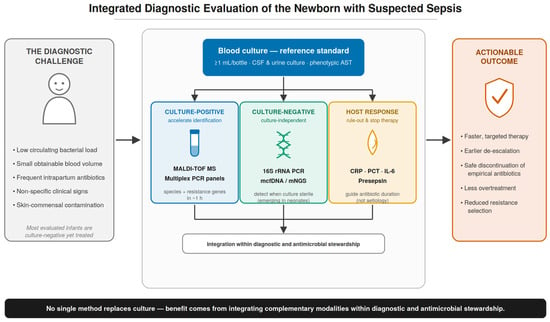
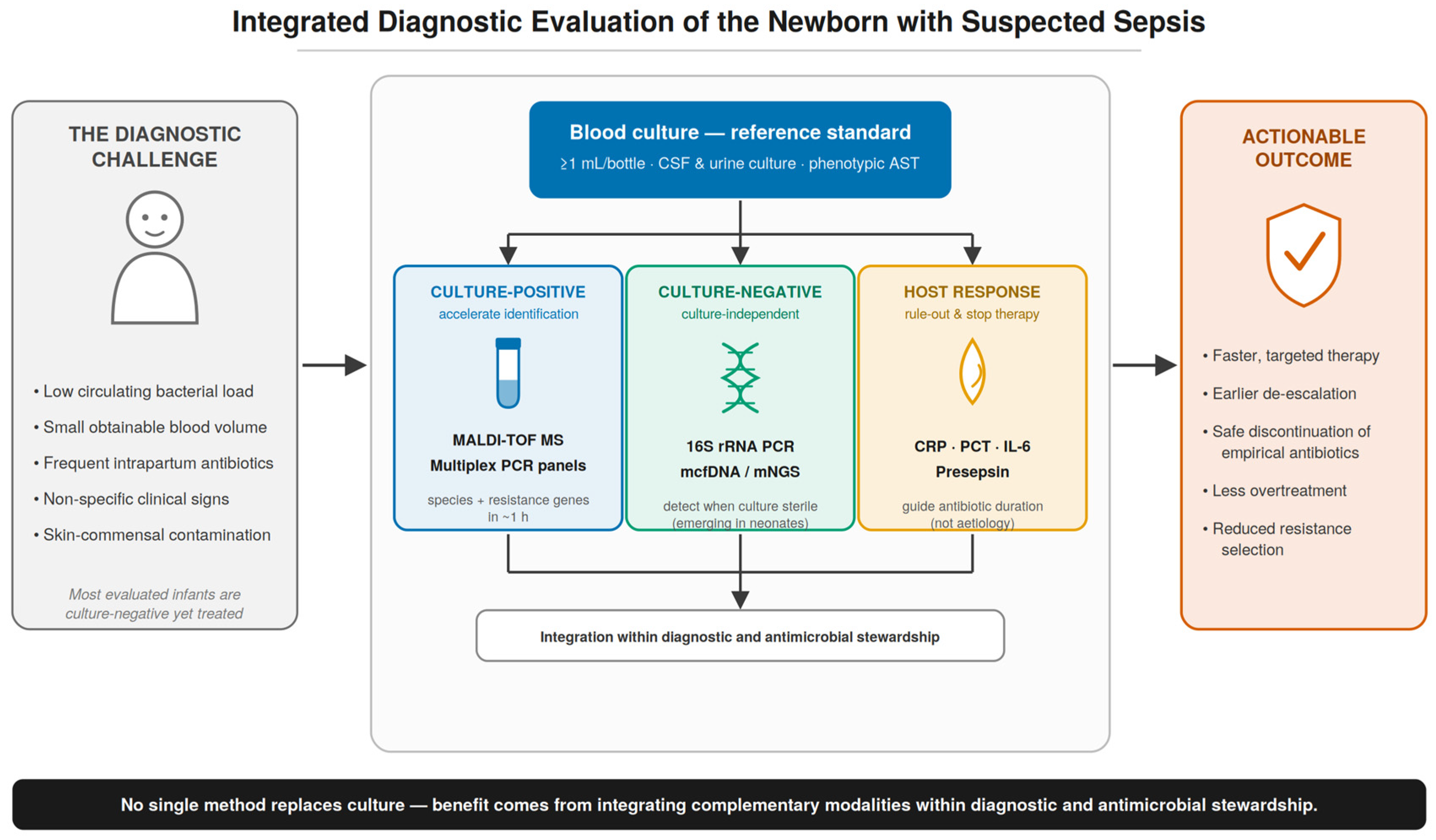
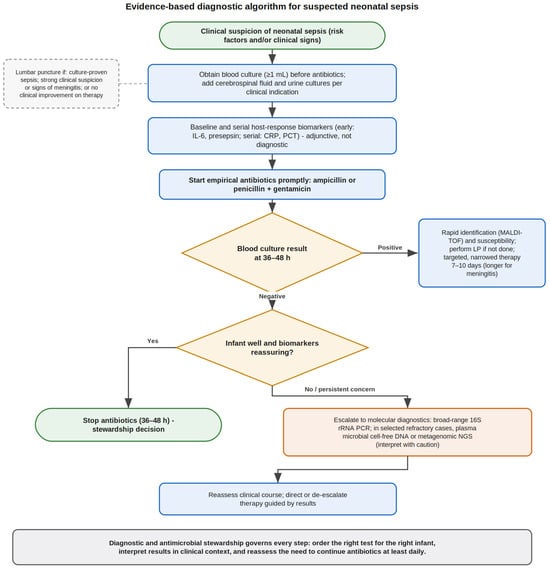
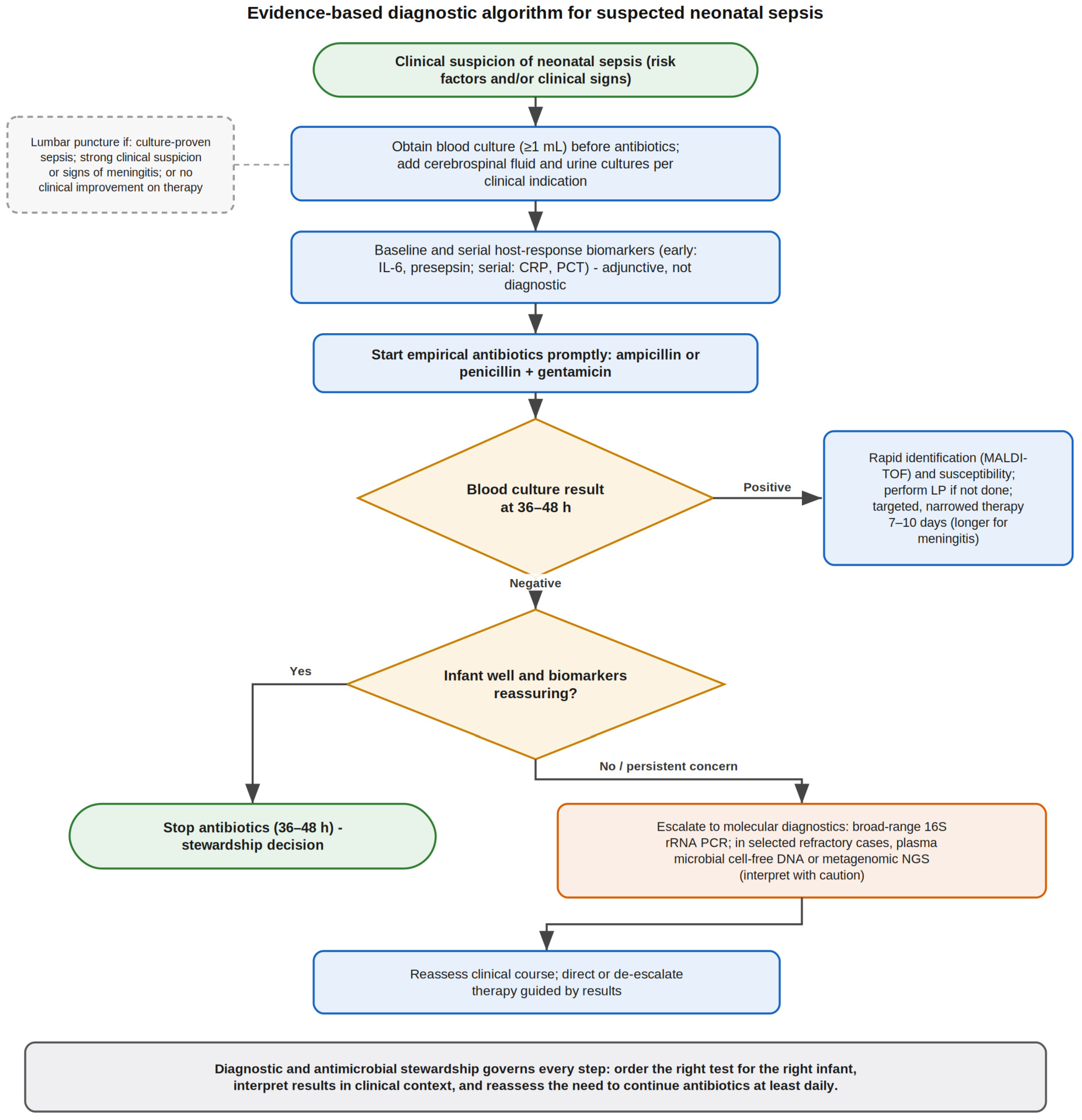
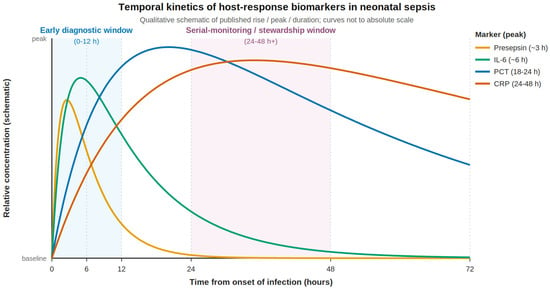
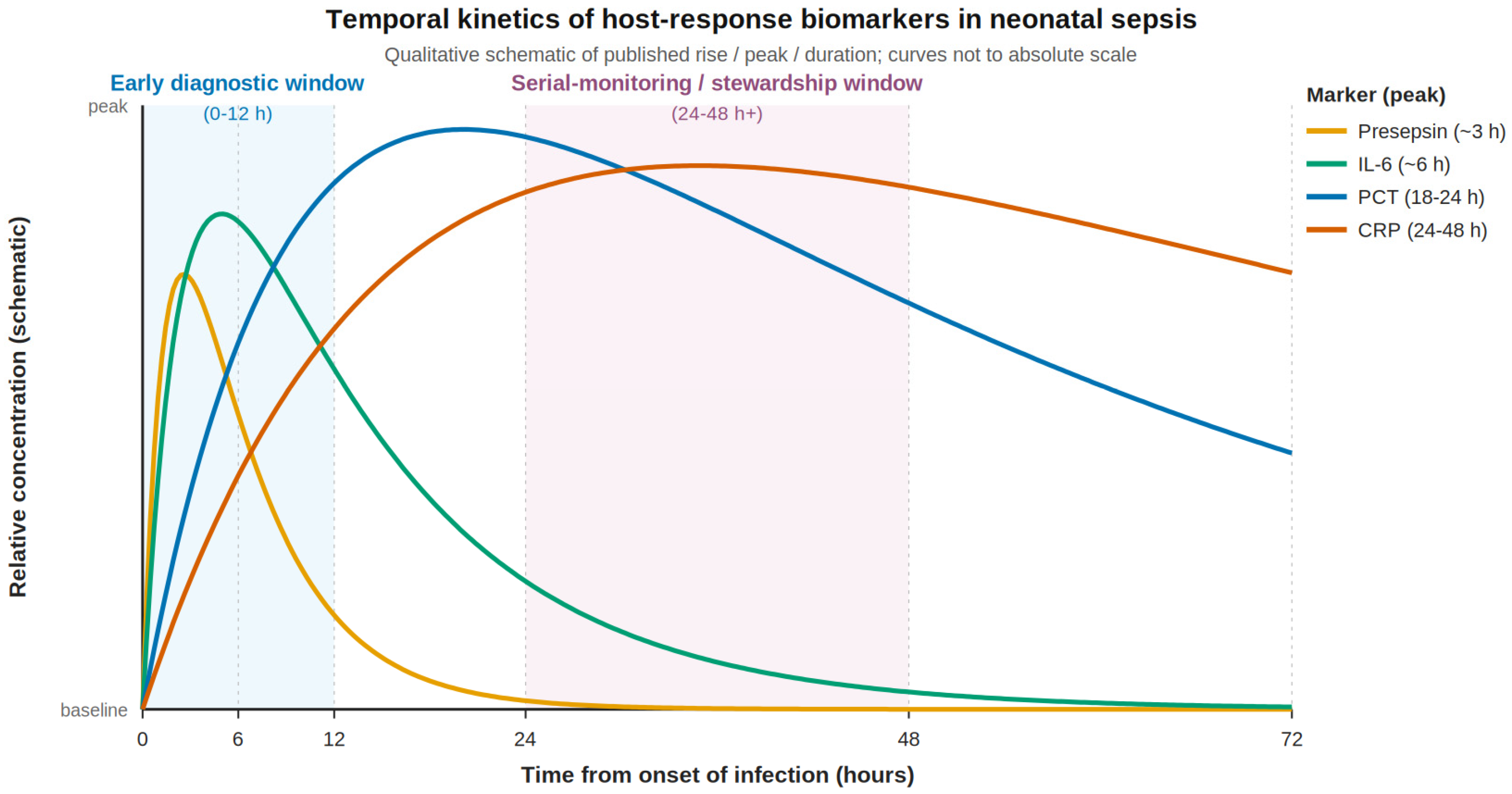

Disclaimer/Publisher’s Note: The statements, opinions and data contained in all publications are solely those of the individual author(s) and contributor(s) and not of MDPI and/or the editor(s). MDPI and/or the editor(s) disclaim responsibility for any injury to people or property resulting from any ideas, methods, instructions or products referred to in the content. |
© 2026 by the authors. Published by MDPI on behalf of the Hellenic Society for Microbiology. Licensee MDPI, Basel, Switzerland. This article is an open access article distributed under the terms and conditions of the Creative Commons Attribution (CC BY) license.