


Abstract
Introduction: Crimean–Congo hemorrhagic fever (CCHF) poses a significant health threat and is an acute, potentially fatal tick-borne disease. The disease is endemic in Oman, and is characterized by periods of increased case numbers, particularly linked to specific times of the year and high-risk activities. We review the epidemiology of CCHF in Oman and propose future strategies to address it. Methods: A retrospective descriptive epidemiological method was used to assess all confirmed national surveillance cases of CCHF reported in Oman between January 2017 and December 2024. Quantitative data were analyzed to generate frequencies, percentages, incidence, and case-fatality rates. Results: A total of 64 confirmed cases of CCHF were reported between 2017 and 2024. CCHF incidence fluctuated, peaking in 2019 (0.411 per 100,000 population) and reaching a low in 2021 (0.044 per 100,000 population), before rising again in 2024 (0.16 per 100,000 population). The overall case-fatality rate was 20.8%. There was a male predominance (87.5%), with 56% of the cases occurring in the 30–44 age group, and 65% of infections in 2022 linked to animal slaughter during Eid al-Adha. Conclusions: The rise in CCHF underscores specific preventive strategies, such as enhanced surveillance, utilization of personal protective equipment, regulation of slaughter practices, and public awareness initiatives during periods of elevated risk.
1. Introduction
Crimean–Congo Hemorrhagic Fever (CCHF) is a tick-borne viral zoonosis caused by the CCHF virus (Nairovirus genus, Bunyaviridae family), transmitted to humans via infected Hyalomma ticks or direct contact with blood/tissues from infected animals or persons [1]. The disease causes severe hemorrhagic illness with a case-fatality rate of 10–40% and poses a significant public health threat due to its epidemic potential, lack of specific antiviral therapy, and risk of nosocomial transmission [2].
Globally, CCHF remains endemic across >30 countries in Africa, Asia, and Eastern Europe, with case-fatality rates typically ranging from 10% to 40% depending on healthcare capacity, timeliness of diagnosis, and viral strain [1]. Furthermore, globally, the outbreaks often coincide with agricultural and animal-handling activities [3]. Regional endemicity is well documented in the United Arab Emirates, Saudi Arabia, and Kuwait [4].
In Oman, CCHF was first identified in 1995 [5], and a 1995–1996 sero-survey detected antibodies in 22% (108/489) of domestic animals and in 30.3% of non-Omani versus 2.4% of Omani workers in animal-handling occupations [5]. Subsequent surveys reported 7.1% sero-prevalence in camels (2013–2014) [6]. Human cases were first recorded in August 1996 and have totaled over 84 nationwide since 2011 [7,8] with seasonal peaks during Eid al-Adha and spring, mirroring regional patterns [8,9].
Seasonal CCHF peaks in April and August correspond with heightened Hyalomma anatolicum and Hyalomma marginatum activity during warm, humid periods (25–35 °C), with highest tick densities in Oman among Dhofar and Al Buraymi governorates, mirroring human incidence patterns [5].
Despite this historical burden, current epidemiological data on CCHF in Oman remain limited. This study characterizes CCHF patterns and trends in Oman (2017–2024), focusing on demographic distribution, seasonal variation, and risk factors, to inform targeted public health interventions and strengthen preventive strategies.
2. Methods
2.1. Study Design and Setting
A retrospective descriptive epidemiological study was conducted to analyze all confirmed cases of CCHF reported to the national communicable disease surveillance system in Oman between January 2017 and December 2024.
2.2. Data Sources
Case-level data were obtained from the Ministry of Health’s (MoH) national communicable disease surveillance system. The dataset included demographic variables (age, sex, nationality, and governorate of residence), epidemiological information (exposure history), clinical presentation (symptoms, outcomes), and laboratory confirmation status. Additional information was extracted from case investigation forms, laboratory records, and the central epidemiological database. Population denominators for incidence rate calculations were sourced from the National Centre for Statistics and Information (NCSI), Oman.
2.3. Case Definition
The case definition followed the MoH Oman Communicable Disease Control (CDC) manual, in alignment with World Health Organization (WHO) criteria. A confirmed case was defined as an individual presenting with acute febrile illness and hemorrhagic manifestations, with laboratory confirmation of CCHF virus infection by reverse transcription polymerase chain reaction (RT-PCR) or enzyme-linked immunosorbent assay (ELISA) for IgM and/or IgG antibodies.
2.4. Exposure Classification
Exposure categories were based on standardized national reporting forms and included (1) animal slaughter, (2) animal handling, (3) tick bite, (4) contact with a confirmed human case, and (5) unknown exposure source.
2.5. Data Analysis
Data were analyzed using Microsoft Excel 2016. Descriptive statistics (frequencies, percentages) were generated for categorical variables, while incidence rates and case-fatality rates (CFRs) were calculated using population data from NCSI. Temporal trends were examined by year and month of symptom onset, and geographic distribution was mapped by calculating incidence and mortality rates per 100,000 population for each governorate. Data are presented as means +/− standard deviation (SD).
2.6. Ethical Considerations
Ethical approval was not required as the study utilized anonymized secondary surveillance data available in the public domain. The analysis adhered to the principles of the Declaration of Helsinki.
3. Results
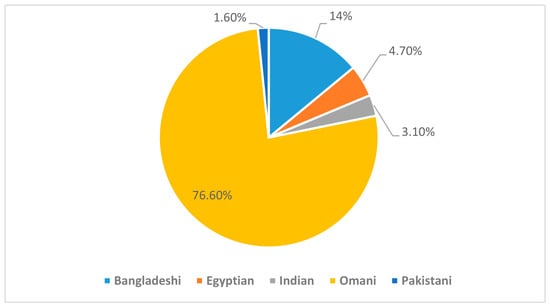
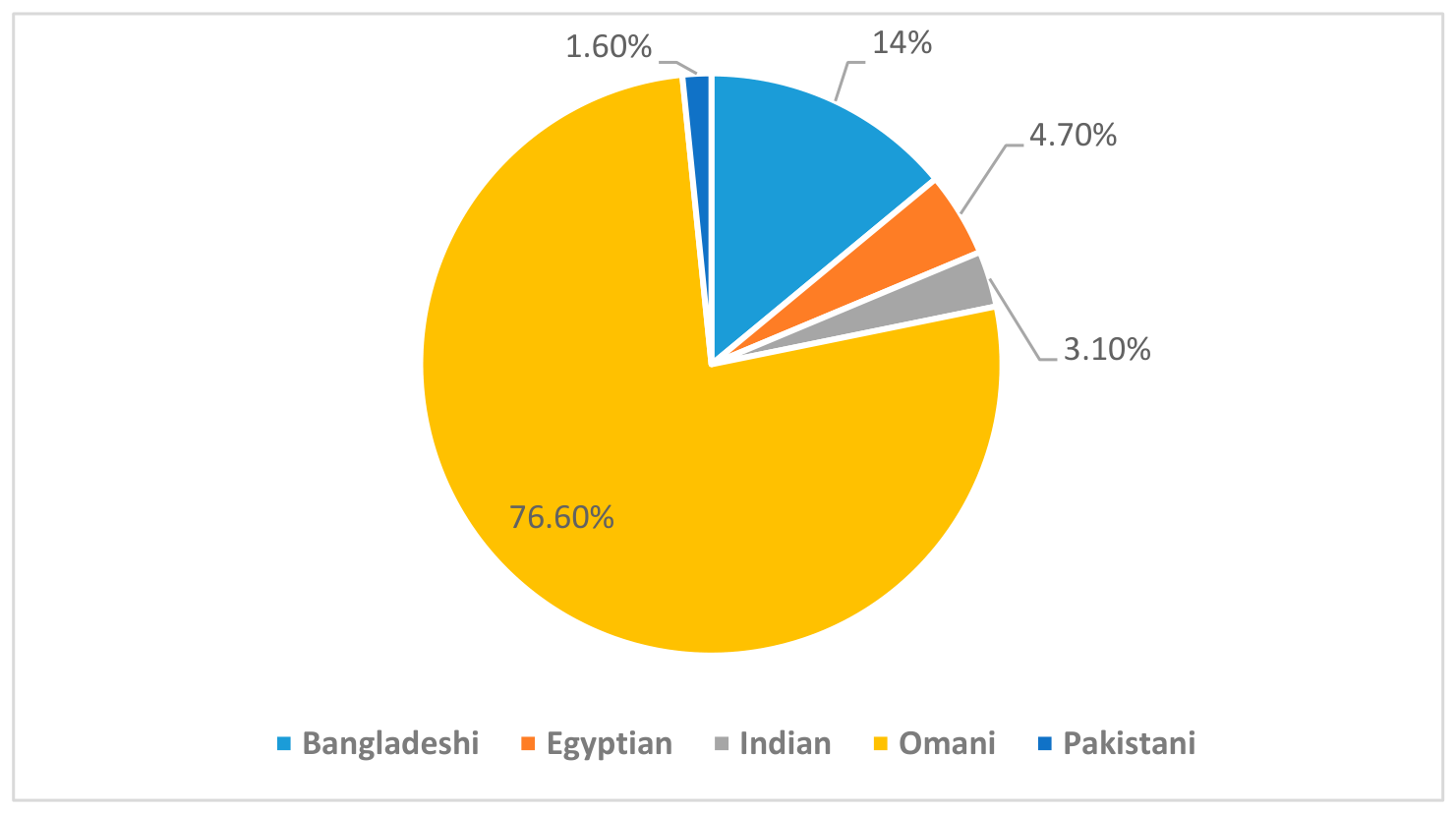
Between January 2017 and December 2024, 64 confirmed cases of CCHF were reported in Oman. Most cases were among Omani citizens (n = 49, 76.6%) with fewer cases in non-Omani citizens (n = 15, 23.4%) (Figure 1).
Figure 1.
Nationality wise of CCHF cases in Oman, 2017–2024 (n = 64 cases).
The mean age of cases was 36.5 years (SD ±12). Most cases occurred in the 30–44-year age group (56.25%), followed by age groups 15–29 years (25%), 45–60 years (12.5%), and over 60 years (4.7%). Furthermore, in the age distribution with n = 52, 81.25% of cases occurred in individuals aged 15–44 years. The overall case-fatality rate (CFR) was 20.8% (15 deaths), with the majority of fatalities (73%) occurring in the 30–44-year age group. There was a male predominance, with 56 cases (87.5%) occurring in males. These are shown in Table 1.
Table 1.
Frequency distribution of demographic features of patients with CCHF.
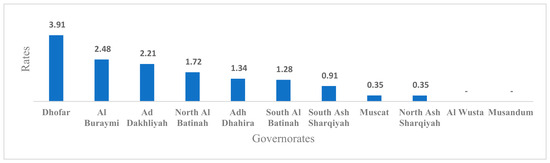
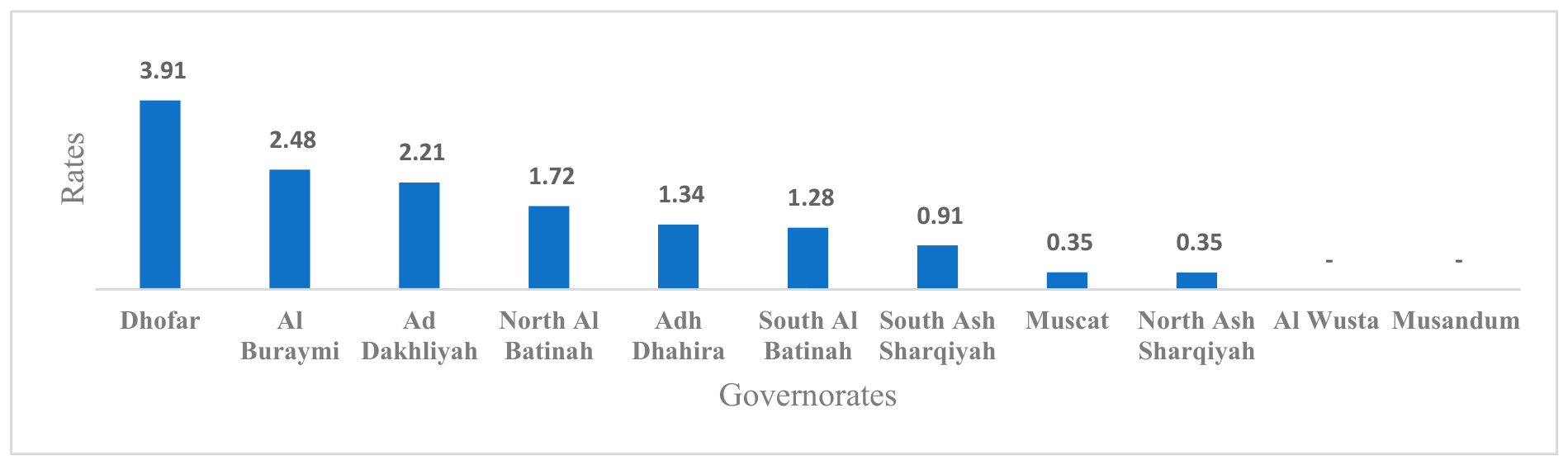
Cases were reported from multiple governorates, with Dhofar accounting for the highest proportion (28%) and the highest incidence rate (3.91 per 100,000 population), followed by Al Buraymi (2.48 per 100,000 population) and Ad Dakhliyah (2.21 per 100,000 population) (Figure 2).
Figure 2.
CCHF attack rate among governorates, Oman.
3.1. Trends of CCHF
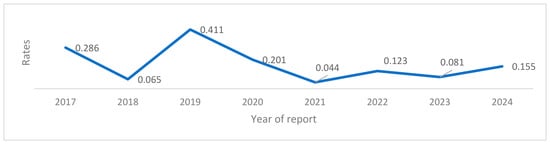
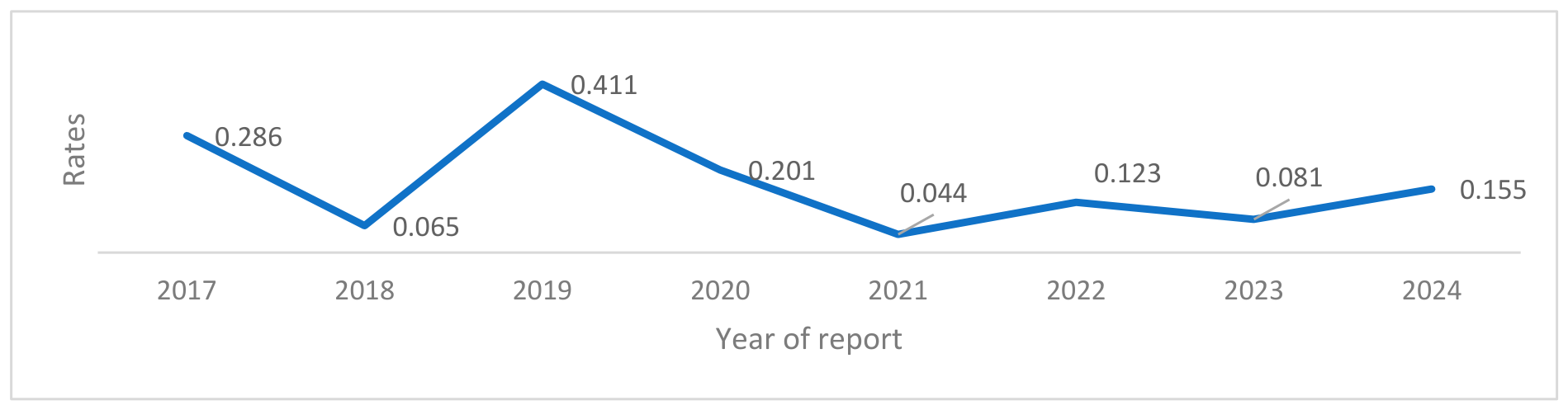
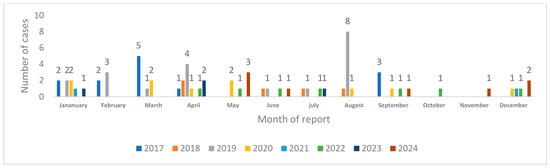
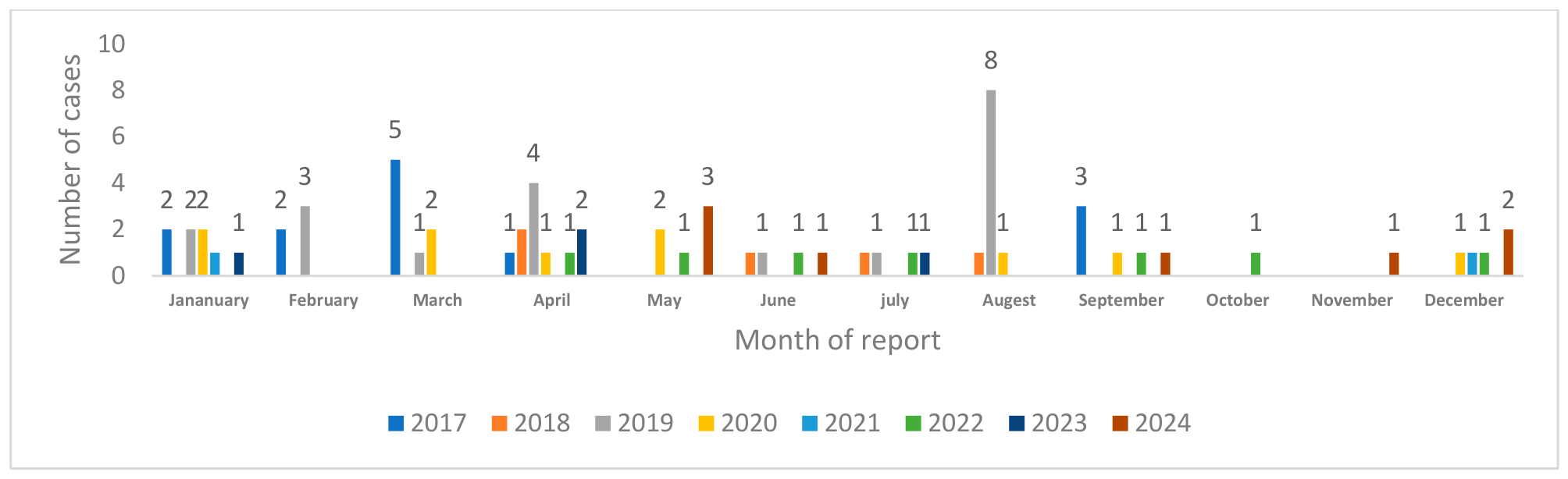
Annual incidence rates fluctuated over the study period, peaking in 2019 (0.411 per 100,000) and declining to a low in 2021 (0.044 per 100,000) before rising again in 2024 (0.155 per 100,000) (Figure 3). Seasonal peaks were observed in April and August, coinciding with increased animal slaughter activities, including during Eid al-Adha (Figure 4).
Figure 3.
Incidence rate of CCHF in Oman per 100,000 per year, 2017–2024 (n = 64 cases).
Figure 4.
Monthly distribution of CCHF cases in Oman, 2017–2024 (n = 64).
3.2. Exposure Activity and Clinical Presentation
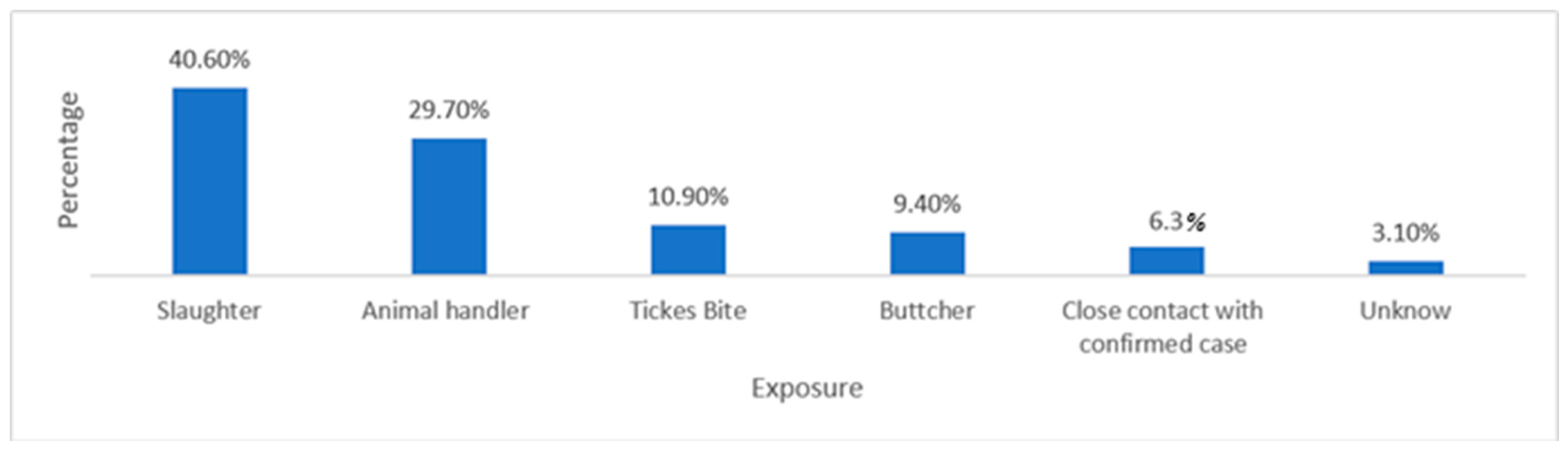
The most common reported exposure was animal slaughter (41%), followed by animal handling (30%). Other exposures included tick bites, butchery work, and contact with confirmed human cases. The most frequently reported symptoms were fever (96%), body aches (39%), nausea/vomiting (38%), and bleeding manifestations (36%) (Table 2).
Table 2.
Reported exposures and clinical presentations among confirmed CCHF cases (n = 64), Oman, 2017–2024.
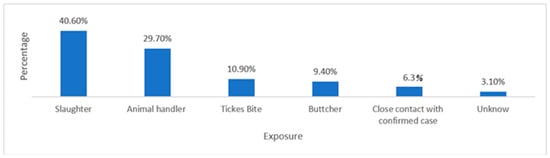
Figure 5 shows that animal slaughter (n = 26, 40.6%) and animal handling (n = 19, 29.7%) are the dominant risk factors of CCHF in Oman.
Figure 5.
Exposure status of CCHF cases in Oman, 2017–2024 (n = 64).
4. Discussion
This study provides an updated epidemiological profile of CCHF in Oman between 2017 and 2024, demonstrating both consistencies with regional and global patterns and distinct local characteristics that shape disease transmission and outcomes. The high male predominance (88%) aligns with findings from endemic regions such as Turkey [10], Iran [11], and Pakistan [12], where men are more likely to be involved in animal husbandry, slaughtering, and agricultural work activities that increase exposure to infected animals and tick bites.
The age distribution, with 81.25% of cases occurring in individuals aged 15–44 years, reflects an occupational exposure risk among working-age adults—a pattern documented in recent outbreaks in Iraq and Afghanistan [13]. The case-fatality rate (CFR) of 20.8% observed in Oman is comparable to reports from Pakistan (up to 25%) [14], but higher than the global average (~10–15%) [15], possibly reflecting delayed diagnosis, limited access to intensive care in high-incidence governorates, and under-recognition of milder cases that survive without hospitalization.
Seasonal peaks observed in April and August are likely linked to environmental factors such as increased Hyalomma tick activity during warmer months, a phenomenon validated by vector ecology studies in the Middle East and North Africa [2]. Moreover, the association between increased CCHF incidence and Eid-related animal slaughtering has been reported in Oman previously [5], and was also documented in recent outbreaks in Sudan and Saudi Arabia [16], underlining the need for heightened surveillance and preventive measures during these periods. These findings emphasize the occupational and seasonal determinants of CCHF transmission in Oman and highlight the importance of targeted awareness, timely diagnosis, and intervention strategies to mitigate its public health impact.
Exposure histories showed that animal slaughter (41%) and animal handling (30%) were the dominant risk factors, consistent with findings from Iran and Turkey [10,11]. The proportion of cases linked to tick bites (10.9%) was lower than in rural African settings [17] possibly reflecting differences in occupational exposure and reporting. The clinical presentation was dominated by fever (96%), followed by body aches, nausea/vomiting, and bleeding, consistent with WHO case definitions and regional reports [18]. The predominance of animal slaughter and handling as primary exposure routes in Oman aligns with epidemiological patterns documented in Iran and Turkey, confirming occupational zoonotic transmission as the dominant driver of CCHF in the Eastern Mediterranean region [10,11]. These findings prove the imperative for targeted, evidence-based interventions—including risk communication for high-risk occupational groups, enhanced clinical surveillance, and formalized One Health coordination between human and veterinary sectors—to mitigate transmission and reduce disease burden.
To successfully mitigate CCHF transmission, Oman has to enhance targeted monitoring during Eid, including educating livestock workers on the use of personal protective equipment (PPE) and safe animal handling and training physicians for prompt inspection of cases. In addition, establishing robust One Health frameworks, improving community tick prevention programs, and facilitating regional data interchange are essential priorities for ongoing public health.
Study Limitations
This study presents certain limitations. Firstly, analysis relied on retrospective national surveillance data, which could be influenced by underreporting and misclassification bias, especially concerning mild or subclinical cases that go unnoticed within the health system. Secondly, the data on exposure history were obtained from case investigation forms and were primarily reliant on self-reporting, which introduces the potential for recall bias and incomplete identification of risk factors. Third, the absence of detailed clinical and treatment-related data limited a thorough evaluation of disease progression, therapeutic interventions, and their effects on patient outcomes. Fourth, variations in diagnostic capabilities and reporting methods among governorates may have impacted case detection, possibly leading to delays or inconsistencies in identifying cases in more remote areas. Ultimately, the limited number of confirmed cases throughout the study period restricted the statistical power necessary to identify subtle temporal or geographic trends, thus limiting the applicability of the findings to larger populations.
5. Conclusions
The rise in findings of CCHF in Oman highlight the occupational, seasonal, and geographic determinants of CCHF in Oman. Control strategies must therefore integrate targeted education for high-risk groups, enhanced surveillance during seasonal peaks, and strengthened coordination between human and animal health sectors in line with the One Health approach.
Author Contributions
Conceptualization, S.A.B., M.A.T., S.A.M. and S.T.A.A.; Methodology, S.A.B., M.A.T., S.A.M., K.D. and S.T.A.A.; Validation, S.A.B., M.A.T., S.A.M., K.D. and S.T.A.A.; Formal analysis, S.A.B., M.A.T. and S.T.A.A.; Investigation, S.T.A.A.; Data curation, S.A.B., M.A.T., S.A.M., K.D. and S.T.A.A.; Writing—original draft, S.A.B., M.A.T., S.A.M., K.D. and S.T.A.A.; Writing—eview & editing, S.A.B., S.A.M. and S.T.A.A.; Supervision, S.A.B., M.A.T. and S.T.A.A.; Project administration, S.T.A.A. All authors have read and agreed to the published version of the manuscript.
Funding
This research received no external funding.
Institutional Review Board Statement
Ethical review and approval were waived for this study the reason that data collected did not include human subjects in terms of interviews or the use of patients’ personal data files. The researchers used extant data and information extracted the information from sources that had already been published in an official domain and adheres to the Declaration of Helsinki.
Informed Consent Statement
Patient consent was waived due the research did not involve any way in contact with patients, i.e., using patients’ files. The data were part of the national surveillance data published in the public domain regularly.
Data Availability Statement
The original data presented in the study are openly available in Annual Health Report 2024 at https://moh.gov.om/en/statistics/annual-health-reports/annual-health-report-2024/ (accessed on 31 August 2025).
Acknowledgments
I want to acknowledge the staff in the Communicable Diseases department for providing access to surveillance data and their technical support. Special thanks are due to the surveillance staff for their collaboration in zoonotic disease control.
Conflicts of Interest
The authors declare no conflicts of interest.
References
- World Health Organization, Regional Office for the Eastern Mediterranean. Crimean-Congo Haemorrhagic Fever (CCHF). Available online: https://www.emro.who.int/health-topics/crimean-congo-haemorrhagic-fever/index.html (accessed on 24 May 2025).
- Frank, M.G.; Weaver, G.; Raabe, V. Crimean-Congo hemorrhagic fever virus for clinicians—Epidemiology, clinical manifestations, and prevention. Emerg. Infect. Dis. 2024, 30, 854–863. [Google Scholar] [CrossRef] [Scilit] [PubMed]
- Riccò, M.; Baldassarre, A.; Corrado, S.; Bottazzoli, M.; Marchesi, F. Seroprevalence of Crimean Congo Hemorrhagic Fever Virus in Occupational Settings: Systematic Review and Meta-Analysis. Trop. Med. Infect. Dis. 2023, 8, 452. [Google Scholar] [CrossRef] [Scilit] [PubMed]
- Perveen, N.; Khan, G. Crimean–Congo hemorrhagic fever in the Arab world: A systematic review. Front. Vet. Sci. 2022, 9, 938601. [Google Scholar] [CrossRef] [Scilit] [PubMed]
- Al-Abri, S.S.; Hewson, R.; Al-Kindi, H.; Al-Abaidani, I.; Al-Jardani, A.; Al-Maani, A.; Almahrouqi, S.; Atkinson, B.; Al-Wahaibi, A.; Al-Rawahi, B.; et al. Clinical and molecular epidemiology of Crimean-Congo hemorrhagic fever in Oman. PLoS Neglected Trop. Dis. 2019, 13, e0007100. [Google Scholar] [CrossRef] [Scilit] [PubMed]
- Body, M.H.H.; ALrawahi, A.H.; Hussain, H.M.; Ahmed, M.S.; ALHabsi, S.S.; Al-Maklady, S.; Al-Maewaly, M.; Rajamony, S. Cross-sectional survey of Crimean-Congo hemorrhagic fever virus in the sultanate of Oman. J. Vet. Med. Anim. Health 2016, 8, 41–49. [Google Scholar] [CrossRef] [Scilit]
- Al-Zadjali, M.; Al-Hashim, H.; Al-Ghilani, M.; Balkhiar, A. A case of Crimean-Congo hemorrhagic fever in Oman. Oman Med. J. 2013, 28, 210–212. [Google Scholar] [CrossRef] [Scilit] [PubMed]
- Al-Awaidy, S.; Al-Hashami, H. Zoonotic diseases in Oman: Successes, challenges, and future directions. Vector Borne Zoonotic Dis. 2020, 20, 25–30. [Google Scholar] [CrossRef] [Scilit]
- Hamdard, E.; Zahir, A.; Karwand, B.; Nazari, Z.U.; Shi, F. Silent public threat: Crimean-Congo hemorrhagic fever outbreak spikes during Eid-al-Adha in Afghanistan (Reported cases to National Surveillance System, 2015–2024). J. Infect. Public Health 2024, 18, 102591. [Google Scholar] [PubMed]
- Yılmaz, A.; Çiçek, M. Determination of seroprevalence and risk factors of Crimean–Congo haemorrhagic fever (CCHF) in the endemic region in Turkey: A population-based cross-sectional study. J. Trop. Med. 2021, 2021, 9945089. [Google Scholar]
- Tabatabaei, S.M.; Hosseini, S.M.; Mostafavi, E. Tick borne Crimean-Congo haemorrhagic fever in Fars Province, Southern Iran: Epidemiologic characteristics and vector surveillance. Pak. J. Biol. Sci. 2006, 9, 2681–2684. [Google Scholar] [CrossRef] [Scilit]
- Abid, M.A.; Farooqi, J.; Ghanchi, N.; Owais, R.; Sadiqa, A.; Shafaq, H.; Khan, E. Spatio-temporal distribution of Crimean-Congo Hemorrhagic Fever and its relationship with climate factors in Pakistan: A decade-long experience from tertiary care laboratory network. PLoS ONE 2025, 20, e0320495. [Google Scholar] [CrossRef] [Scilit] [PubMed]
- Qaderi, S.; Mardani, M.; Shah, A.; Shah, J.; Bazgir, N.; Sayad, J.; Ghandchi, E.; Samsami, M.; Bagherpour, J.Z. Crimean-Congo Hemorrhagic Fever (CCHF) in Afghanistan: A retrospective single center study. Int. J. Infect. Dis. 2021, 103, 323–328. [Google Scholar] [CrossRef] [Scilit] [PubMed]
- Ali, S.; Khan, M.; Ullah, R. The new wave of Congo virus in Pakistan: Emerging threat. Trop. Med. Health 2023, 51, 62. [Google Scholar] [CrossRef] [Scilit]
- Belobo, J.T.E.; Kenmoe, S.; Kengne-Nde, C.; Emoh, C.P.D.; Bowo-Ngandji, A.; Tchatchouang, S.; Sowe Wobessi, J.N.; Mbongue Mikangue, C.A.; Tazokong, H.R.; Kingue Bebey, S.R.; et al. Worldwide epidemiology of Crimean-Congo Hemorrhagic Fever Virus in humans, ticks and other animal species, a systematic review and meta-analysis. PLoS Neglected Trop. Dis. 2021, 15, e0009299. [Google Scholar] [CrossRef] [Scilit]
- Sahito, A.M.; Mir, S.L.; Waseem, M.; Awan, M.A.E.; Shaikh, S.; Essar, M.Y. The possibility of the emergence of Crimean-Congo virus cases during Eid ul Adha: A troubling situation during a blessed festival. Ann. Med. Surg. 2022, 81, 104379. [Google Scholar] [CrossRef] [Scilit]
- Mirembe, B.B.; Musewa, A.; Kadobera, D.; Kisaakye, E.; Birungi, D.; Eurien, D.; Nyakarahuka, L.; Balinandi, S.; Tumusiime, A.; Kyondo, J.; et al. Sporadic outbreaks of Crimean-Congo haemorrhagic fever in Uganda, July 2018–January 2019. PLoS Neglected Trop. Dis. 2021, 15, e0009213. [Google Scholar] [CrossRef] [Scilit]
- World Health Organization. Crimean-Congo Haemorrhagic Fever (CCHF)—Symptoms and Treatment; WHO: Geneva, Switzerland, 2019; Available online: https://www.who.int/news-room/fact-sheets/detail/crimean-congo-haemorrhagic-fever (accessed on 3 May 2025).

Disclaimer/Publisher’s Note: The statements, opinions and data contained in all publications are solely those of the individual author(s) and contributor(s) and not of MDPI and/or the editor(s). MDPI and/or the editor(s) disclaim responsibility for any injury to people or property resulting from any ideas, methods, instructions or products referred to in the content. |
© 2026 by the authors. Published by MDPI on behalf of the Oman Medical Association. Licensee MDPI, Basel, Switzerland. This article is an open access article distributed under the terms and conditions of the Creative Commons Attribution (CC BY) license.