


Abstract
Rural hospitals are essential access points for healthcare delivery in the United States, yet they continue to experience disproportionate rates of closure and service disruption that threaten community health, economic stability, and equity. This rapid systematic review synthesizes recent peer-reviewed evidence examining rural hospital closures and service disruptions, with emphasis on financial, policy, workforce, and performance-related factors and their downstream impacts. Guided by PRISMA methodology, four databases were searched for U.S.-based studies published between January 2024 and June 2025. Following screening and consensus-based review, 59 articles met inclusion criteria. Across studies, financial vulnerability, characterized by revenue instability, low patient volumes, unfavorable payer mix, and reliance on non-operating revenue, emerged as a dominant precursor to closure and service reductions. Policy context, particularly Medicaid expansion status, telehealth and broadband infrastructure, and reimbursement adequacy, strongly shaped hospital sustainability. Closures and service disruptions were consistently associated with increased travel distances, reduced access to maternal, surgical, mental health, and chronic care services, higher prices at surviving hospitals, and increased strain on remaining providers. Workforce shortages further compounded these challenges. Collectively, findings demonstrate that rural hospital closures reflect interconnected structural weaknesses rather than isolated organizational failure. Coordinated policy action, targeted financial stabilization, workforce development, and technology-enabled care models are necessary to mitigate continued erosion of rural healthcare access.
1. Introduction
1.1. Rationale
Rural hospitals play a critical role in ensuring access to essential healthcare services for nearly 60 million Americans living in rural and frontier communities across the United States. Beyond providing acute and preventive care, rural hospitals serve as economic anchors, major employers, and hubs for public health preparedness within their communities [1]. Despite this essential role, rural hospitals have faced mounting financial, operational, and workforce pressures over the past decade, resulting in an accelerating pattern of hospital closures and service disruptions. In the rural hospital setting, service disruptions refer broadly to any reduction, reconfiguration, pause or loss of healthcare services that limits the availability, accessibility, timeliness, or continuity of care for any given population [1,2]. This includes not only full hospital closures, but also partial or incremental changes such as the elimination of key service lines (for example, obstetrics, emergency services, or surgery), reduced hours of operation, diversion of patients, staffing shortages that constrain capacity, temporary suspensions of services, or the transition of facilities to alternative care models (such as outpatient-only or rural emergency hospital designations). Service disruptions may be episodic or sustained and often reflect underlying financial, workforce, policy, or operational pressures, with significant implications for care access, patient outcomes, and health equity in rural communities. These trends have intensified in recent years due to compounding factors such as reimbursement instability, declining patient volumes, workforce shortages, uneven Medicaid expansion, and system-level shocks including the COVID-19 pandemic and cybersecurity threats [1,2,3].
While prior studies have examined rural hospital closures, the rapidly evolving healthcare policy environment, coupled with emerging financial, workforce, and technological stressors, has created a need for an updated and focused synthesis of the literature. Recent federal and state policy changes, including new rural hospital designations, reimbursement adjustments, and targeted stabilization programs, alongside the post-pandemic transition from Coronavirus Disease relief funding, have substantially altered the operating landscape for rural hospitals in the United States. Earlier reviews, conducted prior to these developments, are therefore limited in their ability to reflect current conditions, including increased financial volatility, workforce constraints, and especially ongoing, evolving care delivery models such as telehealth expansion and hospital restructuring or conversion.
Existing reviews often emphasize isolated factors, such as financial performance or workforce shortages, without fully integrating how recent policy shifts, service reductions, and organizational vulnerabilities intersect to influence hospital viability. Also, evolving definitions of access loss or “care deserts,” partial closures, and service line discontinuations have gained greater prominence but remain inconsistently examined, despite their significant implications for access, outcomes, and health equity in rural populations. Service disruptions that fall short of full hospital closure, including the loss of obstetric, surgical, or emergency services, are particularly underrepresented in earlier literature. Such industry-specific segmentation of prior reviews and their findings, in conjunction with ongoing policy changes and emerging financial, workforce, and technology initiatives, creates the need for a current and timely assessment to inform industry decision-making.
Given these limitations, a rapid review approach allows for a timely synthesis of the most recent evidence, incorporating newly available data sources and reflecting the current policy and operational environment. Focusing on the January 2024 through June 2025 period enables a more accurate assessment of emerging trends and supports more relevant policy discussions and organizational decision-making during a period of ongoing rural healthcare transformation. The review was not registered and a protocol was not prepared because it was conducted primarily as a preliminary investigation into rural hospitals, using more recent and current publications on closures and related terms to identify knowledge gaps and inform areas for future research in this field.
1.2. Objectives
The objective of this systematic rapid review is to synthesize peer-reviewed literature addressing rural hospital closures and service disruptions in the United States, with a specific focus on identifying underlying financial, policy, workforce, and performance-related factors associated with these events. This review aims to (1) characterize common financial and operational conditions preceding rural hospital closures or service reductions; (2) examine the role of federal and state health policy, including Medicaid expansion, telehealth policy, and infrastructure investment, in shaping rural hospital sustainability; and (3) assess the documented impacts of closures and service disruptions on healthcare access, costs, workforce capacity, and patient outcomes. By consolidating current evidence across these domains, this review seeks to inform policymakers, healthcare leaders, and researchers about the systemic challenges facing rural hospitals and to highlight opportunities for targeted, sustainable interventions to preserve access to care in rural communities.
2. Materials and Methods
This systematic review was guided by the Preferred Reporting Items for Systematic Reviews and Meta-Analysis (PRISMA), and a PRISMA checklist is provided as a Supplementary Materials File S1 reference to this article. Literature for this review related to rural healthcare organizations was obtained from four separate databases: (CINAHL) Complete, Academic Search Ultimate, Business Source Ultimate via the Ebson B. Stephens Company (EBSCO host), Ipswich, MA, USA and PubMed (which queries MEDLINE). Overall, four databases were utilized to broaden the search due to an initial observation of limited publications meeting the search criteria.
The researchers focused exclusively on articles addressing rural hospital facility closures in the United States and/or those describing service disruptions within the rural healthcare industry. Boolean search operators were used to ensure appropriate combinations of words and phrases captured all relevant literature, including follow-on “exploded” terminology specific to rural healthcare and related organizations. Search terms within the search string were truncated using an asterisk to allow inclusion of multiple variations in each term. The final search string that produced the highest number of relevant published articles is presented in Figure 1 below:
Figure 1.
Research database search string and Boolean search operators yielding the highest database search results.
The authors clarify that, in addition to the primary search string reported in the manuscript, multiple search strings and combinations of keywords, phrases, and Boolean operators were systematically tested across databases, including the use of controlled vocabulary such as Medical Subject Headings (MeSH). These expanded strategies, however, did not yield additional eligible studies within the defined inclusion criteria. Accordingly, the final search string presented was intentionally broad in scope, allowing for a more comprehensive and less restrictive approach that was determined to be more inclusive of relevant topics and articles. The authors also acknowledge that the intentionally narrow and recent date range applied in this review, designed to capture the most current evidence, may have further limited the number of studies identified despite these broader search efforts.
2.1. Inclusion Process
To be included in the sample, publications must have occurred between 1 January 2024 and 19 June 2025. This specific publication date range criterium was utilized to ensure studies identified were appliable to the most-recent rural health organization closures or related service disruptions occurring in the rural healthcare sector. Editorials, government reports, letters to the editor, or other studies not based upon empirical evidence were not initially considered in this review. Full text was a required search criteria in the initial search criteria in order to identify only complete published articles for the review team to assess. The researchers were able to locate 100% of the final sample in full-text format for follow-on extensive review.
Studies in this review had to involve the closure of rural healthcare organizations, related occurrences, or rural health service disruptions. Qualification as a rural organization in this review initiative remained as stated/declared in the identified articles without further assessment of criterial or qualifications. Specific, recent facilitators of closure or service disruptions in the rural healthcare industry sector in the United States were intended themes to be identified, as previous reviews of literature in this specific industry segment (since 2024) remain limited.
This study’s information came from secondary data sources (library research database). All literature included in this research is publicly available and any individual research subjects (if present) are unidentifiable. As a result, this systematic review qualifies under “exempt” status in 45 Code of Federal Regulations (CFR) 46. An institutional review board review was not required, and no consent was necessary.
2.2. Exclusion Process
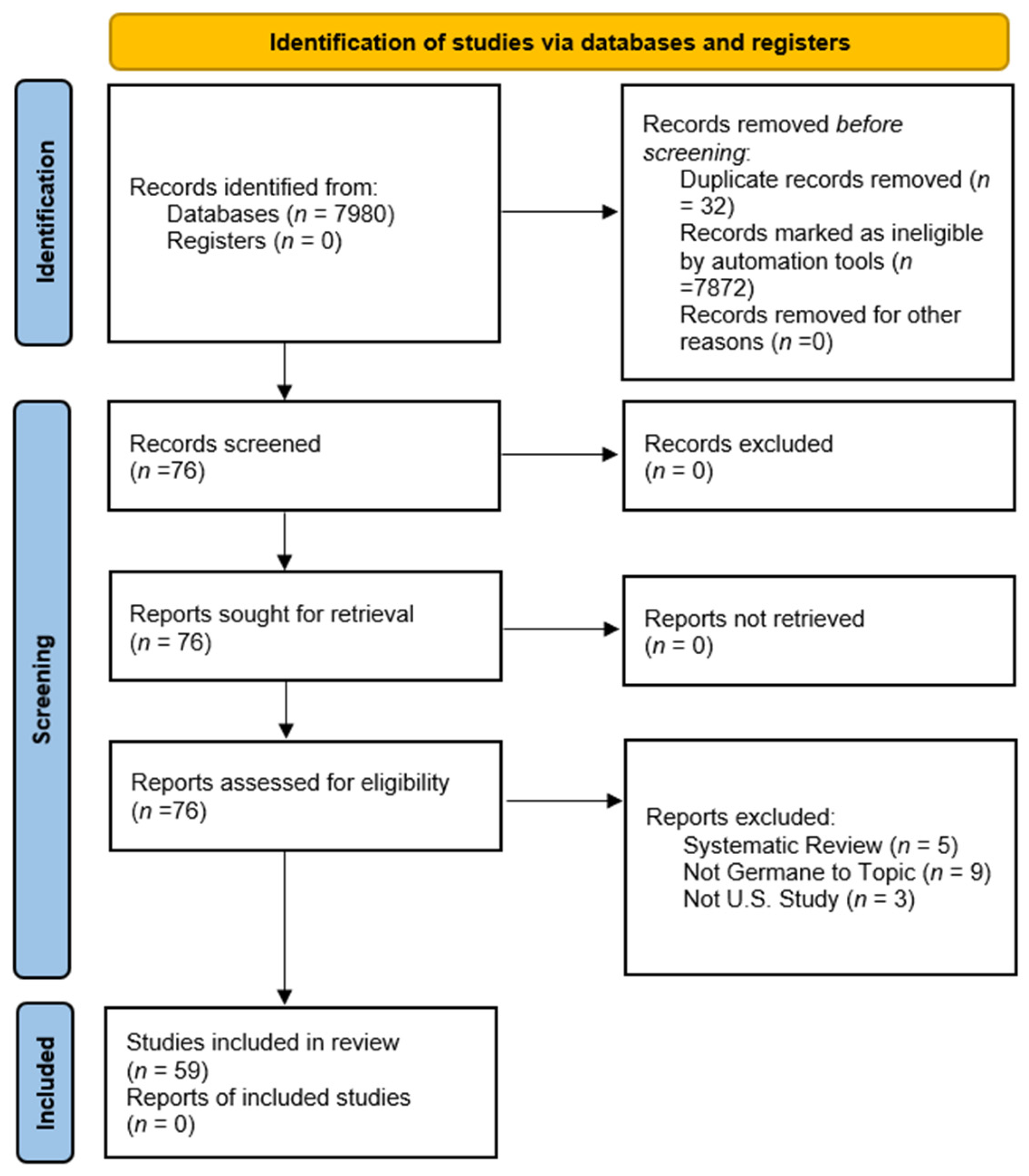
Figure 2 demonstrates the article exclusion process, beginning with the initial research database searches and concluding with the final literature sample (n = 59). Initially, 7980 articles met the primary search criteria, addressing variables related to both hospital closures (or service disruptions) and rural categorical status. Although four research databases were utilized to increase the potential literature sample size, a consequence of this approach was a high frequency of duplicate articles identified (32 total duplicates). After applying additional filters, including the study’s specified date range, rural U.S.-based hospital closures, English-language publications, and academic/peer-reviewed journals, 7872 articles were excluded, leaving 76 articles in the study sample. These remaining 76 articles were then downloaded in full text and thoroughly reviewed by the research team. All researchers independently reviewed the literature to ensure each article was germane to the study’s initiative.
Figure 2.
Preferred reporting items for systematic reviews and meta-analysis (PRISMA) figure that demonstrates the study selection process.
3. Results
Upon completion of the final screening process, the research team removed an additional 16 articles from the sample for the following reasons: systematic reviews (n = 5), not germane to rural health and/or hospital closure or service disruption (n = 9), and not U.S.-based studies (n = 3). These determinations were made through multiple research team meetings conducted via webinar, during which all authors reviewed exclusion decisions and reached full consensus (100% agreement), resulting in a finalized literature sample of 59 articles.
Table 1 also includes columns that summarize the underlying themes, or constructs, identified in the literature. Healthcare policy context, financial constraints, outcomes related to and/or contributing to hospital closures, and workforce challenges were the primary themes identified by the research team during the literature review.
Table 1.
Summary of findings (n = 59).
The research team employed a structured, multi-stage analytical approach using Microsoft Excel to systematically identify and synthesize underlying themes across the included studies. Following full-text review, key findings, variables, and outcome measures from each article were extracted into a standardized Excel matrix, with individual rows representing studies and columns capturing relevant data elements (for example, financial indicators, policy references, operational challenges, workforce factors, and service-level impacts). In an initial round of independent screening in groups of two, open coding was conducted in which the team assigned descriptive labels to each extracted finding, allowing patterns to emerge inductively across studies. These codes were then iteratively reviewed and refined through constant comparison, with similar or overlapping concepts grouped together using Excel sorting, filtering, and pivot table functions to assess frequency and co-occurrence. Throughout this process, clusters of related codes were collapsed into broader analytical categories, enabling the research team to move from granular observations to higher-order constructs. Financial duress emerged as an identifiable category capturing revenue instability, cost pressures, and margin decline; policy implications reflected regulatory changes, reimbursement shifts, and external funding influences; performance challenges encompassed operational inefficiencies, quality concerns, and organizational constraints; and service reductions and workforce shortages represented access limitations, staffing deficits, and care delivery disruptions. This systematic coding and aggregation process enhanced analytic rigor and transparency, ensuring that the four primary constructs were grounded in consistent patterns observed across the literature.
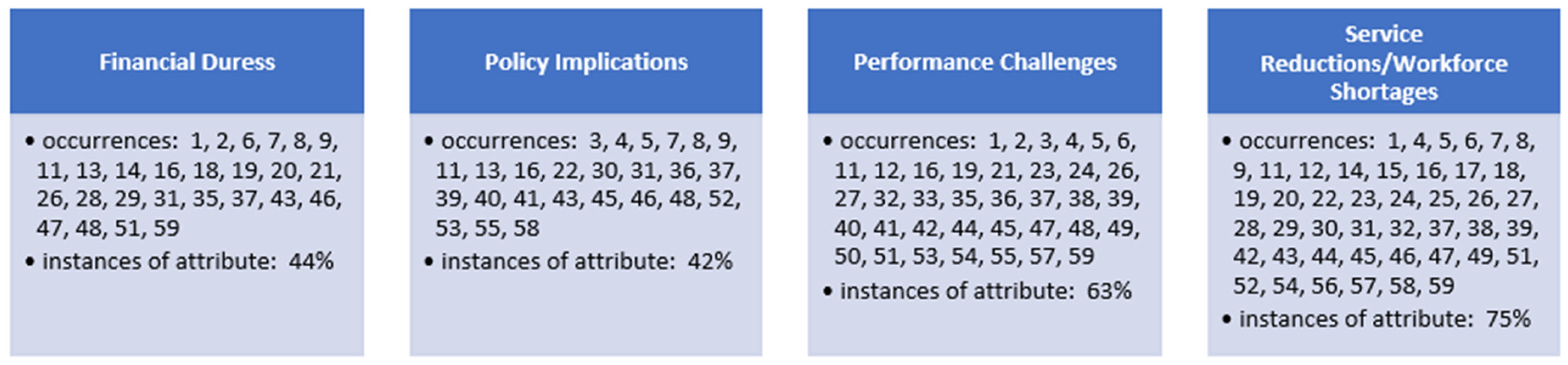
Agreement was also reached regarding cost-influencing and cost-prevention variables, as well as article assignments, or coding. All researchers were required to agree on each article’s inclusion within the relevant thematic categories. Article inclusion across thematic categories was not mutually exclusive, and a single article frequently met the criteria for multiple cost-influencing and/or cost-reducing categories (Figure 3).
Figure 3.
Occurrences of underlying themes (constructs) identified in the literature on hospital closures and/or service disruptions in rural healthcare organizations [1,2,3,4,5,6,7,8,9,10,11,12,13,14,15,16,17,18,19,20,21,22,23,24,25,26,27,28,29,30,31,32,33,34,35,36,37,38,39,40,41,42,43,44,45,46,47,48,49,50,51,52,53,54,55,56,57,58,59].
4. Discussion
The findings from this systematic review underscore the persistent and interconnected challenges facing rural healthcare systems in the United States, particularly as they relate to hospital closures, service disruptions, and long-standing structural inequities. Across the reviewed literature, rural hospitals consistently emerge as financially fragile institutions operating within constrained policy, workforce, and geographic environments. These vulnerabilities are not historical artifacts but rather reflect ongoing, present-day realities shaped by revenue instability, low patient volumes, unfavorable payer mixes, and dependence on external funding sources. Compounding these challenges are uneven policy decisions, most notably Medicaid non-expansion, inconsistent reimbursement, and fragmented broadband and telehealth implementation, that continue to undermine the financial sustainability of rural healthcare organizations and exacerbate disparities in access to care.
Collectively, the reviewed evidence highlights how financial constraints/duress, policy limitations, workforce shortages, and declining hospital performance reinforce one another, accelerating the creation of care deserts across rural America. Hospital closures and service reductions have tangible consequences for communities, including increased travel distances, reduced access to maternal, surgical, mental health, and chronic care services, and increased strain on remaining healthcare facilities and providers. These dynamics disproportionately affect low-income populations, marginalized racial and ethnic groups, and residents of geographically isolated regions. As rural hospitals continue to close at alarming rates, the literature emphasizes that without coordinated, sustained policy action and investment, particularly in Medicaid expansion, workforce development, and technology-enabled care delivery, rural health inequities will persist and deepen. The following sections examine these challenges in greater detail, organized around financial duress, policy implications, hospital performance outcomes, and service and workforce constraints shaping the current rural healthcare landscape.
4.1. Financial Duress
Of the 59 articles included in the review, 26 (44%) discussed the financial vulnerability of rural hospitals as either a primary factor or a consequence of systemic disruption. It is cited that rural hospitals rely heavily on non-operating revenue (e.g., government subsidies, donations, investment income) to remain viable [35]. The balance sheet is also discussed as being more destabilized in states that did not expand Medicaid [46]. The following four elements have been identified as common characteristics of rural healthcare facilities and contributors of a challenging financial structure:
- Revenue instability
- Low patient volumes
- Unfavorable payer mixes
- Reliance on external funding sources
In times of crisis (e.g., ransomware attacks, COVID-19 pandemic), operational shutdowns due to financial inability become imminent [46,58]. Financial toxicity refers to the difficulties patients face related to the cost of medical care and has been discussed as extending beyond the organization to patients [60]. In one article, rural Latinas with breast cancer reported delays in care and adverse health effects due to the cost of treatment [51]. National vaccine ordering trends also indicated that access to routine healthcare is compromised when funding sources are inconsistent or delayed [59]. Collectively, these findings suggest that financial instability not only leads to hospital closures but also erodes patient trust, therefore posing a threat to the long-term viability of the healthcare system.
4.2. Rural Health Policy Implications
Since 2024, federal policy responses have been an important source of influence on healthcare access in rural America through broadband expansion and virtual care. Legislative actions, such as the CARES Act, the American Rescue Plan, and the Infrastructure Investment and Jobs Act, have invested resources into broadband expansion in areas such as Appalachia [48]. This expansion has been a tremendous support for telemedicine and advanced practice nursing as interventions for lost services as a result of hospital closures. Furthermore, there is a significant concern about the approaching withdrawal of the telehealth services that were originally provided by the Centers for Medicare and Medicaid Services (CMS) during the COVID-19 public health emergency and the limitation of continuity of care among marginalized communities. Moreover, while broadband was classified as a social determinant of health, private providers are often unwilling to build in under-resourced rural areas and thus limit the reach of the broadband policy. While broadband policy holds promise for reducing health disparities, the impact is uneven and contingent upon significant compliance, accountability, and further funding. Without comprehensive policy actions that bundle broadband subsidies and telehealth reimbursement, as well as regulating broadband rollout, many rural residents will continue to lose access to basic care. Although federal policies have led to a meaningful foundation to promote systematic change, health systems will need a stronger commitment to structural, long-lasting change to ensure rural communities benefit equitably.
In addition to infrastructure issues, systemic inequities in Medicaid expansion and healthcare workforce allocation are factors in the decline and closure of hospitals in rural areas and instability in care network delivery. When a state does not expand Medicaid, and Medicaid participation is limited, large numbers of populations remain uninsured, reducing hospital revenue and exacerbating financial instability and operational closure [56]. This issue is a key concern in rural areas currently experiencing surgical and specialty workforce shortages. Additionally, the pool of available surgeons is narrowing due to attrition rates in surgical residency training, along with high rates of attrition for some specialty training programs. Moreover, women and underrepresented minorities graduate from surgical training at a much higher rate than men and underrepresented others, and these populations are also underrepresented in surgical leadership [56]. Although some academic institutions are developing regional rural training programs or rural training rotation sites, they are not coordinated as a movement to start bridging the workforce gap. Additionally, policy choices have frequently not supported racially or geographically diverse providers, diminishing the pipeline of clinicians willing to engage as practitioners in rural communities. For example, census tracts with higher proportions of American Indian and Alaska Native residents incur travel distances for obstetric care at disproportionately high rates and illustrate an intersection of race and space in health inequity and inequitable care situations [52]. In conclusion, rural health access will measurably improve if policy support addresses Medicaid expansion, resources and incentives for diverse rural training, and removes structural barriers in workforce planning and development.
Moreover, geographic trends of hospital closures illustrate how policy decisions create care deserts. Travel distances to get to obstetric hospitals are extremely far in many states, particularly in the Great Plains and Mountain West [52]. Most Americans can access care 30 min away from a hospital. However, people who live in maternity care deserts often travel four times that distance. In reality, travel distances are even further for communities characterized by a majority of American Indian and Alaska Native census tracts, where the average travel distance is over 50 miles or 100 min long [52]. These distances highlight geographic realities and policy neglect. Policy neglect is exemplified by poor Medicaid reimbursement, the consolidation of hospitals, and a lack of support for rural clinicians that has all contributed to declining rural healthcare infrastructure. Using trauma-informed legal care frameworks provides a different perspective to demonstrate how traditional policy models do not adequately incorporate what rural people experience on the ground level, especially regarding trauma [51]. The Community Justice Worker program in Alaska is an example of a program that centers place-based care and culturally informed care [51]. Thus, it is important for policymakers to not only stop using one-size-fits-all approaches but to also actively seek out sustainable rural care models, increase training in the community, and ensure that policies address geographic and social realities.
4.3. Rural Hospital Performance-Related Challenges
The problem of rural hospitals closing in the United States has had effects on healthcare access, costs, and outcomes. Articles have shown that these closures have led to a decrease in both acute care and post-acute care in rural areas. As a result, nearby hospitals often raise their prices because there is less competition or fewer care options in the area [1,2]. While all rural communities are affected, people living in Medicaid non-expansion states and low-income areas are hurt the most [3,26]. Maternal and infant health care is also impacted. Expecting mothers often have to travel much farther to give birth, while some are unable to get early pregnancy care at all [4]. This problem causes mothers and other patients to miss important doctor visits and health screenings because they have to travel long distances to get help [23]. Nursing homes have also reported that even though they did not lose residents after a nearby hospital closed, their patients visited the hospital less often than before [5].
Hospitals that are still open are now overwhelmed with work because they must care for more people. This puts more pressure and stress on nurses, doctors, and other staff during work [6]. Some parents have said it’s become harder to get help for mental health and chronic conditions [35]. At the same time, local jobs are disappearing, hospitals are having trouble keeping staff, and ambulance rides are taking longer, which makes it even harder for small communities to stay healthy and strong [11,37]. If rural hospitals continue to keep closing and nothing is done to prevent these closings, people in small towns will face even more serious health problems in the future [16,19,37].
4.4. Service Reductions and Workforce Shortages in Rural Healthcare
Across rural America, declining access to healthcare is placing millions of residents at increasing risk. Hospital closures, clinician shortages, and financial instability create challenges that compromise service delivery and the well-being of communities. Many rural hospitals face unsustainable operating conditions due to heavy reliance on Medicaid, lacking sustainable federal support causing uncompensated care burdens, or lack of Medicaid expansion [11,17,37,43]. These financial stressors often lead to closures, particularly in places with high unemployment and socioeconomic disadvantages [26].
Closures have led to reduced access to services, overburdened remaining facilities, and longer travel distances for patients in need of essential care. The reduction in essential services greatly relates to maternal care; the closure of obstetric units and delays in prenatal and maternal care are worsening health outcomes, forcing expecting mothers to travel greater distances for vital care, putting them at greater risk [4,19,23,29,52]. Shortages in qualified clinicians, an aging workforce, and lack of specialty services—such as chronic pain and mental health care—compound this crisis [6,35]. Surveys from rural citizens and providers reveal the growing dependence on urban facilities and the difficult trade-offs patients make when financial strain forces them to prioritize cost over timely treatment [54]. Despite these challenges, researchers suggest coordinated, technology-driven interventions show promise for reducing disparities and strengthening service delivery in underserved regions [49,56,58]. Attempts such as telehealth expansion and regional collaboration show promise in restoring these gaps in healthcare access for rural communities.
4.5. Summary of Findings
This rapid review identified four main constructs in the recent literature surrounding rural hospital closures and related service disruptions in the U.S. While the primary aim of a systematic literature review is to identify and synthesize themes present in the existing evidence rather than to infer causality, the research team recognizes the value in providing a conceptual interpretation of how these themes may relate within the context of recent rural hospital closures. Across the included studies, four central constructs—financial duress, policy implications, performance challenges, and service reductions/workforce shortages—were consistently identified. Financial constraint often appears as a foundational condition, shaped by reimbursement structures and policy decisions, which in turn influence organizational performance and operational capacity. Policy implications, including funding mechanisms and regulatory changes, may either alleviate or intensify such financial pressures. As these constraints mount up, hospitals experience performance challenges, such as reduced efficiency, limited capital investment, and declining service quality. These conditions then frequently contribute to service reductions and workforce shortages, directly affecting access to care and further weakening hospital viability. Although these relationships are not presented as causal determinations, the findings suggest that these factors interact in a reinforcing and compounding manner, forming a cyclical pattern associated with increased risk of service disruption and eventual closure.
5. Study Limitations
As with any study and systematic literature review, limitations exist. A lack of peer-reviewed research surrounding rural healthcare facilities exists in the United States, especially surrounding recent (2024, forward) industry occurrences. This led to a small sample size (n = 59) for the review team to investigate. Further related to this challenge, construct identification was identified at a broad, thematic synthesis level across rural health organizations, versus a more precise quantitative synthesis being conducted with a greater number of identified articles. Variation across identified rural health facilities in the study has been identified as an excellent opportunity for future research by the review team—to include regional differences surrounding state policy, economic structure, and even service availability. Assessment of healthcare equity across identified rural organizations in the U.S. would also provide additional insight and support leadership in rural healthcare management moving forward. This organizational heterogeneity and within-U.S. regional level investigation may identify additional industry trends surrounding rural health cost, quality and access as assessed by this review’s identified constructs. Further heterogeneity, observed in the included sources (ranging from empirical studies to legal analyses and narrative reports) while broadening scope, also introduces variability in evidence that may affect consistency of findings. Such differentiation in sources identified by the review team to assess most-recent publications in this topic could possibly provide additional insight and interpretation information to the reader if level of evidence was further assessed and reported by the review team.
6. Conclusions
This rapid systematic review synthesizes recent U.S.-based evidence demonstrating that rural hospital closures and service disruptions are driven by interconnected financial, policy, workforce, and performance-related vulnerabilities rather than isolated organizational shortcomings. Across 59 identified peer-reviewed studies, rural hospitals consistently emerge as financially fragile entities characterized by revenue instability, low patient volumes, unfavorable payer mix, and heavy reliance on non-operating revenue. Such structural weaknesses are intensified by uneven Medicaid expansion across the 50 states in the U.S., inadequate rural health reimbursement, limited broadband infrastructure, and variable telehealth policy environments. Collectively, such forces create a compounding risk pathway that accelerates closures and service line reductions, particularly in already disadvantaged rural regions of the U.S.
Consequences of rural hospital closures extend well beyond the loss of physical facilities. Literature review indicates associations with increased travel distance/challenges, reduced access to maternal, surgical, mental health, chronic disease, and preventive services, rising prices at nearby surviving hospitals, and a heightened strain on remaining healthcare organizations and personnel. These effects disproportionately burden low-income populations, older adults, racial and ethnic minorities, and geographically isolated communities, thereby widening existing health inequities. At the same time, workforce shortages, aging clinician pipelines, and limited specialty availability further constrain rural care delivery capacity, reinforcing a cycle of access erosion and organizational instability.
Findings from this review underscore the need for coordinated multi-level strategies to stabilize rural healthcare systems. Policy efforts that expand Medicaid, strengthen reimbursement adequacy, protect and extend telehealth flexibilities, and accelerate broadband deployment represent foundational steps toward sustainability. Complementary investments in rural workforce recruitment, training, and retention, as well as targeted financial stabilization mechanisms for high-risk hospitals and essential service lines, are equally critical to support these important institutions. The review team suggests future research prioritize longitudinal, region-specific analyses and evaluate the effectiveness of emerging care models and policy interventions at the community level, such as:
- How do longitudinal trends in rural hospital financial performance, service availability, and workforce capacity vary across regions, and what factors most strongly predict closure or stabilization over time?
- What is the effectiveness of emerging care delivery models (for example, rural emergency hospitals, telehealth expansion, and hospital-to-outpatient conversions) in maintaining access to care and improving patient outcomes at the community level?
- How do state and federal policy interventions influence rural hospital sustainability and community health outcomes, and what regional differences exist in their implementation and impact over time?
Findings from this review have important implications for hospital administrators, particularly those leading rural organizations operating in resource-constrained environments. Administrators should prioritize strategic alignment with evolving policy opportunities, such as Medicaid expansion, enhanced reimbursement programs, and telehealth flexibilities, to strengthen financial stability and expand access to care. Proactive engagement in broadband-enabled service delivery and digital health initiatives can further support sustainability and patient reach. Administrators must also invest in workforce strategies that emphasize recruitment, training, and retention, including partnerships with academic institutions and the development of flexible staffing models. Targeted financial planning is also essential, with a focus on stabilizing high-risk service lines and identifying alternative care delivery models where appropriate. Collectively, these approaches underscore the need for administrators to adopt a coordinated, forward-looking strategy that integrates policy, financial, and operational considerations to sustain rural healthcare delivery.
Supplementary Materials
The following supporting information can be downloaded at: https://www.mdpi.com/article/10.3390/hospitals3020011/s1, File S1: PRISMA 2020 checklist.
Author Contributions
All authors contributed to this review in accordance with ICMJE standards. A.B., A.O. and C.L. primarily led the research, team initiatives, and guidance throughout the research process. A.B., A.O., E.C., J.M. and C.L. contributed to the investigation into the research topic, participation in the method of the review, and original drafting of the manuscript. Discussion and analyses of review results were conducted by all authors. All authors have read and agreed to the published version of the manuscript. There were no identified competing interests among the article’s authors.
Funding
This research was funded by the Texas State University Translational Health Research Center, internal Health Scholars Showcase institutional award, provided to support institutional research initiatives in spring/summer 2025. Funding supported two of the article’s student authors’ time in the summer of 2025 in support of this research initiative.
Data Availability Statement
Template data collection forms, data extracted from included studies, data used for all analyses, analytic code, or any other materials used in the review are not publicly available.
Conflicts of Interest
The authors declare no conflicts of interest. The authors declare no competing interests.
References
- Hoffman, G.J.; Ha, J.; Fan, Z.; Li, J. Associations between rural hospital closures and acute and post-acute care access and outcomes. Health Serv. Res. 2025, 60, e14426. [Google Scholar] [CrossRef] [Scilit]
- Carroll, C.; Chang, J.Y. Rural Hospital Closures Led to Increased Prices at Nearby “Surviving” Hospitals, 2012–2022. Health Aff. 2025, 44, 563–571. [Google Scholar] [CrossRef] [Scilit]
- Shepherd, M.E.; Cox, C.; Epp, D.A. Measuring disparities to emergency medicine with 200 million voter records: The case of rural hospital closures. J. Rural Health 2025, 41, e70019. [Google Scholar] [CrossRef] [Scilit] [PubMed]
- Durrance, C.; Guldi, M.; Schulkind, L. The effect of rural hospital closures on maternal and infant health. Health Serv. Res. 2024, 59, e14248. [Google Scholar] [CrossRef] [Scilit] [PubMed]
- Keesee, E.; Malone, T.; Gurzenda, S.; Pink, G. Rural hospital closures and nursing home outcomes. J. Rural Health 2025, 41, e70026. [Google Scholar] [CrossRef] [Scilit] [PubMed]
- Dong, J.; Liu, S.; Covelli, A.F.; Cataife, G. Effects of rural hospital closures on nurse staffing levels and health care utilization at nearby hospitals. Health Econ. 2024, 33, 2687–2707. [Google Scholar] [CrossRef] [Scilit]
- Xiao, D.; Branam, L.S.; Murry, V.M.; Stansberry, T.; Sullivan, C.; McHale, A.; Clinton, B.; Gaylord, M.; Henighan, R.; Rice, R.; et al. Addressing the need for health equity reform in rural community hospitals: Centering the voices of local health care stakeholders. J. Prev. Interv. Community 2025, 53, 23–42. [Google Scholar] [CrossRef] [Scilit]
- Gruessner, R.W.G. Consequences of Hospital Closures for the Health Insurance Industry in the United States. Hospitals 2025, 2, 2. [Google Scholar] [CrossRef] [Scilit]
- Turbow, S.D.; Lom, J.; Ali, M.K. Where and what separates rural from urban hospital closures? J. Hosp. Med. 2024, 19, 812–815. [Google Scholar] [CrossRef] [Scilit]
- Letheren, A.; Brown, K.C.; Barroso, C.S.; Myers, C.R.; Nobles, R. Perceptions of access to care after a rural hospital closure in an economically distressed county of Appalachian Tennessee. J. Rural Health 2024, 40, 219–226. [Google Scholar] [CrossRef] [Scilit]
- Thompson, D. Republican Medicaid Cuts Could Cause Rural Hospital Closures, CEOs Warn HealthDay TV. Consumer Health News (English), 16 May 2025.
- Battaglia, E. The Effect of Hospital Maternity Ward Closures on Maternal and Infant Health. Am. J. Health Econ. 2025, 11, 201–246. [Google Scholar] [CrossRef] [Scilit]
- Malone, T.L.; Pink, G.H.; Holmes, G.M. A new model-based approach for estimating rural hospital markets. J. Rural Health 2025, 41, e12924. [Google Scholar] [CrossRef] [Scilit] [PubMed]
- Cendoma, P.; Hearld, K.R.; Upadhye, D.; Landry, R.J., III; Landry, A. Service mix and financial performance in rural hospitals: A contingency theory perspective. Health Care Manag. Rev. 2024, 49, 220–228. [Google Scholar] [CrossRef] [Scilit] [PubMed]
- Mundell, E. Almost Half of Rural Americans Face Long Drives for Surgery. Consumer Health News (English), 12 February 2025.
- Serchen, J.; Johnson, D.; Cline, K.; Hilden, D.; Algase, L.F.; Silberger, J.R.; Watkins, C., Jr. Improving Health and Health Care in Rural Communities: A Position Paper from the American College of Physicians. Ann. Intern. Med. 2025, 178, 701–704. [Google Scholar] [CrossRef] [Scilit]
- Roush, K. Maternity Care Is Increasingly Hard to Find in Rural Areas. AJN Am. J. Nurs. 2024, 124, 17. [Google Scholar] [CrossRef] [Scilit]
- Ashworth, M.; Thompson, R.; Fletcher, E.; Clancy, G.L.; Johnson, D. Recovery housing predictors of closure risk during COVID-19. J. Subst. Use 2024, 29, 162–167. [Google Scholar] [CrossRef] [Scilit]
- Cooper, J. Options for Obstetric Care are Closing Nationwide. Neonatol. Today 2024, 19, 130–131. [Google Scholar]
- Rastogi, S. Rural Health Care in the Age of Hospital Bankruptcies. Emory Bankruptcy Dev. J. 2024, 40, 215–251. [Google Scholar]
- Tiwari, S.; Ketola, Z.; Schelly, C.; Boyer, C.E. Energy Service Security for Public Health Resilience: Perception and Concerns in Western Upper Peninsula of Michigan. Rural. Sociol. 2024, 89, 932–953. [Google Scholar] [CrossRef] [Scilit]
- Bambury, E.A.; Merdjanoff, A.A.; Fergen, J.T.; Mueller, J.T. Exploring access to critical health services for older adults in rural America from 1990 to 2020. J. Rural Health 2025, 41, e70004. [Google Scholar] [CrossRef] [Scilit] [PubMed]
- Planey, A.M.; Wong, S.; Planey, D.A.; Winata, F.; Ko, M.J. Longer travel times to acute hospitals are associated with lower likelihood of cancer screening receipt among rural-dwelling adults in the U.S. South. Cancer Causes Control Int. J. Stud. Cancer Hum. Popul. 2025, 36, 297–308. [Google Scholar] [CrossRef] [Scilit] [PubMed]
- Sharma, H.; Bin Abdul Baten, R.; Ullrich, F.; MacKinney, A.C.; Mueller, K.J. Nursing home closures and access to post-acute care and long-term care services in rural areas. J. Rural Health 2024, 40, 557–564. [Google Scholar] [CrossRef] [Scilit] [PubMed]
- Smith, J.G.; Roye, J.; Hutchings, M. Enhancing Nursing Student Perception of Rural Healthcare Through Innovative Simulation Education. Online J. Rural. Nurs. Health Care 2024, 24, 179–202. [Google Scholar] [CrossRef] [Scilit]
- Tung, E.L.; Bruch, J.D.; Chin, M.H.; Menconi, M.; Peek, M.E.; Huang, E.S. Associations of U.S. hospital closure (2007-2018) with area socioeconomic disadvantage and racial/ethnic composition. Ann. Epidemiol. 2024, 92, 40–46. [Google Scholar] [CrossRef] [Scilit]
- Miller-Matero, L.R.; Knowlton, G.; Vagnini, K.M.; Yeh, H.-H.; Rossom, R.C.; Penfold, R.B.; Simon, G.E.; Akinyemi, E.; Abdole, L.; Hooker, S.A.; et al. The rapid shift to virtual mental health care: Examining psychotherapy disruption by rurality status. J. Rural Health 2024, 40, 500–508. [Google Scholar] [CrossRef] [Scilit]
- Lin, Y.C.; Turner, K.; Nguyen, O.T.; Hume, E.; Camacho-Rivera, M.; Islam, J.Y. Urban and rural differences in cancer treatment disruption among patients with COVID-19: An analysis of the US ASCO COVID-19 in Oncology Registry. Cancer Med. 2025, 14, e70512. [Google Scholar] [CrossRef] [Scilit]
- Anderer, S. More Than Half of US Rural Hospitals No Longer Offer Birthing Services-Here’s Why. JAMA 2024, 331, 815–817. [Google Scholar] [CrossRef] [Scilit]
- Goldsmith, J.P.; Muraskas, J.K. Provision of Safe Perinatal Care and Medical Legal Issues in Small Volume Delivery Services. Neonatol. Today 2025, 20, 192–195. [Google Scholar]
- Miller-Hammond, K.; Anderson, D. Barriers to Surgical Health Care Access in Rural Communities. Am. Surg. 2025, 91, 681–684. [Google Scholar] [CrossRef] [Scilit]
- Strickland, C.L.; Tumin, D.; Harris, A.; Murphy, H.; Whiteside, J.L. Obstetric outcomes among rural parturients across US urban and rural hospitals. Rural. Remote Health 2024, 24, 8836. [Google Scholar] [CrossRef] [Scilit] [PubMed]
- Wilbanks, B.A.; Effinger, B. Workforce Assessment of Nurse Anesthetists to Mitigate Intent to Leave and Improve Labor Participation. J. Nurs. Adm. JONA 2025, 55, 165–171. [Google Scholar] [CrossRef] [Scilit] [PubMed]
- Trombetta, M.; Suchy, N.; Irwin, A.N. Patient perspectives of the impact of a rural health center closure: A cross-sectional survey. J. Rural Health 2025, 41, e70005. [Google Scholar] [CrossRef] [Scilit] [PubMed]
- Pitcher, A.; Zhang, R.; Gurzenda, S.; Pink, G.; Reiter, K. Non-operating revenue is an important source of funding for rural hospitals, especially those that are government-owned. J. Rural Health 2024, 40, 249–258. [Google Scholar] [CrossRef] [Scilit]
- Nikpay, S.; Leeberg, M.; Kozhimannil, K.; Ward, M.; Wolfson, J.; Graves, J.; Virnig, B.A. A proposed method for identifying Interfacility transfers in Medicare claims data. Health Serv. Res. 2025, 60, e14367. [Google Scholar] [CrossRef] [Scilit]
- Lyttle, T. Lives on the Line: The Urgent Battle Against Healthcare Closures in Rural America. Va. Nurses Today 2024, 32, 9. [Google Scholar]
- Kliff, S. Maternity Wards Have Shut in Many Areas, Study Finds. The New York Times, 8 December 2024.
- Neprash, H.T.; McGlave, C.C.; Rydberg, K.; Henning-Smith, C. What happens to rural hospitals during a ransomware attack? Evidence from Medicare data. J. Rural Health 2024, 40, 728–737. [Google Scholar] [CrossRef] [Scilit]
- Johnson, E.A.; Hellem, T.L. Working from Within: The Rural Community Participatory Design Framework. HERD Health Environ. Res. Des. J. 2024, 17, 428–445. [Google Scholar] [CrossRef] [Scilit]
- Nazari, J.L.; Kulbokas, V.; Smart, M.H.; Hensle, T.R.; Lee, T.A.; Pickard, A.S. Implementation of virtual academic detailing in North America: A qualitative study. J. Eval. Clin. Pract. 2024, 30, 693–702. [Google Scholar] [CrossRef] [Scilit]
- Hill, H.A.; Yankey, D.; Elam-Evans, L.D.; Mu, Y.; Chen, M.; Peacock, G.; Singleton, J.A. Decline in Vaccination Coverage by Age 24 Months and Vaccination Inequities Among Children Born in 2020 and 2021—National Immunization Survey-Child, United States, 2021-2023. MMWR. Morb. Mortal. Wkly. Rep. 2024, 73, 844–853. [Google Scholar] [CrossRef] [Scilit]
- Carroll, C.; Berquist, V.; Chernew, M.E. Promoting Access to Hospital Care in Rural Areas: Current Approaches and Ongoing Challenges. Health Aff. 2024, 43, 1664–1671. [Google Scholar] [CrossRef] [Scilit]
- Freytes, I.M.; Eliazar-Macke, N.; Orejuela, M.; Lopez, J.; Spark, T.; DeBeer, B.; Montague, M.; Uphold, C. Addressing the Needs of Hispanic Veterans who Live in Rural Areas to Improve Suicide Prevention Efforts. Community Ment. Health J. 2025, 61, 544–554. [Google Scholar] [CrossRef] [Scilit] [PubMed]
- Pati, D.; Sheykhmaleki, P.; Chilaka, D.A.U. Reimagining America’s Rural Health: Challenges and Opportunities. HERD Health Environ. Res. Des. J. 2024, 17, 269–280. [Google Scholar] [CrossRef] [Scilit] [PubMed]
- Keesee, E.; Gurzenda, S.; Thompson, K.; Pink, G.H. Uncompensated Care is Highest for Rural Hospitals, Particularly in Non-Expansion States. Med. Care Res. Rev. MCRR 2024, 81, 164–170. [Google Scholar] [CrossRef] [Scilit] [PubMed]
- Xu, L.; Sharma, H.; Wehby, G.L. Effects of Nursing Home Closures on Occupancy and Finances of Nearby Nursing Homes. Med. Care Res. Rev. MCRR 2025, 82, 153–164. [Google Scholar] [CrossRef] [Scilit]
- Kirkland, D.A.; Lindley, L.C. Discussion of federal policies affecting broadband expansion and telehealth in Appalachia. Contemp. Nurse A J. Aust. Nurs. Prof. 2024, 60, 318–326. [Google Scholar] [CrossRef] [Scilit]
- Weeks, W.B.; Spelhaug, J.; Weinstein, J.N.; Ferres, J.M.L. Bridging the rural-urban divide: An implementation plan for leveraging technology and artificial intelligence to improve health and economic outcomes in rural America. J. Rural Health 2024, 40, 762–765. [Google Scholar] [CrossRef] [Scilit]
- Pampati, S.; Liddon, N.; Stuart, E.A.; Waller, L.A.; Mpofu, J.J.; Lopman, B.; Adkins, S.H.; Guest, J.L.; Jones, J. Disparities in Unmet Health Care Needs Among US Children During the COVID-19 Pandemic. Ann. Fam. Med. 2024, 22, 130–139. [Google Scholar] [CrossRef] [Scilit]
- Ko, E.; Valadez Galindo, A.; Avila, M.; Wells, K.J.; Van Bebber, A.; Gamino, M.; Martinez, J.; Cartmell, A. Cancer-related financial toxicity among Latinas with breast cancer in a rural area of the United States: A qualitative study. BMC Women’s Health 2025, 25, 182. [Google Scholar] [CrossRef] [Scilit]
- Fontenot, J.; Brigance, C.; Lucas, R.; Stoneburner, A. Navigating geographical disparities: Access to obstetric hospitals in maternity care deserts and across the United States. BMC Pregnancy Childbirth 2024, 24, 350. [Google Scholar] [CrossRef] [Scilit] [PubMed]
- Tai, M.-H.; Palli, S.R.; Shao, Q.; Brown, B.; Shi, C.; Arsenault, J.; Gadkari, A. (DMT37) Travel Burden for Patients with Multiple Sclerosis Treated with Infusion Disease-Modifying Therapies. Int. J. MS Care 2024, 26, 41. [Google Scholar]
- McDaniel, C.E.; Hall, M.; Berry, J.G. Hospitalization Patterns for Rural-Residing Children from 2002 to 2017. Acad. Pediatr. 2025, 25, 102554. [Google Scholar] [CrossRef] [Scilit] [PubMed]
- Hayirli, T.C.; Kuznetsova, M.; Biddinger, P.D.; Bambury, E.A.; Atkinson, M.K. Formal and informal hospital emergency management practices: Managing for safety and performance amid crisis. Int. J. Qual. Health Care 2024, 36, mzae069. [Google Scholar] [CrossRef] [Scilit]
- Johnson, S.M.; Miller-Hammond, K. The State of Surgical Care Access in America: Current Challenges, Disparities, and Emerging Solutions. Am. Surg. 2025, 91, 925–927. [Google Scholar] [CrossRef] [Scilit]
- Englum, B.R.; Sahoo, S.; Mayorga-Carlin, M.; Siddiqui, T.; Turner, D.J.; Baquet, C.R.; Sorkin, J.D.; Lal, B.K. Disparities in Colorectal Cancer Screening and Diagnoses in the COVID Era: A Study of the VA Health System. Ann. Surg. Oncol. 2025, 32, 4228–4239. [Google Scholar] [CrossRef] [Scilit]
- Pamplin, J.C.; Gray, B.; Quinn, M.T.; Little, J.R.; Colombo, C.J.; Subramanian, S.; Farmer, J.C.; Ries, M.; Scott, B. National Emergency Tele-Critical Care in a Pandemic: Barriers and Solutions. Crit. Care Explor. 2024, 6, e1091. [Google Scholar] [CrossRef] [Scilit]
- Kang, Y.; Meador, S.; Black, C.L.; Vogt, T. Recovery of measles-containing and HPV vaccine ordering post-COVID-19 pandemic: Trends by public vs. private funding source, urbanicity, and state—United States, January 2018—December 2022. Prev. Med. 2024, 182, 107936. [Google Scholar] [CrossRef] [Scilit]
- PDQ Adult Treatment Editorial Board. PDQ Financial Toxicity (Financial Distress) and Cancer Treatment; National Cancer Institute: Bethesda, MD, USA, 2024. Available online: https://www.cancer.gov/about-cancer/managing-care/track-care-costs/financial-toxicity-pdq (accessed on 24 July 2025).



Disclaimer/Publisher’s Note: The statements, opinions and data contained in all publications are solely those of the individual author(s) and contributor(s) and not of MDPI and/or the editor(s). MDPI and/or the editor(s) disclaim responsibility for any injury to people or property resulting from any ideas, methods, instructions or products referred to in the content. |
© 2026 by the authors. Licensee MDPI, Basel, Switzerland. This article is an open access article distributed under the terms and conditions of the Creative Commons Attribution (CC BY) license.