


Abstract
Evidence from higher education research suggests that the academic, sociocultural, and personal challenges encountered by students can give rise to emotional distress, mental health disorders, and other psychological difficulties, which may adversely affect both wellbeing and academic performance. In response to these challenges, resilience has emerged as a key competency that substantially supports students’ wellbeing and academic success. Moreover, as artificial intelligence accelerates technological advancement and workforce transformation, resilience developed during student life can enable graduates to adapt to continuous change, embrace lifelong learning, and navigate uncertainties in an evolving global economy and dynamic labor market. Within this context, this article reconceptualizes student resilience by synthesizing literature from psychology and higher education, critically examining existing definitions and related concepts, and advancing a refined definition of the construct. This conceptual paper delineates the emerging phenomenon of student resilience and proposes a framework that explains how it develops and contributes to positive outcomes, thereby advancing understanding of student resilience and wellbeing in higher education.
1. Introduction
The increasing pace of societal transformation, fueled by globalization, digitalization, and the rapid rise of artificial intelligence (AI), has expanded opportunities while simultaneously heightening the challenges, uncertainty, and psychological demands confronting individuals, organizations, and society as a whole [1]. Meanwhile, disruptive events such as global health crises, political instability, and armed conflicts can create compound adversities that profoundly affect societies, exacerbate mental health challenges, and undermine individual and collective wellbeing [2,3]. As a societal institution, higher education (HE) has undergone significant shifts in its policies, practices, and organizational structures in response to evolving global social, economic, political, and technological forces [1,4].
In seeking to understand adaptation to change, adversity, and uncertainty, resilience has emerged as a key concept within strength-based research and has been investigated across multiple levels of social analysis, including the system (macro), organizational (meso), and individual (micro) levels [5,6]. Research on individual resilience has become well established in multiple disciplinary domains, including psychology, health sciences, ecology, social work, and education [7].
Despite extensive scholarly attention and successive waves of conceptual development, resilience remains a contested concept, with considerable debate about its nature and definition. Some scholars conceptualize resilience as a relatively stable individual trait that enables people to withstand challenges, whereas others view it as a dynamic process that develops through interactions between individuals and their social, institutional, and environmental contexts [7,8,9]. This distinction has important implications for both research and practice, as it influences how resilience is measured and how interventions to strengthen it can be designed. The debate is particularly relevant in HE, where students are increasingly required to adapt to complex and evolving academic, social, and personal challenges. HE has undergone profound transformation in recent years in the wake of the COVID-19 pandemic [5,10,11,12]. In this context, student resilience (SR) has emerged as a critical construct for understanding how students navigate academic, social, and personal challenges while adapting to university demands and maintaining their wellbeing and academic success [13,14,15].
Given that students differ in their personal characteristics, opportunities, resources, and support systems, and that these factors may change over time, SR is best understood as a dynamic and developmental construct [7]. SR plays a fundamental role in supporting student wellbeing (SW) and academic success, particularly within HE environments where students often encounter multiple stressors, including academic pressures, financial constraints, future-related uncertainty, and cultural or language barriers. Such challenges may be further exacerbated by disruptive events, such as the COVID-19 pandemic, armed conflicts, or other societal crises, underscoring the importance of resilience in sustaining students’ mental health, wellbeing, and capacity to thrive academically and personally.
Advancing knowledge of how resilience is conceptualized and develops in students is therefore essential for informing institutional policies and practices that foster SW, success, and adaptability in increasingly complex and uncertain HE landscapes. However, ongoing conceptual ambiguity surrounding resilience continues to limit theoretical development and practical application in HE. To address this gap, this article integrates theoretical and empirical research from psychology and HE to reconceptualize SR by synthesizing and extending existing knowledge. It evaluates current definitions, develops a refined definition, and clarifies associated concepts, such as risk factors, protective resources, life adaptations, and positive outcomes, specifying their dimensions and observable characteristics. A conceptual model is subsequently presented to explain how SR develops through students’ engagement with and resolution of challenges and adversity, thereby contributing to positive outcomes.
2. Methods
Using a ‘general to specific’ approach, an integrative literature review was undertaken to examine how resilience in HE has been conceptualized across HE, psychology and related studies, and to provide a theoretical basis for its reconceptualization. An integrative review was considered appropriate given the multidisciplinary nature of resilience research and the distribution of relevant insights across conceptual and empirical studies. Such an approach facilitates the synthesis of fragmented knowledge and supports the development of a more holistic and nuanced understanding of resilience in this context [16]. Rather than seeking to evaluate a narrowly defined body of empirical evidence, the review sought to integrate perspectives to identify commonalities, differences, and conceptual gaps in existing understandings of resilience in HE.
2.1. The Literature Search
The literature search was conducted in multiple stages throughout the doctoral research project (2022–2024) and manuscript development process (2025–2026). The initial search was undertaken by the first author to identify foundational literature on individual wellbeing and resilience. As foundational studies were needed to clarify the origins of focal concepts, no lower publication-date limit was imposed on the literature search. The initial search terms included combinations of the following keywords: “wellbeing”, “individual wellbeing”, “psychological wellbeing”, “resilience”, and “conceptualization of resilience”. The literature search was broad in scope, encompassing research on individual, organizational, institutional, and academic resilience.
After scanning and skimming the sources, the authors brainstormed and decided to focus on SR and the specific context of HE, as individual resilience has been well established in the literature for decades. Then, the literature search was narrowed down to focus on publications addressing student resilience in HE and related concepts. Keywords used were: “student resilience”, “student wellbeing”, “academic resilience”, “resilience in higher education”, and “wellbeing and higher education students”. During the search phase, some search terms were added, including “protective factors”, “student challenges”, “risk factors”, “students’ mental health”, “coping”, and “adaptation” to maximize the number of eligible primary sources. Boolean operators (AND, OR) were also used where appropriate.
To enhance the rigor of the integrative review, multiple literature search strategies were employed, including bibliographic database searches, the researchers’ prior knowledge and expertise, as proposed by Souza et al. [17], and the use of relevant keyword combinations. Searches were undertaken using Publish or Perish 8 software and databases, including Scopus and Google Scholar. These searches were supplemented by backward and forward citation tracking of seminal and conceptually significant publications to thorough coverage of the literature. To ensure that the review reflected current developments in the field, supplementary searches were conducted periodically to incorporate newly published studies. The cut-off date for the literature search was 1 May 2026.
2.2. Inclusion, Exclusion, and Evaluation
Studies were included if they were published in peer-reviewed journals, focused on individual resilience and wellbeing, SR and SW, and related constructs within HE contexts. Gray literature, such as government reports or conference proceedings, was also included to provide up-to-date and comprehensive evidence. Studies were included that were written in English and provided conceptual, theoretical, or empirical insights relevant to understanding SR and SW. Seminal works that have significantly influenced resilience theory were also included regardless of publication date. Exclusion criteria included resilience in non-HE contexts, customer wellbeing, tourism wellbeing, institutional resilience, and organizational resilience.
After screening and scanning the titles, abstracts, introductions, and conclusions and removing duplicates, 372 relevant sources were recorded in EndNote 20 software. Then, the full texts were examined to assess their alignment with the review objectives and categorized into themes, including individual resilience and wellbeing, SR, SW, risk factors, protective factors, adaptation, and outcomes. The data evaluation stage suggested by Whittemore and Knafl [16] was carried out to include literature where it contributed to understanding the definition, dimensions, antecedents, processes, outcomes or application of resilience within HE. Both conceptual and empirical studies were considered because the objective was to examine not only how resilience in HE has been investigated empirically, but also the theoretical assumptions underpinning its conceptualization. Due to the iterative nature of the doctoral research and subsequent manuscript development, precise counts for all stages of article identification and screening were not retained. Nevertheless, the review followed a structured and systematic process involving database searches, duplicate removal, title and abstract screening, full-text review, and citation tracking to ensure comprehensive coverage of the relevant literature.
2.3. Analysis
The analysis proceeded iteratively. First, the literature was examined to identify how resilience in HE and related concepts have been defined and distinguished from adjacent concepts. Second, the underlying dimensions, assumptions and levels of analysis within these conceptualizations were identified, including the extent to which resilience has been understood as an individual capacity, a process of adaptation, an organizational capability, a systemic property and as a dynamic interaction between individuals and their environments. Third, similarities and differences across disciplinary and theoretical perspectives were compared to identify areas of conceptual convergence and divergence. Particular attention was given to aspects of resilience in HE that appeared to be underdeveloped, inconsistently defined or treated implicitly within existing conceptualizations.
The final stage of analysis involved synthesizing these insights into a revised conceptualization of resilience in HE. This process involved moving beyond the identification of common themes to consider how the identified dimensions and levels of analysis might be theoretically related. In this review, the researchers were critical evaluators and creative interpreters of relevant literature to translate the findings into actionable insights for practice and future research. The resulting conceptualization therefore reflects an iterative process of comparison, abstraction and integration rather than the adoption of a single existing definition. This reconceptualization seeks to extend existing understandings of resilience in HE by positioning resilience not solely as an attribute or capacity of individuals or institutions, but as a dynamic and relational process emerging through interactions between individuals, organizational structures, institutional contexts, and wider environmental conditions.
The integrative review consequently serves two purposes in this study: first, to establish the conceptual and theoretical foundations of the research; and second, to identify limitations and inconsistencies within existing conceptualizations that necessitate a revised understanding of resilience in HE. The resulting conceptual framework provides the basis for the subsequent development of the proposed conceptualization of resilience in HE and identifies the dimensions and relationships through which resilience in HE may be understood and investigated.
3. The Concept of Resilience
3.1. The Concept of Individual Resilience
The term resilience originates from the Latin resilire, meaning “to spring back” [18,19], derived from salire (“to leap or jump”) [20,21]. Initially used in 19th-century engineering to describe material elasticity and resistance to stress [19,22], with a measure called the modulus of resilience developed by Robert Mallet [23], resilience was later applied to describe human adaptability under stress.
Early research in psychology and related fields, namely psychiatry, nursing, military, health science, and ecology, conceptualized resilience as a static personality trait—an inherent “ability” to bounce back from adversity. This trait-based view, reflected in online dictionary definitions and early scholarly work, framed resilience as a stable “ability” that individuals do, or do not possess. For example, Tugade & Fredrickson [24] (p. 320) defined resilience as “the ability to bounce back from negative emotional experiences and by flexible adaptation to the changing demands of stressful experiences”, while Bonanno [25] (p. 20) proposed that resilience reflects “the ability to maintain a stable equilibrium”.
Contemporary scholarship increasingly defines resilience as a dynamic, multidimensional, and interactive process rather than a fixed trait [26,27,28,29,30,31,32]. From this perspective, resilience emerges through ongoing interactions between individuals and their environments, with positive adaptation to life adversities shaped by the availability and utilization of diverse support systems [27,31,32]. This shift in conceptualization is supported by empirical evidence showing that responses to similar stressors vary across individuals due to varying protective factors, support systems, and contexts [18,33,34]. Resilience, therefore, is context-dependent and changes over time; individuals who appear resilient in one situation may not be in another situation during their lives [35]. During the resilience-building process, individuals are influenced by multiple ecological systems, as conceptualized in Bronfenbrenner’s bioecological systems theory [36]. Within HE, interactions across these systems shape students’ capacity to access protective resources and adapt to challenges [14]. Furthermore, resilience is inherently characterized by adversity, processes that unfold over time, and the maintenance of core identity or function in the face of change. Resilience is demonstrated only when individuals encounter adversity of sufficient intensity to threaten the maintenance of their existing identity, structure, or functioning, thereby creating the possibility of a shift to an alternative state. As such, resilience must be understood as a temporally situated process through which adaptive capacities are either expressed in the face of disruption or developed to accommodate future challenges. Accordingly, this article conceptualizes resilience as an adaptive and evolving process, not an innate characteristic. Whereas Southwick et al. [37] argued that resilience is an “interactive concept”, operating along a continuum and developing through the interplay of experiences, environments, and adversities, Vella & Pai [38] emphasized resilience’s interconnectedness with concepts like coping, adaptation, self-efficacy, and self-regulation. To distinguish between perspectives, Ryan et al. [39] proposed using resiliency for trait-based definitions and resilience for the process or phenomenon of positive adaptation to adversities, reinforcing its contextual and developmental foundations as recommended by Luthar et al. [31].
3.2. Student Resilience as a Concept
From a strength-based perspective, the HE literature highlights resilience as central to SW and academic success [12,13,14,15,40,41,42,43,44,45,46,47,48,49]. This article focuses on SW as the primary outcome of SR, with the aim of generating insights that are particularly relevant to HE settings. University students, particularly those in nursing and health professions, encounter persistent stressors such as academic pressures, financial strain, future anxiety, cultural and language barriers, loneliness, and inadequate self-care [13,50,51,52]. In the face of disruptions caused by the COVID-19 pandemic or wars, for example, students may find it challenging to maintain educational continuity amidst uncertainty or violence. Their existing challenges, such as financial hardship, bereavement, health concerns, social isolation, and online learning transitions, become intensified, with detrimental effects on SW and academic performance [3,5,12,40,53,54,55,56,57,58].
The emergence of AI, coupled with rapid technological advancement, is reshaping the HE landscape in response to the evolving needs of modern learners [59], while also introducing a complex array of challenges for students [14]. To adapt to a fast-paced academic environment with rapid technological shifts in a digital world, resilience, therefore, plays a critical role in helping students to moderate stressors, manage performance-related anxiety, maintain self-regulated learning strategies and AI literacy, and find meaning in their experiences [14,60,61]. Thus, understanding risk factors and strategies to build resilience is essential for reducing psychological distress and sustaining SW in the dynamic context of HE [62,63,64].
A systematic review of 707 studies by Borazon and Chuang [65] demonstrates that resilience is positively associated with academic success, psychological wellbeing, and career readiness. Resilience is recognized as a key graduate competency that enhances employability and supports transition into competitive professional contexts [66,67]. Recently, Dalmış et al. [52] provided evidence that resilience has a significant negative effect on future and career anxiety, characterized by concerns about career choice, employability, academic performance, technological disruption, and broader social and geopolitical uncertainty. Importantly, resilience can be cultivated throughout the student journey and transferred across work contexts [68], underscoring the role of educational settings in fostering long-term adaptive capacity. In other words, resilience is “a construct that education systems will need to develop in future generations” [5] (p. 1).
Despite its importance, SR remains insufficiently theorized and underexplored within educational contexts. Brewer and her colleagues provided an overall picture of the concept in their scoping literature review [42,67,69,70]. These authors identified critical gaps, including the absence of a universal definition of SR, a predominance of Western-centric perspectives, limited research on resilience-enhancing strategies, and insufficient conceptual clarity regarding its conceptual framework, a concern widely acknowledged in the literature [11,69,71,72]. Although recent efforts have focused on conceptualizing SR in HE, including the scoping reviews on SR conducted by Price [12] and Celbis et al. [5], further research is needed to determine how this construct can be effectively operationalized. Greater conceptual clarity is needed in the research literature to enable meaningful comparisons between institutions, both within and across national contexts, regarding factors that mitigate the effects of external shocks such as a pandemic. Moreover, varying definitions of SR often emphasize different dimensions of the construct [5]. Addressing these gaps, this article reconceptualizes SR through an integrative synthesis of psychology and HE studies. It reviews existing definitions, advances a refined conceptualization supported by a conceptual model, and identifies key elements along with their dimensions and observable attributes.
3.3. Defining Student Resilience
The concept of SR in HE lacks a universally accepted definition. Brewer et al.’s [42] review of 72 studies on resilience in HE from 2007 to 2017 revealed that nearly one-third of the articles did not clearly define resilience. Table 1 provides evidence of 13 key definitions of resilience in educational settings. Of these definitions, five adopt a trait-based perspective, using the term ability to describe a characteristic possessed by a student, while other studies conceptualize it as a dynamic developmental process in which individuals adapt in response to adverse experiences. Across the HE literature, SR is widely understood as a dynamic and contextual process, with resilience emerging through changing circumstances rather than reflecting a fixed trait.
Table 1.
Key definitions of resilience across higher education settings.
Definitions of SR in HE typically encompass three phases: (1) exposure to adversity, (2) a process of learning or problem solving, and (3) adaptation through return to a previous or transformed state [70]. As summarized in Table 1, all definitions acknowledge risk factors, such as adversities, traumas, stressors or negative experiences, while some also emphasize protective resources and positive outcomes. For example, McAllister and Lowe [60], Stephens [79], and Brewer et al. [42] emphasize the developmental process, whereas Jackson et al. [73], Stallman [76], Zolkoski and Bullock [78], and Martinez et al. [13] focus on positive outcomes, such as equilibrium state, self-growth, and wellbeing. Stallman [76], Stephens [79], and Brewer et al. [42] further highlight both internal and external resources, such as social and cultural factors, which are similar to Panter-Brick & Leckman’s [81] broader conceptualization of resilience across disciplines.
Amongst these exemplars, Stephens [79] provides a comprehensive view for nursing students, encompassing all three phases and prioritizing internal resources without fully accounting for external factors. In contrast, Brewer et al.’s [42] and Panter-Brick & Leckman’s [81] conceptualizations incorporate both internal and external protective resources, while Theron [80] reflects the role of ecological systems in fostering resilience. D’Silva [14] also discussed the role of ecological systems in the resilience-building process; however, D’Silva [14] did not include it in the proposed conceptual model of resilience. Panter-Brick & Leckman [81] (p. 333) notably describe resilience as “the process of harnessing biological, psychosocial, structural, and cultural resources to sustain wellbeing,” establishing a benchmark definition that bridges multiple disciplinary perspectives. Remarkably, across all these definitions, time was not mentioned, although it is important because “there must be a period over which resilience is either demonstrated or prepared for the future; it cannot exist in a single moment” [82] (p. 223).
Based on this integrative review of the literature, SR is conceptualized as follows:
SR is a dynamic process of positive adaptation whereby students respond to risks and adversities across multiple domains of student life through coping, reflection, and adaptive adjustment. Through the mobilization of internal and external protective resources across students’ ecological systems, this process supports their ability to navigate acute and chronic challenges and achieve positive outcomes, including psychological wellbeing and academic success, over time.
This definition integrates all three phases of SR, reinforcing that SR is not a static or uni-dimensional trait. Rather, SR is an adaptive and context-dependent process shaped by personal and environmental resources over time. It also highlights the importance of psychological, social, biological, and cultural factors in fostering SW and positive academic outcomes.
4. Reconceptualizing Student Resilience
4.1. Risk Factors in Student Life
At its core, resilience involves exposure to risk factors or adversities that activate adaptive processes, culminating in positive outcomes despite challenging circumstances. These risks have been previously identified as stressors, unexpected reversals, or negative life experiences [18,83,84]. They range from severe adversities (e.g., violence, trauma, bereavement, natural disasters, wars, or health crises) to ongoing stressors (e.g., bullying, harassment, dysfunctional relationships, and poverty), and broader environmental stressors (e.g., extreme weather conditions and global warming). Ungar [85] and Masten [84] expanded this list to include challenges such as economic migration, parental mental illness, discrimination, maltreatment, and sectarian violence.
Collectively, these stimuli are referred to as adversities or negative experiences that can disrupt adaptive functioning and development. Adversities may be acute or chronic, affecting individuals and their internal (physiological, psychological and behavioral) systems (e.g., stress responses, beliefs, behaviors), as well as the broader social, institutional, and environmental systems in which they are embedded [34]. For example, the Tonga tsunami following the 2021 Hunga Tonga-Hunga Ha’apai eruption in Tonga constituted a chronic, community-wide adversity, whereas the loss of family members during the disaster represented an acute, individual-level adversity.
University students experience both acute and chronic adversities across academic, social-cultural, and personal domains. Common stressors include academic pressures, language barriers, loneliness, and financial strain, which may be further exacerbated by family expectations surrounding academic performance and financial responsibility. These stressors may contribute to feelings of overwhelm, constraint, and psychological distress [86,87]. In an increasingly digital and interconnected society, students encounter future anxiety and mental health challenges driven by complex global stressors, including armed conflicts, political instability, public health emergencies, technological disruption, and economic and geopolitical uncertainty [3,4,12,14,52,61]. These diverse adversities underscore the need to address risks across various domains of student life to foster resilience and psychological wellbeing.
4.1.1. Academic Life
The academic environment exposes students to persistent and multifaceted stressors. Undergraduate students, in particular, experience heightened pressure due to strict deadlines, competitive assessment, and performance expectations [53,88]. Non-native English speakers may face additional linguistic challenges. Many students balance academic demands with employment, extracurricular activities, and the need to maintain strong academic records for scholarships and postgraduate pathways [53]. In specific fields, such as nursing, students experience typical academic stressors, including clinical exposure (e.g., direct contact with patient suffering or death) and ethical dilemmas, causing vicarious trauma and compassion fatigue [13]. Moreover, the emergence of AI and technology advancements requires students to be equipped with AI and digital literacy skills as well as traditional soft skills, such as critical thinking, problem-solving, and time management, to adapt to hybrid learning environments and improve their chance of employment after graduation. These demands may lead to information overload, leaving students more likely to experience anxious feelings and emotional exhaustion [4,52,59].
4.1.2. Socio-Cultural Life
Beyond academic challenges, students often experience sociocultural adversities associated with adapting to university life. Difficulties adapting to new environments, forming social networks, and accessing support systems can lead to psychological distress, anxiety, and social isolation [53]. Unpredictable events, such as pandemics or natural disasters, further exacerbate stress, as evidenced during COVID-19, when large proportions of students reported heightened anxiety and uncertainty [5,89]. Similarly, financial issues, such as rising tuition costs and high living expenses, impose chronic stressors, particularly for students from low-income or marginalized communities [3,44,48]. Socioeconomic and demographic factors, including family poverty, unemployment, minority status, and single-parent households, can further heighten these pressures and increase students’ vulnerability to adversity [18].
4.1.3. Personal Life
For many students, separation from family and unfamiliar living arrangements intensify feelings of loneliness and vulnerability. First-year undergraduates and international students are especially affected, as they often lack prior experience living independently [48,53,86]. Final-year students face additional stressors, such as the uncertainty of graduate employment or future anxiety [52]. During their university life, students also learn to balance academic life with personal responsibilities, confront relationship issues, and find solutions to financial struggles [13]. Additionally, acute adversities, such as bereavement, discrimination, harassment or relational conflicts, may occur at any stage and significantly disrupt well-being [53,54,90,91]. While these acute adversities are beyond students’ direct control, others, such as exam failures or financial struggles, may be influenced by their actions.
While daily stressors differ from traumatic events, they nonetheless constitute acute or chronic adversities when intense, prolonged, or overwhelming. In other words, daily stressors can accumulate and contribute to psychological distress, burnout, depression, and anxiety, which may also manifest in physical symptoms or illness [37]. Individual responses to stress vary according to genetic, cognitive, and contextual factors, including how stressors are perceived and appraised [83]. Consequently, students exposed to the same adverse circumstances may experience different levels of stress [18]. Moreover, cumulative exposure to multiple risks, particularly in the absence of protective factors, can result in burnout, distress, and long-term mental health difficulties [84]. This helps explain the consistently higher prevalence of psychological distress, anxiety, depression, and related conditions among university students compared to non-student populations, with clear implications for academic performance and SW [92].
4.2. Protective Resources for Resilience
4.2.1. Protective Resources for Individual Resilience
Protective resources, also known as protective factors, are central to fostering SR. In psychology, protective factors are defined as influences that modify an individual’s responses to adversity and reduce the likelihood of maladaptation [83]. These resources include internal characteristics and external support mechanisms, which help mitigate the impact of risks and enable successful adaptation [18,34]. Protective resources not only potentially mitigate negative outcomes [34], they also offer opportunities for personal growth and development [33].
Internal protective factors associated with resilience include internal characteristics and personal traits. Herrman et al. [93] reviewed key studies and found a range of factors, such as internal locus of control, mastery, self-efficacy, self-esteem, cognitive appraisal, optimism, and some personality traits like openness, extraversion, and agreeableness, to be linked to resilience. Also, hardiness is commonly recognized as a source of resilience [25,83,93,94]. Internal protective factors also include perceived control over one’s life, commitment to meaning, and viewing challenges as opportunities. These characteristics are particularly relevant in the context of daily stressors.
Taking a different approach to systematically examine how internal factors contribute to resilience across various domains of human development, Kumpfer [18] provided a holistic framework, categorizing internal resilience factors into five domains: cognitive, social/behavioral, emotional, spiritual, and physical. Her extensive body of work, spanning retrospective single-sample studies, prospective multi-sample studies, cross-sectional and multivariate investigations, as well as transactional, longitudinal, and long-term prospective developmental studies of resilience, underscores the importance of these factors in successful adaptation to adversity [18].
External support mechanisms also play a significant role in fostering resilience. Studies by Rutter [33], Kumpfer [18], and Herrman et al. [93] emphasize the importance of family, community, and social networks. According to these researchers’ findings, cultural support, good social policies, access to education, sports and artistic opportunities, community services, and an environment lacking exposure to violence are external factors that facilitate an individual’s resilience at a macrosystemic level. These external systems can either buffer or exacerbate the impact of stressors on resilience, depending on their nature. Together, internal and external protective resources help individuals overcome challenges and promote resilience across various life domains.
4.2.2. Protective Resources for Student Resilience
The role of internal and external protective factors in fostering SR has received considerable attention within the HE literature [32,69,95]. Internal resources that enhance SR are similar to those that support an individual’s resilience. They include individual characteristics such as optimism, self-efficacy, and psychological well-being, which Johnson [96] identified in an 8-year longitudinal study (1997–2005) of Australian school students. Similarly, Fullerton et al. [32] highlighted internal factors like mental toughness, self-esteem, optimism, adaptability, and a meaningful life; emphasizing self-efficacy as a key predictor of academic resilience in HE, a view supported by Cassidy [97]. These findings affirm the crucial role of internal factors, especially self-efficacy, in academic resilience across various contexts [65,97].
In the ongoing conversation about SR, researchers have recently introduced digital resilience as an individual-level concept that reflects the capacity to navigate and thrive in an increasingly digital world. In HE contexts, Naeem and Mushibwe [98] identified four main skills (personal, cognitive, emotional, and social) that enhance students’ capacity to adapt to and navigate digital challenges. These authors also highlighted the role of technology-enhanced strategies to develop digital resilience in a digital world. These personal skills include information literacy, attention and focus, privacy and security, cyberbullying prevention, digital citizenship, goal setting, and seeking help and support. These individual strategies include knowledge that students intentionally acquire over time (e.g., information literacy, privacy, and security) and coping mechanisms that students intentionally utilize to navigate digital challenges, such as seeking help or cyberbullying prevention. This scoping review identified institutional strategies such as curriculum integration, supportive policies, collaboration, and wellbeing programs, which serve as external support mechanisms for enhancing students’ digital resilience.
Within HE, numerous quantitative and qualitative studies have examined strategies to support SR that focus on both internal and external protective resources. For example, Robbins et al. [99] employed statistical analyses to identify self-esteem, stressful life events, and attachment patterns as significant predictors of SR. In contrast, two recent qualitative studies in Australia by Pech [100] and Holdsworth et al. [101] employed qualitative methods to identify key resilience factors. Social support, engaging in physical exercise, active personal self-care, psychological or cognitive approaches and regular engagement in personal interests were reported in Pech’s study as factors supporting SR. Additional themes associated with resilience, namely maintaining perspective, staying healthy and developing support networks, emerged from 38 semi-structured interviews with both undergraduate and postgraduate students [101].
Research has also examined strategies to enhance resilience from the perspectives of students and faculty. Farquhar, Kamei and Vidyarthi [72] used a qualitative approach and focused on two different groups of MD-PhD students and faculty advisors in Singapore. Students emphasized evolving perspectives, effective advising, and personal pathways to building resilience. Faculty, on the other hand, highlighted structured teaching of coping strategies and institution-wide support. By situating their investigation in Singapore and incorporating the perspectives of multiple stakeholder groups, these authors broadened the geographical and contextual scope of SR research, which has been dominated by studies conducted in Western settings [42,72]. However, the credibility of the findings is weakened by several methodological limitations, including the absence of information on when data were collected, how the data were analyzed and the rationale underlying the chosen analytical procedures.
Over two decades ago, Gerald et al. [102] proposed that resilience is an outcome of “flow experience”, drawing on Csikszentmihalyi’s [103] flow theory. Their theoretical review identified characteristics of resilience such as social adaptability, emotional regulation, creativity, and risk-taking, framed around the development of a “complex self”. While this theory-based approach offers valuable insights, empirical validation is needed to establish its applicability to student populations.
In summary, research in educational settings underscores the importance of both internal factors (e.g., self-efficacy, optimism, and adaptability) and external protective resources (e.g., social networks and institutional structures) in fostering resilience. Internal and external resources are not independent influences on SR but rather operate in an interconnected and mutually reinforcing manner. Internal resources extend beyond stable personal traits and characteristics to encompass the strategies and behaviors that students employ when responding to adversity. The effectiveness of these strategies is often shaped by external resources, including the broader ecological systems and support structures within which students are embedded. Consequently, resilience emerges through the dynamic interaction between individual agencies and environmental supports. While the literature has generated valuable insights into the factors associated with resilience, limitations in theoretical integration and methodological rigor remain, particularly in HE research. Advancing the field requires the synthesis of diverse conceptual contributions into a more comprehensive framework capable of explaining how resilience-building strategies emerge, interact, and evolve over time.
4.3. Life Adaptations to Enhance Resilience
Coping and adaptation are central mechanisms within the resilience process. Coping strategies are commonly categorized as active (e.g., problem solving, help-seeking, positive reappraisal) or passive (e.g., avoidance, withdrawal). When exposed to stressful events, students react differently and use different coping mechanisms to adjust to such challenging situations. While students with active coping strategies attempt to regulate and control the stressor to lessen the perceived threats and return to the familiar, students with passive coping strategies avoid the stressor and the consequences caused by that stressful circumstance [104], often venting emotions or withdrawing from the problem [105].
While coping typically reflects short-term responses to adversity, adaptation denotes a longer-term, proactive process of adjustment that supports effective functioning under changing conditions. However, the interpretation of these concepts can vary by context, such as in fields like environmental issues and disasters studies. The New Humanitarian [106] explains that coping refers to a way of responding to a challenging situation, while adaptation implies a process of change due to its longer-term vision, not just a short-term response to a specific situation. This conceptualization aligns with Folke’s [107] definition of adaptation within resilience research, which emphasizes the capacity to adjust behaviors, decisions, and actions in ways that support continued human development under changing conditions. Adaptation further reflects a proactive process through which individuals mobilize and utilize protective resources to respond effectively to challenges and adversity. Given its broad applicability to the processes underlying SR, the term adaptation (or adaptive behavior) is adopted in this article to capture the dynamic and developmental nature of SR.
4.4. Positive Outcomes of Student Resilience
4.4.1. The Association Between Resilience and Positive Outcomes
Positive outcomes of resilience are important constructs in resilience research. Positive or successful adaptation is reflected in the development of competencies and the attainment of developmental milestones [108], resulting in positive outcomes. While Moos & Schaefer [105] demonstrated that there are three types of positive outcomes, namely the enhancement of social, personal, and coping resources, Stephens [79] added two additional consequences arising from the development of resilience—positive coping and positive adaptation—similar to the findings of Luthar & Cicchetti [108], who highlighted the role of positive adaptation in competence and developmental tasks.
Within the HE literature, resilience is consistently linked to academic performance, adjustment, competence, and wellbeing, with psychological wellbeing identified as a key outcome. Specifically, Fullerton et al. [32] considered three outcome indicators, including university adjustment, physical wellbeing, and mental wellbeing. From the perspective of resilience as a personality trait, Etherton et al. [44] identified that resilience indirectly affects students’ performance and anxiety through self-efficacy and self-directed goals and plays a crucial role in shaping individual differences in subjective wellbeing when taking state anxiety into account.
A strong connection between resilience and psychological wellbeing has been emphasized in research across various disciplines. While Harms et al. [46], in The Handbook of Wellbeing, highlight this relationship, supported by other psychologists like Southwick et al. [37], Panter-Brick & Leckman [81] further argue that resilience sustains wellbeing as a positive outcome. The relationship between SR and SW is also observed in educational settings. For example, Brewer et al. [42] confirmed this association in their scoping review of SR. Meanwhile, Turner et al. [49] showed that SR is a precursor to SW, which universities can actively support by promoting SR. More recently, SR has been identified as a key antecedent of SW and has been shown to support both wellbeing and academic performance across disciplines such as design and nursing [12,13,15]. D’Silva [14] (p. 685) explains further that academic performance, not as a primary focus, emerges “as a natural consequence of resilience”. Also, SR has a bilateral, not lateral, relationship with SW and academic success, encompassing not just good grades, but consistent class attendance, engagement, and confidence to push through challenges [14].
4.4.2. Student Wellbeing as a Positive Outcome of Student Resilience
Psychological wellbeing is conceptualized through hedonic and eudaimonic approaches, encompassing both affective experiences (e.g., positive emotions, life satisfaction) and deeper dimensions of meaning, engagement, and personal growth. The hedonic perspective, dating back to Aristippus in the 4th century BC, posits that the goal of life is to maximize pleasure and minimize pain. In other words, the hedonic approach emphasizes the pursuit of pleasure and the avoidance of pain, focusing on maximizing positive experiences and minimizing negative ones to achieve happiness and satisfaction [109,110]. In contrast, the eudaimonic perspective, rooted in Aristotelian philosophy, centers on the pursuit of personal growth, self-realization, and a meaningful life. The eudaimonic view conceptualizes wellbeing not as an outcome or the end state but as a process of realizing one’s true potential, daimon, or true nature in the expression of virtue [111,112].
Although SW is often associated with the hedonic tradition through its emphasis on positive affect and life satisfaction, it also incorporates elements of eudaimonic wellbeing when conceptualized more broadly. In particular, dimensions such as autonomy, personal growth, environmental mastery, purpose in life, and positive interpersonal relationships extend wellbeing beyond the experience of pleasure and happiness alone [110,111,113,114]. From this perspective, SW encompasses not only positive emotional functioning but also the realization of individual potential, reflecting a state of fulfilment, flourishing, and meaningful engagement with life that is consistent with one’s values and aspirations.
Positive psychology extends traditional hedonic and eudaimonic approaches by proposing the concept of authentic happiness, which emphasizes not only the experience of positive emotions but also engagement, meaning, and the realization of individual potential. Seligman’s [115] PERMA model outlines five elements of wellbeing: positive emotions, engagement, relationships, meaning, and accomplishments. This multifaceted approach underscores the importance of aligning one’s actions and values with one’s true self, leading to a deeper sense of wellbeing and fulfilment [116]. For example, a pleasant life means filling it with not only positive emotions resulting from satisfaction, fulfilment, pride, serenity, or even trust, hope and optimism, but also accomplishments and ways to learn the skills to diminish negative emotions [116].
Seligman’s original PERMA model has been further developed and adapted across a range of contexts, resulting in several expanded frameworks. One example is the PERMA+4 model, which was proposed to conceptualize wellbeing in organizational settings and subsequently reviewed by Donaldson et al. [117]. Like Diener’s SW approach, Seligman’s theory emphasizes similar elements that constitute wellbeing, such as positive affect, relationships, and accomplishment. Both Diener et al. [109] and Seligman [115] agree that positive relationship networks positively correlate with wellbeing. Seligman [115] highlighted engagement, or the state of “being in the zone”, and the pursuit of meaning in life as one of the significant elements of wellbeing [116] (p. 335), whereas Diener et al. [109] argued that life satisfaction is an essential component of SW [118]. High SW is deemed to comprise three factors: “the relative absence of anxiety and depression, frequent and intense positive affective states, and global life satisfaction” [119] (p. 267).
The reconceptualization of SR, as shown in Figure 1 below, adopts Seligman’s theory of wellbeing [115,120] to operationalize the desirable positive outcomes of SR—positive emotions, engagement, relationships, meaning, and achievement.
Figure 1.
Reconceptualization of student resilience. Source: Created by the authors.
Among various conceptualizations of wellbeing, the PERMA model provides a particularly suitable framework for understanding wellbeing in HE. Different dimensions of this model of wellbeing are relevant to students’ experiences, including academic, sociocultural, and personal domains of student life. Through a confirmatory factor analysis, Kovich et al. [121] tested all five PERMA elements of wellbeing and supported the use of this model in a HE context. These researchers explained that students achieving academic success can gain a sense of accomplishment and experience positive emotions. In turn, students experiencing positive emotions and engagement tend to learn more effectively, while a sense of meaning and purpose can strengthen academic persistence. In practice, students can develop positive emotions and relationships through active engagement in both classroom learning and co-curricular activities. When faced with adversity or negative experiences, social support from friends, family, peers, mentors, and institutional networks can provide practical assistance and emotional resources that help sustain positive higher education experiences. From a positive higher education perspective, Li [122] contends that HE experiences characterized by the PERMA dimensions of SW should be nurtured both as intrinsic outcomes and as pathways to achieving academic goals [122].
As one of the identifiable dimensions of the SR construct, psychological wellbeing can be observed through distinct observable characteristics. This means that this positive outcome of resilience can be measured not only by appropriate scales in quantitative studies but also by observing the above five components of wellbeing using qualitative methods. Understanding SW requires consideration of multiple psychological dimensions, including positive emotions, engagement, meaning, positive relationships, and accomplishment. Examining these dimensions through students’ lived experiences can provide deeper insights into how wellbeing is developed and sustained within HE. Such an approach is particularly important given that the student experience is a multidimensional construct shaped by students’ interactions and engagement across academic, socio-cultural, and personal domains of student life.
5. The Process of Building Resilience in Higher Education
Building on an integrative review of resilience research in psychology and HE, this article develops a conceptual model of SR that illustrates the dynamic and developmental processes through which resilience is strengthened and contributes to psychological wellbeing in HE settings (see Figure 2).
Figure 2.
The process of building student resilience in higher education. One-way arrows represent the proposed direction of influence between components of the resilience-building process, whereas bidirectional arrows indicate reciprocal relationships in which components may influence one another over time. The arrows represent proposed conceptual relationships rather than established causal effects. Source: Created by the authors.
This conceptual model synthesizes insights from Kumpfer’s resilience framework [18], the PERMA model of wellbeing [115], Merrill and Reid’s social styles theory [123], and Bronfenbrenner’s bioecological theory of human development [36] to provide a multidimensional understanding of resilience development.
When exposed to adversities or daily stressors, students use their internal strengths as protective resources to overcome challenging situations. Positive adaptations assist students to achieve desirable outcomes, including the goal of wellbeing. Adopting Seligman’s theory of wellbeing in positive psychology, this specific outcome can be observed through five observable elements, namely positive emotions, engagement, relationships, meaning, and achievement. This is a self-reflective, learning process which contributes toward the building of resilience. Additionally, this adaptation process is unique due to students’ personal characteristics, experiences, skills, attitudes, abilities, and external support mechanisms that students have in their lives.
Consistent with Kumpfer’s resilience framework [18], the proposed conceptual model (see Figure 2) recognizes that resilience is initiated when a student encounters challenges, adversities, or stressors. These challenges are not limited to individual-level experiences. Drawing on bioecological perspectives, the proposed framework recognizes that risks may emerge from multiple environmental systems that shape a student’s life. For example, challenges may arise from academic demands, interpersonal relationships, financial difficulties, family circumstances, institutional factors, or broader macro-level influences such as economic downturns, political instability, public health crises, or technological change. These environmental systems may also provide protective resources that help students navigate adversity and support their positive development, including supportive families, peer networks, universities, communities, government policies, and technological resources.
The proposed framework also highlights the potential roles of AI in this resilience-building process. D’Silva [14] explains that AI is a protective factor aiding SR and academic success in the integrated resilience framework for HE. The proposed framework (see Figure 2) recognizes AI as a contextual factor that may function as either a protective resource or as a source of risk. AI can provide students with learning support, timely feedback, information access, personalized assistance, or mentoring to manage and overcome stressors. At the same time, AI may introduce new challenges, including overreliance on technology, reduced critical thinking, misinformation, ethical concerns, and increased digital pressures. Rather than viewing AI solely as beneficial or harmful, the framework acknowledges its dual roles within contemporary HE environments and its potential to influence responses to adversity.
While adaptive coping strategies may facilitate positive adjustment, maladaptive coping strategies, such as avoidance, withdrawal, denial, procrastination, or unhealthy behavioral patterns, may intensify existing difficulties and contribute to the accumulation of stress over time. Positive adaptation, in contrast, represents the broader process through which students successfully adjust, learn, grow, and maintain functioning despite adversity. In this proposed framework, resilience is conceptualized not as the use of coping strategies alone but as the outcome of ongoing interactions among risks, resources, coping responses, reflection, and positive adaptations.
In addition, the conceptual model positions wellbeing as a distal outcome of successful resilience development. Drawing on Seligman’s [115] PERMA model, wellbeing encompasses positive emotions, engagement, relationships, meaning, and accomplishment, all of which are highly relevant to student experiences in HE. However, wellbeing is not viewed as the endpoint of the resilience process. Instead, improved wellbeing may strengthen internal resources such as self-efficacy, optimism, emotional regulation, confidence, and adaptive capacity. Through reflection and learning, these strengthened resources become available when students encounter future challenges. Consequently, resilience development is conceptualized as a cyclical and self-reinforcing process in which successful adaptation enhances wellbeing, and enhanced wellbeing subsequently contributes to students’ capacity to navigate future adversity.
Moreover, academic success is not excluded from the framework; rather, it is incorporated within the accomplishment dimension of the PERMA model. Students who successfully progress towards their educational goals, persist through challenges, and achieve desired academic outcomes are likely to experience a stronger sense of accomplishment. Positioning wellbeing as the broader distal outcome therefore allows academic achievement to be acknowledged while also recognizing other important aspects of student flourishing, including engagement, relationships, meaning, and positive emotions.
Finally, the framework incorporates social styles, particularly assertiveness and responsiveness, as interpersonal resources that may influence how students seek support, form relationships, communicate their needs, and engage with available resources. Unlike personality traits, which reflect relatively enduring individual characteristics, social styles focus on observable interpersonal behaviors that may facilitate or constrain the development of SR by shaping students’ interactions and experiences within HE settings. The literature on SR indicates a need to examine the relationship between SR and diverse student characteristics or individual differences [43,72,124]. Researchers should go beyond the typical position of viewing personality traits as moderators that intervene or contribute to SR, regarded as a multidimensional process. For this study, internal characteristics and personal traits should be viewed as internal strengths or internal protective resources to support positive adaptation. Also, behavioral styles, as proposed by Weitz, Castleberry and Tanner [125], adopting the work of Merrill and Reid [123], should be taken into account in the process of building resilience in HE.
More specifically, Merrill and Reid [123] based their conceptualization on two main dimensions, assertiveness and responsiveness, to understand social behavior when people interact with one another [125]. Assertiveness is “the degree to which people have opinions about issues and publicly make their position clear to others”, while responsiveness is based on “how emotional people tend to get in social situations” [125] (p. 134). The typology of social styles includes four quadrants. People with high degrees of assertiveness and responsiveness are categorized as an ‘Expressive’ style, whereas those who are high on responsiveness but low on assertiveness are grouped into an ‘Amiable’ style. People with high assertiveness but low responsiveness are ‘Drivers’, whilst those with low degrees of both assertiveness and responsiveness are ‘Analyticals’ [125]. Assertiveness can help students to seek help, negotiate challenges, communicate needs, and engage in problem-focused coping. Responsiveness can aid students in building relationships, accessing social support, developing a sense of belonging, and regulating interpersonal stress. These behaviors may facilitate access to protective resources and activation of adaptive coping responses.
Weitz et al. [125] have demonstrated the extensive application of the social styles matrix in sales training, where it is used to build trust, cultivate customer relationships, and improve communication outcomes. In HE, the results of Schlee’s [126] study demonstrated that understanding students’ social styles contributed to the improvement of student-lecturer rapport, student support, student course satisfaction, and building a learning environment appropriate for each major. Whereas Schlee [126] likened social styles to personalities, Merrill and Reid [123] explained that behavioral styles alter depending on social situations. In practice, during an advisory session or short meeting slots to support students, it is hard for lecturers, career advisors or support teams to gain sufficient observation of students’ personalities or fixed traits. Alternatively, they can apply Weitz, Castleberry and Tanner’s [125] social styles matrix assessment to form a quick assessment of students’ behavioral styles, which may in turn aid to build student-staff relationships. Moreover, observing gestures, speaking mannerisms and other behaviors can provide deeper insight into students’ social interactions and behaviors [123,125].
Furthermore, student life can be understood as a dynamic emotional and cognitive journey, shaped by the accumulation of experiences through interactions across interconnected bioecological systems. Although the bioecological theory of human development helps to explain interactions between students and their surrounding environmental systems, there is reasonable doubt about how this theory can elaborate emotional and psychological dimensions emerging in the resilience-building process as stated in the proposed model. For example, the literature review disclosed one of the challenges students face in their first-year experience—managing priorities. With multiple commitments and new responsibilities, students are confused about which ones they should prioritize. Poor prioritization decisions could lead students to feeling overwhelmed or distressed. Observing students’ assertiveness and responsiveness can help to reveal their perceptions and emotional responses to given adversities. In this way, using the social styles matrix to observe students’ social behavior is deemed appropriate to understand how their social styles can influence their adaptation in the face of adversities.
6. Discussion of the Findings
The concept of resilience has been examined from different domains and levels, such as resilience in the ecological environment, resilience of communities, resilience of organizations and resilience of individuals. Although resilience has been examined across psychology, education, and health-related disciplines, much of the existing literature has focused on individual resilience as a general human capacity rather than SR as a phenomenon embedded within the HE context. Consequently, research has produced a fragmented understanding of SR, with considerable variation in definitions, conceptual boundaries, and measurement approaches. This review responds to these conceptual and theoretical challenges by synthesizing the existing literature and proposing a more integrated conceptualization of SR to advance the SR literature, reflecting the realities of contemporary HE.
Moreover, in this review, different concepts, which may be similar to, or overlap with SR, have been discussed. Upon closer examination, psychological resilience focuses on adaptation across general life circumstances, while academic resilience primarily concerns educational achievement despite academic adversity. Digital resilience focuses on navigating technological challenges. In contrast, SR encompasses the broader HE experiences, where academic, sociocultural, and personal aspects of student life and technological challenges often interact simultaneously. The proposed framework therefore conceptualizes SR as a HE-specific adaptive process that extends beyond academic accomplishments to include other elements of wellbeing, such as positive emotions, relationships, meaning in life, and successful engagement with the broader student experiences.
6.1. Conceptual Contributions: Clarifying and Defining Student Resilience
The first major contribution of this review is conceptual. Previous studies have extensively examined risk factors and protective factors associated with students’ ability to cope with adversity. However, these factors have often been treated as isolated predictors of adaptation rather than as components of SR itself. As a result, the literature has provided limited guidance regarding how SR should be operationalized and observed in practice. Unlike previous reviews that primarily catalogued antecedents and outcomes of resilience, this review conceptualizes SR as a multidimensional process manifested through academic, psychological, and socio-cultural domains of student life. By moving beyond a simple listing of risk and protective factors, the review provides a clearer framework for understanding how resilience is expressed within students’ educational experiences. This distinction is important because it shifts the focus away from factors that influence resilience onto the ways resilience becomes visible through students’ responses to challenges and adversities.
A further contribution of this review is the development of a proposed definition of SR. While previous studies generally acknowledge resilience is an important construct in HE, considerable disagreement remains regarding its definition. Some researchers emphasize successful adaptation, others focus on recovery from adversity, while still others highlight the role of bioecological systems in students’ adaptation to challenges. The absence of conceptual consensus has hindered theoretical development and created inconsistencies in measurement. By synthesizing common elements identified throughout the literature, this review proposes a definition that positions SR as a dynamic process through which students mobilize personal, social, and environmental resources to adapt, persist, and achieve student success and wellbeing outcomes despite experiencing adversity over time. This conceptual clarification provides a foundation for future research and contributes to greater consistency in the study of SR.
6.2. Theoretical Contributions: Advancing a Relational-Ecological View of Student Resilience
The second major contribution of this review is theoretical. Consistent with contemporary resilience scholarship, the findings reinforce the growing consensus that resilience should be understood as a process rather than a fixed personality trait. Across the studies reviewed, resilience emerged as a dynamic and developmental phenomenon shaped by ongoing interactions between students and their environments. This finding supports ecological and systems-based perspectives that view resilience as the product of multiple interconnected influences rather than an inherent characteristic possessed by only certain individuals. However, this review extends existing resilience theory in several important ways. Previous research has highlighted the role of biological and environmental systems in supporting students’ adaptation to hardship. While these perspectives have significantly advanced understanding of resilience, the findings of this review suggest that current theoretical models may underemphasize the role of social styles and relational processes in resilience development. The review proposes that SR is not only influenced by individual characteristics such as self-efficacy, optimism, and adaptability, but is also actively shaped through patterns of social interaction. Students do not develop resilience in isolation. Rather, they access, interpret, and mobilize resources through relationships with peers, educators, family members, and institutional communities. In this regard, the findings extend ecological models of resilience by introducing social styles as potential interpersonal resources that may influence how students respond to challenges and access available support. Social styles may act as mechanisms through which students acquire support, navigate challenges, and maintain positive functioning. This perspective shifts resilience from being viewed primarily as an individual capability to being understood as a relational and socially embedded process. However, direct empirical evidence linking Merrill and Reid’s [123] framework to SR remains limited. Accordingly, social styles are presented as a theoretically informed proposition within the proposed framework. Future research should examine whether and how assertiveness and responsiveness contribute to positive adaptation and resilience development among HE students.
The review also highlights the interconnected relationship between resilience, academic achievement, and wellbeing. While previous studies have often examined the association or correlation between these constructs, the evidence from this review emphasizes that they are deeply intertwined. Academic success and wellbeing consistently emerge as central outcomes associated with resilience, while simultaneously functioning as resources that strengthen students’ capacity to respond to future challenges. This finding supports a more integrated understanding of resilience in which academic and psychological outcomes are not merely consequences of resilience but form part of a reciprocal developmental process. Taken together, these findings contribute to resilience theory by integrating individual, ecological, and social perspectives into a more comprehensive framework of SR. Moreover, in contrast to previous literature, this review positions wellbeing as a distal outcome of SR and conceptualizes it across distinct psychological dimensions that are observable in practice. It means wellbeing cannot only be measured by appropriate scales in quantitative research but can also be observed through five components of wellbeing in qualitative studies. Such an approach provides a richer explanation of how resilience develops and how to achieve SW within HE settings, offering a foundation for future theory building and empirical testing.
6.3. Practical Contributions: Implications for Higher Education Management and Marketing
The third major contribution of this review lies in its practical implications for HE institutions. Resilience should not be viewed solely as an individual responsibility or a student deficit to be addressed through isolated interventions. Instead, resilience emerges through interactions between students and the broader educational environment. Moreover, different social styles can lead to different ways to adapt to adversity. Consequently, universities seeking to enhance student success should adopt a more systemic approach that combines customized individual skill development with the creation of supportive institutional conditions.
By adopting Seligman’s theory of wellbeing, the review advocates that resilience-building initiatives should extend beyond traditional wellbeing programs to include strategies that strengthen different dimensions of wellbeing, including positive emotions, engagement, meaning, positive relationships, and accomplishments. Initiatives to foster inclusive learning environments, experiential learning, peer mentoring programs, together with community projects, can foster student engagement and belonging to institutions and contribute to meaningful experiences and overall wellbeing.
From the perspectives of HE management and marketing, this review provides particularly valuable insights. Despite growing recognition of the student experience as a strategic priority [127], resilience has received limited attention within the HE management and marketing literature [5,128]. The findings of this review suggest that resilience and wellbeing can be understood as valuable outcomes of students’ educational experiences. A student-centred marketing orientation requires institutions to understand students’ evolving needs, challenges, and aspirations throughout their educational journey. In addition, the framework indicates several touchpoints that HE institutions should focus on to better facilitate the SR building process, SW, and reflection stages, which prepare students to better adapt to future adversities. Resilience-building resources represent more than support services. Universities that invest in academic support, SW and SR initiatives, community-building activities, and inclusive campus cultures may strengthen SR while simultaneously enhancing student engagement and positive emotions, which indirectly aids to increase student satisfaction rates and enhance institutional reputations.
Furthermore, the recommendations align with relationship marketing principles by emphasizing the importance of long-term, supportive relationships between students and institutional stakeholders. Because resilience develops through social interactions and access to support networks, institutions should focus on cultivating meaningful connections among students, faculty, staff, alumni, and external partners. Such relationships contribute not only to resilience development but also to students’ sense of belonging and commitment to the institution. Consequently, resilience may be viewed as both an antecedent of student success and a strategic asset that supports institutional sustainability.
Overall, this integrative review and reconceptualization make several important contributions to the literature on SR. Conceptually, it addresses inconsistencies in previous research by proposing a clearer definition and operationalization of SR. Theoretically, it extends existing resilience frameworks by integrating ecological perspectives with the role of social styles and relational processes. Practically, it highlights the importance of resilience as a strategic priority for HE institutions and demonstrates its relevance to student experience, wellbeing, retention, and marketing. By positioning SR as a multidimensional, developmental, and socially embedded process, this review provides a stronger foundation for future research and offers actionable insights for institutions seeking to support students in increasingly complex educational environments.
7. Opportunities for Future Research on Student Resilience
Drawing on the preceding conceptual analysis, this article positions SR as a dynamic process and advances a revised, holistic definition that reflects the unique characteristics and challenges of the HE environment. This reconceptualization of SR provides a foundation for future research by identifying key theoretical and empirical questions, while enhancing understanding of resilience as a multidimensional phenomenon within HE.
Conceptualizing resilience as a multidimensional process requires a clear understanding of the construct itself and the related concepts that shape its manifestation within a particular context [38]. Resilience is a dynamic phenomenon that varies according to individuals’ characteristics, life experiences, and the protective resources available to them when responding to adversity [33,37]. Consequently, understanding SR necessitates consideration of how students experience and interpret resilience within the HE environment. It also requires examination of the contextual factors that influence resilience, including risks, protective resources, and support mechanisms embedded within students’ bioecological systems. Exploring the interactions among these factors can provide a more comprehensive understanding of how SR is developed and sustained in HE contexts.
Different students can experience the same adversities. However, their circumstances may vary depending on their individual situations, cumulative risk factors, protective resources and adaptive behaviors. Each student reacts differently to adversity in general. Thus, such relevant concepts need to be further delineated to investigate how they interact differently with the focal construct amongst different cohorts of students, such as undergraduate and postgraduate students, across cultures, genders and majors of study. Moreover, future research could draw on social media data and big data analytics to further advance the conceptualization of SR. There is scope to identify emerging forms of risk and strategies to navigate digital challenges amongst different cohorts of students with different levels of digital and AI literacy skills.
We recommend that further research investigates how the SR construct relates to other constructs typically studied in HE. It is evident that there is a relationship between SR, when conceptualized as a fixed trait, and student success or academic performance [129]. However, there is a relative dearth of research on whether there is a relationship between SR, as a dynamic process, and student retention, student engagement, student satisfaction, and service quality. From a marketing perspective, whether students’ satisfaction with an institution’s service quality can help enhance SR should be investigated. Additionally, it is important to understand how student engagement or student retention contributes to the development of resilience throughout the student journey and vice versa.
7.1. The Process of Student Resilience and Association Between Student Resilience and Positive Outcomes
This article proposes a conceptual model of SR (see Figure 2). However, further investigation is required to unpack the complex and dynamic processes underlying the emergence and development of SR within the proposed model. Greater attention should be given to understanding the interrelationships among key constructs and the pathways through which resilience-building processes contribute to specific outcomes. Moreover, the literature indicates a need to investigate how SR is shaped by diverse student characteristics and individual differences [43,72,124]. Future inquiry should extend beyond treating personality traits solely as moderating influences on SR. Instead, researchers should examine how individual differences shape the resilience-building process itself. Such an approach may provide deeper insights into how students’ behavioral preferences, cultural values, dispositions, and lived experiences interact with contextual factors to influence the development of resilience. Furthermore, research is needed to determine whether the processes through which SR emerge and is sustained vary across academic disciplines, institutional contexts, and student cohorts. Attention should also be given to whether the strength and nature of the relationship between SR and positive outcomes, such as wellbeing, engagement, and academic success, differ across these groups [5].
Furthermore, future research should explore how the proposed model can be validated and how qualitative inquiry can provide deeper insight into the processes through which SR emerges and evolves from the perspectives of specific student cohorts, such as undergraduates. Given that individuals can learn how to gain resiliency over time, research could involve mapping student journeys in different stages of their studies to examine how SR can change across student journeys from the first year to graduation. This work should be extended to explore the kinds of external support mechanisms institutions can provide at specific touchpoints and at different stages of students’ educational journeys.
Resilience is also considered an internal process built through one’s experiences [72]. However, previous studies of SR have not adequately examined how resilience develops through students’ lived experiences of both adversity and positive growth opportunities. For example, researchers have paid limited attention to the lived experiences through which SR is developed, resulting in a limited understanding of how these experiences may differ across student cohorts and minoritized groups, despite the inherently unique nature of each student’s experience [130,131]. There have been relatively few studies focusing on comparing levels of resilience amongst different groups. Furthermore, many proposed strategies adopt a one-size-fits-all approach, with limited consideration of their appropriateness for diverse student cohorts [42].
7.2. Methodological Considerations
The literature on resilience in HE reveals specific methodological limitations that should be investigated in future research. Previous studies have examined strategies to enhance SR, providing valuable insights. However, the findings are often descriptive and lack a solid theoretical foundation. This presents an opportunity for future research to extend existing knowledge through the application of theory-driven approaches. More specifically, Brewer and colleagues [42] found that approximately two-thirds of the 72 studies included in their scoping review were empirical in nature and either lacked an explicit theoretical foundation or drew upon theories not directly related to resilience. This limited the studies’ capacity to generate theoretically integrated and broadly applicable insights into SR [42,70]. The review also highlighted several methodological limitations within the existing literature, including small sample sizes, a predominance of single-site studies, and insufficient justification of methodological choices and data analysis procedures. These limitations underscore the need for future research that employs more rigorous methodological approaches and stronger theoretical foundations to enhance credibility, robustness, and applicability of findings.
This conceptual review indicates an absence of studies with a single-cohort sample longitudinal research design to examine SR as a dynamic process. Many quantitative studies used specific scales to measure resilience of a specific cohort of students—undergraduate [44,45,48,132,133]. By relying on cross-sectional measurements, these studies implicitly treat resilience as a fixed individual trait rather than a dynamic and evolving process. Consequently, they are limited in their ability to capture changes in resilience over time and to identify the mechanisms through which resilience may develop. Meanwhile, qualitative research has adopted convenience samples of students and faculty advisors [72], applied all-student emails to invite students to participate in the project [100], and involved different cohorts of students (both undergraduate and post-graduate students) in a single study [101], or examined the concept from an academic staff perspective, but not students’ perspectives [69]. Two studies employed cohort-based designs. In an Australian-based study, Chung et al. [43] examined two distinct cohorts—“traditional” and “non-traditional” students while Rashid et al. [134] investigated four cohorts across four years as part of the Flourish Project in Canada. Given the dynamic nature of SR, longitudinal qualitative research following a cohort from the first year through to graduation would be particularly valuable. Such an approach would facilitate examination of how resilience-building processes unfold across different stages of the educational journey and in response to changing academic, social, and personal experiences. This would offer a more nuanced and comprehensive understanding of SR grounded in students’ lived experiences and perspectives.
Herrman [93] argues that qualitative methods are particularly valuable for generating hypotheses, explaining quantitative findings, and developing a deeper understanding of individuals’ lived experiences. However, qualitative research is often limited in its capacity for statistical generalization beyond the populations studied. Consequently, there is also a need for methodologically rigorous qualitative investigations employing theoretically grounded longitudinal designs, such as cohort-based studies conducted across multiple sites within specific contexts. Such approaches may enhance the transferability and trustworthiness of findings while providing richer insights into the development of SR over time.
7.3. Summary of Future Research Directions
Building on the future research agenda and methodological recommendations presented in Section 7.1 and Section 7.2, Table 2 links the future research questions to components of the proposed SR conceptual model and identifies appropriate research designs capable of addressing these questions. Consistent with the conceptualization of SR as a dynamic developmental process, the research agenda highlights the value of longitudinal, cohort-based, and mixed-methods approaches to examine resilience over time, while also identifying opportunities for comparative, cross-cultural, and model-validation studies. This mapping provides a structured research agenda that facilitates empirical testing and further refinement of the proposed conceptual model.
Table 2.
Future research questions, model components, and research designs/methods.
8. Conclusions
SR is a multidimensional and multidisciplinary construct. Despite the extensive body of research on individual resilience within psychology, SR has yet to achieve a comparable level of conceptual clarity. Further theoretical development is therefore required to advance understanding of this distinct and evolving construct within HE settings. In this paper, a reconceptualization of this focal construct is presented through integrating literature from psychology and HE. This article advances a refined definition of SR and proposes a conceptual model that explicates how resilience is developed, enacted, and sustained across the course of students’ academic journeys. This reconceptualization also addresses several theoretical and methodological challenges to stimulate an agenda for research that strengthens knowledge of SR across disciplines outside of psychology, such as HE management and marketing.
Author Contributions
Y.D.H.N. conceptualized the study, prepared the original draft, and wrote and revised the manuscript. A.I. and D.W.M. supervised the research, contributed to the development and refinement of the study, and critically reviewed the manuscript. A.I. also edited the final version of the manuscript. All authors have read and agreed to the published version of the manuscript.
Funding
This research received no external funding.
Institutional Review Board Statement
Not applicable.
Informed Consent Statement
Not applicable.
Data Availability Statement
No new data were created or analyzed in this study. Data sharing is not applicable to this article.
Acknowledgments
Yen D.H. Nguyen acknowledges receipt of the Otago Doctoral Scholarship for this research paper.
Conflicts of Interest
The authors declare no conflicts of interest.
Abbreviations
The following abbreviations are used in this manuscript:
| HE | Higher education |
| SR | Student resilience |
| SW | Students’ wellbeing |
| AI | Artificial intelligence |
| SEM | Structural Equation Modelling |
References
- Shafi, A.A.; Middleton, T. A need for resilience. In Reconsidering Resilience in Education: An Exploration Using the Dynamic Interactive Model of Resilience; Shafi, A.A., Middleton, T., Millican, R., Templeton, S., Eds.; Springer International Publishing: Cham, Switzerland, 2020; pp. 3–16. [Google Scholar]
- Deep, P.D.; Chen, Y. Student burnout and mental health in higher education during COVID-19: Online learning fatigue, institutional support, and the role of artificial intelligence. High. Educ. Stud. 2025, 15, 381–401. [Google Scholar] [CrossRef] [Scilit]
- Błaszczyk, M.; Kovalisko, N.; Pieńkowski, P.; Pachkovskyy, Y.; Ryniejska-Kiełdanowicz, M. Coping with adversity: Mechanisms of resilience in Ukrainian universities during the Russian-Ukrainian war—A perspective from Lviv University students. High. Educ. 2025, 91, 1991–2010. [Google Scholar] [CrossRef] [Scilit]
- Van De Laar, M.; Marotta, J.; De Graaf, L. A comprehensive approach to understanding E-resilience in education: A review of the literature. In The 14th International Conference on Society and Information Technologies; International Institute of Informatics and Cybernetics: Winter Garden, FL, USA, 2023. [Google Scholar]
- Celbis, O.; van de Laar, M.; Volante, L. Resilience in higher education during the COVID-19 pandemic: A scoping literature review with implications for evidence-informed policymaking. Int. J. Educ. Res. Open 2025, 8, 100392. [Google Scholar] [CrossRef] [Scilit]
- Frigotto, M.L.; Young, M.; Pinheiro, R. (Eds.) Resilience in organizations and societies: The state of the art and three organizing principles for moving forward. In Towards Resilient Organizations and Societies: A Cross-Sectoral and Multi-Disciplinary Perspective; Public Sector Organizations: Bern, Switzerland, 2021; pp. 3–40. [Google Scholar]
- Pooley, J.A.; Cohen, L. Resilience: A definition in context. Aust. Community Psychol. 2010, 22, 30–37. [Google Scholar]
- Fletcher, D.; Sarkar, M. Psychological resilience: A review and critique of definitions, concepts, and theory. Eur. Psychol. 2013, 18, 12–23. [Google Scholar]
- Ahmed Shafi, A.; Templeton, S. Towards a dynamic interactive model of resilience. In Reconsidering Resilience in Education: An Exploration Using the Dynamic Interactive Model of Resilience; Shafi, A.A., Middleton, T., Millican, R., Templeton, S., Eds.; Springer International Publishing: Cham, Switzerland, 2020; pp. 17–38. [Google Scholar]
- Versteeg, M.; Kappe, R. Resilience and higher education support as protective factors for student academic stress and depression during COVID-19 in the Netherlands. Front. Public Health 2021, 9, 737223. [Google Scholar] [CrossRef] [Scilit] [PubMed]
- Xu, J.; Yang, X. The influence of resilience on stress reaction of college students during COVID-19: The mediating role of coping style and positive adaptive response. Curr. Psychol. 2024, 43, 12120–12131. [Google Scholar] [CrossRef] [Scilit] [PubMed]
- Price, R.A. A review of resilience in higher education: Toward the emerging concept of designer resilience. Stud. High. Educ. 2023, 48, 83–99. [Google Scholar] [CrossRef] [Scilit]
- Martinez, W.D.; Casaleiro, T.; Menezes, J.D.d.S.; da Silva, M.Q.; dos Santos, E.R.; Franco, R.F.; Quiterio, A.B.; de Barros, T.G.; Silva, A.J.d.D.; Lopes, L.O.M.; et al. Mental health and resilience in nursing students: A longitudinal study. Int. J. Environ. Res. Public Health 2025, 22, 735. [Google Scholar] [CrossRef] [Scilit] [PubMed]
- D’Silva, N. Building resilience and academic success: An integrated framework of multiple intelligences, mentoring, psychological well-being, and AI support in higher education. J. Mark. Soc. Res. 2025, 2, 685–689. [Google Scholar]
- Wang, F.; Huang, P.; Xi, Y.; King, R.B. Fostering resilience among university students: The role of teaching and learning environments. High. Educ. 2025, 91, 1555–1579. [Google Scholar] [CrossRef] [Scilit]
- Whittemore, R.; Knafl, K. The integrative review: Updated methodology. J. Adv. Nurs. 2005, 52, 546–553. [Google Scholar] [CrossRef] [Scilit] [PubMed]
- Souza, M.T.d.; Silva, M.D.D.; Carvalho, R.D. Integrative review: What is it? How to do it? Einstein 2010, 8, 102–106. [Google Scholar] [CrossRef] [Scilit] [PubMed]
- Kumpfer, K.L. Factors and processes contributing to resilience: The resilience framework. In Resilience and Development: Positive Life Adaptations; Glantz, M.D., Johnson, J.L., Eds.; Kluwer Academic/Plenum Publishers: New York, NY, USA, 1999; pp. 179–224. [Google Scholar]
- McAslan, A. The Concept of Resilience: Understanding Its Origins, Meaning, and Utility; Torrens Resilience Institute: Adelaide, Australia, 2010; pp. 1–13. [Google Scholar]
- Merriam-Webster. Definition of Resilence. Available online: https://www.merriam-webster.com/dictionary/resile (accessed on 18 February 2022).
- Davidson, J.R.T.; Payne, V.M.; Connor, K.M.; Foa, E.B.; Rothbaum, B.O.; Hertzberg, M.A.; Weisler, R.H. Trauma, resilience and saliostasis: Effects of treatment in post-traumatic stress disorder. Int. Clin. Psychopharmacol. 2005, 20, 43–48. [Google Scholar] [CrossRef] [Scilit] [PubMed]
- Tredgold, T. On the transverse strength and resilience of timber. Philos. Mag. 1818, 51, 214–216. [Google Scholar] [CrossRef] [Scilit]
- Mallet, R. On the physical conditions involved in the construction of artillery and on some hitherto unexplained causes of the destruction of cannon in service. Trans. R. Ir. Acad. 1856, 23, 141–436. [Google Scholar]
- Tugade, M.M.; Fredrickson, B.L. Resilient individuals use positive emotions to bounce back from negative emotional experiences. J. Personal. Soc. Psychol. 2004, 86, 320–333. [Google Scholar] [CrossRef] [Scilit] [PubMed]
- Bonanno, G.A. Loss, trauma, and human resilience: Have we underestimated the human capacity to thrive after extremely aversive events? Am. Psychol. 2004, 59, 20–28. [Google Scholar] [CrossRef] [Scilit] [PubMed]
- Grotberg, E. A Guide to Promoting Resilience in Children: Strengthening the Human Spirit; Bernard van Leer Foundation: Hague, The Netherlands, 1995; pp. 1–39. [Google Scholar]
- Rutter, M. Resilience concepts and findings: Implications for family therapy. J. Fam. Ther. 1999, 21, 119–144. [Google Scholar] [CrossRef] [Scilit]
- Garmezy, N. Resilience in children’s adaptation to negative life events and stressed environments. Pediatr. Ann. 1991, 20, 459–466. [Google Scholar] [CrossRef] [Scilit] [PubMed]
- Masten, A.S.; Best, K.M.; Garmezy, N. Resilience and Development: Contributions from the Study of Children Who Overcome Adversity. Dev. Psychopathol. 1990, 2, 425–444. [Google Scholar] [CrossRef] [Scilit]
- Lotz, M. Vulnerability and resilience: A critical nexus. Theor. Med. Bioeth. 2016, 37, 45–59. [Google Scholar] [CrossRef] [Scilit] [PubMed]
- Luthar, S.S.; Cicchetti, D.; Becker, B. The construct of resilience: A critical evaluation and guidelines for future work. Child Dev. 2000, 71, 543–562. [Google Scholar] [CrossRef] [Scilit] [PubMed]
- Fullerton, D.J.; Zhang, L.M.; Kleitman, S. An integrative process model of resilience in an academic context: Resilience resources, coping strategies, and positive adaptation. PLoS ONE 2021, 16, e0246000. [Google Scholar] [CrossRef] [Scilit] [PubMed]
- Rutter, M. Psychosocial resilience and protective mechanisms. Am. J. Orthopsychiatry 1987, 57, 316–331. [Google Scholar] [CrossRef] [Scilit] [PubMed]
- Yates, T.M.; Tyrell, F.A.; Masten, A.S. Resilience theory and the practice of positive psychology from individuals to societies. In Positive Psychology in Practice: Promoting Human Flourishing in Work, Health, Education, and Everyday Life; Joseph, S., Ed.; John Wiley & Sons Inc.: Hoboken, NJ, USA, 2015; pp. 773–788. [Google Scholar]
- Waugh, C.E.; Fredrickson, B.L.; Taylor, S.F. Adapting to life’s slings and arrows: Individual differences in resilience when recovering from an anticipated threat. J. Res. Personal. 2008, 42, 1031–1046. [Google Scholar] [CrossRef] [Scilit] [PubMed]
- Bronfenbrenner, U. The bioecological theory of human development. In International Encyclopedia of the Social and Behavioral Sciences; Smelser, N.J., Baltes, P.B., Eds.; Elsevier Science Ltd.: Saint Louis, UK, 2001; pp. 6963–6970. [Google Scholar]
- Southwick, S.M.; Bonanno, G.A.; Masten, A.S.; Panter-Brick, C.; Yehuda, R. Resilience definitions, theory, and challenges: Interdisciplinary perspectives. Eur. J. Psychotraumatology 2014, 5, 25338. [Google Scholar] [CrossRef] [Scilit] [PubMed]
- Vella, S.-L.; Pai, N. A theoretical review of psychological resilience: Defining resilience and resilience research over the decades. Arch. Med. Health Sci. 2019, 7, 233–239. [Google Scholar] [CrossRef] [Scilit] [PubMed]
- Ryan, J.; Jones, S.; Hayes, P.; Turner, M. Building student resilience for graduate work readiness. In Employability via Higher Education: Sustainability as Scholarship; Diver, A., Ed.; Springer International Publishing: Cham, Switzerland, 2019; pp. 135–154. [Google Scholar]
- Ang, W.H.D.; Shorey, S.; Hoo, M.X.Y.; Chew, H.S.J.; Lau, Y. The role of resilience in higher education: A meta-ethnographic analysis of students’ experiences. J. Prof. Nurs. 2021, 37, 1092–1109. [Google Scholar] [CrossRef] [Scilit] [PubMed]
- Archana; Kumar, U.; Singh, R. Resilience and spirituality as predictors of psychological well-being among university students. J. Psychosoc. Res. 2014, 9, 227–235. [Google Scholar]
- Brewer, M.L.; van Kessel, G.; Sanderson, B.; Naumann, F.; Lane, M.; Reubenson, A.; Carter, A. Resilience in higher education students: A scoping review. High. Educ. Res. Dev. 2019, 38, 1105–1120. [Google Scholar] [CrossRef] [Scilit]
- Chung, E.; Turnbull, D.; Chur-Hansen, A. Differences in resilience between ‘traditional’ and ‘non-traditional’ university students. Act. Learn. High. Educ. 2017, 18, 77–87. [Google Scholar] [CrossRef] [Scilit]
- Etherton, K.; Steele-Johnson, D.; Salvano, K.; Kovacs, N. Resilience effects on student performance and well-being: The role of self-efficacy, self-set goals, and anxiety. J. Gen. Psychol. 2020, 149, 279–298. [Google Scholar] [CrossRef] [Scilit] [PubMed]
- Findyartini, A.; Greviana, N.; Putera, A.M.; Sutanto, R.L.; Saki, V.Y.; Felaza, E. The relationships between resilience and student personal factors in an undergraduate medical program. BMC Med. Educ. 2021, 21, 113. [Google Scholar] [CrossRef] [Scilit] [PubMed]
- Harms, P.; Brady, L.; Wood, D.; Silard, A. Resilience and wellbeing. In Handbook of Wellbeing; Bakker, A., Oishi, S., Tay, L., Eds.; DEF Publishers: Salt Lake City, UT, USA, 2018; pp. 1–12. [Google Scholar]
- McGillivray, C.J.; Pidgeon, A.M. Resilience attributes among university students: A comparative study of psychological distress, sleep disturbances, and mindfulness. Eur. Sci. J. 2015, 11, 33–48. [Google Scholar]
- Pidgeon, A.M.; Rowe, N.F.; Stapleton, P.; Magyar, H.B.; Lo, B.C. Examining characteristics of resilience among university students: An international study. Open J. Soc. Sci. 2014, 2, 14–22. [Google Scholar]
- Turner, M.; Scott-Young, C.M.; Holdsworth, S. Promoting wellbeing at university: The role of resilience for students of the built environment. Constr. Manag. Econ. 2017, 35, 707–718. [Google Scholar] [CrossRef] [Scilit]
- McAllister, M.; McKinnon, J. The importance of teaching and learning resilience in the health disciplines: A critical review of the literature. Nurse Educ. Today 2009, 29, 371–379. [Google Scholar] [CrossRef] [Scilit] [PubMed]
- Aburn, G.; Gott, M.; Hoare, K. What is resilience? An integrative review of the empirical literature. J. Adv. Nurs. 2016, 72, 980–1000. [Google Scholar] [CrossRef] [Scilit] [PubMed]
- Dalmış, A.B.; Büyükatak, E.; Sürücü, L. Psychological resilience and future anxiety among university students: The mediating role of subjective well-being. Behav. Sci. 2025, 15, 244. [Google Scholar] [CrossRef] [Scilit] [PubMed]
- Vivienne, B.; Jonathan, M.; Jeremy, C. The mental health of Australian university students. JANZSSA—J. Aust. N. Z. Stud. Serv. Assoc. 2017, 25, 51–62. [Google Scholar] [CrossRef] [Scilit]
- Mclachlan, D.A.; Justice, J. A grounded theory of international student well-being. J. Theory Constr. Test. 2009, 13, 27–32. [Google Scholar]
- Larcombe, W.; Finch, S.; Sore, R.; Murray, C.M.; Kentish, S.; Mulder, R.A.; Lee-Stecum, P.; Baik, C.; Tokatlidis, O.; Williams, D.A. Prevalence and socio-demographic correlates of psychological distress among students at an Australian university. Stud. High. Educ. 2016, 41, 1074–1091. [Google Scholar] [CrossRef] [Scilit]
- Baik, C.; Larcombe, W.; Brooker, A. How universities can enhance student mental wellbeing: The student perspective. High. Educ. Res. Dev. 2019, 38, 674–687. [Google Scholar] [CrossRef] [Scilit]
- American College Health Association. The ACHA-National College Health Assessment II: Reference Group Executive Summary Spring 2019; American College Health Association: Silver Spring, MD, USA, 2019; p. 20. [Google Scholar]
- Capone, V.; Caso, D.; Donizzetti, A.; Procentese, F. University student mental wellbeing during COVID-19 outbreak: What are the relationships between information seeking, perceived risk and personal resources related to the academic context? Sustainability 2020, 12, 7039. [Google Scholar] [CrossRef] [Scilit]
- Yuensook, T.; Jantakoon, T.; Limpinan, P. AI-driven adaptive learning systems in higher education: A systematic review. J. Educ. Learn. 2026, 15, 117–132. [Google Scholar] [CrossRef] [Scilit]
- McAllister, M.; Lowe, J.B. Preparing for practice: Becoming resilient. In The Resilient Nurse: Empowering Your Practice; McAllister, M., Lowe, J.B., Eds.; Springer Publishing Company: New York, NY, USA, 2011; pp. 1–22. [Google Scholar]
- He, M.; Abbasi, B.N.; He, J. AI-driven language learning in higher education: An empirical study on self-reflection, creativity, anxiety, and emotional resilience in EFL learners. Humanit. Soc. Sci. Commun. 2025, 12, 1525. [Google Scholar] [CrossRef] [Scilit]
- Almedom, A.M. Resilience: Outcome, process, emergence, narrative (OPEN) theory. Horiz. Int. J. Learn. Futures 2013, 21, 15–23. [Google Scholar] [CrossRef] [Scilit]
- Ang, W.H.D.; Lau, S.T.; Cheng, L.J.; Chew, H.S.J.; Tan, J.H.; Shorey, S.; Lau, Y. Effectiveness of resilience interventions for higher education students: A meta-analysis and metaregression. J. Educ. Psychol. 2022, 114, 1670–1694. [Google Scholar] [CrossRef] [Scilit]
- Castillo-González, A.; Velando-Soriano, A.; De La Fuente-Solana, E.I.; Martos-Cabrera, B.M.; Membrive-Jiménez, M.J.; Lucía, R.; La Fuente, G.A.C. Relation and effect of resilience on burnout in nurses: A literature review and meta-analysis. Int. Nurs. Rev. 2024, 71, 160–167. [Google Scholar] [CrossRef] [Scilit] [PubMed]
- Borazon, E.Q.; Chuang, H.-H. Resilience in educational system: A systematic review and directions for future research. Int. J. Educ. Dev. 2023, 99, 102761. [Google Scholar] [CrossRef] [Scilit]
- Edgar, F.; Cathro, V.; Harrison, S.; Hoek, J.; McKenzie, K.; Malcolm, N.; Polson, S.; Porteous, M.; Robertson, S.; Shewan, P.; et al. Employing graduates: Selection criteria and practice in New Zealand. J. Manag. Organ. 2013, 19, 338–351. [Google Scholar] [CrossRef] [Scilit]
- Brewer, M.; Reubenson, A.; Donaldson, M.; Sanderson, B.; Ferns, S.; Maresse, S.; Pritchard, S.; Van Kessel, G. Building graduate resilience for the disrupted future of the 21st century. In Final Report of 2017 ATN Learning and Teaching Grant; Australian Technology Network of Universities (ATN): Canberra, Australia, 2018; pp. 1–20. [Google Scholar]
- Masten, A.S.; Herbers, J.E.; Cutuli, J.J.; Lafavor, T.L. Promoting competence and resilience in the school context. Prof. Sch. Couns. 2008, 12, 76–84. [Google Scholar] [CrossRef] [Scilit]
- Brewer, M.; van Kessel, G.; Sanderson, B.; Carter, A. Enhancing student resilience by targeting staff resilience, attitudes and practices. High. Educ. Res. Dev. 2021, 41, 1013–1027. [Google Scholar] [CrossRef] [Scilit]
- Sanderson, B.; Brewer, M. What do we know about student resilience in health professional education? A scoping review of the literature. Nurse Educ. Today 2017, 58, 65–71. [Google Scholar] [CrossRef] [Scilit] [PubMed]
- Thomas, L.J.; Revell, S.H. Resilience in nursing students: An integrative review. Nurse Educ. Today 2016, 36, 457–462. [Google Scholar] [CrossRef] [Scilit] [PubMed]
- Farquhar, J.; Kamei, R.; Vidyarthi, A. Strategies for enhancing medical student resilience: Student and faculty member perspectives. Int. J. Med. Educ. 2018, 9, 1–6. [Google Scholar] [CrossRef] [Scilit] [PubMed]
- Jackson, D.; Firtko, A.; Edenborough, M. Personal resilience as a strategy for surviving and thriving in the face of workplace adversity: A literature review. J. Adv. Nurs. 2007, 60, 1–9. [Google Scholar] [CrossRef] [Scilit] [PubMed]
- Smith, B.W.; Dalen, J.; Wiggins, K.; Tooley, E.; Christopher, P.; Bernard, J. The brief resilience scale: Assessing the ability to bounce back. Int. J. Behav. Med. 2008, 15, 194–200. [Google Scholar] [CrossRef] [Scilit] [PubMed]
- Atkinson, P.A.; Martin, C.R.; Rankin, J. Resilience revisited. J. Psychiatr. Ment. Health Nurs. 2009, 16, 137–145. [Google Scholar] [CrossRef] [Scilit] [PubMed]
- Stallman, H.M. Embedding resilience within the tertiary curriculum: A feasibility study. High. Educ. Res. Dev. 2011, 30, 121–133. [Google Scholar] [CrossRef] [Scilit]
- Howe, A.; Smajdor, A.; Stöckl, A. Towards an understanding of resilience and its relevance to medical training. Med. Educ. 2012, 46, 349–356. [Google Scholar] [CrossRef] [Scilit] [PubMed]
- Zolkoski, S.M.; Bullock, L.M. Resilience in children and youth: A review. Child. Youth Serv. Rev. 2012, 34, 2295–2303. [Google Scholar] [CrossRef] [Scilit]
- Stephens, T.M. Nursing student resilience: A concept clarification. Nurs. Forum 2013, 48, 125–133. [Google Scholar] [CrossRef] [Scilit] [PubMed]
- Theron, L. Learning about systemic resilience from studies of student resilience. In Multisystemic Resilience: Adaptation and Transformation in Contexts of Change; Ungar, M., Ed.; Oxford University Press: New York, NY, USA, 2021; pp. 232–252. [Google Scholar]
- Panter-Brick, C.; Leckman, J.F. Editorial commentary: Resilience in child development—Interconnected pathways to wellbeing. J. Child Psychol. Psychiatry 2013, 54, 333–336. [Google Scholar] [CrossRef] [Scilit] [PubMed]
- Young, M.; Pinheiro, R.; Avramovic, A. Unpacking resilience in higher education: Investigating twenty-first-century shifts in universities’ academic cores. High. Educ. 2024, 87, 221–236. [Google Scholar] [CrossRef] [Scilit]
- Rutter, M. Resilience in the face of adversity: Protective factors and resistance to psychiatric disorder. Br. J. Psychiatry 1985, 147, 598–611. [Google Scholar] [PubMed]
- Masten, A.S.; Lucke, C.M.; Nelson, K.M.; Stallworthy, I.C. Resilience in development and psychopathology: Multisystem perspectives. Annu. Rev. Clin. Psychol. 2021, 17, 521–549. [Google Scholar] [CrossRef] [Scilit] [PubMed]
- Ungar, M. Resilience and culture: The diversity of protective processes and positive adaptation. In Youth Resilience and Culture: Commonalities and Complexities; Theron, L.C., Liebenberg, L., Ungar, M., Eds.; Springer: Dordrecht, Netherlands, 2015; pp. 37–48. [Google Scholar]
- Jones, E. Problematising and reimagining the notion of ‘international student experience’. Stud. High. Educ. 2017, 42, 933–943. [Google Scholar] [CrossRef] [Scilit]
- James, R.; Krause, K.-L.; Jennings, C. The First Year Experience in Australian Universities: Findings from 1994 to 2009; Centre for the Study of Higher Education—The University of Melbourne: Melbourne, Australia, 2010; pp. 1–83. [Google Scholar]
- New Zealand Union of Students’ Associations. Report on Student Mental Health in Aotearoa; New Zealand Union of Students’ Associations: Wellington, New Zealand, 2017; pp. 1–152. [Google Scholar]
- Son, C.; Hegde, S.; Smith, A.; Wang, X.; Sasangohar, F. Effects of COVID-19 on college students’ mental health in the United States: Interview survey study. J. Med. Internet Res. 2020, 22, e21279. [Google Scholar] [CrossRef] [Scilit] [PubMed]
- Russell, J.; Rosenthal, D.; Thomson, G. The international student experience: Three styles of adaptation. High. Educ. 2010, 60, 235–249. [Google Scholar] [CrossRef] [Scilit]
- Hudson, D. University’s handling of sex assault upsets victims. In Otago Daily Times; Otago Daily Times: Otago, New Zealand, 2021. [Google Scholar]
- Cotton, D.R.; Nash, T.; Kneale, P. Supporting the retention of non-traditional students in higher education using a resilience framework. Eur. Educ. Res. J. 2017, 16, 62–79. [Google Scholar] [CrossRef] [Scilit]
- Herrman, H.; Stewart, D.E.; Diaz-Granados, N.; Berger, E.L.; Jackson, B.; Yuen, T. What is resilience? Can. J. Psychiatry 2011, 56, 258–265. [Google Scholar] [CrossRef] [Scilit] [PubMed]
- Daly, L.M. Resilience: An integrated review. Nurs. Sci. Q. 2020, 33, 330–338. [Google Scholar] [CrossRef] [Scilit] [PubMed]
- Pointon-Haas, J.; Waqar, L.; Upsher, R.; Foster, J.; Byrom, N.; Oates, J. A systematic review of peer support interventions for student mental health and well-being in higher education. BJPsych Open 2024, 10, e12. [Google Scholar] [CrossRef] [Scilit] [PubMed]
- Johnson, B. Teacher-student relationships which promote resilience at school: A micro-level analysis of students’ views. Br. J. Guid. Couns. 2008, 36, 385–398. [Google Scholar] [CrossRef] [Scilit]
- Cassidy, S. The academic resilience scale (ARS-30): A new multidimensional construct measure. Front. Psychol. 2016, 7, 1787. [Google Scholar] [CrossRef] [Scilit] [PubMed]
- Naeem, N.-i.-K.; Mushibwe, C.P. Navigating digital worlds: A scoping review of skills and strategies for enhancing digital resilience among higher education students on social media platforms. Discov. Educ. 2025, 4, 39. [Google Scholar] [CrossRef] [Scilit]
- Robbins, A.; Kaye, E.; Catling, J. Predictors of student resilience in higher education. Psychol. Teach. Rev. 2018, 24, 44–52. [Google Scholar] [CrossRef] [Scilit]
- Pech, M. Keys to resilience at ANU: An exploration into student resilience approaches and needs. JANZSSA—J. Aust. N. Z. Stud. Serv. Assoc. 2017, 25, 1–15. [Google Scholar]
- Holdsworth, S.; Turner, M.; Scott-Young, C.M. Not drowning, waving. Resilience and university: A student perspective. Stud. High. Educ. 2018, 43, 1837–1853. [Google Scholar] [CrossRef] [Scilit]
- Gerald, D.P.; Marilyn, M.; Camille, D. Flow theory as a model for enhancing student resilience. Prof. Sch. Couns. 1998, 1, 26–31. [Google Scholar]
- Csikszentmihalyi, M.; Csikszentmihalyi, I.S. Optimal Experience: Psychological Studies of Flow in Consciousness; Cambridge University Press: Cambridge, UK, 1988. [Google Scholar]
- Li, W.-Q.; Yuan, P.; Sun, J.; Xu, M.-L.; Wang, Q.-X.; Ge, D.-D.; Jiang, M.-M.; Xing, L.-Q.; Du, W.-J.; Li, Q. Resilience, coping style, and COVID-19 stress: Effects on the quality of life in frontline health care workers. Psychol. Health Med. 2022, 27, 312–324. [Google Scholar] [CrossRef] [Scilit] [PubMed]
- Moos, R.H.; Schaefer, J.A. Coping resources and processes: Current concepts and measures. In Handbook of Stress: Theoretical and Clinical Aspects; Goldberger, L., Breznitz, S., Eds.; Free Press: New York, NY, USA, 1993; pp. 234–257. [Google Scholar]
- The New Humanitarian. Coping Versus Adapting. Available online: https://www.thenewhumanitarian.org/news/2012/04/02/coping-versus-adapting (accessed on 25 April 2022).
- Folke, C. Resilience (Republished). Ecol. Soc. 2016, 21, 44. [Google Scholar] [CrossRef] [Scilit]
- Luthar, S.S.; Cicchetti, D. The construct of resilience: Implications for interventions and social policies. Dev. Psychopathol. 2000, 12, 857–885. [Google Scholar] [CrossRef] [Scilit] [PubMed]
- Diener, E.; Suh, E.M.; Lucas, R.E.; Smith, H.L. Subjective well-being: Three decades of progress. Psychol. Bull. 1999, 125, 276–302. [Google Scholar] [CrossRef] [Scilit]
- Ryan, R.M.; Deci, E.L. On happiness and human potentials: A review of research on hedonic and eudaimonic well-being. Annu. Rev. Psychol. 2001, 52, 141–166. [Google Scholar] [CrossRef] [Scilit] [PubMed]
- Ryff, C.D. Happiness is everything, or is it? Explorations on the meaning of psychological well-being. J. Personal. Soc. Psychol. 1989, 57, 1069–1081. [Google Scholar] [CrossRef] [Scilit]
- Deci, E.L.; Ryan, R.M. Hedonia, eudaimonia, and well-being: An introduction. J. Happiness Stud. 2008, 9, 1–11. [Google Scholar] [CrossRef] [Scilit]
- Ryff, C.D.; Keyes, C.L.M. The structure of psychological well-being revisited. J. Personal. Soc. Psychol. 1995, 69, 719. [Google Scholar] [CrossRef] [Scilit] [PubMed]
- Ryan, R.M.; Deci, E.L. Self-determination theory and the facilitation of intrinsic motivation, social development, and well-being. Am. Psychol. 2000, 55, 68–78. [Google Scholar] [CrossRef] [Scilit] [PubMed]
- Seligman, M.E.P. Authentic Happiness: Using the New Positive Psychology to Realize Your Potential for Lasting Fulfillment; Free Press: New York, NY, USA, 2004; p. 336. [Google Scholar]
- Jayawickreme, E.; Forgeard, M.J.C.; Seligman, M.E. The engine of wellbeing. Rev. Gen. Psychol. 2012, 16, 327–342. [Google Scholar] [CrossRef] [Scilit]
- Donaldson, S.I.; van Zyl, L.E.; Donaldson, S.I. PERMA+4: A framework for work-related wellbeing, performance and positive organizational psychology 2.0. Front. Psychol. 2022, 12, 817244. [Google Scholar] [CrossRef] [Scilit] [PubMed]
- Diener, E.; Ryan, K. Subjective well-being: A general overview. S. Afr. J. Psychol. 2009, 39, 391–406. [Google Scholar] [CrossRef] [Scilit]
- Filep, S. Moving beyond subjective wellbeing: A tourism critique. J. Hosp. Tour. Res. 2014, 38, 266–274. [Google Scholar]
- Seligman, M.E.P. Positive psychology, positive prevention, and positive therapy. In Handbook of Positive Psychology; Oxford University Press: New York, NY, USA, 2002; pp. 3–12. [Google Scholar]
- Kovich, M.K.; Simpson, V.L.; Foli, K.J.; Hass, Z.; Phillips, R.G. Application of the PERMA model of well-being in undergraduate students. Int. J. Community Well-Being 2023, 6, 1–20. [Google Scholar] [CrossRef] [Scilit] [PubMed]
- Li, H. Students’ wellbeing in positive higher education: Conceptual frameworks and influencing factors. In Frontiers in Education; Frontiers Media SA: Lausanne, Switzerland, 2025. [Google Scholar]
- Merrill, D.W.; Reid, R.H. Personal Styles and Effective Performance—Make Your Style Work for You; CRC Press: Boca Raton, FL, USA, 1981; p. 233. [Google Scholar]
- Rutter, M. Implications of resilience concepts for scientific understanding. Ann. N. Y. Acad. Sci. 2006, 1094, 1–12. [Google Scholar] [CrossRef] [Scilit] [PubMed]
- Weitz, B.A.; Castleberry, S.B.; Tanner, J.F. Selling: Building Partnerships, 7th ed; McGraw-Hil/Irwin: Boston, MA, USA, 2009. [Google Scholar]
- Schlee, R.P. Social styles of students and professors: Do students’ social styles influence their preferences for professors? J. Mark. Educ. 2005, 27, 130–142. [Google Scholar] [CrossRef] [Scilit]
- Shah, M.; Richardson, J.T.E. Is the enhancement of student experience a strategic priority in Australian universities? High. Educ. Res. Dev. 2015, 35, 352–364. [Google Scholar] [CrossRef] [Scilit]
- Graham, K.; Stuart, G.; McAdie, T. New resilience for the new normal: Online students’ early strategies for course persistence at the beginning of the COVID-19 pandemic. J. Coll. Stud. Retent. Res. Theory Pract. 2025, 27, 599–622. [Google Scholar] [CrossRef] [Scilit]
- Turner, M.; Holdsworth, S.; Scott-Young, C.M. Resilience at university: The development and testing of a new measure. High. Educ. Res. Dev. 2017, 36, 386–400. [Google Scholar] [CrossRef] [Scilit]
- Jayasena, C.; Thakur, A.; Gunarathna, I.; Handapangod, R. Resilience in higher education: Analysing academic constraints and coping mechanisms among visually impaired students in Sri Lankan universities of higher learning. J. Soc. Sci. 2024, 2, 37–58. [Google Scholar] [CrossRef] [Scilit]
- Volcic, Z.; Junor, A.; Sapsed, C.; Hook, J. Meaningful conversations and connections: Reflections on first-year teaching and learning events in Australia. High. Educ. Res. Dev. 2026, 45, 1–16. [Google Scholar] [CrossRef] [Scilit]
- Allan, J.F.; McKenna, J.; Dominey, S. Degrees of resilience: Profiling psychological resilience and prospective academic achievement in university inductees. Br. J. Guid. Couns. 2014, 42, 9–25. [Google Scholar] [CrossRef] [Scilit]
- Mueller, T. Development and testing of the university student resilience scale. J. Am. Coll. Health 2021, 71, 967–972. [Google Scholar] [CrossRef] [Scilit] [PubMed]
- Rashid, T.; Louden, R.; Wright, L.; Chu, R.; Maharaj, A.; Hakim, I.; Uy, D.; Kidd, B. Flourish: A strengths-based approach to building student resilience. In Positive Psychology Interventions in Practice; Proctor, C., Ed.; Springer International Publishing: Cham, Switzerland, 2017; pp. 29–45. [Google Scholar]
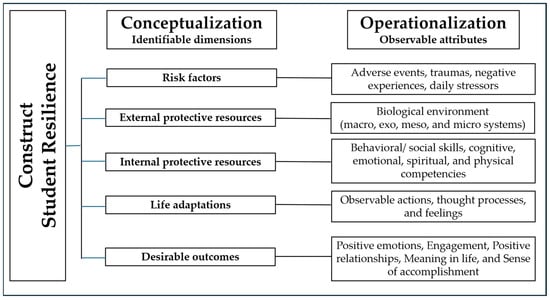
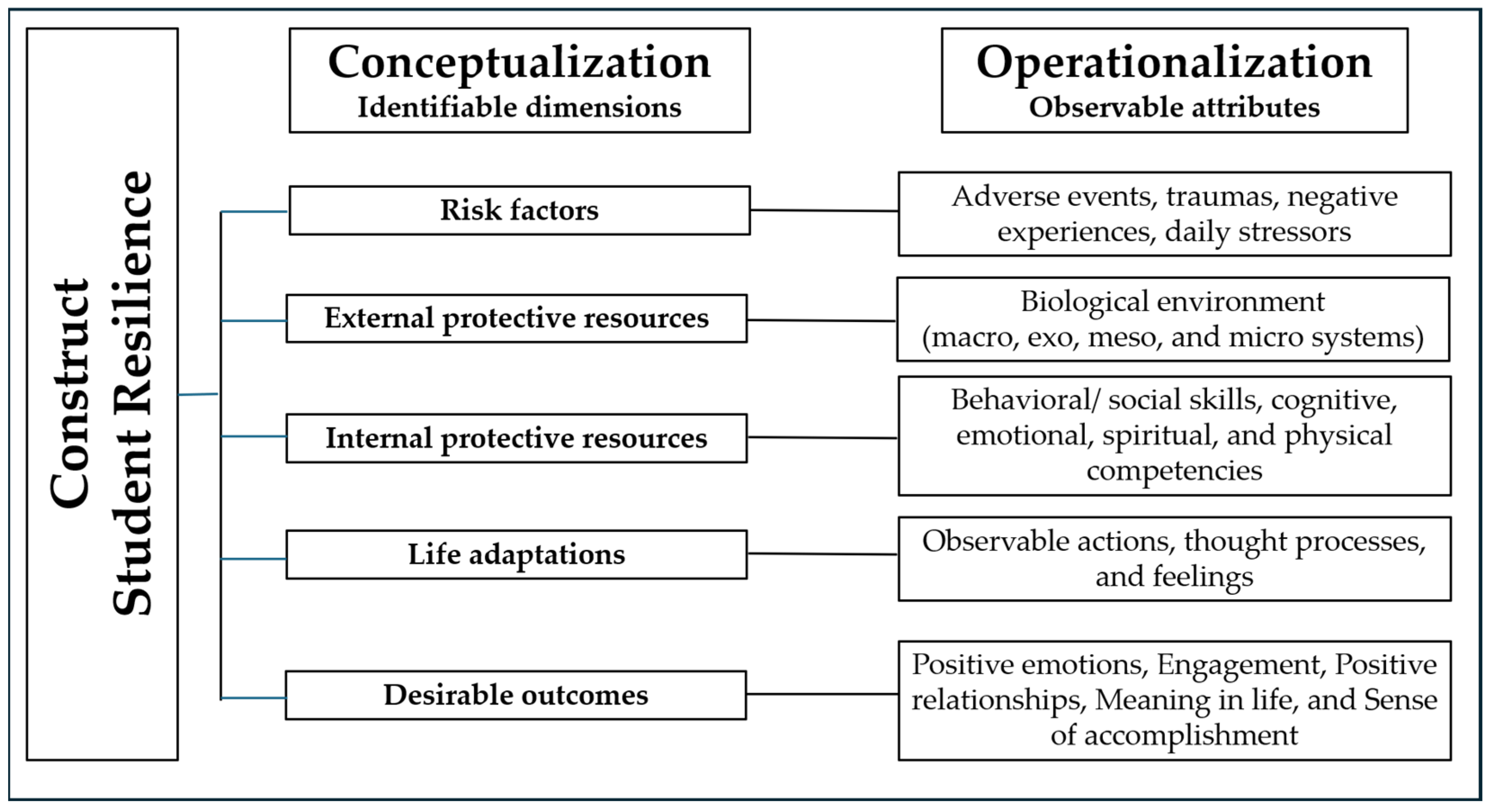
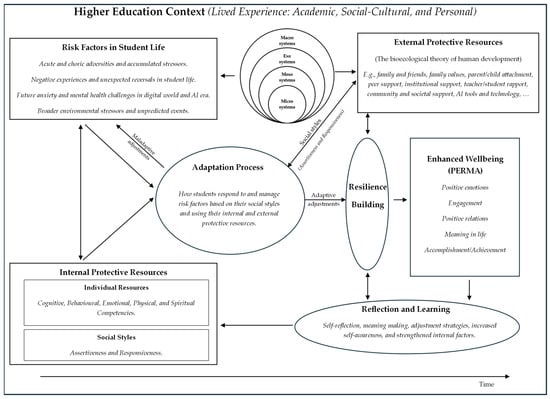
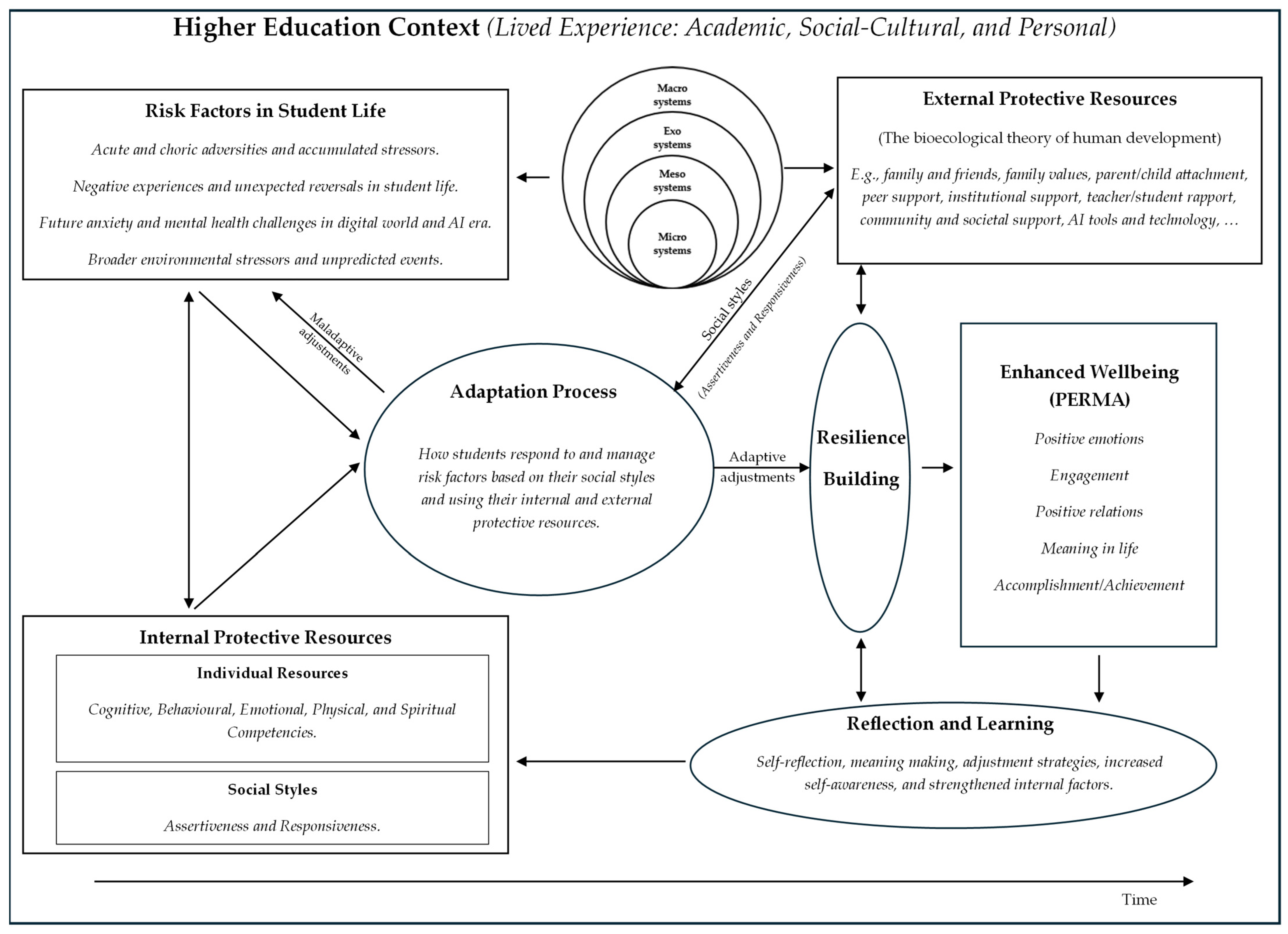

Disclaimer/Publisher’s Note: The statements, opinions and data contained in all publications are solely those of the individual author(s) and contributor(s) and not of MDPI and/or the editor(s). MDPI and/or the editor(s) disclaim responsibility for any injury to people or property resulting from any ideas, methods, instructions or products referred to in the content. |
© 2026 by the authors. Licensee MDPI, Basel, Switzerland. This article is an open access article distributed under the terms and conditions of the Creative Commons Attribution (CC BY) license.