


Abstract
Evidence-informed leadership in higher education has gained increasing prominence across Europe, responding to growing demands for accountability, transparency, and innovation in policy and practice. This paper critically reviews the conceptual foundations, mechanisms, and implications of evidence use in higher education leadership, drawing on the European and international literature. It examines both the potential of evidence to enhance decision-making and the persistent challenges that limit its effective integration into leadership practices. Despite the expansion of data systems and the growing use of analytics, the translation of evidence into meaningful leadership action remains uneven. Key barriers include fragmented data infrastructures, limited data literacy among leaders, tensions between managerial metrics and academic values, and resistance to externally imposed performance frameworks. Emerging developments, particularly the rise in artificial intelligence and algorithmic decision-making, further complicate the landscape by raising concerns about transparency, bias, and ethical responsibility. The paper argues for a more reflexive and context-sensitive approach to evidence-informed leadership. It highlights the need to move beyond technocratic models towards practices that value professional judgment, stakeholder engagement, and diverse forms of knowledge. Such an approach is essential for fostering ethically grounded and sustainable leadership capable of supporting transformative change in European higher education.
1. Introduction
Attempts to ground leadership decisions on credible evidence have been much debated in higher education during the past fifteen years. Relevant discourses and practices can be traced back to the evidence-based policy movement that emerged in public administration and other service sectors in the 1990s, when governments, in Europe and elsewhere, sought to establish governance processes supported by a systematic use of research evidence [1,2]. Evidence-based decision-making approaches have also emerged in higher education institutions, accommodated within their distinctive administrative identity, which involved a high degree of professional autonomy, traditions of collegial governance, and increasing demands for external accountability [3,4]. They were also reinforced by new factors and practices, such as the establishment of the European Higher Education Area (EHEA), the proliferation of quality assurance systems and processes within higher education systems, the establishment of performance-based funding systems by many governments, and the digitalization of academic and administrative processes [5,6].
Quality assurance and increased accountability processes in European universities have been part of higher education reforms since the 1980s and have created structural incentives for leaders to demonstrate that their decisions rest on defensible knowledge bases [7,8]. The Standards and Guidelines for Quality Assurance (ESG) in the EHEA, which was adopted in 2005 and revised in 2015, explicitly requires institutions to collect, analyze, and act upon relevant information for the effective management of their programs and activities [9]. Moreover, commitments to equity, widening participation, and social inclusion have also generated demands for evidence that can help explain disparities in access, progression, and outcomes, thereby informing more just and responsive institutional strategies [10]. Constraints in resources allocation, intensified by successive multiple crises, have further sharpened the expectation that leaders will allocate scarce resources based on demonstrable need and anticipated impact [11]. Simultaneously, the digital transformation of universities has significantly expanded the volume, granularity, and velocity of data available to institutional leaders. These data range from student lifecycle analytics and learning management system logs to research information systems and financial dashboards [12,13,14]. These developments have created unprecedented opportunities for data-informed governance, but they have also raised ethical, legal, and epistemological questions about what counts as evidence, who controls its production and interpretation, and whose interests it serves [15,16].
This paper aims to examine how, why, and under what conditions evidence-informed leadership operates in European higher education. It attempts to offer a critical and integrative narrative review of educational leadership for evidence-informed higher education in Europe, covering the period from 2010 to 2025. It synthesizes conceptual foundations, European policy and governance frameworks, modes and sources of evidence mobilized by higher education leaders, leadership practices from strategic planning to crisis response, innovations and emerging trends, including artificial intelligence, and the conditions—barriers, enablers, ethical considerations—that shape the effectiveness and legitimacy of evidence use. It builds on and extends recent syntheses scoping reviews of evidence used in higher education decision-making and policy, to elaborate the dynamics specific to the EHEA. It also foregrounds ethical, legal, and democratic considerations, arguing for a reflexive, context-sensitive, and participatory model of evidence-informed leadership that is attentive to professional judgment, stakeholder engagement, and responsible metrics. The review draws on peer-reviewed scholarship from recognized journals in higher education, public policy, organizational studies, and educational technology, as well as reports from the European University Association (EUA), the European Association for Quality Assurance in Higher Education (ENQA), the European Quality Assurance Register (EQAR), the European Commission and Eurydice, the OECD, and UNESCO.
We acknowledge that the scope of this review is deliberately broad. This breadth is intentional but, we argue, it is necessary: evidence-informed leadership in higher education must be examined through multiple disciplinary lenses, as it operates at the intersection of governance structures, organizational cultures, technological infrastructures, and normative frameworks. However, the integrative ambition of the review is disciplined by a consistent analytical focus on the conditions under which evidence is mobilized, analyzed, interpreted, and acted upon by higher education leaders within the European context. Each thematic section is organized around this central question rather than treated as a self-contained literature review.
We define evidence-informed leadership decision-making as a process that systematically considers multiple forms of credible knowledge, including research evidence, administrative and learning data, benchmarks and comparative indicators, as well as stakeholder and experiential knowledge, alongside values, professional judgment, and contextual constraints [1,17,18]. This conceptualization differs from evidence-based leadership, a term that inherits a stronger hierarchy-of-evidence logic from clinical trial models and can be misread as privileging experimental designs to the exclusion of contextually situated knowledge [19,20]. It also differs from data-driven leadership, which tends to prioritize administrative and transactional data streams and analytics infrastructures, while potentially underemphasizing meaning-making, deliberation, and ethical considerations [14,15]. In the European university context, evidence pluralism is both necessary and, to a degree, codified in quality assurance expectations that emphasize evidence-based enhancement while recognizing institutional diversity [9]. The scope of the review spans leadership at three levels: system (ministries, agencies, and pan-European bodies), organization (university executive and governance structures), and faculty or department (academic and professional services leadership). The primary geographical focus is Europe within the EHEA, acknowledging substantial cross-national diversity in autonomy, funding, and accountability arrangements [21,22]. Selective international comparisons, particularly from OECD analyses and Anglophone systems, are included where they help illuminate European trajectories and policy choices. However, existing research remains fragmented across policy, governance, and leadership practice, offering limited integrative understanding of how evidence is mobilized across levels and contexts within the EHEA.
2. Review Approach and Literature Selection
This study adopts a critical narrative review approach with scoping elements, suited to a heterogeneous evidence base spanning higher education leadership, policy, organizational studies, and educational technology [23]. We chose a narrative review approach, because we find it particularly appropriate when the aim is to integrate insights from diverse strands of research and to examine conceptual developments, policy frameworks, and emerging practices across different contexts [24]. The present paper seeks to summarize existing knowledge, but it also aims at providing a critical and interpretive synthesis of key debates, identify convergences and gaps, and to propose a conceptual framework for future research and practice.
The literature search was conducted between October 2024 and July 2025 using Scopus, Web of Science Core Collection, ERIC, and Google Scholar, supplemented by forward and backward citation tracking. Only sources with direct relevance to higher education, governance and leadership in Europe were included. A combination of search terms was employed, including: “evidence-informed policy” OR “evidence-based leadership” OR “higher education governance” OR “data-driven decision making” OR “learning analytics,” OR “research assessment” OR “rankings” OR “knowledge mobilization” AND “higher education” AND “Europe” OR “European”. The search strategy was iterative, allowing for the refinement of terms and the identification of additional relevant sources.
In addition to peer-reviewed journal articles, the review incorporated policy reports and institutional publications from the European Commission, Eurydice, the OECD, the EUA, ENQA, EQAR, JRC and selected national quality assurance agencies. These sources were included because of their significant role in shaping governance frameworks, policy agendas, and leadership practices in European higher education. Table 1 presents the inclusion and exclusion criteria applied during the selection process.
Table 1.
Inclusion and Exclusion Criteria.
The literature selection followed a three-stage process. In the first stage, initial screening of titles and abstracts yielded 347 potentially relevant records from database searches, supplemented by 89 records identified through citation tracking and the gray literature repositories. After removing 62 duplicates, 374 unique records were screened. In the second stage, In the second stage, a full-text review for conceptual and empirical relevance resulted in the exclusion of 198 sources that did not meet the inclusion criteria (primarily due to insufficient focus on higher education leadership or governance, exclusive focus on non-European contexts without comparative relevance, or insufficient methodological transparency). In the third stage, the remaining 176 sources were subjected to thematic categorization into key analytical dimensions: conceptual and theoretical foundations, governance frameworks, types and uses of evidence, leadership practices, barriers and enablers, ethical considerations, and emerging technological developments. Of these, 88 sources (including peer-reviewed articles, books, and major policy reports) constitute the core evidence base of this review and are cited throughout the manuscript. The selection process was guided by relevance, conceptual contribution, and methodological rigor.
The time window of 2010 to 2025 captures the post-Bologna consolidation period, the rise in learning analytics and ranking-driven governance, and the more recent developments associated with COVID-19, datafication, and artificial intelligence. Foundational works published before 2010 were included where they provide essential conceptual anchoring. We acknowledge that, as a critical narrative review, this approach does not claim exhaustive coverage but rather aims for conceptual representativeness and analytical depth. Potential biases include the predominance of English-language sources, which may underrepresent scholarship from Southern and Central–Eastern European systems, as well as the inherent subjectivity involved in thematic categorization and interpretive synthesis. Table 2 summarizes the key studies included in the review.
Table 2.
Summary of key studies reviewed.
3. Conceptual and Theoretical Foundations
3.1. Definitions of Evidence-Informed Leadership
The concept of evidence-informed leadership is rooted in broader debates on evidence-based policymaking that gained prominence in public administration and social policy during the last quarter of the twentieth century [2,32]. However, there is still limited conceptual clarity on how different types of evidence are integrated in leadership practice within higher education. Within higher education, this concept has evolved in response to increasing demands for transparency, accountability, and institutional effectiveness, as well as the need for more systematic and defensible decision-making processes. Evidence-informed leadership does not assume that decisions can or should be based solely on scientific evidence. Instead, it recognizes that decision-making in complex organizational environments such as universities requires the integration of multiple forms of knowledge, including validated research evidence, administrative and institutional data, professional expertise, and the perspectives of key stakeholders [1,33]. This broader understanding reflects the inherently contextual and value-laden nature of leadership in higher education, where decisions regarding curricula, resource allocation, research priorities, funding, and institutional strategy are shaped by disciplinary traditions, collegial norms, and competing stakeholder interests [34,35].
3.2. Theoretical Perspectives on Evidence Use
Several complementary theoretical perspectives shed light on how leaders interact with evidence. According to rationalist decision models, leaders act as utility-maximizers who seek optimal choices, using the available information and considering constraints. However, bounded rationality and satisficing, as discussed by Simon, better capture real-world governance under uncertainty and time pressure [36]. Institutional theory models emphasize how norms, regulations, and implicit scripts influence organizational behavior. In this vein, universities are subject to coercive (policy mandates), mimetic (imitation under uncertainty), and normative (professional standards) isomorphic pressures, that influence what evidence is sought and how it is framed [37,38]. This helps explain cross-institutional convergence on indicators and dashboards, even when their local value is contested. Theories, of organizational learning consider the use of evidence as integral to the cycles of sensing, interpreting, and institutionalizing knowledge. Evidence may lead to single-loop learning—that is, adjusting actions within existing frameworks—or double-loop learning—that is, questioning underlying assumptions and reframing issues, depending on whether governance structures allow for reflection and critical challenge [39,40]. Complexity and adaptive leadership perspectives emphasize nonlinearity, emergence, and distributed agency. They argue that leaders create conditions for information flows, experimentation, and self-organization rather than prescribing fixed solutions, which are pertinent to data-rich but uncertain contexts such as AI adoption [41].
Classic frameworks differentiate between forms and functions specific to the use of evidence. Weiss identified three research use types, instrumental, conceptual, and symbolic. In his “enlightenment” model, cumulative exposure to research gradually reshapes the conceptual categories through which policymakers understand problems [32]. Parkhurst extended this analysis by emphasizing the politics of evidence [20]; he argued that problem framing and the selection of indicators reflect values and power, and that the institutional arrangements governing evidence use are as important as the evidence itself. Head’s “three lenses” framework illustrates how political judgment, program management expertise, and scientific and technical facts interact when making public decisions [33]. Realist perspectives offer an explicitly explanatory approach based on context–mechanism–outcome configurations, seeking to explain what works, for whom, in what circumstances, and why [42].
3.3. From Data to Knowledge in Higher Education
Therefore, a pluralistic typology of evidence is required for evidence informed leadership in higher education. Research evidence encompasses quantitative, qualitative, and mixed-methods studies, including systematic reviews, program evaluations, and policy analyses. Administrative and learning data encompass student lifecycle records, interactions within courses and virtual learning environments, research information systems, state funding and other financial and human resource data, as well as external datasets such as bibliometric indicators. External benchmarks and rankings provide comparative indicators that influence goal setting and resource allocation, albeit with well-documented validity and behavioral risks [26,27]. Stakeholder and experiential evidence comprise the perspectives of students, staff, and external partners (among them, the industry and civil society), including co-produced knowledge and professional expertise [18]. The ESG implicitly endorse such plurality by emphasizing evidence-based internal quality assurance while recognizing institutional diversity in approaches and information sources [9]. Clarity about what qualifies as “acceptable” evidence is consequential for governance: across types, credible evidence for leadership is fit-for-purpose, transparent in provenance and methods, timely relative to decision cycles, and interpretable by stakeholders. It supports not only instrumental use, that is, the direct use of evidence for decision-making, but also conceptual use, whereby evidence shapes how issues are understood and framed, as well as political or symbolic use, in which evidence is mobilized to legitimize predetermined positions or signal compliance [1,32]. In universities, the mechanisms that link evidence to decision-making often include social processes, such as trust in sources, the credibility of analysts, alignment with professional norms, and institutional arrangements such as committees, quality assurance processes, and performance agreements.
All the perspectives mentioned above share a common understanding: evidence does not speak for itself. The uptake and influence of evidence depend on the individuals and communities that interpret it, the credibility and legitimacy of its sources, and its alignment with institutional priorities and strategic narratives. Consequently, developing leadership abilities for making sense of evidence, deliberation, and ethical reasoning is as important as investing in data gathering and analysis infrastructures. This perception relates to research on knowledge mobilization, which comprises the processes that connect knowledge producers, intermediaries, and users to facilitate context-sensitive adoption of evidence [17,43]. In higher education, knowledge mobilization occurs both within institutions (e.g., university research and analytics units) and across national and European-level bodies (e.g., national quality assurance agencies, ministries, the EUA, and ENQA). Brokerage functions, carried out by individuals or organizations, involve interpreting, consolidating, and contextualizing evidence, bringing together stakeholders, and maintaining the infrastructures and relationships that support trust. Effective brokerage addresses three interrelated attributes of evidence: credibility (methodological robustness and source reputation), salience (relevance to decision-making needs and timing), and legitimacy (perceived fairness, inclusivity, and respect for values) [44]. In European higher education, credibility is often linked to quality assurance processes and accredited statistical infrastructures. Salience depends on alignment with strategic cycles, such as institutional or program accreditation, performance-based funding consultations between institutions and government authorities, and research assessment milestones, while legitimacy hinges on participatory governance, academic freedom, and compliance with data protection regulations. These conditions are not merely technical; they are fundamentally social and political, shaping whether analytics are perceived as supporting professional judgment or as mechanisms of managerial control.
4. European Policy and Governance Frameworks
4.1. European Policy Frameworks
In the past fifteen years, evidence-informed leadership has become increasingly embedded in European policy frameworks and governance mechanisms, reflecting a broader shift toward more systematic, data-informed approaches to higher education governance. The architecture of the EHEA, consolidated through the Bologna Process and its successive ministerial communiqués, has created a shared governance space in which quality assurance, qualification frameworks, recognition instruments, and mobility tools generate both demand for and supply of evidence at multiple levels [45]. The ESG, adopted by the ministers responsible for higher education in the EHEA in 2005 and revised in 2015, constitutes the most influential pan-European mechanism in this regard. The ESG framework emphasizes the systematic collection, analysis, and use of information to support internal quality assurance processes and continuous institutional improvement [9]. Universities are expected to generate and utilize data on key dimensions such as student progression, learning outcomes, and graduate employability, thereby reinforcing the role of evidence in institutional decision-making. The ongoing revision of the ESG, mandated for the period 2024–2027, is expected to further strengthen expectations regarding evidence use, digital transformation, and stakeholder engagement [46].
4.2. Governance and Accountability in Higher Education
At the system level, European higher education governance is shaped by an enduring tension between institutional autonomy and public accountability. While universities retain considerable autonomy in academic, organizational, financial, and staffing matters (the extent of which varies considerably across national systems, as documented by the EUA’s University Autonomy Scorecard [22]), governments and funding bodies increasingly rely on performance indicators, evaluation systems, and accountability frameworks to monitor institutional outcomes. Performance-based funding, implemented in various forms across European higher education systems, links a portion of public funding to measurable outputs such as graduation rates, research productivity, and third-mission activities [47]. This has led to a growing reliance on quantifiable performance measures, often connected to funding allocation and policy priorities, and has intensified the demand for institutional data and analytics capabilities.
The responsible research assessment movement represents a significant counterweight to the uncritical adoption of metrics. The San Francisco Declaration on Research Assessment [48] called for an end to the use of journal-based metrics as surrogates for research quality. The Leiden Manifesto articulated ten principles for the responsible use of research metrics, emphasizing that quantitative evaluation should support but not supplant expert assessment [27]. The Metric Tide report in the United Kingdom provided a comprehensive analysis of the role of metrics in research assessment and management, recommending a framework of “responsible metrics” grounded in robustness, humility, transparency, diversity, and reflexivity [49]. Most recently, the Coalition for Advancing Research Assessment (CoARA), launched in 2022 with the support of the European Commission, has brought together hundreds of research organizations, funders, and assessment bodies committed to reforming research assessment practices across Europe [28]. These developments are directly relevant to evidence-informed leadership because they reshape the indicator landscape within which leaders operate, moving beyond simplistic metric-driven governance toward more pluralistic and context-sensitive approaches to evidence.
4.3. Role of International Organizations
EUA and the OECD have actively promoted the development of the capacity for evidence-informed decision-making in education. The EUA’s mapping exercise on institutional transformation and leadership development documented the growing recognition across European universities that leadership capabilities, including the ability to interpret and mobilize evidence, are critical for navigating complex governance environments [21]. The OECD’s work on building capacity for evidence-informed policymaking has provided comparative analyses of how education systems develop the infrastructure, skills, and institutional arrangements needed to support evidence use [6]. The Eurydice report on support mechanisms for evidence-based policymaking in education offered a systematic mapping of the structures and processes through which European countries facilitate the use of research and data in education policy [5]. Taken together, these developments illustrate a gradual transition toward data-rich governance environments in which higher education leaders are expected not merely to assess data, but to critically interpret and strategically mobilize diverse forms of evidence in shaping institutional priorities and development.
However, cross-national variation remains substantial and must be acknowledged to avoid misleading generalizations. Nordic systems, characterized by high levels of institutional autonomy, strong traditions of transparency, and well-developed statistical infrastructures, have generally been early adopters of evidence-informed governance practices [50]. In contrast, several Southern and Central-Eastern European systems have faced challenges related to fragmented data ecosystems, limited institutional research capacity, and governance traditions that have historically privileged political or bureaucratic logics over evidence-based approaches [51]. The United Kingdom, while no longer a member of the European Union, has exerted considerable influence on European debates through its pioneering (but also, much contested) use of research assessment frameworks (REF), teaching quality frameworks (TEF), and learning analytics governance [52]. The European Universities Initiative, documented in European University Association (EUA) reports published in 2021 and 2025, has fostered transnational alliances between universities of EU member states, while simultaneously introducing new governance challenges related to data interoperability, joint quality assurance, and shared evidence frameworks across diverse national systems. While these initiatives promote evidence use, they may also reinforce technocratic forms of governance.
4.4. Contradictions, Policy/Practice Gaps, and the Limits of Evidence Governance
Despite the gradual integration of standards for evidence collection, analysis, and use into European governance frameworks, important contradictions and policy–practice gaps remain. At the core of these tensions is the autonomy–accountability nexus that continues to shape European higher education governance. While the ESG and national quality assurance frameworks require institutions to collect, analyze, and act upon evidence, the specific forms of evidence that are valued, the indicators that are prioritized, and the accountability mechanisms through which compliance is assessed, are often determined externally, by governments, funding bodies, or quality assurance agencies, rather than by the institutions themselves [7,8]. This creates a paradox: universities are expected to exercise autonomous professional judgment in their use of evidence, yet the parameters within which that judgment operates are increasingly circumscribed by externally imposed performance frameworks.
The consequences of this paradox are well documented. Performance-based funding systems, while intended to incentivize improvement, can induce strategic behavior that distorts institutional priorities. For example, when funding is tied to graduation rates, institutions may lower academic standards or reroute resources toward easily measurable outputs at the expense of less quantifiable but equally important dimensions such as civic engagement, or research integrity [47]. Similarly, the proliferation of metrics (e.g., university rankings) has been shown to generate “reactive” rather than “reflective” evidence use: data are mobilized primarily to improve positional standing rather than to support genuine institutional learning [26,53]. Espeland and Sauder [53] use the concept of “reactivity” to emphasize how evidence systems can become self-referential, producing data that serve accountability procedures rather than substantive improvement.
Another policy–practice gap concerns the uneven distribution of evidence capacity across European higher education systems. While Nordic countries and the United Kingdom have relatively mature institutional evidence research infrastructures, providing comprehensive and coherent data, many Southern and Central–Eastern European systems often operate with limited analytical capacity and governance traditions that have historically privileged political or bureaucratic logics over evidence-informed approaches [50,51]. The European Universities Initiative has also exposed the challenges of harmonizing data standards and evidence frameworks across systems with fundamentally different governance architectures [54]. These disparities imply that Europe-wide expectations regarding evidence use may unintentionally reproduce existing inequalities across institutions and national higher education systems.
Moreover, the responsible research assessment movement, despite its normative appeal, faces significant implementation challenges. While hundreds of organizations have signed the CoARA agreement, translating its principles into concrete changes in hiring, promotion, and funding decisions remains slow and uneven [55]. The persistent use of journal impact factors and h-indices in academic evaluation, despite decades of critique, illustrates the deeply embedded nature of metric-based governance and the difficulty of transforming institutional cultures even when policy frameworks explicitly call for change.
5. Evidence Use in Higher Education Leadership
5.1. Types and Sources of Evidence
Evidence ecosystems in higher education are increasingly complex, multi-layered, and dynamically evolving. The evidence used by higher education leaders is drawn from diverse and heterogeneous sources, reflecting the inherently complex, context-dependent, and multi-level nature of decision-making processes within contemporary universities. Research evidence remains a fundamental source of knowledge, particularly in the context of educational innovation, curriculum development, and institutional reform. However, the literature consistently suggests that research findings are not always directly translated into leadership decisions and actions. Research evidence is frequently disconnected from the temporal and political realities of institutional decision-making. Studies have shown that evidence research findings reach leaders in forms that are too abstract, too delayed, or too decontextualized to be actionable within the compressed timescales of strategic planning cycles [56,57]. Administrative and institutional data are frequently fragmented across non-interoperating systems, making institution-wide synthesis challenging, thus supporting departmental rather than strategic viewpoints [14]. Learning analytics, despite their potential, have been criticized for prioritizing behavioral proxies over more profound learning processes, for embedding algorithmic assumptions that may perpetuate existing inequalities, and for generating a “surveillance effect” that undermines the trust required for genuine pedagogical improvement [15,16]. Rankings and benchmarking data, as previously mentioned, are associated with risks of reactivity, goal displacement, and the marginalization of institutional missions that do not align with ranking methodologies [26,58]. Moreover, stakeholder and experiential evidence are often collected through mechanisms (i.e., standardized satisfaction surveys) which simplify the complexity of student, faculty and staff experiences, and prioritize responses that are easier to aggregate over nuanced, context-specific insights [59]. These shortcomings reflect deeper epistemological and political tensions about what counts as valid knowledge in university governance and who are authorized to approve and interpret it.
The knowledge mobilization literature has emphasized that bridging evidence research and use gaps requires not only the production of relevant research but also the development of intermediary structures and relational practices that facilitate interpretation and uptake [18,43]. Table 3 provides a structured synthesis of the main types and sources of evidence used in higher education leadership, including their primary sources, typical uses, and key references.
Table 3.
Types and Sources of Evidence Used in Higher Education Leadership.
Administrative and institutional data constitute a second major category, including information on student enrollment, progression rates, graduation outcomes, financial performance, and human resource indicators. Such data are typically integrated into institutional dashboards and reporting systems, supporting strategic planning, performance monitoring, and quality assurance processes. Their increasing availability has strengthened the role of data in organizational governance, while also raising questions about interpretation, contextualization, and reductive use [14].
Learning analytics, which involve the analysis of data generated through digital learning environments, represent a third and rapidly expanding source, especially in the post-COVID19 period. These data provide insights into student engagement, learning behaviors, and academic performance, and can support early identification of students at risk of dropout [13,60]. While learning analytics offers significant potential for more proactive and targeted interventions, they also raise critical ethical concerns related to data privacy, consent, algorithmic transparency, and the potential for surveillance [16]. In United Kingdom, a Code of Practice for Learning Analytics, introduced by Jisc, a not-for-profit organization supporting further and higher education, provided an early governance framework, emphasizing transparency, student agency, and institutional responsibility [61]. In the European context, the General Data Protection Regulation (GDPR) establishes binding legal requirements for the processing of personal data, including learning analytics data, that institutions must navigate carefully (Regulation (EU) 2016/679).
Benchmarking practices and international rankings constitute another influential form of evidence. Despite sustained criticism for oversimplifying institutional performance, privileging certain indicators over others, and inducing strategic behavior that may distort institutional missions, rankings continue to shape institutional strategies, resource allocation decisions, and reputational positioning within the global higher education landscape [26,62]. The responsible metrics movement, discussed above, has sought to counterbalance the influence of rankings by advocating fitness-for-purpose indicators, transparency in methodology, and the primacy of expert judgment. U-Multirank, developed with European Commission support, represents an attempt to provide a multidimensional, user-driven alternative to traditional league tables, though its influence remains limited [63].
Finally, stakeholder and experiential evidence, including the perspectives of students, academic and professional staff, employers, and community partners, constitutes a form of knowledge that is increasingly recognized as essential for legitimate and context-sensitive leadership. Student voice and partnership initiatives, staff surveys, and participatory evaluation processes generate insights that complement formal data and research, and that can enhance the democratic legitimacy of institutional decisions [59]. The integration of stakeholder knowledge into leadership processes is, however, uneven across European institutions and depends on governance cultures, participatory traditions, and the willingness of leaders to engage with perspectives that may challenge established priorities [64]. This diversity of evidence sources places significant interpretive demands on higher education leaders.
5.2. Leadership Practices Supporting Evidence Use
Evidence-informed leadership is fundamentally a socio-organizational process rather than a purely technical one, extending beyond the mere availability of data. Furthermore, it depends on the development of organizational practices and leadership processes that enable evidence to be meaningfully interpreted, contextualized, and applied in decision-making. Literature on higher education leadership has identified several practices that support effective evidence use. A central dimension concerns the development of data literacy among academic and administrative staff, enabling members of the institution to understand, interpret, and critically engage with different types of data [65]. Strengthening such competencies is increasingly recognized as essential for translating information into actionable knowledge, and several European universities and networks have invested in professional development programs for leaders and staff. Furthermore, a rising number of higher education institutions establish units or offices responsible for collecting, analyzing, and communicating institutional data [14]. These structures often function as intermediaries between data production and leadership decision-making, providing analytical reports, dashboards, and strategic insights that support institutional planning and quality assurance [66]. In the European context, the development of institutional research as a professional field has been uneven, with stronger traditions in the United Kingdom, the Netherlands, and the Nordic countries, and more nascent developments in Southern and Central-Eastern European systems [67].
Equally significant is the promotion of participatory decision-making processes, in which faculty members, students, and other stakeholders are actively involved in the discussion and interpretation of evidence. Such collaborative practices can enhance the legitimacy of leadership decisions and contribute to a shared understanding of institutional priorities [68,69]. Furthermore, effective evidence use is often associated with the development of reflective leadership cultures, where data serve both as instruments of accountability and as incentives for professional dialogue, organizational learning, and collective reflection [3,70]. Universities that successfully integrate evidence into their governance processes frequently adopt distributed leadership models, in which responsibility for data interpretation and evidence use is shared across different institutional levels [68,71]. In such contexts, leadership is understood as a collaborative process rather than a centralized function, enabling broader engagement with evidence in strategic and operational decision-making.
Strategic planning is a critical domain for evidence integration. Evidence-informed strategy cycles involve the systematic use of internal and external data to identify institutional strengths and weaknesses, set priorities, allocate resources, and monitor progress [72]. Key performance indicators, scenario planning, and theory-of-change approaches provide structured frameworks for linking evidence to strategic objectives [73]. However, the literature cautions against the mechanical application of such tools without attention to the interpretive and deliberative processes through which evidence acquires meaning in specific institutional contexts [8].
An empirical illustration of evidence-informed strategic planning can be drawn from the experience of several Nordic universities that have integrated institutional research units into their governance structures. In Finland, for example, universities operating under the performance-based funding model (introduced in the 2010 Universities Act) have developed sophisticated data dashboards linking student progression data, research output indicators, and financial planning tools to support strategic decision-making at both institutional and faculty levels [50]. These dashboards serve as boundary objects around which leaders, quality assurance officers, and academic staff negotiate institutional priorities. However, research also shows that the effectiveness of such tools depends critically on whether they are embedded in deliberative governance processes or used primarily as instruments of top-down accountability [8]. Where dashboards are perceived as surveillance mechanisms rather than learning tools, they tend to generate compliance behavior rather than genuine organizational learning, illustrating the importance of organizational culture and governance context in mediating the impact of evidence on leadership practice.
Crisis leadership has emerged as a particularly revealing domain for understanding the strengths and limits of evidence-informed approaches [74]. The COVID-19 pandemic forced universities across Europe to swiftly make decisions under conditions of extreme uncertainty, often with incomplete or rapidly changing evidence [75]. Institutions with stronger data infrastructures, more agile governance structures, and cultures of evidence use were generally better positioned to respond [76], but the crisis also exposed the limits of predictive models and the importance of professional judgment, ethical reasoning, and stakeholder communication in conditions where evidence is ambiguous or contested [77]. Overall, effective evidence-informed leadership depends not only on data availability but on the institutional capacity to interpret, negotiate, and strategically mobilize evidence within complex governance environments.
6. Innovative Approaches and Emerging Trends
In this review, we identify a set of emerging innovations and trends that intensify the need for the development and effective use of evidence-informed leadership structures and practices. First, current digital transformation of higher education has significantly expanded both availability and diversity of data relevant to institutional leadership. Digital platforms such as learning management systems, research information systems, and student information systems produce large volumes of data that can be analyzed to generate strategic insights. In recent years, many universities have invested in learning analytics and predictive modeling, aiming to enhance student success, improve retention rates, and strengthen institutional performance [78]. More recently, Artificial Intelligence (AI) applications have begun to influence decision-making processes in higher education. AI-based tools can support a range of leadership functions, including enrollment forecasting, resource allocation, curriculum planning, and the analysis of stakeholder feedback through natural language processing [30]. At the same time, the increasing use of algorithmic systems raises important concerns related to algorithmic bias, transparency, accountability, and the potential erosion of human judgment in governance processes [14,79].
The European Union AI Act, which has been in effect since 2024, classifies certain AI applications in education as high-risk and imposes requirements for transparency, human oversight, and risk management that are directly relevant to university governance [80]. These regulatory developments create both obligations and opportunities for European universities to develop responsible AI governance frameworks that align technological innovation with academic values and democratic principles. The challenge for leaders is to harness the analytical power of AI while maintaining the deliberative, participatory, and ethically grounded decision-making processes that are central to the legitimacy of university governance [81].
Additionally, digital transformation benefits greatly from interoperability and data architecture. European Universities alliances, which bring together institutions from different national systems, report considerable challenges in harmonizing data standards, sharing institutional information, and developing joint evidence frameworks for quality assurance and strategic planning [54]. The European Commission’s initiatives on digital credentials and micro-credentials recognition represent attempts to create shared digital infrastructures, but their implementation requires sustained investment in technical capacity and governance coordination [82].
Sustainability and the green transition have also emerged as increasingly important domains for evidence-informed leadership. Universities are developing carbon footprint analytics, Sustainable Development Goal (SDG) tracking systems, and green campus management frameworks that require the integration of environmental, social, and governance data into institutional decision-making [83,84]. These developments expand the scope of evidence-informed leadership beyond traditional academic and financial indicators, connecting it to broader societal responsibilities and to the European Green Deal agenda.
Finally, equity, diversity, and inclusion (EDI) represents a critical frontier for evidence-informed leadership [85]. Emerging practices in European institutions include inclusive data collection, intersectional analysis, bias detection in algorithmic systems, and equity-focused student success dashboards. However, these practices remain uneven and often fragmented [86]. A central challenge is to ensure that evidence and its use do not reproduce or amplify existing inequalities but instead contribute to more just and inclusive institutional cultures and outcomes.
7. Barriers, Enablers & Ethical Considerations
Despite the growing availability of data and the increasing emphasis on evidence-informed approaches, several structural, organizational, and epistemological barriers continue to constrain the effective use of evidence in higher education leadership. One of the most frequently cited challenges concerns limited data literacy among institutional leaders and staff [25,65]. The capacity to interpret, critically assess, and meaningfully apply complex datasets varies considerably across higher education institutions, and data may be underutilized, misinterpreted, or used in overly simplistic ways. Moreover, many universities operate within fragmented data ecosystems, where information is dispersed across multiple administrative and academic units, often stored in incompatible systems. This fragmentation hinders the integration and synthesis of data, limiting the capacity of institutions to develop coherent, institution-wide insights [14].
A further set of challenges relates to organizational culture and professional identities. In certain institutional contexts, faculty members and academic staff perceive data-driven governance practices as mechanisms of managerial control or external accountability, rather than as tools for improvement and learning [4]. This perception can lead to resistance toward performance indicators, evaluation systems, and other forms of evidence use, particularly when these are seen as misaligned with academic values and disciplinary norms. A growing body of critical scholarship highlights the risks associated with the datafication of higher education, where quantitative indicators dominate decision-making processes, potentially marginalizing qualitative forms of knowledge, professional expertise, and academic judgment [14,15]. This over-reliance on measurable output may contribute to the narrowing of institutional priorities and the erosion of core academic values.
Alongside these barriers, a range of enabling conditions has been identified as critical for supporting effective evidence use. The development of data literacy and analytical capacity among institutional leaders and staff is a central enabling factor [6]. Equally important is the establishment of robust data infrastructures and integrated information systems. Institutions that invest in coherent data architectures linking administrative, academic, and learning data are better positioned to generate meaningful insights and support strategic planning [14]. Another crucial enabling factor is organizational culture: the promotion of collaborative and trust-based cultures, in which evidence is used as a tool for learning rather than control, can significantly enhance engagement with data among academic and administrative staff [8]. Leadership practices that promote participation and inclusion further strengthen evidence-informed approaches, as engaging faculty members, students, and other stakeholders in the interpretation and use of evidence contribute to more context-sensitive and legitimate decision-making [68]. These barriers and enabling conditions are summarized in Table 4, which provides an overview of key dimensions shaping evidence-informed leadership in higher education.
Table 4.
Barriers and Enablers of Evidence-Informed Leadership in Higher Education.
The literature further emphasizes the importance of intermediary structures and knowledge brokerage mechanisms, such as institutional research units, policy labs, and cross-functional teams, which act as bridges between data production and decision-making, translating complex evidence into actionable knowledge and supporting organizational learning [17,43]. Supportive policy environments and governance frameworks at national and European levels play a significant role in enabling evidence-informed leadership [29,87]. Initiatives that promote responsible data use, transparency, and capacity building, while respecting institutional diversity and autonomy, can create favorable conditions for the meaningful integration of evidence into leadership practices.
Ethical and democratic considerations permeate every dimension of evidence-informed leadership. Academic freedom, algorithmic transparency, accountability, privacy and data protection, stakeholder engagement, and proportionality are not peripheral concerns but constitutive elements of legitimate governance [20]. The GDPR establishes a binding legal framework for data processing in European universities, but compliance alone does not exhaust the ethical obligations of leaders. Questions about who defines the indicators, who has access to data, whose voices are included in interpretation, and how algorithmic recommendations are governed require ongoing deliberation and institutional commitment to democratic values [16].
Finally, the question of effectiveness and impact remains particularly challenging. What outcomes could be plausibly attributable to evidence-informed leadership? The literature suggests that evidence use can contribute to improved student success and equity measures, enhanced quality assurance processes, more strategic resource allocation, and greater institutional legitimacy and trust [31]. However, establishing causal links between evidence use and institutional outcomes is methodologically difficult, given the complexity of university governance, the multiplicity of factors influencing outcomes, and the long-time horizons over which institutional change unfolds [87]. Moreover, unintended consequences, including, among others, metric gaming, goal displacement, the crowding out of intrinsic motivation, and the reinforcement of existing power asymmetries, must also be acknowledged and monitored [26,58].
8. Discussion: Toward a Reflexive Framework for Evidence-Informed Leadership in European Higher Education
The findings of this review highlight both the potential and the inherent limitations of evidence-informed leadership in higher education, pointing to a field characterized by significant opportunities alongside persistent tensions and contradictions. On the one hand, the increasing availability of data, coupled with advances in analytics and digital infrastructures, has created new possibilities for more transparent, systematic, and accountable decision-making. When meaningfully integrated into leadership processes, evidence can support organizational learning, enhance strategic planning, and contribute to improved institutional performance. On the other hand, the literature consistently underscores that evidence alone cannot determine leadership decisions. Decision-making in higher education remains inherently complex, requiring the interpretation of data within specific institutional, cultural, and policy contexts. This process involves not only technical analysis but also normative judgment, ethical considerations, and the incorporation of diverse stakeholder perspectives.
This review suggests that evidence-informed leadership in higher education institutions is much more than a purely technical or instrumental process; it constitutes a socially embedded and politically situated practice shaped by power relations, institutional culture, and competing policy priorities. Decisions about what counts as valid evidence, how it is interpreted, and how it is used are inherently political, reflecting broader dynamics of authority, legitimacy, and knowledge production within higher education systems [20]. Within this context, European higher education faces the critical challenge of balancing the expansion of data-driven governance with the protection of core academic values, including institutional autonomy, collegial decision-making, and intellectual diversity [88].
Building on the theoretical and empirical insights synthesized in this review, we propose a conceptual framework for evidence-informed leadership in European higher education. The relationships between these dimensions are synthesized in the conceptual framework presented in Figure 1.
Figure 1.
Conceptual Framework.
Unlike existing approaches, the proposed framework integrates sources of evidence, mediating processes, organizational conditions, and governance contexts into a single analytical model, highlighting the inherently political, ethical, and context-dependent nature of evidence-informed leadership in European higher education. The proposed framework comprises four interconnected dimensions. The first dimension concerns sources of evidence, including research, administrative and institutional data, learning analytics, rankings and benchmarking, and stakeholder knowledge, each associated with distinct affordances, limitations, and governance requirements. The second dimension encompasses the mediating processes through which evidence is translated into leadership action, including data interpretation, knowledge brokerage, participatory sense-making, and leadership judgment. The third dimension addresses the organizational conditions that enable or constrain evidence use, such as data literacy, data infrastructure, organizational culture, and distributed leadership. The fourth dimension situates evidence-informed leadership within its governance and values context, including the autonomy–accountability nexus, European policy frameworks (EHEA, ESG), ethical principles, and academic values. A critical overlay, encompassing power relations, the politics of evidence, datafication risks, and AI and algorithmic governance, cuts across all four dimensions, underscoring that evidence-informed leadership is never a neutral or apolitical undertaking.
Illustrative Application: AI Governance Strategy at a European University
To demonstrate how the four dimensions of the framework interact dynamically, consider the scenario of a mid-sized European university developing an institutional AI governance strategy in response to the EU AI Act (Regulation (EU) 2024/1689). This scenario, while composite, draws on documented developments at European universities engaging with AI governance [81,88] and illustrates the relational pathways through which evidence informs leadership action.
The process begins with Dimension 1 (Sources of Evidence). The university’s institutional research unit compiles multiple evidence streams: a systematic review of the literature on AI applications in higher education (research evidence); data from the institution’s learning management system on the extent and patterns of AI tool usage by students and staff (learning analytics); benchmarking data from peer institutions and EUA reports on AI governance practices across European universities (benchmarking evidence); and the results of consultations with students, faculty, and professional services staff on their experiences, concerns, and expectations regarding AI (stakeholder knowledge). Each source carries distinct affordances and limitations: the research literature provides conceptual grounding but may lack institutional specificity; learning analytics offer granular behavioral data but raise privacy concerns under GDPR; benchmarking data enable comparative positioning but may encourage isomorphic imitation; and stakeholder consultations capture lived experience but may reflect uneven participation.
These evidence streams are then processed through Dimension 2 (Mediating Processes). The institutional research unit interprets the data and produces a synthesis report (data interpretation). A cross-functional working group, including representatives from academic affairs, IT services, the legal office, the student union, and the ethics committee, is convened to deliberate on the findings (participatory sense-making). An external expert on AI ethics in education is invited to facilitate dialogue and translate research findings into policy-relevant recommendations (knowledge brokerage). The rector and vice-rectors exercise leadership judgment in weighing competing priorities: the desire to harness AI for pedagogical innovation against concerns about academic integrity, algorithmic bias, and the potential erosion of human judgment in assessment processes.
The feasibility and quality of these mediating processes depend critically on Dimension 3 (Organizational Conditions). The university’s capacity to undertake this work is shaped by the data literacy of its leaders and staff (can the working group members critically evaluate algorithmic impact assessments?), the robustness of its data infrastructure (are learning analytics systems interoperable with administrative databases?), the organizational culture (is there sufficient trust between management and academic staff to enable candid deliberation, or do faculty perceive the initiative as a managerial imposition?), and the extent of distributed leadership (are deans and department heads empowered to adapt institution-wide principles to disciplinary contexts?).
The entire process is situated within Dimension 4 (Governance and Values Context). The EU AI Act classifies certain educational AI applications as high-risk, imposing requirements for transparency, human oversight, and risk management that constrain the range of permissible institutional choices. The ESG requires quality assurance processes to be evidence-based and stakeholder-inclusive, thereby providing a normative anchor for participatory governance. National autonomy configurations determine whether the university can develop its own AI policy or must comply with ministerial directives. Academic values, including academic freedom, pedagogical autonomy, and the primacy of human judgment in assessment, establish normative boundaries that cannot be overridden by data alone.
The critical overlay cuts across all four dimensions by highlighting how power relations shape whose voices are heard in consultation processes and whose concerns are prioritized. Senior management may emphasize efficiency gains, while early-career researchers may raise concerns about surveillance, and students may remain divided between support for AI-assisted learning and fears of algorithmic profiling. The politics of evidence determine which data are presented to the governing board and how they are framed: a report emphasizing AI’s potential for personalized learning conveys a very different narrative from one foregrounding algorithmic bias and privacy risks. Datafication risks are inherent in the very process of monitoring AI usage, as the data collected to inform governance may themselves become instruments of control. The question of algorithmic governance, whether AI systems should be used to make or support decisions concerning students and staff, is not simply technical, but fundamentally ethical and political.
This illustrative scenario demonstrates that the framework’s dimensions are not sequential stages but mutually constitutive processes. Evidence sources shape what mediating processes are possible; organizational conditions determine whether those processes are meaningful or merely ritualistic; governance contexts set the boundaries within which leadership judgment operates; and the critical overlay reminds us that every stage involves choices about power, values, and whose knowledge counts. The framework can thus be operationalized empirically through case study research that traces how specific institutions navigate these dimensions, using process-tracing methods to identify the context–mechanism–outcome configurations [42] through which evidence is translated (or fails to be translated) into legitimate and effective leadership action. Future research could employ the framework as an analytical lens for comparative studies across European governance regimes, examining how variations in autonomy, funding, and accountability arrangements shape the dynamics of evidence-informed leadership in practice.
Additionally, this framework advances the field in several ways. First, it moves beyond the binary of “evidence-based” versus “non-evidence-based” leadership, recognizing that evidence use is always mediated, selective, and context-dependent. Second, it foregrounds the European governance context, including EHEA instruments, ESG expectations, autonomy–accountability configurations, and responsible research assessment initiatives, as constitutive of the conditions under which evidence is produced, mobilized, and used. Third, it integrates ethical and democratic considerations as core elements of evidence-informed leadership, aligning with the growing European emphasis on responsible data use, algorithmic transparency, and stakeholder participation. Fourth, it acknowledges the emerging challenges posed by AI and algorithmic decision-making, positioning responsible AI governance as a critical frontier for higher education leadership. The framework can also serve as an analytical tool for empirical studies examining how higher education institutions operationalize evidence-informed leadership across different governance contexts.
The novelty of the proposed framework lies in its integrative architecture. Most existing models address individual dimensions: knowledge mobilization frameworks [17,43] focus on the processes connecting evidence producers and users; organizational learning models [40] emphasize internal sense-making cycles; and governance frameworks [20] address the political and institutional conditions shaping evidence use. However, our review did not identify an existing framework that synthesizes all four dimensions (sources, mediating processes, organizational conditions, and governance context) within a single analytical model specifically adapted to the European higher education context. Moreover, the inclusion of a critical overlay addressing power, datafication, and algorithmic governance distinguishes this framework from more technocratic models that treat evidence use as a politically neutral process. The framework can be empirically tested through comparative case study designs using process-tracing methods to examine how institutions with different autonomy configurations, data infrastructures, and organizational cultures navigate these four dimensions. It can also be operationalized as a diagnostic tool for institutional self-assessment, enabling university leaders to identify strengths and gaps in their evidence-informed governance practices across each dimension.
This approach has significant implications for policy, practice, and research. For European and national policymakers, the review underscores the need for coherent policy mixes that invest in data capacity, promote responsible metrics, and respect institutional diversity and autonomy. For institutional leaders, the framework highlights the importance of fostering organizational cultures that support inquiry, reflection, and participatory engagement with evidence, rather than the uncritical expansion of data collection and reporting. For quality assurance agencies and intermediary organizations, the findings emphasize the importance of brokerage, standard-setting, and learning systems in mediating between evidence production and leadership practice. Finally, for researchers, the review identifies important gaps in the literature, particularly in relation to comparative analyses across governance regimes, the evaluation of leadership development interventions, the governance of AI in institutional decision-making, and the challenges associated with transnational university alliances.
9. Conclusions
In this review, we have sought to examine the evolution of evidence-informed leadership in European higher education and to provide a critical synthesis of conceptual debates, policy frameworks, leadership practices, innovations, and the conditions shaping the effectiveness and legitimacy of evidence use. The expansion of evidence use in university governance over the past fifteen years has been driven by the strengthening of quality assurance systems, the increasing prevalence of performance-based funding mechanisms, the responsible research assessment movement, and the rapid digital transformation of higher education institutions. The effective use of evidence, however, requires far more than the availability of data or technological infrastructure. It also depends on the development of leadership capacities, the cultivation of organizational cultures that support inquiry and reflection, the establishment of governance frameworks that safeguard academic values, and sustained attention to ethical, legal, and democratic considerations. The proposed conceptual framework, which integrates evidence sources, mediating processes, organizational conditions, and governance and values contexts, together with a critical overlay addressing power, politics, datafication, and AI, represents our attempt to offer a model for leaders, policymakers, and researchers seeking to advance evidence-informed leadership in ways that are rigorous, responsible, and democratically legitimate. Future research should focus on comparative studies across European governance regimes, the evaluation of leadership development interventions, the governance of AI in university decision-making, and the development of inclusive and participatory evidence practices that foreground equity and social justice in European higher education.
Author Contributions
Conceptualization, P.C. and Y.R.; methodology, Y.R.; software, Y.R.; validation, P.C. and Y.R.; formal analysis, P.C. and Y.R.; investigation, P.C. and Y.R.; resources P.C. and Y.R.; data curation, P.C. and Y.R.; writing—original draft preparation, P.C. and Y.R.; writing—review and editing, P.C.; visualization, P.C.; supervision, P.C.; project administration, P.C.; funding acquisition, P.C. All authors have read and agreed to the published version of the manuscript.
Funding
This research received no external funding.
Institutional Review Board Statement
Not applicable.
Informed Consent Statement
Not applicable.
Data Availability Statement
Data is contained within the article.
Conflicts of Interest
The authors declare no conflicts of interest.
Abbreviations
The following abbreviations are used in this manuscript:
| EHEA | European Higher Education Area |
| EUA | European University Association |
| ESG | Standards and Guidelines for Quality Assurance |
| ENQA | European Association for Quality Assurance in Higher Education |
| EQAR | European Quality Assurance Register |
| JRC | Joint Research Center |
| SDG | Sustainable Development Goal |
| EDI | Equity, Diversity and Inclusion |
| GDPR | General Data Protection Regulation |
References
- Nutley, S.; Morton, S.; Jung, T.; Boaz, A. Evidence and Policy in Six European Countries: Diverse Approaches and Common Challenges. Evid. Policy A J. Res. Debate Pract. 2010, 6, 131–144. [Google Scholar] [CrossRef] [Scilit]
- Sanderson, I. Evaluation, Policy Learning and Evidence-Based Policy Making. Public Adm. 2002, 80, 1–22. [Google Scholar] [CrossRef] [Scilit]
- Shattock, M. Managing Good Governance in Higher Education; Open University: Berkshire, UK, 2006. [Google Scholar]
- Deem, R.; Hillyard, S.; Reed, M. Knowledge, Higher Education, and the New Managerialism: The Changing Management of UK Universities; Oxford University Press: Oxford, UK, 2007. [Google Scholar]
- European Commission/EACEA/Eurydice. Support Mechanisms for Evidence-Based Policy-Making in Education; Publications Office of the European Union: Luxembourg, 2017. [Google Scholar]
- OECD. Building Capacity for Evidence-Informed Policymaking: Lessons from Country Experiences; OECD Public Governance Reviews; OECD Publishing: Paris, France, 2020. [Google Scholar]
- Neave, G.R. The Evaluative State, Institutional Autonomy and Re-Engineering Higher Education in Western Europe: The Prince and His Pleasure; Palgrave Macmillan: Basingstoke, UK, 2012. [Google Scholar]
- Stensaker, B.; Harvey, L. Accountability in Higher Education: Global Perspectives on Trust and Power; Routledge: Abingdon, UK, 2011. [Google Scholar]
- ESG • ENQA Standards and Guidelines for Quality Assurance in the European Higher Education Area. 2015. Available online: https://www.enqa.eu/esg-standards-and-guidelines-for-quality-assurance-in-the-european-higher-education-area/ (accessed on 12 November 2024).
- Claeys-Kulik, A.-L.; Jørgensen, T.; Stöber, H. Diversity, Equity and Inclusion in European Higher Education Institutions Results from the INVITED Project; European University Association: Brussels, Belgium; Geneva, Switzerland, 2019. [Google Scholar]
- OECD. Resourcing Higher Education: Challenges, Choices and Consequences; OECD: Paris, France, 2020. [Google Scholar]
- Daniel, B. Big Data and Analytics in Higher Education: Opportunities and Challenges. Br. J. Educ. Technol. 2014, 46, 904–920. [Google Scholar] [CrossRef] [Scilit]
- Sclater, N. Learning Analytics Explained; Routledge: Abingdon, UK, 2017. [Google Scholar]
- Williamson, B. The Hidden Architecture of Higher Education: Building a Big Data Infrastructure for the “Smarter University”. Int. J. Educ. Technol. High. Educ. 2018, 15, 12. [Google Scholar] [CrossRef] [Scilit]
- Selwyn, N. Data Entry: Towards the Critical Study of Digital Data and Education. Learn. Media Technol. 2015, 40, 64–82. [Google Scholar] [CrossRef] [Scilit]
- Prinsloo, P.; Slade, S. An Elephant in the Learning Analytics Room. In Proceedings of the Seventh International Learning Analytics & Knowledge Conference, Vancouver, BC, Canada, 13–17 March 2017. [Google Scholar]
- Boaz, A.; Davies, H.; Fraser, A.F.; Nutley, S.N. What Works Now?: Evidence-Informed Policy and Practice; Policy Press: Bristol, UK, 2019. [Google Scholar]
- Rickinson, M.; Edwards, A. The Relational Features of Evidence Use. Camb. J. Educ. 2021, 51, 509–526. [Google Scholar] [CrossRef] [Scilit]
- Rousseau, D.; Bantz, C.; Garman, A.; Goodman, P.; Griffin, R.; Hinings, B.; Hirsch, P.; Mccarthy, S.; Rynes, S.; Weingart, L.; et al. Academy of Management Review. Walshe Rundall 2004, 31, 256–269. [Google Scholar]
- Parkhurst, J. The Politics of Evidence: From Evidence-Based Policy to the Good Governance of Evidence; Routledge: Abingdon, UK, 2017. [Google Scholar]
- Bunescu, L.; Estermann, T. Institutional Transformation and Leadership Development at Universities: A Mapping Exercise Report from the Innovative Leadership and Change Management in Higher Education Project. Available online: https://www.eua.eu/publications/reports/institutional-transformation-and-leadership-development-at-universities-a-mapping-exercise.html (accessed on 15 April 2026).
- Pruvot, E.; Estermann, T. University Autonomy in Europe III the Scorecard 2017; EUA: Brussels, Belgium, 2017. [Google Scholar]
- Grant, M.J.; Booth, A. A Typology of Reviews: An Analysis of 14 Review Types and Associated Methodologies. Health Inf. Libr. J. 2009, 26, 91–108. [Google Scholar] [CrossRef] [Scilit]
- Baumeister, R.F.; Leary, M.R. Writing Narrative Literature Reviews. Rev. General. Psychol. 1997, 1, 311–320. [Google Scholar] [CrossRef]
- Thiedig, C.; Wegner, A. Evidence Use in Higher Education Decision-Making and Policy: A Scoping Review of Empirical Studies from 2010 to 2022. Lond. Rev. Educ. 2024, 22, 36. [Google Scholar] [CrossRef] [Scilit]
- Hazelkorn, E. Rankings and the Reshaping of Higher Education; Palgrave Macmillan UK: London, UK, 2011. [Google Scholar]
- Hicks, D.; Wouters, P.; Waltman, L.; de Rijcke, S.; Rafols, I. Bibliometrics: The Leiden Manifesto for Research Metrics. Nature 2015, 520, 429–431. [Google Scholar] [CrossRef] [Scilit]
- The Agreement—CoARA. Available online: https://www.coara.org/agreement/the-agreement-full-text/ (accessed on 9 January 2025).
- Malin, J.R.; Brown, C.; Ion, G.; van Ackeren, I.; Bremm, N.; Luzmore, R.; Flood, J.; Rind, G.M. World-Wide Barriers and Enablers to Achieving Evidence-Informed Practice in Education: What Can Be Learnt from Spain, England, the United States, and Germany? Humanit. Soc. Sci. Commun. 2020, 7, 99. [Google Scholar] [CrossRef] [Scilit]
- Zawacki-Richter, O.; Marín, V.I.; Bond, M.; Gouverneur, F. Systematic Review of Research on Artificial Intelligence Applications in Higher Education—Where Are the Educators? Int. J. Educ. Technol. High. Educ. 2019, 16, 39. [Google Scholar] [CrossRef] [Scilit]
- Komljenovic, J.; Sellar, S.; Birch, K. Turning Universities into Data-Driven Organisations: Seven Dimensions of Change. High. Educ. 2024, 89, 1369–1386. [Google Scholar] [CrossRef] [Scilit]
- Weiss, C.H. Research for Policy’s Sake: The Enlightenment Function of Social Research. Policy Anal. 1977, 3, 531–545. [Google Scholar]
- Head, B.W. Three Lenses of Evidence-Based Policy. Aust. J. Public Adm. 2008, 67, 1–11. [Google Scholar] [CrossRef] [Scilit]
- Clark, B.R. The Higher Education System; University of California Press: Berkeley, CA, USA; Los Angeles, CA, USA, 1983. [Google Scholar]
- Becher, T.; Trowler, P. Academic Tribes and Territories: Intellectual Enquiry and the Culture of Disciplines; Open University Press: Philadelphia, PA, USA, 2011. [Google Scholar]
- Simon, H.A. Administrative Behavior: A Study of Decision-Making Processes in Administrative Organizations; Free Press: New York, NY, USA, 1997. [Google Scholar]
- DiMaggio, P.J.; Powell, W.W. The Iron Cage Revisited: Institutional Isomorphism and Collective Rationality in Organizational Fields. Am. Sociol. Rev. 1983, 48, 147–160. [Google Scholar] [CrossRef] [Scilit]
- Scott, W.R. Institutions and Organizations: Ideas, Interests and Identities, 4th ed.; Sage Publications, Inc.: Thousand Oaks, CA, USA, 2014. [Google Scholar]
- Argyris, C.; Schön, D.A. Organizational Learning; Addison-Wesley: Reading, MA, USA, 1978. [Google Scholar]
- Crossan, M.M.; Lane, H.W.; White, R.E. An Organizational Learning Framework: From Intuition to Institution. Acad. Manag. Rev. 1999, 24, 522–537. [Google Scholar] [CrossRef] [Scilit]
- Uhl-Bien, M.; Marion, R.; McKelvey, B. Complexity Leadership Theory: Shifting Leadership from the Industrial Age to the Knowledge Era. Leadersh. Q. 2007, 18, 298–318. [Google Scholar] [CrossRef] [Scilit]
- Pawson, R. Evidence-Based Policy: A Realist Perspective; Sage: London, UK, 2006. [Google Scholar]
- Ward, V.; House, A.; Hamer, S. Knowledge Brokering: The Missing Link in the Evidence to Action Chain? Evid. Policy A J. Res. Debate Pract. 2009, 5, 267–279. [Google Scholar] [CrossRef] [Scilit]
- Cash, D.W.; Clark, W.C.; Alcock, F.; Dickson, N.M.; Eckley, N.; Guston, D.H.; Jäger, J.; Mitchell, R.B. Knowledge Systems for Sustainable Development. Proc. Natl. Acad. Sci. USA 2003, 100, 8086–8091. [Google Scholar] [CrossRef] [Scilit]
- Kehm, B.M.; Teichler, U. The Academic Profession in Europe: New Tasks and New Challenges; Springer Science & Business Media: Dordrecht, The Netherlands, 2013. [Google Scholar]
- ESG-EQAR. Available online: https://www.eqar.eu/kb/esg/#2024-ministers-agree-to-another-revision-of-the-esg (accessed on 15 April 2026).
- Jongbloed, B.; Vossensteyn, H. University Funding and Student Funding: International Comparisons. Oxf. Rev. Econ. Policy 2016, 32, 576–595. [Google Scholar] [CrossRef] [Scilit]
- DORA. Available online: https://sfdora.org/read/ (accessed on 8 January 2025).
- Wilsdon, J.; Allen, L.; Belfiore, E.; Campbell, P.; Curry, S.; Hill, S.; Jones, R.; Kain, R.; Kerridge, S.; Thelwall, M.; et al. The Metric Tide Report of the Independent Review of the Role of Metrics in Research Assessment and Management; HEFCE: Bristol, UK, 2015. [CrossRef]
- Maassen, P.; Stensaker, B. The Knowledge Triangle, European Higher Education Policy Logics and Policy Implications. High. Educ. 2010, 61, 757–769. [Google Scholar] [CrossRef] [Scilit]
- Dobbins, M.; Knill, C. Higher Education Governance and Policy Change in Western Europe; Palgrave Macmillan: Basingstoke, UK, 2014. [Google Scholar]
- Sclater, N. Developing a Code of Practice for Learning Analytics. J. Learn. Anal. 2016, 3, 16–42. [Google Scholar] [CrossRef] [Scilit]
- Espeland, W.N.; Sauder, M. Engines of Anxiety: Academic Rankings, Reputation, and Accountability; Russell Sage Foundation: New York, NY, USA, 2016. [Google Scholar]
- Estermann, T. The Governance Models of the European University Alliances 2024. Available online: https://www.eua.eu/publications/briefings/evolving-models-of-university-governance.html (accessed on 21 April 2025).
- Curry, S.; de Rijcke, S.; Hatch, A.; Pillay, D.; van der Weijden, I.; Wilsdon, J. The Changing Role of Funders in Responsible Research Assessment: Progress, Obstacles and the Way Ahead; RoRI Working Paper No. 3; Research on Research Institute: London, UK, 2020. [Google Scholar] [CrossRef]
- Levin, B. To Know Is Not Enough: Research Knowledge and Its Use. Rev. Educ. 2013, 1, 2–31. [Google Scholar] [CrossRef] [Scilit]
- Oliver, K.; Innvar, S.; Lorenc, T.; Woodman, J.; Thomas, J. A Systematic Review of Barriers to and Facilitators of the Use of Evidence by Policymakers. BMC Health Serv. Res. 2014, 14, 2. [Google Scholar] [CrossRef] [Scilit]
- Muller, J.Z. The Tyranny of Metrics with a New Preface by the Author; Princeton University Press: Princeton, NJ, USA, 2018. [Google Scholar]
- Healey, M.; Flint, A.; Harrington, K. Engagement through Partnership: Students as Partners in Learning and Teaching in Higher Education. Available online: https://www.researchgate.net/publication/264240134_Engagement_through_partnership_students_as_partners_in_learning_and_teaching_in_higher_education (accessed on 11 April 2025).
- Ferguson, R. Learning Analytics: Drivers, Developments and Challenges. Int. J. Technol. Enhanc. Learn. 2012, 4, 304. [Google Scholar] [CrossRef] [Scilit]
- Sclater, N.; Bailey, P. Code of Practice for Learning Analytics. Available online: https://www.jisc.ac.uk/guides/code-of-practice-for-learning-analytics (accessed on 1 April 2025).
- Marginson, S.; van der Wende, M. Globalisation and Higher Education; OECD Education Working Papers No. 8; OECD Publishing: Paris, France, 2007. [Google Scholar]
- van Vught, F.A.; Ziegele, F. (Eds.) Multidimensional Ranking; Springer: Dordrecht, The Netherlands, 2012. [Google Scholar]
- Muff, K.; Delacoste, C.; Dyllick, T. Responsible Leadership Competencies in Leaders around the World: Assessing Stakeholder Engagement, Ethics and Values, Systems Thinking and Innovation Competencies in Leaders around the World. Corp. Soc. Responsib. Environ. Manag. 2021, 29, 273–292. [Google Scholar] [CrossRef] [Scilit]
- Mandinach, E.B.; Gummer, E.S. Data Literacy for Educators: Making It Count in Teacher Preparation and Practice; Teachers College Press: New York, NY, USA, 2016. [Google Scholar]
- Calderon, A.; Mathies, C. Institutional Research in the Future: Challenges within Higher Education and the Need for Excellence in Professional Practice. New Dir. Institutional Res. 2013, 2013, 77–90. [Google Scholar] [CrossRef] [Scilit]
- Huisman, J.; Tight, M. Theory and Method in Higher Education Research; UK Emerald Publishing Limited: Bingley, UK, 2017. [Google Scholar]
- Gosling, J.; Bolden, R.; Petrov, G. Distributed Leadership in Higher Education: What Does It Accomplish? Leadership 2009, 5, 299–310. [Google Scholar] [CrossRef] [Scilit]
- Bryman, A. Effective Leadership in Higher Education: A Literature Review. Stud. High. Educ. 2007, 32, 693–710. [Google Scholar] [CrossRef] [Scilit]
- Middlehurst, R. Changing Internal Governance: Are Leadership Roles and Management Structures in United Kingdom Universities Fit for the Future? High. Educ. Q. 2013, 67, 275–294. [Google Scholar] [CrossRef] [Scilit]
- Gronn, P. Distributed Leadership as a Unit of Analysis. Leadersh. Q. 2002, 13, 423–451. [Google Scholar] [CrossRef] [Scilit]
- Kezar, A.J. Rethinking Leadership in a Complex, Multicultural, and Global Environment; Routledge: New York, NY, USA, 2023. [Google Scholar]
- Biondi, L.; Russo, S. Integrating Strategic Planning and Performance Management in Universities: A Multiple Case-Study Analysis. J. Manag. Gov. 2022, 26, 417–448. [Google Scholar] [CrossRef] [Scilit]
- Chatzipanagiotou, P.; Katsarou, E. Crisis Management, School Leadership in Disruptive Times and the Recovery of Schools in the Post COVID-19 Era: A Systematic Literature Review. Educ. Sci. 2023, 13, 118. [Google Scholar] [CrossRef] [Scilit]
- Marinoni, G.; Van’t Land, H.; Jensen, T. The Impact of COVID-19 on Higher Education Around the World; IAU Global Survey Report; International Association of Universities: Paris, France, 2020. [Google Scholar]
- Janssen, M.; van der Voort, H. Agile and Adaptive Governance in Crisis Response: Lessons from the COVID-19 Pandemic. Int. J. Inf. Manag. 2020, 55, 102180. [Google Scholar] [CrossRef] [Scilit]
- Tesar, M. Towards a Post-Covid-19 “New Normality?”: Physical and Social Distancing, the Move to Online and Higher Education. Policy Futures Educ. 2020, 18, 556–559. [Google Scholar] [CrossRef] [Scilit]
- Ifenthaler, D.; Yau, J.Y.-K. Utilizing Learning Analytics to Support Study Success in Higher Education: A Systematic Review. Educ. Technol. Res. Dev. 2020, 68, 1961–1990. [Google Scholar] [CrossRef] [Scilit]
- Selwyn, N. Should Robots Replace Teachers? AI and the Future of Education; Polity Press: Oxford, UK, 2019. [Google Scholar]
- European Union Regulation-EU-2024/1689-EN-EUR-Lex. Available online: https://eur-lex.europa.eu/eli/reg/2024/1689/oj/eng (accessed on 30 March 2025).
- Molina-Carmona, R.; García-Peñalvo, F.J. Safeguarding Knowledge: Ethical Artificial Intelligence Governance in the University Digital Transformation. In Lecture Notes in Networks and Systems; Springer: Cham, Switzerland, 2024; pp. 201–220. [Google Scholar] [CrossRef] [Scilit]
- Grech, A.; Camilleri Anthony, F.; Inamorato Dos Santos, A. Blockchain in Education. Available online: https://publications.jrc.ec.europa.eu/repository/handle/JRC108255 (accessed on 17 February 2025).
- Finatto, C.P.; Fuchs, P.G.; Aguiar Dutra, A.R.; Guerra, J.B.S.D.A. Environmental, Social, Governance and Sustainable Development Goals: Promoting Sustainability in Universities. Int. J. Sustain. High. Educ. 2023, 25, 1121–1136. [Google Scholar] [CrossRef] [Scilit]
- Leal Filho, W.; Shiel, C.; Paço, A.; Mifsud, M.; Ávila, L.V.; Brandli, L.L.; Molthan-Hill, P.; Pace, P.; Azeiteiro, U.M.; Vargas, V.R.; et al. Sustainable Development Goals and Sustainability Teaching at Universities: Falling behind or getting ahead of the Pack? J. Clean. Prod. 2019, 232, 285–294. [Google Scholar] [CrossRef] [Scilit]
- Tamtik, M.; Balasubramaniam, P. What Knowledge Informs Equity, Diversity, and Inclusion Policies? Perspectives From Canadian Collages. Minerva 2026. [Google Scholar] [CrossRef] [Scilit]
- Equality in Higher Education: Statistical Reports 2023 | Advance HE. Available online: https://www.advance-he.ac.uk/knowledge-hub/equality-higher-education-statistical-reports-2023 (accessed on 11 March 2025).
- Gough, D.; Tripney, J.; Kenny, C.; Buk-Berge, E. Evidence Informed Policymaking in Education in Europe: EIPEE Final Project Report. Available online: https://www.researchgate.net/publication/259582823_Evidence_Informed_Policymaking_in_Education_in_Europe_EIPEE_Final_Project_Report (accessed on 16 April 2026).
- Khairullah, S.A.; Harris, S.; Hadi, H.J.; Sandhu, R.A.; Ahmad, N.; Alshara, M.A. Implementing artificial intelligence in academic and administrative processes through responsible strategic leadership in higher education institutions. Front. Educ. 2025, 10, 1548104. [Google Scholar] [CrossRef] [Scilit]
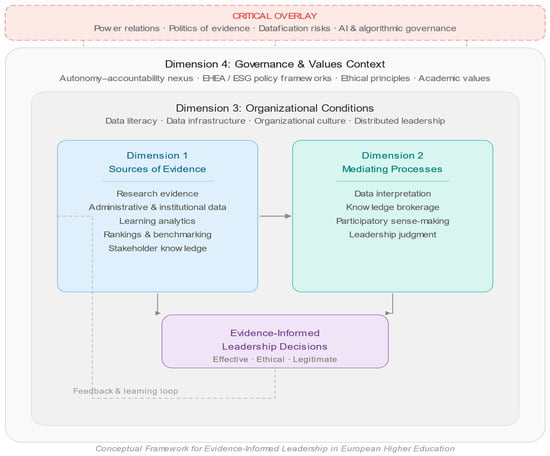
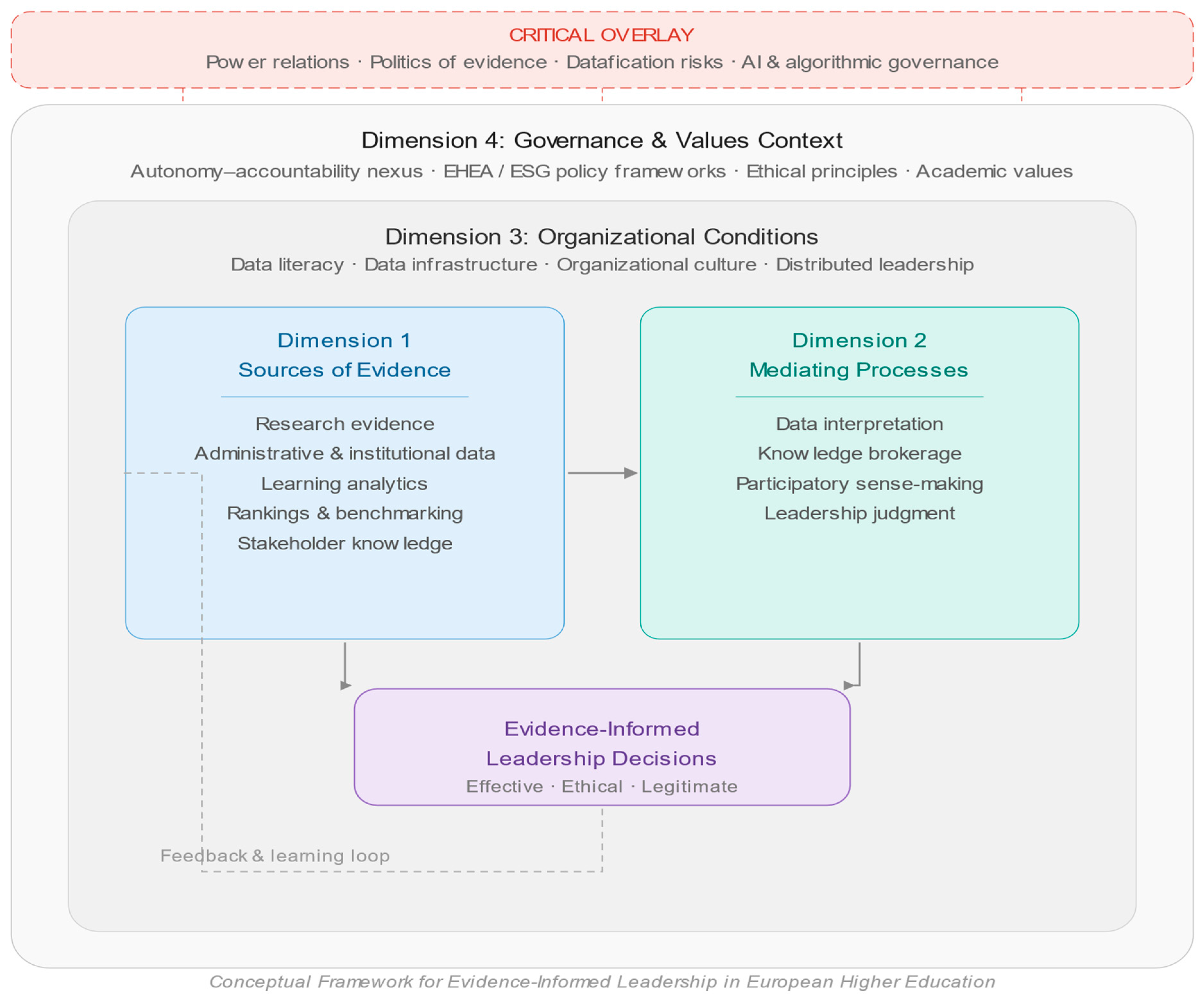

Disclaimer/Publisher’s Note: The statements, opinions and data contained in all publications are solely those of the individual author(s) and contributor(s) and not of MDPI and/or the editor(s). MDPI and/or the editor(s) disclaim responsibility for any injury to people or property resulting from any ideas, methods, instructions or products referred to in the content. |
© 2026 by the authors. Licensee MDPI, Basel, Switzerland. This article is an open access article distributed under the terms and conditions of the Creative Commons Attribution (CC BY) license.