


Abstract
Fibromyalgia is a chronic disorder characterized by widespread pain, fatigue, sleep disturbances, cognitive dysfunction, and psychological symptoms. This randomized controlled trial evaluated whether exercise delivered through immersive virtual reality (IVR) provides additional benefits beyond supervised conventional exercise in women with fibromyalgia. Thirty-six participants were randomized to IVR or conventional exercise, with both interventions comprising 12 supervised sessions over six weeks. Sixteen IVR and twelve control participants completed post-intervention assessment. Linear mixed-effects models using all available observations showed greater improvement in fibromyalgia-related impact, assessed using the Fibromyalgia Impact Questionnaire-Revised (FIQR), with IVR (group × time interaction, p = 0.002). Global cognitive screening performance, assessed using the Montreal Cognitive Assessment (MoCA), also improved more with IVR (unadjusted p = 0.005; Holm-adjusted p = 0.025). Sleep quality improved within the IVR group, but the between-group difference did not remain significant after multiplicity adjustment (Holm-adjusted p = 0.080). No significant between-group differences were observed for depression, anxiety, or stress. Retention was 88.9% with IVR and 66.7% with conventional exercise. Both interventions were well tolerated, with only mild transient adverse events and no intervention-related discontinuations. IVR was feasible and well tolerated and may provide additional benefits for fibromyalgia-related impact and global cognitive screening performance. Larger, adequately powered randomized controlled trials are needed to confirm these findings.
1. Introduction
Fibromyalgia is a chronic disorder characterized by persistent widespread pain accompanied by fatigue, sleep disturbances, cognitive complaints, and psychological symptoms, all of which markedly impair daily functioning and quality of life [1,2]. Exercise therapy is considered a cornerstone of non-pharmacological management; nevertheless, maintaining long-term participation in conventional rehabilitation programs remains difficult for many individuals [3]. Symptom exacerbation during exercise, persistent fatigue, kinesiophobia, and reduced motivation are among the factors most frequently associated with poor adherence and early discontinuation of rehabilitation programs [4,5].
The condition has historically been reported more frequently in women; however, the magnitude of this female predominance varies substantially according to the diagnostic criteria and ascertainment methods used. Clinical samples have reported proportions of women exceeding 90%, whereas population-based studies applying standardized criteria have shown a substantially smaller female predominance, suggesting that referral, diagnostic, and ascertainment processes may influence the observed sex distribution. Sex-related differences in symptom presentation have also been reported, with women generally exhibiting a somewhat greater symptom burden than men. These differences, together with the predominance of women in clinically identified fibromyalgia populations, support the relevance of specifically examining therapeutic responses in women with fibromyalgia [6,7].
Immersive virtual reality (IVR) has gained increasing attention as a platform for delivering rehabilitation by combining therapeutic exercise with interactive, multisensory virtual environments [8,9]. Compared with conventional exercise, IVR-based exercise programs may promote greater engagement, enjoyment, and active participation through immersive experiences and real-time interaction [10,11]. As a result, the application of virtual environments in chronic pain rehabilitation has attracted growing interest in recent years [12,13,14].
Findings from pilot and exploratory investigations indicate that immersive virtual reality–based exercise may improve symptom severity, physical function, and psychological well-being in individuals with fibromyalgia [15,16]. Nevertheless, the current body of evidence remains limited, as highlighted by recent systematic reviews [17], because of small sample sizes, methodological heterogeneity, and the predominance of pilot or uncontrolled study designs. In addition, previous investigations have focused predominantly on pain-related outcomes, whereas other clinically relevant domains, including sleep quality and cognitive performance, remain insufficiently investigated [17].
Sleep disturbances are among the most disabling manifestations of fibromyalgia and are closely associated with fatigue, pain amplification, impaired recovery, and reduced quality of life [18,19,20]. Likewise, cognitive dysfunction, commonly referred to as “fibrofog,” affects attention, memory, executive function, and information processing, negatively impacting occupational and social functioning [21,22]. IVR exercise continuously challenges multiple cognitive domains by requiring sustained attention, visuospatial processing, motor planning, rapid decision-making, and real-time responses to dynamic virtual stimuli [23,24]. Consequently, this mode of exercise may simultaneously stimulate both physical and cognitive processes, supporting the inclusion of cognitive performance as a clinically relevant outcome in individuals with fibromyalgia [21,22,24,25]. Although immersive virtual environments may enhance attentional engagement, behavioral participation, and sensory distraction during exercise [26,27], their effects on sleep quality and cognitive outcomes in individuals with fibromyalgia have not yet been fully established [17].
Current literature supports the use of IVR primarily as a platform for delivering therapeutic exercise rather than as an independent therapeutic modality [28,29]. Accordingly, any clinical benefits are likely to result from the combination of established exercise principles with immersive features such as multisensory stimulation, real-time performance feedback, progressive task demands, and cognitively challenging motor activities [30,31]. These characteristics have been proposed to enhance motivation, participation, and engagement with exercise while preserving the therapeutic objectives of exercise-based rehabilitation [32,33]. Nevertheless, whether this mode of exercise delivery provides additional multidimensional clinical benefits beyond those achieved with supervised conventional exercise in women with fibromyalgia remains uncertain.
Given these persisting knowledge gaps, particularly the limited randomized controlled evidence comparing immersive virtual reality–based exercise with supervised conventional exercise across multiple clinically relevant outcomes, additional high-quality clinical trials are warranted in women with fibromyalgia [17]. Accordingly, this randomized controlled trial aimed to compare the multidimensional effects of therapeutic exercise delivered through IVR with those of supervised conventional exercise. Fibromyalgia-related impact was designated as the primary outcome for the efficacy analysis, whereas global cognitive screening performance, sleep quality, and psychoemotional symptoms were evaluated as secondary clinical outcomes. Adherence and safety were additionally evaluated to characterize the feasibility and tolerability of the intervention. We hypothesized that participants allocated to the IVR group would demonstrate greater improvements in fibromyalgia-related impact and favorable changes in global cognitive screening performance, sleep quality, and psychoemotional symptoms compared with those receiving supervised conventional exercise.
2. Materials and Methods
2.1. Study Design and Blinding
A single-blind, parallel-group randomized controlled clinical trial was conducted to evaluate the effects of a therapeutic exercise program delivered through IVR in women with fibromyalgia. The study was conducted in accordance with the Declaration of Helsinki [34] and followed the Consolidated Standards of Reporting Trials (CONSORT) recommendations for randomized controlled trials [35].
The study was approved by the Scientific Ethics Committee of Universidad San Sebastián (Approval No. 171-25) before participant enrollment. The trial was retrospectively registered at ClinicalTrials.gov (Identifier: NCT07605143) on 13 May 2026, after completion of participant recruitment and data collection. The delayed registration resulted from an administrative oversight during study initiation. No changes were made to the study objectives, interventions, or planned outcome assessments as a consequence of the retrospective registration. All participants provided written informed consent prior to enrollment.
2.2. Participants and Eligibility Criteria
The study population consisted of women with fibromyalgia belonging to a fibromyalgia support group in Concepción, Chile, as well as patients receiving treatment at a rehabilitation center in the Greater Concepción area. Participants were recruited through an open invitation directed to individuals with a previous medical diagnosis of fibromyalgia.
Eligibility criteria included women aged 18 years or older with a medical diagnosis of fibromyalgia fulfilling the 2016 revised fibromyalgia diagnostic criteria [2] and the ability to participate in therapeutic exercise sessions. Exclusion criteria included pregnancy or breastfeeding, uncontrolled metabolic disorders, oncological pain, severe musculoskeletal or neurological conditions limiting exercise participation, and vertigo or other vestibular disorders incompatible with IVR exposure.
Recruitment was performed using a non-probabilistic consecutive sampling strategy. All individuals meeting the eligibility criteria during the recruitment period were invited to participate until the target sample size was reached. Participant recruitment was conducted by an independent researcher who was not involved in randomization, outcome assessment, intervention delivery, or data analysis.
Sample size estimation was performed using G*Power software (version 3.1.9.7; Heinrich Heine University Düsseldorf, Düsseldorf, Germany) with the Fibromyalgia Impact Questionnaire-Revised (FIQR) designated as the primary outcome. The calculation was based on a two-sided independent-samples comparison between two groups, assuming an alpha level of 0.05, statistical power of 90%, a 1:1 allocation ratio, and a large standardized effect size (Cohen’s d ≈ 1.39), consistent with the large FIQR effects observed in previous pilot [15] and quasi-experimental [16] studies conducted by our research group. Under these assumptions, the minimum required sample size was 24 participants, corresponding to 12 participants per group. Recruitment was continued beyond this minimum to provide an additional margin for potential attrition; however, a specific attrition percentage was not prespecified. Ultimately, 36 participants were randomized, with 18 participants allocated to each group.
Following confirmation of eligibility, participants were randomly assigned in a 1:1 ratio to either the IVR group or the control group using a simple randomization sequence generated through the Random.org platform (Randomness and Integrity Services Ltd., Dublin, Ireland). The randomization sequence was generated in advance by an independent researcher who was not involved in participant recruitment, outcome assessment, intervention delivery, or data analysis. Allocation concealment was maintained by ensuring that the researcher responsible for participant recruitment remained unaware of the allocation sequence until eligibility had been confirmed, written informed consent had been obtained, and baseline assessments had been completed. Group assignments were disclosed only after participant enrollment and baseline assessment had been completed, according to the pre-generated randomization sequence.
Due to the nature of the interventions, blinding of participants and treating physical therapists was not feasible. However, all baseline and post-intervention outcome assessments (FIQR, MoCA, Jenkins Sleep Questionnaire, and DASS-21) were performed by an independent physical therapist who remained blinded to group allocation throughout the study and was not involved in participant recruitment, randomization, intervention delivery, or data analysis.
2.3. Intervention
Both groups participated in a supervised therapeutic exercise program lasting 6 weeks, with a frequency of two sessions per week, for a total of 12 sessions. Sessions lasted approximately 30–35 min, with comparable overall session duration and therapist supervision between groups. The interventions were designed to provide a broadly comparable therapeutic exercise dose in terms of session frequency, overall duration, therapist supervision, aerobic exercise duration, intended exercise intensity, and general movement patterns, while IVR was incorporated only in the IVR group. Exercise intensity during the common aerobic component was monitored in both groups using the modified Borg Rating of Perceived Exertion scale, with participants encouraged to maintain a moderate level of perceived exertion. However, total session workload was not objectively quantified or formally matched between groups. Detailed intervention components and their respective durations are described below.
2.3.1. Immersive Virtual Reality Group
Participants allocated to the IVR group completed a supervised therapeutic exercise program incorporating immersive virtual reality. Each session began with 10 min of moderate-intensity aerobic exercise using a TFB cycle ergometer (BH Fitness, Vitoria-Gasteiz, Spain). This aerobic phase was included as part of the therapeutic exercise program to promote cardiovascular activation and prepare participants for the subsequent immersive exercise. Exercise intensity was monitored using the modified Borg Rating of Perceived Exertion scale (1 = minimal effort; 10 = maximal effort), with participants encouraged to maintain a moderate level of perceived exertion throughout the aerobic exercise phase.
Following the aerobic exercise phase, approximately 5 min were allocated to preparation for the immersive component, including fitting and adjusting the head-mounted display, equipment setup, and preparation for interaction with the virtual environment. Participants then completed 15 min of immersive virtual reality-based therapeutic exercise using Oculus Quest 2 head-mounted displays (Meta Platforms Inc., Menlo Park, CA, USA) and the FitXR® platform (FITAR LIMITED, London, UK) in its AeroBox modality.
The immersive intervention consisted of gamified boxing-based exercises in which participants performed upper-limb movements directed toward virtual targets approaching from different directions within the immersive environment. The tasks incorporated multiple punching patterns, including straight punches, hooks, and uppercuts, combined with coordinated whole-body movements such as lateral displacements, weight shifting, and squatting maneuvers to avoid virtual obstacles. Participants received continuous real-time feedback through a scoring system based on movement accuracy and task performance, as well as automated verbal encouragement and positive reinforcement delivered by the platform according to performance achievements during gameplay. Exercise difficulty was automatically adjusted according to individual performance within the platform. Participants were able to personalize several aspects of the virtual experience, including environmental settings, background music, and whether sessions were performed individually or accompanied by virtual exercise partners. These options were intended to increase autonomy, enjoyment, and engagement during the intervention.
Exercise intensity and task complexity were progressively adjusted according to participant tolerance, ratings on the modified Borg Rating of Perceived Exertion scale, and individual performance within the FitXR® platform (FITAR LIMITED, London, UK; specific software version not recorded). Progression was achieved through automatic adaptation of task difficulty based on participant performance, while the supervising physical therapist monitored tolerance, safety, and movement quality throughout each session. Thus, each IVR session lasted approximately 30 min, comprising 10 min of cycling, approximately 5 min of preparation and equipment adjustment, and 15 min of immersive virtual reality-based exercise. All sessions were supervised by a physical therapist to ensure standardized intervention delivery, appropriate movement execution, and participant safety.
Participants were continuously monitored for adverse events associated with exercise or IVR exposure throughout the intervention period.
2.3.2. Control Group
Participants allocated to the control group completed a supervised conventional exercise program with the same session frequency and duration as the IVR group. The control intervention was designed to provide a comparable session frequency, duration, therapist supervision, and intended exercise intensity while excluding the immersive virtual environment. This approach was intended to isolate the potential contribution of the immersive exercise delivery modality beyond the effects of therapeutic exercise itself.
Each session began with 10 min of moderate-intensity aerobic exercise using a cycle ergometer. Exercise intensity was monitored using the modified Borg Rating of Perceived Exertion scale, with participants encouraged to maintain a moderate level of perceived exertion throughout the aerobic exercise phase.
Following the aerobic phase, participants completed a structured exercise circuit consisting of four 3-min rounds, interspersed with 1-min rest periods between rounds. The exercise program included boxing movements directed toward a punching bag or therapist-guided targets, squatting exercises, and lateral trunk displacement tasks. Exercise complexity progressively increased across the four rounds by incorporating additional coordinated motor tasks.
The first round consisted of boxing movements directed toward a punching bag. During the second round, squatting exercises were added to the boxing tasks. The third round incorporated lateral trunk displacement exercises in combination with boxing and squatting movements. Finally, the fourth round included therapist-directed boxing tasks combined with squats and lateral trunk displacement exercises.
Sessions concluded with a 3-min cool-down phase consisting of controlled breathing and stretching exercises for the upper and lower limbs. Approximately 5 min per session were additionally allocated to participant preparation and transitions between intervention components. Thus, control sessions lasted approximately 33 min, including 10 min of cycling, 12 min of circuit-based exercise, 3 min of inter-round rest, 3 min of cool-down, and approximately 5 min of preparation and transitions. All sessions were supervised by a physical therapist to ensure standardized intervention delivery, appropriate exercise execution, and participant safety.
2.4. Outcome Measures
Assessments were conducted at baseline and immediately after completion of the intervention period. Fibromyalgia-related impact, assessed using the FIQR, was designated as the primary outcome for the efficacy analysis and informed the sample size calculation. Global cognitive screening performance (MoCA), sleep quality (Jenkins Sleep Questionnaire), and psychoemotional symptoms (DASS-21) were evaluated as secondary clinical outcomes. Adherence and safety were additionally evaluated to characterize intervention feasibility and tolerability.
2.4.1. Fibromyalgia-Related Impact
Fibromyalgia-related impact was assessed using the FIQR, a validated Spanish version designed to evaluate the multidimensional impact of fibromyalgia. The questionnaire assesses physical function, overall disease impact, and symptom severity, with total scores ranging from 0 to 100. Higher scores indicate greater disease impact and functional impairment [36,37].
2.4.2. Global Cognitive Screening Performance
Global cognitive screening performance was evaluated using the validated Spanish version of the Montreal Cognitive Assessment (MoCA), a cognitive screening instrument that assesses multiple cognitive domains, including attention, executive function, memory, language, visuospatial abilities, abstraction, and orientation. Total scores range from 0 to 30 points, with higher scores indicating better global cognitive screening performance [38]. The same version of the MoCA was administered at baseline and post-intervention. The education correction (+1 point for participants with 12 years or fewer of formal education) was not applied because all participants had completed more than 12 years of formal education.
2.4.3. Psychoemotional Variables
Psychoemotional symptoms were assessed using the validated Spanish version of the Depression Anxiety Stress Scales-21 (DASS-21), which evaluates symptoms related to depression, anxiety, and stress. The questionnaire consists of 21 items divided into three subscales, with higher scores indicating greater symptom severity [39]. Raw scores for each of the three subscales were analyzed separately and were not multiplied by two, because the analyses focused on continuous changes in symptom scores rather than classification according to severity categories derived from DASS-42 cut-off values. No DASS-21 total score was used in the analyses.
2.4.4. Sleep Quality
Sleep quality was evaluated using the validated Spanish-language version of the Jenkins Sleep Questionnaire, which assesses sleep-related difficulties experienced during the previous week, including problems initiating sleep, nocturnal awakenings, non-restorative sleep, and fatigue upon awakening. Higher scores indicate poorer sleep quality [40,41].
2.4.5. Adherence
Adherence to the intervention program was calculated as the percentage of completed sessions relative to the total number of scheduled sessions. Attendance was individually recorded throughout the intervention period. Participants who attended at least 75% of the scheduled sessions were classified as adherent.
2.4.6. Safety and Tolerability
Adverse events were monitored throughout the intervention period by the supervising physical therapist at each treatment session. Participants were systematically asked at the beginning and end of each session whether they had experienced any discomfort or adverse symptoms potentially related to the intervention. All reported events were documented and classified according to severity. Serious adverse events were defined as events requiring medical attention or hospitalization, or resulting in discontinuation of the intervention. Events not meeting these criteria were classified as mild.
2.5. Statistical Analysis
Statistical analyses were performed using jamovi (Version 2.7.38.0), with linear mixed-effects models implemented using the GAMLj3 module (General Analyses for Linear Models, version 3). Baseline demographic and clinical characteristics were summarized using descriptive statistics, with continuous variables presented as means and standard deviations and categorical variables as frequencies and percentages. In accordance with the CONSORT statement, formal hypothesis testing was not performed to assess baseline comparability because any observed differences were considered to arise from the randomization process rather than systematic allocation bias [35].
The study outcomes and corresponding assessment instruments were defined in the protocol submitted to the Scientific Ethics Committee before participant enrollment. The statistical approach was subsequently refined during manuscript development and peer review, after the outcome data had been examined, to improve the handling of incomplete follow-up data and differential attrition. Accordingly, linear mixed-effects models (LMMs) using all available baseline and post-intervention observations from randomized participants were adopted as the primary efficacy analysis, without requiring complete outcome data at both time points. The LMM approach was not specified in the original study protocol. For each outcome, the model included fixed effects for treatment group (IVR vs. control), time (baseline vs. post-intervention), and the group × time interaction, together with a participant-specific random intercept to account for within-participant correlation arising from repeated measurements. Models assumed a Gaussian distribution of residuals and were estimated using restricted maximum likelihood (REML), with degrees of freedom calculated using the Satterthwaite approximation. Under this likelihood-based framework, participants with missing post-intervention observations contributed all available data to the estimation under a missing-at-random (MAR) assumption, conditional on the variables included in the model. The group × time interaction represented the principal test of whether changes from baseline to post-intervention differed between the IVR and control groups. Estimated within-group changes and between-group differences in change were reported with corresponding 95% confidence intervals (CIs) and two-sided p-values.
To control the family-wise type I error rate across the five secondary outcomes, p-values corresponding to the group × time interaction were adjusted using Holm’s sequential procedure [42,43]. Statistical significance was established at p < 0.05 for the primary outcome and according to Holm-adjusted p-values for secondary outcomes.
Model assumptions were evaluated using residual diagnostics. Residual normality was assessed through graphical inspection of histograms and quantile–quantile (Q–Q) plots, complemented by the Shapiro–Wilk test. Residual-versus-fitted plots were inspected for substantial heteroscedasticity or systematic residual patterns. Given the relative robustness of LMMs to moderate departures from normality, model adequacy was evaluated considering the overall pattern of residual diagnostics rather than relying exclusively on formal normality tests.
To assess the robustness of the findings to missing follow-up data, a conservative baseline observation carried forward (BOCF) sensitivity analysis was performed across the complete clinical outcome family, including FIQR, MoCA, Jenkins Sleep Questionnaire, and the depression, anxiety, and stress subscales of the DASS-21. For participants with missing post-intervention data, baseline values were carried forward as post-intervention values, and the same linear mixed-effects model structure used in the primary analysis was applied to the resulting dataset. For the BOCF sensitivity analyses, Holm’s sequential procedure was also applied across the five secondary outcomes, whereas FIQR was evaluated separately as the primary outcome. Results of these supportive sensitivity analyses are presented in Supplementary Table S1 and were interpreted as assessments of robustness rather than as confirmatory evidence [44].
Adherence, intervention completion, and safety outcomes were analyzed separately from the clinical efficacy outcomes. Between-group comparisons of categorical outcomes were performed using Fisher’s exact test, whereas continuous adherence outcomes were compared using Welch’s independent-samples t-test. No inferential comparison was performed for serious adverse events because no events occurred in either group. Statistical tests were two-sided, with p < 0.05 considered statistically significant.
3. Results
3.1. Participant Characteristics
A total of 42 individuals were assessed for eligibility, of whom 36 met the inclusion criteria and were randomly assigned to the IVR group (n = 18) or the control group (n = 18). During the intervention period, eight participants withdrew due to personal reasons, primarily transportation difficulties, family-related responsibilities, and scheduling conflicts, resulting in 16 participants completing the post-intervention assessment in the IVR group and 12 in the control group. No participant discontinued the intervention because of adverse events related to exercise or IVR exposure.
The primary efficacy analyses using LMMs incorporated all available baseline and post-intervention observations from the 36 randomized participants, comprising 36 baseline and 28 post-intervention observations (64 observations in total). To assess the robustness of the findings to missing post-intervention data, a conservative baseline observation carried forward (BOCF) sensitivity analysis was additionally performed across all six clinical outcomes, including baseline and post-intervention observations for all 36 randomized participants (72 observations in total). Results of these supportive sensitivity analyses are presented in Supplementary Table S1. A CONSORT flow diagram summarizing participant recruitment, randomization, intervention, follow-up, and analysis is presented in Figure 1.
Figure 1.
CONSORT flow diagram of participant recruitment, allocation, intervention, follow-up, and analysis. A total of 42 individuals were assessed for eligibility, of whom 36 were randomized to the IVR group (n = 18) or control group (n = 18). Sixteen participants in the IVR group and 12 in the control group completed the post-intervention assessment. The primary efficacy analyses using linear mixed-effects models incorporated all available observations from the 36 randomized participants (64 observations: 36 at baseline and 28 at post-intervention). Sensitivity analyses using baseline observation carried forward (BOCF) across all six clinical outcomes included 72 observations (36 at baseline and 36 at post-intervention).
Baseline demographic and clinical characteristics are summarized descriptively in Table 1. Participants were middle-aged women with predominantly sedentary lifestyles, and pharmacological treatment use was common.
Table 1.
Baseline Sociodemographic and Clinical Characteristics of Randomized Participants.
Supplementary Table S2 presents the baseline characteristics of participants who completed follow-up and those who were lost to follow-up. Participants lost to follow-up had lower mean baseline BMI and FIQR scores and higher mean MoCA scores than those who completed follow-up, whereas Jenkins Sleep Questionnaire and DASS-21 scores were broadly comparable between the two groups. No formal hypothesis testing was performed for these comparisons.
3.2. Primary and Secondary Clinical Outcomes
Linear mixed-effects model analyses showed a significant group × time interaction for the primary outcome, FIQR (F = 11.35, p = 0.002), indicating a differential change over time between groups. The estimated between-group difference in change (IVR minus control) was −11.82 points (95% CI: −19.02 to −4.62). Simple-effects analyses showed a significant reduction in FIQR scores in the IVR group from baseline to post-intervention (estimated change = −12.45 points, 95% CI: −17.18 to −7.72; p < 0.001), whereas no significant change was observed in the control group (estimated change = −0.63 points, 95% CI: −6.05 to 4.79; p = 0.814).
Regarding secondary outcomes, a significant group × time interaction was observed for global cognitive screening performance assessed with the MoCA (F = 9.05, unadjusted p = 0.005), and this effect remained statistically significant after Holm adjustment (adjusted p = 0.025). The estimated between-group difference in change was +3.33 points (95% CI: 1.07 to 5.59), favoring the IVR group. MoCA scores increased in the IVR group (estimated change = 3.49 points, 95% CI: 1.99 to 5.00; p < 0.001), whereas no significant change was observed in the control group (estimated change = 0.16 points, 95% CI: −1.51 to 1.84; p = 0.844). For sleep quality, the Jenkins Sleep Questionnaire showed a significant group × time interaction before multiplicity adjustment (F = 6.04, unadjusted p = 0.020); however, this effect did not remain statistically significant after Holm adjustment (adjusted p = 0.080). The estimated between-group difference in change was −2.64 points (95% CI: −4.84 to −0.44); however, this finding should be interpreted in the context of the non-significant Holm-adjusted result. The IVR group showed a reduction in Jenkins scores (estimated change = −3.53 points, 95% CI: −4.98 to −2.08; p < 0.001), whereas the change in the control group was not significant (estimated change = −0.89 points, 95% CI: −2.54 to 0.77; p = 0.282).
No significant group × time interactions were observed for the DASS-21 depression (F = 2.27, unadjusted p = 0.143; Holm-adjusted p = 0.429), stress (F = 1.15, unadjusted p = 0.292; Holm-adjusted p = 0.584), or anxiety (F = 0.02, unadjusted p = 0.902; Holm-adjusted p = 0.902) subscales, indicating no evidence of differential changes between groups in these psychoemotional outcomes.
In the BOCF sensitivity analyses conducted across all six clinical outcomes, the group × time interaction remained statistically significant for FIQR (F = 13.30, p < 0.001). Among the secondary outcomes, the interactions for MoCA (F = 9.12, unadjusted p = 0.005; Holm-adjusted p = 0.024) and Jenkins Sleep Questionnaire (F = 8.66, unadjusted p = 0.006; Holm-adjusted p = 0.024) remained statistically significant after multiplicity adjustment, whereas no significant group × time interactions were observed for the DASS-21 depression, anxiety, or stress subscales. These analyses were interpreted as supportive sensitivity analyses rather than confirmatory evidence. Results of the primary LMM analyses and BOCF sensitivity analyses are presented in Table 2 and Supplementary Table S1, respectively.
Table 2.
Estimated Marginal Means and Between-Group Treatment Effects for Primary and Secondary Clinical Outcomes.
3.3. Adherence and Tolerability Outcomes
Participant retention was numerically higher in the IVR group than in the control group. Sixteen of the 18 randomized participants completed the intervention in the IVR group (88.9%), compared with 12 of the 18 participants in the control group (66.7%); however, the between-group difference in intervention completion was not statistically significant (p = 0.228). Withdrawals were primarily attributed to transportation difficulties, family-related responsibilities, and scheduling conflicts rather than intervention-related factors. No participant discontinued the intervention because of adverse events associated with IVR exposure or exercise.
Among participants who completed the intervention, the mean adherence rate was 79.1 ± 12.5% in the IVR group and 75.1 ± 7.9% in the control group, with no significant between-group difference (p = 0.304). Adherence to at least 75% of the scheduled sessions was achieved by 12 of 16 participants (75.0%) in the IVR group and 8 of 12 participants (66.7%) in the control group, with no significant between-group difference (p = 0.691). The mean number of completed sessions was 9.5 ± 1.5 in the IVR group and 9.0 ± 1.0 in the control group (p = 0.294).
No serious adverse events were reported in either group. Mild adverse events occurred in 2 of 18 participants (11.1%) in each group (p = 1.000). In the IVR group, these events consisted of mild transient dizziness or visual discomfort associated with IVR exposure and resolved spontaneously without medical intervention or treatment discontinuation. In the control group, mild transient musculoskeletal discomfort related to exercise was reported. Overall, both interventions were well tolerated, with no serious adverse events or intervention-related discontinuations during the study. Adherence and tolerability outcomes are summarized in Table 3.
Table 3.
Adherence and Tolerability Outcomes Following the Intervention.
4. Discussion
This randomized controlled trial evaluated whether therapeutic exercise delivered through IVR provides additional benefits beyond those achieved with supervised conventional exercise in women with fibromyalgia. Compared with conventional exercise, participants allocated to the IVR intervention showed significantly greater improvements in fibromyalgia-related impact and global cognitive screening performance. Sleep quality showed a greater numerical improvement in the IVR group, although the between-group effect did not remain statistically significant after adjustment for multiple comparisons, while no significant between-group effects were observed for depression, anxiety, or stress. The intervention demonstrated acceptable adherence, good tolerability, and no serious adverse events. Taken together, these findings support the feasibility of IVR as a modality for delivering therapeutic exercise in women with fibromyalgia and suggest potential benefits for selected clinically relevant outcomes that warrant confirmation in larger randomized controlled trials.
Fibromyalgia-related impact, the primary outcome of the trial, showed a greater improvement in the IVR group than in the control group. These results are consistent with previous pilot and exploratory studies suggesting that immersive exercise interventions may positively influence symptom severity and perceived disease burden in individuals with fibromyalgia [45,46,47]. Similar observations were reported in the recent systematic review and meta-analysis by Brea-Gómez et al., which concluded that virtual reality–based rehabilitation may improve pain, physical function, and quality of life in individuals with fibromyalgia, although the certainty of the available evidence remains limited because of small sample sizes and methodological heterogeneity [17]. Despite these encouraging findings, the available literature is still characterized by a limited number of high-quality randomized controlled trials, considerable methodological heterogeneity across IVR interventions, and substantial variability in intervention protocols and outcome measures, limiting direct comparisons across studies [48,49]. Within the context of this small, single-centre trial, the present findings provide preliminary estimates suggesting that immersive virtual reality–based exercise may offer additional benefits for fibromyalgia-related impact and global cognitive screening performance. The study also provides exploratory information on sleep quality, psychoemotional symptoms, adherence, safety, and treatment retention, which may help inform the design and outcome selection of future adequately powered confirmatory trials. The multidimensional nature of immersive rehabilitation may partially explain these findings, as virtual environments combine physical exercise with attentional engagement, multisensory stimulation, motor interaction, performance feedback, and motivational reinforcement through gamification and personalized virtual environments [26,50]. Immersive environments may enhance engagement and modify the emotional experience associated with rehabilitation, potentially facilitating behavioral participation [10,11,50,51]. This may be particularly relevant in individuals with fibromyalgia, in whom kinesiophobia, symptom-related fear, and exercise-related barriers may interfere with participation in and adherence to exercise-based rehabilitation [18,52]. In this context, the numerically higher retention observed in the IVR group (88.9%) compared with the control group (66.7%) may potentially reflect greater engagement associated with the immersive and gamified nature of the intervention. However, the between-group difference in retention was not statistically significant, and engagement, motivation, and enjoyment were not directly assessed. Therefore, this interpretation remains exploratory and should be considered a potential explanatory mechanism rather than a demonstrated effect of the IVR intervention.
The observed improvements in FIQR scores are noteworthy given the multidimensional nature of fibromyalgia. Beyond pain-related symptoms, the FIQR captures domains related to physical functioning, fatigue, sleep disturbances, and overall disease impact. Because the FIQR provides a multidimensional measure of fibromyalgia-related impact, the observed improvement indicates a reduction in overall disease impact. However, domain-level analyses were not performed, and the present findings therefore do not establish whether the observed change was driven by specific symptom or functional domains. Although the mechanisms underlying these improvements cannot be established from the present study, the findings support the potential of IVR as a modality for delivering therapeutic exercise capable of addressing the complex clinical presentation of fibromyalgia.
Regarding clinical relevance, the estimated between-group difference in FIQR change was −11.82 points (95% CI: −19.02 to −4.62) in favor of the IVR group. Although the point estimate exceeded the previously reported minimal clinically important difference of approximately 8.1 points for the FIQR [36,53,54], the confidence interval included values below this threshold. Therefore, while the between-group estimate suggests a potentially clinically meaningful additional benefit of IVR, the present data are also compatible with an effect that may not reach this threshold. This uncertainty should be considered when interpreting the magnitude of the observed treatment effect.
Several alternative explanations for the observed between-group difference in FIQR should also be considered. The control group showed minimal change in FIQR despite completing a supervised conventional exercise program, and the reasons for this limited response cannot be determined from the present study. In addition, participants could not be blinded to treatment allocation, and FIQR and several secondary outcomes were self-reported; therefore, expectation or novelty effects associated with the immersive intervention may have contributed to the observed between-group differences. Numerical baseline imbalances should also be considered, as the IVR group started with higher FIQR and lower MoCA scores than the control group, potentially allowing greater opportunity for improvement and introducing the possibility of regression to the mean. Consequently, the observed between-group effects should not be attributed exclusively to the immersive component of the intervention and require confirmation in larger randomized controlled trials.
Sleep quality showed a greater numerical improvement in the IVR group than in the control group. Although a significant within-group improvement was observed in the IVR group, the group × time interaction did not remain statistically significant after adjustment for multiple comparisons. Therefore, the present findings do not provide sufficient evidence to establish that exercise delivered through IVR is superior to conventional exercise for improving sleep quality, although the observed pattern suggests a potential benefit that warrants further investigation in larger, adequately powered randomized controlled trials [55,56,57]. Sleep disturbances are among the most disabling manifestations of fibromyalgia and are closely associated with pain severity, fatigue, emotional distress, and impaired cognitive functioning [58,59,60]. Both supervised exercise and IVR have been proposed as strategies capable of improving sleep through complementary mechanisms, although the present study was not designed to determine the specific pathways underlying these changes [55,56,57,61,62].
Among the secondary outcomes, global cognitive screening performance assessed using the MoCA showed a greater improvement in the IVR group than in the control group. Cognitive dysfunction, commonly referred to as “fibrofog,” represents one of the most disabling and underrecognized manifestations of fibromyalgia, negatively affecting attention, memory, executive functioning, and daily performance [21,22]. While previous virtual reality studies in fibromyalgia have primarily focused on pain, physical function, or psychological outcomes, fewer investigations have specifically explored cognitive outcomes associated with immersive rehabilitation interventions.
Importantly, the group × time effect for MoCA remained statistically significant after adjustment for multiple secondary outcomes using Holm’s procedure, supporting a differential improvement in global cognitive screening performance between the IVR and control groups. The mechanisms underlying the observed between-group difference in global cognitive screening performance cannot be determined from the present trial. Although immersive virtual reality has been used to deliver cognitively engaging tasks and combined cognitive–physical interventions [63,64,65], the conventional exercise circuit also included coordinated, therapist-directed tasks, and cognitive load was not directly measured in either group. Therefore, the observed MoCA findings cannot be specifically attributed to greater cognitive demands of the immersive environment. Furthermore, because the MoCA was administered repeatedly over a relatively short interval, a practice effect cannot be entirely excluded. Accordingly, the observed improvement in global cognitive screening performance should be interpreted cautiously and requires confirmation using comprehensive neuropsychological assessments. Future studies incorporating direct measures of cognitive load and comprehensive neuropsychological assessments are needed to investigate the mechanisms underlying these findings.
Improvements in fibromyalgia-related impact and global cognitive screening performance were observed alongside numerical changes in sleep-related and psychoemotional outcomes, although significant between-group effects were not demonstrated for these secondary domains after multiplicity adjustment. Although these variables were evaluated independently and no causal relationships can be inferred, this overall pattern reflects the multidimensional clinical presentation of fibromyalgia, in which physical, cognitive, sleep-related, and psychoemotional symptoms frequently coexist and interact [19,20,21,22]. Future studies incorporating mediation analyses and objective mechanistic measures will be necessary to clarify whether changes across these domains are interrelated.
Psychoemotional outcomes showed more modest changes than fibromyalgia-related impact and global cognitive screening performance. No statistically significant group × time interactions were observed for depression, anxiety, or stress, indicating no evidence that IVR provided additional benefits over conventional exercise for these outcomes during the 6-week intervention. Psychoemotional symptoms may require longer intervention periods, greater statistical power, or complementary psychological strategies to demonstrate differential treatment effects.
The favorable tolerability profile observed in the present study supports the feasibility of IVR as a modality for delivering therapeutic exercise in women with fibromyalgia. Although between-group differences in adherence and intervention completion did not reach statistical significance, intervention completion was numerically higher in the IVR group, while adherence rates among participants who completed the intervention were broadly comparable between groups, consistent with previous reports suggesting favorable feasibility and acceptability of VR-based interventions in fibromyalgia populations [46,47]. No participant discontinued the intervention because of adverse events related to IVR exposure. Reported adverse events were mild, transient, and self-limited, consisting primarily of dizziness and visual discomfort, in agreement with previous studies showing that cybersickness-related symptoms are generally mild and rarely require treatment discontinuation [66,67]. This observation is clinically relevant because long-term participation remains one of the main challenges in exercise-based rehabilitation for fibromyalgia, with dropout rates remaining substantial across exercise trials and sustained adherence being closely associated with better clinical outcomes [68,69]. In this context, the immersive and interactive characteristics of IVR systems—including real-time feedback, performance scoring, individualized virtual environments, and positive reinforcement—may facilitate sustained engagement with therapeutic exercise, although this hypothesis should be confirmed in adequately powered randomized trials [70,71].
The present study has several methodological strengths, including its randomized controlled design, blinded outcome assessment, supervised delivery of both interventions, and the evaluation of adherence and tolerability alongside clinical outcomes. The intervention was conducted in a supervised rehabilitation setting using commercially available immersive technology, supporting the practical feasibility of the protocol. In addition, the use of linear mixed-effects models allowed all available observations from randomized participants to contribute to the primary efficacy analyses, while sensitivity analyses provided an additional assessment of the potential influence of missing post-intervention data. These methodological strengths should nevertheless be considered alongside the limitations related to sample size and differential attrition described below.
Although the intervention was implemented using commercially available IVR technology, the present study did not evaluate the economic feasibility of implementing this intervention in routine clinical practice. Factors such as equipment acquisition and maintenance costs, software licensing, staff training requirements, and cost-effectiveness relative to conventional rehabilitation were beyond the scope of this trial. Future implementation and health economic studies are warranted to determine the practical and economic feasibility of integrating IVR into rehabilitation services.
Several limitations should be considered when interpreting these findings. First, the relatively small sample size may limit the generalizability of the findings, reduce the precision of the effect estimates, and decrease statistical power for secondary outcomes, particularly sleep-related and psychoemotional variables. Additionally, because the study exclusively included women with fibromyalgia, the findings cannot be extrapolated to men with fibromyalgia. Future trials including both women and men are needed to determine whether the observed effects are consistent across sexes. Furthermore, the sample size calculation was based on large effect sizes observed in our previous pilot and quasi-experimental studies. Because effect sizes derived from small preliminary studies may overestimate the true intervention effect, the present trial may therefore have been underpowered to detect modest but clinically meaningful differences. Given the relatively small sample size and differential attrition between groups, some numerical baseline imbalances may have influenced the observed treatment responses. In particular, the numerically higher proportion of pharmacological treatment use in the control group may have influenced psychoemotional, sleep, and cognitive responses to the intervention. Because medication type, dosage, and treatment changes during follow-up were not controlled, a residual confounding effect cannot be completely excluded. Although Holm’s sequential procedure was applied to control the family-wise type I error rate across the secondary outcomes, the trial was not powered to detect modest differences across all secondary endpoints. Therefore, findings related to the secondary outcomes should be interpreted cautiously and require confirmation in larger, adequately powered randomized controlled trials. Second, differential attrition between groups remains an important consideration, with a higher number of withdrawals observed in the control group. Descriptively, participants lost to follow-up had lower baseline BMI and FIQR scores and higher MoCA scores than those who completed follow-up (Supplementary Table S2). The LMMs incorporated all available observations from randomized participants and therefore did not restrict the analysis to participants with complete post-intervention data. In addition, BOCF sensitivity analyses were conducted across all six clinical outcomes, with FIQR, MoCA, and Jenkins Sleep Questionnaire retaining statistically significant group × time interactions, whereas no significant interactions were observed for the DASS-21 subscales (Supplementary Table S1). Nevertheless, given the small number of participants lost to follow-up and their unequal distribution between groups, the direction and magnitude of any attrition-related bias cannot be determined with confidence. Third, participant and therapist blinding was not feasible due to the nature of the intervention, although outcome assessments were performed by a blinded independent assessor. Fourth, the intervention duration was relatively short, and no long-term follow-up assessments were performed. Fifth, global cognitive screening performance was evaluated using the MoCA, a screening instrument, rather than a comprehensive neuropsychological battery. Sixth, the trial was retrospectively registered after completion of participant recruitment and data collection, and a prospectively specified statistical analysis plan was not available. Moreover, the statistical approach was refined during manuscript development and peer review after the outcome data had been examined, with the linear mixed-effects model not having been specified in the original protocol. Although the revised analytical approach was adopted to improve the handling of incomplete follow-up data and differential attrition, and sensitivity analyses provided additional information regarding the robustness of the findings, these circumstances introduce potential analytical flexibility and limit the confirmatory strength of the results. Accordingly, the findings should be interpreted as preliminary evidence requiring confirmation in prospectively registered, adequately powered randomized controlled trials with a prespecified statistical analysis plan. Additionally, because the intervention combined therapeutic exercise with IVR, the present study cannot determine the relative contribution of specific VR-related components (e.g., immersion, gamification, multisensory feedback, or motivational features) to the observed clinical effects. Although overall session duration, therapist supervision, and intended exercise intensity were broadly comparable between groups, total exercise workload was not objectively quantified or formally matched. In addition, the specific composition and timing of the intervention components differed slightly between groups. Therefore, differences in exercise workload or intervention structure cannot be entirely excluded as contributors to the observed treatment effects. Furthermore, although pain is a core symptom of fibromyalgia, a standalone pain intensity measure was not included because the study was designed to evaluate multidimensional clinical outcomes rather than analgesia as a primary endpoint. While the FIQR incorporates pain within its multidimensional assessment, future randomized controlled trials should include validated pain-specific instruments to facilitate comparison with the broader virtual reality analgesia literature.
Future research should evaluate the long-term effects of immersive rehabilitation in larger fibromyalgia cohorts and further investigate the mechanisms underlying changes in global cognitive screening performance and sleep-related outcomes associated with IVR interventions. Additional studies incorporating objective cognitive and sleep-related measures, mediation analyses, and broader clinical outcomes, including pain intensity, may help clarify the multidimensional effects of immersive rehabilitation in chronic pain populations.
5. Conclusions
Exercise delivered through IVR was associated with greater improvements in fibromyalgia-related impact and global cognitive screening performance than supervised conventional exercise in women with fibromyalgia. The findings also support the feasibility and tolerability of IVR as a modality for delivering therapeutic exercise. However, no additional benefits were demonstrated for sleep quality or psychoemotional symptoms after adjustment for multiple comparisons.
These findings should be interpreted in the context of the relatively small sample size, differential attrition between groups, potential expectation and novelty effects associated with the lack of participant blinding, baseline imbalances that may have introduced regression to the mean, the combined nature of the intervention, which precludes isolation of the specific contribution of immersive virtual reality, the absence of long-term follow-up, the use of a cognitive screening instrument rather than a comprehensive neuropsychological assessment, retrospective trial registration, and the absence of a prospectively specified statistical analysis plan. Accordingly, the findings should be considered preliminary and require confirmation in larger, prospectively registered and adequately powered randomized controlled trials with prespecified statistical analyses.
Supplementary Materials
The following supporting information can be downloaded at: https://www.mdpi.com/article/10.3390/virtualworlds5040049/s1, Table S1. Sensitivity Analysis Using Baseline Observation Carried Forward (BOCF) Across Primary and Secondary Clinical Outcomes; Table S2. Baseline characteristics of participants who completed follow-up and those lost to follow-up.
Author Contributions
Conceptualization, G.A.-Á. and C.C.-P.; methodology, G.A.-Á.; validation, D.P.-M., J.M.G.-P., F.G.-R. and W.O.-T.; formal analysis, G.A.-Á.; investigation, W.O.-T. and G.A.-Á.; data curation, G.A.-Á.; writing—original draft preparation, G.A.-Á.; writing—review and editing, G.A.-Á. and C.C.-P.; visualization, G.A.-Á. All authors have read and agreed to the published version of the manuscript.
Funding
This study was funded by the Collaborative Project (ID4404) of the Vice-Rector’s Office for University Outreach (VCM) at the Universidad San Sebastián, Concepción, Chile.
Institutional Review Board Statement
The study was conducted in accordance with the Declaration of Helsinki and approved by the Scientific Ethics Committee of Universidad San Sebastián (Approval No. 171-25; 12 December 2025).
Informed Consent Statement
Informed consent was obtained from all subjects involved in the study.
Data Availability Statement
The data presented in this study are available on request from the corresponding author. The data are not publicly available due to privacy and ethical restrictions related to participant confidentiality.
Acknowledgments
The research team extends their gratitude to the Fibromyalgia Association of Concepción. During the preparation and revision of this manuscript, the authors used OpenAI ChatGPT (GPT-5.6 Sol) solely for language refinement, English editing, and reference formatting. The authors subsequently reviewed and verified the edited material and take full responsibility for the scientific content of the publication.
Conflicts of Interest
The authors declare no conflicts of interest.
Abbreviations
The following abbreviations are used in this manuscript:
| BMI | Body Mass Index |
| CI | Confidence Interval |
| CONSORT | Consolidated Standards of Reporting Trials |
| DASS-21 | Depression Anxiety Stress Scales-21 |
| EMM | Estimated Marginal Mean |
| FIQR | Fibromyalgia Impact Questionnaire-Revised |
| IVR | Immersive Virtual Reality |
| LMM | Linear Mixed-Effects Model |
| MAR | Missing At Random |
| MoCA | Montreal Cognitive Assessment |
| REML | Restricted Maximum Likelihood |
| SD | Standard Deviation |
References
- Filipovic, T.; Filipović, A.; Nikolic, D.; Gimigliano, F.; Stevanov, J.; Hrkovic, M.; Bosanac, I. Fibromyalgia: Understanding, Diagnosis and Modern Approaches to Treatment. J. Clin. Med. 2025, 14, 955. [Google Scholar] [CrossRef] [Scilit] [PubMed]
- Wolfe, F.; Clauw, D.J.; Fitzcharles, M.-A.; Goldenberg, D.L.; Häuser, W.; Katz, R.L.; Mease, P.J.; Russell, A.S.; Russell, I.J.; Walitt, B. 2016 Revisions to the 2010/2011 Fibromyalgia Diagnostic Criteria. Semin. Arthritis Rheum. 2016, 46, 319–329. [Google Scholar] [CrossRef] [Scilit] [PubMed]
- Macfarlane, G.J.; Kronisch, C.; Dean, L.E.; Atzeni, F.; Häuser, W.; Fluß, E.; Choy, E.; Kosek, E.; Amris, K.; Branco, J. EULAR Revised Recommendations for the Management of Fibromyalgia. Ann. Rheum. Dis. 2017, 76, 318–328. [Google Scholar] [CrossRef] [Scilit] [PubMed]
- Parpa, K. Barriers to Exercise Participation in Individuals with Fibromyalgia in a Workplace Setting. Medicina 2026, 62, 354. [Google Scholar] [CrossRef] [Scilit] [PubMed]
- Ivorra López, S.; Nardi-Rodríguez, A.; López-Roig, S.; Peñacoba, C.; Pamies-Aubalat, L.; Pastor-Mira, M.-Á. How Can We Increase Walking Exercise Adherence in Women with Fibromyalgia? Aten. Primaria 2025, 57, 103333. [Google Scholar] [CrossRef] [Scilit] [PubMed]
- Wolfe, F.; Walitt, B.; Perrot, S.; Rasker, J.J.; Häuser, W. Fibromyalgia Diagnosis and Biased Assessment: Sex, Prevalence and Bias. PLoS ONE 2018, 13, e0203755. [Google Scholar] [CrossRef] [Scilit] [PubMed]
- Queiroz, L.P. Worldwide Epidemiology of Fibromyalgia. Curr. Pain Headache Rep. 2013, 17, 356. [Google Scholar] [CrossRef] [Scilit] [PubMed]
- Cerda, I.H.; Therond, A.; Moreau, S.; Studer, K.; Donjow, A.R.; Crowther, J.E.; Mazzolenis, M.E.; Lang, M.; Tolba, R.; Gilligan, C.; et al. Telehealth and Virtual Reality Technologies in Chronic Pain Management: A Narrative Review. Curr. Pain Headache Rep. 2024, 28, 83–94. [Google Scholar] [CrossRef] [Scilit] [PubMed]
- Darnall, B.D.; Krishnamurthy, P.; Tsuei, J.; Minor, J.D. Self-Administered Skills-Based Virtual Reality Intervention for Chronic Pain: Randomized Controlled Pilot Study. JMIR Form. Res. 2020, 4, e17293. [Google Scholar] [CrossRef] [Scilit] [PubMed]
- Da Cruz, M.M.A.; Ricci-Vitor, A.L.; Borges, G.L.B.; Da Silva, P.F.; Turri-Silva, N.; Takahashi, C.; Grace, S.L.; Vanderlei, L.C.M. A Randomized, Controlled, Crossover Trial of Virtual Reality in Maintenance Cardiovascular Rehabilitation in a Low-Resource Setting: Impact on Adherence, Motivation, and Engagement. Phys. Ther. 2021, 101, pzab071. [Google Scholar] [CrossRef] [Scilit] [PubMed]
- Zuki, F.S.M.; Sulaiman, S.; Merienne, F.; Ricca, A.; Guillet, C.; Saad, M.N.M. Assessing the Impact of Enriched Virtual Reality on Motivation and Engagement in Stroke Rehabilitation. IEEE Access 2024, 12, 143585–143598. [Google Scholar] [CrossRef] [Scilit]
- Brown, P.; Powell, W.; Dansey, N.; Al-Abbadey, M.; Stevens, B.; Powell, V. Virtual Reality as a Pain Distraction Modality for Experimentally Induced Pain in a Chronic Pain Population: An Exploratory Study. Cyberpsychol. Behav. Soc. Netw. 2022, 25, 66–71. [Google Scholar] [CrossRef] [Scilit] [PubMed]
- Sakuma, S.; Kimpara, K.; Kawai, Y.; Yanagita, Y.; Tanaka, N.; Tawara, Y.; Matsui, G.; Terada, K.; Arizono, S. Integrating Physical Therapy and Virtual Reality to Manage Pain-Related Fear of Movement in Patients with Chronic Pain: A Randomized Controlled Trial. Cureus 2025, 17, e79551. [Google Scholar] [CrossRef] [Scilit] [PubMed]
- Cetin, H.; Kose, N.; Gurses, E.; Turkmen, C.; Aksoy, S.; Oge, H.K. Effects of Virtual Reality for Postural Control in Chronic Neck Pain: A Single-Blind, Randomized Controlled Study. J. Manip. Physiol. Ther. 2023, 46, 191–200. [Google Scholar] [CrossRef] [Scilit] [PubMed]
- Arias-Álvarez, G.; Guzmán-Pincheira, C.; González-González, D.; Osorio-Torres, W.; Pecos-Martín, D.; Gómez-Pulido, J.; Carvajal-Parodi, C. Effects of Immersive Virtual Reality-Based Exercise on Quality of Life, Stress, Anxiety, Depression, and Handgrip Strength in Fibromyalgia: A Pilot Study. Virtual Real. Intell. Hardw. 2025, 7, 267–278. [Google Scholar] [CrossRef] [Scilit]
- Arias-Álvarez, G.; Santamera-Lastras, M.; Guzmán-Oyarzo, D.; Osorio-Torres, W.; Parada-Norambuena, B.; Pecos-Martín, D.; González, J.G.P.; Gómez-Pulido, J.; Carvajal-Parodi, C. Immersive Virtual Reality Exercise: Effects on Cortisol, Quality of Life, Cognitive Function, and Psychological Symptoms in Fibromyalgia. Medicina 2026, 62, 446. [Google Scholar] [CrossRef] [Scilit] [PubMed]
- Brea-Gomez, B.; Perez-Gisbert, L.; Fernandez-Castro, I.; Valenza, M.C.; Torres-Sanchez, I. Effects of Virtual Reality-Based Rehabilitation in the Treatment of Patients with Fibromyalgia Syndrome: A Systematic Review and Meta-Analysis of Randomized Clinical Trials. Games Health J. 2025, 14, 79–102. [Google Scholar] [CrossRef] [Scilit] [PubMed]
- Sarihan, K.; İnaltekin, A.; Yilmaz, O.A. Kinesiophobia Level in Fibromyalgia Patients and Its Relationship with Cognitive Functions, Anxiety, Depression, Disease Activity and Pain Level. Healthcare 2026, 14, 1137. [Google Scholar] [CrossRef] [Scilit] [PubMed]
- Singh, R.; Rai, N.K.; Pathak, A.; Rai, J.; Pakhare, A.; Kashyap, P.V.; Rozatkar, A.R.; Mishra, S.; Mudda, S. Impact of Fibromyalgia Severity on Patients Mood, Sleep Quality, and Quality of Life. J. Neurosci. Rural Pract. 2024, 15, 320–326. [Google Scholar] [CrossRef] [Scilit] [PubMed]
- Tenti, M.; Raffaeli, W.; Fagnani, C.; Medda, E.; Basciu, M.; Benassi, V.; Boschetti, N.; Martorana, L.; Palmieri, S.; Panini, G. Sleep Quality, Pain, Worry, and Rumination in Fibromyalgia: Results from Mediation Analyses. J. Clin. Med. 2025, 14, 7267. [Google Scholar] [CrossRef] [Scilit] [PubMed]
- Kravitz, H.M.; Katz, R.S. Fibrofog and Fibromyalgia: A Narrative Review and Implications for Clinical Practice. Rheumatol. Int. 2015, 35, 1115–1125. [Google Scholar] [CrossRef] [Scilit] [PubMed]
- Nicholls, T.; Kelly, K. Assessing Working Memory Function in Individuals with Fibromyalgia: A Systematic Review and Meta-Analysis. Appl. Neuropsychol. Adult 2025, 1–17. [Google Scholar] [CrossRef] [Scilit] [PubMed]
- Kamari, M.; Siqueira, V.; Bakare, J.; Sebastião, E. Virtual Reality Technology for Physical and Cognitive Function Rehabilitation in People with Multiple Sclerosis. Rehabil. Res. Pract. 2024, 2024, 2020263. [Google Scholar] [CrossRef] [Scilit] [PubMed]
- Yu, J.; Song, J.; Shen, Q. Effects of Fully Immersive Virtual Reality Training on Cognitive Function in Patients with Mild Cognitive Impairment: A Systematic Review and Meta-Analysis. Front. Hum. Neurosci. 2024, 18, 1467697. [Google Scholar] [CrossRef] [Scilit] [PubMed]
- Nobari, H.; Rezaei, S.; Sheikh, M.; Fuentes-García, J.P.; Pérez-Gómez, J. Effect of Virtual Reality Exercises on the Cognitive Status and Dual Motor Task Performance of the Aging Population. Int. J. Environ. Res. Public Health 2021, 18, 8005. [Google Scholar] [CrossRef] [Scilit] [PubMed]
- Barcatta, K.; Holl, E.; Battistutta, L.; van der Meulen, M.; Rischer, K.M. When Less Is More: Investigating Factors Influencing the Distraction Effect of Virtual Reality from Pain. Front. Pain Res. 2022, 2, 800258. [Google Scholar] [CrossRef] [Scilit] [PubMed]
- Kenney, M.P.; Milling, L.S. The Effectiveness of Virtual Reality Distraction for Reducing Pain: A Meta-Analysis. Psychol. Conscious. Theory Res. Pract. 2016, 3, 199–210. [Google Scholar] [CrossRef] [Scilit]
- Brown, R.C.; Ross, M.H.; Russell, T.G. Clinical Effectiveness of Immersive Virtual Reality Exercise Interventions: Systematic Review and Meta-Analysis of Randomized Controlled Trials. J. Med. Internet Res. 2026, 28, e87542. [Google Scholar] [CrossRef] [Scilit] [PubMed]
- Howard, M.C. A Meta-Analysis and Systematic Literature Review of Virtual Reality Rehabilitation Programs. Comput. Hum. Behav. 2017, 70, 317–327. [Google Scholar] [CrossRef] [Scilit]
- Marucci, M.; Di Flumeri, G.; Borghini, G.; Sciaraffa, N.; Scandola, M.; Pavone, E.F.; Babiloni, F.; Betti, V.; Aricò, P. The Impact of Multisensory Integration and Perceptual Load in Virtual Reality Settings on Performance, Workload and Presence. Sci. Rep. 2021, 11, 4831. [Google Scholar] [CrossRef] [Scilit] [PubMed]
- Cooper, N.; Milella, F.; Pinto, C.; Cant, I.; White, M.; Meyer, G. The Effects of Substitute Multisensory Feedback on Task Performance and the Sense of Presence in a Virtual Reality Environment. PLoS ONE 2018, 13, e0191846. [Google Scholar] [CrossRef] [Scilit] [PubMed]
- Hadjipanayi, C.; Banakou, D.; Michael-Grigoriou, D. Virtual Reality Exergames for Enhancing Engagement in Stroke Rehabilitation: A Narrative Review. Heliyon 2024, 10, e37581. [Google Scholar] [CrossRef] [Scilit] [PubMed]
- Sherrill, A.M.; Hellman, N.; Rothbaum, B.O. Virtual Reality to Enhance Engagement in Exposure-Based Treatments. In Optimizing Treatment Engagement Processes in CBT for Anxiety and Related Disorders; Springer: Cham, Switzerland, 2025; pp. 129–147. [Google Scholar] [CrossRef] [Scilit]
- World Medical Association. World Medical Association Declaration of Helsinki: Ethical Principles for Medical Research Involving Human Subjects. JAMA 2013, 310, 2191–2194. [Google Scholar] [CrossRef] [Scilit] [PubMed]
- Schulz, K.F.; Altman, D.G.; Moher, D.; CONSORT Group. CONSORT 2010 Statement: Updated Guidelines for Reporting Parallel Group Randomised Trials. BMC Med. 2010, 8, 18. [Google Scholar] [CrossRef] [PubMed]
- Bennett, R.M.; Friend, R.; Jones, K.D.; Ward, R.; Han, B.K.; Ross, R.L. The Revised Fibromyalgia Impact Questionnaire (FIQR): Validation and Psychometric Properties. Arthritis Res. Ther. 2009, 11, R120, Erratum in Arthritis Res. Ther. 2009, 11, 415. https://doi.org/10.1186/ar2830. [Google Scholar] [CrossRef] [PubMed]
- Salgueiro, M.; García-Leiva, J.M.; Ballesteros, J.; Hidalgo, J.; Molina, R.; Calandre, E.P. Validation of a Spanish Version of the Revised Fibromyalgia Impact Questionnaire (FIQR). Health Qual. Life Outcomes 2013, 11, 132. [Google Scholar] [CrossRef] [Scilit] [PubMed]
- Delgado, C.; Araneda, A.; Behrens, M.I. Validación Del Instrumento Montreal Cognitive Assessment En Español En Adultos Mayores de 60 Años. Neurología 2019, 34, 376–385. [Google Scholar] [CrossRef] [Scilit] [PubMed]
- Antúnez, Z.; Vinet, E.V. Escalas de Depresión, Ansiedad y Estrés (DASS-21): Validación de La Versión Abreviada En Estudiantes Universitarios Chilenos. Ter. Psicól. 2012, 30, 49–55. [Google Scholar] [CrossRef] [Scilit]
- Shahid, A.; Wilkinson, K.; Marcu, S.; Shapiro, C.M. Jenkins Sleep Scale. In Stop, That and One Hundred Other Sleep Scales; Springer: Berlin/Heidelberg, Germany, 2011; pp. 203–204. ISBN 1-4419-9893-4. [Google Scholar]
- Villarreal-Zegarra, D.; Torres-Puente, R.; Otazú-Alfaro, S.; Al-kassab-Córdova, A.; de Castro, J.R.; Mezones-Holguín, E. Spanish Version of Jenkins Sleep Scale in Physicians and Nurses: Psychometric Properties from a Peruvian Nationally Representative Sample. J. Psychosom. Res. 2022, 157, 110759. [Google Scholar] [CrossRef] [Scilit] [PubMed]
- Holm, S. A Simple Sequentially Rejective Multiple Test Procedure. Scand. J. Stat. 1979, 6, 65–70. [Google Scholar]
- Bender, R.; Lange, S. Adjusting for Multiple Testing—When and How? J. Clin. Epidemiol. 2001, 54, 343–349. [Google Scholar] [CrossRef] [Scilit] [PubMed]
- Little, R.J.; D’agostino, R.; Cohen, M.L.; Dickersin, K.; Emerson, S.S.; Farrar, J.T.; Frangakis, C.; Hogan, J.W.; Molenberghs, G.; Murphy, S.A. The Prevention and Treatment of Missing Data in Clinical Trials. N. Engl. J. Med. 2012, 367, 1355–1360. [Google Scholar] [CrossRef] [Scilit] [PubMed]
- Chittaro, L.; Longhino, S.; Serafini, M.; Cacioppo, S.; Quartuccio, L. Efficacy of Immersive Virtual Reality Combined with Multisensor Biofeedback on Chronic Pain in Fibromyalgia: A Pilot Randomized Controlled Trial. ACR Open Rheumatol. 2025, 7, e70048. [Google Scholar] [CrossRef] [Scilit] [PubMed]
- Polat, M.; Kahveci, A.; Muci, B.; Günendi, Z.; Kaymak Karataş, G. The Effect of Virtual Reality Exercises on Pain, Functionality, Cardiopulmonary Capacity, and Quality of Life in Fibromyalgia Syndrome: A Randomized Controlled Study. Games Health J. 2021, 10, 165–173. [Google Scholar] [CrossRef] [Scilit] [PubMed]
- Tsigarides, J.; Grove, V.; Shenker, N.; Dainty, J.; Chipping, J.; Miles, S.; Sami, S.; MacGregor, A. P099 Attention-Based Virtual Reality-A Safe, Acceptable and Potentially Highly Effective Treatment for Fibromyalgia Syndrome: Findings from The VIPA Study. Rheumatology 2023, 62, kead104.140. [Google Scholar] [CrossRef] [Scilit]
- Goldsmith, E.; Anthony, M.; Landsteiner, A.; Ullman, K.; Kalinowski, C.; Zerzan, N.; Ewart, D.; Rich, T.; Miller, W.; Calvert, C. Extended Reality Interventions for Chronic Pain: A Systematic Review; Department of Veterans Affairs (US): Washington, DC, USA, 2024. [Google Scholar]
- Giacomelli, L.; Martin Sölch, C.; Ledermann, K. The Effect of Virtual Reality Interventions on Reducing Pain Intensity in Chronic Pain Patients: A Systematic Review. Virtual Real. 2024, 28, 126. [Google Scholar] [CrossRef] [Scilit]
- Liao, K.-L.; Huang, M.; Shi, J.; Chen, M.; Yang, R. Focus-Driven Augmented Feedback: Enhancing Focus and Maintaining Engagement in Upper Limb Virtual Reality Rehabilitation. IEEE Trans. Vis. Comput. Graph. 2025, 31, 2653–2663. [Google Scholar] [CrossRef] [Scilit] [PubMed]
- Magalhães, M.; Coelho, A.; Melo, M.; Bessa, M. Measuring Users’ Emotional Responses in Multisensory Virtual Reality: A Systematic Literature Review. Multimed. Tools Appl. 2024, 83, 43377–43417. [Google Scholar] [CrossRef] [Scilit]
- Sanz-Banos, Y.; Pastor-Mira, M.-A.; Lledo, A.; Lopez-Roig, S.; Penacoba, C.; Sanchez-Meca, J. Do Women with Fibromyalgia Adhere to Walking for Exercise Programs to Improve Their Health? Systematic Review and Meta-Analysis. Disabil. Rehabil. 2018, 40, 2475–2487. [Google Scholar] [CrossRef] [Scilit] [PubMed]
- Bennett, R.M.; Bushmakin, A.G.; Cappelleri, J.C.; Zlateva, G.; Sadosky, A.B. Minimal Clinically Important Difference in the Fibromyalgia Impact Questionnaire. J. Rheumatol. 2009, 36, 1304–1311. [Google Scholar] [CrossRef] [Scilit] [PubMed]
- Wang, C.; Schmid, C.H.; Fielding, R.A.; Harvey, W.F.; Reid, K.F.; Price, L.L.; Driban, J.B.; Kalish, R.; Rones, R.; McAlindon, T. Effect of Tai Chi versus Aerobic Exercise for Fibromyalgia: Comparative Effectiveness Randomized Controlled Trial. BMJ 2018, 360, k851. [Google Scholar] [CrossRef] [Scilit] [PubMed]
- Lee, S.Y.; Kang, J. Effect of Virtual Reality Meditation on Sleep Quality of Intensive Care Unit Patients: A Randomised Controlled Trial. Intensive Crit. Care Nurs. 2020, 59, 102849. [Google Scholar] [CrossRef] [Scilit] [PubMed]
- Cerolini, S.; Baldi, E.; Rizzuti, M.; Curati, S.; Meneo, D.; Tosi, C.; Gelfo, F.; Cardi, V.; Baglioni, C. Virtual Reality for Insomnia and Sleep Improvements: A Systematic Review and Meta-Analysis. Sleep Med. Rev. 2026, 87, 102281. [Google Scholar] [CrossRef] [Scilit] [PubMed]
- Goudman, L.; De Smedt, A.; Jansen, J.; Billot, M.; Roulaud, M.; Rigoard, P.; Moens, M. Virtual Reality to Improve Sleep Quality in Patients Suffering from Painful Diabetic Polyneuropathy: A Proof of Concept Study. J. Clin. Med. 2024, 13, 7163. [Google Scholar] [CrossRef] [Scilit] [PubMed]
- Andrade, A.; Vilarino, G.T.; Sieczkowska, S.M.; Coimbra, D.R.; Bevilacqua, G.G.; Steffens, R.d.A.K. The Relationship between Sleep Quality and Fibromyalgia Symptoms. J. Health Psychol. 2020, 25, 1176–1186. [Google Scholar] [CrossRef] [Scilit] [PubMed]
- Choy, E.H. The Role of Sleep in Pain and Fibromyalgia. Nat. Rev. Rheumatol. 2015, 11, 513–520. [Google Scholar] [CrossRef] [Scilit] [PubMed]
- Diaz-Piedra, C.; Catena, A.; Sanchez, A.I.; Miro, E.; Martínez, M.P.; Buela-Casal, G. Sleep Disturbances in Fibromyalgia Syndrome: The Role of Clinical and Polysomnographic Variables Explaining Poor Sleep Quality in Patients. Sleep Med. 2015, 16, 917–925. [Google Scholar] [CrossRef] [Scilit] [PubMed]
- Estévez-López, F.; Maestre-Cascales, C.; Russell, D.; Alvarez-Gallardo, I.C.; Rodriguez-Ayllon, M.; Hughes, C.M.; Davison, G.W.; Sanudo, B.; McVeigh, J.G. Effectiveness of Exercise on Fatigue and Sleep Quality in Fibromyalgia: A Systematic Review and Meta-Analysis of Randomized Trials. Arch. Phys. Med. Rehabil. 2021, 102, 752–761. [Google Scholar] [CrossRef] [Scilit] [PubMed]
- Cuenca-Martínez, F.; Suso-Martí, L.; Fernández-Carnero, J.; Muñoz-Alarcos, V.; Sempere-Rubio, N. Exercise-Based Interventions on Sleep Quality in Patients with Fibromyalgia Syndrome: An Umbrella and Mapping Review with Meta-Analysis. Semin. Arthritis Rheum. 2023, 61, 152216. [Google Scholar] [CrossRef] [Scilit] [PubMed]
- Yan, M.; Zhao, Y.; Meng, Q.; Wang, S.; Ding, Y.; Liu, Q.; Yin, H.; Chen, L. Effects of Virtual Reality Combined Cognitive and Physical Interventions on Cognitive Function in Older Adults with Mild Cognitive Impairment: A Systematic Review and Meta-Analysis. Ageing Res. Rev. 2022, 81, 101708. [Google Scholar] [CrossRef] [Scilit] [PubMed]
- Kim, D.-R.; Moon, E.; Shin, M.-J.; Yang, Y.-A.; Park, J.-H. Effect of Individual Virtual Reality Cognitive Training Programs on Cognitive Function and Depression in Middle-Aged Women: Randomized Controlled Trial. JMIR Ment. Health 2023, 10, e48912. [Google Scholar] [CrossRef] [Scilit] [PubMed]
- Tieri, G.; Costa, A.; Zabberoni, S.; Tenaglia, E.; De Simone, M.S. User Experience, System Usability, and Feasibility of Two Novel Immersive Virtual Reality Memory Tasks for Cognitive Training: A Pilot Study. Brain Sci. 2025, 15, 1289. [Google Scholar] [CrossRef] [Scilit] [PubMed]
- Simón-Vicente, L.; Rodríguez-Cano, S.; Delgado-Benito, V.; Ausín-Villaverde, V.; Delgado, E.C. Cybersickness. A Systematic Literature Review of Adverse Effects Related to Virtual Reality. Neurol. (Engl. Ed.) 2024, 39, 701–709. [Google Scholar] [CrossRef] [Scilit] [PubMed]
- Biswas, N.; Mukherjee, A.; Bhattacharya, S. “Are You Feeling Sick?”–A Systematic Literature Review of Cybersickness in Virtual Reality. ACM Comput. Surv. 2024, 56, 284. [Google Scholar] [CrossRef] [Scilit]
- Vancampfort, D.; Van Damme, T.; Brunner, E.; McGrath, R.L.; Hemmings, L.; Guimaraes, M.E.; Schuch, F. Dropout from Exercise Interventions in Adults with Fibromyalgia: A Systematic Review and Meta-Analysis. Arch. Phys. Med. Rehabil. 2024, 105, 571–579. [Google Scholar] [CrossRef] [Scilit] [PubMed]
- Han, T.; Xi, R.; Wang, J.; Yan, H.; Li, L. Adherence to ACSM Exercise Guidelines and Its Influence on Fibromyalgia Treatment Outcomes: A Meta-Analysis of Randomized Controlled Trials. Front. Physiol. 2024, 15, 1413038. [Google Scholar] [CrossRef] [Scilit] [PubMed]
- Wong, K.P.; Tse, M.M.Y.; Qin, J. Effectiveness of Virtual Reality-Based Interventions for Managing Chronic Pain on Pain Reduction, Anxiety, Depression and Mood: A Systematic Review. Healthcare 2022, 10, 2047. [Google Scholar] [CrossRef] [Scilit] [PubMed]
- Wenk, N.; Penalver-Andres, J.; Buetler, K.A.; Nef, T.; Müri, R.M.; Marchal-Crespo, L. Effect of Immersive Visualization Technologies on Cognitive Load, Motivation, Usability, and Embodiment. Virtual Real. 2023, 27, 307–331. [Google Scholar] [CrossRef] [Scilit] [PubMed]
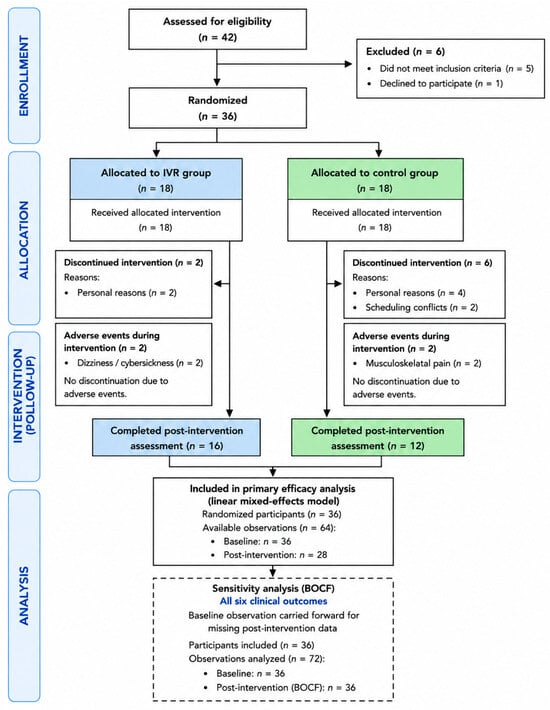
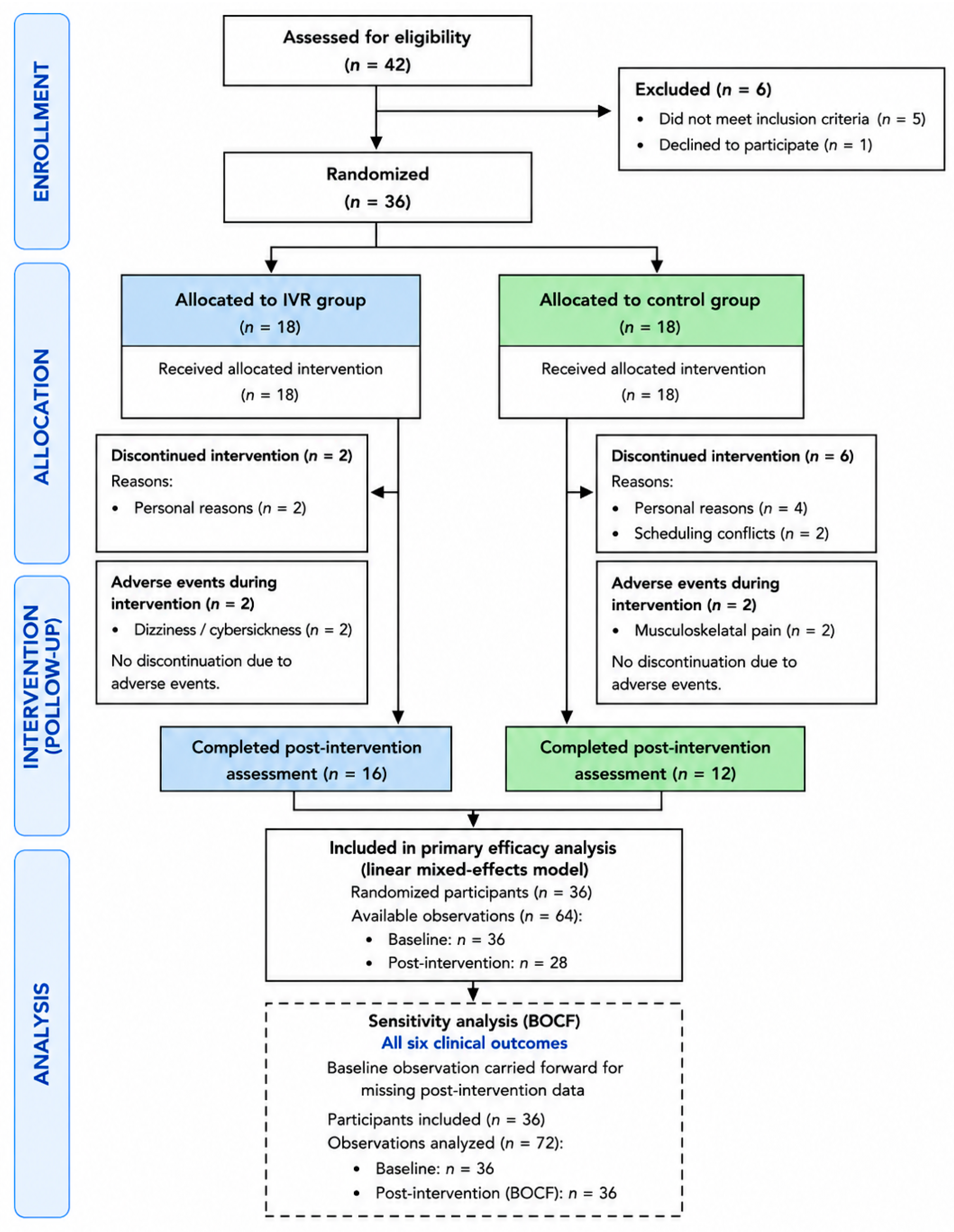

Disclaimer/Publisher’s Note: The statements, opinions and data contained in all publications are solely those of the individual author(s) and contributor(s) and not of MDPI and/or the editor(s). MDPI and/or the editor(s) disclaim responsibility for any injury to people or property resulting from any ideas, methods, instructions or products referred to in the content. |
© 2026 by the authors. Licensee MDPI, Basel, Switzerland. This article is an open access article distributed under the terms and conditions of the Creative Commons Attribution (CC BY) license.