


Abstract
Byzantine theological education often focuses on textual abstraction, frequently failing to convey the tradition’s embodied, spatial, and liturgical depths. This mixed-methods case study examined whether immersive virtual reality (IVR) could bridge this divide. A total of thirty (n = 30) graduate theology students were invited to navigate a bespoke reconstruction of a Byzantine church—modeled on the Chora Monastery—using Meta Quest 3 headsets (Qualcomm Snapdragon XR2 Gen 2, standalone inside-out tracking). Following a 25 min immersive session, participants completed usability assessments, semi-structured interviews, and observational documentation. Quantitative data revealed above-average system usability (M = 72.50, SD = 5.18), significantly exceeding the standard 68-point usability benchmark, t(29) = 4.760, p < 0.001, d = 0.869, and intuitive navigation even among IVR novices (63.3% of participants completed the guided task sequence with zero errors). Through thematic analysis, six key dimensions of the experience—spatial presence, theological meaning-making, navigational ease, interaction affordances, pedagogical limitations, and technical constraints—were identified. Participants described the sense of ‘immersive presence’ as transformative and reported that it helped them correct prior spatial misconceptions and deepened their affective engagement with the liturgy. However, they also identified significant pedagogical hurdles. The lack of collaborative features was described as “theologically incomplete,” while the absence of multisensory elements—specifically scent—created a noticeable liturgical void. Furthermore, participants highlighted an unresolved tension between the experience’s devotional immersion and the critical distance required for academic study. The findings suggest that if IVR can support theological education effectively, future digital architectures may need to go beyond technical functionality to prioritize communal presence, contemplative pacing, and scaffolded criticality. This single-case, non-comparative design does not test IVR’s efficacy relative to physical site visits or 360° video. It instead establishes baseline usability and experiential evidence to inform such comparisons in future research.
1. Introduction
Byzantine theology constitutes one of the most intellectually demanding and experientially rich traditions within Christian thought, encompassing intricate liturgical practices, iconographic symbolism, mystical writings, and a sophisticated theology of sacred space that demands deep contextual and embodied understanding [1,2]. Unlike doctrinal systems that privilege abstract propositions, Byzantine spirituality is fundamentally liturgical because it is learned through participation in spatially situated rituals, sensory engagement with sacred art, and contemplative immersion in architecturally conceived environments, such as the Hagia Sophia or monastic katholika [3,4]. Traditional theological education in this tradition has relied predominantly on textual exegesis, historical analysis, and secondary descriptive accounts of liturgical practice, methods that, while intellectually rigorous, often fail to transmit the embodied, spatial, and affective dimensions that are constitutive of Byzantine worship [5]. As contemporary theological education confronts declining student engagement and the pedagogical limitations of purely discursive instruction, the integration of immersive digital technologies has emerged as a strategic priority for educators seeking to preserve and transmit complex religious heritage in ways that resonate with digitally native learners [6,7].
Immersive virtual reality (IVR) has demonstrated significant potential across higher education contexts to facilitate experiential learning, enhance spatial understanding, and foster emotional engagement with culturally complex material [8,9]. Recent systematic reviews indicate that IVR adoption in higher education has expanded dramatically between 2020 and 2025, with immersive technologies increasingly positioned as strategic pedagogical resources capable of improving engagement, confidence, and knowledge retention—particularly for domains requiring three-dimensional spatial reasoning, procedural simulation, or cultural immersion [10,11]. Within religious education specifically, emerging scholarship has begun to explore IVR applications for simulating sacred pilgrimage, reconstructing historical worship spaces, and enabling learners to experience liturgical environments that are geographically distant, historically inaccessible, or physically impossible to visit [12,13,14,15]. For instance, recent case studies [14,15] have documented the use of IVR to simulate Islamic pilgrimage rituals, with findings indicating that immersive experiences can deepen emotional and spiritual connections to religious material while improving understanding of historical and spatial contexts. These developments suggest that IVR may be uniquely suited to address the pedagogical challenges inherent in Byzantine theological education, where comprehension depends not merely on intellectual apprehension but on what scholars have termed liturgical literacy—the capacity to read, interpret, and participate in symbolically dense spatial and ritual environments [3,5].
Despite this growing body of literature, significant gaps remain in understanding how immersive technologies function specifically within theological education, and more critically, how learners themselves experience and make meaning from IVR-based theological content. The Cognitive Affective Model of Immersive Learning (CAMIL) posits that presence and agency serve as foundational affordances of IVR-based learning, influencing interest, intrinsic motivation, self-efficacy, and ultimately knowledge acquisition [8]. However, presence—the subjective sense of “being there” within a mediated environment—is a multidimensional construct. It comprises spatial presence (the feeling of being physically located in the environment), social presence (the perception of others), and self-presence (identification with a virtual avatar). Each dimension may interact uniquely with theological content intended to foster contemplative or devotional experiences [16,17].
This study aims to investigate the usability and interaction experience of an immersive virtual reality environment developed specifically for Byzantine theological education. Drawing upon the Cognitive Affective Model of Immersive Learning (CAMIL; [8]) and constructivist learning theory [18,19], this study examined how participants navigated, engaged with, and made meaning from IVR-based theological content situated within virtually reconstructed Byzantine liturgical environments. By foregrounding participant perspectives on technical usability, spatial presence, and the interpretive affordances of immersive theological content, this research sought to generate empirically grounded insights for educators, instructional designers, and theologians developing IVR environments for religious learning contexts. Given the case study design, this research was bounded by the specific IVR environment under investigation and the particular population of theological learners, with findings intended to provide instrumental insight into the phenomenon of immersive theological education rather than broad statistical generalization [20,21]. Therefore, the following research questions (RQs) guide this investigation:
- RQ1: Do participants describe the usability, navigability, and interaction experience of an immersive virtual reality environment designed for Byzantine theological education?
- RQ2: What thematic patterns emerge from participant reflections regarding the perceived affordances, limitations, and theological significance of IVR-based engagement with Byzantine liturgical content?
Given that the design does not include a physical-site or 360° video comparison condition, this study is not positioned to make distinctions between IVR and other embodied or mediated comparisons. Rather, it provides a baseline of usability and experience for such comparisons to build upon. This study makes three contributions to the ongoing literature. First, it provides, to our knowledge, the first empirical evaluation of IVR usability in Byzantine theological education, showing that domain-specific pedagogical demands create a usability threshold distinct from that found in STEM and procedural applications. Second, it extends the CAMIL by proposing formative presence and scaffolded distance as conceptual propositions warranting future confirmatory research on theological IVR design. Third, it demonstrates that communal and sensory absence constitute theological rather than merely technical limitations, shifting design priorities toward multi-user architectures and hybrid sensory approaches.
2. Background
Byzantine theological education, like theological education more broadly, faces a well-documented crisis of enrollment, sustainability, and student engagement [22,23,24,25,26]. This situation has intensified interest in pedagogical innovation, including immersive digital technologies, as a strategic response to the evolving educational needs of theological institutions [23]. The challenge is particularly acute in Byzantine theological education, where the gap between pedagogical method and subject matter is especially pronounced. Byzantine theology is not primarily a system of abstract doctrines to be intellectually apprehended. Rather, it is an embodied, spatial, and liturgically grounded tradition in which theological knowledge is constituted through participation in symbolically rich environments using sacred architecture, iconographic programs, hymnographic cycles, and ritual gestures that collectively cultivate what scholars have termed liturgical literacy [3,5]. The Hagia Sophia, for instance, was not merely a container for worship but a theological statement expressed through stone, light, and sound. It is a spatial iconography in which the dome represented the cosmos, the mosaics enacted the communion of saints, and the liturgical chant structured temporal experience according to eschatological time [1,2]. Yet contemporary students of Byzantine theology typically encounter this tradition through flattened textual descriptions, static photographic reproductions, and secondary scholarly accounts that cannot adequately convey its multisensory, spatial, and participatory dimensions. Recent digital humanities initiatives, including the thirty-year Byzantium 1200 project and the Foundation of the Hellenic World’s IVR production Hagia Sophia: 1500 Years of History, have demonstrated the technical feasibility of immersive reconstruction [3]. However, these projects have primarily served heritage visualization rather than pedagogically designed learning environments, leaving a critical gap between technological capability and educational application.
The emergence of IVR as a mature educational technology offers a theoretically grounded and empirically supported pathway for addressing this gap. Recent systematic reviews of extended reality (XR) in higher education, encompassing 295 peer-reviewed studies from 2020 to 2024, demonstrate that IVR is now the most frequently deployed immersive modality (58% of XR studies), with applications spanning knowledge acquisition (51%), psychomotor learning (35%), and affective learning (14%) across six continents and 48 countries [27]. These reviews identified four primary affordances through which XR facilitates learning using simulation, visualization, problem-solving, and gaming. Each of which aligns with the pedagogical requirements of theological education, where students must navigate complex symbolic systems, interpret spatially organized theological meanings, and engage in reflective meaning-making [28,29]. In the specific domain of architectural and spatial learning, empirical studies have demonstrated that IVR-based 360° video tours of sacred structures such as the Hagia Sophia produce significantly higher comprehension of architectural features compared to conventional 2D image-based instruction [28]. These findings are reinforced by research on presence—the subjective psychological state of “being there” in a mediated environment—which has been established as a critical mediator between immersive technology and learning outcomes. A classroom experiment found that IVR headset users experienced significantly heightened spatial presence, engagement, and ecological validity compared to tablet-based viewers, with a positive presence correlated with information retention and cognitive performance [29]. Similarly, a systematic review on presence in IVR across tasks and disciplines identified spatial presence (57% of studies) and cognitive presence (46%) as the most prevalent dimensions, with multimodal sensory feedback—visual, auditory, haptic, and kinesthetic—synergistically enhancing immersion and learning [30].
The theoretical foundations for IVR-based theological education are further strengthened by the convergence of experiential learning theory and the CAMIL model. Kolb’s [31] experiential learning cycle—encompassing concrete experience, reflective observation, abstract conceptualization, and active experimentation—posits that effective learning requires progression through all four stages, a sequence that traditional theological pedagogy often interrupts by privileging abstract conceptualization at the expense of concrete embodied experience [32]. IVR environments uniquely enable the full experiential cycle by providing immersive concrete experiences (e.g., virtually participating in a Byzantine liturgy), scaffolding reflective observation through interactive narrative elements, supporting abstract conceptualization via embedded theological commentary, and facilitating active experimentation through user-directed exploration [32,33]. The CAMIL model elaborates this theoretical grounding by identifying presence and agency as foundational affordances that influence interest, intrinsic motivation, self-efficacy, and ultimately knowledge acquisition in IVR settings [8]. For Byzantine theological education specifically, this means that immersive IVR has the potential to transform students from detached observers of textual descriptions into embodied participants within virtually reconstructed liturgical environments, thereby restoring the spatial, sensory, and affective dimensions that are constitutive of the tradition itself [33,34,35,36].
Empirical evidence from religious education contexts increasingly supports this theoretical promise. Recent studies [12,14] have documented the successful deployment of IVR for simulating Islamic pilgrimage rituals, with findings indicating that immersive experiences deepen emotional and spiritual connections to religious material while improving understanding of historical and spatial contexts. The Inter-American Adventist Theological Seminary’s Theo-Verse Legacy initiative, launched in 2025, represents a pioneering institutional adoption of IVR for theological education, offering users a multi-sensory retelling of biblical narratives with AI-integrated characters capable of responding to theological queries within the immersive environment [34,35]. These developments signal a broader recognition within religious education that immersive technologies are not merely supplementary tools but potentially transformative pedagogical resources capable of addressing the engagement crisis confronting theological schools. A 2025 meta-analysis of IVR and augmented reality (AR) in teaching and learning confirmed significant positive effects on student engagement—spanning cognitive, emotional, and behavioral dimensions—with particularly strong impacts in higher education and immersive IVR experiences [32]. The same study emphasized that IVR environments generate greater emotional engagement due to the sense of presence and realism they provide, a finding with direct relevance for theological education where affective and spiritual formation are inseparable from intellectual development.
Despite the above promising developments, critical gaps persist that demand rigorous empirical investigation. Systematic reviews of XR in higher education have identified recurring barriers that directly impede theological applications: usability challenges and learning curves affect 58.3% of implementations, while issues of equity, accessibility, and cognitive overload present additional obstacles to effective integration [34,36]. Moreover, the majority of existing IVR studies in higher education employ single-player applications with limited interactivity, suggesting that the collaborative and dialogical dimensions central to theological formation remain underexplored [18]. Most significantly, no empirical studies to date have systematically evaluated how learners navigate, interpret, and theologically reflect within immersive virtual reconstructions of Byzantine liturgical environments. While digital reconstructions of Constantinopolitan monuments have achieved remarkable technical sophistication, these projects have not been subjected to pedagogical usability evaluation from the learner’s perspective, leaving theological educators without evidence-based guidance for designing IVR environments that align with the cognitive, affective, and spiritual goals of Byzantine theological instruction. The present case study addresses this gap by investigating the usability and interaction experience of an immersive IVR environment developed specifically for Byzantine theological education, thereby contributing empirical evidence to an emerging field where technological innovation has outpaced pedagogical research.
3. Methodology
3.1. Research Design
This study employed a single-case embedded case study design [21] to investigate the usability and interaction experience of an immersive virtual reality environment developed for Byzantine theological education. The case study approach was selected for three interrelated reasons. First, case study methodology is uniquely suited for examining contemporary phenomena within real-life contexts, particularly when the boundaries between the phenomenon and its context are not clearly evident [21]. IVR environments constitute complex socio-technical systems in which user experience emerges from the dynamic interaction of technological affordances, individual learner characteristics, and the specific content domain. These are factors that cannot be meaningfully isolated in experimental or survey designs. Second, case studies enable the collection of rich, contextualized data that captures the how and why of participant experiences, generating the thick description necessary for understanding meaning-making processes in immersive theological learning [20]. Third, the case study design aligns with established precedents in IVR education research, where the integrative complexity of presence, usability, and learning outcomes has been effectively examined through bounded, in-depth qualitative investigation rather than decontextualized experimental manipulation [8,18]. The unit of analysis was the bounded case of participant interaction with the IVR environment; within this single case, individual participants served as embedded units, enabling both holistic case-level interpretation and cross-participant thematic analysis.
3.2. Setting and System Architecture
The IVR environment under investigation was a bespoke immersive reconstruction of a Byzantine church interior modeled after the Chora Monastery (Kariye Camii, Istanbul), a landmark of late Byzantine art (c. 14th century) celebrated for its extensive mosaic and fresco programs depicting cycles from the lives of Christ and the Virgin Mary. The virtual environment reproduced the church’s tripartite spatial organization—outer narthex, inner narthex (esonarthex), and nave—at architecturally accurate scale, enabling participants to experience the sequential spatial progression characteristic of Byzantine liturgical architecture and to perceive relationships between architectural zones, iconographic programs, and liturgical function.
The environment incorporated three principal categories of interactive content. First, an interactive iconographic program enabled participants to approach individual mosaics and frescoes and, through sustained gaze-based dwell interaction, activate embedded theological annotations displayed as spatially anchored overlay panels. These panels provided scriptural, patristic, and liturgical commentary contextualizing each image within the Byzantine theological tradition. Second, spatially positioned liturgical audio embedded Byzantine chant passages within the nave and ambient incantation near the sanctuary, creating an acoustically differentiated spatial field congruent with the liturgical function of each architectural zone. Third, on-demand didactic narration was available at designated trigger points throughout the space, providing historical and theological orientation accessible through the same gaze-based activation mechanism.
Navigation was supported through two locomotion modalities: teleportation (point-to-place instantaneous movement via controller input) and smooth locomotion (continuous joystick-based movement), with participants free to select and alternate between them. Gaze-based interaction served as the primary input mechanism for all content access, requiring sustained fixation on designated hotspots to trigger annotations, audio, and narration sequences.
The environment was developed using Unity 3D and deployed on Meta Quest 3 standalone headsets, which provided inside-out positional tracking without external sensors, enabling unconstrained movement within the defined physical space. Sessions were conducted in a dedicated IVR laboratory equipped with 3 m × 3 m guardian boundaries, adjustable ambient lighting calibrated to reduce lens reflective interference, and sound-dampening panels to minimize external auditory distraction and optimize acoustic immersion.
The architecture of the proposed IVR system is designed to support theology education and exploratory learning within a digitally reconstructed Byzantine church environment. The framework establishes a connection between the physical characteristics of the sacred space and its virtual counterpart, allowing users to interact with theological and iconographic content through immersive navigation and contextual information. As illustrated in Figure 1, the system is organized into four interconnected layers: the Physical Reference Layer, the Virtual Environment Layer, the Interaction and Educational Simulation Layer, and the User Evaluation and Analytics Layer.
Figure 1.
Conceptual Workflow of the Gaze-Based Dwell Activation Algorithm.
The Physical Reference Layer represents the real architectural and liturgical elements that constitute the reference model for the virtual environment. These include the church structure, iconographic compositions, fresco cycles, mosaic panels, and spatial divisions such as the outer narthex, inner narthex, nave, and sanctuary area. These components provide the basis for preserving the spatial organization and educational context of the original site.
The Virtual Environment Layer translates these physical characteristics into an interactive digital representation. Three-dimensional assets and architectural models are created using Blender 3.6, while the immersive application is implemented in Unity 2022.3 LTS. This layer manages real-time rendering, scene organization, object interaction, and spatial navigation, ensuring that the virtual experience remains consistent with the structure and visual appearance of the original environment.
Building upon this representation, the Interaction and Educational Simulation Layer provide the mechanisms through which users engage with the environment and access learning materials as described in Algorithm 1 below.
| Algorithm 1. Gaze-based dwell activation logic |
| 1: for each rendered frame: 2: ray ← ComputeGazeRay(headset.orientation) 3: target ← Raycast(ray, interactableLayer) 4: if target ≠ previousTarget: 5: dwellTimer ← 0 6: previousTarget ← target 7: if target ≠ null: 8: dwellTimer ← dwellTimer + Δtime 9: if dwellTimer ≥ DWELL_THRESHOLD: ▷ e.g., 1.5 s 10: switch target.type: 11: case ANNOTATION: 12: DisplayAnnotationPanel(target.content) 13: case AUDIO: 14: PlaySpatialAudio(target.clip) 15: case NARRATION: 16: PlayNarration(target.clip) 17: LogInteractionEvent(target, timestamp) 18: ▷ feeds Learning Analytics Component 19: else: 20: dwellTimer ← 0 |
The above layer incorporates three principal subsystems: (a) navigation and locomotion system, enabling users to move throughout the virtual church using teleportation or smooth locomotion techniques; (b) information and annotation system, which provides access to theological explanations, scriptural references, and iconographic descriptions associated with specific visual elements; (c) audio narration system, responsible for delivering Byzantine chants, ambient liturgical sounds, and spoken educational content to enhance contextual understanding and immersion. These subsystems facilitate self-directed exploration and support experiential learning by allowing participants to interact with architectural and religious elements in a manner that resembles a physical visit.
The User Evaluation and Analytics Layer records user activities and interaction data generated during virtual experience. This layer comprises two main components. The User Interaction Interface manages navigation and content activation mechanisms, including gaze-based dwell selection and controller-based interaction. The Learning Analytics Component captures navigation behavior, interaction events, locomotion preferences, task-completion information, and observational records. These data support the assessment of usability, interaction patterns, and learning performance while providing insights into users’ engagement with theological content.
Figure 1 complements Algorithm 1 by providing a conceptual visualization of the gaze-based dwell interaction workflow implemented in the IVR application. For each rendered frame, a gaze ray is generated from the headset orientation and intersected with interactive virtual objects. When the user’s gaze remains on the same target for longer than the predefined dwell threshold, the corresponding interaction (annotation display, spatial audio playback, or narration) is executed, and the interaction event is logged for subsequent learning analytics. The flowchart below illustrates the sequence from gaze ray generation and ray casting to dwell-time accumulation, interaction activation, and event logging for learning analytics, thereby facilitating a more intuitive understanding of the interaction pipeline than pseudocode alone.
Table 1 below summarizes the hardware platform, software configuration, rendering parameters, locomotion methods, and interaction settings used during implementation, supporting the reproducibility of the proposed VR learning environment.
Table 1.
Technical Specifications and Interaction Parameters.
By integrating architectural reconstruction, immersive interaction mechanisms, and educational content delivery, the proposed system provides a workflow-oriented framework for experiential theology education and cultural heritage interpretation (Figure 2).
Figure 2.
System architecture of the IVR-supported theology education environment.
The immersive environment was optimized for standalone execution on the Meta Quest 3. The complete scene comprised approximately 355k triangles, 81 textures, and an estimated 286 MB of GPU memory. Performance profiling using the Unity Profiler and Meta Quest Developer Hub demonstrated a stable rendering performance averaging 72 FPS on the target hardware, with no observable frame drops during navigation or interaction. These measurements indicate that the asset budget was appropriate for the computational constraints of the Meta Quest 3 platform, as Table 2 indicates.
Table 2.
Three-dimensional Asset Specifications.
3.3. Participants
Thirty participants (n = 30) were recruited through purposive sampling to ensure information-rich cases and adequate representation of the target learner population [36,37]. Inclusion criteria required participants to be currently enrolled in graduate-level theological education with at least one completed course in Byzantine liturgy, patristics, or Orthodox theology; aged 18 years or older; and without contraindications for IVR use (e.g., severe motion sickness, epilepsy, or uncorrectable vision impairment). The sample size of 30 was determined through methodological guidance suggesting that qualitative case studies in IVR education typically achieve thematic saturation between 20 and 40 participants, depending on the complexity of the interaction environment and the homogeneity of the participant population [38,39]. This sample size also exceeds the minimum threshold recommended for usability evaluation studies employing mixed-methods approaches, ensuring sufficient statistical power for quantitative usability metrics while supporting deep qualitative inquiry [40].
Participants’ demographic and academic characteristics were as follows: 18 identified as male, 11 as female, and 1 as non-binary; ages ranged from 23 to 54 years (M = 31.40, SD = 7.2). Twenty-two participants held a prior graduate degree (M.Div., M.A., or equivalent), and all 30 were currently enrolled in either a Master of Theology (Th.M.) or Doctor of Philosophy (Ph.D.) program with a specialization in Byzantine or Orthodox studies. Prior IVR experience was minimal: 24 participants (80%) reported no previous use of immersive IVR, 5 (16.7%) reported occasional use (fewer than five sessions), and 1 (3.3%) reported regular use. This distribution was intentional, as the study sought to evaluate the environment’s usability for novice users who are representative of typical theological learners rather than technology-early-adopters.
3.4. Instruments and Data Collection
Data were collected through a convergent mixed-methods protocol comprising four sequential components administered during a single 90 min session per participant.
- Demographic and background questionnaire: A brief self-report questionnaire collected information on age, gender, prior graduate education, IVR experience, and self-rated familiarity with Byzantine liturgical practice (1 = minimal familiarity to 5 = extensive familiarity). This item served as a subjective proxy for prior liturgical knowledge; no standardized or objective knowledge assessment (e.g., a content-based quiz) was administered (Appendix A).
- System usability scale (SUS): The 10-item SUS [41] was administered immediately following the IVR session to provide a standardized, quantitative measure of perceived usability. The SUS yields scores ranging from 0 to 100, with established benchmarks classifying scores above 68 as above-average usability and scores above 80.3 as excellent [42]. The SUS was selected for its established reliability (α = 0.91), cross-context validity, and sensitivity to detect usability differences across IVR applications [43] (Appendix B).
- Semi-structured interview: A 30–45 min semi-structured interview was conducted immediately following SUS completion to elicit in-depth accounts of interaction experience, perceived affordances and limitations, and theological reflections. The interview protocol comprised 12 open-ended questions organized into three domains: (a) navigational and interaction experience (e.g., “Describe how you moved through and interacted with the virtual space”); (b) presence and immersion (e.g., “To what extent did you feel you were ‘inside’ the Byzantine church rather than viewing it on a screen?”); and (c) theological and pedagogical meaning (e.g., “How, if at all, did the immersive experience change or deepen your understanding of Byzantine liturgical theology?”). Probing follow-up questions were used to clarify, elaborate, and challenge initial responses. All interviews were audio-recorded and transcribed verbatim (Appendix C).
- Observational field notes: A trained research assistant documented non-verbal behaviors during the IVR session using a structured observation protocol, recording instances of disorientation, gestural interaction, spontaneous verbalization, and time-to-task-completion for predefined interaction goals (e.g., locating a specific icon, activating an audio narration) (Appendix D).
3.5. Procedure
Each participant attended an individual 90 min session scheduled at their convenience over a four-week data collection period. Upon arrival, participants received a written briefing on the study’s purpose and procedures, provided signed informed consent, and completed the demographic questionnaire covering age, gender, prior IVR experience, and familiarity with Byzantine theology and liturgical practice.
A standardized 5 min orientation then introduced the Meta Quest 3 headset and interaction system. This included fitting the headset to the participant’s interpupillary distance and head size, explaining and demonstrating both locomotion modalities (teleportation and smooth locomotion), practicing gaze-based dwell activation of interactive hotspots, and establishing the guardian boundary setup to define the safe movement perimeter within the laboratory. Participants were encouraged to ask clarifying questions and to practice until they felt confident before the main session began. No performance criteria were applied during orientation.
Figure 3 depicts the illustration of the experimental VR-supported procedure during the standardized 5 min orientation phase (Section 3.5). The researcher fits the Meta Quest 3 headset to the participant’s interpupillary distance, demonstrates the teleportation and smooth-locomotion controls, and calibrates the 3 m × 3 m guardian boundary defining the safe movement perimeter within the IVR laboratory.
Figure 3.
Illustration of the experimental IVR-supported procedure.
Participants then engaged with the IVR environment for a 25 min unstructured exploration period. During this phase, participants were free to move through the reconstructed church interior at their own pace and in any sequence, approaching any iconographic element, activating audio and narration through gaze interaction, and moving between architectural zones without imposed route or time pressure. This phase was designed to replicate self-directed contemplative engagement typical of physical visits to sacred spaces. The researcher remained present but non-interventional, logging behavioral observations, including navigation choices, locomotion mode preferences, interaction events, hesitations, spatial disorientation episodes, and spontaneous verbalizations on a structured observational checklist.
Following the unstructured exploration, participants completed a 10 min guided task sequence requiring five specific interactions with the environment: (1) identifying and activating the theological annotation associated with a designated mosaic panel in the outer narthex; (2) navigating to the nave and activating the embedded Byzantine chant audio sequence; (3) locating a specified cycle in the inner narthex and reading the associated scriptural and patristic annotation in full; (4) navigating to the sanctuary threshold and activating the ambient liturgical narration sequence; and (5) returning to a designated reference point in the outer narthex and identifying a specified iconographic detail as described in the task brief. Task completion times were recorded from instruction delivery to confirmed completion, and navigation errors—defined as failure to locate the target within 60 s requiring researcher prompt—were logged for each task.
Immediately following headset removal, participants completed the paper-based SUS. For the three participants who reported mild disorientation, interview commencement was confirmed to follow full symptom resolution. Each participant then participated in a semi-structured interview of approximately 20–25 min, guided by a pre-established protocol organized around four thematic areas: usability and navigational experience, spatial and affective experience, perceived theological meaningfulness, and suggestions for improvement. All sessions were conducted by the same researcher to ensure procedural consistency and minimize interviewer variability across participants.
3.6. Data Analysis
Quantitative SUS data were analyzed using descriptive statistics (means, standard deviations, ranges) and one-sample t-tests comparing observed scores against the established usability benchmark of 68. Qualitative data streams, comprising interview transcripts and observational field notes, were managed using NVivo 14 software and analyzed using a hybrid thematic approach. Initial coding proceeded inductively at the semantic level; transcripts were read in full for familiarization, then coded line-by-line, generating 187 initial codes. These codes were systematically applied across the dataset and iteratively collated into candidate subthemes. Following the reflexive thematic analysis framework of Braun and Clarke [44], these subthemes were reviewed against the full dataset and organized into the six primary themes reported in Section 4.3. Latent interpretive analysis was additionally employed for specific theological meaning-making themes.
To ensure analytical rigor, the corresponding author coded the full dataset, while a second researcher independently coded a 20% subset of the transcripts. This process established inter-coder reliability with a Cohen’s kappa of κ = 0.84, indicating strong agreement. Following this primary analysis, a secondary interpretive-synthesis phase examined cross-cutting patterns among the six primary themes to abstract higher-order theoretical constructs relevant to theological IVR design. Conducted by the corresponding author and reviewed through peer debriefing (Section 3.7), this synthesis was not independently double-coded and is therefore presented as an interpretive contribution rather than a directly verified empirical finding.
Quantitative and qualitative data were integrated during the interpretation phase through a joint display matrix to identify convergent, complementary, and discrepant findings. Findings were classified as convergent when the quantitative metric and the corresponding qualitative theme indicated the same evaluative direction for a given construct, and as divergent when the data streams indicated different conclusions. This classification was performed by the primary researcher and subsequently reviewed during peer debriefing (Section 3.7).
Saturation was assessed after data collection was complete. All 30 interviews were conducted as originally planned, following sample-size guidance for IVR case-study research suggesting saturation typically occurs between 20 and 40 participants [39]. Saturation was assessed retrospectively during coding by identifying the chronological point in the dataset beyond which no new codes emerged; this analysis indicated that saturation had been reached by Interview 24, with the final six interviews yielding no additional codes or subthemes. An excerpt from the coding book illustrating the mapping from raw quotations to codes, subthemes, and themes is provided in Appendix E.
3.7. Trustworthiness
Trustworthiness was established through Fetters et al. [45] and Lincoln and Guba’s [46] criteria, which were adapted to the qualitative case study research design. Credibility was achieved through prolonged inquiry (individual sessions that lasted 90 min), triangulation (four data collection procedures), and member checking (5 participants recruited using a maximum variation sampling strategy). The latter was used to select the sample from the pool of participants who completed the SUS questionnaire, with a focus on those with varied SUS scores to ensure representativeness. Two out of three participants who experienced disorientation were recruited to provide a thick description of the phenomenon under study. Transferability was addressed by providing a thick description of the setting, the participants, and the IVR technology. Dependability was established through an audit trail, which included detailed notes on the reasoning and decision-making process during the analysis and theme development stages. Finally, confirmability was achieved through reflective journaling and peer debriefing with a researcher with theological education expertise not involved in the study.
3.8. Ethical Considerations
Formal Institutional Review Board approval was not required for this study. This determination was made on the basis that the study met the criteria for exemption under 45 CFR § 46.104(d). The research involved the non-invasive observation of adult participants in a simulated educational environment, with no collection of identifiable private information and no risk to participants beyond those encountered in daily life. The current study nonetheless followed the university’s ethical principles for research involving human participants throughout, as described below. Voluntary informed consent was obtained from all participants prior to their participation. Before engaging in the study, participants were provided with a clear explanation of the purpose of the research, the tasks involved, and their right to withdraw at any time without penalty. The present study strictly adhered to standard ethical guidelines to ensure participant protection. To guarantee anonymity and confidentiality, all collected data were immediately de-identified, securely stored, and accessible only to the primary research team. No personally identifiable information (PII) is linked to the analyzed results or final reporting.
All participants provided written informed consent after receiving information about the study’s purpose, procedures, risks (including IVR-induced discomfort), and their right to withdraw without penalty. No participants experienced severe adverse effects; three reported mild disorientation that resolved within 5 min of headset removal. Participant identities were protected through pseudonym assignment, and all data were stored on encrypted, password-protected servers accessible only to the research team. A descriptive comparison of these three participants’ SUS scores and interview content against the remainder of the sample found no evidence of systematic differences in evaluative tone, suggesting their accounts were not substantially biased by transient discomfort.
4. Results
4.1. Quantitative Findings
4.1.1. System Usability Scale (SUS)
Descriptive statistics for the SUS are presented in Table 3. Participants (N = 30) reported a mean SUS score of M = 72.50 (SD = 5.18, range = 62–82), with a median of 72.50 and an interquartile range of 7.00 (Q1 = 69.00, Q3 = 76.00). The distribution exhibited minimal skewness (skewness = −0.057) and moderate platy kurtosis (kurtosis = −0.747), indicating a roughly symmetric distribution centered in the “Good” usability range.
Table 3.
Descriptive Statistics for System Usability Scale and Demographic Variables.
A one-sample t-test comparing observed SUS scores against the established usability benchmark of 68 [42] revealed that the mean SUS score was significantly higher than the benchmark, t(29) = 4.760, p < 0.001, 95% CI [70.57, 74.43]. The effect size was large, d = 0.869, indicating that the IVR environment demonstrated above-average usability relative to the general population of software applications.
Using Sauro’s [43] acceptability criteria, 21 participants (70.0%) rated the environment as acceptable (SUS ≥ 70), while 9 participants (30.0%) rated it below the acceptability threshold. When classified by adjective rating [42], 15 participants (50.0%) described the usability as “Good” (SUS 73–84), 10 participants (33.3%) as “Above Average” (SUS 68–72), and 5 participants (16.7%) as “OK” (SUS 52–67). No participants rated the environment as “Excellent” (SUS ≥ 85), “Poor,” or “Awful.” The grade distribution [43] was as follows: Grade A, n = 2 (6.7%); Grade B, n = 13 (43.3%); Grade C, n = 10 (33.3%); and Grade D, n = 5 (16.7%). The results are presented analytically in Figure 4.
Figure 4.
SUS Adjective Ratings and Grade Distribution [43].
4.1.2. Bivariate Correlations
Pearson product-moment correlations were computed to examine relationships between SUS scores and participant characteristics (see Table 4). No significant correlations were observed between SUS scores and age, r(28) = 0.047, p = 0.806; Byzantine liturgical familiarity, r(28) = 0.060, p = 0.754; or prior IVR experience (coded 0 = none, 1 = occasional, 2 = regular), r(28) = −0.007, p = 0.972. These null findings suggest that usability perceptions were not systematically influenced by demographic factors or prior technological exposure.
Table 4.
Bivariate Correlations with SUS Scores.
An independent-samples t-test comparing SUS scores by gender (male vs. female/non-binary) yielded no significant difference, t(28) = 0.569, p = 0.574. Male participants (n = 18) reported a mean SUS score of M = 72.94 (SD = 5.43), while female and non-binary participants (n = 12) reported M = 71.83 (SD = 4.93). This null result concerns usability perceptions only; familiarity was not tested against the qualitative theological-insight codes, and this asymmetry is addressed as a limitation in Section 7.
4.2. Observational Task Metrics
Observational data indicated efficient task completion across participants. The mean time to complete the guided 5-task sequence was M = 186.30 s (SD = 11.37, range = 165–210 s), with a median of 186.0 s. Navigation and interaction errors were minimal: 19 participants (63.3%) committed zero errors, 9 participants (30.0%) committed one error, and 2 participants (6.7%) committed two errors (M = 0.43, SD = 0.57). The most common error type was incorrect gaze-based selection of interactive icons (n = 7), followed by unintended teleportation outside designated exploration zones (n = 4).
Three participants (10.0%) reported mild disorientation during or immediately following the IVR session; all symptoms resolved spontaneously within 5 min of headset removal. No participants experienced moderate or severe adverse effects (e.g., nausea, vomiting, or prolonged vertigo), and no session was terminated prematurely due to discomfort. This physiological symptom rate (10.0%) is distinct from the spatial wayfinding disorientation reported qualitatively in Theme 2 (26.7%; Section 4.3), which concerned initial navigational confusion rather than physical discomfort. No standardized cybersickness instrument (e.g., the Simulator Sickness Questionnaire) was administered; symptom presence and resolution were captured via observational field notes and participant self-report.
4.3. Qualitative Findings
Reflexive thematic analysis of interview transcripts and observational field notes generated 187 initial codes, which were consolidated into six overarching themes. Inter-coder reliability for a 20% subset of transcripts was strong (Cohen’s κ = 0.84), and member checking with five participants (16.7%) yielded a 94.0% agreement rate. Thematic saturation was reached by Interview 24 (assessed as described in Section 3.6), with no new themes or subthemes emerging in the final six interviews. Theme frequencies and subtheme distributions are presented in Figure 5.
Figure 5.
Subtheme Frequencies for Top Three Themes.
Figure 6 below depicts thematic analysis results. Six overarching themes emerged from reflexive thematic analysis of interview transcripts and observational field notes, with frequencies ranging from 50.0% to 93.3% of participants.
Figure 6.
Thematic analysis results.
- ○
- Theme 1 (Spatial Presence and Immersion): The most prevalent theme, reported by 28 participants (93.3%), concerned the subjective experience of spatial presence—the psychological sensation of “being there” within the virtual Byzantine church. Architectural realism was the most frequently cited subtheme (n = 24, 80.0%), with participants describing the virtual Chora Monastery reconstruction as “astonishingly faithful” (P07) and “architecturally convincing” (P19). Lighting and atmosphere emerged in 22 responses (73.3%), with participants noting that the simulated natural light filtering through clerestory windows created what one described as “a genuinely contemplative ambiance” (P14). Scale and proportion were remarked upon by 19 participants (63.3%), several of whom reported that the immersive perspective corrected misconceptions derived from two-dimensional photographs: “I always thought the naos was smaller; standing inside it, I finally understood the spatial logic” (P03). Auditory immersion, including spatialized Byzantine chant and ambient environmental sound, was noted by 17 participants (56.7%), with one stating that “the chant coming from the apse made me turn my head instinctively—it felt like someone was actually there” (P22).
- ○
- Theme 2 (Navigational Intuitiveness): Twenty-six participants (86.7%) discussed the ease or difficulty of navigating the virtual space. Controller intuitiveness was affirmed by 21 participants (70.0%), with the Meta Quest 3 controller mapping described as “immediately understandable” (P11) and “natural within minutes” (P26). However, 18 participants (60.0%) articulated a preference between teleportation and smooth locomotion, with 12 favoring teleportation for its comfort and precision, and 6 preferring smooth locomotion for its experiential continuity. Spatial disorientation was reported by 8 participants (26.7%), typically during initial exploration: “For the first two minutes, I wasn’t sure which direction the narthex was” (P09). Guardian boundary awareness was noted by 12 participants (40.0%), with several describing the virtual boundary grid as “immersion-breaking” (P05, P17) when encountered during movement.
- ○
- Theme 3 (Theological Meaning-Making): Twenty-seven participants (90.0%) reflected on how the immersive experience influenced their theological understanding. Iconographic comprehension was the most prominent subtheme (n = 23, 76.7%), with participants reporting that spatial proximity to virtual icons enabled interpretive insights unavailable in print reproductions: “Seeing the Deesis mosaic from below, I understood for the first time why the scale is theological—the viewer is meant to feel small before Christ” (P15). Liturgical spatial logic was discussed by 20 participants (66.7%), who described how walking the physical path from narthex to naos to sanctuary illuminated the processional theology embedded in Byzantine liturgical architecture. Affective or spiritual responses were reported by 16 participants (53.3%), ranging from “a sense of awe” (P08) to “unexpected emotional intensity” (P21). Notably, 14 participants (46.7%) articulated a tension between critical distance and devotional engagement, with some expressing concern that the immersive environment risked collapsing the scholarly distinction between analysis and participation: “I found myself wanting to make the sign of the cross, which made me question whether I was studying liturgy or performing it” (P12).
- ○
- Theme 4 (Interaction Affordances): Twenty-five participants (83.3%) evaluated the interactive elements embedded within the environment. Audio narration utility was the most positively received feature (n = 22, 73.3%), with participants praising the contextual theological commentary triggered by gaze-based selection. Gaze-based interaction effectiveness was affirmed by 19 participants (63.3%), though 4 noted occasional imprecision requiring repeated head movements. Embedded annotation clarity received mixed evaluation (n = 15, 50.0%), with some participants describing the text panels as “helpful but visually intrusive” (P10) and others reporting difficulty reading smaller fonts due to the screen-door effect. A desire for haptic feedback was expressed by 11 participants (36.7%), particularly when “touching” virtual icons: “I wanted to feel the texture of the mosaic tesserae, not just look at them” (P29).
- ○
- Theme 5 (Pedagogical Restrictions): Twenty-two participants (73.3%) identified constraints that limited the environment’s educational effectiveness. The absence of social or collaborative features was the most frequently cited limitation (n = 17, 56.7%), with participants noting that theological learning is inherently dialogical: “Byzantine liturgy is communal; experiencing it alone in IVR feels theologically incomplete” (P04). Static representation versus dynamic liturgical reenactment was raised by 16 participants (53.3%), who expressed desire for animated clergy, congregants, or liturgical action rather than the empty architectural shell. Limited olfactory elements were noted by 13 participants (43.3%), referencing the centrality of incense in Byzantine worship. Text readability in virtual space was mentioned by 9 participants (30.0%) as a persistent usability issue.
- ○
- Theme 6 (Technical Barriers): Fifteen participants (50.0%) reported hardware or software issues affecting their experience. Headset weight and comfort were the most common concern (n = 12, 40.0%), with several participants describing the 25 min session as “at the upper limit of comfortable wear” (P06). The screen-door effect—visible pixelation that reduced iconographic detail—was noted by 8 participants (26.7%), particularly when examining smaller iconographic elements. Controller tracking intermittency occurred in 6 sessions (20.0%), typically during rapid head movements, while battery life concerns were raised by 5 participants (16.7%).
4.4. Quantitative and Qualitative Findings
A joint display matrix was constructed to examine convergence and divergence between quantitative and qualitative data streams (Table 5). Convergent findings were identified in three domains, most notably the alignment between above-average SUS scores and predominantly positive navigational comments from 26 participants (86.7%). Similarly, the low observational error rate (63.3% zero errors) converged with qualitative descriptions of intuitive interaction from 21 participants (70.0%).
Table 5.
Integration of Quantitative and Qualitative Findings.
The absence of significant correlations between SUS scores and demographic variables converged with age-neutral and experience-neutral comments across 15 and 20 interviews, respectively. Green bars indicate convergent findings between quantitative and qualitative data; red bars indicate divergent findings requiring interpretive integration in Figure 7 below. Table 5 provides the full matrix content and classification criteria underlying this figure.
Figure 7.
Joint Display—Convergent/Divergent Findings.
Two divergent findings emerged. First, while the mean SUS score fell within the “Good” range, no participants used the adjective “Excellent” to describe their experience, and 13 participants (43.3%) in interviews articulated specific reservations that prevented top-tier usability ratings—primarily technical barriers and pedagogical limitations not captured by the SUS items. Second, the relatively efficient mean task completion time (M = 186.30 s) contrasted with 9 participants (30.0%) who reported subjective time pressure during the guided task sequence, suggesting that quantitative efficiency metrics may underestimate perceived cognitive load.
Beyond classification, the integrated evidence supports a meta-inference [45] that quantitative usability and qualitative experiential adequacy are partially decoupled constructs in this domain. A participant could rate the interface as highly usable while still identifying the environment as pedagogically or sensorially incomplete (Theme 5), and could report efficient task completion while still experiencing subjective time pressure inconsistent with contemplative engagement (Table 5, divergent findings). This decoupling, visible only by combining the two strands, is the primary integrative finding of the mixed-methods design and motivates the design recommendations in Section 6.
5. Discussion
This mixed-methods case study of 30 graduate theology students evaluated an IVR environment for Byzantine education. Although the system showed above-average usability, strong spatial presence, and deep theological insight, specific technical and pedagogical constraints barred it from excellence. These outcomes are analyzed through the lenses of immersive learning, theological pedagogy, and usability.
5.1. Usability, Navigability, and Interaction Experience
This study’s findings describe an IVR environment in isolation, not as evidence of superiority over untested physical or video-based alternatives. In response to RQ1, the mean SUS score of 72.50 (SD = 5.18) exceeded the benchmark of 68 with a large effect size (d = 0.869), placing the environment in the “Good” range typical of well-designed immersive higher-education applications, though short of “Excellent” (SUS ≥ 85) [10,18]. Combined with qualitative reports of technical barriers (headset weight, screen-door effect) and pedagogical limitations (lack of social features, static representation), this suggests that even sophisticated IVR environments face a usability ceiling in complex, culturally dense domains such as Byzantine theology. It is a pattern that contrasts with the higher scores (>80) typical of procedural and STEM education [8,30], likely because theological usability demands more than interface efficiency: it must support contemplative, dialogical, and affectively engaged meaning-making that standard metrics may not fully capture [29].
The absence of significant correlations between SUS scores and demographic variables (age, prior IVR experience, familiarity with Byzantine theology) is consistent with recent meta-analytic evidence that usability perceptions in educational IVR are increasingly decoupled from user characteristics as hardware matures [32], marking a shift from earlier research where age and technological inexperience were major usability barriers [29]. This suggests the Meta Quest 3 platform and gaze-based interaction have reached a level of intuitive accessibility that reduces the relevance of demographic predictors, with positive implications for democratizing IVR-based theological education.
The low error rate (63.3% zero errors) and predominantly positive comments on controller intuitiveness (70.0%) are consistent with systematic reviews identifying navigational ease as key to IVR educational success [8,27]. Almost 80% of participants were IVR novices yet reported usability comparable to occasional users diverges from earlier studies where prior IVR experience predicted performance and satisfaction [36], likely reflecting hardware improvements: Meta Quest 3′s inside-out tracking, ergonomic controllers, and intuitive teleportation have substantially reduced the learning curve associated with earlier tethered systems requiring external sensors and complex calibration.
The persistent preference split between teleportation and smooth locomotion (60.0% of participants) reflects a genuine design tension: teleportation is comfortable and precise but disrupts the continuous spatial experience that may be pedagogically valuable for understanding liturgical processions and architectural circulation, while smooth locomotion preserves that continuity at the cost of increased cybersickness risk—a trade-off documented in IVR medical and architectural education [28] but not previously examined theologically. That 26.7% of participants experienced spatial disorientation, usually during initial exploration, suggests that even intuitive navigation systems may require domain-specific scaffolding for complex sacred architectures with non-orthogonal spatial arrangements.
The strong utility ratings for audio narration (73.3% positive) and gaze-based interaction (63.3% positive) align with multimodal-learning research showing that auditory scaffolding improves comprehension and retention when paired with visual immersion [18]. The desire for haptic feedback (36.7%) diverges from conventional IVR usability research, where haptic interfaces remain niche due to cost and complexity [8]; in theological education, however, touch carries specific symbolic and liturgical significance—venerating icons, handling liturgical vessels, and the embodied experience of chant—that current IVR technology cannot fully simulate. Similarly, the screen-door effect’s impact on iconographic detail (26.7%) highlights a domain-specific challenge: theological education requires visual fidelity exceeding the resolution limits of current consumer headsets.
That objective task efficiency (mean completion time = 186.30 s) coexisted with subjective reports of time pressure from 30% of participants adds an underexplored temporal dimension, consistent with research on time compression in IVR, where immersive environments alter temporal perception and make brief tasks feel rushed [30]. This distortion may be especially consequential for theological education, where contemplative pacing is pedagogically central, and participants may feel unable to engage material with the deliberateness theological reflection requires.
5.2. Affordances, Restrictions, and Theological Significance
In response to RQ2, the near-universal reporting of spatial presence (93.3%) is the most striking affordance finding and the strongest point of convergence with immersive learning theory. CAMIL identifies presence as the foundational affordance through which IVR-based learning operates, shaping interest, intrinsic motivation, self-efficacy, and ultimately learning outcomes [8]. The present findings extend CAMIL into theological education by raising—though not confirming—the proposition that presence may function not only as a cognitive-affective precursor to learning but as a theological modality in its own right. Participants’ accounts of architectural scale correcting photograph-derived misconceptions, spatialized chant eliciting embodied orienting responses, and iconographic proximity generating new hermeneutical insights all reflect what CAMIL describes as the “experience of being there” but within a tradition where spatial experience is itself constitutive of theological knowledge [3,5].
This convergence with CAMIL is nevertheless qualified by a divergence from conventional presence research; studies in STEM and medical education typically treat presence as a predictor of procedural or conceptual learning outcomes [18,30], whereas here presence was often described as generating affective and spiritual responses—awe, emotional intensity, even devotional impulses such as “wanting to make the sign of the cross”—that exceeded purely cognitive measures of learning. While these findings mirror emerging IVR research regarding the capacity of immersive pilgrimage simulations to enhance emotional and spiritual engagement with sacred material [12,13,14], they simultaneously expose a critical gap in CAMIL. Specifically, the model’s focus on presence as a mediator of learning tends to overlook its function in “formation”. It is the comprehensive, transformative process central to theological education that encompasses but ultimately transcends knowledge acquisition.
Figure 8 below presents a conceptual model of the extended CAMIL based on this study’s findings, showing formative presence, scaffolded distance, and communal presence as constructs mediating between core affordances and theological meaning-making, moderated by pedagogical and technical constraints.
Figure 8.
A conceptual model of the extended CAMIL framework.
The subtheme of “critical distance versus devotional engagement” (46.7% of participants) is a novel contribution complicating the uncritical treatment of presence as an unqualified good in theological IVR: several participants worried that excessive immersion might weaken the scholarly posture of analytical distance required for academic theological study. This tension has no direct parallel in IVR education literature, where presence is generally treated as beneficial [18], but resonates with debates in digital theology on the relationship between technological mediation and religious authenticity [6]. These findings suggest that optimal IVR pedagogy in theology may require scaffolded presence—immersive experiences intentionally interrupted by reflective and analytical prompts that preserve the dialectic between participation and observation central to rigorous theological method.
The identification of social and olfactory absence as major pedagogical limitations represents the clearest divergence from the broader IVR education literature. Recent systematic reviews note that 58.3% of XR implementations encounter usability challenges, but these are usually framed as technical barriers rather than fundamental pedagogical deficiencies [10,36]. Here, however, 56.7% of participants described the absence of collaborative features as “theologically incomplete.” It is a qualitatively different category of limitation: not a technical shortcoming to be corrected, but a theological deficit affecting the communal ontology of Byzantine liturgy. This extends emerging work on IVR in religious education, including multi-user pilgrimage environments [12,14], suggesting that social presence is not optional but theologically necessary in liturgical simulation.
The olfactory gap (43.3% of participants) similarly represents a domain-specific limitation rarely encountered in secular IVR education. In Byzantine worship, incense is not merely atmospheric but carries theological meaning as a symbol of prayer rising to heaven and the presence of the Holy Spirit; the absence of olfactory IVR technology leaves this dimension unmediated, underscoring the limits of simulation in traditions where multisensory engagement is constitutive rather than decorative. Although olfactory IVR remains experimental [27], theological educators may need hybrid approaches combining IVR immersion with physical sensory elements to approximate the full liturgical sensorium.
6. Implications for Theory and Practice
The findings carry implications for theory, practice, and future research in immersive theological education. Theoretically, the findings lead us to propose, rather than establish, that the CAMIL requires domain-specific extension when applied to theological and religious contexts. This study therefore proposes, as candidates for future empirical testing, three complementary constructs. Its current emphasis on presence, agency, and cognitive load is insufficient to account for the formative and communal dimensions of liturgical learning. These constructs were derived inductively through the secondary interpretive-synthesis procedure described in Section 3.6, rather than imposed a priori. Their empirical grounding in the primary thematic findings is summarized in Table 6.
Table 6.
Thematic analysis of presences.
This study’s findings lead practitioners and educators to propose three complementary constructs, offered here as conceptual propositions for future confirmatory research rather than validated theoretical contributions. It therefore supports the introduction of three complementary constructs: (a) formative presence, understood as presence oriented toward spiritual transformation; (b) scaffolded distance, referring to the preservation of analytical criticality within immersive engagement; and (c) communal presence, defined as the perception of co-located others as a constitutive theological affordance rather than a secondary social feature.
There are a number of design mechanisms that might be used to operate scaffolded distance. Each creates a set of speed bumps to engender the desired distancing effect. Threshold pause-prompts could be incorporated into the transitions between environments (e.g., from narthex to nave or sanctuary), using 3–5 s fade-outs accompanied by a neutralizing audio prompt. These could cause a framing scholarly question to guide the user’s thoughts about the transition they have just experienced.
To facilitate the shift from immersive to analytical or vice versa, a toggle could be built into the design to switch between a devotional/participatory rendering of the environment and an analytical rendering. The former would emphasize total immersion (e.g., inclusion of chants), whereas the latter would employ visual and auditory design elements to ensure the observer that they are in analytical mode. This places responsibility on the user to manage their own epistemic stances, switching between modes as needed to support comparative analysis.
A reflective-annotation checkpoint could be incorporated that would require the user to make a verbal or typewritten statement about their thoughts at the end of each guided series of tasks. The checkpoint would act as a speed bump by virtue of being placed directly after the completion of tasks, thereby interrupting their flow and requiring the participant to reflect on what has just happened. This would help to ensure that the participant’s distanced, analytical perspective is front and center during the subsequent phase.
Finally, a debriefing prompt could be used that asks participants to distinguish between “what I am actually experiencing” and “what I am analyzing” during the session. By asking them to do this right after completing the tasks, it scaffolds their ability to retrieve both types of memories, thus helping them consolidate their insights.
These mechanisms can be evaluated in future work through a within-subjects comparison of scaffolded versus non-scaffolded conditions, using a validated presence measure (e.g., the Slater-Usoh-Steed Presence Questionnaire [47] or the ITC-Sense of Presence Inventory [48]) alongside coded interview depth-of-reflection ratings and the critical-distance subtheme frequency identified in the present study, to test whether scaffolding preserves analytical criticality without eroding the affective and spatial-presence benefits documented in this study.
Practically, these findings translate into several design principles for IVR-based theological education. First, multi-user architecture should be prioritized to reflect the inherently communal ontology of liturgical practice. Second, systems should incorporate temporal flexibility to support contemplative pacing and reflective engagement. Third, emerging haptic and olfactory technologies should be anticipated as pedagogically significant rather than optional enhancements, given their relevance to multisensory liturgical traditions. Fourth, evaluation frameworks should extend beyond conventional usability metrics to include domain-sensitive measures capturing theological, formative, and experiential adequacy. Fifth, design should incorporate scaffolded presence strategies that actively preserve the balance between immersive participation and scholarly detachment.
7. Limitations and Future Work
Several limitations must be acknowledged. First, the single-case design, while appropriate for exploratory analysis, limits transferability across theological traditions, IVR platforms, and learner populations. Future research should adopt comparative multi-case designs examining Byzantine, Western liturgical, and non-liturgical theological IVR contexts to establish broader validity.
Second, the absence of a comparison condition precludes causal inference regarding the relative effectiveness of IVR. Future research should incorporate an active physical site-visit condition and/or a 360° video condition to isolate the specific contribution of stereoscopic, six-degrees-of-freedom immersion relative to embodied travel and passive panoramic viewing. In addition, concrete design mechanisms for scaffolded distance and a proposed evaluation design are outlined in Section 6; however, empirical testing of these mechanisms was beyond the scope of the present case study. Consequently, the present findings should be interpreted as evidence of usability and experiential quality rather than comparative learning impact.
Third, the 25 min exposure period, although consistent with established IVR usability protocols, is insufficient to evaluate longitudinal effects such as sustained engagement, adaptation to cybersickness, or deeper processes of theological formation. Future studies should employ semester-long or repeated-exposure designs.
Fourth, sampling constraints further limit generalizability. The predominantly male cohort (60%), along with a single non-binary participant, restricts the ability to examine gender-based differences, despite evidence suggesting that IVR presence and embodiment may vary across gendered experiences [8]. The exclusive focus on graduate theological students limits applicability to other populations, including undergraduates, clergy in continuing education, and lay participants in religious formation contexts.
Fifth, prior liturgical knowledge was measured only through a single self-report item rather than an objective, validated assessment instrument. Hence, the qualitative reports of theological insight cannot be fully disentangled from participants’ pre-existing expertise. Future studies should incorporate a validated liturgical-knowledge assessment administered before and after IVR exposure to isolate the incremental contribution of the immersive experience itself.
Sixth, this study did not formally test whether SUS scores varied by the presence of specific qualitative codes (e.g., Theme 5, Pedagogical Restrictions); the quantitative and qualitative strands were integrated at the level of the joint display matrix (Table 5) rather than through code-linked statistical comparison. Future mixed-methods designs should preserve participant-level linkage between usability scores and thematic codes to enable this analysis.
Seventh, cybersickness and disorientation were assessed only through observational notes and open-ended reports rather than a standardized, validated instrument (e.g., the Simulator Sickness Questionnaire). Future studies should administer such an instrument pre- and post-exposure to quantify physiological discomfort and its relationship to session duration and locomotion modality.
Eighth, presence was assessed qualitatively rather than through a standardized, validated instrument (e.g., the Witmer & Singer Presence Questionnaire or the IPQ). Future research should incorporate such a measure to quantify presence intensity and enable direct comparison with other IVR education studies.
Ninth, evidence for improved liturgical literacy was qualitative and exploratory (Theme 3, Iconographic comprehension, 76.7%). No objective pre-/post-exposure measure of iconographic recognition accuracy was administered. Future studies should incorporate a brief image-identification or iconographic-recognition task administered before and after IVR exposure to quantify gains in liturgical literacy specifically.
8. Conclusions
This study provides empirical evidence to the emerging field of theological education and demonstrates both the promise and the limits of current IVR technologies. Although the environment achieved above-average usability (M = 72.50) and qualitatively reported spatial presence in 93.3% of interviews (Theme 1), the findings indicate that existing technological and design paradigms encounter fundamental constraints when applied to traditions in which communal participation, multisensory experience, and contemplative rhythms are constitutive features of learning and worship. Within this case, these constraints appear to point to a usability ceiling and a pedagogical ceiling that may not be overcome through technological sophistication alone. Rather, they underscore the need for theologically informed design frameworks that conceive immersive technologies not as substitutes for embodied religious practice, but as complementary instruments of liturgical formation. In this respect, the future of IVR in theological education depends less on increasing immersion per se than on aligning technological innovation with the relational, sensory, and contemplative dimensions that underlie Byzantine theological tradition.
The following are framed as conceptual contributions—propositions grounded in, but not independently validated by, the present data—intended to orient future confirmatory research rather than serve as established theoretical findings. The present case study makes four interrelated contributions to IVR-supported theological education research. First, it extends the CAMIL into a domain for which it was not originally designed, suggesting that presence in liturgical contexts may operate not merely as a cognitive-affective mediator of learning outcomes but as a theological modality in its own right. It is a proposal that this case study raises for future confirmatory investigation. Second, it introduces “theologically incomplete” as a qualitatively distinct evaluative category for IVR limitations, moving beyond the conventional technical/pedagogical dichotomy by showing that certain design absences—notably the lack of social presence and olfactory mediation—represent deficits in the ontological structure of what is being simulated, not simply engineering shortcomings awaiting resolution. Third, it identifies and theorizes the critical distance/devotional immersion tension as a domain-specific design problem with no parallel in existing IVR education literature, where presence is treated uniformly as beneficial. These challenges uncritical adoption of immersive presence in academic theological pedagogy and call for what we term scaffolded presence. For instance, architectures that intentionally interrupt immersion to preserve the dialectic between participation and analytical observation are central to rigorous theological method. Fourth, it provides, to our knowledge, the first convergent mixed-methods examination of IVR usability specifically in Byzantine theological education, establishing baseline SUS benchmarks, error taxonomies, and interaction preference profiles for a domain characterized by culturally dense spatial content and contemplative rather than procedural learning goals—data absent from existing systematic reviews dominated by STEM and clinical training contexts.
Funding
This research received no external funding.
Institutional Review Board Statement
Formal Institutional Review Board approval was not required for this study. This determination was made on the basis that the study met the criteria for exemption under 45 CFR § 46.104(d). The research involved the non-invasive observation of adult participants in a simulated educational environment, with no collection of identifiable private information and no risk to participants beyond those encountered in daily life. All procedures performed in studies involving human participants were in accordance with the ethical standards of the institutional and/or national research committee and with the 1964 Helsinki Declaration and its later amendments or comparable ethical standards.
Informed Consent Statement
Written informed consent was obtained from all participants.
Data Availability Statement
Data is available from the corresponding author upon reasonable request.
Acknowledgments
I would like to express my gratitude to all participants who voluntarily participated in this study. Generative AI tools (Claude Sonnet 5.0 for language refinement and ChatGPT 5.5 for Figure 1 enhancement) were used during manuscript preparation. The corresponding author has reviewed all AI-assisted sections, verified the outputs for accuracy, and takes full responsibility for the manuscript’s content.
Conflicts of Interest
The author declares no conflicts of interest.
Abbreviations
The following abbreviations are used in this manuscript:
| IVR | Immersive Virtual Reality |
| SUS | System Usability Scale |
| XR | Extended Reality |
Appendix A
Demographic and Background Questionnaire
Participant ID: _____________ Date: _____________
Appendix A.1. Age
What is your age? _______ years
Appendix A.2. Gender
What is your gender?
☐ Male ☐ Female ☐ Non-binary/third gender ☐ Prefer to self-describe: ___________ ☐ Prefer not to say
Appendix A.3. Prior Graduate Education
What is your current graduate program of study, and what year or stage are you in (e.g., first-year MDiv, third-year PhD)?
_______________________________________________________________
Appendix A.4. Prior IVR Experience
Have you previously used immersive virtual reality (IVR) or head-mounted display (HMD) technology (e.g., Meta Quest, HTC Vive, or similar headsets)?
☐ Yes ☐ No
If yes, please briefly describe the context and approximate frequency of your prior use:
_______________________________________________________________
Appendix A.5. Self-Rate Familiarity with Byzantine Liturgical Practice
On a scale of 1 to 5, how would you rate your familiarity with Byzantine liturgical practice?
1 = Minimal familiarity 5 = Extensive familiarity
1 ☐ 2 ☐ 3 ☐ 4 ☐ 5 ☐
(Optional) Please briefly describe the nature of this familiarity (e.g., academic coursework, personal religious practice, clerical or liturgical role):
_______________________________________________________________
Appendix B
System Usability Scale (SUS)
Instructions to participant (read or displayed before completion): “For each of the following statements, please mark the response that best reflects your immediate reaction to the system you just used. Please respond to all items; if you are unsure, give the response that seems most appropriate.”
Scale: 1 = Strongly disagree 2 = Disagree 3 = Neutral 4 = Agree 5 = Strongly agree
| # | Statement | 1 | 2 | 3 | 4 | 5 |
| 1 | I think that I would like to use this system frequently. | ☐ | ☐ | ☐ | ☐ | ☐ |
| 2 | I found the system unnecessarily complex. | ☐ | ☐ | ☐ | ☐ | ☐ |
| 3 | I thought the system was easy to use. | ☐ | ☐ | ☐ | ☐ | ☐ |
| 4 | I think that I would need the support of a technical person to be able to use this system. | ☐ | ☐ | ☐ | ☐ | ☐ |
| 5 | I found the various functions in this system were well integrated. | ☐ | ☐ | ☐ | ☐ | ☐ |
| 6 | I thought there was too much inconsistency in this system. | ☐ | ☐ | ☐ | ☐ | ☐ |
| 7 | I imagine that most people would learn to use this system very quickly. | ☐ | ☐ | ☐ | ☐ | ☐ |
| 8 | I found the system very cumbersome to use. | ☐ | ☐ | ☐ | ☐ | ☐ |
| 9 | I felt very confident using the system. | ☐ | ☐ | ☐ | ☐ | ☐ |
| 10 | I needed to learn a lot of things before I could get going with this system. | ☐ | ☐ | ☐ | ☐ | ☐ |
Scoring Procedure
1. For odd-numbered items (1, 3, 5, 7, 9): subtract 1 from the response value.
2. For even-numbered items (2, 4, 6, 8, 10): subtract the response value from 5.
3. Sum the resulting 10 values and multiply the total by 2.5 to obtain a composite score ranging from 0 to 100.
Established benchmarks classify scores above 68 as above-average usability and scores above 80.3 as excellent [41,49].
Appendix C
Semi-Structured Interview Protocol
Interviewer preamble (the corresponding author read aloud before beginning): “Thank you for taking part in this study. I’d like to ask you some open-ended questions about your experience in the virtual environment you just explored. There are no right or wrong answers—I’m interested in your own perspective and experience. With your permission, I’ll be audio-recording this conversation for transcription purposes. Feel free to take your time, and let me know if you’d like to skip or return to any question.”
Domain (a): Navigational and Interaction Experience
- Describe how you moved through and interacted with virtual space.
- What specific controls, gestures, or interface elements did you find easy or difficult to use, and why?
- Were there any moments when you felt unsure of what to do next, or how to interact with an object in the environment? Can you walk me through that moment?
- How did the physical sensations of wearing the headset and using the controllers affect your ability to navigate or interact with space?
Domain (b): Presence and Immersion
- 5.
- To what extent did you feel you were ‘inside’ the Byzantine church rather than viewing it on a screen?
- 6.
- Were there specific visual, auditory, or spatial elements that strengthened or weakened your sense of being present in space?
- 7.
- Did you experience any moments where you forgot you were wearing a headset, or, conversely, moments that reminded you this was a simulation? Please describe.
- 8.
- How did the scale and architecture of the reconstructed space compare with what you expected, or with images you had seen previously?
Domain (c): Theological and Pedagogical Meaning
- 9.
- How, if at all, did the immersive experience change or deepen your understanding of Byzantine liturgical theology?
- 10.
- Which specific elements of the space—icons, architecture, liturgical objects, lighting—prompted theological reflection, and what did you reflect on?
- 11.
- How did this experience compare with more traditional modes of learning about Byzantine theology, such as textbooks, lectures, or photographs?
- 12.
- In what ways, if any, do you think this kind of immersive experience could or should be used in theological education going forward?
Interviewer Notes
Probing follow-up questions (e.g., “Can you say more about that?”, “What did that feel like in the moment?”, “Can you give me a specific example?”) were used throughout to clarify, elaborate, and, where appropriate, gently challenge initial response.
Appendix D
Structured Observational Field Notes Protocol
Participant ID: ____________ Observer: _________________ Session date: _______________ Session start/end time: _____________
1. Disorientation indicators
| Behavior/Indicator | Timestamp (s) | Tally/Frequency | Notes |
| Verbal expression of confusion or disorientation | |||
| Hesitation (>5 s pause before movement/action) | |||
| Request for assistance or guidance from researcher | |||
| Collision or contact with virtual boundary/object | |||
| Repeated backtracking or re-tracing of path |
2. Gestural interaction
| Behavior/Indicator | Timestamp (s) | Tally/Frequency | Notes |
| Pointing at objects/features | |||
| Reaching toward or attempting to touch virtual objects | |||
| Head-turning to look up, around, or behind | |||
| Locomotion/teleportation movements | |||
| Hand-controller manipulation of interactive elements |
3. Spontaneous Verbalization
Record verbalizations with approximate timestamp and brief category (e.g., exclamation/surprise; aesthetic or emotional reaction; question directed to researcher; descriptive comment about what is being seen).
| Behavior/Indicator | Timestamp (s) | Tally/Frequency | Notes |
| Exclamation of surprise or delight | |||
| Aesthetic/emotional reaction | |||
| Question directed to researcher | |||
| Descriptive comment about visual/auditory content | |||
| Other |
4. Time-to-Task-Completion for Predefined Interaction Goals
| Predefined Interaction Goal | Time Started | Time Completed | Total Duration | Completed Without Assistance? (Y/N) | Notes |
| Locate a specific icon (e.g., icon of Christ Pantocrator) | |||||
| Activate audio narration | |||||
| Navigate from narthex to naos | |||||
| Locate and approach the altar/sanctuary area |
General observational notes
_________________________________________________________________________________
Appendix E
Codebook Excerpt
| Illustrative Quote (Participant) | Code | Subtheme → Theme |
| “Astonishingly faithful” (P07) | Perceived architectural fidelity | Architectural realism → Theme 1 |
| “The chant coming from the apse made me turn my head instinctively” (P22) | Spatialized audio triggering embodied response | Auditory immersion → Theme 1 |
| “For the first two minutes, I wasn’t sure which direction the narthex was” (P09) | Initial wayfinding confusion | Spatial disorientation → Theme 2 |
| “Seeing the Deesis mosaic from below … the viewer is meant to feel small before Christ” (P15) | Embodied iconographic hermeneutics | Iconographic comprehension → Theme 3 |
| “I found myself wanting to make the sign of the cross …” (P12) | Devotional impulse disrupting analytic stance | Critical distance vs. devotion → Theme 3 |
| “Byzantine liturgy is communal; experiencing it alone … feels theologically incomplete” (P04) | Solitary experience as theological deficit | Absence of social features → Theme 5 |
| “I wanted to feel the texture of the mosaic tesserae, not just look at them” (P29) | Haptic absence as unmet affordance | Desire for haptic feedback → Theme 4 |
References
- Louth, A. Introducing Eastern Orthodox Theology; SPCK: London, UK, 2013. [Google Scholar]
- Meyendorff, J. Byzantine Theology: Historical Trends and Doctrinal Themes, 2nd ed.; Fordham University Press: New York, NY, USA, 1979. [Google Scholar]
- Taft, R.F. The Byzantine Rite: A Short History; Liturgical Press: Collegeville, MN, USA, 1992. [Google Scholar]
- Wybrew, H. The Orthodox Liturgy: The Development of the Eucharistic Liturgy in the Byzantine Rite; SPCK: London, UK, 1990. [Google Scholar]
- Lingas, A. Performance Practice and the Liturgical Tradition. In Byzantium, 330–1453; Cormack, R., Vassilaki, M., Eds.; Royal Academy of Arts: London, UK, 2013; pp. 295–307. [Google Scholar]
- Campbell, H.A. (Ed.) Digital Religion: Understanding Religious Practice in New Media Worlds, 1st ed.; Routledge: Oxfordshire, UK, 2012. [Google Scholar] [CrossRef] [Scilit]
- Phillips, T.E. Theological Education in the Digital Age; Fortress Press: Minneapolis, MN, USA, 2020. [Google Scholar]
- Makransky, G.; Petersen, G.B. The Cognitive Affective Model of Immersive Learning (CAMIL): A Theoretical Research-Based Model of Learning in Immersive Virtual Reality. Educ. Psychol. Rev. 2021, 33, 937–958. [Google Scholar] [CrossRef] [Scilit]
- Radianti, J.; Majchrzak, T.A.; Fromm, J.; Wohlgenannt, I. A Systematic Review of Immersive Virtual Reality Applications for Higher Education: Design Elements, Lessons Learned, and Research Agenda. Comput. Educ. 2020, 147, 103778. [Google Scholar] [CrossRef] [Scilit]
- Cabrera-Duffaut, A.; Pinto-Llorente, A.M.; Iglesias-Rodríguez, A. Immersive Learning Platforms: Analyzing Virtual Reality Contribution to Competence Development in Higher Education—A Systematic Literature Review. Front. Educ. 2024, 9, 1391560. [Google Scholar] [CrossRef] [Scilit]
- Serna-Mendiburu, G.M.; Guerra-Tamez, C.R. Shaping the Future of Creative Education: The Transformative Power of IVR in Art and Design Learning. Front. Educ. 2024, 9, 1388483. [Google Scholar] [CrossRef] [Scilit]
- Basri, H. Utilization of Virtual Reality: Transforming Spiritual Experiences in Hajj Ritual Learning in High Schools and Tour Travel. Indones. J. Res. Educ. Rev. 2025, 5, 824–837. [Google Scholar] [CrossRef] [Scilit]
- Wolf, S. Exploring Virtual Reality for Religious Education in Real and Virtual Church Spaces. In Proceedings of the 2024 IEEE Conference on Virtual Reality and 3D User Interfaces Abstracts and Workshops, Orlando, FL, USA, 16–21 March 2024; IEEE: Piscataway, NJ, USA, 2024; pp. 273–274. [Google Scholar] [CrossRef] [Scilit]
- Aryati, A.; Jamrizal, J.; Anwar, K.; Zulkarnain, Z.; M, Z.; Firman, A.J. Spiritual Pilgrimage Through Virtual Reality (IVR): Transforming Islamic Religious Education in Madrasahs. Ta’dib 2024, 27, 435–445. [Google Scholar] [CrossRef] [Scilit]
- AbdelAziz, N.M.; AL-Thenyan, M.S.; El-Saber, N.A. A Comprehensive Study of Virtual Reality Applications in Religious Ritual Simulation and Cultural Education. Int. J. Comput. Inform. 2026, 11, 1–15. [Google Scholar] [CrossRef] [Scilit]
- Slater, M. A Note on Presence Terminology. Presence Connect 2003, 3, 1–5. [Google Scholar]
- Wirth, W.; Hartmann, T.; Böcking, S.; Vorderer, P.; Klimmt, C.; Schramm, H.; Saari, T.; Läarni, J.; Ravaja, N.; Gouveia, F.R.; et al. A Process Model of the Formation of Spatial Presence Experiences. Media Psychol. 2007, 9, 493–525. [Google Scholar] [CrossRef] [Scilit]
- Stracke, C.M.; Bothe, P.; Adler, S.; Heller, E.S.; Deuchler, J.; Pomino, J.; Wölfel, M. Immersive Virtual Reality in Higher Education: A Systematic Review of the Scientific Literature. Virtual Real. 2025, 29, 64. [Google Scholar] [CrossRef] [Scilit]
- Jonassen, D.H. Designing Constructivist Learning Environments. In Instructional-Design Theories and Models: A New Paradigm of Instructional Theory; Reigeluth, C.M., Ed.; Lawrence Erlbaum Associates: Mahwah, NJ, USA, 1999; Volume 2, pp. 215–239. [Google Scholar]
- Stake, R.E. The Art of Case Study Research; SAGE Publications: Thousand Oaks, CA, USA, 1995. [Google Scholar]
- Yin, R.K. Case Study Research and Applications: Design and Methods, 6th ed.; SAGE Publications: Thousand Oaks, CA, USA, 2018. [Google Scholar]
- Good, D. Borderlands of Theological Education. Available online: https://deirdregood.net/borderlands-of-theological-education/ (accessed on 15 June 2026).
- Odell, S. The Christian College Crisis. Kanahoma, 30 April 2024. Available online: https://kanahoma.substack.com/p/the-christian-college-crisis (accessed on 15 June 2026).
- Luther Seminary. Disruptions and Discernment in Theological Education. 24 January 2025. Available online: https://www.luthersem.edu/news/2025/01/24/disruptions-and-discernment-in-theological-education/ (accessed on 15 June 2026).
- Stark.edu. Theological Education and the Decline of the American Church. 16 July 2025. Available online: https://stark.edu/theological-education-and-the-decline-of-the-american-church/ (accessed on 15 June 2026).
- Trust Center for Theological Schools. The Future of Theological Education. In Trust Magazine; Springer: Berlin/Heidelberg, Germany, 2025; Available online: https://www.intrust.org/in-trust-magazine/spring-2025/the-future-of-theological-education (accessed on 15 June 2026).
- Burke, D.; Crompton, H.; Nickel, C. The Use of Extended Reality (XR) in Higher Education: A Systematic Review. TechTrends 2025, 69, 998–1011. [Google Scholar] [CrossRef] [Scilit]
- Shanti, Z.; Al-Tarazi, D. Virtual Reality Technology in Architectural Theory Learning: An Experiment on the Module of History of Architecture. Sustainability 2023, 15, 16394. [Google Scholar] [CrossRef] [Scilit]
- Christopoulos, A.; Pellas, N.; Qushem, U.; Laakso, M. Comparing the effectiveness of video and stereoscopic 360° virtual reality-supported instruction in high school biology courses. Br. J. Educ. Technol. 2023, 54, 987–1005. [Google Scholar] [CrossRef] [Scilit]
- Pellas, N.; Dengel, A.; Christopoulos, A. A scoping review of immersive Virtual Reality in STEM education. IEEE Trans. Learn. Technol. 2020, 13, 748–761. [Google Scholar] [CrossRef] [Scilit]
- Kolb, D.A. Experiential Learning: Experience as the Source of Learning and Development; Prentice-Hall: Englewood Cliffs, NJ, USA, 1984. [Google Scholar]
- Luaran, J.E.; Jamal, K.A.B.; Jain, J. Immersive Learning Environment: Investigating Student Engagement, Retention and Learning Outcomes in Using Virtual Reality (IVR) and Augmented Reality (AR) in Teaching and Learning. Int. J. Res. Innov. Soc. Sci. 2025, 9, 3119–3125. [Google Scholar] [CrossRef] [Scilit]
- Schott, C.; Marshall, S. Virtual reality and situated experiential education: A conceptualization and exploratory trial. J. Comput. Assist. Learn. 2018, 34, 843–852. [Google Scholar] [CrossRef] [Scilit]
- Riches, S.; Kaleva, I. Virtual Reality Training as Enhanced Experiential Learning. J. Technol. Behav. Sci. 2026, 11, 10–14. [Google Scholar] [CrossRef] [Scilit]
- Inter-American Division of Seventh-Day Adventists. Virtual Reality Brings the Bible to Life at IATS Exhibit Booth. 25 July 2025. Available online: https://interamerica.org/2025/07/virtual-reality-brings-the-bible-to-life-at-iats-exhibit-booth/ (accessed on 15 June 2026).
- Vergara-Rodríguez, D.; Fernández-Arias, P.; Santos-Iglesia, C.; Antón-Sancho, A. Virtual Reality: Sustainable Technology. DYNA Ing. E Ind. 2022, 97, 556–560. [Google Scholar] [CrossRef] [Scilit] [PubMed]
- Hellenic Cosmos. Hagia Sophia: 1500 Years of History. Foundation of the Hellenic World. Available online: https://www.hellenic-cosmos.gr/en/tholos-hagia-sophia (accessed on 15 June 2026).
- Palinkas, L.A.; Horwitz, S.M.; Green, C.A.; Wisdom, J.P.; Duan, N.; Hoagwood, K. Purposeful Sampling for Qualitative Data Collection and Analysis in Mixed Method Implementation Research. Adm. Policy Ment. Health Ment. Health Serv. Res. 2015, 42, 533–544. [Google Scholar] [CrossRef] [Scilit] [PubMed]
- Guest, G.; Bunce, A.; Johnson, L. How Many Interviews Are Enough? An Experiment with Data Saturation and Variability. Field Methods 2006, 18, 59–82. [Google Scholar] [CrossRef] [Scilit]
- Nielsen, J. Usability 101: Introduction to Usability. Nielsen Norman Group. 4 January 2012. Available online: https://www.nngroup.com/articles/usability-101-introduction-to-usability/ (accessed on 15 June 2026).
- Brooke, J. SUS: A “Quick and Dirty” Usability Scale. In Usability Evaluation in Industry; Jordan, P.W., Thomas, B., Weerdmeester, B.A., McClelland, I.L., Eds.; Taylor & Francis: London, UK, 1996; pp. 189–194. [Google Scholar]
- Bangor, A.; Kortum, P.; Miller, J. An Empirical Evaluation of the System Usability Scale. Int. J. Hum. Comput. Interact. 2008, 24, 574–594. [Google Scholar] [CrossRef] [Scilit]
- Sauro, J.; Lewis, J.R. Quantifying the User Experience: Practical Statistics for User Research, 2nd ed.; Morgan Kaufmann: Cambridge, MA, USA, 2016. [Google Scholar]
- Braun, V.; Clarke, V. Thematic Analysis: A Practical Guide; SAGE Publications: London, UK, 2021. [Google Scholar]
- Fetters, M.D.; Curry, L.A.; Creswell, J.W. Achieving Integration in Mixed Methods Designs—Principles and Practices. Health Serv. Res. 2013, 48, 2134–2156. [Google Scholar] [CrossRef] [Scilit] [PubMed]
- Lincoln, Y.S.; Guba, E.G. Naturalistic Inquiry; SAGE Publications: Thousand Oaks, CA, USA, 1985. [Google Scholar]
- Usoh, M.; Catena, E.; Arman, S.; Slater, M. Using Presence Questionnaires in Reality. Presence Teleoper. Virtual Environ. 2000, 9, 497–503. [Google Scholar] [CrossRef] [Scilit]
- Lessiter, J.; Freeman, J.; Keogh, E.; Davidoff, J. A Cross-Media Presence Questionnaire: The ITC-Sense of Presence Inventory. Presence Teleoper. Virtual Environ. 2001, 10, 282–297. [Google Scholar] [CrossRef] [Scilit]
- Bangor, A.; Kortum, P.; Miller, J. Determining what individual SUS scores mean: Adding an adjective rating scale. J. Usability Stud. 2009, 4, 114–123. [Google Scholar]
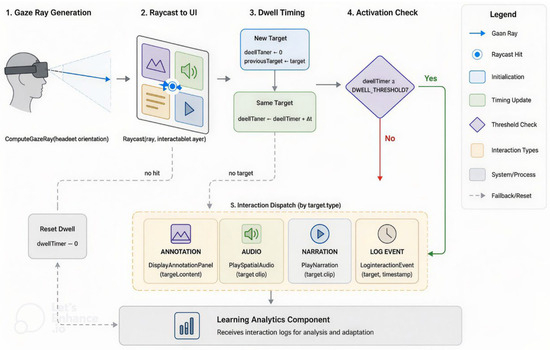
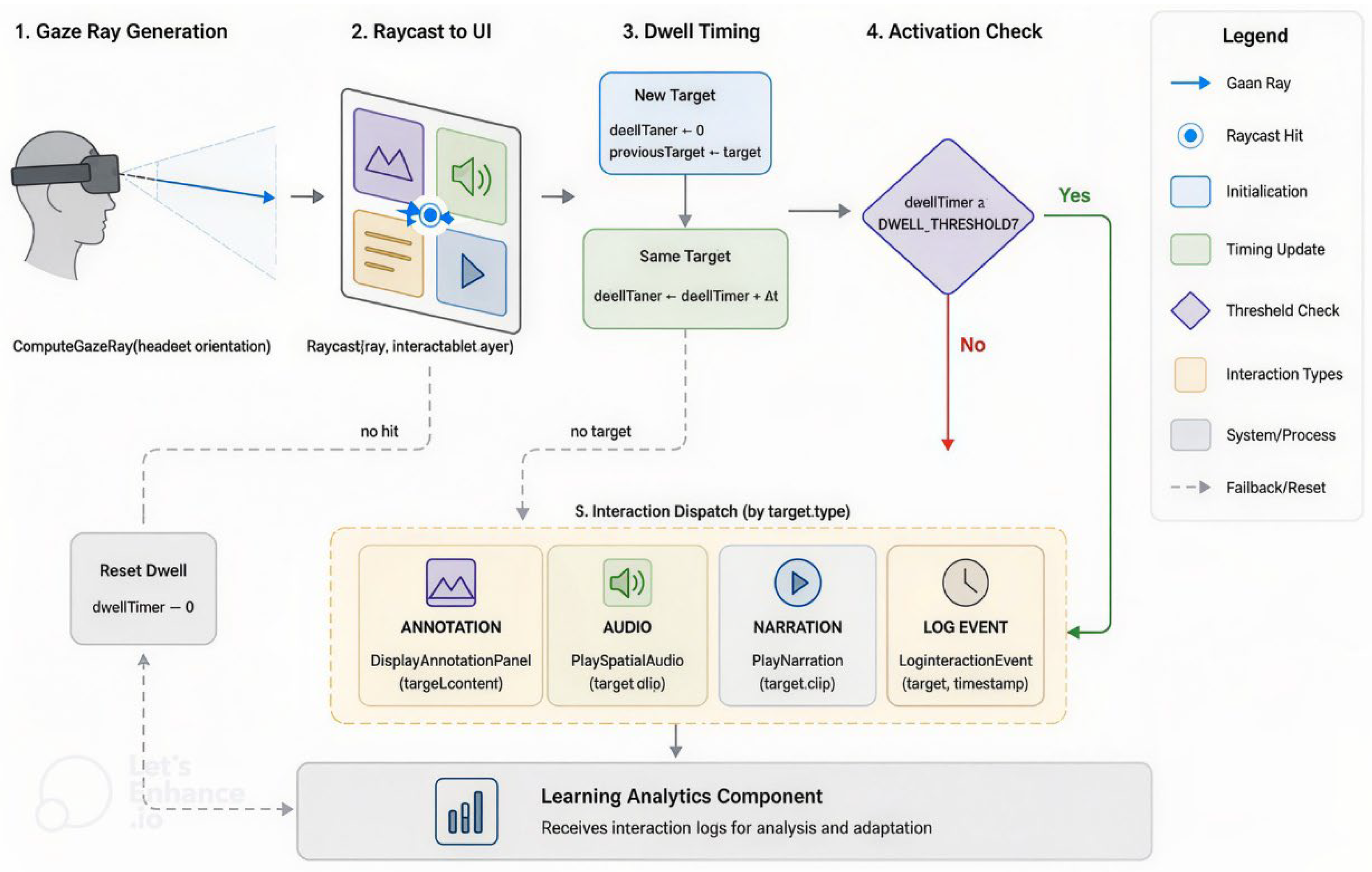
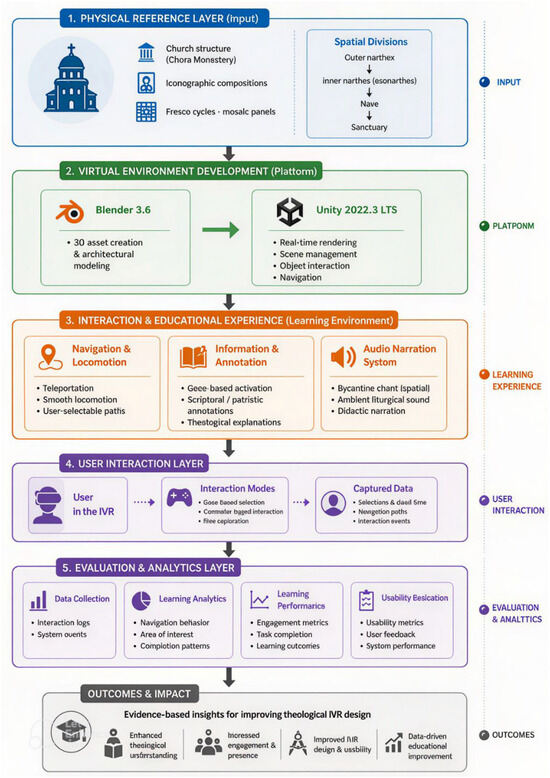
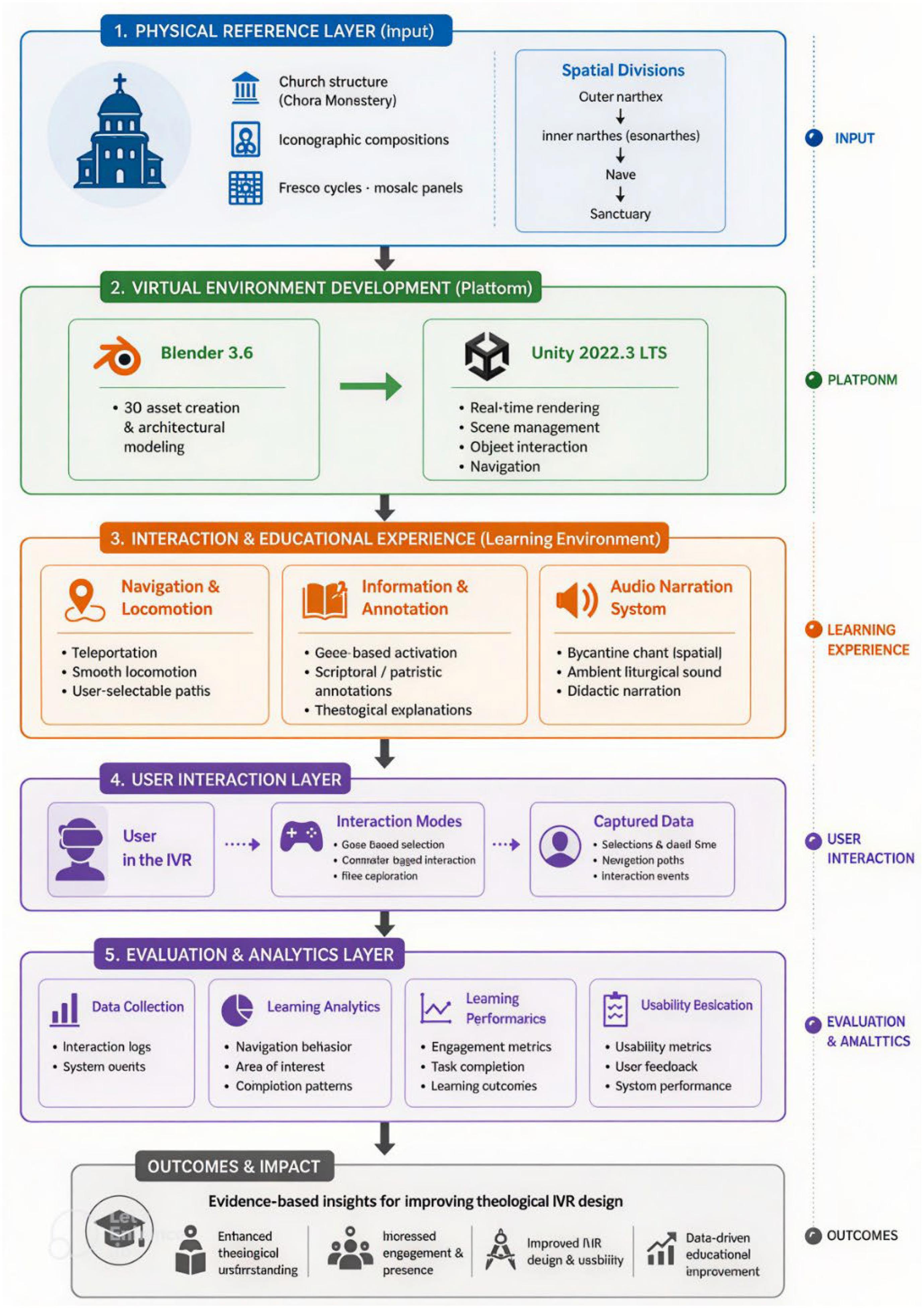
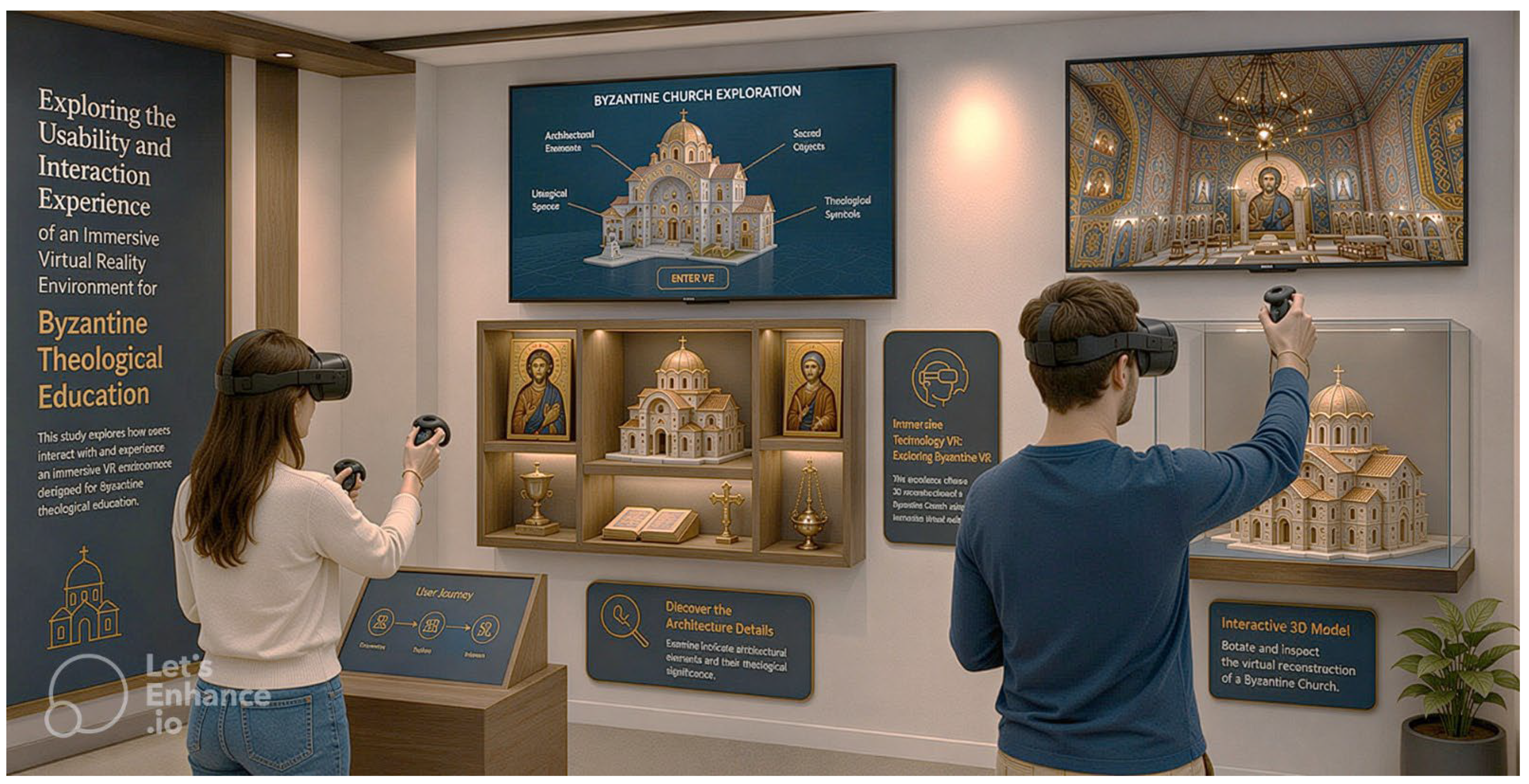
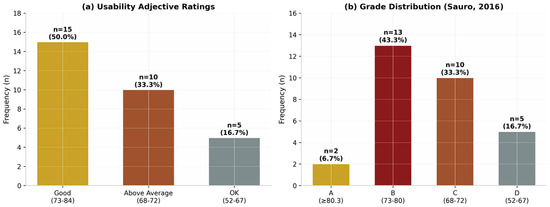
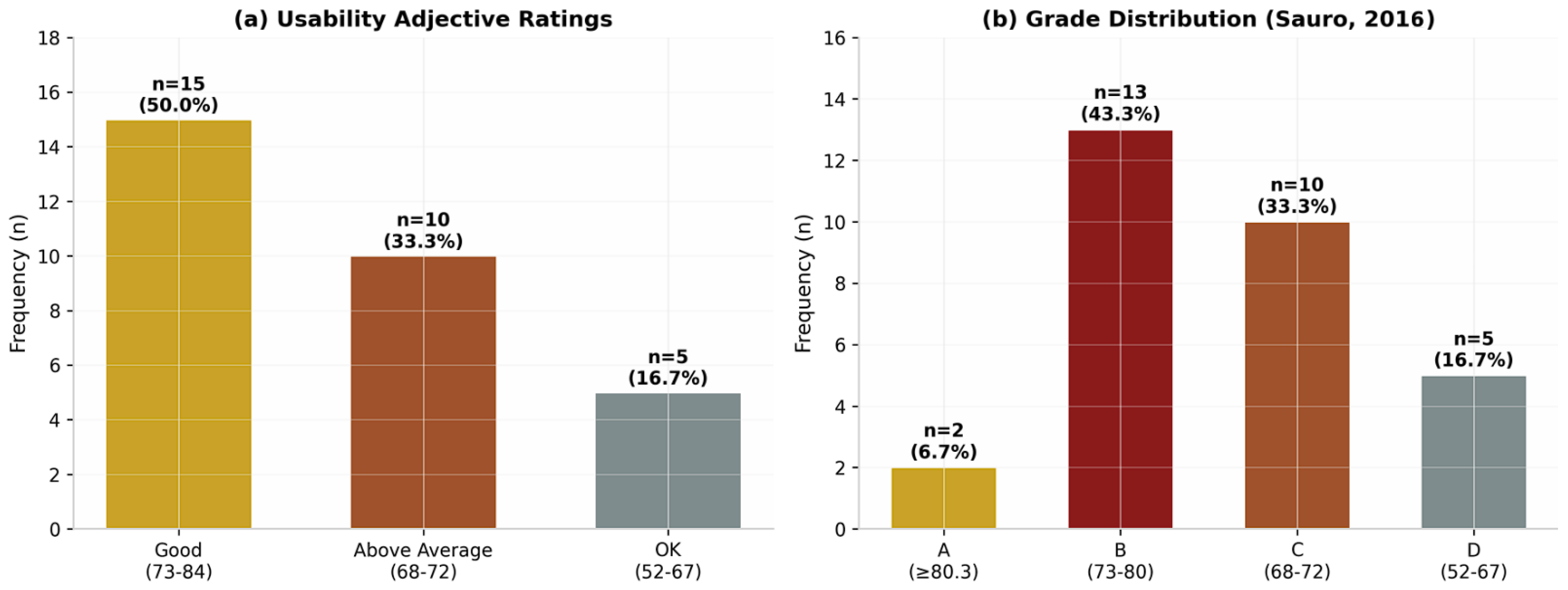
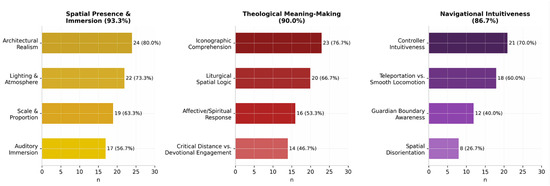
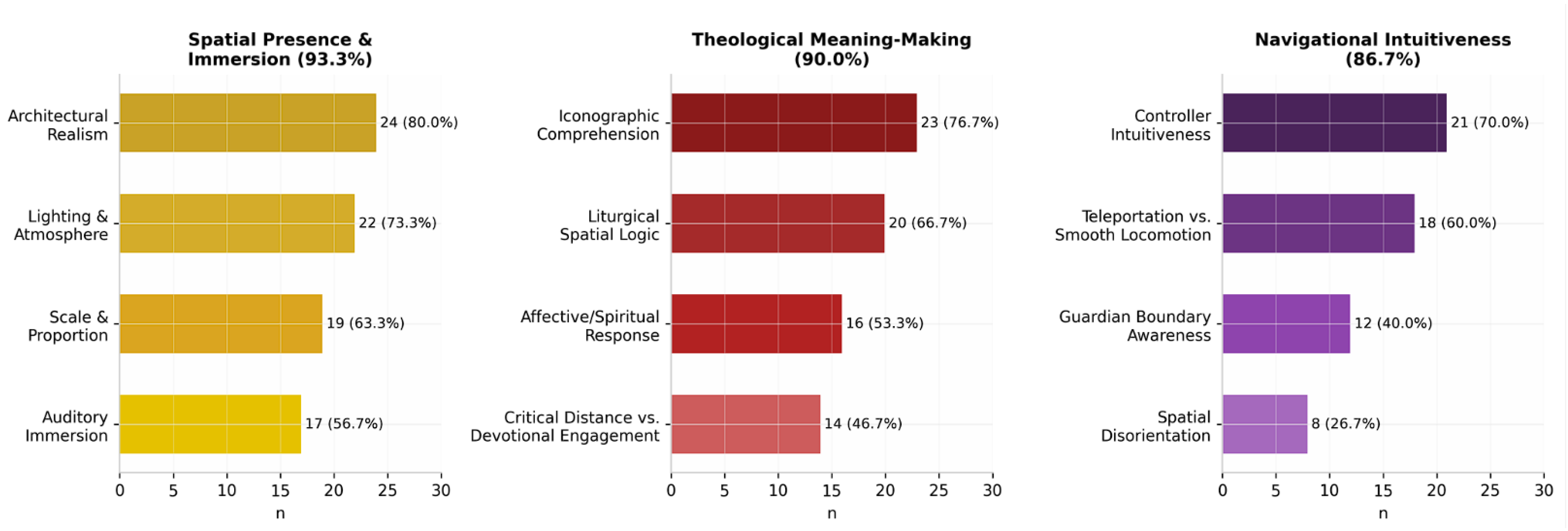
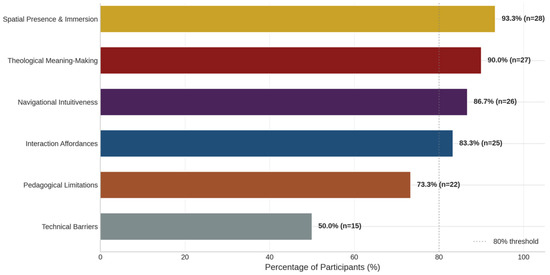
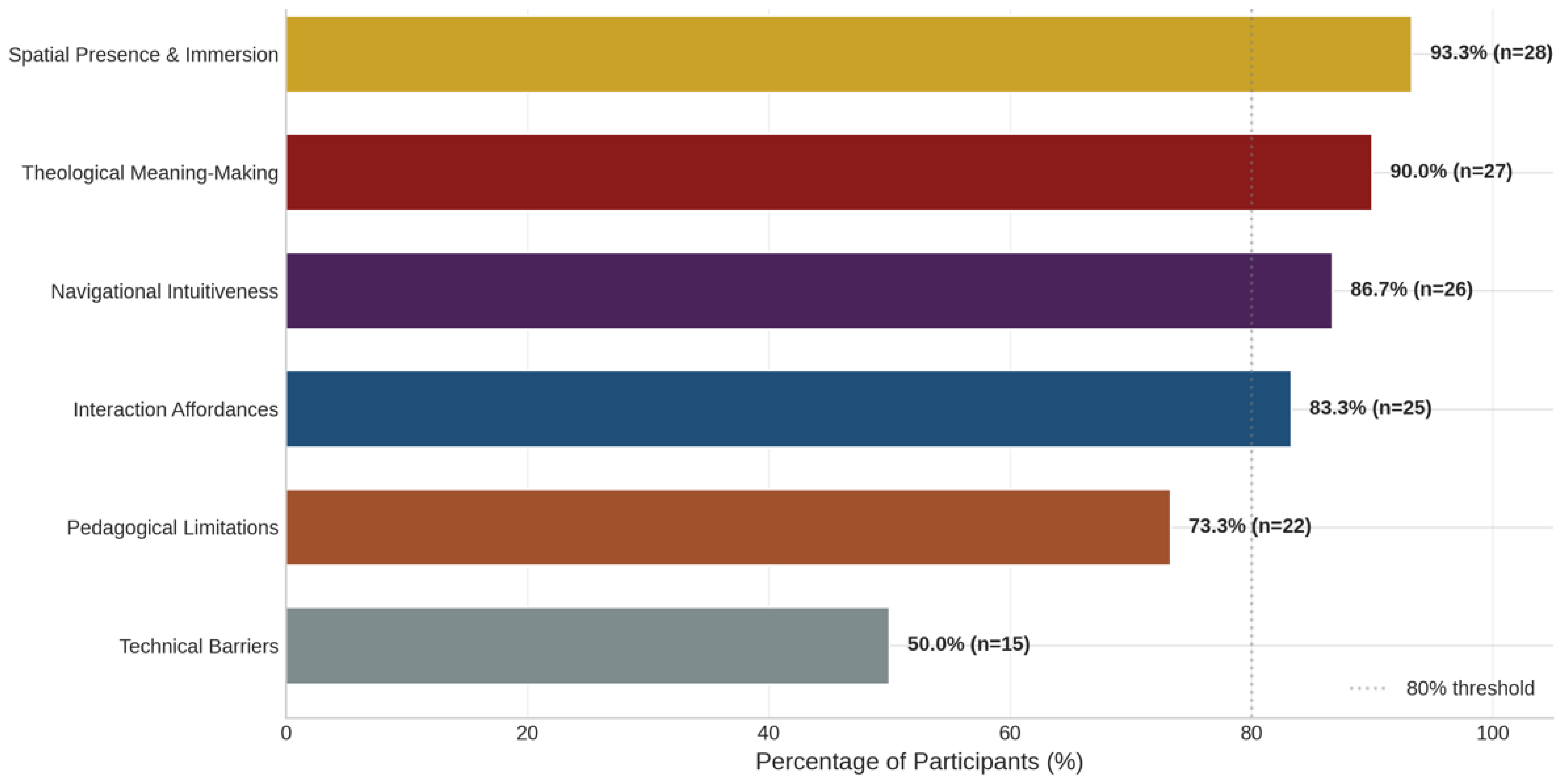
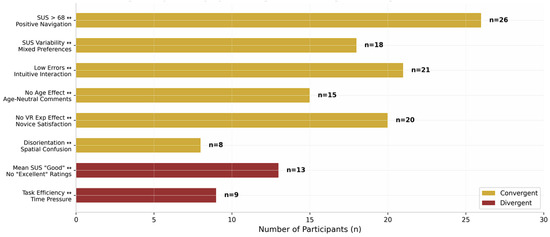
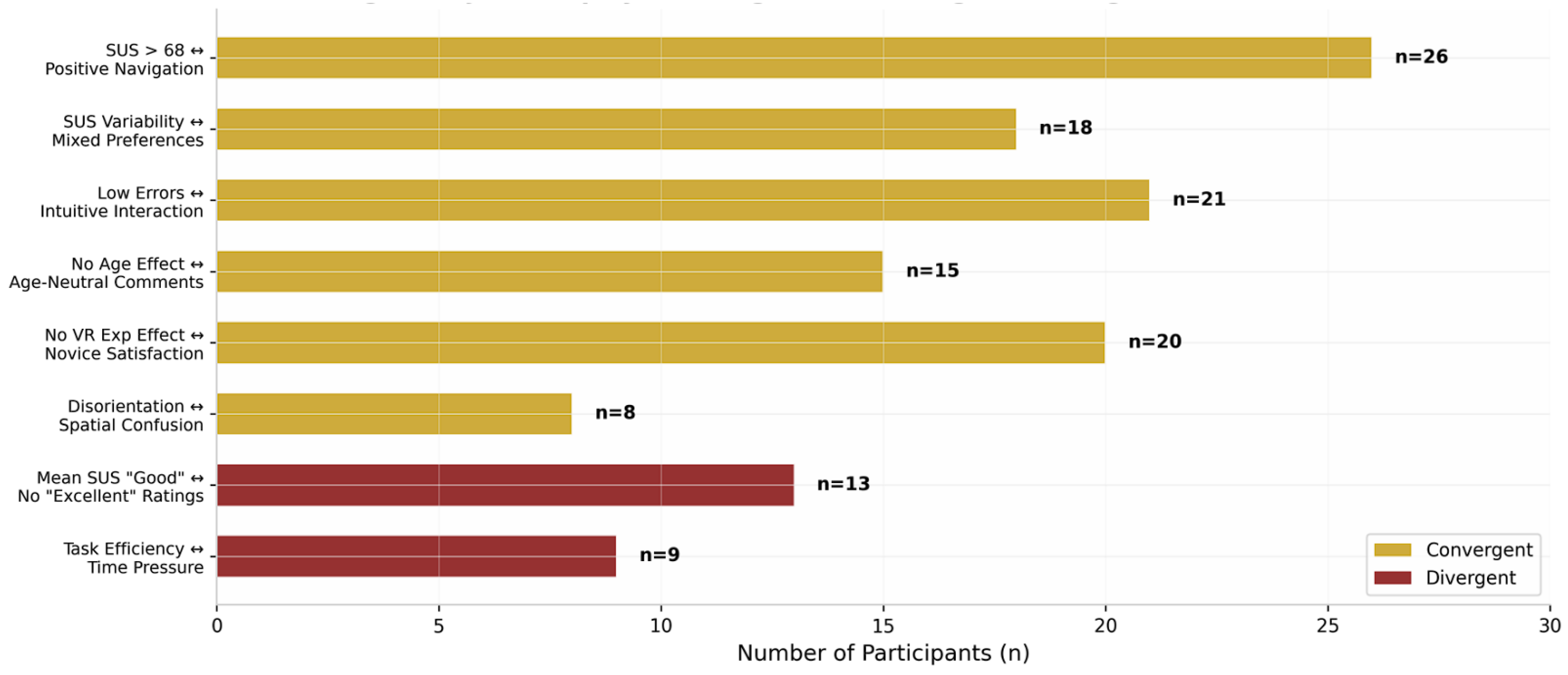
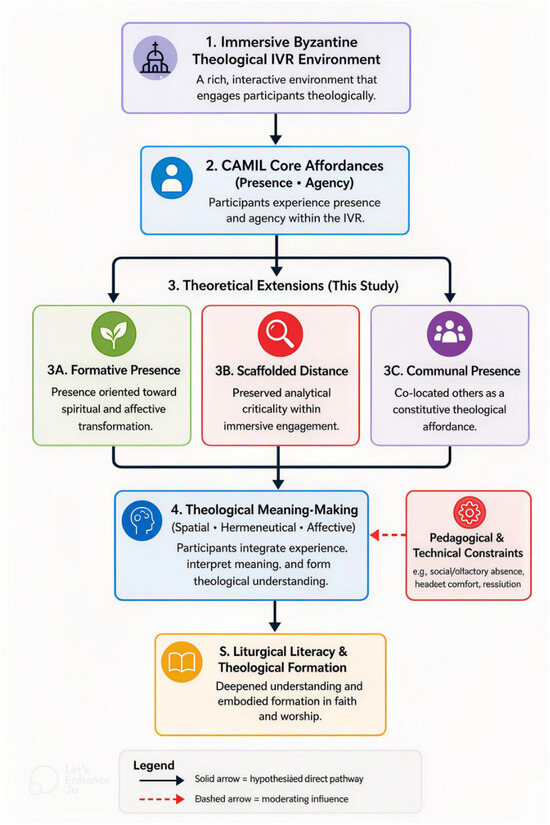
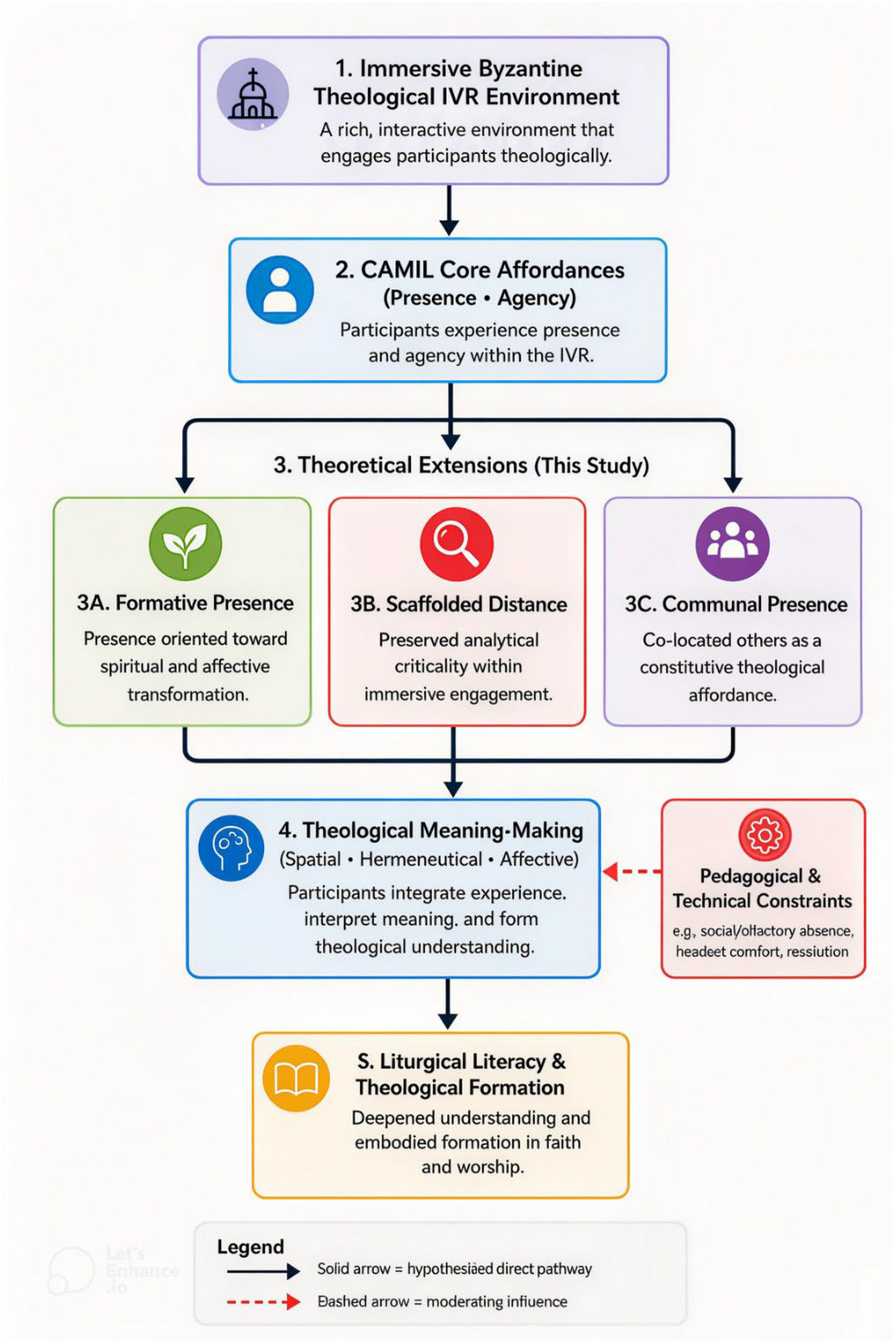

Disclaimer/Publisher’s Note: The statements, opinions and data contained in all publications are solely those of the individual author(s) and contributor(s) and not of MDPI and/or the editor(s). MDPI and/or the editor(s) disclaim responsibility for any injury to people or property resulting from any ideas, methods, instructions or products referred to in the content. |
© 2026 by the author. Licensee MDPI, Basel, Switzerland. This article is an open access article distributed under the terms and conditions of the Creative Commons Attribution (CC BY) license.