
From Technical to Relational: Immersive Technologies and the Interfaces and Dichotomies Between HRM and PM in Organisational Practices in an RSL



Abstract
1. Introduction
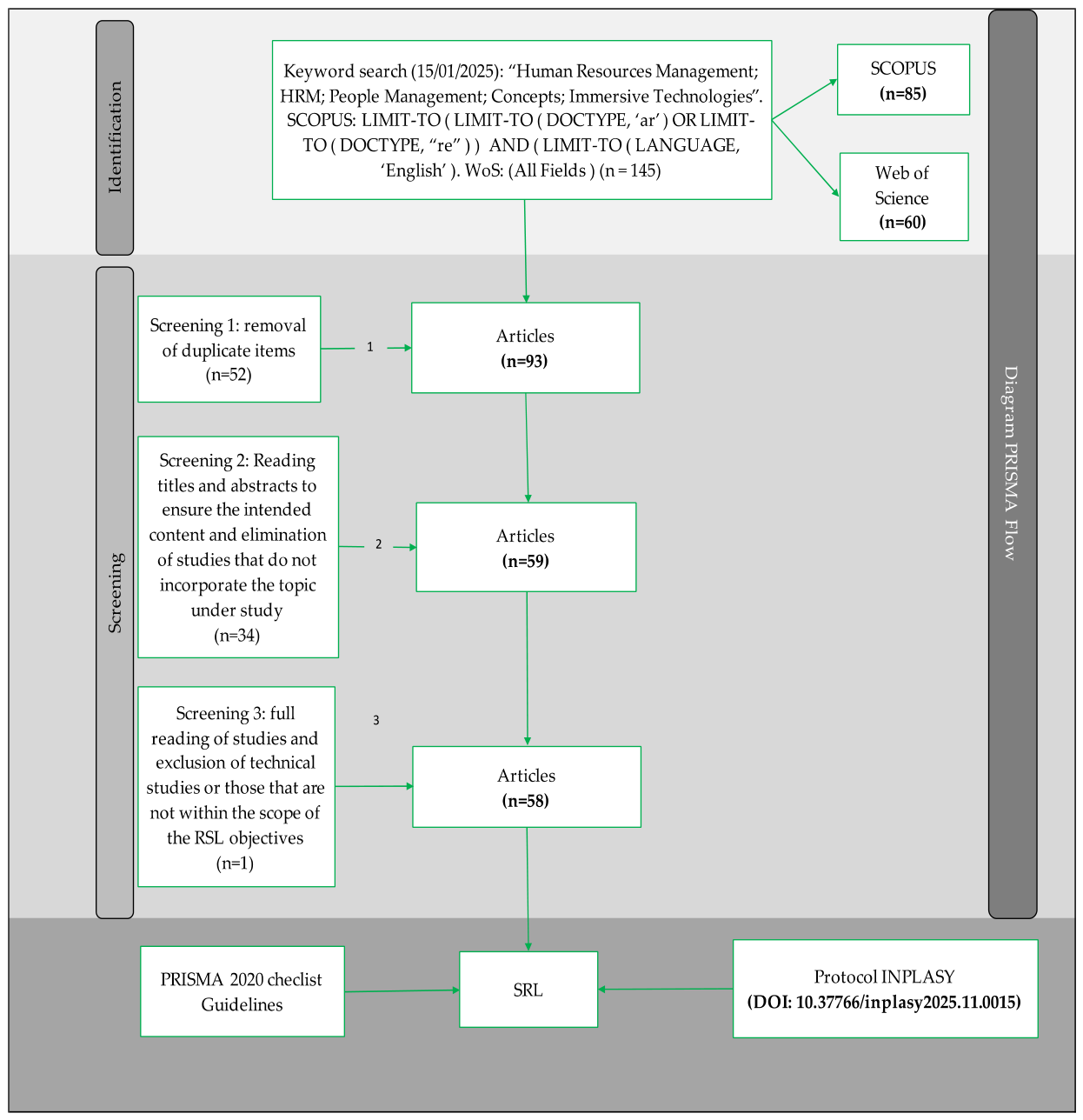
2. Materials and Methods
3. Results and Discussion
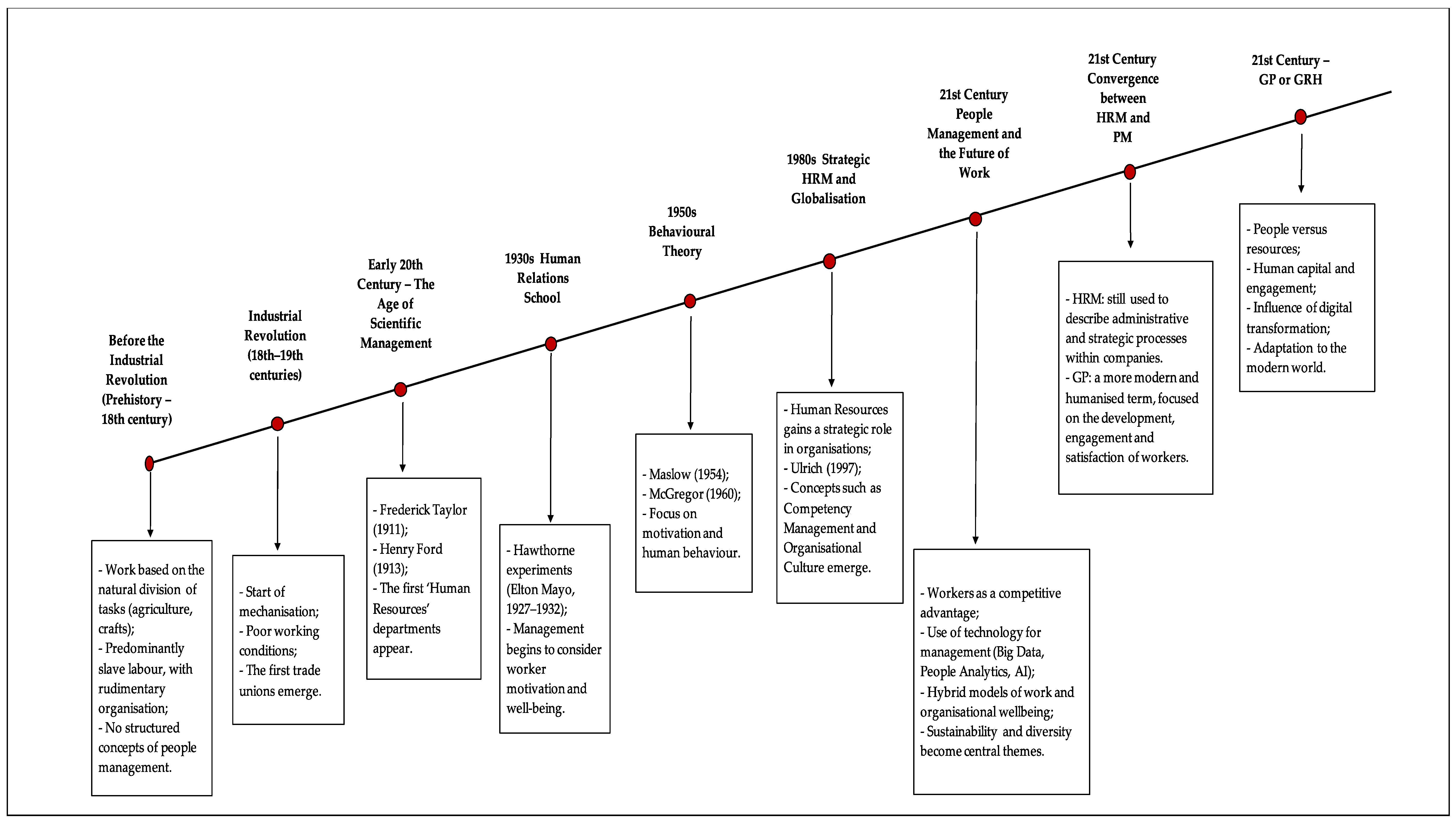
3.1. Evolutionary Milestones
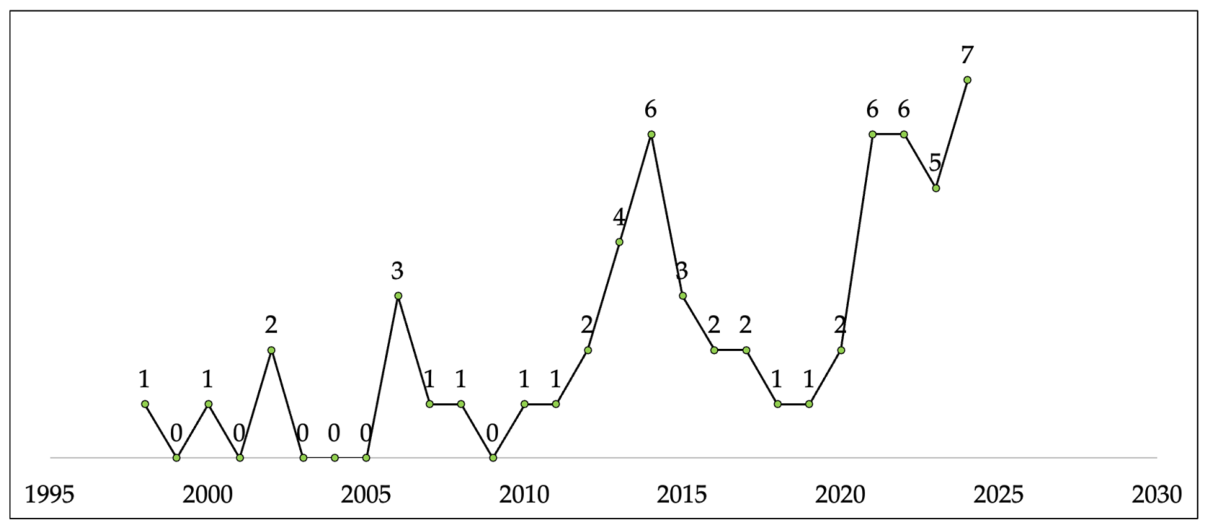
3.2. Evolution of Studies
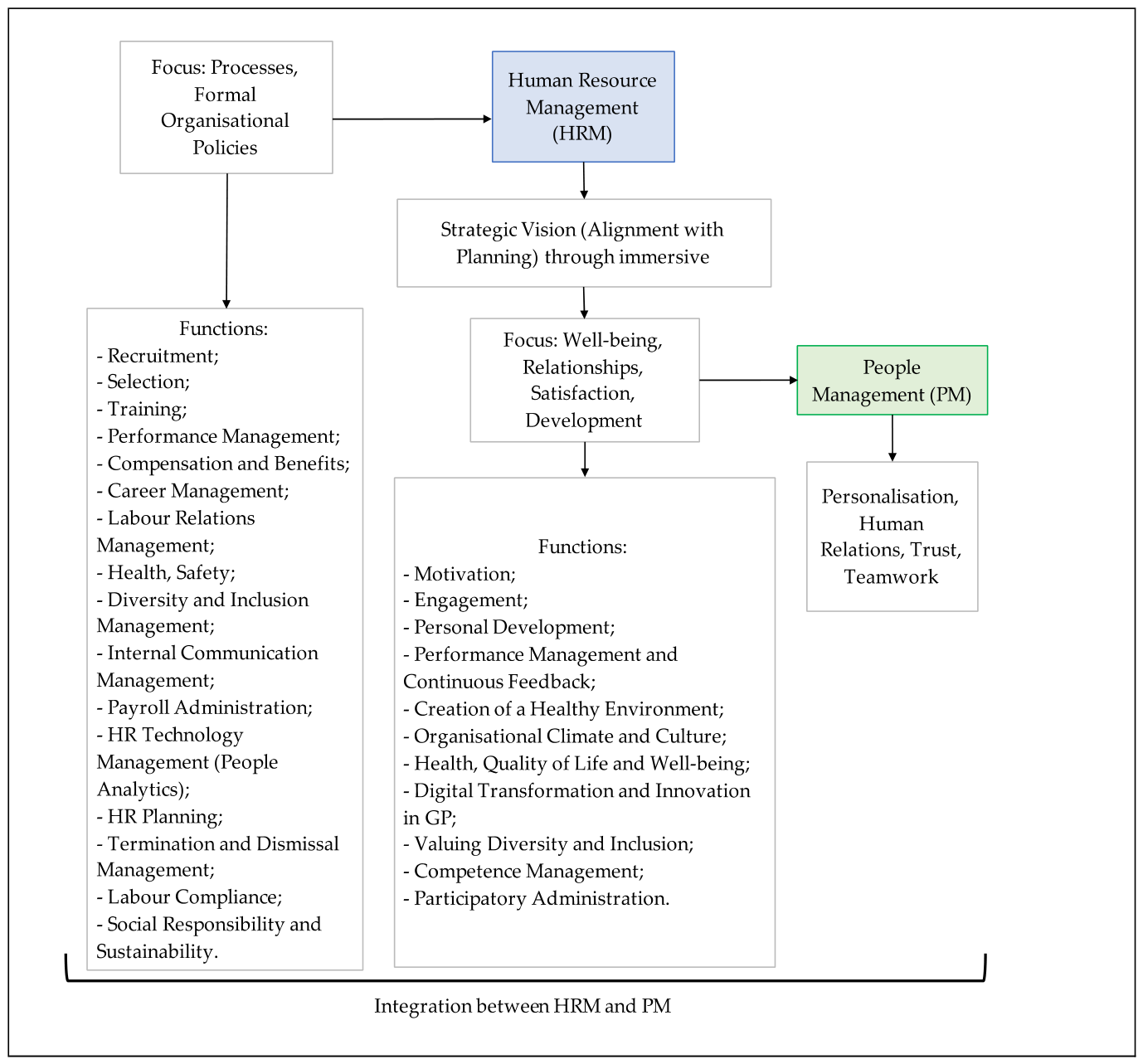
3.2.1. People Management (PM) and Human Resource Management (HRM): Focus and Functions
3.2.2. Distinctions Between HRM and PM: Conceptual, Functional, and Strategic Perspectives
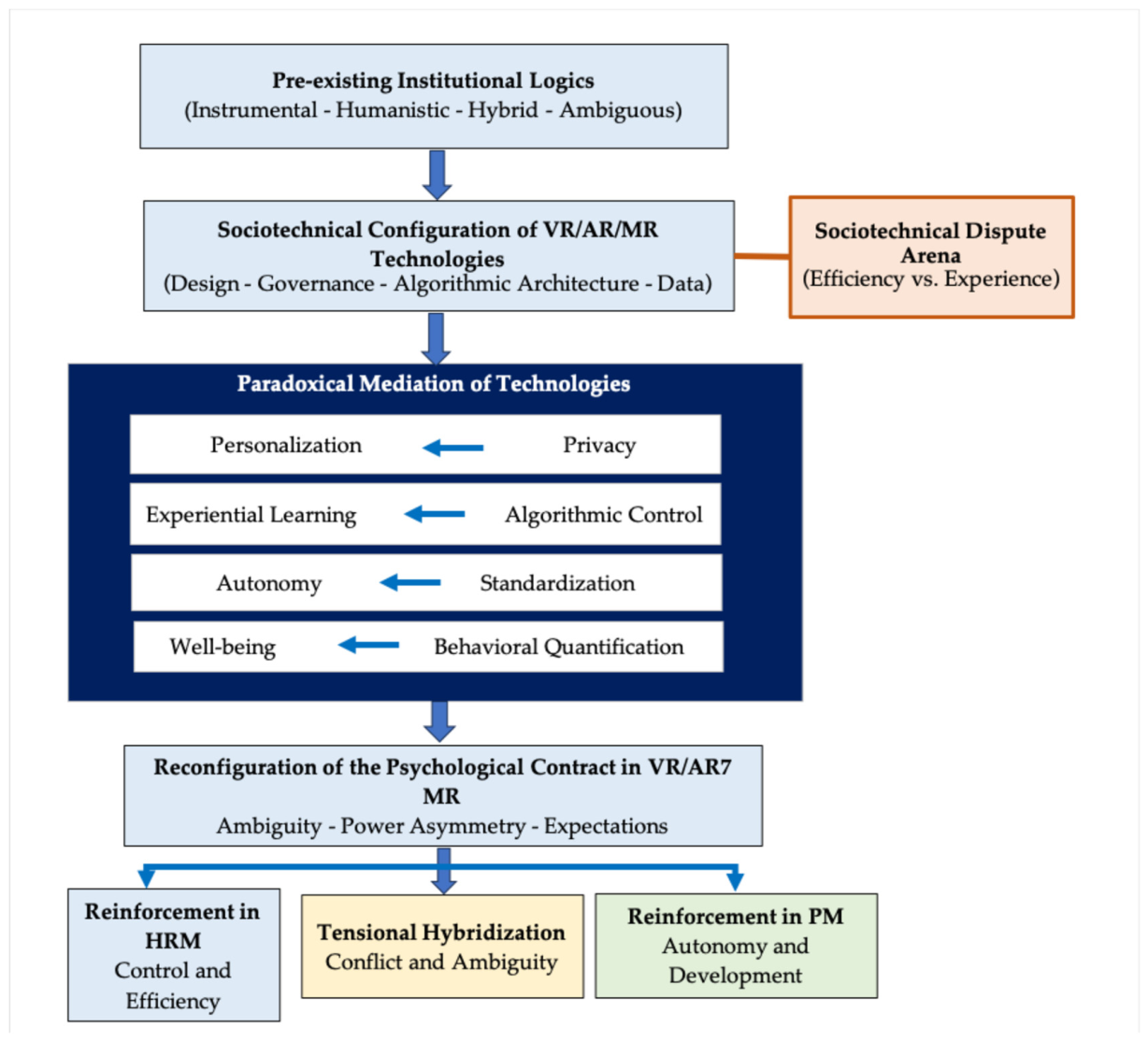
3.2.3. Sociotechnical Configurations and Paradoxes in the Mediation of Immersive Technologies Between HRM and PM
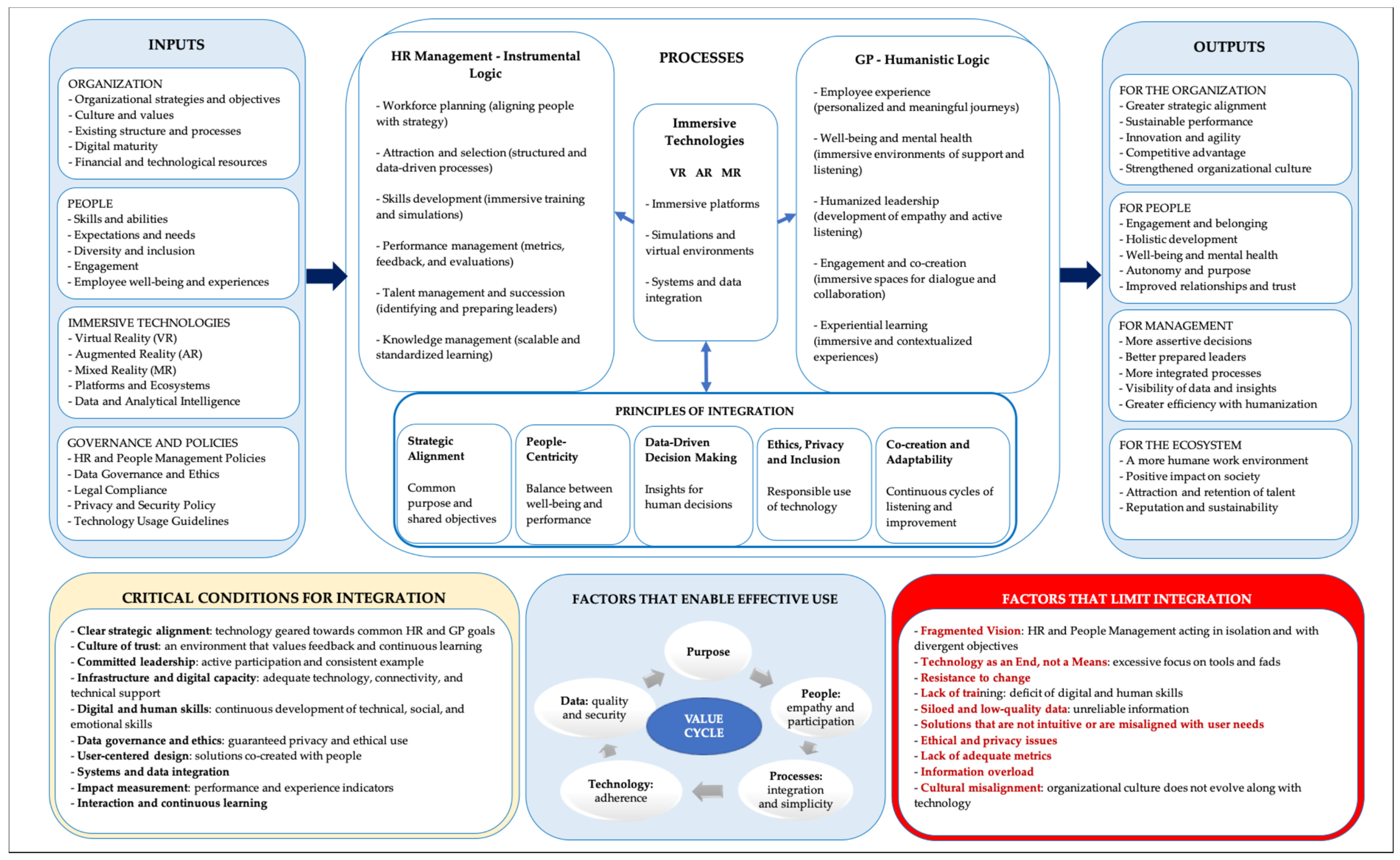
3.2.4. Immersive Technologies as Catalysts for Integration Between HRM and PM
3.2.5. Current Trends and Challenges
4. Conclusions
Supplementary Materials
Author Contributions
Funding
Institutional Review Board Statement
Informed Consent Statement
Data Availability Statement
Acknowledgments
Conflicts of Interest
References
- Armstrong, M.; Taylor, S. Armstrong’s Handbook of Human Resource Management Practice, 16th ed.; Kogan Page: London, UK, 2023. [Google Scholar]
- Liang, X.; Li, J. Sustainable human resource management and employee performance: A conceptual framework and research agenda. Hum. Resour. Manag. Rev. 2025, 35, 101060. [Google Scholar] [CrossRef] [Scilit]
- Sienkiewicz, L. Algorithmic Human Resources Management. In HRM 5.0; Palgrave Macmillan: London, UK, 2024. [Google Scholar]
- Sharma, S.; Sengupta, S. AI-Driven HR Practices: Recent Trends in Digital HR Tools and Their Perceived Benefits. In The International Conference on Recent Innovations in Computing; Lecture Notes in Electrical Engineering; Springer Nature: Singapore, 2024; pp. 219–231. [Google Scholar]
- Benuyenah, V. Human Resource Management: Rationalising Managerial Decisions; Emerald Insight: Leeds, UK, 2024. [Google Scholar]
- Baum, T. Sustainable human resource management as a driver in tourism policy and planning: A serious sin of omission? J. Sustain. Tour. 2018, 26, 873–889. [Google Scholar] [CrossRef] [Scilit]
- Cooke, F.L.; Dickmann, M.; Parry, E. Important issues in human resource management: Introduction to the 2022 review issue. Intern. J. Hum. Resour. Manag. Rev. 2020, 31, 1–5. [Google Scholar]
- Parry, E.; Battista, V. The impact of emerging technologies on work: A review of the evidence and implications for the human resource function. Emerald Open Res. 2019, 1, 1–6. [Google Scholar] [CrossRef] [Scilit]
- Makransky, G.; Petersen, G.B. Immersive virtual reality and learning: A meta-analysis. Educ. Psychol. Rev. 2019, 31, 1013–1040. [Google Scholar]
- Radianti, J.; Majchrzak, T.A.; Fromm, J.; Wohlgenannt, I. A systematic review of immersive virtual reality applications for higher education: Design elements, lessons learned, and research agenda. Comput. Educ. 2020, 147, 103778. [Google Scholar] [CrossRef] [Scilit]
- Abdelhay, S. The role of virtual reality in employee training and development: Mediating role of engagement and immersion. Int. J. Res. Hum. Resour. Manag. 2024, 6, 292–300. [Google Scholar] [CrossRef] [Scilit]
- Boselie, P.; Dietz, G.; Boon, C. Commonalities and contradictions in HRM and performance research. J. Hum. Resour. Manag. 2005, 15, 67–94. [Google Scholar] [CrossRef] [Scilit]
- Kozinets, R.V. Netnography: The Essential Guide to Qualitative Social Media Research, 3rd ed.; SAGE Publications Ltd.: London, UK, 2019. [Google Scholar]
- Slater, M.; Sanchez-Vives, M.V. Enhancing our lives with immersive virtual reality. Front. Robot. AI 2016, 3, 74. [Google Scholar] [CrossRef] [Scilit]
- Lepeley, M.-T.; Morales, O.; Essens, P.; Beutell, N.; Majluf, N. The human centered sustainable quality culture in organizations. In Human Centered Organizational Culture: Global Dimensions; Routledge: Oxford, UK, 2021. [Google Scholar]
- Verma, D.R.; Goyal, B.; Bhat, V.A. Employee Engagement and Mental Health in the Management of Human Resources. J. Reatt. Ther. Dev. Divers 2023, 6, 273–282. [Google Scholar]
- Silva, S.M.; Ribeiro, J.L.; Sousa, B.B. The Role of New Technologies in people’s Retention, Turnover and Internal Marketing: A Literature Review. In Smart Innovation, Systems and Technologies Book Series; Springer Nature: Singapore, 2021. [Google Scholar]
- Suklum, N.; Ozturk, S. Human Resources Accounting. In Special Human Resource Management Practices and Strategy; NOVA Science Publisher: New York, NY, USA, 2022. [Google Scholar]
- Falagas, M.E.; Pitsouni, E.I.; Malietzis, G.A.; Pappas, G. Comparison of PubMed, Scopus, Web of Science, and Google Scholar: Strengths and weaknesses. FASEB J. 2008, 22, 338–342. [Google Scholar] [CrossRef] [Scilit] [PubMed]
- Burnham, J.F. Scopus database: A review. Biomed. Digit. Libr. 2006, 3, 1. [Google Scholar] [CrossRef] [Scilit]
- Gusenbauer, M.; Haddaway, N.R. Which academic search systems are suitable for systematic reviews? Evaluating retrieval qualities of 28 databases. Res. Synth. Methods 2020, 11, 181–217. [Google Scholar] [CrossRef] [Scilit]
- Mongeon, P.; Paul-Hus, A. The journal coverage of Web of Science and Scopus: A comparative analysis. Scientometrics 2016, 106, 213–228. [Google Scholar] [CrossRef] [Scilit]
- Page, M.J.; McKenzie, J.E.; Bossuyt, P.M.; Boutron, I.; Hoffmann, T.C.; Mulrow, C.D.; Shamseer, L.; Tetzlaff, J.M.; Akl, E.A.; Brennan, S.E.; et al. The PRISMA 2020 statement: An updated guideline for reporting systematic reviews. BMJ 2021, 372, n71. [Google Scholar] [CrossRef] [Scilit]
- Letts, L.; Wilkins, S.; Law, M.; Stewart, D.; Bosch, J.; Westmorland, M. Critical Review Form—Qualitative Studies, version 2.0; McMaster University: Hamilton, ON, Canada, 2007. [Google Scholar]
- Sterne, J.A.C.; Hernán, M.A.; Reeves, B.C.; Savović, J.; Berkman, N.D.; Viswanathan, M.; Henry, D.; Altman, D.G.; Ansari, M.T.; Boutron, I.; et al. ROBINS-I: A tool for assessing risk of bias in non-randomised studies of interventions. BMJ 2016, 355, i4919. [Google Scholar] [CrossRef] [Scilit]
- Shea, B.J.; Reeves, B.C.; Wells, G.; Thuku, M.; Hamel, C.; Moran, J.; Moher, D.; Tugwell, P.; Welch, V.; Kristjansson, E.; et al. AMSTAR 2: A Critical Appraisal Tool for Systematic Reviews That Include Randomised or Non-Randomised Studies of Healthcare Interventions, or Both. BMJ 2017, 358, j4008. [Google Scholar] [CrossRef] [Scilit] [PubMed]
- Chiavenato, I. Gestão de Pessoas: O Novo Papel dos Recursos Humanos nas Organizações, 4th ed.; Elsevier: Barueri, Brazil, 2014. [Google Scholar]
- Fombrun, C.J.; Tichy, N.M.; Devanna, M.A. Strategic Human Resource Management; John Wiley and Sons, Inc.: New York, NY, USA, 1984. [Google Scholar]
- Hobsbawm, E. The Age of Revolution: 1789–1848; Weidenfeld & Nicolson: New York, NY, USA, 1962. [Google Scholar]
- Thompson, E.P. The Making of the English Working Class; Victor Gollancz: London, UK, 1963. [Google Scholar]
- Taylor, F.W. The Principles of Scientific Management; Harper & Brothers: Houston, TX, USA, 1911. [Google Scholar]
- Ford, H. My Life and Work; Doubleday, Page & Company: Garden City, NY, USA, 1922. [Google Scholar]
- Mayo, E. The Human Problems of an Industrial Civilization; Macmillan: New York, NY, USA, 1933. [Google Scholar]
- Maslow, A.H. Motivation and Personality; Harper & Row, Publishers, Inc.: New York, NY, USA, 1954. [Google Scholar]
- McGregor, D. The Human Side of Enterprise; McGraw-Hill: New York, NY, USA, 1960. [Google Scholar]
- Ulrich, D. Human Resource Champions: The Next Agenda for Adding Value and Delivering Results; Harvard Business School Press: Boston, MA, USA, 1997. [Google Scholar]
- Schein, E.H. Organizational Culture and Leadership; Jossey-Bass: San Francisco, CA, USA, 1985. [Google Scholar]
- Schwab, K. The Fourth Industrial Revolution; Crown Business: Hong Kong, China, 2016. [Google Scholar]
- Armstrong, M. Armstrong’s Handbook of Human Resource Management Practice, 15th ed.; Kogan Page: London, UK, 2020. [Google Scholar]
- Legge, K. Human Resource Management: Rhetorics and Realities; Palgrave Macmillan: London, UK, 2005. [Google Scholar]
- Bersin, J. The Big Reset: Human-Centered Leadership in a Post-Pandemic World; Josh Bersin Academy Press: Oakland, CA, USA, 2021; Available online: https://www.getabstract.com/en/summary/the-big-reset-human-centered-leadership/42334 (accessed on 14 March 2026).
- Cascio, W.F.; Montealegre, R. How technology is changing work and organizations. Annu. Rev. Organ. Psychol. Organ. Behav. 2016, 3, 349–375. [Google Scholar] [CrossRef] [Scilit]
- Shore, L.M.; Cleveland, J.N.; Sanchez, D. Inclusive workplaces: A review and model. Hum. Resour. Manag. Rev. 2018, 28, 176–189. [Google Scholar] [CrossRef] [Scilit]
- Boxall, P.; Purcell, J.; Wright, P. Human Resource Management: Scope, Analysis, and Significance; Oxford University Press: Oxford, UK, 2022. [Google Scholar]
- Firayani, F. Literature review: Human resource management strategies in the digital era. Oikonomia 2024, 1, 1–9. [Google Scholar] [CrossRef] [Scilit]
- Anshima; Bhardwaj, B.; Sharma, D.; Chand, M. Ensuring sustainability through green HRM practices: A review, synthesis and research avenues. J. Org. Eff. 2024, 12, 57–90. [Google Scholar] [CrossRef] [Scilit]
- Blom, R.; Borst, R.T.; Voorn, B. Pathology or Inconvenience? A Meta-Analysis of the Impact of Red Tape on People and Organizations. Rev. Public Pers. Adm. 2021, 41, 623–650. [Google Scholar] [CrossRef] [Scilit]
- Ammirato, S.; Felicetti, A.M.; Linzalone, R.; Corvello, V.; Kumar, S. Still our most important asset: A systematic review on human resource management in the midst of the fourth industrial revolution. J. Innov. Knowl. 2023, 8, 100403. [Google Scholar] [CrossRef] [Scilit]
- Psychogios, A.; Prouska, R. Managing People in Small and Medium Enterprises in Turbulent Contexts; Routledge: New York, NY, USA, 2019. [Google Scholar]
- Dini Riani, R. Reimagining human resource: Redefine human resource management practices for the future. J. Ris. Bisnis Dan Manaj. 2024, 17, 149–157. [Google Scholar] [CrossRef] [Scilit]
- Strohmeier, S. Digital human resource management: A conceptual clarification. Ger. J. Hum. Resour. Manag. 2020, 34, 345–365. [Google Scholar] [CrossRef] [Scilit]
- Saka-Helmhout, A. Managing resources: Human resource management. In Comparative International Management; Routledge: Oxford, UK, 2015; pp. 154–204. [Google Scholar]
- Makransky, G.; Andreasen, N.K.; Baceviciute, S.; Mayer, R.E. Immersive virtual reality increases liking but not learning with a science simulation and generative learning strategies promote learning in immersive virtual reality. J. Educ. Psychol. 2021, 113, 719–735. [Google Scholar] [CrossRef] [Scilit]
- Savaneviciene, A.; Stankeviciute, Z. Smart power as a pathway for employing sustainable human resource management. Eng. Econ. 2017, 28, 198–206. [Google Scholar] [CrossRef] [Scilit]
- Nastase, C.; Adomnitei, A.; Apetri, A. Strategic Human Resource Management in the Digital Era: Technology, Transformation, and Sustainable Advantage. Merits 2025, 5, 23. [Google Scholar] [CrossRef] [Scilit]
- Trunk Širca, N.; Riaz, Z.; Hamid, S.; Žurauskė, G.; Stankevičiutė, Z. The interplay among employee resilience, sustainable HRM and work engagement. Hum. Syst. Manag. 2024, 43, 573–587. [Google Scholar] [CrossRef] [Scilit]
- Al-Ameryeen, M.; Isa, M.; Othman, S. The effect of e-HRM and digital orientation on MEs’ performance in Amman: The moderating role of government support. Uncertain Supply Chain Manag. 2024, 12, 2713–2728. [Google Scholar] [CrossRef] [Scilit]
- Dubey, K.; Bhargava, M.; Dinesh, N. Cultural Diversity in Organizations and Human Resource Development Programs: A Psychological Analysis. J. Reatt. Ther. Dev. Divers. 2023, 6, 283–292. [Google Scholar]
- Mikhlina, A.; Saukkonen, J. Managing human capital with employee clustering through the interplay of the persona concept. Eur. Conf. Knowl. Manag. 2023, 24, 900–907. [Google Scholar] [CrossRef] [Scilit]
- Piwowar-Sulej, K.; Sołtysik, M.; Różycka-Antkowiak, J.Ł. Implementation of Management 3.0: Its consistency and conditional factors. J. Organ. Change Manag. 2022, 35, 541–557. [Google Scholar] [CrossRef] [Scilit]
- Ferreira, P.; Meirinhos, V.; Rodrigues, A.C.; Marques, A. Virtual and augmented reality in human resource management and development: A systematic literature review. IBIMA Bus. Rev. 2021, 2021, 1–18. [Google Scholar] [CrossRef] [Scilit]
- Edwards, T.; Kakavelakis, K. Problematizing people management practices: A critical realist study of knowledge sharing. J. Crit. Realism 2022, 21, 46–64. [Google Scholar] [CrossRef] [Scilit]
- Stacho, Z.; Lizbetinova, L.; Stachova, K.; Starecek, A. The Application of Progressive HR Tools in the Environment of Slovak Enterprises. J. Compet. 2022, 14, 173–190. [Google Scholar] [CrossRef] [Scilit]
- Bal, M.; Brookes, A. How Sustainable Is Human Resource Management Really? An Argument for Radical Sustainability. Sustainability 2022, 14, 4219. [Google Scholar] [CrossRef] [Scilit]
- Qamar, Y.; Agrawal, R.K.; Samad, T.A.; Chiappetta Jabbour, C.J. When technology meets people: The interplay of artificial intelligence and human resource management. J. Enterp. Inf. Manag. 2021, 34, 1339–1370. [Google Scholar] [CrossRef] [Scilit]
- Rajiani, I.; Haslinda, M.; Hardjono, B. Ability, motivation and opportunity as determinants of green human resources management innovation. Res. Transp. Bus. 2016, 10, 51–57. [Google Scholar] [CrossRef] [Scilit]
- Taylor, T.; Doherty, A.; McGraw, P. Managing People in Sport Organizations: A Strategic Human Resource Management Perspective, 2nd ed.; Routledge: London, UK, 2015. [Google Scholar]
- Karatop, B.; Kubat, C.; Uygun, Ö. Talent management in manufacturing system using fuzzy logic approach. Comput. Ind. Eng. 2015, 86, 127–136. [Google Scholar] [CrossRef] [Scilit]
- Bruns, H.-J. HR development in local government: How and why does HR strategy matter in organizational change and development? Bus. Res. 2014, 7, 1–49. [Google Scholar] [CrossRef] [Scilit]
- Mak, A.; Cheung, L.; Mak, A.; Leung, L. Confucian thinking and the implications for sustainability in HRM. Asia-Pac. J. Bus. Adm. 2014, 6, 173–189. [Google Scholar]
- Jacobsen, S.; Bramming, P.; Holt, H.; Larsen, H.H. Quality in modern nordic working life-investigating three related research perspectives and their possible cross-fertilization. Nord. J. Work. Life Stud. 2013, 3, 47–80. [Google Scholar] [CrossRef] [Scilit]
- Dörhöfer, S. Knowledge-based HRM: An integrative approach. Eur. J. Soc. Sci. 2012, 28, 473–488. [Google Scholar]
- Dalton, K.; Kennedy, L. People Management in a Transitional Society: The Case of Romania. J. East-West Bus. 2010, 16, 253–282. [Google Scholar] [CrossRef] [Scilit]
- Bredin, K. People capability of project-based organisations: A conceptual framework. Int. J. Proj. Manag. 2008, 26, 566–576. [Google Scholar] [CrossRef] [Scilit]
- Dickmann, M.; Graubner, M.; Richter, A. Human resources management in international consulting firms: Distinguishing second and third wave company patterns. In Human Resource Management in Consulting Firms; Springer: Berlin/Heidelberg, Germany, 2006; pp. 53–83. [Google Scholar]
- Marlow, S. Human resource management in smaller firms: A contradiction in terms? Hum. Resour. Manag. Rev. 2006, 16, 467–477. [Google Scholar] [CrossRef] [Scilit]
- Taylor, D.; Walley, E.E. Hijacking the Holy Grail? Emerging HR practices in Croatia. Eur. Bus. Rev. 2002, 14, 294–303. [Google Scholar] [CrossRef] [Scilit]
- Guest, D.E. Human resource management and employee well-being: Towards a new analytic framework. Hum. Resour. Manag. J. 2017, 27, 22–38. [Google Scholar] [CrossRef] [Scilit]
- Harpaz, I. The historical development of human resource management in Israel. In The Development of Human Resource Management Across Nations: Unity and Diversity; Kaufman, B.E., Ed.; Edward Elgar Publishing: Cheltenham, UK, 2014; pp. 236–268. [Google Scholar]
- Conrad, M.; Kablitz, D.; Schumann, S. Learning effectiveness of immersive virtual reality in education and training. A systematic review of findings. Comput. Educ. X Real. 2024, 4, 100053. [Google Scholar] [CrossRef] [Scilit]
- Wolsey, C.; Brown, H.W. Human resource management and the business of sport. In Managing Sport Business: An Introduction, 2nd ed.; Routledge: Oxford, UK, 2018. [Google Scholar]
- Boxall, P.; Purcell, J. Strategy and Human Resource Management; Bloomsbury Academic: London, UK, 2022. [Google Scholar]
- Pfeffer, J. Dying for a Paycheck: How Modern Management Harms Employee Health and Company Performance; Dreamscape Media LLC: Holland, OH, USA, 2018. [Google Scholar]
- Ulrich, D.; Younger, J.; Brockbank, W.; Ulrich, M. HR from the Outside in: Six Competencies for the Future of Human Resources; McGraw-Hill: New York, NY, USA, 2023. [Google Scholar]
- Li, Y.-P.; Wu, H.-W.; Séror, A. Strategic human resource management and social capital: Evidence from people’s Republic of China. In Proceedings of the 2006 International Conference on Management Science and Engineering, ICMSE’06 (13th), Lille, France, 5–7 October 2006. [Google Scholar]
- Carvalho, S.A.; Conceção, E.; Marques, I.C.P. The impact of virtual reality on employee training and development in organisations. App. Sci. 2025, 15, 10459. [Google Scholar] [CrossRef] [Scilit]
- Sakr, A.; Abdullah, T. Virtual, augmented reality and learning analytics impact on learners, and educators: A systematic review. Educ. Inf. Technol. 2024, 29, 19913–19962. [Google Scholar] [CrossRef] [Scilit]
- Priya, S. Study and analysis of the impact of AR and VR technology in human resource management system. Neuroquantology 2022, 20, 1106–1112. [Google Scholar]
- Strohmeier, S.; Collet, J.; Kabst, R. (How) do advanced data and analyses enable HR analytics success? A neo-configurational analysis. Balt. J. Manag. 2022, 17, 285–303. [Google Scholar] [CrossRef] [Scilit]
- Carneiro, A.; Correira, T.; Costa, D.; Ferreira, P.; Figueiredo, C.; Lopes, L.; Valente, M. From e-HR Management to v-HR Management: A systematic literature review of Virtual and Augmented Reality in Human Resource Management and Development. In Proceedings of the IX International Conference on Research and Intervention in Human Resources, Porto, Portugal, 11–12 April 2019. [Google Scholar]
- Yuan, S.; Huang, H.; Wu, L. Virtual Reality and Augmented Reality in Higher Engineering Education: A Systematic Literature Review. Comput. Appl. Eng. Educ. 2025, 33, e70022. [Google Scholar] [CrossRef] [Scilit]
- Marler, J.H.; Boudreau, J.W. An evidence based review of HR Analytics. Int. J. Hum. Resour. Manag. 2017, 28, 3–26. [Google Scholar] [CrossRef] [Scilit]
- Tursunbayeva, A.; Di Lauro, S.; Pagliari, C. People analytics: A scoping review of conceptual boundaries and value propositions. Int. J. Inf. Manag. 2018, 43, 224–247. [Google Scholar] [CrossRef] [Scilit]
- Breevaart, K.; Bakker, A.B.; Demerouti, E. Daily self management and employee work engagement. J. Vocat. Behav. 2014, 84, 31–38. [Google Scholar] [CrossRef] [Scilit]
- Teetzen, F.; Bürkner, P.C.; Gregersen, S.; Vincent Höper, S. The mediating effects of work characteristics on the relationship between transformational leadership and employee well being: A meta analytic investigation. Int. J. Environ. Res. Public Health 2022, 19, 3133. [Google Scholar] [CrossRef] [Scilit] [PubMed]





| Author (Year) | Emphasis | Integration/Differentiation |
|---|---|---|
| Al-Ameryeen et al. [57] | Strategic alignment | HRM prioritises strategic alignment and organisational efficiency, while PM emphasises human development and engagement, constituting distinct but progressively integrated approaches in contemporary people management. |
| Dubey et al. [58] | Cultural diversity | HRM, by structuring formal policies and practices for cultural diversity, differs from PM, which emphasises managers’ awareness, values and skills, both of which are complementary to building inclusive organisational environments. |
| Mikhlina & Saukkonen [59] | Organisational efficiency and human orientation | HRM structures and segments human capital for strategic purposes, while PM emphasises understanding the experiences, motivations and needs of workers, with people being an integrating mechanism between organisational efficiency and human orientation. |
| Piwowar-Sulej et al. [60] | Management 3.0 | HRM maintains a structuring role in defining organisational systems and practices, while PM, expressed in approaches such as Management 3.0, favours autonomy, skills development and energising people, highlighting a conceptual differentiation and an integration that is still in its infancy in organisational practice. |
| Ferreira et al. [61] | Knowledge and career management | HRM structures knowledge, talent and career management systems with an organisational focus, while PM emphasises continuous development, personal fulfilment and individual trajectories, converging in an integrated model that articulates performance, retention and career meaning. |
| Edwards & Kakavelakis [62] | Knowledge sharing and flexibility | HRM establishes formal practices of collaboration and organisational culture to promote knowledge sharing, while PM highlights the reflective, relational and contextual processes that condition individuals’ adherence to these practices. |
| Stacho et al. [63] | Digitisation and gamification | HRM incorporates digital and playful tools as strategic mechanisms for organisational competitiveness, while PM emphasises the motivational, experiential and meaningful effects attributed by workers, revealing an integration mediated by digital transformation. |
| Bal & Brookes [64] | Sustainability | Sustainable HRM redefines itself by integrating the strategic rationality of management with a humanistic approach characteristic of PM, repositioning people practices as promoters of human dignity and planetary sustainability. |
| Qamar et al. [65] | Artificial intelligence | The incorporation of artificial intelligence into HRM reinforces the analytical and decision-making rationality of management, while PM questions its ethical and human impacts, creating a tense convergence between algorithmic efficiency and the centrality of the person. |
| Rajiani et al. [66] | Processes and innovation | HRM emerges as a process innovation by integrating capabilities, motivation and opportunities, aligning PM with green organisational practices and sustainability. |
| Taylor et al. [67] | Strategic innovation | Managing People in Sports Organisations highlights strategic innovation in HRM and People Management, integrating practices that promote sustainable performance and skills development in sport. |
| Karatop et al. [68] | Strategic innovation | Talent Management emerges as a strategic innovation in HRM and People Management in manufacturing companies, integrating employees’ skills, emotional capabilities and experiences to optimise performance and reduce skills gaps. |
| Bruns [69] | Strategic management | HRM and PM act as a strategic driver of modernisation, integrating people, processes and capabilities to align organisational change and generate differentiated impacts on management. |
| Mak et al. [70] | Sustainable practices | The incorporation of Confucian values into HRM promotes sustainable people management practices, highlighting the convergence between Western sustainability and Chinese organisational culture. |
| Jacobsen et al. [71] | Work environment and well-being policies | The concept of overlapping professional life highlights the need to integrate HRM, the work environment and welfare policies in order to strategically manage modern professional life, simultaneously addressing the roles of individual, employee and citizen. |
| Dörhöfer [72] | Knowledge management | The integration of knowledge management into HRM transforms people management, connecting formal and informal practices to promote the creation, sharing and strategic application of knowledge in organisations. |
| Dalton & Kennedy [73] | Leadership | The study reveals how Romanian companies and organisations absorb and adapt international HRM and leadership practices, showing the interaction between heterogeneous organisational experiences and national management culture. |
| Bredin [74] | Projects and capabilities | The article proposes a conceptual framework for HRM in project-based organisations, integrating “people capacity” with strategic, functional and project capabilities to optimise people management and organisational performance. |
| Dickmann et al. [75] | Strategic innovation | HRM in international consultancies differs between classic professional partnerships and managed professional companies, strategically integrating people and organisational practices to generate competitive advantage in the global context. |
| Marlow [76] | Organisational performance | HRM, although widely debated, remains a diffuse concept in small companies, requiring contextualised theorisation to align people management practices with organisational performance and competitiveness. |
| Taylor & Walley [77] | Resistance to change and strategies | The transition to market economies in Central and Eastern Europe has transformed HRM into a strategic tool for People Management, with multinational subsidiaries leading progressive practices while traditional forces resist change. |
| Sociotechnical Element | Synthetic Description | Effect on HRM–PM Integration | References |
|---|---|---|---|
| Pre-existing Institutional Logics | Instrumental (efficiency, control) or humanistic (experience, development) rationalities that precede the technology. | Shape expectations, metrics, and possible uses of VR/AR. | [1,3,4,5,6,12,39] |
| Sociotechnical Configuration of Technology | Design, governance, algorithmic architecture, rules of use, and data integration. | Materialize and amplify pre-existing rationalities. | [3,10,41,42,63,87] |
| Mediation Paradoxes | Structural tensions: personalization—privacy; learning—control; autonomy—standardization. | Create tensions that simultaneously affect experience and performance. | [8,9,10,11,18,42,47,77] |
| Algorithmic Psychological Contract | Ambiguity, power asymmetry, continuous monitoring, and algorithmic expectations. | Reconfigure perceptions of fairness, trust, and autonomy. | [3,41,46,48] |
| Contingent Results | Reinforcement of HRM, reinforcement of PM, or tensional hybridization. | Integration is not determined; it depends on the dominant institutional logic. | [40,43,49,52,77] |
| Condition | Type of Condition | References |
|---|---|---|
| Clear strategic alignment between HRM and People Management | Favorable | [1,55] |
| Organizational culture based on trust and collaboration | Favorable | [15,36] |
| Committed and people-centred leadership | Favorable | [40,81] |
| Adequate technological infrastructure (VR, AR, data and analytics) | Favorable | [3,63] |
| Integration between HR systems, data and processes | Favorable | [8,41] |
| Development of digital and human skills | Favorable | [4,47] |
| Balanced metrics between performance and employee experience | Favorable | [2,77] |
| Clear purpose and people-centric orientation | Favorable | [43,48] |
| Data quality and governance (ethics, privacy and compliance) | Favorable | [3,5] |
| Technological usability and integration with organizational processes | Favorable | [10,11] |
| Lack of strategic alignment between HRM and People Management | Limiting | [12,39] |
| Organizational culture resistant to change | Limiting | [58,60] |
| Use of technology as an end and not as a means | Limiting | [37,63] |
| Deficit of digital and analytical skills | Limiting | [47,61] |
| Low quality or fragmentation of data | Limiting | [5,42] |
| Ethical, privacy and governance problems | Limiting | [3,41] |
| Absence of adequate metrics (performance vs. experience) | Limiting | [77,80] |
| Information overload and low analytical capacity | Limiting | [44,46] |
| Lack of integration between systems and processes | Limiting | [7,8] |
| Cultural and structural misalignment | Limiting | [1,36] |
| Appearance | HRM | PM |
|---|---|---|
| Focus | Investigate how the strategic and results-oriented approach can be adjusted in dynamic and disruptive contexts. | Explore how human experience-centred approaches impact satisfaction, retention, and productivity in different organisational cultures. |
| People’s vision | Study how the perception of people as “strategic assets” affects ethics, motivation, and perception of value. | Investigate strategies to reconcile individual needs and values with organisational goals, especially in contexts of diversity and inclusion. |
| Central objective | Research the effectiveness of practices that align strategy and organisational performance in different sectors. | Evaluate methodologies to promote sustainable human development and balance individual and collective goals. |
| Management models | Analyse the integration of systemic models and HPWS with artificial intelligence and data analysis to optimise strategic HR decisions. | Explore participatory and humanised approaches in remote/hybrid contexts, evaluating impacts on engagement, creativity, and well-being. |
| Role of the manager | Investigate how managers can balance the role of strategic implementers with empathetic leadership in high-pressure environments. | Study mediation, facilitation, and coaching skills to maximise people development and collaboration in interdisciplinary teams. |
| Immersive technologies | Research the effectiveness of strategic immersive tools (VR/AR) in improving organisational performance and efficiency. | Evaluate how experiential-relational technologies promote empathy, motivation, and well-being at work. |
| Dominant logic | Analyse the limits of instrumental and strategic logic in highly complex and rapidly changing contexts. | Investigate how socio-technical and humanistic approaches increase resilience and innovation in teams. |
| Expected outcome | Explore metrics to measure the competitive advantage resulting from strategic HR management, including the return on investment of development programmes. | Study the impacts of engagement and meaning of work on sustainable performance, mental health, and talent retention. |
Disclaimer/Publisher’s Note: The statements, opinions and data contained in all publications are solely those of the individual author(s) and contributor(s) and not of MDPI and/or the editor(s). MDPI and/or the editor(s) disclaim responsibility for any injury to people or property resulting from any ideas, methods, instructions or products referred to in the content. |
© 2026 by the authors. Licensee MDPI, Basel, Switzerland. This article is an open access article distributed under the terms and conditions of the Creative Commons Attribution (CC BY) license.
Share and Cite
Marques, I.C.P.; Teixeira, M.L.M.; Boas, A.V. From Technical to Relational: Immersive Technologies and the Interfaces and Dichotomies Between HRM and PM in Organisational Practices in an RSL. Virtual Worlds 2026, 5, 24. https://doi.org/10.3390/virtualworlds5020024
Marques ICP, Teixeira MLM, Boas AV. From Technical to Relational: Immersive Technologies and the Interfaces and Dichotomies Between HRM and PM in Organisational Practices in an RSL. Virtual Worlds. 2026; 5(2):24. https://doi.org/10.3390/virtualworlds5020024
Chicago/Turabian StyleMarques, Isabel C. P., Maria Luisa Mendes Teixeira, and Ana Vilas Boas. 2026. "From Technical to Relational: Immersive Technologies and the Interfaces and Dichotomies Between HRM and PM in Organisational Practices in an RSL" Virtual Worlds 5, no. 2: 24. https://doi.org/10.3390/virtualworlds5020024
APA StyleMarques, I. C. P., Teixeira, M. L. M., & Boas, A. V. (2026). From Technical to Relational: Immersive Technologies and the Interfaces and Dichotomies Between HRM and PM in Organisational Practices in an RSL. Virtual Worlds, 5(2), 24. https://doi.org/10.3390/virtualworlds5020024