


Abstract
This scoping review examines the use of fully immersive virtual reality (FIVR) and embodiment as a modality to treat chronic pain. We aimed to describe which chronic pain disorders have been investigated using virtual embodiment; identify how sensory feedback is manipulated to affect pain sensation; describe the effect of embodiment as an analgesic for people with chronic pain; and identify terminology used to describe virtual embodiment. We used a 5-step scoping review methodological framework to examine the state of the science related to FIVR, embodiment, and pain. A comprehensive database search identified 444 studies. After full-text review, 27 studies met the inclusion criteria. Studies addressed primarily neuropathic types of pain disorders with over 80% reporting improved pain using a wide range of sensory feedback, such as aspects of the appearance, position, or movement to manipulate the embodied limb. Results suggest that using embodied FIVR can decrease chronic pain. The high percentage of positive outcomes suggests that this emerging practice holds potential as a treatment for chronic pain, although variability in study methodologies and terminology suggests a need for standardized approaches in future research.
1. Introduction
Embodiment, studied in multiple disciplines [1,2], is essentially defined as a person’s sense of having a body and being a body [2]. Historically, experiments demonstrating the concept of embodiment indicate that this sense of having and being a body or a part of a body can be transferred to an external object, including objects that are not a human body [3,4], most notably in the rubber hand illusion described by Botvinick and Cohen [5]. More recently, fully immersive virtual reality (FIVR) has been shown to be a powerful tool to elicit a sense of embodiment for a virtual avatar or virtual limb [4].
Body representation, our internal cognitive ability to track the state of the body and encode it [6], requires a complex interplay across multiple areas of the brain [7,8,9,10] and is highly malleable. Many disorders can affect body representation including Anorexia Nervosa, Schizophrenia, and Phantom Limb Pain (PLP) [11,12,13]. Chronic pain diagnoses are associated with body representation disorders including Complex Regional Pain Syndrome (CRPS), fibromyalgia, and chronic back pain [14,15,16]. Evidence suggests that sensorimotor processing deficits, such as motor and sensory function deficits, distorted body and peri-personal spatial representation, altered multisensory processing, and sensorimotor integration, exist for many people with chronic pain [17]. Body representation disorders, including alterations in size, shape, physical position, inaccurate perception of ownership, presence or absence of body parts, and sense of movement, have been reported in many chronic pain diagnoses and are associated with pain levels [8,17]. Embodiment techniques, such as mirror therapy, often target body distortion and attempt, through this high malleability, to modulate distortions to reduce pain [8,9] with varying degrees of success [18].
Rapidly emerging practices in the rehabilitation of chronic pain disorders use FIVR as a tool to create a sense of embodiment as a mechanism to address pain [8]. Over the last several years there have been an increasing number of studies that have looked at embodied FIVR and its effect on pain. While there have been several reviews on the use of non-virtual reality embodied techniques to address chronic pain [4,18], to our knowledge there has only been one that examined FIVR exclusively [8].
There are many questions related to the use of embodied FIVR as a method to address chronic pain. For example, we do not know which pain diagnoses have been evaluated using embodied FIVR. The different types of mechanisms used to provide sensory feedback to affect pain once the body or limb is embodied have not been consolidated and described. Also, we have limited information on the effectiveness of the technique. Furthermore, there is a lack of consistent terminology to refer to embodied FIVR therapies. Thus, the purpose of this scoping review is to examine the state of the science related to embodied FIVR as a therapeutic modality to treat chronic pain. The aims of this review are to
- (1)
- Describe which chronic pain disorders have been investigated using embodied FIVR.
- (2)
- Identify how sensory feedback was manipulated to affect pain sensation.
- (3)
- Describe the immediate analgesic effect of embodied FIVR for people with chronic pain.
- (4)
- Identify terminology used to describe embodied FIVR as a therapeutic modality.
2. Materials and Methods
We used a 5-step scoping review methodological framework [19,20] as well as The Preferred Reporting Items for Systematic Reviews and Meta-Analyses extension for scoping reviews (PRISMA-ScR) [21] to examine the state of the science related to FIVR, embodiment, and pain.
2.1. Study Selection
Two authors conducted database reviews of PubMed, Web of Science, Scopus, PsychInfo, and CINAHL using key search terms crafted into specific search strings for each source (Appendix A). After the abstract review, one researcher conducted a hand search of reference lists of the selected studies.
Articles published in English in peer-reviewed journals between 1990 to March 2024 were included. For the purposes of this review, studies must have included adult participants with chronic pain (lasting more than three months), either as a primary diagnosis or as part of another condition, such as neuropathic pain in spinal cord injury (SCI). The intervention had to involve fully immersive VR, as defined by the use of a head mounted display. Additionally, at least one primary study aim needed to focus on assessing FIVR’s effect on pain with the mechanism of pain reduction involving manipulation of sensory feedback to an embodied limb. Finally, only studies that used within-group data analysis were included.
Articles were excluded if the primary purpose of the study was to use FIVR for desensitization, if the mechanism involved exercising a limb to reduce pain, or if all participants were healthy individuals without a medical diagnosis. Additionally, abstract-only publications, book chapters, and protocol-only studies were not considered.
2.2. Data Extraction
Search results were exported into EndNote and duplicates were removed. We used a two-step process to identify articles for inclusion, beginning with a title and abstract review. Two authors completed the screening process (AP and NB) to determine inclusion and exclusion before each author completed full text reviews. Data from the selected studies were charted independently by each author using a data extraction form created specifically for the project. The extraction form included author, year of publication, journal title, study design, participant characteristics, baseline sample, and intervention characteristics. All articles were reviewed by two authors, and disagreements about inclusion/exclusion of an article were discussed and consensus reached.
2.3. Data Coding
A priori we defined several mechanisms of sensory feedback that could be used to manipulate the embodied limb. See Table 1 for a description of each type of sensory feedback. However, as we also wanted to describe all types of sensory feedback used we included articles with sensory feedback that we had not initially identified. Our extraction form included a section to document novel sensory feedback manipulations. Sensory feedback manipulation interventions were coded based on either author designation of the type or by the description of the intervention in the study. Several studies had multiple arms testing different sensory feedback manipulations. We included every manipulation in our analysis, which led to more manipulations than articles.
Table 1.
Terminology and specification of types of sensory feedback used to manipulate embodied limbs/bodies.
Outcomes examined included pain intensity, pain quality (e.g., participants description of the pain), and pain function (e.g., the effect of pain on the ability to participate in meaningful activities and roles) in both experimental and non-experimental designs. Because non-experimental designs do not do inferential testing, we divided our overall results into studies that did significance testing and those that did not. In studies that did significance testing, we categorized changes in outcomes as either significant or not significant and identified if the pain decreased, increased, or remained the same. For those studies that did not do significance testing, such as case studies, we reported whether the pain generally decreased, increased, or remained the same. Due to the heterogeneity of the types of sensory feedback manipulations, we only coded within group results (i.e., did the members of the group improve after experiencing the embodiment) to determine if the manipulation worked at all rather than reporting on outcomes which compared two groups as many of these used active controls. Outcomes were examined within groups at immediate follow-up after completion of the full number of sessions for the study protocol in the groups being compared.
Data was extracted to identify any terminology used to describe the concept of embodiment. Many articles used multiple terms for the concept, and others consistently used one. Regardless of the number of times used in an article, each term was counted only one time for that article.
2.4. Data Analysis
Using Excel, we calculated counts and percentages for all studies. To account for studies that had more than one study arm, the manipulation percentages were calculated by the total number of manipulations rather than the number of articles (n = 49). We counted the studies that had increased and decreased pain and used that to evaluate the immediate analgesic effect of embodied FIVR on pain intensity, pain quality, and pain function by. As with the manipulations, the percentage was calculated based on the number of experimental groups rather than the number of articles (n = 40).
3. Results
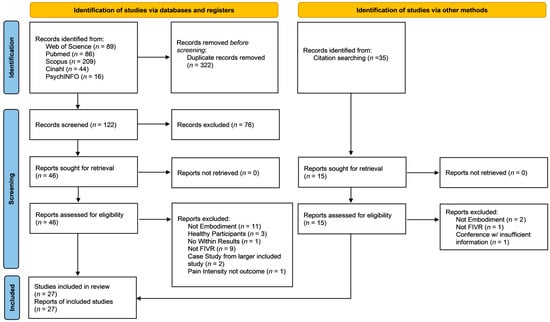
Database searches resulted in 444 articles. After 322 duplicates were removed, 122 articles were screened based on title and abstract. After full text review, 27 articles [22,23,24,25,26,27,28,29,30,31,32,33,34,35,36,37,38,39,40,41,42,43,44,45,46,47,48] met our inclusion criteria (Figure 1).
Figure 1.
PRISMA flow diagram of search and selection process.
3.1. Study Characteristics
Table 2 provides an overview of each study’s characteristics. Studies were most often conducted by clinicians (40.7%) and were done in North America (33.3%), Europe (25.9%), and Asia (25.9%) (Table 3). A variety of study designs were used: 22.2% used a non-experimental design such as case series or case–control and the rest experimental designs, with pre/post cohort design the most common (40.7%) (Table 4). Over half of the studies had a sample size of 10 or fewer participants (51.8%) (Table 4). On average, there were fewer female participants (27.5%) than male participants. All studies examined pain intensity and only 30% examined any other pain outcome. Of note, less than half of studies (48.1%) explicitly measured embodiment (Table 4). When embodiment was explicitly measured, the researchers mostly used non-standardized surveys.
Table 2.
Detailed Characteristics of Each Study (n = 27).
Table 3.
Descriptive Statistics of the Characteristics of the Studies (n = 27).
Table 4.
Study Design Characteristics (n = 27).
3.2. Diagnoses
For Aim 1 we determined the types of chronic pain diagnoses being investigated using embodied FIVR techniques. The most common diagnosis was PLP which included both those with amputations and brachial plexus avulsion (42.9%). The next most common was spinal cord injuries with neuropathic pain (21.4%), followed closely by general chronic pain diagnoses such as chronic low back pain, fibromyalgia, and peripheral nerve injury (17.9%). Studies on patients with CRPS made up 14.3% of our studies and there was one study that examined knee osteoarthritis [43] (3.6%) (Table 4).
3.3. Sensory Feedback Manipulation Interventions
The types and use of sensory feedback were heterogeneous throughout the studies. More than half of studies (51.8%) had multiple experimental groups in a single study (Table 2 and Table 5). Duration of intervention lasted anywhere from less than five minutes to greater than 45 min with 55.1% lasting less than 10 min (Table 5). Nearly half of the studies reported on only a single session of embodied FIVR (42.9%) (Table 5).
Table 5.
Sensory Feedback Manipulations.
We examined each study condition to determine how FIVR was used to manipulate sensory feedback (Table 5). The only sensory feedback that we did not identify a priori was using a virtual depiction of the affected limb that was flashing in synchrony with the subjects own heartrate (illuminated heartrate) [41]. The most common types of manipulation were movement (42.9%), adding a limb (22.4%), sensory synchronization (18.4%), and some form of altered appearance (8.1%). Over half of studies (62.9%) examined a combination of manipulations, the most common of which was adding a limb with movement (26.7%).
3.4. Outcomes
All studies measured pain intensity immediately after sessions, with only five studies [22,23,42,44,46] completing follow-up after one week. Most of the sensory feedback manipulations caused a decrease in pain intensity (82.5%) (Table 6). Of these, more than half were significant (57.5%). Only two experimental groups [31] (5.0%) increased pain, both of which were significant, and only five experimental groups [28,41,43] found no change (12.5%). Pain quality was assessed in six experimental groups [23,25,37,39,40], with five manipulations demonstrating improved pain quality (83.3%; 60.0% significant, 40.0% non-inferential), and one manipulation [25] demonstrating a non-inferential reduction in pain quality. Pain function was examined in two experimental groups [26,41] with both manipulations demonstrating decreased pain function, one significant, and one not significant.
Table 6.
Immediate Analgesic Effect of embodied VR on Pain Intensity measured pre/post intervention. (n = 40).
Although not specifically identified as an area for review, adverse events are an important outcome for consideration with FIVR use. Within the 27 studies, seven [23,28,30,34,36,37,44] (25.9%) evaluated adverse events. Reported adverse events were characterized as mild and consisted of nausea, dizziness, physical discomfort, fatigue, headache, anxiety, and vomiting.
3.5. Terminology
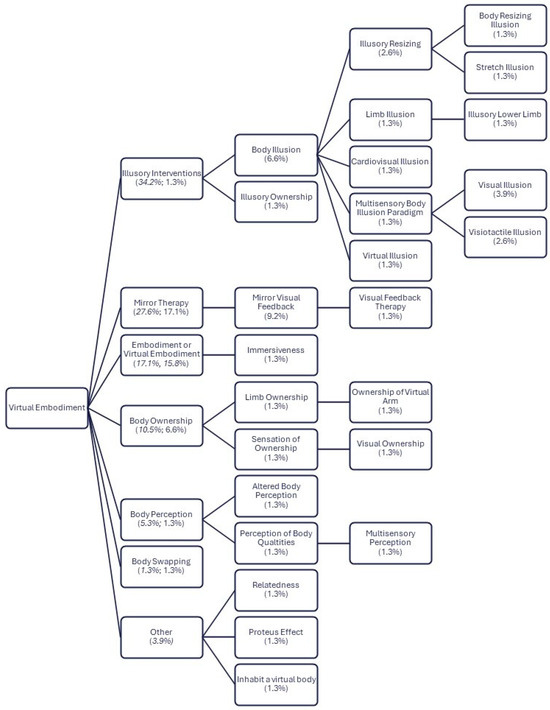
Among the 27 articles, we identified 33 distinct terms used to refer to the concept of embodied FIVR with a total of 76 usages of these 33 terms throughout all articles (Table 2 and Figure 2). Figure 2 reflects primary terms in the first column that lead to increasingly specific secondary terms. The median number of different terms was three per article with two articles having no specific term for embodied FIVR [24,26] and one article having seven terms [49]. The term “mirror therapy” was the most common term, used in 13 of the articles (17.1%), followed by “embodiment”, used in 12 articles (15.8%). Twenty-three (69.7%) of the terms were only used in a single article. For ease of discussion, we grouped terms together and labeled them categorically, using a representative term chosen from that group. The group terms were “embodiment,” “illusory interventions,” “body ownership,” “body perception,” “body swapping,” “mirror therapy,” and “other.” The “illusory interventions” group contained the largest number of terms (34.2%), the “mirror therapy” group contained the next largest number of terms (27.6%), and the “embodiment” group the third largest number (17.1%).
Figure 2.
Terms used to specify the construct of virtual embodiment. The first italicized percentage is the percent that that primary term was used among the other primary terms. The second non-italicized percentage or the single percentage in the secondary terms is the percentage that that specific term was used among the 76 identified usages.
4. Discussion
Our purpose was to examine the state of the science related to embodied FIVR as a modality to treat chronic pain. Our first aim was to identify which chronic pain disorders had been treated using FIVR embodiment (Aim 1). While embodied FIVR interventions were used for multiple chronic pain disorders such as low back pain [27,47] and knee osteoarthritis [43], most studies examined neuropathic central nervous system pain disorders (e.g., CRPS, PLP, fibromyalgia, SCI). Embodiment based therapies, most notably mirror therapy, are hypothesized to address the disruptions in body schema as well as a sensory motor perception [13,14,15,50,51] that are associated with these type of chronic pain disorders. Embodiment using mirror therapy is believed to help neuropathic central nervous system pain disorders by providing the brain with a corrective visual representation of the affected limb which helps facilitate cortical reorganization [52]. Recent studies of “musculoskeletal” disorders have also identified that body image and misaligned body representation may be a common phenomenon [8,17].
We examined how sensory feedback was manipulated to affect pain (Aim 2), and noted emerging themes related to altering the perception of a limb. The most common manipulations across studies were autonomous movement of a virtual avatar or limb and adding a virtual limb for people with PLP. Another theme was manipulation of sensory perception, which included altering the transparency, shape, and/or color of a limb. A third theme was related to the use of sensory systems, including manipulation of tactile, auditory, and visual feedback. The wide range of sensory feedback manipulations reported in the articles is notable, demonstrating how FIVR allows for unique manipulations of the body often not possible or too complicated to deliver in other non-FIVR embodied scenarios [18]. For example, Solcà and colleagues [41] showed synchronized illuminated heart rates in the painful limbs of people with CRPS, while Stanton and colleagues [43] manipulated both tactile and visual feedback to alter people with knee osteoarthritis’ perceptions of the size of their affected knee.
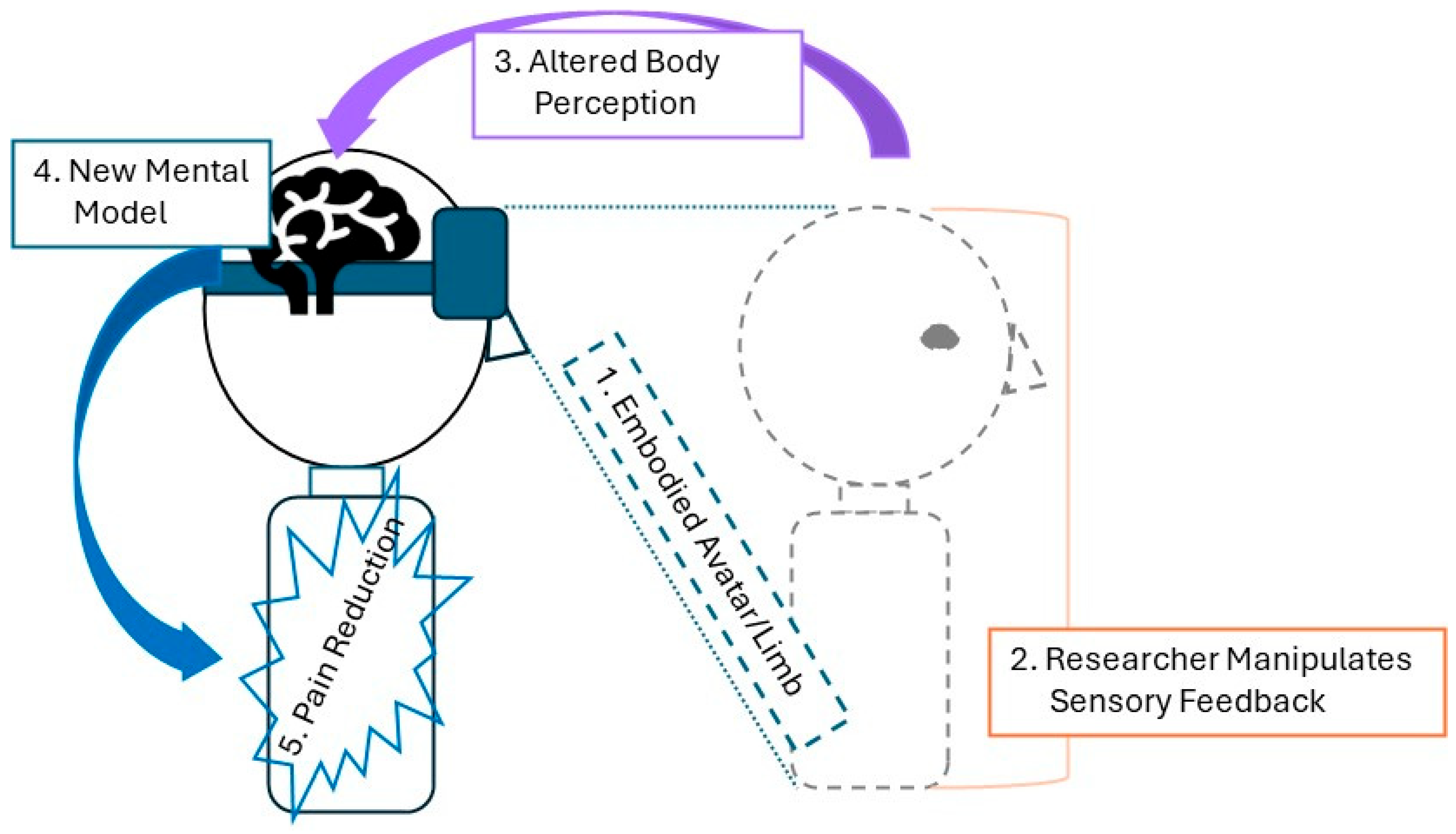
The use of many of these approaches is supported by current understanding of body/brain synthesis, which supports that altering sensory feedback can help reestablish a more accurate body schema [53]. Although researchers are still exploring the neurophysiological mechanism of how embodied therapies improve pain, the sensorimotor theory of pain suggests that chronic pain may be related to incongruent sensory feedback; that there is a difference between the expected and actual sensory consequences of movement due to changes in the cognitive representation of the body. These changes can cause maladaptive cortical remodeling and in the cognitive representation of the body [17]. As the brain continually creates mental models of the body and its relationship with the world to determine the best course of action, it is possible that we can use FIVR to provide more congruent sensory feedback, thus, “correcting” altered cognitive representations [8] (Figure 3). This new mental model could change a distorted body image, which would then affect pain perception. The potential utility for using embodied FIVR to address multiple types of chronic pain seems feasible as many people with chronic pain report forms of body dysmorphia [54,55]. This review highlights many possible ways to provide sensory feedback, which can have differential effects depending upon diagnosis. It is important for future research to consider the origin and type of pain to determine the most effective types of sensory feedback manipulation. Clarifying and refining the exact mechanism (or mechanisms) by which embodied FIVR mitigates pain for different types of diagnoses will also guide the development of effective embodied interventions. These outcomes should include measuring changes in perception to better understand what makes embodied FIVR most effective.
Figure 3.
A visual representation of the basic mechanism of virtual embodied pain reduction.
Overall, the studies in this review indicate the use of embodied FIVR can decrease pain intensity in chronic pain disorders (Aim 3). Eighty-two percent of studies examining embodied FIVR reported immediate improvements in pain intensity regardless of the type of sensory feedback manipulation performed. One article reporting increased pain [31] underlines the importance of considering diagnoses when determining the sensory manipulation. This article had two types of altered appearance FIVRs, changes in size and changes in transparency, and two different diagnoses, peripheral nerve injury (PNI) and CRPS. The study emphasizes the importance of appropriate sensory feedback manipulation as those with CRPS reported decreased pain with transparency while those with PNI reported increased pain. Increasing size in people with CRPS slightly increased pain but did not change pain intensity in people with PNI.
Few studies in our review examined pain quality and pain function. While our results support embodied FIVR for pain quality, only two [26,41] studies evaluated pain function. As the overall purpose in pain management is to allow individuals with chronic pain conditions to participate in meaningful activities and roles, it is important that future studies examine the long-term effect of embodied FIVR therapies on pain function.
Our results should be viewed with caution as this scoping review only looked at within group comparisons and did not evaluate risk of bias in the studies. Recognizing the potential for publication bias, we aimed to examine if existing studies reported improvement as an initial proof of concept, suggesting that embodied FIVR may have meaningful effects on chronic pain. The prevalence of favorable findings underlines the need for further investigation to continue to untangle the complexity in the heterogeneity in study designs, methods, and outcomes.
There was no consistent terminology describing embodied FIVR (Aim 4). The 33 different terms used in the articles to describe embodiment is a strong indication that this is an emerging practice area with little consensus on how to name this construct. There were, however, several emerging themes. For example, some terms referred to distinct embodiment types, such as “body swapping” in which users experience the illusion that there has been a full body transfer into avatars, while in other cases, terms referred to the embodiment process, such as “illusory ownership” or “altered body ownership.”
The term “mirror therapy” was often used to represent embodiment, suggesting that FIVR is simply a different modality to promote this type of embodiment. However, there are many benefits of embodied FIVR itself. The sense of embodiment elicited in FIVR tends to be stronger than other two dimensional mediums, such as mirror therapy or mixed reality [56]. Non-FIVR embodiment therapies, particularly mirror therapy, are often constrained in the type and scope of possible manipulation. Embodied FIVR allows greater opportunities for both the breadth and type of movement and can encompass the entire environment, while mirror therapy is constrained to the size of the mirror. For example, Trost and colleagues [46] had people with spinal cord injuries virtually walking across a broad environment. In addition, although mirror therapy can promote the illusion of movement and, in cases of amputation, add a missing limb, FIVR can promote multiple types of sensory feedback manipulations such as altering the transparency, size, shape and color of a limb or entire body. Another significant benefit is that practitioners using FIVR can control every aspect of the sensory environment, enabling precise, patient-centered care [19]. For example, Solcà and colleagues [42] used a first person FIVR avatar to provide individually personalized visual illumination of the tactile sensations induced by spinal cord stimulation in subjects with spinal cord injuries and neuropathic pain. FIVR provides opportunities for engaging, complex movements and gamification, which enhances the therapeutic experience. For example, Ambron and colleagues [22] had people with lower extremity amputations feeding puppies and playing chess with their virtual feet while Harvie and colleagues turned their subjects with chronic back pain into superheroes [27]. Pleasant emotions have been shown to have an attenuating effect on pain [57], so the addition of enjoyable elements has the potential to amplify the overall effect of the embodiment on pain. Gamification has been shown to increase a person’s motivation and adherence to therapies [58].
As new fields of study emerge, it is vital we develop a shared nomenclature. It is only when researchers agree on terminology that ideas can evolve into operationalized constructs. When terms are used inconsistently there is a potential for ambiguity and misinterpretation which can limit collaboration and communication across disciplines, researchers, practitioners, and educators, and reduce the ability to compare studies, analyze data, and draw meaningful conclusions. Because the concept of embodiment is complex, multiple terms may be necessary to capture all mechanisms. Perhaps a starting point is to recognize that embodiment is both a concept and a technique.
The themes identified in this scoping review provide researchers in this field with a place to start to develop a taxonomy of FIVR embodiment techniques. Bringing together a consensus panel of the diverse disciplines that use FIVR embodiment, such as psychologists, clinicians, neurologists, and engineers to discuss FIVR terminology would be an excellent way to develop a scientifically valid and clinically useful nomenclature for this technique. It is important to note that FIVR embodiment is not limited to pain management but is also being used for other rehabilitation techniques such as motor control and psychological issues. Any discussion on a FIVR embodiment taxonomy should ideally incorporate all use cases to ensure that the nomenclature is usable and shared by all.
4.1. State of the Science
The purpose of our scoping review, following Arkesey and O’Malley’s [19] scoping review framework, was to synthesize existing knowledge by systematically mapping the breadth, range, and nature of available research evidence about embodied FIVR in relation to chronic pain, drawing on literature that spanned multiple study designs without emphasizing appraisal of study quality. Research on embodied FIVR has begun to examine embodiment as a potential factor for influencing pain related user experiences; however, the state of the science remains largely in the discovery phase, focused on conceptualizing and preliminarily testing how embodiment might be leveraged to address pain. As such, embodied FIVR represents an emerging topic that requires further methodological strengthening. For example, several gaps in rigor were identified across studies. More than half of studies included a sample size of 10 or fewer participants, raising concerns about statistical power and reproducibility. In addition, only approximately one quarter of participants were female, limiting consideration of sex differences well documented in pain literature. Many studies also relied on weak designs, including pre-post single-group trials, small case series, or individual case studies, which further constrains the reliability of the evidence. Although promising trends were observed across intervention outcomes, substantial heterogeneity in manipulation strategies limits cross-study comparisons and obscures identification of optimal therapeutic mechanisms. While some manipulations were examined in conjunction with specific diagnoses, the current state of the science does not provide sufficient evidence to meaningfully discuss which manipulations-diagnoses pairings are most effective. Evidence is also limited regarding the measurement of embodiment itself, as fewer than half of studies explicitly assessed embodiment and those that did relied primarily on non-standardized instruments. To better understand whether and how embodied FIVR may function as an analgesic for chronic pain, embodiment must be measured in a more systematic and rigorous manner. Relatedly, in studies lacking VR control conditions that isolate non-embodied experiences it remains difficult to disentangle pain reductions attributable to embodiment from more general VR based distraction effects or potential interactions between the two mechanisms. Additional gaps include limited examination of long-term effects, as only five studies reported extended participant follow-up. Therefore, it is unclear if FIVR interventions result in long lasting changes in pain. Finally, technical characteristics of FIVR systems, such as latency, tracking accuracy, and display features, were inconsistently reported, despite their potential influence on embodiment and therapeutic outcomes.
4.2. Limitations
As terminology referring to embodied FIVR is heterogeneous, it is possible that articles were missed during our search. Counting positive and negative outcomes versus synthesizing data through a meta-analysis is not a precise method to estimate effect, thus the results of the effectiveness analysis should be taken with reservations. Including case studies is also likely to inflate results, as case studies may pick cases with the best outcomes. We examined within effects only to determine the efficacy of the manipulations which further reduces out ability to disentangle FIVR effects on pain. Comparisons to sham FIVR controls are necessary to address the effect of distraction on pain, as distraction in FIVR is a key mechanism for pain reduction [59]. Additionally, we focused on the immediate effects of FIVR because studies examined did not complete follow up.
5. Conclusions
This review suggests that embodied FIVR holds great promise to address chronic pain although significant gaps in the science limit our ability to fully understand how it works and under what circumstances. To advance its use, a coherent framework with consistent terminology and standardized methodologies, including the design and manipulation of virtual avatars, and the use of software and programming, is essential. Future research should identify and test the most effective sensory manipulations for specific diagnoses and explore how patient demographics influence outcomes to enable personalized interventions. Neuroimaging and related tools may aid in uncovering how embodiment affects the brain, guiding targeted approaches for specific diagnoses. While emergence of one straightforward protocol for embodied FIVR is unlikely, there is immense potential to understand what works consistently for specific disorders.
Author Contributions
Conceptualization, N.A.B., A.H.P., J.M.B. and M.K.; methodology, N.A.B., A.H.P., J.M.B. and M.K.; software, N.A.B.; validation, N.A.B., A.H.P., J.M.B. and M.K.; formal analysis, N.A.B. and A.H.P.; resources, N.A.B.; data curation, A.H.P.; writing—original draft preparation, N.A.B., A.H.P., N.A.B., A.H.P., J.M.B. and M.K.; visualization, N.A.B. and A.H.P.; supervision, N.A.B.; project administration, A.H.P.; funding acquisition, N/A. All authors have read and agreed to the published version of the manuscript.
Funding
This research received no external funding.
Institutional Review Board Statement
Not applicable.
Informed Consent Statement
Not applicable.
Data Availability Statement
The raw data supporting the conclusions of this article will be made available by the authors on request.
Acknowledgments
Sean Corning, MLIS for developing the search strategies; Anna Leffler, OTD for assisting with the search and selection of articles; Niki Yan, OTS, and Madeline Zarro OTS for helping with the search and selection of articles and helping construct Table 2.
Conflicts of Interest
The authors declare no conflicts of interest.
Abbreviations
| CRPS | complex regional pain syndrome |
| FIVR | fully immersive virtual reality |
| HMD | head mounted display |
| PNI | peripheral nerve injury |
| PLP | phantom limb pain |
| SCI | spinal cord injury |
| VR | virtual reality |
Appendix A. Embodiment Review Search Strings
- Databases: PubMed, CINAHL, Web of Science Core Collection, PsycInfo, SCOPUS
The Systematic Review Accelerator’s Polyglot tool was used to assist translating the search string between databases: https://sr-accelerator.com/#/polyglot (accessed on 1 December 2025).
- Search Strategy: For visual clarity, the PubMed search string was divided into the 3 concepts of the search: embodiment/illusion, virtual reality and chronic pain.
- Example: PubMed Search strings.
(“Perception”[MeSH] OR (embod*[tiab]) OR ((body[tiab] or bodi*[tiab]) AND (imag*[tiab] OR represent*[tiab] OR schema[tiab] OR ownership[tiab] OR experience[tiab] OR percept*(tiab))) OR “multisensory integration”[tiab] OR (illus*[tiab] AND (visual[tiab] OR visuotactile[tiab] OR visuo-tactile[tiab])) OR propriocep*[tiab] OR (virtual[tiab] AND “body swapping”[tiab]))
AND
(“Virtual Reality”[Mesh] OR (“reality”[tiab] AND (“Immersive virtual”[tiab] OR mediated[tiab] OR enhanced[tiab] OR augmented[tiab])))
AND
(“Chronic Pain”[MeSH] OR “Analgesics”[MeSH] OR analges*[tiab] OR hyperalgesia[tiab] OR (pain[tiab] AND (chronic[tiab] OR neuropathic[tiab] OR threshold[tiab] OR perception[tiab])))
References
- de Vignemont, F. Embodiment, ownership and disownership. Conscious. Cogn. 2011, 20, 82–93. [Google Scholar] [CrossRef] [Scilit]
- Lundh, L.G.; Foster, L. Embodiment as a synthesis of having a body and being a body, and its role in self-identity and mental health. New Ideas Psychol. 2024, 74, 101083. Available online: https://www.sciencedirect.com/science/article/pii/S0732118X24000114 (accessed on 1 December 2025). [CrossRef] [Scilit]
- Slater, M.; Sanchez-Vives, M.V. Enhancing Our lives with immersive virtual reality. Front. Robot. AI 2016, 3, 1–45. Available online: https://www.frontiersin.org/journals/robotics-and-ai/articles/10.3389/frobt.2016.00074 (accessed on 1 December 2025). [CrossRef] [Scilit]
- Mottelson, A.; Muresan, A.; Hornbæk, K.; Makransky, G. A systematic review and meta-analysis of the effectiveness of body ownership illusions in virtual reality. ACM Trans. Comput.-Hum. Interact. 2023, 30, 1–42. [Google Scholar] [CrossRef] [Scilit]
- Botvinick, M.; Cohen, J. Rubber hands “feel” touch that eyes see. Nature 1998, 391, 756. [Google Scholar] [CrossRef] [Scilit]
- Gadsby, S. Distorted body representations in anorexia nervosa. Conscious. Cogn. 2017, 51, 17–33. [Google Scholar] [CrossRef] [Scilit] [PubMed]
- Beccherle, M.; Scandola, M. How pain and body representations transform each other: A narrative review. J. Neuropsychol. 2024, 19, 26–41. Available online: https://bpspsychub.onlinelibrary.wiley.com/doi/abs/10.1111/jnp.12390 (accessed on 1 December 2025). [CrossRef] [Scilit] [PubMed]
- Donegan, T.; Ryan, B.E.; Sanchez-Vives, M.V.; Świdrak, J. Altered bodily perceptions in chronic neuropathic pain conditions and implications for treatment using immersive virtual reality. Front. Hum. Neurosci. 2022, 16, 1024910. [Google Scholar] [CrossRef] [Scilit]
- Matamala-Gomez, M.; Donegan, T.; Bottiroli, S.; Sandrini, G.; Sanchez-Vives, M.V.; Tassorelli, C. Immersive virtual reality and virtual embodiment for pain relief. Front. Hum. Neurosci. 2019, 13, 279. [Google Scholar] [CrossRef] [Scilit] [PubMed]
- Möllmann, A.; Heinrichs, N.; Herwig, A. A conceptual framework on body representations and their relevance for mental disorders. Front. Psychol. 2023, 14, 1231640. [Google Scholar] [CrossRef] [Scilit]
- Rossetti, I.; Repossi, M.; Florio, V.; Demartini, B.; Conca, A.; Gambini, O.; Maravita, A. Sense of body ownership and body agency in schizophrenia. Sci. Rep. 2022, 12, 19369. [Google Scholar] [CrossRef] [Scilit]
- Magrini, M.; Curzio, O.; Tampucci, M.; Donzelli, G.; Cori, L.; Imiotti, M.C.; Maestro, S.; Moroni, D. Anorexia nervosa, body image perception and virtual reality therapeutic applications: State of the art and operational proposal. Int. J. Environ. Res. Public Health 2022, 19, 2533. [Google Scholar] [CrossRef] [Scilit]
- Guémann, M.; Olié, E.; Raquin, L.; Courtet, P.; Risch, N. Effect of mirror therapy in the treatment of phantom limb pain in amputees: A systematic review of randomized placebo-controlled trials does not find any evidence of efficacy. Eur. J. Pain Lond. Engl. 2023, 27, 3–13. [Google Scholar] [CrossRef] [Scilit] [PubMed]
- Biran, I.; Book, A.; Aviram, L.; Bregman, N.; Bahagali, E.; Tripto, A. Body structural description impairment in Complex Regional Pain Syndrome Type I. Front. Psychol. 2022, 13, 853641. [Google Scholar] [CrossRef] [Scilit]
- Martínez, E.; Guillen, V.; Buesa, I.; Azkue, J.J. A distorted body schema and susceptibility to experiencing anomalous somatosensory sensations in fibromyalgia syndrome. Clin. J. Pain 2019, 35, 887–893. [Google Scholar] [CrossRef] [Scilit] [PubMed]
- Tack, C. Virtual reality and chronic low back pain. Disabil. Rehabil. Assist. Technol. 2019, 16, 637–645. [Google Scholar] [CrossRef] [Scilit] [PubMed]
- Vittersø, A.D.; Halicka, M.; Buckingham, G.; Proulx, M.J.; Bultitude, J.H. The sensorimotor theory of pathological pain revisited. Neurosci. Biobehav. Rev. 2022, 139, 104735. [Google Scholar] [CrossRef] [Scilit]
- Boesch, E.; Bellan, V.; Moseley, G.L.; Stanton, T.R. The effect of bodily illusions on clinical pain: A systematic review and meta-analysis. Pain Amst. 2016, 157, 516–529. [Google Scholar] [CrossRef] [Scilit]
- Arksey, H.; O’Malley, L. Scoping studies: Towards a methodological framework. Int. J. Soc. Res. Methodol. 2005, 8, 19–32. [Google Scholar] [CrossRef] [Scilit]
- Levac, D.; Colquhoun, H.; O’Brien, K.K. Scoping studies: Advancing the methodology. Implement. Sci. 2010, 5, 69. [Google Scholar] [CrossRef] [Scilit]
- Tricco, A.C.; Lillie, E.; Zarin, W.; O’Brien, K.K.; Colquhoun, H.; Levac, D.; Moher, D.; Peters, M.D.J.; Horsley, T.; Weeks, L.; et al. PRISMA extension for scoping reviews (PRISMA-ScR): Checklist and explanation. Ann. Intern. Med. 2018, 169, 467–473. [Google Scholar] [CrossRef] [Scilit] [PubMed]
- Ambron, E.; Miller, A.; Kuchenbecker, K.J.; Buxbaum, L.J.; Coslett, H.B. Immersive low-cost virtual reality treatment for phantom limb pain: Evidence from two cases. Front. Neurol. 2018, 9, 67. [Google Scholar] [CrossRef] [Scilit] [PubMed]
- Ambron, E.; Buxbaum, L.J.; Miller, A.; Stoll, H.; Kuchenbecker, K.J.; Coslett, H.B. Virtual reality treatment displaying the missing leg improves phantom limb pain: A small clinical trial. Neurorehabil. Neural Repair. 2021, 35, 1100–1111. [Google Scholar] [CrossRef] [Scilit] [PubMed]
- Cetin, H.; Kose, N.; Oge, H.K. Virtual reality and motor control exercises to treat chronic neck pain: A randomized controlled trial. Musculoskelet. Sci. Pract. 2022, 62, 102636. [Google Scholar] [CrossRef] [Scilit]
- Chau, B.; Phelan, I.; Ta, P.; Chi, B.; Loyola, K.; Yeo, E.; Dunn, J.; Humbert, S.; Hata, J.; Haglund, R.; et al. Immersive virtual reality for pain relief in upper limb complex regional pain syndrome: A pilot study. Innov. Clin. Neurosci. 2020, 17, 47–52. [Google Scholar]
- Donati, A.R.C.; Shokur, S.; Morya, E.; Campos, D.S.F.; Moioli, R.C.; Gitti, C.M.; Augusto, P.B.; Tripodi, S.; Pires, C.G.; Pereira, G.A.; et al. Long-term training with a brain-machine interface-based gait protocol induces partial neurological recovery in paraplegic patients. Sci. Rep. 2016, 6, 30383. [Google Scholar] [CrossRef] [Scilit]
- Harvie, D.S.; Kelly, J.; Kluver, J.; Deen, M.; Spitzer, E.; Coppieters, M.W. A randomized controlled pilot study examining immediate effects of embodying a virtual reality superhero in people with chronic low back pain. Disabil. Rehabil. Assist. Technol. 2024, 19, 851–858. [Google Scholar] [CrossRef] [Scilit]
- Hwang, H.; Cho, S.; Lee, J.-H. The effect of virtual body swapping with mental rehearsal on pain intensity and body perception disturbance in Complex Regional Pain Syndrome. Int. J. Rehabil. Res. 2014, 37, 167–172. [Google Scholar] [CrossRef] [Scilit]
- Ichinose, A.; Sano, Y.; Osumi, M.; Sumitani, M.; Kumagaya, S.-I.; Kuniyoshi, Y. Somatosensory feedback to the cheek during virtual visual feedback therapy enhances pain alleviation for phantom arms. Neurorehabil. Neural Repair. 2017, 31, 717–725. [Google Scholar] [CrossRef] [Scilit]
- Kulkarni, J.; Pettifer, S.; Turner, S.; Richardson, C. An investigation into the effects of a virtual reality system on phantom limb pain: A pilot study. Br. J. Pain 2020, 14, 92–97. [Google Scholar] [CrossRef] [Scilit]
- Matamala-Gomez, M.; Diaz Gonzalez, A.M.; Slater, M.; Sanchez-Vives, M.V. Decreasing pain ratings in chronic arm pain through changing a virtual body: Different strategies for different pain types. J. Pain 2019, 20, 685–697. [Google Scholar] [CrossRef] [Scilit]
- Osumi, M.; Ichinose, A.; Sumitani, M.; Wake, N.; Sano, Y.; Yozu, A.; Kumagaya, S.; Kuniyoshi, Y.; Morioka, S. Restoring movement representation and alleviating phantom limb pain through short-term neurorehabilitation with a virtual reality system. Eur. J. Pain 2017, 21, 140–147. [Google Scholar] [CrossRef] [Scilit]
- Osumi, M.; Inomata, K.; Inoue, Y.; Otake, Y.; Morioka, S.; Sumitani, M. Characteristics of phantom limb pain alleviated with virtual reality rehabilitation. Pain. Med. Malden Mass. 2019, 20, 1038–1046. [Google Scholar] [CrossRef] [Scilit]
- Pais-Vieira, C.; Gaspar, P.; Matos, D.; Alves, L.P.; da Cruz, B.M.; Azevedo, M.J.; Gago, M.; Poleri, T.; Perrotta, A.; Pais-Vieira, M. Embodiment comfort levels during motor imagery training combined with immersive virtual reality in a spinal cord injury patient. Front. Hum. Neurosci. 2022, 16, 909112. [Google Scholar] [CrossRef] [Scilit]
- Pozeg, P.; Palluel, E.; Ronchi, R.; Solcà, M.; Al-Khodairy, A.-W.; Jordan, X.; Kassouha, A.; Blanke, O. Virtual reality improves embodiment and neuropathic pain caused by spinal cord injury. Neurology 2017, 89, 1894–1903. [Google Scholar] [CrossRef] [Scilit]
- Putrino, D.; Tabacof, L.; Breyman, E.; Revis, J.; Soomro, Z.; Chopra, D.; Delaney, K.; Smeragliuolo, A.; Cortes, M. Pain reduction after short exposure to virtual reality environments in people with spinal cord injury. Int. J. Environ. Res. Public Health 2021, 18, 8923. [Google Scholar] [CrossRef] [Scilit] [PubMed]
- Rutledge, T.; Velez, D.; Depp, C.; McQuaid, J.R.; Wong, G.; Jones, R.C.W.; Atkinson, J.H.; Giap, B.; Quan, A.; Giap, H. A virtual reality intervention for the treatment of phantom limb pain: Development and feasibility results. Pain. Med. Malden Mass. 2019, 20, 2051–2059. [Google Scholar] [CrossRef] [Scilit] [PubMed]
- Saby, A.; Alvarez, A.; Smolins, D.; Petros, J.; Nguyen, L.; Trujillo, M.; Aygün, O. Effects of embodiment in virtual reality for treatment of chronic pain: Pilot open-label study. JMIR Form. Res. 2024, 8, e34162. [Google Scholar] [CrossRef] [Scilit] [PubMed]
- Sano, Y.; Wake, N.; Ichinose, A.; Osumi, M.; Oya, R.; Sumitani, M.; Kumagaya, S.-I.; Kuniyoshi, Y. Tactile feedback for relief of deafferentation pain using virtual reality system: A pilot study. J. Neuroeng. Rehabil. 2016, 13, 61. [Google Scholar] [CrossRef] [Scilit]
- Snow, P.W.; Sedki, I.; Sinisi, M.; Comley, R.; Loureiro, R.C.V. Robotic therapy for phantom limb pain in upper limb amputees. In Proceedings of the IEEE International Conference on Rehabilitation Robotics 2017, London, UK, 17–20 July 2017; Volume 2017, pp. 1019–1024. [Google Scholar] [CrossRef] [Scilit]
- Solca, M.; Ronchi, R.; Bello-Ruiz, J.; Schmidlin, T.; Herbelin, B.; Luthi, F.; Konzelmann, M.; Beaulieu, J.-Y.; Delaquaize, F.; Schnider, A.; et al. Heartbeat-enhanced immersive virtual reality to treat complex regional pain syndrome. Neurology 2018, 91, E479–E489. [Google Scholar] [CrossRef] [Scilit]
- Solcà, M.; Krishna, V.; Young, N.; Deogaonkar, M.; Herbelin, B.; Orepic, P.; Mange, R.; Rognini, G.; Serino, A.; Rezai, A.; et al. Enhancing analgesic spinal cord stimulation for chronic pain with personalized immersive virtual reality. Pain 2021, 162, 1641–1649. [Google Scholar] [CrossRef] [Scilit]
- Stanton, T.R.; Gilpin, H.R.; Edwards, L.; Moseley, G.L.; Newport, R. Illusory resizing of the painful knee is analgesic in symptomatic knee osteoarthritis. PeerJ 2018, 6, e5206. [Google Scholar] [CrossRef] [Scilit] [PubMed]
- Thøgersen, M.; Andoh, J.; Milde, C.; Graven-Nielsen, T.; Flor, H.; Petrini, L. Individualized augmented reality training reduces phantom pain and cortical reorganization in amputees: A proof of concept study. J. Pain 2020, 21, 1257–1269. [Google Scholar] [CrossRef] [Scilit] [PubMed]
- Tong, X.; Wang, X.; Cai, Y.; Gromala, D.; Williamson, O.; Fan, B.; Wei, K. “I dreamed of my hands and arms moving again”: A Case series investigating the effect of immersive virtual reality on phantom limb pain alleviation. Front. Neurol. 2020, 11, 876. [Google Scholar] [CrossRef] [Scilit]
- Trost, Z.; Anam, M.; Seward, J.; Shum, C.; Rumble, D.; Sturgeon, J.; Mark, V.; Chen, Y.; Mitchell, L.; Cowan, R.; et al. Immersive interactive virtual walking reduces neuropathic pain in spinal cord injury: Findings from a preliminary investigation of feasibility and clinical efficacy. Pain Amst. 2022, 163, 350–361. [Google Scholar] [CrossRef] [Scilit] [PubMed]
- Trujillo, M.S.; Alvarez, A.F.; Nguyen, L.; Petros, J. Embodiment in virtual reality for the treatment of chronic low back pain: A case series. J. Pain Res. 2020, 13, 3131–3137. [Google Scholar] [CrossRef] [Scilit]
- Wake, N.; Sano, Y.; Oya, R.; Sumitani, M.; Kumagaya, S.; Kuniyoshi, Y. Multimodal virtual reality platform for the rehabilitation of phantom limb pain. In Proceedings of the 2015 7th International IEEE/EMBS Conference on Neural Engineering, Montpellier, France, 22–24 April 2015; pp. 787–790. [Google Scholar] [CrossRef] [Scilit]
- MacIntyre, E.; Sigerseth, M.; Pulling, B.W.; Newport, R.; Stanton, T.R. The effect of knee resizing illusions on pain and swelling in symptomatic knee osteoarthritis: A case report. Pain Rep. 2019, 4, e795. [Google Scholar] [CrossRef] [Scilit]
- Ionta, S.; Villiger, M.; Jutzeler, C.R.; Freund, P.; Curt, A.; Gassert, R. Spinal cord injury affects the interplay between visual and sensorimotor representations of the body. Sci. Rep. 2016, 6, 20144. [Google Scholar] [CrossRef] [Scilit]
- Ramachandran, V.S.; Seckel, E.L. Using mirror visual feedback and virtual reality to treat fibromyalgia. Med. Hypotheses 2010, 75, 495–496. [Google Scholar] [CrossRef] [Scilit]
- Wittkopf, P.G.; Johnson, M.I. Mirror therapy: A potential intervention for pain management. Rev. Assoc. Medica Bras. 2017, 63, 1000–1005. [Google Scholar] [CrossRef] [Scilit]
- Shehata, A.W.; Rehani, M.; Jassat, Z.E.; Hebert, J.S. Mechanotactile sensory feedback improves embodiment of a prosthetic hand during active use. Front. Neurosci. 2020, 14, 263. [Google Scholar] [CrossRef] [Scilit]
- Riva, G.; Wiederhold, B.K.; Mantovani, F. Neuroscience of virtual reality: From virtual exposure to embodied medicine. Cyberpsychol. Behav. Soc. Netw. 2019, 22, 82–96. [Google Scholar] [CrossRef] [Scilit]
- Kiaei Ziabari, S.P.; Ofoghi, Z.; Rodrigues, E.A.; Gromala, D.; Moreno, S. Investigating the role of having an avatar in virtual reality on pain alleviation and embodiment in patients with pain using electroencephalogram: A neuroimaging protocol. Front. Virtual Real. 2022, 2, 775764. Available online: https://www.frontiersin.org/journals/virtual-reality/articles/10.3389/frvir.2021.775764 (accessed on 1 December 2025). [CrossRef] [Scilit]
- Kalina, E.; Johnson-Glenberg, M.C. Presence and Platform: Effects of embodiment comparing a 2D Computer and 3D VR game. In Proceedings of the iLRN 2020 6th International Conference of the Immersive Learning Research Network, San Luis Obispo, CA, USA, 21–25 June 2020; pp. 31–37. [Google Scholar]
- Mikkelsen, M.B.; Neumann, H.; Buskbjerg, C.R.; Johannsen, M.; O’Toole, M.S.; Arendt-Nielsen, L.; Zachariae, R. The effect of experimental emotion induction on experimental pain: A systematic review and meta-analysis. Pain 2023, 165, e17–e38. [Google Scholar] [CrossRef] [Scilit] [PubMed]
- Alfieri, F.M.; da Silva Dias, C.; de Oliveira, N.C.; Battistella, L.R. Gamification in musculoskeletal rehabilitation. Curr. Rev. Musculoskelet. Med. 2022, 15, 629–636. [Google Scholar] [CrossRef] [Scilit] [PubMed]
- Baker, N.A.; Polhemus, A.H.; Haan Ospina, E.; Feller, H.; Zenni, M.; Deacon, M.; DeGrado, G.; Basnet, S.; Driscoll, M. The state of science in the use of virtual reality in the treatment of acute and chronic pain: A systematic scoping review. Clin. J. Pain 2022, 38, 424. [Google Scholar] [CrossRef] [Scilit] [PubMed]

Disclaimer/Publisher’s Note: The statements, opinions and data contained in all publications are solely those of the individual author(s) and contributor(s) and not of MDPI and/or the editor(s). MDPI and/or the editor(s) disclaim responsibility for any injury to people or property resulting from any ideas, methods, instructions or products referred to in the content. |
© 2026 by the authors. Licensee MDPI, Basel, Switzerland. This article is an open access article distributed under the terms and conditions of the Creative Commons Attribution (CC BY) license.