


Abstract
Background: Empathy is a critical component of patient-centered care, influencing clinical outcomes, patient satisfaction, and adherence. Despite its recognized importance, empathy often declines during medical training, particularly in clinical years. Traditional teaching methods, such as reflective writing or self-assessment scales, often fail to promote sustained behavioral change. This study evaluated a structured, skills-focused empathy training program integrated into the third-year medical curriculum, designed to improve observable communication behaviors through actor-led simulation and multi-rater feedback. Methods: This single-group pre-post study evaluated a four-week mandatory intervention embedded within the clinical communication curriculum. Students were assessed before and after the intervention using a 19-item checklist covering five domains of empathy-related communication. Pre-post changes were analyzed using paired-sample t-tests and Cohen’s dz. Results: Thirty-two third-year medical students (mean age 21.25 years, 53% female) participated in the study. Post-intervention scores were significantly higher than baseline scores for the overall empathy-related communication score and across all five domains (all p ≤ 0.001). The overall mean score increased from 7.5 (SD 1.43) to 9.2 (SD 1.14), with a mean difference of 1.7 points (95% CI 1.12 to 2.28; p < 0.001), corresponding to a large paired-sample effect size (Cohen’s dz = 1.03). The largest domain-level gains were observed in verbal and non-verbal communication. Conclusions: This curriculum-embedded, actor-led empathy training intervention was associated with short-term improvement in observed empathy-related communication behaviors among third-year medical students. These findings support the feasibility of behaviorally grounded empathy training within undergraduate medical education, while highlighting the need for controlled and longitudinal studies to assess durability and transferability.
1. Introduction
Empathy and effective communication are widely recognized as foundational components of high-quality clinical care. Studies have shown that when physicians engage empathetically, by listening attentively, acknowledging emotional concerns, and responding appropriately, patients experience greater satisfaction, stronger adherence to treatment, and improved clinical outcomes [1,2]. The shift from paternalistic to patient-centered models of care has further underscored the importance of not only clinical competence but also relational and interpersonal competence [3]. In this context, empathy is not merely an internal emotional state, but rather a dynamic interaction defined by the patient’s perception of being genuinely understood, respected, and cared for [4].
Although empathy is widely acknowledged as essential to clinical care, it frequently diminishes over the course of medical training, especially during the clinical years, when students face heavy workloads, emotional strain, and institutional cultures that often value speed and productivity over time spent building meaningful patient relationships [5,6]. Most curricula prioritize biomedical knowledge and technical proficiency, often at the expense of emotional and relational competencies [7]. As a result, many students complete their training without adequate preparation to navigate the interpersonal demands of clinical encounters, potentially weakening therapeutic relationships and patient outcomes. This underscores the need for educational approaches that help students develop empathy as a clinical skill during training.
Common techniques for teaching empathy, such as narrative writing, reflective exercises, and role-play, primarily aim to raise empathic awareness but often lack real-time observation, multi-rater feedback, and opportunities for sustained behavioral reinforcement [8]. Most existing measures rely on self-assessment, limiting their ability to capture clinically observable empathic behaviors [9,10]. As a result, empathy education often emphasizes empathic intention, reflection, or self-perception more than the direct assessment of how empathy is enacted in communication with patients. Moreover, few educational models integrate structured, performance-based assessments using multiple evaluators or offer immediate, formative feedback that supports behavior change [7,11]. Together, these limitations create a persistent gap between valuing empathy as a professional ideal and training it as an observable clinical skill. Simulation-based approaches may help bridge this gap by creating opportunities for empathy-related behaviors to be practiced and observed in clinically relevant interactions.
Simulation- and actor-led education is well suited to empathy training because it allows students to rehearse emotionally difficult clinical situations in a safe yet realistic environment. In these settings, learners must express empathy in real time through both verbal and non-verbal communication, while simulated patients and actor-facilitated encounters add emotional realism, responsive interaction, and feedback from the patient perspective [12,13]. In this way, simulation-based training may provide a useful complement to reflective or didactic methods by enabling empathy-related behaviors to be practiced, observed, and refined in realistic clinical contexts.
Our prior pilot work with this actor-led, feedback-rich approach yielded promising findings in improving empathy-related communication skills [14]. At the same time, published evidence on structured, performance-based empathy training in undergraduate medical education in Georgia remains limited, underscoring the need for context-specific research in this area. However, pilot success does not necessarily indicate that an intervention will remain feasible or effective when delivered as a mandatory component of routine undergraduate training. Embedding an empathy-focused intervention within the formal curriculum introduces different educational demands, including consistency of delivery, integration with existing coursework, and applicability across an entire student cohort. The next important step, therefore, was to examine how this approach would perform when implemented within the third-year clinical communication curriculum.
The present study evaluated a structured, actor-led, curriculum-embedded empathy training intervention designed to strengthen observed empathy-related communication behaviors among third-year medical students. We hypothesized that students would demonstrate higher overall post-intervention empathy-communication scores than at baseline. We further hypothesized that improvement would be observed across all assessed communication domains.
2. Materials and Methods
- Study design and setting
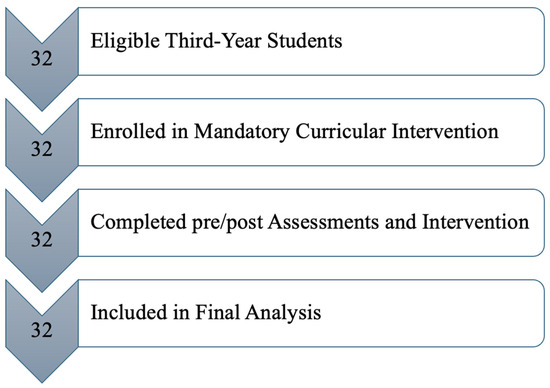
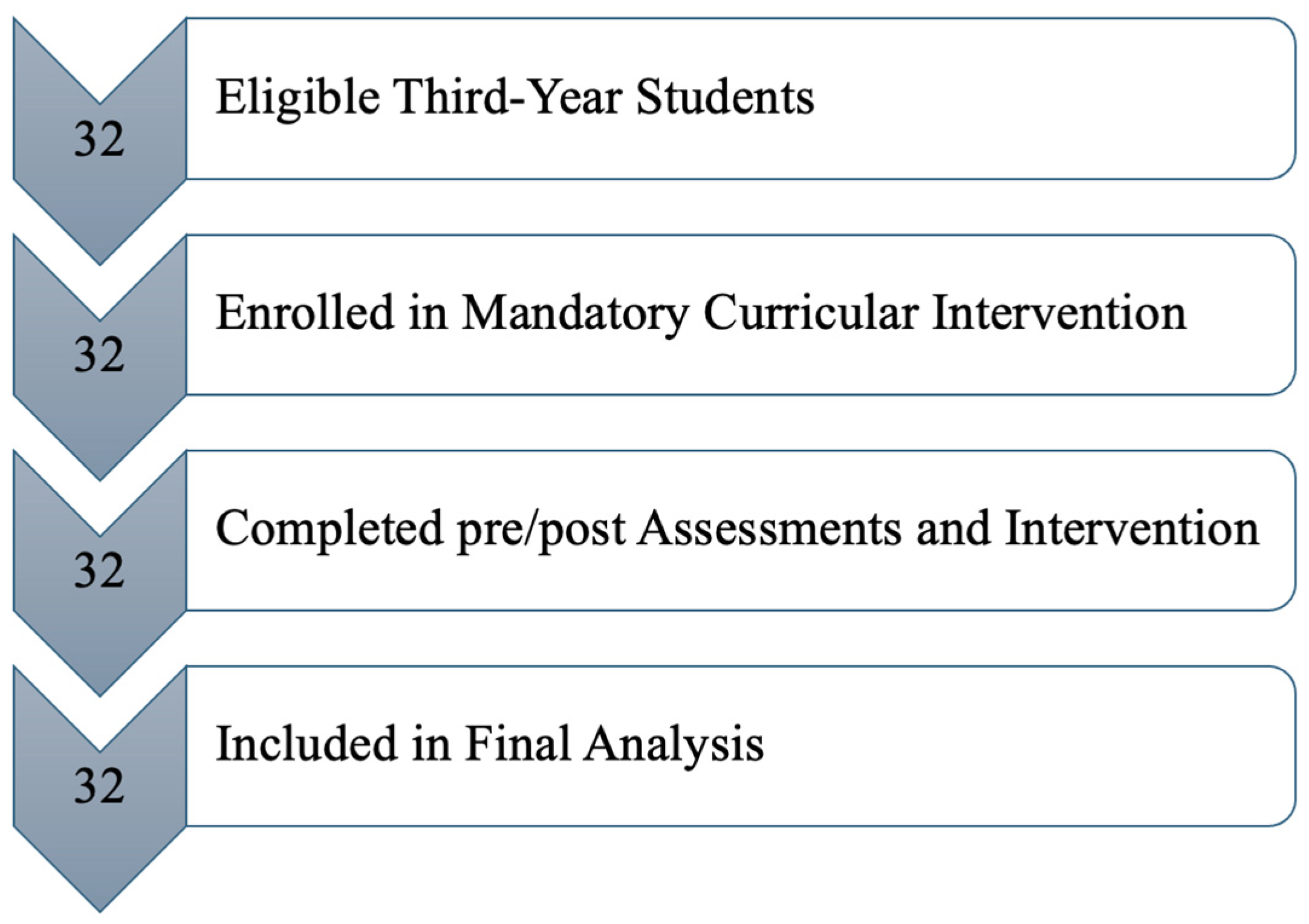
This study used a single-group pre-post design to evaluate short-term changes in observed empathy-related communication behaviors following a curriculum-embedded actor-led training intervention. The study was conducted at Ken Walker International University (Tbilisi, Georgia) within the third-year clinical communication curriculum of a six-year undergraduate medical program. Building on a prior pilot study that showed promising results in improving empathy-related communication skills [14], the program was formally integrated into the third-year curriculum. All third-year students who had successfully completed the required foundational coursework in pre-medical humanities, biomedical sciences, and basic communication skills, including history-taking and standardized patient encounters, were eligible for inclusion. Because the intervention was implemented as a mandatory curricular component, all 32 eligible students participated in the training and completed both the pre- and post-intervention assessments. No students were excluded, and there were no losses to follow-up or missing data; this whole-cohort approach reduced self-selection within the class (Figure 1).
Figure 1.
Cohort flow chart of participant inclusion in the present study.
- Assessment procedure
At baseline, each student participated in a structured role-play exercise involving alternating physician and patient roles. Only performance in the physician role was scored. Each performance was independently rated by four assessors, a peer observer, a peer role-play patient, a professional actor, and a faculty physician, using the same structured 19-item Empathetic Communication Assessment Form. All ratings were completed independently using the same checklist and scoring criteria. In this study, the term “360-degree assessment” referred to multisource evaluation of student performance from these four distinct perspectives. The same assessment format, rater structure, and checklist were used at baseline and post-intervention. For analysis, each student’s item-, domain-, and overall scores were calculated as the mean of the four independent ratings. In the final session, students were reassessed in the physician role using the same procedure, enabling direct pre-post comparison of performance.
- Intervention
The intervention was delivered over four weeks in a workshop-based format. Following the introductory baseline session, students participated in twice-weekly three-hour sessions consisting of (1) an interactive workshop facilitated by a professional actor and (2) a follow-up practice session observed and guided by a faculty physician.
Each week focused on a new emotionally complex clinical scenario designed to challenge students’ empathy-related communication behaviors. Scenarios included a divorced single mother receiving palliative care for advanced lung cancer, a 22-year-old professional swimmer receiving a new diagnosis of multiple sclerosis, and a young woman being informed of infertility prior to marriage. Students alternated between physician and patient roles throughout the intervention to practice communication from both perspectives and engage with the emotional complexity of the encounters. Actor-led sessions emphasized verbal and non-verbal communication, including tone, facial expression, posture, and gestures. Students participated in peer role-play and received immediate formative feedback from the actor. During faculty-guided follow-up sessions, the same scenarios were revisited for additional practice and feedback. Throughout the intervention, students received formative multisource feedback from the same four perspectives used in the assessment process.
- Outcome measure and instrument use
The Empathetic Communication Assessment Form, originally developed by Dow et al. [15], was used to assess students’ observed empathy-related communication behaviors during simulated clinical encounters. The instrument and its use in this training context were established in our prior pilot study [12], while the current study evaluated its application in a mandatory whole-cohort curricular setting. The checklist comprised 19 items across five domains: empathetic communication (5 items), active listening (4 items), non-verbal communication (3 items), verbal communication (4 items), and respect and dignity (3 items). Each item was rated on a 10-point Likert scale (1 = very poor, 10 = excellent), with higher scores indicating stronger empathetic communication performance. Domain scores were calculated as the mean of the items within each domain, and the overall score was derived from the aggregated item ratings.
- Raters, scoring, and bias-related procedures
Student performances were rated independently by four assessors: a peer observer, a peer role-play patient, a professional actor, and a faculty physician. Before assessment, raters were oriented to the checklist structure and scoring criteria. They also reviewed the item definitions and scoring anchors before data collection to promote consistency in checklist use. Ratings were completed independently using the same instrument at both baseline and post-intervention. Raters were not blinded to assessment timing. To reduce assessment variability and observer-related inconsistency, the same structured assessment process was applied at both time points. Because structured role-play and observed communication practice were already familiar elements of the curriculum, the assessment was conducted in an educationally routine context for students, although the influence of being observed could not be fully excluded. The use of four independent assessor perspectives reduced reliance on any single evaluator; however, expectancy and observer effects could not be fully eliminated.
- Outcomes and statistical analysis
The primary outcome was change in the overall mean empathy-related communication score from baseline to post-intervention. Secondary outcomes included changes in domain-level scores, while item-level analyses were treated as exploratory. For each student, item scores were first averaged across the four assessors; domain scores were then calculated as the mean of the items within each domain, and the overall empathy-related communication score was calculated as the mean across all 19 items.
Pre- and post-intervention scores were compared using paired-sample t-tests to evaluate changes in overall and domain-specific empathy-related communication performance. Normality of pre-post difference scores was assessed using the Shapiro–Wilk test before applying parametric tests. Effect sizes were calculated using Cohen’s dz for paired samples to assess the magnitude of improvement, with thresholds for small (0.2), moderate (0.5), and large (0.8) effects. To reduce the risk of inflated type I error arising from multiple comparisons in domain- and item-level analyses, p-values, and for item-level analyses when performed were adjusted using the Holm procedure. Inter-rater reliability among the four assessors was evaluated using the intraclass correlation coefficient (ICC). A two-way random-effects, average-measures ICC with absolute agreement was used to assess inter-rater reliability. Internal consistency of the checklist was examined using Cronbach’s alpha. Wilcoxon signed-rank tests were performed for the overall score and domain-level comparisons as non-parametric sensitivity analyses to examine the robustness of the findings. Statistical significance was set at p < 0.05. All analyses were conducted using SPSS (version 29.2.0). No a priori sample size calculation was performed because the study evaluated a mandatory whole-cohort curricular implementation involving all eligible third-year students.
- Ethical considerations
Every student provided written informed consent prior to participation. Ethical approval for the study was obtained from the Ken Walker International University Institutional Review Board, and all procedures were conducted in accordance with the Declaration of Helsinki.
3. Results
3.1. Participant Characteristics
Thirty-two third-year medical students participated in the study. The mean age was 21.25 years (SD = 0.75). Of the participants, 53% (n = 17) were female. None reported prior acting experience. Exploratory subgroup analysis showed no statistically significant sex-based difference in score improvement (t = −1.38, p = 0.178).
3.2. Primary Outcome: Overall Pre- to Post-Intervention Change
Pre- to post-intervention comparison of the overall empathy-communication score demonstrated higher post-intervention performance across the cohort. The mean total score increased from 7.5 (SD = 1.43) at baseline to 9.2 (SD = 1.14) after the intervention, with a mean difference of 1.7 points (95% CI 1.12 to 2.28). This improvement was statistically significant (t(31) = −5.98, p < 0.001) and corresponded to a large paired-sample effect size (Cohen’s d_z = 1.03). This overall pattern was further explored in domain-specific analyses.
3.3. Secondary Outcomes: Domain-Specific Changes
At the group level, paired-sample t-tests revealed statistically significant improvements across all five communication domains. The largest gains were observed in Verbal Communication (mean difference = 2.0, t(31) = −6.1, p < 0.001) and Non-verbal Communication (mean difference = 1.8, t(31) = −6.1, p < 0.001), whereas Respect for Dignity showed a smaller absolute increase from a comparatively high baseline level. Overall, the domain-level findings indicate a consistent pattern of short-term improvement across the assessed components of empathy-related communication (Table 1).
Table 1.
Comparison of Pre- and Post-Intervention Mean Scores by Domain.
- Inter-Rater Reliability and Internal Consistency
Inter-rater reliability of the multisource assessments was evaluated using the intraclass correlation coefficient (ICC). For the overall empathy-communication score, agreement across raters was moderate at pre-test (ICC = 0.415, 95% CI 0.35–0.675) and excellent at post-test (ICC = 0.871, 95% CI 0.751–0.935). Internal consistency of the 19-item assessment form was excellent, with a Cronbach’s α of 0.88 for the total scale. These findings indicate strong internal consistency and stronger inter-rater agreement at post-test than at baseline.
- Sensitivity Analyses
Normality of pre–post difference scores was assessed as part of the analytic procedure using Shapiro–Wilk tests. The assumption of normality was met for four domains (p = 0.198–0.571), while one domain (Respect for Dignity) showed a slight deviation from normality (p < 0.001). To examine the robustness of the findings, Wilcoxon signed-rank tests were conducted as a non-parametric sensitivity analysis for the overall score and domain-level comparisons. All Wilcoxon tests yielded statistically significant results (all p ≤ 0.001), and the direction and statistical significance of the findings were unchanged compared with the paired-sample t-tests, supporting the stability of the main results.
4. Discussion
The intervention was associated with consistent and short-term improvements in empathy-related communication across all participants. These gains were evident not only in foundational skills but also in more nuanced behaviors involving relational presence, responsiveness, and ethical sensitivity. The most notable progress was observed in domains related to verbal and non-verbal communication—skills essential for building trust and connection in clinical encounters. These findings suggest promising educational value for reflect the program’s strong educational impact and support the value of experiential, behavior-focused training. Importantly, the improvement in the overall empathy-related communication score suggests that the observed gains were not limited to isolated domains, but reflected a broader positive shift in students’ performance across the assessment framework. Although these changes were statistically significant, their educational significance should be interpreted more cautiously, as the practical importance of the observed improvements depends on whether these gains are sustained over time and transfer to authentic clinical settings. In this sense, the present findings are best viewed as evidence of short-term performance improvement within a simulated educational context rather than definitive proof of sustained impact on future clinical practice.
The present findings are best interpreted in light of how empathy was assessed. Much of the existing literature has relied on self-report instruments, which are valuable for understanding learners’ attitudes and self-perceptions but may be less sensitive to changes in observable communication behavior [16]. In contrast, this study evaluated empathy through multisource ratings of performance in simulated clinical encounters, allowing attention to behaviors such as listening, non-verbal responsiveness, and respectful patient engagement. This behaviorally grounded approach may capture dimensions of empathic competence that are not fully reflected in self-report measures, a distinction supported by evidence that self-reported empathy shows only modest correspondence with empathic accuracy [17].
The domain-level findings suggest that the most pronounced improvements occurred in verbal and non-verbal communication, with somewhat smaller but still significant gains in respect for dignity. These domains reflect core components of empathic communication, including responsiveness, clarity, relational presence, and respectful patient engagement. Non-verbal cues such as open posture, eye contact, and vocal modulation have been empirically linked to higher patient ratings of clinician warmth, competence, and trust [18]. Taken together, these findings suggest that skills-focused empathy training may help strengthen communication behaviors that are central to patient-centered care. The pattern of results, with larger gains in verbal and non-verbal communication alongside a smaller but still significant increase in respect for dignity from a relatively high baseline, is consistent with both the practical emphasis of the training and more limited room for improvement in dignity-related behaviors.
Although baseline scores in the “Respect for Dignity” domain were relatively high, participants still demonstrated statistically significant improvements post-intervention. This suggests that the intervention may have strengthened not only overall empathy-related communication but also aspects of respectful and ethically attentive patient interaction. Reinforcing such behaviors is essential for cultivating patient trust, safeguarding autonomy, and maintaining dignity—especially in emotionally charged or ethically complex encounters [19,20].
The performance outcomes observed in this study highlight the value of experiential, feedback-rich training models that move beyond traditional reflective or attitudinal approaches. Real-time role-play, actor-facilitated sessions, and multi-source feedback allowed students to repeatedly practice empathy-related behaviors, receive immediate input, and refine their communication skills in safe yet realistic clinical contexts [21]. This strategy is consistent with adult learning principles, which emphasize relevance, active participation, and timely feedback as key drivers of behavioral change [22]. Compared to didactic or self-assessment-based formats, this method offers a more direct and behaviorally grounded way to observe empathic communication and may support deeper integration of relational skills.
Importantly, the intervention was successfully implemented as a mandatory component of the third-year clinical communication curriculum. Despite its structured and intensive format, it was integrated without apparent disruption to other academic or clinical responsibilities, suggesting feasibility within this institutional context. This may support consideration of similar curriculum-embedded approaches in other settings, although feasibility, acceptability, and transferability should be examined prospectively across different programs. This reinforces its potential for broader adoption, particularly when supported by institutional commitment and interdisciplinary collaboration. Embedding such programs sustainably within medical education ensures equitable access for all students and affirms the central role of humanism in clinical training. In addition, the strong internal consistency of the assessment form, the improvement in inter-rater agreement at post-test, and the consistency of the Wilcoxon sensitivity analyses with the main parametric results together support the robustness of the observed findings, although these psychometric observations should be interpreted cautiously in light of the sample size.
Conceptualizing empathy as an observable clinical behavior may help align empathy training more closely with patient-centered models of care.
Limitations
While the findings of this study are promising, several limitations should be acknowledged. First, the study used within-subject baseline comparison but lacked a separate concurrent control group, which limits the ability to attribute observed improvements exclusively to the intervention, as other concurrent factors may have influenced student performance. In addition, because students completed pre- and post-intervention assessments using a similar format, some degree of improvement may reflect familiarity with the assessment process or repeated performance rather than the intervention alone. Second, although the use of multiple raters enhanced the objectivity of assessments, some degree of observer bias remains, particularly given the unblinded nature of the evaluators. Because raters were aware of assessment timing, expectancy effects may also have contributed to more favorable post-intervention scores. Third, the study did not include a long-term follow-up to assess whether communication gains were sustained over time or translated into actual clinical practice during clerkships. Observed improvements in simulated encounters may not directly translate to real patient care without further study. Finally, the intervention was conducted at a single institution with a relatively small and homogeneous sample, which may limit the generalizability of the results to other educational contexts or student populations. Exploratory subgroup analysis did not identify a statistically significant sex-based difference in score improvement; however, the study was not powered to detect subgroup effects, and this finding should therefore be interpreted cautiously. Although internal consistency and inter-rater reliability were examined, formal factor analysis was not undertaken because the sample size was insufficient for stable evaluation of the instrument’s latent structure; this should be addressed in future larger validation studies. Future research should incorporate control groups, longitudinal tracking, and multi-site replication to further validate and expand upon these findings.
5. Conclusions
This structured empathy training program, successfully embedded into the core curriculum, was associated with short-term improvement in students’ communication skills. By combining actor-led workshops with multi-rater assessments, the intervention enhanced both verbal and non-verbal empathic behaviors within this cohort and curricular context. Unlike self-report tools, it provided a behaviorally grounded evaluation of clinical empathy. Its successful implementation within one institutional curriculum suggests feasibility, but broader conclusions about transferability and long-term effectiveness require further controlled and longitudinal research.
Author Contributions
N.S.—Conceptualization, Methodology, Writing—Original Draft Preparation, Writing—Review & Editing; G.V.—Investigation; K.S.—Investigation. L.K.—Investigation; D.N.—Investigation; M.R.—Data Curation, Formal Analysis; N.T.—Investigation; A.U.—Investigation (study execution) and Methodology; E.E.—Conceptualization and Methodology. All authors have read and agreed to the published version of the manuscript.
Funding
This research received no specific grant from any funding agency in the public, commercial, or not-for-profit sectors.
Institutional Review Board Statement
Ethical approval was obtained from the Ken Walker International University Institutional Review Board (IRB approval number: #1-2024/003).
Informed Consent Statement
All participants provided written informed consent. All submissions and transcripts were de-identified through coding prior to analysis.
Data Availability Statement
De-identified data supporting the findings of this study have been deposited in the Open Science Framework (OSF) repository and are available at https://doi.org/10.17605/OSF.IO/WQSHB.
Conflicts of Interest
The authors declare no conflicts of interest relevant to this work. No financial, personal, or institutional relationships influenced the conduct of this study or the preparation of the manuscript.
References
- Derksen, F.; Bensing, J.; Lagro-Janssen, A. Effectiveness of empathy in general practice: A systematic review. Br. J. Gen. Pract. 2013, 63, e76–e84. [Google Scholar] [CrossRef] [Scilit] [PubMed]
- Hojat, M.; Louis, D.Z.; Markham, F.W.; Wender, R.; Rabinowitz, C.; Gonnella, J.S. Physicians’ empathy and clinical outcomes for diabetic patients. Acad. Med. J. Assoc. Am. Med. Coll. 2011, 86, 359–364. [Google Scholar] [CrossRef] [Scilit] [PubMed]
- Mead, N.; Bower, P. Patient-centredness: A conceptual framework and review of the empirical literature. Soc. Sci. Med. 2000, 51, 1087–1110. [Google Scholar] [CrossRef] [Scilit]
- Mercer, S.W.; Reynolds, W.J. Empathy and quality of care. Br. J. Gen. Pract. 2002, 52, S9–S12. [Google Scholar] [PubMed] [PubMed Central]
- Neumann, M.; Edelhäuser, F.; Tauschel, D.; Fischer, M.R.; Wirtz, M.; Woopen, C.; Haramati, A.; Scheffer, C. Empathy Decline and Its Reasons: A Systematic Review of Studies With Medical Students and Residents. Acad. Med. 2011, 86, 996–1009. [Google Scholar] [CrossRef] [Scilit]
- Chen, D.; Lew, R.; Hershman, W.; Orlander, J. A Cross-sectional Measurement of Medical Student Empathy. J. Gen. Intern. Med. 2007, 22, 1434–1438. [Google Scholar] [CrossRef] [Scilit]
- Patel, S.; Pelletier-Bui, A.; Smith, S.; Roberts, M.B.; Kilgannon, H.; Trzeciak, S.; Roberts, B.W. Curricula for empathy and compassion training in medical education: A systematic review. PLoS ONE 2019, 14, e0221412. [Google Scholar] [CrossRef] [Scilit] [PubMed] [PubMed Central]
- Bearman, M.; Palermo, C.; Allen, L.M.; Williams, B. Learning Empathy Through Simulation: A Systematic Literature Review. Simul. Healthc. J. Soc. Simul. Healthc. 2015, 10, 308–319. [Google Scholar] [CrossRef] [Scilit] [PubMed]
- Chen, D.C.R.; Pahilan, M.E.; Orlander, J.D. Comparing a self-administered measure of empathy with observed behavior among medical students. J. Gen. Intern. Med. 2010, 25, 200–202. [Google Scholar] [CrossRef] [Scilit] [PubMed] [PubMed Central]
- Stepien, K.A.; Baernstein, A. Educating for empathy. A review. J. Gen. Intern. Med. 2006, 21, 524–530. [Google Scholar] [CrossRef] [Scilit] [PubMed] [PubMed Central]
- Bas-Sarmiento, P.; Fernández-Gutiérrez, M.; Baena-Baños, M.; Correro-Bermejo, A.; Soler-Martins, P.S.; de la Torre-Moyano, S. Empathy training in health sciences: A systematic review. Nurse Educ. Pract. 2020, 44, 102739. [Google Scholar] [CrossRef] [Scilit] [PubMed]
- Britz, V.; Sterz, J.; Koch, Y.; Schreckenbach, T.; Stefanescu, M.C.; Zinßer, U.; Verboket, R.D.; Sommer, K.; Ruesseler, M. Impact of simulated patient-based communication training vs. real patient-based communication training on empathetic behaviour in undergraduate students—A prospective evaluation study. BMC Med. Educ. 2024, 24, 870. [Google Scholar] [CrossRef] [Scilit] [PubMed] [PubMed Central]
- George, R.E.; Wells, H.; Cushing, A. Experiences of simulated patients in providing feedback in communication skills teaching for undergraduate medical students. BMC Med. Educ. 2022, 22, 339. [Google Scholar] [CrossRef] [Scilit]
- Shiukashvili, N.; Vardosanidze, G.; Rochikashvili, M.; Tevzadze, N.; Undilashvili, A.; Lechowicz, M.J.; Ekaladze, E. Exploring the impact of professional acting on empathy development in medical students. MedEdPublish 2026, 15, 135. [Google Scholar] [CrossRef] [Scilit]
- Dow, A.W.; Leong, D.; Anderson, A.; Wenzel, R.P. Using Theater to Teach Clinical Empathy: A Pilot Study. J. Gen. Intern. Med. 2007, 22, 1114–1118. [Google Scholar] [CrossRef] [Scilit] [PubMed] [PubMed Central]
- Schwartzkopf, C.T.; Alves, R.T.; Lopes, P.C.; Braux, J.; Capucho, F.; Ribeiro, C. The role of training and education for enhancing empathy among healthcare students: A systematic review of randomised controlled trials. BMC Med. Educ. 2025, 25, 469. [Google Scholar] [CrossRef] [Scilit] [PubMed]
- Bukowski, H.; Ahmad Kamal, N.F.; Bennett, D.; Rizzo, G.; O’Tuathaigh, C. Association between dispositional empathy and self-other distinction in Irish and Belgian medical students: A cross-sectional analysis. BMJ Open 2021, 11, e048597. [Google Scholar] [CrossRef] [Scilit] [PubMed] [PubMed Central]
- BMontague, E.; Chen, P.; Xu, J.; Chewning, B.; Barrett, B. Nonverbal interpersonal interactions in clinical encounters and patient perceptions of empathy. J. Participat. Med. 2013, 5, e33. [Google Scholar]
- Doyle, C.; Lennox, L.; Bell, D. A systematic review of evidence on the links between patient experience and clinical safety and effectiveness. BMJ Open 2013, 3, e001570. [Google Scholar] [CrossRef] [Scilit]
- Fernandez, S.B.; Ahmad, A.; Beach, M.C.; Ward, M.K.; Jean-Gilles, M.; Ibañez, G.; Ladner, R.; Trepka, M.J. How patients experience respect in healthcare: Findings from a qualitative study among multicultural women living with HIV. BMC Med. Ethics 2024, 25, 39. [Google Scholar] [CrossRef] [Scilit] [PubMed] [PubMed Central]
- Antila, A.K.; Lindblom, S.; Louhiala, P.; Pyörälä, E. Creating a safe space: Medical students’ perspectives on using actor simulations for learning communication skills. BMC Med. Educ. 2024, 24, 1225. [Google Scholar] [CrossRef] [Scilit] [PubMed] [PubMed Central]
- Lipnevich, A.A.; Mattern, K.; Feddock, C. Formative assessment and feedback in medical education: A practical guide: AMEE Guide No. 189. Med. Teach. 2025, 1–20. [Google Scholar] [CrossRef] [Scilit] [PubMed]

Disclaimer/Publisher’s Note: The statements, opinions and data contained in all publications are solely those of the individual author(s) and contributor(s) and not of MDPI and/or the editor(s). MDPI and/or the editor(s) disclaim responsibility for any injury to people or property resulting from any ideas, methods, instructions or products referred to in the content. |
© 2026 by the authors. Published by MDPI on behalf of the Academic Society for International Medical Education. Licensee MDPI, Basel, Switzerland. This article is an open access article distributed under the terms and conditions of the Creative Commons Attribution (CC BY) license.